B Movie Glory: The Code


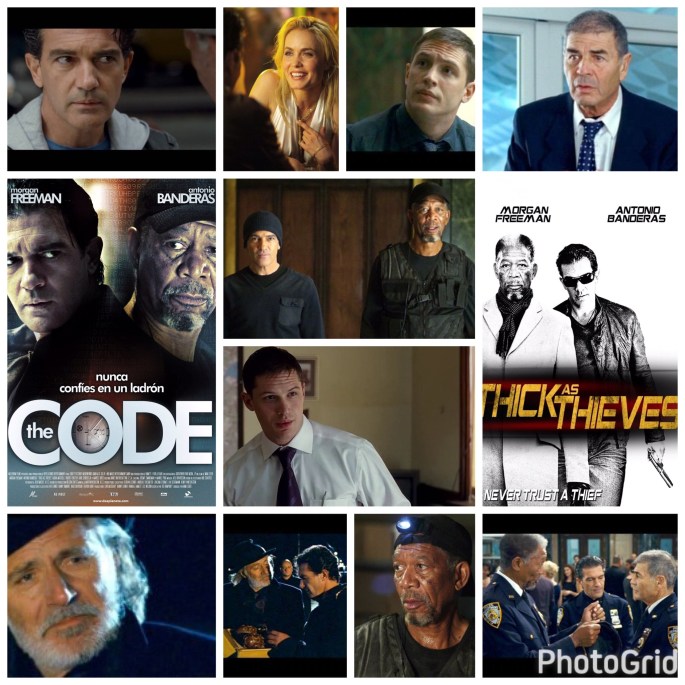
The Code, or Thick As Thieves as it’s known on DVD in some regions, is pretty much just Morgan Freeman and Antonio Banderas strutting their way through a B-grade, R-rated Ocean’s Eleven. It’s second tier stuff, but it has one hell of a cast and enough serpentine twists and betrayals to keep the viewer interested. Freeman plays a slick master burglar, recruiting Banderas’ younger thief to pull off one of those ‘impossible’ heists that requires all kinds of over elaborate planning and stylish execution. This is all in order to pay an outstanding debt to the Russian mob in the form of dangerous Rade Serbedzija, aka Boris the Blade, aka Boris the Bullet Dodger, who has a few surprising secrets of his own. All of them are also hounded by a classically dogged detective (Robert Forster, intensely excellent) and his rookie partner, who of all people is played by Tom Hardy in a role so small and random I’d love to hear the tale behind his casting. There’s also an obligatory love interest for Antonio, played by leggy Radha Mitchell. Now, it’s all mostly as pedestrian as it sounds, except for a few garnishing touches that elevate it just enough that it sticks in your memory. The master thief. The Ahab-esque cop. The vicious Eastern European gangster. The love triangle. Backstabbing. These are all ancient archetypes that have been done quite literally to death, and they’re all present and accounted for here, but there’s a few moments that genuinely surprise and break feee of that somewhat. Revelations involving the Russian who isn’t what he appears to be, a third act twist that feels welcome, and snares of dialogue that snap our attention amidst the cliches. For what it is, it does its job well enough, and a few times shows actual inspiration. Not bad at all. 

-Nate Hill

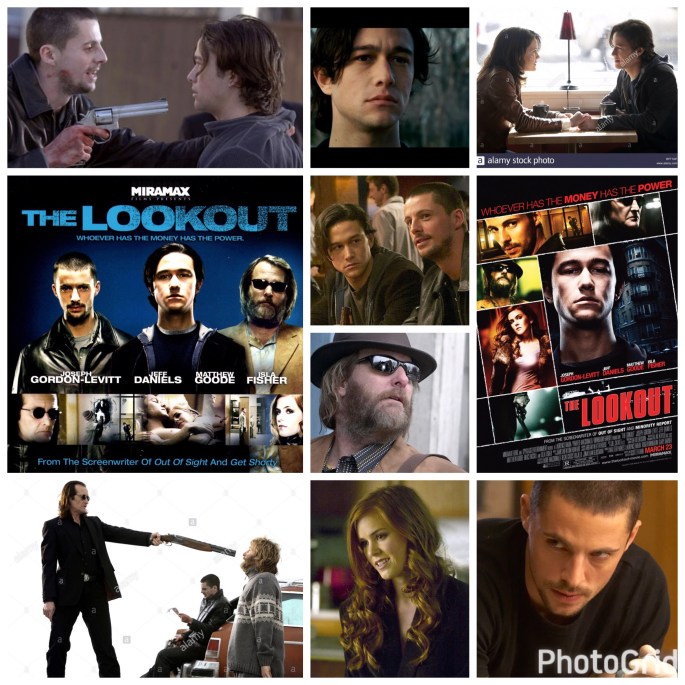
Scott Frank’s The Lookout


Scott Frank’s The Lookout is a film where every turn of plot, exchange of dialogue, set piece and stylistic choice just seems to mesh flawlessly, resulting in a package that’s nearly as perfect as you can get. Part psychological character study, part crime thriller, sewn together lovingly by threads of brilliantly written, intelligent interpersonal drama that seems lived in, the writer never uses the pen to pander nor patronize, but provides well drawn, realistic human beings who sound like actual people and not archetypes dwelling within the pages, never fully realized. Joseph Gordon Levitt plays Chris Pratt (not actual Chris Pratt lol) a young hotshot who becomes the victim of his own cocky, self destructive behaviour. After a horrific car accident that was entirely his fault, his girlfriend is left maimed and he a busted up shell of his former self, saddled with bushels of brain damage and the inability to cohesively live his day to day life the way he did before. It’s some sort of synapse frying neurological scarring that’s never fully explained, but the symptoms are clearly and fascinatingly outlined in a way that no other film has really tried before. He’s left somewhat adrift in life, naively attracted to his foxy psychiatrist (Carla Gugino), misunderstood by his parents (Bruce McGill & Alberta Watson), and cared for by his eccentric, blind and motor-mouthed roommate (Jeff Daniels, a standout as always). He happens to be from a small midwestern town though, and in movie land these burgs are almost always filled with schemes, heists, double crosses and feed store robberies. ‘Bro seduced’ by an equally suave and shady dude (Matthew Goode, whose work here lives up to that surname and then some), Chris is shanghaied into assisting in the hold up of the very bank he works at, and soon the kind of hell that would make the Coen brothers applaud breaks loose. Everything makes sense though, the jigsaw pieces of the narrative nestling flush against one another, not a beat feeling out of place or in danger of derailing the whole thing. That’s not the easiest thing to achieve, especially in a taught running time that clocks in under two hours and still manages to feel substantial. Levitt is terrific, a guy who used to be in control, used to be revered as the alpha who takes care of things, his condition worsened by the knowledge that people know full well how broken he is. The stakes are inherently high when someone that set back by life must navigate their way through the complex ins and outs of pulling off a bank heist. One hell of a film.  

-Nate Hill

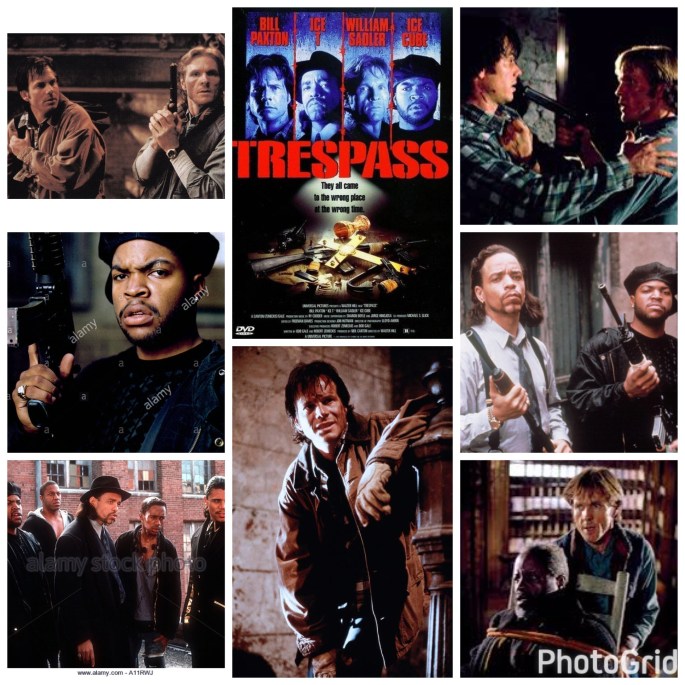
Walter Hill’s Trespass


Walter Hill’s Trespass could raise a pulse in a quiet graveyard, it’s so relentless. It’s one of those single location, breathless siege thrillers where two unlucky dudes, this time Bill Paxton and William Sadler, are barricaded in some unfortunate building while hordes of inner city criminals try to smoke them out. Billy and Willy are two firemen in the wrongest of places at the wrongest of times, led to a dilapidated St. Louis warehouse in search of a hidden cache of stolen gold. When one of them stumbles into a gangland assassination, the two are immediately branded as witnesses and hinted like dogs by boss King James (a snarling Ice-T), his lieutenant Savon (Ice Cube) and armies of their men. That’s pretty much the premise, and simple as it is, action maestro Hill turns it into a ballistic bloodbath that barely slows down for a second once it gets going. Paxton and Sadler are soon at each other’s throats in a feverish haze of adrenaline, whilst the two Ices argue amongst themselves about tactical logistics. Yelling, shooting, running, borderline parkour, cat and mouse games, beloved 90’s action tropes and fight scenes that almost wind the audience as much as the characters. This is a lean cut of a film, concerned only with thrilling the pants off the viewer, hurtling by at a locomotive’s pace without rest until that final shell casing hits the pavement. 
-Nate Hill

“I am very sure that’s the man who shot me.”: Zodiac 10 years later – by Josh Hains

The idea of offering up a defence for David Fincher’s Zodiac seems rather silly given that ten years later it’s widely regarded as perhaps Fincher’s greatest film, often revered as one of the finer films released over the past decade. We all know it’s great, though admittedly, I didn’t know that for several years.

I avoided Zodiac like it was coated in radioactive slime until 2014. I had heard a great deal of positive things about the movie, and had been greatly intrigued by the marketing behind it, but the knowledge that not only was it was a long, slow paced movie, but also a rather unsettling one too kept me away for so long. When I did finally give it a chance late September 2014, my mind immediately gravitated toward Google, scouring through page after page of information about the investigation in an attempt to better understand the finer details of the case, and come to my own conclusions about who the Zodiac killer may have been. My gut however, felt like I’d eaten a bad take out meal, disturbed, shaken, and stupidly hungry for more. I felt like how I imagined Robert Graysmith felt all those years ago, minus the fear, paranoia, and impending danger of course.

That David Fincher populated Zodiac with such a great cast is a marking of a great director who knows how to compile actors who will treat the characters as individuals and not just caricatures. I find it intriguing and perhaps even ironic, or merely coincidental, that Jake Gyllenhaal starred in last year’s underrated thriller Nocturnal Animals, given that in Zodiac he is essentially one. His Robert Graysmith is a nocturnal animal, an increasingly gaunt, wide eyed mouse sniffing around for a piece of cheese, in this case the next tangible clue or lead worth obsessively investigating. And it’s all thanks to his unshakeable love for puzzles, a factor that helps decode the first Zodiac letter. As he digs deeper into the case, we come to fear for his safety, in particular during a genuinely white knuckling scene in which the unarmed and unimposing Graysmith ventures into the basement of someone we begin to assume might put an abrupt end to Graysmith’s life.

Before the blockbuster splash that was Iron Man in 2008 thundered into the film scene, one could have argued that Robert Downey Jr.’s performance as the San Francisco Chronicle reporter Paul Avery was the best he’d ever given. An argument can be made that while he was seemingly born to play the billionaire tycoon and saviour of the planet Tony Stark, his best work still resides in the fractured Avery. The deeper the investigation gets the further Avery seems to slip from cool as a cucumber journalist to a paranoid, spineless slob.

Prior to his self induced exile on a houseboat, I got a kick out of the scene where he joins Graysmith (Jake Gyllenhaal) for drinks at a populated watering hole, chugging back those luminous bright blue Aqua Velvas while rambling about the case and their personal lives. There’s a great sense of both humour and humanity in that scene, as Avery lets his guard down and actually engages with someone beyond a superficial relationship, while Graysmith sheds his mouse-like internalized mannerisms in favour of energetic, loud behaviour, though briefly. From this point forward however, Graysmith has a spine, albeit a rather loosely fitting one, and Avery has seemingly lost his, donning “I am not Paul Avery” buttons in the hopes of fending off potential threats. He’d have made a wonderful Doc Sportello.

And of course, there’s San Francisco detective Dave Toschi played with a real sense of respectable authority by Mark Ruffalo. Toschi, an Animal Cracker snacking family man, and the inspiration behind both Steve McQueen’s preferred method of wearing his service revolver in Bullitt, and Dirty Harry’s iconic law breaking detective Harry Callahan, can’t seem to figure out how to put the pieces together in the Zodiac case, understandable in light of the overwhelming amount of contradictory information at hand. Under Fincher’s direction, Ruffalo portrays Toschi as a driven yet logically minded detective. He remains dedicated for years to catching the Zodiac, but lacks the desperation and paranoia Graysmith possesses. Instead, Toschi approaches every aspect of the case with the kind of logical thinking and reasoning every detective should be in possession of, following procedure by the book, and generally doing everything he can to crack the case until the psychological burden becomes far to heavy to bear. You can see how heavy sits in his mind by Ruffalo’s subtle body language in later parts of the movie, and you soon feel sorry for the guy.

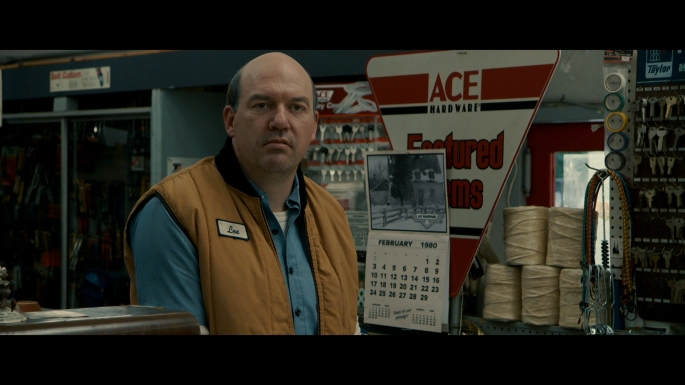
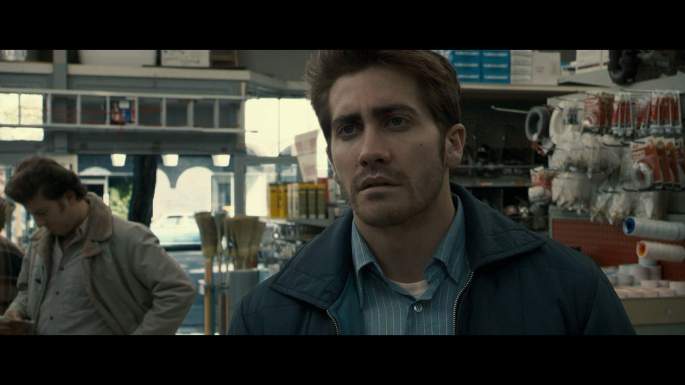
Near the end of the film, Graysmith declares “I need to stand there, I need to look him in the eye and I need to know that it’s him.”, desperate to prove that Arthur Leigh Allen (John Carroll Lynch; perfectly unnerving and subtle) is indeed the cold blooded killer. He gets his wish a short time later when he encounters Allen at an Ace Hardware store in Vallejo where Allen works as a clerk. Allen offers his assistance to Graysmith with a polite “Can I help you?”, Graysmith responds with a “No.”, the two men simply staring at one another until Graysmith leaves, Allen thrown off by Graysmith, and Graysmith appearing much more certain that Allens is the man they’re after. The movie moves forward eight years to when Mike Mageau, survivor of the Zodiac killer at the start of the film, meets with authorities to potentially identify the Zodiac killer, positively identifying Arthur Leigh Allen as the man who shot him and killed Darlene Ferrin. While many had their suspicions and some evidence pointed in his direction, Allen died in 1992 before he could be questioned. Not that he would have confessed anyway.

Admittedly, I have intentionally left out many details and characters, with no disrespect intended, and it should be said that every actor involved in this film, from the leading performances to the smallest of cameos (for exmaple, Ione Skye of Say Anything as Kathleen Johns, a woman who was threatened in her car by the Zodiac killer), give world class performances, some even the best of their careers to date. And the script by James Vanderbilt, based on books by Robert Graysmith, is an achievement of impeccable research and respect for the case. And the cinematography  by the late Harris Savides is bar none the greatest work the man had ever crafted, richly capturing everything with immaculate detail, from the lush valleys of California and its busy, inviting cities and streets, to the Aqua Vera drinks, to beams of red light emanating from police cars. He painted a gorgeous picture for us to gawk at for years to come.

Ten years later, I find it astonishing that Zodiac never truly ends like other movies do. Most movies tie up every loose thread with a ribbon to go with it, others leave room for potential sequels. You can’t end a movie when their is no resolution in reality, forcing a tacked on Hollywood ending wouldn’t sit right with anyone in possession of a brain. You can only leave the audience with the next best thing, the assurance of a living Zodiac victim that the man in the picture they’re pointing to is indeed the man who shot him. That Fincher was bold enough to choose this manner of ending his film shows us he’s a director capable of unsettling viewers long after the film ends, without needing to manipulate his audience or present alternative facts. Zodiac is a bona fide masterpiece, the crime film equivalent to All The President’s Men, and just as good too.
11415612_862880327137375_6688093266983067936_o

John Hillcoat’s Lawless 


John Hillcoat’s Lawless is the very definition of badass. Bathed in blood and moonshine, gilded by Nick Cave’s rustic, textured musical score and brought alive by vivid and varied performances from an eclectic, grizzled cast, it’s one of the most enjoyable gangster pictures to come along in recent years. It follows the rough and tumble Bondurant brothers, fabled bootleggers who defy prohibition and run their product all over the aptly named ‘wettest county in the world’, until the greedy and very corrupt arm of the law snakes its way into the territory. The eldest and toughest is Forrest, a grumbly, shambling Tom Hardy who’s something of a gentle giant, until the straight razor comes out and he’s not. Jason Clarke is Howard the booze hound, who has sour mash coursing through his veins and a temper to prove it, and Shia Leboeuf, somewhat miscast, does his best as the youngest of the three. The three of them run an idyllic little manufacturing and distribution ring spiralling out of their county into the nearby area, until trouble comes looking for them, in the form of a monster played by Guy Pearce. Now when I say monster, I mean it.. when the villain in your film is scarier than Gary ‘Scary’ Oldman’s roguish supporting work, you know you have one hell of an antagonist. Pearce, sporting a sour look and parted hair that Moses could lead his people through, is Charlie Rakes, some kind of government dispatched deputy whose sole purpose is to make out heroic trio’s lives exceedingly difficult. Cheerfully sadistic and ruthlessly corrupt, Rakes is a bona fide moustache twirling psychopath and Pearce milks the role for all it’s worth, as per usual in his case. Oldman does appear briefly but memorably as lively gangster Floyd Banner, a shark of a businessman with a fondness for tommy gun tantrums resulting in vehicular mayhem. The film walks a line between two distinct tones, which can be seen in the characteristics of the pair of older brothers: Hardy is laid back, laconic and ambles along at his own pace, which any film set in the south just has to have a bit of, whilst Clarke is volatile, fired up and hot blooded, also needed in crime fare. So you have a relaxed, violent, wistful piece with a mean streak that sneaks up on you more than a few times. Any Ozark tale wouldn’t be complete without a romantic flair, as Hardy is swept off his feet by mysterious, plucky Jessica Chastain and Lebeouf has an eye for a beautiful Amish girl played by Mia Wasikowska. The film looks visually magnificent, shot in broad, sturdy rural strokes by Benoit Delhomme, and strict, impressive attention to detail is paid throughout. While maybe not as gritty or mythic as it wants to be, or at least as far as Hillcoat’s previous work has been (The Proposition remains the stomach churning gold standard), it’s a full blown, R rated crime picture, something more than welcome in an age when the genre has had its blood somewhat watered down. Highly recommended. 

Brighton Rock: A Review by Nate Hill


Brighton Rock is a character study focusing on one of the most delinquent, misanthropic, sociopathic, maladjusted pieces of work you’ve ever seen. The fiend I speak of is a wannabe British gangster named Pinkie, played by Sam Riley, an actor who doesn’t usually get this dark with his work, but makes quite the impression when he does. Pinkie lives in the seaside town of Brighton, and aspires to rule the crime faction there with a razor brandishing, snarling, self destructive death wish. Despite the quaint and quite pleasant coastal setting, this is a cold as ice story about a guy who brings nothing but despair and violence to everyone including himself. Showing up on the scene to oust local bigwig Phil Corkery (John Hurt), Pinkie declares personal war on everyone around him in a spectacular downward spiral of burnt bridges and furious confrontations. There’s also what has to be one of the most dysfunctional ‘love’ stories to be found anywhere, between him and a clueless waitress played by a very young Andrea Riseborough. She’s deluded by the bad boy effect, blind to the fact that Pinkie cares for her about as much as roadkill. She’s a plaything to him, a curiosity to be toyed with and eventually discarded, or worse. She loves him, or at least naively believes she does, making it quite sad and unfortunate to see their bitter courtship circle the sinkhole. Helen Mirren plays her restauranteur boss who feels the bad vibes coming off Pinkie in waves, and warms poor Andrea. Needless to say, these warnings go unheeded. Watch for Sean Harris, Phil Davis and Andy Serkis in appropriately scummy roles as well. This is Riley’s show, and he owns it with the force tyrannical pissant who is positively bursting with self loathing and homicidal hatred. A dour tale hiding beneath a picturesque shell, strangling us in malaise before we know what’s hit us.

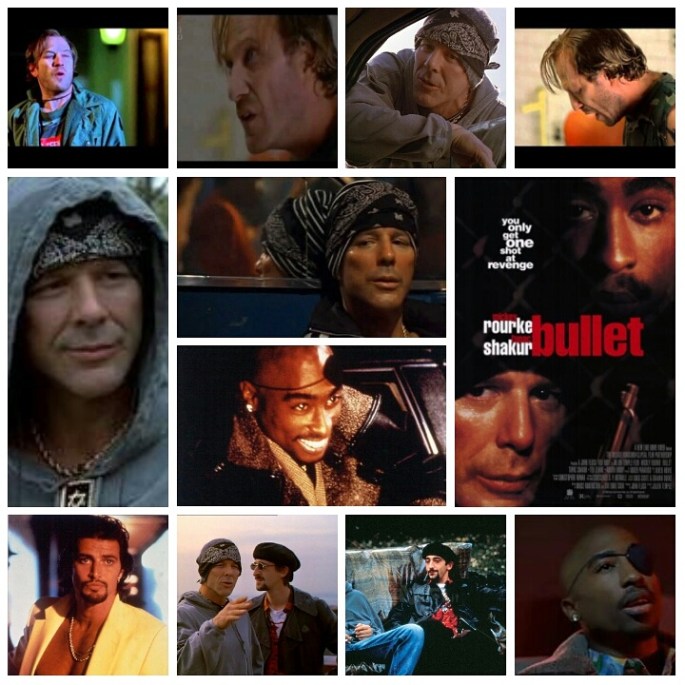
Bullet: A Review by Nate Hill 

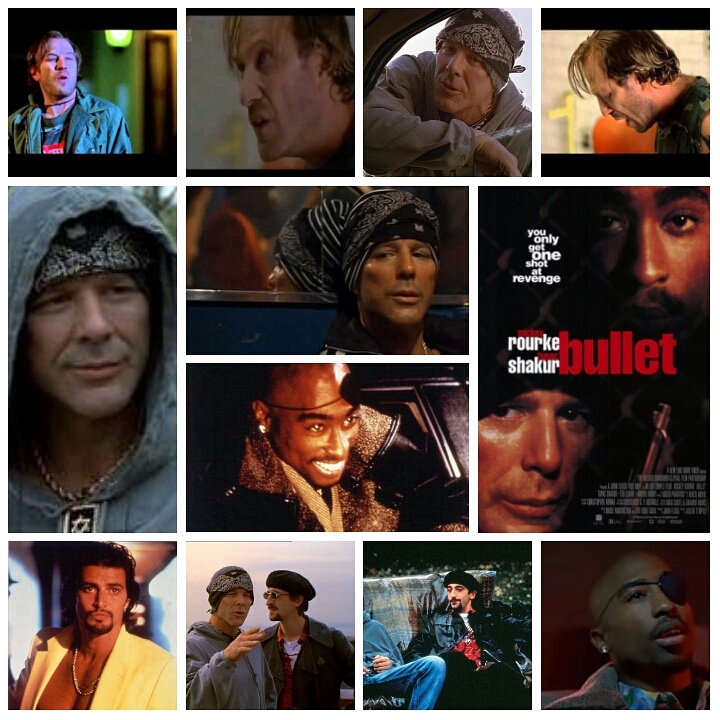
Bullet is a violent cautionary tale about what it means to live a life of crime in New York City’s brutal Hell’s Kitchen, to live (and die) with all the baggage and tragedy that comes along with it. Mickey Rourke is excellent as Butch Stein, a pathetic yet somehow endearing Jewish American hoodlum locked in a personal war with local drug dealer and gangster Tank (Tupac Shakur). Butch still lives with his family, and spends his nights slumming about with slick wannabe wiseguy Lester (John Enos III) and his gangly brother Ruby (Adrien Brody). One gets the feeling that all of them are essentially still little kids who never learned to grow up or use their words, but the sandbox they’re squabbling in now is a dangerous area of town, and their toys are heavy artillery. Butch has another brother, a reclusive weirdo played phenomenally by Ted Levine. He’s distant and strange, but there’s breaks of clarity that shine through, and in those moments he’s pretty much the voice of reason amongst all the tomfoolery that adds to the mortality rate in their district. Levine is unique and shelters the gold in his work until right at the end, letting off an emotional stinger of a cap to his performance that is yet another testament to his skill. Rourke broods through his work with sombre self loathing and a grim resolve, dead set in his ways, perhaps unable to live his life differently, and feeling helpless at the road he’s taken, a dark one that has strayed far from what might have been. Tupac’s role is somewhat underwritten, which isn’t quite fair to the guy, because he has more acting talent than pretty much any other rapper I’ve seen in film. Reduced to a mostly a jive talk sterotype gangsta antagonist, I would have liked to see them allow him to level with Rourke in a way that made their locking horns seem a little bit more than just a petty turf war. Director Julien Temple comes from a music video background, and transitions nicely into the world of the urban crime drama, shooting the seedy NYC locales with glittery precision that suggests festering rot below. It’s an anti-crime film, and I’m always curious to see if such a sentiment is undone by the glorification of such a lifestyle, intentional or otherwise (it’s easy to get caught up in sensation and cinematics, losing sight of what you set out to say in the first place). This one stays true to its word, showing us characters who have irreparably lost their way, and assuring bullet by bullet, death by death, that this isn’t any kind of life for anyone. Searing stuff. 

Antoine Fuqua’s Training Day: A Review by Nate Hill 

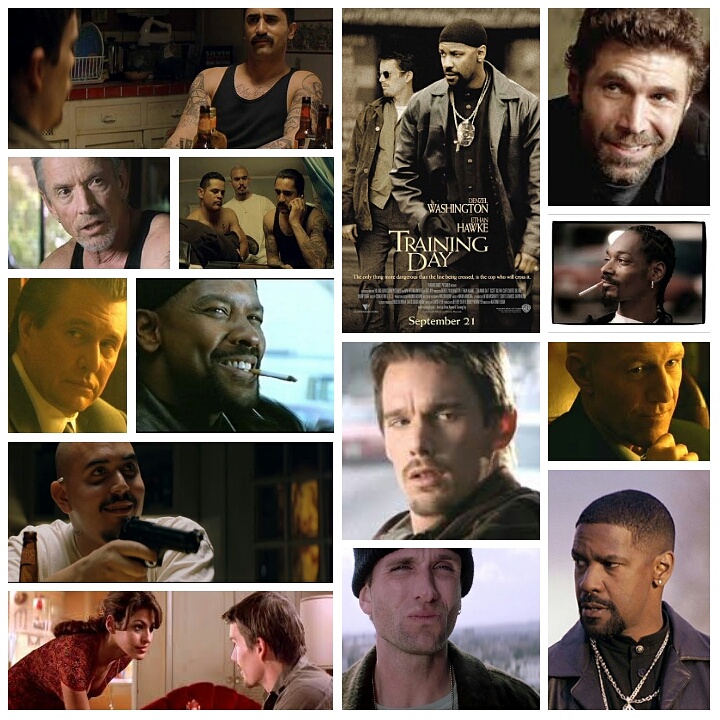
“To protect the sheep, you gotta catch the wolf, and it takes a wolf to catch a wolf.” This questionable sentiment is how rogue LAPD detective Alonzo Harris (Denzel Washington) justifies a heavy laundry list of dirty deeds, scary volatility, sociopathic backstabbing and a complete disregard for the badge that he wears on a chain like dog tags. And indeed, inner city Los Angeles can seem like a war zone, but its like he’s in fact more part of the problem than the dark angel of justice he sees in himself. Antoine Fuqua’s combustible crime drama Training Day rightly won Washington an Oscar for his unsettling runaway train of a performance, and he owns it down to the last maniacal mannerism and manipulative tactic. The film takes place over one smoggy L.A. day (hence the title) that feels like an eternity for its two leads, as well as all the colorful and often terrifying people they meet along the yellow brick road that’s paved with used needles and shell casings. Harris is tasked with showing rookie cop Jake Hoyt (Ethan Hawke) the ropes in his neighborhood, in the hopes that he’ll pass the test and achieve Narc status. Jake is prepared for a run of the mill crash course, but as soon as he’s treated to a verbal beatdown from Harris in the diner they meet at, he has a feeling it ain’t gonna be anywhere close to a normal day. This is just another day for Harris though, as he drags Hoyt by the scruff through drug busts, gang warfare, the worst neighborhood in town and pulls him deeper into his very dangerous world. Fuqua has a knack for getting the atmosphere of his settings just pitch perfect, and the feverish nightmare of the inner city comes alive, seemingly possessing the characters themselves until the atrocities just seem like a way of life. The trouble really starts when they run across Harris’s old drug lord buddy Roger (a wicked Scott Glenn in a role originally intended for Mickey Rourke), who proves a valuable asset later, though not in the way you might think. Harris introduces Jake to his equally crooked and scary team, including Peter Greene, Nick Chinlund and Dr. Dre who struggles in the acting department, especially in a room full of such heavy hitters. Jake is aghast at the horrors he sees and cannot believe the streets are like this. Harris devilishly assures him that this is the job, mutilating the symbol of his badge even more by justifying such behaviour as necessary. Tension reaches unbearable heights during a visit to a Latino gang household run by Cliff Curtis, Raymond Cruz and the eternally scary Noel Gugliemi. This is the heart of darkness fpr the film, a story beat from which there is seemingly no escape, until it becomes clear that Jake has somehow evolved a step up the food chain as far as LA goes, and is now ready to put down the dog who taught him, a dog who has long been  rabid. People complain that the final act degenerates into a routine action sequence. Couldn’t disagree more. With a setup so primed with explosive conflict, it can’t end up anywhere else but an all out man to man scrap, which when followed by no flat out action sequences earlier in the film, hits hard. Their inevitable confrontation is a powerhouse, especially from Washington, who finally loses his composure and yowls like a trapped coyote, his actions caught up to him. In a role originally intended for Tom Sizemore (who would have rocked it in his own way) I’m glad Denzel got a crack at it, for he’s absolute dynamite. Watch for Harris Yulin, Raymond J. Barry and Tom Berenger as the three senior LAPD dick heads, Eva Mendes as Alonzo’s girlfriend, Macy Gray as a screeching banshee of a ghetto whore and Snoop Dogg as your friendly neighborhood wheelchair bound crack dealer. Fuqua keeps attention rooted on the dynamic between Washington and Hawke, who is excellent in as role that could have easily been swallowed up by Washington’s monster of of a performance. Hawke holds his own, and the film is really about how two very different guys view a difficult area of town, how it changes them both, and ultimately how their moral compasses end up on a collision course. One of the best crime framas out there, and quickly becoming timeless.

The Nice Guys: A Review by Nate Hill 

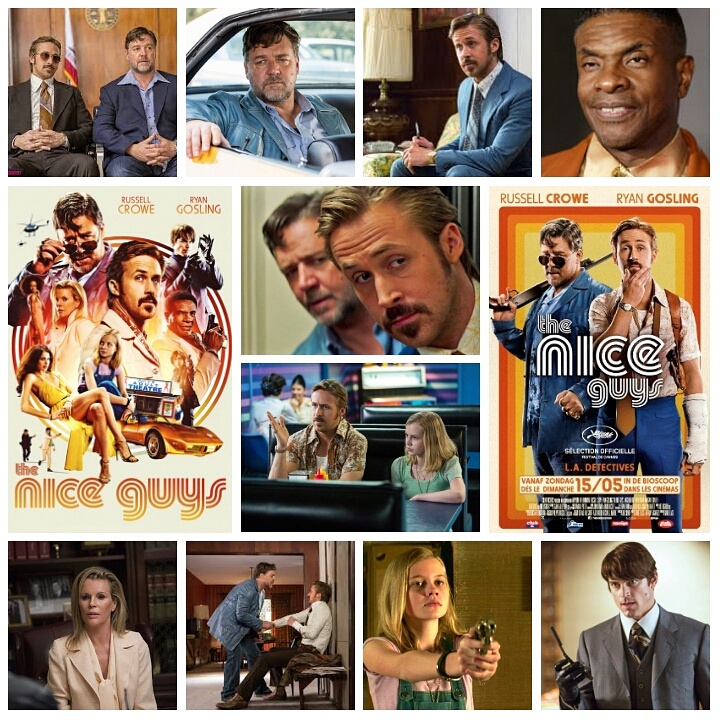
The Nice Guys is a torrential downpour of laughs, prat falls and lovable idiocracy, a formula which director Shane Black perfected with his super underrated Kiss Kiss Bang Bang. This one is no doubt it’s sister film, and while it has comedy in spades, top tier performances all round and luscious 1970’s production design, it’s just a we bit under-plotted. Having said that, that’s my one and only complaint about it. It’s the funniest film of the year by far, thanks to the rough and tumble pairing of Russell Crowe and Ryan Gosling. Crowe is Jackson Healy, a mopey hired thug who will put the hurt on anyone if the dollar is right. This occupation has him cross the path of Holland March (Gosling) an ex cop PI who, according to his daughter (Angourie Rice), is the world’s worst detective. He’s certainly a buffoon, a trait which forms one half of their comedic shtick, the other being Healy’s laid back exasperation everytime March gets them into trouble, which is pretty much throughout the entire film. The two of them unwittingly stumble into a dangerous turn events involving the justice department, murder, the apparant suicide of a porn star (Margaret Qualley), a very scary assassi  (Matt Bomer) and one angry goon played by an afro’d out Keith David. It’s tough to make heads or tails of what’s really going on, but like Kiss Kiss Bang Bang it’s not about the plot or the outcome, it’s more about watching the characters trip over each other in style as they get there. Crowe is terrific, a bear of a dude who’s in way over both his head, IQ and pay grade, aghast at Gosling’s antics at every turn. Gosling’s character belongs to that special class of stupid that is so clumsy that he circumnavigates his own ineptitude and ends up falling right into clues, without a clue how he got there. After a string of recent stoic introvert roles, he’s the most animated character of the film and is clearly having a ball. None of what the duo do would be possible without March’s precocious 13 year old daughter, played with uncanny ability by Rice, whose star is going to be solidly on the rise, I’d wager. A reunion of sorts occurs with the arrival of Kim Basinger as the head of the justice department, joining Crowe again after their work in L.A. Confidential. Basinger isn’t given much to do ultimately, but her presence is a welcome addition to the vibe. Black deserves kudos for his gorgeous recreation of L.A. in the 70’s, right down to the sickening lampshades pastel suits and souped up cars it’s a treat to see. The energy from Crowe and Gosling is where it’s at with this one, and they both eagerly tuck in to the dialogue, making this one groovy, delirious riot of a flick.  

Dark Blue: A Review by Nate Hill 


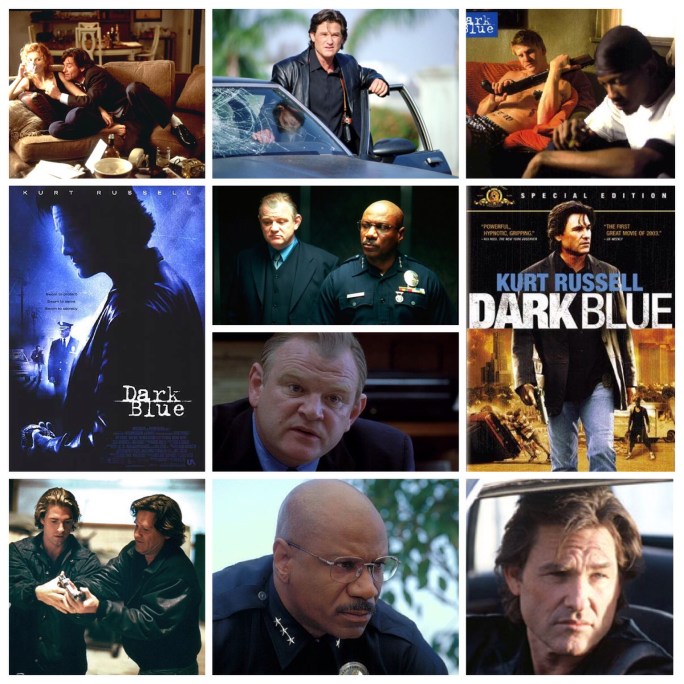
Dark Blue is the overlooked performance of Kurt Russsel’s career, and also the best. It’s also a film that brilliantly examines corruption, lies, brutality and abuse of power through a thoughtful narrative lens and via a powerfully moving story . So why then was it received with an unceremonious cold shoulder? Life is full of mysteries. I was too young to see it when it came out, or pay attention to the buzz surrounding it’s release, but I fell in love with it when I was older, and it remains one of my two favourite LA cop films, alongside Training Day. Kurt Russell throws himself headlong into one of the fiercest and most complex character arcs he has ever been in as Eldon Perry, an LAPD detective who comes from a long lineage of law enforcement. Eldon is a corrupt cop, but the important thing to realize about them is that they never consider themselves to be the bad guys which they are eventually labeled as. To him he’s on a righteous crusade, led by Captain Jack Van Meter (a purely evil Brendan Gleeson), a quest to clear the streets using any means necessary in his power. Eldon is blind to to the broken operative he has let himself become, questioned only by his wife (Lolita Davidvitch) and son, who are both thoroughly scared of him. The film takes place during the time of the Rodney King beating, with tensions on the rise following the acquittal of four LAPD officers. Ving Rhames is resilient as Holland, the one honcho in the department who isn’t rotten or on his way there, a knight for the force and a desperate loyalist trying to smoke out the corruption. Perry is assigned a rookie partner (Scott Speedman) and begins to show him the ropes, which include his patented brand of excessive force and intimidation. As crime ratchets up and a storm brews, Perry realizes that his blind trust in Van Meter and his agenda has been gravely misplaced, and could lead to his end. It’s a dream of an arc for any actor to take on, and Russell is seems is the perfect guy for the job. He fashions Perry into a reprehensible antihero whose actions have consequences, but not before a good long look in the mirror and the option to change the tides and find some redemption, before it’s far too late. It’s not so common anymore for crime films to cut through the fat of intrigue and action, reaching the gristle of human choices, morality and the grey areas that permeate every institution know to man, especially law enforcement. Working from a David Ayer screenplay based on a story by James Ellroy (hence the refreshing complexity), director Ron Shelton and everyone else onboard pull their weight heftily to bring this difficult, challenging, sure fire winner of a crime drama to life. Overlooked stuff.