Joe Carnahan’s Narc: A Review by Nate Hill

image

Joe Carnahan’s Narc is a proper old school ass kicking crime picture, and a blistering one that pulls no punches in the grit department either. Carnahan is clearly in love with the rugged action/genre pieces from the 60’s and 70’s that he grew up with, and every film he has made so far in his career has been reflective of that, starting with this excellent debut. He comes charging out of the gate as fast as his lead character breathlessly pursues a perp through a run down suburban neighborhood, a sequence of pure visceral brilliance that sets the tone and let’s us know he means business. Jason Patric plays Nick, an under cover narcotics officer with a decorated past and the scars to show for it, working the dankest streets of motor city Detroit. When a recently slain fellow officer’s case is reopened, he is picked to investigate, joined by the deceased cop’s former partner, Lt. Henry Oak (Ray Liotta). In this case, nothing is what it seems, agendas are hidden well, and violence constantly simmers just below the surface of every interaction and exchange of dialogue. This is especially the case with Liotta, who gives a staggering career best performance as a cop on the edge of sanity, justifying his heinous actions on the body of his slain friend. No one knows how to lose their cool like Ray, but here he is downright terrifying, a wild eyed monster and the epitome of the guy not to trust, lest you be driven down the same destructive path. Nick uncovers more secrets than he ever wished to know, and it all comes full circle in an angry, pulse rocketing confrontation that serves as one of the best blow ups in the genre, and goes to show you don’t need a huge epic gunfight to cap off your story with style and intensity. Carnahan wisely keeps the fireworks man to man, and intimate in nature, proving once again what intuition he has in the director’s chair. Chi Mcbride is always reliable, here playing the gruff police captain, and Busta Rhymes proves yet again that he’s one of the few rappers who can actually act, giving a pretty damn committed performance as a thug. Liotta owns this one in pure beast mode, but the team effort is what makes it so special, and a crime classic. Carnahan and Co. have done something timeless for crime films, and raised the bar on the intensity level one can attain when everything is in place, and firing on all cylinders. A powerhouse of a film, and a mini masterpiece. 

Brown’s Requiem: A Review by Nate Hill

image

Brown’s Requiem is a neat little slice of Los Angeles film noir in the tradition of L.A. Confidential and Mulholland Falls. It’s based on a book of the same name that’s written by James Ellroy, who actually wrote L.A. Confidential as well, so the crime vibe here is thick, rich and geniune. Michael Rooker is flat out fantastic as Fritz Brown, a world weary, hard bitten private investigator who is hired by a rotund caddie named Fat Dog (Will Sasso) to find his kid sister (Selma Blair) a wayward girl who has apparantly run off with a her sugar daddy, and may be in danger. Brown noses around and before he knows it he’s neck deep in police corruption, violence and murder. It’s convoluted, but film noir always is, and when the plot is left to bake in the California sun, it’s going to be nicely sinewy and labyrinthine to please all the filmgoers put there who fancy themselves gumshoes and like to decipher the happenings along with the protagonist. The trail leads Brown to sinister police captain Cathcart (the late Brion James), brutal thug Richard Ralston (Jack Conley) and many other bottom dwelling nasties. This is a rare lead role for Rooker and he’s riveting, fitting this genre protagonist like a glove. His innate menace and gruff whisper of a voice are put to good use as the hangdog tough guy takes care of business in style. Watch out for Kevin Corrigan, Tobin Bell, Christopher Meloni and a brief but darkly funny cameo from Brad Dourif. Where L.A. Confidential hid it’s grit beneath a sheen of glamour, Brown’s Requiem wears it proudly on its seedy sleeve, a scrappy little cousin to Confidential, and a sturdy little noir mystery boosted by Rooker’s work.

B Movie Glory with Nate: Catch 44

image

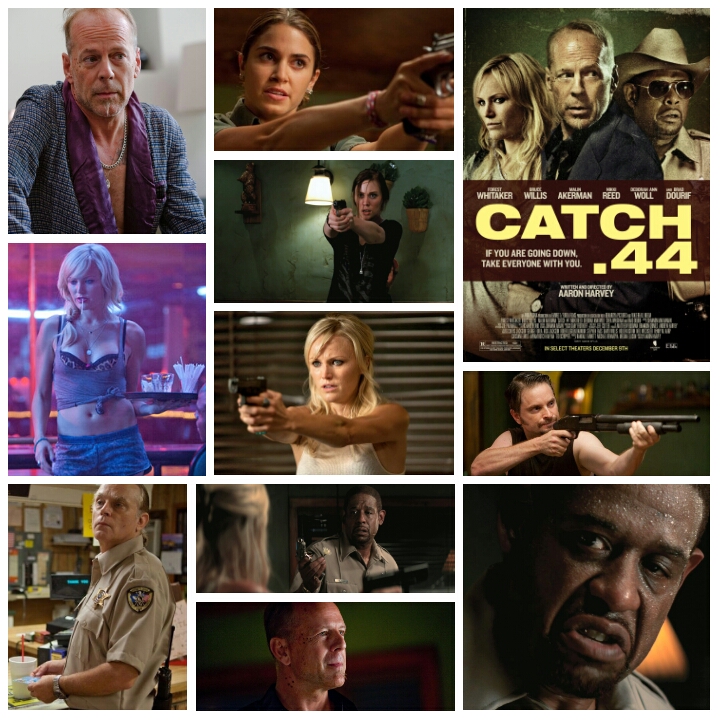
Catch 44 lives in that lurid interzone of direct to video crime thrillers that have the budget for the bare boned minumum: guns, a few big name actors stopping by for a paycheck, and a hard boiled, often ludicrous tale of criminals, cops and sexy chicks knocking each other off for some unnatainable trinket of wealth. Here we meet three lively femmmes fatale: Malin Ackerman, Nikki Reed and Daredevil’s Deborah Ann Woll, the angel’s to Bruce Willis’s Charlie, in this case a sleazy criminal kingpin named Mel. He tasks them with intercepting a mysterious package that passes through a lonesome truckstop diner. All hell breaks loose when the shotgun toting owner (Shea Wigham) takes them off guard,  and blood is shed. From there it all spirals into a mess of chases, strange pseudo artsy setups and the entire cast hamming it up royally as they essentially go nowhere fast. There’s Forest Whitaker who seems to have wandered in from the loony bin, playing a psychotic Sheriff who switches up his accent from scene to scene until we realize we are sitting there watching an Oscar winner warble out a choppy Tony Soprano impression and have to chuckle at the absurdity of it all. Willis has fun doing his nonchalant smirk to kingdom come and sporting a soul patch that steals his scenes before he gets a chance. There’s also an underused Brad Dourif as a confused highway patrolman who wanders in and out of the story. A lot of pulpy outings like this get accused of aping Quentin Tarantino’s style, and while that is often a lazy, bullshit critic’s cliche, here the claim is understandable and not necessarily a bad thing. The soundtrack is appropriately offbeat, the trio of girls have a Death Proof type cameraderie and Willis ambles through his scenes with a verbosity reminiscent of Pulp Fiction. The story is a little haywire and one wonders what the ultimate outcome even means, but it sure has a ball getting there in violent, kooky fashion.

Michael Mann’s Thief: A Review by Nate Hill

image

With Thief, Michael Mann distilled his crime film style into an archetypal, haunting aura that would go on to influence not only his excellent later work, but other filmmakers as well, everything from Refn’s Drive to the police procedural we see on television today. A style that consists of kaleidoscope neon reflections in rain slicked streets, Chrome cars bulleting through restless urban nocturnes and a lyrical, pulsating score, here provided by underrated German electronic maestros Tangerine Dream, who would go on to provide their dulcet tones for Mann’s phenomenal 1983 The Keep. Thief weaves the age old tale of a master safe cracker(James Caan in a beautifully understated performance) the high stakes at risk of him performing one last job to escape, with said stakes represented as his angelic wife (Tuesday Weld) and newborn son. Robert Prosky in his film debut is a serpentine wonder as Leo, Caan’s boss, whose chilling metamorphosis from paternal employer to domineering monster is a joy to watch. The jewel heist scenes are shot with a researched, assured and authentic feel, spurred on by Tangerine Dreams cosmic rhythms and are especially dynamic points of the film. Thief, for me, belongs that special subcategory of Mann’s career along with Heat, Miami Vice and Collateral, (Public Enemies doesn’t get to come in this elite cinematic treehouse club, it didn’t do anything for me) that are very special crime films. They possess an intangible, ethereal quality of colour, metal, music, and shady people moving about a thrumming urban dreamscape, professionals at what they do, cogs in the ticking clock of crime that inexorably drives toward the narrative outcome, be it bitter confrontation and violence (of which Thief has an absolute gorgeous, poetic revenge sequence) or cathartic resolution (like the conventionally satisfying way Collateral ends). Mann has captured neon lightning in a bottle with Thief, and against the odds of people saying you can’t catch lightning twice, he has spark plugged a good portion of his career with that same lightning, creating an artistic aesthetic all his own. To me that is the ultimate outcome of filmmaking, and art as a medium.

The Killer Inside Me: A Review by Nate Hill

image

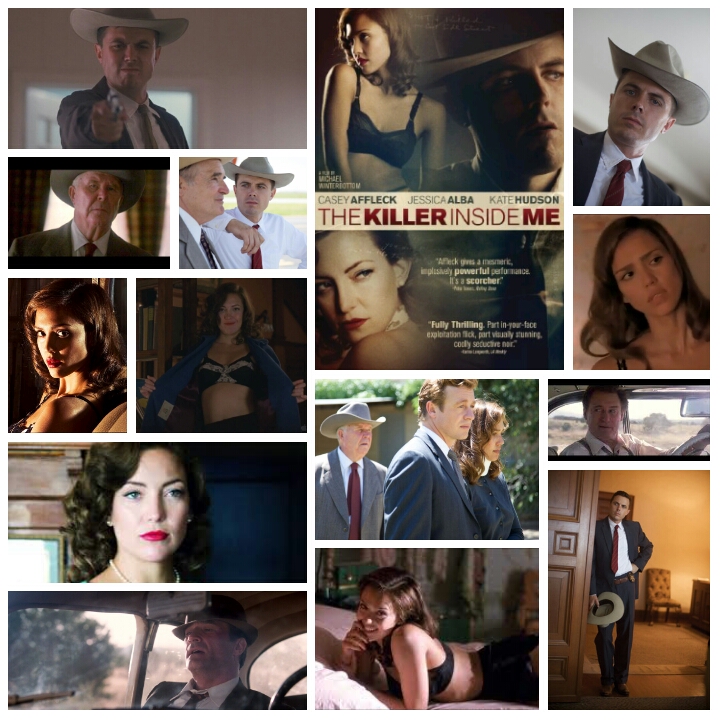
Michael Winterbottom’s The Killer Inside Me is one of the most flat out disturbing films ever made under the sun, even if only for a few brief, harrowing sequences encased in a lurid, laconic, southern fried oddity of a story that defies genre confinement while still planting vague roots in crime drama. When the sequences I speak of show up, and you’ll know exactly when, it takes you right off guard and immediately notifies you that the film has no intentions of towing a line within anyone’s comfort zone. It’s an odd story for someone to strive to tell, and one wonders what inky black corners of the psyche that Jim Thompson was spellunking in when he scribed the novel on which this is based. It starts off conventionally enough, under the prosperous sun of the West Texas desert in the heat of the 1950’s. Sheriff’s Deputy Lou Ford (Casey Affleck) is a regular enough guy, tasked with rousing a local prostitute (Jessica Alba) living in nearby suburbia. He also deals with the dodgy real estate kingpin  Chester Conway (a blustery Ned Beatty) and his cronies. He’s also got a cute fiance (Kate Hudson). He’s calm, cool and connected, right up until the part where he turns out to be a certifiable grade murdering psychopath. Affleck let’s the authoritarian composure bleed away and reveal the layers of eveil beneath, until we begin to wonder if the film we are watching has been interrupted by someone taping over it with something far darker. But no… it’s the same movie. It just veers into territory we didn’t expect and may be taken aback by. Affleck discovers the psychopath within himself, and fits inside the characteristics like a glove. The first person to stray into his path is Alba, and there’s a sequence where he gives her a royal, merciless, and bloody beatdown that will shiver your spine in its blunt, head-on realism. It’s seriously stomach churning shit, and levels off both the film and Affleck’s role in pure stone cold seriousness. He’s a budding lunatic, made all the more dangerous by bis position of power within law enforcement and shielded by his trustworthy reputation. The film resists generic story beats, and instead meanders about, diligently following Affleck from encounter to macabre encounter, discovering his dark interior nature without much rhyme or reason as far as conventional plot goes. This has a wickedly prolific cast for such a risky film, with fine work from Bill Pullman, Brent Briscoe, Tom Bower, Simon Baker and the ever reliable Elias Koteas who adds to the cumulative unease. It’s Affleck’s  shown though, and he splinters nerves with his unpredictable, hollow and fascinating portrait of a psychopath. Soon we begin to wonder what he sees and heats is real,   as characters he interacts with seem to come back from the dead and knowingly coach him towards trouble in trademark indications of serious mental distrbance. This one arrives at it’s end severely south of where it started from, taking the viewer off guard. Those who appreciate the tantalizing, prickly nature of a thriller that isn’t afraid to seriously shake up your shit and take you places you’ve only been to on clammy nightmares will appreciate it. Just mentally psych yourself up for that scene I mentioned, because it will scar you and then some.

The Boondock Saints: A Retrospective Review by Nate Hill

image

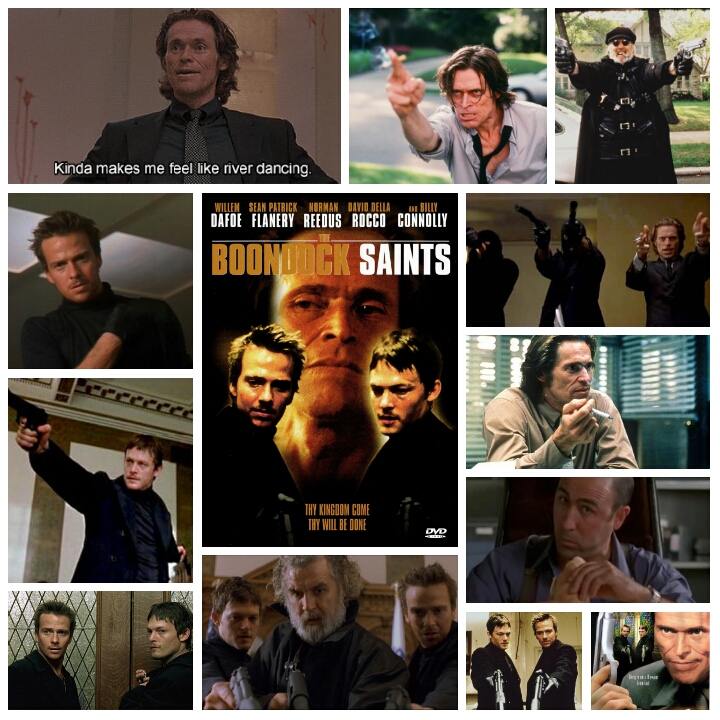
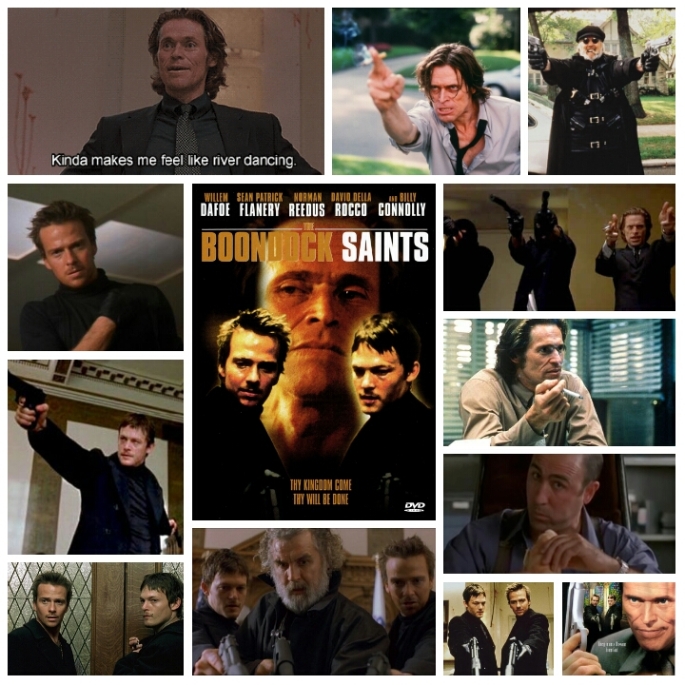
The Boondock Saints is an interesting movie for me, as it’s kind of evolved along with my consciousness as I’ve gotten older. Some films you initially dislike, yet they grow on you gradually until you see them in a new light. Some films you are crazy about right off the bat, yet over time the attraction dims and you realize you don’t really care for them anymore. And then there’s this one. While I can’t say I’ve grown to dislike it, because that’s just not the case, I will concede that as I’ve gotten older and new information on it has crossed my path, I’ve come to regard it in a new light. Also, the parts of my personality which went ape shit for anything pulpy and crime ridden back then have receded a bit as my tastes matured. But try as I might, I can’t bring myself to completely see it in a negative light, despite recognizing certain negative aspects of it which were once not so obvious to me. Saints is a tricky film because on the one hand you have the rabid fans who make up the cult following and have brought it the infamy it has today, as well as it’s sequel, which is really not that great. On the other hand you have the lofty monarchy of high film criticism, bashing it six ways to Sunday, the bad taste of it’s conception and production still on their tongues. Recently I watched the documentary Overnight (a biased film with its own glaring issues, but that’s another story), which chronicles the meteoric rise and fall of director Troy Duffy, who foolishly squandered a gift horse with immature and selfish behaviour, or at least that’s what the film shows. The film had the potential to be a big budget flick with huge stars involved and the backing of Weinstein. That never happened. Duffy’s ego swiftly sent the script into oblivion, until it finally got made years later for less than half the original offered budget, and landed in film purgatory before being squeaked into a meager distribution. A tragedy, say some. But.. is it though? Fate is a strange beast, and if everything went according to plan, we’d have a slick studio monster that might have been good, and no choppy, unique cult favourite to gain unprecedented momentum decades after its chaotic birth. Some food for thought. Anywho, on to the film. It’s low budget for sure and one can tell it’s made by a guy who’s never directed before, but it’s got a silly, cartoonish charm and cinematic flair for style that will keep you watching. Two rowdy Irish brothers named Connor (Sean Patrick Flanery) and Murphy (Norman Reedus) accidentally kill some scary russian mob soldiers in one of the most inventive scenes ever staged, and they discover they have a spiritual affinity for knocking off evil men. So, with no tactical experience whatsoever, they set out on a mission from God to end the lives of the Boston criminal underworld. Dragging their hapless, loveable buddy Rocco (David Della Rocco) along, its only a matter of time before the law tags them, and soon they have loony FBI honcho Paul Smecker after them. Willem Dafoe has to be seen to be believed in what is a career weirdest for him. He plays it like the Joker crossed with Bugs Bunny, never allowing an ounce of restraint or subtlety into the performance. I’d be interested to see the actor/director relationship which led to getting something this zany in the can. Smecker struggles morally, part of him believing the Saints to be a necessary force. They are faced with Italian mafia bosses including a scuzzy Ron Jeremy and Carlo Rota as Giuseppe ‘Pappa Joe’ Yakavetta, a ham fisted Don who wants the Saints gone. Rota is the only one who comes close to matching Dafoe’s maniacal energy, playing Yakavetta to unhinged, mustache twirling delight. Reedus and Flanery hold up their end with physicality and quite a lot of energy, making the McManus brothers two fun protagonists to hang around with. Billy Connolly shows up as Il Duce, an almost invincible assassin from hell who proves to be quite the obstacle for our boys. The concept for the film is relentlessly juvenile, and the action set pieces veer into silliness quite a bit and there’s a slapdash, haphazard feel to the whole thing, an unfinished varnish, or lack thereof to the whole process. It’s just such lurid, reckless fun though, filled with excessive profanity, comic book violence, laughable religious symbolism and deeply questionable morals that seem to have been penned by an eighth grader who’s just completed a John Woo and Charles Bronson marathon back to back. This is a movie that loves the fact that it’s a movie and acts accordingly, throwing everything it can get its hands on at you and yelling ” Look! Look how cool I am”. Is it cool? Up to you. It’s certainly one you won’t forget about. It almost ducks the ‘good film’ litmus test in the sense that you’d be wasting breath in claiming it’s a bad movie. It couldn’t care less about that, and the fans, of which I have to say I still am, seem not to either. It’s not really good, bad, terrible or anything. It’s just The Boondock Saints.

John Hillcoat’s Triple 9: A review by Nate Hill

John Hillcoat’s Triple 9. Bloody. Nasty. Blistering. Nihilistic. And surprisingly deft in its presentation of character. The only clear cut, out and out protagonist is Casey Affleck’s Marcus Allen, a young detective with a wife and kid, brutally unaware that he’s been targeted by a group of stunningly dirty cops and a few ex special forces hardcases to bite the dust in a planned homicide, sparking an ‘officer down’ over the airwaves to distract the force from what’s really going down. With the exception of his straight arrow heroics, the entire rest of the cast is a snake pit of depraved, slimy, reprehensible degenerates, populating a decayed, gang infested Atlanta where the cops are just as likely to empty a clip into your skull as the cholos. Chiwetel Efjor plays Atwood, leader of a most unfortunate crew of misfits who are forced to perform near suicidal heists for tyrannical Israeli-Russian mafia bitch Irena (a bleach blond, terrifying Kate Winslet). Their newest venture is so impossible that they’re attempting to use a slain officer as a ditch effort to get their stake. Of course it all goes to high hell, as we’ve come to expect and love in these type of films, with bullets, profanity, self destructive behaviour and wanton violence languishing all over the screen in glorious excess. Efjor is crackling good, showing brief glimpses of humanity in a dude who has lost his soul down a deep dark well, a caged animal fighting tooth and nail to no avail. The rest of his crew spend the film savagely trying to out – sleaze each other, and I mean that in the best way possible. They are really a bunch of snot rags, and this is a group of outstanding actors having bushels of fun being irredeemable bad boys. Anthony Mackie is walking C-4 as Efjor’s right hand, a guy rotten to the marrow with moral conflict. Norman Reedus leaks grease as an ex special ops prick and their getaway driver. I didn’t think Aaron Paul could be anymore despicable than in breaking bad, but somehow manages it here, playing a dude so grungy you’ll squirm. It’s Clifton Collins Jr. who scores the points though. He hasn’t had a great role in years and he comes out blazing as the icy sociopath of the group. Then there’s Woody Harrelson. Oh, Woody. He’s clearly having a ball as Affleck’s stoner uncle and high ranking cop. He spends the entire film ripped off his gourd on joint after joint, and take it from me, he knows how to play stoned impeccably. Despite the laconic bumbling, he shows that fire and ferocity we’ve come to know from him in brief unmistakable flashes, especially where it matters. Throw in Teresa Palmer as Affleck’s loving wife and Gal Gadot in full slut mode and you’ve got a cast for the time capsule. Hillcoat wastes not a second in propelling his narrative forward with the force of a bulldozer, giving us minute moments of respite amongst the surging monsoon of bloodshed and dirty deeds. Composer Atticus Ross whips up a foreboding, hair raising war cry of a score that kicks in from the first frame and doesn’t quit till the last shell casing has hit the ground. The only misstep the film makes is killing off its best actor way too early on, vut its not enough to be an actual concern or hurt it overall. If sickeningly satisfying ballets of blood, broken limbs and morally bankrupt people engaging in all kinds of giddily fun criminal activities are your thing, this is a great way to kick off the year, cinematically speaking. Hell even if it’s not your thing go check it out. It’ll shake your shit up and then some.

DAVID FINCHER’S SEVEN — 20TH ANNIVERSARY REVIEW — BY NICK CLEMENT

1

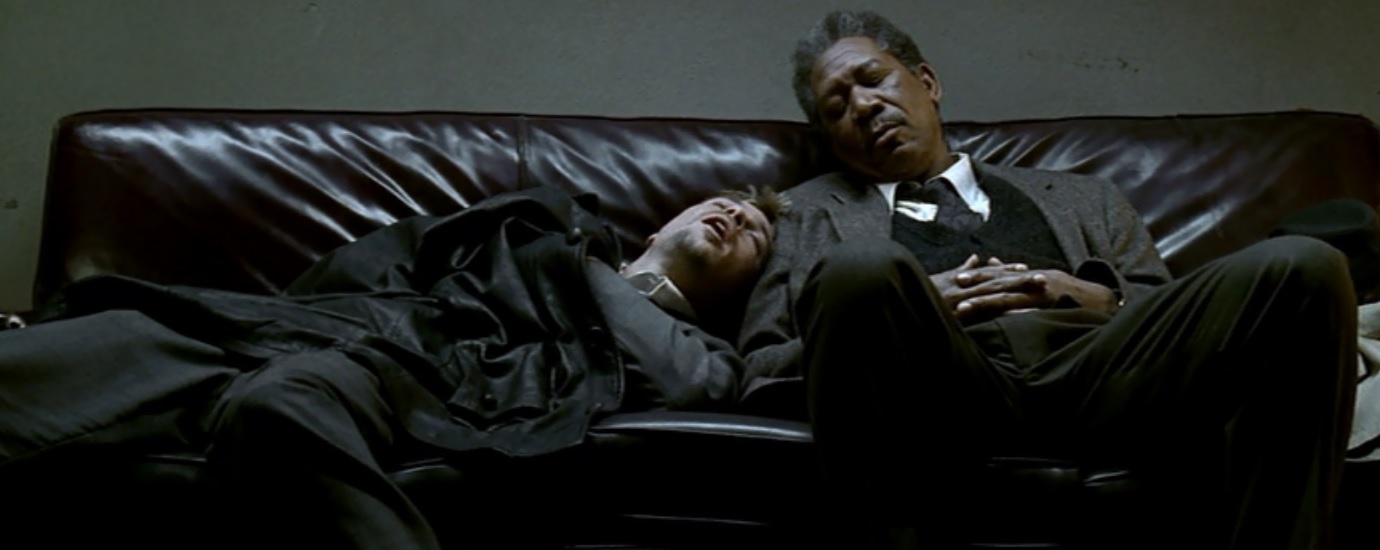
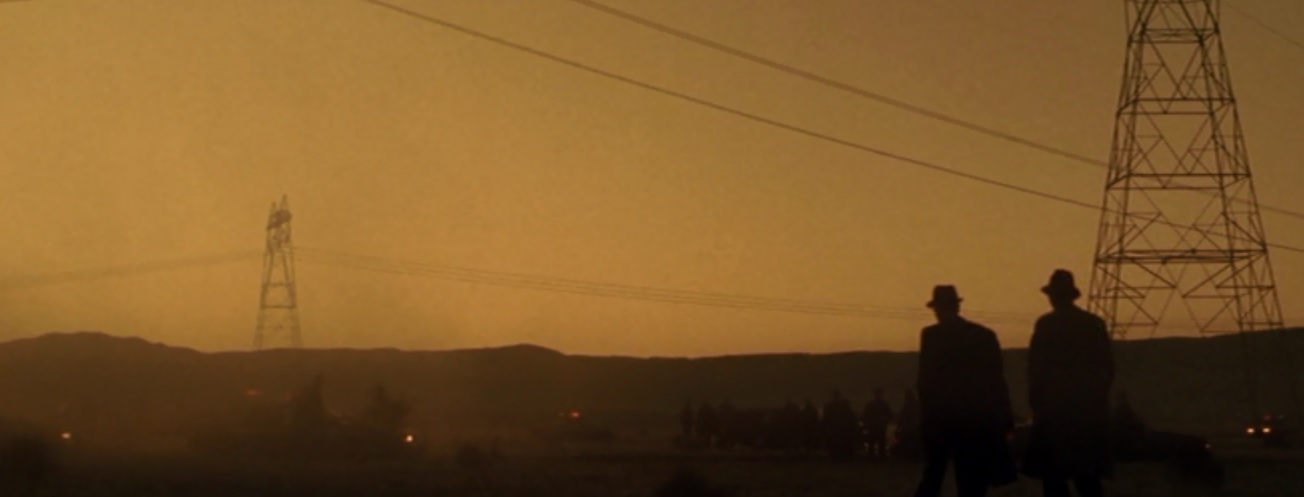
20 years ago, New Line cinema dropped a dark hearted cinematic wake up call in the form of David Fincher’s immortal serial killer thriller Seven. It made a legitimate star out of Brad Pitt, giving a nervously twitchy and playfully cocky performance as a young cop who thinks he knows what he’s getting himself into, and it further cemented Morgan Freeman’s status as a premiere acting force, giving him the chance to riff on the sage, retiring detective character made famous by so many genre offerings. And rather importantly, Seven boldly announced Fincher as a serious directorial talent to contend with, affording him the chance to take material that was directly up his casually cruel cinematic alley, and put his own distinct and rigorous aesthetic stamp all over it. To this day, the film remains frightening and startling to watch, as the twists and turns still feel fresh and diabolical, even when you know how it’ll all finish up. I vividly remember seeing this film on opening night in the theater, at the age of 15, on the same weekend that Showgirls opened, and I can still feel the unease that settled in over the sold-out crowd during those final moments, when we all realized what exactly was in that box out in that field.

2

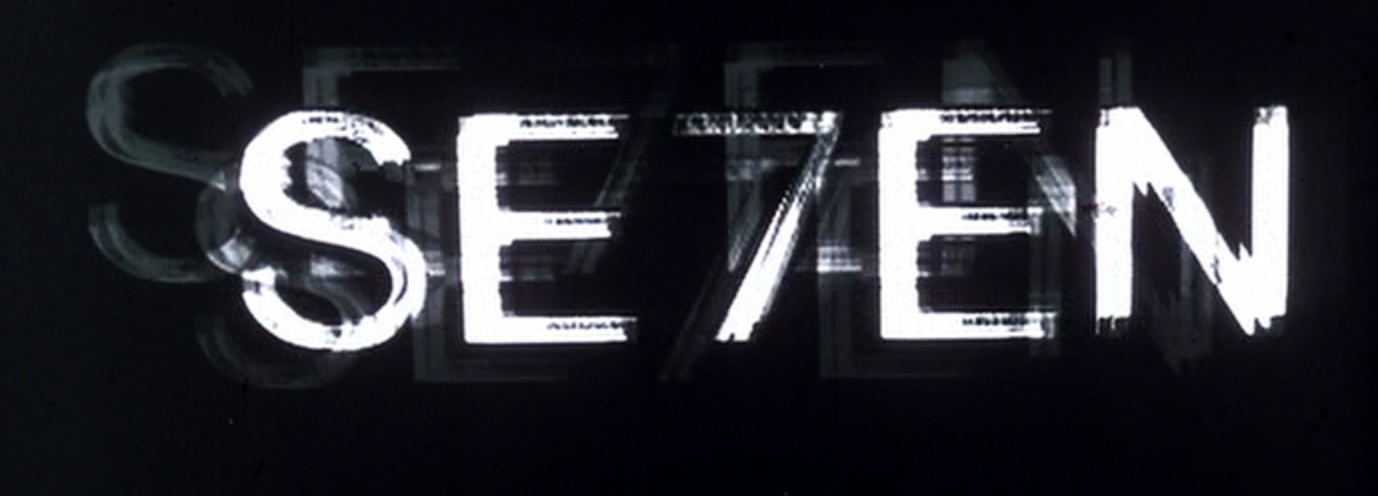
Screenwriter Andrew Kevin Walker’s brilliantly constructed screenplay withstands the utmost scrutiny, and demands total respect; this is a perfect cinematic onion, revealing layer upon layer of themes and narrative implications as each section is peeled off and removed. One of the most fascinating aspects of the entire film is that while it’s a crisply plotted procedural, the psychological undercurrents were never glossed over, with the film exploring the true root of evil, with explanations that feel scarily honest and all too believable. And the fact that the ending remained in tact, after much deliberation and wrangling and ultimatums, is still one of those “Thank The Cinema Gods” moments where the money people and the creative entities could all come to terms with exactly how they knew a film should finish. Darius Khondji’s elegantly nightmarish cinematography is the stuff of legend, each shot museum worthy, while also displaying a sense of grit and atmospheric dread and danger that immediately pulls the viewer into this hellish world on display (wisely, the exact city in the narrative is never explicitly mentioned). Arthur Max’s haunting production design evoked urban decay in ways that few modern films have ever done; this movie feels like it’s rotting at the core. The exacting editing by Richard Francis-Bruce knew exactly how to accentuate each and every scene for maximum impact, while the unnerving score by Howard Shore filled the background, never overpowering, always accentuating. And it goes without saying that the opening credits sequence is one of the most dynamic and influential bits of title design ever put on screen (this is an area that Fincher has always excelled at in all of his incredibly stylish feature films).

3

When Kevin Spacey shows up at the top of the final act the movie somehow gets even more sinister than it had already demonstrated, and the way he needles both Pitt and Freeman during that infamous car ride is a full-on demonstration of how Spacey knows exactly how to own a scene with total command. While attending California State University at Northridge, I had the insane opportunity to view Seven on a frame-by-frame basis, and studying how Fincher controlled his filmmaking was more than eye opening. Close to 98% of the film is shot with a stationary camera, only going hand-held in a few key instances (the hall-way shoot-out near John Doe’s apartment; portions of those climactic moments out in the field), and it was thrilling to see how Fincher and his team were able to heighten fear and suspense more with camera set-ups and pacing than anything else. Seven leaves more up to your imagination than it was credited for doing, as way too many people complained of excessive violence, which, to be honest, just isn’t there on the screen. Yes, clearly, there are more than a few gruesome sights on display, but in comparison to some other genre entries, Seven feels carefully and intelligently restrained in every single area, while always allowing for the idea of horrific human behavior to be lurking in every corner. This is a great and influential piece of filmmaking that ages like a fine wine.