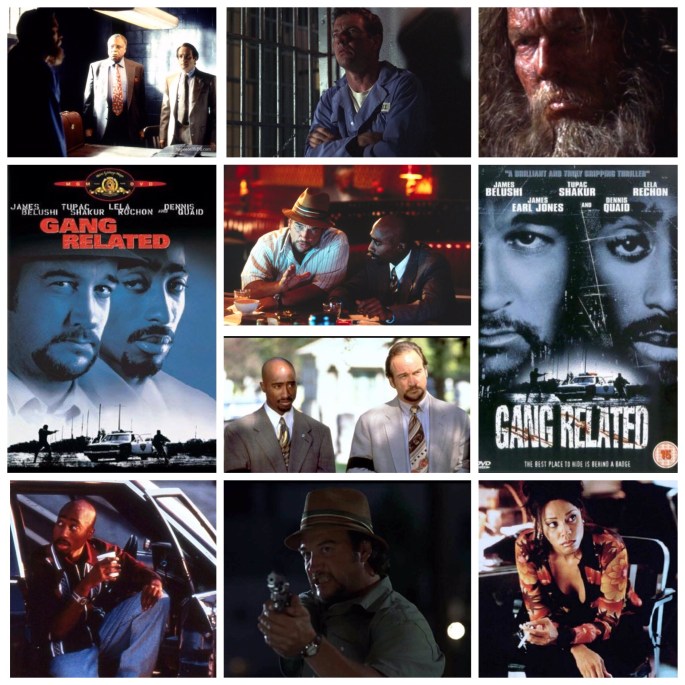
Jim Kouf’s Gang Related

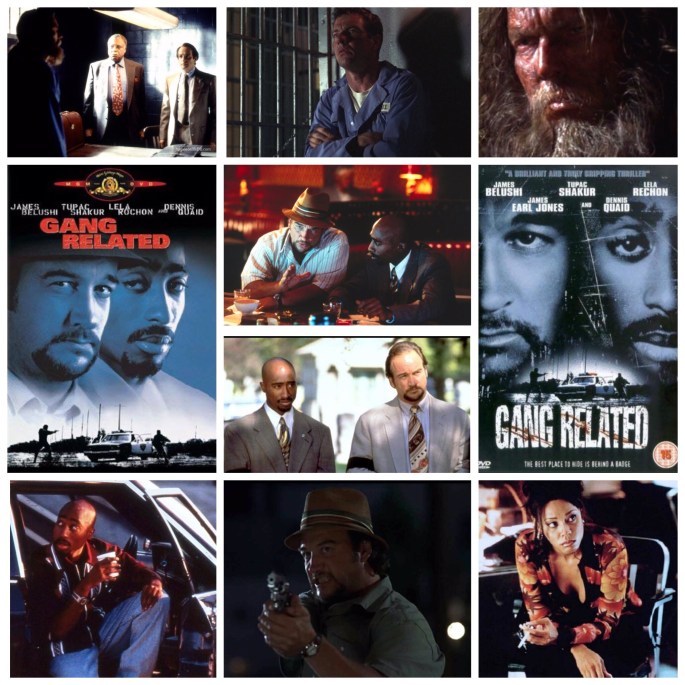
Jim Belushi and Tupac Shakur are an odd pairing on paper to star in a cop flick together, but they’re extremely effective in Jim Kouf’s Gang Related, a twisty neo-noir with a great cast and a few tricks up its sleeve. They play two inner city detectives who are corrupt, but the script doesn’t treat them with the same jaded judgment and moustache twirling villainy that some dirty cops get in Hollywood, there’s a surprising empathy towards them especially in Tupac’s performance. After they accidentally murder an undercover DEA agent, they try to frame a nearby homeless man (Dennis Quaid), coach a few witnesses and make it seem like they were never involved. Things get spectacularly messy when they discover that Quaid’s disheveled hobo isn’t just a nobody and there are people in high places, not to mention both the DEA and gang factions coming after their morally duplicitous asses. It’s kind of like a reap what you sow tale, these two guys aren’t especially nasty characters, but they did commit a really shady act and now the proverbial karmic dildo has come back to royally fuck them. Belushi is the tougher, more unflappable veteran who is more willing to compromise his soul with the cover up, while Tupac is the younger, more impressionable cop and fears the road he’s being led down, and well he should. They both put in fantastic performances, while Quaid does well against type and the three of them are supported by Tiny Lister, David Paymer, Lela Rochon, Wendy Crewson, Gary Cole and James Earl Jones. A solid urban crime thriller, fairly overlooked as well.

-Nate Hill

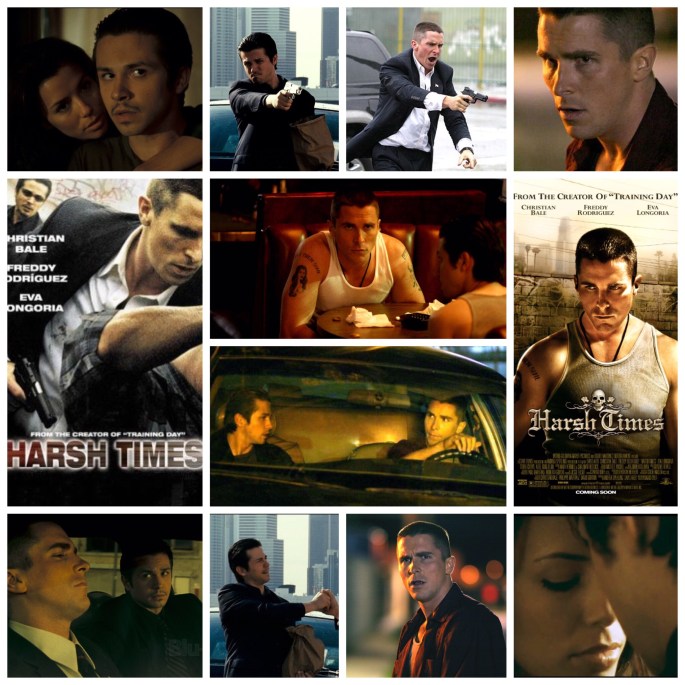
David Ayer’s Harsh Times

David Ayer’s Harsh Times sees Christian Bale in a character study of extreme dysfunction and maladjusted anger, it’s a tough, bitter film to watch but one that leaves a firebrand in its wake, for better or worse. Bale plays Jim, an Iraqi war vet who has come back stateside so internally fucked up and damaged that he can barely hold down a job or keep up steady relationships with anyone that don’t teeter towards self destruction. He spends his days meandering around the outskirts of LA with Mike (Freddy Rodriguez), his partner in petty crime and apprentice in all things spiteful and misanthropic, much to the dismay of Mike’s much more successful girlfriend (Eva Longoria). Jim is both psychologically broken and emotionally untethered, a dangerous combination if left unchecked, and the downward spiral of violence, drugs and antisocial behaviour he slides into is a sad, pitiable thing to see. Did Jim have an affinity for criminal activities before the war, or did his experience change him into the man he is now? What and where is the causality, if any? Where do the lines blur? Ayer keeps it close to the chest, but the clues are all there in Bale’s measured, incendiary performance that may be his best so far. Sparks of vitality still shine through, as when he shows interest in a job with the Bureau (JK Simmons has a great cameo as the chief interviewer), but even with that he causes corrosive friction, perhaps unintentionally. It’s a blistering character study of a guy whose environment has turned him hard, until he goes against the grain almost by second nature and circles a drain that was a long time coming and from which there is probably no escape. Mixed up with a whole bunch of the wrong kind of people from gangbangers to prolific drug runners, this film sees Jim hit the end of his road,. Both Bale and Ayer make it something powerful to watch, if miserable too.

-Nate Hill

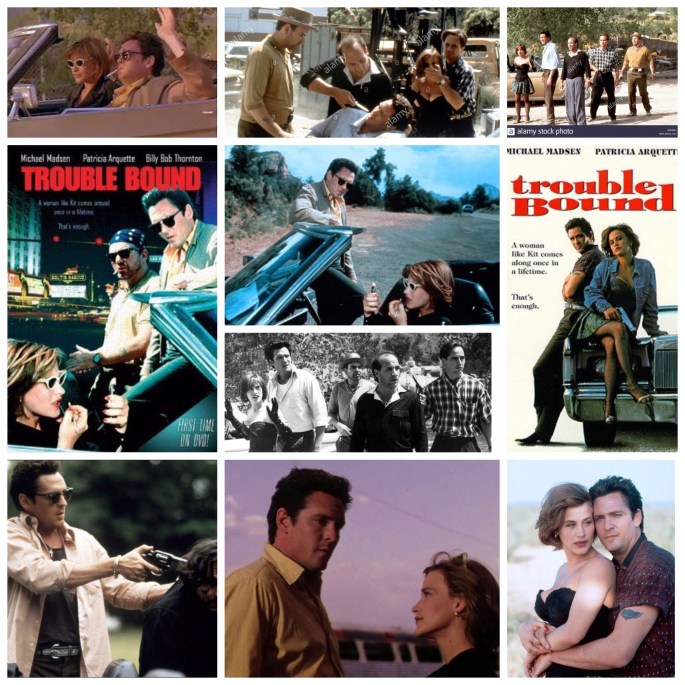
Jeffrey Reiner’s Trouble Bound

Trouble Bound is like a low rent, dysfunctional, meandering Bonnie & Clyde, a laid back crime drama with a dry wit and slight romantic angle, and while it can’t really focus on any of the above aspects either individually or as a group, it still sort of has a lost puppy charm to it, thanks in part to Michael Madsen and Patricia Arquette in engaging performances as our leads. It’s a kind of ‘lovers on the run surrounded by crime’ thing like Tony Scott’s True Romance or Lynch’s Wild At Heart but they only really had enough money and creative juice for a half mast little exercise like this. Madsen plays a thief fresh out of prison trying to go straight, until a gaggle of thugs he used to take up with plant a dead body in the trunk of his car before he takes off. Then they decide they need it back, and start following him all over the country. Meanwhile he picks up Arquette, who is the daughter of a mafia kingpin and wants vague revenge on someone for needlessly complicated reasons. It’s all a bit over elaborate for something of this girth, the strongest element being the chemistry between Madsen and Arquette that’s somewhere south of charming, as they grow on each other while keeping that edge between them. Billy Bob Thornton is hilarious as one of the buffoonish thieves pursuing him, and there’s scattershot work from Paul Ben Victor, Gregory Sporlader, Mark Pellegrino and Seymour Cassell. Entertaining enough and a good time if you’re a fan of the leads, both of whom I love a lot. Kino Lorber released a DVD at some point, which is no doubt the way to find this as the relic of a disc I rented years ago had more grain than a box of shredded wheat.

-Nate Hill

F. Gary Gray’s A Man Apart

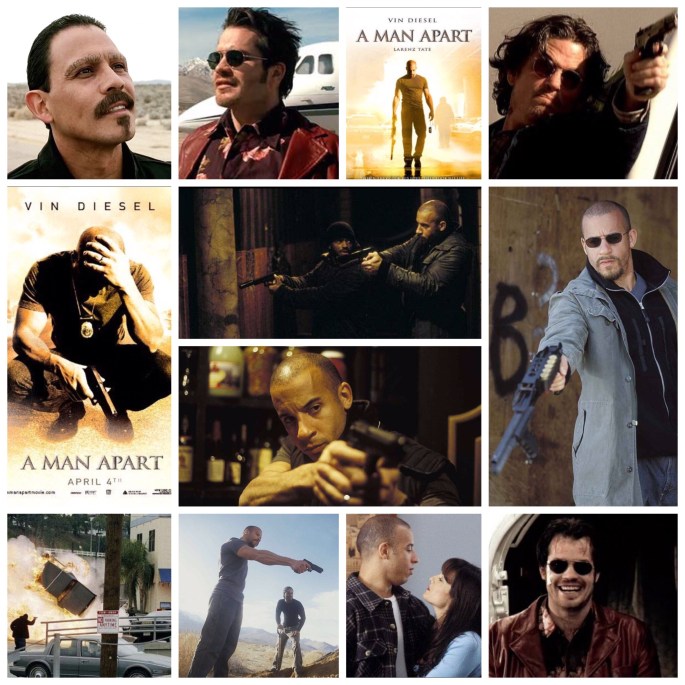
F. Gary Gray’s A Man Apart isn’t exactly the glowing pinnacle of Vin Diesel’s varied career so far, but it sure as hell isn’t one of the lower points either (I reserve that label for garbage like The Pacifier). A scrappy, brutally violent revenge flick, Vin is cast here as Sean Vetter, moody DEA badass who decides to take on the Mexican cartels almost singlehandedly when they wipe out his family. He drags his partner (Larenz Tate) into going rogue and before he knows it the cartels have dispatched a few colourful contract killers his way including Joker-esque Hollywood Jack (Timothy Olyphant), ruthless cowboy Pomona Joe (Jeff Kober), psychotic Hondo (character actor Marco Rodriguez) and others. Despite heavy reshoots and re-edits, this just works as a dark, entertaining piece of action pulp. Diesel is appropriately fuming as a guy with nothing to lose who is capable of horrific violence at the drop of a hat and has long since broken free of the constraints of his badge, it’s a nice no holds barred turn from the actor. Director Gray has an extensive, impressive resume in the action/crime genre, having helmed everything from The Italian Job to cult classic Friday to one of the Fast & Furious films. A Man Apart certainly isn’t his calling card or most prolific effort, and it has its issues, but I admire how down and dirty it gets, it’s like a 70’s Clint Eastwood flick that is so violent and industrial strength rough that it almost feels like an exploitation film. Fun stuff.

-Nate Hill

The Light, The Dark & the souls in between: A review of FX’s Fargo by Nate Hill

Series creator Noah Hawley had the daunting task of taking Fargo, one of the most iconic Coen Brothers films, and turning it into a long form piece of television storytelling for FX. That’s the nutshell version anyways, what he was really up against was a gaggle of rabid Coen acolytes who wanted networks nowhere near the shining legacy of the film, which has gone platinum as a highlight in the Brother’s career. How did he and his team do? Well, better than the Coens themselves did, which may stand as a controversial opinion, but if you’re as big a fan of the show’s brilliant three season run as I am then you’ll agree.

The Coen’s designed the blueprint, if you will, while Hawley & Co. take that template and positively run wild with it. It’s an anthology piece where each season focuses on another bunch of ne’er do well characters who are connected sometimes loosely and sometimes in ways that floor you later on. Yes, all the tropes we love are there: thick blizzards of blinding snow, murder most foul, dark comedy and those hysterically quaint Minnesota accents that seem to be pulled right out of Tolkien’s The Shire in some odd way. But Hawley digs deeper, and for all it’s grounded noir, homicidal schemes and materialistic flash, his Fargo mines for esoteric gold and to me ultimately is about beings of light and dark waging war over human souls on our plane. This is of course my own intuitive theory and is evident sometimes more often than others within the show, but it’s hard not to see when you look at both how cheerfully angelic some of the good, kind folks are here and how fitfully, deliciously self aware the evil ones are, like it’s less their nature to be despicably destructive as much as it is simply their job.

The first and strongest season sees Billy Bob Thornton’s sagely psychopath Lorne Malvo blow into town on a whim and stir up a brew of horrors almost by accident or out of sheer boredom, pushing the already unstable nebbish Lester Nygaard (Martin Freeman) to ongoing acts of unspeakable destruction. A smart cop (Allison Tolman), another slightly less smart cop (Colin Hanks) and others fight the good fight to root out evil and stop Malvo’s unholy snowball effect of mayhem and restore order. This one works the best as a stand-alone, wraps up the loose ends most satisfyingly and holds as the showcase chunk the show has to offer. The second season is brilliant but less focused, flashing back to the snowy 70’s to chronicle Sheriff Lou Solverson’s (Patrick Wilson, also played by a stoic Keith Carradine in S1) battle against the brutal Gerhardt crime family when they’re turf skirmish with a big city syndicate erupts into all out warfare and the bodies begin piling up. What this season lacks in pacing and a clearly painted main villain it makes up for in spectacle, there’s a vast ensemble cast and lush period production design for a visual element that won’t quit. Zahn Mclarnon excels as Hanzee Dent, a troubled First Nations assassin who struggles with being a lone outsider and feels a moral crisis at the penultimate moment, Jeffrey Donovan is enthusiastically nasty as Dodd, the misogynistic elder brother of the Gerhardt clan, while Bokeem Woodbine is the slick city slicker encroaching on his territory. Season 3 unfolds on a smaller scale, back to the grassroots procedural drama that leads to heinous unlawful doings. Ewan McGregor does double duties as two twin brothers in a hateful feud, one of which finds himself in the ravenous maw of terrifying V.M. Varga (David Thewlis in a career best), a demonic opportunist out to cause bureaucratic anarchy within the ranks with his army of underworld goons. Local cop Gloria Burgle (Carrie Coon) tries to fit the pieces together and a mysterious messianic nomad (Twin Peaks’ Ray Wise) presides over the whole debacle with laconic benevolence. That’s the tip of the iceberg really, and vivid impressions are made by a beautifully chosen, star studded cast that includes Oliver Platt, Adam Goldberg, Stephen Root, Bob Odenkirk, Shawn Doyle, Ted Danson, Nick Offerman, Jean Smart, Kieran Culkin, Michael Hogan, Jennifer Copping, Brad Garrett, Russell Harvard, Scott Hylands, Frances Fisher, Francesca Eastwood, Fred Melamed, Kirsten Dunst, Jesse Plemons, Mary Elizabeth Winstead, Cristin Milioti, Angus Sampson, Michael Stuhlbarg, Goran Bogdan, Shea Wigham, Mary McDonnell, Key & Peele, DJ Qualls, Scoot Mcnairy, Mackenzie Grey, Wayne Duvall and Bruce Campbell in a cameo as Ronald Reagan.

Each of the three seasons is a dense, meticulously woven patchwork quilt of violence, mistaken identity, literary references, surreal allegorical imagery, unpredictable plot turns, monsters, and mayhem, each with its own unmistakable style and atmosphere. Much of the storytelling is filled with things that seem like planted arbitration, like UFO sightings or cutaways to other vignettes, but they’re there to gild the tales with further eccentricity and for you to make of them what you will, as much of it is never explained or totally elaborated on, which I appreciate. With each episode there’s a lot more going on than what’s in the main arc, these are stories to be savoured and scrutinized for clues and references, of which there are many subtle callbacks to the Coen’s other work, it’s fun to notice and tally them up. The themes of light and dark are ever present through the entire run though, as if we’re privy to a never ending battle of forces wrapped in a cluster of crime stories centred around snowy Minnesota and surrounding areas. I’m not sure whether they plan to go ahead with a fourth season and I’d welcome it, but as it stands this is a beautifully made trilogy, with fantastic writing that practically feeds the brain like prosaic protein, a cast that’s to die for and narratives that truly take you on harrowing, hilarious adventures. You betcha.

-Nate Hill
Stephen Kay’s Get Carter

As far as the remaking of cult classics, Stephen Kay’s Get Carter is a piss poor effort, so much so that not even a positively stacked cast could do much of anything about it. The original saw fearsome bulldog Michael Caine getting shotgun fuelled revenge and has since become iconic, while this one switches up rainy Britain for rainy Seattle and a sedated Sylvester Stallone in a shiny suit takes over as Carter, a mob enforcer who hails from Vegas but has travelled north both to escape scandal and look into a shady family matter. There he finds all sorts of characters played by a troupe of big names, character actors and even Caine himself in an extended cameo as a bar owner, but it all feels lazy, listless and flung about like a ball of yarn full of loose plot threads and scenes that fizzle. It’s obvious that there were major editing problems here as the pacing is in conniptions and an entire subplot involving a love interest back in Vegas (Gretchen Mol) has been slashed to ribbons. So sloppy was the final product that my college acting teacher, who landed the role of Carter’s gangster boss back in Vegas, although mentioned brazenly in the opening credits, can only be seen briefly from the neck down and heard on the phone, except for whatever reason they decided to dub his voice over with an uncredited Tom Sizemore, which is just so bizarre. Anywho, Stallone sleepwalks his way through a local conspiracy involving his dead brother, the widow (Rachel Leigh Cook), a mysterious femme fatale (Rhona Mitra), a weaselly computer tycoon (Alan Cumming) a sleazy pimp/porn baron (Mickey Rourke) and more. It’s just all so terminally boring though, and none of the clues or twists spring to life or feel organic at all. Rourke provides some of the only life the film has to offer as the villain, a guttural scumbag who has two painful looking nightclub boxing beatdowns with Stallone which are fun. John C. McGinley raises the pulse somewhat as a lively Vegas thug dispatched by Sizemore’s voice to bring Stallone back to face the music. Others show up including Miranda Richardson, Mark Boone Jr., John Cassini, Johnny Strong, Frank Stallone, Tyler Labine and more. None of it amounts to much though and by the time the anticlimactic plot resolutions arrive and Carter jumps a red eye back to Vegas before the credits roll, you wonder what the point of it all was and want your hour and forty minutes back. A thorough bummer.

-Nate Hill

B Movie Glory: toXic

In the endless sea of direct to video output, sometimes you find one that although is rough as all hell around the edges, has potential and moments that shine, even if they’re stuck in a muddled, overcrowded narrative. Toxic is one such film, a psychological horror/crime hybrid that is so full of B level movie legends, rappers and porn stars that some are only around for a second, a whole galaxy of fringe talent caught up in a story that needs complete attention to be understood, not because it’s any kind of genius labyrinthine story, but simply because it’s edited with a chainsaw and has more dangling plot threads than an entire season of CSI. There’s two timelines it takes place in, a setup that already isn’t explained well enough off the bat, but such is the level of commotion. In one, nervous mobster Tom Sizemore (nuttier than usual as this was his first gig after a stint in jail) hires two henchman (Corey Large and Danny Trejo) to find his daughter (Charity Shea) who is apparently very dangerous, but he won’t say how or why. She ends up at a strip club run by rapper Master P and her presence seems to cause nothing but trouble for everyone there including a severely depressed hooker (Dominique Swain), an ill fated homeless man (C. Thomas Howell) and others. In another timeline we see another strip club run by pimp-with-a-heart-of-gold Costas Mandylor, in which Corey Large shows up again as a mysterious bartender and the whole berserk plot hinges on his two characters, but they really should have let him stick to producing duties and hired another actor because he’s in desperate need of some acting classes. All manner of other famous faces make cameos too including Bai Ling as Sizemore’s weird clairvoyant girlfriend, scene stealer Susan Ward as a sympathetic bartender, Steven Bauer, Lochlyn Munro in dual roles, Paul Johansson, Ron Jeremy, James Duval, Johann Urb, Holt McCallany, Cerina Vincent, Shar Jackson, Nick Chinlund and the list goes until you start to wonder if these prolific people were just hanging around the studio lot and needed extra work. Here’s the thing: there *is* actually a discernible story here that’s interesting and engaging, and upon reflection it does all in fact make sense. *But*…in a ninety minute film with this many cameos and random stuff, it’s too much to feel coherent. I will say that the final twist/revelation is handled in a top tier, musically visceral way that’s quality stuff, but so much else was kind of incomprehensible that several people I’ve watched it with could tell there was a twist by the tropes being used, but not what it actually was. With a new angle on editing, sharpening up the script and whatnot this could have been something more accessible, but I still really like it for effort put into a neat storyline, the laundry list of cool cast members, that final scene that’s done so well and the obvious, endearing homages to Tarantino and Tony Scott in style and tone. Interesting, pulpy, lurid, scattershot stuff.

-Nate Hill

Martin McDonough’s Seven Psychopath

No other film has grown on me quite the way Martin McDonough’s Seven Psychopaths has. Initially disarming in expectations versus result, this isn’t just your average black comedy, there’s wonderfully subversive meta-narrative twists and it has something subtly acidic to say about the development and treatment of genre screenplays in the Hollywood of today, which wasn’t the approach I was expecting prior to seeing it for the first time. That and it’s straight up one of the funniest fucking things I’ve ever seen. Less serious and emotional than McDonough’s masterpiece of a debut In Bruges, the tone here is about as deadpan as it gets, with Sam Rockwell and Christopher Walken as Billy and Hans, two LA oddballs who make a living snatching people’s dogs and collecting the reward money later. Inevitably they grab the wrong guy’s dog who just happens to be unhinged gangster Charlie (Woody Harrelson), sparking a brutally violent wild goose chase all over LA and the surrounding area. It sounds like you know what you’re gonna get, right? Not really, for you see they’re joined by boozy, neurotic screenwriter Marty (Colin Farrell) who is trying to pen a script of his own titled ‘7 Psychopaths’, which not only becomes a running joke, but also provides aside vignettes and even heavily influences the plight of our three heroes in the ‘real world.’ Hans is a quiet, compassionate pacifist and Walken plays him against type, very understated. Farrell’s Marty is a hilarious, anxious wreck who orders six beers at noon and tears his hair out both from writer’s block and the unpredictable behaviour of Rockwell’s Billy, who is a blisteringly funny, antagonistic weirdo that should be on medication but has instead been let off the leash for what is probably the best and definitely the funniest performance the actor has ever given. Harrelson plays it loopy as a guy who’ll blow your head off without twitching an eye but bawls like a toddler when no one can find his silly shit-zu for him. They’re joined by Abbie Cornish and Olga Kurylenko who don’t have much to do (also a meta joke later on) as well as Zeljiko Ivanek, Kevin Corrigan, Linda Bright Clay, Michael Stuhlburg, Michael Pitt, Harry Dean Stanton, all giving lovely work. Tom Waits is as great as you’d expect Tom Waits to be as ex-serial killer Zachariah, who carries his pet bunny rabbit around and tells harrowing tales from years before. The real hero here is McDonough’s brilliant script, and I love how it ducks the limbo bar of Hollywood writing standards and aims for something just left of left field. Farrell says it best himself when he laments “I don’t want it to be all violence and action though, it should be a set up for an out and out revenge flick and the heroes should just drive off into the desert and talk for the rest of the movie…” then he, Rockwell and Walken do just exactly that, for a time anyways until Harrelson catches up with them and the final confrontation gets skewered by McDonough and his refusal to play it straight too. We need more writers like him in Tinseltown, and although I wasn’t so much a fan of his newest Three Billboards one, Bruges and Psychopaths have already been minted as classics for me, two of the best this century.

-Nate Hill

Barry Sonnenfeld’s Get Shorty

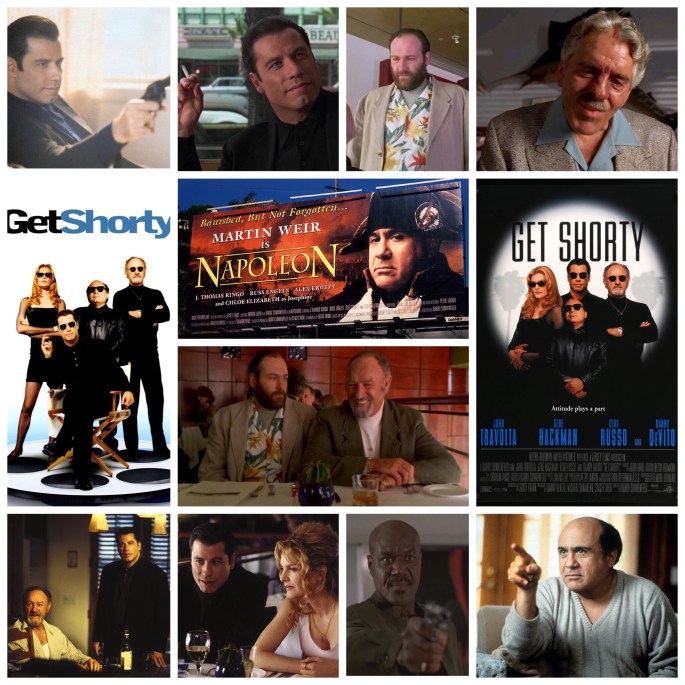
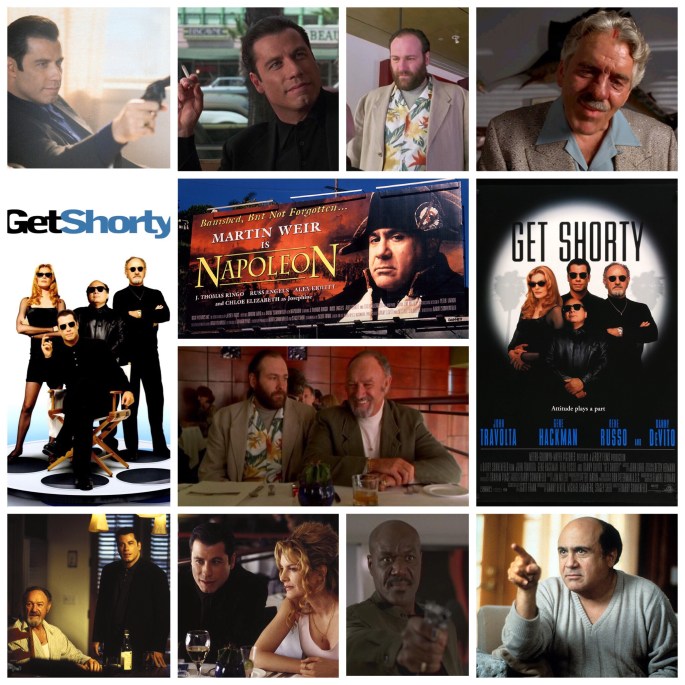
Barry Sonnenfield’s Get Shorty could also laterally be called Elmore Leonard’s Get Shorty, since star John Travolta fought tooth and nail to keep all of the author’s dense, intelligent and pop culture soaked dialogue intact. The film is not only better for it but comes out a glowing gem, a giddy crime/comedy classic that’s as special to me as a comfort blanket to a toddler. A rainy day film, a lazy Sunday go-to DVD, I could watch the thing anytime and not only be consistently entertained with each revisit, but notice something I didn’t the previous couple hundred times. Travolta has never been cooler as Chili Palmer, a silver tongued Miami mobster who is propelled on a meta odyssey to Los Angeles after his boss dies and a whirlwind of confusion is whipped up. There he gets a taste for the film industry after meeting sad-sack B movie mogul Harry Zimm (Gene Hackman, priceless), scream queen actress Karen Flores (Rene Russo, never sexier) and a host of others. It’s a Hollywood satire, a pulpy crime thriller, a brilliant dark comedy and ensemble screwball piece that comes as close to the shores of perfection as movies can get. Dennis Farina gives one of his timelessly precious, angry wiseguy turns as Ray ‘Bones’ Barboni, another Miami hood and the barbaric, obnoxious answer to Travolta’s cool cucumber gentleman act. Delroy Lindo has further villain duties as crime kingpin Bo Catlett, who also has his sights set on celluloid and will intimidate, kill and extort his way there at any cost. Danny DeVito does a sly, biting send up of method acting as Martin Weir, a lovable thespian with his head just a wee bit jammed up his own ass. James Gandolfini is pure class as Bear, the stuntman who moonlights as an enforcer and carries his adorable daughter around anywhere he goes. Rounding out the cast are perfectly pitched turns from Jon Gries, David Paymer, Bette Midler, Martin Ferrero, Miguel Sandoval, Jack Conley and a special surprise cameo that I won’t spoil. Although not my favourite Leonard adaptation (Steven Soderbergh’s Out Of Sight holds those honours), it’s definitely the most fun, and by far the most entertaining. The cleverness of offhand Hollywood jargon, peppered with obscure references that expect the cinephile in you to keep up are pure bliss, not to mention the tongue in cheek tough guy banter, the playful music by John Lurie, the lighthearted, whip crack editing from Jom Miller/Ted Woerner and the showcase performances from all actors involved, feasting on Elmore’s fine dialogue like steak & lobster. There’s a sequel called Be Cool which I have been reluctant to see, so I can’t weight in on it but apparently it doesn’t measure up, so you could always divert and check out Sonnenfield’s 2001 comedy Big Trouble, which is fun too and shares some costars with this (Farina and Russo appear in both). Or you can just pop this masterpiece in for another visit, and let it be it’s own sequel. I do all the time.

-Nate Hill

Martin Scorsese’s The Departed

Martin Scorsese’s The Departed is like being at a frat party where you slowly begin to realize that every other person there is an irredeemable asshole, but they’ve somehow strung you along with charm and charisma thus far. Like a nihilistic den of wolves where everyone involved is out to get each other, its quite simply one of the most hellbent, devil may care, narratively self destructive crime flicks out there. I admire that kind of reckless abandon in a huge budget Hollywood picture with a cast so full of pedigree it’s almost like The A list agencies just packed up all their talent in a clown car, drove it to South Boston and turned them loose on the neighbourhood. By now you know the fable: Two roughnecks, one a mobster (Matt Damon) who has infiltrated the state police, the other a deep cover operative (Leonardo DiCaprio) who is posing as a crime figure. Both are are intrinsically connected to Boston’s most fearsome gangster Frank Costello, played by Jack Nicholson in a performance so balls to the wall one almost feels like his 89’ Joker ditched the makeup and left Gotham for Southie. He’s a calculating maniac who openly mocks the veteran sergeant (Martin Sheen) putting in every effort to take him down, and rules over his vicious soldiers (Ray Winstone is a homicidal bulldog and David O’ Hara gets all the best comic relief) like a medieval despot gone mad. At well over two hours, not a single scene feels rushed, drawn out or remotely dawdled, there’s a breathless tank of violent machismo and wicked deception that never runs out, as the artery slashing editing reminds you every time it cuts to a new scene before the soundtrack choice has made it past the intro. The supporting cast has work from the gorgeous Vera Farmiga as a sneaky cop shrink, Anthony Anderson, James Badge Dale, Kevin Corrigan and more. Mark Whalberg also shows up to do the bad cop routine in a role originally meant for Denis Leary, and as solid as he is I kind of wish old Denis took a crack at it because you can obviously see how perfect he would have been, and is the better actor. As much as Jack Nicholson eats up the spotlight and chews more scenery than the T-Rex from Jurassic Park, my favourite performance of the film comes from Alec Baldwin as the head of the police tactical team. Spouting profanity like a fountain, slamming Budweiser as he swings his 9 iron and kicking the shit out of his employees, he’s a mean spirited, violently comical force of nature and I fucking love the guy. Scorsese has clearly set out to not deliver a heady message or lofty themes here as some do with crime epics; the characters all operate from the gut, use animal instinct and never pause to ponder or pontificate. The only message, if any, is the oft spouted ‘snitches get stitches’ as you can clearly see by the film’s final shot, also the only frame containing anything close to a metaphor. I admire a film like that, and certainly enjoyed the hell out of this one.

-Nate Hill