Alan Parker’s Come See The Paradise


Alan Parker’s Come See The Paradise tackles a little spoken of, tragic period of American history: the internment of thousands of Japanese families in prison camps following the attack on Pearl Harbour, which sparked World War II. After the incident, a wave of frenzy and paranoia roiled across the states, and many of these people were separated from their loved ones for years, an event that altered thousands of lives, but not one you hear too much about in film. Parker is a born storyteller, whether it’s historical lore or gothic genre brilliance (insert obligatory Angel Heart reference), and here he approaches the subject matter with little to nothing in the way of melodrama, classic orchestral swells or tissue box bait, letting the story happen naturally and neutrally, the drama organically rising scene to scene as they happen. Dennis Quaid plays an Irish American man who falls in love with a Japanese girl (Tamlyn Tomita), and over a few years begins a life with her. He is a fiercely independent union man, passionately fighting for the working class, while she comes from a very tight knit family who rely on each other to make ends meet. Somehow the two of them make it work amidst the early stages of the American working machine, the love they have for each other keeping them afloat. Then the attacks occur. Quaid is separated from her and their daughter for over a decade, and the film’s pacing makes you feel every lost, broken moment of it. When their reunion does happen, it’s nothing like the romantic, tear jerking catharsis you’d expect, but a testament to Parker’s commitment to realism. The sadness comes from the hollow, unceremonious way in which these people are affected by such things, and how they simply go on, adapt and adjust, the pain an intrinsic part of everyday life. The movies show a different picture of that usually, an idealistic bubble where things always somehow end up alright, and every last thread is tied off somehow. Not with this one, which is why it may have been forgotten. In any case, it’s a beautifully tragic, eye opening piece that stays true to its narrative and follows it’s characters throughout bittersweet, minimalistic and believable arcs. 

-Nate Hill
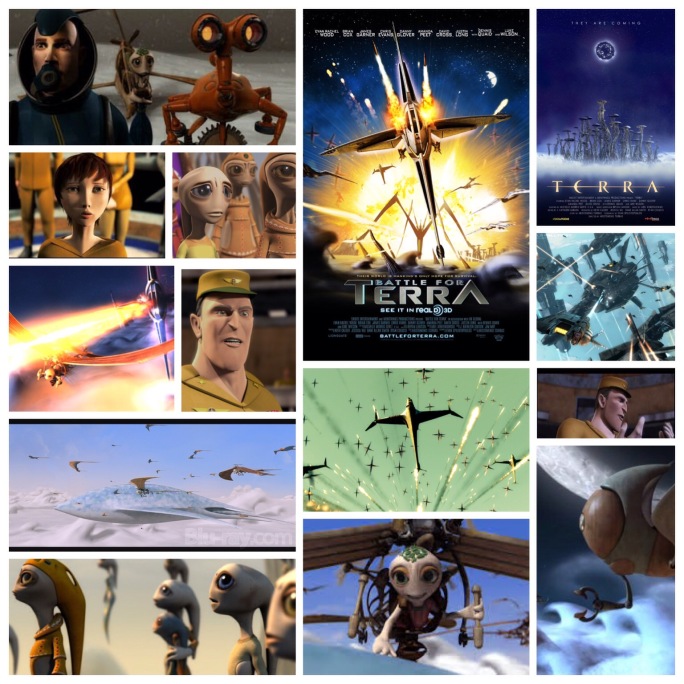
Battle For Terra: A Review by Nate Hill

  
Battle For Terra is right up there with Titan AE as one of the most underrated animated films out there. It was shunted to the area off the beaten path of the genre, released quietly and inconspicuously back in 2009, sneaking just past people’s radar. Not mine. I waited eagerly for a theatrical release, which never came, and grabbed the dvd as soon as it hit shelves. It’s a dazzling science fiction parable not unlike Avatar, but a little softer, reverent and easy on the pyrotechnics. The story takes place some years after the remainder of the human race has been left to wander the stars in a giant spaceship called The Ark, left homeless after devastating the resources of earth, and three subsequent planets after. Soon they set their sights on a newfound world they dub Terra. Terra is populated by a peaceful alien race who spend most of their time in harmony, studying their heritage and bettering their existence. They now face annihilation, however, as the humans wish to settle, mine resources and deeply unbalance their way of life. One young Terran girl named Nala (Evan Rachel Wood) is a plucky young inventress and wonderer who finds one of the human astronauts (Luke Wilson) crash landed and stranded in her neck of the woods. They form a bond which may turn out to be the only way to find peace between humanity and the population of Terra. The story is wonderful, universal and carried out in a childlike manner full of earnestness that anyone can relate too. The Terrans resemble something like upright tadpoles crossed with sock puppets, and are fascinating to look upon. More interesting still is the natural world they inhabit; they sort of swim/glide through their thick atmosphere, and coexist with the many strange creatures and bioluminescence around them, including gigantic blue whale type things that fly around with them. I’m describing this to try and impart to you the level of thought and detail which went into creating this world, so you can see how high the filmmakers have jacked up the stakes in attempt to let you see the length humans will blindly go to further their survival, without voluntary compromise. The world the Terrans live on is a lush paradise in perfect balance, and the humans aboard The Ark, no matter how desperate, threaten it. They are led by stern General Hammer (Brian Cox), who is an antagonist, but not a villain in the least, a determind leader who will go to extremes to protect his people if his lack of empathy is allowed to go unchecked. The supporting cast is stacked high with incredible talent, and one can practice ones skill for identifying voices by listening for Danny Glover, Ron Perlman, Danny Trejo, Justin Long, Rosanna Arquette, David Cross, Beverly D’Angelo, Chris Evans, James Garner, Mark Hamill, Amanda Peet and Dennis Quaid. What a lineup. Imagination, storytelling ambition and visual genius govern this overlooked piece, and anyone who is a fan of animation (which is brilliant here, I might add) or science fiction needs to take a look.

The Big Easy: A review by Nate Hill

For a film about violence, crime and police corruption, The Big Easy sure is easy going and colorful. The characters are the liveliest bunch of rascals and it’s a pleasure to spend every minute with them. Dennis Quaid plays cocky New Orleans detective Remy McSwain, a swaggering smooth talker who’s gotten wealthy taking payoffs, a dude whose silky charm matches his swanky suits. He’s gotten used to the easy life in the police department, with a captain who looks the other way (Ned Beatty brings a jovial, rotund presence), and colleagues (John Goodman is perfectly cast as the witty loudmouth of the bunch) who are just as happily willing to bend the rules as him. Trouble arrives in the sultry form of D.A. corruption task force specialist Anne Osborne (a swelteringly hot Ellen Barkin) who leans on Quaid as heavily as he hits on her. There’s immediate and electric chemistry between them, which she adamantly fights, and he chases like a horn dog pursuing the bumper of a speeding Buick. Quaid and Barkin have the same spitfire sheen to their work, their careers dotted with performances that are flashy yet brave, pulpy yet laced with depth. Here they’re having oodles of fun and carry the entire film on their crackling star power and romantic spark alone. There’s also a subplot involving a rash of gang killings, as well as family matters involving Quaid’s vivacious Cajun clan, including his Momma (monumentally talented Grace Zabriskie). It’s a lively hodge-podge of plot elements we’ve seen a zillion times, but given such flippant style and good natured southern hospitality that we can’t help but be won over. There’s some lovely live performed Cajun music as well to add extra spice.

image