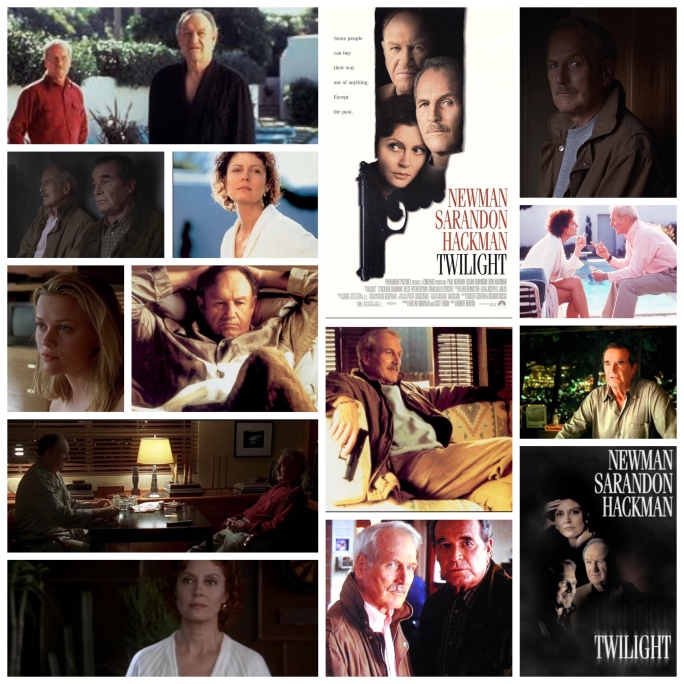
Robert Benton’s Twilight

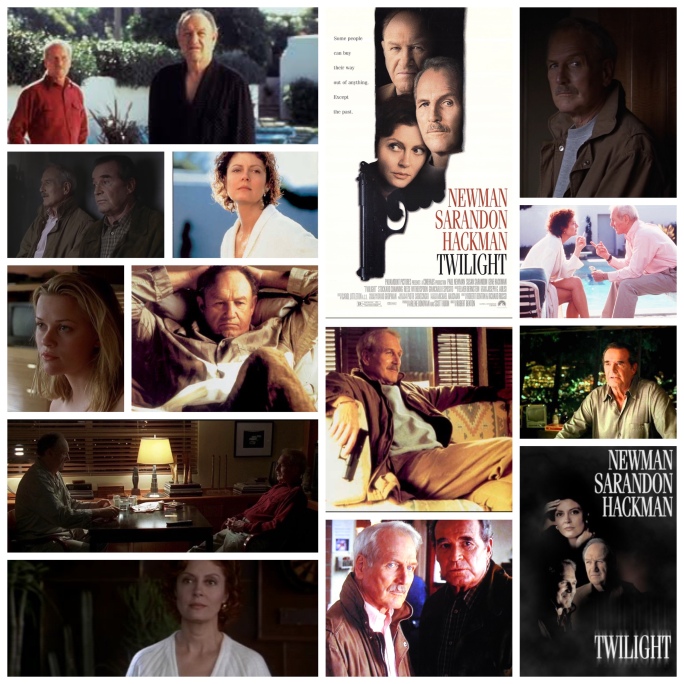
The title Twilight obviously brings up bad memories of a franchise we’d all like to forget, but before that abomination ever entered the fold, the moniker belonged to a laconic, brightly lit yet darkly intoned LA film noir starring Paul Newman as an aging Hollywood private investigator. He’s a guy who was was never famous himself but seemingly behind the scenes of stardom and scandal and making a career out of it until his golden years find him living on the lavish estate of a fading starlet (Susan Sarandon) and her husband (Gene Hackman), also an actor of former stature. He’s always been in love with her but is also Hackman’s good buddy and it makes for a love triangle that is never too tense or melodramatic, but just as uncomfortable as it needs to be. He sort of serves as their homefront security officer and sorta just spies on Sarandon languishing by the pool and you can tell that the three of them are just mournful ghosts of what they probably were decades ago, haunting their surroundings like echoes rather than living in them.

Things get heavy for them once again when Newman takes on a shady job that involves delivering blackmail money, a situation that quickly snowballs into deceit, old wounds torn open and, of course, murder most foul. Something nasty is going on that dates years back into the collective past of these three individuals and has come back to bite them all squarely on the ass, and although it might not be the most innovative mystery narrative and certainly aspects are predictable, it’s just so much fun watching these master actors play it out in sunny Hollywood enclaves. Speaking of old pros, James Garner has a nice supporting role as an ex cop pal of Newman’s who helps him out with intel and backup. Watch for early career work from Liev Schreiber, who now stars on Showtime’s Ray Donovan, another LA noir story that I’m almost positive drew inspiration from this film. A very young and very naked Reese Witherspoon also shows up briefly, as well as Stockard Channing, Margo Martindale, Giancarlo Esposito, Jason Clarke, John Spencer, Clint Howard and M. Emmett Walsh. Newman is terrific here in one of his older dude roles, his blue eyes lend just a hint of optimism to the downbeat noir archetype. Hackman and Sarandon say a lot with little dialogue and plenty of body language, embodying damaged souls with grace and grizzle.

I recently heard a character in Amazon’s Goliath (yet another LA noir- can you tell I’ve cultivated a fixation on the sub genre?) say that murders in LA and Hollywood are especially tricky to solve because anybody could know anybody or be connected to anything. That gives ample freedom to intertwine characters and set up strange encounters or resolutions to plot, which is always fun and evident here too. It’s a slow, sunny burn of a crime flick that isn’t designed to be particularly flashy or lurid, but unfolds at its own pace alongside Newman & Co. Good stuff.

-Nate Hill
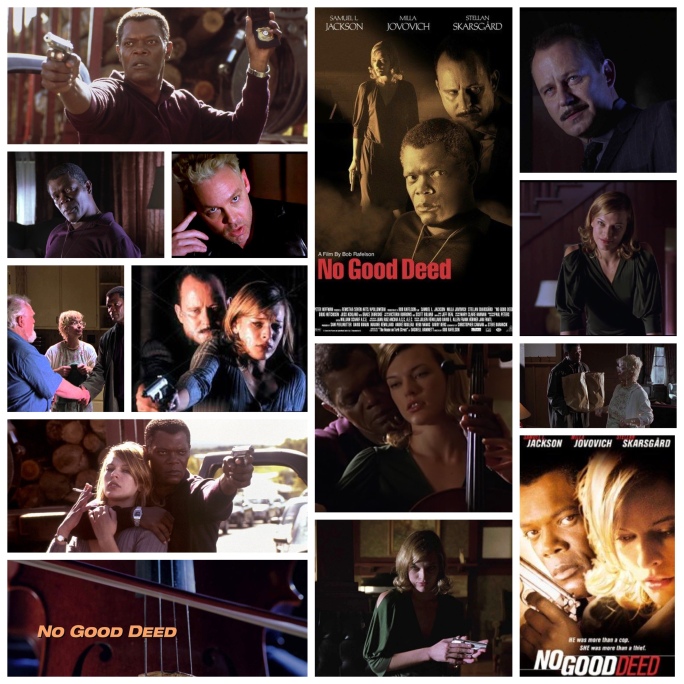
Bob Rafelson’s No Good Deed

It’s kind of rare for rambunctious actors like Samuel L. Jackson and Milla Jovovich to sit still for something as dramatic and dialogue heavy as Bob Rafelson’s No Good Deed, but it’s nice to see. This is a thriller of sorts, but it’s more low key than that and ends up being a chamber piece about two characters getting to know each other that just happens to take place against a criminal backdrop. Jackson plays a police detective on a routine investigation who turns up at the wrong place at the wrong time and gets drawn into a weird bunch of felons all hiding out and planning a bank job. Stellan Skarsgard is Tyrone, their volatile, violent leader, Jovovich is his quiet but intuitive and underestimated girlfriend, left alone to watch Jackson, now their hostage. This leaves acres of script space for Milla and Samuel to play, manipulate each other, bicker, banter, become close and twist the situation to both their ends while gradually catching feels for each other. It’s interesting that Rafelson casts these two because they’re usually to be found in action heavy stuff, shooting guns, swinging swords and tasked with stylized dialogue. Here they are laid back, oddly but nicely paired and the most quiet I’ve ever seen them, and it… kind of works. Skarsgard is mean and nasty, which he’s always been great at, journeyman oddball Doug Hutchison plays another lowlife in their gang, while Joss Ackland and Grace ‘Sarah Palmer’ Zabriskie play the senior faction of the crew, a strange husband wife duo who can still wield a shotgun when the situation calls for it. This is based on a Dashiell Hammett story which probably means it was sitting in someone’s desk drawer for decades before being found and reworked for this century. Rafelson gives it the pacing of something by Elmore Leonard and eccentricities to spare. It’s not a super memorable thing or a great film by any standards but works well enough as a sleepy, romantic crime thriller. Oh yeah, this is the legendary Rafelson’s final feature film before apparent retirement, so it’s worth checking out for that reason too.

-Nate Hill

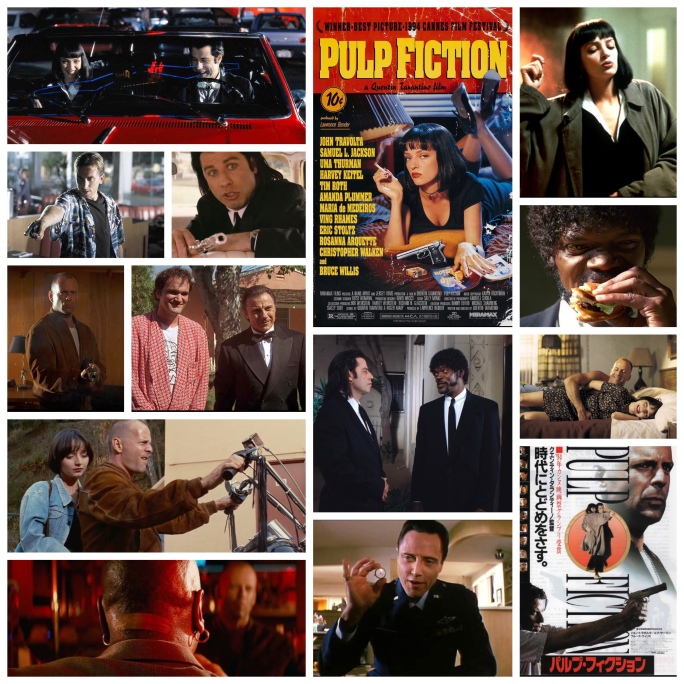
Quentin Tarantino’s Pulp Fiction

You ever been to one of those house parties that turns out so well, is so full of awesome, entertaining people and so much fun that you kind of wish it wouldn’t end? Quentin Tarantino’s Pulp Fiction is like that, for nearly three hours you wish would extend into three more. It’s one of those urban mosaic stories that chucks slices of life into a pan, fries them up and hurls the resulting delicious recipe right at your face. I’ve read a lot about how this revolutionized narrative structure in Hollywood or changed the way characters are written and that may be the case for the crime genre, but the mosaic motif was present in many areas before QT, namely in the films of Robert Altman, a filmmaker I’ve never seen compared to our Quentin before but the parallels are there. In any case everyone knows, loves and agrees that Pulp Fiction is a fucking badass flick, an enduring barnstormer of outlaw cinema that is every bit as potent, catchy and kinetic as it was when it blew the pants and panties off of Cannes in ‘94.

Tarantino gave us an appetizer with Reservoir Dogs, and with Pulp he produced a ten course meal that’s more polished, structured and assured than we had seen before. His mosaic concerns the lives of several LA individuals all directly or indirectly related to the criminal underworld. Samuel L. Jackson and John Travolta are two hitmen who dressed like Men In Black before Men In Black was a thing, out to retrieve the ever mysterious briefcase for their omnipotent gangster overlord (Ving Rhames), whose sultry wife (Uma Thurman) Travolta is to entertain while the big man is out of town. Elsewhere a disloyal prizefighter (Bruce Willis) and his bubbly girlfriend (Maria De Medeiros) hide out from Rhames’s wrath too until Willis goes from the frying pan into one terrifying fire. Tim Roth and Amanda Plummer are two liquor store bandits who branch off into the diner scene and royally fuck up everyone’s day in the process. Christopher Walken gives arguably his greatest and definitely his most bizarre monologue in a scene out of place and time from the rest of the film but somehow right where it needs to be in the narrative. Harvey Keitel suaves it up as LA’s resident 007. Others make vivid impressions in the mosaic including Eric Stoltz, Rosanna Arquette, Steve Buscemi, Paul Calderon, Frank Whaley, Angela Jones, Duane Whitaker, Stephen Hibbert, Tarantino himself, Julia Sweeney and perennial bad guy Peter Greene.

By now the story is secondary to those iconic moments we all know and love. Zed’s dead. Samuel’s terrifying bible session. A wristwatch up Walken’s ass. Pride only hurts, it never helps. That needle to the heart. The dance competition. The Gimp. The exploding head. These are all now hallmarks of one of the greatest stories ever put to film. What makes it so great? Tarantino has the time for his characters, and wants to converse with them. The dialogue isn’t just about plot or characters intimidating each other. It’s about life, music, personal taste, culture and cheeseburgers. These are people who remind us of many others we know, and the relatability is what has turned this into a platinum classic. That and other factors, including a killer soundtrack, brilliant performances round the board and editing that brings LA out of the gloss, down to earth and just as dirty. It may not be my ultimate fave Tarantino film, but it is definitely his flagship outing so far, in its epic scope. We’ll see if this year’s Once Upon A Time In Hollywood perhaps dethrones it as his magnum opus, who knows. Either way it’s a masterpiece and will remain so for all time.

-Nate Hill

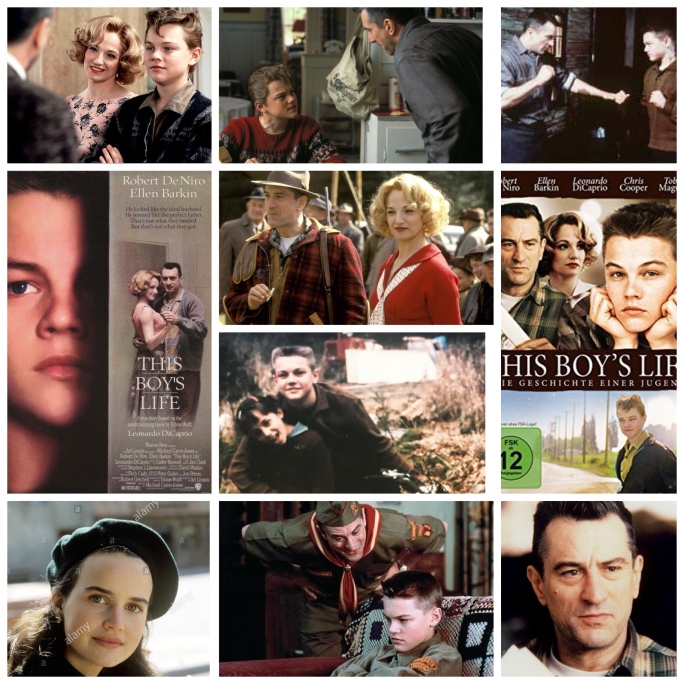
Michael Caton-Jones’s This Boy’s Life

Michael Caton-Jones’s This Boy’s Life is based on a true story of abuse, of which there are thousands every year, many heard and many unheard. This one doesn’t end up as bad as some or as good as others but I liked that it didn’t make the abuse a centrepiece for the film and rather used it to show a fascinating character dynamic between 50’s teenager Tobias (Leonardo DiCaprio) and his nasty stepfather Dwight (Robert DeNiro). Tobias and his mother (Ellen Barkin) come from a free spirited background, abandoned by his birth father and left to roam the States looking for a new provider. She meets and marries Dwight pretty quick, and Tobias also figures out what he’s made of real quick too. Dwight is a nasty, bitter, violent, pathetic piece of human garbage whose self esteem is so low he’s just gotta take it out on others around him, often in a cartoonish way. He’s the type of guy that if you fronted on him in a bar or he got in your grille, you’d just laugh and brush him off rather than fight because you just feel sorry for the guy. Tobias is a teenager though and can’t actually stand up to him in a brawl, making him a prime target for years of physical and psychological abuse which his mom refuses to be a referee. This isn’t a sad or depressing film because we realize that this can’t go on forever, the real life man it’s based on grew up to be a successful professor of literature and the film is never downbeat, just desperate. This is Leo’s debut lead role and he kills it, finding that anger and resilience that will go on to be building blocks in his now legendary career. DeNiro is very anti DeNiro here if you catch my drift. Used to playing extroverted alpha males, he switches it up for an extroverted weasel who thinks he’s hot shit. The only thing I would have eighty-sixed is the Fargo style Minnesota accent he tries on for size as it doesn’t suit him and he’s never been an accent savvy actor. Watch for an uncomfortable appearance from Chris Cooper as well as striking early career work from Carla Gugino, Tobey McGuire and Eliza Dushku who is so young here she’s unrecognizable. This film feels loose and episodic at times but remember these are someone’s memories here and those can be tricky, illusory beasts. I love the way it feels, like several slices of life during adolescence, a point where life can be at its most tempestuous and confusing, therefore making for excellent material. Set in the lush Pacific Northwest and attuned with production design that is studious to the 50’s aesthetic, this is a great film for any actor to find their debut in.

-Nate Hill

Hidden Gems: Reto Salimbeni’s One Way

Reto Salimbeni’s One Way literally starts off one way and throws curve ball after left field turn after another until you really begin to appreciate a truly original script for once. Granted he produced his film in indie land where there’s considerably more creative freedom than the studio system but still, this is one unique film and I promise you it’s not the action thriller that the US market has tried to sell it as.

As the film opens, teenage Angelina is pursued and sexually assaulted by several boys alongside a riverbank. Suddenly a mysterious military general (the late, great Michael Clarke Duncan) appears out of nowhere and, after gaining her permission, positively ventilates them with a sub-machine gun. Jump cut to a decade or so later and we see hotshot advertising exec Eddie (Til Schweiger), married to the boss’s daughter (Stephanie Von Pfetten) but cheating on her every chance he gets with multiple women. Grown up Angelina (Lauren Lee Smith) works for the firm too, and they both get entangled up in a murder investigation involving the boss’s son (Sebastian Roberts), who is a sadistic rapist and very dangerous given his position of power.

I’ve done my best to somewhat describe the story so you have a vague idea of what this is all about but it’s tough to impart just how twisty and unexpected the thing gets, and that’s half the fun. Schweiger isn’t exactly an actor of dramatic heft, often appearing as stylized characters or posturing tough guys, but he does alright here as the sheepish philanderer who learns his lesson big time. Smith is fantastic as the most sympathetic character and the closest we come to a clear cut protagonist, dealing with the most tragic, yet ultimately heroic arc and nailing it beautifully. Duncan is the most striking character and is seen the least but always makes a huge impression, here in a small but incredibly key role. Watch for Art Hindle, Kenneth Welsh, Ned Bellamy and Eric Roberts in a brilliant extended cameo as a defense attorney who gets a few big dramatic moments of his own.

I can see why this film was tough to market as there is so much going on tonally, narratives weaving together at their own leisure and nothing really conventional about it at all. There’s corporate espionage, courtroom intrigue, emotional interpersonal drama and many more elements at play. Really though it’s about confronting your past, dealing with trauma particularly when it comes to sexual abuse and standing up to people who attack with impunity. Smith’s character takes front and center here, getting a gruesome revenge scene that rivals The Girl With The Dragon Tattoo in it’s intensity. She has to face the horrors of her past full on here, whilst dealing with the legal problems Schweiger has thrown into the mix and it all makes for a unique, emotionally stirring and hypnotic hidden gem of a drama that I highly recommend.

-Nate Hill

Sam Mendes’s Revolutionary Road

Sam Mendes’s Revolutionary Road is a film set in the 1950’s and decidedly so, but that is just happenstance because the story it tells could happen anywhere, in any time period. The setting, though elaborately, meticulously and unobtrusively staged, is just the gilding on this suburban tragedy of restlessness, shaky ideals and marriage at levels of disintegration that prove combustible.

Leonardo DiCaprio and Kate Winslet join forces again as Frank and April Wheeler, a seemingly harmonious white picket fence family who have achieved the American Dream. Cute little house in a sunny neighbourhood, two adorable children, he has a rat race office job while she plays homemaker. Idyllic, right? Anything but. These two are monumentally unhappy in ways that prove complex enough to haunt the viewer later on. She’s unwilling to hammer down that last corner of settled life and give up on further dreams, he simultaneously hates and depends on his worker bee employment like a security blanket. They make plans. Life, and the both of them get in the way. It’s kind of a vague premise to just read about in a review or synopsis and you have to watch the thing to get its rhythm and timbre, but what it has to say is important, heartbreaking and timeless.

Leo and Kate follow up their sweet, innocent tragedy of Titanic with a love story eons removed, a bitter tale of two people who’d love each other if they didn’t hate each other so much, and hate each other if they didn’t love each other so much. It’s a tricky, multilayered pair of performances to nail in tandem but they’re there in synergistic equilibrium and both give what might be their finest work. Suburbia is populated by supporting characters who revolve around them cautiously but never get fully sucked in to their destructive orbit. They’re played by the sterling likes of Kathy Bates, David Harbour, Kathryn Hahn, Dylan Baker, Jay O. Sanders, Max Baker and Michael Shannon in a fierce cameo as a sort of Greek Chorus type individual who comments on this couple’s plight with acidic abandon. Mendes chooses locations over a soundstage which is always tricky, but the level of authenticity you get once that is pulled off can’t be compared. 1050’s suburbia seems to come alive as we feel each breeze come in through an open window, see the tree lined street just beyond the borders of a real house they’re shooting in and watch the automobiles actually wind their way down a street. Thomas Newman provides a score that doesn’t cloy or manipulate but follows along dutifully while humming away in the wings to let Leo and Kate sing for themselves.

Not an easy film to watch, it’s essentially two people in a collective downward spiral observed in an intimate fly-on-the-wall fashion and that can become downright uncomfortable at its lowest points. But this is important stuff, a microcosm of two individuals that asks you to step outside what’s considered norm in society and examine exactly what exactly is expected of each man and woman and how that affects their actions throughout life. Brilliant film.

-Nate Hill

Niki Caro’s North Country

Charlize Theron can pretty much play any role when she sets her mind to it, and when it comes to embodying the collective injustice and abuse inflicted towards female mine workers in late 80’s Minnesota, she is heartbreaking. Of course many other brilliant actors work hard to bring Niki Caro’s North Country to life, but it’s Theron who gives it the wounded centre and makes us care, not just about the issues at had but her character as well.

She plays a semi fictional character named Josey Aimes, who is loosely based on a real life woman that launched a milestone lawsuit against the corporate mining giant. Josey has escaped her abusive husband and come home to seek refuge with her parents (Sissy Spacek and Richard Jenkins) while trying to provide for her two children. The highest paying wage in the region is at the mines but from the moment she joins up she’s faced with hostility, scorn and rampant sexual harassment from the vast male work force there, and the few other female employees fare the same, unless they keep their head low. Josey and her young coworker Sherry (Michelle Monaghan) have it the worst because they’re, shall we say, easiest on the eyes, while their childhood friend Glory (Frances McDormand) keeps up a tough exterior, but in truth they are all of them fed up. As their treatment gets worse, Josey does the unthinkable and launches a high profile lawsuit against Big Mining for mistreatment and neglect, causing a shit-storm of controversy for both herself and the entire town whose survival depends on that industry. Not only that, but the case dredges up painful events from her past that involve supervisor Jeremy Renner, whose special interest in tormenting her dates back to then and explains why he radiates with guilt.

This is a brave, difficult choice for a woman to make especially when it seems like everyone is against her, but Josey is determined and Theron makes her wounded, charismatic and captivating. Woody Harrelson does a fine job as the lawyer hired to represent her, an idealistic man who isn’t afraid to unleash some hell when delivering statements or interrogating a witness because he believes it will lead to change. Jenkins is always brilliant, the arc he carries out here goes from cynically intoning that his daughter must have cheated on her husband to illicit violence like that to later openly defending his her with his own violence in court when he finds out what she has gone through. The old pro handles it gracefully and I can’t remember if he was nominated for this but he should have been. McDormand is her usual salty self and is excellent, while Sean Bean, an actor who often plays gruff, alpha male badasses is laid back and sensitive as her introvert boyfriend. Watch for great work from Xander Berkeley, Rusty Schwimmer, Corey Stoll, Brad William Henke, Jillian Armenante, Amber Heard and Chris Mulkey too.

Director Caro drew huge acclaim for her film Whale Rider a few years before, another story that dealt with a girl trying to find her place in the world and defying the men in her life. Once again this is a fantastic piece that shows her talent for filmmaking, never coming across as too much of a dramatization or too slack when it needs to cut deep. Theron is a force of nature and you can see the hurt, frustration and will to not back down burning in her eyes. This is a tough film to watch in many instances, but an extremely important one to sit through and the type that Hollywood doesn’t usually jump to green-light, at least back then anyways. Something of a masterpiece.

-Nate Hill

Oliver Stone’s JFK

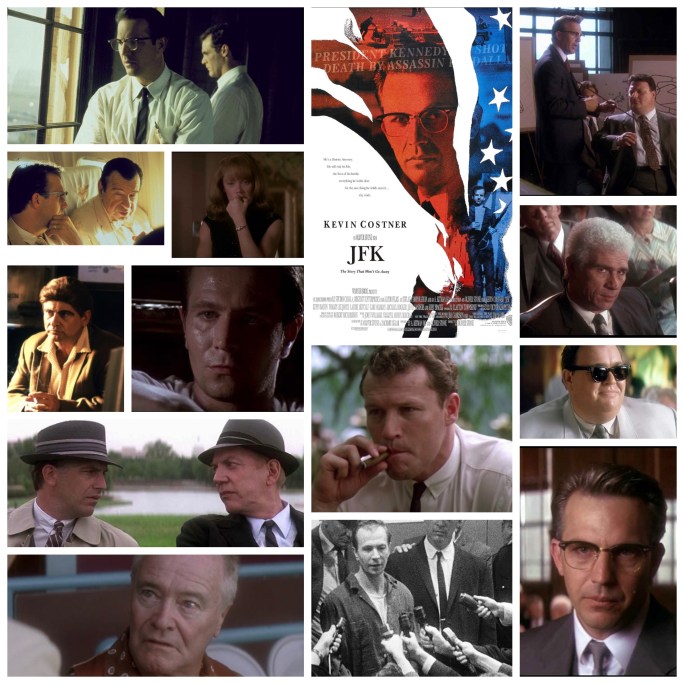
I’m not so much for political films but Oliver Stone’s JFK is an engrossing, obsessive, feverish and altogether brilliant piece of clandestine intrigue and I loved every minute of its impossibly long runtime (the director’s cut runs well over three hours). It might be excessive to take such an indulgent amount of time for one story to play out but Stone is fixated on every single aspect and detail of his narrative, scrutinizing the dark corners of shadowy politics, leaving no stone unturned and the result is a film that draws you in so close that at times the effect is breathless, a surging momentum full of moving parts, characters and secrets all unfolding in a mammoth production.

Stone has taken the real life investigation of New Orleans District Attorney Jim Garrison, used it as a launching pad and blasted off into his own theories, queries and plot turns. Kevin Costner is excellent and uncharacteristically vulnerable as Garrison, an idealistic family man determined to shine a light on the truth until he realizes he and his firm are in over their heads. This thing has one of the most jaw dropping ensemble casts I’ve ever seen assembled, right down to supporting turns, cameos and walk-ons populated by recognizable faces. Costner and his team are the constant, a dogged troupe that includes varied folks like Laurie Metcalf, Wayne Knight, Jay O. Sanders, Gary Grubbs and the always awesome Michael Rooker. We spend the most time with them as they discuss theories at length, argue in roundtable fashion, interview witnesses and it all feels eerily as if every discovery they make leads to ten more even more unnerving ones. Others show up throughout the film and when I say this is a cast for the ages I’m not even kidding. Jack Lemmon does paranoia flawlessly as a nervous informant they visit, Gary Oldman is a super creepy Lee Harvey Oswald, Joe Pesci impossibly rambunctious as oddball David Ferrie, Tommy Lee Jones and his poodle wig are icky as a corrupt US Senator and that’s just the start, there’s great work from everyone under the sun including John Candy, Walter Matthau, Sissy Spacek, Vincent D’onofrio, Kevin Bacon, Martin Sheen, Pruitt Taylor Vince, Edward Asner, Frank Whaley, Brian Doyle Murray, Bob Gunton, Lolita Davidovich, John Larroquette and more. Donald Sutherland is pure showstopper as a mystery man who has an epic, sixteen minute long tinfoil hat monologue that is so well delivered and perfectly pitched that we don’t even really notice what a massive enema of exposition it is simply because he and Stone keep up the energy levels and, in turn, us riveted.

That’s the thing here, I went in expecting perhaps something intriguing but maybe a little dry in places or bits that might lag because it is, after all, a three plus hour film revolving around politics. This is Stone though, and the way he films it is taut and immersive the *entire* way through, which is just so fucking impressive. He plays rogue agent with the facts, using established suspicions to draw one wild conclusion after another until we aren’t sure if everyone we see onscreen perhaps had something to do with JFK’s death. That’s his goal here though, he seeks not to provide concrete answers (how could he) but instil the kind of creeping dread, mounting uncertainty and fear that I imagine gripped the nation for years following this event. Conflicting conspiracy theories, clues that lead to nothing, unexplained and admittedly suspicious witness deaths, it’s all here and it all makes for one damn good mystery film.

-Nate Hill

Tony Gilroy’s Michael Clayton

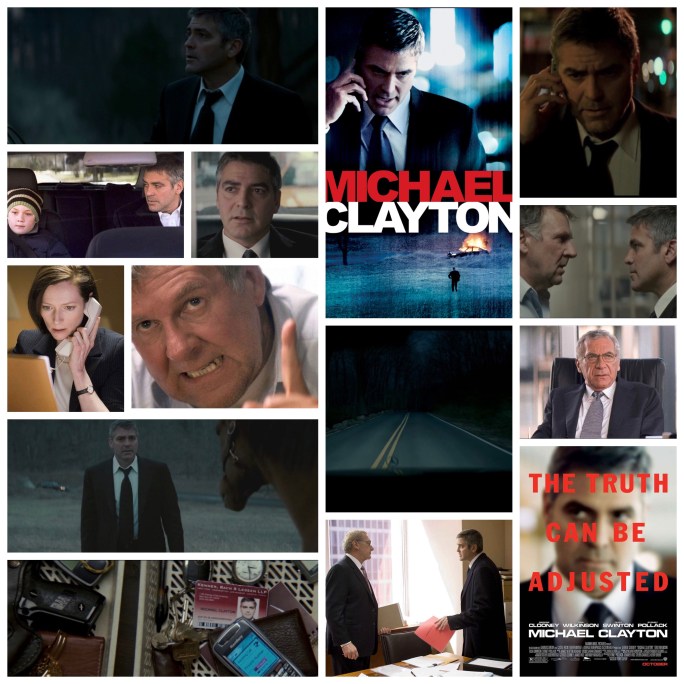
Usually when George Clooney shows up in a film, you get to see that smile. That mile wide, slightly mischievous grin is one of the chief reasons he’s such a charismatic onscreen presence, but in Tony Gilroy’s Michael Clayton it’s nowhere to be found. This allows other aspects of his personality to come forward in playing the stressed out, introspective titular law firm fixer in what might be his best performance so far in a brilliant drama. His face is drawn and worried, his wide eyes taking in the ruthless corporate environment around him with taciturn angst and survival instinct of a cornered jungle cat. Michael has every reason to be worried not only in a general profession like this but also because of recent events. One of the firm’s top lawyers (Tom Wilkinson) is having a royal mental breakdown whilst in the thick of a high profile class action lawsuit putting billions against a chemical giant who are almost certainly guilty of what they’re being accused of. This is not good, not good at all and the the firm’s most senior partner (Sydney Pollack, so serious he’s scary) throws everything he’s got at the wall to remedy the situation, including Michael. Clooney plays the man almost as a guy who has chosen the wrong profession; to be a fixer like that I feel like you’d need a certain sort of cold detachment and near sociopathic level of apathy when dealing with such moral quagmires, but Michael is a man who, despite obvious efforts to stay one step removed, let’s his humanity seep through with every sympathetic glance and wounded exchange. Perhaps it’s Clooney’s inherent affability or a deliberate character choice, but in any case the contradictory portrayal works wonders and makes for such a fascinating protagonist. Wilkinson isn’t capable of giving a bad performance even in the worst films, his darkly comic unravel from learned man of law to unhinged mad scholar is a beautifully tragic arc and one of the tethers holding Michael in the swirling gale of tricky decisions and do-or-die chess moves he must navigate. Another is icy, robotic Tilda Swinton as a shady lawyer hired by Big Chemical to try and patch up things on their end. She unravels too, albeit in a less theatrical way than Wilkinson, but the noiseless, implosive confrontation she has with Michael in the third act is enough to knock anyone flat and stands as my favourite scene of the film. Michael is a family man with a young son who dreams of escaping this cutthroat netherworld and starting up a restaurant, a goal that the audience sees glowing on the horizon as clearly as he does thanks to the empathy inspiring performance. After all is said and done we witness some of the most simply unique end credits out there on a hypnotic car ride where both Michael and the viewers decompress and meditate on everything before, it’s a brilliant bit of the pacing puzzle here. This isn’t really a political thriller and can’t very well be called courtroom drama either, really it’s own thing. I suppose the closest is character study, but even that doesn’t provide a legible menu option for the meal to follow. Unique in atmosphere and character interaction, crisply written and directed by Gilroy, and acted to the absolute nines by Clooney without ever showboating or chewing scenery. Great film.

-Nate Hill

Peter Weir’s Fearless

A plane falls out of the sky and crashes in a cornfield. Some of the passengers survive. Others do not. No one involved is ever the same after. Such is the premise of Peter Weir’s Fearless, a complicated, challenging, unconventional and altogether brilliant piece that goes a lot deeper than most Hollywood produced films are allowed to. Jeff Bridges is Max Klein, a man who emerges serenely from the wreck having saved multiple lives and undergone a personal change that can’t be made clear in a scene or two, but rather takes the film it’s whole runtime to explore. While the entire plane is in full panic, Max reaches a sort of tranquility in the face of death, and instead of freaking out he very lucidly gets up and joins a young boy who’s alone on the flight and comforts him. When they land and he survives, his relationship to those around him is affected including his wife (Isabella Rossellini), young son, a trauma counsellor (John Turturro hired by the airline) and others. Most fascinating is the time spent with Carla (Rosie Perez) a fellow crash survivor whose newborn baby wasn’t so lucky, leaving her in a pit of grief. They share something together that no one, audience included, can fully understand because they weren’t there. The beauty of it is that Bridges and Perez can’t really know either, but the magic of both their performances is that they make you believe they’re in this extraordinary situation for real. Bridges never plays it with a messianic or mystical aura like some would, he’s always straight up and kindly which works wonders for this character. Perez is a revelation, soulful and heartbroken but never cloying or panhandling for our tears, she earns them fair and square. I’m not one too get too heated about Oscar snubs but it’s a crime she got beat out by Marisa Tomei that year for fluff like My Cousin Vinny. Peter Weir is a thoughtful director whose films are always high concept stories, but are also always character driven to provide that balance. He’s interested not in spectacle or sensationalism here but the difficult questions that others might gloss over or be too afraid to think about. There’s two scenes revolving around the crash, one of the aftermath and an extended one of the incident itself playing out that reach a level that sticks with you long after the credits roll. Not an easy film to classify or describe in a review, but the rare Hollywood picture that tackles concepts well above what we’re used to seeing. Great film.

-Nate Hill