Sergio Leone’s Once Upon A Time In The West

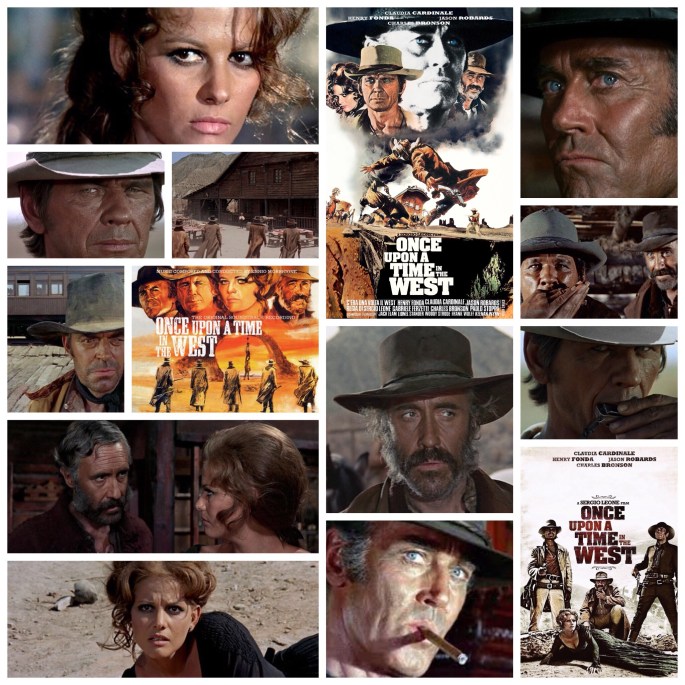
There isn’t much I can say about Sergio Leone’s Once Upon A Time In The West that the mythical, larger than life masterpiece couldn’t say for itself, especially on its magnificent, crystal clear Blu Ray transfer that blows the dust out of the cracks and showcases it’s sunny cinematography in full remixed glory. From the coming of the railroad to a fledgling empire, the corrupt businessmen employing hard bitten thugs to do their nefarious bidding (a prophetic motif if there ever was one), the searing forbidden romance between the archetypal ex-working girl and the silent, lethally dangerous drifter, the dusters adorning gunfighter that sway in a lilting prairie breeze, the trod of hooves, the thunder of impending gunfire preceded by the eerie calm of the showdown before, this is the western to end all westerns, the textbook example, the crown jewel of the genre and the one wheat-stalk saga that I just can’t get enough of. Leone basically patented an entire sub-genre between this and the Man With No Name trilogy, it’s a now timeless flavour that rippled down throughout the generations and changed the face of the western forever. The film itself is perfectly balanced symphonic storytelling, in every aspect of the medium. Charles Bronson’s mysterious loner Harmonica blusters into town, opaque and uttering few words save for the melancholic strains of his instrument brought to wailing life by composer Ennio Morricone. Henry Fonda’s elegant, magnetic and unbelievably evil mercenary Frank hovers over everything like a black cloud of portent. Claudia Cardinele’s drop dead gorgeous Jill violently carves out her own path of survival, lust and grief amidst the unforgiving frontier. Jason Robard’s half injun outlaw Cheyanne tries hard not to wear an obvious heart of gold on his sleeve while seeking retribution for a diabolical frame-job. These mythical, monolithic individuals invite shades of grey into what we’ve become accustomed to in Western archetypes too, which is another hallmark of Leone. Gone are the stalwart sheriffs, stoic heroic leading men and obvious moustache twirling of clearly delineated villains. Bronson is rough, callous and never straight up chivalrous, Fonda is reptilian but oh so charming, the kind blue eyes barely suggesting what evil leers beneath, and Robards for his part turns an outright scoundrel into something of a teddy bear during his arc. It’s in the little, drawn out interactions and moments that we learn what we need to know about these characters, and Leone lets their performances, Morricone’s iconic score and the lingering space between action tell the story, so that by the time the monumental showdown rolls in, we know what we need to know about these wild, complex personalities and can get swept up in the revelatory spectacle of it. One for the ages.

-Nate Hill

Oz Perkin’s February, aka The Blackcoat’s Daughter

I like Emma Roberts, and really dig the career path she’s chosen for herself so far. Daughter of eccentric, legendary badass Eric Roberts and niece to Hollywood’s darling superstar Julia, she could have easily taken the oft trodden path of teen sensation, appearing only in stuff that appeals to a new generation that’s forgotten much of the odd, freaky stuff of former times. Instead she’s deliberately accepted best, off kilter genre scripts, using an ongoing stint on FX’s American Horror Story as a launching pad for some really interesting projects that duck the mainstream, just like her dad. Oz Perkin’s February is one such outing, a laconic, nightmarish mood piece that plays like a demon possession film without all of the tired hysterics, using pacing, atmosphere and glacially mounting dread to tell its story. Roberts plays a young runaway stranded outside a hospital on one cold night. Picked up by a kindly man (James Remar ditching the villain shtick) and his wife (Lauren Holly, who apparently is still in films after all!), she embarks on a tense road trip towards a county far away. In said county, two forgotten girls (Kiernan Shipka and Lucy Boynton) spend the holiday break at their catholic school. Gradually they start to feel some presence in the building, haunting them, and then shit gets crazy. This is textbook slow burn territory though, and anyone expecting a trove of jump scares need not apply. There are a few well earned moments of terror, but they’re fleeting, and all the more disturbing as a result. There’s a vagueness to the narrative too, with just enough left unexplained to spark some interesting Reddit discussions. A dark, moody flick that rewards those who give full attention with some scary secrets and a smothering atmosphere of danger on the horizon. You’ll find this titled as ‘The Blackcoat’s Daughter’ on demand and iTunes, but that title seems to not mean much except to quite an eerie song used throughout the film.

-Nate Hill

Brian Taylor’s Mom & Dad

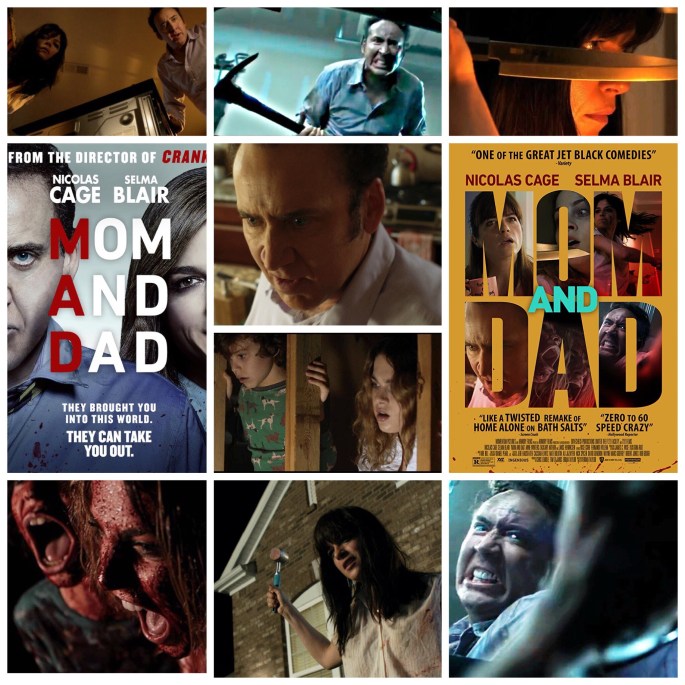
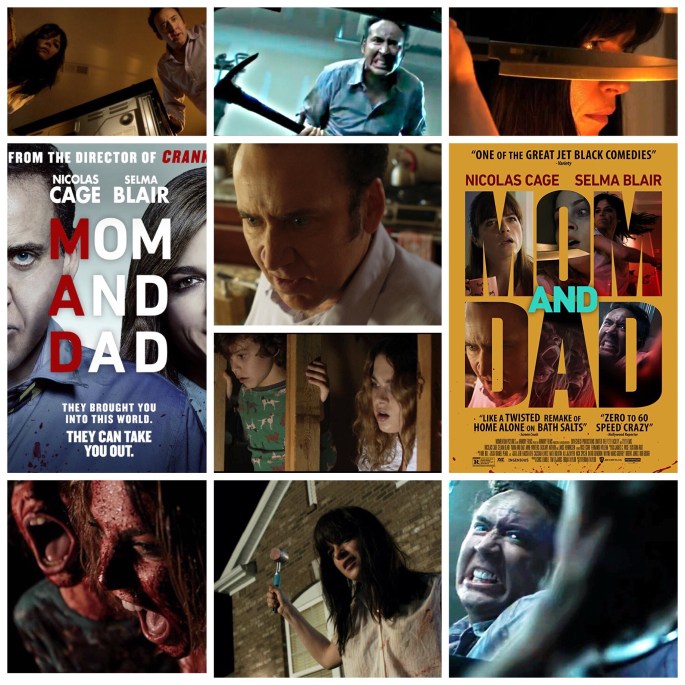
I read an article a while back saying that at the premiere of Brian Taylor’s Mom & Dad, the director attended the screening and prefaced it by saying that his film has “mental problems.” Well… he wasn’t wrong. Taylor is one half of the Neveldine/Taylor genre filmmaking team, a blitzkrieg duo responsible for both of the Crank movies, plus Gamer, and if you’ve seen any of those you’ll have an idea of the way their sense of humour slants towards the bizarre. With this one it kind of trundles headlong into willfully fucked up territory though, and before you know what’s happened, it’s scant 86 minute runtime is up and you’re left there in the dust, feeling somewhat violated. The concept is blunt and visceral: everywhere, all at once, the nurturing instinct in parents is savagely reversed and they immediately start to murder their own children. Only their children, mind you, and with a disturbing lucidity that I couldn’t decide whether to laugh at or get spine chills from. An amped up Nicolas Cage and Selma Blair play your average upper middle class parental unit, and the film mainly focuses on their eventual snap, and a subsequent tooth & nail fight to snuff out their poor son and daughter (Anne Winters and Zackary Arthur). That’s pretty much the film, although for such a seemingly simple concept within a short piece it somehow manages still clearly articulate its narrative amidst the ruckus and even comment on something deeper than it’s 70’s Midnite Movie veneer initially suggests. Cage treats this as the ultimate midlife crisis, and indeed his acting these days is more gonzo than ever. He’s got a mental breakdown midway through the film and before the killer epidemic even breaks out that is so over the top it reaches a kind of feverish harmony, not to mention appearing scarily un-faked on the actor’s part. Though quick and fierce, the film could have still tightened the pace a bit in the opener and extended the super violent, Home Alone-esque second act a smidge, but oh well. Watching Cage and Blair overact to the heavens as they try and kill their own kids with every household item they can grab including a meat tenderizing hammer (ouch) and a Sawzall (“Sawzall… saws…. all…”) hits some blissfully transcendent notes, if you have the twisted mind to stomach it. There’s a scene that will test boundaries though and walks a fine line between crazy and flat out uncalled for (one of my friends walked out of the room in disgust), but hey, that’s the kind of stuff this director is known for, so try and roll with it. Things get really bizarre when Cage’s own parents show up to add to the cluster-fuck, his demonic veteran daddy personified briefly and perfectly by a ferocious Lance Henriksen. Accompanied by a sketchy, warped and nerve-shredding score and some off kilter editing, this will either be your thing or it won’t, there’s just no middle-ground in an arena this fucked up. Good luck.

-Nate Hill

Danny Devito’s Duplex

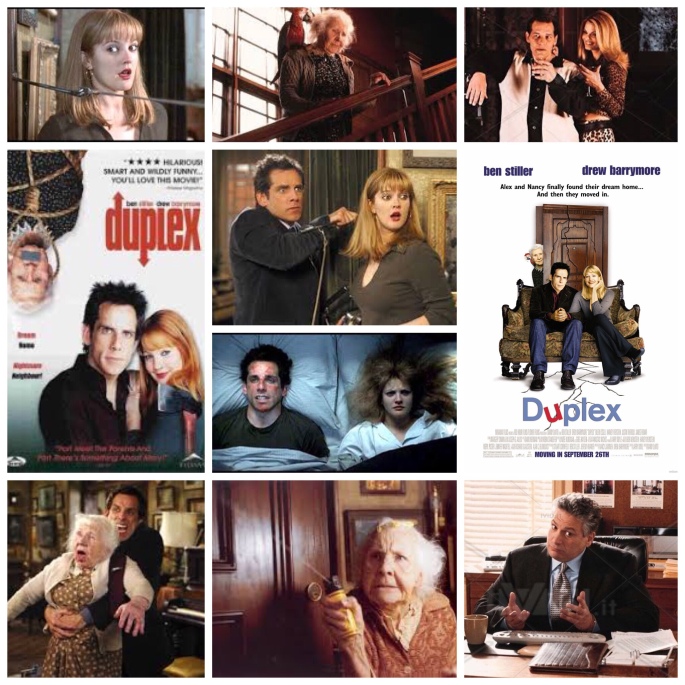
I will never not love Duplex, Danny Devito’s jet-black ode to neighbours from hell, a ninety minute domestic squabble of epic proportions and one of the funniest films of the last few decades. Devito knows how to do comedy at it’s meanest, lowest and most shamelessly un-PC, whenever he’s in the director’s chair you know you’ll get something that will either land squarely with those who have a deranged sense of humour (moi) or drive of the prudes in droves. Ben Stiller and Drew Barrymore play a hapless NYC yupple (yuppie couple, just made that shit up) looking for their perfect little love nest to settle down in. They think they’ve found it in a gorgeous, spacious Brooklyn split-suite, but there’s just one problem: sweet, ninety year old Mrs. Connolly (Eileen Essell), who is the tenant equivalent of the plague. At first she’s a benign darling, but after a few weeks pass, she’s a harridan hellbent on making their lives into an extended nightmare of never ending chores, sleepless nights and maddening disruption. The solution? Well there’s many in the real world, but in Demented Devito realm it’s to kill her, of course, an eventual resolution they come to quicker than your average ruffled landlord. It’s all in good fun if you’ve got the wicked internal lens to angle at it, and I find it to be a consistent laugh riot with each repeated viewing. Essell is comic dynamite, pretty spry for an old gal and always game to make the dialogue sizzle, as the film sort of relies on her character to work. Stiller and Barrymore stir up a collective brew of exasperation and screeching hysterics, while the wicked good supporting cast includes Wallace Shawn, Robert Wisdom, Justin Theroux, Swoozie Kurtz, Maya Rudolph, Amber Valletta, Tracey Walter, Michelle Krusiec, James Remar as a shady hitman and Broadway’s beloved Harvey Fierstein as New York’s sleaziest real estate tycoon. Devito’s scripts almost always veer into a dark, bizarro cartoon style once the antics get feverishly out of hand, and bearing witness to the many varied and idiotic ways Stiller and Barrymore try to kill the old broad are a showcase of him at his nuttiest. Gross, unpleasant, cheerfully in bad taste, relentlessly raunchy and delightfully mean spirited, pretty much all the things a great comedy should be.

Gore Verbinski’s Pirates Of The Caribbean: Dead Man’s Chest

Pirates Of The Caribbean: Dead Man’s Chest is so good it almost gives the first one a run for it’s money in terms of visual effects, imagination, swash and buckle. It does have it’s issues with letting some of the action set pieces run on literally forever (that rolling windmill sword fight tho) until you seriously start to question the limits of cardio in those involved, but director Gore Verbinski has always been an advocate for cheeky excess, so who can complain. In preparing a sequel to Black Pearl, they no doubt had a daunting task in equaling, and if possible outdoing the sheer bliss that came before, and they kind of succeeded and then some. Jack Sparrow, Will Turner, Elizabeth Swann and a whole circus sideshow of others are propelled on a dazzling adventure that spans past the isle of Tortuga, beyond the waters of Port Royal and to the far ends of the Caribbean, not to mention amping up the supernatural aspects of the first to dizzying heights. In Captain Barbossa’s absence (well, almost;), they also had to find a villain to match his adorable theatrics, and Bill Nighy’s moody Davy Jones, a hentai tentacled tyrant cursed by the ocean’s magic, doomed to sail the baroque galleon The Flying Dutchman forever, fits the bill. His crew are a gnarly, barnacled bunch of miscreants adorned in enough wicked cool marine biology and detailed special effects to get an Oscar nomination, which they did. Other new character additions include mopey Stellan Skarsgard’s bedraggled Bootstrap Bill, Naomie Harris’s spooky voodoo babe Tia Dalma, as well as familiar faces like Commodore Norrington (Jack Davenport), who gets a lot more to do here than twiddle the stick up his ass as he does in the first one, Governor Swann (Jonathan Pryce), Gibbs (Kevin R. McNally, deadpan as ever) and the whole motley crew. Depp takes what made Sparrow so charismatic and weird in Black Pearl and soars over the rainbow with it, he really and truly carries these films with his presence and it may just be the best characters created by him. A worthy sequel, kickass adventure and one for the books.

-Nate Hill

Taika Waititi’s Thor Ragnarok

Taika Waititi’s Thor Ragnarok has got to be the most fun I’ve ever had watching a Marvel film. Trust Hollywood to make a sterling decision once in a blue moon, and hiring a deftly comic, renegade underdog subversive improv genius like Waititi to take the wheel is a smart, bold move. Now before I sing it’s praises to Valhalla, they don’t quite let him (he’s the Kiwi wunderkind behind the newly minted classics Hunt For The Wilderpeople and What We Do In The Shadows) go completely bonkers, which he clearly wants to do, and although he’s kind of bogged down by a generic villain and a recycled point of conflict in plot, a lot of the time he’s allowed to stage a zany, uncharacteristically weird (for the MCU, anyways) pseudo space opera that is a blast and a half. Thor finds himself, after a brief encounter with Benedict Cumberbatch’s Dr. Strange, carted off to a giant garbage planet surrounded by space portals (one of which is referred to with a straight face as ‘The Devil’s Anus’, which sent me into a fit) and lorded over by a certifiably loony Jeff Goldblum as the Grand Master, a demented despot who holds intergalactic gladiator matches for his own entertainment. There Thor is forced to fight his old buddy the Hulk, and somehow find a way to escape Goldblum’s nefarious yet hilarious clutches. He’s got just south of reliable allies in his brother Loki (Tom Hiddleston) and an exiled Valkyrie (Tessa Thompson) with an attitude problem, as well as rock-armoured warrior Korg, voiced hilariously by Waititi himself as the film’s most engaging character. Meanwhile back in Asgard, trouble brews when the equally dangerous and sexy Hela (Cate Blanchett, with enough authoritative, husky smoulder to make me weak at the knees) tries to steal Odin’s throne for herself, with the help of defector Skurge (Karl Urban, who gets a mic drop of an action set piece later on). Here’s the thing about Hela: Blanchett is in top form, a commanding, dark presence… but the role is as blandly written as a number of other MCU villains, and one wonders how they’ve managed to flunk out at creating engaging antagonists a few times over now. She’s stuck in a subplot that we’ve all seen before, one that’s stale and at odds with the fresh, humorous and wonderful storyline between Thor and Banner. Their side of things is like buddy comedy crossed with screwball fare and works charming wonders, especially when they’re blundering about in Goldblum’s cluttered trash metropolis, it’s just inspired stuff. Throw in a great 80’s inspired electro pop score and a cool VHS retro vibe (I’m all about the old school) and you’ve got one of the best MCU movies to date, and most importantly one that *tries something new*, which the genre needs more of, even if it doesn’t ultimately fully commit, this is still a gem we have on our hands.

-Nate Hill

The Lincoln Lawyer

The Lincoln Lawyer was the first film in the revival of Matthew McConaughey’s career after a lengthy slump stretching back to the early 2000’s, and what a banger of a pseudo courtroom drama it turned out to be. Based on the series of novels by Michael Connelly which focus on slick, morally untethered defence attorney Mick Haller (played to perfection by Matt), director Brad Furman whips up an enjoyable, razor sharp yet laid back LA crime saga that’s smart, re-watchable and competently staged, not to mention stuffed to the roof with great actors. Haller is something of a renegade lawyer who operates smoothly from the leather interior of his Lincoln town car, driven by trusty chauffeur Earl (the always awesome Lawrence Mason). Mick is ice cool and seldom bothered by the legal atrocities he commits, until one case follows him home and digs up a tormented conscience he never knew he had. Hired to defend a rich brat (Ryan Phillipe) accused of murdering a call girl, events take a turn for the unpredictable as older crimes are dug up, double crosses are laid bare and everyone’s life starts to unravel. It’s a deliciously constructed story with twists and payoffs galore, as well as one hell of an arc for McConaughey to flesh out in the kind of desperate, lone wolf role that mirrors the dark side of his idealistic lawyer in Joel Schumacher’s A Time To Kill. Let’s talk supporting cast: Marisa Tomei is sexy and easygoing as Mick’s ex wife and rival, Bryan Cranston simmers on low burn as a nasty detective, William H. Macy does a lively turn as his PI buddy, plus excellent work from Frances Fisher, Shea Wigham, John Leguizamo, Bob Gunton, Bob Gunton, Pell James, Katherine Moennig and the great Michael Paré as a resentful cop who proves to be quite useful later on. There’s a dark side to the story too that I appreciated, in the fact that not every wrong is righted, or at least fully, a sad fact that can be seen in an unfortunate character played by Michael Pena, but indicative of life’s brutal realities, something Hollywood sometimes tries to smother. One of the great courtroom films out there, a gem in McConaughey’s career and just a damn fine time at the movies.

-Nate Hill

Danny Cannon’s Phoenix

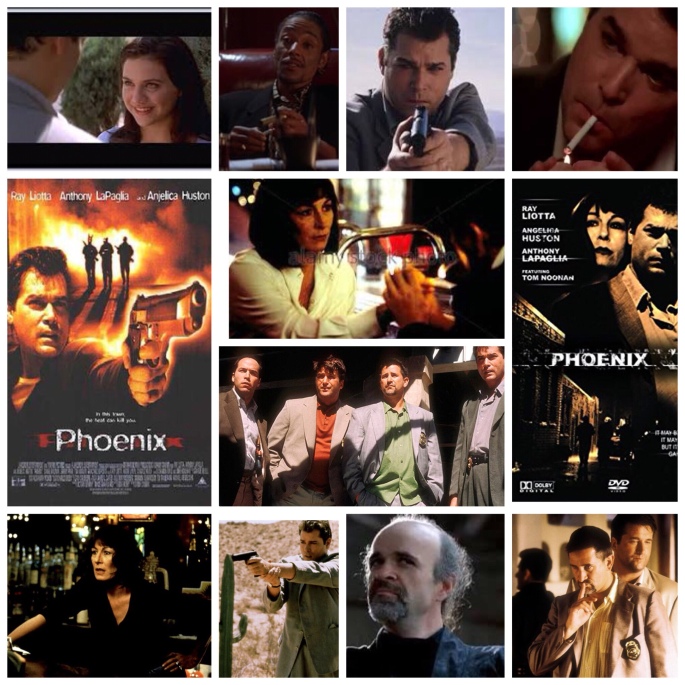
Phoenix is a half forgotten, neat little Arizona neo-noir noir that isn’t about much altogether, but contains a hell of a lot of heated drama, character study and hard boiled charisma anyways, which in the land of the crime genre, often is an acceptable substitute for a strong plot. Plus, a cast like this could hang around the water cooler for two hours and the results would still be engaging. Ray Liotta is terrific here in a mid-career lead role as an a police detective with a nasty temper, huge gambling problem and just an all round penchant for trouble. He’s joined by his three partners in both crime and crime fighting, Daniel Baldwin, Jeremy Piven and Anthony Lapaglia. There’s no central conflict, no over arching murder subplot and no orchestrated twist or payoff, it’s simply these four sleazy cops just existing out their in the desert on their best, and it’s a lot of sunbaked, emotionally turbulent fun. Liotta vies for the attentions of a weary older woman (Anjelica Huston, excellent) while he’s pursued by her slutty wayward teen daughter (Brittany Murphy) at the same time. He’s also hounded by eccentric loan shark Chicago (Tom Noonan with a ray ally funny lisp) and trying to close countless open cases in his book. Piven and hothead Lapaglia fight over Piven’s foxy wife (Kari Wuhrur) too, and so the subplots go. The supporting cast is a petting zoo of distinctive character acting talent including Glenn Moreshower, Royce D. Applegate, Giovanni Ribisi, Xander Berkeley, Al Sapienza, Giancarlo Esposito and more. I like this constant and obnoxious energy the film has though, like there’s something in that Arizona sun that just drives peoples tempers off the map and causes wanton hostility, a great setting for any flick to belt out its story. Good fun.

-Nate Hill

B Movie Glory: LA, I Hate You

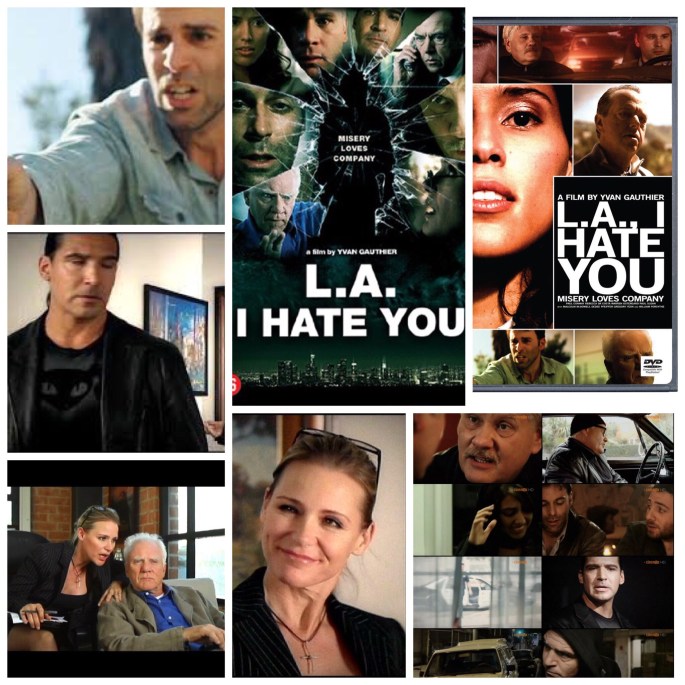
There’s this odd trend in art films these days to make a haphazard anthology thing with various actors in a string-along parade of vignette cameos, title them with the name of a city followed by the sub header ‘I Love You’, or ‘I hate You’. Examples include ‘Paris, Je T’ame’, ‘New York, I Love You’, and you get the idea.. it’s as weird trend, most of the entries I haven’t seen, but the copycat effect trickled down into direct to video town, and I did catch one called ‘L.A. I Hate You’, a strange and cheaply made noir knockoff that doesn’t have much to offer except a few decent actors in sly parody roles. It’s made in three segments, all set in Hollywood and revolving around the film industry, all three chunks of the story ultimately going nowhere. There’s a down on his luck dude with a paraplegic wife who gets sucked into a violent scheme involving his estranged, dangerous uncle (William Forsythe doing his ultra-sleazy tough guy shtick) and the wife’s morally bankrupt father (Gregory Itzin). A struggling wannabe actor (Paul Sloan) is coaxed into stardom at a high cost by a devilish movie producer (Malcolm McDowell, also in scumbag mode), and attempts are made to make these three seemingly separate narratives intertwine here and there, but neither that script, editing or acting is good enough to make us either believe or care. Oh, there’s also a really unnecessary UFO subplot too, just in case it wasn’t cluttered up with enough nonsense. A cheaply made, half assed turkey.

-Nate Hill

B Movie Glory: Killing Season

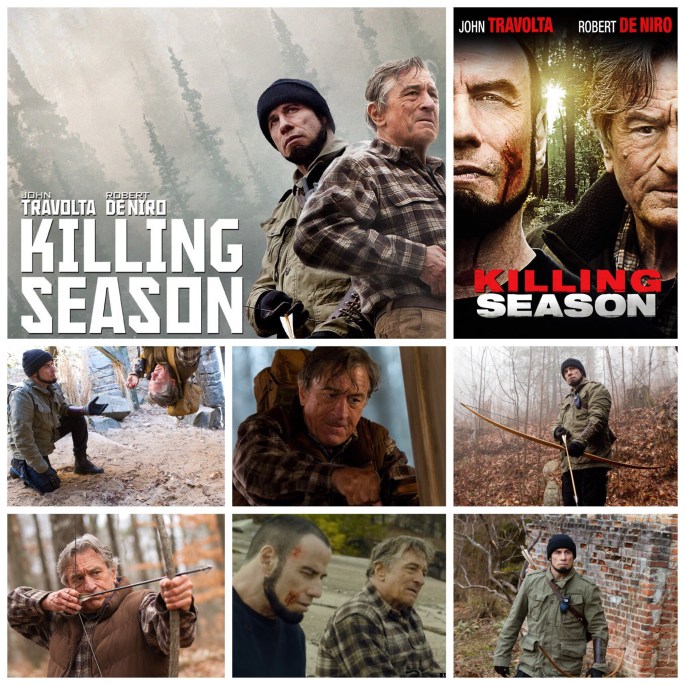
As much as Killing Season has it’s flaws, and would have been better suited to a half hour short film rather than a slightly stretched out feature, it has strong points as well and entertains as best it can as a passable genre flick. Going the rugged survival/revenge route, a low key Robert Deniro plays Ben, decorated veteran who makes his homestead in the remote isolation of the the Smoky Mountains, scarred from battle both physically and mentally, ready to rest. Down time isn’t in his cards just yet, however, as trouble arrives in the shape of John Travolta as Emil, a Serbian/Bosnian warrior with wounds of his own and one big unresolved grudge against Ben. Both skilled hunters and survivalists, the two engage in a deadly geriatric cat and mouse game against a spectacular wilderness backdrop until the pasts and intentions of both are laid bare, and that inevitable climax rolls on in. Their close quarters warfare is quite fun, surprisingly brutal and just cartoonish enough to elicit a dark laugh here and there. Speaking of laughs, Travolta is so oddly characterized here he begs the query “Are you for real?”, sporting a dime-store fake beard and warbling out the most unconvincing Eastern European accent since John Malkovich in Rounders. That aside though, his actual acting isn’t half bad, especially in the final confrontation with Deniro that contains pathos the film never knew it had. The real allure here is the Smoky Mountain scenery, and I would give a shout out to the cinematographer but honestly with a location this good, a six year old and a smartphone could point n’ shoot and it would look like something Deakins wrought. This is by no means a great film, but is it entertaining and engaging? Absolutely, and any of these critics ripping it a new one on all fronts are just bitter, it seems.

-Nate Hill