Christopher Nolan’s The Dark Knight Rises

Christopher Nolan’s The Dark Knight Rises faced a tricky maneuver: providing a follow up to the earth shattering, delirious success that was 2008’s The Dark Knight. The film was never going to be as good as or better than that lightning in a bottle stroke of genius. However, the film we did get is one epic, operatic sonic boom of a Batman film, and if there’s one area where it does in fact outdo The Dark Knight, it’s in scope. The action set pieces here have an earth shattering, monumental quality to them, mainly thanks to Tom Hardy’s Bane, a full on monster who brings biblical destruction to Gotham City with some calculated, maximum impact attacks that almost blow the speakers of any system they’re shown on. Despite the apocalyptic blitzkrieg, Nolan loses none of that precious philosophy that has made this franchise glow so far, the sharp-as-a-tack dialogue and moral complexities of existing in a world of vigilantes and terrorists. It’s been eight years in Gotham since Batman took down the Joker and, somewhat controversially, the fallen angel that was Harvey Dent. Bruce Wayne has become a crippled recluse while the city more or less flourishes quietly, but there’s nothing that’ll roust a burg out of tranquil slumber like the arrival of a seven foot tall, highly trained psychopath bent on chaos. In a vertigo inducing opener set atop the clouds, Bane triumphantly crashes a CIA aircraft and makes off with its cargo, a mere taste of his brutality to come. Bruce is forced out of hiding to do battle with him, and before you know it they’re all thundering around Gotham’s tunnels and edifices, pursued by hordes of snarky GCPD, who no doubt have missed this kind of action for a near decade. The new commissioner (Matthew Modine) is a hotheaded nimrod, while Gordon (Gary Oldman, the gravitas is real with this guy) still hurts from the tragedy years before. Anne Hathaway throws a wicked curveball of a performance as Selina ‘Catwoman’ Kyle, and although no one will ever, *ever* top Michelle Pfeiffer’s brilliantly kinky turn years before, she’s a deadly force to be reckoned with both for Bruce and the criminal factions vying for power. Hathaway seems like a sanitized choice for the cat, but she’s deft, sexy, formidable, competent and looks damn good in that outfit careening around on Bruce’s batbike. Marion Cotillard is great as the mysterious Miranda Tate who may be more dangerous than she seems, a shtick which Cotillard unnervingly perfected first in Inception. Morgan Freeman and Michael Caine are top notch as Alfred and Lucius once again, Ben Mendelsohn plays up a sleazy business rival for Bruce, Juno Temple is cute as Selina’s off again, on again lover, Joseph Gordon Levitt’s intrepid detective gets a whole lot of plot momentum and crazy good dialogue, and the jaw dropping lineup of supporting work includes Brett Cullen, Burn Gorman, Desmond Harrington, Chris Ellis, Robert Wisdom, Tomas Arana, Aiden Gillen, Brent Briscoe, William Devane, Nestor Carbonell, Reggie Lee, Wade Williams, Christopher Judge, a brief reprisal from Liam Neeson and Cillian Murphy as that pesky Scarecrow, the only villain who appears in all three films. The story goes to places the other two films never ascended to, and if the Joker thought his antics aspired to anarchy, he’d do flips when Bane literally starts blowing up the city on a massive scale, an extended sequence that’s delirious in it’s armageddon worthy panic. On a more personal scale, Batman deals with being broken, the cost he must pay to ultimately save his city, and the unknowable matter of when to cash out as a superhero, or forever give up your soul to a fight that has neither end nor reason. My only issue with the story is how a certain third act revelation pretty much neuters Bane’s character arc and renders his whole fearsome nature somewhat too human and redundant when all is said and done, it’s a narrative decision Nolan should examine closely for his own sake, and avoid such an impotent cop-out when writing his next arch villain. The cinematography is aces, the cgi blending seamless, Hans Zimmer’s score gives us the classic thunderstorm passages we’ve come to love while adding a rhythmic chanting for further depth and flavour. There’s not much that can be said that’s negative about the film, it’s one hell of an achievement and doesn’t let up until the Big Bang of an ending provides release for the franchise and every character in it, an expository epilogue in which loose ends are tied, and some semblance of peace is found. A near perfect third act to the trilogy, and a superhero flick for the ages.

-Nate Hill

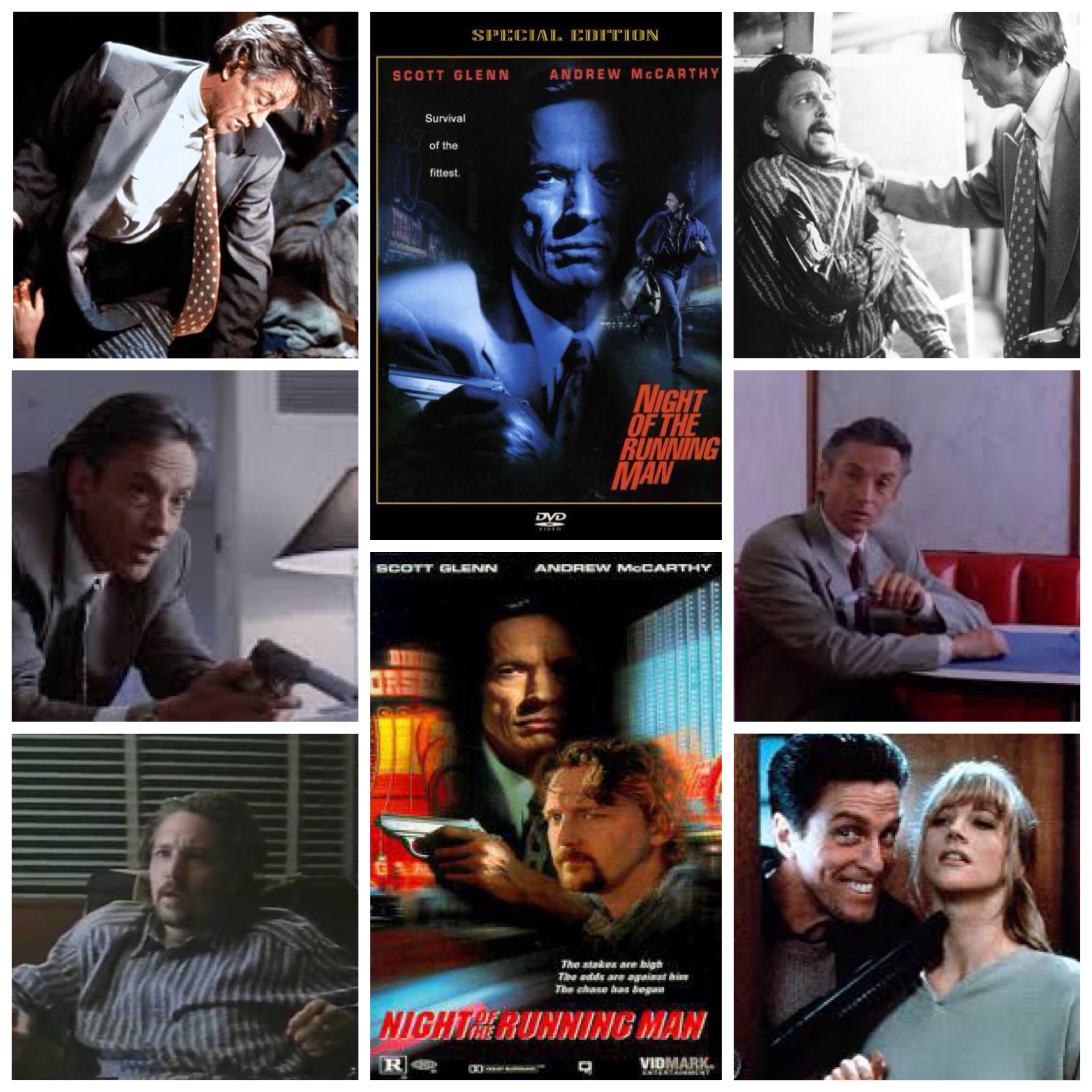
B Movie Glory: Mark L. Lester’s Night Of The Running Man


Mark L. Lester’s Night Of The Running Man, not to be confused with the Schwarzenegger classic of a similar moniker, is a mean spirited little urban thriller with Scott Glenn in one of his primo amped up psychopath roles. In the spirit of Scorsese’s After Hours, a hapless cab driver (Andrew Mcarthy) finds himself being hunted through the Las Vegas nightscape after one of his fates is murdered right in front of him, but not before leaving behind a suitcase full of millions. The hot man called in to pursue the funds is David Eckert (Glenn), a sociopathic monster with a heavy artillery, bent on retrieving the case and killing as many people along the way. One is reminded of the cult flick Judgment Night as the poor cabbie is forced to run all willy billy through the urban hustle, constantly evading Glenn’s lunatic presence. Further villainy is provided, albeit of the more hammy variety, by a scene stealing John Glover as an associate of Eckert’s who also casts his net to catch McCarthy, his scenes are so arch and bizarre that they almost swerve the thing into slapstick comedy territory. You can do way worse in budget B movie land, and this one clearly seeks to entertain with it’s broad characteristics and blatantly trashy tone. Plus, Glenn is, quite literally, killer good. 

-Nate Hill 

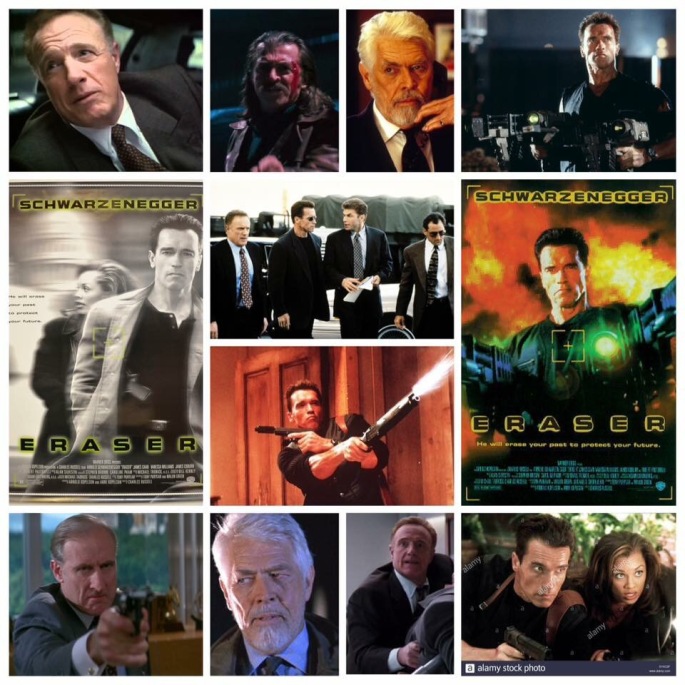
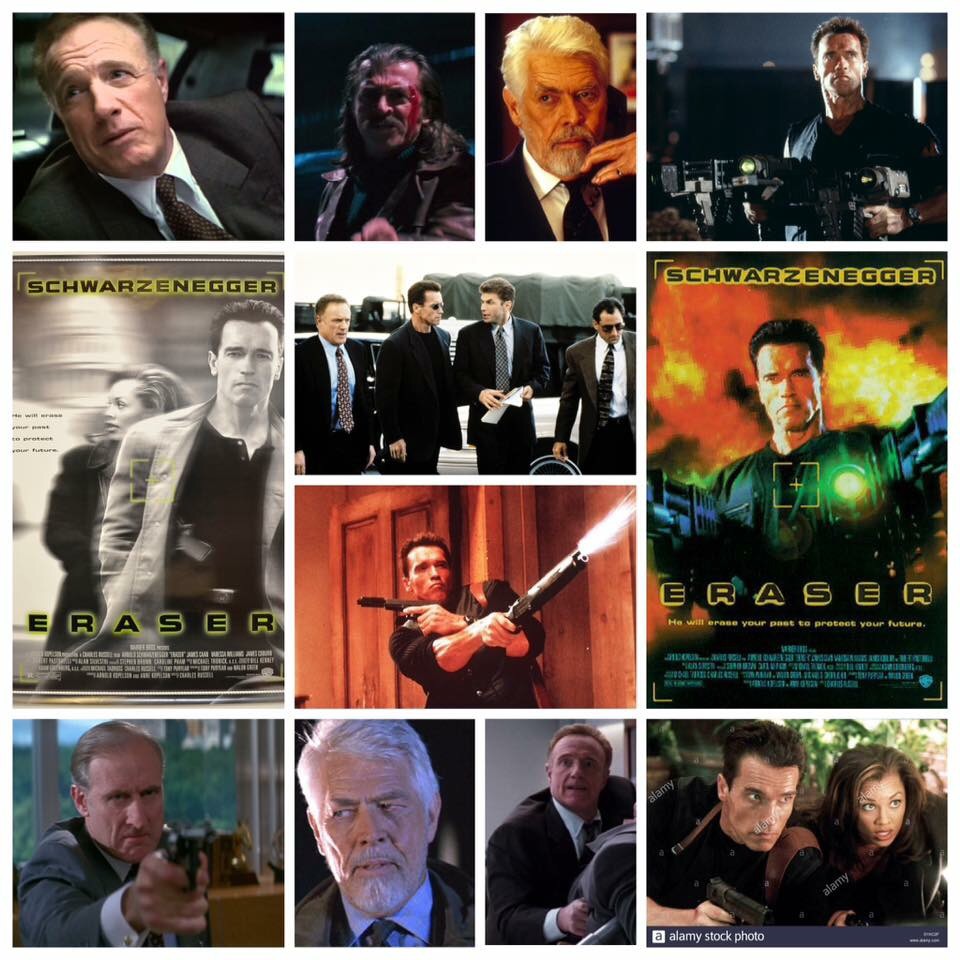
Eraser 


Eraser is a top notch Schwarzenegger vehicle, and in a year where the only other Arnie entry was the mind numbing Jingle All The Way, it supplies 1996 with that jolt of action from our favourite Austrian juggernaut. Here he’s John Kruger, a US Marshal who specializes in an obscure wing of the witness protection program that literally wipes people’s memories clean before replacement. The technology is naturally hoarded over by big old corporations which as we know aren’t to be trusted in these type of films. During a routine mission to help beautiful client Vanessa Williams, Kruger begins to suspect his own colleagues of some shady shit involving the sale of high grade weapons, and before he knows it he in the crosshairs and on the run with Vanessa tagging along. It’s all smarmy James Caan’s fault really, who plays his devilish, treacherous superior officer at the WitSec agency, a classic case of ambition gone rogue, his villainous cackle trademark of someone you just shouldn’t trust, even before his true colours are bared. The action is fast, furious and rooted in 90’s sensibilities, with all manner of attack helicopter chases, massive artillery fired off at a whim and the the near SciFi concept frequently smothered by the shock and awe campaign of each set piece, which is fine in an Arnie flick really, I mean they can’t all be Terminators and Total Recalls. There’s a neat rogues gallery of character actors filling in the wings in addition to the big guy, Williams and Caan, including Olek Krupa, Patrick Kilpatrick, James Cromwell, Danny Nucci, Robert Pastorelli, Joe Viterelli, Mark Rolston, John Slattery, Roma Maffia, Tony Longo, Melora Walters, Camryn Mannheim, Skip Sudduth and Nick Chinlund as Caan’s unwitting henchman. There’s also a delightful cameo from James Coburn as the WitSet CEO, doing the same pleasant ‘sort of a villain, but also sort of not’ shtick he did in Payback. One of Arnie’s more low key efforts, but still more than serviceable and a slam bang damn great time at the action races.

-Nate Hill

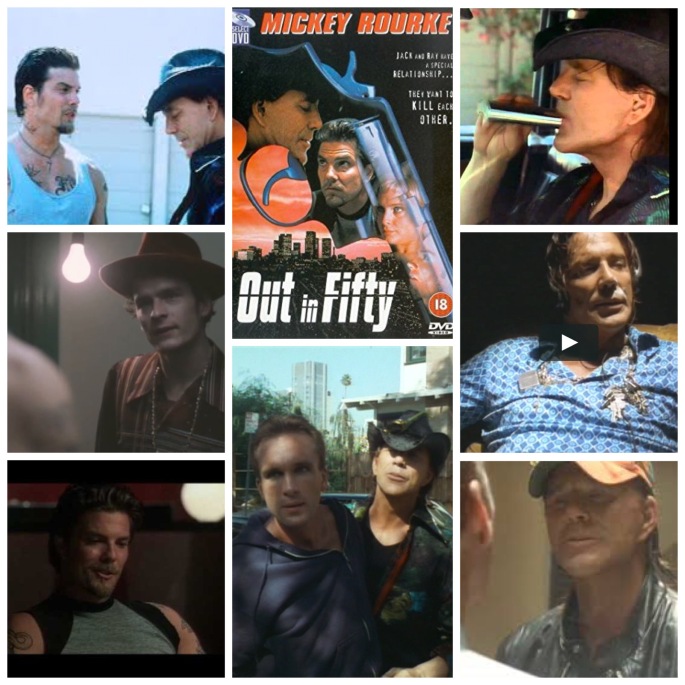
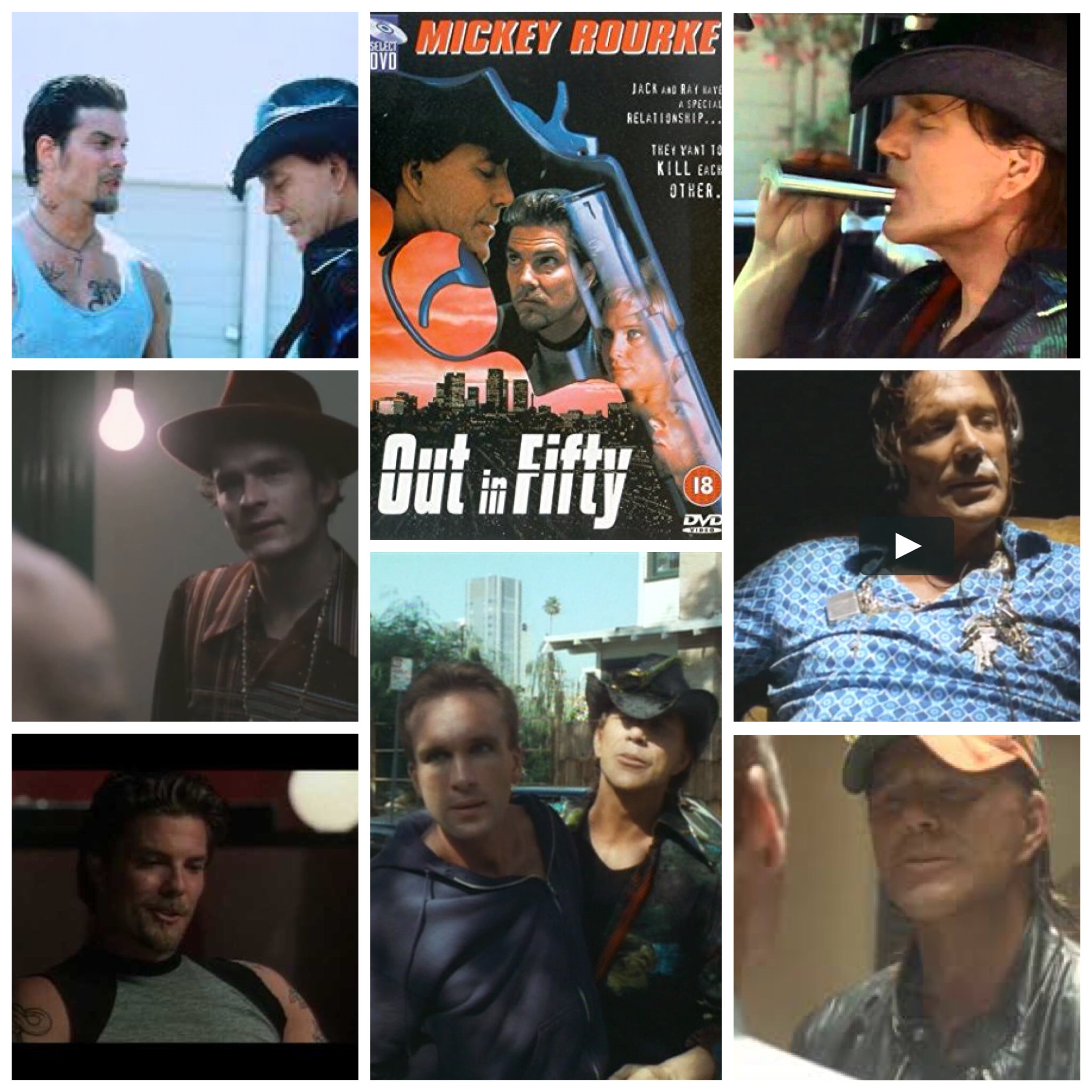
B Movie Glory: Scott Leet’s Out In Fifty 


I usually avoid B movies where the writer/director also stars in the lead role, as it’s almost always pitiable self indulgence a lá The Room. In the case of Scott Leet’s Out In Fifty though, there’s an exception to the rule. A violent, mean revenge story with no light at the end of the troubled tunnel, it’s a bizarre, sketchy little flick that benefits greatly from Mickey Rourke as one beast of a cop on the hunt for the convict (Leet) who accidentally killed his wife in the heat of a passionate affair. Remorseful and tormented, he just wants to quietly exist after he’s eventually paroled, but Rourke, still hard bitten over the incident, has other plans. That’s pretty much it, but the actors sell the dour tone nicely, especially Rourke, who is at his nastiest and most scarily volatile, with a seething, bleeding broken heart behind the coiled viper, hate filled exterior. Peter Greene is terrific as his former partner who does his best to reign the guy in, and there’s work from Christina Applegate, Johnny Whitworth, Ed Lauter and Balthazar Getty as a weirdo pimp/motel owner. Leet isn’t bad, especially in the writing department, and holds the thing together with reasonable triple threat talents, although he has scarcely been heard of since this one. Not bad, made better by Rourke and Greene’s presence, and worth it for any fan of the two heavyweights.  

-Nate Hill

Philip Kaufman’s Rising Sun


Philip Kaufman’s Rising Sun is a high profile murder mystery set atop lofty political echelons, but it’s less about the murder itself and more doggedly focused on the culture clash between American and Japanese business factions, as well as the two detectives caught up in the whole hectic, East-scraps-West mess. A lot to cover in one film, but this one keeps its head afloat and then some, with a whip smart script based on a novel by Jurassic Park architect Michael Crichton that was libelled as ‘Japan bashing’ (this was in the 90’s, imagine the snowflake storm it’d garner in our day). It apparently toned down some aspects, but either way, it’s not only a searing detective story, but one set against a backdrop of fascinating urban and metropolitan anthropology. Sean Connery bites into one hell of a role as John Connor (not a T-1000 in sight asking his whereabouts, they’re slacking), a veteran legend of a cop with deep ties to Japanese culture, having spent many years there, married to a Japanese woman as well. He’s partnered with Web Smith (Wesley Snipes), lively enough to poke fun at Connor’s guru-esque patronizing, but with enough of a head on his shoulders to adapt in waters that are anything but calm or familiar to him. Their case? On the eve of a giant mega deal between two corporations representing both soil, a mysterious prostitute is found murdered in a Japanese high rise. Laser disc footage may yield the killer’s visage, and may not. A super racist LAPD detective (Harvey Keitel, volatile and riled up) is anything but help. The suspects? A sleazy US senator (Ray Wise), a Japanese mystery man (Cary Hiroyuki-Tagawa) with one foot in business and the other, suggestively, in organized crime. The list goes on, and doubles back on itself multiple times. Not only is the investigation riveting, the buddy cop banter between Snipes and Connery, both funny and grounded, is just so engagingly well drawn, and tense inter-company espionage thrills throughout all the acts. The cast deepens, with fine work from Steve Buscemi, stern Daniel Von Bargen, Tamara Tunie, Stan Shaw, Mako, Kevin Anderson and gorgeous Tia Carerre as a quick witted tech expert who assists the dynamic duo in deciphering that pesky 90’s laser disc, and the incriminating secrets therein. Not your garden variety police procedural, buddy cop flick or social commentary, but rather unique variations on all three, amalgamated into a film that demands patience and focus, but rewards with a great story. 

-Nate Hill

Greg Harrison’s November 


Greg Harrison’s November is one of those frustratingly opaque, reality bending sketchy thrillers where a metaphysical shudder is sent through someone’s fabric of existence, in this case that of photography professor Courtney Cox. Driving home late one night, her husband (James LeGros) runs in to a Kwik-E-Mart to grab her a snack right at the same moment a burglar (Matthew Carey) brandishes a gun, and then open fires. After he’s killed, you feel like the film is in for a run of the mill grieving process as she visits a therapist (Nora Dunn). Events take a detour down Twilight Zone alley though when a spooky photograph shows up amongst one of her student’s portfolios, a snapshot of that very night at the store, apparently zoomed in on her husband. Who took it? Is the man actually dead? Will the film provide the concrete answers that some viewers so fervently salivate for in these types of films? Not really, as a heads up. As soon as things begin to get weird, they pretty much stay that way for the duration of the exceedingly short runtime (it clocks in under eighty minutes!). Cox’s character revisits that fateful night from many different angles and impressions, either reliving it, recreating it or simply stuck in some sort of alternate time loop chain. There’s a policeman played by Nick Offerman who offers little in the way of help, and she’s left more or less on her own through this fractured looking glass of garbled mystic confusion. The tone and aesthetic of it are quite something though, a jerky, stark Polaroid style mood-board that evokes ones like The Jacket and Memento, with an art house industrial touch to the deliberately closeup, disoriented visuals. It’s a bit maddening from the perspective of someone only looking for answers, and if that’s why you came, you’ll be left wringing your hands and losing sleep. If you enjoy the secrets left unravelled, and are a viewer who revels in unlocked mysteries left that way, recognizing the potent energies distilled from unexplained ambiguity, give it a go.

-Nate Hill

Joel Schumacher’s Blood Creek


A Joel Schumacher helmed horror flick starring Michael Fassbender as a deranged, occult obsessed Nazi zombie vampire, hunted by Lincoln Burrows from Prison Break. Sounds like a flick from an alternate dimension that doesn’t exist, right? Well it’s out there, tough to find as it was somehow buried around it’s 2009 release, and relegated to a relic before it was even a decade old. Shame, because it’s a ton of warped, bloody fun. Officially titled ‘Blood Creek’ on iTunes, it can also be found as ‘Town Creek’ or simply ‘Runes’ elsewhere, but like they say, a rose by any other name. Fassbender is all kinds of scary in a black and white prologue as a Nazi occult agent who shows up at a rural American farm to study ancient Nordic runes which may hold the key to resurrection of the dead. His chilling work initially is nothing compared to the balls-out, gory makeup covered incarnation he gets to prance around in later though. In present day, two brothers race into the foggy backwaters to stamp out this evil, and they’re played by an intense Dominic Purcell, as well as Superman himself, Henry Cavill. Not a whole lot of time is spent on character development for all involved, the film choosing instead to jump headlong into a notably gory free for all, banding together with the poor German family who has had to deal with this psycho for almost a generation on their farm. At a crisp ninety minutes, there ain’t much time for anything but action and gore, with a few scarcely scattered, breathless moments of exposition that were already made clear in that prologue, the one interlude of the film that isn’t soaked in adrenaline. Hats off to Fassbender under all that chatty, gooey makeup, his physicality is really menacing, and who else gets to play a Nazi vampire zombie who pounds a metal stake into his own forehead to make room for an emerging third eye? Truly a villain for the ages, had the film been allowed to gain any notoriety. And what other film can boast a sequence in which Purcell eagerly blasts zombified, rabid horses with a shotgun, chunks flying all over the barn? Such are the levels of disturbed imagination on parade. Poor Schumacher though, really. This would’ve been his first good film in awhile back then, and the studio goes in for the kill on every single marketing front, not even giving it decent room to breathe on DVD. At least it’s still floating about on iTunes, where any horror fan would be rewarded with a rental.

-Nate Hill

Gore Verbinski’s A Cure For Wellness 


Gore Verbinski’s A Cure For Wellness is a tricky one to pin down or feed readers a review that will point in either direction. Parts of it are sleek, beautiful, scary beyond words and terrifically staged. Others are bombastic, out of left field and completely unwarranted. During the head scratching climax I found myself wondering aloud, ‘how did we get from where the film started off to… *this*??!’. It’s senseless, meandering and probably a bit too long as well, but despite all that, I kind of loved the damn thing, eels and all. When you see the name ‘Gore Verbinski’ as director, you know that the film you’re about to see is going to have a few distinct qualities: lengthy, ambitious, stuffed with ideas both visual and auditory, offbeat and usually in no way similar to the last film he did. He’s the king of variety, I love his work a ton and think he’s one of the most under appreciated directors out there. This is his stab at a grand old horror picture, and while he admittedly doesn’t get everything right, there’s much wonder to behold and keep the viewer mesmerized. I don’t believe I’ve seen a more visually sumptuous horror flick since Guillermo Del Toro’s Crimson Peak. This largely takes place in the Swiss Alps, and shot after shot is just cold beauty and immersive vistas, a beautiful terrain surrounding the facility where a young businessman (Dane DeHaan, who I’ve never really been a fan of, but his weird spindly goblin aura suits the material here) ends up, trying to extricate a senior member of his company back to New York for a life and death merger. Life and death are also key components of this establishment, or more-so the latter, as he will find. The place is an eerily calm self help retreat run by icy, devilishly charming Director Volmer (Jason Isaacs eating up scenery with ferociously measured relish). There’s foul play afoot, which is glaringly obvious from the moment the young man steps through the front door. That’s the thing about this film, or much of it anyways, there’s no surprises or unpredictability to be had. We know the sinister path of these types of shockers quite well, and it all seems so familiar. Then when the third act rolls around, we wish we didn’t hope for something deviating from that path, because the narrative pretty much sets the path on fire, runs off the map into it’s own deranged subplot that will shock, if not awe. The film has some truly icky moments, one involving eels and a dubious looking plastic tube that’s a squirmer for sure, and the sickly atmosphere in the air all about this hellhole in the heavenly mountains. There’s fine acting to be seen, not just from terrific Isaacs but also ethereal looking Mia Goth as a creepy young waif who’s presence the plot hinges on later. The end ramps up for something that ditches the clinical body horror and heads right into old school, Hammer Films style horror a la Frankenstein or something kinkier, and while jarring, I’d be lying if I said I wasn’t entertained or giving it the aghast slow clap of sheepish approval simply because the film had the balls to *go* there, without a care spent on whether we wanted to see such absurdities or not. I admire such brazenness in film. A curiosity of a flick, seemingly cobbled together from ideas that don’t always quite mesh, but are still fun to bear witness to. A mess, but a hot one, and a damn good looking one too, if all over the place. 

-Nate Hill

Breakheart Pass


Breakheart Pass is a wicked tough, badass Charles Bronson action vehicle steeped in the macho charm on the 1970’s, and filled with ever changing photography as a train hurtles across the Nevada and Idaho mountains during a snowy winter. Onboard is John Deakins (Bronson), a dangerous outlaw being transported as prisoner to a remote, well guarded fort somewhere deep in the wilderness. Deakins isn’t who he seems though, and neither is anyone else onboard for that matter. When a murder occurs, he takes it upon himself to wage a bloody crusade on everyone else in order to find the truth about what’s going on, and the truth about their frozen voyage. Bronson is nails tough, doing some deliriously sketchy stunts and engaging in blessedly R rated, pretty intense violence for 70’s standards. The cast is stacked, other passengers include Ed Lauren, David Huddleston, Richard Crenna, Charles Durning and Ben Johnson as the ruthless federal marshal in charge of Deakin’s transport. A rock solid genre picture, thrilling, decked out in western production design and filled with savage, bullet ridden, bone breaking set pieces. 

-Nate Hill

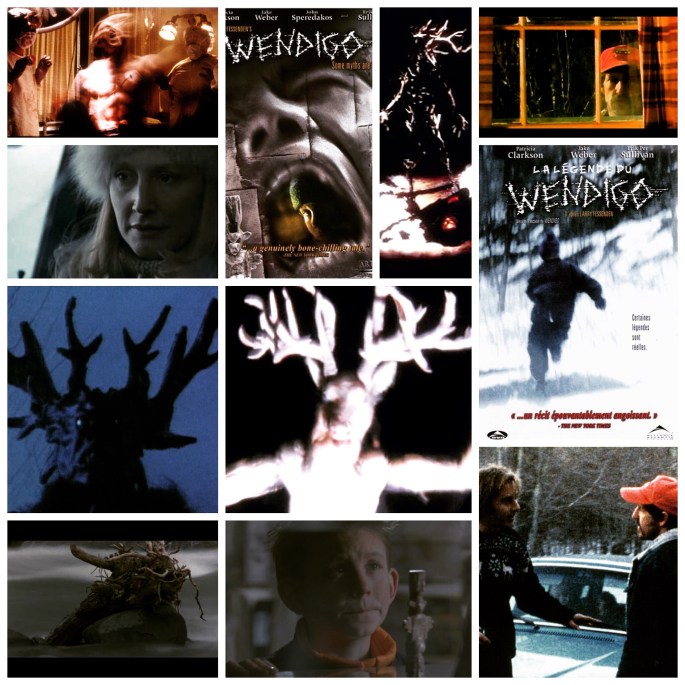
Larry Fessenden’s Wendigo


Larry Fessenden’s Wendigo is a film that has stuck with me since I saw it years ago, a glowing textbook example on how to create chilly, effective and engrossing horror on a minimal budget, to maximum creepy effect. Set in the snowy drifts of Upstate New York in the dead of winter, a stressed out family heads up to a remote cottage for a rest. Following an accident, a dead deer and the subsequent altercations with angry locals, things take a turn for the supernatural as some dark force takes up residence on the cottage grounds, shaking the family to their collective core. There’s an old legend out there about a spirit called Wendigo, a vengeful ghost that latches onto traumatic events, haunting those involved often right to their graves. These poor people awakened it, and it won’t go away. Jake Weber, Patricia Clarkson and Dewey from Malcolm In The Middle are great as these folks, compelling in their sense of confusion and dread. The creature is rarely seen, save for a single stark image that I haven’t forgotten since: after the car accident, the child looks a ways up the road and sees it standing there, a freaky spectre, all shadows, antlers and such. Spooky stuff. 

-Nate Hill