Rob Zombie’s House Of 1000 Corpses

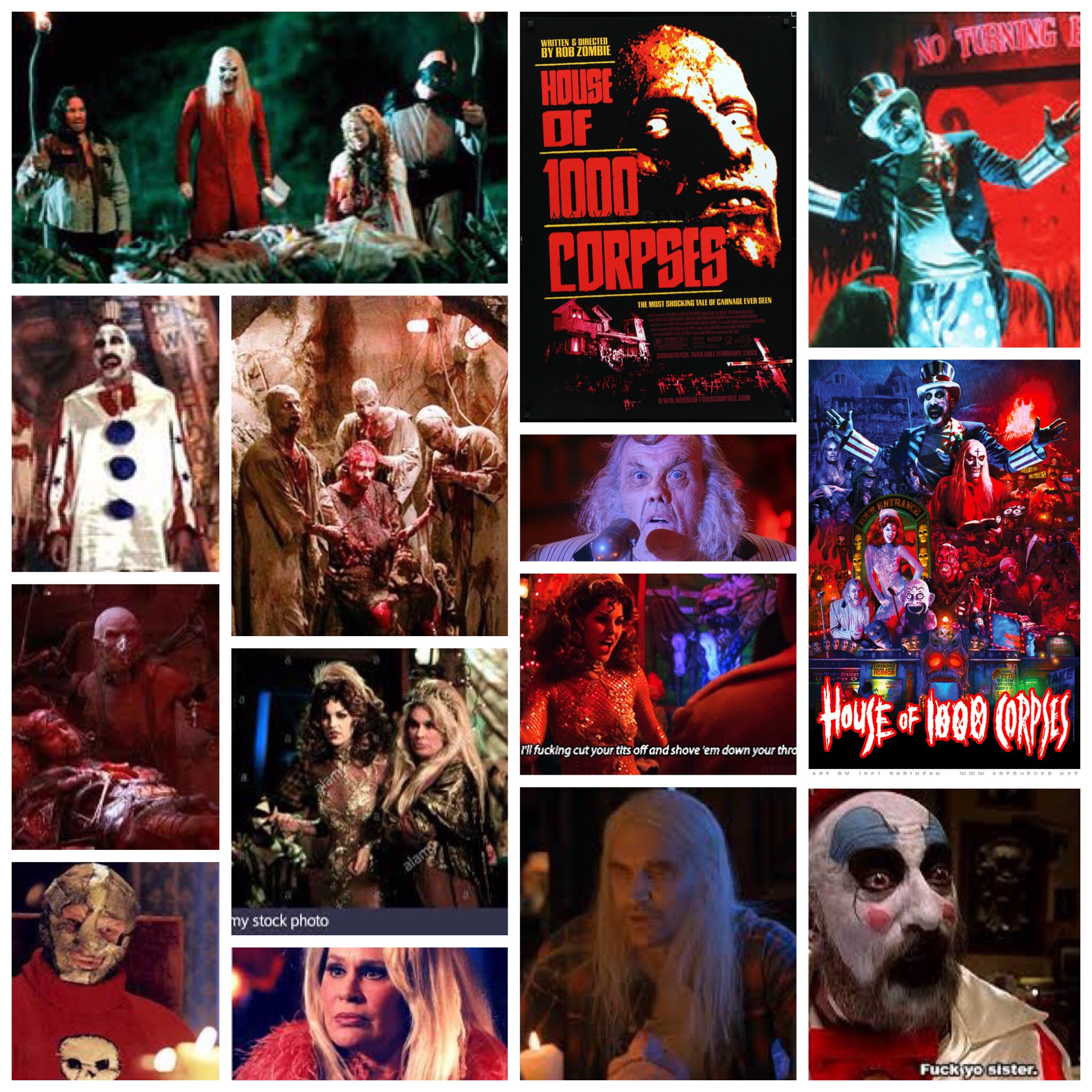
Rob Zombie’s House Of 1000 Corpses is a lot to sit through, and at times is a victim of its own overly zany ambition. Nevertheless, it’s the first stepping stone in the path of one of the most fascinating and talented directorial careers in the industry, and is a completely batshit mental curiosity in its own right. Zombie sprung onto the scene with this one and has since been a controversial, much talked about and frequently hated voice of horror. Let’s get one thing transparently clear: No one can be blamed for not enjoying his films, they’re incredibly niche and not everyone’s thing, but you are simply lying to yourself if you won’t concede what a hugely talented writer, director and all round filmmaker he is. I’ve had to get quite stern in conversations with people whose tunnel vision stubbornness supersedes their ability to logically analyze his work, and I simply won’t put up with it. Alright, scolding done, over to the film. I’ll be the first to admit that House is a splattered mess at times and goes about six light years over the top, but the sheer grungy scope of production design is really something to see. In deepest backwoods Americana, the murderous Firefly clan preys on, terrorizes and murders pretty much anyone who gets in their path. Bill Moseley is a Manson-esque dark angel as Otis Driftwood, renegade bad boy brother, Sheri Moon Zombie is like Harley Quinn on bath salts as Baby, who is definitely the scariest, while gargantuan Matthew McGrory, walking decrepitude grandpa (Dennis Fimple) and giggling slutwhore Mama (Karen Black doing her very best freaky Betty Boop rendition) round out the rest of the brood. They live in some cluttered rural dump right out of Hoarders™, luring unsuspecting travellers off the road and murdering them in really over elaborate, exhaustive looking ways. Oh and we see the birth of one of cinema’s most jovial and sleazy killer clowns, Sid Haig’s motor mouth Captain Spaulding, who bookends the film in uproariously raunchy comic relief. It’s a neon fever nightmare of relentless commotion, visual excess, metal music, retro Americana pop culture bliss and sadistic gore, Zombie going all out to solidify his storytelling aesthetic that would continue, in augmented, evolved ways, over the course of his brilliant career. This is certainly as obnoxious a film as you’ll find in his stable, and while it ranks in the southern end of my Zombie favourites list, there’s just no ignoring the raucous, depraved celebration of all things gross, gooey and grotesque that parades by. Not to mention the whip-smart, trashy and endlessly funny dialogue, writing being skill that the man excels in on another level. 

-Nate Hill

The Strangers 


You’ll be double checking that your doors are triple dead-bolted after The Strangers, the finest pedigree in home invasion/stalker chillers, a film so lethally unnerving that even a few moments in the trailer alone can get people squirming. On a dusky autumn’s eve, Scott Speedman and Liv Tyler arrive at their remote cottage to get some downtime. Giving each other the cold shoulder following a spurned marriage proposal, the mood is anything but romantic, but that’s nothing compared to the nightmarish arrival of three masked intruders who terrorize them the whole night through. First time Writer Director Brian Bertino has a brutal, bleak edge to his script and knows how to stage the scenes of fright in gut churning, uncomfortable fashion. Nothing about these Strangers is ever divulged, motive nor backstory, they’re just relentless phantoms of the night who chose this poor couple simply because “they were home.” The cinematography is gorgeously auburn and amber burnished, full of rich deep shadows that could be hiding anything, and quite often are. 1970’s inspired design creeps into the detailed production design as well as the soundtrack, and all the elements contribute to an immersive atmosphere. The ending has always been a point of contention amongst people since this came out (Ebert wrote an unfair, misguidedly scathing report), and it’s understandably tough for audiences to sit through such a depressing, hopeless conclusion. But considering this is Hollywood, where every film and it’s mother has a happy ending or something numbingly predictable, it’s a nice swap to get bludgeoned out of nowhere by a complete, no fucks given conclusion that leaves no way out for anyone and an upsetting, anxious feeling in the air. I love that the director had the stones to finish off the film like that, and I love even more so that the studio let him keep it, other outfits should take note of where and when to dole out creative control at the expense of making a memorable, lasting experience. A no frills nightmare that sends you straight to anxiety-ville. Keep those lights on when you turn in tonight and don’t answer the door if someone knocks. Don’t even move or breathe. 

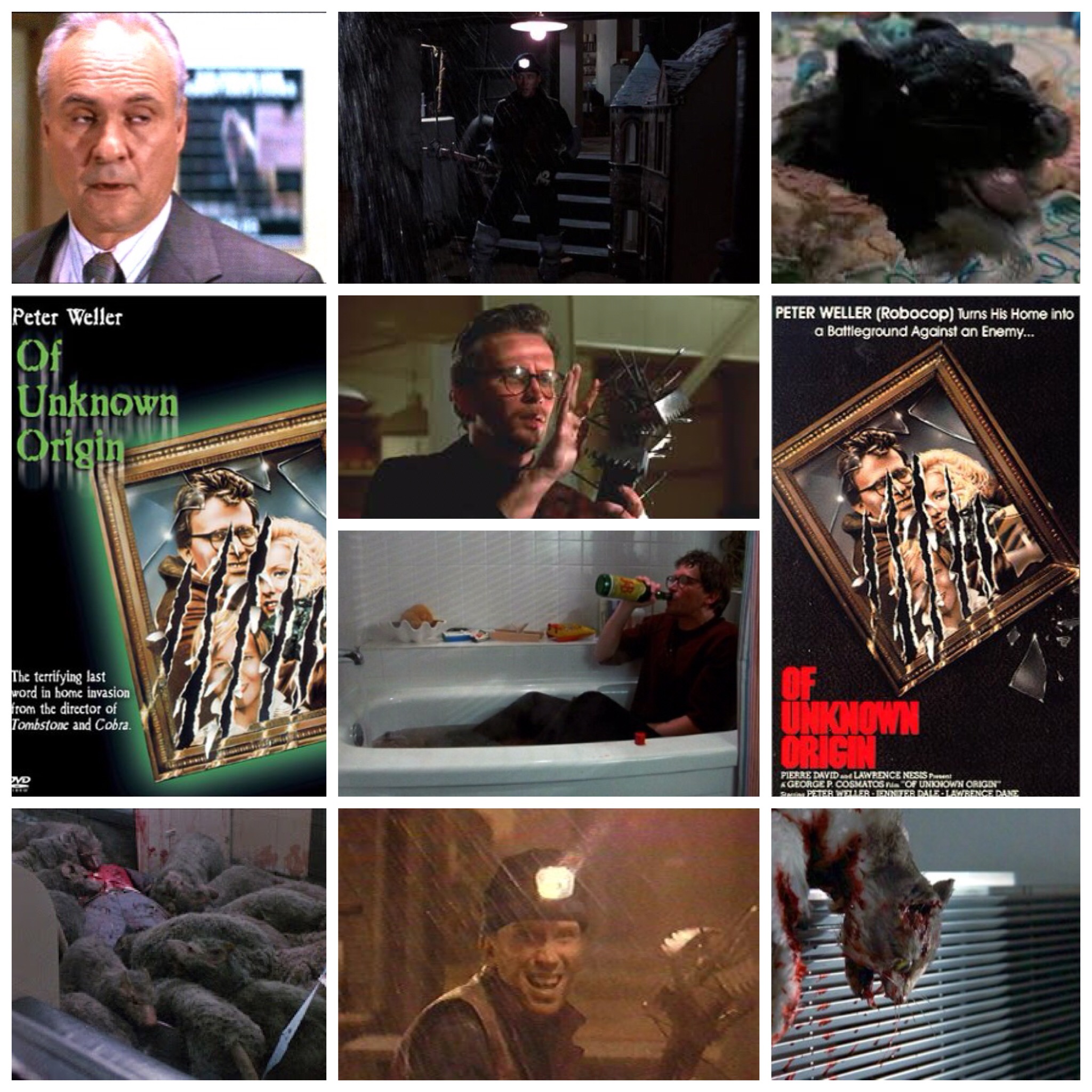
George P. Cosmatos’s Of Unknown Origin 


Peter ‘Robocop’ Weller vs. home invading rodents. That’s pretty much the premise behind George P. Cosmatos’s Of Unknown Origin, a warped little TV movie that takes on battling rats as a central plot-line, with a straight face no less. Usually this type of thing would be a campy SyFy original with screensaver special effects and the tonal towel already half thrown in. This one goes for full realism though, or at least tries, and it’s an odd mixture. Weller plays a mild mannered businessman who just gets so irked by those pesky vermin, enough so that he saddles up in all kinds of elaborate gear that would make Christopher Walken in MouseHunt jealous, and trawls the hallways and ducts of his townhome like a looney head, trying to kill the little bastards. There’s a vague satire angle in terms of his job, office politics and whatnot, which is one more thing you wouldn’t really find in this type of flick, if it were garden variety, but this one avidly shirks the standards. The rats are treated not as spooky monsters or a shadowy hidden legion, but the outright heinous plague they are on society. I got a try-hard metaphor vibe out of this one, something like these things representing the decaying monotony of the proverbial ‘rat race’, and one lone suit and tie renegade who aims to blast the gnawing pet peeve out of the water, like Michael Douglas in Falling Down. Or maybe it’s just a flick about one lone crazy dude who just really doesn’t like rats. Either way, it’s a bizarrely constructed little thing that ducks the limbo bar of genre and darts off in it’s own slightly dysfunctional direction. 

-Nate Hill

Sean Baker’s The Florida Project: Thoughts from Nate Hill


As picturesque Disneyworld looms just out of reach over a Florida welfare assisted motel, so too does the prospect of any normal upbringing for some of it’s pint sized residents. Sean Baker’s The Florida Project exists in a world of pristine pastel promises and lacquered, castle shaped buildings, a colourful, cotton candy paradise that is as tragic as it is eye catching. For six year old Mooney (Brooklyn Prince instills joy and heartbreak in every mannerism) and her friends, this is a kingdom where they run wild, oblivious to the squalor around them and perceiving their surroundings through the idyllic, abstract lens of childhood. Mooney’s mother Haley (Bria Vinaite in a scarily realistic depiction of unabashed ratchetness) is a wayward, self destructive girl whose slack, near non existent parenting leaves the girl mostly up to her own devices. Haley loves her, that much is clear, she just isn’t built to take care of herself, let alone a daughter. None of this strife matters to the children though, and that’s where Baker’s film gets its light from, amongst such troubling themes. All of it is seen through their eyes, youngsters who are still half connected to the subconscious and therefore are affected differently by everything. Peter Travers has called this ‘the best film about childhood ever’, and he may just be right. Much of what we see shows them simply playing, running about and being kids in a naturalistic, unforced way that is enchanting and makes me endlessly fascinated about Baker’s methods of direction, as I imagine children are harder to control on set than animals. To say that music is used sparingly here would be an understatement; ninety percent of the film is soundtrack free except an ironic opening credit sequence set to ‘Celebrate Good Times’, and one jarring musical cue near the end that I won’t spoil except to say it’s so effective I let out an audible exhale of surprise. The film is episodic too, and although contains visible arcs, is told in a hazy, spare and hypnotic ‘fade in, fade out’ fashion, drummed into us until we feel the day to day rhythm of this curious and beguiling part of America. Now let’s talk acting, which, as you all know is the centrepiece of my cinematic musings. Willem Dafoe is a tower of power as stern but compassionate Bobby, motel manager and guardian angel to this group of lost souls. Dafoe is a seasoned pro and knows never to overplay it, and when things get rough for him to bear witness, his moments of quiet devastation are incredible. He’s also the comic relief in bits and the steward of a very irregular township, it’s a delicious role for any actor to get, and he’s about long overdue for an Oscar, so… hint, hint. Prince is an unbelievable find, showing uncanny control and focus on camera for someone her age, and when it’s time for the third act emotional beat-down, she hits every note pitch perfect. Vinaite seems to have no acting experience before this, a choice which Baker also went with in his fiery debut Tangerine from a couple years back. She’s great too, turning a role that could have been one note into something way more complicated and sad, like a tragic fallen angel. I’d also toss cinematographer Alexis Zabe’s name into the Oscar race, as she beautifully captures this really strange looking area in surreal, eye popping colour and always from angles the seem like a child’s POV a la Terry Gilliam. Between his debut and now this, Baker is gathering momentum in leaps and bounds, and he’s quietly released the best film of the year so far, no easy task in the same year as a certain SciFi masterpiece. Florida Project is intimate, focused, loosely spun yet gravely affecting, important, playful, both cinematic and anti cinematic, and something of a small miracle. Seek it out in theatres, even if you have to drive out to the local art house venue.

Antonia Bird’s Ravenous


Murder. Cannibalism. War. Treachery. You wouldn’t think that such subject matters would make for any sort of lighthearted film, but Antonia Bird’s Ravenous somehow manages it, becoming a classic in my canon along the way. Despite the dark events that unfold, it’s become somewhat of a comfort film for me, one I can put on any old time for a rewatch and enjoy the hell out of. It’s amusingly disturbing, lively, cheerfully gruesome, well casted, oh so darkly comedic and has wit for days. Guy Pearce plays Boyd, a timid soldier who’s banished to a remote fort in the Sierra Nevada Mountains after a prolific display of cowardice during the Mexican American war. His superior officer (crusty John Spencer) just wants him out of his sight, and Boyd just wants to survive and forget the horror he endured in combat. Even worse nightmares are just around the corner though, when mysterious drifter Calhoun (Robert Carlyle in Charlie Manson mode) shows up at the encampment and all sorts of depraved shenanigans kick into high gear. Calhoun turns out to be a serial killing, cannibalizing, grade-A certifiable madman, and no one in their company is safe from that moment forward. Jeffrey Jones is a jovial scene stealer as the fort’s commander, getting all the best quips and quirks. David Arquette howls his way through a barely coherent performance as the resident peyote hound, and further colour is added by weirdo Jeremy Davies, Sheila Tousey, Joseph Runningfox and Neal McDonough as the tough guy soldier who discovers he ain’t such a tough guy after all. Again, as dark as this film gets, it never loses it’s sunny, demented disposition. This is largely thanks to one bouncy melody of a score from “, ditching any portentous strains or eerie chords for a purely arcade style, quite pretty lilt that’s catchy, silly, warped and probably the most memorable aspect of the piece. Pearce plays it introverted, keeping his fear close to the chest and using it when desperation creeps in, or whenever there’s a hair raising encounter with Calhoun’s monster. Carlyle is a caffeinated blast in what has to be the most fun type of character to play this side of Freddy Krueger, an energetic goofball psychopath with a lovable side that he jarringly switches off on a whim in favour of his leering demon persona. The gorgeous Sierras provide stunning photography for this peculiar fable to play out in, a perfectly evocative backdrop for a campfire tale of murder and, I should mention, pseudo vampirism. There’s a supernatural element to the consumption of human flesh that runs alongside the vampire mythos, putting a neat little spin on an ages old concept. There’s nothing quite like this film, in the best way possible. Leaking wicked sharp atmosphere and knowingly deadpan performances, while retaining the spooky, blood soaked edge of a great horror film. One of my favourites.

-Nate Hill

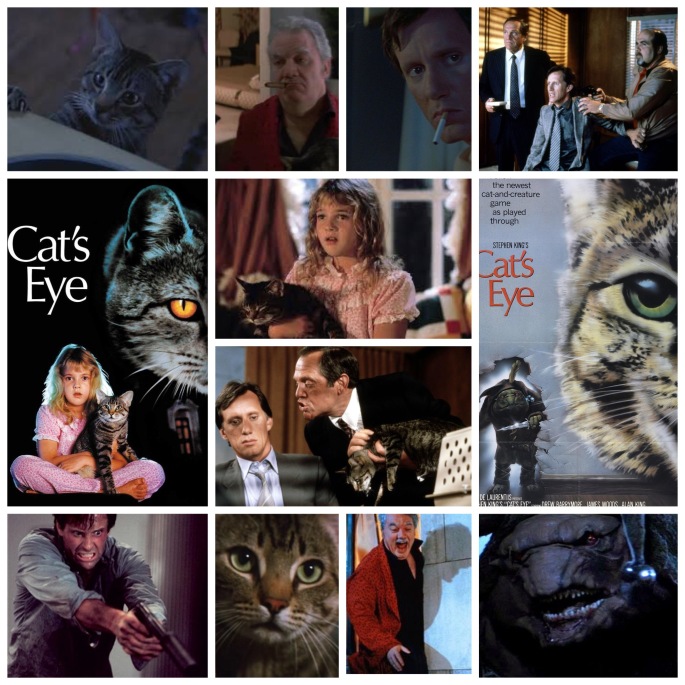
Stephen King’s Cat’s Eye


Cat’s Eye is Stephen King’s stab at the Twilight Zone, anthology formula, and a damn fine one at that. Just this side of horror, it’s a trio of weird and wacky tales as seen through the eyes of a meandering stray cat who manages to get itself tangled up in each thread. I’ve always marvelled at how they get animals to behave or sit still long enough to do a take and make it look realistic, but I guess that’s why they’re the movie magicians. This kitty fared well and even has a recognizable little personality of it’s own as it navigates each freaky scenario. The first segment sees a jittery James Woods enlist the help of an unorthodox ‘Doctor’ (Alan King knows just how over the top this satirical fare needs to be and goes there) and his… interesting methods of helping people to quit smoking. I won’t say more but this first third of the film feels the most like Twilight Zone in it’s borderline surreal mentality, and is a lot of fun. The middle segment is a hard boiled, vertigo inducing tale of a whacked out gangster (serial scenery chewer Kenneth McMillan in top form), tormenting his wife’s lover (Airplane’s Robert Hayes) in a Las Vegas high rise, whilst the cat looks on and contributes it’s own helping to the mischief. The third story sees an adorable Drew Barrymore adopt the poor stray, only for it to have to fight off a vicious little goblin thing that’s taken up residence in her room. This one is the most simplistic and closest to horror one finds in these three stories, and while a bit underwritten when compare to the others, is definitely the most visually engaging. All together they’re classic warped King, set to a hazy Alan Silvestri score and supported by a screenplay by the King himself. Great stuff. 

-Nate Hill

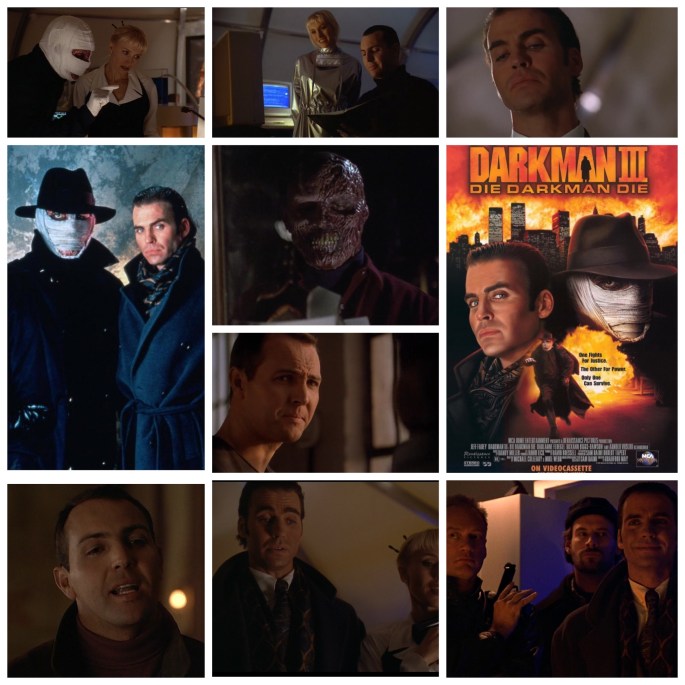
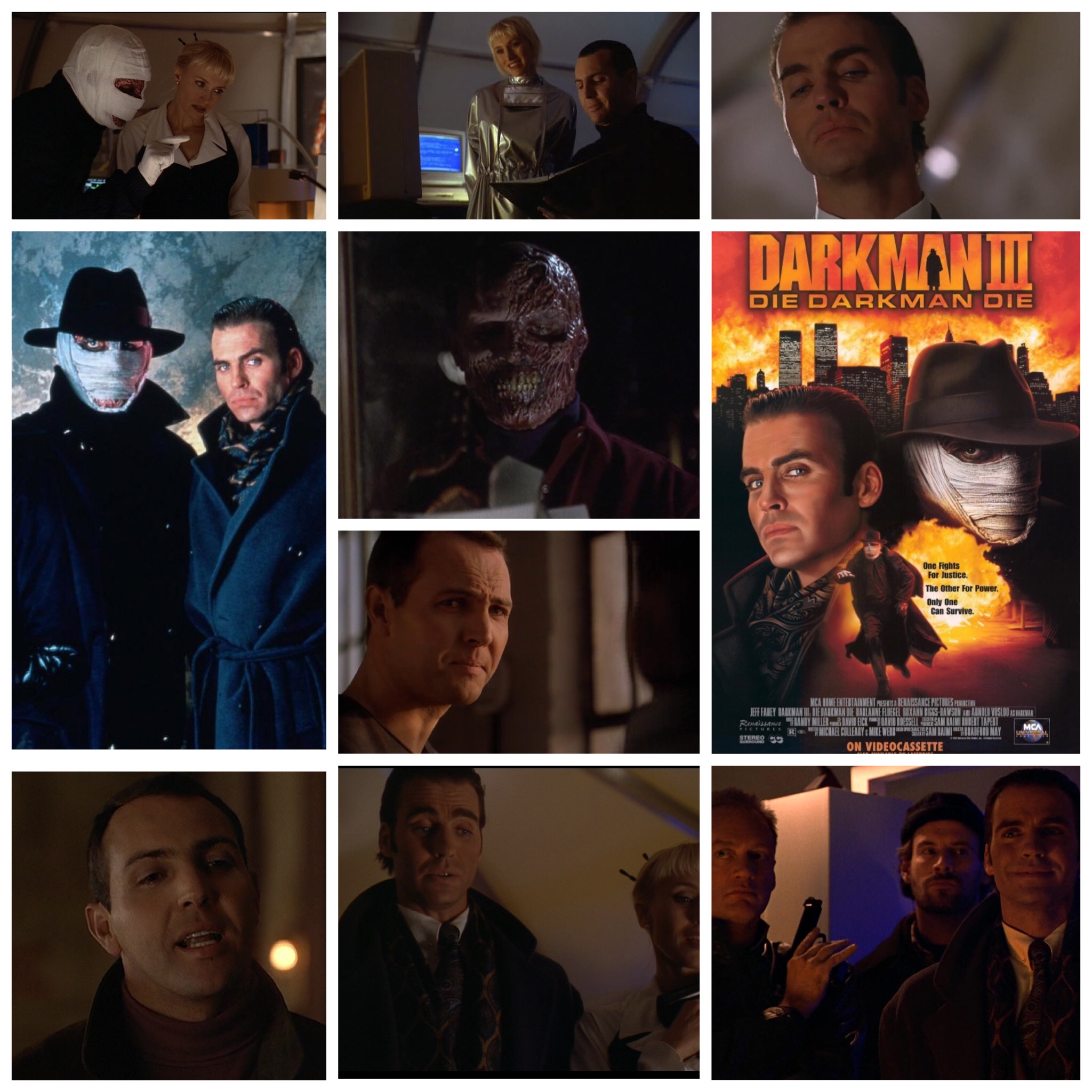
B Movie Glory- Darkman III: Die Darkman Die


Sam Raimi made comic book cinema history with his gritty Darkman, which was solid entertainment, but the real dark and demented side of the franchise came through on the two sequels, which tossed aside stalwart leading man Liam Neeson as the titular antihero and went for offbeat, edgy character actor Arnold Vosloo (Imhotep in Stephen Sommer’s The Mummy) as the doomed Dr. Peyton Westlake, a once brilliant and handsome scientist reduced to a disfigured, monstrous vigilante known as The Darkman. Raimi’s film played it with a mix of straight and subversive, going for the underdog hero approach, while the third sequel, which is my favourite, is literally called Darkman III: Die Darkman Die, because someone at the studio boardroom table had too much caffeine and brainstormed the shit out of that abrasively hilarious title. Dr. Westlake is still doing his research on synthetic skin and skulking out there in the night pilfering supplies from random warehouses, one of which he’ll wish he didn’t mess with. Enter tyrannical, psychopathic drug lord Peter Rooker, played with moustache twirling, freaky panache by Jeff Fahey. Said warehouse belonged to him, and now he’s zeroed in on Darkman and his super strength abilities, shrewdly trying to pirate them for his organization’s nefarious deeds. The two wage a bloody war, with both of their families as collateral damage in between, an exploitation palooza of trashy, effects oriented fun. The first two films housed the villain Durant, embodied by inherently weird looking actor Larry Drake, who left big shoes to fill. Fahey seems to know this and plays up every campy aspect of this scumbag, his greased back hair lit perfectly, every mannerism an over-pronounced, garish villainous flourish to be savoured. I think the very concept of Darkman suits the tasteless excess of these two sequels better than it does Raimi’s upright origin story, as classic as it is. I actually prefer the B Movie Glory approach to the material, and this third one is schlock incarnate. 

-Nate Hill

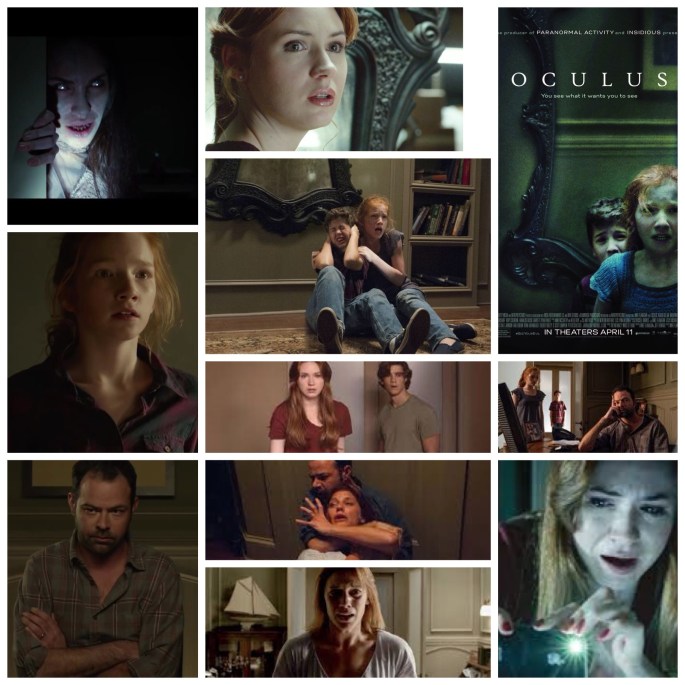
Mike Flanagan’s Oculus


What scares you most in the horror genre? Masked killers in isolated settings? Booby trapped razor wire rooms? Demon possession? Werewolves? Ghosts? Those are all well and good, but nothing messes my shit up more than psychological uncertainty, the feeling that anything you see might not be real, and the layers of your perception are gradually being fucked with in a subtle way. Such are the terrors that Mike Flanagan’s Oculus traffics in, a film that takes postmodern horror expectations and strangles the life out of them in favour of something far more effective. You’ll read surface level summaries claiming this to be about a haunted mirror. It…is. Sort of. And it isn’t. Then it is again, and before you know it you have no idea what’s real and feel like leaving the television and hiding in a back room for fear of an incoming dissociative episode (true story). See, the haunted mirror is just the suggestive tip of a very dense psychological iceberg, a starting point to a narrative that’s disturbing in ways that few big budget horror films understand. When an idyllic American family moves into a perfect new house, life seems peachy. Following the arrival of an ornate antique mirror, things take a darker turn. The loving patriarch (Rory Cochrane, exuding natural charisma) turns fiercely psychotic, preying on his doting wife (Katee Sackoff) and terrorizing his son (Garrett Ryan) and daughter (Annalise Basso, terrific in a performance of true hurt and horror). The mirror seems to indeed be the source, but no clear correlation is ever established by the film, only heavy suggestion gnawed at by the notion that the parents may just be irreparably sick in the head, an idea just as, if not more scary than a sentient looking glass. After brutal tragedy, we flash forward a decade or so, the parents are gone and once again the daughter, now played by a dynamite Karen Gillan, tries to get to the source of what happened by locking herself, her brother (Brenton Thwaites, the only weak leak in an otherwise excellent acting ensemble) and that dang pesky mirror in their old house to destroy it. Bring on a panic inducing haunted house of the unconventional variety, one where something, either the mirror or inherited mental illness, plays endless nasty tricks of the mind on both of them until the viewer feels uncomfortable in their own thoughts, the fabric of internal reality ready to disintegrate into shards. Their plight is carefully interspersed (big kudos to Flanagan, serving as his own editor) with flashbacks to the harrowing ordeal they went through as children, as the loving parental unit collapses into madness before their eyes. Listen for a hair raising, subversive score by The Newton Brothers that just adds to the queasy cauldron of unease that this film is. It’s more brilliant than any widely released horror film has any right to be these days, a huge step in the right direction for the genre and a waking nightmare for anyone whose worst fear is losing their mind. 
-Nate Hill

B Movie Glory: The Insatiable

The Insatiable, like droves of other vampire flicks, attempts to cover new ground and build on established formulas to create something memorable, and despite having the direct to video stigma working against it’s notoriety, works pretty well for the most part. Sean Patrick Flanery plays a timid fellow who, after being targeted by a sexy, devilish bloodsucker (Charlotte Ayana), seeks help anywhere he can, broadcasting his predicament via HAM radio (maybe not the most effective outlet) to anyone who will listen. It just so happens that there is a grizzled old vamp hunter out there played by Michael Biehn, a jaded hardass who’s just waiting for signs of these creatures. Ayana likes to play with her prey, and taunts both of them throughout the film in some amusing cat and mouse games, forcing Flanery to great lengths of survival including building one hell of a cage in his basement to trap the bitch. The material is treated mostly head on with just a smidge of smirking deadpan, especially in the sly ending. Biehn is awesome as the cranky, high strung vamp slayer, really having fun in the role. A fun, if slight little flick. 

-Nate Hill

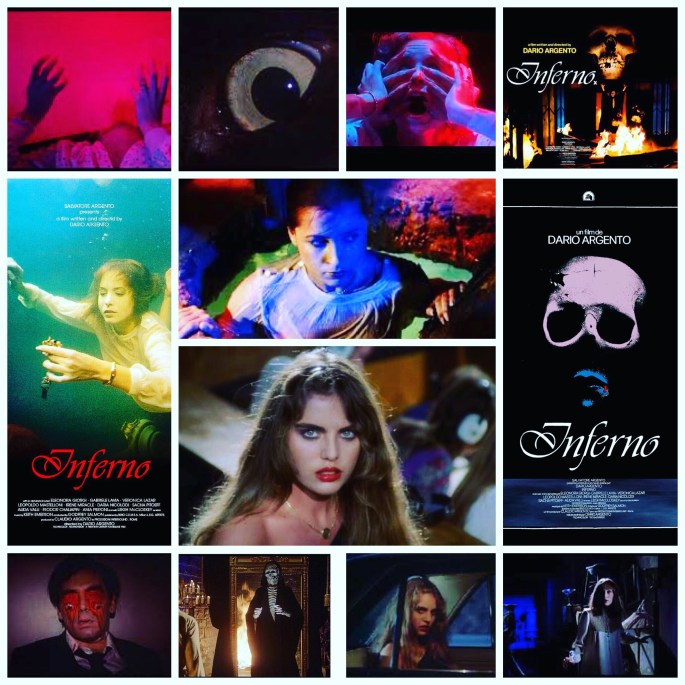
Dario Argento’s Inferno 


Dario Argento’s Inferno is the most abstract, expressionistic and nearly incomprehensible entry in his Witch trilogy, like oil and blood smeared on canvas haphazardly to create something just this side of the conscious realm. The other two films, Suspiria and Mother Of Tears, each have their place in the story, with this one doing middle chapter duties, but really they all work better as standalone films more than anything cohesive. While the film clings loosely to the idea of two college students investigating separate Witch covens in both Rome and New York, that’s just the baseline for a petrifying, beautifully surreal mood piece full of thumping psychedelic music by Claudio Simonetti and Goblin, and episodic set pieces of bizarre dreamlike horror. Argento is the undeniable king of lighting and atmosphere, and although other areas of the work like story, dialogue and acting suffer, it’s easy to look past that and get swept up in his magnificent visions. Unearthly light and wind ripples over the hair of a gorgeously enchanting witch who holds a cat and and stares down one of the protagonists in a lecture hall. An eerie full moon possesses one man trying to drown a bag of cats, and a butcher knife wielding whacko. A woman descends underwater into a flooded derelict building and discovers a bloated corpse floating there in the film’s most harrowing scene. Argento’s films are less about the rhyme and reason, more about the feeling of it all than anything else, very much like dreams. Inferno is one of his very best, a feverish madhouse of light, colour, operatic violence and hypnotic music. 
-Nate Hill