
The Island Of Dr. Moreau


I don’t think there’s a film out there with a more volcanically troubled production history than John Frankenheimer’s The Island Of Dr. Moreau. It wasn’t even supposed to be helmed by him, rather an upstart named Richard Stanley, who’s control on the creative reigns was violently yanked away by the studio and given to notoriously fiery Frankenheimer, who, lets face it, could never really get his genetically altered ducks in a line when he took over. Between Val Kilmer acting like a lunatic and very nearly being replaced, Marlon Brando being an even bigger lunatic because he knew no one would ever replace him (the big guy had an ego to match his girth) and raging budget problems as a result of the antics, the making of this film was, in short, a fucking disaster. So now I’ve said my piece on the most talked about aspect of this film, I want to shift gears into an area that just doesn’t get covered a lot in discussion: the final film itself. Because of the maelstrom of bad PR circling the film like the storm that maroons our heroes on Moreau’s isle, many people just assume it’s a shit movie, which is not the case. I happen to love it, and if anything the level of obvious behind the scene chaos seeping through just gives it an organic unpredictability free from shackles of a script that I imagine was fairly generic in the conception phase. This is a bonkers film, no denial from me there, but I’ll be damned if I didn’t love every certifiable, furry prosthetic adorned, opulent, disorganized minute of it. David Thewlis took over from Kilmer as the lead, when Val had behavioural issues, but they’re both present and accounted for as the wreckage of a ship meets Moreau’s isle, a twisted Eden where human animal hybrids live under the delirious monarchy of the good Doctor, played with reliably laconic mania by Brando. He’s been playing god, the old codger, and his island is now home to a host of varied zoological wonders, and no narrative would be complete without it all going tits up in a giant mutiny later on. The practical effects are delightfully excessive and elaborate, packed onto specifically chosen actors who already have an ethereal, animalistic aura on their own. Ron Perlman is the sagely Sayer Of The Law, Marc Dacoscas the leopardly Lo Mai, Temuerra Morrison the lion like Azazello and wild eyed Fairuza Balk is feline goddess Aissa, who happens to be Moreau’s daughter. ‘She’s a pussy’ Kilmer quips in one of many candid slips of the tongue on his part. The inmates eventually run the asylum, or whichever clever parable you want to apply, and it hurtles towards a third act full of flying fur and fangs that releases the floodgates on Frankenheimer’s lack of cohesion, the mad scientist workshop of Stan Winston’s special effects, Brando’s bug eyed dementia and Kilmer’s ADHD riddled performance, in one scene going so off far off the rails that Thewlis has to literally break character and tell him to ‘quit fuckin around’, an unintentional laugh riot. Brando has a midget Mini Me, too, which is never fully explained but always good for a nervous laugh, as the thing looks like a fetus that vaulted out of the womb a few month too early, although I suppose that’s the point. Look, it’s a mess, but it’s a beautiful one, a kaleidoscopic parade of grotesque costumes and cartoonish performances wrapped up in a story so overblown and off the map it almost takes on a pulse of it’s own. For insight on what went down behind the scenes you can read Ron Perlman’s autobiography, watch the recent documentary on the film or simply check out IMDb trivia, but whatever went down for real, it ended up branding one of the most bizarre and wonderful creature features of the 90’s, and I love every feral, freaky minute of it. 

-Nate Hill
B Movie Glory: Johnny 2.0


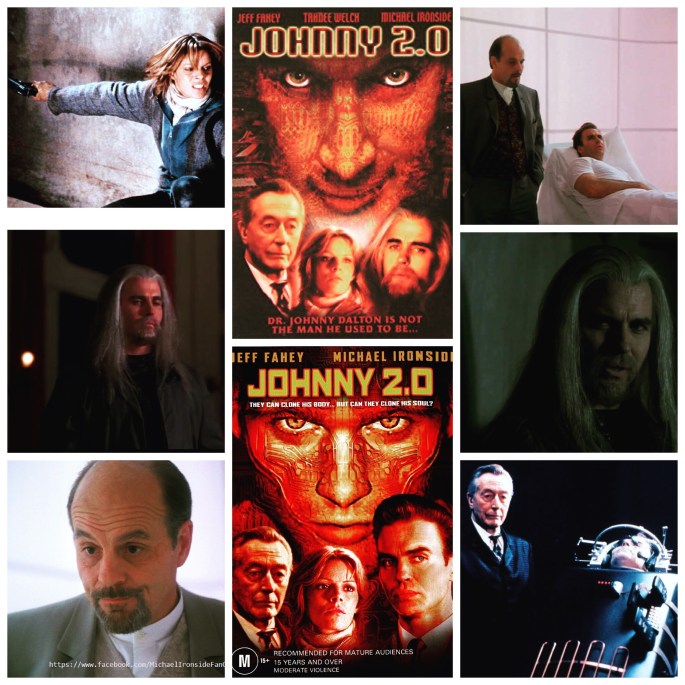
It’s always fun to come across genuinely intelligent science fiction films, especially when you go into them expecting a half assed, clunky yawn, which happens frequently. Johnny 2.0 is an overlooked little cyber-punk gem in an unassuming release package, a thinking man’s sci-fi story that could have easily gone the other way, but contains enough inspired creativity to rise above the muck. Jeff Fahey plays Johnny Dalton, a genetic researcher whose facility is attacked by activists. Waking up from the disaster he is stunned to find that he’s not Johnny at all anymore, but a clone who has been in cryo for 25 years, awakened now for one purpose: set out across a post apocalyptic wasteland to retrieve the original Dalton and smoke out a web of conspiracies that have hatched over the years. There’s all sorts of really intriguing ideas at play here including MRI memory mapping, organic tracking suits, genetic reconfiguration and personalized holograms, a wealth of scientific world building that earns this film its stripes in the artistic departments. Fahey is excellent, as is a noble Michael Ironside, Tahnee Welch and John Neville. Super solid storytelling, ideas worth exploring, an impressive level of design and atmosphere achieved despite the limited funds, there’s not too much you can say about this one that is not the highest of praises. 

-Nate Hill

Gabe Ibáñez’s Automata 


Gabe Ibáñez’s Automata had the misfortune of being released in the shadow of another film concerning robotics and artificial intelligence, Ex Machina. It’s hard to compete with the kind of hype that film generated back in 2015, and as such it kind of slipped through the cracks. It’s a shame because there’s much about that’s striking, stylized and fascinating, despite being a bit too elaborate for it’s own good. Drenched in a rainy neon Blade Runner atmosphere, it follows a bleak story involving insurance investigator Jacq Vaucan (a bald, somber Antonio Banderas) as he navigates a broken world ravaged by solar storms that have whittled down the human populace to around twenty million. Robots have been employed to rebuild the dying infrastructure, and Jacq keeps tabs in case any of them violate their primary directive, under the stewardship of his boss (Robert Forster). When rogue police officer Wallace (Dylan McDermott is dynamite) shoots a robot he claims was trying to alter itself, Jacq surmises that there’s a ‘clocksmith’ out there trying to give them minds of their own. It’s all very vague and we never really have anything more than illusory whispers or half explained concepts to go on, but these matters find him and the company’s nasty head of security (Tim McInnerney) venturing far out into the desert where a faction of robots, led by Javier Bardem no less, have grossly deviated their protocol and are evolving into… something else. Banders’s once wife Melanie Griffith does double duties as a creepy liaison in their case and the voice of a sympathetic sex slave-bot who plays a key role. I’m not entirely sure what the story arc is supposed to be, as it’s often muddled and dense, but it seems confident that it has one, and isn’t just flying blind into Euro experimental abstract mode as some scenes suggest. It has a point to make, it’s just wrapped that up in enigmatic fashion and cloaked any sense of linear exposition in blankets of atmospheric ambient sound, deliberately indistinct story beats and strangeness. I’m okay with that to an extant, as there’s plenty to enjoy visually, especially with the robots and their design, but many won’t be and will want more than just machine dreams without a manual to guide them. I for one enjoyed the memorable image of bald, parka clad Banderas hunting primordial androids in a washed out, used up wasteland. All that’s missing is a score by Vangelis or Tangerine Dream.  

-Nate Hill

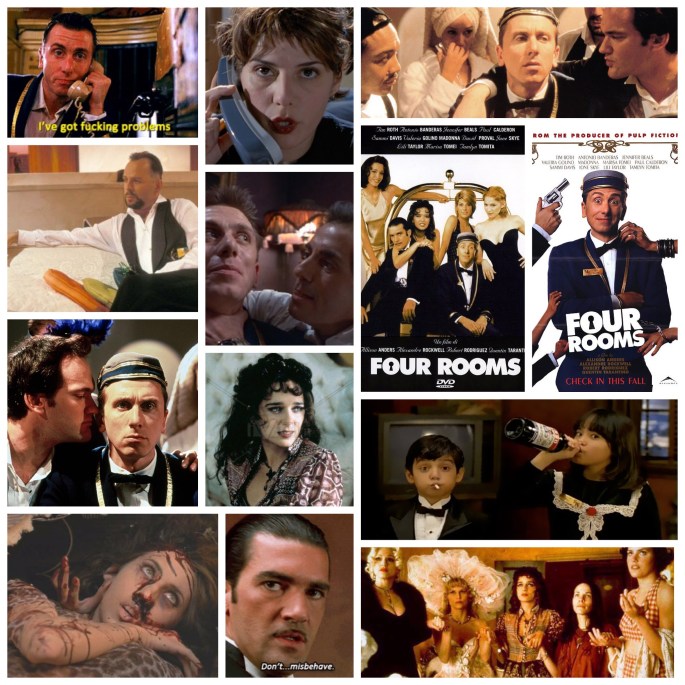
Four Rooms


Four Rooms is an anthology film of sorts, segmented into four episodes, two of which are pretty inspired as they just happened to be helmed by Robert Rodriguez and Quentin Tarantino. The other two outings… well, let’s just say they kind of bring the whole film down. As solid as Robert and Quentin’s efforts are, they’re two quarters of a whole that needs to be engaging all the time to work as a cohesive package, and sadly that’s not the case. These four tales all take place in one hectic and seedy L.A. hotel, in various rooms that showcase a host of troubled weirdos just trying to get through the night. This quartet of nocturnal misadventures is tied together by one central character, Ted The Bellhop (a peppy Tim Roth). In the first, which is also the weakest, a goofy coven of witches carry out some asinine ritual. This is a well casted bit as we see the likes of Madonna, Ioan Skye, Valeria Golino, Lilli Taylor and Alicia Witt, but the tone comes off as grade school level shenanigans and there’s many a cringe to be had. The second is an oddly placed noirish bit that finds Ted caught between an unhinged gun wielding whacko (If I’ve said it once, I’ve said it a hundred times, David Proval is criminally underrated) and his femme fatale wife (Jennifer Beals). This one isn’t as awful as the first, yet feels a little off putting and claustrophobic. The third sees Robert Rodriguez step up to bat with ‘The Misbehavers’ a riotous black comedy concerning an upper class couple (Antonio Banderas and Tamlyn Tomita) who leave Ted in charge of their troublemaker kids for the night as they go out dancing. Anything can and does go wrong here, as the youngsters get into all kinds of shit including finding a half decomposed hooker (Patricia Vonne) stuffed in a mattress. Rodriguez shows comedic flair in fits and starts in the pulpy action side of his oeuvre, but here he’s purely having fun and the result is a sleazy hoot of a good time. The fourth and best is by Tarantino, and as such is mostly talking. But what talking it is; Ted stumbles into the penthouse suite which is home to a string out Hollywood film crew, and they’ve decided to place a dangerous bet that involves bodily dismemberment. Quentin is usually a fairly awful actor, but he’s not bad here as the motor mouthed ringleader of this insane posse, while Paul Calderon, Marisa Tomei and a very stressed out Bruce Willis chime in as well. This segment is pure gold, with an abrupt, trademark Tarantino payoff that leaves you chuckling darkly. All kinds of folks have cameos, so watch for the recently disgraced, supremely ugly Kathy Griffin, Lawrence Bender, Salma Hayek and others. There’s always stronger and weaker entries in an anthology film, competition is par for the course. This one has quite the ups and downs though, and would have been far better off being just a Tarantino/Rodriguez double feature, but oh well. 

-Nate Hill

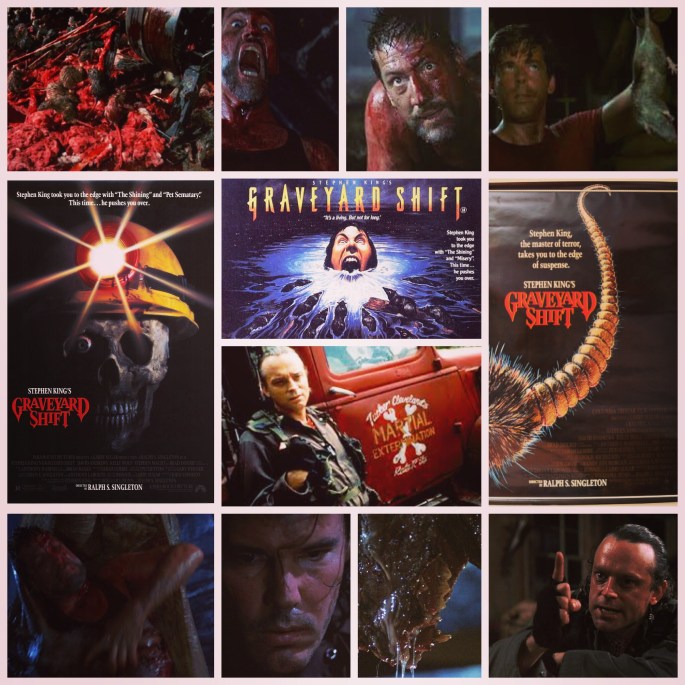
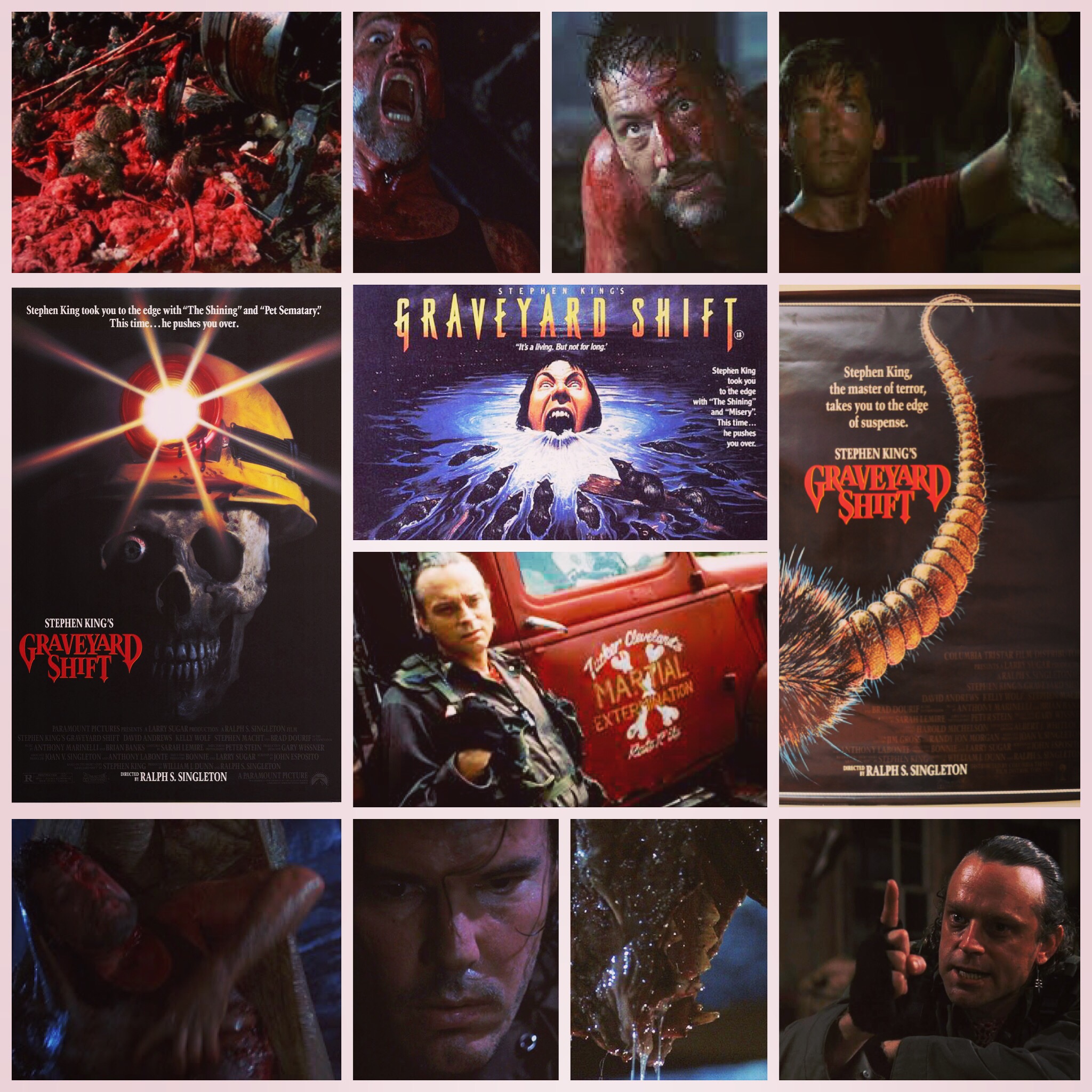
Stephen King’s Graveyard Shift


Stephen King’s Graveyard Shift is curiously one of my favourite adaptations of his work. I say curiously because it’s not a very tasteful film, let alone even a good one. It’s simple schlock and awe, goo and slime for 90 minutes straight, every human character either an unsettling nutcase or cardboard stock archetype. There’s just something so Midnite Movie-esque about it though, a sense of fun to its gigantic, hollowed out mess of a textile mill in which some kind of vile denizen stalks a night crew that pretty much deserves everything they get. People wander about, squabble and are picked off in ways that get steadily more gruesome until the final reveal of the monster in some overblown puss-palooza of a finale. What more do you need in your bottom feeder helping of horror? Steven Macht is the sleazebag who runs the mill at his tyrannical whim, while David Andrews is the closest thing you’ll find to a stoic protagonist. Andrew ‘Wishmaster’ Divoff shows up as a stock character, but it’s Brad Dourif who chews scenery and ends up the only memorable person as the world’s most simultaneously intense and incompetent exterminator, a bug eyed little weirdo who freaks people out with extended monologues about Viet Nam when he should be perusing corridors to find whatever’s lurking there. The monster itself, if I remember correctly, is one big pile of grossly misshappen, poopy prosthetic puppetry, as is often the case in early 90’s King fare. Would you want it any other way? Simple, efficient and impressively gory is what you’ll find on this shift. 

-Nate Hill

B Movie Glory: G-Men From Hell


G-Men From Hell is.. well, pretty much exactly what the title suggests. Based on a comic book, I think, it concerns two melodramatic 1950’s FBI Agents named Dean Crept (William Forsythe) and Mike Mattress (Tate Donovan) who are gunned down by mysterious assailants, and sent off to the inferno to rot, only they aren’t finished their business earth-side, and escape using some magic dimension opening crystal. Once back in the realm of the living, they set up their own private detective agency, forced to keep up their good deed quota in order to prevent from being dragged off again. The Devil (Robert Goulet, hilarious) is furious and dispatches an agent of his own to retrieve them. Meanwhile, a relentless and fairly nutty police detective (Gary Buddy) is also hot on their trail. Busey, as usual, flips the script into the dustbin and does his own warped thing with the dialogue, making scene partners visibly try to hold in laughter and bewilderment, proving once again that any film he appears in will never get boring. Forsythe and Donovan play it like Looney Toons in noir mode, two campy gumshoe performances that are so knowingly tongue in cheek that it almost seems like a stage play. Cameos include Bobcat Goldthwait, David Huddleston, Kari Wuhrur, Charles Fleischer, Frank McCrae and Vanessa Angel. I feel like the whole thing is just a bit silly to work, even as one big riotous in-joke, but it’s a colourful diversion nonetheless, and any film with that title deserves a watch as an ode to it’s sheer commitment to blatant inanities. Please excuse the pitiful lack of high def photos in my collage, whoever was in charge of screen caps and production stills on this should be shot in the face.  

-Nate Hill

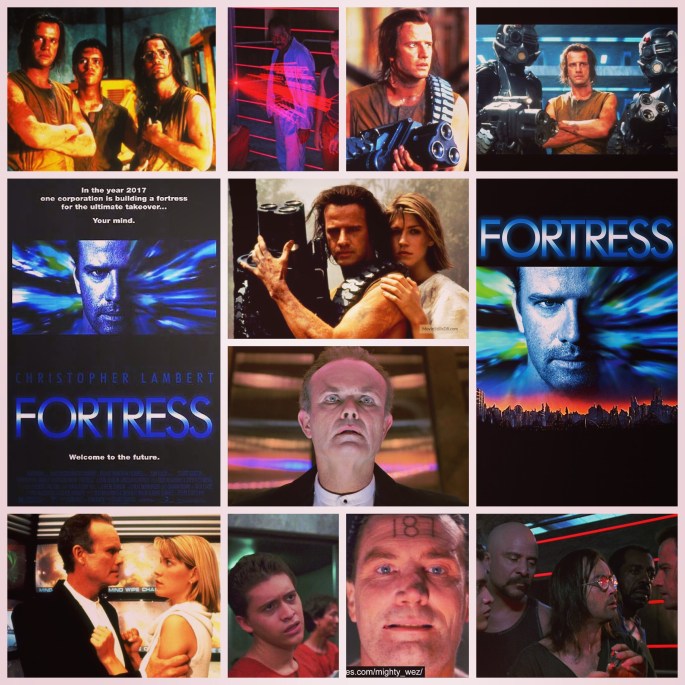
Stuart Gordon’s Fortress


Stuart Gordon’s Fortress is one of the more overlooked dystopian sci-fi thrillers of the 90’s, and despite somewhat being a B-movie, it holds its own in pretty much every department. Quality story, terrific acting (even from the king of stilted delivery himself, Christopher Lambert) and a story with more depth than the poster or marketing might suggest. Lambert plays an unfortunate man on the run with his wife (Loryn Locklin) in an America of the future where having more than one child per mother is prohibited. They’re both nabbed trying to make a break for Mexico, locked away in a horrific prison called Fortress, a place where science has run amok and all kinds of neurological and biological experiments are performed on the inmates under the steely direction of evil Director Poe (Kurtwood Smith). Fortress is an unorthodox nightmare where basic rights are replaced by those of cattle or worse, and no one is safe from micro implants, mind alteration and all sorts of fun stuff. Lambert plans an elaborate escape with the help of various inmates including Vernon Wells, the late Tom Towles, Jeffrey Combs and Clifton Collins Jr., all putting in excellent and varied performances. The scene stealer is Kurtwood Smith though, who is usually cheeky, psychotic or sarcastic in his work. Taking on the type of role that typically goes to a Malcolm McDowell type guy, he tackles a character that is the farthest thing from sympathetic you could find and sort of turns that on its head, making him seem very much human in one galvanizing piece of acting work. You can label this type of thing second tier or low budget, write it off or not take it seriously, but the fact remains that many of these efforts are works of art in their own right, beautifully crafted adventure stories set in universes more vibrant and imaginative than our own, stories just to the left left of normal and full of schlock, machines, creature effects and smoke machines. Gordon is a master in this arena (remind me to tell you about Space Truckers one day), a creative force to rival Roger Corman and the like. Fortress is my personal favourite in his stable, and one shouldn’t underestimate its entertainment value and ability to hold up decades later. Oh and also, this suffers from an adorable condition I call Blade Runner Syndrome™, in which the far off year the film’s timeline exists in has been caught up to by our own trajectory, making the films future look like our past. This film’s specific year? 2017, as you’ll see in the poster above. That means that right now, Lambert and Smith are duking it out in that clandestine compound somewhere out there. Cool thought. 

-Nate Hill

Indie Gems: 13 Moons


It’s anybody’s guess how ones like 13 Moons slip through the cracks, but in this case it was probably a case of nonexistent marketing and no effort put into a proper release. Despite having a cast that’s speckled with all kinds of big names, character actors and cameos, it has the appearance of barest of bones indie digs, and looks suspiciously like it was filmed bootleg/guerrilla style. I’ve not a clue what the story behind it’s conception is, but it’s a brilliant little flick that you won’t find anywhere these days, but deserves a look. It’s one of those moody, nocturnal L.A. set ensemble pieces in which a group of eclectic characters wander about, intersecting in various subplots until it finally comes together in the third act. This motif is overdone these days, and I just have to throw a jab at Paul Haggis’s Crash, which has aged like Kraft Dinner left for a week in the Florida sun, but my point is that they either work or topple over like a jenga tower buckling under the weight of each character and scenario. This one is so low budget it looks like it was shot on an etch a sketch, but thankfully the story is powerful, emotional, hilarious and strange enough to make a lasting impression. Steve Buscemi and Peter Dinklage are two sad-sack clowns who wander the nightscape, and in fact the image of absurdly out of place clowns roaming the lonely streets of NYC, getting caught up in a raucous night out involving a man (David Proval, an underused talent in the industry) and his young son who is dying of cancer and desperately seeks an organ doner, while his mom (Jennifer Beals) looks for them. Meanwhile there’s an insane clown played by Peter Stormare who’s running about, and when I say insane I do mean it. Stormare is always a little zany and flamboyant, but his work here takes the cake and whips it at the wall. It’s easy for actors to be uninhibited in indie fare like this, free from the prudence of studio chaperones, and he knows this, his character eventually playing a key role but most of the time careening around like a bat out of hell set loose in New York. The cameos are fleeting and fascinating, and one wonders who was buddies with who and pulled what favours to swing their appearances, but it’s nice to see them irregardless. Sam Rockwell and Michael Parks are fun as two bartenders, real life ex-hoodlums Danny Trejo and Edward Bunker show up briefly as.. hoodlums, and watch for quick turns from Pruitt Taylor Vince, Michael Badalucco and others. The film is thoroughly indie that no one has, or probably will ever see it, and my review probably adds to the scant half dozen or so write ups that are out there. Sadly many little treasures like this exist, unbeknownst to most. 13 Moons is a sweet, scrappy, somewhat star studded little piece that is well worth anyone’s time, if they love a good story in an oddball of a package. 

-Nate Hill

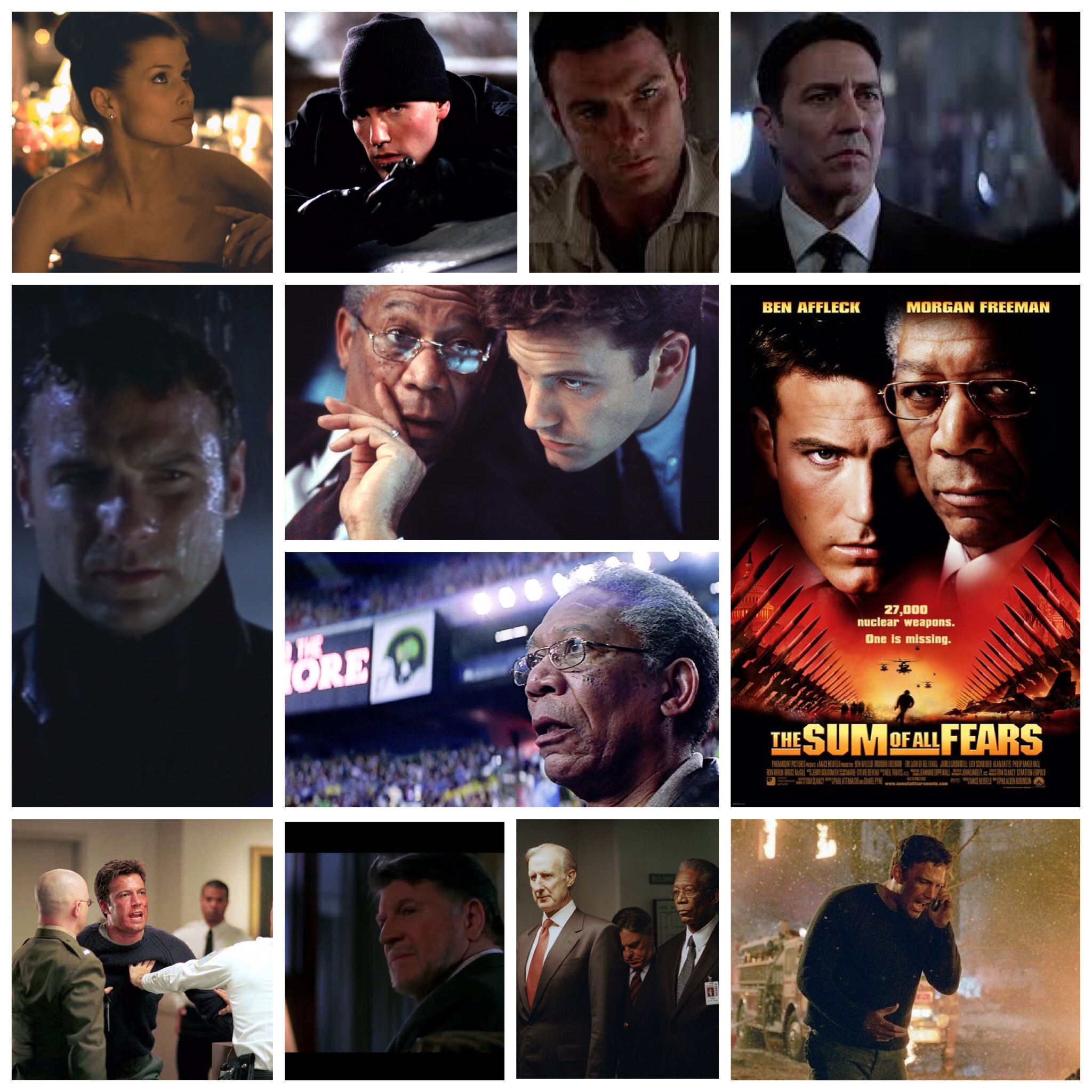
Tom Clancy’s The Sum Of All Fears


Surprisingly, The Sum Of All Fears is my favourite film version of Tom Clancy’s Jack Ryan novels. Alec Baldwin did a bang up job in the superb Hunt For Red October,

Harrison Ford held his in two beyond excellent entries, and we won’t speak of the Chris Pine/Keira Knightley snooze-palooza from a few years back. Why then do I gravitate towards this Ben Affleck incarnation? Who knows. Battfleck himself makes an adequate, inquisitive Ryan, on the younger end of the rope and under the guidance of CIA Yoda Morgan Freeman. I think it’s the early 00’s tone of the film itself though, the whip smart editing, Bourne-style escalation of suspense and terrific ensemble cast, a hallmark among Clancy films. Affleck embodies a younger, inexperienced Ryan whose infamous intuition is just breaching the surface of his character, right on time for a deadly plot to set off a nuclear device on American soil. A German radical (Alan Bates, underplaying evil nicely) with vague ties to a Neo Nazi faction is cooking up a false flag attack against Russia, using a long dormant warhead supplied by arch mercenary Colm Feore. Or at least I think that’s the crux of it, these cloak and dagger affairs can get pretty dense on you sometimes. There’s a sense of global danger though, a level of stress that ratchets up until even the stoic US President (an explosive James Cromwell) begins to lose it. The Russian President (Ciaran Hinds) gravely tries to sort out the misunderstanding, whilst Clancy staple character John Clark (Liev Schreiber gives Willem Dafoe a run for his money) covertly smokes out conspirators. Unease and tension nestle into the narrative, and when that impending disaster is minutes away during a hectic NFL game, you can feel the suspense in the air. The supporting cast is rich with talent including Michael Byrne, Bruce McGill, Philip Baker Hall, Josef Sommer, Ron Rifkin, Lisa Gay Hamilton and gorgeous Bridget Moynahan as Ryan’s fiancé. I’ve got nothing but love for Red October, Patriot Hames and Clear & Present Danger, but something about this one hit a frequency and resonated with me a little better, coming out on top as the most re-watchable, enjoyable entry.  

-Nate Hill

Little Nicky


I’ve never been one to actively nab the Adam Sandler flicks off the rental shelf, but even he has made the occasional winner, one of the best being Little Nicky. For some reason it’s panned over other far worse ones he’s churned out of the gumball machine (ever re-watch Billy Madison? What the fuck were we/they thinking back then?), but when you part the curtains of Sandler Stigma™ and really just look at what the movie is in itself, it’s a hoot. What other film can boast Rodney Dangerfield playing Harvey Keitel’s dad in hell? That’s right, Keitel is the red beast himself, coming down off a ten thousand year unholy monarchy, with no plans to retire. This infuriates his two wicked sons, played by Tiny Lister (must have been a different devil-mom) and a slick Rhys Ifans. They depart the inferno and set up their own devilish franchise up in New York City, raising all kinds of hell, the most amusing of which is lowering the drinking age to ten (where were these guys when I was that age?) and forcing Regis Philbin to say naughty things on live primetime. Their younger, slightly retarded brother Nicky (Sandler) must pursue them on their haunts and trap them in a magic flask before it’s too late. Dumb concept, right? Sure it is, but try and tell me it’s not hilarious m, especially with the amount of inane visual gags and trippy production design these folks have dreamed up. Between Hitler dressed as a slutty maid getting a pineapple repeatedly rammed up his rectum to a giant gorilla massaging mammaries that have sprouted on a dude’s head like fleshy succulent pigtails, there’s no shortage of wtf moments. Sander picks an odd character mask as usual, sporting a metal-head swoosh of a haircut and lisping his way through his lines sounding like he had a stroke from watching Billy Madison dailies one too many times. Patricia Arquette is in it, as a sweet, shy girl he meets topside and the closest thing to a sane person you’ll find in this madhouse. Cameos abound, from usual Sandler cronies like Jon Lovitz, Rob Schneider, Kevin Nealon, Dana Carvey, Peter Dante and Allen Covert, to randoms like Michael McKean, Clint Howard, Laura Harring, Henry Winkler, Ozzy Osborne, Reese Witherspoon as Nicky’s angelic mom and Quentin Tarantino as a blind preacher. I don’t really know what else to say about the thing, because its it’s own thing and you either rock out with it, or you don’t. Visually it’s never boring, the script was conceived in the toilet and jumped straight to the gutter, the performances are all garishly obnoxious and the overall tone is that of an sixth grade birthday party gone rogue. 

-Nate Hill