Summer’s Moon, also given the slightly less exotic title Summer Blood, is a fascinating little family centered psycho sexual treat, starring an actress who previously hadn’t ventures into such intense territory. Ashley Greene is a porcelain beauty best known for those Twilight train wrecks, and its that marketing style these filmmakers have latched onto because of her involvement. The poster has a hazy hue that almost hints at the dreaded vampiric sparkle we’ve come to loathe. It’s picturesque to be sure, but doesn’t really provide any warning to the disturbing, gritty and uncomfortably intimate nature ofnthe story. Greene plays Summer, a wayward drifter who arrives in a small bucolic burg, out to find the father she never knew. Enter the Hoxeys, an I’ll adjusted family of serial killers claiming to be her long lost family, and beckoning her into depravity with all the charm and hospitality that small town folks can muster. Her brother Tom (Peter Mooney) keeps a kidnapped girl in the basement as a plaything and sleeps with his unstable mother (Barbara Nixon), and that’s but a taste of the horror that Summer has waded into. The film takes on new virility when the resident patriarch Gant Hoxey blows back into town, played with visceral ferocity by veteran tough guy Stephen Mchattie. Intense is the word for this guy (ever catch his cameo in A History Of Violence? Christ), and he’s a beast as Gant, Summer’s estranged father, a man who functions on violence and feeds of fear. The film examines how a clan of murderers might indeed function, right down to twisted lover’s spats and drama right out of an R rated Addams Family special. Greene nicely shatters her teen image by bringing us a broken protagonist who finds her dark passenger through resilience and torment, the blackness that sweeps over her soul clearly visible, loomed over by Mchattie’s grim reaper influence. Murder and the desire to do so is regarded as a genetic trait in this film, passed along the line of kin, generation to generation, wreaking havoc in the process. A film that I underestimated going in, a terrific horror entry that takes its it’s with character and suspense, slow burning up to a spectacularly gory third act filled with tension, blood and Mchattie, that icy voiced devil who steals every scene he’s in. Well worth your time.
Tag: film review
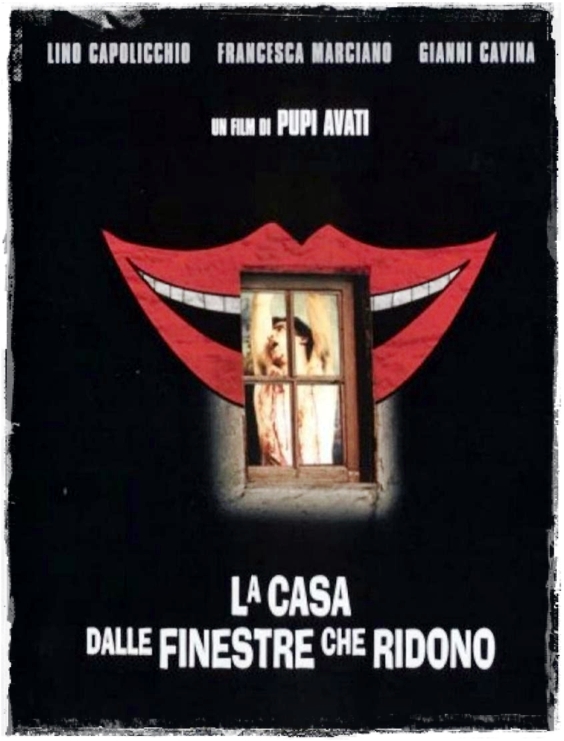
THE HOUSE WITH THE LAUGHING WINDOWS (1976) – A REVIEW BY RYAN MARSHALL

I must have been thirteen or fourteen at the time, and I don’t remember too much about what my world was like then, with the exception of it being a lesser variation of what it is now. If Argento, Fulci, and Bava are the more obvious names who introduced me to the black leather and brighter blood which would eventually shape my definitive creative conscious, director Pupi Avati opened up different doors entirely with his magnificent THE HOUSE WITH THE LAUGHING WINDOWS, a brilliant subversion of the Giallo formula with heavy doses of folk horror and genuine social-political subtext.
The Gialli that I am particularly fond of have more in common with THROUGH THE LOOKING GLASS than the standard crime narratives of the yellow paperback novels from which they derive their title, and as such, this is as important an entry as SUSPIRIA, Fulci’s THE PSYCHIC, or Sergio Martino’s delectably psyched-out masterpiece ALL THE COLORS OF THE DARK. What is perhaps most immediately intriguing is the placement of this particular rabbit hole in a twisted, though ultimately familiar semblance of reality. By association, the Giallo is a heightened affair, but Avati is skillful in how and where he engages with the fantastical.

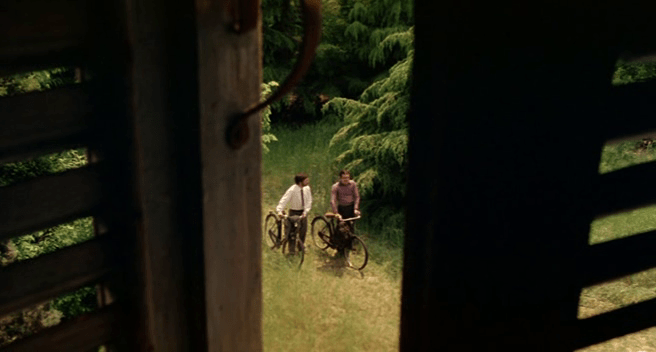
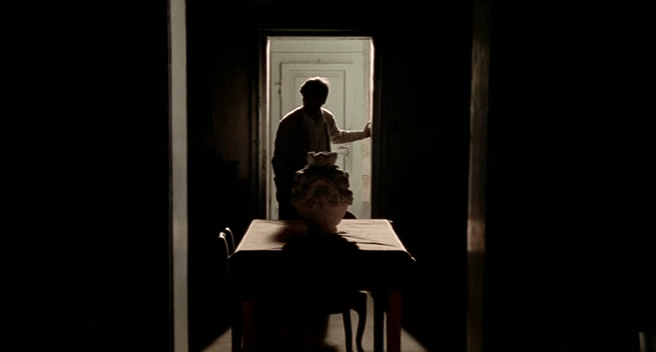
The log-line for this one is refreshingly simple: a man, Stefano (Lino Capolicchio) arrives at a small, seemingly quiet villa on business, tasked with restoring a fresco of (what at least appears to be) Saint Sebastian in the town’s church. Soon after arriving, however, things take a sharp turn for the macabre as our hero receives anonymous threatening phone calls and gets kicked out of his hotel to make room for another guest; a guest who never shows up, and was never booked to begin with. He then moves into an old house in the woods which he shares with only an elderly woman upstairs and although she never seems to leave her bed, movement is explicitly heard at all hours of the night. A dark secret seems to hang over the village, one the locals would prefer to keep from the knowledge of the general public. After the sudden murder of a friend who seemed to have some answers, Stefano decides to do some amateur detective work of his own which will ultimately drive him to madness.
But will curiosity kill the cat? When one is watching a Giallo – and a good one, to boot – all cards are on the table. As a long-time admirer of films that depict the deterioration of a mind in unison with depicting an industry, culture, or world at large on its way out, I find Avati’s film to be utterly fascinating. Here we have the classic descent-into-madness narrative, a staple of the genre, unfolding beside a positively post-apocalyptic landscape; the villa, with all its abandoned ambitions and lost souls, is most likely intended as a commentary on post-War Italy and how certain communities struggled to escape their past. Stefano’s various romantic flings with school teachers and conversations with drunks, bat-shit crazy altar boys, and of course the old woman upstairs reveal a tight circle of damned spirits, only a handful of whom dream of escape, though most only wish to keep a vicious cycle going for as long as it possibly can.

It’s quite interesting, or at least it might be to certain readers, to note that in the course of a career spanning nearly half a century, Avati only made (to my knowledge) about half a dozen features that could be branded as horror films, the most widely-acknowledged of which are this one and the equally exceptional ZEDER (aka REVENGE OF THE DEAD). Skimming through an extensive filmography such as this, it seems Avati has covered just about every base he can, returning to the realm of the macabre time and time again, but mostly at the helm of much lighter, though I’m sure no less thoughtful fare. It is clear that while he is not technically a “genre” director, Avati has a penchant for brooding phantasmagoria; a dark side that only shows itself when deemed absolutely necessary – which in turn makes for some of the most consistently engaging tales of terror on the market.
Pasquale Rachini’s photography is a real treat; I have always loved how the camera finds raw beauty early on, and throughout, in the wide lavish wetlands and partially destroyed old houses featured around the villa. A sense of purest reality is created, and then soon shattered, as day becomes night and lighting becomes more evocative, locating what lurks behind and between the shadows as well as what creates them in the first place. And yet, it will seem rather understated to those for whom “Giallo” is defined only by 70’s-era Argento (DEEP RED, SUSPIRIA, etc.), but alas, I believe it is as stunning as anything the genre has to offer. And who could forget to mention Amedeo Tommasi’s score, which swings effortlessly between nail-biting tension and fleeting romanticism, and remains shamefully unavailable to the general public to this day. One can only hope somebody, anybody, will rectify this sooner than later; it really is fantastic.

Some films just feel as if they were made for you, and at their best, Gialli have that precise effect on me. THE HOUSE WITH THE LAUGHING WINDOWS, for all its WICKER MAN-esque outsider horror, nevertheless feels like home. This may seem like a bit of an odd notion to those who seldom dance with the devils of celluloid, but if it happens that you do so more often than not, you will know exactly what I mean. Danger and mystery alike can be so invigorating, and Avati has conjured an atmosphere of dread so palpable that a knife (of any kind) simply wouldn’t cut it. Further proof that some of the genre’s best offerings come from those who don’t necessarily specialize in but nonetheless retain an honest appreciation for its seductive allure; one of many horror films that is more or less about watching horror films, and luckily, we are spared the usual contradictory moralism and regrettable air of superiority. Nothing but love emits from these frames. Love, blood, sweat, tears, purple flowers, tape recorders, and architecture with eyes and ears acute enough to catch even the lowest whisper.
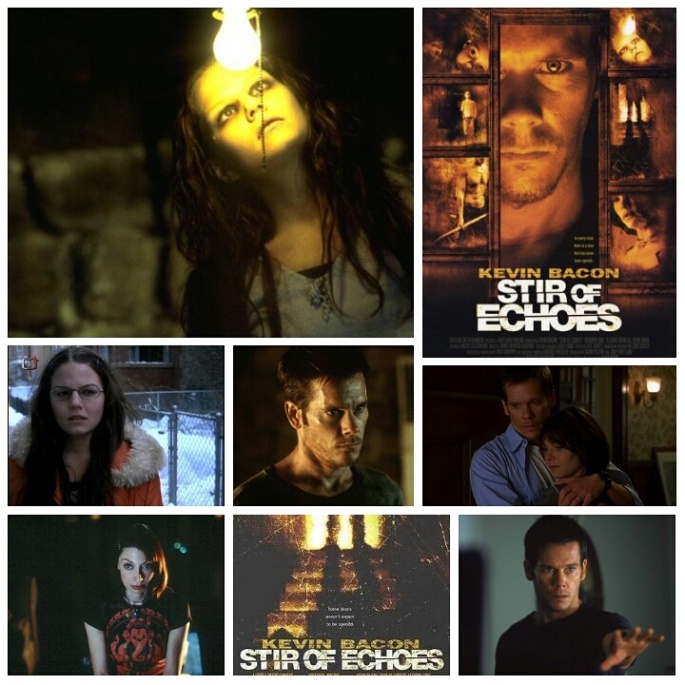
Stir Of Echoes: A Review by Nate Hill
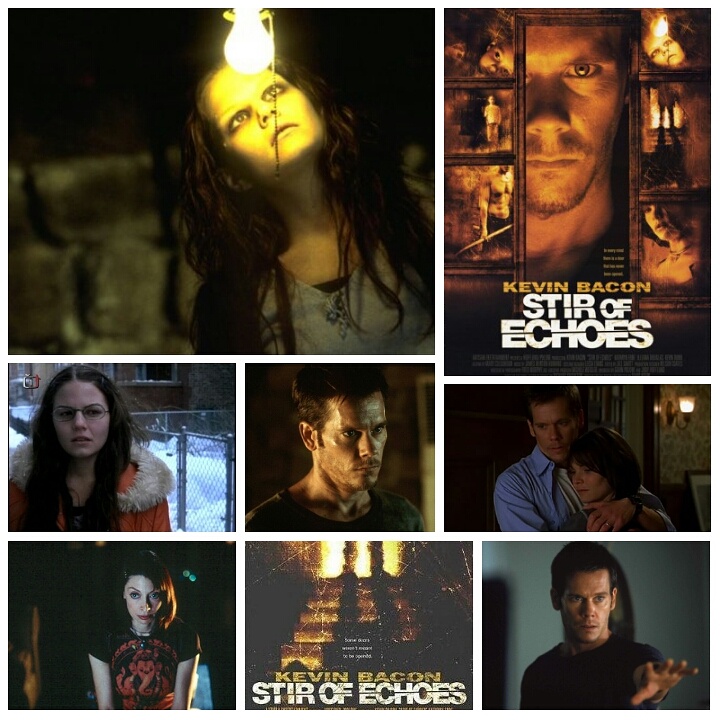
Stir Of Echoes is not outright horror, not plain old thriller but rests somewhere in between, a nerve frying festival of suspense and the type of scares which send those lovely shivers down your spine. Kevin Bacon plays Tom Witzky, an ordinary dude who agrees to be hypnotized, just for funsies, by his sister in law (Illeanna Douglas). As soon as he’s under, he’s subjected to a terrifying and confusion vision that suggests violent torment. It turns out that he’s one of the fabled ‘one percent’ of humans who are so succeptible to hypnotism that they unwittingly soak up other psychic energies in their vicinity. Something, or someone from the other side has found him and latched on, which is bad news for him and us, as we get to sit through several sequences that will cause you to need new pants. The initial vision is nothing outright or discernable; just images and abstract impressions that eventually serve as clues. That’s what makes it so creepy though. Someone being murdered is someone being murdered, but specific, harrowing little glimpses unnerve us all the more in their fleeting nature. Reminds me of that infamous videotape from The Ring in it’s style. Tom finds himself trying to solve a murder mystery, never sure whether the forces guiding him are on his side or pose a threat, always hit with a sense of dread upon turning every corner. This is the only kind of horror that actually scares me, in the true sense of the concept. Creeping, uneasy and subtle, where anything could be haunted and the scares aren’t predictable. What’s more, it’s a smartly written, tightly paced, remarkably well made film. One of the best paranormal thrillers out there, plain and simple. There’s a sequel with Rob Lowe (of all people lol), but I’ve avoided it thus far, it looks kind of cheap. Stick with this original fright fest, it holds up wonderfully.
ENTERTAINMENT (2015) – A REVIEW BY RYAN MARSHALL

A 40-something man wearing thick glasses and an expression of general indifference enters an earth-bound airplane, the interiors of which are wide and desolate. He squats down in the middle of the abandoned vessel and stares out of one of its many windows. Once back outside, it is revealed that the man is on a tour of an aircraft boneyard. So begins ENTERTAINMENT, the fourth feature from writer/director Rick Alverson (and first since his excellent Tim Heidecker-starring break-out, THE COMEDY). A man, deteriorating slowly by the day, walks alongside the remains of the world and its industries, which are disappearing at a much more alarming rate – an integral theme introduced in this first sequence that will compel the rest of the sparse though affecting narrative to come.
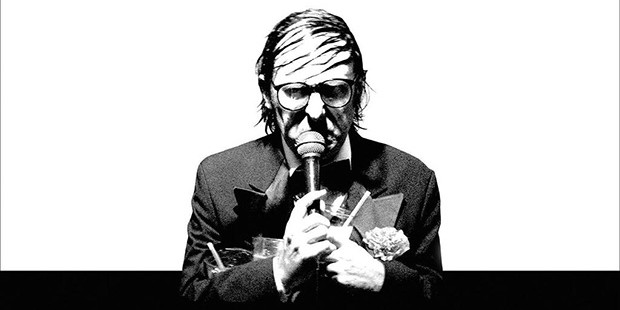
Gregg Turkington stars as the man in question, a comedian whose name is only vaguely hinted at a couple of times, but who we can nevertheless assume is intended to be Turkington’s most widely-known persona Neil Hamburger, who is touring the Mojave Desert playing shows in the seediest of venues, bringing along a clown (Ty Sheridan) as his opener and attracting only pure vitriol along the way. But to be fair, the comedian himself invites such outrage; his act is straight-up anti-comedy, and any form of unwanted audience participation is met with projections of his own ugliness. Let’s put it this way: one can hardly blame the woman (Amy Seimetz) who throws her drink onstage following a tirade of the most toxic variety for which she is the sole target.

But this is a Rick Alverson film, and predictably, what we see of Turkington offstage is far more disturbing than what he exhibits to the public. The frequent, unanswered phone calls to his daughter, awkward visits with his cousin (John C. Reilly), dream visions of himself as a cowboy in white, and addiction to late-night Mexican soap operas hardly scratch the surface of this man’s complex psyche. There are insights into what lies within that will keep even the most seasoned horror fanatic up at night, including but not limited to nocturnal encounters with strange men and pregnant women in sleazy restrooms. One may never feel truly at ease in a public place such as this ever again. Where Hitchcock claimed hotels, showers, and mothers, Alverson’s got bathrooms, backyard pools in the Hollywood hills, and comb-overs.
It would be difficult for me to not at the very least admire the director’s unique, even necessary vision. Based on the two features of his I have seen, his approach can be surmised as pushing comedy – and indeed, the notion of what is “entertaining” and what is not – to its breaking point, pushing it so far in that very direction that it becomes an utterly horrifying spectacle. It’s a bit more difficult to pinpoint this one than as was the case with the director’s earlier work, coming off much like a Lynchian examination of self-exile and untreated mental illness, but therein lies the key to accessing its madcap brilliance. It’s not easy, but it is genuinely distinctive.
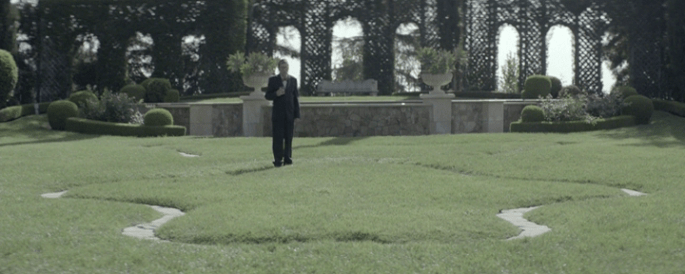
Lorenzo Hagerman handsomely lenses the comedian’s trek across the barren wasteland, his stunning widescreen frames capturing not only the desert landscape in all its expansiveness and the insignificance of man when posited within it but also the subtle grandeur of Turkington’s naturalistic features when wallowing in the utter dourness of solitude. A single frame can contain so much sadness and even some kind of cosmic terror, absolutely fitting for a film with this much to say but which appears, on paper, to be so much more simplistic than it actually is. Alverson’s history as a musician serves him well once again, with the film’s pivotal moment arriving a little over the halfway point when the comedian ventures out to the middle of the desert to record a video with a couple of young(er) YouTubers, but walks away – into what else but complete and utter nothingness – before the camera can even start rolling. Leah Devorah’s “Animals in the Zoo” scores this scene, which encapsulates what the film is really about as well as its last frame does, and it is one of the most personally affecting I’ve happened upon in recent memories. Without going into too much detail, it leaves me speechless and then some.
ENTERTAINMENT delivers on what we claim to expect out of most movies but in a consistently unconventional manner. It has a few awkward laughs, it’s got bucket loads of tension (Michael Cera’s brief appearance inspires enough pure discomfort to supply an entire, separate film on its own), and even features a sort of empathetic melancholy. I think the reason it won’t sit right with a lot of people is because it approaches cinema as a mirror into the soul, and dares to reveal things about ourselves that we would never hope to admit to. We react because deep down, we understand, and Alverson knows it. Oh, does he ever.
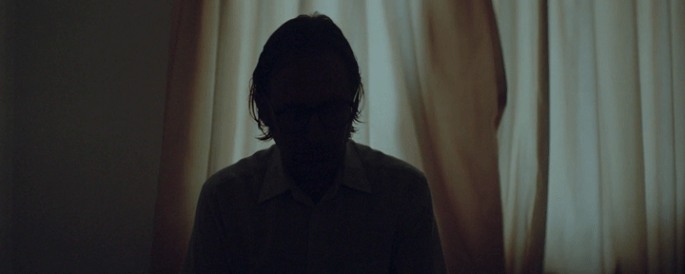
This is as important a study of depression and suppressed anxiety as any, portraying the inevitable breakdown following the latter of the two with such painful realism that it may be wise to take a couple breathers throughout. I sure needed them. As much as this is initially structured to be some kind of endurance test committed to celluloid, it offers more than enough points of resonance to justify the amount of patience that it requires. Many will surely dismiss it as being a film about nothing, or merely a critique of showbiz and the plight of the artist, which is about as redundant as you can get. Alverson’s cinema is about vicious cycles contained within a distinctively American context; the dream is dead, as are we, but we’re still here. Lost souls, wandering about, searching for purpose, and surrendering to ourselves when we find nothing.
The inverse of THE COMEDY until it isn’t; one senses the comedian feels some kind of regret for his actions both on and off the stage, unlike Heidecker’s Swanson who feels nothing at all because he doesn’t have to, but like that character he feeds the void rather than challenging it. The “Animals in the Zoo” scene is perhaps the most difficult because it seems for once that Turkington may be looking inward, and yet in the end he chooses to ignore the notion, and thus “order” is restored. Alverson’s characters have always scraped by sluggishly, only this time, he finds real sadness in the excursion. This is a largely subconscious work of art, open to a certain number of reasonable interpretations that will no doubt transform across a variety of individual spectators, and one with a substantial enough emotional palette to support the full weight of its cynical outlook on the world as we know it. There’s plenty of truth here, and very little of it is pretty. It isn’t often that a non-genre outing is significantly more effective than the majority of horror films, but here we are. At the end of time, the end of emotional honesty, the end of entertainment itself; this is what Trish Keenan must have meant when she pondered where youth and laughter go. And like the late Broadcast vocalist also said, let them know.

James Gunn’s Super: A Review by Nate Hill
Before James Gunn got all famous and whatnot in the Marvel universe, he made a few dark, perverse little gems that aren’t for everybody, but have to be seen by those with the right sense of humour. Slither was his low budget, brilliant schlocker, and here with Super he takes a stab (literally) at the superhero genre, albeit in his own off kilter and unsettling way. Rainn Wilson, who is off kilter and unsettling himself, is our sad sack protagonist, a dreary nebbish named Frank Darbo, married to a troubled hottie (Liv Tyler) who is way out of his league and adorned with baggage. We soon learn that Frank is very disturbed, when his favourite TV superhero (Nathan Fillion in a brief cameo) informs him he must adorn cape and costume himself in order to fight the injustice in the world. His name? The Crimson Bolt. His weapon of choice? A great big crescent wrench, which he uses very generously to dole out his own extreme brand of justice. His motto? “Shut up, crime!!” (I laughed every time). He’s an unconventional ‘hero’ to say the least, most of his good deeds consisting of brutally attacking citizens with said wrench for minor infractions like butting in line at the cinema, an uproarious scene if your sensibility is twisted enough, but then that’s the jist of the whole thing. His longterm goal is to get Tyler back from the clutches of evil drug kingpin Jacques (a hilariously chatty Kevin Bacon), and prevent as many crimes as he can along the way. He ends up causing far more damage than he means to fix though, an awkwardly psychotic tornado of unwarranted violence and delusions of grandeur. Things get more out of hand when he aquires a spitfire of a sidekick named Bolty, played by Ellen Page in a performance that’s right out to lunch and then some. Page plays her to the deranged hilt, cackling like a maniac at her own violent antics and getting super uncomfortable with Wilson in the bedroom (seriously… one messed up scene). Gunn can always be counted on to hire interesting actors, so be on the lookout for Linda Cardellini, Andre Royo, Gregg Henry and Michael Rooker as Bacon’s lead thug. A lot of what happens here is awkward, cringey stuff, the chronicle of a misplaced and sad little man under the impression that his life has some preordained meaning, as delineated by the red suit. It’s a thin shroud to hide the worthless and pathetic existence he has lead so far, and as such it’s kind of a depressing thing to bear witness to. But rejoice in how darkly hilarious it is as well, because there’s plenty of pitch black humour and perfectly timed comedic moments that spice it up. Gunn understands people and the way they talk (a trait so often lacking in writers), and even with concepts so out in the stratosphere beyond normality, his characters still have their feet on the ground and seem realistic. A treat, if a sourly bittersweet one.
Red 2: A Review by Nate Hill
More of the same, baby. That’s a good thing in this case as we rejoin ex assassin Frank Moses (Bruce Willis) and his merry band of morons for another set of high caliber swashbuckling, this one even sillier than their first picnic. The key is in the deadpan humour, which is served up with all the relish needed to make something so fluffy work. Most of the eclectic cast is back for second helpings, and the ones who caught bullets are replaced by even more bankable names and familiar faces here. Moses, his girlfriend (Mary Louise Parker, finally aquiring her sea legs when it comes to warming up to the carnage) and loony old friend Marvin (John Malkovich) find themselves thrown headlong into an arms race to find a deadly super weapon before it’s either detonated or aquired by very dangerous people. Leading them along is a frazzled ex MI6 spook and mathematical genius (Anthony Hopkins in silly mode) who has seriously lost his marbles. On their tail is scary CIA psychopath Jack Horton (Neal McDonough nails yet another heinous villain role) who brandishes his silenced pistol with the same verve he uses to flash that icy grin, the last thing you see before the shooting starts. Helen Mirren returns, as does her beau, played again by Brian Cox and his teddy bear worthy russian accent. Other newcomers include Korean superstar Byung-Hun Lee as an agile and pissed off assassin out to get Moses, Catherine Zeta Jones as a foxy russian femme fatale and Professor Lupin himself David Thewlis as a snooty arms dealer called The Frog, but not for te reasons you might think. When actors of such skill and notoriety show up in these, it really makes everything else worth it, even if the plot is somewhat up in the clouds, and the mad das, rat race tone can get a bit too loopy. These pros always keep it grounded when they need to, both with shooting and acting prowess. This one can’t quite keep up with how much fun it’s predecessor was, but it’s certainly more than adequate, especially to see Hopkins, a man of trademark gravitas, give an out of left field (and his mind, really) turn worthy of Jim Carrey and not without a few disarming third act surprises.
Romance & Cigarettes: A Review by Nate Hill
Romance And Cigarettes is the strangest musical you’ve never heard of. Strange as in awkward, because most of the songs are just too overdone and absurd to work, but I’ll concede that that very quality makes them unforgettable, if for not quite the same reasons the filmmakers intended. Going for a sort of pseudo Jersey Boys look, they set their cluster of stories in working class New York City, focusing on a number of hot blooded Italian American scamps and the mischief they get up to, all set to a raucous medley of musical numbers, some pleasant and others pretty darn tone deaf. James Gandolfini plays Nick Murder, a rowdy blue collar construction worker who finds himself between a rock and a hard place when his long suffering wife Kitty (an even rowdier Susan Sarandon) finds out about his secret mistress Tula (kinky Kate Winslet). This seems to be the last straw for Kitty as far as their marriage goes, and it all erupts into a series of volcanic confrontations and spats as only New Yorkers can spectacularly stage. In Kitty’s corner are her three handful daughter’s (Aida Turturro, Mary Louise Parker and adorable Mandy Moore) and her helpful Cousin Bo (Christopher Walken). Nick turns to a co worker Angelo (Steve Buscemi), is scolded by his stern mother (Elaine Stritch) and receives advice from an ex military tough guy (Bobby Cannavle). The film sides with both parties for one long and often chaotic look at marriage, infedelity and extremely short tempers, peppered with songs that, like I said before, are hit and miss. Walken has the best bit (doesn’t he always?) when he gets to a rip roaring riff on Tom Jones’s ‘Delilah’ that jazzes up the film quite a bit. Not destined to go down in history as one of the best musicals ever made, but worth it for the spoofy fun had by the impressive cast.
Rob Zombie’s 31: A Review by Nate Hill
I couldn’t help but feel fairly underwhelmed and a bit let down by Rob Zombie’s 31, which is a reaction I never thought I’d have to a film from one of the most dedicated and talented artists working in the horror genre these days.
Now I’m not saying saying I hated it or even really disliked the film, there’s actually a lot of incredibly creative visual material and good old fashioned practical effects to feast your fangoria loving eyes on, but the fact remains that Zombie has regressed to the primal state he opened up his first few films with.
There’s two phases of his work so far: a rip snortin’ hoo rah gross out redneck scumbucket pile of profanity and bottom feeding trailer trash human garbage, which is what we saw in The Devil’s Rejects, House Of 1000 Corpses and somewhat in Halloween. Then there’s quieter, more thoughtful and meditative Zombie, using an art house, Argento psychedelic slow burn template that he brought hints of to the table in the excellent Halloween II and then full force with The Lords Of Salem, which to me is his best film so far. Now I love the trailer trash aesthetic to bits. It’s mile zero, the genesis of his fascinating career so far, and his writing is detailed, character driven, lifelike and oh so hilarious. But there’s a natural progression to any filmmaker’s career, moods and states which ebb and flow into new regions of stylistic exploration, and 31 just feels like a detour down the wrong road. I expected the atmosphere we got with Salem to churn forward and be a leg on the table of whichever phase came next. But alas, he has done a willful throwback to his earlier work, and although solid (I believe he’s incapable of making a truly bad film, there’s just too much creative juice with him), it’s sadly the least memorable among even phase 1 of his work.
31 is essentially a variation on The Most Dangerous Game, with a dirty dustbowl setting thrown in. A group of potty mouthed carnies, including Meg Foster, Jeff Daniel Philips and the ever present Sheri Moon Zombie, trundle through the desert, reveling in promiscuity and lewd behaviour, another trope that is getting old and icky, even on Rob’s barometer. Attacked and kidnapped one night by a band of scarecrows, they find themselves unwitting contestants in a vicious game called 31 (why is it called that? I still don’t know), on Halloween eve. The masterminds are a group of creepy aristocrats led by a plummy Judy Geeson and Malcolm McDowell, sporting a powdered wig, attire of french royalty and going by the name Father Murder. They release Moon and her peeps into a dismal maze and set a group of demented cackling psychopaths called the “heads” after them, dressed like clowns and seriously adjusted I’ll adjusted, these folks. Now you’d think that premise would be just a bucket of horror fun, and it’s nominally entertaining but just never really takes off into the desperate, visceral fight for survival I wanted to see. The clowns are varying degrees of scary and amusing. EG Daily fares well as whiny creepshow Sex Head, and there’s Sick Head, a chatty midget dressed up like Hitler who yowls at his prey in garbled Hispanic incantations. The film’s real energy shows up in the form of Richard Brake as Doom Head, a repellant maniac who is the only actual scary one of the bunch. Brake is a criminally underrated actor who I had the honour of interviewing some months ago, and when asked what the favorite role of his career is so far, he promptly said this. One can see why, it’s the most he’s ever been given to do in a film and he milks it with virile ferocity and animalistic sleaze that will leave you crying in the shower. McDowell and his cronies are here and there, but feel oddly disconnected from the events at hand, and while visually ravishing, ultimately aren’t given much to work with. I will say though that Zombie has a flair for the musical finale, and the end sequence set to ‘Dream On’ here is a blast that does indeed touch the epic heights of his older films.
And there you have it, kids. I wanted to rave about this one, I really did. But it use felt loose,
cobbled together and nowhere near as cohesive and brutally mesmerizing as his earlier work, all of which still hold up. There are elements here that work, but unfortunately just not enough, and framed by a whole lot of choices that feel copied and pasted. Now Zombie at his worst is still better than most in this sagging genre these days, but for those of you who know his work well and have expectations for the guy, you may just feel a little let down, like I did.
Brett Ratner’s Red Dragon: A Review by Nate Hill
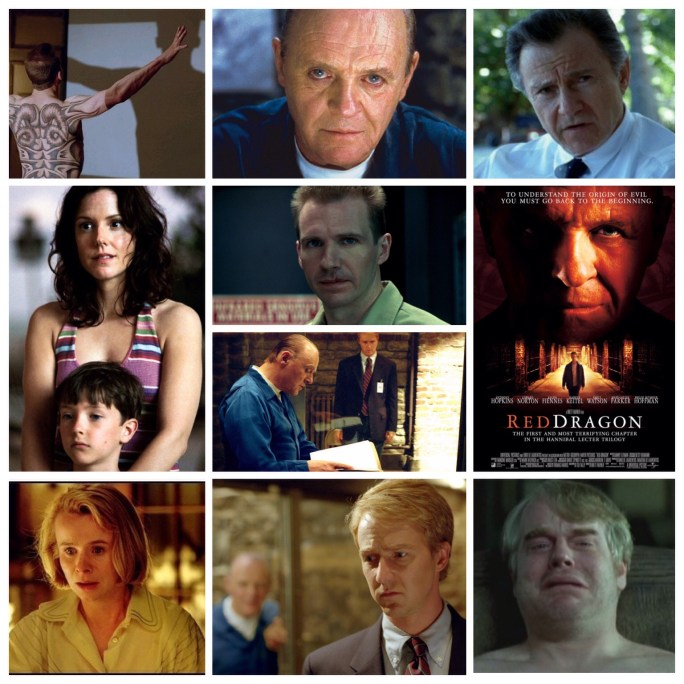
Brett Ratner’s Red Dragon, although pretty darn stylish, is just cursed with being the least engaging and unique Hannibal Lecter film out there. It’s not that it’s a bad flick, but when you have Silence Of The Lambs, Hannibal and the far superior Manhunter to compete with, you’re trucking down a rocky road. The strongest element this film has going for it is Ralph Fiennes, who plays the hell out of the role of Francis Dolarhyde, the disturbed serial killer also known as the Tooth Fairy. Previously played by an introverted and terrifying Tom Noonan, Fiennes gives him a more rabid, haunted vibe and steals the show, but then he always does. Edward Norton is a bit underwhelming as FBI behavioural specialist Will Graham, sandwiched between William L. Peterson and Hugh Dancy’s modern day, definitive take on the character. Graham has the tact and luck to ensnare notorious cannibalistic murderer Dr. Hannibal Lecter (Anthony Hopkins purrs his way through a hat trick in the role), whose help he subsequently needs in pursuing Dolarhyde. Harvey Keitel clocks in as rock jawed Jack Crawford, Graham’s boss and mentor, solidly filling in for far mor memorable turns from Laurence Fishburne, Dennis Farina and Scott Glenn. All the scenes with Dolarhyde fare best, given some truly impressive rural cinematography that sets the mood for the killer’s twisted mindset nicely. The cerebral jousting between Graham and Lecter only half works here, dulled in comparison to the crackling exchanges that Jodie Foster masterfully handled with Hopkins, who was far, far scarier back then. Emily Watson lends her doe eyed presence to the blind girl that brings out the only traces of humanity still left in Dolarhyde, Philip Seymour Hoffman shows up as bottom feeding tabloid reporter Freddy Lounds, and Mary Louise Parker, grounded as always, plays Graham’s wife. You could do worse in terms of films like this, but in the Lecter franchise it falls pretty far short of any of the other entries, save for the few inspired moments involving Fiennes.
SCANNERS – A REVIEW BY J.D. LAFRANCE

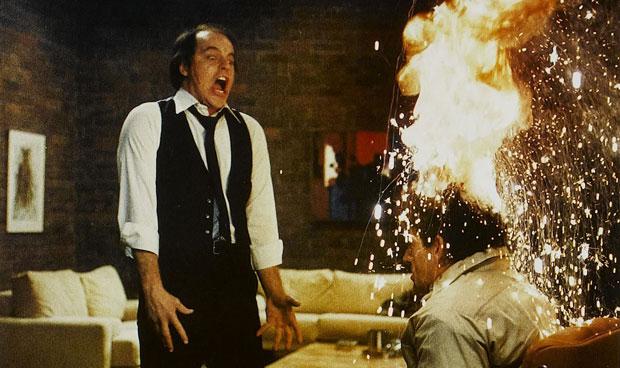
For a good part of his career, David Cronenberg has been fascinated by secret societies, be it the New Age-y psychotherapist and his patients in The Brood (1979) or the people addicted to an immersive video game in eXistenZ (1999). With Scanners (1981), he explored a small, but growing number of people endowed with mental abilities that allowed them to read other people’s thoughts or literally blow their minds. This is evident in the film’s most iconic scene where a character blows up another’s head. This premise eerily mirrors Brian De Palma’s The Fury (1978), but where it was more of a conventional thriller, Scanners incorporated more cerebral ideas as some of Cronenberg’s characters see themselves as the next rung in the evolutionary ladder.
Cameron Vale (Stephen Lack) leads a vagabond lifestyle and is kidnapped and brought to Dr. Paul Ruth (Patrick McGoohan) who works for a mysterious corporation called ConSec. He tells Vale that he is a “scanner”, someone with telepathic abilities and proceeds to teach him how to use his powers. Ruth soon finds himself at odds with Braedon Keller (Lawrence Dane), head of security at ConSec and who is secretly in cahoots with Darryl Revok (Michael Ironside), the leader of an underground group of scanners. Ruth sends Vale to infiltrate Revok’s group and the film builds to an inevitable confrontation between the two powerful scanners.
Stephen Lack, who came from a performance artist background, delivers a wonderfully idiosyncratic performance as Vale, a man who is initially uncomfortable in his own skin, but gradually becomes more confident as he learns how to control his abilities. In one of his career-defining roles, Michael Ironside is excellent as the malevolent Revok who sees himself as a Che Guevara-type figure. Lack and Ironside’s contrasting acting styles compliment their adversarial characters nicely.
Scanners was part of a fantastic run of early films that Cronenberg wrote and directed himself as he explored the dark intersection where the science fiction and horror genres converged. The success of this film spawned two lackluster sequels that Cronenberg wisely had no involvement in. Unlike The Fury, Scanners goes into much more detail about how these mental abilities work and how they can be harnessed as evident in a scene where Ruth teaches Vale how to accelerate a man’s heartbeat, almost killing him. Cronenberg goes further than simply pitting good scanners vs. bad, but also touching upon the notion that they may be the next step in human evolution.