Outlander: A Review by Nate Hill

image

“Beowulf meets Predator” boasts the enthusiastic critic blurb on the poster of one of my favourite sci fi genre benders, Outlander. It’s pure outlandish fun, and better yet it knows it is and therfore doesn’t feel any need to spend a bunch of time on grasping exposition to convince you of any shred of authenticity. It simply hums along on a pure rush of unchecked adventure, always aiming to please and for the very most part, doing so wonderfully. Jim Caviesel stars, and he’s an unassuming Ken doll of an actor who has more intensity than anyone gives him credit for, which always makes me spring to attention when he’s in the driver’s seat. Here he plays Kainen, a voyager from a far away galaxy who has crash landed his spacecraft on earth way back in the time of the Vikings, stranded and in need of refuge. Only problem is, he’s been on the run for some time from a large, hideous and very dangerous creature from his home planet called Moorwen. Moorwen has a very personal and deadly vendetta against Kainen, one which threatens the Viking tribe who give him shelter, led by noble king Hrothgar (John Hurt). Kainen comes from a planet with technology and civilization far advanced from Earth at that time, which makes him a hit with the tribesmen and even more so with Hrothgar’s daughter (Sophia Myles). Moorwen threatens their way of life in its rampage against Kainen, causing tragic collateral damage to a rival clan led by Gunnar (Ron Perlman makes heartbreaking and stone tough work of what is essentially an extended cameo). It’s an awesome movie no matter what anyone says. Any film about an astronaut from a far off galaxy who bands together with friggin vikings to battle a fluorescent space dragon is just automatically a winner. In all seriousness though, this one really is something special,and almost seems like a Dennis Quaid vehicle if it were made in the 80’s. Fun, thrilling and never too serious, it knows it’s place and owns the genre shelf it sits on.

B Movie Glory With Nate: Dark Reel

  
Dark Reel is severely damaged goods no matter how you look at it. It sucks because there’s some good ideas trying their best to flourish beneath a mountain of sludge, but nothing of any value can breech the surface of this purely shitty B movie with scant traces of a decent outing. It starts off with a black and white prologue that looks like the only part of the film that wasn’t shot with an etch-a-sketch. Scarlett, a young aspiring actress, is lured into a dark abandoned set warehouse under the pretence of an audition, and brutally murdered. Fast forward about six decades, where a young groupie (Edward Furlong, looking like a sack of shit warmed over) wins a walk on role in a sickeningly trashy B movie monstrosity, starring a legendary scream queen (Tiffany Shepis, also a legendary scream queen in real life). It’s not long before so,done with ties to the murder in the prologue starts skulking around the set after hours and hacking people to pieces in ways that are as tasteless as they are cheap looking. The film has one redeeming quality, if you are a fan: Lance Henriksen. He plays Connor Pritchett, schlock movie producer and general whacko. Lance seriously plays the part like he has no idea what the script is, making up verbal diarrhea on the fly, undergoing titanic mood swings and displaying the coherency of someone with serious issues. It’s fun to watch him crash and burn, and even in the most awful poop material like this, he still shines, as batshit crazy as he is. There’s also a cop played by Tony Todd who acts just as unstable as Lance, and Todd rides the wave of his awfully written dialogue and poor direction like a sheepish pro. This is literally one of the worst movies I’ve ever seen, and the funny thing is that it didn’t have to be. The premise itself is great, and even on the couch change budget it was stuck with, they could have at least tried. But no, they threw in the bloody towel and instead of a gem or even an admirable failure we get this monumental piece of festering garbage instead. I had to keep myself occupied in any scenes without Henriksen by hitting half speed fast forward so the characters sound like chipmunks. It says a lot about a flick when you have to do that. Avoid at any cost.

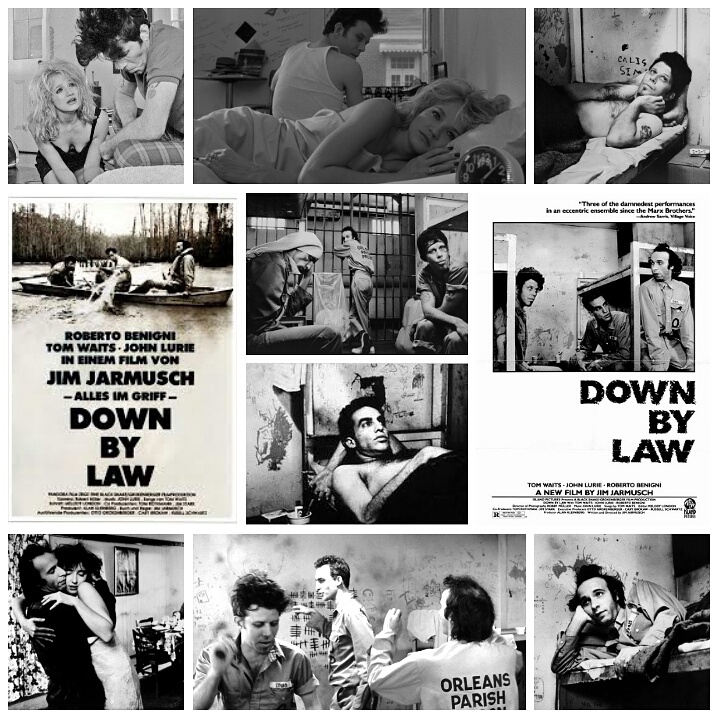
Jim Jarmusch’s Down By Law: A Review by Nate Hill

image

You have to be in a very particular type of mood to properly tune into a Jim Jarmusch film. He populates his often black and white and always slightly mournful films with awkward, dazed individuals who more comfortable in the uncertain pauses between dialogue than the actual words themselves. When I feel like a Jarmusch film (other than Dead Man which is an all timer for me) it’s always during times when I feel the daydreamy grey matter coming on, an otherworldly, downbeat relaxation that his  work is rife with. Down By Law is a signature example of this, and most likely the film I connect with most of his, after Dead Man. This one concerns three wayward and very different souls who by fate and unfortunate circumstance end up in jail together. Zach (Tom Waits) is a radio DJ who is hounded by his girlfriend (Ellen Barkin) to be more proactive and less relaxed. Jack (John Lurie) is a laid back pimp, and they both find themselves incarcerated in a Louisiana prison where they meet the eccentric Italian tourist Roberto (Roberto Benigni, hilarious). The trio are a puzzling gaggle of misfits, moments of startling pathos and stinging humour sprouting as their time together goes on. Soon they discover that Roberto may know of a way to escape, and see it as their chance. The characters in any given Jarmusch film never seem the same as usual film archetypes; they’re always quirky and completely their own person, which is no doubt a product of a very intuitive directorial process, and an excellent relationship with the actors. It can be disarming to spend time with such distinct people in film, but when you stop to realize just how weird everyone around you in real life is vs. what is common for movie scripts, it feels geniune. This one is lived in, authentic and funny in that intangible way where you can’t even say why it’s so hilarious. We all a-scream for ice  a-scream!

REAL GENIUS – A REVIEW BY J.D. LAFRANCE

Real Genius 1

In the 1980s, Martha Coolidge’s films were a welcome antidote to the dominance of John Hughes’ output. On the surface, her films appear to be quite similar, but whereas Hughes’ films ultimately play it safe and are conservative in nature (i.e. the status quo is preserved), Coolidge’s films champion the outsider in society – for example, Nicolas Cage’s punk rocker hooks up with Deborah Foreman’s Valley girl despite societal pressure in Valley Girl (1983). Real Genius (1985) appears to be just another mindless college comedy like Revenge of the Nerds (1984), but whereas that film had its outsiders ultimately become part of accepted mainstream society, the nerds in Real Genius rebel against it and are proud to be different.

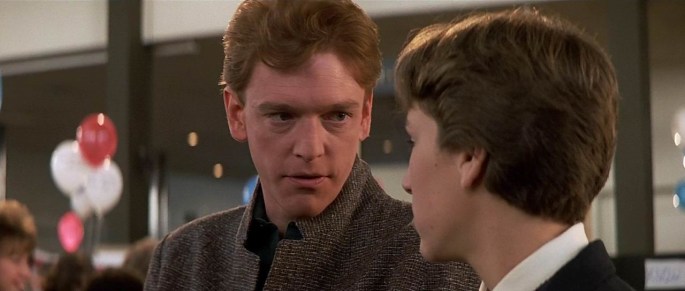
Mitch Taylor (Gabe Jarret) is a brilliant high school student recruited by Professor Jerry Hathaway (William Atherton) to become a student at Pacific Tech and join a special team working on an experimental laser. Hathaway tells Mitch and his parents in person at a science fair. The exchange between them is priceless. His parents obviously have no idea just how smart their son is and only want him to get the best education. At one point, Mitch’s mother asks Hathaway, “I saw your show the other night on radioactive isotopes and I’ve got a question for you. Is that your real hair?” He cheerfully replies, “Is Mitch by any chance adopted?” They are oblivious to the implied insult and Hathaway pulls Mitch aside and tells him, “We’re different than most people. Better.” Hathaway’s elitist attitude is established early on, setting him up as an arrogant snob that must be taught a lesson in humility by our heroes.

Hathaway rooms Mitch with Chris Knight (Val Kilmer), the top brain on campus – at least he used to be until Mitch showed up. We first meet Chris as he’s being taken on a guided tour of a top science laboratory. He has a t-shirt on that reads, “I love toxic waste,” and a set of alien antennae on his head that demonstrate he is the antithesis of Hathaway. He may be super smart but he’s not a stuffed shirt. At one point, his tour guide asks him, “You’re Chris Knight, aren’t you?” Without missing a beat, he replies, “I hope so, I’m wearing his underwear.” Val Kilmer’s deadpan delivery is right on the money and he demonstrates an uncanny knack for comic timing. The film could have so easily set up a rivalry between Chris and Mitch but instead they become friends and team up against a common foe: Kent (Robert Prescott), an arrogant senior student who is also working on the laser.

Chris is super smart, but something of a loose cannon, always cracking jokes and never taking anything too seriously, much to Mitch’s consternation because he doesn’t know how to loosen up and have fun. Mitch also has trouble adjusting to campus life and this isn’t helped by Kent who enjoys tormenting Mitch when the senior student isn’t busy sucking up to Hathaway. Coolidge replaces the class warfare in Valley Girl with in-fighting amongst academics in Real Genius. The setting may be different, but the tactics are no less mean-spirited as Kent delights in publicly humiliating Mitch. Meanwhile, Hathaway puts pressure on Chris to produce a working laser before the school year ends. Failure to do so will result in Hathaway making sure that Chris doesn’t graduate or work in his field of expertise. Unbeknownst to the ace student, his professor is getting pressured by a flunky and his superior from the CIA who want to use the laser for their own covert actions (assassinations from outer space?).

Every so often, Mitch catches a glimpse of a mysterious long-haired man who goes into his closet at random times during the day. His name is Lazlo (Jon Gries) and he lives deep in the bowels of the school. He used to be the smartest student on campus back in the 1970s but cracked under the pressure and now spends all of his time generating entries for the Frito Lay sweepstakes (enter as often as you like) so as to get as many of the prizes as possible. Jon Gries plays Lazlo as a shy genius, smarter than Chris and Mitch combined. He’s a gentle soul and a far cry from the arrogant blowhard he would go on to play in Napoleon Dynamite (2004).

Over the course of the film, Mitch finds himself attracted to Jordan (Michelle Meyrink), a hyperactive student who never seems to sleep. She sports an adorable Louise Brooks-style bob haircut and a nervous energy that is oddly attractive. I had a huge crush on her when I first saw this film back in the day, quite possibly one of my earliest cinematic crushes. She was the ultimate nerd sex symbol in the ‘80s with her undeniable beauty and brains. Sadly, after a few films she grew disenchanted with the movie making business and retired to Canada to become a Zen Buddhist.

Remember when Val Kilmer was funny? Between this film and Top Secret! (1984), he displayed some impressive comedic chops. Kilmer excels at delivering smartass quips and jokes but is also capable of delivering an inspirational speech that convinces Mitch to stick it out at school and get revenge on Kent. There are two scenes where he dispenses with the jokes and has a relatively serious conversation with Mitch about life. They are refreshingly heartfelt and elevate Real Genius above the usual ‘80s teen comedy.

Gabe Jarret is perfectly cast as the helplessly square Mitch with his dorky haircut and his J.C. Penney’s wardrobe. We aren’t meant to laugh at him and Coolidge shows that he’s a good kid thrust into a new and strange environment. He’s smart, but lacks the emotional maturity, which he will acquire over the course of the film. Jarret does a nice job of conveying his character’s arc. He doesn’t totally transform into Chris but instead absorbs some of his traits while remaining true to himself.

Real Genius 2In the ‘80s, William Atherton seemed to be the go-to guy for playing douchebag authority figures, with memorable turns as the unscrupulous journalist in Die Hard (1988), the “dickless” EPA guy in Ghostbusters (1984), and, of course, his turn in Real Genius. Atherton’s job, and man, does he do it oh so well, is to provide a source of conflict for our protagonists. He portrays Hathaway as the ultimate arrogant prick and we can’t wait to see him get his well-deserved comeuppance at the hands of Chris and Mitch.

Real Genius
does plug in the usual tropes of ‘80s teen comedies with the now dated soundtrack of New Wave songs, most of them forgotten except for “Everybody Wants to the Rule the World” by Tears for Fears, which plays over the blissfully carefree ending of the film. There are the wacky comedic set pieces involving pranks. There’s also the T&A factor when Chris takes Mitch to an indoor pool party populated by sexy beauticians. Not to mention, the dorm that Chris and his classmates live in which vaguely resembles the chaotic frat house in Animal House (1978), only inhabited by really smart people.

However, it is how the film presents these generic elements that sets it apart from the typical ‘80s teen comedy. For example, the pranks are quite inventive, like when Chris and Mitch manage to place Kent’s car in his dorm room. There are several and they all lead up to the mack daddy of them all, which occurs at the climax of the film. While there is the requisite T&A factor in Real Genius, the PG rating assures that we don’t see much, just some girls in bikinis. Instead, we get the understated romance that develops between Mitch and Jordan, which is rather sweet in its own unassuming way. The dorm is certainly not the debauched chaos of Delta House, but it clearly is a place of fun, led by Chris and his various antics.

Producer Brian Grazer loved the humor and the sensibility that Martha Coolidge brought to Valley Girl and asked her to direct Real Genius. She thought that the screenplay was funny, but it had “a lot of penis and scatological jokes” that reminded her of other teen comedies she had turned down in the past. However, Grazer brought in Lowell Ganz and Babaloo Mandel to give the script a polish and had Coolidge re-read it. She liked it and Grazer’s boundless enthusiasm convinced her to commit to the project. Still not completely satisfied with the script, Grazer brought in comedy writer P.J. Torokvei to help Coolidge create the story, come up with the ending and fully develop the characters. For example, it was Torokvei who came up with the character of Jordan and was responsible for many of Chris Knight’s memorably smartass remarks.

Coolidge insisted on researching laser technology and policies of the CIA. The producers even brought in top-level consultants from the military and weapons development experts. To make Real Genius distinctive from other teen science fiction films at the time, the director went to great lengths to make sure the science was authentic and the science fiction aspect was plausible. At the time, scientists were actually working on the powerful laser Chris and his fellow students were developing for Hathaway, but the filmmakers could only work with a smaller wattage for reasons of safety and cost. The production used real lasers with very little visual effects enhancement, of which was used only sparingly at the film’s climax.

In addition, she interviewed dozens of Cal Tech students and based most of the stories in the film and the visual depiction of their school on Cal Tech, in particular Dabney Hall. Coolidge also met with all kinds of scientists and students, including the legendary Cal Tech mathematician grad that was rumored to have lived in the steam tunnels. To say that the director was a stickler for authenticity was an understatement. The graffiti in the dorm was copied from the actual dorm graffiti by scenic painters and then embellished further by Cal Tech students brought in by the production.

Not surprisingly, Coolidge and producers saw many young actors for the role of Chris Knight. It became obvious that Val Kilmer was the best actor to embody the role, but John Cusack was also considered at one point. However, once principal photography began, Coolidge found Kilmer not so easy to work with because he was “intellectually challenging and erratic.” He avoided working by asking a lot of questions and was sometimes late to the set and acted moody. That being said, over the 75-day shoot, they gained a lot of trust and worked well together.

The filmmakers also spent a lot of time trying to cast an actor for the role of Mitch Taylor. At one point, they seriously considered hiring a true young genius that had graduated college in his early teens. They discovered Gabe Jarret late in pre-production and he had the “right combination of seriousness, gawkiness, intelligence and emotion that we needed,” Coolidge remembers.

For the house that explodes with popcorn at the film’s exciting climax, the special F/X people designed all kinds of hydraulic systems to move the popcorn. The next challenge was generating all the stuff. They couldn’t buy all the popcorn needed for the scene in the short amount of time they had so the film crew popped 40 tons themselves on the lot over six weeks. All the popcorn was stored in 38 40-foot tractor-trailer trucks.

Real Genius 3Real Genius
argues that nerds can have fun too, but there needs to be a balance. You can love solving problems but it can’t be all science and no philosophy as Chris tells Mitch. People like Kent and Hathaway have no sense of humor and are self-obsessed egotists. They are ambitious to a fault, not caring who they step on the way, while Chris and Mitch are aware of the consequences of their actions. There is sweetness to this film that is endearing and rather strange considering that Neal Israel and Pat Proft wrote the screenplay (authors of such paeans to sweetness, like Police Academy and Bachelor Party), but Coolidge is firmly in charge and wisely doesn’t let Real Genius get too sappy. She also doesn’t let the funny stuff devolve into mindless frat humor, instead maintaining a proper mix that doesn’t insult our intelligence. The end result is a film that the characters in the film might enjoy, if they weren’t already in it. Achieving just the right alchemy may explain why the film continues to enjoy a modest cult following and is one of the few teen comedies from the ‘80s that stands the test of time.

Lulu On The Bridge: A Review by Nate Hill

image

Lulu On The Bridge is an odd one, and that’s a compliment. It subtly strains at the constrictions of genre until you realize just how unique it has gotten right under your nose. I’ve always thought of it as the Abel Ferrara fiom that he never made. Harvey Keitel delivers a home run of a lead performance as Izzy Maurer, a renowned jazz musician who loses his ability to play after he is shot by a lunatic gunman (Kevin Corrigan) while he is performing his music in a cafe. He sinks into a deep depression following the incident, and then something curious happens. One day he finds a mysterious stone, with a phone number attached to it and some seemingly mysterious qualities which alter the psyche, mood and perception of anyone in its vicinity. The phone number leads him to Celia Burns (the ever excellent and under estimated Mira Sorvino), an aspiring actress who’s fallen just south of the success line, and has a taste for Izzy’s music. The two seem destined to meet and as you might guess, begin a passionate love affair that begins to get a bit obsessive, with strong hints directed towards the stone that seems to govern will and volition. Their romance is hot, heavy and volatile, threatened when a mysterious man named Dr. Can Horn (a classy but dangerous Willem Dafoe) separately kidnaps them in attempt to retrieve the stone. The script deliberately shades over its true intentions until the very last minute, stopping to pick many dialogue and thematic flowers along the way, as well as leave a few red herrings behind. Gina Gershon is great as Izzy’s ex wife, and the monumantal supporting cast also includes Richard Edson, the great Victor Argo, Harold Perrineau, Mandy Patinkin, Vanessa Redgrave and a brief Lou Reed who is pricelessly credited as ‘Not Lou Reed’. If you snag a dvd you can also see deleted scenes work from Stockard Channing, Jared Harris, Josef Sommer and Giancarlo Esposito. The film attempts music, mystery, doomed love, urban mysticism, thriller and drama elements. I’m happy to report that it succeeds at all of them, a gem not unlike the mcguffin stone within the plot, and a haunting little modern fairy tale. Check it out.

The Adventures Of Buckaroo Banzai Across The 8th Dimension: A Review by Nate Hill

image

The Adventures Of Buckaroo Banzai Across The 8th Dimension. There’s a title, eh? The film lives up to it too, and is simply one of the most unique, bizarre and original sci fi flicks out there. It’s the very definition of cult to its abstract bones, filled to the brim with eccentricities and idiosyncrasies. For me it represents a certain genre niche that’s nestled squarely in goofball mode, splayed out across the borders of science fiction, comedy and farce, without a care in the world and not an iota of self consciousness or any fucks given. Call it Buck Rogers meets The Avengers meets Bonanza doesn’t even scratch the surface. Peter Weller, that eternally cool bastard, plays Buckaroo Banzai, who is somewhat of a renaissance man. He’s a neurosurgeon, a rock star, a scientist and above all a lover of adventure, always sporting Weller’s unmistakable deadpan charm. Buckaroo and his band are also a crime fighting team called The Hong Kong Cavaliers, and include roughneck but lovable cowboy Rawhide (Clancy Brown) and slick New Jersey (Jeff Goldblum). Buck has perfected a device called the oscillation overthruster, which allows him to travel through solid matter and on into the eighth dimension. Only problem is, the red lectroids, an alien race from planet 10, want to steal the device for their own. They are led by an unbelievably funny John Lithgow who gets the spirit of the film and then some. Buck also finds romance with the adorable Penny Priddy (Ellen Barkin), whisking her off into super sonic adventure with him and the Cavaliers. It’s beyond silly, super arbitrary and random, and I love every glorious unfiltered minute of it. This type of wantonly bizarre stuff is my cinematic bread and butter, especially  when it’s done with such pep in its step, as well ass love and commitment to being an oddball venture. The cast is huge and all in that loopy sleep deprived state where everything is funny and strange organic creation comes from the abstract. Watch for Dan Hedaya, Lewis Smith, Pepe Serna, Vincent Schiavelli, Jonathan Banks, John Ashton and Christopher Lloyd too. A wacky gem with a style all its own, constantly tapped into a well of creation, humour and fun.

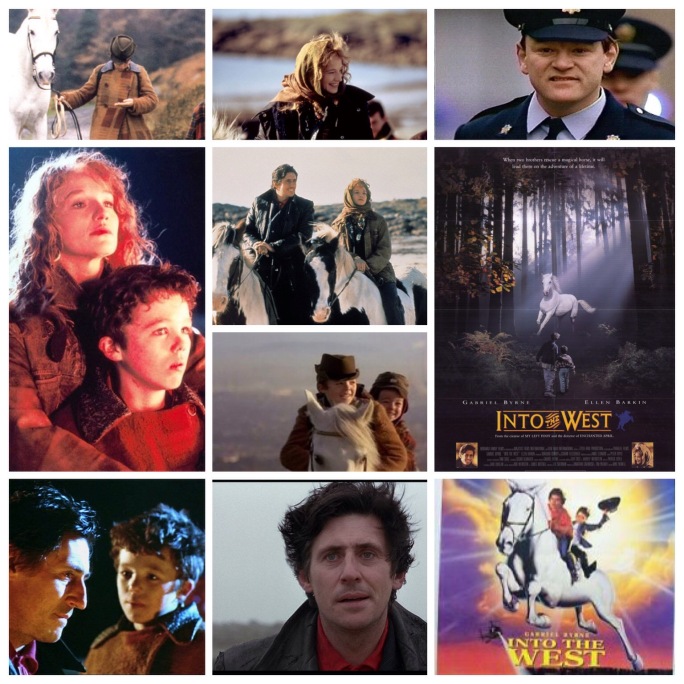
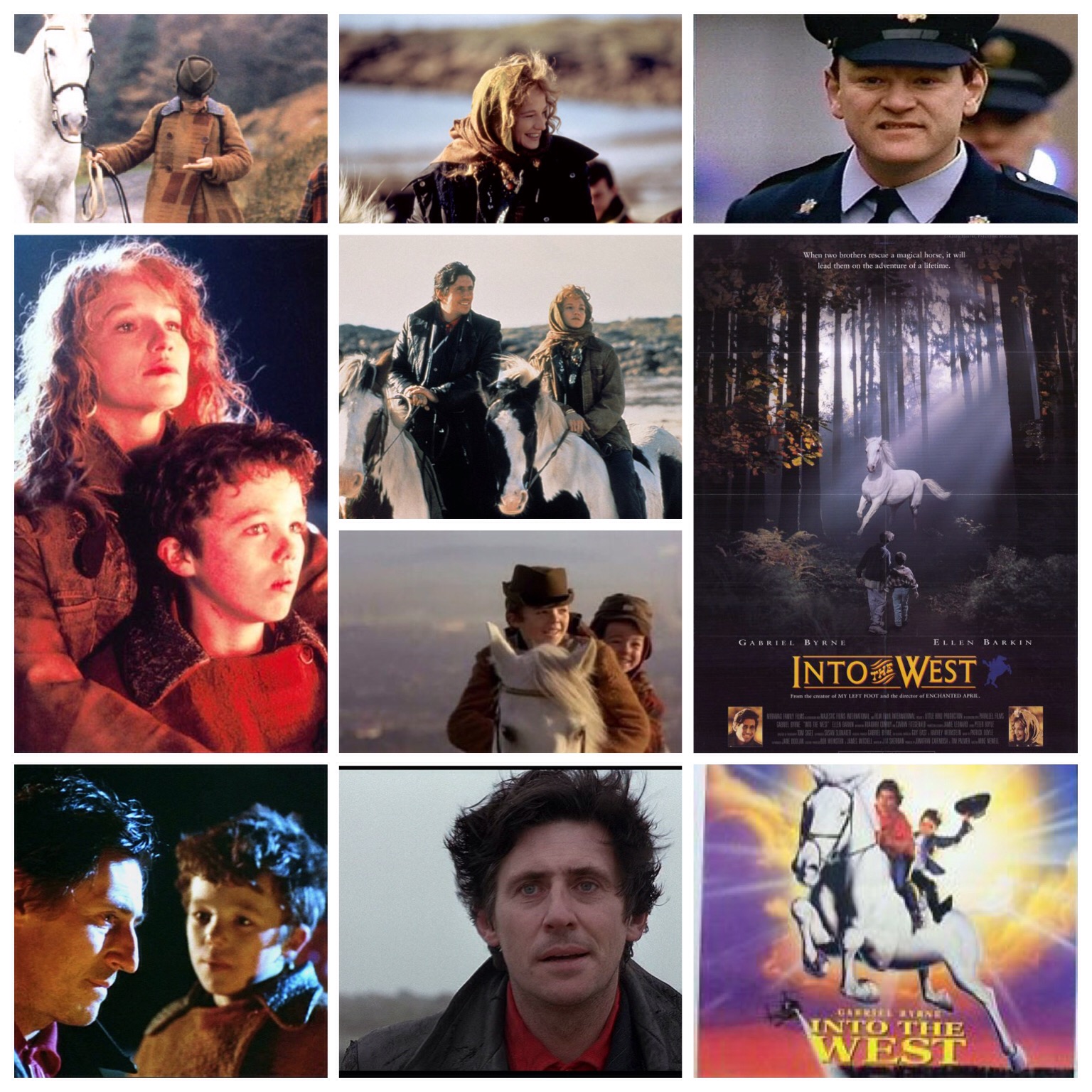
Into The West: A Review by Nate Hill


Into The West is a charming Irish folktale with two excellent lead performances from Gabriel Byrne and Ellen Barkin, who have been married in the past and therefore have a natural, easygoing chemistry. The film takes place in rustic Ireland, where two young boys are given a magnificent and mysterious white stallion by their gypsy grandfather (David Kelly). They come from a poor neighbourhood, somewhat left to their own devices by their downbeat alcoholic father (Byrne), who lost his wife and their mother years before. The horse seems to have some type of sixth sense related directly to their family history. The two boys are in that state of wonder where fables and magic still exist, and follow the horse wherever it leads. Byrne desperately pursues his sons to whatever end, helped by a fellow Traveller and old flame (Ellen Barkin, excellent and passing quite well as an Irishwoman). The horse seems to know his past and leads him to places which have sentimental value to him, leading him one step closer to his kids, while teaching him an esoteric lesson along the way. Great stuff, kid orientated but still has an eerie and mature atmosphere. Watch for early appearances from Brendan Gleeson and Liam Cunningham. Beautiful film. 

BEAUTIFUL GIRLS – A REVIEW BY J.D. LAFRANCE

b1

There is something about turning 30 that makes one re-evaluate their life. It is that time when you are forced to grow up, find direction, settle down, and become an adult. Beautiful Girls (1996) concerns a group of men faced with this dilemma. They have been living in the past and recent events have forced them to confront it head on. This is also the late director, Ted Demme’s best film in an all-too brief career. As he said in an interview at the time of the film’s release, “I don’t think there are too many movies about turning 30, or just about to turn 30. Those issues are whether to get married or not, whether to have kids or not, am I happy in my job, do I need to find another job, am I unsettled with myself. You’re not a teen anymore, and you don’t want to admit you’re an adult either.”

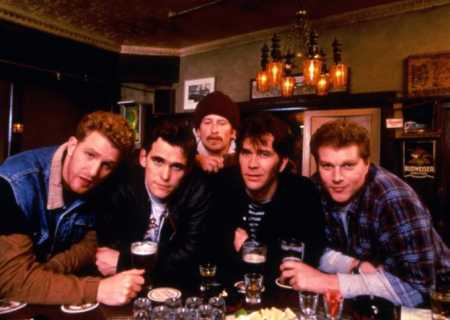
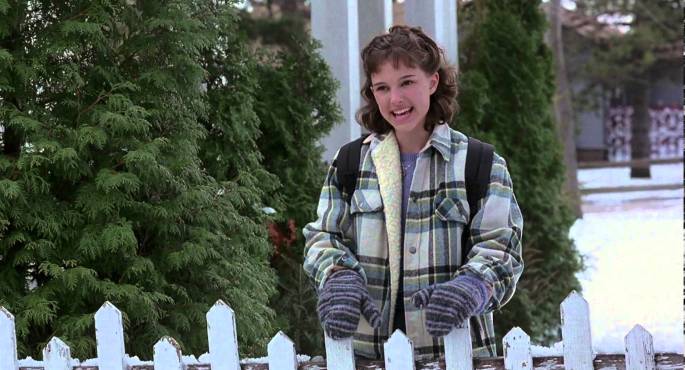
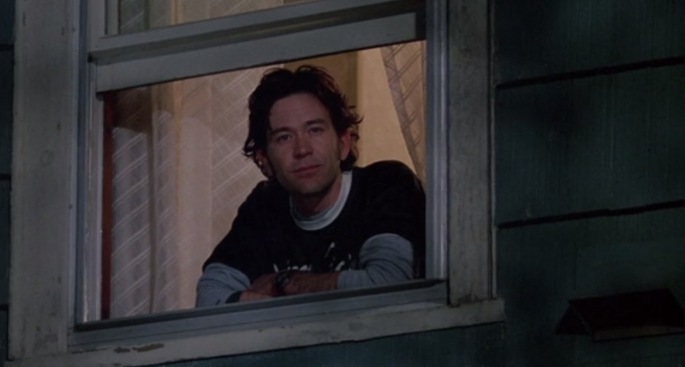
Willie (Timothy Hutton) returns to his small, Northeastern hometown for his ten-year high school reunion, hook up with buddies, and get his life in order. His mom has recently died (leaving his younger brother and father in a deep funk) and all of his friends are having relationship problems. Willie strikes up a friendship with a young girl named Marty (Natalie Portman) who has moved in next door. She is a character out of J.D. Salinger short story – wise beyond her years. Marty sets the tone for the rest of the women in the story. They are all intelligent and end up suffering with men who don’t appreciate what they have right in front of them.

Screenwriter Scott Rosenberg was living in Boston, waiting to see if Disney would use his script for Con Air (1997). “It was the worst winter ever in this small hometown. Snow plows were coming by, and I was just tired of writing these movies with people getting shot and killed. So I said, ‘There is more action going on in my hometown with my friends dealing with the fact that they can’t deal with turning 30 or with commitment’ – all that became Beautiful Girls.” The resulting screenplay turned out to be quite autobiographical, with Willie being Rosenberg’s surrogate.

The friendship between Willie and Marty pushes the boundaries of what is comfortable in a comfort movie but it never goes beyond it. Rosenberg’s screenplay is smart enough to be self-aware of this and even addresses it in a scene between Willie and his friend Mo (Noah Emmerich). Fortunately, the film narrowly avoids letting things get too uncomfortable and therefore taking us out of the captivating spell established by the movie. It also avoids clichés like the beautiful Andrea (Uma Thurman) having sex with one of the guys. Instead, she rebuffs them all because she is loyal to her boyfriend who, makes her martinis listens to Van Morrison and reads the newspaper with her on Sunday mornings – simple pleasures. She is not a perfect ideal, just on another level than these guys.

Rosenberg’s script is also able to juggle the various subplots without resorting to cliché resolutions. Tommy (Matt Dillon) is cheating on his girlfriend Sharon (Mira Sorvino) with his high school sweetheart (Lauren Holly). When he gets beat up by her husband (Sam Robards) and his buddies you anticipate Willie, Paul (Michael Rapaport) and Mo to mobilize and kick some ass but at the last second they stop because the man’s child will see her father get beaten up. This stops Mo who also has kids.

In addition to the clever plotting, Rosenberg’s script also features a lot of funny, memorable dialogue. Tommy chastises Paul for getting his on again-off again girlfriend, Jan (Martha Plimpton) a brown-colored diamond when he tells him, “Buddy, you been eating retard sandwiches.” There is also great throwaway dialogue like Stinky (Pruitt Taylor Vince) with his proprietor lingo, “We got apps!” or the often-used word “crease” to convey frustration at something, like when Tommy asks, “What’s got him creased?”

b2All of the guys in Beautiful Girls are essentially the same person. Willie is just finding his luck, Paul just lost his luck as the film begins, Tommy loses it over the course of the movie, and Mo has already found and achieved it with his family. Demme does not waste an opportunity to subtly illustrate his point. In one scene, he frames all three guys together: Paul (lost luck) is driving with Willie (finding luck) and Mo (achieved luck) along for the ride. The women counterpoint their men in this cycle: Tracy (Annabeth Gish) for Willie, Jan for Paul, Sharon for Tommy, and Sarah (Anne Bobby) for Mo.

The women in the film are smarter than the guys and make them (and us) feel like they are lucky that their behavior is even tolerated much less loved despite all of their failings. This is epitomized in Gina (Rosie O’Donnell)’s famous monologue where she chastises Tommy and Willie for obsessing over the women in Penthouse magazine. She tells them, “If you had an ounce of self-esteem, of self-worth, of self-confidence, you would realize that as trite as it may sound, beauty is truly skin-deep.” Gina speaks for the women in the film when she reminds the men to forget the airbrushed ideal of women that we see in magazines and movies. They do not exist or are unattainable to any normal guy.

To counter her argument, later on in the movie, Paul delivers a monologue defending men’s idealization for the impossibly perfect image of women. “She can make you feel high full of the single greatest commodity known to man – promise. Promise of a better day. Promise of a greater hope. Promise of a new tomorrow.” It is a rare, articulate moment for Paul, suggesting that he may be more than some lunkhead who drives a snowplow. He may actually be a romantic. It is nice to see a film that is obviously told from a man’s point of view trying to show both sides of the argument.

The women in the film are not treated like excess baggage. They all have a soul and a brain which is rare for a film written and directed by men. There is a tendency to make them perfect or marginalized with their problems defining them. This is not the case with Beautiful Girls. This is reversed and it is the problems that define the men.

Ted Demme assembled a fantastic cast of independent character actors for his movie: Michael Rapaport, Max Perlich, Pruitt Taylor Vince and Mira Sorvino to name only a few. They all work so well together and their friendships are believable because of the preparation the director made them do. He had the entire cast come to Minneapolis and live together for two to three weeks so that they could bond. One only has to watch a scene like Andrea’s first appearance in Stinky’s bar as Willie and his friends try desperately to impress her that the two week bonding session paid off. There is an ease and casual nature between everyone that is authentic.

The setting is a character unto itself. Demme has set his film in a charming east coast hamlet that is filled with little diners and bars that look so inviting that you want to go there, you want to be there. It all looks so comforting, so inviting and this is so hard to achieve properly in any film. He commented in an interview that he “wanted to make it look like it’s Anytown USA, primarily East Coast. And I also wanted it to feel like a real working class town.” To this end, Demme drew inspiration from Michael Cimino’s The Deer Hunter (1978). “The first third of the film is really an amazing buddy movie with those five actors. You could tell they were best friends, but they all had stuff amongst them that was personal to each one of them.” Demme wanted to make Beautiful Girls more than just a buddy movie. When he read Rosenberg’s screenplay he told him, “‘You know, we really need to take this to another level.’ If I was ever going to make a buddy movie, which I never thought I would, I wanted to make sure it had some real depth to it.”

b3The film does not wrap everything up nice and neatly. Paul and Jan’s subplot is not resolved in the sense that we don’t know if they settle their differences and get back together. Tommy and Sharon will probably get back together but it is not spelled out. Instead, as the closing credits appear we are left to imagine what happens to the characters. It is Paul’s parting comments to Willie as he is about to go back to New York City, “Come and see us any time, Will. We’ll be right here where you left us. Nothing changes in the Ridge but the seasons.” This is also a message to the viewer as well. Come back and see Beautiful Girls again. The film’s world and its characters are comforting and making you want to revisit them again and again.

Crime & Punishment In Suburbia: A Review by Nate Hill

image

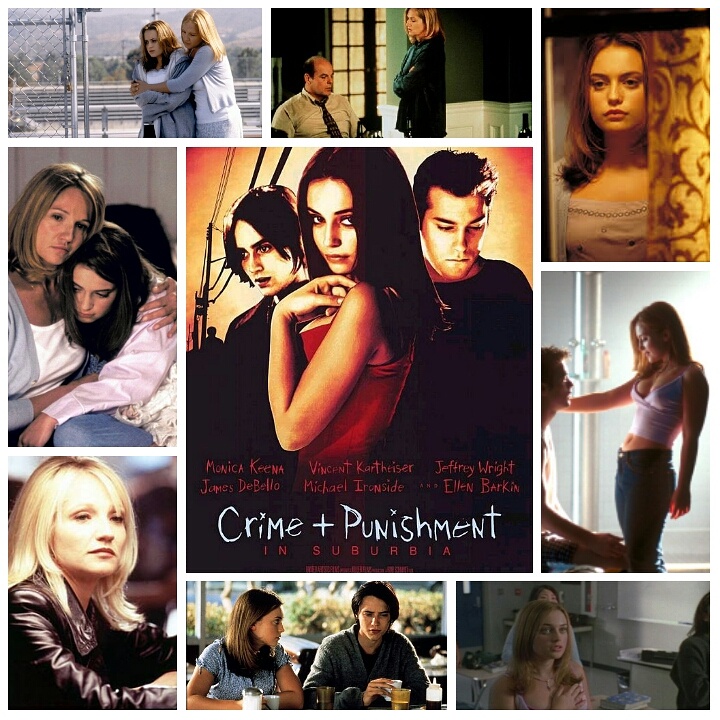
Crime & Punishment In Suburbia follows the theme and story just as loosely as you’d imagine by glancing at both title and poster. It’s It’s own little nasty deviation on the classic tale, set in a decadent white neighborhood, and full of characters who are barely hiding the decaying darkness behind their fake personalities. Having never read Dostoyefsky’s book myself, I can’t in fact tell you how much is different, but I could damn well know that it’s probably very much so. It concerns a hot young teen named Roseanne (Monica Keena, with a dash of Brittany Murphy in those eyes) who is outwardly a normal girl, but has elements in her life which start to taint that image and prompt violent behaviour. Her stepdad Fred (Michael Ironside, dialing up the drunken sleaze to a slow boil) is abusive towards her, and a alcoholic train wreck to boot. Her mother Maggie (Ellen Barkin in screeching cougar mode) is an unstable, clueless mess. Situations like that almost always end badly, which is an understatement here. One night when Fred gets too friendly with Roseanne, she snaps, something comes over her and Maggie and they both brutally murder him in an extended, grisly sequence that would give Oliver Stone bad dreams. From there on in its a dark and trashy morality play involving deception, false incarceration and manipulation on all the everyone’s part. The film seems to revel in the excessive bad behaviour of it’s characters, a decision which can be polarizing for audiences. It’s ugly, sleazy stuff, but it does that very well, with all the actors taking full advantage of the mean spirited script, especially Ironside and Barkin. Just don’t expect any pathos or straight arrow characters, this is a sociopath’s game, through and through.

ALI – A REVIEW BY J.D. LAFRANCE

Ali-Michael-Mann

Ever since Ali was released in 2001, I have felt that it has been one of Michael Mann’s most under-appreciated films. It received decidedly mixed reviews and underperformed at the box office. While Will Smith was praised for his impressive physical transformation into legendary boxer Muhammed Ali, the film itself was criticized for revealing nothing new about the man. Herein lies the problem that Mann faced: how do you shed new light on one of the most documented historical figures of the 20th century? His angle on the material was to look inwards.

Proposals for an Ali biopic had been around since the early 1990s when producer and one-time business partner of the boxer, Paul Ardaji, pitched the idea to the man on his 50th birthday. Ali gave the project his blessing and financing quickly fell into place. A number of scripts were written by the likes of Gregory Allen Howard (Remember the Titans) and Stephen J. Rivele and Christopher Wilkinson (Nixon), but they all failed to please the powers that be. The project bounced around various studios for years as executives tried to decide who should make it, who should star in it, and would it even make a profit? In 1991, Oliver Stone met with Ali about making a film about his life but the collaboration ended when the director refused to share creative control. In 1992, Ali’s best friend and personal photographer Howard Bingham and Ali’s wife Lonnie got together with Ardaji. Gregory Allen Howard’s take on Ali was delivered in 1996. His angle was that the key to the boxer’s life was his relationship with his father, who ignored him.

When Will Smith met Ali in 1997, the boxer asked the actor to play him in the film. Smith was flattered but said no. He was not ready and too intimidated for such a demanding role. The actor almost did it when Barry Sonnenfeld agreed to direct. Both men had worked together on the Men in Black movies and Wild Wild West (1999). Thankfully, their version never saw the light of day. After he turned 30, Smith realized that he had to make the decision about playing Ali. However, when no one could settle on a script, Sonnenfeld dropped out. There were several more rewrites and directors, including Curtis Hanson who expressed interest. Smith was ready to give up on the project.

It then came down to Spike Lee or Michael Mann to fill the director’s chair left empty by Sonnenfeld. Sony Pictures, the studio bankrolling the film, was faced with a $100+ million budget and went with Mann who had just received several Academy Award nominations and all kinds of critical praise for The Insider (1999). Upset, Lee voiced his anger through a friend in The New York Post: “Only a black man could do justice to the Cassius Clay story,” he was reported as saying. Mann responded that he “wanted the film to come from the point of view of the main character, Muhammed Ali. I’m not interested in showing a white man’s idea of how someone suffered racism. The perspective of the film has to be African-American.” When asked why he did not pick a black director Ali said that he wanted the best qualified person regardless of color, and his wife said, “Muhammad didn’t want it to be a movie just for black audiences. He wanted it to be a movie for all cultures and all people.”

When Mann was approached to direct he wasn’t even sure if he wanted to tackle such challenging subject matter but was sure of one thing; he did not want to make a docudrama or idealize Ali’s life. After meeting with Ali and his wife, they told him that they did not want “a teary Hallmark-greeting version of Muhammad Ali … What they didn’t want I didn’t want,” Mann remembers. The director liked Rivele and Wilkinson’s screenplay but rejected their flashback structure and their use of Ali’s 1978 fight, the “Thrilla in Manila,” as the present frame of the story. Mann felt that Ali’s 1974 fight in Zaire was more significant. He was also not interested in spelling things out for the audience: “I wanted to insert you into the stream of this man’s life, orient you without doing it in a blatant way with exposition.” Ironically, this is what would scare off a lot of people.

Smith’s agent arranged a meeting with Mann that changed his attitude towards the film. According to the actor, it was “the clear picture he had of the road from Will Smith to Muhammed Ali. He explained it in a way that made it seem, in my mind at least, not so utterly impossible, just marginally improbable.” Smith and Mann agreed that the film’s focus should be on ten turbulent years of Ali’s life, from 1964 to 1974. The director set the film during these years because “that formation of everything by ’74 is the beginning of what is now culturally in the United States.” Mann identified Ali with the spirit of change that occurred in the 1960s. “He consistently defied the establishment and its conventions, and we loved him for it.” Ali led such a colorful, eventful life that a focused story was crucial to the film. Mann said in an interview, “It would be catastrophic to divert into every interesting story. Everything this guy does is fascinating. I could have made an entire movie about Ali’s relation to women. Music, Cadillac convertibles and women. It would have been great.”

By February 23, 2000, Mann signed on to the film and went to work transforming Will Smith into Ali. Smith remembers that Mann created the “Muhammad Ali Course Syllabus” that began with a study of the boxer’s physical attributes: “learning to run how he ran, to eat the food he ate, spar the way he sparred. Essentially creating the physical life and physical appearance of Muhammad Ali.” From there, Smith moved on to the mental and emotional aspects and finally the man’s spirituality. Boxer trainer-choreographer Darrell Foster spent a year training Smith. Foster was Sugar Ray Leonard’s conditioning coach when the boxer turned pro. According to Foster, the key to becoming Ali was “looking for specific movements. Hand speed, ring generalship, how he made guys miss. Will had to become Ali, because you can’t demonstrate those moves through choreography.” Foster created a high-carb, high-protein diet for Smith and had him run in combat boots through snow in the thin air of Aspen, Colorado for ten months before the start of filming. His training schedule consisted of five miles of roadwork starting at 5:30 am, in the gym at 11:30 am, six days a week for three hours of ring work and weight training, watching fight films at 3 pm, and weight training in the evening. Smith put on 35 pounds of pure muscle in four months and went from bench-pressing 175 pounds to being able to press a very impressive 365 pounds. The finishing touch was being fitted with a hairpiece and a prosthetic nose.

For the fights, Foster started Smith on the basics: balance, footwork and defense. Then, he worked with the actor on the offensive aspects: a mix of overhand rights, hooks and upper cuts. Foster remembers that Smith “thought he knew how to fight because he had some street fights. But really, he couldn’t fight at all.” Smith worked on his hand and eye reflexes in order to perform eleven of Ali’s signature moves. Smith spent days studying film of Ali, including early footage shot when he was an Olympic boxing champion to interviews with Howard Cosell. Much of the material, unseen for years, was supplied by Leon Gast, a documentary filmmaker who made When We Were Kings (1996), a celebrated and acclaimed documentary about Ali’s championship bout with George Foreman. Smith also took classes in Islamic studies at the University of California.
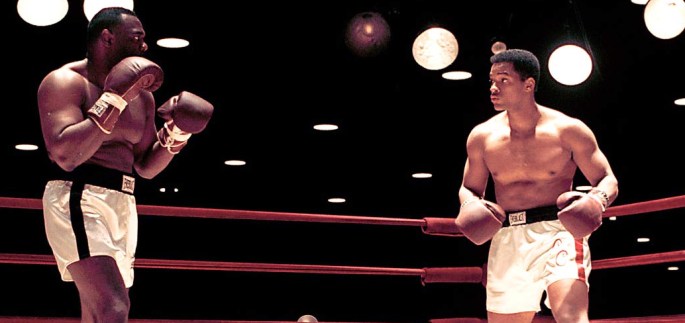
aliThe focus on the years 1964 to 1974 are arguably the most fascinating ones of Ali’s life because they are so rife with dramatic possibilities. It was during this period that Ali became the World Boxing Champion after beating Sonny Liston, then lost it when he refused to serve as a foot soldier in the Vietnam War, and finally reclaimed the Championship Title after beating the odds-on favorite, George Foreman in Zaire. It was also a time of great social and political upheaval in the United States with the assassinations of Malcolm X and Martin Luther King, Jr. Finally, Ali also shows the man’s private side: his numerous wives and failed marriages, and his friendships with Malcolm X and Howard Cosell.

Mann immediately immerses the audience in the time period with a montage of footage that features Sam Cooke performing in front of a live audience juxtaposed with Ali jogging alone at night and being harassed briefly by the police. Mann then goes into a montage of Ali training and two boxers fighting with Ali watching. Mann fractures time by also intercutting footage of Ali as a child witnessing the brutality of racism and its effects as he sees a newspaper article about the vicious beating of Emmet Till. The film then cuts back to a mature Ali sitting in on a lecture by Malcolm X. The entire montage is masterfully edited to the beats of a medley of Sam Cooke songs. This opening sequence establishes the Impressionistic take that Mann is to going to have on Ali’s life. It is also one of his most complex, layered opening credits sequence because he shifts time frames and presents us with all of these apparently unconnected images without explaining them. This is done on purpose in order to establish a mood, give an impression of the look and feel of the film and to set up that we are seeing the world through Ali’s eyes.

The fight scenes are covered from every conceivable angle as Mann cuts back and forth from shots outside and inside the ring. The first shot we get of the ring is a close-up of the red ropes and in Mann’s films this color signifies danger. There is the potential for Ali to not just lose the fight but possibly his life. This is a risk every time a boxer steps into the ring. In the Liston fight, Mann alternates between camerawork inside the ring, with tight and close point-of-view angles so that we are right in the ring with the boxers, and shots just outside of the ring but still close to the fighters. This gives the fight scenes a real visceral impact and immediacy that has not been seen since Martin Scorsese’s Raging Bull (1980). The Liston fight also shows how Ali could work a crowd of boxing fans just as well and in just the same way as the crowd of journalists before the fight.

Unlike most boxing films, Mann wanted to get inside the ring in order “to bring you inside the strategy and tactics, to bring you into the round as far as I could.” To this end, Mann would often be in the ring with the fighters with a very small digital camera. To achieve the most realistic fight scenes possible, Mann really had Smith and the other boxers hit each other. The director recalled one such incident: “When James Toney as Joe Frazier knocks Will down, we did three takes of that — every single one of those left hooks he connected. When Will stands up on the one that’s in the film, that wobble is not acting — you can tell how shaky he is.”

Mann also uses a cool, blue color to suggest intimacy and does so in the scene where Ali and Sonji (Jada Pinkett Smith), who would become his first wife, dance in a nightclub. They are close together, flirting with each other as Mann drenches the scene in blue much like he did with Neil McCauley entering his house in Heat (1995) and Will and Molly making love in Manhunter (1986). Ali is temporarily in an area of safety and love but this will change very soon.

After an interview with legendary broadcaster Howard Cosell (Jon Voight), Ali’s life takes a turn for the worse as he refuses to be inducted in the Army and is arrested. He then denounces the war in an interview and is subsequently labeled as being unpatriotic. He is stripped of his boxing title as Heavyweight Champion of the World, his boxing license and his passport. Like Jeffrey Wigand in The Insider, Ali is threatened by the powers that be for telling the truth and being his own man. It becomes obvious that this is a war of attrition in an effort to bleed Ali dry financially and threaten him with five years in jail. Then, as if to add insult to injury, the Temple of Islam suspends him just like they did to Malcolm X.

Cosell and Ali meet up and the veteran broadcaster, conscious of how bad off his friend is but not acknowledging it publicly, puts him on television despite network pressure. Cosell allows Ali to speak his piece about his ban and dazzles everyone again with his showmanship. It really is a testimony to Cosell that he did this. When everyone else had abandoned Ali, the T.V. personality stuck by him and used his considerable clout to put him back in the public eye. This interview is the turning point for Ali who wins a fight. Only then does Herbert and the Temple of Islam come back to him but Ali makes it clear that they do not own him. His eyes have been opened and he now knows just how much he can trust them.

Ali culminates with the legendary Rumble in the Jungle where Ali fought George Foreman in Zaire. Ali was not the favorite going in as Foreman was younger, stronger and the Champ. Mann, again, hints at the potential danger of this opponent when we see Foreman training, pounding a punching bag with powerful hits all with a greenish filter, a sign of peril in a Mann film. Sure enough, during this period Ali drives away his second wife (Nona Gaye) who does not like his relationship with the Temple of Islam because she feels that they are exploiting him. While still married to her, Ali becomes interested in a female journalist (Michael Michele) from Los Angeles who is in Zaire doing a profile on the boxer. This relationship effectively ruins his second marriage and Mann does not gloss over this showing that Ali was clearly in the wrong.

This portion of the film was shot in Johannesburg, South Africa and from there, an hour journey to Maputo, Mozambique because Mann liked the architecture in Maputo. In 1974, the legendary “Rumble in the Jungle” bout between Ali and George Foreman took place in Kinshasa, Zaire which had since become the Democratic Republic of Congo, but there was too much political unrest for Mann to shoot there in 2000. Associate producer Gusmano Gesaretti remembers that Mann fell in love with the architecture in Maputo. It was predominantly built by the Portuguese during the middle to later part of the century with buildings done in Art Deco-style curves and arches alongside others with straight lines in the block style of the 1960s. All were very aged and weather-beaten and looked very much the way Kinshasa was in the 1970s.

The “Rumble in the Jungle” was filmed over five weeks in Machava Stadium, five kilometers northwest of Maputo. The stadium was used to host large international soccer tournaments but had fallen into disrepair — there wasn’t even any electricity. The production spent $100,000 repairing and upgrading the 64,000-seat capacity stadium. They structurally engineered and replicated a ring and canopy that was 40 feet high, 82 feet wide and weighed over 40 tons. Over 10,000 extras were needed for the scene where Ali makes his entrance into the stadium. Fliers were distributed in Maputo inviting people to watch the filming. The production also cast 2,000 extras that would be costumed and fill seats on the floor around the ring. On the night of the scene, over 30,000 people showed up.

Known mostly for mindless, yet entertaining action films like Bad Boys (1995) and Independence Day (1996), Will Smith was not exactly most people’s first choice to play Muhammad Ali. However, Smith shows that he has the capacity for more substantial work with Six Degrees of Separation (1993) but he had never attempted anything as challenging as this project. Smith captures Ali’s distinctive speech patterns, especially his flamboyant, larger-than-life public persona. Like Anthony Hopkins before him in Nixon (1995), Smith does not look exactly like the actual person he is playing. Instead, he manages to capture the essence and the spirit of the man. He also does a good job of conveying Ali’s conflict between his loyalty to Islam and to his family and friends. Smith peels back the layers to show that there was so much more than Ali’s flashy public side. For example, most people only saw Ali and Cosell as antagonists, but this was only for show. In fact, they were good friends and the sportscaster was willing to help him out in any way possible.
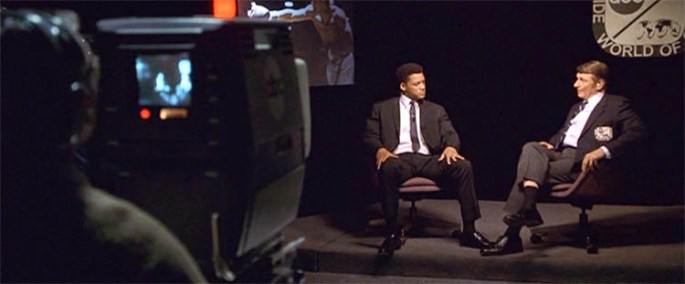
Ali-Howard-CosellWhile Smith was praised for his impressive physical transformation into legendary boxer Muhammed Ali, the film itself was criticized for revealing nothing new about the man. Herein lies the problem that Mann and company faced: how do you shed new light on one of the most documented historical figures of the 20th Century? Ali eschews the traditional docudrama for a more impressionistic take on the man and life. Mann’s film may not say anything new about the famous boxer, but it does depict an exciting ten years of his life in a masterful and richly evocative fashion. It’s a surprisingly soulful take on Ali and an excellent addition to Mann’s impressive body of work.