Want something *really* weird? The Caller is an old Empire Pictures flick starring Madolyn Smith as a young woman alone in some forest cabin and Malcolm McDowell as a sinister stranger who knocks at her door asking to use the phone. This film is so rare you couldn’t even find it on VHS or DVD for decades until boutique, niche distribution label Vinegar Syndrome recently did a Blu Ray. The transfer looks terrific, McDowell and Smith handle the strange, talky, stage-play esque roles given to them by the script as best they can but the film overall is a monotonous, repetitive drag.. until the final five minutes when it goes so thoroughly and dementedly off the rails you just have to sit up straight on the couch after being lulled into a coma by the first eighty minutes and go “what even in the fuck?” The film is structured around a Hitchcockian premise where these two are strangers, alone together in the wilderness and both them and us aren’t sure who might be the potentially dangerous one, but their dialogue and interactions are so inane, random and bizarre we get a sense of neither backstory, character traits or motives for either. It’s simply a brain melting extended vignette of two people talking in circles about nothing until the certifiably bonkers ending that although is flashy, shocking and out of left field, does little to explain the hefty, dense several acres of tin drum dialogue that preceded it. This is an Indiana Jones artifact of sorts for me as a DVD collector, I’m a huge Malcolm McDowell fan and this has always been somewhat out of my reach so I’m glad I finally nabbed it but I wouldn’t really recommend this to casual viewers, it’s too unwieldy and inconsistent. Empire Pictures was momentarily famous for grainy, low-fi retro science fiction horror like the Trancers franchise, and this one only fits that mold in the final few minutes when it goes ape shit, while the rest is chamber piece drivel that desperately needed story and structure that the script just couldn’t provide it with.
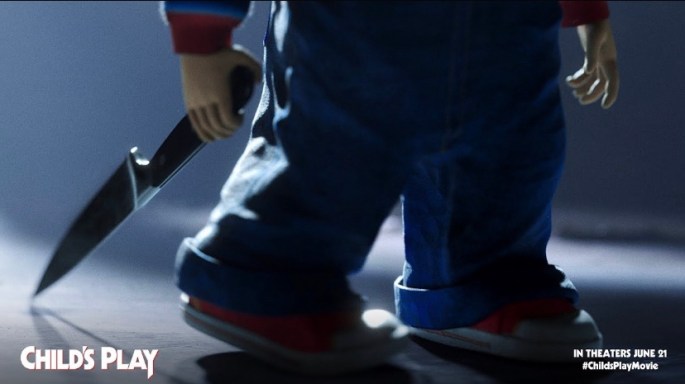
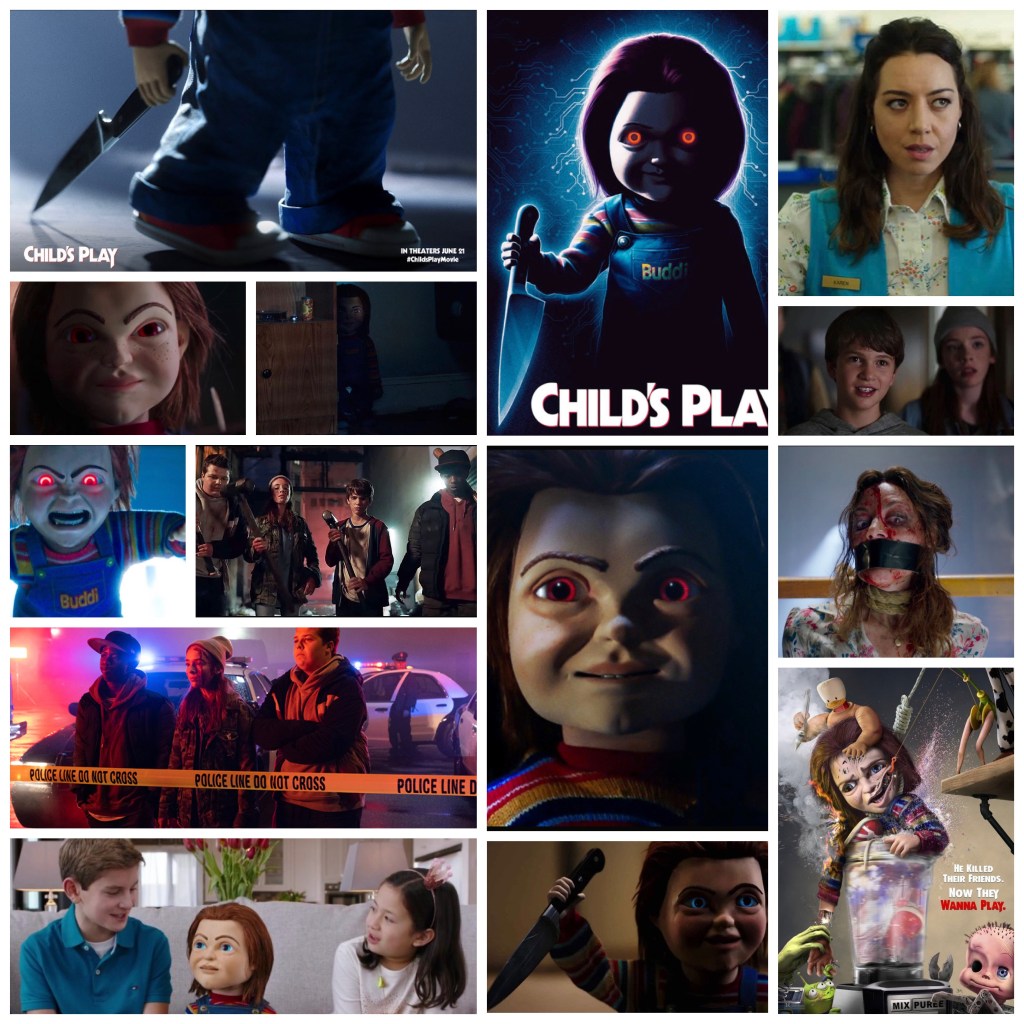
So before I write a review gushing about a horror remake I’ll say I’m well aware of the fact that MGM viciously plagiarized their own sacred content to produce a Child’s Play ‘reimagining’ that no one asked for, wanted or even knew was coming until a few months out. Hell, the original franchise is still technically going. Why did they do this? Well it has to do with rights and who holds them, a dumb and always pointless red tape hurdle that now means there will be two Chucky franchises operating simultaneously, both vaguely owned by the same studio but also kinda not? It’s weird, but needless to say the fans weren’t happy and I it’s important to know this behind the scenes shit going in because this is a very different Chucky movie than you might be used to. Now that that’s out of the way, is the film itself good? Yes! It’s a lot of fun and makes its departure from the original series in several key ways, the most obvious being Chucky himself, who is now voiced by Mark Hamill instead of Brad Dourif. He isn’t some voodoo doll inhabited by the spirit of a serial killer either, he starts off as a normal Buddi doll off the assembly line who has all his violence inhibitors, social boundaries and conscience features disabled by a very disgruntled Vietnamese factory worker before being sent stateside to be bought by a single mom (Aubrey Plaza) for her kid (Ben Daon) who doesn’t have too many friends. The ‘Buddi’ doll is at first kind of a blank slate until his AI capabilities kick in, the dysfunctional household and hectic neighbourhood around him augment settings and, you guessed it, he becomes a homicidal little bastard with Mark Hamill’s voice cackling out of him. The cast are all great including Brian Tyree Henry as a cop who lives next door, Tim Matheson as the oily toy company CEO and David Lewis as Plaza’s shitty asshole garbage boyfriend who meets the film’s stickiest and most hilarious end thanks to Chucky. This is a fun, imaginative, very gory flick filled with dark humour and gruesome kills. One of the ways it breaks new ground is seeing how Chucky’s Bluetooth capabilities allow him to control various other electronic devices in his vicinity for maximum carnage including a fleet of deadly drones. All because of a pissed off asian factory worker, a priceless plot detail that had me laughing right off the bat. This is a ton of fun if you can wrestle past the fact that it’s not the most necessary remake an enjoy it as a standalone of sorts.
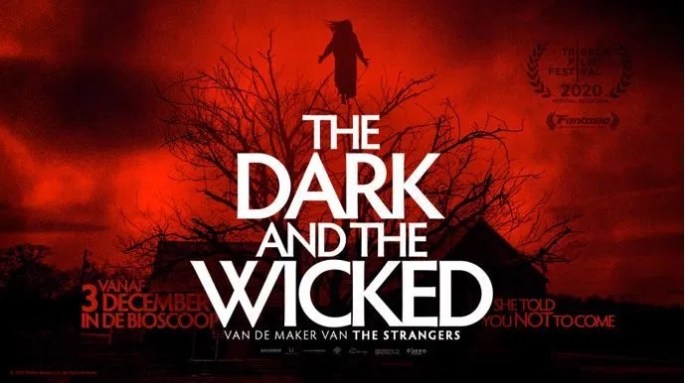
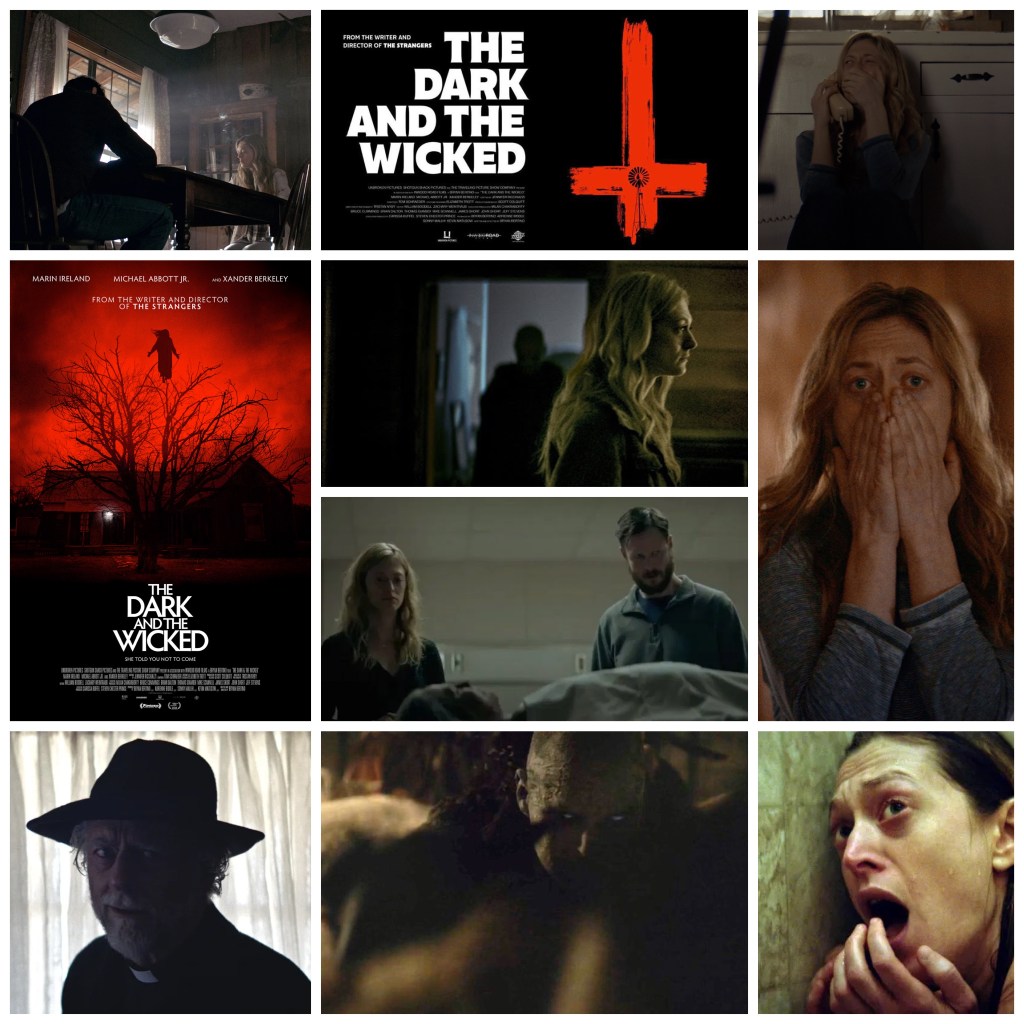
Bryan Bertino’s The Dark & The Wicked is very dark and very wicked indeed, and as bleak, hopeless and suffocating as a horror film could be. This is a film whose narrative fairly simple and let’s the complexities come out in performances and atmosphere while the story itself is as stark and ragged as the Texas farmland it takes place on. This is one of those drab, rundown farms where tired, rusted equipment lays strewn carelessly, the barns have long since shed their paint, it’s somehow perpetually dusk and the animals scatter about their paddocks nervously, clearly freaked out by something only they can see. The farm is owned by a family, and the father (Michael Zagst) is dying of some unnamed terminal illness but has unwittingly also been possessed by a particularly nasty demon who is making life hell for the rest of the family. I don’t say that lightly either, this is one seriously mean, horrifically malevolent entity who torments this poor clan (and by proxy the audience) no end when they’re already at their weakest and doesn’t relent until they’re thoroughly broken and ruined. The aging mother (Julie Oliver Touchstone) begins to lose her head and get delusional while her son (Michael Abbott jr) and daughter (Marin Ireland) try to hold the family and the homestead together by a thread against the onslaught of visions, hauntings, attacks and intimidation from this entity. There’s also an archaic preacher played by the great Xander Berkeley who is not much help to anyone and seems to be just as spooky as the demon itself as he unloads additional portent onto these already suffering folks. Bertino is also responsible for the 2008 horror classic The Strangers and he brings the same sense of trapped desperation and fading hope he did there, obviously with a much more illusory antagonist than masked killers. Ireland is a terrific actress who already made vivid impressions in Martin Scorsese’s The Irishman and this year’s criminally under-seen The Empty Man, she’s once again utterly immersed, convincing and committed to her role here, conveying anguish and impending loss to chilling effect. There’s an impossibly creepy strings score by Tom Schraeder that piles on a lot of atmospheric mood too. This is a slow burn, psychologically taxing, wretchedly bleak piece of American gothic terror that’s impressively made in every arena and will give seasoned horror vets a case of the spoops. Great film.
I’ve read lots of reviews that go ahead and dismiss Edward Zwick’s Legends Of The Fall as just another schmaltzy post civil war melodrama like Hollywood used to do a lot in the golden age, and this film is certainly reinforced by and reminiscent of that aesthetic but to say it’s just hollow romantic fluff with good scenery is to miss out on real darkness, complex human characters and a deep, tragedy soaked narrative that is quite a bit more ruthless and unforgiving towards its characters than this type of gorgeous big budget historical piece usually is. The setting is Montana (filmed in Alberta though, because those Yanks can’t let our superior Canadian scenery speak for itself) sometime before the start of World War 1. Ex Colonel William Ludlow (Anthony Hopkins) lives a peaceful life on a sprawling ranch with his three sons, Tristan (Brad Pitt), Alfred (Aiden Quinn) and Samuel (Henry Thomas). The Colonel is a fiercely antiwar fellow having seen more than his fair share of combat and wishes to shield his sons from the horrors of war, but Samuel incites the other two with his idealistic nature and soon the trio is off to France to play in the trenches. This and the complex relationship the entire family has with Samuel’s fiancée Susannah (Julia Ormond) maps out a tangled web of malcontent, shifting romances and uneasy relationships as war, tragedy and crime make their mark on changing landscapes both physical and mental within this clan. Brad Pitt’s Tristan is the lynchpin of the story, an untamed halfbreed who has a good soul but seems to be a magnet for darkness and destruction, a nature that follows him no matter where he goes in the world, or who he loves. Quinn makes stately, resentful work of Alfred, Thomas is the baby-faced kid of the family who Tristan fiercely tries to protect in wartime scenes that depict harrowing, elemental carnage. Hopkins’ Ludlow has a warrior’s heart that has long since turned to peace with the wilderness and his family around him, until times get tough again. Ormond is quiet, dignified and heartbreaking as a girl who starts off the film having lost her own family and unfortunately is headed towards the same gauntlet with the Ludlows. The supporting cast is composed of excellent work from Tantoo Cardinal, Karina Lombard, Kenneth Welsh, Bill Dow, Gordon Tootisis, John Novak, Paul Desmond and Bart the Bear. I’ll listen to any arguments saying this movie is Hollywood melodrama and be in a modicum of agreement but that doesn’t make it bereft of substance, spirit or vitality. The characters are all immensely well drawn, starting with Hopkins’s patriarch who has seen what his former cavalry did to the indigenous tribes and has tried to purge that trauma from his being by spending the rest of his life being kind. Pitt’s Tristan is a supernova of the plains, the kind of character who makes an entrance followed by a literal flock of wild mustangs and it doesn’t even come across as silly because the film is so earnest. James Horner contributes a swelling orchestral score that is every bit as majestic as the jaw dropping cinematography and emotional as the narrative beats. Zwick did a small handful of these big sky, super emotional historical epics in his heyday including Glory, The Last Samurai and Blood Diamond, but this has to be my favourite. It’s such a potent, full blooded film and looks just spectacular on Blu Ray.
Trey Edward Shults’s Waves is one of those films that is so good I don’t even feel qualified enough as a writer to review it, for fear that my cumbersome prose and tangential asides won’t properly impart the essence of the film and just how important this story is both to the ‘idea’ of the cinematic narrative and to our perception of life as a narrative in itself, encompassing our own individual trajectories, that of those around us and how they all interact, glide, and crash together in beautifully chaotic, poetically imperfect fashion as we move through the world. I’ll call this a ‘narrative flow’ instead of a story, and I don’t mean to sound pretentious but this really feels like an organic current as opposed to a scripted story, one can feel the super-sensible beats beneath what is onscreen in an unalloyed fashion that few films are able to achieve. This is basically a window of time into the life of an upper middle class African American family from Florida who fall victim to the same learning curves, tragedies, hard times and personal trials that every human being must weather and endure. The domineering, overbearing yet loving father (Sterling K. Brown), the quietly soulful and intuitive daughter (Taylor Russell), the athletic, emotionally overwhelmed son (Kelvin Harrison Jr.) and the supportive, compassionate stepmother (Renee Elise Goldsberry). The son is a rising star in a stable relationship with a girl he loves (Alexa Demie) and everything seems to be going just as it should.. until the unthinkable happens, and the narrative flow tears our hearts out before pivoting 180 degrees to focus on the daughter more, and her blossoming relationship with a boy she meets at school (Lucas Hedges). I won’t say more about these events beyond that because its so important to go into this one with open heart, mind and expectations. Every single actor in this film goes above and beyond to bring this piece to life, delving deep into their craft toolbox and emotional intelligence and providing painstakingly realistic cultivations that come across as actual complex, imperfect, intricate human beings free of character convention or any kind of cliche. My favourite performance has to be Taylor Russell as the daughter, who is an unbelievable find and shares a heartbreaking, soul-decimating scene with Brown as her father that anchors both their arcs and sees the two artists reach notes of performance I didn’t think possible in the medium. The title of this film is important n understanding what director Shults (who is now on my genius list, by the way) is trying to show us about human beings and the world: Waves crash along the shoreline, recede into the sea only to crash once more in apparent arbitration. As this process occurs, little ripples dapple the sandy coasts and billow out to form more ripples, currents and other shapes all across the canvas of the ocean, and this too seems to have no discernible order or symmetry. In the same fashion, human beings collide with one another in horrific acts of violence, deeply connected loving relationships and choices both constructive and destructive, only to do it all over again the next time round. These acts and choices ripple out across our collective consciousness and affect others in their choices, deeds and relationships and you just never know how one wave might affect someone else’s life, and that may seem terrifyingly random and alien to us, human beings who so badly crave order and reason, but is there not a beautiful disarray to the unpredictability of it all? This film is a brief aperture into the complexities of our world, and the characters that Shults presents to us couldn’t be more affecting or relatable in their struggles, choices and relationships. This film is nothing short of a masterpiece, from the dedicated vulnerability of the actors to the hazy, celestial coastal cinematography to the rapturous equilibrium employed in editing to the otherworldly electronic score by Trent Reznor and Atticus Ross and the wonderful, heartbreaking but ultimately life affirming narrative flow beneath it all. I couldn’t count high enough in my lifetime to give this an out of ten rating, which should give you an indication of how much I loved this film.
Terence Malick’s The New World is less a straightforward historical epic and more a lyrical tone poem, treatise on nature and introspection on love put to the rest that just happens to be based around the celebrated story of Pocahontas. This is a more honest, blunt version of that than Disney or anyone else has told, full of war, tension, the unease of separation and clashing of British Royal Navy and indigenous tribes in the early days of Virginia. But despite the heavy notes within this story, Malick and his cinematographer Emmanuel Lubezki use light, shadow, foliage and atmospheric tenderness to make this one of the most visually beautiful, romantically yearning pieces of filmmaking I’ve ever experienced. Colin Farrell is rough, uncultured and mutinous as Smith, far removed from the pretty boy Disney version, arriving in America basically in a cage for his troubles at the hands of no nonsense Captain Newport (Christopher Plummer). Q’orianka Kilcher is a radiant revelation as Pocahontas, no singing or animal sidekicks here, just a reverent, independent free spirit whose path crosses with that of Smith’s for a realistic, earnestly developed romance that shirks the standards of Hollywood and cuts right to what is essential. We see them teach each other language both verbal and body, explore each other’s hopes and beliefs and meander around the beautiful glades, meadows and rain hushed fields of a harmoniously untouched natural landscape. Trouble inevitably comes as harsh winters, famine and unrest between the settlers and natives escalates, and the film becomes intense and sorrowful but never sensationalistic or manipulative. Obviously us in this century know the sad trajectory that discovering this new land would send the indigenous tribes into and its no doubt terrible but this particular group of people have no idea. There are hints of atrocity on the horizon but everything is so new for both sides it proves a meditative process of discovery, conflict and great change for all. Malick amasses a typically stunning cast as usual with work from David Thewlis, a fleeting Christian Bale, Jonathan Pryce, August Schellenberg, Wes Studi, Yorick Van Wageningen, Raoul Trujillo, Michael Greyeyes, Ben Mendelsohn, Noah Taylor, Ben Chaplin, Eddie Marsan and a half mad John Savage. James Horner was known for sweeping orchestral work but his score here is light, ponderous, dreamy and joyously brings the film to life like a sunrise on the sea, it’s his ‘departure from signature style’ score like Zimmer’s work on Interstellar and it’s one of my favourite of his compositions. His work, Lubezki’s photography, Malick’s studious devotion to nature and humanity’s place within it are in full rapturous display for every sense to absorb, and the core of it rests with Farrell and Kilcher’s brilliant pair of performances and deeply heartfelt romance of few words spoken out loud but all the emotion in the universe in their glances, mannerisms and graceful symbiosis together. An incredibly personal, very special film for me and tied as my favourite Malick alongside Tree Of Life.
What exactly was Eli Roth hoping to accomplish with Knock Knock? Awkward softcore porn? Crude exploitation? Trashy home invasion potboiler? Hard Candy-esque moral revenge fantasy? That Ana De Armas looks good in a blond dye job? Well I hate to break it to him but if it was any or all of the above, none of it works and this is just a hollow, misdirected, tasteless bit of pond scum trying to pass itself off as a thriller and I feel sorry for poor Keanu Reeves having to wade through the gauntlet of what has to be the worst film he’s ever graced his angelic presence with. He plays an upper middle class family man whose wife and kids go on a long weekend trip so he can stay home and get some work done. He’s keeping it mellow on a super rainy night until two unstable, whack-job gutter hoes (Ana De Armas and Lorenza Izzo) show up at his door under the pretence of being lost and insinuate their way into first his house, then his shower and eventually his bed, and you can guess where things spiral from there. These are two seriously disturbed, dangerous and fucked up individuals and both actresses are terrifically intense and deranged, while Reeves holds his end up nicely with a difficult role, the editing, photography, music and splashes of dark humour do what they can but to what purpose does the film work towards, and when it gets there, is it worth it? Not so much. If Roth has set out to convince us that the tables can be turned and men can be just as coerced, preyed upon, shamed and ruined by the other sex as women can by them then he’s somewhat succeeded in showing us a turn of events like that at a primal level, but any attempts at theme or subtext are buried or lost in translation and what could have been something of a message movie ends up simply being ‘two crazy bitches torturing Keanu Reeves for just over ninety minutes.’ There’s a haphazard attempt at *something* deeper involving words written on a mirror in lipstick and Armas going postal about something that seems like an event from her past but neither thread is explored or followed up on. I don’t even know whether to call this a missed opportunity or not because I can’t even tell if Roth set out trying to achieve anything of substance or just didn’t bother at all and deliberately aimed for below the audience’s belt. Also I didn’t buy that Keanu ‘John Wick’ Reeves could be physically outmatched to that extent by two college age chicks, but that’s the least of this film’s issues. There’s something to this idea on paper but it’s nowhere to be found in this film, which is simply an ugly, pointless fucking waste of time.
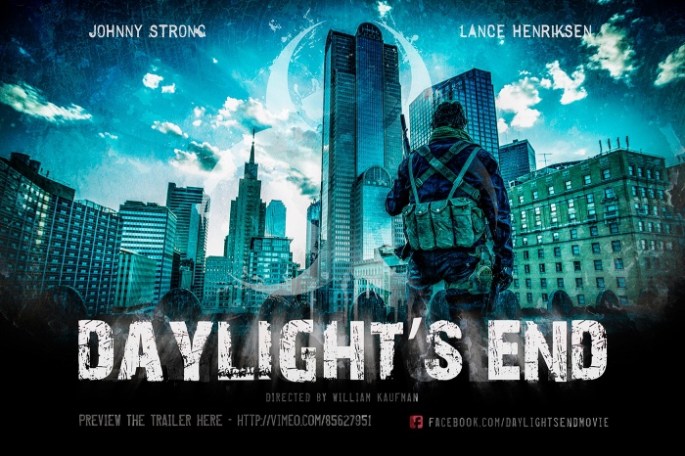
The zombie genre is so saturated these days that most new entries just try and stir up the pot by default and do something innovative with the scenario, but it’s refreshing when a filmmaker goes for a simple, honest to goodness zombie film with little to no frills and we’re reminded of why we fell in love with the genre in the first place. William Kaufman’s Daylight’s End is an earnest, brutal and rousing undead post apocalyptic piece that benefits from a strong ensemble cast, wicked sharp tactical direction and a script that adds just the right amount of character work in between the gunplay and gore. Johnny Strong plays a lone gunslinger who bands together with a tight knit tribe of survivors protected by gruff leader Lance Henriksen, while undead forces gather against them and they try to fight their way out of a severely destroyed Dallas to somewhere safer. The only real deviation from classic zombie lore here is that these creatures can’t stand daylight and only come out when it’s dark, leaving the daytime scenes to have this eerie, desolate feel while most of the heavy action takes place atmospherically after dusk for a nice Vampirish flourish. Kaufman is a real master at staging tactical, realistic feeling action and as such blocks his actors, chooses his weapons and makes his kills feel exciting, propulsive and immediate. Strong is every inch action hero material, Henriksen makes a stoic and sage pack leader and surprisingly emotional work is provided by the usually cavalier Louis Mandylor as his son and top lieutenant. This is obviously a low budget film and one can see that but the story they’ve told and the world they’ve built using what they had is really impressive, and stands with some of the best zombie shoot-em-up’s out there. Check out Kaufman’s New Orleans set cop flick Sinners & Saints too, which also stars Strong as a relentless badass and also features flawlessly directed action scenes, they make a cool genre double feature together.
Trying to produce a successful sequel to a groundbreaking film nearly a decade later is always going to be a hurdle in every way from preserving originality to breaking new ground to keeping the magic alive. Robert Rodriguez faced quite the task in picking up the reins of Sin City: A Dame To Kill so many years after his original film revolutionized aspects of filmmaking, and this was never going to feel as fresh or innovative as the first, but I still love it, it’s still firmly rooted in the gorgeous and terrifying world of ‘hyper-noir’ lifted from the pages of Frank Miller’s comics and the stories here, although quite different from the first, are just as brutal and poetic. However, whether or not you are a fan of this film overall there is one indisputable factor that makes it amazing, perhaps even more so than the first and her name is Eva Fucking Green. Casting Basin City’s scariest, sexiest femme fatale was always going to be a hurdle and I remember everyone from Rachel Weisz to Angelina Jolie being considered. Green is an actress of unreasonable talent, intimidating presence and staggering sex appeal and she is devilishly divine as Ava Lord, the black widow spider in human form, a psychopathic bitch who ruins the lives of anyone who gets close to her, most notably Josh Brolin’s square-jawed incarnation of Dwight. This is the film’s most effective story mostly because of her and because it’s an OG Sin City yarn whereas the other two are brand new material Miller dreamed up for this film. Other vignettes include Joseph Gordon Levitt as a hard luck gambling man looking for retribution and Jessica Alba’s now borderline maniacal Nancy, out for bloodiest revenge against mega-villain Senator Roark (Powers Boothe) for the death of her guardian angel Hartigan (Bruce Willis in ghostly visions). The other strongest point of the film is Boothe, who had one quick but deadly scene in the first film, Rodriguez expands his role into full fledged, cigar chomping, homicidal scene stealing frenzy here and he’s gotta be one of the craziest, over the hill comic book villains ever put to film. I will concede that this film doesn’t have the propulsive, elemental momentum of the first. There’s a staccato, circus sideshow vibe that’s different from the fluidity of the first’s narrative, which was more well oiled than every humming automobile under its hood and had this organic flow that was almost intangible. But the visual beauty, playfulness in colour vs black & white, cheerful brutality and startling nihilism, everything else that made it special are all still at play here and I refuse to see it get written off as some dud sequel, because it’s far better than that. Not to mention that Rodriguez once again assembles an absolute bonkers cast including Mickey Rourke once again playing that big lug Marv, Ray Liotta, Juno Temple, Julia Garner, Dennis Haysbert stepping in for the late Michael Clarke Duncan, Marton Csokas, Rosario Dawson, Christopher Meloni, Jeremy Piven, Jaime King, Alexa Vega, Jamie Chung, Lady Gaga as a friendly truck-stop waitress, Christopher Lloyd as some freaky doctor who can only operate after a shot of smack and Stacy Keach in a bizarre cameo as basically Jabba the Hut in a fancy suit. Try shaking a stick at that lineup. It’s true this doesn’t have the same monochrome lightning in a bottle magic of the first but it’s still more than worth the attention of anyone who enjoys spending time in this world and appreciates gorgeous looking, star studded, unforgiving things dark pulp artistic cinema. Plus it deserves a watch just for Eva Green as probably my favourite femme fatale ever committed to celluloid, she’s that good.
Not since LOST has a sentient tropical island caused a bunch of people this much trouble in this weird ass, misguided stab at a nostalgia reboot of content that it’s target audience is too young to even remember, let alone have been into. They shouldn’t be compared at all because LOST is overall a masterpiece and Blumhouse’s Fantasy Island is a short circuited fusebox of loose wire subplots, mish-mashed attempts at torture porn and overall anemic bunch of nothing stretched painfully over a feature length runtime. In the original 70’s show, each episode saw a bunch of vacuous, shallow individuals brought to fantasy island where polished Latin debonair Roarke (Ricardo Montalban) made their deepest wishes come true, with a little help from the island’s powers. In this version Roarke is played by a markedly disinterested Michael Pena and his agenda gets decidedly morbid as the fantasies of each guest on the island get a gnarly horror twist. That should be fun, right? Well not really, because they literally and figuratively missed the boat to making this island remotely fun, scary or memorable. There’s various visitors including the always lovely Maggie Q, whose fantasy involves a former fiancée she spurned, Lucy Hale who wants revenge on a high school bully and others, all of whose fantasies mingle like paint thrown violently at a wall without any sense of cohesion or logic. Michael Rooker shows up to skulk around the jungle swinging a machete and apparently the costume department misread his role on the call sheet as ‘flamboyant river pirate’ because that’s the only way I can describe what he’s dressed in here. There’s an evil musclebound doctor who runs around trying to slice and dice people, mostly ineffectively. The always awesome Kim Coates briefly brings a bit of much needed energy as a random Russian henchman (whose? The plot barely addresses it). A lot of bad films can be considered a swing and a miss but fuck man, this thing doesn’t even seem to want to swing in the first place. It’s lazy, written so thinly it makes the numerous anorexic bikini models look huge and it’s just not a scary, remotely engaging film.






 Podcasting Them Softly