Fritz Böhm’s Wildling

It’s always neat when a filmmaker gets to direct a feature for the first time and gain traction with their debut, one can sometimes get a sense of a fascinating career to come from an artist’s initial output. German director Fritz Böhm scores huge points in this arena with his debut feature Wildling, a wonderful concoction of folk horror sensibilities, a coming of age tale, lycanthropic creature effects, moody ethereal atmospheres and odes to Grimm Fairytale lore. It’s a lot to take on but never feels like too much for him or his accomplished cast of actors who all give beautiful performances.

Ana (Bel Powley) is a young girl who is raised alone in a remote cabin by a man she knows only as Daddy (Brad Dourif). He tells her her she cannot go outside for fear of the Wildling, a monster who eats children and hunts for her as she is the last of her kind. When she becomes a teenager things get complicated and through circumstance she finds herself in the outside world, a small town whose Sheriff (Liv Tyler) takes her in. She’s changing though and as the encroaching Northwest wilderness surrounds the town like an elemental spirit, so too does her emerging true nature haunt these people and cause fear and hatred, especially in a few folks who have hunted her race in the nearby mountains for generations while a mysterious, silent woodsman (cult actor James LeGros is right at home in this type of thing) hover around the woods around them.

This is an absolutely gorgeous film and hits hard for a number of reasons. Powell is a great find and turns confused naïveté into fearsome, raw primal power in a very physical performance. Brad Dourif is legendary and pretty much incapable of work that is not astonishing, and here too he provides a tragic, violent, conflicted and very intense portrayal of a man whose actions and decisions follow him like a storm. The film is beautifully shot, fluidly edited, the story is rich, deep yet never over complicated or stuffed with any stale exposition. Paul Haslinger, formerly of Tangerine Dream, composers an earthy, ambient and altogether classic original score full of nature’s essence, the danger of forests at night and the visceral thrill of discovering ones very own identity for the first time. It’s drama, horror, folklore and more in one seamless package and I love it.

-Nate Hill

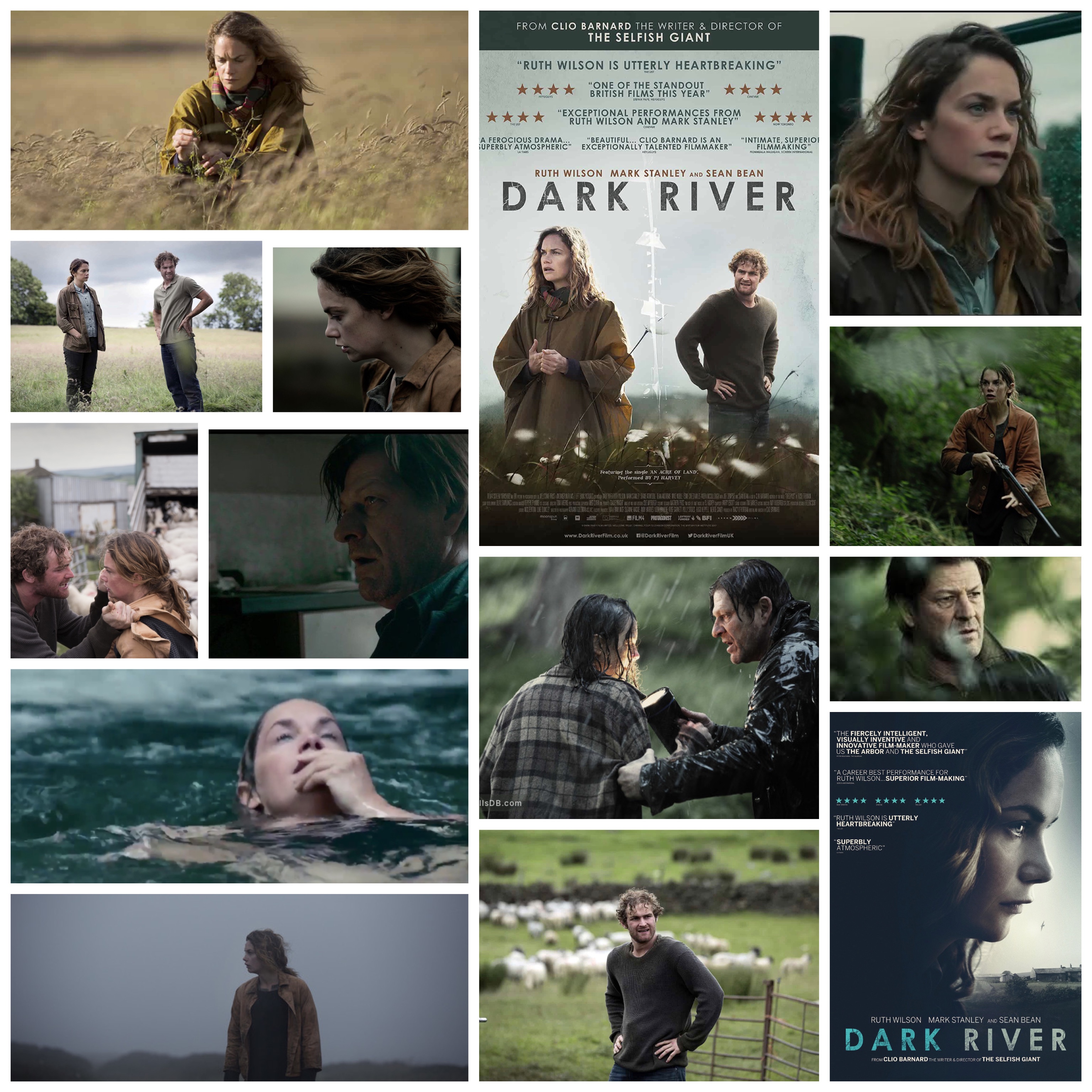
Clio Barnard’s Dark River

Isn’t Ruth Wilson incredible? I think so, and I haven’t even seen her in all that much but she makes such a vivid impression each time and fills the screen with her presence, like this generation’s s answer to Meg Foster. She stole the show in Gore Verbinski’s underrated Lone Ranger update and made a terrific Marissa Coulter in BBC’s impressive His Dark Materials but her work in the quietly devastating Dark River from filmmaker Clio Bernard is my favourite thing she’s done so far and is an uncommonly good, intuitively calibrated piece of organic acting.

Dark River sees her play Alice, a guarded, introverted woman who returns home to the farm near Yorkshire where she grew up after learning that her father has passed away. There she finds ghosts that linger in the squalid air, the half remembered recollections of sexual abuse at the hands of her own father, events that the homestead seems to somehow hold in the space like memories out of place and time yet still languishing about the place just to haunt her. She clashes with her troubled brother (Mark Stanley) over who will inherit the property as her father seemed to want her to keep it, and they both have different ideas on both how to run it and what to eventually do with it. This film didn’t go over with some people because of how ambient and naturalistic it is but if you need your thematic and narrative sustenance spoon-fed to you in an accessible form you’ve really picked the wrong film. This is a story about the things unsaid, the pauses between words, the feelings that sensory recall evokes and the way a place, so specific in setting and atmosphere, can dredge up memories never thought to be felt again.

Ruth is transcendent and heart wrenching as Alice, who harbours deep trauma from her father’s abuse and confused resentment towards her brother for never intervening. Her path is a tragic one, full of rain soaked sheep pastures, introspective turmoil and dread laced flashbacks. Yet despite all this gloom and sadness there’s a brightness and vitality to her performance, opposite notes found in a sea of woe that provide blooms of hope and retribution if only she can put the past to rest. Her story is an immediate, intimate and deeply affecting one, provided one has the proper attention to invest as it is meditative and not readily spelled out for us, the viewer but rather felt on a deeper level.

Her father is seen fleetingly in fragmented impressions of the past and is for some reason played by none other than Sean Bean in a sombre, cloudy cameo that really could have been played by anyone but I’ll never say no to an appearance from him, however brief and ghostly. Director Clio Barnard shows uncanny skill around the camera, giving us melancholy, sustained pictures of the English countryside resplendent with misty hillsides to mirror the restless mental fog that Alice must wade through on her journey home, a journey taken both inward and external. PJ Harvey’s absolutely gorgeous, elemental song ‘My father left me an acre of land’ plays ethereally in the opening and exodus of the film to appropriate effect. An acre of land unfortunately isn’t the only thing he left her and seeing her grapple, overcome and try her best to move on from it is one of this story’s great gifts. Phenomenal film.

-Nate Hill

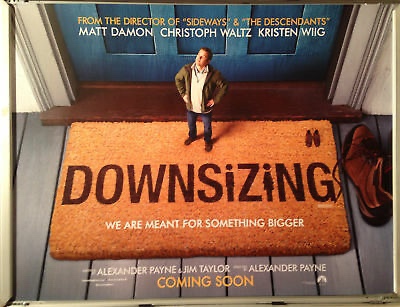
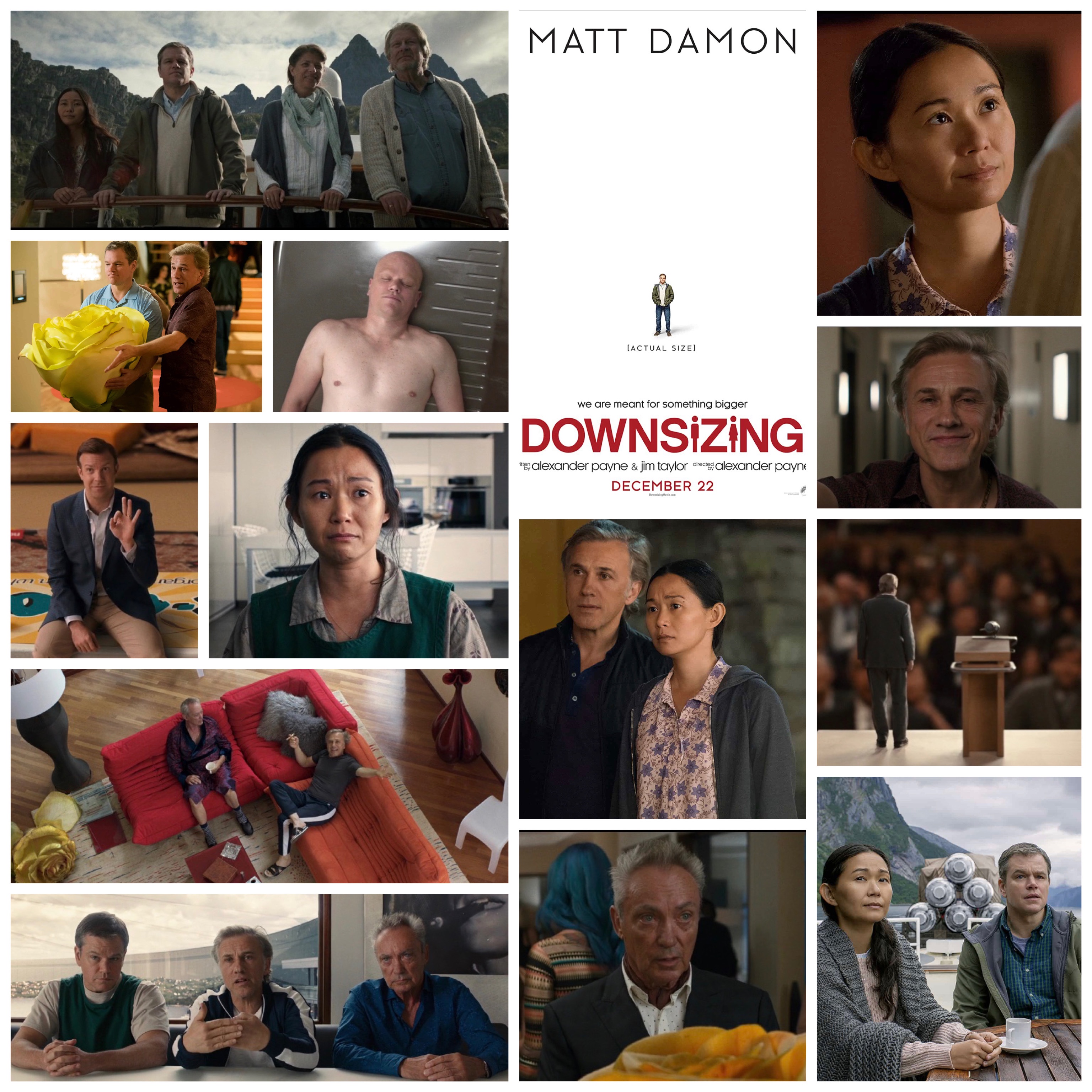
Alexander Payne’s Downsizing

I really don’t understand the bad mojo this wonderful film gets. There’s a handful of films out there where humans either shrink themselves or are subspecies that are already small and many approaches have been made from wacky Big Hollywood comedy (Honey I Shrunk The Kids) to quaint whimsy (the varied adaptations of Mary Norton’s The Borrowers) to glib SciFi (InnerSpace) and beyond. Alexander Payne achieves something unique to its being in Downsizing though, a film that doesn’t fit any pre-existing template and sits squarely in unexpected terrain.

It’s the future, but there’s still Longhorn Steakhouses and as Matt Damon’s Paul picks up dinner from one he sees a world changing new broadcast: scientists have successfully shrunk a human being down to tennis ball size. Fast forward a few years and it has become an institution in which people undergo the treatment and live at their itty bitty size in utopian bliss to reduce impact on the environment. Paul goes for it, his wife (Kristin Wiig) has second thoughts and he’s now alone in the world at roughly the size of a rodent. He makes quaint friendships with the two adorable Eastern European hedonists (Christoph Waltz and Udo Kier sheepishly steak the show) who live next door to him as well as the Vietnamese maid (Hong Chau) who cleans their pad. The film meanders, and refreshingly so as we languidly get to know this ragtag team of tiny folk and join them on a wistful international voyage to explore the origins of this strange breakthrough. Others breeze in and out in a surprisingly eclectic supporting roster that includes Laura Dern, Jason Sudeikis, Rolf Lassgard, James Van Der Beek, Neil Patrick Harris, Don Lake, Margo Martindale and Joaquim De Almeida. I love Damon’s character because he’s just this naive average dude and, as Waltz sneakily puts it, kind of a schmuck but in an endearing way. The relationship he blunders into with Hong Chau’s Ngoc is simultaneously bizarre, touching, hysterical and heartfelt. Theirs pasts are both terminally tragic in different ways and they couldn’t be more mismatched but it somehow works, and Chau’s fiercely funny performance is a thing of affecting beauty. It strikes me as odd that this film didn’t get received better and I don’t know what to chalk it up to other than it perhaps being pretty unconventional in terms of narrative and style. It feels like a cult classic in the making, it’s fresh, unpredictable and works in every venture it tries and trust me there’s a few. Everyone I’ve watched this with has left enchanted and I really hope it’ll endure as time goes by.

-Nate Hill

David Cronenberg’s A History Of Violence

Every director at some point is encouraged to challenge the aesthetic they are known for, traverse terrains beyond the thematic and stylistic comfort zone they are accustomed to and bless new lands of genre and tone with their talent. Some don’t and stick with what they know, which is fine, while others break free as David Cronenberg did with his fearsome psychological horror story A History Of Violence. Cronenberg is a horror old-hand who loves his prosthetic body parts and buckets o’ blood, albeit always accompanied by strong themes and pointed subtext. Here he trades in the schlock (but not the gore, there’s still plenty of that) for a different sort of horror, the arresting mental climate of violent criminals and the roiling psychological unrest that goes hand in hand with such vicious behaviour, no matter how hard one might try to asphyxiate dark impulses with methodical conditioning. Viggo Mortensen is Tom Stall, small town Everyman, husband, father, greasy spoon diner magnate and pillar of a bucolic slice of Americana. Or is he? The film opens as two ruthless psychopaths (Stephen McHattie and Greg Bryk are so good they deserve their own spinoff film) barge into the idyllic sanctuary of his restaurant and terrorize patrons and staff alike. Tom reacts with uncharacteristically lithe force, quickly and frighteningly dispatching both to the lands beyond with a few quick moves, several gunshots and a pot of hot coffee (one brutal fucking way to die). He’s lauded as local hero and chalks up his heroic reaction to pure instincts… and that’s when the film gets really interesting. Back in the mid 2000’s before social media it would take making international news to dredge up any sort of long buried, sordid past one might have, but sure enough the press comes a’hounding and soon trouble comes a’knocking in an ominous black Chrysler containing one very pissed off Ed Harris as ‘organized crime from the east coast’ who is sure Tom is actually a fellow named Joey, who he once shared a scuffle with over some barbed wire. So who’s lying and who’s not? I mean it’s obvious Tom has a past, the fascination lies in both uncovering it and watching him try to reconcile it with the man he has become since then. The film gets positively Shakespearean when yet another Philadelphia wise-guy played by William Hurt enters the picture and pretty much steals the fucking film from everyone, the skill that dude has is amazing and what he does onscreen in about five minutes not only demonstrates his wry, diabolical control over a scene but completely justifies the Oscar gold he went home with, fucking bravo. The film starts where many other crime/noirs would end: a man with a violent past has found a way out, a proverbial light at the end of the viscera tunnel, and lives not necessarily happily ever after… but free from the din of his former incarnation anyways. Until two punks stir the long dormant reflexes, he ends up on the news and it all comes full circle. I think this film is so brilliant because of what is left unsaid, unexplained and unexplored; it’s barely over ninety minutes long but contains enough thematic implications to fill up or at least catalyze a half dozen films. But it never feels a moment longer or shorter than it needs to be. Mortensen’s performance is about dead on flawless, full of so many veiled notes that are conjured into view with multiple watches, which the film begs of any viewer. Equally spellbinding is Maria Bello as Tom’s firebrand of a wide who finds herself at odds with her own loyal nature when the shards of truth start to eviscerate their family. She’s an actress that Hollywood inexplicably doesn’t entrust with dramatically heavy roles too often but it’s their loss because when she lands a golden egg of a character like this she practically moves worlds. Harris has a ball as the bulldog on low simmer baddie who wishes he was as big of a bad as Hurt, who almost brings down the house and start his own fucking franchise before… well, I won’t spoil it that much. I would have loved to have ‘put it simply’ in my review and not drawled on in adoration like this but it’s just that kind of film. In a way it does the same as I have: it’s barely over an hour and a half and any film of that length could just ‘put it simply’, but in that brisk runtime there’s galaxies of psychological depth and treatises on human nature to unpack. Gotta throw a late hour bone to Howard Shore’s impeccable original score as well, an austerely baroque yet somehow evocatively Midwest composition that calls to mind everything from B&W classics to his work on Lord Of The Rings, which somehow suits the mood. A stone cold classic.

-Nate Hill

B Movie Glory: Tim Curry is GingerClown

It’s the great Tim Curry’s birthday so let’s look at a horror movie where he plays an evil clown… and no it’s not that one you’re all thinking of. Gingerclown is an awful, trashy, cheesy piece of crap and I loved every excruciating minute of it, despite probably losing a year or so of my life sitting through the entire 80 minutes of it (it somehow feels way longer). The ‘plot’ is barely there: an asshole jock makes the nerdy kid go into an abandoned amusement park in exchange for a kiss with his ditzy girlfriend. This carnival happens to be haunted by sadistic Gingerclown (Curry) and his merry band of prosthetic monsters who are somehow voiced by an all star genre cast that the budget feels like it suspiciously went only to. The acting of all the teens will make your eyes and ears bleed, the dialogue is so far beyond cliche it could be the fucking textbook on cliches. It feels like a terribly failed Tim Burton pastiche mixed with a low rent version of like Critters of Ghoulies with the fluid drenched, jerky animatronic effects and the whole thing feels sloppy, cheap and incredibly shitty. But you know me, I lap this cheap shit up like pigs at a trough, genre garbage is my formative bread and butter and this one is a fucking laugh. The actors are all having a ball including Lance Henriksen as a hung-ho ‘BrainEater’, Brad Dourif as a morbidly obese ‘Worm Creature’ and Sean Young as ‘Nelly The Spiderwoman’, the only one who approaches anything remotely resembling scary. Curry himself has a ball as titular Gingerclown, a cackling maniac who makes the most out of lines like “ Quack quack quacker… time to die, motherfucker!!” as he clumsily ambles down a hallway brandishing a rubber ducky. Like, wow. This guy is like Pennywise’s retarded twin brother who never made the big time. The sets are ambient enough, colourful and interesting but the lighting is super dark and muddy so it’s tough to tell what’s going on but that’s probably just to hide the hilariously primitive effects. This was written and directed by a Hungarian dude and often when someone from a different country tries to do a genre throwback to an era of American movies it ends up horribly tome deaf via the culture gap which is kinda the vibe here, the dialogue feels like it was fed through a short circuited algorithm. But hey if you’re in the mood for some ultimate trash of the trashiest, SHITTIEST variety then get drunk and give Gingerclown a go.

-Nate Hill

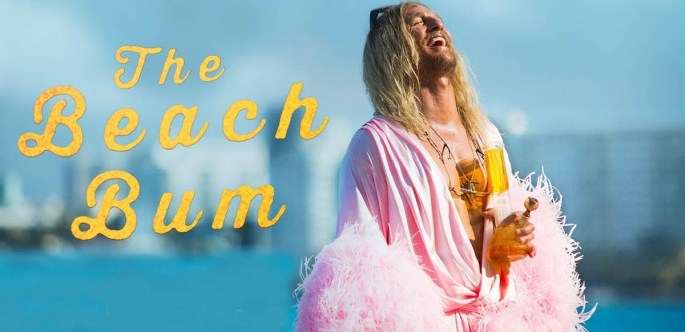
Harmony Korine’s The Beach Bum

“I mean fuck, we’re here to have a good time.. I just wanna have a good time until this shit’s over, man. This life gig is a fucking rodeo and I’m gonna suck the nectar and fucking rawdog it till the wheels come off.”

Watching Matthew McConaughey stumble around swilling tall cans of Pabst Blue Ribbon holding a kitten is probably one of the more relatable things I’ve seen in cinema recently. Harmony Korine’s The Beach Bum is a film I loved with all my heart and got tremendous, serotonin laced enjoyment out of, a raucous party of a film that celebrates drinking in excess, deliberately poor life choices, reckless and immature behaviour and just taking life as it comes wave by wave, committed to having a good time regardless of the consequences and turning a purposeful blind eye to any responsibilities one might have as an adult human being. I can’t say that Matthew McConaughey’s brilliant performance as perennial party animal Moondog and all he represents which I’ve just outlined above is any constructive way to approach life or a conducive fashion to behave in, but I also can’t promise you that it hasn’t been my go-to mantra many times over the course of my own life for many reasons, and I felt connected with this film on a level I can’t even put into words. This is interesting because as much as I love (and I mean LOVE) this film is about as much as I HATED Korine’s previous and much celebrated effort, Spring Breakers. Everything that was shrill, crass and fucking irritatingly hollow about the hedonistic lifestyle in that film rings eternally truer in Beach Bum, it’s like Korine hit the dirt jump hard and busted up his bike with Breakers and then went for one more go with Bum, and this time he soars up over the crest of the jump into a Miami sunset in glorious triumph. McConaughey is pure intoxicated eccentric gold as Moondog, a brilliant writer of poetry who seems to want nothing more in life than to drink beer, smoke a ton of weed, have sweaty sun soaked sex with anything that moves, cause endless mischief and fuck around, and who can blame him. He’s got a rich wife (Isla Fisher) who passes away and leaves him a fortune on the condition that he publishes his very long awaited novel, a simple task that becomes a cosmic obstacle for him, as does going to rehab or simply walking in a straight line. He smokes up with his wife’s boyfriend Lingerie (Snoop Dogg playing himself and loving it) and Jimmy Buffett (also pretty much playing himself), engages in vandalism with fellow rehab escapee Flicker (Zac Efron in Joker mode) and just keeps up this lifestyle that few could walk out the other side of alive but he seems to swagger through with all the wanton aplomb of Jack Sparrow mixed with The Dude Lebowski and Charles Bukowski. He comes across other characters in his travels played by the likes of Jonah Hill and commands an army of cackling homeless dudes but my favourite of these cartoonish individuals has to be Martin Lawrence as Captain Wack, a deranged dolphin obsessed weirdo who suits Lawrence’s maniacal brand of comedy beautifully. So what does it all mean and what is Korine trying to say with all this colourful hoo-hah? That’s what I struggled with in Spring Breakers and still believe that film to be an ugly, grotesque piece of non-entertainment, but I think he’s trying to say more or less the same thing in both films, it’s just that with Beach Bum he actually succeeds. Moondog puts it better than anyone could when he imparts a monologue, an excerpt from which I’ve opened this review with. He just wants to have fun, isn’t concerned about money, day to day hustle, success, what anyone thinks of him or making anything of himself, he just wants to have a fucking good time. And write the occasional passage of poetry when the mood strikes. The film is more about kicking back, relaxing with Jim and observing someone of his outlook balls deep in enjoying themselves like a creature who lives moment to moment with little regard for anything else. Don’t even get me started on the breathtaking cinematography, 10/10 soundtrack or any technical aspects because we’ll be here all day. This worked for me on a deep level, and is now one of my favourite films of all time.

-Nate Hill

Misunderstood Oddity: Lindsay Lohan in I Know Who Killed Me

Imagine if Paul Verhoeven and Dario Argento co-directed a deranged, kinky, surreal sequel to The Parent Trap by way of the Black Dahlia but called it the Blue Dahlia instead and you have something vaguely approximating the essence of I Know Who Killed Me, a truly bizarre Lindsay Lohan film that is one of the worst reviewed universal flops out there. Is it really that bad? I’m not sure to be honest, this isn’t really a film you watch, it just sort of… happens to you, and then leaves you in the dust to reconcile your feelings about it.

There’s a scene in Martin McDonough’s comedy classic Seven Psychopaths where Sam Rockwell asks Christopher Walken for feedback on his totally outlandish script pitch and Walken, without saying whether he liked it or not, dryly replies “I was paying attention, I’ll tell you that.” That’s kind of how I feel about this one, there was never a dull moment but I still can’t really decide whether it’s my thing. I’ll tell you one thing though, out of the ten dozen or so reviews on IMDb, they are ALL one star heckle jobs and NO film out there deserves that no matter the quality, there can always be found in any film some element that keeps it from complete and utter dead sound flatline. Even the worst film I’ve ever seen (which we won’t speak of here) at least has some cool costume design in one segment. Anyways that level of barbaric hatred just tells me that a lot of folks weren’t irked by the film itself but rather Lohan, who was going through some shit at the time and was cruelly splashed all over the tabloids in a flurry of exaggeratedly negative light. I’ve always loved her, found her to be a fantastic talent, full of charisma and organic personality and she does a fine job here playing two roles for the third time in her career.

As the film opens she’s straight A, good girl Aubrey Fleming, who is swiftly ensnared by an especially nasty serial killer (seriously this guy is one overkill piece of work) who also took another girl in the area some time before. When the Feds find and rescue her she’s different than before, both physically and psychologically. The killer left her horribly mutilated to amputee levels and she also claims to not even be Aubrey at all but a street smart, smoky voiced stripper called Dakota Moss. Her parents (Julia Ormond and Neal McDonough) play along while an FBI appointed psychiatrist (that duplicitous US President from 24) is stumped as to what’s going on. The only one who’s stoked is Aubrey’s horn-dog boyfriend (Brian Geraghty), as Dakota is far more promiscuous than he remembers Aubrey being. And naturally the killer is still out there, inevitable soon armed with the knowledge that Aubrey got away, or there’s another one of her, or whatever is going on, which is somehow really obvious yet also crazily convoluted.

This film wants to be a lot of things and I admire its relentless can-do spirit in trying them all, but as I get to the last paragraph of my review I must concede that it’s kind of a fucking hot mess. As anyone who has dated a hot mess knows, however, they can be a lot of fun provided you get to the exits in time before the projector catches fire and luckily this thing doesn’t overstay it’s welcome, and is never boring. It wants to do the sultry David Lynch luridly noir thing (there’s more blue roses on display than David ever used in Twin Peaks and watch for a cameo from the Mulholland Drive evil hobo who’s also The Nun), it strives for the shocking, stark gore and colour splashes of an Italian Giallo horror film and isn’t half bad at that, then it tries it’s luck at slinky Brian De Palma thriller territory, all the while struggling to retain a vastly uneven vibe of sexual madness, esoteric horror atmosphere, cryptic (then not so cryptic) mystery, stigmata subplots, saturated transitions that look like the cat walked across the colour timing keyboard and just… so much stuff crammed into one film that is supposedly ‘one of the worst films ever made.’ It’s certainly bad, both in quality and the kinky nature of its R rated content, but it’s in no way as terrible as you’ve been made to believe since it’s release in 2007, in the heyday of Lohan’s career meltdown. That just goes to show you how the public often look at any given film from the perspective of ‘celebrity star status’ and what’s going on in entertainment news rather than the work itself isolated from all that sensationalist bullshit, which is a shame really because there’s more than enough sensationalist shit in this film to go around without hounding Lohan about her personal life and addiction issues and deliberately damning a film that doesn’t deserve it, but that’s sadly the brainless, shallow nature of most of North America. Grisly B movie madness with a touch of something I can’t even explain and I bet the film itself couldn’t either, but that’s part of the loony charm.

-Nate Hill

Peter Segal’s Anger Management

Adam Sandler’s career is composed of a few key elements: unfunny trash, comedy gold and a small handful of serious dramas. Anger Management falls into the second category and is an absolute blast but it’s mostly thanks to a batshit crazy, scene stealing virtuoso Jack Nicholson rather than anything Sandler does. It doesn’t hurt that the film is packed to the brim with hilarious cameos and supporting talent as well. Sandler is Dave Buznik, a meek businessman who gets walked all over by his toad of a boss (Kurt Fuller) and constantly reminded by his girlfriend (Marisa Tomei, about a hundred acres out of his league) to stand up for himself. After finally losing his cool (sort of) on a plane he gets slapped with a court order to do twenty hours of anger management treatment under the deranged supervision of unconventional therapist Dr. Buddy Rydell (Nicholson). Rydell is a thoroughly weird dude who insinuates himself into Dave’s life, hits on his girl, frequently loses his cool and displays a near constant stream of bizarre, inexplicable behaviour. There’s a reason for all that, revealed in the film’s monumentally implausible twist that falls apart under any scrutinizing back down the chain of events in this narrative, but this isn’t the type of film to nitpick like that. Nicholson is a goddamn treat here and gets so many wacky moments I wish the film was more centred on him, he’s hilarious to watch whether having a volcanic tantrum and launching his plate of breakfast against a wall, forcing Sandler to sing ‘I Feel Pretty’ from West Side Story or obliterating some poor dude’s car with a baseball bat just because he boxed him into a parking spot. The ironic thing about Sandler is that he’s touted as a comedian but he’s just not funny, and the appeal from any film he stars in always comes from the other actors in it who steal it from him without fail. There’s quite a few here including Heather Graham, Allen Covert, a hotheaded John Turturro, Luis Guzman, Krista Allen and January Jones as a pair of rambunctious lesbian porn stars, Kevin Nealon, Rudy Giuliani, Derek Jeter, John C. Reilly, Harry Dean Stanton and Woody Harrelson in a hysterical encore cameo as a transvestite named Galaxia. The film works with its manic energy, hectic ensemble cast and Nicholson’s dysfunctional tirade of a performance, and is one of the funniest comedies I’ve seen recently.

-Nate Hill

Guy Ritchie’s The Gentlemen

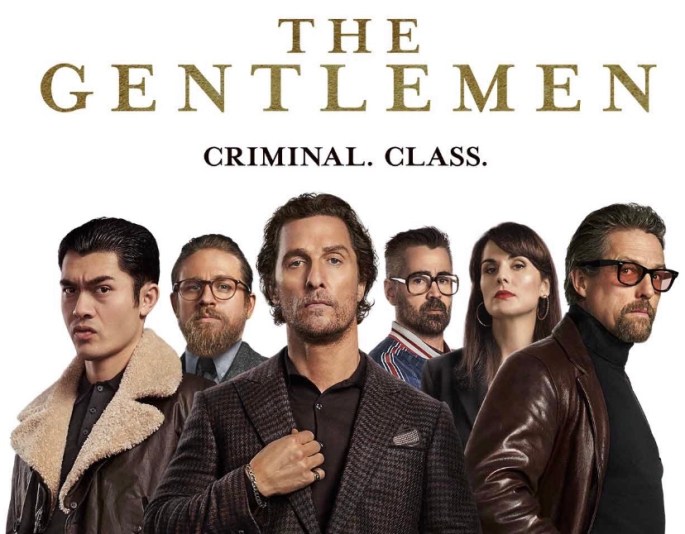
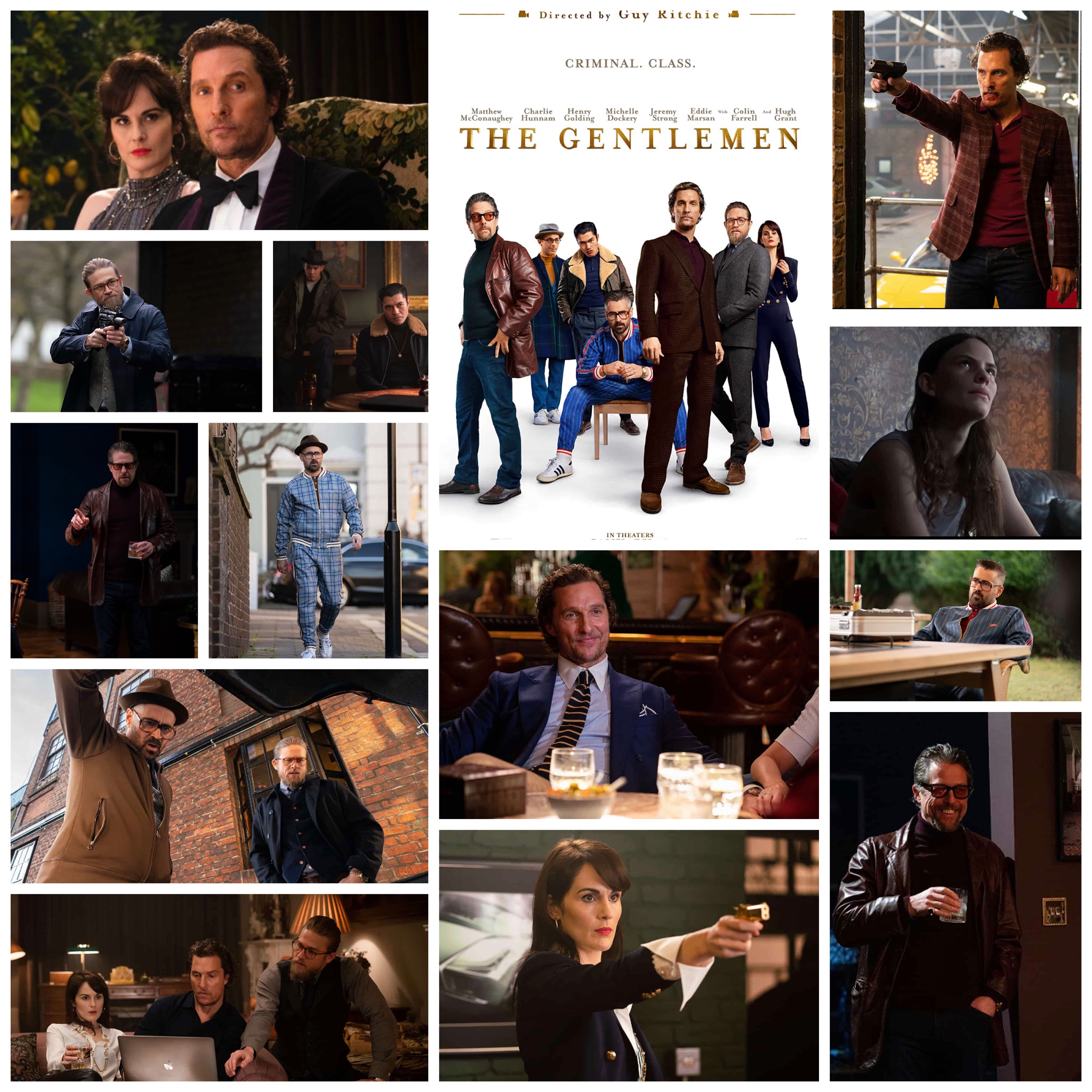
It’s nice to see that Guy Ritchie still has it in terms of his personally patented, now iconic British gangster arena. Experimented with in Lock Stock & Two Smoking Barrels, cultivated further in Snatch (my personal favourite of his) and tooled around with in other directions for his extremely underrated RocknRolla, here he returns to that drawing board for The Gentlemen and although this isn’t a film that breaks the mould or comes up with anything bright n’ shiny new, I had way more fun than I thought I was going to and it’s a winner for me. Carrying on the nice culture clash element we have a ferocious Matthew McConaughey as Mickey Pearson, a self made marijuana billionaire looking to sell his lucrative empire to a cunning Jewish businessman (Jeremy Strong) while the young hothead boss (the dude from Crazy Rich Asians, who is way richer and actually crazy here) of a London based Asian syndicate seeks to muscle in on both of them. Pearson’s cool cucumber left hand lieutenant Ray (Charlie Hunnam in the first performance I’ve believed and enjoyed his work) tries to keep all the pieces on the board where they should be instead of running amok and causing havoc, which they inevitably do and would it really be a Ritchie film without wanton chaos and a string of hysterical fuck-ups? Hugh Grant looks up the Oxford definition of ‘fucking scene stealer’ and proceeds to steal the fucking scene every minute he’s onscreen as Fletcher, a super fabulous, highly sleazy wild card tabloid reporter looking to line his own pockets via blackmail most foul. Add in perennial oddball Eddie Marsan, Sting’s visually striking daughter Coco Sumner, an informant named ‘Phuc’ (snigger), Michelle Dockery as Mickey’s leggy and disarmingly badass cockney wife/partner in crime and Colin Farrell in character actor mode as a rough n’ tumble Irish boxing coach with a heart of gold and you’ve got one solid roster. Ritchie has a way with dialogue that might not be lifelike but never fails to have me hanging on every syllable, it’s like musical protein for me ears and he didn’t disappoint here. I mean it’s probably bottom of the list in terms of the other gangster stuff but his career so far is kind of tough to top and this one struck me as a ‘hangout movie’ of sorts with some action and trademark visceral violence peppered in here and there. Terrific costume work too, I saw at least five suits I would love to get my hands on. Easy, breezy, vividly characterized, laidback, refreshingly and deliberately anti-politically correct humour (always a plus), banging soundtrack, this one rocks! Oh and it’s not the first Ritchie film to promise us a sequel that feels like it’ll never show up, but that may just be a cheeky running joke from the guy.

-Nate Hill

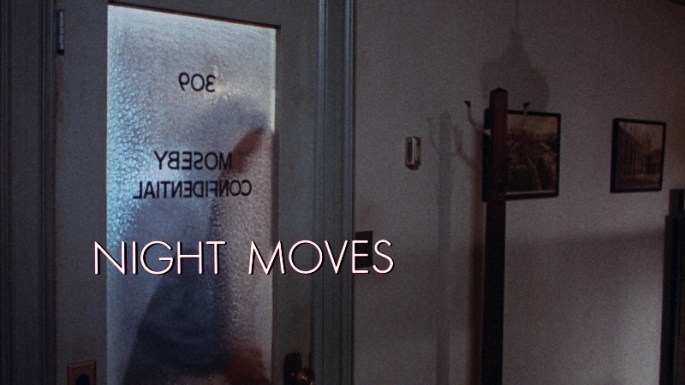
Arthur Penn’s NIGHT MOVES


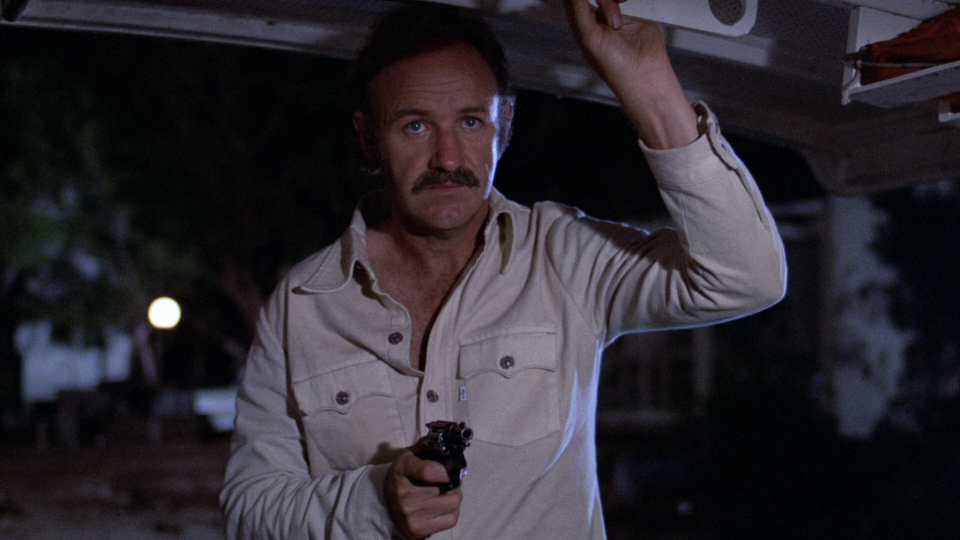
70s cinema was at its absolute best when it birthed softly nihilistic, introspective films where the protagonist lived within moral ambiguity and hard shades of grey – wherein this picture, Gene Hackman gives his finest, most low-key performance as a former football player turned private investigator who takes on a case of a missing girl that lands him in Florida from LA, and uncovers a well-layered and richly defined plot of smuggling, lies, and deception all the while discovering who he really is, as well as the world around him.

With a taut script from Alan Sharp, a groovy score by Michael Small, director Arthur Penn crafts a remarkably quiet film; which plays more like a documentary where the camera just follows Hackman through his journey, all scenes from the film are of Hackman’s point of view, and there are not any overt, showy set-pieces or flash edits, popular music; the film just lives.

Night Moves 1975

Sharp’s screenplay, coupled with Penn’s vision and the actors performing his written words, is perfect. There are so many memorable lines of dialogue that have staying power, so much of the characters are revealed through the brief, yet potent, exchanges. This truly is a masterclass in writing.

A lot can be said for Hackman, being one of the longstanding true craftsmen of his profession; being one of the finest actors to ever grace the screen. In this picture, he is noticeably muted and brings a striking weariness to the role, he is not the self-righteous and volatile Hackman, he is just here to observe, and internalize his emotions. He gives a remarkably raw performance that is more about self-discovery than anything.

large_night_moves_X08_blu-ray_

Harris Yulin, Jennifer Warren, Edwards Binns, Kenneth Mars, Janet Ward, John Crawford, Susan Clark, James Woods, and Melanie Griffith round up the supporting cast, and Hackman plays off of each one magnificently. The characters in the film are very real, as are their homes, places of work and so on. There is a deep-seated reality to the film, where it doesn’t take place in the movie world, it takes place in reality.

The film’s narrative is remarkable, not only with the overall detective storyline, but also with how defined Hackman’s character and life is; and how his two worlds begin to blend together; where he is just not solving the case, but also solving who he is as well.

Night Moves Gene Hackman

NIGHT MOVES is a film that came out at the right time, the mid-70s, while everything was in flux, and people were just trying to understand how to be in the world. In actuality, the film is timeless with its themes, making an excellent time capsule of a picture that came from an era of film, that is so universally well regarded. 70s cinema might just be the best decade of American cinema, and NIGHT MOVES is one of the best films to come from that time and place.

spotify-podcast-badge-blk-grn-165x40