Hidden Gems: Tarik Saleh’s Metropia

Who loves dystopian SciFi in the tradition of George Orwell? Who also loves fresh, innovative animation styles that bring worlds to life in new ways for the eyes to savour and absorb? Tarik Saleh’s Metropia has both of the above boxes checked and more, it’s a relatively star studded futuristic hidden gem that came and went with no fanfare whatsoever but definitely deserves another look.

Set in a drab, grey saturated Europe of the not too distant future, giant mega corporations rule industry and infrastructure while a vast, sprawling subway system interconnects the entire continent and heralds in a new age of depressingly humdrum office drone jobs and stifling urban monotony. Roger (cult favourite Vincent Gallo) is one of these nine to fivers trapped by the system, stuck in a daily rotunda of riding this mammoth transport system to and from a dead end job, until one day he hears voices inside his head, particularly that of Stefan (Alexander Skarsgard) a mysterious whistleblower and fellow office drone who may or may not be real. Then he’s entranced by Nina (Juliette Lewis) a sultry fellow passenger who seems to know something about what he’s experiencing. This leads him down a spooky rabbit hole of global corruption, conspiracy theories and some of the most dryly hilarious social satire this side of Terry Gilliam.

If you look at posters and promo stills of this you’ll see the intensely specific level of work put into the animation of these characters, a slightly uncanny valley esque devotion to hyper realism that both leaps off the screen and blends in perfectly with the CGI cities, offices and tunnels they exist in. The filmmakers *could* have easily made these people look like their famous and uniformly eccentric voice actor counterparts but instead only threw in the odd glance, mannerism or slight characteristic, letting these talented folks bring entirely unique performances to life. Gallo is a strange dude and always picks off the beaten path projects so he fits right in. Lewis has slinky fun as the sort of femme fatale sort of love interest with her own snaky agenda. Udo Kier, another beloved cult icon, has a ball in a scenery chewing turn as the evil megalomaniac CEO of a company that uses everyday household products for fiendish mind control, and Stellan Skarsgard makes droll, dangerous work of his head of security. There’s oh so sublime and subtle dark humour, a real sense of place and a decidedly European flavour to it all despite the varied cast. If you enjoy unique outings in the animation genre, cerebral SciFi or just a great corporate espionage yarn you’ll dig this, I really want to get it more exposure and eventually the cult pedestal status it rightly deserves.

-Nate Hill
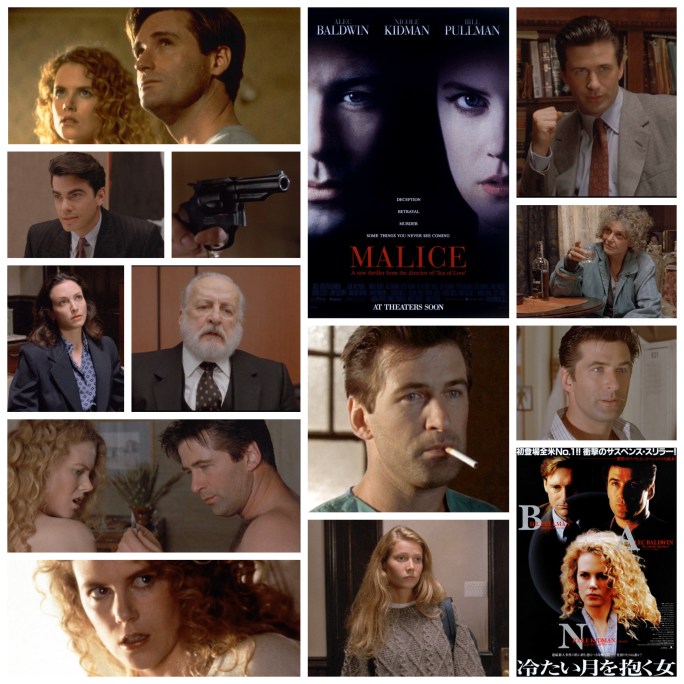
Harold Becker’s Malice

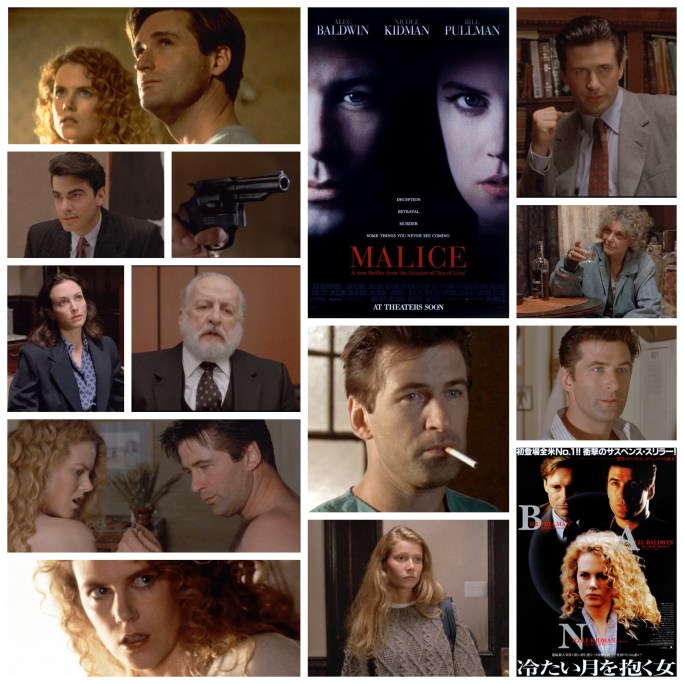
Aaron Sorkin gets a lot of props for his writing and the guy has done some good stuff but I can’t let him off the hook for Malice, a backwards ass psychosexual melodrama that’s so bad it isn’t even good, it’s just hot fucking mess, twice baked roadkill in summer bad. I wanted to love this because I’m a huge fan of melodramatic 90’s potboilers and also it stars Alec Baldwin, Bill Pullman and Nicole Kidman, three wicked sharp and always reliable stars. But man, this thing is just a fucking mess.

The plot, if you could call it that, revolves around three central characters: a college dean (Pullman), his wife (Nicole Kidman) and a hotshot surgeon (Baldwin) with a severely self proclaimed god complex and generally corrosive, unpleasant personality. After he’s sued big time for malpractice when he wrongfully removes her ovaries in an emergency procedure the plot just completely derails and descends into sleazy lifetime thriller territory. The twists contain zero logic, the characters are nondescript cardboard inserts save Baldwin who does his best to save it but eventually gets cornered by the silly narrative just like everyone else. Oh yeah and there’s a subplot about a serial rapist/killer on campus that’s thrown in there seemingly for the fuck of it as an afterthought, but you’ll guess who it is the moment he shows up just because he’s such a recognizably creepy dude. There’s supporting efforts from Josef Sommer, Bebe Neurith, Peter Gallagher, Tobin Bell, Anne Bancroft, an early Gwyneth Paltrow appearance and George C. Scott himself as a cantankerous old veteran doctor with a Santa beard. Wicked cast, right? Too bad they’re all mostly wasted.

I love a good deception/betrayal/psycho doctor potboiler but the gears all have to click together and come up with something that’s believable or you just end up in Eric Roberts two dollar bin material (sorry Eric but it’s true). This thing is ridiculously plotted right out the ass and what’s worse is we didn’t even care one ounce about these characters from the start so we don’t even get the masochistic rush of seeing people we’ve invested in get flushed down the drain of a bad script. This thing just flatlines, and even the scenes that provide some vague thrill seem episodic and detached from the story overall. The only halfway saving grace is Baldwin who really relishes the grade A asshole role enthusiastically, for the first half anyways until things really begin to disintegrate. I will say he gets one of the best lines of his whole career here though. When second guessed by one of his underlings in the OR, he later growls at them in in the locker room: “If you ever question me again in there I’ll take out your lungs with a fucking ice cream scoop” “I’m not gonna like you much, am I?” His colleague bemoans, to which he affably replies “What are you talkin’ about? Everybody likes me.” It’s a terrific moment and the only sign of life in an otherwise awful film.

-Nate Hill

Stephen Sommers’ Van Helsing

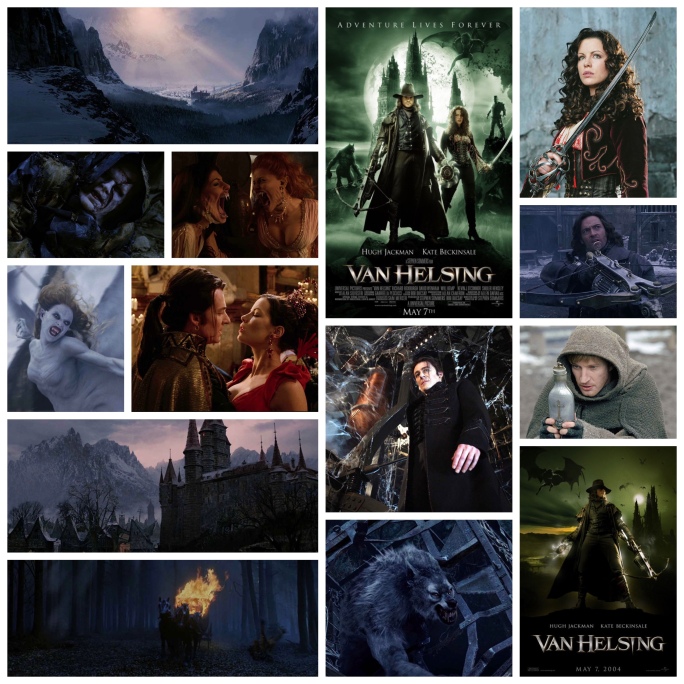
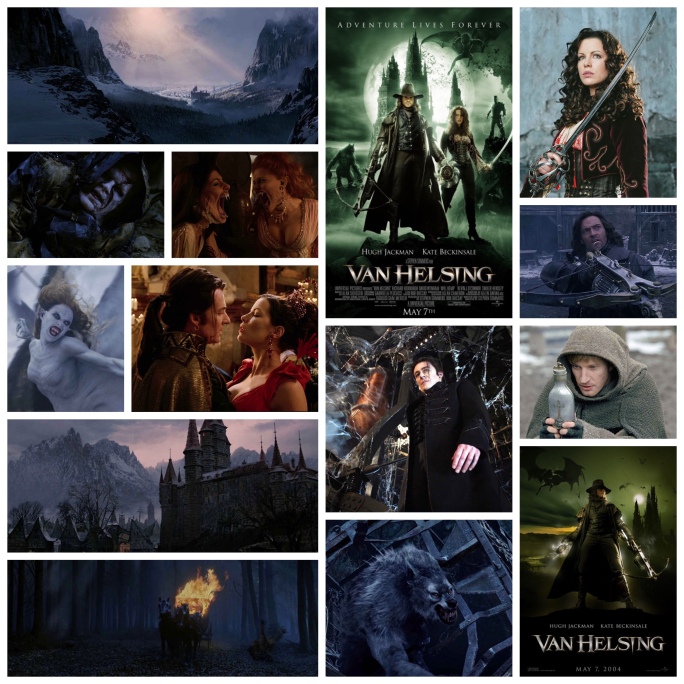
Who loves the Hugh Jackman Van Helsing flick? I know plenty who hate on it pretty bad but they’re looking at it from too serious a perspective. This comes from Stephen Sommers, the same horror filmmaker to bring us stuff like The Mummy, Deep Rising, GI Joe and the 90’s Jungle Book with Cercei Lannister. This guy is in the industry to make films for fun and if you were expecting the subtlety and restraint of horrors like the source material he draws from well, jokes on you. His Helsing is a splendidly entertaining cornucopia of horror mythology given a juiced up boost of contemporary style and plenty of gothic, mist soaked atmosphere.

Jackman’s Van Helsing ditches the creaky old man archetype for something more virile and torqued up, careening around London like a steampunk Indiana Jones and sporting enough gnarly gadgetry to take on Dracula, Frankenstein and the Wolfman in one film, which coincidentally he does. He’s sort of half sanctioned by the government but the London police force resents his far out methods, especially in a stunning opening romp as he chases Dr. Jekyll/Mr. Hyde (a scene stealing Robbie ‘Hagrid’ Coltrane) across rooftops and edifices like a supernatural parkour death match. Then it’s off to Transylvania to do battle with the big bad Vamp King himself, played to melodramatic, emo perfection by Richard Roxburgh. There’s a loose plot involving Dracula wanting to use Dr. Frankenstein’s corpse revitalizing technology to bring his unholy offspring to life, and as such his work poisons the land, pisses off the locals and prompts sexy monster hunter Kate Beckinsale to call for Helsing’s help. It’s an off the rails theme park ride of splatter effects, wild performances and extended chase sequences all over the land. Jackman makes a stalwart antihero, while Beckinsale looks amazing in leather and is surprisingly convincing as an Eastern European. David Wenham provides comic relief cast against type as Van’s trusty clergyman sidekick and the cast is rounded out by Shuler Hensley as The Monster, Elena Anaya, Will Kemp and Kevin J. O Connor as Igor in a cool black and white prologue that serves as the one sequence paying homage to these horror roots.

This was never going to be an awards season darling but it’s nowhere close to as bad as people say. Any film that has all three iconic monsters in it (plus quite a few others too) is going to have a lot to juggle and will just feel chaotic by default, but Sommers handles the pandemonium quite well and knows how to spin an absorbing popcorn yarn. There’s plenty of drop dead gorgeous landscape cinematography given the appropriately macabre touches, monsters running all about the place to give horror fanatics their fix and enough action to spawn a whole video game franchise. My favourite part is where Dracula’s babies finally hatch in spectacularly gooey fashion from Alien style eggs and start swarming the landscape like demonic infant bats. That sequence alone is worth the price of admission and showcases the kind of gung-ho, all or nothing spirit of horror adventure filmmaking offered here. Love this film.

-Nate Hill

Firestarter 2: Rekindled

So, the sequel to Stephen King’s Firestarter is an interesting one.. more of a miniseries than an actual film and runs well up almost to three hours, is full of horrendous pacing issues and numbing filler and yet… I still kinda dig it. Maybe it’s the cast, maybe it’s the languid runtime that fills up an entire rainy afternoon or who knows, but I own this on its own DVD and in the two pack with the first one and I pop it in at least once a year.

What’s it all about? Well the clairvoyant Charlie who was first played by Drew Barrymore is now grown up and embodied by Marguerite Moreau, who has some great charisma and pulls it off quite well. When she was a kid her and her dad were on the run from all kinds of nasty characters, most of whom fell victim to her incredible but severely destructive elemental gifts. One who did not however is John Rainbird, the vaguely occult weirdo played by George C. Scott in the first and now given the diabolical essence of Malcolm McDowell this time round. He wanted her powers for himself and if that didn’t work he was prepared to kill her, an agenda that kind of went up in flames (weyy). Now he’s back with gnarly burn scars and has spent the decade tracking down other kids with similar powers as Charlie and training them to be his evil little work force, eventually hoping to track her down and… who knows, the guy is beyond certifiable. Charlie has kept off the grid and struggled with these demons from her past as well as an understandable confusion in her own self identity. She finds companionship in a young journalist (Danny Nucci) who tries to help her and another psychic from their collective past played by Dennis Hopper in a warm, compassionate extended cameo.

So, what works? Well, McDowell as Rainbird is the film’s strongest point. Stephen King wrote this guy as a Native American and Hollywood just had to do their thing in casting a white dude so there’s this weird stoicism that didn’t come across well in George’s work. Malcolm reinvents the dude and fares far better as a manipulative, Machiavellian sorcerer hell bent on chaos and he eats up the role tremendously. We see flashbacks to young Charlie again and this time instead of Barrymore it’s Skye McCole Bartusiak, the excellent child actress who passed away sadly and too soon a few years back. Hopper is always terrific even in an easygoing paycheque role. I appreciated the genuine interest in the filmmakers part on building this world further and exploring new ideas. There’s a super cool, explosive showdown between Charlie and Rainbird that takes place in an all but deserted western style town. Moreau makes the most of the role and carries it pretty effectively. So what doesn’t work? The thing is two fucking hours and forty five minutes long, which is just a big no no. This could have easily been a sleek ninety minute flick and been all the more effective by pulling up the narrative slack and cutting all kinds of droning filler. It’s clearly lower budget, made for TV and we don’t get that beautiful Tangerine Dream score as we did before. It ain’t a great film but for what it is, it’s pretty fun.

-Nate Hill

James Gray’s Ad Astra

James Gray’s Ad Astra. It’s difficult for me to get my thoughts out on this one while still dodging spoilers but here goes. This was kind of a disappointment for me, not because it’s a particularly weak or mediocre film but rather it was something wholly different from what I was expecting. That too isn’t necessarily a cardinal sin but when your trailers and marketing campaign suggest one thing and your film blatantly does another, that’s a problem. In any case this wasn’t the ‘reach for the stars’ mysterious, ponderous SciFi epic that I got the impression of off the bat, but perhaps that’s just me.

Brad Pitt gives a grounded, meditative, cleared eyed performance as Roy McBride, earth’s most accomplished astronaut save for his missing father (Tommy Lee Jones), who has taken up residence somewhere near the rings of Neptune and caused quite a bit of trouble in a decades long campaign to contact extraterrestrial life. So begins Roy’s voyage out past the moon, Mars and towards the edge of our solar system to locate his dad’s research project, put a stop to the havoc it’s causing and set to rest the personal turmoil raging inside him, which is my fancy way of saying considerable daddy issues. There’s many diversions and they’re all handled nicely including an attack from vicious baboons in swooping zero gravity, a politically fuelled mutiny aboard a transport craft and a moon rover chase that feels comfortingly like Mad Max. Others provide supporting talent including Donald Sutherland as his dad’s ex pal hired to babysit part of his journey until that arc is cut disappointingly short. Liv Tyler is wasted on the thankless wife role that has no depth or vibrancy beyond looking worried, while Ruth Negga, Loren Dean and John Ortiz fare better as others he meets along the way.

So where does this falter? There’s a type of science fiction film that expands outward as characters explore their universe and reach for the great unknown while also feeling inward, finding themes of love, relationships and intimacy through something so grand as a journey into space. Christopher Nolan’s Interstellar and Steven Soderbergh’s Solaris are probably the best example of this. This one ultimately fails at that, or at least going all the way and achieving something as profound as the examples I’ve given. Many elements work, including Pitt’s impressively centred, soulful performance, a beautifully atmospheric original score by Max Richter, stunning visuals and clever world building (somehow the fact that Virgin Atlantic does commercial flights to the moon in the future seems hilariously on point). But there’s an absent nature to the overall arc that can’t be overlooked. It’s sadly ironic that a film whose title translates to ‘To The Stars’ falls so, so far short of actually reaching them. You take this trip with Roy, experience everything he does and just when the penultimate moment approaches and you prepare for some soul nourishing pay off… your grasp closes on emptiness, and what’s worse is that was what Gray was actually intending, in a way. I get what he was going for and appreciate the effort this is the wrong film to pull a stunt like that with. Didn’t work for me overall.

-Nate Hill

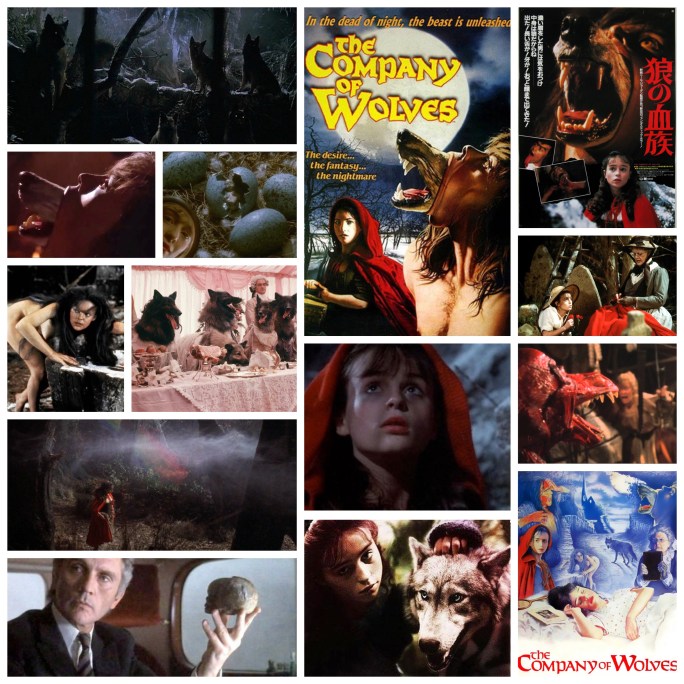
Neil Jordan’s The Company Of Wolves

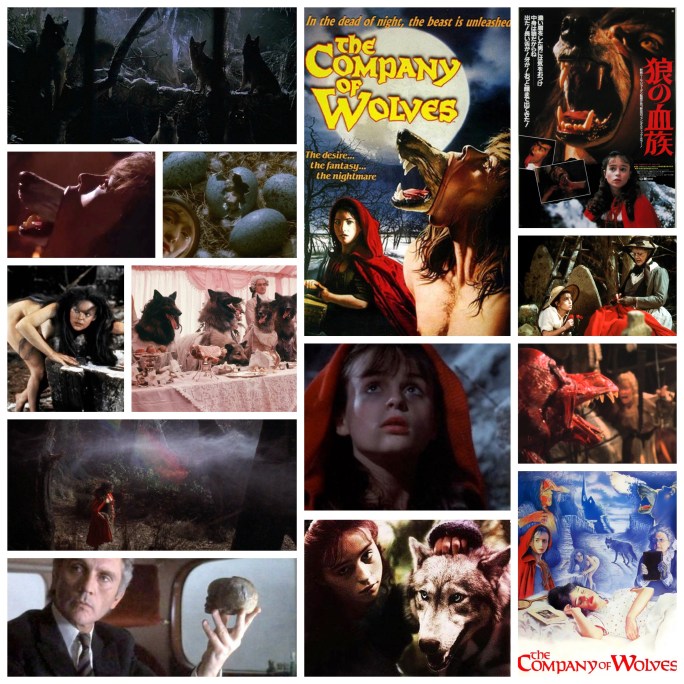
Hollywood loves it’s dark, R rated takes on classic fairytales and Little Red Riding Hood has gotten the treatment a few times, the latest being an ill advised, awful attempt with Amanda Seyfried and Gary Oldman. To cleanse the pallet of that mess you could check out the gorgeous, creaky, atmospheric hidden gem that is Neil Jordan’s The Company Of Wolves, a lyrical, mesmeric take on the folklore that combines traditional elements with nastier psychological subtext and some terrifying werewolf mythology with effects so gooey they make The Howling look like Balto.

Somewhere in a drafty English countryside manor a young girl (Sarah Patterson) tosses and turns in her sleep as some unknown force beckons her from outside the walls. As we are literally drawn into her subconscious while she slumbers we see her exist in a dream world, living in an enchanted forest with her parents (Steven Rea and Tusse Silberg) and sister. Also with them is her persnickety granny, played with plummy mother-hen fussiness by the great Angela Lansbury. Granny warns her not to venture too far outside the village because werewolves have been sighted, and that the worst kind of wolf a young girl can encounter is one whose fangs are hidden on the inside. This is of course an apparent theme that would fit right in in today’s cultural climate and could teach people a bit about subtlety and restraint when exploring the subject matters. She’s just at that stage between childhood and adolescent that is confusing, alluring and oh so dangerous, and the film uses the fairytale elements to uncover something darker and closer to home lurking beneath. It’s also just a fantastic werewolf flick too, there’s stories within stories told by Lansbury and you can really get lost and swept up in this fantastical world like the dream it ultimately is.

Jordan is a director who clearly cherishes the complexities and challenges of the medium, not one single film he’s released has felt hollow, compromised or candy coated for the masses. This one has absolutely knockout production design, creature effects that will have you covering your eyes (that poor crying toddler when buddy turns into the wolf) and a musical score by George Fenton that’s achingly melodic and threatening in equal doses. As much as all this style is on point though so too are the themes and substance in storytelling, carrying a dense weight that justifies all the visual grandeur. This feels like an important film, albeit absorbed through the scattered prism of a breathless, sweaty nightmare because after all, it is all inside a dream. Until it’s not. One of the best horror films of the 1990’s, nab a Blu Ray if you can but they’re probably scarce. Oh and watch for a diabolical cameo from Terence Stamp too as the Devil himself.

-Nate Hill

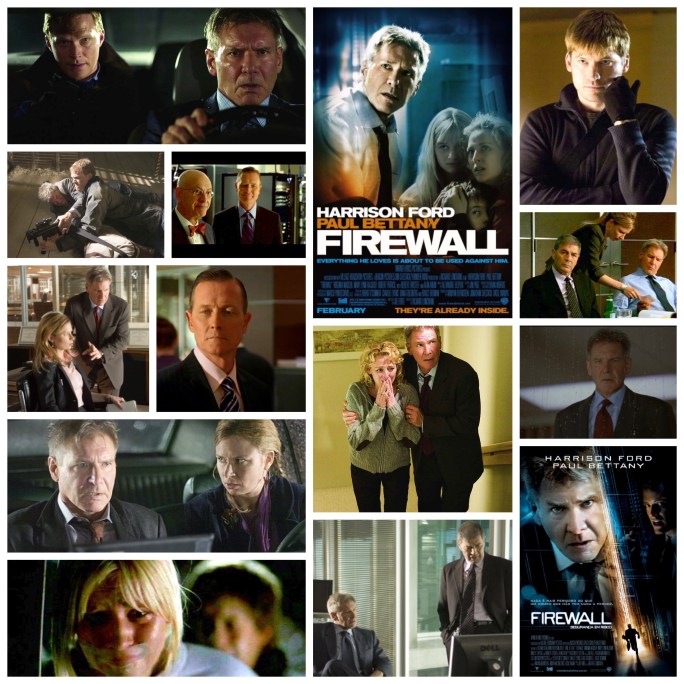
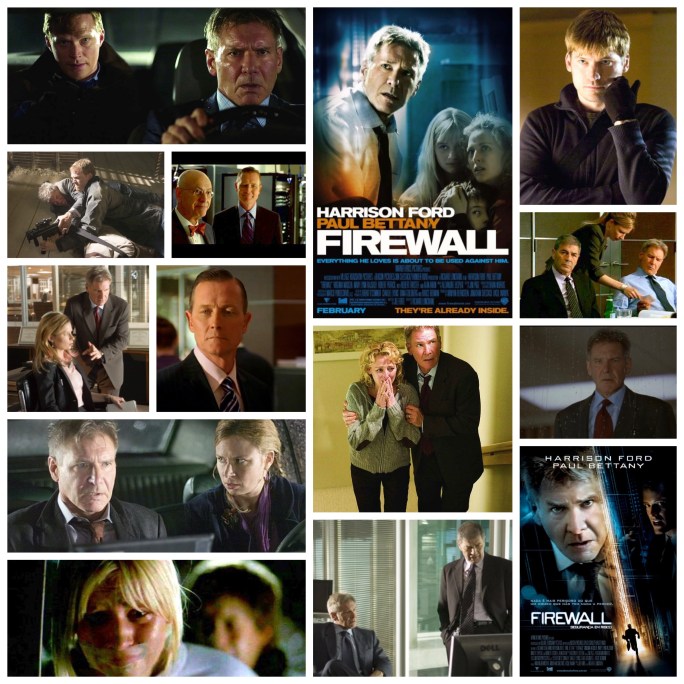
“Get off my server!”: Richard Loncraine’s Firewall

Harrison Ford does his best to carry a few duds throughout his career, and while Firewall is definitely on the mediocre end of his output, his presence plus a game supporting cast saves it from being a total misfire. He plays a hotshot security expert who designs a foolproof automated protection system for Big Bank, which icy evil mega criminal Paul Bettany and his team of assholes plan to rob the shit out of. Of course Ford didn’t put a feature in that deals with kidnapping, extortion and murder, but no one can see everything coming. Bettany & Co. hold his family (Virginia Madsen, Jimmy Bennett and Carly Schroder) hostage while forcing him to work his magic, break into the servers he designed and leave the proverbial back doors. Naturally, he covertly tries to subvert every tactic they use, doing everything from embedding secret code in the firewall to full on physically attacking them when no one is looking. It’s a pretty routine thriller that serves well as popcorn entertainment without breaking too much new ground. Ford is appropriately all scowls and snarls as he fights tooth and nail for his family, but there should be a clause in his contract that he gets to use the line “get off my airplane” in every film, but just slightly tweaked for circumstances. “Get off my server” it would read here, and somehow his grave delivery would sell it. Bettany is especially nasty in that soft spoken, clear eyed way that he’s patented, finding unique ways to torment this family involving peanut allergies and.. you can guess. The supporting cast is nicely stacked with people like Robert Forster, Alan Arkin and Robert Patrick as suspicious colleagues of Ford who don’t necessarily get to do too much performance wise but their presence always carries a weight in anything. Mary Lynn Rajskub aka Chloe O’Brien of 24 shows up as Ford’s trusty computer expert and hilariously just does exactly what Chloe does, parked in front of a computer hacking into shit, just in another film. Oh yeah Jaime Lannister also randomly drops by as one of the bad guys and gets possibly the best line of the film as Ford’s daughter laments “why do you hate us so much?!”, to which he almost sympathetically replies “I don’t hate you Sarah, I just don’t care about you.” It’s nice little touches like that that save this from being an entirely stale cracker.

-Nate Hill

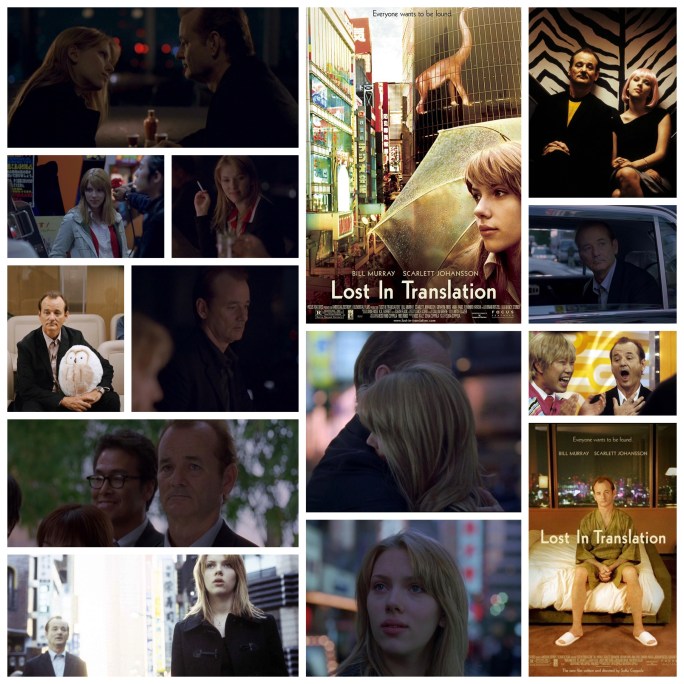
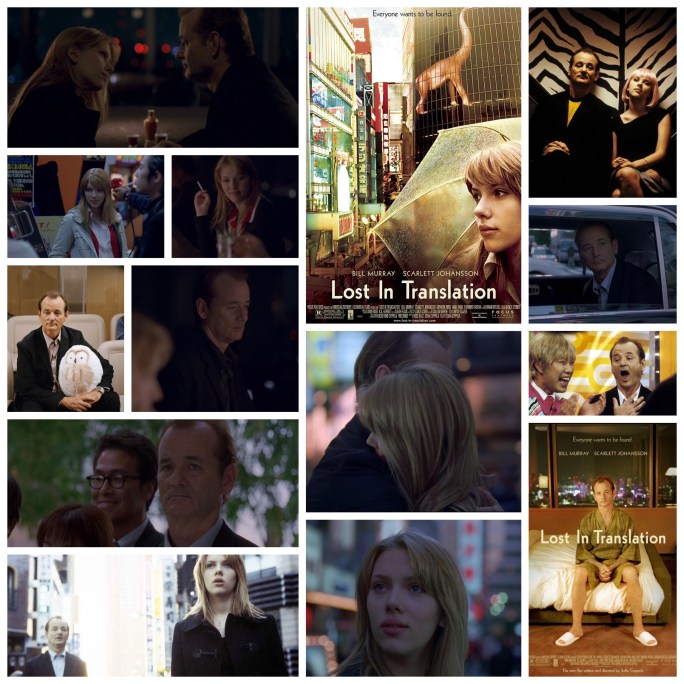
Sofia Coppola’s Lost In Translation

Ever been alone in a foreign hotel, city or entire country? There’s a mournful feeling of simultaneously being saturated in another culture and also being terminally disconnected from your surroundings, it’s a curious sensation. In Sofia Coppola’s brilliant Lost In Translation the two main characters find themselves awash in nocturnal Tokyo and marooned in a sea of aching unfamiliarity. Add to that the fact that both of them are at a place where they feel sort of stalled on the freeway of their lives and you have a sadly hued romantic drama that feels like no other.

Bob Harris (Bill Murray) is a washed up movie star who’s in town to endorse a Japanese whiskey label, constantly harried by superfluous phone calls from his wife (Nancy Steiner) who he’s clearly growing apart from. Charlotte (Scarlett Johansson) is a newly married girl whose husband (Giovanni Ribisi) neglects and almost seems to resent her, tied up in his own work while she wanders aimlessly from her hotel room to the bar and back each night. It’s there that these two find each other, find companionship, conversation and yes, romantic chemistry but that is something that Coppola handles in an infinitely more realistic and mature fashion that one usually gets with Hollywood scripts.

Last night was my first ever viewing of this film so I’m a bit late to the party and still basking in the warm glow of the initial first impression but I can already tell I’m in love with and will revisit many more times. Translation is definitely the key word here; Bob and Charlotte speak very little Japanese and as such must find other ways to converse with those around them, be it body language, a laugh or other. But they also kind of need to get used to their own personal vernacular and how it relates to the other. There’s a fairly sizeable age gap between them and they come from different backgrounds so they must adapt to each other, and watching these two actors do so is a joy. Murray is quiet, soft spoken and his comedic edge is almost reined in of his own volition, like he wants to be funny but he’s just too sad to pull it off other than the occasional ironic flourish. Johansson is quiet, contemplative but blessed with a keen intellect and intuition, it’s the perfect role for the actress who, lets face it, sometimes gets cast on her looks and we forget what beautiful charisma she has as well. Coppola lets the friendship between them happen as it probably would in real life: awkwardly at first until they’re comfortable with each other, then with easy and enthusiastic abandon. My favourite scene of the film is where they attend a karaoke party and we get to see them at their happiest and lowest of inhibitions. They sing their hearts out, laugh, steal glances at each other and live in the moment. It’s the most romantic scene of the film and they don’t even touch each other, but the energy is there, carefully guided by their performances and Coppola’s direction. Few mainstream films get the complexities and ethereal realism of this type of situation right, but this one nails it for a dreamy, hypnotic, bittersweet story that you don’t want to end, until it does on a questioning note that we as the audience were never meant to know the answer to. Amazing film.

-Nate Hill

Atom Egoyan’s The Captive

There’s a pattern I’ve noticed in films that were booed off the stage at Cannes. Often they are just movies that can’t quite be processed yet and haven’t found their audience due to challenges, dense themes or unconventional execution that simply isn’t received well off the bat. They’re usually rich, deep pieces that just need a little time to settle into the landscape before reaching deserved status, whether cult or beaten path. Atom Agoyan’s The Captive is one such film, a masterful meditation on loss and unrest following the kidnapping of a young girl whose parents simply cannot put her memory to rest.

On a remote, snowy stretch of Ontario highway, landscaper Ryan Reynolds stops at a diner for a quick second and in that second, his ten year old daughter vanishes without a trace. The film shows several sides of the whole scenario but chooses to display them non-sequentially so we end up as confused and disoriented as the characters must feel in such a situation. Reynolds and his wife (Mireille Enos) do their best to grieve but the event drives a wedge in between them. The two cops assigned to the case are an impatient hotshot (Scott Speedman) and an intuitive specialist (Rosario Dawson) but even they grasp desperately at straws in their ongoing investigation into child abuse. What’s interesting is that the film shows you pretty much in the opening scene what happened to their daughter and who took her. In the present time she’s eighteen and has been held captive by an unnervingly calm weirdo (Kevin Durand) and used as an online lure to catch other children for the pedophile ring he runs. So the suspense here isn’t really about ‘what happened to her’ and more like ‘how does it affect the people in her life and what comes next?’

So then, why was this received so badly? Well, I’d imagine it’s the structure and overall information passed to the audience, or lack thereof in cases. The events of the film are shown completely out of order, some sequences even split up so you don’t get the impact of the latter half of a scene until later on in the narrative. Additionally, when the end rolls around there are still many questions left unanswered and we get the sense that a great deal of the story is left out of our sight and minds, buried under the proverbial snowbanks that blanket the breathtakingly gorgeous visual palette of the film. It’s often tough for audiences to make do when left with a difficult, opaque and incomplete story, and the natural reaction can often be frustration or open hostility (just ask David Lynch, who has a film of his own that was verbally bashed at Cannes and is now considered his masterwork). Narratives like that are like protein for my senses though, and the gut reaction I have is always good, which often results in me being on a hill somewhat alone in enjoying divisive films. This is one of my favourite thrillers in recent years because of how unique it is. Reynolds has never been better displaying the raw anguish of a father who both blames himself and rages at the forces of darkness around him, while Enos embodies desperate grief in heartbreaking fashion when tormented by her daughter’s captors. Dawson grounds her cop role in empathy and dignity, while Durand looks like a vampire slinking from room to room observing unspeakable things on video monitors and somehow seeming like both a moustache twirling villain and a restrained one. Alexia Fast is haunting as the eighteen year old incarnation of their daughter, she plays it strangely lucid and does a beautifully eerie cover of Jennifer Castle’s ‘Remembering’ that echoes across the snowy landscape and bookends the film in grave but gorgeous ambiguity. As for Egoyan, he isn’t interested in pleasing the crowd or eliciting pleasant reactions, he wishes to tell a difficult, tragic story in an appropriate fashion. He could have made it straightforward, satisfactory and easy to digest, but where’s the fun in that? A masterpiece in my eyes.

-Nate Hill

Scott Frank’s A Walk Among The Tombstones

These days when a film with Liam Neeson comes down the pipeline you can generally have a good idea what it’ll be about in our post-Taken era. Revenge, chases, gunfights, he’s usually in his old dude action pic groove but there’s the odd one that strays from the flock. Scott Frank’s A Walk Among The Tombstones, although encasing a few quick, breathless action scenes in its narrative, is far from the kind of film we’re used to seeing from Neeson and as a result is one of my favourites he’s done since Joe Carnahan’s The Grey.

Chilly, brutal, bloody, realistically violent and unrelentingly dark are the energies this thing traffics in. Neeson plays Matt Scudder, a shambling ex cop turned private eye with some demons in his past that don’t quite hold a candle to the outright malevolence he must face this time round. He’s contacted by a shady mid level drug baron (Dan Stevens) whose wife has gone missing, and who chooses him over the cops because of their collective unique business ventures. This leads our antihero down an increasingly dangerous and suffocatingly scary on the hunt for two serial killers (David Harbour and Adam David Thompson) who are the distilled definition of pure evil.

I’ll be frank and upfront here: this is not a pleasant viewing experience or an uplifting film, in fact it’s downright oppressive in tone and for the most part emotionally desolate. However, there’s a stark beauty to this tale and I wouldn’t let the darkness deter you from experiencing one of the best and most atmospheric and suspenseful crime thrillers in recent years. Neeson is grim, haunted and adept at doling out graphic bodily harm on anyone who prevents him from getting to the truth. The two killers, Harbour in particular, are unrepentant, sadistic monsters who you just pray will be stopped before committing another murder and making you sit through the specifics of it which the film does make you do in one instance. Stevens comes from a Downton Abbey background but there’s a fierce, implosive aura to him that works great in darker roles like this (check out his work in The Guest too). This is based on one in a series of books by Lawrence Block that all focus on Scudder’s character. Jeff Bridges played the role once back in the day in another adaptation too, but Neeson makes a fierce predator out of him, with a hidden humanity that comes forth in interactions with a street kid (Brian Bradley) who becomes his sidekick of sorts. A very overlooked film in Neeson’s filmography and just in general as well. Oh and how about those eerie, sinister opening credits for setting the tone ?

-Nate Hill