Stephen Kay’s Get Carter

As far as the remaking of cult classics, Stephen Kay’s Get Carter is a piss poor effort, so much so that not even a positively stacked cast could do much of anything about it. The original saw fearsome bulldog Michael Caine getting shotgun fuelled revenge and has since become iconic, while this one switches up rainy Britain for rainy Seattle and a sedated Sylvester Stallone in a shiny suit takes over as Carter, a mob enforcer who hails from Vegas but has travelled north both to escape scandal and look into a shady family matter. There he finds all sorts of characters played by a troupe of big names, character actors and even Caine himself in an extended cameo as a bar owner, but it all feels lazy, listless and flung about like a ball of yarn full of loose plot threads and scenes that fizzle. It’s obvious that there were major editing problems here as the pacing is in conniptions and an entire subplot involving a love interest back in Vegas (Gretchen Mol) has been slashed to ribbons. So sloppy was the final product that my college acting teacher, who landed the role of Carter’s gangster boss back in Vegas, although mentioned brazenly in the opening credits, can only be seen briefly from the neck down and heard on the phone, except for whatever reason they decided to dub his voice over with an uncredited Tom Sizemore, which is just so bizarre. Anywho, Stallone sleepwalks his way through a local conspiracy involving his dead brother, the widow (Rachel Leigh Cook), a mysterious femme fatale (Rhona Mitra), a weaselly computer tycoon (Alan Cumming) a sleazy pimp/porn baron (Mickey Rourke) and more. It’s just all so terminally boring though, and none of the clues or twists spring to life or feel organic at all. Rourke provides some of the only life the film has to offer as the villain, a guttural scumbag who has two painful looking nightclub boxing beatdowns with Stallone which are fun. John C. McGinley raises the pulse somewhat as a lively Vegas thug dispatched by Sizemore’s voice to bring Stallone back to face the music. Others show up including Miranda Richardson, Mark Boone Jr., John Cassini, Johnny Strong, Frank Stallone, Tyler Labine and more. None of it amounts to much though and by the time the anticlimactic plot resolutions arrive and Carter jumps a red eye back to Vegas before the credits roll, you wonder what the point of it all was and want your hour and forty minutes back. A thorough bummer.

-Nate Hill

Lin Oeding’s Braven

Lin Oeding’s Braven is the second film I’ve seen this year that sees an emotionally damaged lumberjack taking revenge on a bunch of assholes who messed with his family, and although it isn’t quite the stab of innovation that Panos Cosmatos’s Mandy is, it takes the old school rough n’ tumble action route and does the genre proud. Jason Mamoa is Joe Braven, a logger and family man living with his family in the gorgeous Canadian wilderness. His dad (the great Stephen Lang) is suffering from the onset of dementia, causing enough stress in the family. Life gets tougher for them when a pack of dangerous, heavily armed drug smugglers arrives at Joe’s remote mountain cabin to retrieve a previously stashed bag of smack, and put his family right in the crosshairs. It’s up to him and pops Lang to use ingenuity, teamwork and a few weapons to take the baddies out and keep his wife and daughter safe. It’s a formula premise given earnest treatment and works well thanks to solid performances and terrific action choreography, there are some deliciously ruthless kills here as well as breathless chase scenes through the wilderness and atop snowy peaks. It’s also nice to see an action hero who bleeds and is very much a vulnerable human being, Joe gets knocked around quite a bit both physically and emotionally, Momoa handles the beats wonderfully. Lang is terrific old grit as always, and Garrett Dillahunt plays a vicious Dilla-cunt as the psychopath leader of the smuggling ring who’s not above capping off his own guys and brutally threatening Joe’s clan. I’m always a sucker for films set in the snow, it somehow just laces the atmosphere and gives it that edge, there is some spectacular Canadian wilderness photography here especially in a moody opening credit sequence showcasing local wildlife and set to the surprisingly mellow, elemental score from Justin Small and Ohad Benchedrit that echoes the melodies of Sigur Ros nicely. This isn’t anything revolutionary or groundbreaking, but within the genre it resides it is top shelf stuff, beautifully made, appropriately rugged and visceral with a steady emotional core and heaps of wintry atmosphere. Loved it.

-Nate Hill

Denis Villeneuve’s Prisoners

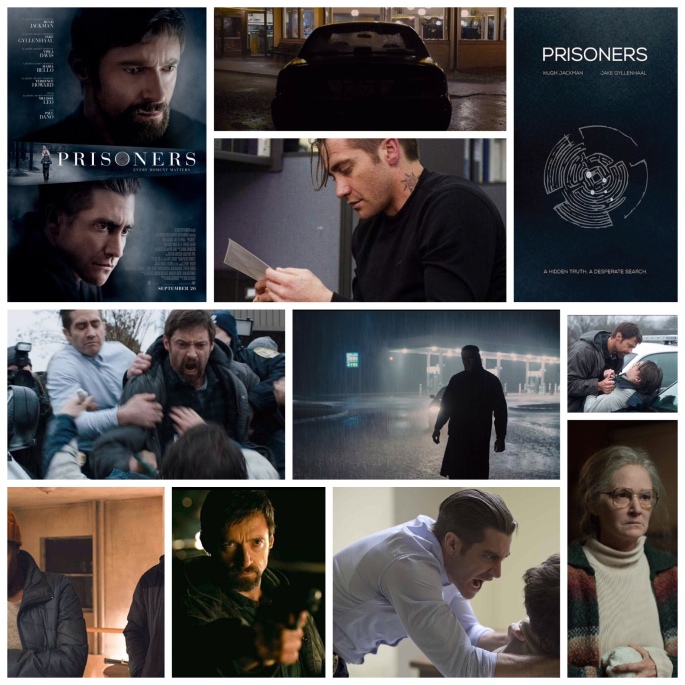
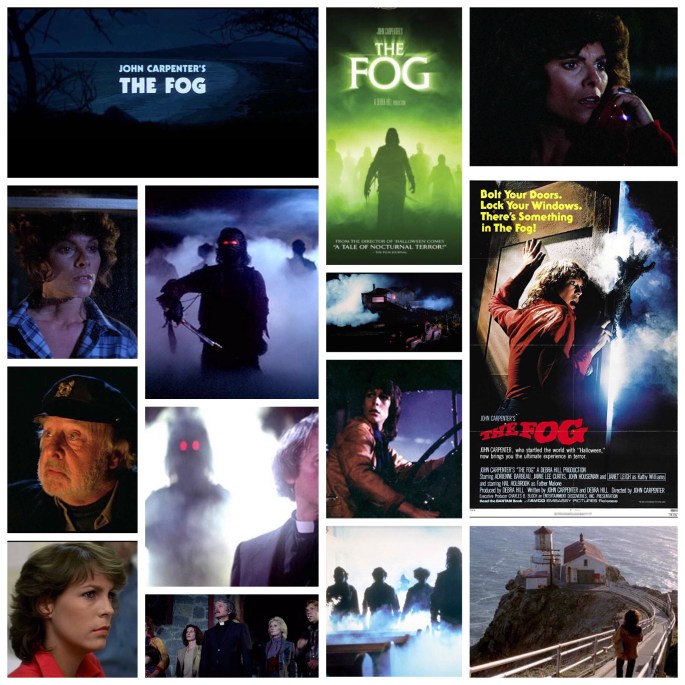
Dark. Rainy. Uneasy. Covered in a cloak of gloom, gruesome secrets and morally questionable actions. Denis Villeneuve’s Prisoners is one of the premier kidnapping thrillers of recent years, and a mile marker in the still blossoming career of a man who will no doubt go on to be a legend. Many thrillers are lacking in some elements while excel in others, but here every base is covered with care and attention, from style to substance to pacing to realism to thematic material. When a couple’s daughter goes missing without a trace on a quiet suburban block, the distraught father (Hugh Jackman) tries to take matters into his own hands with disastrous and damaging results. When you factor in how long the case drags without clues, results or hope it’s kind of hard to blame him for taking action of his own volition, but when he abducts a mentally challenged man (Paul Dano) who was seen skulking around in a creepy RV the day of the incident, he crosses the line from righteous investigator to dangerous vigilante. Jake Gyllenhaal and his snazzy hairstyle are great as a rugged detective who just can’t seem to get a grasp on what happened but doesn’t quit anyway. Terrence Howard, Maria Bello, Wayne Duvall, Viola Davis, Dylan Minette and more make vivid impressions, but it’s the consistently surprising and always dynamic Melissa Leo who steals the show and galvanizes the story with her chilling work. Roger Deakins is a prince among DoP’s and his rain streaked, utterly bleak visual mood-scape here is something to behold, the overcast weather seeps into the bones of these characters and brings out all the confusion and hopelessness of this grim, downbeat story. This is a detailed, difficult tale that does have an answer by the time the final act rolls around, and by that time we’re so so steeped in the quagmires of Jackman’s extreme actions that the further the trip goes into unpleasantness, the more eerily fitting it seems. It’s a dark, relentless trip but thanks to everyone involved and especially Villeneuve’s assured direction, it’s one worth taking.

-Nate Hill

Cameron Crowe’s Jerry Maguire

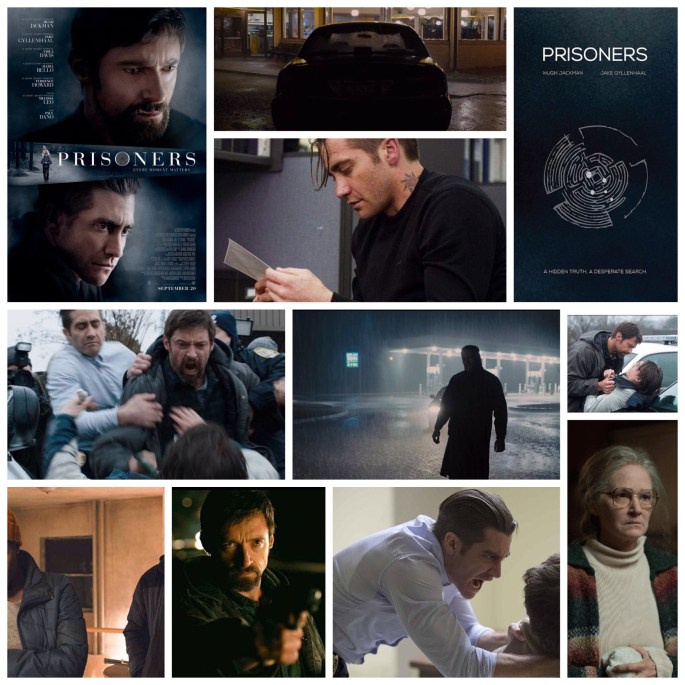
Cameron Crowe’s Jerry Maguire is probably one of the most engagingly likeable films I’ve ever seen, on both a star-power and script level it positively glides. I’ve heard it described as the ultimate feel good movie, and while I would be quick to agree, I think there’s more to it. There’s countless films out there about unscrupulous maverick in the professional world who have a crisis of conscience, an ethic conundrum or call it what you will, but Tom Cruise’s freewheeling, silver tongued sports agent may be the only case I’ve seen where said crisis happens literally at the beginning of the film as opposed to a midsection turnaround or climactic final resolution. Because of this, the rest of the film is completely affected each step of the way by his awakening in the first scene, which I find so interesting.

The hero has his realization early, and it seems like the kind of weighty lesson that sums up the bulk of the film, but it only leads to more complicated questions, tricky interpersonal communication based on previous impulsive behaviour and a trickle effect down into even more life lessons, always given the unexpected flourishes and cathartic pathos of Crowe’s script, which has to be among the best ever written.

Cruise is aggressive, tender, charismatic and compelling as Jerry, the archetypal American business shark who flounders in the deep end of a narrative seemingly built as an obstacle course for character renewal and self discovery. Renee Zellweger is an actual angel as Dorothy, the single mother who realizes that idolizing and loving someone can be different things, one and the same or a confusing mixture of both. Cuba Gooding Jr. is a stirring bundle of joy and frustrations as Rod, Jerry’s last remaining athletic client, a fiercely loving family man with a self referential chip on his shoulder and enough energy to fill a stadium on his own, it’s the best work I’ve ever seen him do. The supporting cast is unbelievable and includes Jerry O’Connell, Jay Mohr, Beau Bridges, Eric Stoltz, Donal Logue, adorable Jonathan Lipnicki, Kelly Preston, Mark Pellington, Jared Jussim, Toby Huss, Drake Bell, Ivana Milicivic, Lucy Liu, the always lovely Bonnie Hunt and an absolute knockout Regina King as Rod’s fiercely passionate wife, it takes a lot of effort to steal every scene in a film that’s already packed to burst with scene stealers but she is really something else here.

I’ve read reviews saying that this is too much of a good thing and that there’s too many strong elements to absorb or focus on all at once and I disagree. I think that whoever wrote that has underestimated the cinematic appetite of people who crave well written, emotionally ambitious films that don’t just break the mould but drop kick it full field goal. Jerry Maguire is at once a brilliant character study, a rocking ensemble piece, a genuinely thought out and heartfelt romance, a morality play and what’s more, Crowe handles all of the above in a fresh, unique way. Having finally seen this I still can’t say that it dethrones Vanilla Sky as my favourite Crowe film (a tall order indeed), but I loved Jerry Maguire to bits, I was locked to the screen for the entire two plus hours, it’s a wonderfully told story and is now inducted into my list of favourites.

-Nate Hill

Joe Roth’s Freedomland j

Freedomland is a dark, strange drama about events spiraling out of control following the disappearance of a young boy, the distraught nature of his mother (Julianne Moore) and the subsequent search that takes two detectives (Samuel L. Jackson and William Forsythe) into a heated black community and the surrounding wilderness nearby. Moore’s character is a notoriously unstable woman and not the most reliable mother, her story just doesn’t seem to add up, especially when she claims she saw a black man take off with her car with her kid in it. Jackson’s charismatic cop knows the community well and does his best to ease mounting racial tension, while Moore is a basket case who can barely function, and the whole thing feels sort of meandering and purgatorial until a third act revelation that puts an entirely new spin on the film but also kind of thematically negates everything that came before. Is is a slightly political interpersonal drama? Somewhat. Is it a twisty abduction thriller? Not really me, but I feel like it wants to be. Is it a character study of a broken woman? Could have been with more development. It’s an odd mix that doesn’t really gel with much that it tries except when it focuses on Moore, who is fascinating damaged goods, but again more time should have been spent cultivating that angle. Jackson is fine in his authoritarian mediator role, normally boisterous Forsythe is pretty laid back as the trusty sidekick, Edie Falco plays a concerned activist looking to help out and Ron Eldard is terrific as Moore’s brother, an emotional firebrand who calls her right out on her ongoing bullshit. This film tries to be more than it ultimately ends up being, if that at all makes sense. Elements are in place for it to be great and some of them do in fact work, but the script needed some tweaks, especially in how the bulk of the film and the conflict there relate to and clash with that twist ending, which needed to be revealed way sooner to set up a moving, provocative final act. Not terrible for the effort that was made.

-Nate Hill

John Carpenter’s The Fog

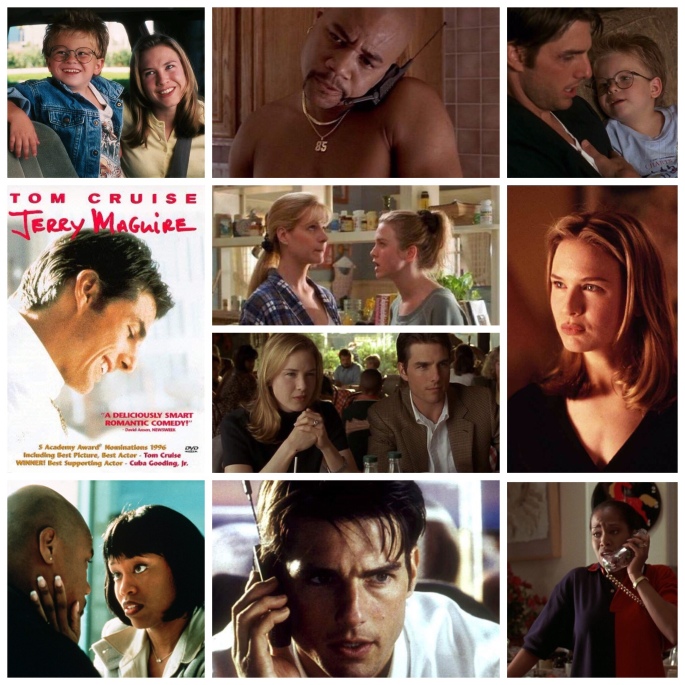
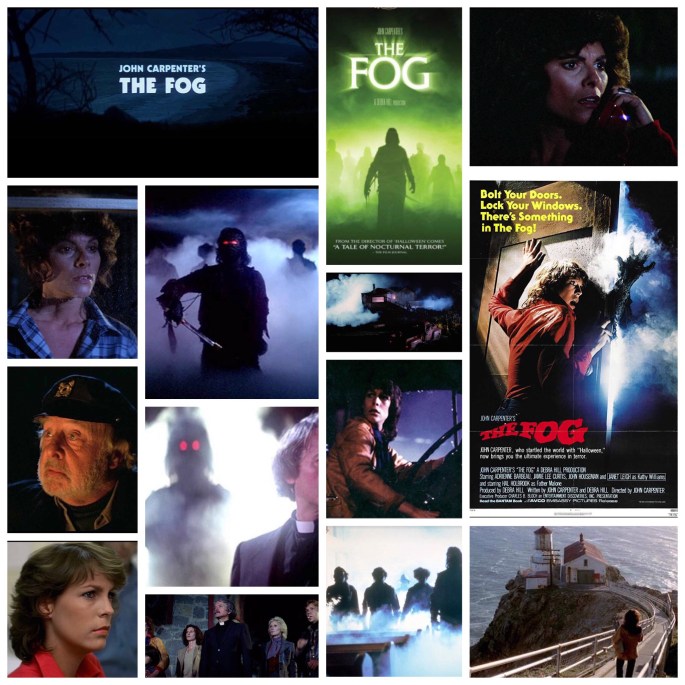
John Carpenter’s The Fog is such a great campfire ghost story that it literally starts off with a campfire of its own, told by wistful sea captain John Houseman in a role that feels like it was meant for Donald Pleasance. He spookily regales a bunch of youngsters one cold coastal night: Long ago, a mysterious schooner crashed against the rocky landscape of Antonio Bay in a dense fog, for reasons slowly made clear. A century or so later, the fog returns, and those onboard come with it seeking revenge. Speaking of the coast, that vast, gorgeous California shoreline is a perfect backdrop and character all it’s own in Carpenter’s tale, the title credit appears over a picturesque beach, setting the ambience of the seaside region perfectly. Carpenter always values atmosphere and suspense above all else, his films have some of the most delicious slow burn setups out there, and the ethereal first act before the fog even shows up is one of the best extended sequences he’s ever done. As far as plot and character goes, the film has a cool Robert Altman vibe to its ensemble, from Hal Holbrook’s nervous priest, Jamie Lee Curtis’s plucky hitchhiking artist, Adrienne Barbeau’s sultry radio DJ and more, they all work in round-table fashion to get their stories across. They and others find themselves suddenly stranded in the approaching haze and hunted by silent, sword wielding zombie pirates who are more than a little pissed off that their boat crashed. The real treasure here is Carpenter’s original score, one in a long line of brilliant compositions. The main theme is a restless, jangly electronic cadence that feels both melodic and laced with doom, while quieter synth chords are infused with church bell cues elsewhere to bring the soundscape alive as only Carpenter can. This is a brilliant horror film, my third favourite Carpenter after Halloween and The Thing, and never fails to be as effective, chilling or beautiful to behold with each revisit as it was the first time I saw it.

-Nate Hill

The Hughes Brothers’ From Hell

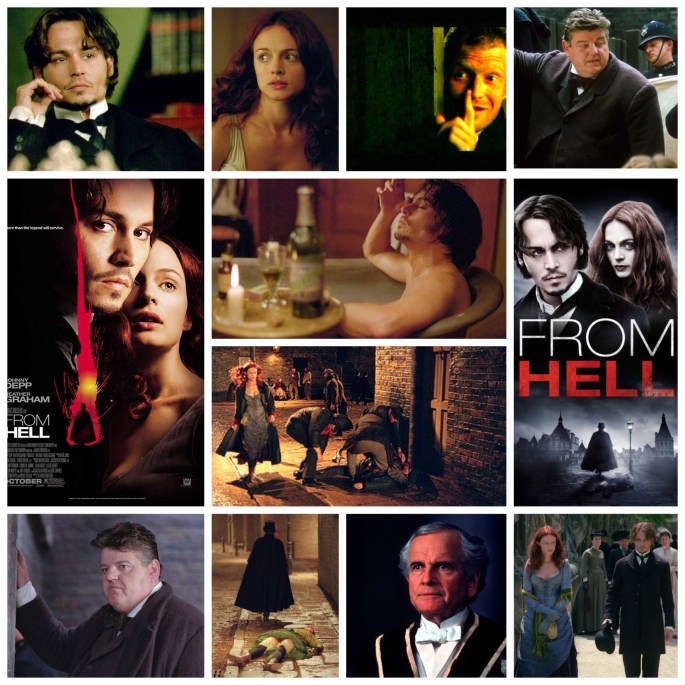
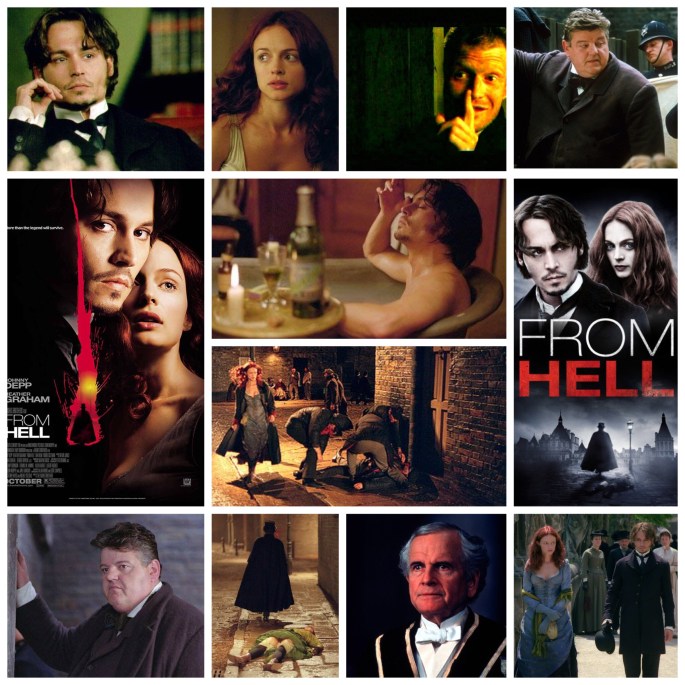
The Hughes Brothers’ From Hell is one one of the most opulently stylish horror films out there, and despite being a bit melodramatic in areas, it boasts a grim, severely menacing atmosphere which is mandatory considering it focuses on the Jack The Ripper murders in Victorian era London. Based on a drab graphic novel by the great Alan Moore, The Hughes have amped up both suspense and passion and could be accused of Hollywood-izing Moore’s work too much, but the guy just doesn’t write very adaptable material and some liberties have to be taken to make watchable films. This one works better on its own terms, a dark, blood soaked detective story starring Johnny Depp as Frederick Abberline, a brilliant opium addicted Scotland Yard inspector out to nab the Ripper, with the help of his trusty boss Sgt. Godley, played by a scene stealing Robbie ‘Hagrid’ Coltrane. As we all know, the Ripper murders were never really solved, so naturally here a fictitious conspiracy is whipped up, full of intrigue and corruption, but as many cluttered subplots there are flying about, the film’s strength lies in the eerie murders carried out in nocturnal London, and Depp’s very strong performance as the drugged out cop who won’t quit. Supporting work comes from lovely Heather Graham as prostitute and love interest Mary Kelly, Ian Holm as London’s top medical consultant as well as Jason Flemyng, Ian Richardson, Katrin Cartlidge, Ian McNeice, Sophia Myles, Dominic Cooper and scene stealer David Schofield as an evil East End pimp. Some of the fat could have been trimmed here to make this a shorter, more streamlined experience, but the visual element is so damn good that at the same time one can’t get enough of the lavish production design. This one succeeds in creating a lived in London with dimension and scope, as well as staging a very effective sense of dread and danger lurking around every corner of every cobblestone alleyway, the atmosphere is just unreal, as well as the supremely graphic gore that lets us plainly know that the Ripper wasn’t just messing about, he was an actual monster. Great stuff.

-Nate Hill

Michael Bay’s Bad Boys II

Michael Bay is a great filmmaker and Bad Boys II is a masterpiece, one of the best action movies ever made. I know there are those out there who have nothing but contempt for Bay and his balls out, blitzkrieg blockbusters, and that’s okay. But there’s also those of us who recognize that the guy just has bushels of talent when it comes to staging breathtakingly explosive, propulsive large scale action sequences. I’ll concede that he has been perpetually slumming it in Transformers-ville for ten punishing years, but honestly I think that’s just to harvest dollars from the Asian box office overseas, because that’s where those big dumb flicks are most popular.

Bay’s core filmography is legendary, and while I’d be hard pressed to pick a favourite, I’d say Bad Boys II if you held a gun to my head, definitely because of aforementioned action sequences but also it’s just one of the funniest fucking things I’ve ever seen, thanks to the combustible camaraderie between Martin Lawrence, Will Smith and a host of scene stealing others. This film is insane in all the best possible ways, it starts at brutal excess and only escalates from there until taste, shame and any other employments of restraint have been pummelled by a beautifully un-PC masterwork of ultra-violence, cheerful profanity, unabashed nihilism and enough Miami gunplay to constitute a civil war.

While Bay’s first Bad Boys was a great time, it was kind of like pre-drinks at buddy’s place before really getting the night underway, and II is the penthouse party that blows the lid off of everything, gets the cops called and shuts down the entire block. Smith and Lawrence’s Mike Lowry and Marcus Burnett kick off the proceedings by noisily barrelling through a KKK rally in the Everglades which results in Marcus getting accidentally shot through the ass cheek by his own partner, going on to be a priceless running joke. Then it’s on to take down simultaneously terrifying and hilarious Cuban drug baron Johnny Tapia, played by Jordi Molla in a performance so manic and unhinged that to me he represents the Spanish Gary Oldman. This results in a deafening, barnstorming tirade of extended car chases, ferocious shootouts, almost horror movie level carnage, excessive drug consumption and so much bickering between our two leads that we begin to wonder what was improv and what was scripted, but I suspect it was mostly the former. Bruckheimer seriously just threw paint at the wall here and let Bay set fire to it, this has to be one of the most precious, time capsule worthy, fucked up blockbusters that has ever come down the Hollywood assembly line. Gabrielle Union has never been sexier and holds her own as Marcus’s DEA sister, Bay favourite Peter Stormare hams it up almost as much as he did in Armageddon as an unstable Russian gangster and the cast is insane with memorable work from Michael Shannon, Yul Vasquez, Teresa Randle, Oleg Taktarov, Jon Seda, Antoni Carone, Henry Rollins and more. A huge shout-out to Joe Pantoliano as their stressed out Captain, he reaches levels of exasperation that I didn’t think were possible, and the scene where Marcus shows up in his living room fucked up on ecstasy is one of the most indescribably great comedic moments of the millennium, played to the hilt by all three actors.

From drug infested Miami Beach nightclubs to all out warfare on the highway overpasses to attitude filled family pool parties at Marcus’s crib to a thrilling showdown outside Tapia’s Cuban mansion and everything in between, Bay pretty much set the bar for the R rated action comedy, and set it pretty fucking high. Critics like Ebert hate this one because it overflows with unpleasantness, excess and mean spirited humour, and hey who am I to argue. If your sense of humour is tuned in to this kind of stuff then you’ll dig it, if not then it won’t be your bag, it’s very much an early 00’s film and most of it sadly wouldn’t even come close to being green-lit in today’s big budget world. I love this crazy ass film to pieces, it’s showcase Bay, hallmark Bruckheimer, the comedic pinnacle of both Smith and Lawrence’s careers (“Big fuckin eyes, but a nice fuckin fish!!”) and a milestone in the action genre. Woosahh.

-Nate Hill

Pascal Laugier’s Martyrs

You think you know what fucked up and disturbing is until you’ve seen Pascal Laugier’s Martyrs, and then you damn well for sure do, on top of wishing that you didn’t go looking because the experience is not one so easily shaken. This is a punishing, relentlessly cruel and violent film that will leave the viewer emotionally barren, but it’s also a very intelligent piece, with a wholly unpredictable, very thought provoking story that arrives on an avenue somewhere truly different than the one it set out on. It’s a sort of extreme existential shocker, which is an intriguing description but doesn’t begin to scratch the surface of the dark psychological netherworld it bravely troops into. Lucie (Myléne Jampanoï) remembers being brutally tortured and held captive years ago when she was very young, and with the help of her friend Anna (Morjana Alaoui) who was also abused as a child, she sets a bloody quest in motion to hunt down and slaughter those responsible. Haunted by a grim, shrieking spectre (Isabelle Chasse) that may or not be real and met with curveballs in her plan at every turn, she discovers that her traumatizing experiences as a child are but the tip of a very large, very sinister iceberg and pretty soon she finds out way more than she ever set out to. I’m being purposely vague here because the diabolical fun lies in figuring this hell-house of a story out for yourself, and if you haven’t seen it yet, you’re in for treat. Your jaw will hit the floor, your pulse will race, it will sicken, amaze, provoke heated debates and generally just cause extreme reactions all across the board. What’s important to understand is that Laugier never strays into realms of exploitation or torture porn for its own sake; yes, the scenes and situations here are incredibly, almost unbearably violent and gruesome, but they do service a narrative that has questions to ask and points to prove. Just buckle up getting there and pay close attention, because trust me this is not a trip you’re going to want to take twice. Oh, and one more thing, careful that you don’t accidentally watch the recent remake which is unnecessary garbage, Laugier’s original is the only version of this story. Good luck!

-Nate Hill

Stuart Gordon’s ReAnimator

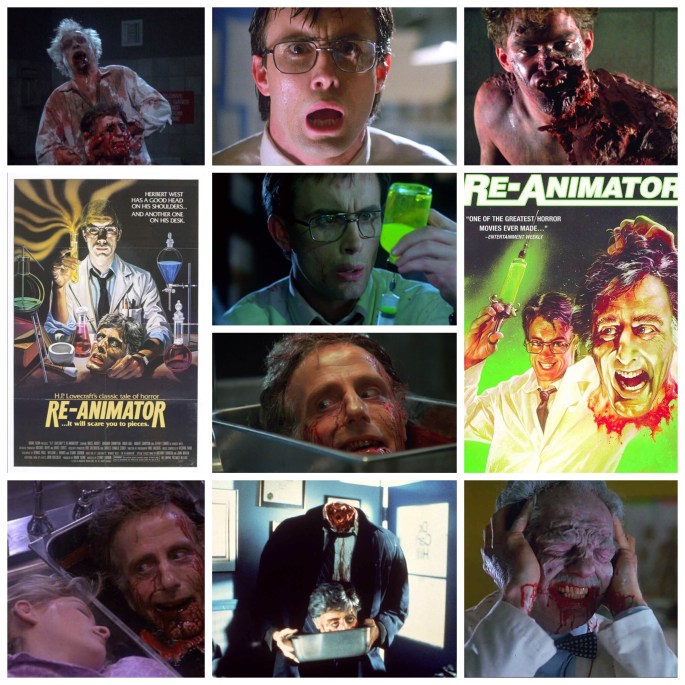
Stuart Gordon’s ReAnimator is a healthy dose of schlocktastic fun, taking a page out of the silly splatter book of Sam Raimi, and although not quite as fun as some of the stuff it draws inspiration from, it does the trick. I know this film has a massive cult fanbase and while I can’t say that I loved it quite as much as some no doubt do, I always have some love for gory practical effects, and the ones on display here are pretty impressive. Jeffrey Combs is funny (if not exactly the definition of subtle throughout his whole career) as Dr. Herbert West, a loony fuckin quack who has stumbled upon an ectoplasmic looking serum that brings dead corpses back to life, albeit with a side of extreme retardation. Things go riotously awry when a jealous rival (David Gale) literally loses his head and steals it, prompting a gruesome comedy of errors in which heads, limbs, blood and entrails are hurled about the screen in a feverish celebration of all things gory and grisly. You can’t exactly call them zombies, I mean I suppose they are but they’re given a modicum more sentience than your average shambling Romero flesh-eater, but the actors get to have fun with their zany side, as the formula sort of plays havoc with their cognitive functions, a hilarious touch. There’s a sexually icky part that was even a bit in bad taste for my lax sensibilities (poor Barbara Crampton is a trooper and better have gotten paid hefty fucking overtime), but I suppose that trash is sort of the name of the game here. The 80’s was a very formative decade for the horror genre, and its fascinating to see how not only was this inspired by earlier stuff like Raimi, but would itself go on to rouse other filmmakers and give them ideas, as Hollywood progresses in symbiosis. A fun, freaky time.

-Nate Hill