-Nate Hill-
Sam Peckinpah’s The Osterman Weekend is so strangely plotted, so illogical and hard to understand, that not even John Hurt providing a play by play from an ever present tv monitor can seem to make sense of it. It’s not that it’s a bad film, parts are very well done and there’s that nostalgic Cold War vibe that 80’s espionage thrillers always have, it’s just that somewhere along the way, whether in the editing room, the shot list or scheduling, someone quite literally lost the plot. It’s enjoyable, well acted and supplies some of that classic Peckinpah grit he’s known for, but it’s just one massive loose thread that no one bothered to pull taut, which is a shame when you look at the talent involved. The film opens with the murder of a beautiful woman, the wife of a CIA spook (Hurt). Now, this inciting incident is what spurs on the rest of the plot, but the how and the why seem to be missing, and the matter of his wife doesn’t come into play again until all is almost said and done, and seems to have not a lot to do with the entire rest of the film. The bulk of it focuses on controversial talk show host John Tanner (Rutger Hauer), a man who lives to rub people the wrong way and put men of power on the spot with provocative, candid questions, all from the safety of his brightly lit studio. He’s forced to get his hands dirty though when Hurt contacts him, informing him that his three friends he’s planned to spend the weekend with (Craig T. Nelson, Dennis Hopper and a sleazy Chris Sarandon) are in fact soviet spies in hiding. Forced to bug his weekend home and play host to Hurt as he watches them all via hidden cameras, tensions arise as they try to smoke the three out and figure out… something. But what? It’s anyone’s guess what three potential traitors have to do with a murdered agent’s wife, and I’m sure the novel by Robert Ludlum on which this is based covers that a little more pointedly, but this film is just all over the place. It drags where it should glide, and skips hurriedly over scenes with potential to be great. Nevertheless, they achieved some level of class at least, with a crackling on-air conclusion that cathartically weeds out some corruption and provides almost a glimmer of an answer to what’s going on. There’s a fight scene between Nelson and Hauer that’s excellently choreographed, the performances are committed and engaging, and I’m always a sucker for cloak and dagger theatrics. But the thing just can’t seem to cohesively pull itself together and present a story that makes sense. It’s not even that it doesn’t make sense in a Tinker, Tailor, Soldier Spy sense, because I’m sure that if I sat down and watched that film like five times in a row, id get it, it has a plot buried under all of it. This one though, it’s like there’s pieces missing, and the ones that are left are either out of order, or from a different puzzle entirely. Close, but no cigar.
Tag: film reviews
Edge Of Tomorrow

-Nate Hill
Tom Cruise, dare I say, has been making really decent stuff these days, some of which is downright brilliant. Oblivion had its moments, carried on wings of an M83 score that was better than the film itself (hello Tron Legacy syndrome), Jack Reacher was solid badassery all round, but Edge Of Tomorrow is just pure class and could almost be considered an instant classic. I waited a long time to finally see it, because in most cases a pg-13 sci fi blockbuster starring Tom would be cause for me to cruise right on by in the Netflix/on demand lineup and pick something else. The reviews were uncommonly good though, and so I inevitably went for it. I’m sorry I waited, because it’s flat out spectacular. What makes it so? Well, it is everything I described above. A sci fi, blow ’em up blockbuster starring Tom Cruise, packed to the gills with action, aliens and stuffed with more Independence Day fireworks than you can shake a stick at. The catch? It has the plot, script and character development to match. This is one seriously thought out story, with heroes who don’t start off that way, conflict among the ranks of characters and genuine, honest to god arcs. You can hurl all the cash you want at a film and blow up as much shit as you can, but if you don’t have those core elements of story in place, and well so, you’ll end up with a hollow piece of vapid space garbage (like that Independence Day sequel). No, this one earns its stripes, opening up during a chaotic intergalactic war between humans and a formidable alien race, who are winning fast and stamping out any hope for our race. Cruise plays a weaselly military PR puppet who talks shit but has never seen a moment of actual combat, until he’s thrown directly into it by chance, with neither skills nor experience to keep him afloat. Stuck in a Groundhog Day esque time loop (I won’t spoil the how and why, but it’s a wicked smart premise that logically plays out), our coward gradually gains what it takes, day by day, to become a hero and save the planet. It takes a lot of dying and starting over though, each day beginning in the same fashion, the possibilities ripe for him to finally get that perfect round and win the day. Emily Blunt, that adorable badass, plays the most adorable badass thus far in her career, a resilient and vulnerable valkyrie who’s rage at the marauding fiends burns through terrifically, providing moments of grit, warmth and humour as needed. Bill Paxton plays a gung-ho military honcho with the same gee whiz charm that made Pvt. Hudson (Aliens, for you plebs) so memorable, and Brendan Gleeson does a third act encore as another General who takes a fair bit of convincing to get onboard with their plan. It’s so much fun you never want it to end, the high concept used for all it’s worth, supported by truly inspired creature design, detailed steam punk style weaponry and old school Hollywood fanfare rationed out in deliciously measured portions, resulting in that perfect recipe, an effects driven crowd pleaser with the brains to back it up. Who knew they could still make that? It’s a thing of beauty.
Indie Gems: Traveller

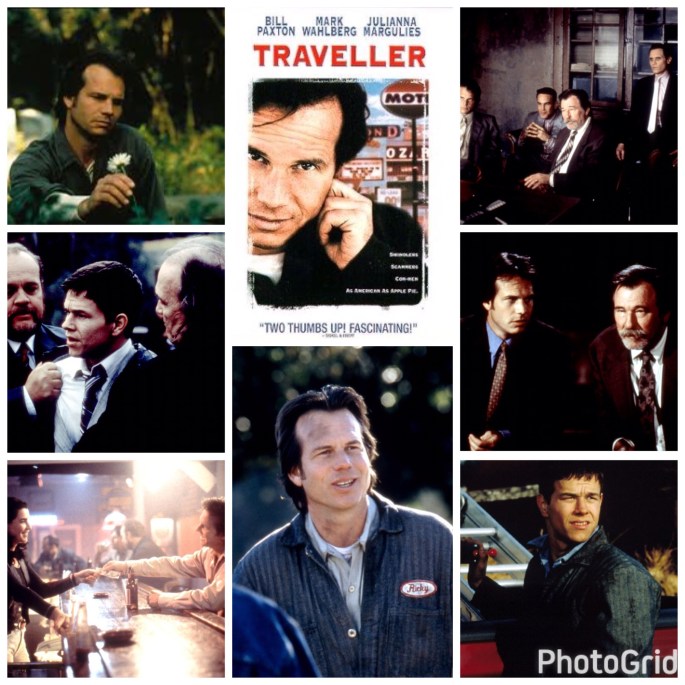
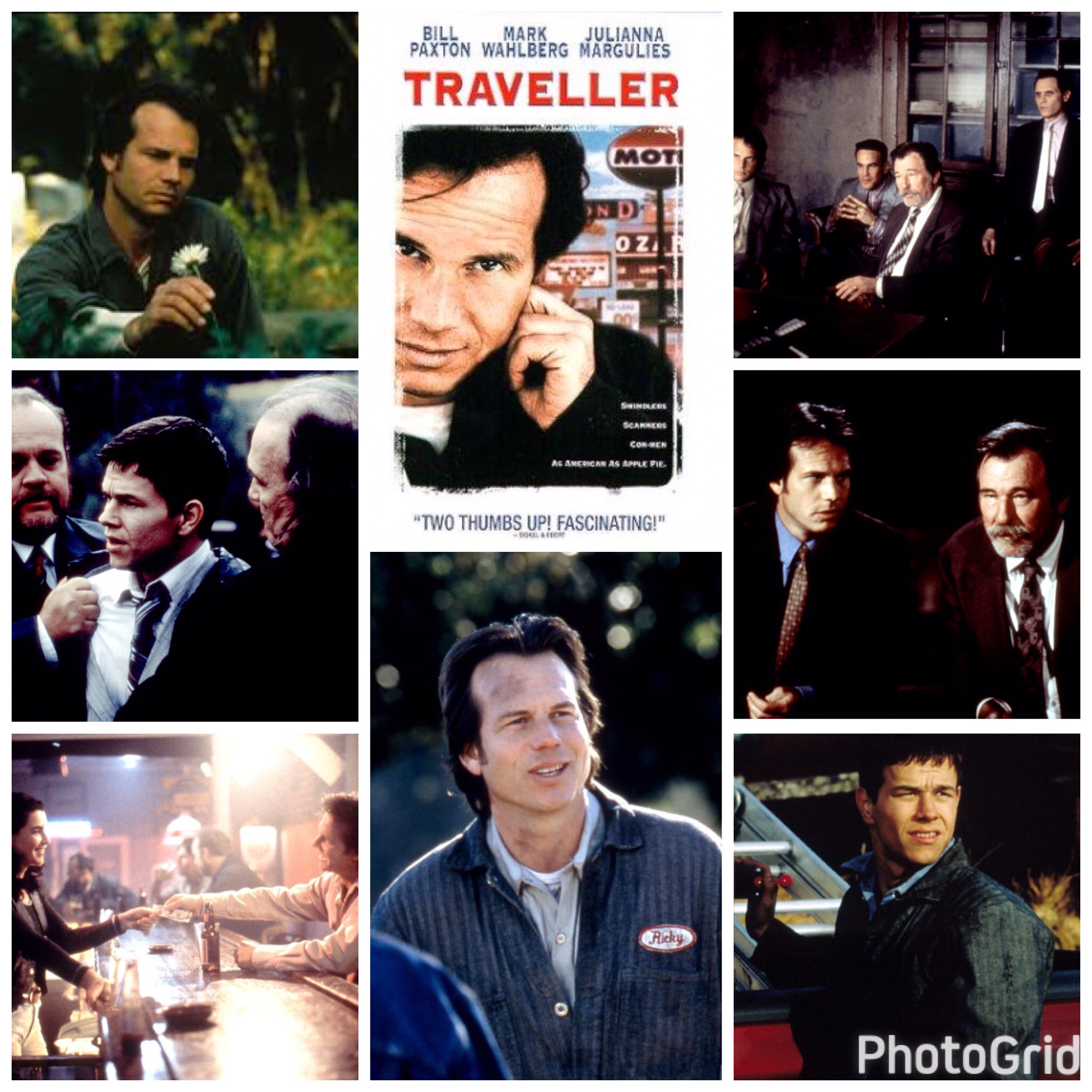
Films about con men can go a lot of ways. They can be intelligent with a worthwhile and earned payoff (2004’s Criminal), they can be hollow, nonsensical, all flourish and no gravity (2003’s Confidence) or deviate any which way from these examples. Traveller takes the quaint indie route, meaning I’m probably the sole person on the planet who has even heard of it, despite Marky Mark Whalberg appearing on one of the starring roles. It’s a shame because this is a bona fide gem, a low key little charmer with a roguish lead performance from Bill Paxton, a plot that gets cleverer the more you ruminate on it afterwards, and an easygoing style to it. Marky Mark plays Pat, a young man descended from Irish ‘travellers’, who are essentially gypsy hustlers and live as such in a sleepy North Carolina community. Pat wants to reconnect with his roots, but his kinfolk are a tribal bunch who don’t really fancy outsiders, however distantly related they may be. Cousin Bokky (Paxton) is the only one to take him under his wing, showing the ropes of a very specific, time honoured idiosyncratic lifestyle. Pat is young, cocky and sticks out like a sore thumb in Bokky’s world, who himself is weathered and moves about with ease and experience, slowed down by the dynamic which his young prodigy presents, and also looking for a way out of this life, and even romance with gorgeous Julianna Margulies. As light as these proceedings are, the film doesn’t fail to show the give dangers that being a con man puts them face to face with. It’s all fun and games until… well until it isn’t, and we get to see some of that ugliness rear it’s head, for without it there would be no stakes. Joining them is grizzled and now deceased character actor James Gammon, playing a salty veteran grifter who crosses their paths more than a few times, causing as much trouble in the process. I’ve not a clue how close to real life fact and tradition this film gets, but I imagine fairly on the nose, as it just has that notion that it knows what it’s doing, it’s researched, capable, and does it all with ease and enjoyment.
-Nate Hill
John Hillcoat’s Lawless

John Hillcoat’s Lawless is the very definition of badass. Bathed in blood and moonshine, gilded by Nick Cave’s rustic, textured musical score and brought alive by vivid and varied performances from an eclectic, grizzled cast, it’s one of the most enjoyable gangster pictures to come along in recent years. It follows the rough and tumble Bondurant brothers, fabled bootleggers who defy prohibition and run their product all over the aptly named ‘wettest county in the world’, until the greedy and very corrupt arm of the law snakes its way into the territory. The eldest and toughest is Forrest, a grumbly, shambling Tom Hardy who’s something of a gentle giant, until the straight razor comes out and he’s not. Jason Clarke is Howard the booze hound, who has sour mash coursing through his veins and a temper to prove it, and Shia Leboeuf, somewhat miscast, does his best as the youngest of the three. The three of them run an idyllic little manufacturing and distribution ring spiralling out of their county into the nearby area, until trouble comes looking for them, in the form of a monster played by Guy Pearce. Now when I say monster, I mean it.. when the villain in your film is scarier than Gary ‘Scary’ Oldman’s roguish supporting work, you know you have one hell of an antagonist. Pearce, sporting a sour look and parted hair that Moses could lead his people through, is Charlie Rakes, some kind of government dispatched deputy whose sole purpose is to make out heroic trio’s lives exceedingly difficult. Cheerfully sadistic and ruthlessly corrupt, Rakes is a bona fide moustache twirling psychopath and Pearce milks the role for all it’s worth, as per usual in his case. Oldman does appear briefly but memorably as lively gangster Floyd Banner, a shark of a businessman with a fondness for tommy gun tantrums resulting in vehicular mayhem. The film walks a line between two distinct tones, which can be seen in the characteristics of the pair of older brothers: Hardy is laid back, laconic and ambles along at his own pace, which any film set in the south just has to have a bit of, whilst Clarke is volatile, fired up and hot blooded, also needed in crime fare. So you have a relaxed, violent, wistful piece with a mean streak that sneaks up on you more than a few times. Any Ozark tale wouldn’t be complete without a romantic flair, as Hardy is swept off his feet by mysterious, plucky Jessica Chastain and Lebeouf has an eye for a beautiful Amish girl played by Mia Wasikowska. The film looks visually magnificent, shot in broad, sturdy rural strokes by Benoit Delhomme, and strict, impressive attention to detail is paid throughout. While maybe not as gritty or mythic as it wants to be, or at least as far as Hillcoat’s previous work has been (The Proposition remains the stomach churning gold standard), it’s a full blown, R rated crime picture, something more than welcome in an age when the genre has had its blood somewhat watered down. Highly recommended.
Morgan: A Review by Nate Hill

Morgan is one of the slickest genre flicks I’ve seen in recent years, finely tuned like a barbed wire tightrope, full of nasty surprises, throat ripping action and that ever present ethical turmoil that hangs about in any films that deal with artificial humanoid beings. It’s only weakness is exactly that stylistic strength: it’s so tight and streamlined that one occasionally feels like the scales tip in the favour of style over substance, but it’s a minor quibble when you take a step back and look at just how entertaining and fired up this piece is. The filmmakers are minimally concerned with the moral grey areas that cloning wades into, and subsequent philosophical pondering, but more than anything they just want to pull the ripcord and blast full throttle into an adrenaline soaked, R-rated sci-if tale with vague aspects of a character study. The title refers to Morgan (The Witch’s Anya Taylor-Joy in a performance both terrifying and heartbreaking), a genetically engineered humanoid girl held at a secluded facility alongside researchers, one of which she has just had a violent incident with. The corporate honcho (Brian Cox in a sly, all too brief honcho) dispatches a cold, clinical asset in the form of Kate Mara, sent to assess the situation and implement any measures necessary. She is an outsider, a callous bicep who flexes at the whims of the company. The researchers and handlers, however, are not. They have grown up around Morgan, invested time and, somewhat unwisely, emotion into her and will stop at nothing to ensure her survival. Paternal Toby Jones, opinionated Jennifer Jason Leigh and compassionate Rose Leslie prove to be a formidable armada against Mara’s evaluation, and tensions arise. Morgan has her own cloudy agenda though, and whether by flawed design, ghost in the shell syndrome or pure survival instinct, proves to be the greatest danger of all. She experiences people at their best, worst and most enigmatic, and her startling behaviour is a reflection of all of it, and a sobering example of humanity’s pitiful inability to perfect the creation of artificial life, at least in this film’s universe anyway. From Mara’s threatening presence, to an intense evaluation from a particularly nasty psychiatrist (Paul Giamatti overacting so hard he almost sucks the set dec up into his orbit), it’s no wonder Morgan snaps. Now when she snaps, the film more or less whips all its chips on the table, flips said table and hulk slams it two floors down. All subtlety and thought provocation kind of get left in the dust as everything careens towards an especially visceral climax, and that’s okay, as long as it doesn’t leave you feeling underwhelmed. I kind of had the intuition it was going to take the rambunctious root overall, and took comfort in the fact that it at least somewhat focused on the delicate aspects earlier on. It’s a well oiled machine, impeccably casted, given just enough pathos to keep our sentimental sides invested, and more than enough visceral hullabaloo to get our pulses dancing, all set to a score both thundering and graceful. Great stuff.
Brighton Rock: A Review by Nate Hill
Brighton Rock is a character study focusing on one of the most delinquent, misanthropic, sociopathic, maladjusted pieces of work you’ve ever seen. The fiend I speak of is a wannabe British gangster named Pinkie, played by Sam Riley, an actor who doesn’t usually get this dark with his work, but makes quite the impression when he does. Pinkie lives in the seaside town of Brighton, and aspires to rule the crime faction there with a razor brandishing, snarling, self destructive death wish. Despite the quaint and quite pleasant coastal setting, this is a cold as ice story about a guy who brings nothing but despair and violence to everyone including himself. Showing up on the scene to oust local bigwig Phil Corkery (John Hurt), Pinkie declares personal war on everyone around him in a spectacular downward spiral of burnt bridges and furious confrontations. There’s also what has to be one of the most dysfunctional ‘love’ stories to be found anywhere, between him and a clueless waitress played by a very young Andrea Riseborough. She’s deluded by the bad boy effect, blind to the fact that Pinkie cares for her about as much as roadkill. She’s a plaything to him, a curiosity to be toyed with and eventually discarded, or worse. She loves him, or at least naively believes she does, making it quite sad and unfortunate to see their bitter courtship circle the sinkhole. Helen Mirren plays her restauranteur boss who feels the bad vibes coming off Pinkie in waves, and warms poor Andrea. Needless to say, these warnings go unheeded. Watch for Sean Harris, Phil Davis and Andy Serkis in appropriately scummy roles as well. This is Riley’s show, and he owns it with the force tyrannical pissant who is positively bursting with self loathing and homicidal hatred. A dour tale hiding beneath a picturesque shell, strangling us in malaise before we know what’s hit us.
John Wick: A Review by Nate Hill
The reason John Wick works so well is a flawless mix of simplicity, earnestness and passion. The premise is a familiar one, and nearly identical to countless other slam bang action flicks out there, a simple and well travelled formula. It’s in the absolutely stylish, classy and distinct execution that it finds its uniqueness. The filmmakers (Chad Sahelski and Derek Kolstad) are stuntmen themselves, and therefore know what is needed to make a successful action film: well staged action. The terrific atmosphere that tagged along is a bonus and goes to further prove these guys have serious talent. They also care, want to have fun and want their film to exist within a memorable universe, and this all shows. An action film would be nothing without it’s star, and Keanu Reeves comes busting out of the gate in full rampaging glory as the titular ex-super hitman John Wick, an expert operative who can do things with guns that would make Neo nervous. John is grieving the death of his wife (the lovely Bridget Moynahan) and taking care of the puppy she left behind to console him, living the quiet life as it were, or at least as quiet as life can get for an ex mob assassin. Wick manages to chill out for a bit with the doggo, but that all ends when his path crosses with that of a spoiled mafia brat (Alfie Allen, played an even nastier snot rag than he did in Game Of Thrones) who steals his car and kills the poor pupper. This really lights Wick’s fuse, gives his brutal talents a new lease on life and throws him headlong back into the dangerous and often eccentric realm of covert contract killers. Allen was the son of a powerful, loose cannon Russian kingpin (Michael Nyqvist in a mirthful blend of funny, scary and just plain exasperated), and now John is at odds with hordes of his underlings and a few former associates who want his head. That’s pretty much all there is in terms of plot, but the film soars on the wings of propulsive, meticulously choreographed action and positively drips with cool, it’s main asset found in Reeves, who is an absolute boss in the role. Sporting a tailored suit, fiery attitude and lethal reflexes, John punches, kicks, stabs and shoots his way through endless unfortunate adversaries, seeming to be both fallible human and invincible archangel of destruction simultaneously. It’s the perfect role for him, a comeback of sorts and just a rip snortin action hero you can get riled up for. There’s attention to detail paid to his world too, the clandestine realm of killers given a mythology, currency and protocol all its own and perfectly original. Adding to the already impossible levels of class are a perfectly chosen roster of supporting talent too. John Leguizamo makes a peppy cameo as a cranky auto fence, Willem Dafoe plays a morally vague fellow hitman, watch for Lance Reddick, David Patrick Kelly, Daniel Bernhardt, Dean Winters, Adrienne Palicki and the always awesome Ian McShane as the suave proprietor of The Continental, a posh hotel that caters only to assassins. All characters encounter John Wick at some point and in some capacity, but Wick himself is the constant, the raw element which drives this film forward with the force of a stampeding bull, scarcely hesitating to breathe or seek medical attention on his quest for carnage. Reeves sells the character and then some, headlining one of the most flat out spectacular action films of the last decade.
Netflix’s The OA: A Review by Nate Hill
I always try to find unique and original projects when choosing films and shows to watch, for we live in a time where many titles you see out there are sequels, nostalgia reboots or spinoffs. These aren’t bad things per se, but it’s also important to break new ground and produce organic material, something which Netflix has a fairly glowing track record for. Tapping the creative well that is the mind of young female director/actress/producer Brit Marling, the platform has given her the chance to tell one of the most striking, beautiful and altogether astonishing pieces of work I’ve ever seen from the long form storytelling format. Earlier this year, Stranger Things knocked me flat, and recently Westworld has captivated my attention and imagination. But The OA has done something different for me; stirred my soul in a way that few creative pieces can, with a story so unpredictable that it starts to feel like the forces of nature at work, forking off into tributary sections of narrative that you would never, ever have been able to to surmise ahead of the reveals.
Now, something I’ll say right off the bat: This won’t be for everyone, and I predict many confused, bitter reviews. Such is the case with work that requires effort and clarity of attention from the viewer, as well as the key ingredient: objective thinking. This is both a scientific and spiritual story, bereft of any religious implicatioms, incredibly vague, esoteric and at times left open to interpretation, or clarification we will get from a second season, fingers crossed.
It starts off simply enough, with the return of a girl named Prairie (Marling) to the home she disappeared from seven ears prior. Mysteriously cured of childhood blindness and very secretive of the events which have befallen her, her loving parents (Scott Wilson and Alice Krige in knockout performances) are just happy to see her again. It’s here the story turns off it’s headlights and hurtles blind into the night, going to places you’d never have thought it would, let alone be explored in a mainstream network series. Marling and Co creator Zal Batmanglij (yes that’s his real name) have outdone themselves in the originality department, presenting ideas and questions so far from the norm of what we’re used to that their story really and truly feels unique from anything else we’ve ever seen. Marling is incandescent in the role, which requires her to go to some fairly tricky places in terms of acting, handling it with the shimmering grace of an angel. It’s difficult for me to say anymore because I want you to open up this gift of a story on your own, without anything to go on, but I must mention her co star Jason Isaacs, who plays a scientific man involved in her disappearance. He’s obsessed in a feverish, sick way, and in any other actor’s hands the character may have come across as too villainous or intense. Isaacs is an unheralded genius of the craft though, and despite the callous nature of the role, he seems more human, more grounded than most.
I really can’t tell you much more at this point, and what I’ve said so far is much less than I usually do in reviews, as far as plot goes. This is one to binge watch, one to let wash over you like a blanket of stars, and one to think long and deep about as soon as the credits of the last episode make themselves known. For the thinkers, the wonderers, the ones who ponder what’s out there and what may be in store for us way down the road of the cosmos, The OA is a blast of nutrition for the soul.
Sam Raimi’s A Simple Plan: A Review by Nate Hill
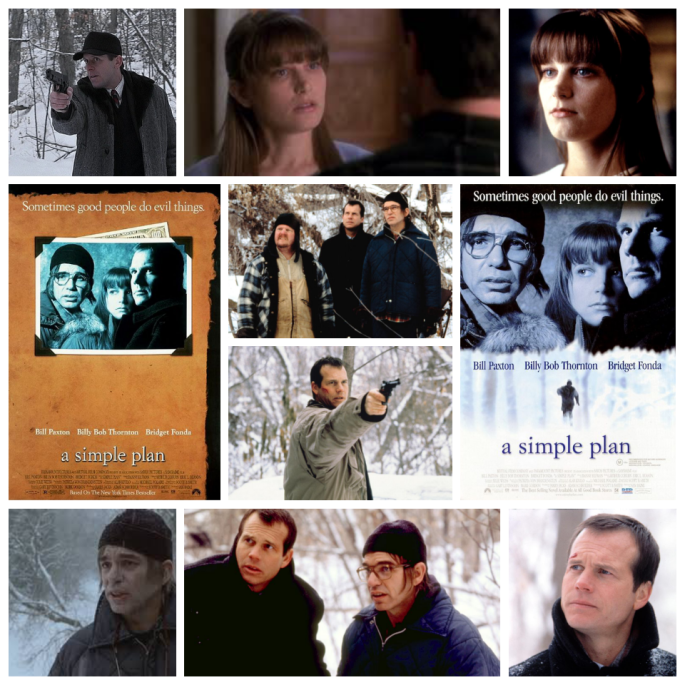
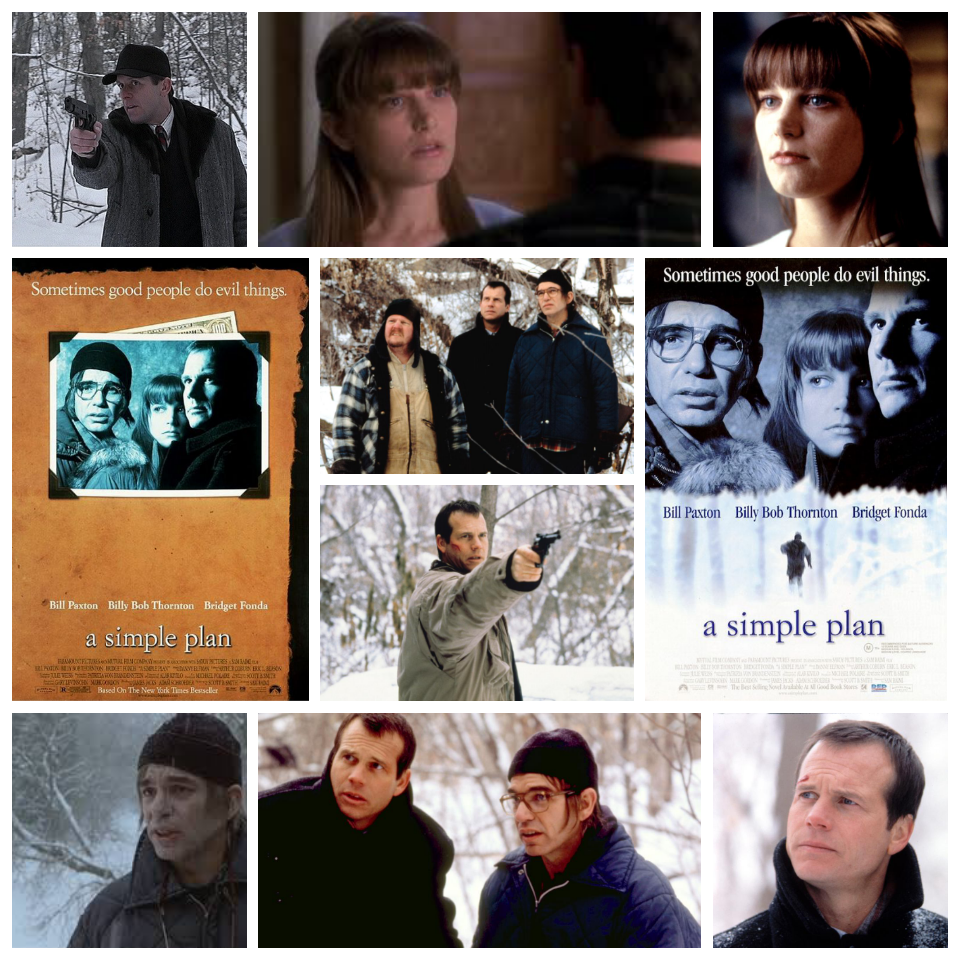
Crime doesn’t pay, and money is the root of all evil. There are countless stories of people who forsake such principles and venture down a dark, destructive path, but none quite so biting and tragic as Sam Raimi’s A Simple Plan. What haunts the viewer so much is not the fact that these characters suffer through horrific turmoil resulting from the promise of money, it’s that these are nice, good natured, everyday folks. These are the people next door, the blue collar, salt of the earth Americans, and it’s harrowing to see the downward spiral they fall headlong into. Bill Paxton is the mild mannered hardware store owner, Billy Bob Thornton his unemployed, dimwitted brother and Bridget Fonda his wife. Three regular people who could be any of us, until they find the money. Out in a snowy rural landscape, millions of dollars in cash is discovered by them, and that’s where the trouble begins. The three go to great lengths to keep their secret hidden from the local authorities, and eventually become paranoid, deceitful and hostile towards each other, leading to some truly heartbreaking outcomes. It’s not enjoyable watching these poor people go through this, because this isn’t some exploititive crime genre exercise. Although shades of noir are present, this film is set in the real world where human beings are neither good nor bad as a template, but have complex capacity for great evil or compassion. When something like the money gets in the way, though, that potential for malicious behaviour is dialed up considerably, and the resulting calamity looks something like what we see here. What’s scary about the whole thing is that it’s essentially their own fault; yes, the money turned up, and yes, its presence is what drives this wedge among them, but the money isn’t sentient, it doesn’t wish ill will, it’s simply *there*, leaving the characters to make decisions regarding it, decisions which in this case lead to their despairing downfall. What’s more, money is our own creation, not some outside influence eating away at them. This is surprising output for Raimi, who is the guy we know for rambunctious horror and genre pulp, but he shows a skilled and subtle hand with the down to earth material, letting his story be a window into a cold world of feverish greed, a world where plans are, in fact, anything but simple.
Guillermo Del Toro’s Hellboy: A Review by Nate Hill
Guillermo Del Toro’s two Hellboy films are a wildly different pair, both incredible thrill rides and well worth anyone’s time, but I think I will always prefer the first. With the second he took the Pan’s Labyrinth approach, presenting a fairy tale world and showcasing makeup effects that were very similar to that film, an esoteric and elemental vibe. There’s just something about the Lovecraftian, steam punk WWII aesthetic of the first that works better for me, and seems to fit our red pigmented protagonist a little more. These films would be nothing without the essential and hard won casting of Ron Perlman, though. He brings a lively vitality, hulking physicality (he fits the part even before the prosthetics go on) and loveable sarcasm, and when you see him in action there is really no other actor you could envision bringing this character to life. It’s laughable to think that Del Toro fought the studio for years to get Ron in the role, turning down the likes of Vin Diesel and Nic Cage (what in the actual fuck were they thinking), not compromising for a second, knowing the film he wanted to make. Well, Ron got cast in the end, as we now know, and he’s not so much playing Hellboy, he just is Hellboy, he’s that perfect for the role. When he’s backed up by Del Toro’s near godlike creativity and imagination (the two partner on projects frequently and it’s genius every time), you get a piece of comic book escapism as exciting and adventurous as this. Hellboy was the result of a nazi experiment gone wrong, in which certifiable nut job Grigori Rasputin (freaky deaky Karel Roden) and his minions open a portal to a dark universe, in attempt to summon forth anything that could turn the tides of war (not the brightest idea, if you ask me), and instead out crawls infant Hellboy, a cranky crimson imp with a big stone appendage and an attitude to match. Kindly professor Trevor Broom (John Hurt) raises the creature to be a force of good and protection for our world, and soon enough he grows into eight foot tall, wise ass, cigar chomping, ass kicking Ron Perlman, now a valuable and formidable asset to the Bureau of Paranormal Research and Defense, an order who strives to keep the darkness at bay. Joined by his on and off flame Liz Sherman (pun intended, as she’s literally a firestarter), Professor Broom, rookie agent Meyers (Rupert Evans) and humanoid swamp thing Abraham Sapien (Doug Jones, dubbed out with David Hyde Pierce), he sets out to shield New York, the planet and the universe from Rasputin, who has returned with notions of finishing the cataclysmic work he started decades ago. The action is propulsive and rousing, initially in NYC streets and subway tunnels, and then in a far off arctic locale where a gateway to some dark dimension opens once more and a suspiciously Cthlhu esque deity of destruction peers out. Del Toro has stated before that he prefers to think of his work as ‘eye protein’ rather than eye candy. Well, call it what you will, his films are nothing short of dazzling on all levels, and Hellboy is no exception. There’s visual splendour in every frame, from the painstaking costumes, makeup and props (Perlman has a great big gun for that great big hand), to the production design and seamless computer wizardry, the world we see onscreen is immersive and entertaining for the entire journey. Roden makes a frothing madman out of Rasputin, always nailing the villain when he shows up, and stopping said show here with his theatrical and baroque insanity. My favourite has to be Kroenen though, a sharply dressed, mute nazi assassin with a face only a mother could love and a set of knives you’d be foolish to get in the way of. He’s an inspired and truly creepy villain that sets the apocalyptic dial on the highest setting when he shows up. Jeffrey Tambor provides additional comic relief as the long suffering suit who serves as the face of PR for the bureau, and props to Brian Steele as Sammael, a seriously pissed off demon set loose by Rasputin in the city streets, leading to one blockbuster of an action sequence. As far as comic book films go, this is a gold standard of filmmaking, world building and good old fashioned storytelling, all of which Del Toro is a master at. It wouldn’t have been the same without him, without Perlman and especially without the magic that happens when they work together.