Indie Gems: Kevin Philip’s Super Dark Times

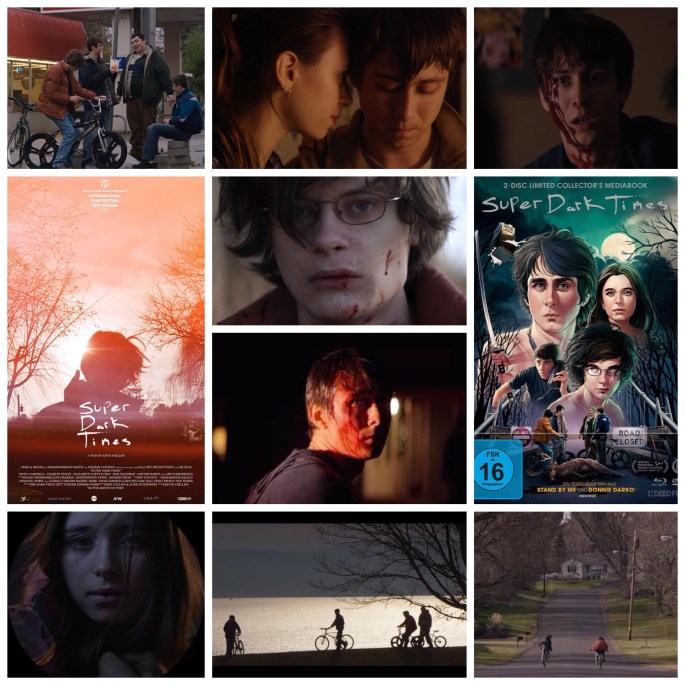
The title ‘Super Dark Times’ serves as a warning of sorts for the film to follow. It should be wisely taken into consideration, as this is probably the most disturbing film I’ve seen all year. In contrast, it’s also one of the most beautifully made. Bring a comfort blanket or cuddle buddy though, because these aren’t only Dark Times, they’re bleak, grim and tough to absorb without feeling grossly affected after. I like it when films explore themes of both violence and adolescence bourgeoning side by side in small town youth, everyone from Stephen King to David Lynch have been fascinated by these ideas. Violence is an unavoidable step in the learning curve for youngsters and a key element in any individual’s coming of age, no matter what we tell ourselves. First time director Kevin Philips pads those themes well by telling his story in the most realistic, blunt fashion he can, casting kids that genuinely look to be high school age, using sound design and cinematography to create a frighteningly immersive atmosphere and not neutering the stark violence in off-screen gimmicks to soften the blow of a blood-chilling story. Two normal enough high school boys (Charlie Tahan and Owen Campbell, both superbly good) are set on different yet equally dark paths following a brutal accident that scars them both, awakens a dark passenger in one and lays a blanket of dread over their small upstate New York town. That’s all I’ll say in terms of plot, it’s a scary guessing game of dangerous encounters, adolescent discoveries and tragic violence that unfurls like a jet black velvet carpet of doom. Metaphors as colourful as that are just me trying to abstractly impart to you how affecting the visual and auditory mood-scape are, but you’d be better off just watching the thing for yourself. Philips leaves certain areas of the narrative *just* vague enough until one gets the gnawing notion that what is presented to us might not be the full story, a tactic which instills the aftertaste of unease beyond the film’s bloody conclusion. Speaking of conclusions, this has to have the most suspenseful climaxes I’ve seen in a while, a breathless, literally razor sharp confrontation that feels earned and urgent because of how invested I was in the characters up until then. The film opens with violence, proceeds through a violent tale and ends with it as well, but as is often the case with films that care to do so, there’s contrast, a certain vitality to the characters and a hope that lives in lingering shots of a dying sunrise or a girlfriend (Elizabeth Cappuccino) gently comforting one of the protagonists. I read another review that called this ‘a simple story, well told’, which I partly agree with. It goes without saying it’s well told, but there’s a complexity to it, an intuitive force guiding the proceedings that one can feel like an undercurrent, and the moods it stirs are anything but simple. One of the best films this year.

-Nate Hill

Stigmata

Stigmata is one of those thrillers with religious undertones that seems to avoid pesky, eye roll preaching by simply sticking to the horror aspects and providing a solid genre flick, without getting up in our faces with it’s message or feeling lame (see Roman Polanski’s The Ninth Gate and Peter Hyams End Of Days for other ones that achieve this). This one is religious in the sense that it has to be for it’s plot to move along (just look at the title) but essentially it’s part atmospheric spook-fest and part chase film, both of which it does fairly well. Patricia Arquette, in full damsel in distress mode, plays Frankie, a girl whose last priority in life is religion, but suddenly finds herself afflicted with the stigmata, mysterious self-manifesting crucifixion wounds that show up without warning, ruining bedsheets and couches alike. The Vatican soon gets wind of this and dispatches priest investigator Kiernan (Gabriel Byrne) to debunk or research her case. Something about her her soon has shattering implications for not just Catholicism but faith as a whole, and suddenly they’re on the run from a nasty villain priest (Jonathan Pryce) whose ideology is seriously cornered by these new revelations. When Pryce plays a bad guy in your film (see Ronin and The Brothers Grimm) you know he’s going to go all out, arch it up and be a grandiose piss-ant of an antagonist, his ‘priest’ here is so vibrantly evil he seems to have walked over from a Dario Argento flick. There’s a more compassionate man of faith too (Rade Serbedzija) who has a better grasp on the new theology, which he lays down in expository patience so the audience has an inkling of what’s at stake. Byrne and Arquette actually have some terrific chemistry and romantic yearnings, but sucks for them with him being a priest and all. You can do far far worse with thrillers like this, it really sets up a hellish urban atmosphere neatly and diligently tells a pretty cool story.

-Nate Hill

Scott Cooper’s Hostiles

Scott Cooper’s Hostiles is beautifully shot, competently staged, well produced, acted and scored, but there’s a certain depth, development and complexity lacking, and I lay the blame on script, which seems a little south of the polished stage, with one foot still rooted in the blueprint phase. It’s a shame because the actors are game to give the film all they’ve got, but the script handed to them just isn’t on par with their efforts. Christian Bale is implosive as ever in one of his best performances as Blocker, a decorated civil war vet who has spent a great portion of his career heavily involved in the war and genocide against Native American tribes, and as such has become a hard, mean and brittle tempered creature. It’s fascinating to observe how someone like him, who does have a decent soul deep down, can be turned so backwards and hateful in circumstances like that, another theme the film doesn’t quite follow through with. Blocker is tasked with one last mission before semi-early retirement: Escort legendary Cheyenne Chief Yellow Hawk (Wes Studi, excellent as ever) and his kin from Arizona back to his home in Montana to live out his remaining years. Blocker bristles at the thought, but when his salty superior officer (Stephen Lang) threatens his pension, he begrudgingly saddles up. The film then showcases their journey, several hardships and skirmishes they find themselves in, all to fertilize the eventual bond and understanding formed between the two groups and their decision to work as a unit, and even respect each other. Here’s the problem: the script isn’t deep or thoughtful enough to make any of these arcs believable. The Native characters are painfully underdeveloped, particularly Yellow Hawk’s son and his wife, played by Adam Beach and Qorianka Kilcher, two actors more than capable of handing in great work when the material comes their way. The one thing that does work and is probably the best quality that film has is a character played by Rosamund Pike, a frontier farmer whose entire family is slaughtered by vicious Comanches in the film’s arresting opening scene. She joins Bale’s company, and Pike plays her with harrowing sadness, terrifying vengeful poise and gives one of the most realistic, un-cinematic portraits of grief I’ve ever seen. Come awards season next year, she should be a front runner. The film almost doesn’t deserve her sterling subplot, but it does it’s best, and reaches some heights here and there. Bale’s company is played by a reliable troupe including upright Jesse Plemons, melancholic Rory Cochrane and grizzled Peter Mullan. Also appearing is western veteran Scott Wilson in a brutal last minute cameo, always nice to see him still in the game. There’s an unbalanced focus between the soldiers and the natives, who I wanted to learn more about but were left as mainly tagalong bystanders with scant dialogue. When Bale’s arc reaches it’s final stages, I felt slightly cheated by everything that came before: I didn’t quite believe that what he’d been through was enough to sway over two decades of hate and prejudice, and once again the fault lies with script. A little more care, preparation and editing could have turned this from a good film into one for the ages.

-Nate Hill

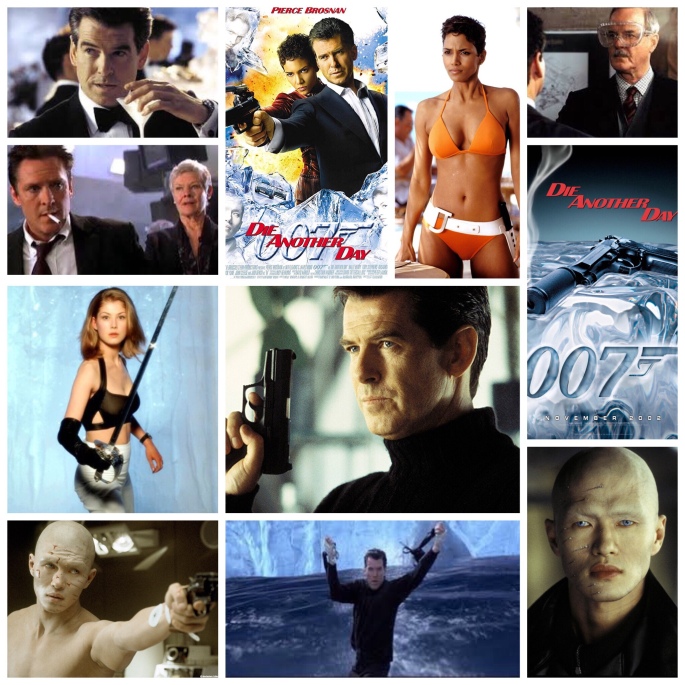
Lee Tamahori’s Die Another Day

People rag on Lee Tamahori’s 007 effort Die Another Day quite a bit, but.. I really dig it. Look, the James Bond films were always meant to have a silly flair and air of camp to them, dating back to the original 1960’s spy romps with Connery and stretching forth to the cheesy 90’s entries starring Pierce Brosnan, who for my money is the second best Bond, following Daniel Craig’s gritty metamorphosis. Brosnan’s stint as Bond is the most whacked out the franchise has ever gotten, and this one is arguably the craziest of the four, but it’s a way unfairly panned. It’s got gadgets, exotic settings, two sexy Bond babes, a hilariously over the top bad guy, and enough cartoonish action scenes to fuel two movies. What more do you want? Well, obviously people wanted a more grounded, realistic take or the Craig films would never have been green-lit, but that’s besides the point. Every incarnation of 007, from the silliest to the most down to earth, has the right to frolic in a franchise with enough wiggle room for over two dozen entries, so let them have their fun. Brosnan has some picturesque arctic adventures here, and I love when Bond gets to go play in the snow. There’s a North Korean radical (Rick Yune) with a meteor shower of real diamonds embedded in his face, so how’s that for a villain. Halle Berry smokes it up as one of the hottest Bond vixens to date, Jinx Johnson, the image of her emerging from the water in a bikini now burned into the minds and bedsheets of countless viewers who saw this before the dawn of internet porn and broke the rewind button on their remote. Rosamund Pike is the other, an ice queen named Miranda Frost, whose surname accents her initial attitude towards 007 nicely. Judi Dench and John Cleese return as M and Q, at the height of their dry and droll mannerisms. There’s a cool new character played by Michael Madsen too, some CIA bigwig called Damian Falco, who I imagine we would have seen a lot more of had the Brosnan universe continued, which sadly was not to be. Anywho, the reason I picked this one to review today is because it was the most ridiculed 007 film I could think of in the canon, an area that always fascinates me in any franchise. Sure, it’s a laugh in places and so far over the top it soars above the satellite used by the villain to threaten the planet below. But people should really take a step back and examine the art their bandwagon jeers are pointed at, and look for the positives. Visually, this is probably one of, if not the most good looking 007 film ever, thanks to the sweeping Icelandic locations captured by cinematographer David Tattersall. The sight of Brosnan wind surfing down the face of a glacier that’s being melted by a giant space laser beam from aforementioned satellite is inspired, and taken to a whole new level because the guy does all that *in his fucking tuxedo*. Re-read the previous sentence and try and tell me that’s not one of the coolest Bond scenarios you’ve ever pictured. It looks even better in film than it does on paper, too. Give this one another shot, because it’s not even close to being the weakest of the bunch, and I try and discourage such witch hunts in any franchise to begin with. The films are all there to enjoy, so why not leave the negativity fuelled nitpicking stowed in your suitcase and do just that. Die Another Day is a blast.

-Nate Hill

David O. Russell’s Joy

There’s something inherently engaging about a self made success story, an attractive quality that David O. Russell employs to great effect in Joy, his most recent, and my most favourite of his films so far. He’s a fascinating director who’s work always has an oddball quality to it, whether worn obviously on it’s sleeve (I Heart Huckabees, of which I’m not a fan), or subtly funnelled into a genre picture (the excellent war flick Three Kings), there’s just an undercurrent that’s decidedly south of normal humming through his whole filmography. Joy is one part hyper-dysfunctional family drama, one part autobiographical rise to fame with a hefty dose of comedy thrown in the mix. Jennifer Lawrence has beyond proven her solid gold talent as a miraculous leading lady by now, and she’s the acting equivalent of a truckload of C-4 here as Joy, a self made millionaire who’s persistence and strength in spirit led to her pioneering a revolutionary cleaning product. It’s loosely based on several true stories, but Russell is more intent on letting his actors run wild and giving us a frenetic ‘fly on the Wall’ glimpse into Joy’s upended family life. She’s basically the rock to all of her kin, the only one with a sane hair on her head and her priorities in order. Her dad (Robert Deniro) is an irresponsible man child in a tailspin of a midlife crisis, her mom (Virginia Madsen) is an unpredictable basket case, while her ex (Edgar Ramirez) deludes himself about a would be singing career. They all live at home, contribute not a penny to the household, plus she’s got a young daughter to look out for as well. Quite a situation to be in, and the only one standing in her corner is her loving grandmother, played warmly by a brilliant Diane Ladd. The film isn’t so much about plot as a measurable substance and more just how things happen from scene to scene via chaos and commotion. Everyone is so verbose, fired up and out of control that we spend swaths of time simply listening to them argue and rant before realizing we’ve been discreetly subjected to character development the whole time, a clever, patent aesthetic that Russell also used in his American Hustle and Silver Linings Playbook. Joy dreams of a less crazy life for her daughter, and her miracle mop invention may just be the ticket there, if she can avoid her whole unruly clan tagging along for the ride. Bradley Cooper is great as a stern patent kingpin, and the scenes that show how television sales play out at headquarters have a studious, hypnotically meticulous rhythm to them that show Russell in full stylistic swing. The show belongs to Lawrence though, who’s a captivating wonder in every scene, her fever pitched exasperation at the people around her a tangible force of nature, her resilience and determination a source of inspiration. I like this film best of Russell’s filmography because it’s the most focused on people rather than plot. In Silver Linings, which is a lovely film don’t get me wrong,

the characters were believable and true, but they still serviced the plot which was rooted in an obvious theme of mental illness. In American Hustle, The shtick was conmen and their world, the characters sourced from that and existing to run on that racetrack. Joy is about an everyday girl who patents a kitchen mop. It’s benign, barebones and just lets the characters roam in a daily life arena that’s relatable, malleable and feels down to earth.

-Nate Hill

Midnight Run

Buddy comedy. Action crime extravaganza. Road trip flick. Endlessly charming. Funny beyond words. Surprisingly emotional where it counts. Midnight Run is a low key American classic and one of the best films ever put out by any studio. As close to perfect as it gets, engaging from beginning to end and rooted in it’s central relationship between terminally cranky bounty hunter Jack Walsh (Robert De Niro) and straight laced, on-the-lam embezzling accountant Jonathan Mardukas (Charles Gordon). They couldn’t be more dysfunctional, paired together on a country wide goose chase and pursued by the FBI (hilarious buffoon Yaphet Kotto, subject to a running joke for the ages), the world’s angriest Chicago mobster (Dennis Farina), a hapless fellow bounty hunter (John Ashton) and a weaselly bail bondsman (Joe Pantoliano). Deniro is a bitter, alienated lone wolf whose brittle exterior is gradually chipped away at by the warm-hearted, endearingly persistent Grodin, and their mutual character development is simply some of the best ever written and acted. The supporting cast whirls about them in perfect harmony, while every stroke of the plot lands neatly, for about as close to a perfectly staged narrative as you can get. My favourite sequence has to be the most affecting (because I’m a sap): the pair visits Jack’s ex wife and kids, and a heated, long overdue domestic squabble is stopped dead in it’s tracks as Jack’s daughter, who hasn’t seen him in nine years, walks into the room. It’s a heart wrenching scene in a mostly glib and cavalier film, but it’s little moments like that that set this apart and turn it from a formula flick into a formula flick populated by genuine human beings, and not simply written avatars for plot propulsion. The two leads have banter for the ages too, like when Grodin coaxes Deniro out of resentful silence by hinting that chickens they just spotted on an Indian reservation are looking pretty foxy, one in a countless stream of fresh, pithy and completely believable verbal interaction the two share throughout the film. It’s fun, exciting, rowdy, effortlessly well made, brilliant storytelling, and will always be way up there on my list of all time favourites.

-Nate Hill

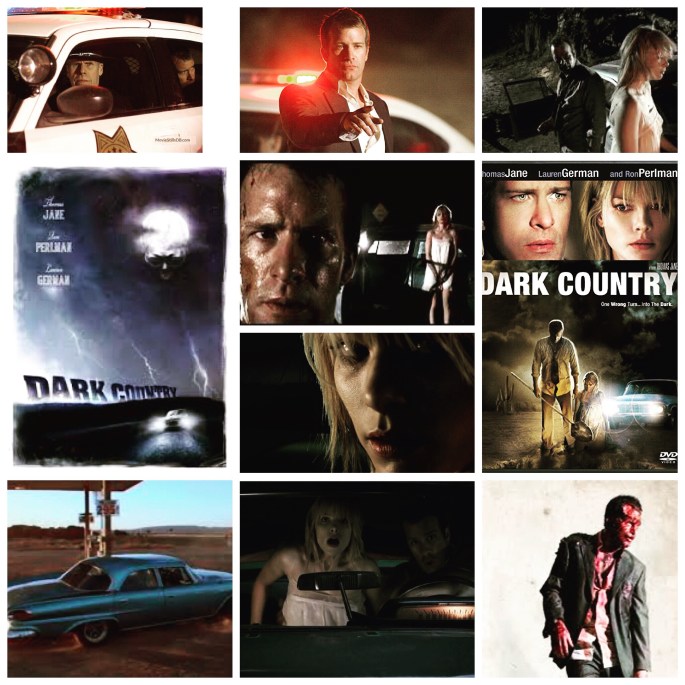
B Movie Glory: Thomas Jane’s Dark Country

Dark Country actor Thomas Jane’s first venture behind the camera as director, and although the final product is a bit muddy and perplexing, it also creates an atmosphere of impenetrable mental fog and noxious delirium that’s in itself a success, even if the whole thing amounts to a big question mark. Jane has already proved to be a stalwart action hero, charismatic leading man and talented performer (anyone raising their hand to disagree with me gets a copy of Mark Pellington’s I Melt With You hucked across the classroom right at their head). Working off a script from veteran writer Tab Murphy, Jane concocts what can only be described as a Twilight Zone episode on opiates, with a hint of sketchy Midnite Movie added for flavour. Does it work? Yes and no. The story is nearly indecipherable except to someone glued to the screen inches away, kept abreast of every minute plot shift and disorienting, mumbled bit of dialogue. Jane and Lauren German play a couple driving from somewhere to somewhere, who encounter a freaky, whacked out hitchhiker (Chris Browning) somewhere around the Nevada desert. He’s bloodied up something fierce, babbling on about nothing and from the moment he arrives, their turns turns dour. It’s anyone’s guess what goes on from there… a dead body they must contend with, a suspicious state trooper (nice Ron Perlman cameo) on their tail, flashbacks to a weird encounter at a desolate roadside diner, ever creeping fog that seems to have followed Jane over from Stephen King’s The Mist to wreak more havoc, and so it goes. Plot is of little importance to him as a director though, and instead he seems more intent on clouding up the viewer’s perception of events until it’s more like a shadowy fever dream full of dead ends and few answers. An atmosphere piece with a logic tank that’s run dry, but succeeds in whipping up a neat nightmarish road trip through confusion and paranoia, if not much else.

-Nate Hill

The Punisher (2004)

There’s several movie versions of Marvel’s The Punisher, which these days are pretty much eclipsed by Netflix’s take-no-prisoners, balls out long form adaptation, but the film ones are still out there, if only for variety. By several I mean three, which some might not be aware of. Dolph Lundgren made an effort back in the 90’s which looks cool, but I’ve yet to see. Ray Stevenson most recently took up the mantle for a jagged edged, jarringly violent and dismal toned entry, which is worth a look. My favourite has to be the Thomas Jane one though, by far the most ‘hollywood’, high profile stab at the mythology, slightly silly in places, dementedly weird in others, a well casted, oddly pitched vehicle that is somehow the most fun of the trio of flicks. Jane, at least in the looks department, is the closest you’ll find to the Frank Castle of the comics, a rock-jawed, all American tragic antihero turned mass murderer. The story he finds himself in… well, it’s a little stuffed with itself, subplots dangling from it like entrails and far too many characters running about, but oh well. Jane’s Castle watches his wife (sadly short lived Samantha Mathis) and family massacred in the film’s opening, at the hands of melodramatic mobster Howard Saint, played by John Travolta, who’s determined to steal every scene whether anyone likes it or not. Forced into hiding, Frank eventually becomes the angry Punisher, a vigilante dressed like a jock in a school shooter Halloween costume, now on a path to wipe out Saint and his whole freaky entourage, which includes consigliere Will Patton, sporting some icky extra curricular activities. He also shacks up with sexy Rebecca Romjin and her two apparent roommates Ben Foster and comedian John Pinette, when he needs to dodge Travolta’s onslaught of colourful assassins. Well, he only *literally* shacks up with Romjin, but you get the idea. Speaking of assassins, there’s some really cool supporting villains dispatched by Saint. Castle is unprepared when an eight foot tall, mute Russian goon in Where’s Waldo inspired attire busts down his door looking for blood. My favourite has to be Harry Heck though, a contract killer so similar to Johnny Cash that for years after watching this I legit thought they somehow convinced the man in black himself to do an epic cameo. It’s actually a country singer named Mark Collie, but oh well, the guy composes a twangy guitar accompanied vocal for every target he’s assigned, which he croons out to them before getting violent, and that’s a fuckin wicked comic book villain in anyone’s books, whether or not the character actually appeared in the ones this film is based on (I’m guilty of never reading them). This film is fun because of it’s arch, broad strokes approach, especially with Travolta’s over the top take, Laura Harring as his emotional wife, whose fault it is that the whole massacre in the opening happens to begin with. That opening is ruthless, exploitive and doesn’t hold most of anything off camera, a good setup for revenge (or,sorry, ‘punishment’) in any pulp comic book scenario. Jane holds his own, and even popped up again years later to do a pseudo sequel in short film form called ‘Punisher: Dirty Laundry’, which is so good it almost blows this one out of the water. Here you’ll find a movie that’s not quite as resigned to it’s unpleasantness as the Warzone one (which really gets messed up), but still knows how to pack a mean punch, when it’s not too tied up with itself.

-Nate Hill

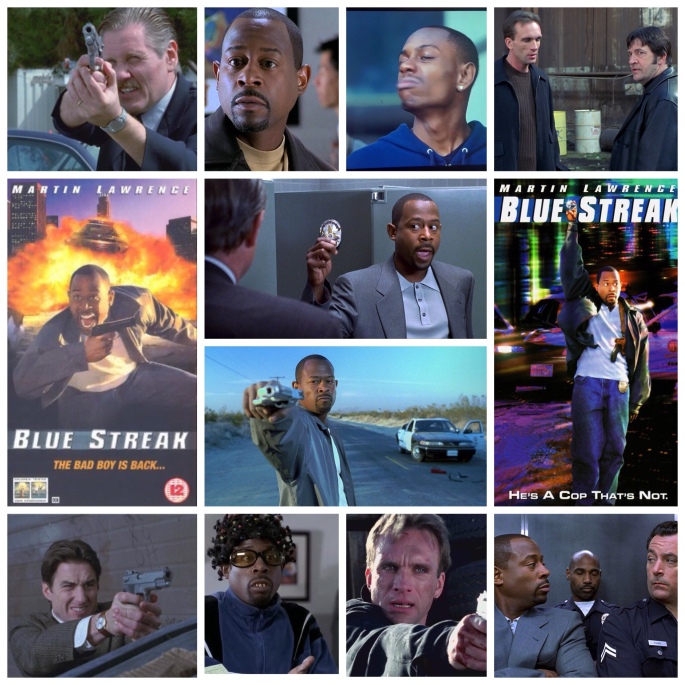
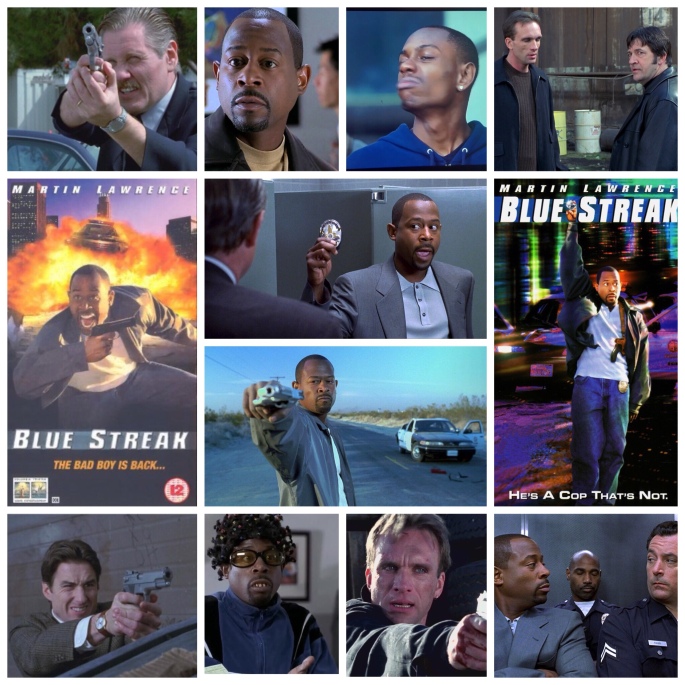
Blue Streak

Blue Streak is one of those flicks I’ve probably seen a couple dozen times, whether I’m tuning in intently, comforted by it as zany background noise, viewed on a lazy summer afternoon or a cozy rainy day in. It’s just about as fun as action comedies get, blessed with an adorably implausible story, packed with both notable comedians and a legion of genre talent and speckled with charming action sequences, just the right blend of over the top and entertaining. I don’t give a wet shit what anyone thinks, I love Martin Lawrence to bits, I think he’s one of the best comedic actors of his day, and never fails to put a smile on my face with his exasperated, frenzied persona and motor-mouthed cadence. He’s petty thief Miles Logan here, leading a crew of hapless jewel thieves including Dave Chappelle, John Hawkes and reliably villainous Peter Greene, who double crosses the lot of them in attempts to make off with the loot. Forced to stash a big ass diamond in the air ducts of a building undergoing construction before a stint in the slammer, Miles is released from jail, maniacally frustrated to learn the completed structure is now… an LAPD police station. What ensues is one of the silliest gimmicks in film history: Miles fakes a heap of impressive credentials, successfully impersonates a high ranking officer and infiltrates the ranks of LA’s finest in hopes of snagging that rock from the air vent. Of course, a risky shtick like that is never as simple as planned, especially when both tweaked out, hilarious Chappelle and murderous, scary Greene blow back into town looking for him. The real value lies in his interaction with all these cops though, which borders on Mel Brooks style satire it’s so cheeky and unbelievable. Rookie Luke Wilson and salty vet William Forsythe are tasked with babysitting him as he blunders from scene to scene, and via his inherent street smarts, accidentally starts solving cases and making arrests, when he’s not discreetly turning perps loose out the back door of the station. It’s a full blown laugh riot in areas, numbingly juvenile in others, but never short of a blast to sit through. The cast is peppered with wicked supporting turns from Graham Becker, Octavia Spencer, Nicole Ari Parker as an ice queen defence attorney, Frank Medrano, Steve Rankin, Julio Oscar Mechoso, Olek Krupa and more. To take this film seriously is to unwittingly brand yourself a chump, missing the point completely. It’s an asinine, fired up, ADHD riddled ride through farcical action movie territory, and I love every warped minute of it.

-Nate Hill

Henry Selick’s Monkeybone

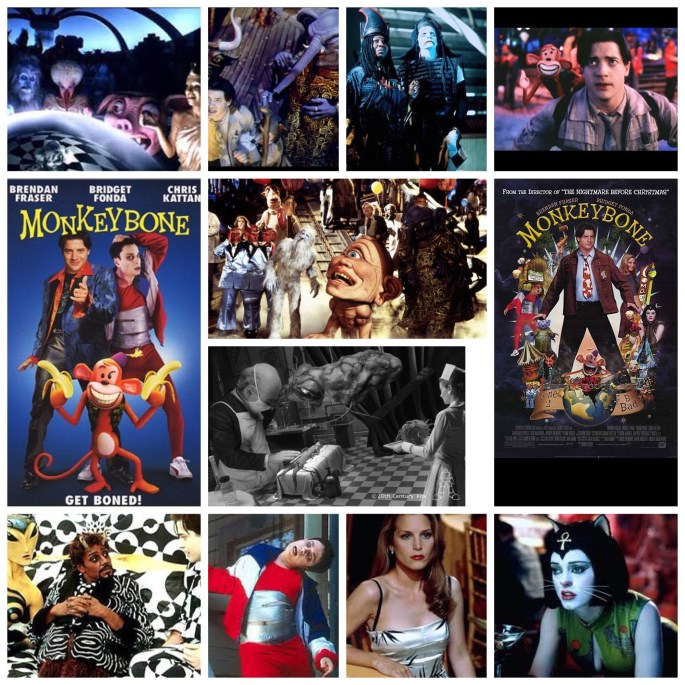
Henry Selick’s wacktastic, surreal Monkeybone is off its head, and while it never quite coalesces into something wholly memorable, the images and impressions on parade are not something easily shaken. To start with, the visual production design is so detailed and thoroughly deranged it deserves it’s own art gallery after the fact. Selick, the other half of the creative team behind Nightmare Before Christmas, create’s here what is maybe one of the most unsettling, eye popping mood boards in any film of the century. It’s just just in keeping us awake with the storytelling that he falters somewhat, not enough to sink the ship, but enough that not a lot of people remember or revere this film these days, which is a shame because it’s quite an achievement in areas. Brendan Fraser, who seems to actively seek out oddball scripts, plays cartoonist Stu Smiley, who goes into a coma, gets sent to a place called Downtown where the veggies go until they either croak or wake up, and is put in jeopardy once someone has the idea to pull the plug on him. His loving girlfriend (Bridget Fonda, who I wish was still in the acting game) waits for him, while his newest creation, a little plush horn-ball named Monkeybone, gets a little too sentient and tries to steal his body, which has a certain organ he wasn’t endowed with on the drawing board. The story is too weird and raunchy for kids, and falls into the Roger Rabbit/Cool World arena of adult oriented fare that still has a childlike sensibility. Downtown is essentially a haunted DisneyLand astral plane, a reject realm where ghosts, ghouls and monsters with disturbing anatomy roam free and feed on nightmares, siphoned from the psyched of those upstairs stuck in comas. Weird enough for you? You don’t know the half of it. The nightmare scenes are shot in stark black and white and have a genuinely subconscious, tuned in vibe to them that actually feels like one does in dreams, not an easy aura to pin down onscreen. Fraser does a wicked job, especially when the monkey hijacks his body upstairs and starts prancing around like a mental patient, it’s an inspired bit of physical comedy from the man who brought us George Of The Jungle. Monkeybone is apparently played by none other than John Turturro, but his voice is so tripped out on helium effects it’s fairly unrecognizable. The film gets downright hilarious when Stu follows the scamp back up in the avatar of a corpse with a broken neck (bravo to Chris Kattan), a dementedly genius sequence. There’s cameos and vaudeville supporting turns galore, including Rose McGowan as a sexy cat/human hybrid, Bob Odenkirk, Thomas Haden Church, Giancarlo Esposito, Lisa Zane, and Whoopi Goldberg as Death, a sly meta rework on her Ghost character. The film is at it’s best when it focuses on Downtown, which really is a vibrant atmosphere to hang around in, always an odd mutant creature to look at or a morbid one liner for chuckles. The stuff back on earth can be fun too but really doesn’t pick up until Kattan comes roaring in and steals the climax with his bobble-head gymnastic fanfare. If only this had been a little more in terms of story and character, it could have matched it’s truly impressive visual scope. As it is, it’s worth it just to see how weird and surreal mainstream movies can get when they want to.

-Nate Hill