Taika Watiti’s What We Do In The Shadows: A Review by Nate Hill 

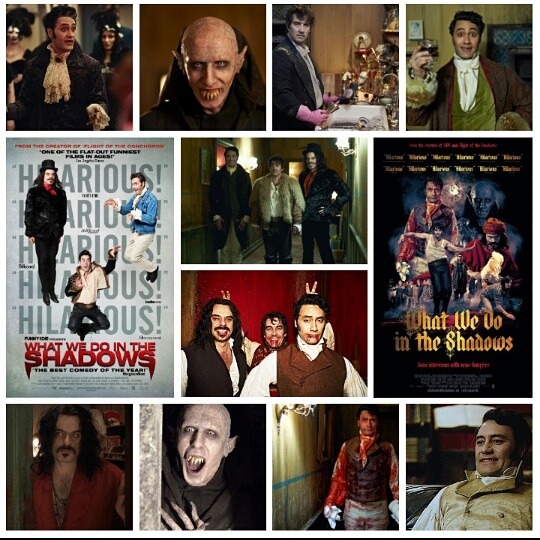
I don’t remember laughing as hard at a film in years as I did at What We Do In The Shadows the other night. It’s pure comedic bliss from front to back, and makes the often tedious chore of making an audience laugh seem effortless. It’s part horror comedy, part mockumentary with a dash of buddy camaraderie and and depth of wit and character all it’s own, thanks to New Zealand filmmaker Taika Watiti, who is fast becoming one of my favorite new voices in the independent field. A master at finding the humour in little moments and dry subtlety, his cameras spend a couple hours documenting pratfalls, squabbles and zany encounters wirh quartet of vampires living in Wellington, New Zealand, each one simultaneously a different caricature of bloodsuckers from previous lore, as well as a completely unique, hilarious individual. Jermaine Clement is the closest thing you’ll find to a household name amongst the cast as Vladislav, a Dracula esque, baroque vamp. Jonny Brugh is Viago, the musically inclined, Ann Rice incarnation, and Ben Fransham, plays Peter, a spooky eight thousand year old Nosferatu clone. It’s Watiti himself who steals the show though, as Deacon, a dandy of a Germanic royal who gets all the best lines and relishes them with adorable deadpan delivery every chance he gets. The film comes nowhere near the classification of horror, and in fact these four resemble a bumbling, lovable frat house, their vampiric nature treated lightly as they cavort about their everyday life like rambunctious nocturnal teddy bears. They navigate household chores, nightlife, inter species relations (there’s a few priceless encounters with a rival pack of werewolves), pesky humans, and have a ball the whole time through. What makes the film so special is the goldmine of comic skill and talent that both director and cast have tapped into. The relationships are unforced, full of idiosyncratic nonsense and always feel utterly organic. For a group of undead fellows, they truly are the life of the party. The documentary style never feels intrusive or irritating, seamlessly taking refuge behind the forceful and side splitting antics which take center stage for the entire film. Comedy is the hardest genre to produce fruitful results in, with horror a close second. What it takes to make you laugh can often be a rare gift, wielded by few and far between, those writers, directors and actors who have that elusive midas touch on our funnybones, combining just the right elements of script, improv and intuition to  get us laughing ourselves silly. This one achieves that and then some.

Taika Watiti’s What We Do In The Shadows: A Review by Nate Hill 

I don’t remember laughing as hard at a film in years as I did at What We Do In The Shadows the other night. It’s pure comedic bliss from front to back, and makes the often tedious chore of making an audience laugh seem effortless. It’s part horror comedy, part mockumentary with a dash of buddy camaraderie and and depth of wit and character all it’s own, thanks to New Zealand filmmaker Taika Watiti, who is fast becoming one of my favorite new voices in the independent field. A master at finding the humour in little moments and dry subtlety, his cameras spend a couple hours documenting pratfalls, squabbles and zany encounters wirh quartet of vampires living in Wellington, New Zealand, each one simultaneously a different caricature of bloodsuckers from previous lore, as well as a completely unique, hilarious individual. Jermaine Clement is the closest thing you’ll find to a household name amongst the cast as Vladislav, a Dracula esque, baroque vamp. Jonny Brugh is Viago, the musically inclined, Ann Rice incarnation, and Ben Fransham, plays Peter, a spooky eight thousand year old Nosferatu clone. It’s Watiti himself who steals the show though, as Deacon, a dandy of a Germanic royal who gets all the best lines and relishes them with adorable deadpan delivery every chance he gets. The film comes nowhere near the classification of horror, and in fact these four resemble a bumbling, lovable frat house, their vampiric nature treated lightly as they cavort about their everyday life like rambunctious nocturnal teddy bears. They navigate household chores, nightlife, inter species relations (there’s a few priceless encounters with a rival pack of werewolves), pesky humans, and have a ball the whole time through. What makes the film so special is the goldmine of comic skill and talent that both director and cast have tapped into. The relationships are unforced, full of idiosyncratic nonsense and always feel utterly organic. For a group of undead fellows, they truly are the life of the party. The documentary style never feels intrusive or irritating, seamlessly taking refuge behind the forceful and side splitting antics which take center stage for the entire film. Comedy is the hardest genre to produce fruitful results in, with horror a close second. What it takes to make you laugh can often be a rare gift, wielded by few and far between, those writers, directors and actors who have that elusive midas touch on our funnybones, combining just the right elements of script, improv and intuition to  get us laughing ourselves silly. This one achieves that and then some. 

Bad Santa 2: A Review by Nate Hill


The holiday season’s best role model for children and adults alike makes a triumphantly sleazy comeback in Bad Santa 2, and I can honestly say this is one of those rare anomalous occurrences where the sequel outdoes its predecessor in almost every way. Where the first film was scummy, this one is scummier, the profanity nearly tripled and all manner of disgusting debauchery and deplorable behaviour dialled way past what we’re used to. Now a lot of folks will claim overkill, but honestly what’s the point in making a film like this if you don’t go for broke and puke up every last little cuss word and anal joke that comes to mind, particularly when it’s the sequel we’re talking about here. Billy Bob Thornton reprises what feels like his signature role, a piss poor excuse for a human named Willie Stoke, lowlife alcoholic dirtbag safecracker who masquerades as a department store Santa to rob malls blind, along with his flippant midget partner Marcus (ebony Oompa Loompa Tony Cox). This year they’ve taken a pickaxe to rock bottom and sunk even lower, aiming for a children’s charity reputed to rake in the Yuletide dough. Willie gets a surprise visit from his Ma though, an equally bitter, reprehensible diesel dyke piece of work played by Kathy Bates. You gotta hand it to the Bates-ter; this could have easily been a glorified cameo amped up just for trailers, but no, she goes all in and the extra mile to create a truly rotten bitch who almost…almost makes Willie the slightest bit sympathetic. This is one dirty, dirty film, one that milks it’s R rating like a two dollar hooker’s teat, so much so that it garnered the coveted 18a rating here in Canadian theatres, a medal not given out too lightly these days by our alarmingly lenient government. Nothing is sacred here, and I wouldn’t have it any other way in a film called Bad Santa. Christina Hendricks shits all over her classy image as the head of the charity, a slut in prudes clothing who just can’t help but play it dirty with Willie. The aptly named Thurman Murman (Vancouver’s own Brett Kelly) also makes a return, his stairs even farther away from the attic as he gets older. Replace holiday cheer with delightfully deviant black comedy, and loads of it, and you get a nasty, hedonistic little stocking stuffer like this. Just tread lightly if you can’t handle this type of humour, because it will tear you a new one.

Indie Gems with Nate: Phantom

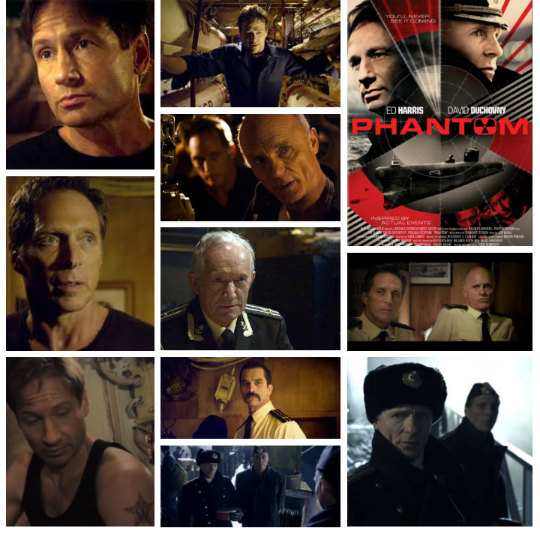
The submarine film seems to have died off a little bit since semi recent entries like Kathryn Bigelow’s K-19 and Tony Scott’s Crimson Tide, which is why it’s nice to see an effort like Phantom come along. Spare, streamlined and straight to the point, it chronicles the fate of a Soviet submarine crew tasked with transporting a deadly nuclear missile during the Cold War, and the dangerous KGB stowaway who will stop at nothing to gain control of the ship and hijack the warhead. Now, this is one of those films set in Russia but with an all American, English speaking cast, so as long as you can get past that without whining, you’ll enjoy it. What a cast it is though!! Ed Harris brings grizzled nobility to the role of the captain, handpicked for this mission by unseen forces who know of his disgraced past and are betting on him to fail. David Duchovny has always had a bit of slimy, subversive danger to his aura, and he’s in full blown wrecking ball mode as the ruthless rogue agent bent on seizing the vessel and no doubt causing all kinds of global problems in the process. William Fichtner is a supporting standout (when is he not?) as Harris’s resilient second in command, and the crew is populated recognizable faces including Jason Beghe, Jonathan Schaech, Dagmara Dominzyck, Kip Pardee and Sean Patrick Flanery. Throw in an intense cameo from Lance Henriksen and you’ve got one hell of a lineup of heavy hitters onscreen. The intrigue is somewhat cloaked, and the mutiny goes both ways, accented by plenty of palm sweating scenes of suspense, a mandatory staple in any submarine film. Lower budget, yes, but centered on story and character as opposed to action, and notable for a surprisingly esoteric end sequence that I did not expect. Recommended.  

From Dusk Till Dawn 3: The Hangman’s Daughter- A Review by Nate Hill 

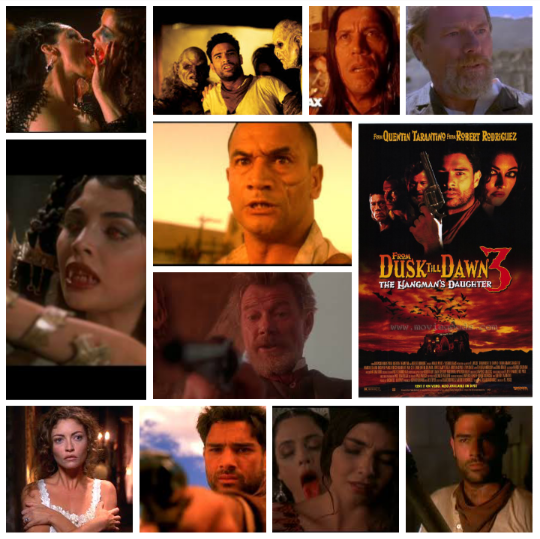
Some franchises feel stale and wrung out by the time the third effort comes along, but not From Dusk Till Dawn. In fact I’d even be so bold as to say that despite not having quite such a budget and resources as the original Tarantino/Rodriguez splatter party, this prequel almost has more in the way of imagination. The first came out of the gate roaring and paved the way, the second was a more mellow heist orientated flick that incorporated the horror elements in as it went, but the third does something altogether different. It’s a period piece, set a hundred years in the past, sometime around the Mexican/American war. When notorious outlaw Johnny Madrid (Marco Leonardi) dodges the hangman’s noose and escapes, he brings abused daughter Esmerelda (Ara Celi) along and scrambles for the state line. The ferocious hangman is none too pleased, given the menacig scowl of Maori bad boy Temuerra Morrison, who played Jango Fett in another prequel we all love. Rounding up a posse, he hunts Madrid and his scurvy gang through the terrain. Madrid is unknowingly headed for a far worse danger though, when he and Esmerelda run straight into the iconic Titty Twister bar, dressed up like a frontier whorehouse this time around. Also along for the ride are a group of wagon travellers including a young newlywed couple (Rebecca Gayheart and Lennie Loftin), oddball Ezra (Orlando Jones) and the real life writer Ambrose Bierce, played with alcoholic grit and gallows humour by Michael Parks. Bierce is famous for actually disappearing somewhere in that area back then, and I like how the film cleverly weaves fact and fiction, putting in a commendable effort to make the turn of events fascinating beyond just a servicable horror level. Danny Trejo also returns, as he must, playing pretty much the same character he did in the first and second, never mind the fact that he keeps dying (you can’t really kill Danny, everyone knows this). I love the formula for these films; they always start out with a slower paced, pulp/crime style narrative that suddenly explodes into creature FX, blood orgies and vampire mayhem without much warning. The first was the bank robbers on the run with hostages, the second was the heist crew and the third is a rousing Desperado style actioner that morphs into the horror we all know is coming. Well produced with a lot of love and some real thought put into the story, exciting and provides more than enough for any horror fan. Definitely the better of the two sequels. 

B Movie Glory with Nate: Gunshy


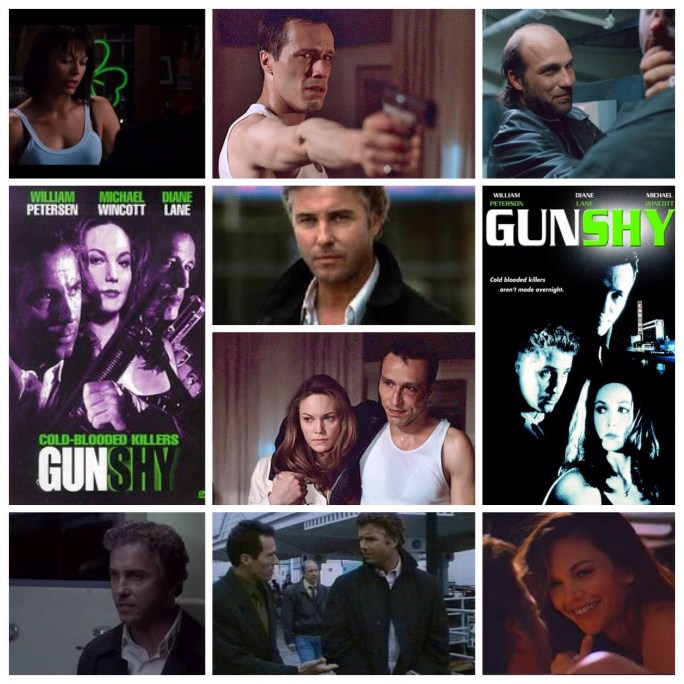
Looking for a moody Atlantic City crime drama that isn’t Boardwalk Empire? Well you’re gonna get a review of one, anyway. Gunshy may not have all the bells and whistles of a studio produced film, and admittedly is a little tattered around the edges as a result, but it’s still a solid, quaint little fish out of water story about a man out of his depth and in deep water with some dangerous people. Jake (William L. Peterson) is a failing journalist who yearns to live on the edge, mired in the doldrums of a creative sinkhole. After his boss (R. Lee Ermey cameo) fires him, he heads to the one place that offers unconditional solace to us writers all over: the bar. After an altercation with a violent scumbag (Meat Loaf offering up ham to go with his edible moniker), he meets an event more violent individual in the form of Frankie (Michael Wincott) a volatile mob enforcer. Frankie takes a shine to Jake, and in particular is fascinated by his literacy and knowledge of the written word. Frankie offers a bargain: show him the world of books and intellectual fare, and he will navigate Jake through the seedy world of organized crime, teaching each other a thing or two along the way. The plot thickens when Frankie’s girlfriend Melissa (Diane Lane, stunning as ever) drives a wedge between them, effectively creating a romantic triangle. These three leads take subpar material and make it shine, especially Wincott who rarely gets a lead role, but steals every scene with his childlike curiosity contrasted with violent tendancy. The boardwalks do make an appearance here, and they just beg to be filmed, really. In a genre centralized mainly in L.A. or New York, I’d love to see more pieces set in the baleful, windswept oceanfront locales of Atlantic City. There’s numerous supporting turns including Musetta Vander, Kevin Gage as a cop who harassed Frankie on the daily, and intense Michael Byrne as his gruesome gangster boss. It’s silly in places and clunky in others, but when it works, it works, mainly thanks to the great turns from Wincott and Lane, who seem very naturalistic and unforced as a couple. Give it a go.

Daybreakers: A Review by Nate Hill


As each genre evolves, it has to find new and creative ways to stay alive and entertain it’s audience. The vampire genre has come a long way, from the grainy film stock showcasing a theatrical Bela Lugosi, to the slick, throat ripping Baltic nocturnal terrors of 30 Days Of Night. No other corner of horror (except perhaps the zombie arena) has worked so hard to reinvent, rework and revamp (hehe) it’s aesthetic than the bloodsuckers realm, and it’s in that area that Daybreakers is a huge success. Not necessarily the most groundbreaking or incredible outing as a film alone, it breaks impressive new ground in the vampire genre and had me wondering why no one had come up with such ideas sooner than 2009! In the year 2019, ninety five percent of the world’s population are now vampires, following an outbreak decades earlier. The remaining five percent of humans keep an understandably low profile and continue to dwindle in this harsh new world. There’s just one problem: vampires need blood to thrive, and once the last human is drained, they face a serious problem. In this lore, a vampire deprived of sustenance turns into a savage berserker that will attack anyone and everyone in pure feral mania. Vampire scientist Edward Dalton (Ethan Hawke) searches endlessly for an artificial blood substitute, partly out of an instinct to preserve a race that was never his own, and partly out of compassion for the humans he once called kin. Corporation executive Charles Bromley (a downright creepy Sam Neill) hordes the scarce resources, and chaos threatens on the horizon if a solution is not found. A bombshell drops, however, when Dalton stumbles across a rebel band of humans who claim that they were once vamps, until some variable turned them back into fleshy human critters. Led by hotshot renegade McCormac (Willem Dafoe dialling up the grit) they see a glimmer of hope in Dalton, not to mention his scientific prowess. Bromley sees the end of days and gets dangerous with his power, Dalton and newfound friends work to overturn the Vampire order, and gore splatters all over the screen in a sleek, entertaining and supremely gory film that should have a little more infamy. The R rating is gloriously wrung out as gallons of blood are thrown, flung and dripped all about the place and a real sense of supernatural, apocalyptic danger is attained with the story. Neill is an inspired choice to play a vamp too; Even when he’s playing a gold hearted protagonist (remember how ominous he got with the raptor claw in Jurassic Park?), there’s a semi dormant aura of menace that always dances in those Aussie eyes. Dafoe is at his best when his playing around in the genre theme park, and he’s having a barroom blast here, getting to play the ultimate badass. There’s a reverence for humanity here too, attention paid to a last ditch effort to save our race from a predatory one that is just trying to survive as well. Terrific stuff. 

Hell Or Highwater: A Review by Nate Hill 

Hell Or Highwater is an acrid, mournful little tumbleweed lullaby sung at the American southwest, a tale of hard times and desperate men infused with the laconic nature of the area and given the spare yet hard hitting writing skills of Taylor Sheridan, who also penned the equally bleak Sicario. I wasn’t quite sure what time period he was going for here until Jeff Bridges’s salty Texas Ranger brandishes a smartphone, signifying the present. I imagined an 80’s throwback, but I suppose the vacuous dereliction hanging about the rural West has only gathered with time, in a place where time has curiously seemed to halt dead in a financial sinkhole where not much of anything in the way of hard earned success can flourish. Chris Pine and Ben Foster play brothers and partners in crime, in the thick of a statewide bank robbing spree which gets progressivly more dangerous, all to save a piece of property from the big banks threatening to foreclose. They’re not evil men, they’re not even bad men because Sheridan’s script doesn’t allow such stark delineation. They are men forced to make decisions, just like any other, yet in times like these one’s decisions are often of an extreme nature, out of self preservation or desire to protect one’s family. Pine is the introverted one, and the actor disappears into the role with ease and scruffy calm that contrasts his usal golden boy charm. Foster is the live wire, a man who functions on mostly instinct alone, lives in the moment and reacts like an animal from situation to situation. Quite the actor he is, and hasn’t been let completely off the chain since 2004’s Hostage. Here he fills the screen with intensity and much needed humour. The two have love for each other that occasionally peeks through the cloud of trouble they’re flying in, the film adament in showing us their damaged humanity through the desperation of their actions. Bridges is crusty and jaded, the badge and gun serving as his only family other than the uneasy camaraderie he has with his younger partner (Gil Birmingham), a man he berates solely because he seems incapable of proper human interaction, no doubt a result of decades on the job, wandering through the desolation of the desert hunting men who have broken their lives and wishing he ever had one of his own to begin with. There’s an emptiness to this tale, a lonely ambience punctuated by many a beautiful song from both Nick Cave, T Bone Burnett and more, whose downbeat lyrics only pile on the mood thicker. The film wants to examine the need to go to extreme measures in times of strife, but holds us in our seat long after the deed is done to show us the ramifications, both negative and positive, of such actions. The result isn’t pretty, but it’s damn well beautiful and one of the best films I’ve seen so far this year. 

B Movie Glory with Nate: The Steam Experiment 


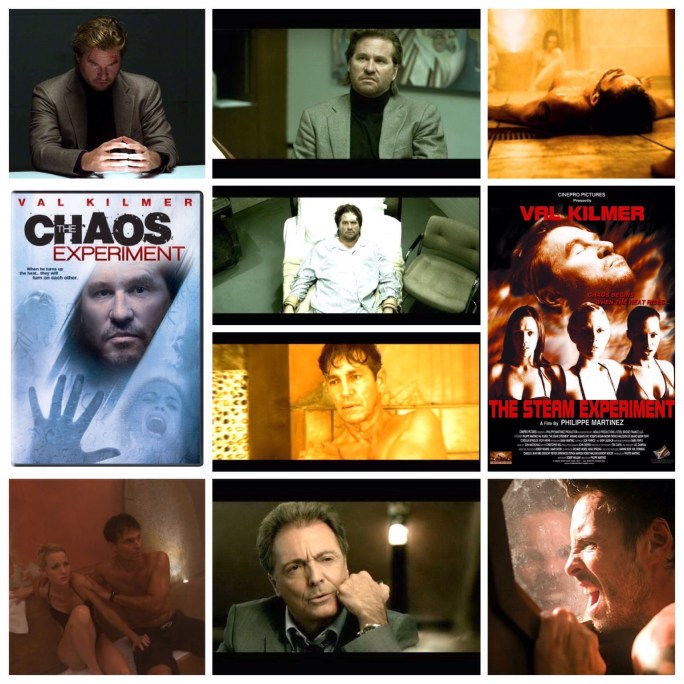
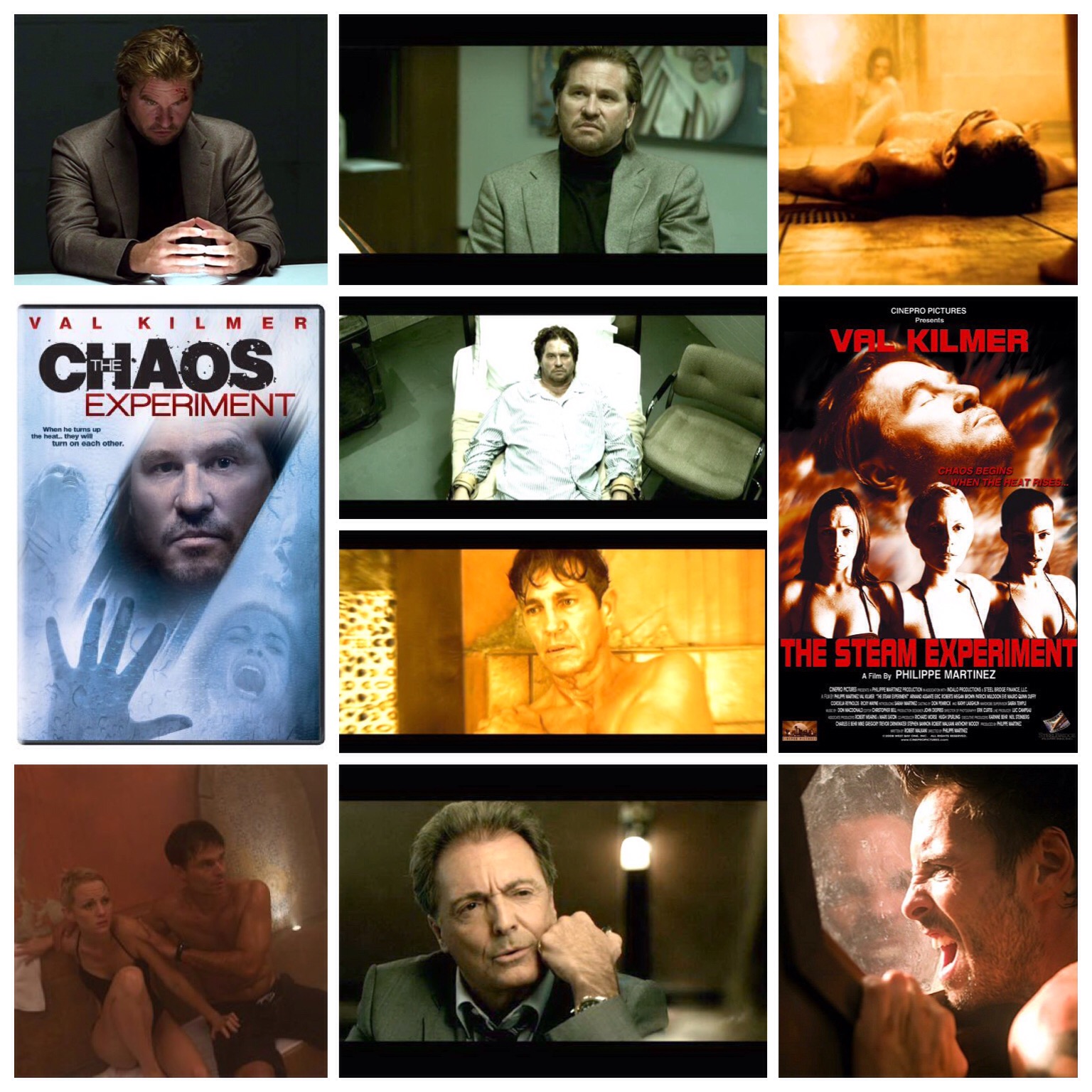
What’s the best way to raise awareness about climate change and the melting of the polar ice caps? In The Steam Experiment, it’s to lock a bunch of people in a swanky new spa and steam room and crank up the heat until they start to panic and suffocate, of course. Well at least according to half mad scientist Val Kilmer, it is. Tired of his global warming research being rejected and scoffed at, he comes to some fairly… extreme conclusions as to what should be done, and actually goes through with his plans, the absolute madman. Setting his experiment under the pretence of a high end spa getaway for a few lucky contest winners to test out his brand new prototype ‘ultra spa’, he shuts them all in and threatens to turn that heat dial up wayyy past safety standards and boil the poor suckers alive inside, if the local paper doesn’t publish his material for all to see. Radical? Yes. Ridiculous? Definitely. It makes for one shit show of a film though, and awful one, no doubt, but pretty legendary just for being able to boast a plot line in which Val Kilmer kills people with a steam room. One of the unwitting participants in this sick charade is Eric Roberts, who seems equally terrified of being trapped in this type of mucky film as he is of being stuck in the room itself. An irritating police detective played by Armand Assante hunts Kilmer down and tries to talk him out of carrying his steamy threats through to their sweaty end, but old Val is stubborn as a mule, and keeps that heat coming on, as fast and hard as the cliches, stale cookie dialogue and eyebrow raising plot turns. He approaches the role cloaked in near catatonic depression, reaching a point where he’s not even sure what he’s doing anymore, giving the film a feeling of trailing off into an aimless, clamouring conclusion where no one knows what’s up, and Assante won’t stop laughably grilling him for answers and mugging the camera, that enthusiastic Italian mess of a man. A pressure cooker of mediocrity, a disaster that ends melting down just as hard and fast as those ice caps that cause poor Val such sociopathic anxiety. Did I use enough puns in my review?

The Usual Suspects: A Review by Nate Hill 

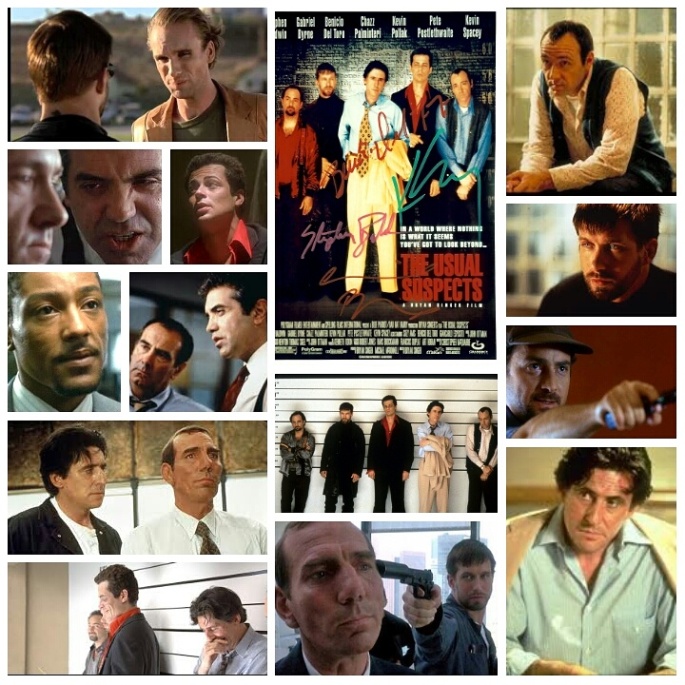
No matter how many times I watch The Usual Suspects, and believe me it’s been many, I still get the same diabolical thrill, the same rapturous excitement and the same rush of storytelling and dramatic payoff as I did the very first time I saw it. Every performance from the vast and diverse cast is a devilish creation packed with red herrings, juicy dialogue and bushels of menace, every scene piles on the mysticism of the criminal underworld beat by beat, until the characters begin to pick it apart and the whole thing unravels like a great serpent coiling forth bit by bit, scale by scale, swerving toward the shocking, disarming third act that has since become as legendary as it’s elusive and terrifying antagonist. In the crime/mystery corner of cinema, there’s no arguing that this delicious piece of hard boiled intrigue reigns supreme, and it’s easy to see why. In a seemingly random police lineup, five career criminals are harassed by an unseen hand, pushed into carrying out dangerous heists and violent manouvers by a shadowy campfire tale among the world of organized crime, a Boogeyman called Keyser Soze, if he even exists at all. Slick and sleazy ex cop Dean Keaton (Gabriel Byrne) heads up this dysfunctional crew of vagabonds which includes hothead McManus (Stephen Baldwin in a role originally intended for Michael Biehn, which kills me to this day), weirdo Fenster (Benicio Del Toro, using an indecipherable mishmash of an accent that would be the first of many), spitfire Hockney (Kevin Pollak) and Verbal Kint (Kevin Spacey) the runt of the litter. The lot of them are intimidated into performing risky enterprises by lawyer Kobayashi (Pete Postlethwaite) until the climate of their actions reaches a boiling point and answers emerge from the darkness. This is all told in retrospect by Spacey, to a rabid customs agent (Chazz Palminteri) who has designs on ensnaring Soze. Spacey scored Oscar gold for his heavy work here, spinning a tale whose layers interweave and pull the wool over our eyes time and time again before offering any glimpses of truth. Byrne is a fiercely guarded storm as Keaton, a man with secrets so deep even he doesn’t know who he is anymore, letting the anger set and smoulder in those glacial eyes of his. The supporting cast adds to the class and confusion terrifically, with fine work pouring in from Dan Hedeya, Suzy Amis, Giancarlo Esposito and a wicked cameo from Peter Greene, who provides a moment of inspired improv. The score of the film rarely relies on dips and swells until all is said and done, keeping a tight lid on the orchestra and feeding us nervous little riffs of anxious portent that keeps tension on a tightrope and anticipation on call. A mystery this tantalizing is irrisistable the first time around, but the trick is to make your story rewatchable, and I’ve seen this thing over a dozen times. Every viewing provides some new angle to the story I didn’t see before, or I notice a subtle interaction in the very naturalistic and funny dialogue which escaped me in the past. My favourite thing to do is watch films with someone who hasn’t seen them before, observe their reactions and opinions on every little story beat and cinematic flourish, it’s almost more fun for me than the actual film itself. The Usual Suspects is a showcase piece for that activity, because you get to see this very complex revelation unfold through new eyes as you watch them experience the revelations. Whether your first viewing or your fiftieth, it never loses its power, and the spell it casts just doesn’t dim. Masterpiece.