RIPD: A Review by Nate Hill 

I wanted to give RIPD chance, I really did. But it’s such a shameless ripoff of Men In Black that most of it just constituted one big eye roll from me. It’s not an outright knockoff, but it just uses the unmistakable blueprint of MIB and runs with it as if it were it’s own organic idea. The veteran wiseass, the young hotshot, the clandestine otherworldly law enforcement syndicate, googly, goopy special effects, it’s all there and just feels stale these days, but for a few saving graces. Jeff Bridges is an undeniable charmer as Roy, an undead wild west super cop who is tasked with retrieving runaway souls hiding out down on earth, and capturing them for return to the great beyond, here pictured as the penultimate vision of nightmarish beaurocracy that seems oddly derived from Beetlejuice (huh). When Boston cop Ryan Reynolds is betrayed and murdered by his corrupt scumbag of a partner (a skeezy Kevin Bacon) he’s recruited by Proctor (Mary Louise Parker, all business and loving it) to join Roy in bringing “deados” back upstairs. The two don’t get along, as newly paired cops in movies always behave, and the banter only really works from Bridges’s side. He’s a hoot as crotchety old Roy, while Reynolds plays it a bit too serious, especially in scenes with the wife he left behind (Stephanie Szostak). The film earns it’s one inspired subplot when we see the human avatars the pair use to move about the earthly plane: Bridges is a knockout blonde chick (Marissa Miller), and Reynolds an elderly Chinese man played by the seemingly immortal James Hong. If they spent more time on terrifically funny ideas with potential like that and less on special effects that look like something out of the Garbage Pail Kids, they might have been on to something worthwhile. But alas, most of the film is spent on a whirlwind of silly slapstick and big gross weird things that are in no way engaging. There’s a few slap dash deado hunts, including a brief turn from Robert Knepper as one that is lured out of hiding with Chinese food (what in the..), and a big sky vortex yawner of a finale where evil Bacon tries to wreak havoc on earth. Most of the time it’s just a snooze though, save for the few times the clouds part and we get something fresh, usually from either Bridges or those to damned hilarious avatars. Shame.


Indie Gems with Nate: Wildlike

It’s random netflix time again, where I decided to take a look at Wildlike, a film I’ve never heard of before, and one that I will not be getting out of my head anytime soon. I have a certain affinity for films set in the wilds of the pacific northwest, films that use nature and scenery to accent themes relating to humans (eg. The Grey, Into The Wild). I also saw Bruce Greenwood on the poster, and that guy just seems to have a head on his shoulders when it comes to choosing scripts, so off on this journey I went. Newcomer Ella Purnell is astounding as 14 year old Mackenzie, sent off to live with her uncle (Brian Geraghty) after her mother has a breakdown following a family tragedy. The poor girl goes from the frying pan into the fire though, when it’s revealed that her is sexually abusing her, and may have in the past. The abuse shown in this film is not loud or violent, nor is it melodramatic or designed for shock value. It’s quiet, frank and subtle, the damage of it measured in a glance, a tear streaming down a cheek or a barely percievable shift of weight from Mackenzie when he looks at her. Geraghty is a handsome dude, nowhere near the bespectacled, paunchy clichéof abuser so often seen. He plays it straight, a pleasant and agreeable fellow who can’t even comprehend the kind of damage he’s doing. The scenes of abuse themselves are quick and fleeting, made all the more uncomfortable by how intimate they seem. This is the closest to what I’d imagine realism with this sort of thing looks like, and i had trouble not turning away. When she can’t bear it any longer, Kenzie makes a run for it into the nearby town, hiding out and eventually befriending lone hiker Greenwood, who is healing from wounds of his own. Kenzie is confused and broken from what has happened, and the filmmakers know that when this befalls someone whose brain and soul are not developed enough to understand it, they act in strange ways. Purnell is heartbreaking and should have been in contending for some sort of award. Going from almost no film work to lighting up the film with this brave, staggering turn was something I was honored to see unfold on my humble iPad screen. Much of the story unfolds in the breathtaking Alaskan wilderness, the camera capturing misty mountains, verdant landscapes and little coves that ferries weave in and out of. You just have to contrast this type of subject matter with beauty of some kind, and Kenzie’s journey takes her from darkness into the possibility of light, surrounded by the natural world and the companionship of her new friend and protector. Most of the time it’s just the two of them out in the desolation, aside from when they meet a kindly group of campers, including Ann Dowd, an incredible actress who seems to be riding some sort of comeback these days. Films about this sort of thing range all across the board, from hamfisted pulp revenge, to tender and inquisitive documentation. This one respectfully shows you the kind of irresponsible, selfish and sick behaviour humans are capable of, particularly towards the ones they are supposed to love and protect. It also looks at kindness and compassion that can come from a complete stranger and shelter those who have been broken. There’s both light and dark in this world of ours, and Kenzie meets them both face to face. Purnell owns the film, and I think we will see great things from her. Couldn’t recommend this film, and her performance, enough. 

Fried Green Tomatoes: A Review by Nate Hill 

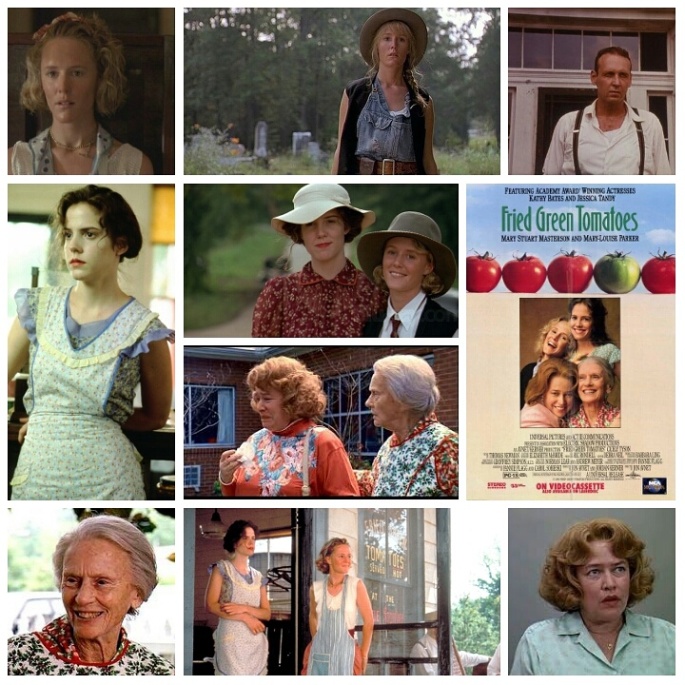
Fried Green Tomatoes is one of those films that presents two narratives, simultaneously woven together and unbound by the laws of past and present. A character from the present tells tales of the past, and the film jumps ever back and forth between the two, until a connection emerges. You’ve seen it in stuff like The Notebook, where it works beautifully, and both stories support each other. That’s the issue with this film: One of the narratives is lovely and works quite well. The other? Mmm…not so much. Kathy Bates plays a hospice worker in a retirement home who is charmed by stories of life, freedom, injustice and romance from long ago, all told with wit and passion by an excellent Jessica Tandy. She tells of life growing up during the early 1900’s in the American southwest, of free spirited tomboy Idgie (a fierce and emotional Mary Stuart Masterson), the girl she loves (Mary Louise Parker, radiant) and the whirlwind of trouble and conflict going on around them. Idgie lost her brother and best friend (a short lived and very young looking Chris O ‘Donnell) to a horrible accident, and sort of has a lost pup complex, holding on to Parker for dear life and trying her best to extricate her from an abusive relationship with her monster of a husband  (Nick Searcy is evil incarnate). It’s whimsical, touching and flavored with just the right touches of sadness and danger. Now, the story with Bates in the present just feels aloof and silly. The scenes with her and Tandy fare better than glimpses of her home life and attempts to empower and change her for the better. Don’t get me wrong, I love that idea, the notion of inspiration  transcending time and the ability to help others simply with the spoken word and the wisdom of the past, but it just didn’t work in this case. As for the scenes in the past, I fell hard for them. Masterson is a terrific actress who usually gets saddled with light, fluffy roles, but here gets a chance to let some raw emotion out. Parker is more reigned in but every bit as soulful, as the girl in a situation no one should have to endure, her soul practically screaming out through those beautiful brown eyes. I suppose you could say that it’s half of a great film, that couldn’t quite pull off it’s own narrative flow. 

Red: A Review by Nate Hill 

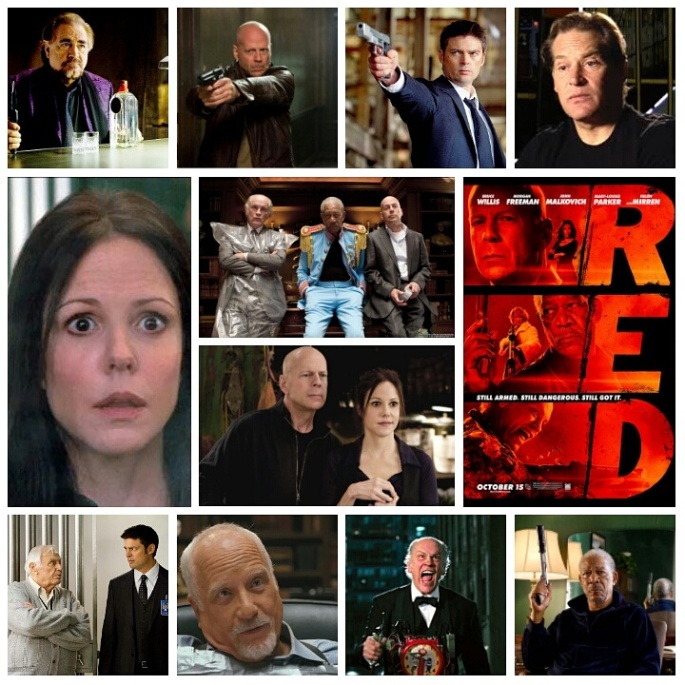
Despite being somewhat neutered by the ever present annoyance of the PG-13 rating, Red is some of the most fun you can have with in the glib assassin subgenre of action comedy. Bold, hilarious and just a little bit demented, it jumps right off the pages of the graphic novel it was based on for just under two hours of wiseass popcorn movie nirvana, hosted by a cast that’s almost too good to be true. ‘RED’ stands for ‘Retired Extremely Dangerous’, a moniker given to aging ex contract killers who have laid down the guns, but are still closely watched by the CIA. Frank Moses (Bruce Willis) is one such person, languishing in the doldrums of forced retirement, bored out of his mind and chatting endlessly with a cutey call center girl (Mary Louise Parker). Things get freaky when deranged former associate Marvin Boggs (John Malkovich) pays him a visit, belting out wild theories about the CIA sending operatives to terminate him. Before he knows it, Frank is swept up in espionage and intrigue once again, pursued by a slick, ruthless agency man (a deadly Karl Urban doing the anti-007 shtick nicely), with Parker in tow, whose terrified reactions to the escalating violence and deadpan sociopaths around her get funnier and funnier as the film progresses. Helen Mirren is regal gold as a well spoken ex MI6 spook who dissolves corpses in bathtubs full of acid, right before afternoon tea, I presume. Watching this dainty waif rock a Barrett 50 caliber and make red mist out of her enemies is one of the many mental pleasures one can get from this flick. Morgan Freeman takes it easy as another former buddy of theirs from the older, and I imagine, more agile days. As for the supporting cast, hell, take your pick. Richard Dreyfuss is a slimy Trump-esque politician lowlife, an underused James Remar shows up for a very brief cameo, as does that old toad Ernest Borgnine, Julian McMahon once again shows that no one wears a suit like Julian McMahan, and that lovable imp Brian Cox almost walks away with the film as a sly devil of a Russian agent who woos Mirren with the silver tongued virility of a fox. What works so well the dynamic between the three leads; Malkovich is mad as as hatter, Willis plays exasperated babysitter and Parker looks on in horror that starts to turn into amusement with every outlandish scenario. Action comedies are tricky recipes, and it’s easy to let too much of one ingredient slip into the pot. This one keeps a steady trigger finger that’s locked onto the funny bone and positively sails. 

Terry Gilliam’s The Fisher King: A Review by Nate Hill 

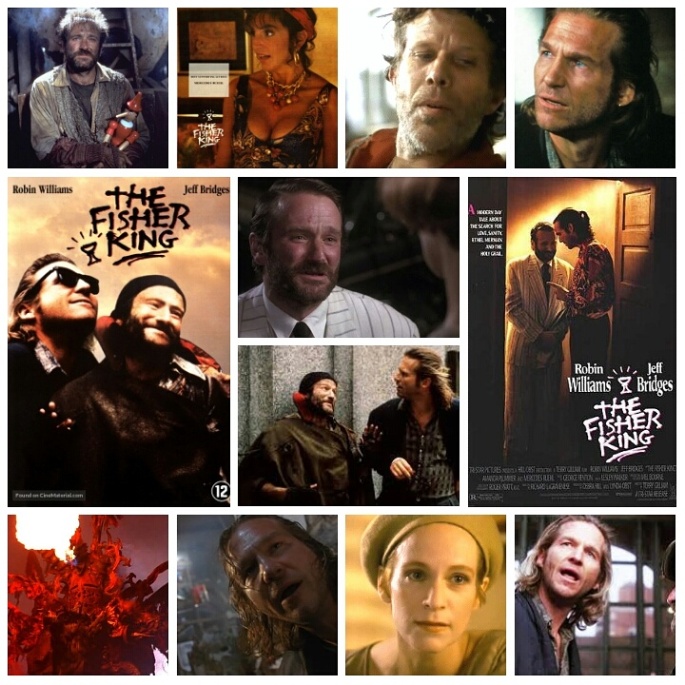
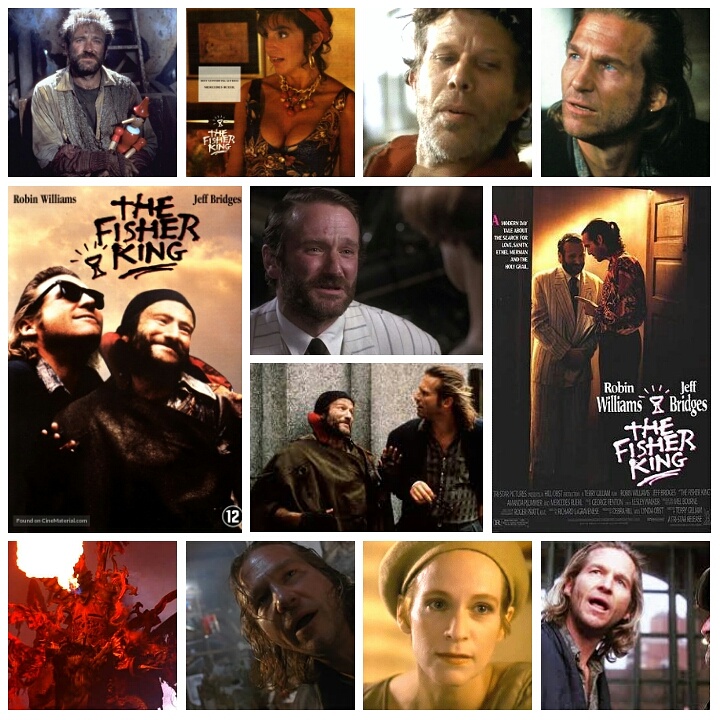
Tragic. Uplifting. Comical. Bittersweet. One of a kind. Terry Gilliam’s The Fisher King takes on mental illness by way of a fantastical approach, an odd mix on the surface, but totally fitting and really the only way to put the audience inside a psyche belonging to one of these beautiful, broken creatures. Sometimes an unlikely friendship springs from a tragedy, in this case between a scrappy ex radio DJ (Jeff Bridges) and a now homeless, mentally unstable ex professor of medieval history (Robin Williams). Bridges was partly responsible for an unfortunate incident that contributed to William’s condition, and feels kind of responsible, accompanying him on many a nocturnal odyssey and surreal journey through New York City, an unlikely duo brought together by the whimsical cogs of fate that seem to turn in every Gilliam film. Williams is a severely damaged man who sees a symbolic ‘Red Knight’ at every turn, and seeks a holy grail that seems to elude him at every turn. Bridges is down to earth, if a little aimless and untethered, brought back down from the clouds by his stern, peppy wife (Mercedes Ruehl in an Oscar nominated performance). They both strive to help one another in different ways, Williams to help Bridges find some redemption for the single careless act that led to violence, and Bridges assisting him on a dazed quest through the streets to find an object he believes to be the holy grail, and win over the eccentric woman of his dreams (Amanda Plummer). In any other director’s hands but Gilliam’s, this story just wouldn’t have the same fable-esque quality. Straight up drama. Sentimental buddy comedy. Interpersonal character study. There’s elements of all, but the one magic ingredient is Gilliam, who is just amazing at finding the way to truth and essential notes by way of the absurd and the abstract. Watch for fantastic work from Michael Jeter, David Hyde Pierce, Kathy Najimy, Harry Shearer, Dan Futterman and a quick, uncredited Tom Waits as well. The hectic back alleys and silhouetted trellises of NYC provide a sooty canvas for Gilliam and his troupe to paint a theatrical, psychological and very touching tale of minds lost, friendship found and the past reconciled. 

Christopher Nolan’s Insomnia: A Review by Nate Hill 

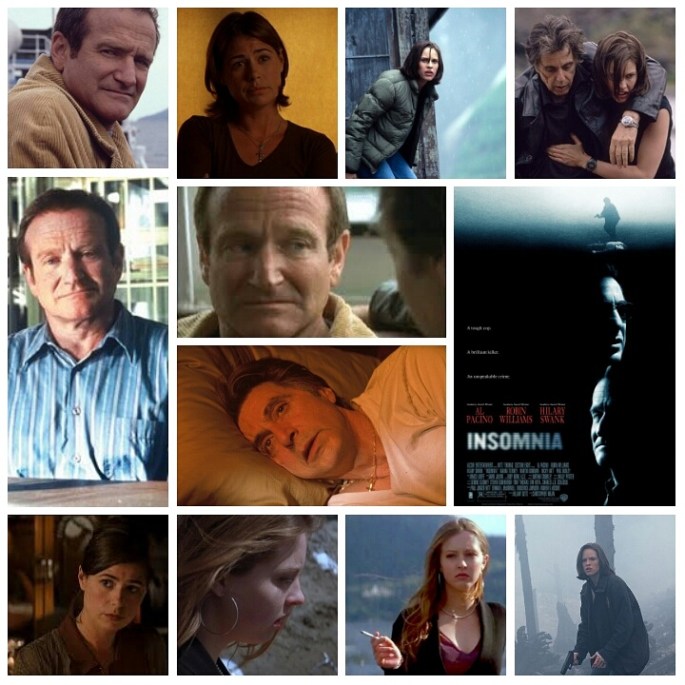
Christopher Nolan has a monumental filmography full of lofty cerebral ideas, superheroes mythic in nature, and incredibly complex morality plays. The one time he hit the road in a straight line is Insomnia, a fairly standard cat and mouse thriller given the obvious boost of having Chris at the helm, as well as two actors who get dangerously out of control, in the best possible way. Al Pacino plays Will Dormer, an L.A. cop who treks out to small town Alaska to solve the mystery of a murdered local girl. The twist: they’re in the region where it’s daylight for a month straight, and if that’s something you’re not accustomed to, it’ll throw you way off. It’s fascinating to watch Pacino roll in sharp as a razor and completely in control, then observe his lack of sleep eat away at the frills of his perception and start to play tricks on his weary mind. The film has one of those narratives that gives us a heads up as to who the killer is nearly right off the bat, in this case personified by Stephen King esque novelist Walter Finch, played by a vastly creepy Robin Williams. He and Pacino do an eerie dance through the foggy local geography and small, gaunt townscape, Pacino looking for clues and proof while trying to hold onto his sanity, and Williams unnervingly playing a macabre mind game, perhaps only for his own amusement. There are shades of Vincent Hanna in Pacino’s work here, the extremely stressed out LA detective from Michael Mann’s Heat. One gets a sense of the same world weariness and feral ferocity of that character, especially in a heartbreaking monologue to the local innkeeper, played by underrated Maura Tierney, who is brilliant in the scene that requires her mostly to listen, a much harder task than delivering any page of dialogue. As for Williams, he’s never really done anything this specific before. I mean, he’s played freaks and villains all across the board, but none quite like Walter Finch. He’s detached in a way that still clings to a humanity he may have lost through so many years writing stories that only happened in his head. He’s both dangerous and rational, and when those two are fuelled by emotional trauma… watch out, because there’s damage to be done. There’s further work from Hilary Swank as Will’s partner, Nicky Katt, Emily Perkins, Martin Donovan and edgy Vancouverite Katherine Isabelle, who just excels in anything, here playing the murder victim’s troubled best friend. 

 Now, this film is based on a chilly Swedish thriller of the same title, starring Stellen Skarsgard in Pacino’s role, and Williams nowhere to be found, naturally. I connected with Nolan’s version far more, the original seeming rather bland and lacking personality, but it’s got a huge following and a Criterion release, so what the hell do I know, go see for yourself. I do know that nothing stands up the hairs on my neck quite like the portentous back and forth between Pacino and Williams here, the icy inaccessibility of the central mystery and the feeling that there’s always something bubbling just below the surface of a seemingly civilized interaction. Barring Memento, which even rose to flights of fancy, this is the most down to earth Nolan has ever been in his exploration of the psychological landscape. Dreams, outer space, damaged memory and morality are for another day here. It strips away any of that, leaves it’s characters stranded in a misty, threatening environment that mirrors their own starkly layered perception, and sits back to observe. Rats in a maze of the human mind, if you will. It’s an important film in Nolan’s career for this very reason; a departure from ambitions grandiose in nature, a vacation from fantasy, and a forceful glimpse at two men with minds holding on by just a thread, like a spider’s web, beaded with dew in perpetual sunlight that refuses to set and give them solace. A masterwork of tension, with few instances of release. 

Blood Father: A Review by Nate Hill 

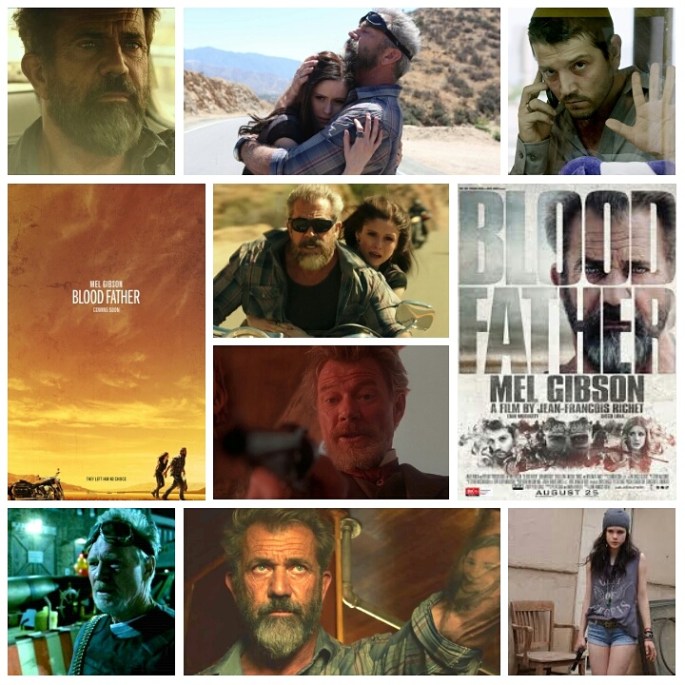
Blood Father is the best I’ve seen from Mel Gibson in years. Between extended cameos in the Machete and Expendables franchises and the underwhelming Get The Gringo, there just hasn’t been a film in a while that I thoroughly enjoyed and felt that cinematic rush I used to feel when watching his older, classic stuff. This has it all: a rough, rugged story line, an older, grizzled and disarmingly jacked up Mel, and a surprising rose of an emotional core that’s embedded in a violent bed of thorns which serves as our narrative. Later in his career Mel has been playing older, meaner versions of antiheros from his past, and one gets the comforting feeling that any of these jaded brutes could be the unofficial versions of those very same characters. Desert dwelling excon tattoo artist John Link could easily be an older Porter, the protagonist from my favourite Gibson film, Payback. I’d like to think that such parallels are deliberate on the filmmaker’s part. Whoever he is, Link has a long and checkered past of broken bridges and incarceration, etched like a road map onto his shaggy visage. When his troubled teenage daughter (Erin Moriarty, terrific here as well as this year’s Captain Fantastic) re-enters his life on the run from her psycho cartel brat of a boyfriend (Diego Luna), the fire in Link is kindled. Taking her on the run, he goes into ultimate protective dad mode and let’s the old forges of violence burn bright once again, in hopes of finding some kind of redemption. William H. Macy hangs around as Link’s AA sponsor, but the real supporting gem comes from legendary Michael Parks as Preacher, a vile neo nazi scumbag and former associate of Gibson’s. He’s icky and repellant, but coos with Park’s patented purr and steals his sequence of the film menacingly. The action is down and dirty, reigned in by an obvious small budget, but that comes as a welcome gift in a genre hampered by big style fireworks that smother story. Not here. The crucial part of it is Link and his daughter, and their glib back and forth that just hides the pathos we get to see in full bloom near the end. We wouldn’t give a damn about the whole deal if their relationship, and the actor’s chemistry, didn’t work. Gibson and Moriarty knock it out of the trailer park. I couldn’t give a laminated shit about whatever Gibson did or said to piss so many people off. That’s seperate from the work he does and should be treated as such. Everyone who stifled and shunned him professionallly for something which occurred in his personal life should be flogged. Nevertheless, I hope we get to see more stuff like this from him moving forward. He’s a bit older, a bit more rough around the edges, but goddammit he’s still our Mel. 

Patch Adams: A Review by Nate Hill 

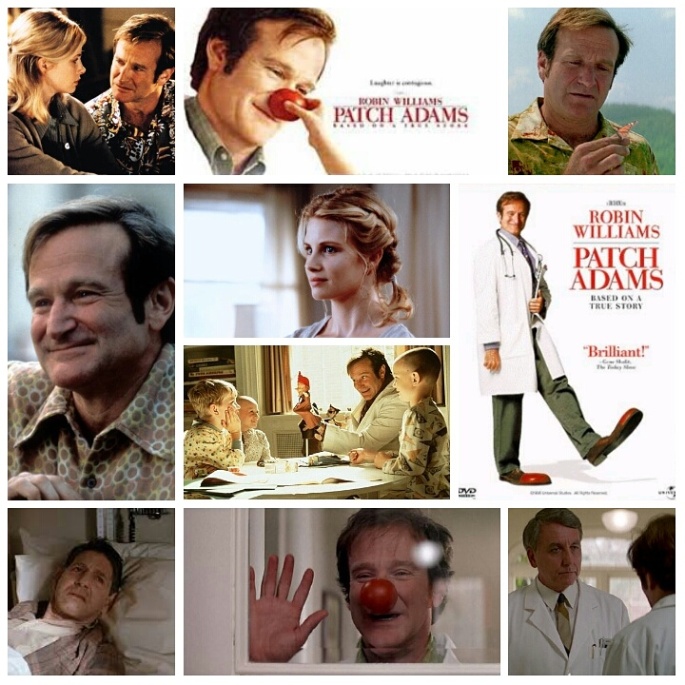
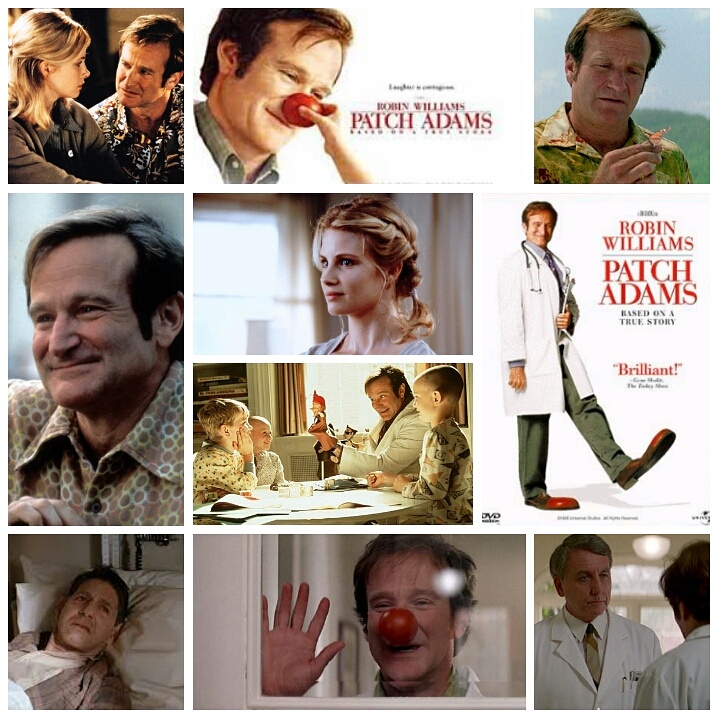
Yes, Patch Adams is a pile of sentimental mush. Yeah, the filmmakers took severe liberties with the source material until their protagonist scarcely resembled the fellow they based him on. Sure, it’s soppy to all hell. My thoughts on all of the above: So freakin what. None of that has stopped me from loving the film growing up as a kid, and continuing to do so these days too. The message it delivers and the values it supports can be relatable to anyone in any walk of life, not just the medical field. Robin Williams had his demons, but he could be the brightest beacon of love and optimism a lot of the time, and he carries that wonderfully throughout the film. Patch Adams is a manic depressive, deeply sad man who finds his calling in the field of medicine following an epiphany involving a fellow patient (Michael Jeter, always great) at the psychiatric facility he is staying in. Upon enrolling in medical school he finds the cold, clinical atmosphere of his field uninviting. Patch is a vibrant soul who wishes to combat illness and despair not just with medicine, but a healthy dose of humour, empathy and the readiness to listen to your patient, think outside the box and have compassion. His methods are seen as unorthodox, especially by the college dean (Bob Gunton), whose ass is so tight that when he farts only dogs hear it. Patch both struggles and triumphs, finding solace and inspiration in daily interaction with patients, and hits walls with his superiors, who neither trust nor understand his ways. It’s always an uphill journey for any sort of pioneer, but he soldiers on, aided by William’s remarkable work. Patch starts his own independent clinic along with fellow student and girlfriend Carin (the lovely and very underrated Monica Potter), and life is good. But it’s never safe from tragedy, as we tearfully bear witness to in a plot turn that will rip out your heart and huck it off a cliff. Patch is undeterred though, adamant in his quest to bring light, levity and love into the lives of the people he works with, regardless of how much time they have left on this earth, or who tells him what he should and shouldn’t do. That’s essentially what the story is about: helping others any way you can. That extends beyond simply trying to cure their disease, remove a tumor, prescribe a medication or diagnose an illness in a dry, detached manner. It’s about alleviating suffering not only with the tools of your practice, but with those of your heart and soul as well. Patch knows this, and won’t back down from the good fight. Bless his heart, and William’s too, for a performance of warmth and affection. Watch for work from Philip Seymour Hoffman, Josef Sommer, Ryan Hurst, Richard Kelly, Harve Presnell, Daniel London, Irma P. Hall, Barry Shabaka Henley, Alan Tudyuk and and excellent Peter Coyote as a stubborn cancer patient. There’s naysayers galore buzzing around this film like gnats. Swat ’em harshly, and don’t let ’em get you down. Those of us who appreciate the film know what’s up. 

The Big White: A Review by Nate Hill 

Snowbound location. Pitch black comedy. A corpse that’s central to the plot. The Big White was obviously influenced by Fargo, the Pulp Fiction of wintry crime comedies, but holds its own fairly well thanks to solid acting and writing. It’s nothing new or incredible, but it’ll get you your perversely humerous noir fix, and who can say no to Robin Williams, playing a pitiable travel agent who spies a risky way to end his financial problems. Discovering a frozen corpse, he has the brilliant idea to pass it off as his deceased brother and collect the insurance money. A few problems lie ahead: a dogged insurance investigator (Giovanni Ribisi), two moronic hitmen (Tim Blake Nelson & W. Earl Brown) and the small detail that his brother isn’t actually dead, and comes waltzing back into his life in the form of a rampaging, unstable Woody Harrelson. William’s spitfire wife (Holly Hunter) looks on in exasperation as her husband turns their lives into disaster, while everyone is somewhat clueless and misinformed, leading to great amounts of hilarity. Sound chaotic? It is, sort of. It’s also kinda laid back and deadpan enough to make the Coen brothers proud. Harrelson and Williams both bring their very different brands of manic, Williams I’m a forlorn desperate sense, and Harrelson  just the unhinged wildcard. Alison Lohman is also running about, but it’s been so long since I saw it I can’t remember exactly who she plays. Fans of Fargo will be tickled, those with a weird sense of humour as well. Fun stuff. 

Renny Harlin’s Skiptrace: A Review by Nate Hill 

Renny Harlin brings the action buddy comedy back into full swing with Skiptrace, a rambunctious romp through the Orient starring the perfectly paired odd couple of Jackie Chan and Johnny Knoxville. Harlin has lovingly studied stuff like Rush Hour and Shanghai Noon, creating a piece of adventurous fun that sits on the same level as those beloved classics, and even outdoes them in some areas of the stunt work. Chan must be well into his 50’s now, but he still swings about like a squirrel monkey on Ritalin, agile as ever. Knoxville is a little less graceful, getting pummeled and thrown around in ways that must remind his weary bones of all that stupid, backbreaking shit he cavorted through on Jackass. Chan plays a Hong Kong police officer trying to bring down an elusive crime lord called The Matador, who is also Chinese, despite the Latin moniker. Knoxville is a bumbling casino hustler who accidentally witnesses said Matador execute some poor girl in cold blood. The chase is then on, Chan trying to get Knoxville to Hong Kong so he can testify, Knoxville hilariously trying to save his own ass and outrun clueless russian mobsters at the same time. It’s absolute juvenile chaos, and I mean that as the hugest compliment ever. Harlin just *gets* the simplicity of this subgenre, and makes a miracle of a buddy flick that I now rank with some of my favourites. He’s also an action guy (we have him to thank for Die Hard 2 and Cliffhanger, among many others), and the stunts on display here will box your ears. The choreography is just plain nuts and beautifully sans CGI, especially in a knockout early sequence where Chan extradites Knoxville from the russian’s possession, and a dizzying zip line ride across a canyon that evokes merry memories of Cliffhanger. Also, I have to give major kudos to any flick that let’s us see a hammered Chan wail away an impromptu rendition of Adele’s Rolling In The Deep, accompanied by dozens of Mongolian plain dwelling tribes people. Yeah. This is some of the most fun I’ve had at the movies so far this year, and it’ll go in the special section of my dvd shelf reserved for the best and brightest in buddy comedies. Not that I actually organize my collection that well, but whatever. Go see this now.