Alfonso Cuaron’s Gravity

There’s a select few theatre going experiences that are mile markers for me in the sense that they changed and expanded my realm of experience in the cinema. I remember seeing Alfonso Cuaron’s Gravity in 3D, AVX, iMax fuckin all the bells and whistles were present and accounted for. I walked into the theatre almost on a whim while my ex was at dance rehearsal and I had a few hours to kill downtown, the film had already been in theatres for about a month, I was aware of the buzz but the trailers weren’t doing it for me and it wasn’t high on my priority list. Well.. I’m glad I made that impulsive decision because not only is it now one of my favourite films, but the theatre experience, particularly alone and totally attentive to the immersive universe it created, is something I’ll treasure forever. Sandra Bullock gives a career best as mission specialist Ryan Stone, stranded in the heavens when chunks of a decimated satellite shred through the space station she’s fixing up, leaving her and veteran astronaut Matt Kowalski (George Clooney in a roguish portrait of cavalier stoicism) adrift among the stars. It’s an arresting nail biter of a sequence that leads to many more, all staged in breathless, unbelievably realistic fashion by Cuaron and cinematographer Emmanuel Lubezki. Bullock’s character is in a purgatorial womblike state up here, wounded by tragedy from years before and unable to fully continue on with her life without some kind of rebirth, which the unpredictable vacuum of space is more than willing to contribute to at every turn. Hair raising near misses and death defying escapes abound, with moments of tranquil, hypnotic pause to catch glimpses of the dazzling blue green globe below or communicate across millions of miles and a language barrier with an Inuit man over a rogue radio signal. This is all a lead up to what has to be one of the most stirring, adrenaline soaked descents to the planet’s surface ever filmed. Cuaron knows how to raise pulses and get you to invest in character so that when the time comes for Steven Price’s gorgeous cosmic battle cry of an original score to herald her journey home, attentions are riveted. It’s likely my favourite sequence ever shot in a film set in space, a triumphant display of resilience and poetic grandeur as she plunged through the embryonic atmosphere of our planet in a rickety little escape pod and hurtles towards the surface, angelic strains of music echoing all around her, surrounded by flaming meteors of detritus from the space station like fallen stars. I wish they’d bring this film back to theatres every couple years so we can relive the glory at its fullest potential. A masterpiece and miracle of an achievement from all involved.

-Nate Hill

Cats & Dogs

In my household the felines and canines seem to abide harmoniously, but in the hectic alternate reality of Warner Bros’ Cats & Dogs, such is not the case. This is one silly ass movie whose special effects time has not been kind to, but I still kind of partly dig it anyways. Jeff Goldblum plays one of his terminally awkward dudes, a scientist who is on the verge of curing dog allergies in humans, and the ruling body of the cat nation, spearheaded by Sean Hayes persnickety Mr. Tinkles, keeps sending in spies to steal the formula. The dog faction, lead by Charlton Heston’s grizzled General, send in operatives of their own to counter the attacks, including Alec Baldwin’s veteran Butch and an excitable Beagle rookie (Tobey Maguire). The filmmakers used a chaotic blend of real live animals, jerky animatronics and barely passable CGI to bring the whole spectacle to life, but they can be given somewhat of a pass as it was the early 2000’s. I did get a kick out of parachuting ninja Siamese cats, a Russian specialist sent in to infiltrate Goldblum’s household and the variety of voice actors including Joe Pantoliano, Michael Clarke Duncan, Jon Lovitz and Susan Sarandon. Something has to be said for the borderline psychotic nursemaid (Miriam Margoyles) who preens over the villainous Mr. Tinkles like the matron from hell, these scenes do come alive and induce chuckles, but for the most part this is kind of a lame, dated flick.

-Nate Hill

Brad Anderson’s Vanishing On 7th Street

Brad Anderson’s Vanishing On 7th Street pulled a vanishing act of its own almost immediately following release, sinking into the background with little acclaim or celebration. I really love its slow, atmospheric and ambiguous take on the post apocalyptic chiller. Anderson has two brilliant thrillers under his belt (Session 9, The Machinist) another two great but flawed ones (The Call, Transsiberian), but this is up there with his best for me, and definitely his most overlooked. Anakin Skywalker plays a Detroit news anchor who wakes up to something sinister: people are disappearing into the long, gaunt shadows that have started to amass here and there, especially at night where light sources are scarcer. By disappearing I mean just that; the dark hits them and suddenly there’s just a pile of clothes where they were standing, it’s quite jarring. He forms a band of desperate survivors including plucky Thandie Newton, her son (Jacob Latimore), an orphaned girl they find (Tyler Groothius) and custodian John Leguizamo, excellent as that one guy who won’t go down without a fight. It’s a dim, dark and depressing film that slowly drains the hope and light from the corners of each frame, but I love that primal terror one gets from it. Usually when we are scared of the dark we can keep the fear at bay by staying away from it, but here the darkness has a life of its own and comes for you, a chilling premise that Anderson really makes the most out of. Top tier horror for me. Oh and watch for a subtle tie in to a popular mystery in American history right at the end, implying all sorts of origins for this phenomena that Anderson wisely leaves unexplained.

-Nate Hill

Bob Gale’s Interstate 60

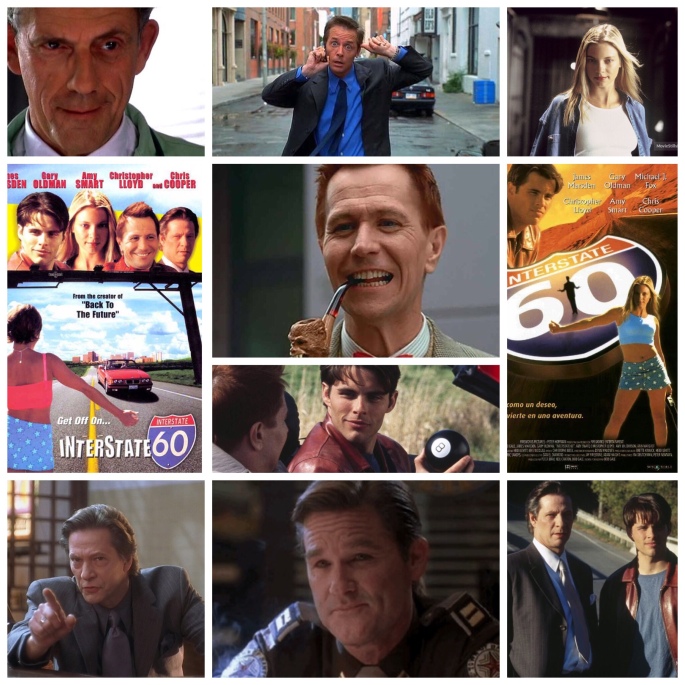
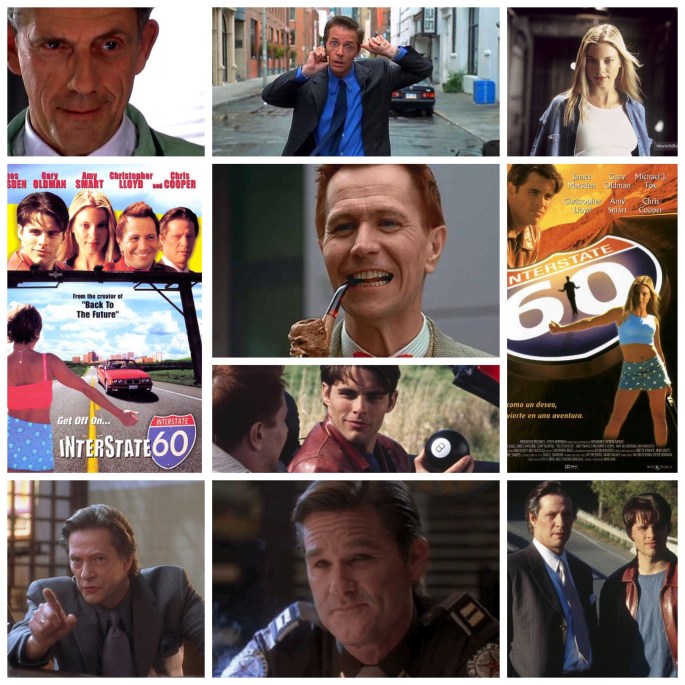
How does a terrific film by an Oscar nominated writer/director with an all star cast end up going direct to video? Who knows, but I hope the persons responsible were tarred and feathered off the studio lot. On a must mention list of staggeringly overlooked films, Bob Gale’s Interstate 60 ranks pretty goddamn far up there for me, and how it slipped past both marketing fanfare and enduring notoriety is both beyond my comprehension and a full on crying shame. Gale also wrote a little flick you may have heard of called Back To The Future, which went on to gather a decent amount of steam, and if that story was packed with interesting ideas, wait until you see the kind of dense, highly philosophical and tantalizingly verbose scenarios he whips up here. Remember that old book The Phantom Tollbooth by “? If you do, you’ll remember it’s protagonist, a precocious kid named Milo and his grammatically scintillating descent into a world where meaning takes on a meaning of its own and every character he meets has a very specific thematic part to play. Well, Interstate 60 is kind of like if Milo grew up into James ‘Cyclops’ Marsden and continued his journey down the literary yellow brick road for a brand new, adult orientated set of adventures starring a whole host of Hollywood heavy hitters whose involvement still somehow couldn’t shake this piece out of sleeper-ville. Marsden is Neal, a young man at a crossroads in terms of jobs, relationships and his place in the world. After a bizarre accident puts him in the hospital, the mysterious duty doctor (Christopher Lloyd) gives him the keys to a sports car and sends him off on a strange odyssey along Interstate 60, a stretch of highway that doesn’t appear to exist on any maps. This is of course a journey of self discovery, with life lessons and painful truths blooming in thickets along the way like wildflowers on the roadside. He’s looking for answers, which he often finds but not in the way he thought or hoped, also searching for his dream girl, whom he finds in adorable Amy Smart but not without a deft test of character first. The cast is all out brilliant here: Chris Cooper is dangerously engaging as an unconventional bank robber, Kurt Russell painfully funny as the sheriff of a small county who has a cheerfully bohemian attitude towards narcotics, and a very important point to prove. Watch for a quick cameo from Marty McFly too. The episodic nature is fluidly soldered together by Gary Oldman’s recurring oddball O.W. Grant, a man with no genitals who grants everyone one wish by blowing green smoke out of his monkey shaped pipe. Such are the delightful eccentricities on display and more, but it’s never just about silliness and surrealities, there are important, enlightening ideas at play here, the script is almost too inspired to serve one film only, there’s so much going on. I wish this one would get picked up for re-distribution or something, it’s too great of a film to be exiled in obscurity the way it has been, there isn’t even a decent DVD out there. If you like your comedies smart, insightful and the right amount of weird, please go seek this one out. I mean, just look at that cast.

-Nate Hill

Christopher Nolan’s Interstellar

Many films are ambitious enough to reach for the stars, but Christopher Nolan’s Interstellar reaches for them and then plunges headlong past them into the universe’s vast infinitude to grasp ideas and tell a story that challenges intellect, stirs emotion and dazzles in the way a thinking person’s SciFi film should. I suppose it’s impossible for me to pick a favourite Nolan film as they are all pretty much solidified classics for me, but if you asked me which one stood out without necessarily labelling it as my top pick, I’d point towards this one. There’s a few key areas in which the filmmaker tries to make a deliberate departure from the style he has become known for, chief among them being just how based in emotion this story is. From Rachel and Bruce in The Dark Knight to Cobb and Mal in Inception there’s always been something of a heartfelt element to his work, but here the relationship between intrepid astronaut Cooper (Matthew McConaughey) and his daughter Murphy, played throughout the years by Jessica Chastain, Ellen Burstyn and the fantastic Mackenzie Foy who is the youngest actor in the film but gives the most soulful work, is really something that anchors the film every step of the way. The relationship between father and daughter here is a connection that transcends time, space, the stars and laws of the universe itself or at least in the way we comprehend them, and while many scoffed at these themes from Nolan and rolled their eyes, I found it to be one of the most powerful things in any film he’s done. Interstellar is bursting with ideas, glimmering special effects and dedicated performances, starting with Matt and Mackenzie and going on down through the ranks with supporting star power from Anne Hathaway, Michael Caine, Casey Affleck, David Gyasi, Wes Bentley, William Devane, Matt Damon, Topher Grace, David Oweleyo with standout work from Bill Irwin as the witty, loyal robot TARS and John Lithgow as Cooper’s salty earthbound stepfather. Nolan plumbs the inky vacuum of space for visual grandeur and vast, stunning set pieces including a planet with roaming tidal waves, a breathtaking ice world and a hair raising docking scene as their ship rotated furiously through space, his sense of scope is incredible and the blend of practical effects vs CGI is a seamless ballet amongst the stars, few films feel as tactile and spacious. As much as he is about the fireworks here, ultimately his focus lies on the intimate as well, with love being explored as more than just a biological function and more like a cosmic field of energy that has laws, boundaries and the same strengths as any other element. Cooper travels through a wormhole and to galaxies so far beyond our own that time seems to have no meaning, but that does nothing to shake the bond he has with his daughter, and this is where the film is so effective. He’s out there trying to find new worlds and sustain the human race, no doubt, but to him it’s Murphy, their connection and the forces which hold it together that ultimately keep him going and win the day. All the elements work to reinforce this throughout the film, with Hathaway’s yearning for the lost astronaut she loves and even Damon’s nefarious self love that leads him to acts that although are horrible, come from an emotional place. Hans Zimmer’s totally unique original score also has a heartfelt undercurrent, usually his work, and especially in Nolan’s films, has a heavily punctuated, thunderously orchestral style but here he’s traded that in for a softer, much more melodic piece that legitimately sounds like galaxies unfolding all around the viewer and has a deep longing behind every twinkling electronic tone. A blockbuster with brains, big ideas and plenty of action, but also with heart and feeling to back it up and fuel this voyage to the stars. One of Nolan’s absolute best, and one of the most brilliant science fiction films we will likely ever see on the big screen.

-Nate Hill

Martin Campbell’s The Mask Of Zorro

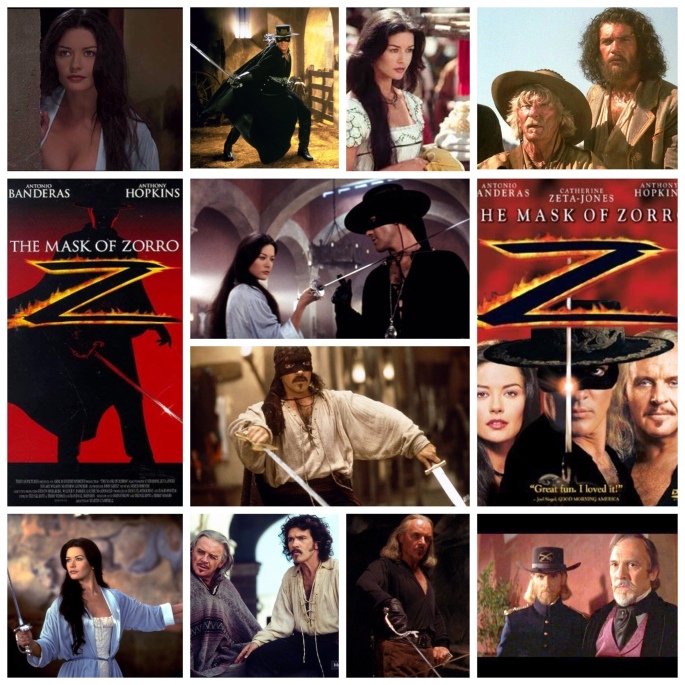
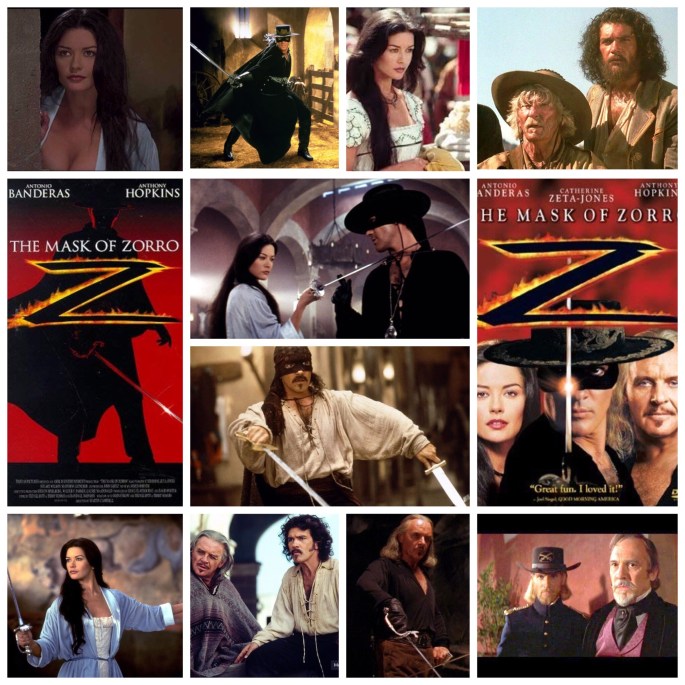
Martin Campbell’s The Mask Of Zorro still holds up today, thanks mostly to its sumptuous, sultry production design and three passionate, swashbuckling and delightfully self aware performances from Anthony Hopkins, Catherine Zeta Jones and Antonio Banderas. This was one of the first more intense and violent adventure films I saw as a young’un, and while the PG13 heroics seem tame in comparison to other films, it still has that menacing edge for me. Hopkins is a scene stealer as Don Diego, the fearless rascal who takes up the mantle of Zorro and passes it along to haughty young thief Alejandro (Banderas) years after he’s betrayed by despicable nobleman Montero (Stuart Wilson, slimy and then some). The real eye catcher is drop dead gorgeous Zeta Jones as Diego’s daughter Elena, whose swordplay and roguish attitude both match and spar with that of Banderas, their chemistry onscreen is pure Latin fire in full flame. It gets quite lighthearted and theatrical at times but this is after all Zorro and not Batman we’re talking about here, he’s kind of like the Latin Lone Ranger and the flamboyant flourish is part of the charm. The supporting cast is fun too, but Matt Letscher is a bit vanilla to play the dastardly secondary villain who literally keeps heads in a jar, they would have been better off going the grizzled character actor route instead of a golden boy like him. All is well with Maury Chaykin as a testy prison warden and the late L.Q. Jones as a crusty outlaw who mentors young Banderas and has arguably the most memorable scene of the film. The star power of our three leads is where it’s at though, Banderas is smokin’ good in the charcoal black outfit waving the classic needle sword around in people’s faces, Hopkins exudes an amused nobility and Jones… man, you don’t find beauty and charisma like that every day. James Horner’s score is a trumpet blast of celebratory cues that fires up the action energetically, Cecilia Montiel’s production design lovingly brings the world and time period to life, while Campbell paints in broad, playful director’s strokes, all to bring us what has become an adventure classic. There is a sequel, but it’s kind of a listless, gaudy retread that loses the magic in cheesy set pieces, stick with this diamond instead .

-Nate Hill

Jim Kouf’s Gang Related

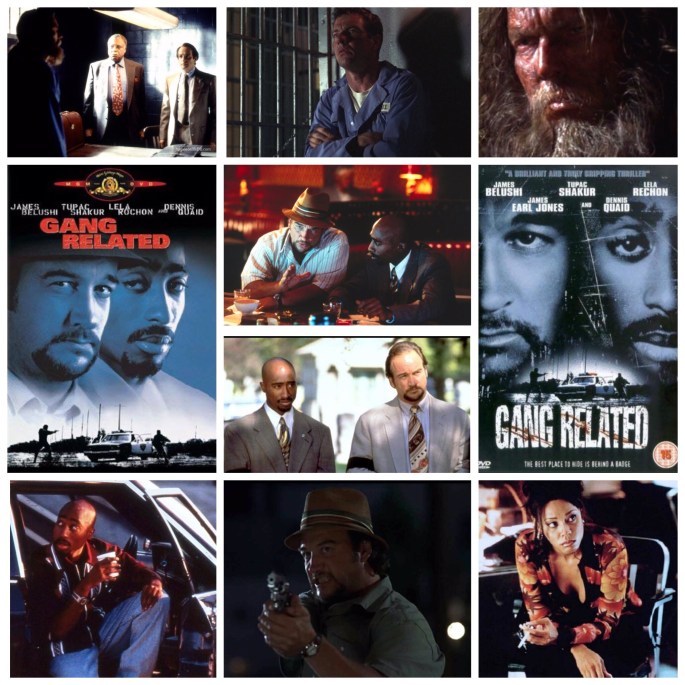
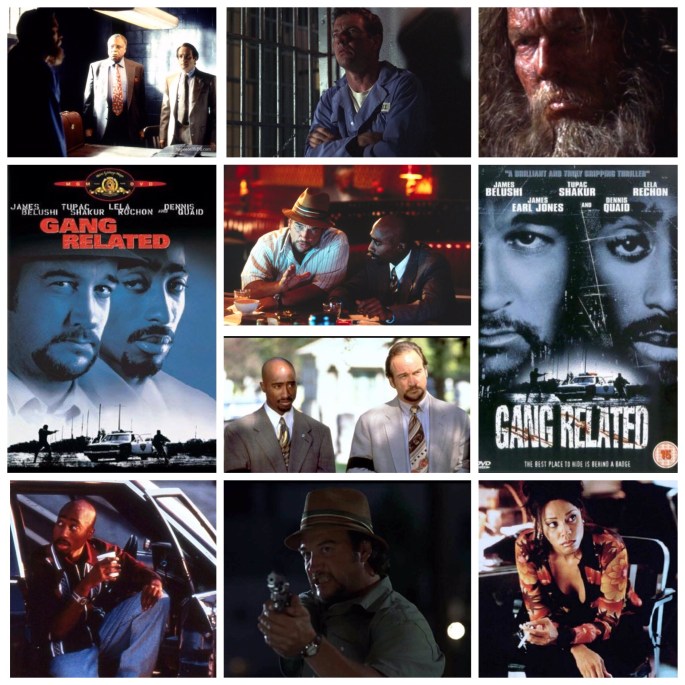
Jim Belushi and Tupac Shakur are an odd pairing on paper to star in a cop flick together, but they’re extremely effective in Jim Kouf’s Gang Related, a twisty neo-noir with a great cast and a few tricks up its sleeve. They play two inner city detectives who are corrupt, but the script doesn’t treat them with the same jaded judgment and moustache twirling villainy that some dirty cops get in Hollywood, there’s a surprising empathy towards them especially in Tupac’s performance. After they accidentally murder an undercover DEA agent, they try to frame a nearby homeless man (Dennis Quaid), coach a few witnesses and make it seem like they were never involved. Things get spectacularly messy when they discover that Quaid’s disheveled hobo isn’t just a nobody and there are people in high places, not to mention both the DEA and gang factions coming after their morally duplicitous asses. It’s kind of like a reap what you sow tale, these two guys aren’t especially nasty characters, but they did commit a really shady act and now the proverbial karmic dildo has come back to royally fuck them. Belushi is the tougher, more unflappable veteran who is more willing to compromise his soul with the cover up, while Tupac is the younger, more impressionable cop and fears the road he’s being led down, and well he should. They both put in fantastic performances, while Quaid does well against type and the three of them are supported by Tiny Lister, David Paymer, Lela Rochon, Wendy Crewson, Gary Cole and James Earl Jones. A solid urban crime thriller, fairly overlooked as well.

-Nate Hill

Brian Helgeland’s The Order

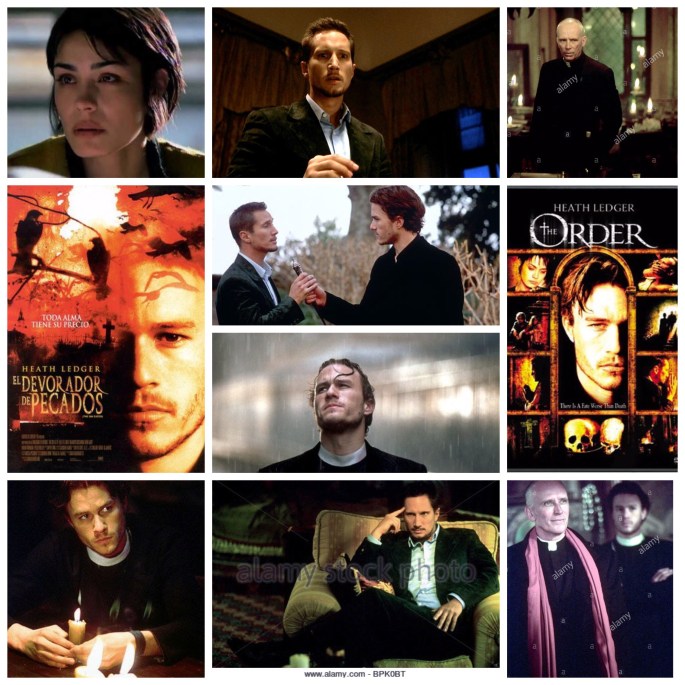
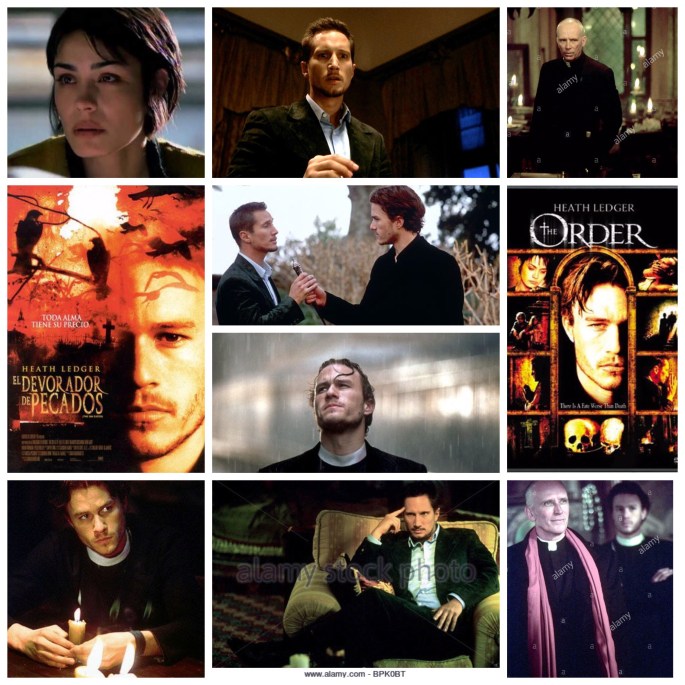
Brian Helgeland’s The Order is a strange, mercurial supernatural thriller that sees a restless Heath Ledger play a young priest investigating corruption in the highest echelons of the Catholic Church, but I’ll say right off the bat that it’s not the kind of controversy you’re thinking of. Ledger is probing the death of his sect’s leader, and when you consider the sort of obscure splinter group of the church he hails from, there’s clearly something going on under the surface, starting with Peter Weller as a dodgy cardinal whose mannerisms don’t exactly suggest benignity. Ledger discovers vague connections to what they call a ‘Sin Eater’, a rogue spiritualist who offers unsanctioned salvation outside the church’s jurisdiction, and teams up with his walking comic relief priest buddy (Mark Addy) and a woman he once performed an exorcism on (Shannon Sossamyn) to go on a merry renegade priest hunt. This film has a low rating on every site you’ll find and reviews have never been kind, but I really enjoyed it. There’s a grim, atmospheric blanket of fascinating visual effects and esoteric, near occult level mysticism at play that kept me engaged, I also really like the Sin Eater concept and German actor Benno Fürmann is darkly charismatic as the guy, playing him as just south of a real human being. Ledger postures a bit but ultimately nails it in a more subdued role, while Weller, although only briefly seen, exudes otherworldly menace with his trademark candidly flippant tone. The film is billed as a horror which isn’t quite the case, and that could have been the problem with reception. It’s more a moody mystery drama with subtle supernatural undertones, and works really well as such.

-Nate Hill

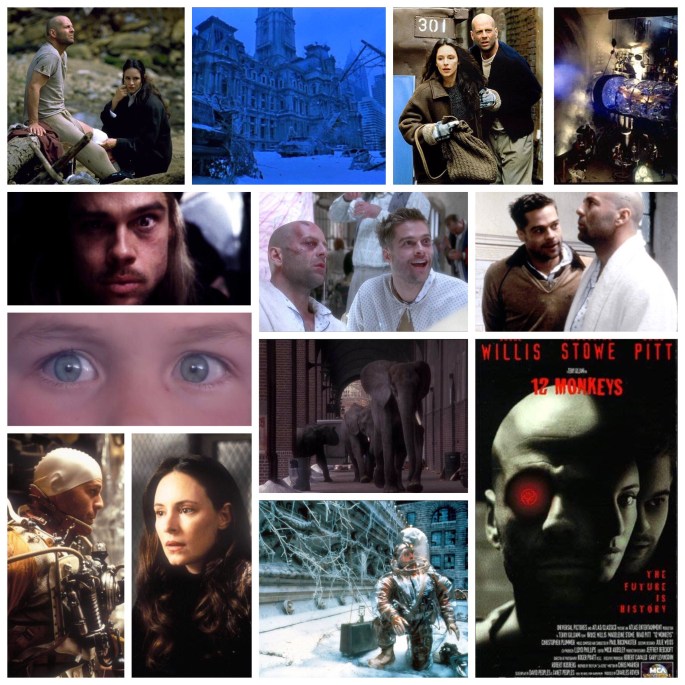
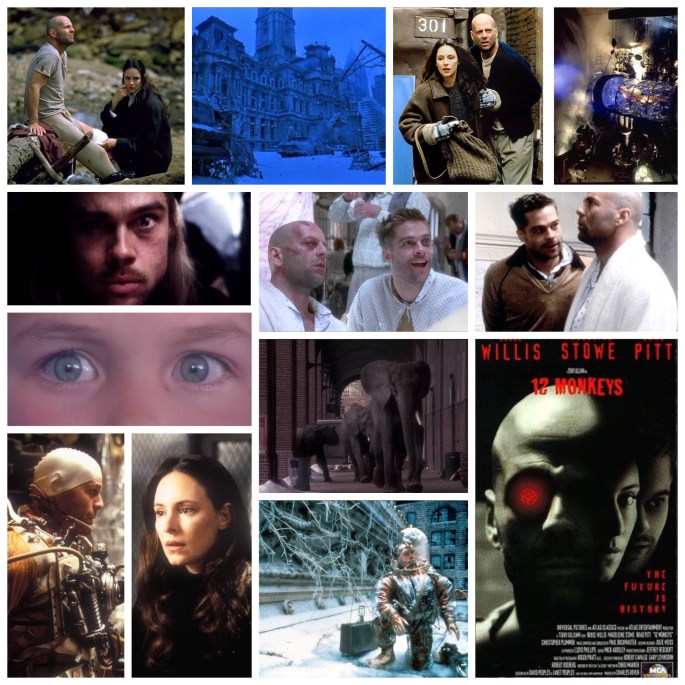
Terry Gilliam’s Twelve Monkeys

There are films that sink in almost immediately after the credits roll, others that take some days or months to absorb, and then there are ones like Terry Gilliam’s Twelve Monkeys, which in my case has taken the years since I was a kid and first saw it to digest the whole experience. Not to say it’s an especially complex or dense story, I mean it’s twisty enough but can more or less be understood with one viewing if you’re keen. There’s just a certain emotional quality to everything, coupled with the hazy unreliability that Gilliam lays over his lead character’s state of mind, an atmosphere like that of a dream you had last night and are trying to remember right as it slips away, an idea which also literally figures into the plot.

Bruce Willis plays against his tough guy image as James Cole, a shellshocked time traveller sent from a dystopian future back to the 90’s to do some cosmic R&D and figure out how a mysterious super virus wiped out almost all of humanity, forcing the rest into subterranean catacombs. Time travel doesn’t seem to be an exact science for these folks though, as they repeatedly send him to the wrong era after which he’s dumped in a mental hospital where, naturally, no one believes who he really is. Or is he even who he thinks he is? Madeleine Stowe is Kathryn Reilly, the psychiatric anthropologist assigned to his case, and Brad Pitt in one demon of a performance plays terminal odd duck Jeffrey Goines, a man whose lunatic ramblings start to sound eerily on point. The mystery of the virus sort of takes a backseat to Willis’s journey through the past, present, future and all times in between, Gilliam loves taking pause to see how he interacts with the world around him and hold scenes for a while until we get a real sense of world building. The moment James hears music for the first time is a showstopper, and the way Willis handles it is not only one of his finest moments as an actor but also a showcase of the craft in itself. Stowe always radiates fierce beauty and compassion in her work, she’s a grounding force of reason and empathy here, while Pitt takes a hyped up Joker approach to his role that takes you off guard while constantly keeping you in the dark about who he really is, the guy says nothing while blurting out everything. Others dart in and out of their story, with appearances from Christopher Plummer, Frank Gorshin, Joseph McKenna, Jon Seda, Harry O’ Toole, LisaGay Hamilton, Christopher Meloni, Bart the Bear and a super creepy David Morse.

I love this film to bits, I think it’s Gilliam’s best work and is definitely my favourite, there is just so much going on both front n’ centre and in the background. It’s a thrilling adventure story, narratives about time travel are always my bag, but it also looks at Willis’s character from a careful psychological perspective. What would time travel do to someone’s state of mind, and how would they react in the long run. Themes of reality versus dreams and imagination are present, and a gnawing sense that it could all be made up. “Maybe you are just a carpet cleaning company and this is all in my head”, James laments through a payphone that transcends space time barriers. Gilliam certainly likes to play with notions of uncertainty and self doubt when it comes to the Sci-Fi aspects, and he isn’t afraid to boldly place in a hauntingly elliptical ending that doesn’t satisfy or resolve, and if anything lingers in our thoughts for a long while, like that elusive dream I mentioned above. Gilliam almost couldn’t get this film made, there were issues with everything from script to special effects to reported studio interference, but I thank the stars that it all worked out in the end, for it is his masterpiece.

-Nate Hill

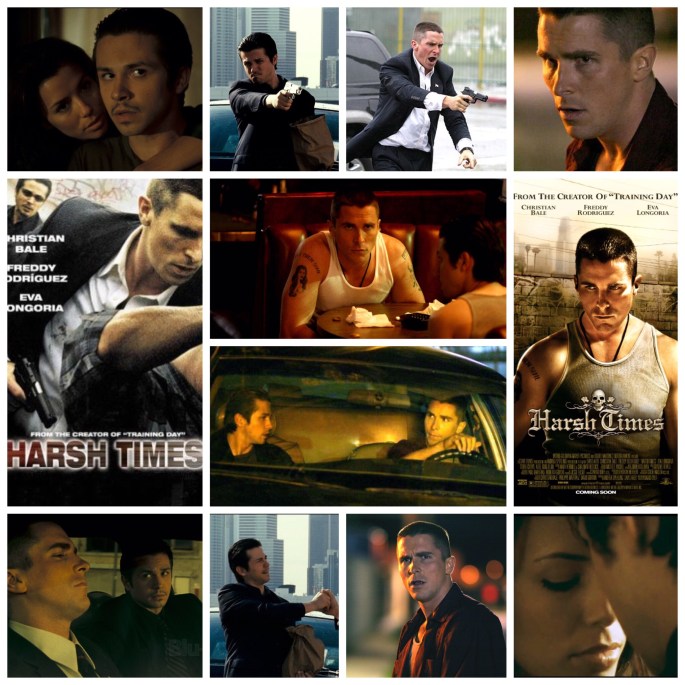
David Ayer’s Harsh Times

David Ayer’s Harsh Times sees Christian Bale in a character study of extreme dysfunction and maladjusted anger, it’s a tough, bitter film to watch but one that leaves a firebrand in its wake, for better or worse. Bale plays Jim, an Iraqi war vet who has come back stateside so internally fucked up and damaged that he can barely hold down a job or keep up steady relationships with anyone that don’t teeter towards self destruction. He spends his days meandering around the outskirts of LA with Mike (Freddy Rodriguez), his partner in petty crime and apprentice in all things spiteful and misanthropic, much to the dismay of Mike’s much more successful girlfriend (Eva Longoria). Jim is both psychologically broken and emotionally untethered, a dangerous combination if left unchecked, and the downward spiral of violence, drugs and antisocial behaviour he slides into is a sad, pitiable thing to see. Did Jim have an affinity for criminal activities before the war, or did his experience change him into the man he is now? What and where is the causality, if any? Where do the lines blur? Ayer keeps it close to the chest, but the clues are all there in Bale’s measured, incendiary performance that may be his best so far. Sparks of vitality still shine through, as when he shows interest in a job with the Bureau (JK Simmons has a great cameo as the chief interviewer), but even with that he causes corrosive friction, perhaps unintentionally. It’s a blistering character study of a guy whose environment has turned him hard, until he goes against the grain almost by second nature and circles a drain that was a long time coming and from which there is probably no escape. Mixed up with a whole bunch of the wrong kind of people from gangbangers to prolific drug runners, this film sees Jim hit the end of his road,. Both Bale and Ayer make it something powerful to watch, if miserable too.

-Nate Hill