True Detective We Get the Show We Deserve

True Detective We Get the Show We Deserve

“I didn’t live my life to go out like this.” – Frank Semyon

TD DESERVE

                Bleak and hopelessness.  That’s what we’re left with after the conclusion of the second season of Nic Pizzolatto’s masterclass series, TRUE DETECTIVE.  Each one of the characters got exactly what we were promised, they got the world they deserved.  I want to preface what I’m about to say next with this: From the first episode of the first season, I was completely obsessed with TRUE DETECTIVE.  After the season concluded with the most satisfying ending it possibly could, I thought there was absolutely no way that a second season could, at the very least, be comparable on any level to the first.  Rust Cohle was a cinematic and ideological godsend.  No one had higher expectations for season two than I.  Colin Farrell, Vince Vaughn, Rachel McAdams and Taylor Kitsch were announced as the primary cast.  I thought, okay, this is interesting.  I always loved Vaughn in dramatic roles and Farrell has always been an actor I’d watch in anything.  Kitsch was good in SAVAGES, though I had not seen FRIDAY NIGHT LIGHTS.  McAdams piqued my interest based on her performance in TO THE WONDER.  All that being said, and after digesting the finale of season two, I can honestly say that not only did Farrell, Vaughn, Kitsch and McAdams give career-high performances, and not only is season two better, but it completely upped the artistic game for not only Nic Pizzolatto, but also HBO and serious television series from this point on.

If you’re outraged by this, let me explain.  The first season was too big to fail.  It was backed by HBO, had Cary Fukunaga directing all eight episodes, T Bone Burnett doing the music, and drew the star power of Matthew McConaughey, Woody Harrelson and Michelle Monahgan.  The season was a dark cop show, wrapped in McConaughey’s dialogue sewn with lyrical realism.  The first season became not only a phenomenon but a revelation.  We had never seen anything like this before.  It became a monster that everyone suddenly watched.  Whether or not they grasped the content is irrelevant.  Everyone watched it because everyone was watching it.  Then came the finale, which underwhelmed a lot.  Disappointed many.  Those people were concerned about the ritual killing case not being fully closed.  But that wasn’t what the first season was about, was it?  It was all about Rust inadvertently finding his inner peace.

McADAMS TD

Then came season two.  Some people found the casting to be lackluster.  There wasn’t one director for the entire season, and then the initial reviews came out, which were mixed, but predominantly overly harsh on the show.  Keep in mind, the critics were only sent a screener of the first three episodes.  The critics directed their negativity specifically at Pizzolatto himself.  The harsh criticism is akin to the same media sabotage that Michael Cimino suffered from his masterpiece HEAVEN’S GATE.

                Not all of the criticism to the second season is unwarranted.  The dark noir and the pulp dialogue are not for everyone.  Even those who are avid fans of that genre had legitimate criticism of the second season.  Understandably, TRUE DETECTIVE certainly is not a show for everyone.  I will be the first to admit that.  I’m friends with a lot of filmmakers and writers on Facebook.  The reaction from them was mixed as well.  Some loved it, some didn’t like it, and some were very vocal about their absolute disdain for the show, and specifically Pizzolatto himself.

LEFT BEHIND

I chat with one filmmaker very often, and he initially didn’t love the show nearly as much as I did, but as the second season unraveled, he was just as drawn to it as I was.  I asked him one day why there was such hostility directed towards the show and Pizzolatto.  His response was one word: Jealousy.  He then elaborated and told me that the disdain for Pizzolatto came from the fact he was not a part of the machine, he was a novelist who wrote a brilliant first season and went from a college professor to the showrunner of the most powerful show on the most powerful network overnight.

TD Kitsch

Whether or not that is true, it doesn’t really matter.  What has me in absolute disbelief are the people “hate-watching” this previous season and proud to be doing so.  I can’t help but take away that these are the same people who started watching the first season because it became pop culturally trendy too.  They were the same people who on their initial reaction to the first season’s finale didn’t register it at first.  These are the same people who jumped on the trendy bandwagon to hate the show this season.  It became a game of Facebook “like” baiting, and Twitter retweeting.  Whoever could make the snarkiest hashtagged quip won the internet for the day.

                I wish I could thank each and every one of the “hate-watchers” personally and tell them how much I appreciate their viewership to keep buzz for the show high and keeping the ratings very high and ensure a third season from HBO is Pizzolatto is willing to do another.  Whether or not you loved the show as much as I did, or thought it was an admirable follow up, or absolutely hated it, one thing is the absolute truth — we got the show we deserved.


Episode 14: Steven Spielberg’s MINORITY REPORT with Guest Joel Copling

We are pleased to be joined by Joel Copling of Joel on Film, who is a great friend of Podcasting Them Softly’s.  We discuss Steven Spielberg’s masterful MINORITY REPORT as well as the top five performances of Tom Cruise and Samantha Morton!

TRUE DETECTIVE 2.4 DOWN WILL COME – A Review by Frank Mengarelli

TRUE DETECTIVE 2.4 DOWN WILL COME

“Sometimes your worst self, is your best self.” – Frank Semyon (Vince Vaughn)

We are now at the halfway point of the second season of TRUE DETECTIVE. The latest episode was an incredible slow burn of more complex character development, so slow that the episode came to a crawl at certain points, only to brilliantly explode in the final ten minutes to a Michael Mann inspired street shoot out.

truedetective2

Vince Vaughn’s back is to the wall, he’s out of resources and he’s going back, extorting the current owners of his previous businesses, his marriage is falling apart and he is losing trust in the people working for him. Colin Farrell is exiled inside his self loathing, saying goodbye to his son by giving him his father’s badge. Taylor Kitsch relapsed and drunkenly slept with his former “Black Mountain” buddy, and shored that up with more self destruction by getting engaged to his former girlfriend when she told him that she was pregnant. Rachel McAdams’ life is still a mess, and a formal sexual misconduct complaint was charged against her by the simpleton officer she was having sex with as well as her current partner helping fuel the complaint.

We also get a glimmer into what I think is the underlining occult story line of the show. McAdams’ father (David Morse) shows her and Velcoro a picture from the 70’s of him, Vinci’s Mayor’s father and Rick Springfield’s characters all on a beach side. I’m thinking that the sex parties that have been referenced in the last two episodes have something to do with them.

true-detective

The episode ended like the fourth episode of the first season, a tremendous shoot out. This time, it wasn’t one take like it was in the first season. This time, the camera followed the three leads exchange gunfire with a gunman from a meth lab, as well as chasing an SUV down on foot. The scene was absolutely graphic. Civilians that were protesting outside of a public transportation bus terminal were gunned down; the officers supporting Farrell, McAdams and Kitsch were all gunned down.

What I found more engaging and interesting than the intense shoot out, was after it was over, the camera held on each character, we watched them regroup in the aftermath that left everyone dead but them. Farrell’s hands were shaking, saliva dripped from his mouth. McAdams was crying. And then there was Kitsch. Kitsch was stone cold, no emotion, no remorse and no empathy.

screen-shot-2015-07-13-at-2-52-08-am

A lot has been built around Kitsch’s character. He’s gay, but more interestingly enough he was involved in “Black Mountain” during the Iraq war. Black Mountain can only be the fictional version of the “defense” contractor Black Water, that had free reign in Iraq, and they killed anyone and everyone. Kitsch’s vulnerability came out in his scene with Farrell earlier in the episode:

“I just don’t know how to be, out there in the world.”

“Look out that window, look at me. No one does.”

Pizzolatto’s writing is unique and he truly has his own voice. The four main characters, much like this episode itself, are all slow burning. Whatever inner torment and turmoil they are dealing, they’re completely lost in who they once thought they were, or better yet who they thought they could have been. As Leonard Cohen’s theme song says, “I live the life that I left behind.”

Martin Scorsese’s GANGS OF NEW YORK – A Review by Frank Mengarelli

With Daniel Day-Lewis, Leonardo DiCaprio, Cameron Diaz, John C. Reilly, Henry Thomas, Gary Lewis with Jim Broadbent, Brendan Gleeson and Liam Neeson.

“You see this fucking knife? I’m going to teach you how to speak English with this fucking knife.”

Bill “the Butcher” Cutting (Daniel Day-Lewis).

I need to get this off my chest now. Cameron Diaz is not very good in this film, and I strongly feel Leonardo DiCaprio is miscast and I don’t know what Scorsese was thinking by casting Henry Thomas. Phew…I feel better now. That being said, GANGS OF NEW YORK is Martin Scorsese’s seminal masterpiece.

The film starts out bold snf fierce, blood is sprayed all over the streets. Priest Vallon (Liam Neeson) is preparing his men for an epic battle against the Confederation of American Natives which is led by Bill “the Butcher” Cutting (Daniel Day-Lewis) to see who controls the Five Points for good and all. Vallon and his men mount inside a rundown church, and meet outside in the Five Points (where all major roads meet to a town square). They stand outside in the dead of winter and stand idle – waiting for hell to unleash.

Men with top hats and blue sashes begin to slither out of buildings, and stand on the other side of the square. This is where we see Cutting, glass eye and all. What unleashes is a brutally violent battle. The battle sequence is one of the best filmed, being slowed down to 12 frames per second and queued up to Peter Gabriel’s ambient and eerie sounding SIGNAL TO NOISE.

Men are screaming, ripping each others cheeks apart, and stabbing each other with dull and rusty blades. It’s a chaotic scene but our focus begins to turn to Cutting who is weaving through the crowd, blood lust is in his eye and his sights are set on Vallon. Cutting takes no prisoners; killing his own men who stand in his way just to get to Vallon.

He gets to Vallon and stabs him in the side, then in the stomach. The Priest falls and the battle is over. All the men halt. A young Amsterdam Vallon (played as an adult by DiCaprio) is taken to an orphanage and is to be sure to get “a good education” scowls Cutting.

Time passes and Amsterdam is then let out as an adult. He returns to the Five Points with a mission of revenge. He is slowly taken under the wing of Cutting and Amsterdam gets as close to him as possible so he can avenge the death of his father.

This is an extremely flawed film; I’ll be the first to admit that. There are a lot of things very wrong with it. I have always said that Colin Farrell would have been absolutely PERFECT as Amsterdam. My belief is that since Scorsese had been trying to make this film for decades, the studio would only green light the film if he had star appeal. As much of a great actor Day-Lewis is – he’s not a box office draw (at that point in time for the masses), so DiCaprio and Diaz were forced into the film for their box office appeal. But to be positive, this film did start a wonderful collaboration between Scorsese and DiCaprio. I don’t think for a second the collaboration is anywhere near as good as Scorsese/De Niro or Scorsese/Keitel.

DiCaprio just doesn’t work for me.  But I can accept him in this film.  Every scene he shares with Day-Lewis he’s completely overshadowed. The character that Diaz plays is a thief that has a special relationship with Cutting – so she’s given free rein and doesn’t owe him “tribute” – just sex.

The character of Jenny should have been turned into an older “street woman” and played by Jodie Foster. She could still have that relationship with Cutting, and also allow Amsterdam’s fixation with her as well – creating the jealously trap that happens. I think it would have added more maturity and weight to the film.

This is Day-Lewis’ film hands down. He carries the entire film on his back with the help of Neeson, Gleeson and Reilly (hey – remember when he used to be a dramatic actor?). The attention he commands from you is unreal. I’ve never seen an actor be able to do this with every single film he’s in. The guy is a fucking titan of cinema.

This is the film that combines all of Scorsese’s passions, everything he’s built his career on. It’s a period piece epic, it’s an antiwar film (the Civil War draft directly reflecting Vietnam), the setting is New York City (which Scorsese loves more than anything) and it’s about the birth of organized crime – or the mob if you will. The film is an ensemble film, which Scorsese is wonderful at crafting. This is an extremely personal film for Scorsese – as personal as MEAN STREETS or THE LAST TEMPTATION OF CHRIST. The guy had tried making this film since the 1970’s!

The production value is absolutely INSANE in this film.  No CGI, all sets that feels lived in and worn down.  From the opening scene in the church, where there is nothing but chaos and dilapidation brewing in every corner of the frame, to the Five Points battle, to the unbelievable costume design.  This film misses zero marks when it comes to set/costume/production design.  Truly, a remarkable on every aspect of aesthetics.

This film is vintage Scorsese. I haven’t felt this in a Scorsese film since “Gangs”. His use of steady cam, tracking shots, and slow motion just reminds us that he is the greatest living director. When Diaz is introduced into the film, it’s in a slow motion sequence that’s queued up to music – much like Sharon Stone in “Casino” – Scorsese is a master of his craft and I will battle each and every one of you to the death over “Gangs of New York” being his masterpiece.

Daniel Day-Lewis’ performance is absolutely wonderful. My words can’t do his art justice. One of my dreams have always been to direct a film with Day-Lewis, but I can’t even imagine how intimidating such a thing would be. This is a guy who invests himself into his characters for the entire film. He’s not Daniel Day- Lewis, he’s Bill Cutting. He doesn’t speak with an English accent; he speaks with his thick New York-ish accent on and off the screen. Anyone who can’t admire his passion, admire his skill is a fool.

Review 10/10

Episode 9: Ridley Scott’s THE COUNSELOR, new trailers and Top Five Brad Pitt and Cameron Diaz

Episode 9 is now live.  We discuss Ridley Scott’s THE COUNSELOR, new movie trailers and Top Five performances of Brad Pitt and Cameron Diaz!

Enjoy!

THE DOOR IN THE FLOOR 2004 Dir. Tod Williams – A Review by Frank Mengarelli

“Don’t ever, not ever, never, never, never, open the door in the floor.”

hero_EB20040714REVIEWS407140301AR

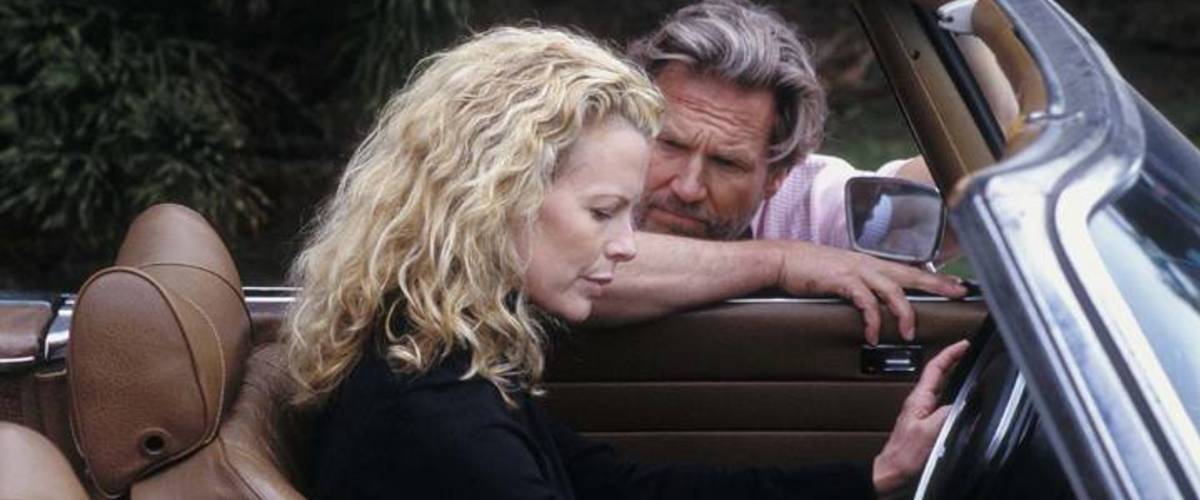
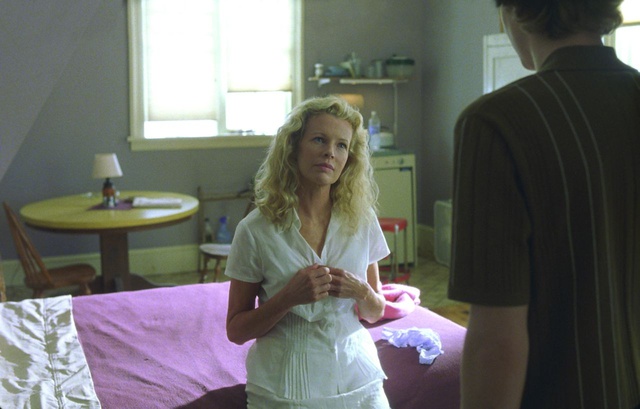
            Simply put, THE DOOR IN THE FLOOR is one of the best films from the previous decade.  It is small, intimate and arousing.  Set in present day in New England, the film follows a young man, Eddie, who is set to graduate from a prestigious prep school, Exeter Academy, the same school where Ted Cole (Jeff Bridges) went, and his two deceased teenage sons went as well.  The intent of Eddie’s summer is meant to be spent interning for Ted, Ted was a novelist who became a popular children’s writer, and Eddie is an aspiring writer himself.  As the summer moves along, revelations are made, tragedy, old and new are summoned, and a love affair between Ted’s wife Marion (Kim Basinger) and Eddie formulates.

This film is tough.  Pain, love, loss and isolation surface almost immediately.  Marion never got over the death of their two sons, and Ted has transformed the pain into raising their young daughter Ruth (Elle Fanning) and working on a new children’s book featuring his recurring characters, Thomas and Timothy which are hauntingly named after their two sons who died.

Film Title: Door in the Floor

            Jeff Bridges gives him most vicious and turbulent performance as Ted.  He is an alcoholic philanderer who emotionally uses people, and softly degrades them.  Basinger gives her finest performance as the broken and stoic Marion, who has never fully recovered from the loss of their two sons, and who uses Eddie sexually as a vessel to channel her pain.

There are few, but the scenes between Bridges and Basinger are absolutely beautiful.  These two characters are so broken, and everything they have been through together was only sustainable by their love for each other.  Even though it is not expressed physically, nor shown at all, you can feel how pure it is, how undying it is.

So many films are made about love, and very few can express it the way THE DOOR IN THE FLOOR does.  Pure love at times messy, filled with pain, and beautifully tragic and this film is an absolute visual and musical interpretation of that love.  The film is beautifully shot by Terry Stacey, and remarkably scored by Marcelo Zaruos.   The film’s score is as important as any other aspect of the film, it does not arbitrarily show up and is not easily ignored.  It is designed to provoke an emotional reaction in a scene of a film that is layered with joyous yet heartbreaking emotion.

door-in-the-floor-81

            The film’s title is taken from Ted’s most famous children’s book, which upon watching him read it to an audience, and seeing the dark drawings of the book (which Bridges drew himself), it is perhaps the most intense children’s book ever written.  The film begs a question to the audience.  Have you opened your own door in the floor?  Will you open your own door in the floor?  Will you face your own desires, your fears?  Will you come to terms with the realities of everything that you love, everything that you hate?  It is simple for anyone to open the door in the floor, but not many can withstand what comes through it.

Episode 7: With Very Special Guest GARY YOUNG. Sidney Lumet’s THE OFFENCE, MAD MEN, HARRY BROWN and top five Sean Connery and Faye Dunaway

Featured on Episode 7 is a very special guest, Gary Young writer of HARRY BROWN starring Michael Caine.  We also discuss MAD MEN, Sidney Lumet’s THE OFFENCE and top five performances of Sean Connery and Faye Dunaway.

Enjoy!

Episode 6 Jean-Pierre Jeunet’s A VERY LONG ENGAGEMENT, GEORGE MILLER’S MAD MAX FURY ROAD and Top Five Colin Farrell and Jodie Foster

Hey everyone, we’re excited to post Episode 6.  We discuss Jean-Pierre Jeunet’s A VERY LONG ENGAGEMENT as well as George Miller’s MAD MAX FURY ROAD and our top five performances of Colin Farrell and Jodie Foster.

Enjoy!

FLASHCAST! A special Bondcast with guest Paul Rowlands!

Hey everyone, we wanted to drop a special flashcast on you guys!  We had the Godfather himself, Paul Rowlands (Money Into Light) on for a very special James Bond themed podcast!  Don’t worry, episode 6 will be live tomorrow.  Enjoy guys!

Frank’s thoughts on STAR 80

STAR 80 – 1983. Dir. Bob Fosse.  With Eric Roberts, Mariel Hemingway, Carroll Baker, and Cliff Robertson

In STAR 80 Bob Fosse chronicles the true story of the short rise and fall of Playboy Playmate Dorothy Stratten. She was the embodiment of a Playmate: wholesome, naive, and the perfect girl next door. Mariel Hemingway (granddaughter of Ernest) plays Stratten and Eric Roberts, in a star making performance, portrays Dorothy’s boyfriend turned husband Paul Snider who kills Dorothy (I didn’t spoil anything, it’s told to you in the opening). Snider is a self obsessed small time hustler who is always looking for the perfect opportunity to strike it big. Snider accidentally stumbles upon Stratten while she’s working at a Dairy Queen in Vancouver and it’s love at first sight for Snider. Their relationship soon blossoms as Snider spoils Stratten with attention and lavish gifts. Snider then begins taking nude pictures of Dorothy, and sends them to Playboy. Dorothy is soon after summoned to the Mansion but there’s one road block – her Mother (played to perfection by Carroll Baker). Snider pleads with Mrs. Stratten to allow her daughter to travel to the Playboy Mansion and become a Playmate. She refuses, because she can see through Snider’s phoniness. She knows that Snider’s love for her daughter is more opportunity than real love. The film has interviews with characters from the film, chronicling Dorothy and

Snider’s life (as Fosse previously did in LENNY) and the film cross cuts between Dorothy’s story and to current time where we see Snider naked in their bedroom covered in blood. The film itself is edited much like ALL THAT JAZZ with Alan Heim returning as Fosse’s editor. The film is a pleasant mixture with the way it flows between ALL THAT JAZZ and LENNY. The murder scene consists of Snider speaking a monologue of contempt, self loathing, hatred and jealously of Dorothy’s stardom. It’s very Shakespearian the way the film allows Roberts to convey his emotions to the audience, allowing him the inner dialogue with the audience while he stands alone, bloody and naked in the room he murdered Dorothy in. It reminded me much of Richard III or Iago’s sadistic monologue from OTHELLO.

Eric Roberts brings down the house in this film.

STAR 80 is a true story, some events and characters are slightly fictionalized which gave the studio a blanket to help prevent a lawsuit, which didn’t stop Hugh Hefner from suing for deformation of character. Veteran actor Cliff Robertson (Uncle Ben from Raimi’s

Spiderman franchise) plays Hugh Hefner. Robertson doesn’t necessarily look like Hefner, but his mannerisms and delivery tricks you into thinking it really is Hefner. The way Hefner is portrayed is that of a father figure, yet he’s just as much of an opportunist as Snider. Fosse explores, as he did in LENNY and ALL THAT JAZZ, the dark side of show business and humanity. He glamorizes it to a certain extent, but the pitfalls that are shown bring the film to a much darker and deeper emotional feel.

As Dorothy expands her horizons with Playboy and films, Snider begins to be left in the dust. He’s Dorothy’s self proclaimed manager and is sucking money from her to buy cars, houses and other materialistic items. He buys a vanity license plate for their new car entitled: Star 80. Snider is convinced that he and Dorothy is the new power couple and proposes marriage to Dorothy. Hefner is skeptical of Snider and sees him as a low level pimp and hustler and warns Dorothy about him and his intentions. As Dorothy’s star rises, Snider is convinced that he is rising along with her – until he realizes that he’s not ascending with Dorothy and he begins to become jaded and bitter.

Dorothy’s huge break comes from film director Aram Nicholas (who is a fictionalized version of Peter Bogdanovich director of THE LAST PICTURE SHOW and PAPER MOON) who is played by Roger Rees. As Dorothy spends more time in New York with Aram and less time with Paul who’s still in LA, she begins to see things more clearly. She is sucked in by Aram’s thoughtfulness, charm and attention. She begins to drift closer to Aram and further away from Paul. Paul begins to suspect something is amiss, and hires a private investigator and buys a gun. The way Bogdanovich is displayed in the film is much like Hefner and Snider. They are sweet men at first, and then they begin to manipulate Dorothy for their benefit and personal gain. Quick note: Bogdanovich was dating Dorothy at the time of her death, and then proceeded to marry Dorothy’s younger sister (of whom was 29 years younger than Bogdanovich) after Dorothy’s death. This is the main reason that caused the fast decline of Bogdanovich’s career.

Dorothy leaves Paul and moves in with Aram. She files for divorce and Aram begs Dorothy not to see Paul anymore. She agrees, but gets sucked back in and goes to see Paul one last time to propose him half of everything she’s worth so they can finalize their divorce. Dorothy returns to her old home with Paul, and the entire home is covered in pictures of Paul and Dorothy. Paul is at his weakest and most vulnerable point. He begins to beg Dorothy not to leave him, he threatens to kill himself (as I watched this scene, do we all think this when we are at our weakest?) and Dorothy begins to feel sorry for him, she touches him and he pushes her. He becomes spiteful and angry and yells at Dorothy with envious anger. The bedroom in the film that is the scene of Dorothy’s death is that actual bedroom she was murdered in.

It’s interesting how the film is structured; it’s almost as if Snider is the lead character. During my research of the film, I found an interview with Eric Roberts where he stated that Fosse told him that he decided to make Snider the main focus of the film, because if Fosse himself wouldn’t have become famous – he would have become Paul Snider. Damn Fosse – that’s honesty!

The climax of the film is much like ALL THAT JAZZ, but where as climax is a beautiful sadness; STAR 80’s is graphically violent and disturbing. This film should have been nominated across the board. Best Picture, Director, Adapted Screenplay (Bob Fosse for basing his film on Theresa Carpenter’s “Death of a Playmate” article), Best Actor: Eric Roberts, Actress: Mariel Hemmingway, Best Supporting: Cliff Robertson and Carroll Baker, and Alan Heim for Best Achievement in Editing. This was Bob Fosse’s follow up to ALL THAT JAZZ and his final film. ALL THAT JAZZ will always remain as Fosse’s masterpiece and as a filmmaker Fosse never had one misstep, and STAR 80 is my new staple for a filmmaker’s swan song. What makes this film even more interesting is that Fosse and Hefner were friends in real life, and there was a rumored love triangle between Fosse, Hefner and Stratten. As I said earlier Hefner sued for the way he was portrayed in the film. This film banished Fosse and Hefner’s friendship.

What I love about Bob Fosse is that he just doesn’t give a fuck.