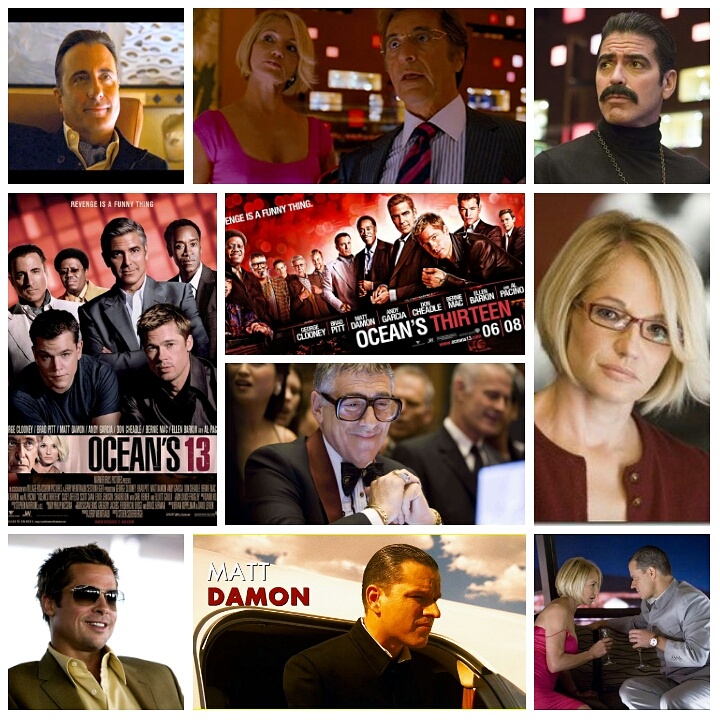
As silly, gaudy and drawn out the Ocean’s franchise had gotten by its third outing, I still somewhat enjoyed Ocean’s Thirteen, an overblown attempt to keep the magic alive that most of the time trips over its own bells and whistles. That being said, the gang is all there, and that alone is good for some laughs. This time around, Eliott Gould’s cranky charmer Reuben has been ousted from his Vegas property by Willie Bank (Al Pacino) a ruthless and ludicrously rich casino tycoon with big plans for the future. Reuben is left in a dazed depression, and the gang all drifts back together to try and rob the hell out of Pacino, using methods and cons so over the top they almost seem like a parody of the former films. Pacino is a bit more clownish than Andy Garcia’s grim Terry Benedict was in the first film, which adds to the cavalier absence of any sense of real danger. In fact, Benedict is now chummy with the gang himself, which is a cute turn of events but kind of seems to silly. Ellen Barkin adds a lot of class as Pacino’s head honcho, fitting into the Ocean world nicely. The gang I’d all back and more eccentric than ever, with Matt Damon scoring comedic points in one of the funniest prosthetic jobs I’ve ever seen. Newcomers to the show include Julian Sands, Oprah Winfrey and a reliably hapless David Paymer. It’s not that this one takes the formula too far, it’s just that we’ve been there, done that, got the t-shirt and there was really not much need for it. I won’t say no though, because the blue print of what made the first so fun is still there, it’s just been jazzed up and adorned with a few too many gilded sequins and fancy jib jab. Still enjoyable.
Tag: George Clooney
SYRIANA – A REVIEW BY J.D. LAFRANCE

If there’s one good thing that came out of George W. Bush’s presidency it was a wealth of politically and socially-minded art in response to his unpopular regime. Leading the charge, in Hollywood at least, was George Clooney who positioned himself as a vocal liberal celebrity with two high profile movies in 2005: Good Night, and Good Luck and Syriana. The latter film was written and directed by Stephen Gaghan, who wrote the screenplay for Steven Soderbergh’s Traffic (2000), and was loosely based on See No Evil: The True Story of a Ground Soldier in the CIA’s War on Terrorism, Robert Baer’s memoir of his days as a CIA operative in the Middle East.
Structurally, Syriana follows the same template as Traffic with four distinctive yet also interlocking storylines presented in a non-linear fashion but containing all kinds of layers and complexities. The first one focuses on Bennett Holiday (Jeffrey Wright), an attorney working for a Washington, D.C. law firm whose job it is to make sure that the United States government approves a merger between two large oil companies, Connex and Killen, both of whom have lucrative oil drilling refineries in the Middle East. Connex is losing control of crucial oil fields in a kingdom ruled by the al-Subaai family. The emirate’s foreign minister, Prince Nasir (Alexander Siddig) has granted drilling rights to a Chinese company, which has pissed off the American oil industry and the energy interests of the U.S. government. In retaliation, Connex starts a not-entirely legal merger with Killen, an oil company that has recently won the drilling rights to key oil fields in Kazakhstan.
Robert Barnes (Clooney) is a veteran CIA Paramilitary Operations Officer who works in the Middle East collecting information on and preventing the trafficking of weapons by arms dealers. After one particular job in Tehran to assassinate two Iranian arms dealers, he suspects something is wrong after an anti-tank missile that was intended to take out his targets was diverted to an Arab. After writing a memo to his superiors that upsets them, he is given a desk job. He gets increasingly frustrated with his superiors because they have no idea what is really going on in the Middle East. So, they send him back into the field to kill Prince Nasir.
Bryan Woodman (Matt Damon) is an idealistic energy analyst based in Geneva, Switzerland. His superiors assign him to work as an economic advisor to Prince Nasir in the Persian Gulf out of sympathy for a tragedy in his personal life that was indirectly the fault of Nasir. Woodman soon finds himself caught up in a power struggle between Nasir and his brother for control of their ailing father’s vast empire. His younger brother is chosen as the King’s successor instead of Nasir who plans a military coup so that he can introduce democratic reforms to counter his father’s conservative government.
The last storyline shows how terrorists are cultivated. Saleem Ahmed Khan (Shahid Ahmed) and his son Wasim (Mazhar Munir) are fired from their jobs at Connex oil refinery in the Middle East because of a Chinese company outbidding Connex. This fosters a deep resentment towards these wealthy companies. It also makes Wasim and his friend easy recruits for a terrorist organization that appeals to their religious beliefs and provides them a structure and a purpose to their lives.
Since 9/11, the typical Tom Clancy spy movie blockbuster that was popular in the 1990s has been replaced with a more realistic and more immediately relevant type of film. With Syriana, Gaghan was interested in portraying “the world right now.” The inspiration for the film came from 9/11 and his lack of knowledge on the Middle East. “When 9/11 happened, it suddenly was a war on terror, which I think of as a war on emotions. It all started to click for me,” the screenwriter remembers. While working on Traffic, he began to see the parallels between drug addiction and America’s dependency on foreign oil. A few weeks after 9/11, Steven Soderbergh sent Gaghan a copy of Baer’s See No Evil. Soderbergh had bought the rights to the book and negotiated a deal with Warner Bros. Gaghan read the book and wanted to turn it into a film. It added yet another layer to the story he wanted to tell. He managed to convince the studio to give him an unlimited research budget and no deadline.
Gaghan met with Baer for lunch and they talked about turning the book into a film. The summer was ending and Baer was taking his daughter back to boarding school in Europe. According to him, “all the players in the Gulf spend August in the south of France,” and he invited Gaghan along to meet with some of these people. For six weeks in 2002, the two men traveled from Washington to Geneva to the French Rivera to Lebanon, Syria and Dubai, meeting with lobbyists, arms dealers, oil traders, Arab officials, and the spiritual leader of the Hezbollah. Gaghan did his own legwork, meeting with oil traders in London, England and lawyers in Washington, D.C.
Gaghan got an indication of the kinds of people he was meeting when in moments after arriving in Beirut in 2002; he was taken from the airport in a blindfold and hood and taken to visit Sheik Mohammed Hussein Fadlallah, spiritual leader of the Lebanese Shi’ite militia Hezbollah. Fadlallah was interested in films and decided to grant Gaghan an audience even though the screenwriter had not requested one. From there, Gaghan dined with men suspected of killing former Lebanese Prime Minister Rafiq Hariri and met with Former Defense Policy Board chairman Richard Perle.
Meeting Baer, Gaghan realized that the man had “gone out there and done and seen things that he was not allowed to talk about, and wouldn’t, but he was angry about and also trying to make amends for.” With Syriana, it was important for audiences to understand how a soldier looks at things and how someone at the top, close to presidents, also looks at things. While writing the screenplay, Gaghan claimed to be influenced by European films like Roberto Rossellini’s Rome, Open City (1945), Costa-Gavra’s Z (1969) and Gillo Pontecorvo’s The Battle of Algiers (1966).
Gaghan and his crew shot in over 200 locations on four continents with 100 speaking parts. At one point, Syriana became so complicated in terms of structure and content that Gaghan eliminated one complete storyline in post-production. The fifth storyline involved Michelle Monaghan playing Miss USA who becomes involved with a rich Arabic oilman. He found that he could not balance more than four stories.
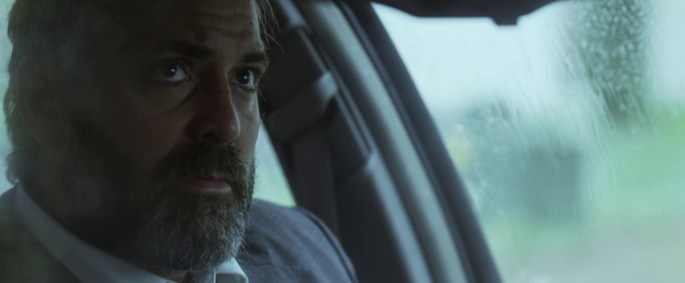
In the little screen time he has early on, George Clooney does an excellent job showing the rusty compass that his character lives his life by. The actor has improved and refined himself with every subsequent role he has done and relies more and more on what is going on behind his eyes than falling back on his good looks. His performance in Syriana goes beyond the obvious Method trappings – the weight gain and growing the thick beard – to his expressive eyes and how he uses them to convey Barnes’ world-weariness. This role is one of his strongest and his Academy Award for Best Supporting Actor was well-deserved. However, Clooney took one for the team in the worst way. During the harrowing scene where his character was tortured, Clooney was hurled to the floor more than 20 times. During one take, he hit his head and began experiencing severe back and head pain. Doctors later discovered that the actor had ruptured his spinal fluid sac and needed multiple surgeries.
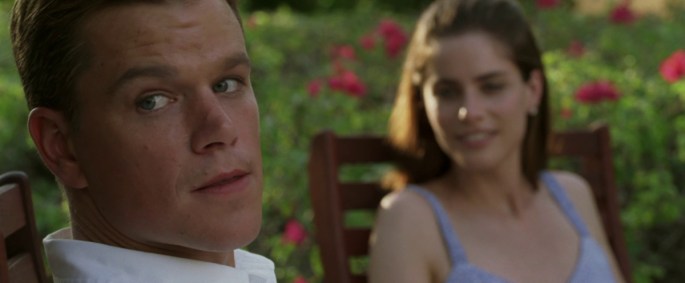
Woodman’s first scene with his family is brief but effectively sets up the close bond he has wife his wife (Amanda Peet) and his two sons. One boy is not keen the pseudo-bacon he’s told to eat and so Woodman tries a piece to show that it’s good and fails miserably. Matt Damon does a good job of selling his priceless reaction shot and offering a light moment that immediately makes us empathize and like his character and his family. Jeffrey Wright delivers an understated, minimalist performance. When Holiday meets with the superiors in his firm, he appears nervous – he’s in the big leagues, swimming with the sharks – rich, powerful men as embodied by Dean Whiting (Christopher Plummer) and malevolent good ol’ boys politicians (played with scary conviction by Tim Blake Nelson and Chris Cooper).
One of the film’s central themes is the strained relationships between fathers and their sons. Barnes’ son resents all the moving around that they do as a result of his old man’s job and this robs him of a normal life. Woodman must cope with the tragic death of his little boy. Holiday copes with his alcoholic father who disapproves of his son’s work and the effect it has on his well-being.
Gaghan’s direction reflects the stories in the film. Everything isn’t spelled out. There are a lot of gray areas with morally and ethically ambiguous characters whose motivations aren’t entirely clear. If, at times, it is hard to follow all of the characters in this film this is done on purpose in order to illustrate just how hard it is to keep track of all the players in the Middle East oil trade and their numerous alliances, both obvious and secretive, with corporations and governments. Trying to make sense of it all can be a confusing and frustrating experience.
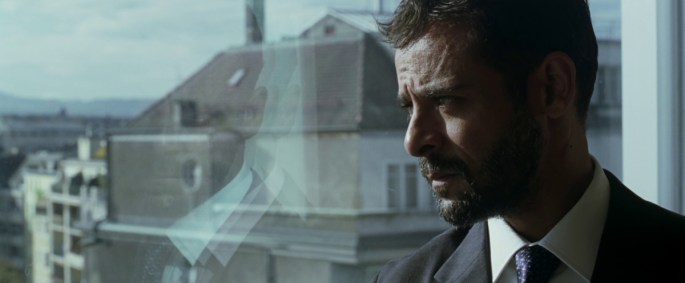
The timing of Syriana couldn’t have been more relevant as it exposed the dirty dealings between the U.S. government, American corporations and various oil-rich families in the Middle East. Reading between the lines, it also sheds light on the real reason why the U.S. is in Iraq. It isn’t to democratize its people, as the White House party line would have us all believe, but because of their abundant oil resources and the money Bush and his cronies made from it. While this is nothing new to anyone who is well-informed, this film does act as a decent primer to the uninitiated.
B Movie Glory With Nate: The Harvest

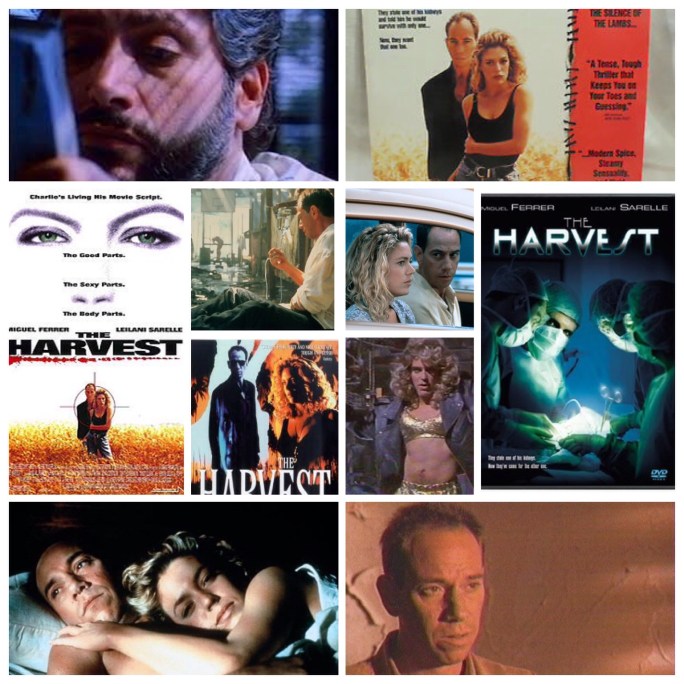
The Harvest is the very definition of a hidden gem that one stumbles upon while watching late night cable and sits through to the end just because it’s such a wickedly nasty little thriller. Erotic and steamy, dangerous, very darkly funny are qualities that all reside within a terrific script that has one kicker of an ending that’s quite the chuckle inducing payoff. No one wants to have their organs taken while on vacation in some sketchy South American country, let alone consider the thought of it. Hard luck screenwriter Charlie Pope (an intense Miguel Ferrer in one of his few lead roles) falls right into that unthinkable scenario. He’s sent to Mexico by his bad tempered boss Bob Lakin (a sleazy Harvey Fierstein, who REALLY needs to be in more movies), and marinates in the sweatiness trying to get some work done. After a hot and heavy night with a gorgeous local babe (Leilani Sarelle) he wakes up with the mother of all hangovers and is horrified to find that one of his kidneys has been removed. From there it’s a stomach churning mad dash to figure out where the smugglers have gone, and evade the, at the same time, because they’re coming to try and get his other one and silence him forever as well. It’s an uncomfortable little piece of white knuckle trash, but it’s made with solid flair and like I said, the script is top shelf stuff. Ferrer is the running man here, trying to keep one step ahead of some very dangerous people, his bountiful acting talent putting us right there with him. Fierstein is always a gravel voiced gem, and gets two penultimate scenes that spin the plot on its cogs, both which will have you laughing uncomfortably. There’s also an early career appearance from George Clooney, who is Ferrer’s cousin. His credit here, and I’m not even making this up, is ‘Lip syncing transvestite’. How’s that for a leg up in the industry. Lowbrow, gut churning black comedy mixed with the exotic fish out of water thriller makes for a neat little piece of genre bending, grotesque shocker fun.
Burn After Reading: A Review by Nate Hill
The Coen Brother’s Burn After Reading is the duo at their height of trolling the audience, a mood they seem to make some of the most devilishly funny films of their career. This one reminds me of long days full of running around, confusion and missed appointments, days where I get home and reach the end only to realize that for all the frenzy, nothing I did all day was really of any consequence. This film is sort of like that; a whole lot of clandestine nonsense and tomfoolery that adds up to.. well, not much of anything in the end. If that sounds like I’m being negative, I’m not. That’s part of the Coen’s charm and a core aspect of what makes this one so hilarious. It’s also full of complete dimwitted morons, which only adds to the chorus of lunacy. John Malkovich teeters on the borders of mania, scary and funny as ex CIA half wit Osborne Cox, in a performance so utterly Malkovich that he almost seems like some other actor parodying him. He’s got a cold hearted bitch of a wife (Tilda Swinton) who is fooling around with even bigger idiot Harry Pfarrer (George Clooney is a riot) who is also fooling around with anything that has a pulse, being the squirrelly sex addict that he is. Cox has started a memoir (or, ‘mem-wah’, as Malkovich ludicrously intones it), the contents of which are on a disc that end up in the hands of yet even bigger idiots. Linda Litzke (Frances Mcdormand) and Chad Feldheimer (Brad Pitt) run a gym called Hardbodies (only the Coens, folks) and see the disc as ‘secret spy shit’ they could use to make a buck. That’s where the plot hollers off the rails into pure madness, as each and every character makes the dumbest possible decision along the way. J.K. Simmons are gold as two CIA honchos who are more puzzled than the audience, Richard Jenkins trolls perhaps the subtlest of all, and the cast also includes Jeffrey Demunn, Olek Krupa and a meta cameo from Dermot Mulroney. Among the cloak and dagger chaos, the Coen take every chance they get to spoof and lovingly ridiculue society’s cringe inducing stereotypes, until you start to realize they’re levels of exaggeration aren’t all that over the top. Pitt is gold as the air headed gym rat, Clooney pure screwball, and Malkovich is a force of demented nature, his exentuated word pronunciations reaching a boiling point of absurdity here. This is up there with the Coen’s best, and certainly one of their funniest hours.
OCEAN’S THIRTEEN – A REVIEW BY J.D. LAFRANCE

Despite its impressive box office returns, Ocean’s Twelve (2004) was considered something of a disappointment by its director Steven Soderbergh who felt that the plot was too complicated. While not quite as fun as Ocean’s Eleven (2001), it was a fine film in its own right – one that had a more satisfying emotional pay-off and doesn’t deserve the lousy reputation that it seems to have. Ocean’s Thirteen (2007) was seen as a return to the fun, breezy vibe of the first film by bringing it back to Las Vegas with style. The result was a very satisfying conclusion to the Ocean’s films.
As the revenge picture cliché goes, this time it’s personal. When Reuben Tishkoff (Elliott Gould) is muscled out of a business deal by slick businessman Willy Bank (Al Pacino), resulting in a heart attack, Danny Ocean (George Clooney) and his crew reunite for one last job: to ruin the opening night of Bank’s casino, The Bank, by making sure he loses a huge amount of money, which involves rigging all the games and slot machines. Bank wants the Five Diamond Award – the top accolade for hotels and will do anything to get it. Danny and the boys use this as a way to get at Bank. To this end, they devise an elaborate plan with the help of their arch-nemesis Terry Benedict (Andy Garcia) who bankrolls the operation. They also bring in Roman Nagel (Eddie Izzard) from Ocean’s Twelve to crack a state-of-the-art artificial intelligence security system.
Soderbergh kicks things off rather stylishly as we get a beautiful shot of Rusty Ryan (Brad Pitt) walking across a runaway tarmac to an awaiting plane at dusk with the sky an impossibly deep dark blue that, accompanied by David Holmes’ groovy score, is absolutely breathtaking. Once again, the director shoots the hell out of the film by employing all sorts of zoom ins and outs, pans and split-screens that, along with a saturated color scheme, keeps things visually interesting.
This time out, Matt Damon gets a juicy subplot where he goes undercover as Lenny Pepperidge, the assistant to a Mr. Weng (Shaobo Qin as The Amazing Yen, also undercover), a very high roller, in order to get close to Bank’s lovely assistant, Abigail Sponder (Ellen Barkin). Part of his disguise involves wearing a ridiculous fake long nose – a sly fuck you to Harvey Weinstein who wouldn’t let Damon wear said nose for his character in Terry Gilliam’s The Brother’s Grimm (2005) because he felt it would obscure the actor’s good looks and hurt the film’s box office potential. Well, it didn’t hurt Ocean’s Thirteen box office as the film went on to gross a very respectable $311 million worldwide.
It is also a lot of fun to see Ellen Barkin reunited with her Sea of Love (1989) co-star Al Pacino. She appears to be having a good time playing a confident businesswoman succumbing to Damon’s “seductive” charms. It is also fun to see Pacino go off autopilot for a change and sink his teeth into a juicy bad guy role. Who else could Soderbergh get to pose as a credible threat to the likes of George Clooney and Brad Pitt but someone of the legendary star caliber like Pacino? He plays Bank like the offspring of his take on Ricky Roma from Glengarry Glen Ross (1992) and Gordon Gekko from Wall Street (1987) – a smooth-talking unscrupulous bastard. In another nice bit of casting, the inventor of the artificial intelligence security system is played by none other than Julian Sands, an actor whose big break through came in A Room with A View (1985), but whose career settled into mostly direct-to-home video fare so it was a pleasant surprise to see him appear in a big mainstream film like Ocean’s Thirteen.
Another amusing subplot involves Virgil Malloy (Casey Affleck, sporting a ridiculous-looking mustache) organizing a revolution/strike among the workers at a dice-making factory in Mexico. He goes from complaining about a lack of air conditioning to tossing Molotov cocktails on the strike lines. At one point, he and his fellow co-workers drown their sorrows at a local bar and Virgil asks them, “Have all of you forgotten Zapata?” He goes on to offer inspirational words that fire them up. How this whole subplot plays out is quite funny. In another nice twist, Terry Benedict is helping Danny out albeit with all kinds of conditions. After all, he resents Bank’s lack of taste and the competition he represents. There can only be on top dog in Vegas and Benedict clearly feels that he is the one. Andy Garcia looks like he relished the opportunity to be in on the joke instead of being the target as he was in the last two films.
While working on Ocean’s Twelve, Steven Soderbergh began thinking about Ocean’s Thirteen. He thought about how fun it would be to set it back in Las Vegas. The motivation to make the film was a desire to work with everyone again but all eleven cast members had to want to do it. Producer Jerry Weintraub contacted them 18 months before hand and told them filming would take place during the summer of 2006 and to clear their schedules. He was able to find a way to juggle all these movie stars’ busy lives and add Al Pacino and Ellen Barkin into the mix.
For the film’s story, Soderbergh felt that Danny and his crew weren’t driven entirely by money and that they would reunite for friendship and revenge. The director came up with the notion of Reuben being betrayed and his friends helping him out. Weintraub hired Brian Koppelman and David Levien to write the screenplay. They had written the script for Rounders (1998) and created the gambling television cable show Tilt, and so they were familiar with the world of con men and gamblers. Soderbergh and Weintraub were both big admirers of Rounders and the director met with the screenwriters in New York City over lunch. They talked about great con movies, the nature of heists, and how the characters had evolved since Ocean’s Eleven. Within minutes, Soderbergh knew they were who he wanted to write the script and were working on it within minutes: “There was not a long list of people that we thought could step into this specific universe and pick up the language and the sense of humor.”
Koppelman and Levien had spent years exploring Vegas culture and the gambling lifestyle. They had every book they could find about con artists and thieves. Early on, Soderbergh told them that he wanted the film’s focus to be on the friendship between Danny and his crew. They understood that getting revenge on Willy Bank was what drove the entire story of Ocean’s Thirteen. They also wanted to “’flip’ the casino so that the patrons would win every time, which would spell disaster for Bank.” Soderbergh also told them that the bad guy should be a casino owner and they imagined Al Pacino and wrote Bank with him in mind. George Clooney also offered some ideas, mostly things to do with the revenge scheme that reunited the crew.
Some exterior scenes were shot in Las Vegas, but the casino interiors were mostly shot on one of the largest soundstages on the Warner Bros. lot in Los Angeles because it would have taken too long to film in actual casinos as they had done with Ocean’s Eleven. Soderbergh said, “In order to get the shots that I wanted, I needed to completely control the environment.” He instructed production designer Philip Messina to build a hotel and casino that would reflect Bank and his huge ego. Messina decided to go with a quasi-Asian theme and make it visually overwhelming. He purposely broke the rules in Vegas by designing a multi-level gaming floor because the production didn’t have a lot of horizontal space to work with.
Like Ocean’s Eleven, Ocean’s Thirteen pays tribute to the classic era of Vegas as Danny and co. restore Reuben’s honor. He’s an old school player who still believes in following a code and prides himself in being part of a select group of insiders that got to shake Frank Sinatra’s hand back in the day. Like Benedict, Bank represents the current corporate mentality of making money over the personal touch that the Mob-run casinos used to provide. If the first two films were about Danny and Rusty’s respective relationships with the loves of their lives, then Ocean’s Thirteen is about their friendship with Reuben. He mentored them when they were just starting out and taught them about respecting history as well as those who came before them. Like with the previous films, going after the bad guy is a matter of personal honor and hitting them where it hurts – in Bank’s case it’s his monster ego. Ocean’s Thirteen ends much like Ocean’s Eleven did thus bringing the trilogy full circle and with a truly satisfying conclusion as the bad guy gets what’s coming to him and Reuben’s honor is restored. Likewise, the film did very well at the box office and garnered fairly positive reviews going out on a well-deserved high note. It serves as an example of a star-studded big budget Hollywood film that entertains without insulting your intelligence.
OCEAN’S TWELVE – A REVIEW BY J.D. LAFRANCE

After the commercial failures of Full Frontal and Solaris in 2002, there was pressure on Steven Soderbergh when he announced that his next film was to be the sequel to the wildly successful Ocean’s Eleven (2001), to not only come up with a box office hit but to also outperform the previous film. With big budget, star-studded casts like the one in Ocean’s Twelve (2004), there is always the danger of having them look too smug and self-indulgent instead of having fun along with the audience. Ocean’s Eleven managed to straddle this line quite well, resulting in an entertaining popcorn movie. Soderbergh kept his cast in check, never letting them go too far over-the-top and shooting it with a style that was always interesting to watch. The big question for the sequel was if he could pull off the same feat without repeating himself too much. Ocean’s Twelve ended making less than its predecessor (but still a lot of money) and cost more while also dividing critics but in some ways I find it a better film.
Danny Ocean (George Clooney) is supposed to be retired and enjoying domestic bliss with Tess (Julia Roberts). However, old habits die-hard and the lure of pulling heists is always calling. She catches him casing a jewelry story on their anniversary. To make matters worse, Terry Benedict (Andy Garcia) is still hot on their trail, tracking down all of the original eleven and letting them know, in his own casually menacing way, that he wants the $160 million, plus interest, that they stole from him in Ocean’s Eleven, and in two weeks time. The montage of him doing this mirrors the one in the first film where Danny and Rusty recruited their crew. If Benedict was an imposing figure in the first film, Andy Garcia makes him even more of a threatening presence in this montage by doing little except exude menace with his eyes and the all-business tone of his voice.
So, Danny gets everybody back together to figure out what to do. Obviously, they need to pull another job but they are too high profile in the United States, so they go to Europe and cross paths with a truly formidable opponent and rival master thief known as the Night Fox (Vincent Cassel), a bored French playboy. He’s jealous of Danny’s status as the world’s greatest thief and is out to prove that he’s the best by having the both of them go after the same thing: the Faberge Imperial Coronation egg. Vincent Cassel plays the Night Fox as an ultra-confident, cocky man in such a way that you want to see Danny and company knock him down a peg.
Ocean’s Twelve ups the difficulty level for our heroes even more by having most of the crew neutralized leaving only Basher (Don Cheadle), Linus (Matt Damon) and Virgil (Scott Caan) left to pull off an impossible heist. So, they bring in Tess to pose as, well, Julia Roberts. Unfortunately, another major movie star is staying at the same hotel, which only adds to the meta aspect. Said movie star gamely plays a fictional version of himself. The scene where he meets Tess as Julia Roberts is very amusing as Damon and Roberts act all star-struck in front of him. It is also interesting in that the meta aspect that was present in Ocean’s Eleven is made even more explicit – something that turned off some critics and audiences but I think works extremely well because Soderbergh isn’t having a cutesy cameo of a movie star for the sake of it but actually incorporating them into the plot and making them an integral part of the scam.
If the first film was about Danny’s redemption by reconciling with Tess, then Ocean’s Twelve is about Rusty’s (Brad Pitt) redemption by reconciling with his past love, Isabel Lahiri (Catherine Zeta-Jones), a determined and quite beautiful Interpol agent. Like Danny’s feelings for Tess potentially compromising his involvement in the heist in Ocean’s Eleven, Rusty’s feelings for Isabel leaves him potentially vulnerable in Ocean’s Twelve. To her credit, Catherine Zeta-Jones fits right in with the European vibe, maintaining just the right mix of determination in nailing Danny and his crew and vulnerability when she’s with Rusty. Their relationship elevates the film ever so slightly above the standard heist story and the conclusion of her subplot is surprisingly emotional and poignant – the highpoint of the trilogy and something you don’t expect from a film like Ocean’s Twelve, which is essentially a feature-length lark.
Matt Damon demonstrates excellent comic timing in this film and is the real stand-out of this strong cast. Early on, Linus asks Rusty if he could have more to do this time out and this moment comes across as quite self-reflexive. It’s as if Damon were almost asking if he could have more screen time in the film itself. In some respects, he is the group’s stammering conscience. There is an amusing scene where Linus, Danny and Rusty meet a contact by the name of Matsui (Robbie Coltrane) for a potential job. Danny, Rusty and Matsui all speak cryptically, which leaves poor Linus totally confused. Damon plays the scene so well as he looks desperately to his cohorts for help or some sort of clue as to what he should say. Put on the spot, Linus finally responds by quoting lyrics from “Kashmir” by Led Zeppelin to hilarious effect.
While doing a press conference in Rome during the promotional tour for Ocean’s Eleven, Steven Soderbergh fell in love with the city and over dinner with producer Jerry Weintraub began thinking about the story and structure for a sequel. He got the idea to set it in Europe and was so inspired that he started writing down ideas. After returning to Los Angeles, Weintraub discovered George Nolfi’s screenplay, entitled Honor Among Thieves, about the greatest thief in America going up against his equal in Europe. It was originally developed for John Woo to direct but Weintraub sent the script to George Clooney, Brad Pitt and Soderbergh. The director came up with the basic idea for the film and thought that it “would be more fun if Twelve was the movie in which everything goes wrong from the get-go.” He ended up merging Nolfi’s script with his own ideas. Soderbergh saw this film as more emotional, character-driven and complicated on a narrative level than the first one.
Prior to the start of principal photography, which lasted 77 days, Julia Roberts found out that she was pregnant and Soderbergh incorporated it into the script. He also met with Vincent Cassel at the 2003 Cannes Film Festival and asked the actor if he would be interested in being in Ocean’s Twelve. He agreed without reading the script because he trusted someone with a reputation like Soderbergh’s. Once filming began, the production spent ten weeks globetrotting all over the world with stops in Chicago, Amsterdam, Paris, Monte Carlo, Lake Cuomo, and Rome. Principal photography concluded with four weeks on three Warner Brothers soundstages in L.A.
Once again Soderbergh keeps the pace brisk and breezy, making the two-hour running time fly by. Like its predecessor, Ocean’s Twelve is beautifully shot with atmospheric lighting and saturated color as evident in the bright yellow that permeates Isabel’s Europol lecture or the green lighting that illuminates the underwater sequence during a heist that Danny and his crew pull off, or the red lighting that dominates the nightclub where Rusty and Isabel meet. Most of the film takes place in Europe and Soderbergh adopts the look of a European film from the 1960s, which also applies to the eclectically groovy soundtrack from David Holmes that evokes a ‘60s Euro-lounge vibe. The director even described the film’s aesthetic as “the most expensive episode of a ‘60s television show ever.” He and Holmes agreed that the score would be completely different from Ocean’s Eleven in order to complement the different look and feel.
Soderbergh is an excellent visual storyteller and this is evident in several scenes that he depicts without any dialogue, instead resorting to music married to visuals that conveys exactly what’s going on. He understands the kind of movie he’s making and doesn’t try to be too cute or wink knowingly at the audience, instead focusing at the task at hand: making a confident, entertaining movie. Granted, Ocean’s Twelve is no Traffic (2000), and it’s not meant to be, but you could do a lot worse with two hours of your time.
OCEAN’S ELEVEN – A REVIEW BY J.D. LAFRANCE

“Ocean’s Eleven was my opportunity to make a movie that has no desire except to give you pleasure, where you surrender without embarrassment or regret.” – Steven Soderbergh
Fresh from the one-two success of Erin Brockovich (2000) and Traffic (2000), Steven Soderbergh made a conscious decision to shift gears and make a purely entertaining film for a major studio. He managed to convince movie stars George Clooney (whom he had already worked with on Out of Sight) and Brad Pitt to take major cuts in their multi-million dollar salaries and headline a remake of the Rat Pack heist film Ocean’s Eleven (1960). With Clooney and Pitt on board, Soderbergh was then able to get an impressive cast including the likes of Matt Damon and Julia Roberts (both of whom also agreed to take pay cuts) and avoid having his film come across as nothing more than a vanity project for a bunch of smug movie stars. On the contrary, Ocean’s Eleven (2001) is a slick heist film in the tradition of The Sting (1973) in the sense that you know the outcome (the good guys win) but the fun is in how they get there as Soderbergh utilizes every stylish technique that he has available at his disposal.
Daniel Ocean (Clooney) has just been released from prison and is eager to return to his high-end criminal enterprises. He sets his sights on Las Vegas with plans to rob three prestigious casinos: the MGM Grand, the Mirage, and the Bellagio, all of which keep their considerable sums of money in an ultra-secure hi-tech vault controlled by Terry Benedict (Andy Garcia) who, incidentally, is currently dating Danny’s ex-wife Tess (Roberts). It’s not going to be easy and so, with the help of his good friend and ace fixer Rusty Ryan (Pitt), they recruit nine experts to help them pull off a near-impossible heist. In addition to the heist, which serves as the main plot, Ted Griffin’s screenplay expertly weaves in a subplot involving Danny attempt to reconnect with Tess.
This film oozes cool right from the opening credits that play over a fantastic shot of the Atlantic City skyline at night accompanied by funky trip-hop type music by Northern Irish disc jockey David Holmes. We meet Rusty wasting his time teaching young movie stars (Holly Marie Combs and Topher Grace among others making fun of themselves) to play cards. We meet him in Hollywood with a cool groove playing over his establishing shot. This sequence is a bit of meta fun as we see Pitt, one of the biggest movie stars on the planet, teaching other movie stars playing a parody of themselves being totally clueless at playing poker only to eventually be hustled by a bemused Danny. Soderbergh even slides in a few sly inside jokes, like Danny asking Topher Grace if it’s hard to make the transition from television to film, which, of course, is exactly what Clooney did. Or, how Grace gets mobbed by autograph hounds while Clooney and Pitt are completely ignored.
One of the best sequences in the film is when Danny and Rusty recruit their crew. The scene where they convince Reuben Tishkoff (Elliott Gould) to bankroll their operation is a wonderful example of how expositional dialogue being delivered in the right way by the right actor can be entertaining and informative as Elliott Gould does a fantastic job of warning Danny and Rusty of just how dangerous Benedict is. From there, each character that Danny and Rusty approach is given their own introduction that briefly and succinctly highlights their unique skill and distinctive personality traits. Linus Caldwell (Damon) is an up-and-coming pickpocket with uncanny dexterity. There’s the Malloy brothers, Virgil (Casey Affleck) and Turk (Scott Caan), two drivers by trade with one of them having an affinity for remote controlled devices and a perchance for bickering and irritating each other, which provides a good source of humor. Livingston Dell (Eddie Jemison) is an electronics expert in the area of surveillance. Basher Tarr (Don Cheadle) is a demolitions expert with Don Cheadle sporting an obviously exaggerated Cockney accent. Yen (Shaobo Qin) is a diminutive top-of-the-line acrobat that can get in and out of any tight space. Finally, there is Saul Bloom (Carl Reiner), a retired flimflam man coaxed back into action by Rusty. Each actor is given at least one scene, often more, to come front and center and do their thing and this is done in a way that doesn’t distract you from the story at hand, which is quite an accomplishment with such a large cast.
David Holmes expertly mixes jazz, funk, soul and hip hop in a way that evokes groovy trip hop or acid jazz but in a retro way that evokes Quincy Jones circa the 1970s. The often-fat bass lines give certain musical cues a confident swagger. There is also plenty of Hammond organ and vibraphone looped to give a lounge-y kind of vibe at times. Later on in the film, Holmes brings in strings and brass to accentuate the romantic subplot between Danny and Tess. Holmes also incorporates songs, like Elvis Presley’s “A Little Less Conversation” to fantastic effect. This came out of watching the original Ocean’s Eleven as Holmes explained in an interview, “Then I tried to think of ways to identify with what was going on – with it being a contemporary film, how to be original, but set within the heart of Las Vegas. Which is where the Elvis song ‘A Little Less Conversation’ came about, because obviously Elvis had a really strong affiliation with Las Vegas, and that track has a very contemporary feel.”
Steven Soderbergh read Ted Griffin’s screenplay in an afternoon in January 2000. The next day he called producer Jerry Weintraub and told him he wanted to direct the film. What he liked about the script was that it didn’t evoke the original 1960 version but “had this one foot back in the heyday of the studio star-driven movie, like Howard Hawks or George Cukor.” Soderbergh had always been drawn to heist films because, “the conflicts are so clear and dramatic. This seemed to be everything that you want a big Hollywood film to be, on the script level.” He had just made two dramas – Erin Brockovich and Traffic – and wanted to make a fun movie. To prepare for shooting Ocean’s Eleven, he watched Ghostbusters (1984) because he was impressed at “that sort of physical scale [that] feels so tossed-off, with such understated performances and obvious generosity among all the performers.” He also studied films by David Fincher, Steven Spielberg and John McTiernan because they knew how to “orchestrate physical action the way I like to see it.” He looked at how these filmmakers used lens length and height, camera movement and editing, as well as, “how they used their extras, how they structured movements within shots that carried you to the next movement and the next.”
Soderbergh got George Clooney involved and half-jokingly told him, “let’s make it an Irwin Allen movie, where they used to have 10 stars.” Originally, the director considered casting Luke and Owen Wilson, Bruce Willis, and Ralph Fiennes as the villain. Once Clooney was on board, they got the rest of the cast to commit at radically reduced rates, starting with Brad Pitt. However, during filming, the cast stayed in their own 7,000-square-foot villas at the Bellagio. Before shooting, Soderbergh told his cast, “Show up ready to work. If you think you’re just going to walk through this, you’re mistaken. If anybody gets smug, we’re dead.” Soderbergh wanted to shoot in the Bellagio, the MGM Grand and the Mirage – an impossible feat for more mere mortals; however, Weintraub had the connections and the clout to make it happen. The production was allowed to shoot on the floor of the casinos during the day, which nobody is given access to and the casino bosses even shut down entire pits for Soderbergh to shoot in. This allowed the director to design shots that were complicated and large in scale.
Soderbergh wanted the lighting for Ocean’s Eleven to be based in reality and to look like it wasn’t lit at all – not a problem in Las Vegas, a place overloaded with every kind of light imaginable. At times, Soderbergh would add some color to enhance the mood for dramatic purposes in order to put the audience inside the world of the film. He also realized that the locations played a large part in the plot and was interested in showing as much of the environment as possible. One challenge Soderbergh faced was the logistics of filming big dialogue scenes with Danny and his crew in a visually interested way. He had a lot of people in confined spaces and didn’t want these scenes to be boring. So, he attempted to frame shots that clearly established where everyone was while also giving them enough depth and geometry to make the characters interesting to look at.
In a nice touch, Ocean’s Eleven never waxes nostalgic about the original film but instead is wistful about Las Vegas as it was in the 1960s when the casinos were still run by the Mob and had yet to be corporatized and Disney-fied. This is reinforced in one of the motivations Danny has of robbing Benedict. It’s not just that he’s dating his ex-wife but Benedict also recently demolished one of the last old school casinos left in Vegas. Unlike Benedict, Danny respects the past and recruits Reuben and Saul, veteran con artists whose heyday was the ‘60s. It’s great to see Soderbergh giving actors like Gould and Reiner screen-time in a major studio film. These guys don’t work nearly enough and their performances in Ocean’s Eleven are a potent reminder of how good they can be if given the right material and the opportunity. Entrusted with only his second major studio film with an A-list budget, Soderbergh effortlessly orchestrates a fun, engaging popcorn movie like an old pro that has been doing this for their entire career.
OUT OF SIGHT – A REVIEW BY J.D. LAFRANCE
“It’s like seeing someone for the first time. You can be passing on the street and you look at each other and for a few seconds there’s this kind of recognition. Like you both know something, and the next moment the person’s gone. And it’s too late to do anything about it. And you always remember it because it was there and you let it go. And you think to yourself, what if I stopped? What if I said something? What if?” – Jack Foley
This bit of dialogue from Out of Sight (1998) perfectly captures the essence of the relationships between the characters in this film. It is about the what ifs and the what could have beens. What the characters do and, more importantly, what they don’t do that directly determines their fate.
As the film begins, Jack Foley (George Clooney), a career bank robber, escapes from a Florida prison with the help of his loyal accomplice Buddy (Ving Rhames). In the heat of the moment they kidnap a beautiful Federal Marshall named Karen Sisco (Jennifer Lopez). She and Jack are stuffed in the trunk of her car as they make a hasty retreat. Trapped in such a small, confined space Jack and Karen have nothing to do but engage in idle chitchat. Even though they are on completely opposite sides of the law there’s a spark, an initial attraction that blossoms into something more as the film progresses and their paths inevitably cross again.
Out of Sight is based on the book of the same name by Elmore Leonard. He had wanted to do a bank robber story for a long time. Several years ago, he saw “a picture in the Detroit News of an attractive young woman who was a Federal Marshal standing in front of the Federal Courthouse in Miami. She held a shotgun which was resting on her cocked hip and as soon as I saw that picture, I knew it was a book.” Danny DeVito bought the rights to a previous Leonard book Get Shorty for his production company Jersey Films. After the success of that film, he bought the rights to Out of Sight.
The film came to George Clooney and Steven Soderbergh at a time when both of their careers had reached a critical junction. Clooney was coming off the commercial and critical train wreck known as Batman and Robin (1997). Soderbergh had completely shunned the mainstream with the one-two punch of Gray’s Anatomy (1996) and Schizopolis (1996). Both men were looking for a hit that would put them back on the map. Soderbergh had already made two films for Universal and one of its executives, Casey Silver, offered him Out of Sight with Clooney attached. Soderbergh was close to making another project and was going to pass but Silver told him, “These things aren’t going to line up very often, you should pay attention.”
Soderbergh and screenwriter Scott Frank achieve a perfect mix with Out of Sight. The film’s pace moves with effortless ease and self-confidence. They know when to slow things down and savor the moment as well. As Frank proved with his excellent screenplay for Get Shorty (1995), he perfectly understands Leonard’s distinctive cadence and the speech patterns of his characters. Cinematic adaptations of books are almost always inferior because so much has to be cut out or changed to fit into a two-hour film. However, Leonard’s books are tailor-made for movie adaptations because they are very visual and almost entirely dialogue and character-driven — ideal for the screenplay format. Out of Sight is one of those rare movies that is actually better than the book.
Soderbergh and his cameraman, Elliot Davis (White Oleander), paint their film with a specific color code. The bright colors of the Florida scenes — especially the prison sequences with vibrant blue and the bright yellow prison uniforms worn by various characters — provide a nice contrast to the second half of the film, which consists mainly of a gun-metal blue color scheme. The Detroit scenes have a cold, metallic feel to them and this really comes out. David Holmes’ catchy R&B score comes in and instantly transports the viewer into this world. He mixes in his own brand of funky electronica with old school tunes from the likes of the Isley brothers and Willie Bobo. From the atmospheric noises in the background to Holmes’ superb trip hop beats, this is a great sounding film.
After a string of so-so films, George Clooney finally found the right project that suited his particular talents with Out of Sight. With his movie star good looks and suave charm, he is perfectly cast as the smooth talking criminal. This may be his finest performance to date. For Clooney what attracted him to this role was the chance to play a character that evoked his cinematic heroes of the past. “When I was growing up the heroes for me were the bankrobbers — you know, the Cagneys and the Bogarts, Steve McQueen and all those guys, the guys who were kind of bad and you still rooted for them. And when I read this, I thought, This guy is robbing a bank but you really want him to get away with it.” Clooney’s style of acting is perfect for this role as he plays Foley with the right amount of laid-back charm. This is typified by his character’s introduction — the most pleasant, non-violent bank robbery ever committed to film. Clooney has such a likable screen presence that you want to see his character succeed.
Conversely, Jennifer Lopez is his perfect foil as a smart, tough law enforcement officer who can’t help but fall in love with this charismatic criminal. She is a very attractive woman but not above wielding a shotgun to apprehend a fugitive. There is a genuine chemistry between the two actors that makes their romance work. And it is this relationship that gives Out of Sight its depth. There is more to this film than snappy banter and a hip soundtrack. Incredibly, Sandra Bullock was originally considered to play Karen Sisco opposite Clooney, however Soderbergh said, “What happened was I spent some time with [Clooney and Bullock] – and they actually did have a great chemistry. But it was for the wrong movie. They really should do a movie together, but it was not Elmore Leonard energy.” Someone must’ve listened as the two ended up acting opposite each other years later in Gravity (2013).
A killer cast supports the two lead actors. Steve Zahn, an underrated character actor, is perfect as Glen, a stoner screw-up who looks up to Jack but is a royal pain in the ass. Dennis Farina plays Karen’s laid-back dad who buys his daughter a handgun for her birthday and just wants to see her married to a lawyer or a doctor. Albert Brooks is Richard Ripley, a bumbling white-collar criminal type who is in way over his head and sports a truly awful toupee. Don Cheadle plays “Snoopy” Miller, a tough guy-wannabe that is a classic schoolyard bully. Rounding this cast out is Ving Rhames, Jack’s tough, God-fearing partner in crime who always has his friend’s back.
Despite its lackluster performance at the box office, Out of Sight received widespread critical praise. It was clearly a career turning point for both Clooney and Soderbergh. The actor said in an interview that “Out of Sight was the first time where I had a say, and it was the first good screenplay that I’d read where I just went, ‘That’s it.’ And even though it didn’t do really well box office-wise — we sort of tanked again — it was a really good film.” Clooney went on to success with O Brother, Where Art Thou? (2000) and Ocean’s Eleven (2001). Soderbergh saw Out of Sight as “a very conscious decision on my part to try and climb my way out of the arthouse ghetto which can be as much of a trap as making blockbuster films. And I was very aware that at that point in my career, half the business was off limits to me.” The film’s critical reaction gave Soderbergh a foothold in Hollywood that led to the commercial success of Erin Brockovich (1999) and Oscar gold with Traffic (2000).
Out of Sight is a film about making choices and taking chances despite the sometimes inevitable, painful consequences. It is also an entertaining look at a collection of colorful characters and the exciting world they inhabit. This is a smart, sexy and wonderfully stylish crime thriller that was ignored by audiences (due to lousy advertising and an even worse release date) but garnered strong critical reaction (winding up on many Best Of lists that year). Fortunately, Out of Sight has been re-discovered on home video and recognized as one of the best Elmore Leonard adaptations ever put to film.
O Brother Where Art Thou? -A Review by Nate Hill
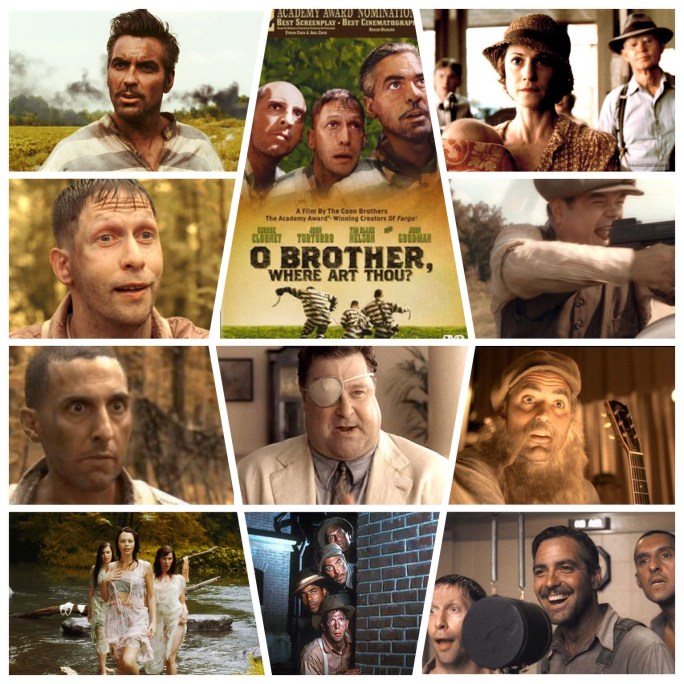
The Coen Brother’s O Brother Where Art Thou is just a rush of pure originality, musical genius and inspired storytelling, situated outside the box of used conventions, and rooted deeply in a whimsical realm of absurd, charming characters on an epic odyssey across the American south during arguably the most eccentric time period, the 1930s Great Depression. It’s the Coen’s second best for me (it’s hard to top the Lebowski, dude), and a film that I watched so many time growing up that it’s almost now a piece of my soul. It’s loosely based on Homer’s The Odyssey. Three bumbling convicts escape from a dusty chain gang in a delightful opening romp set to Harry McClintock’s The Big Rock Candy Mountain. Ulysses Everett McGill (George Clooney) is their silver tongued, troublemaking leader, on his way to reunite with his estranged wife (Holly Hunter, reliably stubborn and sassy) and little daughters. Along with him is short tempered Pete (Coen regular John Turturro in top form) and sweet, dimwitted Delmar (Tim Blake Nelson). Together they get in just about every kind of trouble that you can imagine three hapless convicts on the run in depression era south getting into. They briefly share paths with musician Tommy (Chris Thomas King), cross the radar of a boisterous bible salesman (John Goodman, stealing scenes as usual with his effortless, booming charm), become involved with duelling governor candidates Homer Stokes and Pappy O Daniels (Wayne Duvall and Charles Durning), and have run ins with sexy sirens led by Musetta Vander, the KKK, notorious mobster George Babyface Nelson (Michael Badalucco has to be seen to be believed as the lively, likely bi polar suffering wise guy) and more, all the while pursued by mysterious Sheriff Cooley (Daniel Von Bargen, RIP). It’s quite al lot of goings on for one film, but the Coens are masters of telling zany, eclectic stories that deviate into all sorts of unexpected subplots without ever derailing and losing us. This one flows along wondrously, a wild, funny and haunting fable that almost feels like a dust bowl Dante’s Inferno at times, albeit of much lighter subject matter. Roger Deakins spins poetry with his lens, capturing every chaff of wheat, every ray of southern sun and brown hued set design with painstaking expertise. What really holds it together though, is the absolute knockout soundtrack. There’s so many moments of now iconic musical storytelling that we feel we’re watching a strange bluegrass lullaby that just happens to take place in cinematic vision. The Coens have always known their music, but they transcend to another level of intuition here, gathering an incredibly evocative group of songs and artists together that stir the collective ancestral memory of historical Americana. Off the top of my head there’s You Are My Sunshine, Keep On The Sunny Side, I’ll Fly Away beautifully warbled by the Kossoy Sisters, Didn’t Leave Nobody But The Babe sung by the slinky sirens, In The Highways by the adorable Peasall sisters, Jimmie Rodgers’s In The Jailhouse Now, Lonesome Valley, Ralph Stanley’s two eerie pieces O Death, and Angel Band, also by the Peasall Gals, and the classic Down To The River To Pray, which sneaks up on you and leaves you in rapture from its inescapable grip. My favourite by far though is I Am A Man Of Constant Sorrow, an endlessly catchy hobo tune of jangling melancholy and highway humour, sung by John Hartford but cheekily lip synced by Clooney and team, an original piece made up on the fly by the three characters that goes on to make them ridiculously famous under the pseudonym the ‘Soggy Bottom Boys’. It’s all an intoxicating wonder to take in, the period authentic screenplay and production a feast for the senses. The Coens seem to be adept at whatever they try; sly satire, period piece, stinging violence, dark humour, and even touching drama when they put their minds to it. This is a career high for them, a totally unique piece of art that demands multiple viewings and a spot in any avid movie collectors pantheon.
GEORGE CLOONEY’S GOOD NIGHT, AND GOOD LUCK — A REVIEW BY NICK CLEMENT
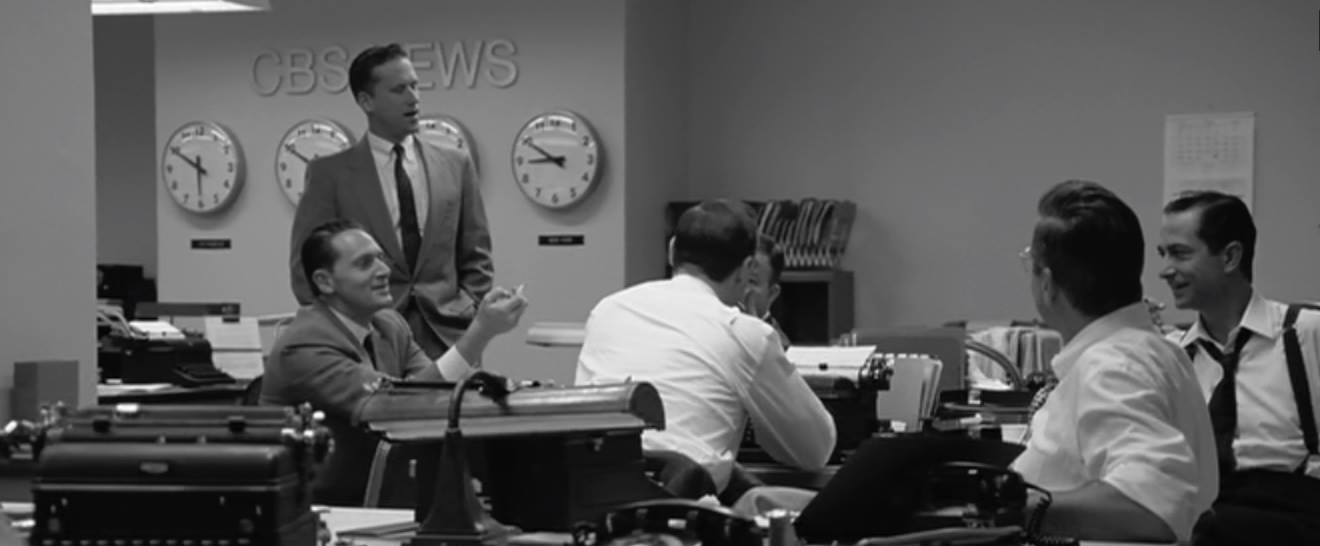
I love the mood and rhythms of George Clooney’s magnificent Good Night, And Good Luck. This film has so much classy style and verbal sophistication that it’s always a pleasure to revisit, and it’s loaded with an utterly obscene cast that included David Strathairn, Jeff Daniels, Robert Downey Jr., Patricia Clarkson, Tate Donovan, Matt Ross, Tom McCarthy, Grant Heslov (who also co-wrote the tack-sharp script with Clooney), Robert John Burke, Ray Wise, Robert Knepper, the always awesome Reed Diamond, and Frank Langella. Cinematographers must jump at the chance to shoot in black and white (or have their images digitally converted to the format), and Robert Elswit’s gloriously beautiful work in the monochromatic style is beyond shimmery and old-school-wonderful to take in. The film recounts the period in which Senator Joseph McCarthy began his absurd quest to expose Communists in America, while CBS News icon Edward R. Murrow (the elegant Strathairn in the performance of a lifetime) dedicated himself to highlighting the indecencies being perpetrated by McCarthy’s crooked Senate “investigation.” Clooney’s film discussed morals and ethics, both on the journalistic and human side of life, and by shooting in black and white, Elswit was able to convey simple truths of good vs. evil, and correct vs. wrong. The smoky atmosphere made up of the constant sight of lit cigarettes added ambience and texture to the old-fashioned yet still slightly heightened pictorial quality. There’s an intimacy to the images in this film, with the 1.85:1 aspect ratio used smartly and efficiently; Elswit always understands the importance of utilizing the space within the frame regardless of how wide he shoots any given film. The agile and varied aesthetics in Good Night, And Good Luck perfectly mixed with the smoky and shadowy black-and-white lensing, and when combined with the vintage 16mm news material which showcased McCarthy and other real life members from this exciting chapter of American History, a sense of almost surreal verisimilitude is achieved. And as usual, when a production looks and feels as realistic as this one did (the TV-set detail and period appropriate studio/camera equipment is remarkable) it’s that much easier for the filmmakers to create a distinct and believable visual atmosphere. It’s no surprise that Elswit was nominated for an Oscar for this evocative piece of work, while the film in general was bestowed with six Academy Award Nominations, including nods for Best Picture (Heslov), Best Director (Clooney), Best Actor (Strathairn), Best Screenplay (Clooney and Heslov), and Best Art Direction (James D. Bissell and Jan Pascale). Top to bottom, from first frame to final shot, this is a terrific piece of storytelling and moviemaking.