B Movie Glory: Stephen Norrington’s Death Machine 

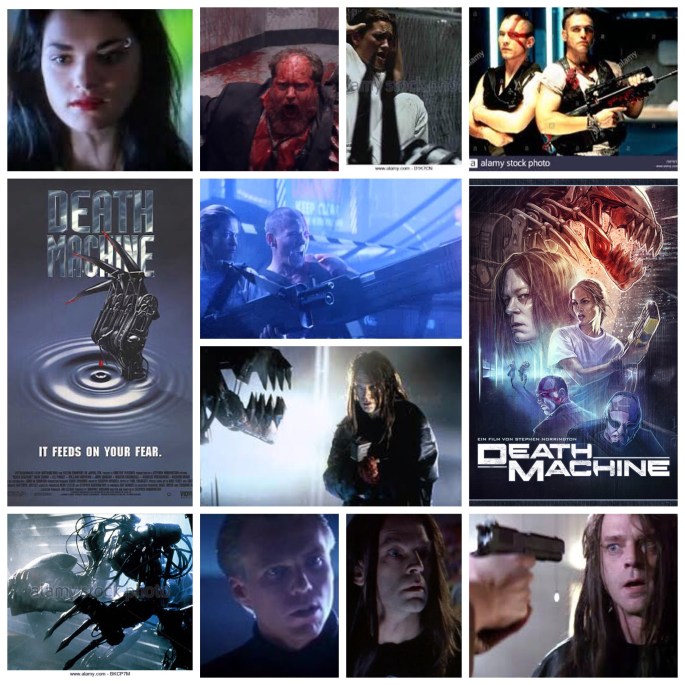
Stephen Norrington’s Death Machine whips up a knowing, near meta grind-house schlocker that harvests names, ideas and actors from other well know horror classics and churns out a wonderful little pastiche that’s clearly in love with every project influencing it, as well as the genre. In a giant m, imposing corporate high rise, the collective minds of future tech enterprise brainstorm the next best thing, but all of the are bested by creepy, psychotic designer Jack Dante (Brad Dourif) an antisocial lunatic who has designed an appropriately razor-adorned monster equipped with cunning AI, primed to tear the building, and everyone in it, to shreds. This includes the looney board of directors who all bear names lovingly similar to that of various creative minds in the horror/sci-Fi industry. Scott Ridley (The always maniacal Richard Brake), Sam Raimi (The Machinist’s master of everything unsettling, John Sharian) John Carpenter (William Hootkins) and even a pair of characters called Weyland and Yutani, all references are here and they’re not subtle whatsoever, part of the film’s charm. Dourif’s moniker is no doubt based on Gremlin’s pioneer Joe Dante, and speaking of Brad, he’s a flat out beastly delight as he turns loose a mechanical nightmare of a creation for all to be sloppily slaughtered by at some point. Bureaucracy is lampooned between decapitations and corn syrup gore, the film is never short of dark humour to garnish it’s violent pandemonium. The film is displayed a lot like Alien, and the creature itself looks not unlike a bionic xenomorph with the ability to change into all sorts of elaborate shapes, all the better to hunt you down through the tight crawl spaces and narrow ducts that made up most of 1989’s cinematic architecture. Director Norrington would go on to make his own horror classic in 1998’s Blade, and here he earns his stripes as both a vetted disciple of the genre and a thrifty low budget wizard. Watch out for Rachel Weiss, of all people, as a random board member who’s seen briefly. A howlin’ good time. 

-Nate Hill

M. Night Shyamalan’s The Sixth Sense

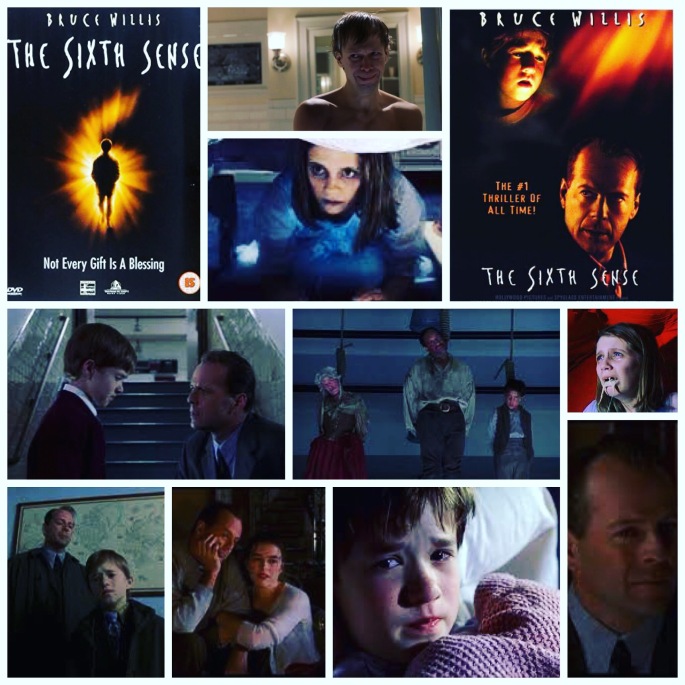
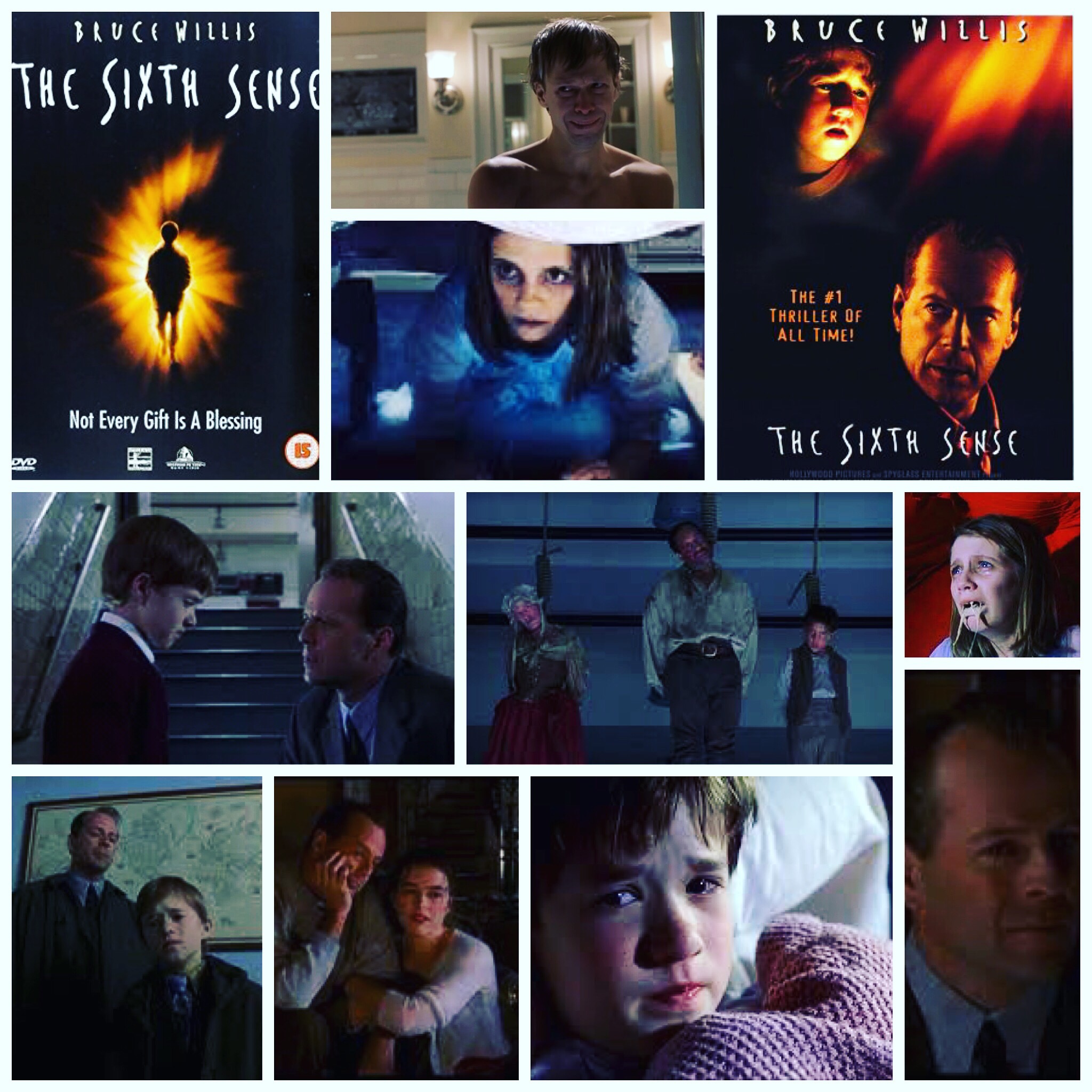
M. Night Shyamalan’s The Sixth Sense produces the kind of rarely attained fear that we always seek out in this genre, that creeping cold dread that has you clammy and your nerves jagged, where you know you’ll be looking over your shoulder as you walk down the dark hallway to your room later that night. That’s the best kind to me, stemming from well made, atmospheric ghost stories as opposed to all this gore-hound nonsense you see these days (can you believe they’re making another fucking Saw flick? Actually from a dollar sign perspective I can, but still). This one is a veritable haunted house of apparitions and phantasms, all witnessed by a disturbed Haley Joel Osment, who would look even more worried if he could see himself now as a twenty-something walking play-dough potato. He can see dead people, as he intensely whispers to Bruce Willis’s lonely child psychologist in the film’s now showcase moment, and not all of them like to keep their distance. Willis is traumatized from a tragedy years before involving an unstable former patient (Donnie Whalberg), and treads hesitantly with this new kid. A bond is formed, however, and with it comes the desire to help. The frequent paranormal sightings range from grisly, bemusing, shocking, tragic and often downright terrifying, especially one involving a very young, gaunt Mischa Barton invading a couch fort Osment has made to try and get some peace and quiet. The plot is carefully composed and directed by Shyamalan in a magician behind the curtain fashion, the veil gradually drawn with every beat until we’re presented with a staggering twist ending that has become legend since the film’s release back in the days before such a conclusion could be found in every fourth title on the thriller shelf of Blockbuster. Such is the power of storytelling though, and the potency of innovation to inspire others. It’s also great fun to watch the film multiple times and spot the breadcrumb trail of clues leading towards the outcome, clues that you wouldn’t have picked up on before. Along with Barton, who is terrific, there’s nice work from Toni Colette, Trevor Morgan, Kadee Strickland and Olivia Williams as well. You may know the ending even if you haven’t seen the film before, as we do after all live in the age of spoilers, snitches and online hoo-hah, but there’s more to be had than the shock of that, it’s a mesmerizing journey there with a darkly enchanted aura from start to flabbergasting finish. Remains Shyamalan’s best to this day. 

-Nate Hill

John Carpenter’s The Ward


John Carpenter’s The Ward isn’t a particularly remarkable film, and it’s certainly not a very scary one, but there are aspects that I really enjoyed, one of which being the excellent original score, which Carpenter actually didn’t compose himself, for once. The film gets off to a great eerie start with opening credits that are the most evocative sequence of the whole thing, leading into the tale of one seriously disturbed chick (Amber Heard) who finds herself in a whacko mental institution, plagued by the ghost of a restless former patient. A befuddled Doctor (Jared Harris) knows more than he let’s on, of course, and her fellow patients are similarly tormented by the phantom. Here’s the thing: it’s well plotted, acted and executed, save for one thing: it’s never scary. Not once do the hairs on the back of your neck stand to attention, and a horror film should have that. I loved the psychological sudoku of an ending, but even there there was no creep factor to be found. Her fellow patients all have parts to play, including Danielle Panabaker, Laura Leigh Claire, Mamie Gummer and a standout Mika Boorem who steals the show from Heard right in the final act. Works as a thriller, padded with atmosphere here and there, but could have done with a better dose of chills to sweeten the deal. 

-Nate Hill

A Nightmare On Elm Street 3: Dream Warriors


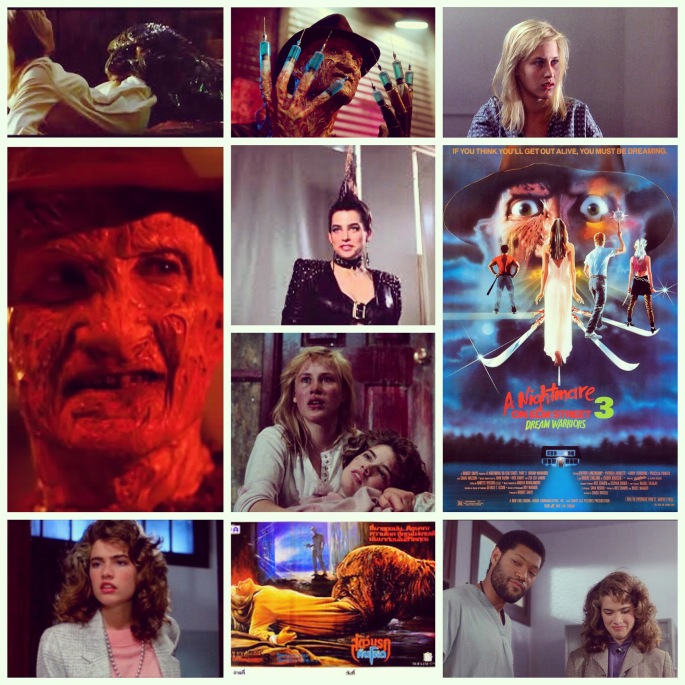
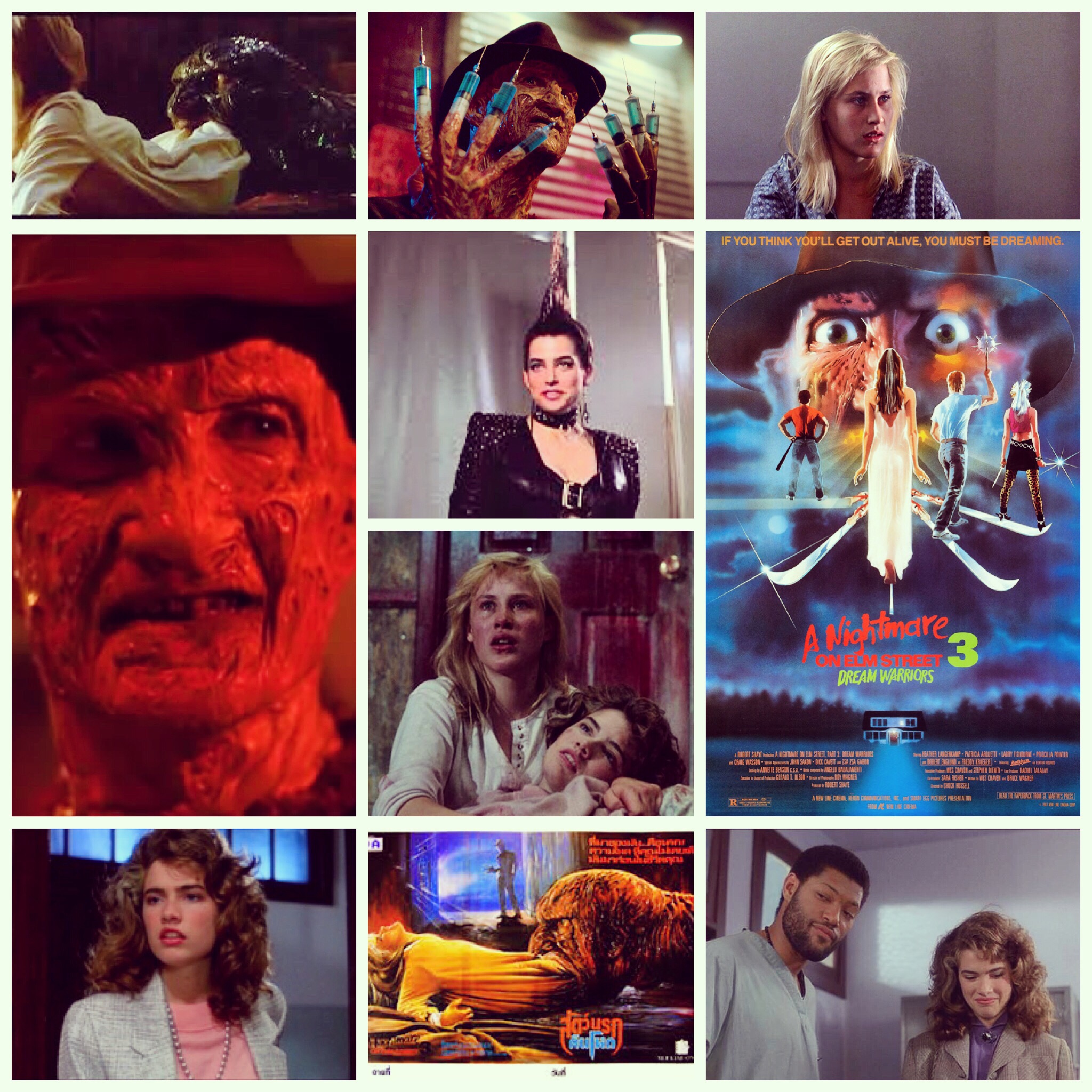
Although billed as pure horror, A Nightmare On Elm Street 3: Dream Warriors strays into fantasy as well and is a pure blast of fantastically diabolical special effects when it’s working in either genre. Around the middle of the franchise marks the place where Freddy Krueger began to turn into more of a cartoonish wise-guy from his original mainly silent phantom, but he’s still pretty foreboding here, as Robert Englund puts energetic work into both his funny and frightening sides. The cool thing about this flick is it’s ‘Goonies’ style aesthetic; several youngsters, committed to a mental facility for their insomniac ‘delusions’, do dream battle with Freddy, and it’s one of the few instances in a slasher film where victims get to fight back in some capacity, and as a unit. Patricia Arquette is wonderful as Kristen, leader of the pack and a fiercely vulnerable spirit, while a young Laurence Fishburne plays the kindly head nurse. It’s also a treat to see Heather Langenkamp return as brave Nancy Thompson, still out for Freddy’s head. The effects are dazzling, from Freddy’s remodelled syringe needle glove in one scene, to a giant pac-man version of his head attempting to eat a live person whole in another, it’s just imagination run wild in dreamland. The kills are still sufficiently gory too, if punctuated by his now classic growling one liners (“Bitch!”). It’s safe to say this is the best in the franchise barring the first film, it’s quite a bit of fun. Oh, and for a good hearty laugh, nothing beats the Dick Cavett/Zsa Zsa Gabor cameo featuring a priceless interruption from Freddy. 
-Nate Hill

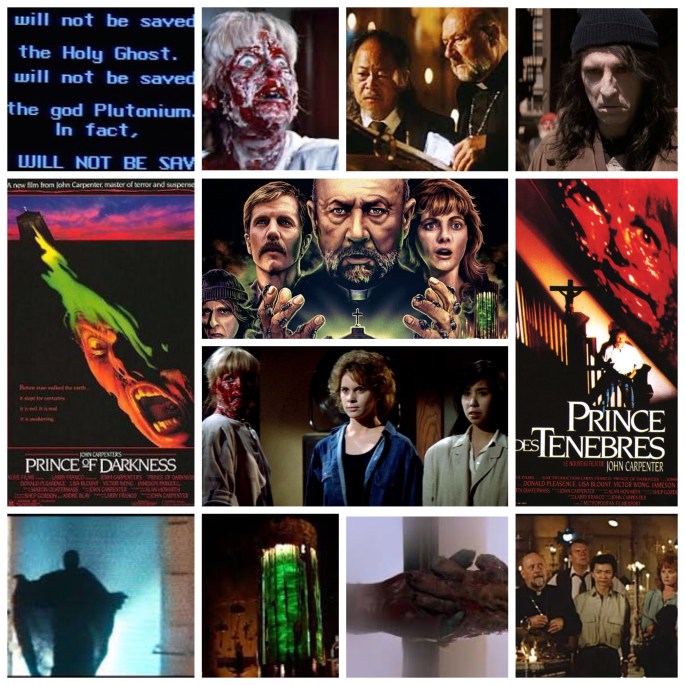
John Carpenter’s Prince Of Darkness

Trust John Carpenter to constantly subvert expectations, aim for innovation and simply just please the crowds throughout his career. Prince Of Darkness is, at first glance, a creaky ol’ fright fest, and it is that, but there’s also a cheeky little irreverent streak to it as well, a borderline atheist flourish that you wouldn’t normally find in a flick about summoning up the devil. Carpenter lays the atmosphere on thick, especially with a reliably spooky electronic score and a pace that burns slow and steady. Deep in the crypt of a church there lies a large glass vial containing swirling green matter, a pseudo scientific/spiritual cocktail that contains the “anti god”, a denizen composed of backward atoms that wants to break out and raise a little hell. Grim faced priest Donald Pleasence will prevent this at any cost, and hires a team of underpaid undergrads led by a crusty professor (Victor Wong) to research it, camping out in the church for kicks. You can imagine how this goes, and there’s a refreshingly old school ‘Body Snatchers’ vibe as various characters fall victim to the creeping dark forces. There’s also mind-stimulating, sci-fi ideas at work too though, including an intriguing time travel prospect and a deft little jab at religion via the story’s trickier elements. Carpenter, although hailed as a master of horror, is no simpleton when it comes to ideas, and he flexes his cerebral muscles nicely here. Ambient, gooey, smart, provocative, a terrific little fright fest that leaves you wanting more. 

-Nate Hill

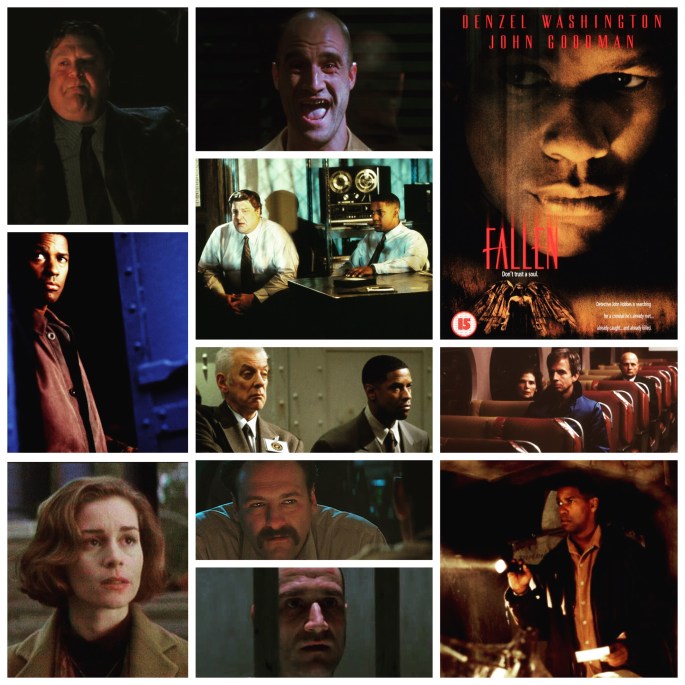
Gregory Hoblit’s Fallen


A demon angel. A Badass Denzel Washington. Tony Soprano singing the Rolling Stones. Creeping psychological dread. Browned, burnished production design. A deliciously mean spirited, ballsy twist ending. All this and more can be found in Gregory Hoblit’s Fallen, an atmospheric spook-house of a flick that gets tone, fright and suspense just right. Nestled in that sweet spot of the 90’s where detective stories often had a neat supernatural twist (The Prophecy is another dope one), it’s a film that demonstrates the power of storytelling and atmosphere done right, like a campfire tale that cops tell their youngsters. Denzel is Hobbs, a detective who oversees the graphic execution of serial killer Edgar Reese (Elias Koteas, terror incarnate), a monster he once caught. Case closed, right? Not so much. Soon after he kicks the bucket, one or more copycat killers show up, and once again the crimes happen under Hobb’s watch. Coincidence? Paranormal? It’s a neat, eerie game of cat and mouse with an antagonist who possesses a few unearthly methods of skulking around in the dark. Hobbs is helped by his two colleagues, salt of the earth John Goodman and hothead James Gandolfini, bumps heads with the obstinate police captain (Donald Sutherland), and runs into his foe at every turn, each time in a new vessel which gives the actors, right down to extras, an opportunity to have some devilish fun. Embeth Davidz is her usual withdrawn self as a woman with ties to the killer’s past, and watch for Robert Joy and Gabriel Casseus as well. Composer Dun Tan’s unearthly drone of a score compliments the drab shadows, oppressive nocturnes and threatening frames of the film eerily as well, creating a mood-scape that drips ambience. The end is an acidic kick in the nuts, and I admire a film that has the stones to chuck in such a shock tactic, embracing the dread that has been built up to that point with one last sardonic, hopeless cackle. Film noir to it’s roots, subtly mystical, a perfect one to settle down with as we move into the Halloween season. 

-Nate Hill

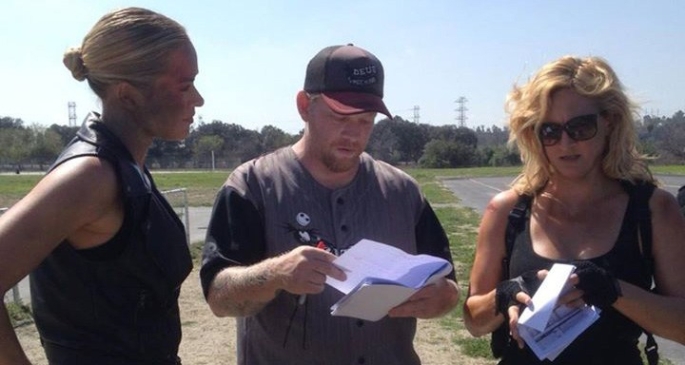
Multi-Headed Sharks and Mega-Sexy Mercenaries: An Interview with Christopher Olen Ray by Kent Hill

I’ve often mused on what it might have been like if my father had of worked in the movie business. Would I have have grown up with this addiction to cinema had that have been the case? Or would it have been different?

I’ve traveled beyond these grey hills, that surround the quiet town in which I reside, and I have seen the poor and unfortunate parts of this world. But you pause upon reflection of such experiences and remember, if you were born into such a life, would you know any different? It would simply be your life until to chose to break loose your shackles and go seeking?

For Chris Olen Ray movies were simply a part of his life; being raised by a filmmaker and being in his father’s films. But like all young people do at some point, they choose to rebel. Thus, Chris joined the military to get as far away from the movies as he could. He took the sea and saw something of the world before returning and realizing – what’s in the blood, stays in the blood.

Emerging from the shadow of his father (B-movie legend Fred Olen Ray), Chris soon amassed an impressive list of credits all his own. From horror to action, to the type of film that would not look out of place among his father’s credits; attacking multi-headed sharks and all-star, all-female mercenaries, these are just the tip of the iceberg.

It is as exciting to ponder his next cinematic chapter as it was to chat with Chris Olen Ray…

…Enjoy.

cray

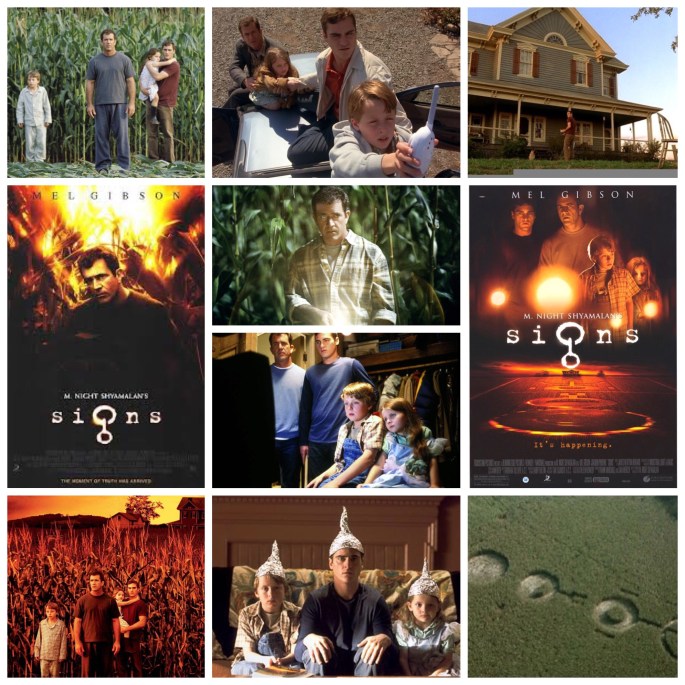
M. Night Shyamalan’s Signs 


As much as M. Night Shyamalan’s Signs is a brilliantly structured ScFi suspense yarn that’ll give your ticker a run for it’s money, it’s just as effective as a touching exploration of faith and hopelessness, the warring notions that there is either someone or something out there looking out for us, or more distressingly, there is not. One need only watch Mel Gibson’s staggeringly well pitched performance as a man bereft of belief in anything beyond the tangible to feel as alienated as he and his beloved relatives do when a sneaky, marauding band of extraterrestrials take up residence on their remote farm, leaving vast crop circles all about the place. As a dimly paced, impossibly eerie invasion narrative grips us from the forefront, we’re also somewhat primally aware of the story of a once steadfast man, already ruined by personal tragedy, come apart at the seams and start to lose his last vestige of belief in anything beyond our world. Gibson’s wide eyed desperation is almost scarier than the otherworldly beings themselves, which is saying a lot considering these are some of the most unnerving alien critters ever seen on film. A farm is the perfect oasis of desolation to set these events in, and the nocturnal romps through the corn in search of these beasties will make your heart skip a few hundred beats in apprehension. Gibson abides there with his ex baseball pro bro (Joaquin Phoenix) and two adorably deadpan children (Rory Culkin and a very young Abigail Breslin). There’s a deep sense of coziness that is violently uprooted when these unwanted guests show up, an idyllic tranquility tainted by an unknown element most foul, raising the stakes nicely, leading up to the claustrophobic finale. The proceedings almost have a dream logic to them, as if this whole deal is happening on a plane removed several degrees from ours. Characters interact in peculiar, staccato fashion, certain elements here and there don’t sound or feel like they’re… “real”, for lack of a term that doesn’t exist. Whether by choice or happy accident, Shyamalan unsettles us far beyond being spooked solely by the aliens, who aren’t seen in full till way later in the film anyhow. There’s just a hollowness to Gibson’s plight, a restless gnawing anxiety fighting at the whites of his eyes as he struggles to find the light that has left his path. The ending is a perfectly etched out cap to his arc that sideswipes you with emotional heft you never knew the film had in it, and a thoughtful, planned out story beat that takes some contemplation to fully absorb. On the surface, Shyamalan’s work here is a restless sea, but there be dragons roiling underneath, internal demons that extend farther than the excellent science fiction storyline and touch upon ideas much more disturbing: the endless fear of what comes after death, and who is really out there watching us, besides cornfield dwelling lizard-men. Great stuff. 

-Nate Hill

“I didn’t leave you.” The Hains Report Presents: A review of The Sixth Sense – by Josh Hains

You need not worry, I won’t spoil the ending.

I never knew what happens at the end of The Sixth Sense until either late 2005 or sometime in early 2006. I found out the ending of The Sixth Sense when I was reading an adaptation of the film that I’d found in my high school’s library when I was in my first year. I was 14, and more than a little foolish. I read the first 3 chapters of the book (perhaps a fourth, perhaps even more but I can’t recall), and was then hit with the idea that I had guessed the ending based on what I’d read. I flipped to the end of the book and read the ending, found my guess validated, then placed it back on the shelf and never looked back. Just last year I watched the film for the first time. Oddly enough, despite knowing the ending years prior, I somehow felt a sense of shock wash over me as I watched the scene unfold in front of my eyes. Watching it for a second time over this past weekend, the ending still held the same impact. Proof you can know the ending of a movie and still be surprised by it on more than one occasion.

I observed that The Sixth Sense isn’t much of a thriller it was pitched to audiences as being (not straight horror either), but rather a ghost story where good people fall prey to those who torment them from beyond the grave. The latest victim of ghosts is the young boy Cole Sear (Haley Joel Osment), who claims one night to “see dead people”. Many believe that children are more susceptible to seeing ghostly apparitions than adults, and Cole is no exception, scribbling or screaming the ravings of ghosts he has terrifying eencounters with. I don’t know who’s more afraid, he of the ghosts, or his mother Lynn (Toni Collette) for his safety and mental well being.

Cole’s psychologist becomes Dr. Malcolm Crowe (Bruce Willis), who we first meet at the start of the film when a former patient shoots Malcolm, then himself. Malcolm seems defeated these days, tired and worn out from work and life in general. His wife Anna (Olivia Williams) doesn’t seem to notice he’s even around, barely utters a word or gives a look in his general direction. Maybe she’s having an affair. Perhaps the trauma from that night was too much to bear for her. Maybe Malcolm was never the same after.

Malcolm seems to approach Cole and his predicament with a “Sure, whatever you say kid” demeanor. It seems fair to me that Malcolm has this attitude, he probably doesn’t believe in ghosts and is just going along with whatever Cole says because he knows he needs guidance, without ever appearing condescending toward him. I doubt I’d believe the root of the issue is ghosts either, just a troubled soul in need of nurturing. Malcolm shares the same perspective, and is more than willing to help where he can. In turn, Cole helps Malcolm a little too, telling him to talk to his wife while she sleeps, because “That’s when she’ll hear you.” I don’t know who my heart bleeds for most.

Haley Joel Osment showed us 18 years ago that he was a force to be reckoned with even as a child. He wasn’t playing the typical child role where you just look cute, act silly for the camera and get your lines out with some amount of authenticity. No, here in the Sixth Sense, he actually has to act, and convincingly plays a good kid plagued by appearances of gruesomely murdered ghosts. When he’s afraid, we believe he is. When he’s sad, our hearts break. Neither he nor Willis overshadow each other, and the two have a chemistry that feels authentic and adds layers to the nature of their relationship.

Bruce Willis is a rare down to earth actor, always wearing his heart on his sleeve. He doesn’t over play his hand here, he never gets wild or over the top. Again he’s down to earth, as well as honest and subtle. In my two viewings of the film, I have almost entirely forgotten at various points that the man on screen is in fact Bruce Willis, mostly because he’s not playing the typical Bruce Willis role. Gone is any sense of his star persona or real life personality. He is just Malcolm Crowe, and I believe it. Much of the best acting of Willis’ career can be found split between The Sixth Sense and Unbreakable (his second collaboration with M. Night Shyamalan after this film), and oddly enough the best acting I’ve seen from him comes in big reveals toward the end of each film. In the case of Unbreakable, it’s when David Dunn silently reveals to his son that he’s the lone saviour of two kids whose parents were murdered by a local psychopath.

Here in The Sixth Sense, it’s the sequence in which Malcolm comes to truth with some harsh realities, none of which I will spoil here. I’m sure you’re aware of what happens by now, and if you haven’t seen the movie and don’t know the famous ending, I implore you to give it a look, you just might love it. Willis doesn’t dip into manic theatrics or parody when the truth is uncovered (though he easily could have), he remains truthful to the performance he had been giving beforehand and to the character of Malcolm, which helps to ground the movie in a believable reality.

As for that ending itself, it’s one of the few Hollywood twist endings that works, and works well enough 18 years later to be considered one of the true great twist endings in film history. Admittedly, when I read it in that book all those years ago, I was surprised by the boldness of such an ending. It’s not very often a movie ends on such a bold note, in a way that pulls the rug out from underneath you, yet invites you to come back for another visit and see things from a newfound perspective. Maybe you’ll see dead people too.
B Movie Glory: The Rift


The Rift is a nifty little underwater creature feature in the tradition of stuff like The Abyss and Leviathan, a low budget affait that uses neat practical model effects to churn out some gooey thrills, and a cool cast to run around being hunted by them. When an experimental submarine dubbed the ‘Siren II’ (after the disappearance of the Siren I, naturally) descends into a deep fissure in the ocean, things begin to pop up that shouldn’t be down there. By things I mean cleverly designed miniature models that are lit just right enough to fake us out into believing they are actually giant underwater behemoths from the darkest nightmares of marine cryptozoology. Captained by R. Lee Ermey, giving the character gravitas the film almost doesn’t deserve, it’s a doomed mission from the start, especially when you factor in the shady presence of first mate Ray ‘Leland Palmer’ Wise, who has a few tricks up the old sleeve. It’s up to man of the hour Jack Scalia to swagger their way out of danger, but the rift is deep, dark and pretty soon all kinds of gooey things find their way aboard the craft. It’s not half bad, at least nowhere near the second tier hack job some critics dubbed it as. Any effort that puts that much artisan ingenuity into deep sea monsters with as little money as they were given gets a handful of gold stars from me. Plus, you can’t go wrong with that cast. 

-Nate Hill