ZEDER (1983) – A REVIEW BY RYAN MARSHALL

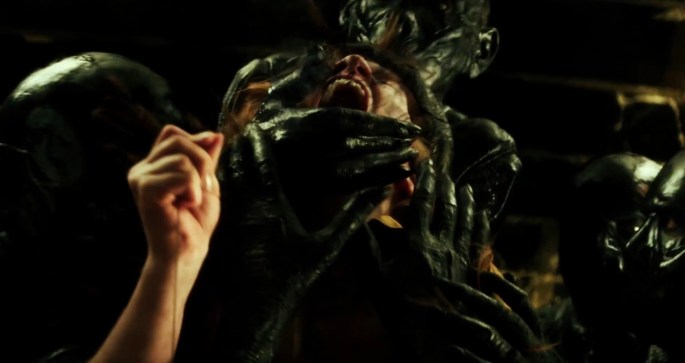
Circa 1956, young Gabriella is brought to the estate of Dr. Meyer, who believes that the girl harnesses supernatural powers and intends to put them to good use during one fateful night. After accompanying her to the basement, where she begins writhing about on the dirt-covered ground and is then attacked by something unseen when left alone, Meyer deduces that the area they’ve stumbled upon is what is known as a “K Zone” upon realizing that the man who infamously studied them, Paolo Zeder, was buried underneath the house some years ago.

vlcsnap-2017-01-06-12h48m02s515.png

Favoring petrifying ambiance over surface-level schlock, though impartial to entertaining the latter when apt, Pupi Avati’s horror films are characteristically infused with a kind of sinister, otherworldly energy; as if the man responsible for them always has one foot in reality and the other in the spirit world. In this sense, ZEDER (aka REVENGE OF THE DEAD) is straight from the heart of its maker, being (among other things) a film that deals directly with those disconcerting voices from beyond and why they are necessary to a superior understanding of our surroundings.

Following such a uniquely enigmatic opening, we are introduced to Stefano (Gabriele Lavia), a young novelist living in present day (1983) Bologna. He comes home one day to a surprise anniversary gift from his wife Alessandra (Anne Canovas) in the form of an old typewriter which he can’t help but test drive that same evening. Upon closer inspection of the ribbon housed inside the apparatus, he discovers an essay written by the aforementioned Zeder and becomes increasingly obsessed with the man’s studies.
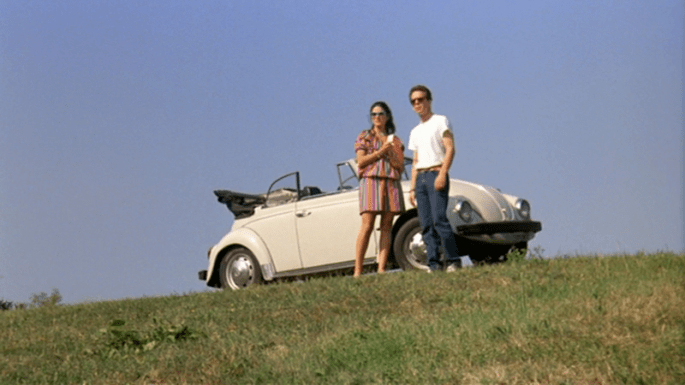
vlcsnap-2017-01-06-12h49m50s260.png

Similarly to Avati’s masterful giallo THE HOUSE WITH THE LAUGHING WINDOWS, the unlikely hero often feels alone in the world. Whenever Stefano attempts to inquire about Zeder and his finds, even the most reputable members of society turn him away; and when he decides to take matters into his own hands, they tend to get a bit dirty. He must be careful who he talks to, for their lives may be endangered if he does so.

vlcsnap-2017-01-06-12h48m38s711.png

Without showing too much, Avati manages to get deep under your skin; take the K-Zones, for instance, which have something to do with reanimation, and yet that specific “something” is never explored in explicit detail. However, it’s undoubtedly better off this way. The horrors of ZEDER, beautifully rendered as they are, seem rooted in paranoia and guilt on a profoundly national scale; the film is like an exorcism for all of Italy, albeit one where the cleansing of body and soul is secondary to the painful possession of Avati’s fellow countrymen and how they attempt to evade it. While Stefano pursues the mystery at hand, Gabriella (now an adult) and Meyer scheme – it would be unwise to trust that anyone, even those closest to you, are not in on it in some way. It’s an angry, poignant, and indeed genuinely frightening state of affairs – assuming one is enticed by implication.

European horror films tend to wear their imperfections on their sleeve, and ZEDER is no exception. Franco Delli Colli’s (RATS: NIGHT OF TERROR, MACABRE, STRIP NUDE FOR YOUR KILLER) cinematography is luscious, Riz Ortolani’s score is typically fierce, the make-up effects – particularly for the undead – are refreshingly subtle, and yet there are flaws to be found in Amedeo Salfa’s editing. On a whole, the film flows exquisitely – but once in a while there’s an abrupt transition which threatens to soil an otherwise divine experience; and although this is easily redeemed, it can’t help but pale, if only slightly, in comparison to its aforementioned cinematic brethren as a result.
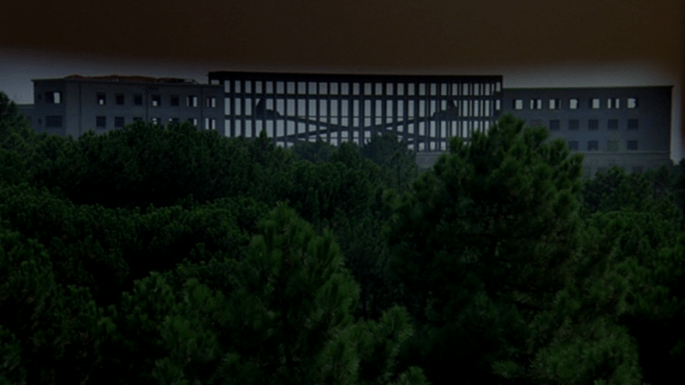
vlcsnap-2017-01-06-12h49m37s733

But oh, what sights Avati has to show you. From the abandoned soon-to-be-hotel which marks the high point of Stefano’s journey and the dusty tunnels running underneath to the young couple’s sleek, secure apartment, it’s remarkable how distinctive each location feels and how well the director utilizes them throughout. One feels alienated regardless of where they find themselves; the world is wired by phantoms. As is the case with some of the best, this is a film about man’s relationship with time and place in unison with his personal affairs; while the romance at the center of the story gives it a much-needed emotional backbone, it’s ultimately a vision of our ever-changing landscape and how we choose to confront those sudden transitions.

Admittedly, this could potentially disappoint viewers expecting a gorier, more straight-forward zombie yarn, but what a thing to behold. Avati has contributed something that goes far deeper than exceptional genre cinema, knowing all too well that mystery and tragedy alike account for many of the things in life which are most difficult to swallow. Some questions cannot be answered, or so the director seems to conclude at the end of this macabre tale. We can only seek so much truth before we bump up against our own limits.
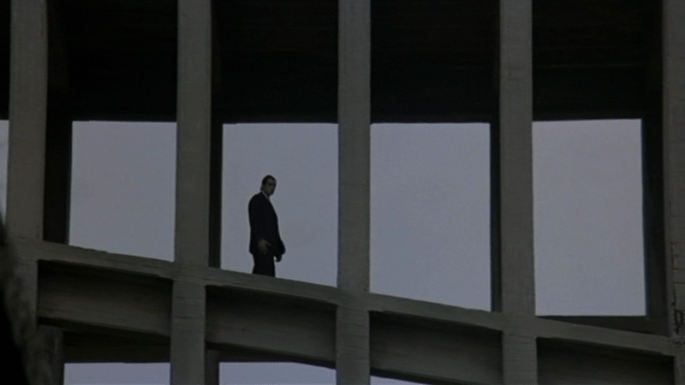
vlcsnap-2017-01-06-12h52m16s121.png

ANTIBIRTH (2016) – A REVIEW BY RYAN MARSHALL

vlcsnap-2017-01-05-15h06m12s248

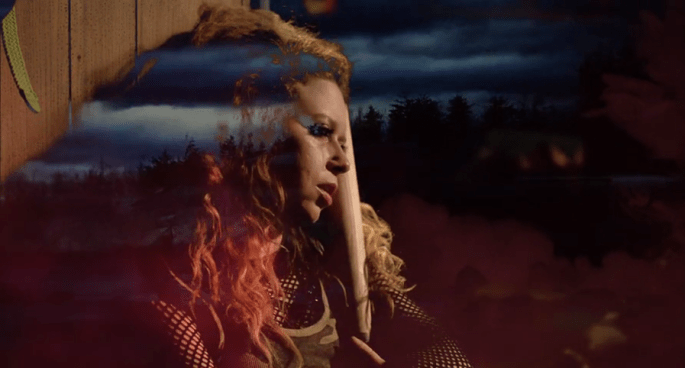
It wouldn’t be impractical to compare ANTIBIRTH, the messy (in more ways than one) feature debut from accomplished visual artist Danny Perez, to the unexpectedly PCP-laced joint or to the scatter-brained B-side to a profoundly psychedelic experience. Indeed, it’s precisely this kind of abnormal out-of-body ambiance that the film aspires to; evoking heavy shades of David Lynch, Cronenberg and many others as it stretches its admittedly thin concept to grotesque, kaleidoscopic extremes.

Brimming with all sorts of hazy, shamelessly abrasive potential from frame one, this grungy yarn concerns the plight of wayward trouble-maker Lou (Natasha Lyonne), who wakes up one morning after a night of heavy hedonism to the most sickening sensations. These are later discovered – first, by Lou’s best friend Sadie (Chloe Sevigny) – to be the symptoms of pregnancy, but neither of the two can recall the events which transpired that previous evening.

vlcsnap-2017-01-05-15h06m45s708.png

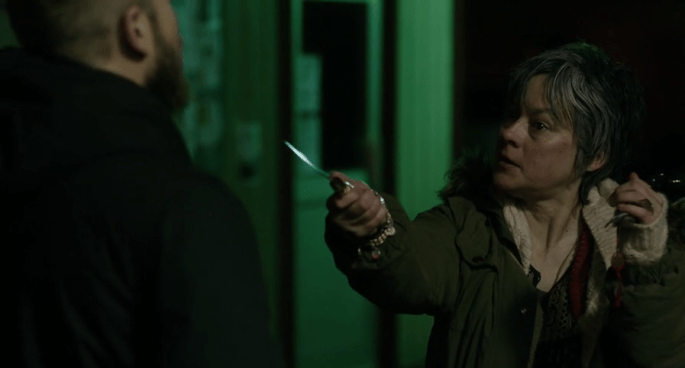
There are at least a dozen movies attempting to co-exist here, but taking precedence over most others – at least for a while – is the hang out picture. The viewer assumes a sort of sleazy fly-on-the-wall perspective for roughly the first half of the surreal narrative, watching as Lou’s situation get worse and the she engages in mundane daily routine. Suddenly, disturbing visions of obscured memories begin to plague the poor party-goer’s mind, and upon the arrival of a peculiar old woman (Meg Tilly, delightfully bat-shit) in the small mid-west town, things take an unexpectedly twisted turn.

Perez is probably best known for his collaborations over the years with Animal Collective, in which he provided the band’s heady tunes with an appropriately imaginative visual companion (see the excellent and often overwhelmingly terrifying  “visual album” ODDSAC from 2010), so it’s no secret that his first foray into more grounded narrative work would be an ambitious one. Like that earlier film, ANTIBIRTH dabbles almost exclusively in gross body horror and Perez certainly has the means of dishing it out when the time comes, which is – rather unfortunately – too late in the game.

vlcsnap-2017-01-05-15h03m52s457.png

Allowing for a better understanding of his past work, one might get the sense that Perez is more interested in exceedingly strange ideas and imagery than he is in people. This doesn’t always have to be a bad thing, but when the anti-heroine of the director’s abstracted world is one-dimensional at best and insufferable at worst, and those around her aren’t much better off, a gory good time then becomes an unnecessary struggle to locate anything of genuine substance. One could argue that the film’s indifferent attitude is embedded in its punk DNA, but when it accumulates to something as frequently unfunny, off-putting and shoddily constructed as this, it can be best chocked up to sheer ineptitude.

As expected, Perez is able to cook up some spectacular moments throughout – the idea of a quiet Michigan town teeming with experimental military activity and extraterrestrial conspiracy is an enticing one, and that sound design is pretty neat – but his stylistic flourishes end up being more debilitating – and, dare I say, amateurish – than exhilarating (the sequences set in the “Fun Zone”, a family-friendly pizzeria seemingly converted from an aging dive bar, are a fine example of this). Where it clearly wants to revel in oddity and excess, the film remains stagnant and can barely stay afloat, meandering on an already fairly weak foundation. It’s a leisurely, sedated, albeit colorful descent to whatever lies beneath the bottom of the barrel; you’re free to take that as you will, but the effort it requires to find something even vaguely inspiring isn’t really worth it.

vlcsnap-2017-01-05-15h06m06s710.png

Larry Fessenden’s The Last Winter: A Review by Nate Hill 

Nature fights back in Larry Fessenden’s The Last Winter, a vaguely supernatural cautionary tale of of environmentalists and oil workers besieged by some unseen forces in the great north. Fessenden also brought us Wendigo back in the day, another snowbound chiller, and a keen sense of the eerie corners of the natural world and it’s unexplored areas comes built in with his skill set. Ron Perlman doggedly plays Ed, the headstrong leader of a research party scouting arctic land for Big Oil to plant an ice road and pipeline. Connie Britton is his second in command and former flame, now shacking up with wildlife journalist James Legros. When the dead, naked body of a team member is found near their camp, natural gas emissions from the ground are suspected (so logical, guys). Yet, people continue to die, and some ominous presence gathers in the night just outside the perimeter of the station, inciting rising dread and distrust among the team and claiming victims with gathering speed. It’s fun to watch Perlman slowly come unraveled, his grim sense of control slipping away as quickly as his rational explanations for what is happening. We never get a good look at whatever is out there, which is the smart way to go about your horror. The snow boils, strange sounds are heard and the natural world itself almost seems to be taking on angry life of it’s own. It’s obviously meant as a metaphor, but works just as well as a literal creature feature thanks to the sleek direction and well placed moments of chilly terror. Shades of The Thing, infused with this theme of the earth lashing out at the arrogance of human industrialization is a delicious flavour indeed. 

UNDER THE SHADOW (2016) – A REVIEW BY RYAN MARSHALL

UNDER THE SHADOW, the eerie slow-burn chiller that marks the directorial debut of Babak Anvari, indulges in a particularly dangerous dance. It’s a dance of many genres, many aspirations, and many roadblocks, and to be fair, Anvari almost gets us to a point where everything comes together to initiate a satisfying whole. In this sense, he’s already ahead of the game, even if the Iranian-born filmmaker doesn’t always seem content to be playing the field.

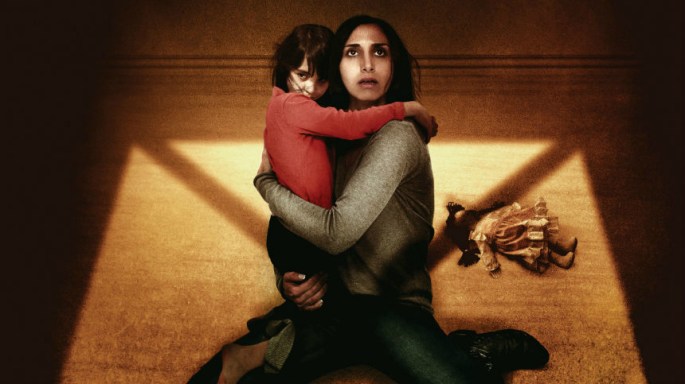
Set in post-revolution Tehran during the 1980’s, this macabre tale begins as former medical student Shideh (Narges Rashidi) is denied the opportunity to continue her studies as a result of being involved with Leftist activists in the past. At home, Shideh has plenty to worry about as it is – her husband Iraj (Bobby Naderi), a doctor, tends to openly undermine his wife’s achievements and their daughter, Dorsa (Avin Manshadi), often retreats to a fantasy world that she believes in a bit too much – while the war rages on outside.

undertheshadow1-1600x900-c-default1

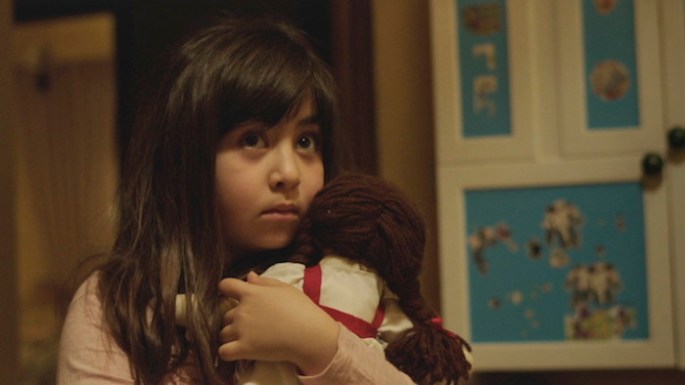
Iraj’s medical assistance is needed in the heart of the combat zone and he must leave his family in the city for an extended period of time. Soon after his departure, a missile lands on the apartment directly above theirs, resulting in the death of one of its elderly tenants. Following the incident, Dorsa’s behavior becomes slightly erratic. She loses her favorite doll and constantly searches for it inside and outside of the apartment, believing that its disappearance is linked to a malicious spirit known as a “Djinn”, which may have possessed their home.

Shideh’s initial reaction is to chalk it up to an over-active imagination, but then terrifying visions begin to plague her fragile psyche during both night and day alike, and she finds herself, much like her child, no longer able to discern reality from fantasy. Anvari handles her struggle to reclaim individual strength and identity with grace, crafting an at times clever and never less than engaging feminist parable. In terms of social-political context, it uses its monster as an obvious metaphor for the ramifications of war, and it’s in this realm of lingering, impactful terror that UNDER THE SHADOW exceeds.

under-the-shadow1

It’s also here that it tends to stumble. The film is at its brooding best when embracing the power of implication, patience, and silence all at once, but its alternating concepts of fear seem, at times, contradictory. On one hand, it makes a conscious effort to be intelligent genre fare, seldom resorting to cheap shock tactics and utilizing the widescreen compositions to their maximum, anxiety-ridden potential; but there are also far too many instances in which initially effective sequences amount to little more than underwhelming jump scares. It’s as if whenever Anvari has something beautiful he feels the need to destroy it. This unfortunately also goes for the (thankfully few) glimpses the viewer is granted of the “Djinn” itself, which – mostly due to some pretty lame CG effects – are more ridiculous than blood-curdling, save for a genuinely ominous moment involving an old man and the colossal cracks in the apartment ceiling.

This isn’t a bad film, in fact it’s mostly a pretty good one, but it clearly wants to be so much more than that and there’s absolutely no reason why it shouldn’t be. It’s well made, performed, conceived, overall well-intentioned but one can’t shake the feeling that it’s the work of a director caught up in certain contemporary genre trappings, the kind that tend to obscure a poignant message. Anvari wants to have his cake and eat it too, which doesn’t always have to be a bad thing. It’s a sign of clear ambition and, especially in his case, talent. But next time he’d be best to count his blessings and roll with them rather than drive himself into such a dark, discouraged corner as this.

Taika Watiti’s What We Do In The Shadows: A Review by Nate Hill 

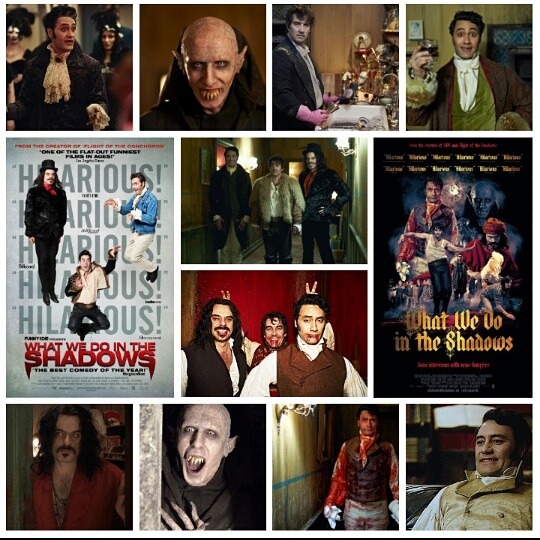
I don’t remember laughing as hard at a film in years as I did at What We Do In The Shadows the other night. It’s pure comedic bliss from front to back, and makes the often tedious chore of making an audience laugh seem effortless. It’s part horror comedy, part mockumentary with a dash of buddy camaraderie and and depth of wit and character all it’s own, thanks to New Zealand filmmaker Taika Watiti, who is fast becoming one of my favorite new voices in the independent field. A master at finding the humour in little moments and dry subtlety, his cameras spend a couple hours documenting pratfalls, squabbles and zany encounters wirh quartet of vampires living in Wellington, New Zealand, each one simultaneously a different caricature of bloodsuckers from previous lore, as well as a completely unique, hilarious individual. Jermaine Clement is the closest thing you’ll find to a household name amongst the cast as Vladislav, a Dracula esque, baroque vamp. Jonny Brugh is Viago, the musically inclined, Ann Rice incarnation, and Ben Fransham, plays Peter, a spooky eight thousand year old Nosferatu clone. It’s Watiti himself who steals the show though, as Deacon, a dandy of a Germanic royal who gets all the best lines and relishes them with adorable deadpan delivery every chance he gets. The film comes nowhere near the classification of horror, and in fact these four resemble a bumbling, lovable frat house, their vampiric nature treated lightly as they cavort about their everyday life like rambunctious nocturnal teddy bears. They navigate household chores, nightlife, inter species relations (there’s a few priceless encounters with a rival pack of werewolves), pesky humans, and have a ball the whole time through. What makes the film so special is the goldmine of comic skill and talent that both director and cast have tapped into. The relationships are unforced, full of idiosyncratic nonsense and always feel utterly organic. For a group of undead fellows, they truly are the life of the party. The documentary style never feels intrusive or irritating, seamlessly taking refuge behind the forceful and side splitting antics which take center stage for the entire film. Comedy is the hardest genre to produce fruitful results in, with horror a close second. What it takes to make you laugh can often be a rare gift, wielded by few and far between, those writers, directors and actors who have that elusive midas touch on our funnybones, combining just the right elements of script, improv and intuition to  get us laughing ourselves silly. This one achieves that and then some.

Taika Watiti’s What We Do In The Shadows: A Review by Nate Hill 

I don’t remember laughing as hard at a film in years as I did at What We Do In The Shadows the other night. It’s pure comedic bliss from front to back, and makes the often tedious chore of making an audience laugh seem effortless. It’s part horror comedy, part mockumentary with a dash of buddy camaraderie and and depth of wit and character all it’s own, thanks to New Zealand filmmaker Taika Watiti, who is fast becoming one of my favorite new voices in the independent field. A master at finding the humour in little moments and dry subtlety, his cameras spend a couple hours documenting pratfalls, squabbles and zany encounters wirh quartet of vampires living in Wellington, New Zealand, each one simultaneously a different caricature of bloodsuckers from previous lore, as well as a completely unique, hilarious individual. Jermaine Clement is the closest thing you’ll find to a household name amongst the cast as Vladislav, a Dracula esque, baroque vamp. Jonny Brugh is Viago, the musically inclined, Ann Rice incarnation, and Ben Fransham, plays Peter, a spooky eight thousand year old Nosferatu clone. It’s Watiti himself who steals the show though, as Deacon, a dandy of a Germanic royal who gets all the best lines and relishes them with adorable deadpan delivery every chance he gets. The film comes nowhere near the classification of horror, and in fact these four resemble a bumbling, lovable frat house, their vampiric nature treated lightly as they cavort about their everyday life like rambunctious nocturnal teddy bears. They navigate household chores, nightlife, inter species relations (there’s a few priceless encounters with a rival pack of werewolves), pesky humans, and have a ball the whole time through. What makes the film so special is the goldmine of comic skill and talent that both director and cast have tapped into. The relationships are unforced, full of idiosyncratic nonsense and always feel utterly organic. For a group of undead fellows, they truly are the life of the party. The documentary style never feels intrusive or irritating, seamlessly taking refuge behind the forceful and side splitting antics which take center stage for the entire film. Comedy is the hardest genre to produce fruitful results in, with horror a close second. What it takes to make you laugh can often be a rare gift, wielded by few and far between, those writers, directors and actors who have that elusive midas touch on our funnybones, combining just the right elements of script, improv and intuition to  get us laughing ourselves silly. This one achieves that and then some. 

BLOOD FREAK (1972) – A REVIEW BY RYAN MARSHALL

vlcsnap-2016-11-24-14h39m30s115.png

Brad Grinter’s BLOOD FREAK is a consistently bewildering acidheaded cinematic turkey; in theory, it’s a real piece of shit, but in practice, its many moralistic contradictions and aesthetic misjudgments give it a flavor that is somehow anything but dry. A select few films are permitted to get by on their boundless imaginations alone, and this is one of them – a steaming pile of 70’s counterculture and pent up anxieties, to which Grinter’s film is hardly the solution, but you can’t help but commend him for trying.

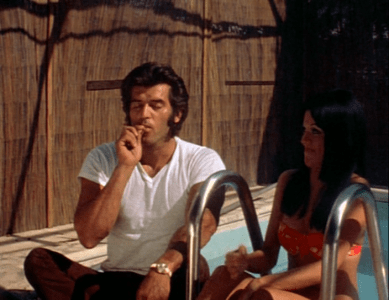
On a sunny day, Vietnam vet Herschell (Steve Hawkes) spots a pretty young thing named Angel (Heather Hues) whose car has broken down on the highway, and promptly whisks her away on his motorbike. Angel takes him back to her house, which she shares with her promiscuous sister, who offers Hershell some pot upon his arrival. At first, he refuses, but eventually gives into temptation after the sister seduces him one day by the pool. Herschell finds himself with an immediate addiction (!).

vlcsnap-2016-11-24-14h39m48s529.png

Herschell takes a job at a local turkey farm, where a couple of bumbling scientists are testing experimental chemicals on the livestock. They require a human guinea pig for this operation, and bribe Herschell into participating by promising to replenish his stash little-by-little. However, the effects of devouring the chemically altered meat prove to be nightmarish after Herschell suffers a seizure and enters a violent, hallucinatory state.

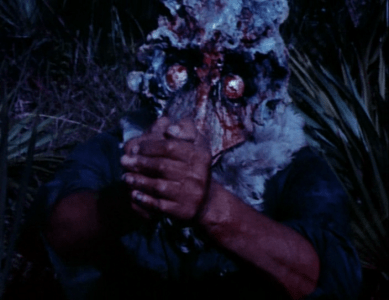
Without spoiling too much in regards to this bold new narrative direction, the film’s most memorable sequences reside after this point – any research on the film will surely lead to inspiring images of a horrible life-size papier-Mache turkey head. So that’s where this film goes; that is to say, way off the deep end. The entire last act is a hysterical collage of grotesque regurgitated sound effects and aimless animalism as Herschell carves his way through a series of sexual deviants and junkies.

vlcsnap-2016-11-24-14h40m24s543.png

This can be most obviously read as an anti-drug PSA disguised as a cheapo psych-out horror picture, which is particularly amusing when one takes note of the director’s frequent appearances throughout the film in which he chain-smokes as he comments on the action. To think that Grinter’s tongue might be planted firmly in his cheek might be giving the director the benefit of the doubt, as the way in which he handles this material is almost characteristically incompetent. For instance, it is heavily implied throughout – and later confirmed – that Herschell suffers from PTSD and is self-medicating as a result. The film ignores the poignancy of the subject and goes straight for shock value; and let’s not even begin to discuss its puerile vision of rampant drug culture.

It’s an outsider view of just about everything it claims to stand for, which proves to be quite problematic – but it is precisely these kinds of seemingly innocent miscalculations that make it so consistently entertaining. The opening scene assumes a strange kind of schizophrenic rhythm that Jess Franco might have admired and then never follows up on it, the writing is a special kind of awful, its treatment of women is even more pedestrian now than it was back in the day – and yet there is so much enjoyment to be derived from the experience, in spite of patches which veer dangerously into Dullsville. The filmmakers can’t even seem to pull focus most of the time and yet they’ve emerged with a work of exceptional amateurism that would put most professionals to shame. Most seasoned viewers won’t appreciate it, but the sleaziest among us will continue to rejoice.


From Dusk Till Dawn 3: The Hangman’s Daughter- A Review by Nate Hill 

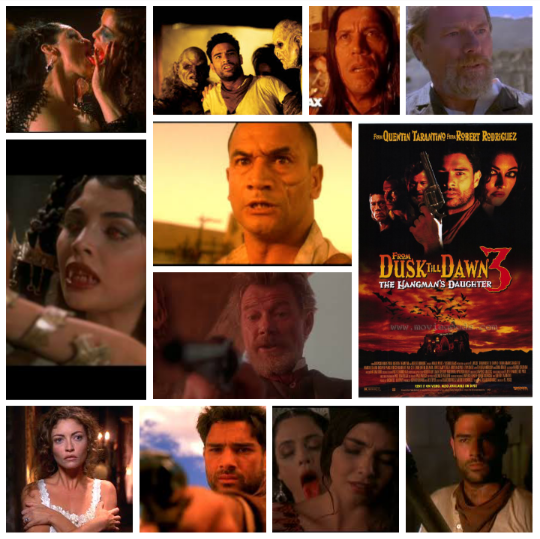
Some franchises feel stale and wrung out by the time the third effort comes along, but not From Dusk Till Dawn. In fact I’d even be so bold as to say that despite not having quite such a budget and resources as the original Tarantino/Rodriguez splatter party, this prequel almost has more in the way of imagination. The first came out of the gate roaring and paved the way, the second was a more mellow heist orientated flick that incorporated the horror elements in as it went, but the third does something altogether different. It’s a period piece, set a hundred years in the past, sometime around the Mexican/American war. When notorious outlaw Johnny Madrid (Marco Leonardi) dodges the hangman’s noose and escapes, he brings abused daughter Esmerelda (Ara Celi) along and scrambles for the state line. The ferocious hangman is none too pleased, given the menacig scowl of Maori bad boy Temuerra Morrison, who played Jango Fett in another prequel we all love. Rounding up a posse, he hunts Madrid and his scurvy gang through the terrain. Madrid is unknowingly headed for a far worse danger though, when he and Esmerelda run straight into the iconic Titty Twister bar, dressed up like a frontier whorehouse this time around. Also along for the ride are a group of wagon travellers including a young newlywed couple (Rebecca Gayheart and Lennie Loftin), oddball Ezra (Orlando Jones) and the real life writer Ambrose Bierce, played with alcoholic grit and gallows humour by Michael Parks. Bierce is famous for actually disappearing somewhere in that area back then, and I like how the film cleverly weaves fact and fiction, putting in a commendable effort to make the turn of events fascinating beyond just a servicable horror level. Danny Trejo also returns, as he must, playing pretty much the same character he did in the first and second, never mind the fact that he keeps dying (you can’t really kill Danny, everyone knows this). I love the formula for these films; they always start out with a slower paced, pulp/crime style narrative that suddenly explodes into creature FX, blood orgies and vampire mayhem without much warning. The first was the bank robbers on the run with hostages, the second was the heist crew and the third is a rousing Desperado style actioner that morphs into the horror we all know is coming. Well produced with a lot of love and some real thought put into the story, exciting and provides more than enough for any horror fan. Definitely the better of the two sequels. 

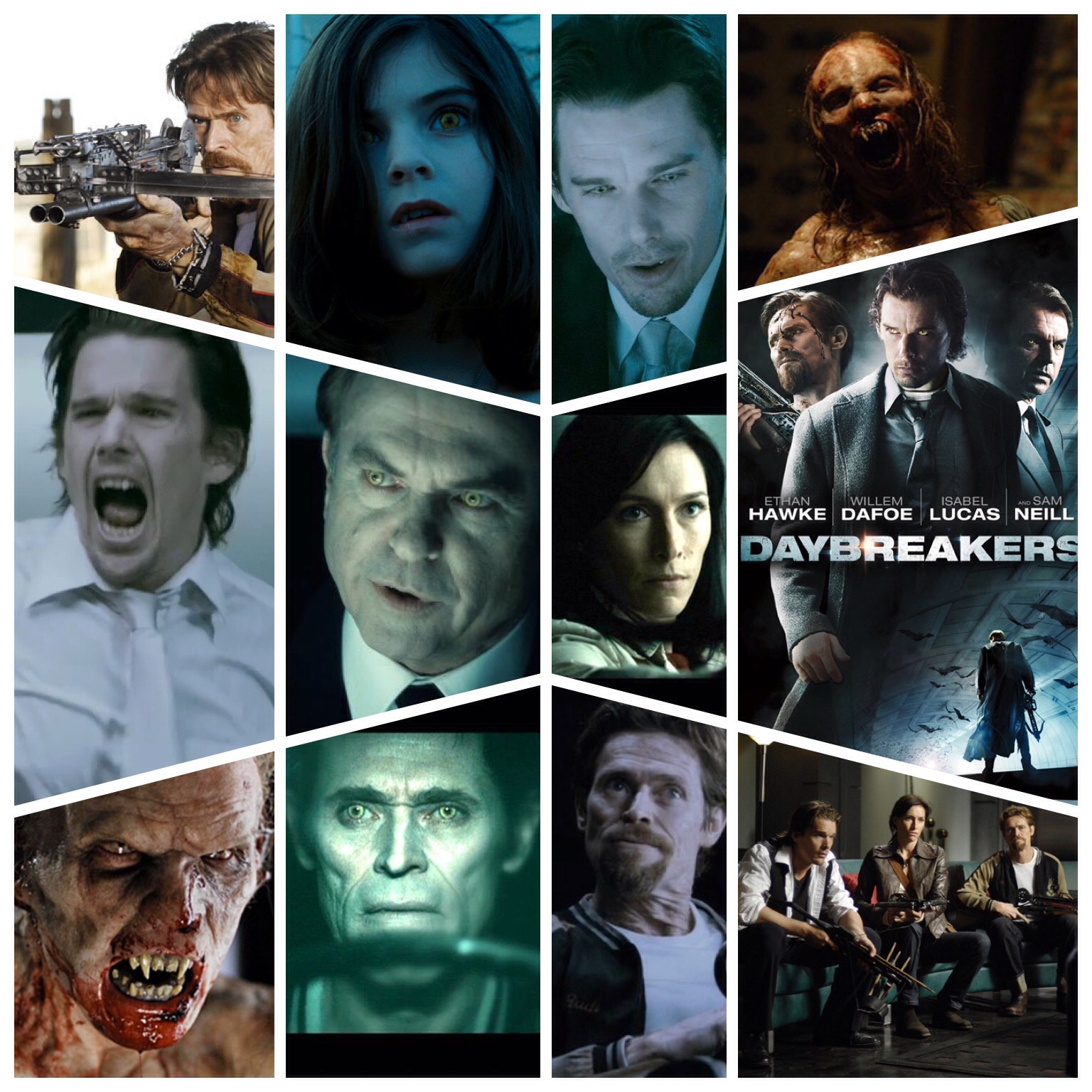
Daybreakers: A Review by Nate Hill


As each genre evolves, it has to find new and creative ways to stay alive and entertain it’s audience. The vampire genre has come a long way, from the grainy film stock showcasing a theatrical Bela Lugosi, to the slick, throat ripping Baltic nocturnal terrors of 30 Days Of Night. No other corner of horror (except perhaps the zombie arena) has worked so hard to reinvent, rework and revamp (hehe) it’s aesthetic than the bloodsuckers realm, and it’s in that area that Daybreakers is a huge success. Not necessarily the most groundbreaking or incredible outing as a film alone, it breaks impressive new ground in the vampire genre and had me wondering why no one had come up with such ideas sooner than 2009! In the year 2019, ninety five percent of the world’s population are now vampires, following an outbreak decades earlier. The remaining five percent of humans keep an understandably low profile and continue to dwindle in this harsh new world. There’s just one problem: vampires need blood to thrive, and once the last human is drained, they face a serious problem. In this lore, a vampire deprived of sustenance turns into a savage berserker that will attack anyone and everyone in pure feral mania. Vampire scientist Edward Dalton (Ethan Hawke) searches endlessly for an artificial blood substitute, partly out of an instinct to preserve a race that was never his own, and partly out of compassion for the humans he once called kin. Corporation executive Charles Bromley (a downright creepy Sam Neill) hordes the scarce resources, and chaos threatens on the horizon if a solution is not found. A bombshell drops, however, when Dalton stumbles across a rebel band of humans who claim that they were once vamps, until some variable turned them back into fleshy human critters. Led by hotshot renegade McCormac (Willem Dafoe dialling up the grit) they see a glimmer of hope in Dalton, not to mention his scientific prowess. Bromley sees the end of days and gets dangerous with his power, Dalton and newfound friends work to overturn the Vampire order, and gore splatters all over the screen in a sleek, entertaining and supremely gory film that should have a little more infamy. The R rating is gloriously wrung out as gallons of blood are thrown, flung and dripped all about the place and a real sense of supernatural, apocalyptic danger is attained with the story. Neill is an inspired choice to play a vamp too; Even when he’s playing a gold hearted protagonist (remember how ominous he got with the raptor claw in Jurassic Park?), there’s a semi dormant aura of menace that always dances in those Aussie eyes. Dafoe is at his best when his playing around in the genre theme park, and he’s having a barroom blast here, getting to play the ultimate badass. There’s a reverence for humanity here too, attention paid to a last ditch effort to save our race from a predatory one that is just trying to survive as well. Terrific stuff. 

OUIJA: ORIGIN OF EVIL (2016) – A REVIEW BY RYAN MARSHALL


ouijagallery1-5769ed28e7f63-1[1].png

2016 has certainly shaped up to be a productive year for Mike Flanagan, whose 2011 Lovecraftian indie ABSENTIA effectively thrust the director into the spotlight, with a couple of his most recent releases being the Netflix-distributed home invasion thriller HUSH, about a deaf woman defending her cabin in the woods from a sadistic stranger, and the fantasy-horror yarn BEFORE I WAKE, which after being delayed for nearly two years enjoyed a limited theatrical run earlier in September.  One could say the filmmaker – born and raised in Salem, Massachusetts – is at the height of his powers at the moment. There is, however, a third and final film in this sequence, and it might just be the best of the bunch.

OUIJA: ORIGIN OF EVIL is billed as a sequel to the supposed stinker of similar namesake from 2014, and months prior to its release, Flanagan was already quite open as to how he felt about that film. It was a career move that was sure to turn a couple heads, but anyone who knows anything of the director’s past work knows that he goes all in or not at all, and his commitment to the project left little room to doubt that it was one which allowed his creativity to flourish.

Ouija-Origin-of-Evil-Photo-2[1].png

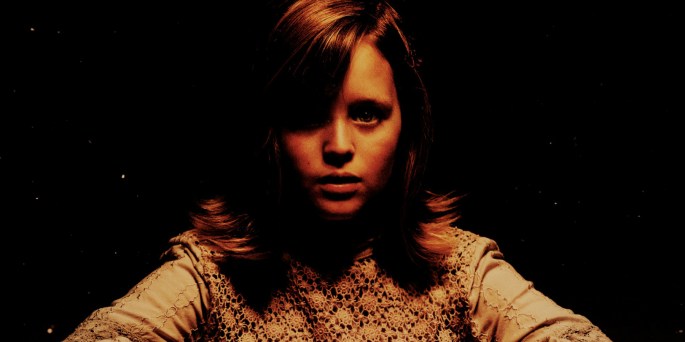
Los Angeles, 1967; a family of three – Alice (Elizabeth Reaser) and her two daughters, teenage Lina (Annalisa Basso) and Doris Zander (a truly superb Lulu Wilson) – runs an in-house fortune telling business which involves scamming customers through séance. Alice would be the first to admit that it’s all a hoax, but she enjoys feeling that they’ve providing clients with some closure in regards to their personal grief.  One day, she decides to add an Ouija board to the family’s professional repertoire, which immediately piques young Doris’s curiosity. Unfortunately her sporadic use of the device unearths more than few skeletons in the family’s collective closet, one being the absent father figure, who Doris claims she speaks to through the board.

His spirit is hardly the last or the most malicious to enter through the doors which lie between our world and the one(s) beyond. Mother and eldest daughter go through their own separate arcs – with a local priest and much younger romantic interest from school, respectively – though Doris undergoes a transformation of a far more sinister nature, one which is tragically beyond her control.

Ouija-Origin-of-Evil-5[1].jpg

ORIGIN OF EVIL opts for a slow-burn approach, which surely benefits the film’s more dramatic aspirations. The number of jump scares could barely be counted on one hand, and while there’s some obvious CGI employed whenever Doris looks into the mirror world of the dead, this too is done rather tastefully; these brief shots feeling much like the invasive spirits which haunt the narrative rather than studio-imposed diversions. Besides, they exist in such an exquisitely crafted portal. Michael Fimognari’s cinematography is simply outstanding, with most of the film showered in foreboding, ethereal light and the rest adorned with meticulous sleaze and grime. There’s beautiful, phantasmagorical imagery here fit for a Bava or a Fulci, which can never be a bad thing, and the film is perhaps best approached as a cinematic fairy tale of the variety which those filmmakers often dabbled in. Ultimately, a stronger ending could have been applied, but every good/great film should be allowed a fault or two.

Once again, Flanagan is deeply fascinated with the deconstruction of the American family, though his point of view doesn’t seem to be one rooted in cynicism. His latest, much like the earlier OCULUS (2013), is more about what keeps us together as opposed to what tears us apart; which secrets should remain unheard of and which ones we should more openly discuss amongst ourselves. The way in which Flanagan relates paranormal experiences to emotional discharge is subtly moving, and there’s also an understated feminist streak which runs throughout his work thus far. Here is a genre director who understands all too well that horror films should inspire tears before fits of laughter, and that most simply do not work without some semblance of resonance. While he’s not trying to reinvent the wheel, the director’s intrinsic technique and empathy is so consistently impeccable that one can believe – at least in the moment – that he might as well be doing so.

screen-shot-2016-06-23-at-11-02-56-am1