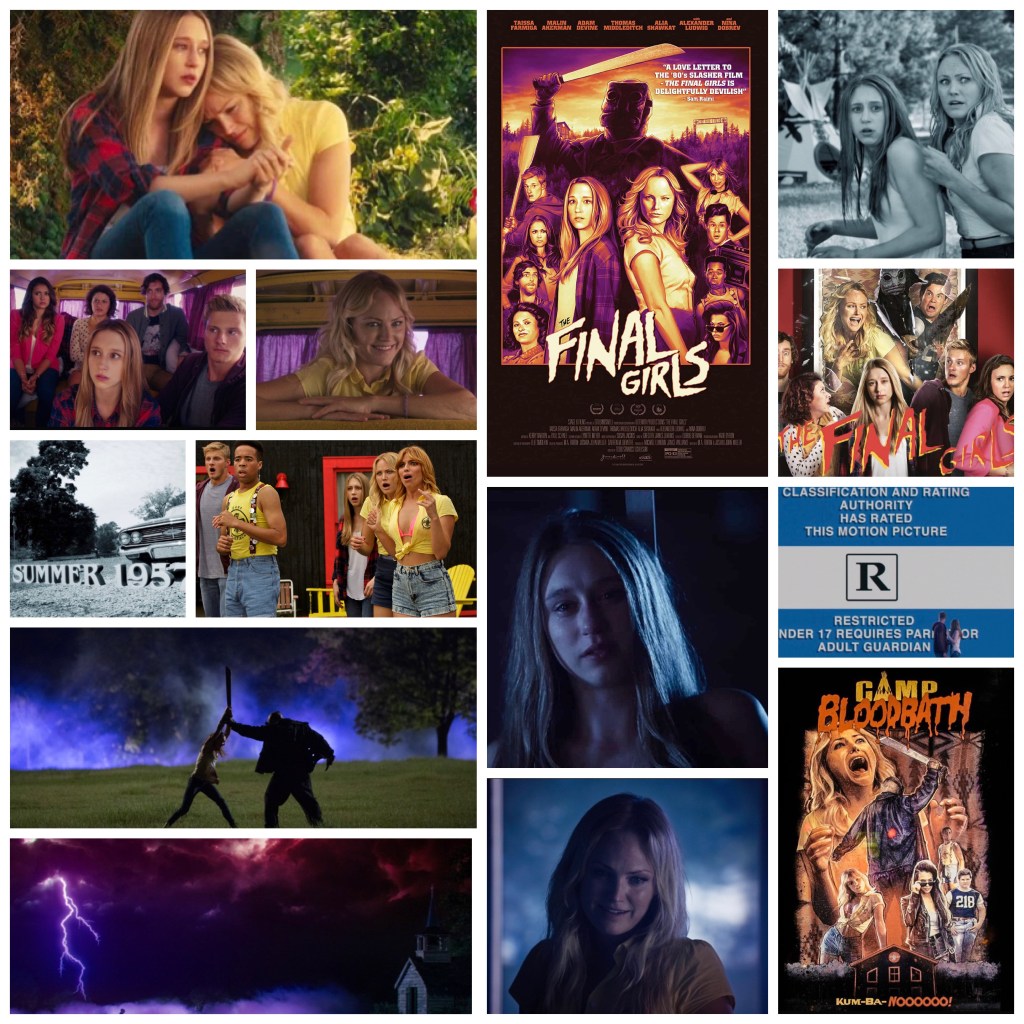
The Final Girls

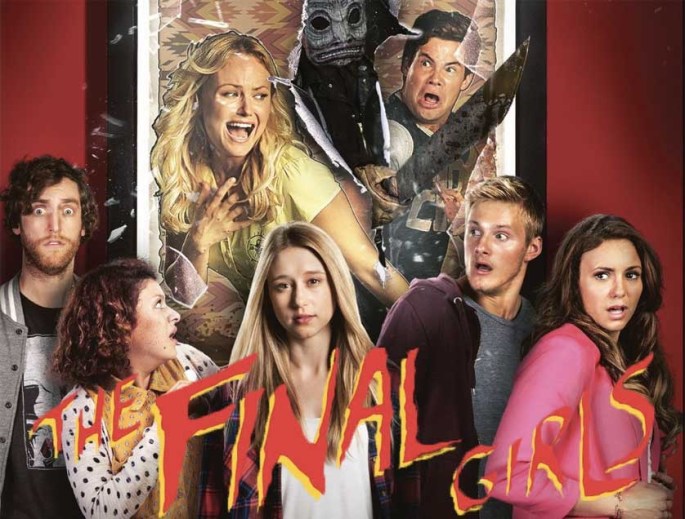
The slasher sub-genre of horror has consistently and gradually become self aware as it has evolved, reshaping it’s archetypes, going spectacularly meta and immersing the audience in self commentary whether it’s well known blockbusters like Scream or obscure indie treats like The Rise Of Leslie Vernon. The Final Girls is as detailed, referential, loving, meta and rewarding as they come with a disarmingly affecting emotional weight to it I did not expect. Playfully skewering summer camp slasher outings like Friday The 13th and Sleepaway Camp, it stars the lovely Taissa Farmiga as Max, a teen girl whose mother Nancy (Malin Ackerman) is killed in a brutal car wreck. Nancy was once a Hollywood scream queen and starred in the very popular Camp Bloodbath franchise, a claim to fame that she always resented and a legacy that Max now wants nothing to do with. At an anniversary screening of the first Bloodbath film Max and her friends find themselves somehow transported into the film itself through the screen by some sort of magical inter dimensional slasher voodoo, the same kind of cinema themed mysticism that brought that one kid into the Schwarzenegger movie world in another vastly under appreciated meta flick, Last Action Hero. In this pristine 1980’s world they find sunny campgrounds, a glassy lake and knowingly corny writing (the movie counsellors are priceless) and the killer himself, who is set on a preordained murder spree of these characters which include, as a panicked Max learns, her own mother. So begins a breathless, clever and often very funny deconstruction of the classic slasher narrative as these modern kids quite literally interrupt it midway and aggressively rearrange the formulaic turns we’re so used to experiencing beat by beat. There’s an epic, adderall fuelled striptease set to She’s My Cherry Pie, endless tongue in cheek jokes and references that get turned on their head, some wild, colourful and borderline psychedelic set design and cinematography in the ‘movie’ world too. What really makes this such a great film and a strong piece is the deeply heartfelt mother daughter relationship between Max and Nancy, acted stunningly by both. Farmiga is an unbelievable otherworldly talent and, dare I say, more mesmerizing onscreen than her sister Vera, one long stare from her could shatter down walls built by anyone, she makes Max a wounded yet resilient spirit. Ackerman gets shafted a bit as the ‘hot blonde’ archetype but she is far more talented than she gets credit for and does a delicate balancing act here between obligatory campiness with pockets of very candid realism peppered in for a gem of a performance. Now, myself being someone who has used both film and music to cope with the death of a parent, I can tell you that this film is almost too real and near transcendent at accomplishing that theme onscreen. It’s essentially a story about Max working through the unimaginable hurt, and very long lasting pain of losing her mother presented in a mature and heartbreaking way, reflected through the prism of a fun, self aware horror comedy and I think the overall idea and execution are genius, really. Add to the fact that the song that Max and Nancy share as ‘their song’ is Bette Davis Eyes by Kim Carnes which was one of my dad’s favourites so you can say that, for me, this cut really deep (slasher pub heavily intended). A masterpiece, streaming on Netflix now.

-Nate Hill

James Gunn’s The Suicide Squad

James Gunn has always been a delightfully rambunctious, perennially irreverent filmmaker whether he’s exploring the realm of sentient alien slugs, sad-sack superhero wannabes or comic book property, which he gets to do once again in The Suicide Squad, one of his very best films yet. He feels more at home in the world of DC than he does in Marvel and it’s not just the larger playground that a hard-R rating gifts him, although that is a *huge* factor given his stylistic tendencies as an artist and his roots in horror, which are on gooey display here as well. The DC stable, particularly villains, just has this dark, perverse edge to it that Marvel can’t match and in creating a maniacal palooza of second tier baddies in a subversive, heavily violent extravaganza he has found a groove and achieved an aesthetic that for the entire two plus hour runtime I wasn’t bored by once. Some of our familiar favourites from the other Suicide Squad naturally return including Harley (Margot Robbie, resplendent in the role of her career), Captain Boomerang (Jai Courtney), Rick Flagg (Joel Kinnaman) as well as welcome new additions like Bloodsport (Idris Elba), Peacemaker (John Cena), Ratcatcher (Daniela Melchior), Savant (Gunn totem Michael Rooker looking like he walked in from a Rob Zombie flick) the scene stealing Polka Dot Man (David Dastmalchian), impossibly adorable King Shark (Sylvester Stallone) and of course Viola Davis as their game warden Amanda Waller, the cunt to end all cunts. Their missions here include the overthrow of a South American country, constant bickering, shocking team casualties, betrayals, clever skewering of American patriotism, a giant alien starfish, bountiful loads of gratuitous and blessedly gory violence and a clever balancing act between lighthearted, frothy banter and a darker undercurrent of thematic heft that sneaks in the back door and lands with an effective, grounded touch. Obvious comparisons will be made to the 2016 Suicide Squad and I’d like to sideswipe that other than to say I love both films, they’re both very different and the 2016 is what it is, it has its reputation. I do believe this to be the stronger film but I think they both have their place on my shelf, they are M&M’s and Skittles, Pepsi and Coke, or Warheads and Airheads to reference a junk food as obscure as the characters on display here. Gunn has made a rollicking, badass, bizarre yet strangely accessible piece of pop art nutso comic book madness here with many standout moments including an emotional monologue by Ratcatcher (she’s the soul of the film), some stunning technicolor gore effects that call to mind Lovecraft and Carpenter, an Easter egg hunt of many hidden film and literary references, a ballsy, nihilism laced opening sequence wherein some of the characters brutally live up to the title of the film, one instance of Waller *finally* getting a modicum of what she deserves, some painfully on the nose political satire and, in my favourite sequence the film has to offer, a brilliantly placed and paced opportunity for Robbie’s ever awesome Harley to work through the trauma of her past and absolutely TAKE DOWN toxic relationships like the badass boss bitch we all know she is. A wonderful, weird, wild and fantastic film.

Jenn Wexler’s The Ranger

Park rangers are always kind of benign, often goofy and only vaguely threatening figures in cinema, they’re not quite cops, not quite tradesmen and the archetype for writers has always been a blurred line. Jenn Wexler’s The Ranger brazenly shakes that up and draws a firm delineation in the campfire dirt here for an utterly ruthless, absolutely fantastic grindhouse romp that packs a punch to the gut and a kick to the nuts. Teenage punk runaway Chelsea (Chloë Levine) has fuzzy memories of an encounter with a strange park Ranger (Jeremy Holm) when she was young at her deceased uncle’s cabin, briefly before being carted off to the foster care system. Years later and she has fallen in with the wrong crowd, a group of heavy metal brats who inadvertently kill a cop and drag her on the run, eventually ending up in the same national park her uncle’s cabin is in. Naturally, the Ranger is still there too and has made it his personal mission to hunt and kill anyone who wanders into his jurisdiction which now includes Chelsea and all her friends. This is a grisly, fucked up, jaggedly stylish exercise in knowingly lowbrow horror in the tradition of stuff like Cop Car, Wolf Creek and The Hitcher where one archetypal madman roams the enclaves of his realm and stalks anyone who ventures there. Holm is a twisted revelation as The Ranger, possessive of the kind of stalwart, clean cut, Kennedy-esque aura that is all the more unnerving when we see just how cuckoo bananas mentally deranged and wantonly homicidal he is. I appreciated a really fascinating psychological dynamic between he and Chelsea as well, a mysterious mental link that goes back to her childhood near the cabin and is revealed bit by bit in hazy hallucinatory flashbacks. Set to a brain melting nebula of heavy metal and synth music that clashes wonderfully with the wilderness palette, acted to the nines by Levine and Holm (the rest of the teens verge on camp but that’s half the fun) and wound tightly into a blood drenched, visceral mind-game mentality that’s just scrappy enough around the edges, this is a rip-snortin indie worth it for any fan of raw, torqued up exploitation horror, streaming now on Shudder.

-Nate Hill

Renny Harlin’s Deep Blue Sea

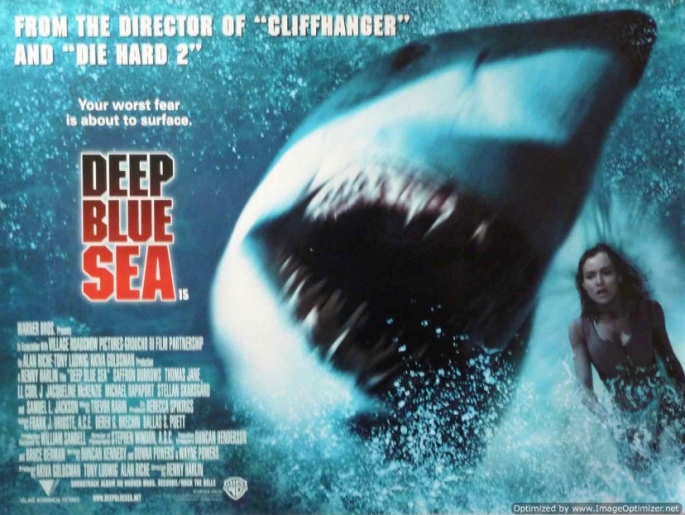
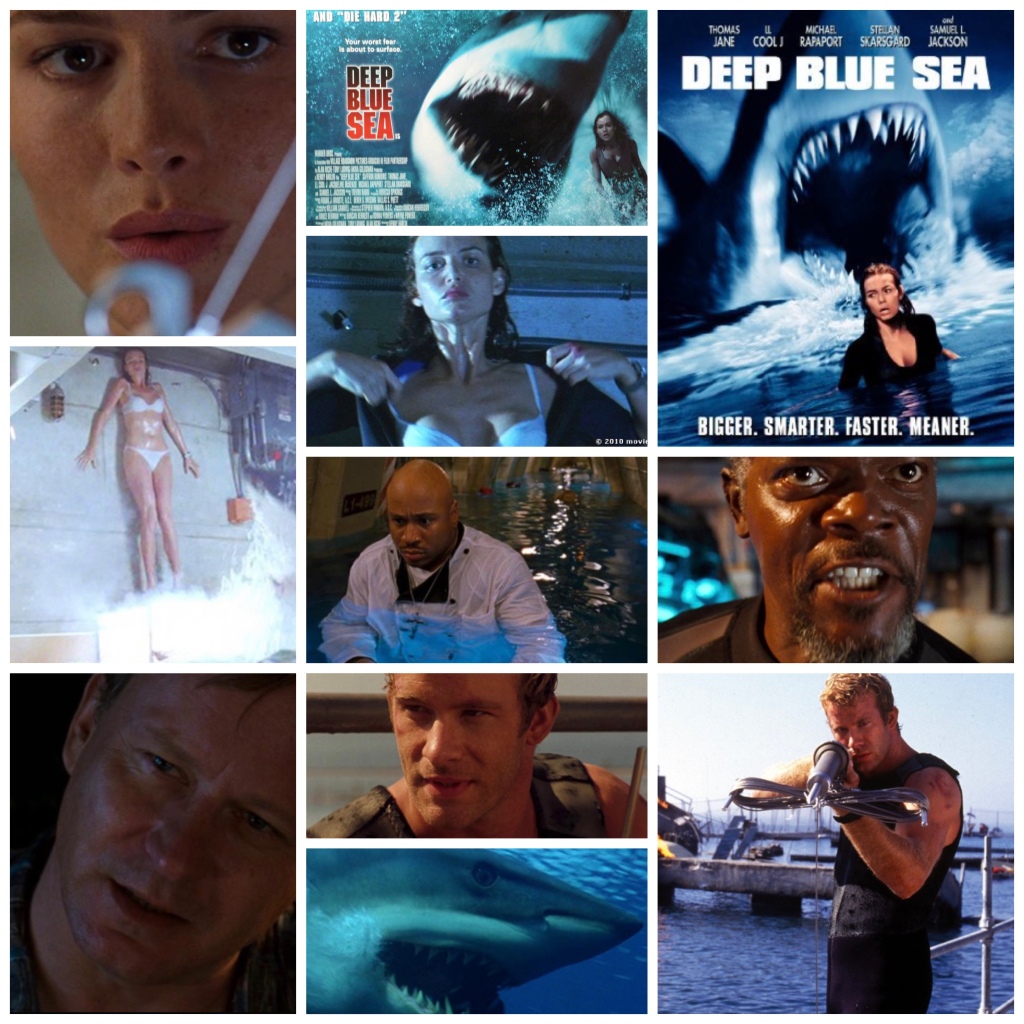
Renny Harlin’s Deep Blue Sea is about as loud, silly, gory and hilarious as you’d expect a ‘killer smart shark’ flick to be and is for the most part a lot of fun, even if it sometimes dissolves into eyeball melting pandemonium. The premise is actually a good one: a brilliant and obligatorily sexy scientist (the lovely Saffron Burrows) has developed a potential formula to treat Alzheimer’s using genetic material from shark brains, and she’s gotten a high level executive (Samuel L. Jackson) to convince his CEO boss (a brief, contemplative cameo from Ronny Cox) to sign off on funding, pending an inspection visit to her test facility out in the ocean. There we meet others including shark hunting guru Thomas Jane, gruff scientist Stellan Skarsgard, oddball cook LL Cool J and grunt Michael Rapaport, all who make great cannon fodder for the marauding sharks once they decide they’re too smart to be lab rats for these people anymore. There are some great gory kills here and the timing of them is sometimes genuinely shocking and inspired, including one death scene that is straight out of the book of nihilism and dark humour 101 and had me laughing hard. It’s basically a decent B movie souped up with Hollywood effects, tons of explosions and while it has the misfortune of being released when CGI wasn’t too great (it shows), it also has the advantage of being made at a time when shark horror films weren’t over saturated and done to death like they are these days and as such feels somewhat fresh, especially given its additional premise of sentient sharks. It’s fun, engaging and a bit cacophonous in some instances where it could have employed more stealth and suspense, but overall a good example of the shark sub genre.

-Nate Hill

Burnt Offerings

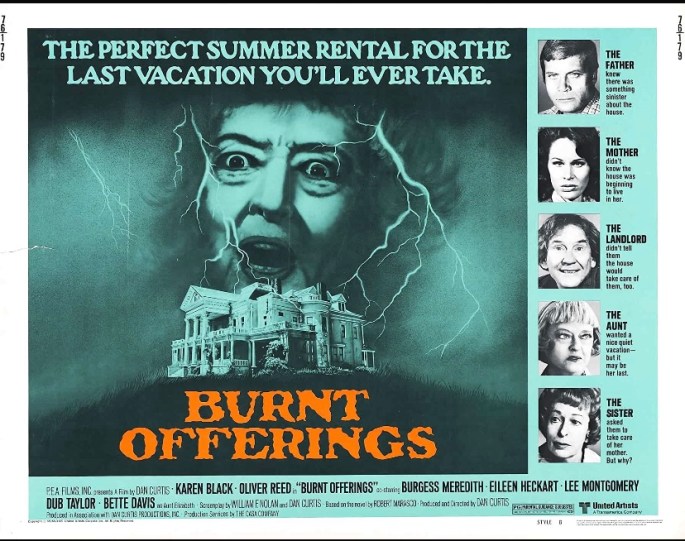
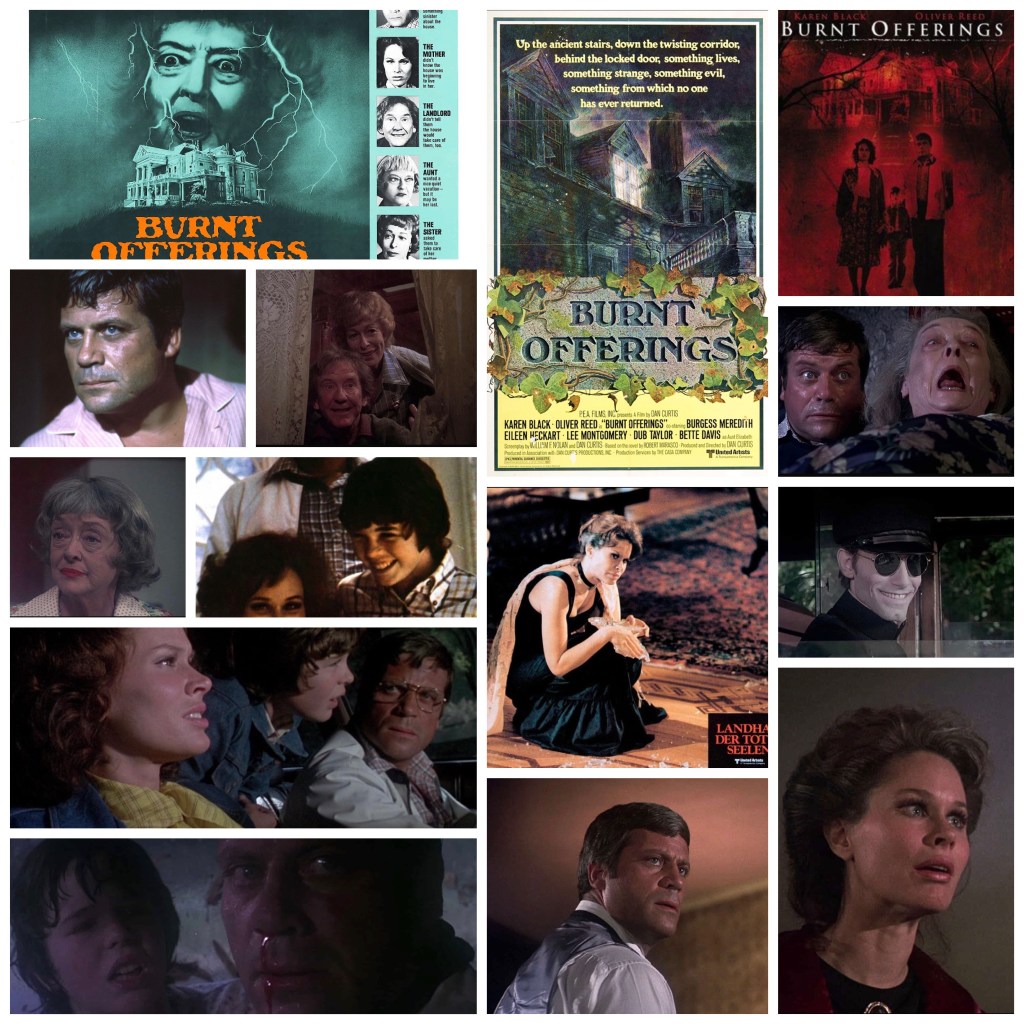
Burnt Offerings (that stellar title deserves a much better film) doesn’t do much as far as innovation goes in the haunted house genre but it’s serviceable enough as an atmospheric diversion and benefits from a very strong and frequently cuckoo bananas performance from the great Oliver Reed as a family man and writer who moves his wife (Karen Black) and son (Lee Montgomery) into a suspiciously creepy manor in the English countryside in a sort of caretakers capacity. Now we all know from collective cinema experience how ill advised it is for writers to move their families into empty large buildings with threatening auras, but hey that’s half the fun. They should have especially known better here though because they’re hired to house sit the place by the weirdest people imaginable, two creepy old goats played by a half mad Burgess Meredith and Eileen Heckart, and let me tell you if these two tried to hire me to look after their weird empty English house I’d run the other way, but then we wouldn’t have a story I suppose. The film hinges on a dynamic that consists of Reed trying to be steadfast and responsible but slowly succumbing to some Jack Torrence level madness while Black’s ineffectual wife blathers on in ditzy mania and the poor kid is stuck between them. There’s a highly effective sequence in the manor’s pool where playful, benign roughhousing between father and son turns unexpectedly violent and grim very fast and is a nice example of tension building and infused menace on Reed’s part. Bette Davis shows up in a rather forgettable role and there’s a spooky grinning valet driver who may or may not be a ghost that sows seeds of narrative and tonal unrest too. It’s nothing fancy, nothing new or noteworthy but as far as routine, atmospheric haunted house flicks with esteemed actors go, you could do worse. Streaming now on Shudder.

-Nate Hill

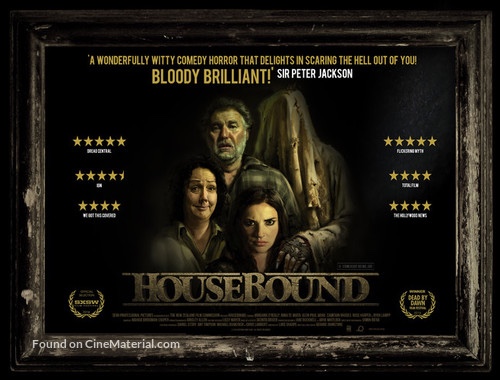
Gerard Johnstone’s Housebound

From early Peter Jackson to early Taika Waititi and many in between there has always been a steady low hum of horror output from New Zealand and Gerard Johnstone’s Housebound is a gorgeous little example of kiwi genre gold, an airtight, creaky would-be haunted house jaunt that knows how to be genuinely spooky while splashing just the right doses of dark humour in here and there and leading the audience down a breadcrumb trail of mystery that’s fun to discern alongside the main character. She’s called Kylie (Morgana O’Reilly) and as we meet her the NZ court system has finally reached its last straw as far as her methamphetamine and booze fuelled delinquent behaviour is concerned, placing her under ankle bracelet adorned house arrest with her weak willed mother (Rima Te Wiata) and meek stepfather (Ross Harper) in a rural enclave. The strained family dynamic is a sheepish joy to watch as this brat with a (deeply guarded) heart of gold makes life hell for her parental unit, but there’s something else in the house just waiting to make life hell for the three of them and soon weird sounds abound, creepy movements are observed and it becomes apparent that they aren’t alone. The cool thing is that the location scouts and set builders have created a house atmosphere that feels legitimately dusty, cluttered, oblong, weary and actually *lived in*, which isn’t always the case in haunted house outfits. Reilly is engaging and likeable as Kylie, even when she’s being a pain in the ass we never get the sense that this girl is truly a bad egg, just a lost and confused one who needs a rather intense outlet to channel her anger and pent-up negative energy into, and what better than a sly, possibly supernatural home invasion? I can’t go into too much detail about the central mystery and origins of the poltergeist shenanigans other than to say it’s a fun ball of yard to unravel alongside Kylie and goes to some narrative pitstops that are often fun, shocking and surprising. It’s goofy, it’s gory, it’s very well written and acted, it’s got tons of humour, a little heart, heaps of cobwebbed atmosphere and is just a great damn time at the horror movies. Streaming on Shudder now, highly recommended.

-Nate Hill

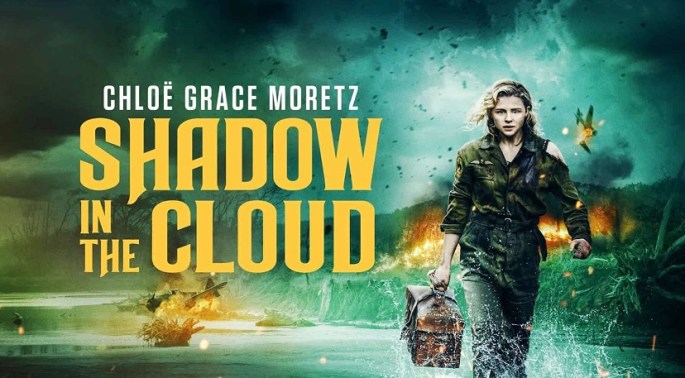
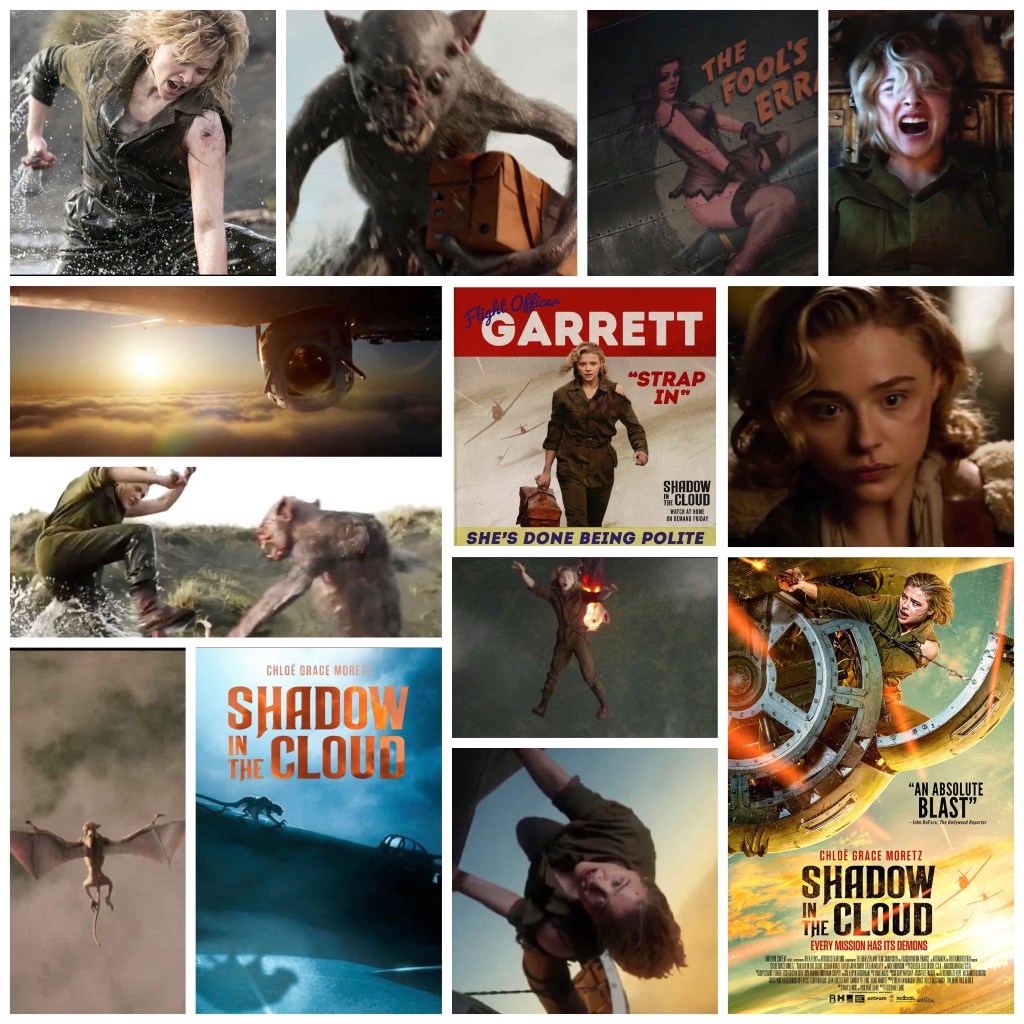
Roseanne Liang’s Shadow In The Cloud

Some concepts just beg to not be taken seriously and in the case of Roseanne Liang’s Shadow In The Cloud we have Chloe Moretz as a WW2 fighter pilot fighting a nasty sky gremlin while also contending with Japanese planes trying to shoot her down and some incredibly sexist fellow officers who outnumber her ten to one. Surefire recipe for camp, right? Well… kind of, but what makes this film so much fun and so successful is that despite an outrageous premise it manages to feel like a real story and not some high flying Grindhouse lark. I haven’t seen Chloe act in some time so I kind of forgot how talented she is but she gifts this character with cunning, grace, badass physicality and genuine grit. As she boards a fighter plane last minute filled with all male officers and is sent straight to the hull turret, it starts with her being belittled and mocked by them, escalates into a breathless dogfight with enemy aircrafts and finally goes supernatural bonkers when this bizarre bat/rat/alien sky gremlin shows up and tries to kill everyone. The film clocks in tightly under 80 minutes and almost has that old timey radio play feel, especially in the first act when she’s alone in the turret, the camera focuses solely on her for a sequence and we only hear everyone else on the radio, thus some of the action left to our imagination just like entertainment mediums of that day. There are some flat-out spectacular action sequences here including Chloe firing up the turret gun and ruthlessly mowing down a Jap plane with brutal precision, a hair raising forced crash landing, a hilariously unbelievable yet absolutely thrilling instance where she falls out of a hatch and plummets a few hundred feet only to be BLOWN BACK INTO the plane by the force of another one exploding below and finally a bloody, ultra-violent hand to hand mortal kombat smackdown with the ugly little bastard gremlin that is laced with adrenaline torqued choreography. It’s just a damn fun film, Chloe has a blast in the best role I’ve seen her do in years, the score by Mahuia Bridgman-Cooper ditches usual war film orchestral notes for something sleek, electronic and rhythmically modern and just overall is badass, gnarly, r rated, rollicking action war horror hybrid good times. Streaming now on Netflix.

-Nate Hill

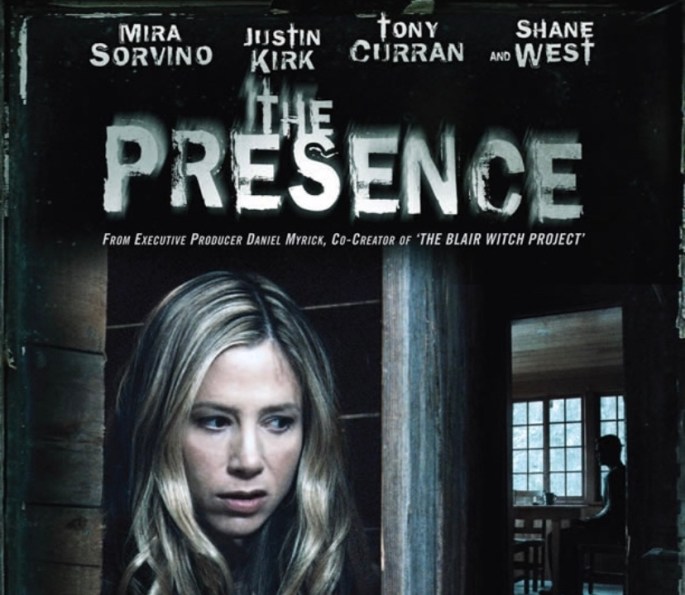
Tom Provost’s The Presence

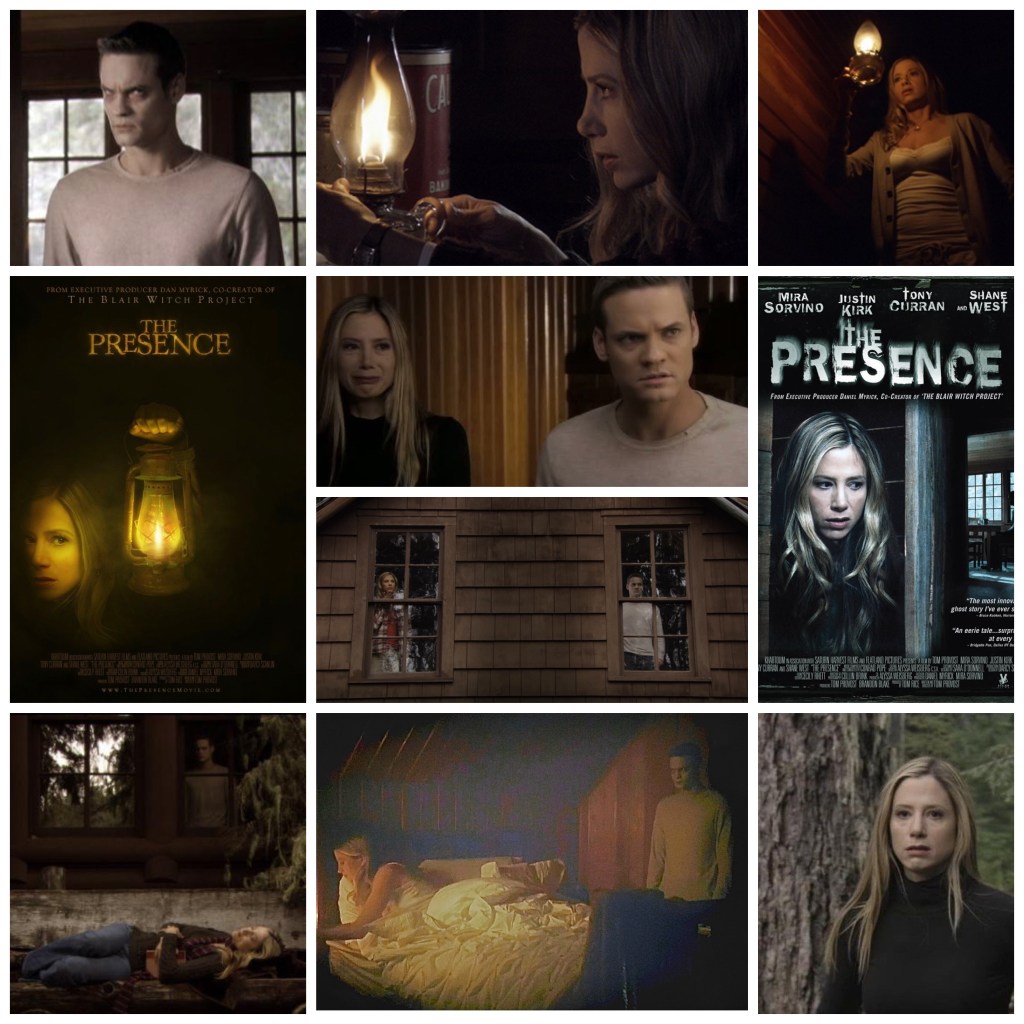
The Presence is one of those horror films that sets itself up so perfectly, so evocatively and effectively drew me in so well in the first act that it was profoundly frustrating when the rest of the film kind of loses its way, to some degree anyway. Sometimes simplicity is key and films start off with a setting and aesthetic so pure and distilled they don’t realize their story would just be more powerful if they stuck with that instead of shoehorned over-complication that muddies up an otherwise pristine experience. The first third of this film sees a haunted looking Mira Sorvino as an unnamed woman at a cabin by a lake (cue some lovely Oregon scenery), on solo vacation to wrestle with some personal demons. From the first few frames we learn there is in fact a ghost also in this cabin and about the grounds, a mute and mostly still figure played by the gaunt, angular presence of Shane West, who we remember as the boyfriend in A Walk To Remember. There’s a hushed, hypnotic aura as Mira goes about her chores around the cabin in silence, sleeps alone and wanders the grounds of the island seemingly both searching and at rest, while West’s pale-faced spectre observes her in sentinel stillness from various spots. Then all of a sudden her boyfriend (Justin Kirk) arrives from the city and, like a vacuum, all the atmosphere is sucked out of the frame as a level of dialogue ridden dramatic heft shoves its way into an otherwise unique experience. There is tension between them almost immediately as the ghost continues to observe, she is clearly not excited to have him around and he presses a marriage proposal on her that seems rushed to her. Then as if that whole angle wasn’t enough clutter, another strange supernatural being shows up personified by Scottish actor Tony Curran as some kind of demon who influences both Mira and the ghost while wearing a black suit that seems jarringly out of place amidst the otherwise earthen, elemental tone and the whole thing just speeds up way too fast. There’s also a subplot involving a vaguely sinister shopkeeper (Muse Watson) who delivers supplies to the island by boat, and this ongoing romantic tension that permeates the atmosphere. One aspect I did find fascinating was that Mira’s character was sexually abused by her father as a child and part of her journey out to this childhood property is to confront the memory and trauma of that. But why all this Faustian narrative diarrhea that feels forced into the script somehow? The opening act is SO effective, so eerie and well wrought, why couldn’t we have just coexisted with her and the ghost and the trees for 90 minutes as she grapples with her traumas among a peaceful yet unnerving nature environment? This is all of course just my reaction to the film and some may have gotten a kick out of the ‘whispering demon’ angle but to me it felt like a crippling element to an otherwise engaging and immersive setting and premise. Shame, because the first third is really something worth watching, right up until the boyfriend shows up and the dialogue starts.

-Nate Hill

Stephen King’s Lisey’s Story

I didn’t really know what to think of Lisey’s Story for the first two episodes or so because it’s so disarmingly, otherworldly strange and surreal, but as the story unfolds in an almost subconscious vernacular, step by step I found my footing and it has become likely my favourite Stephen King adaptation ever undertaken. I think it’s the closest we’re ever gonna get to an ‘arthouse’ King story, and the sheer audacity and bizarro world sensibility of it might be why it’s not being received too well, but make no mistake, this is gorgeous top shelf stuff. The story, told in bold expressionistic strokes, tells of the core relationship between Lisey (Julianne Moore) and her deceased husband Scott Landon (Clive Owen), a famous writer and deeply troubled man who left a series of clues for her before passing that will lead her on a journey to the heart of his unfinished literary work and protect her from deranged homicidal stalker Jim Dooley (Dane DeHaan) who seeks to find his hidden manuscripts. That all sounds very straightforward but the creators opt to tell this story in deep, dense flashbacks, musical cues that take prescience over dialogue and an arresting, dreamlike visual palette that takes over for exposition. In Scott’s books he tells of another dimension called Boo’Ya Moon, a realm of the dead and half-dead that’s full of alien beauty and home to a terrifying monster called the Long Boy. This sort of exotic astral plane proves to be very real and integral in both putting Scott’s spirit to rest and killing Dooley, who becomes quite the force to reckon with for Lisey and her two sisters (Jennifer Jason Leigh & Joan Allen). Moore is fantastic as Lisey, full of emotional intuition and charisma, while Owen has never been better and his level of commitment and intensity to a role that is cast way, way against his usual type is staggering, I have never seen him so raw and vulnerable. There are frequent flashbacks to his horrifying childhood where he struggles to deal with his half mad Viet Nam vet father who is so mentally far gone he can barely get a sentence out. The dad is played by an unrecognizable Michael Pitt who manages to be despicable, relatable, pathetic, chilling and heartbreaking in the same notes, it’s a mad dog, candid performance you don’t usually see in mainstream stuff and he should win all of the awards. The show is just unlike anything I’ve ever seen, from the strikingly intense, almost David Lynch style work from the actors to the stunning mystical dreamscape of Boo’Ya Moon to the languid, formless narrative that’s free of peripherals or structure to the deep, haunting emotional core to the sweet, innocent and life affirming romance between Lisey and Scott to the wonderfully atmospheric, spine chilling score by ‘Clark’, this is just grand, unique storytelling that sweeps you away into its world. You have to be willing to go though, and I think that’s why so many people recoiled at this. Many were likely expecting an accessible, routine King adaptation firmly planted in the ground like we usually see wrought of his work, but this is simply something from another world altogether, it’s one that you feel your way through in images and impression rather than dialogue and drama. If you’re ready for that, I’d highly recommend it. Don’t listen to the hate out there, it’s truly, truly extraordinary stuff.

-Nate Hill

Netflix’s Blood Red Sky

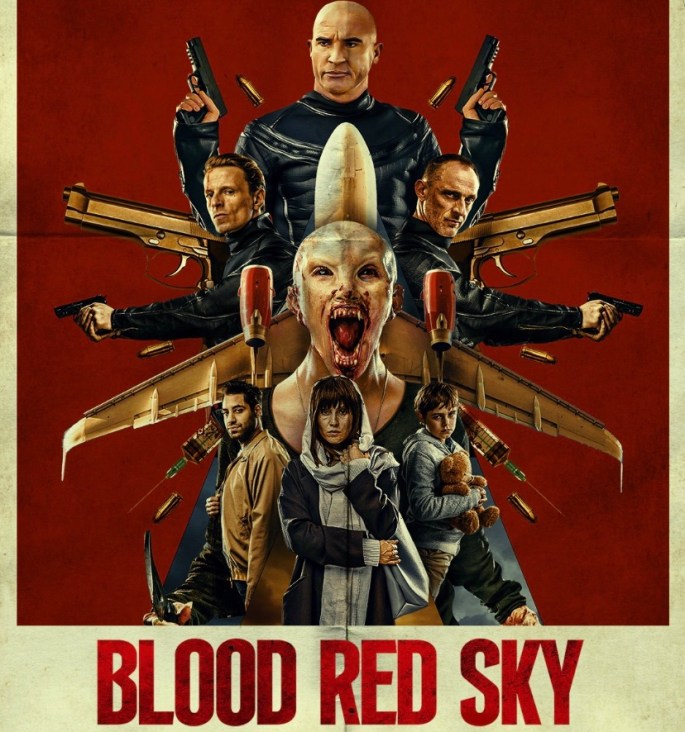
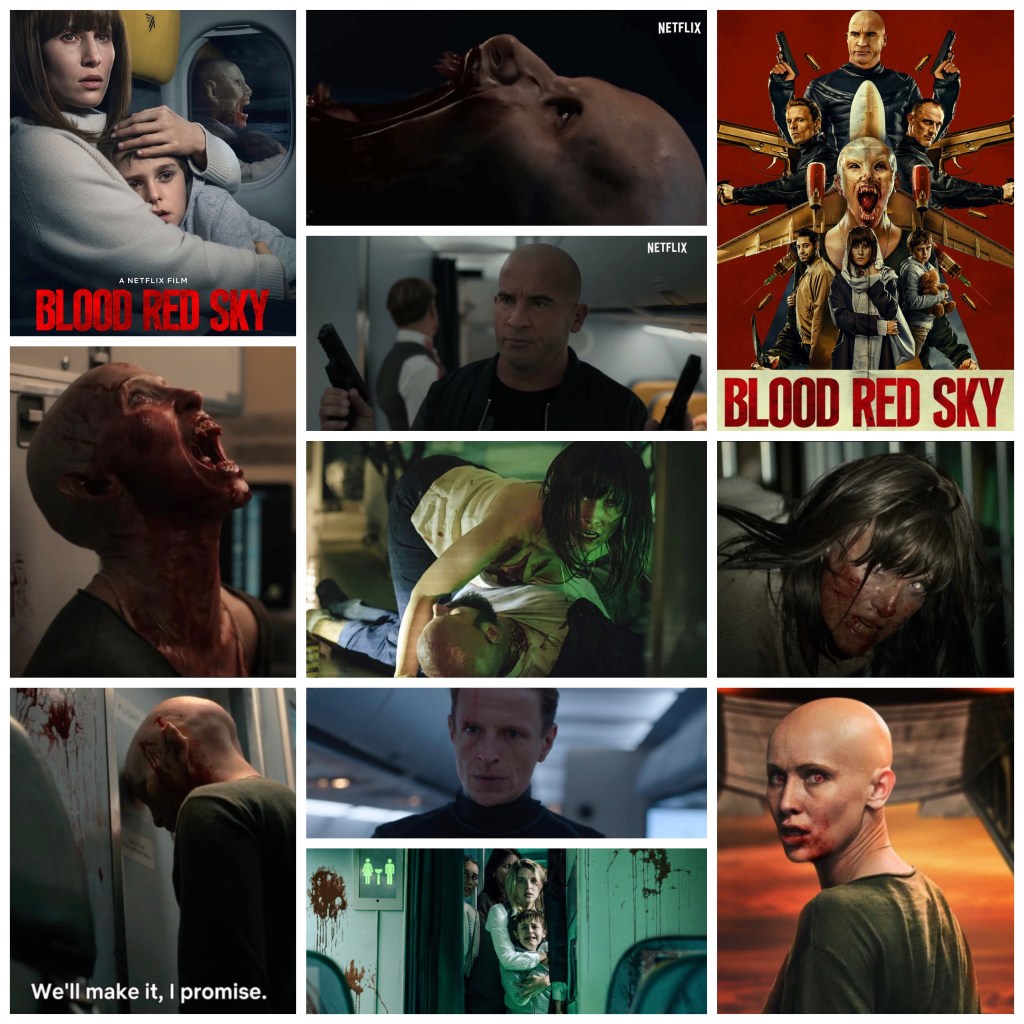
You’ve heard of Snakes On A Plane now get ready for Vampires on a plane! Real talk though the new Netflix horror hybrid Blood Red Sky is a lot better, more vicious and effectively made than most gimmicky, chimera-like efforts of its kind. A sort of German American Scottish coproduction that seamlessly blends actors/accents from all three countries, it tells of a young German mother (Peri Baumeister, a dead ringer for Noomi Rapace) who finds herself and her son on a transatlantic flight that has been hijacked by multinational terrorists hellbent on crashing the plane in London and killing everyone onboard. There’s just one slight variable these assholes didn’t figure on: this girl is in fact a vampire, and not a slow, dramatic Dracula vampire either, she’s one of those sleek, terrifying, hyper-vigilant, high strung 30 Days Of Night Vampires, which when you consider the finite, constrained area of a plane interior, is just a nightmare waiting to happen. The big cheese terrorist is a sociopathic mercenary played excellently by Dominic Purcell but the real villain is a German maniac (Alexander Scheer) from his ranks that goes rogue, starts maliciously murdering hostages and is just downright nasty, if there was a German production of Batman he would land the Joker role for sure. The fights, chases, gore and intensity here are so well staged you barely get a moment to breathe and there’s genuine high-level suspense that had me on edge. What helps achieve that is that even amidst all the snarling, throat ripping, bloodletting and pandemonium and even under all that slick vampire makeup, actress Baumeister manages to give her performance a genuine maternal instinct and palpable pathos in caring for her son and protecting him from danger, she basically gives a multilayered, deeply effective performance as both a human being and a pissed off vampire. The film is built around a totally ridiculous premise and they could have made this just the cheesiest thing, but instead they’ve played the situation dead straight and approached this script with the very serious notion of “what IF a vampire found herself on a plane at the same time as a gang of evil terrorists,” and the result is something immersive, beautifully made, spectacularly violent and, in some scenes, surprisingly poignant. Highly recommended, streaming on Netflix now.

-Nate Hill