PTS Presents Writer’s Workshop with MATTHEW SAND

sand-powercast

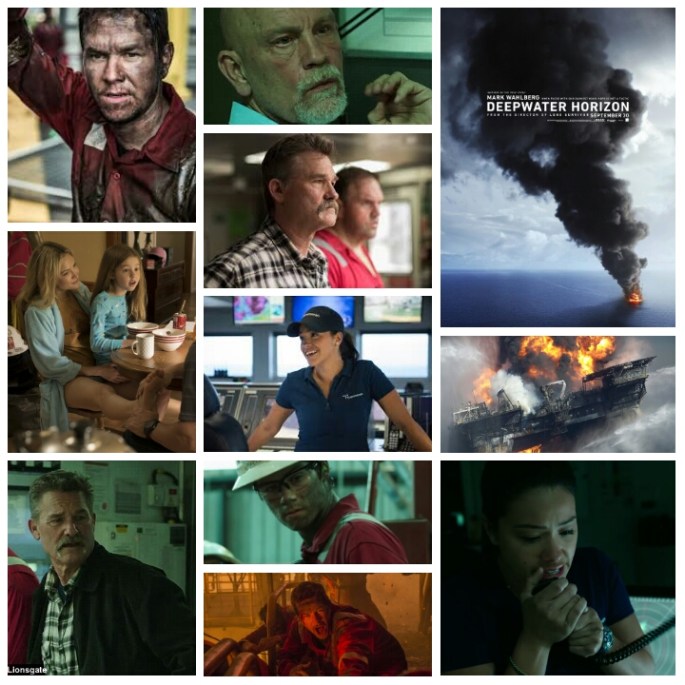
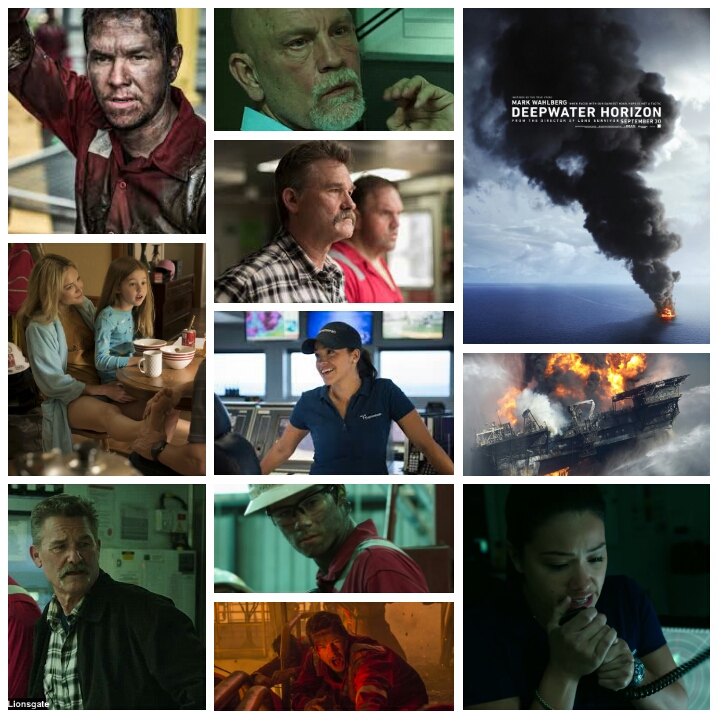
mattsand_mingasson_025Matthew Sand is the co-writer of “Deepwater Horizon.” On April 20, 2010, one of the world’s largest man-made disasters occurred on the Deepwater Horizon oil rig in the Gulf of Mexico. Directed by Peter Berg (“Lone Survivor”), this story honors the brave men and women whose heroism would save many on board, and changed everyone’s lives forever. The film stars Mark Wahlberg, Kurt Russell, John Malkovich, Gina Rodriguez, Dylan O’Brien and Kate Hudson. Lionsgate is set to release the Summit/Participant production on September 30, 2016. For Sand, the story is not about the tragedy, but a simple act of heroism.

Sand was drawn to the story of “Deepwater Horizon” after reading a New York Times piece about a floor-hand on the rig, Mike Williams, and many others. Williams, a father-figure to the crew, risked his life to save others. When Sand began working on the project in 2010, there was no list of the eleven people who died (and no president at their funerals). To honor those men, one of the first things he did was find their names and set them down.

After moving to Los Angeles from his native Brooklyn where he worked in fine art, Sand quickly began writing and has written over 40 screenplays and teleplays for all of the major studios including “The Summoner,” “Beowulf” and “10,000 BC.” This lead him to meeting sibling American film directors Lana and Lilly Wachowski, who hired him for his first credited screenplay job, “Ninja Assassin.”

“Ninja Assassin,” directed by James McTeigue (“V for Vendetta”) was released in 2009.  The story follows a young ninja who turns his back on the orphanage that raised him, leading to a confrontation with a fellow ninja from the clan.  Sand resides in Los Angeles with his wife where he enjoys rock climbing and museums.

Currently, he is working on a mini-series for the BBC about the 3rd Crusade, “Little Brother” based on the novel by Cory Doctorow for Paramount, and an untitled feature film script for Netflix.


Peter Berg’s Deepwater Horizon: A Review by Nate Hill 

Peter Berg’s Deepwater Horizon floored me. Combining stirring heroics, meticulous procedural reconstruction, thundering big style special effects and a rock steady, salt of the earth cast who fire on all cylinders, Berg and team have successfully sent one of, if not the best films this year down the pipe (oily pun intended). The 2010 disaster aboard the mammoth Deepwater Horizon oil rig was a tragic, foolish and achingly avoidable event that was the product of carelessness, stupidity and resulted in the unnecessary death of eleven souls. Berg clearly weeps for the loss, and every frame of his film is filled with empathy and compassion, a reluctant condemnation of the Big Oil company men whose actions led to life lost, a rock jawed testamenr to the blue collar heroes who gave shot rays of hope through the darkest day with their brave deeds, and a celebration of the rip roaring set pieces possible in telling this story. Mark Whalberg has never, ever been better, playing the engineering honcho of te Deepwater, madly in love with his wife (Kate Hudson) and daughter (Stella Allen) The early scenes build their relationship with near effortless interactions and a thoughtful, compassionate eye. From the minute his chopper touches down on the rig and it becomes clear that safety protocol has been grossly neglected, he is a bundle of nerves and fears for every life on board above his own. Kurt Russell is right alongside him as a dogged senior operative with a short rope and no time for the headstrong, greedy and unprofessional actions of Big Oil honcho John Malkovich, giving his best, and insipid work in years as a guy who plainly and simply doesn’t care, putting everyone in harm’s way in the process. The best and most surprising performance of the film comes from Gina Rodriguez though, an actress who has mostly swam under my radar up until this point. Playing another senior engineer, her raw terror and naked uncertainty in the face of looming calamity and possible death is rough to watch, uterly convincing and made me want to just give her a big hug. If her work here is any indication of where she’s headed, make way folks, because we’re in for great things. The cast also extends into terrific further work from Ethan Suplee, J.D. Evermore, James Dumont, Dylan O Brien, Berg himself in a quick cameo, and many more. 2010Berg wisely wraps the story up not with one final action sequence, but with a hair raising emotional gut punch that tallies the loss of life and psychological damage of such an event with the care required. There is one final action beat to then story,  but it’s swift, necessary and sensible, never feeling overblown. The story is kept wisely focused on the people trapped aboard this explosion waiting to happen, their struggles and efforts in the forefront. When the fireworks do show up, they’re not to shock and awe the audience, or for cheap thrills, they serve only to illustrate such an event in a minimal fashion, which is still a deafening roar. My kind of disaster/procedural story, and one of the best so far this year.

Tombstone: A Review by Nate Hill 

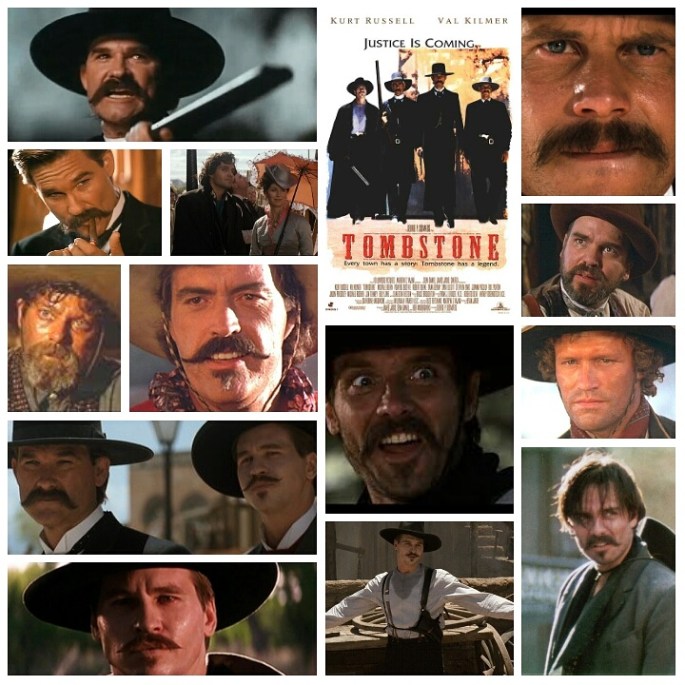
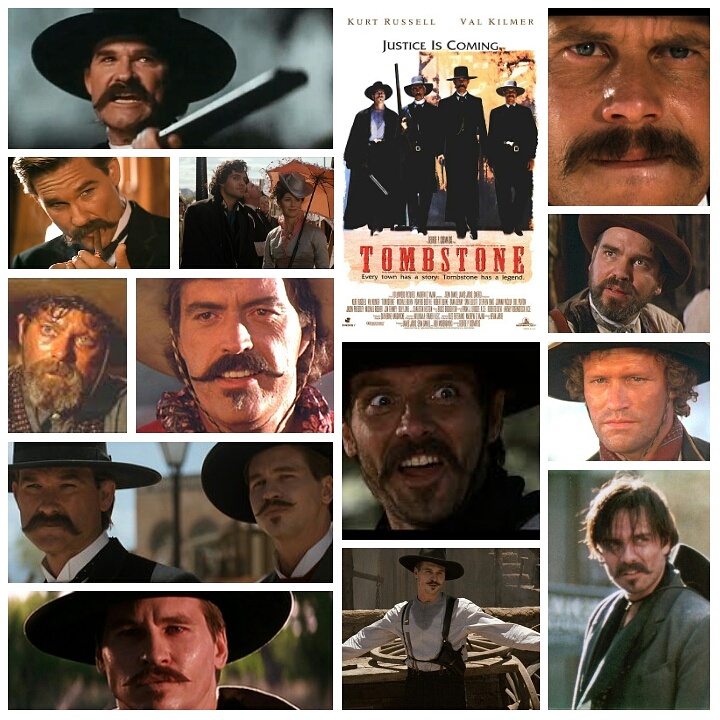
There are two main film versions based on the life of infamous outlaw Wyatt Earp: a serious, sombre one with Kevin Costner (and a whole lot of others), and a rolkicking circus sideshow starring Kurt Russell, bedazzled with a jaw dropping supporting cast that doesn’t quit. Both films are great, but if you held a six shooter to my head and demanded a preference, I’d have to give Tombstone the edge. It’s just too much fun, one wild screamer from start to finish, filled with swashbuckling deeds, evil outlaws and bawdy gunfights galore. It should have been called It’s A Mad Mad Mad Mad World In The Wild West. Kurt Russell is in mustache mode again here, but looks younger and leaner than last year’s western double feature his mutton chops starred in. Along with his brothers Virgil (Sam Elliott) and Norman (Bill Paxton) he arrives in Tombstone with a life of law enforcement in his dust and designs on retirement and relaxation. He gets pretty much the opposite though, when every lowlife bandit and villain in the area comes crawling out of the woodwork to give him trouble. Michael Biehn is the worst of them as crazy eyed Johnny Ringo, a deadly smart and ruthless killer, and Powers Boothe hams it up terrifically as drunken scoundrel Curly Bill Brocius. They are the two main causes of grief for the Earps, backed up by all sorts of goons including Michael Rooker, Billy Bob Thornton and a petulant Stephen Lang as Ike Clanton. Russell is joined by an off the wall Val Kilmer as Doc Holliday, the wheezy southern prince with a silver tongue that’s constantly fuelled by booze. He gives the best work of the film, and it’s fascinating to compare it to its counterpart, Dennis Quaid’s turn in the other version. Theres also great work from Billy Zane, Dana Delaney, Thomas Haden Church, Paula Malcomson, Tomas Arana, Johanna Pacula, Paul Ben Victor, Robert John Burke, John Corbett, Terry O Quinn, Robert Mitcham and even Charlton Heston good lawd what a cast. The standoffs, both verbal and physical, are a thing of beauty and the reason we go to the movies. Of all the westerns out there, this has just got to be the most fun. It’s constantly alive, there’s always something going on, a cheeky glint in its eye and a vitality in every corner of every frame, like a kid that won’t sit still. Russell is a champ as Earp, a no nonsense killer, plain and simple, but a man of both style and charisma, two weapons that are equally as important as his side arms. Kilmer gets all the best lines and goes to town with his portrayal, creating electric tension whenever he faces off with Biehn, who is equally mesmerizing in a more intense way. The three of them kill it, and along with the howling mess hall of a supporting cast, make this simply the liveliest western I’ve ever seen in the genre. 

Quentin Tarantino’s Death Proof: A Review by Nate Hill 

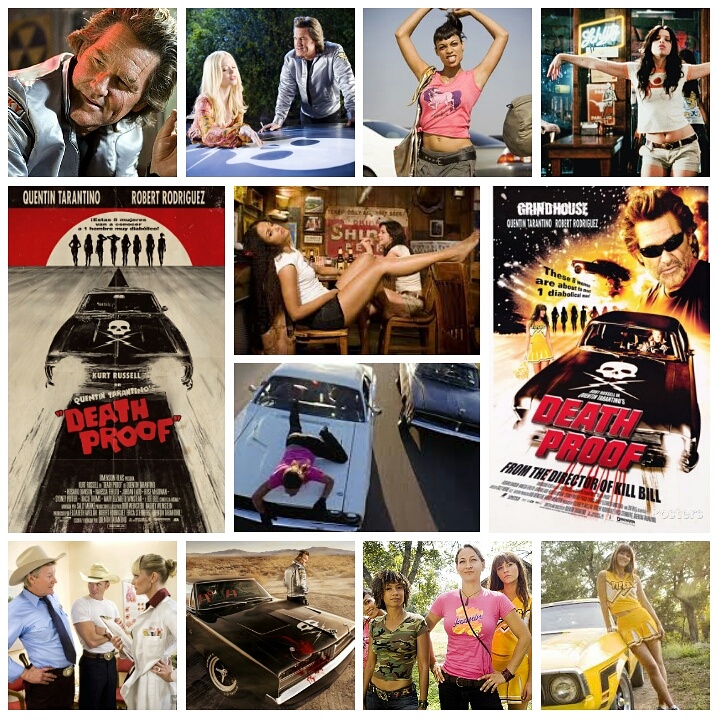
Death Proof is… not the best flick in Quentin Tarantino’s career so far, but an entertaining little ride through the B movie corn nonetheless. It’s Quentin playing in the sandbox, and although he tends to fling it about too energetically in spots, and dawdle around listlessly in others, one can forgive such pacing issues when you consider how much fun it is for the most part. It also helps that his Grindhouse effort is heaps better than his pal Robert Rodriguez’s painfully lame Planet Terror, but that’s a whole other chestnut. Death Proof works mostly thanks to the bubbly, endlessly sexy performances from an extensive roster of irrisistable cbicks, and one gleefully evil bit of work from genre legend Kurt Russell, having a devilish blast as Stuntman Mike, a psychopath who batters helpless chicks to death as he rattles them around in his specially rigged vintage muscle car, primed for murder and ready to burn rubber straight to the ER. A fair chunk of the film is spent simply observing these girls talking, bickering, socializing and indulging in idiosyncratic pop culture banter that’s a facet of the Q Man himself. He loves to project his own affinities onto the written page and use them as backbones for his characters, and although that may be one of the core elements of screenwriting in itself, it’s always a little more pronounced with QT. Writers are books, but he is a popup book, always a tad more garish than the rest of the kids on the playground. I don’t wanna say that such lenghthy swaths of running time spent on girls chilling out isn’t fun (it’s captivating, especially with this bunch), but it is essential to the Grindhouse vibe they set out to emulate? A minor quibble, but a quibble all the same. To their credit, the girls are simply terrific. The first bunch include Rose McGowan’s angelic and short lived Pam, Sydney Poitier’s spunky radio DJ Jungle Julia, and Vanessa Ferlito’s wiseass Latina. The first act sees them run into Stuntman Mike in a roadhouse bar owned by Tarantino himself, who just can’t resist casting himself in his own shit lol. Oh well, at least he didn’t try an Australian accent this time around. The second time act we meet Rosario Dawson, stuntwoman Zoe Bell and cutesy pie Mary Elizabeth Winstead, all in the crosshairs of Mike’s radar, but this time he may be in way over his greaser hairdoed head. The vehicular mayhem is traditionalist and non CGI, and quite honestly a spectucalr firework show of blood, glass, metal and scorched asphalt. I just wish there was more of it, man. Sure, the character building with the gals is awesome, but it eclipses the action in gross proportion. A little balance between talky talky and vroom vroom would have been appreciated. Russell is a hoot in a role that was originally going to be played by Mickey Rourke. He just has that knowing gleam in his eye and good ol’ boy charm that makes it work so well, especially in a naughty little fourth wall break that shows you just how much Mike enjoys his sick little game of bumper cars. There’s characters that bleed in from Rodriguez’s side of the fence, including Michael Parks as the seemingly immortal Texas Ranger Earl Mcgraw, and Marley Shelton as his daughter. It’s a valiant effort, with plenty of Mad Max style merit and a seriously smoking lineup of luscious ladies. I just feel like he over fed certain ingredients to the pot when cooking this one up, and neglected others in areas. Still though, even average Tarantino is brilliant, and this one glows, if for a few dull spots. 

The Art Of The Steal: A Review by Nate Hill 

Heist flicks are sneaky affairs, but that doesn’t mean that awesome ones like The Art Of The Steal should just tiptoe past everyone’s radar with no hubbub. When subpar stuff like Now You See Me is breaking waves and this one collects dust before a year since it’s release, you know somethin ain’t right. It’s actually probably just budgeting and marketing, to chalk it up simply. Despite the cast (what a lineup) this one barely made a blip on the sonar when it came out a couple years ago. It’s great fun, with a crusty lead performance from Kurt Russell as Crunch Calhoun, an ageing motorcycle daredevil who used to moonlight as an art thief. He is lured out of ‘retirement’ by his sleazy brother Nicky (Matt Dillon crosses off another notch on the old scumbag belt with this role) with the proposition of one last score, involving his old crew and the theft of a historical artifact owned by a hilarious Terence Stamp. Other members of their crew include a crafty Jay Baruchel and Kenneth Welsh as salty ladies man Uncle Paddy. Twists and turns lace the plot, as they should in these types of films, but it’s the bawdy sense of humour that won me over. More than anything else this is a comedy, situational in nature and willing to give each weirdo of the bunch their own demented moment to shine. It’s Russel’s show though, a burnt out Evel Knievel type of dude who gets a face full of nonsense from his brother, edging him to the end of his rope. Russell owns it, egged on by the raucous chorus of characters accompanying him, and the nasty arc from Dillon that is the only piece which subverts the mostly lighthearted tone. Fun, little seen stuff that deserves a wider audience.  

Dark Blue: A Review by Nate Hill 


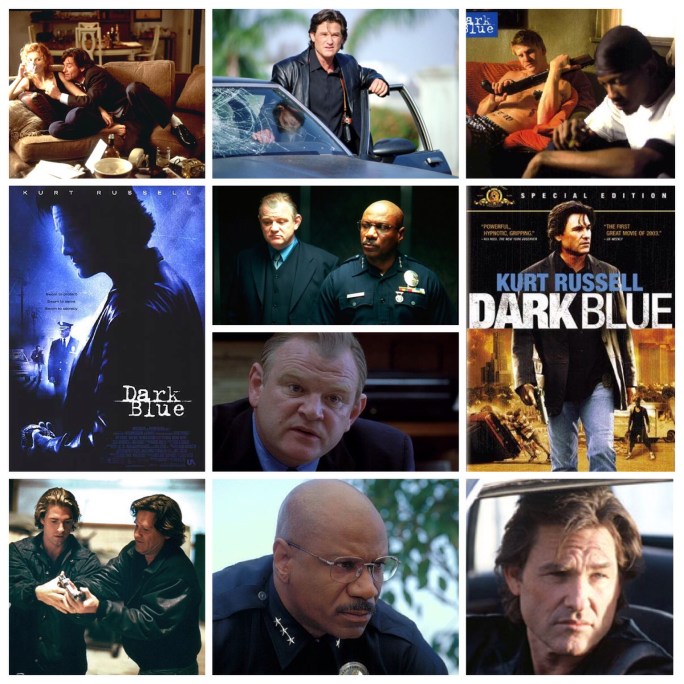
Dark Blue is the overlooked performance of Kurt Russsel’s career, and also the best. It’s also a film that brilliantly examines corruption, lies, brutality and abuse of power through a thoughtful narrative lens and via a powerfully moving story . So why then was it received with an unceremonious cold shoulder? Life is full of mysteries. I was too young to see it when it came out, or pay attention to the buzz surrounding it’s release, but I fell in love with it when I was older, and it remains one of my two favourite LA cop films, alongside Training Day. Kurt Russell throws himself headlong into one of the fiercest and most complex character arcs he has ever been in as Eldon Perry, an LAPD detective who comes from a long lineage of law enforcement. Eldon is a corrupt cop, but the important thing to realize about them is that they never consider themselves to be the bad guys which they are eventually labeled as. To him he’s on a righteous crusade, led by Captain Jack Van Meter (a purely evil Brendan Gleeson), a quest to clear the streets using any means necessary in his power. Eldon is blind to to the broken operative he has let himself become, questioned only by his wife (Lolita Davidvitch) and son, who are both thoroughly scared of him. The film takes place during the time of the Rodney King beating, with tensions on the rise following the acquittal of four LAPD officers. Ving Rhames is resilient as Holland, the one honcho in the department who isn’t rotten or on his way there, a knight for the force and a desperate loyalist trying to smoke out the corruption. Perry is assigned a rookie partner (Scott Speedman) and begins to show him the ropes, which include his patented brand of excessive force and intimidation. As crime ratchets up and a storm brews, Perry realizes that his blind trust in Van Meter and his agenda has been gravely misplaced, and could lead to his end. It’s a dream of an arc for any actor to take on, and Russell is seems is the perfect guy for the job. He fashions Perry into a reprehensible antihero whose actions have consequences, but not before a good long look in the mirror and the option to change the tides and find some redemption, before it’s far too late. It’s not so common anymore for crime films to cut through the fat of intrigue and action, reaching the gristle of human choices, morality and the grey areas that permeate every institution know to man, especially law enforcement. Working from a David Ayer screenplay based on a story by James Ellroy (hence the refreshing complexity), director Ron Shelton and everyone else onboard pull their weight heftily to bring this difficult, challenging, sure fire winner of a crime drama to life. Overlooked stuff.

Quentin Tarantino’s THE HATEFUL EIGHT – A Review by Frank Mengarelli

Quentin Tarantino’s eighth film, THE HATEFUL EIGHT, came out at a hostile time in contemporary America. Tarantino joined marching protests against police violence; then the overly sensitive millennial online “journalists” chastised the film, and Tarantino, for painting shades of misogyny and racism. Tarantino was unfairly attacked by the extreme wings of each political party. Had no one paid attention to Tarantino films prior? Of course racism and misogyny plays a vital part in this film, because not only did those elements exist in the post-Civil War 1800’s, but also exist in reality.

Hateful Madsen

This film is a cataclysm of Tarantino’s self-indulgence. He constantly references his prior works (mainly RESERVOIR DOGS) while homaging Sergio Leone, Billy Wilder, and John Carpenter. His limited casting is formed of new Tarantino players: Kurt Russell, Walton Goggins, and Bruce Dern who Tarantino has worked with twice prior; as well as his seminal ensemble made up of Samuel L. Jackson, Zoe Bell, James Parks, Tim Roth, and Michael Madsen. Joining the Tarantino crew for the first time is Jennifer Jason Leigh, Demian Bichir, and Channing Tatum.

For as visionary as Robert Richardson’s cinematography is and Ennio Morricone’s Academy Award winning hypnotic score, the greatness of this film lies within one of Tarantino’s best screenplays and one of the best acting ensembles since GLENGARRY GLEN ROSS. Tarantino is one of the most talented actor’s directors who has ever sat behind the camera. He carefully crafts each character with an actor in mind, playing on their strengths and bringing out untapped potential from even the most veteran actor he’s working with. The cast is absolutely brilliant.

Hateful.jpg

Kurt Russell does the best John Wayne impression ever as the hard barked simpleton whose stupidity is even more outrageous than his facial hair. Russell is always a joy to watch, and Tarantino’s use of him are highlights in an already legendary career. Samuel L. Jackson is one of the best linguists to ever grace the screen. Tarantino’s dialogue has never sounded better than coming out of Jackson’s mouth (aside from Harvey Keitel). Tim Roth gives one of his best performances delivering an English shtick of Mr. Orange from RESERVOIR DOGS. Perhaps the most surprisingly great performance in this film is that of Michael Madsen playing a caricature of himself. I can’t say anything more about Jennifer Jason Leigh that hasn’t already been said. She should have won the Oscar.

Tarantino outdoes himself with THE HATEFUL EIGHT; the script is outrageously funny, giving these talented actors so much to play with. Only Quentin Tarantino would be able to craft an epic western built upon heightened paranoia that is three hours long, set inside a tiny cabin that is filled with eight larger than life characters, filmed with a wide angle lens that is constantly on the move. Tarantino has reached Terrence Malick status by making films for himself, not for an audience, or a demographic, and that’s what he has excelled since GRINDHOUSE. No one loves movies more than Quentin Tarantino. Oh, and about that overt racism in this film, did those people not stay until the end?

Hateful ending.jpg

THE MEAN SEASON – A REVIEW BY J.D. LAFRANCE

MSDMESE EC004
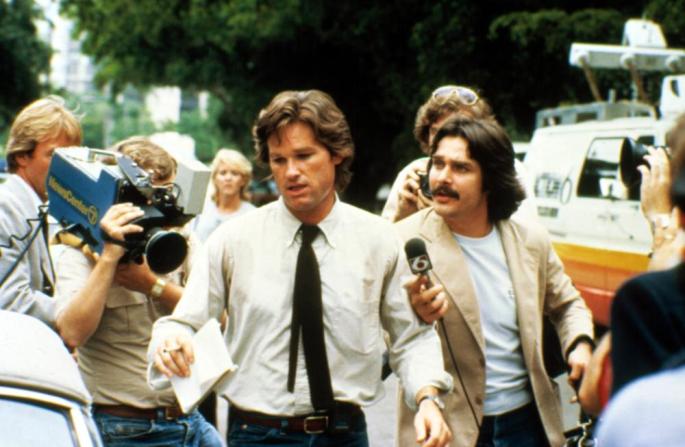
THE MEAN SEASON, Kurt Russell, 1985. ©Orion Pictures Corporation

The 1980s was quite a prolific decade for actor Kurt Russell. Sprinkled between the genre classics he made with director John Carpenter, the actor tried his hand at a wide variety of roles, from shifty used car salesman in the comedy Used Cars (1980) to a nuclear power plant worker in the docudrama Silkwood (1983) to a police detective in the neo-noir Tequila Sunrise (1988). Often forgotten during this busy decade is a nifty little thriller called The Mean Season (1985). Based on the bestselling 1982 novel In the Heat of the Summer by John Katzenbach, this well-executed film acts as the cinematic equivalent of an engrossing page turner.

Set in Miami during the hot, late summer months, the film opens with an urgent brassy score by the great Lalo Schifrin that plays over shots of stormy skies juxtaposed with the busy printing presses of the Miami Journal, foreshadowing how both will play a prominent role later on. Malcolm Anderson (Kurt Russell) is a veteran crime reporter that has just come back from hiatus/job hunting in Colorado. He’s burnt out, lacking both ambition and drive. He wants a change of pace and threatens to quite… again. But before he can bring it up, Bill Nolan (Richard Masur), his editor, assigns him to cover the murder of a young woman that has been shot in the head.

The crime scene sequence speaks volumes about Malcolm’s character. He’s covered the beat long enough to be on friendly terms with homicide detective Ray Martinez (Andy Garcia) but not his partner Phil Wilson (Richard Bradford). He also knows how to get the guy who found the body to open up and talk then has the decency not to use the man’s name in the article. Malcolm is also tactful and understanding with the mother of the murder victim, listening to the woman’s reminisces about her child while still getting what he needs for the article. This is in contrast to Andy Porter (Joe Pantoliano), the crime photographer who shadows Malcolm on his assignments and has no problem taking a picture of the grieving parent during a particularly vulnerable moment. This scene is important because it establishes that Malcolm is good at what he does and he is a decent person so we like and identify with him.

Malcolm finally confronts Bill about his desire to quit in a scene between veteran character actor Richard Masur and Russell. Bill tells Malcolm, “You haven’t been at this long enough to be as burned out as you like to think you are.” Malcolm feels like he’s seen and done it all but still hasn’t found his Watergate yet – the dream of all ambitious investigative reporters. Malcolm sums it up best when he tells Bill, “I don’t want to see my name in the paper next to pictures of dead bodies anymore.” The editor counters, “Now we’re not the manufacturer, we retail. News gets made somewhere else, we just sell it.” It’s a nice scene that is well-played by both actors as their characters touch on the nature of ethics in reporting the news. How far are they willing to go to get a story that makes their career? Malcolm is about to find out as he gets a phone call from the man (Richard Jordan) that killed the teenage girl. He admires Malcolm’s writing and wants the reporter to be his mouthpiece as he plans to kill again.

Bill is practically salivating at the possibilities while Malcolm’s ambition kicks in as he realizes that he’s found his Watergate. However, as the murders continue, Malcolm finds himself getting more involved in the story until he’s as much a part of it as the killer, which puts his life and that of his girlfriend (Mariel Hemingway) in danger.

While the set-up and plot of The Mean Season are nothing special – the reporter who gets in way over his head – both are executed well enough that you don’t mind and this is due in large part to the engaging performances of the talented cast that do their best to sell the material. Kurt Russell certainly comes across as a believable newsman. He’s got the lingo down and seems to know his way around the newsroom and the beat that Malcolm covers. The actor does a nice job of conveying his character’s transition from someone reporting on the news to the one making it. He also manages to get a chance to show off some of his action chops in an exciting bit where Malcolm races across town to find his girlfriend before the killer does. His frantic, desperate race is intense because the actor knows how to sell it, running full tilt over several blocks like a man possessed, and because we know more than he does. We know just how much danger his girlfriend is in.

Mariel Hemingway is good in the thankless girlfriend role. She and Russell have good chemistry together. They make a nice couple together and her character ends up acting as the voice of reason when Malcolm gets too involved. Hemingway does her best to avoid the damsel in distress stereotype but it is pretty easy to figure out how it’s all going to go down. She is part of a solid supporting cast that includes Andy Garcia as the dedicated cop that cares and Richard Bradford (The Untouchables) as his older, more experienced partner who thinks that Malcolm is a parasite. The aforementioned Richard Masur (The Thing) is also memorable as the opportunistic editor who just cares about selling papers. The great William Smith (Darker than Amber) has a memorable bit part as a pivotal witness that helps Malcolm and the cops track down the killer. He has only one scene with a decent amount of expositional dialogue to convey but he nails it.

Director Phillip Borsos (The Grey Fox) also does a nice job orchestrating the cat and mouse game between Malcolm and the killer thanks to the smartly written screenplay by Leon Piedmont. They manage to hit all the right notes and fulfill all the right conventions of the thriller genre – the grudgingly helpful cops, the ambitious reporter, the sociopathic killer, and so on – and stir it all up. Borsos employs no-nonsense direction like a seasoned studio pro, which lets the actors do their thing. I also like how he conveys a sense of place with the sweaty, summer weather, coupled with the impending hurricane that is almost tangible. It all comes to a head at the exciting and atmospheric climax when Malcolm confronts the killer in the Everglades.

John Katzenbach was a veteran crime reporter who based his debut novel In the Heat of the Summer on years of experiences and that of his colleagues. Producer David Foster, a journalism graduate, had been looking for a good screenplay about reporters for years. He came across the manuscript for Katzenbach’s novel and was impressed by it. He met with the author and they talked about how to accurately convey the life of a newspaper reporter on film.

In April 1984, Borsos and his crew arrived at the Miami Herald offices to study a typical day in the newsroom and on that day Christopher Bernard Wilder, suspected of kidnapping and murdering several young women, shot himself as the police closed in. The resulting flurry of activity at the Herald helped Borsos create a realistic newsroom atmosphere in his film. Katzenbach urged Kurt Russell to hang out with his fellow reporters in preparation for the film. To that end, Russell and Joe Pantoliano accompanied a reporter and a photographer from the newspaper to the scene of a grisly double murder in North Miami. Much like in the film, the actor found cameras were trained on him and later saw footage of himself on the evening news. In addition, Richard Masur spent days and nights on the Herald’s city desk.

Borsos’ previous film The Grey Fox (1982) did not make a profit and so to pay off his debts he agreed to direct The Mean Season. Unfortunately, he had creative differences with Foster over the tone of the film. According to Borsos, he wanted the film to look “somewhat stylized and slightly unreal, more what you would call a 1950’s film-noir type of picture.” In contrast, Foster wanted a more realistic-looking film as Borsos said, “Mr. Foster’s vision was more of action-packed thriller instead of a character-thriller.” It also didn’t help that the director resented the producer’s constant presence on the set. The newsroom scenes were actually shot at the Miami Herald late at night with several staff members used as consultants and extras. Russell and two fellow actors used three real newsroom desks that were outfitted with authentic-looking notepads, books, dictionaries and computer printouts. In addition, Katzenbach was frequently present during filming and acted as a consultant.

The Mean Season
is an entertaining film that falters a little bit at the end with a clichéd “twist” that sees Malcolm suddenly transform into an action hero but Russell does his best to make it work. At times, it feels like there are two kinds of films competing – the character-driven thriller that Borsos wanted to make and the action-packed thrill machine that Foster envisioned. The result is a sometimes uneven effort. Not every film has to try and reinvent the wheel by offering some novel take on the genre. There’s something to be said for a thriller that has nothing more on its mind then to entertain and tell a good story and that’s something The Mean Season delivers on both counts.

BIG TROUBLE IN LITTLE CHINA – A REVIEW BY J.D. LAFRANCE

big trubs born ready

“What I’d like to do today is get your version of what happened,” says a mild-mannered, middle-aged attorney. “Oh? You mean the truth,” replies a rather small, aging Chinese man who identifies himself as bus driver, Egg Shen (Victor Wong). The attorney remains skeptical as his potential client calmly describes his belief in Chinese black magic, and other supernatural phenomenon. As if to prove his point, the man holds up his hands so that they are parallel to one another. Suddenly, small bolts of blue electricity begin to flow from each palm, much to the attorney’s amazement and Shen’s bemusement. “That was nothing,” Shen states. “But that’s how it always begins. Very small.” And with this intriguing, tell-me-a-scary-story teaser, John Carpenter’s film, Big Trouble in Little China (1986), takes us on a ride into the heart of ancient Chinese lore and mythology.

Carpenter, always the maverick director with a knack for exploring offbeat subject matter (see They Live and In the Mouth of Madness), created a film that simultaneously parodies and pays homage to the kung-fu film. This often-maligned genre is given a new level of respectability that is rarely seen in Hollywood. Gone are the ethnic slurs, the insulting stereotypes and that annoying quasi-Chinese music that always seems to accompany representations of Asians in past mainstream features. Big Trouble takes great care in presenting funny and intelligent characters without caring whether they are Chinese or not. What is of paramount importance to Carpenter is telling a good story. He has created an entertaining piece of fantasy that manipulates the conventions of the action film with often-comical results.

From the engaging prologue, Big Trouble takes us back to the beginning of our story with the first appearance of truck driver Jack Burton (Kurt Russell), a good-natured, fast-talking legend in his own mind. When he and his buddy, Wang Chi (Dennis Dun), go to the airport to pick up the latter’s future bride arriving from China, a mix-up occurs. Wang’s bride-to-be is kidnapped by The Lords of Death, a local gang of Chinese punks, and the duo quickly find themselves immersed in the middle of an ancient battle of good vs. evil with immortality hanging in the balance. This struggle takes place deep in the heart of the Little China neighborhood of San Francisco with Burton and Wang Chi taking on David Lo Pan (James Hong), “The Godfather of Little China.” Even Egg Shen appears to help our heroes and provide them with the means to stop the evil that threatens not only Little China, but of course, the whole world.

Big Trouble in Little China was originally written as a period Western set in the 1880s with Jack Burton as a cowboy who rides into town. Producer Paul Monash bought Gary Goldman and David Weinstein’s screenplay but after a reading he found that it was virtually unfilmable due to the bizarre mix of Chinese mythology and the Wild West setting. He had the two first-time screenwriters do a rewrite, but Monash still didn’t like it. “The problems came largely from the fact it was set in turn-of-the-century San Francisco, which affected everything — style, dialogue, action.” The producer decided against having Goldman and Weinstein do additional rewrites because they didn’t want to upgrade the story to a contemporary setting and felt that they had done their best.

Keith Barish and Monash brought in W.D. Richter, a veteran script doctor (and director of cult film, The Adventures of Buckaroo Banzai) to extensively rewrite the script. Almost everything in the original screenplay was discarded except for Lo Pan’s story. “I realized what it needed wasn’t a rewrite but a complete overhaul. It was a dreadful screenplay. This happens often when scripts are bought and there’s no intention that the original writers will stay on.” Richter’s template for his draft was Rosemary’s Baby (1968). “I believed if, like in Rosemary’s Baby, you presented the foreground story in a familiar context — rather than San Francisco at the turn-of-the-century, which distances the audience immediately — and just have one simple remove, the world underground, you have a much better chance of making direct contact with the audience.” Richter was having a hard time getting his own scripts made into movies so he tried sneaking in his own eccentric ideas into other people’s projects. “It’s often easier to take an idea that they bring to you and try to pass it through your sensibility. If you’re honest up front, you get license to work with material you wouldn’t get them to look at if it was your own story.”

John Carpenter had wanted to do a film like Big Trouble in Little China for some time. Even though it contains elements of an action / adventure / comedy / mystery / ghost story / monster movie, it is, in the filmmaker’s eyes, a kung-fu film. “I have dug the genre ever since I first saw Five Fingers of Death in 1973. I always wanted to make my own kung-fu film, and Big Trouble finally gave me the excuse to do just that.” Barish and Monash offered Carpenter the movie in July of 1985. He had read the Goldman/Weinstein script and deemed it “outrageously unreadable though it had many interesting elements.” After reading Richter’s script he decided to direct. Carpenter loved the off-the-wall style of Richter’s writing and coupled with his love of kung-fu films, it is easy to see why he jumped at the opportunity to make Big Trouble.

The two filmmakers had crossed paths before when Carpenter rewrote Richter’s screenplay, The Ninja, a big-budget martial arts epic, for 20th Century Fox. In fact, Richter and Carpenter had both attended University of Southern California Film School from 1968 to 1971. “Rick and I went through all three production classes together. We each had our own crews, so we never actually collaborated on a film.” Carpenter made his own additions to Richter’s screenplay, which included strengthening Gracie Law’s role and linking her to Chinatown, removing a few action sequences (due to budgetary restrictions), and eliminating material deemed offensive to Chinese Americans. Carpenter was disappointed that Richter didn’t receive a proper screenwriting credit on the movie for all of his hard work. A ruling by the Writer’s Guild of America gave Goldman and Weinstein sole credit.

Problems began to arise when Carpenter learned that the next Eddie Murphy vehicle, The Golden Child (1986), featured a similar theme and was going to be released near the same time as Big Trouble. Ironically, Carpenter was asked by Paramount to direct The Golden Child. “They aren’t really similar. Originally, Golden Child was a serious Chinese, mystical, very sweet, very nice film. But now they don’t know whether to make it funny or serious.” However, as both films went into production, Carpenter’s views of the rival production became increasingly bitter. “Golden Child is basically the same movie as Big Trouble. How many adventure pictures dealing with Chinese mysticism have been released by the major studios in the past 20 years? For two of them to come along at the exact same time is more than mere coincidence.” To avoid being wiped out by the bigger star’s film, Carpenter began shooting Big Trouble in October 1985 so that 20th Century Fox could open the film in July 1986 — a full five months before Golden Child’s release. This forced the filmmaker to shoot the film in 15 weeks with a $25 million budget.

To achieve the efficiency that he would need for such a shoot, Carpenter surrounded himself with a seasoned crew from his previous films. He reunited with three long-time collaborators, line producer Larry J. Franco (Starman), production designer John Lloyd (The Thing), and cinematographer Dean Cundey. The cameraman had worked with Carpenter on his most memorable features: Halloween (1978), Escape from New York (1981), and The Thing (1982). The director wanted as many familiar faces on board because “the size and complexity are so vast, that without it being in dependable, professional hands, it could have gone crazy…So I went back to the guys who had been with me in the trenches before on difficult projects.”

Carpenter and Cundey had parted company before Starman due to “attitude problems.” Cundey says it was due to scheduling conflicts, but Carpenter has said that they had problems while working on The Thing. However, when Big Trouble came along, Carpenter met Cundey in Santa Barbara one weekend. “His attitude about survival in the [movie] business coincided with my own. We had a really good time, so we decided to work together again.”

Big Trouble also saw Carpenter re-team with his old friend, actor Kurt Russell who has appeared in several of the director’s films, most notably Escape From New York and The Thing. At first, Carpenter didn’t see Russell as Jack Burton. He wanted to cast a big star like Clint Eastwood or Jack Nicholson to compete with Golden Child‘s casting of Eddie Murphy. However, both Eastwood and Nicholson were busy and Fox suggested Russell because they felt that he was an up-and-coming star. The actor remembered reading the script and thinking that it “was fun, but I was soft on the character. I wasn’t clear how to play it. There were a number of different ways to approach Jack, but I didn’t know if there was a way that would be interesting enough for this movie.” After Carpenter and Russell began to go over the script, the character started to take shape. The role was a nice change for Russell as Carpenter remembers, “Kurt was enthusiastic about doing an action part again, after playing so many roles opposite ladies recently. So off we went.”

After watching Big Trouble it’s impossible to see anybody else as Jack Burton. Russell perfectly nails the macho swagger of his character: he’s a blowhard who’s all talk, totally inept when it comes to any kind of action and yet is still a likable guy. It is the right mix of bravado and buffoonery, a parody of the John Wayne action hero much in the same way Russell made Escape From New York’s Snake Plissken a twisted homage to Clint Eastwood. Russell said, at the time, that he “never played a hero who has so many faults. Jack is and isn’t the hero. He falls on his ass as much as he comes through. This guy is a real blowhard. He’s a lot of hot air, very self-assured, a screw-up. He thinks he knows how to handle situations and then gets into situations he can’t handle but some how blunders his way through anyhow.” Russell showcases untapped comedic potential that ranges from physical pratfalls to excellent comic timing in the delivery of his dialogue. One only has to look at his scene with Wang and the elderly Lo Pan to see Russell’s wonderful comic timing. No one before or since Big Trouble has been able to tap into Russell’s comedic potential as well as Carpenter does in this movie.

By many of the actors’ accounts, Carpenter is a director open to suggestions and input from everyone involved. Dennis Dun’s character starts off as the sidekick of Big Trouble and ends up accomplishing most of the film’s heroic tasks while the initial hero, Jack Burton, becomes the comic relief. Prior to Big Trouble, Dun’s only other film role was a small part in Michael Cimino’s Year of the Dragon (1985) but he was a veteran of more than twenty plays. Carpenter liked the actor in Cimino’s film and met with him twice before casting him in Big Trouble. Even though shooting began only a few days after Dun was cast, the action sequences weren’t hard for the actor who had “dabbled” in martial arts training as a kid and done Chinese opera as an adult.

Dun enjoyed the freedom he had on the set. “John gave me a great deal of leeway to develop my character and pretty much let me do what I wanted. He just encouraged me to be as strong as I could. He gave me a lot of freedom.” This freedom results in a very strong performance from Dun who holds his own against a veteran actor like Russell. Dun remembers that he and Russell shared the same approach to acting. “We never really talked about the scenes. We would come in that day to shoot a scene, and we would just do it. A large part of it was working off each other, just looking in each other’s eyes and taking each other’s energy and running with it.” The chemistry between the two characters is one of the many endearing qualities of Big Trouble as evident from numerous scenes, most notably the one where Wang Chi bets Jack that he can split a beer bottle in half and the scene where the two men attempt to break into Lo Pan’s building to rescue Wang’s fiancée.

The studio pressured Carpenter to cast a rock star in the role of Gracie Law, Jack Burton’s love interest and constant source of aggravation. For Carpenter there was no question, he wanted Kim Cattrall. The studio wasn’t crazy about the idea because at the time Cattrall was primarily known for raunchy comedies like Porky’s (1981) and Police Academy (1984). “I told them we needed an actress, and I enjoyed the way Kim wanted to play the character. She blended in well with the film’s style.” Cattrall plays Gracie as a pushy, talkative lawyer who acts as the perfect foil for deflating Burton’s macho ego at every opportunity.

Big Trouble’s script cleverly avoids the trap of reducing her role to a screaming prop by having Gracie take an aggressive part in the action. “Actually,” Cattrall said in an interview, “I’m a very serious character in this movie. I’m not screaming for help the whole time. I think humor comes out of the situations and my relationship with Jack Burton. I’m the brains and he’s the brawn.” There’s a great give and take between her and Russell. Their characters make for an entertaining screwball comedy couple: he’s always on the make while she constantly fends off his obvious advances. This was Carpenter’s intention. He saw the characters in Big Trouble like the ones “in Bringing Up Baby or His Girl Friday. These are very 1930s, Howard Hawks people.” Listen to how Jack and Gracie talk to each other — it’s a very rapid-fire delivery of dialogue that is reminiscent of Hawks’ comedies.

Production designer John Lloyd designed the elaborate underground sets and re-created Chinatown with three-story buildings, roads, streetlights, sewers and so on. This was necessary for the staging of complicated special effects and kung-fu fight sequences that would have been very hard to do on location. For the film’s many fight scenes Carpenter “worked with my martial arts choreographer, James Lew, who literally planned out every move in advance. I used every cheap gag – trampolines, wires, reverse movements and upside down sets. It was much like photographing a dance.”

Another refreshing aspect of Big Trouble is the way it is immersed in authentic Chinese myths and legends. Carpenter explains: “for example, our major villain, Lo Pan, is a famous legend in Chinese history. He was a ‘shadow emperor,’ appointed by the first sovereign emperor, Chan Che Wong. Lo Pan was put on the throne as an impersonator, because Chan Che Wong was frightened of being assassinated. Then, Lo Pan tried to usurp the throne, and Chan Che Wong cursed him to exist without flesh for 2,000 years, until he can marry a green-eyed girl.” Big Trouble could have easily made light of Chinese culture, but instead mixes respect with a good dose of fun.

Big Trouble also places Asian actors in several prominent roles, including Victor Wong and Dennis Dun who is the real hero of the story, as opposed to Kurt Russell’s character who is a constant source of comedy. “I’ve never seen this type of role for an Asian in an American film,” Dun commented in an interview, “I’m Chinese in the movie, but the way it’s written, I could be anybody.” Big Trouble crushes the rather derogatory Charlie Chan stereotype by presenting interesting characters that just happen to be Chinese. Carpenter also wanted to avoid the usual cliché soundtrack. “The other scores for American movies about Chinese characters are basically rinky tink, chop suey music. I didn’t want that for Big Trouble. I wanted a synthesizer score with some rock ‘n’ roll.”

As if sensing the rough commercial road that the film would face, Russell felt that it would be a hard one to market. “This is a difficult picture to sell because it’s hard to explain. It’s a mixture of the real history of Chinatown in San Francisco blended with Chinese legend and lore. It’s bizarre stuff. There are only a handful of non-Asian actors in the cast.” Unfortunately, mainstream critics and audiences did not care about this radical reworking of the kung-fu film. Opening in 1,053 theaters on July 4, 1986, Big Trouble in Little China grossed $2.7 million in its opening weekend and went on to gross $11.1 million in North America, well below its estimated budget of $25 million.

Big Trouble came out before the rise in popularity of Hong Kong action stars like Jackie Chan, Jet Li and Chow Yun-Fat, and filmmakers like John Woo and Wong Kar-Wai. Mainstream audiences weren’t ready for this kind of movie. Despite being promoted rather heavily by 20th Century Fox, Big Trouble disappeared quickly from theaters. Bitter from having yet another movie of his snubbed by critics and ignored by audiences, Carpenter swore off the big studios. He learned the hard way that working with them meant compromising his art in order to advance his career. Carpenter laid it all out in an interview a year later: “everybody in the business faces one truth all the time — if your movie doesn’t perform immediately, the exhibitors want to get rid of it. The exhibitors only want product in their theaters which makes money. Quality has nothing to do with it.” Years later, he said, “The experience [of Big Trouble] was the reason I stopped making movies for the Hollywood studios. I won’t work for them again. I think Big Trouble is a wonderful film, and I’m very proud of it. But the reception it received, and the reasons for that reception, were too much for me to deal with. I’m too old for that sort of bullshit.”

Big Trouble in Little China has stood the test of time. It was rediscovered on home video where it has become a celebrated cult film with a dedicated audience. It has since become one of the most beloved films in John Carpenter’s career and with good reason. It is a fun, clever movie that still holds up today and remains one of the finest examples of cinema as pure entertainment.
PTS Presents NICK AND FRANK’S BEST OF 2015

bestof2015

We returned to form with our first new recording together since the newest addition to Nick’s family, and the STAR WARS overload that Frank has been overwhelmed by.  We go over our top ten films of the year, top five directors, actors, actresses, supporting actors, supporting actresses, screenplays, cinematographers, score, ensemble and television shows.  We were both very excited to do this, and we hope you enjoy!