I’ve never seen The Phantom Of The Opera on stage, so so I have nothing to really compare Joel Shumacher’s 2004 cinematic vision to, but I know that it was one of the most glorious and formative theatre going experiences for me, so much so that I think I probably went and saw the thing like eight times when it came out. I had never heard a single of Andrew Lloyd Webber’s music before then and had not a clue as to what the story was. My extant of Phantom knowledge at that point was only of a chalky faced, emaciated Lon Chaney Jr. skulking around a silent black and white frame.
I was cosmically blown away by the magic of it, the story, the songs, the rich production design and especially the two elemental lead performances from Gerard Butler and Emmy Rossum. Again, no idea how the stage actors compare to these two, but Gerard and Emmy’s take on the Phantom and Christine are now scorched into my psyche as the definitive versions. Butler nails the formula perfectly: scary when he needs to be, tender when he wants to be and always a formidable force of dark romanticism and tragic damnation. Rossum is like an angelic comet as Christine Daae, with the best singing voice of the cast and a presence that will bring the viewer to tears and make you instantly fall in love with her.
Christine works in the prestigious Opera Populaire as a chorus girl, until she is shunted into the limelight when their prima donna of a star singer (a flat out brilliant Minnie Driver) walks off in a huff. Rossum then proceeds to move heaven and earth with her rendition of ‘Think Of Me’, accompanied by some of the most incredible camera work I’ve seen, sweeping through the elegant halls along with her crystal clear voice.
The mysterious Phantom watches her from dark alcoves and hidden buttresses, entranced by her talent and brimming with love sickness. He has love in him no doubt, but we all know there is hate there too, catalyzed by an unfortunate deformation and a cruel past that has left him in exile. He basically runs the show from the shadows though, with utmost class and heaps of theatrical menace.
Christine also has eyes for her childhood friend Raoul (Patrick Wilson). Wilson is the only player who seems a bit out of his depth, perhaps because he hadn’t yet found the assurance in stride and charisma he has in his roles these days. Miranda Richardson is excellent as ever in an understated turn as Christine’s aunt and teacher. Jennifer Ellison is her friend and fellow singer Meg. Ciaran Hinds and Simon Callow are inspired as the comic relief duo who purchases the opera house, and watch for Kevin R. McNally as well.
Every song is a winner, every frame composed of grandiose ambition and every ounce of vocal strength thrown forth by the cast, particularly Rossum and Butler who go a mile and then some, holding their own individual presence as well as pulling off the sorrowful chemistry between the Phantom and Christine. There’s a few key sequences that should go down in the history books on how to stage a scene, including a dazzling masquerade ball, a wintry swordfight in a cemetery, the aforementioned Think Of Me, and my personal favourite: a mournful black and white prologue set decades after the story, kicking the film off with a rousing flourish of motion and music. I’m sure there are scores of people who swear by the stage production and want nothing to do with this, or simply weren’t wowed to the levels I was. That’s fine. For me though, I don’t see any version ever topping this jewel of a film, and the classic two disc dvd sits proudly on my shelf, daring any other rendition, cinematic or otherwise to give it a run for it’s money.
Tag: movie reviews
HBO’s Vendetta: A Review by Nate Hill
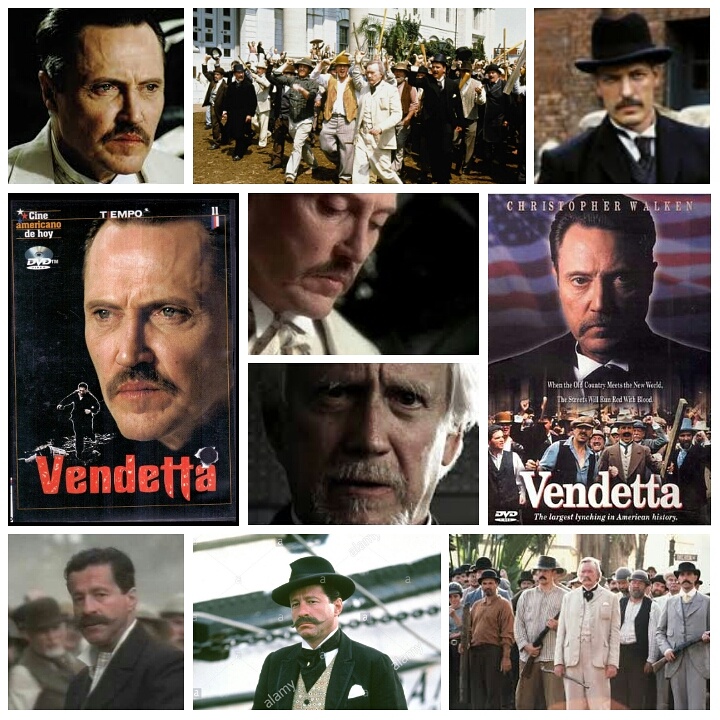
Vendetta is a tough film to watch without feeling sadness and outrage, but such is the stuff that HBO churns out, honest pieces of history that sting you with their refusal to honey coat or gloss over the nasty details (I’m looking at you, History Channel). This one takes place in 1890 New York City, a time of mass Irish and Italian immigration which spurred a ton of unrest among those already settled and raised in that area. Everyone is fighting tooth and nail for a piece of the pie and a chance to feed their families, and the ones with a bunch of pie just greedily want more. The influx of Italians is a cause for insidious worry for James Houston (Christopher Walken), an obscenely wealthy and deeply corrupt piece of shit. He’s joined by equally nasty William Parkinson (Luke Askew), and Mayor Joe Shakespeare (Kenneth Welsh), as the trio cook up an evil scheme to implicate a few young Italian men in the mysterious death of a sympathetic and kindly Irish police chief (Clancy Brown). This sets in motion a tragic outbreak of riots and and angry acts of violence against the Italians. Even their union representitive Joseph Macheca (Joaquim De Almeida) cannot bring peace or stop what Walken and team have started. You may think why make a film of this, as it heads straight for the bleakest of resolutions, but I think it’s important to shine a light on even the darkest patches of history, in order to understand the levels of deception and human cruelty so that we may see it coming before it’s too late next time around. This was a terrible, terrible event and the film hits you square in the face with it’s blunt truth and unwavering honesty. Kudos to HBO fpr taking it on. Watch for the late Edward Herrmann and Bruce Davison as rival lawyers in the chaos.
Richard Donner’s Timeline: A Review by Nate Hill
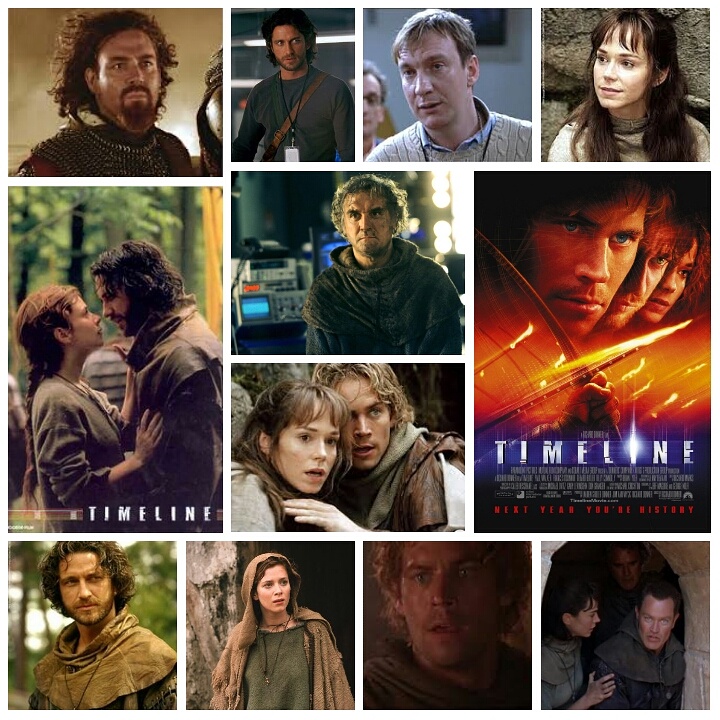
I really enjoyed Richard Donner’s Timeline, despite some bad reviews and an awful reputation. It’s based on a book by the great Michael Crichton, and centers around what is one of the most fascinating and enjoyable premises out there: time travel. There’s nothing like a time travel flick, in any way, shape or form. I’m a sucker for them. This one starts off with an archeological dig somewhere in England, leading to the abrupt discovery of forces that allow a wormhole in time to be used, sending people back to the middle ages. Paul Walker discovers that his researcher father (Billy Connolly) has made the leap back in time, and may be in trouble. Along with his sort of girlfriend (Frances O Connor) and his father’s friend (Gerard Butler) they venture back to find him, and of course everything goes wrong. They land smack in the middle of a skirmish between a poncy English lord (Michael Sheen) and the leader of the French faction (Lambert Wilson), with no identities, nothing to defend themselves with and not a clue what to do. Back home in our time (or, rather, 2003. Time flies, don’t it?), the head of the program responsible for harnessing the wormhole’s power (a slimy David Thewlis) is a greedy prick who can’t really be trusted with the technology, prompting the suspicion of his assistant (Matt Craven). Walker, Butler and company are now faced with a full on castle siege that’s quite the dandy set piece, forced to take up arms and fight for their lives as well as a way home. Walker is amusingly out of place in a medieval setting but it works considering the plot. Butler is terrific, bringing his old world style to a character arc that is lovely to see play out. Connolly, although not in the film that much, lights up the screen with his genial kindness and likability that he brings to every film. Neal McDonough, Anna Friel and Marton Csokas also costar. It’s simply an adventure piece that doesn’t think logistics too much, and in turn doesn’t require you to do so either. Underrated stuff.
B Movie Glory with Nate: Beowulf
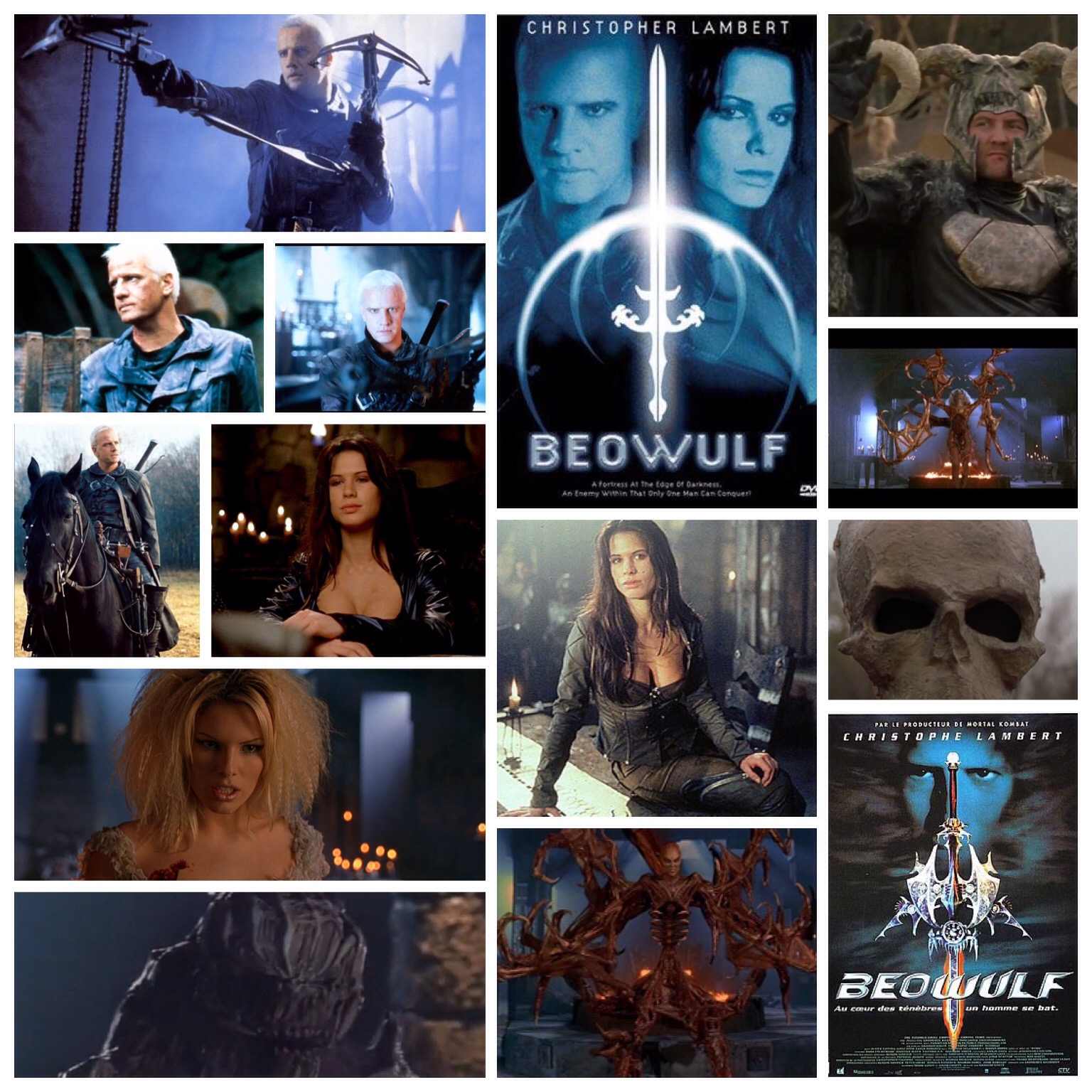
There are three main films concerning the myth of Beowulf. The best, a wickedly good Robert Zemeckis motion capture version starring Ray Winstone, a lower budget one with Gerard Butler that hovers right around the average mark, and a third one starring Christopher ‘Highlander’ Lambert, and let me tell you this one defies any classification. It’s set in a time that seems like a blend between both past and future, a sword and sorcery realm that’s speckled with steam punk technology and very weird production design that looks post modern, yet not. Beowulf, played by the reliably daffy Lambert (an actor of little talent who has grown on me over the years by his craggy reserve alone), is a lone warrior with a bleach blond hair dye job and some neato gadgetry in his weapon arsenal. I know, it sounds like I’m making this up. Haven’t even gotten to the best part yet, which is the upbeat German techno score that ramps up the Euro feel of the whole thing to soaring heights of absurdity. Despite all that silliness, the film somehow works, and not just as a schlocky write off either. It’s resolve lies dutifully in the firmament of its creative aesthetic, and doesn’t skip a single odd duck of a beat the whole way. The monster Grendel which Beowulf must face off against resembles something of a cross between the Predator and Killer Croc, a scaly, spiky behemoth that rips through the little villages in the region like a tornado of teeth and claws. It’s mother is even weirder: appearing to men in the form of actress Layla Roberts, (who looks suspiciously like a porn star) before morphing into a massive elaborate demon thingy that looks like a final boss from Starfox. Lambert is joined in his fight by sexy warrior Kyra (Rhona Mitra), and led on by King Hrothgar (Oliver Cotton). It’s Beowulf like you’ve never seen before, a Krull esque, beyond the Stars sci-fi rendition that you’ll either be in tune with or won’t, either love, hate or just be super confused by. It’s bonkers, and I love it.
David Fincher’s Zodiac: A Review by Nate Hill
David Fincher’s Zodiac is the finest film he has ever brought us, and one of the most gut churning documentations of a serial killer’s crimes ever put on celluloid. Fincher has no interest in fitting his narrative into the Hollywood box or sifting through the details of the real life crimes to remove anything that doesn’t follow established formula. He plumbs the vast case files and sticks rigidly to detail, clinging to ambiguity the whole way through and welcoming the eerie lack of resolution we arrive at with open arms. That kind of diligence to true life events is far more scary than any generic, assembly line plot turns twisted into stale shape by the writer (and studio breathing down their neck, no doubt). No, Fincher sticks to the chilling details religiously, starkly recreating every revelation in the Zodiac killer case with the kind of patience and second nature style of direction that leads to huge atmospheric payoff and a hovering sense of unease that continues to make the film as effective today as the day it was released. A massive troupe of actors are employed to portray the various cops, journalists, victims and pursuers involved with the killer during the 1970’s in San Francisco, the film unfolding in episodic form and giving each performer their due, right down to the juicy cameos and bit parts. Jake Gyllenhaal plays Rob Graysmith, a news reporter who becomes intrigued and eventually obsessed with the cryptic puzzles which the Zodiac taunts the bay area with by sending them in to the paper. Mark Ruffalo is Charlie Toschi, dogged police investigator who is consumed by the hunt. The third leg of the acting tripod is Robert Downey Jr as Paul Avery, another journalist who takes the failure in capturing the killer a little harder than those around him. The film dances eerily along a true crime path populated by many people who veered in and out of the killers path including talk show host Melvin Belli (a sly Brian Cox) , another intrepid cop (Anthony Edwards), his superior officer (Dermot Mulroney) and so many more. For such an expansive and complicated story it’s all rather easy to keep track if, mainly thanks to Fincher’s hypnotic and very concise direction, grabbing you like a noose, tightening and then letting you go just when you feel like you have some answers. While most of the film examines the analytical nature of the investigation, there are a few scenes which focus on the killings themselves and let me tell you they are some of the most hair raising stuff you will ever see. The horror comes from the trapped animal look in the victims eyes as they try rationalize the inevitability, with Fincher forcing you to accept the reality of such acts. One sequence set near a riverbank veers into nightmare mode. Every stab is felt by the viewer, every bit of empathy directed to the victims and every ounce of fear felt alongside them. It can’t quite be classified as horror outright, but there are scenes that dance circles around the best in the genre, and are the most disturbing things to climb from the crevice of Fincher’s work. They’re nestled in a patient bog of studious detective work, blind speculation and frustrating herrings, which make them scarier than hell when they do show up out of nowhere. Adding to the already epic cast are Jimmi Simpson, Chloe Sevigny, Elias Koteas, John Carroll Lynch, Donal Logue, Pell James, Philip Baker Hall, John Terry, Zach Grenier and a brief cameo from Clea Duvall. I think the reason the film works so well and stands way above the grasp of so many other thrillers like it is because of its steadfast resolve to tell you exactly what happened, urge you to wonder what the missing pieces might reveal should they ever come to light, and deeply unsettle you with the fear of the undiscovered, something which never fails to ignite both curiosity and dread in us human beings.
Zach Snyder’s 300: A Review by Nate Hill
Tough. Muscular. Operatic. The very definition of epic. I remember sitting in the theatre during Zach Snyder’s 300 and being just floored and knocked flat on my ass by the violence, spectacle and music on display, and that was just the first ten minutes. It’s a historical war film unlike any other, and like it’s sister film Sin City, it jumps right off the boldly crafted pages of Frank Miller’s novel with all the movement and spirit of a motion picture, while still retaining the fluidity and distinction of a comic book. The sheer force of it will trample your senses into glorious oblivion, whisking you away for two thunderous hours of sound, fury and unrepentant battle. Like any sensation of the week, it gained haters who claim it isn’t the winner everyone’s says it is, or that it hasn’t stood the test of time. They’re either trying to go against the grain to be the ‘cool minority’, or they’re just negative nitpicking nellies. No matter. In 300’s case, they are resoundingly off key whenever I hear them bash it, and just dead wrong. It has stood the test of time, a process I measure by the ebb and flow of my desire to watch older films again and again. I often revisit this one, and marvel at it anew each time. The story follows the battle of Thermopolye, in which three hundred well trained, ridiculously combat savvy Spartan men faced off against a Persian army numbering near a million, led by their arrogent weirdo of a king, Xerxes (a very scary Rodrigo Santoro). They do this to protect their land and their people, a splinter group of sorts that takes up arms when the Spartan senate refuses to act. The battle is a relentless storm of blood, arrows, decapitated limbs, howling barbarians, wanton carnage and mass slaughter. It doesn’t feel half as savage or heavy as my description sounds though, thanks to the poise and purpouse of the narration penned by Miller, and the extravagant, thought out choreography that includes a whole lot of beautifully satisfying slow motion that has become Snyder’s trademark tool. Love it or hate it, I think it flairs up an action terrifically, especially ones as chaotic and hellbent as these. The Spartans are a wonder to see in action, virile death dealers with a full bore love for the heat of combat and a blatant, cavalier attitude in the very face of death. David Wenham is a force of gravity as Dilios, who provides the rousing narration and kicks ass as Butler’s second in command. Butler makes a commanding Leonidas, his presence everything that you’d want to see in a king, from nobility, to necessary belligerence, to an overwhelming love for his kingdom that is present in every step, every spear throw, every furious war cry. A cheeky Michael Fassbender and Vincent Reagan round out the platoon nicely, and they all have wicked cameraderie that makes their bond in battle stronger. Lena Headey is fiercely attractive and devilishly competent as Queen Gorgo, with a love for Leonidas and their son that cuts through the brutality and gives it purpouse. Dominic West goes against type as Theron, a sniveling, traitorous bitch boy of a Senate member who aims to usurp Sparta and send everything to high hell. The cast goes on with memorable turns from Peter Mensah, Robert Maillet and the legendary Stephen Mchattie. Composer Tyler Bates churns out a score that soars, scorches and bellows forth a primal auditory symphony. This was Snyder first flexing his muscles after his visceral remake of Dawn Of The Dead that barely hinted at the wonders in his career to come. Here he presents a staggering visual aesthetic that he would go on to use in his masterful adaptation of Watchmen, the sadly misunderstood, excellent Sucker Punch, and his DC Comics films which are unbelievable. It all started here with flash and flourish, a jaw dropping sword and sandal typhoon of a film that will give your adrenal gland a workout and your sound system a good old thrashing. In a word: Epic.
Dear Frankie: A Review by Nate Hill
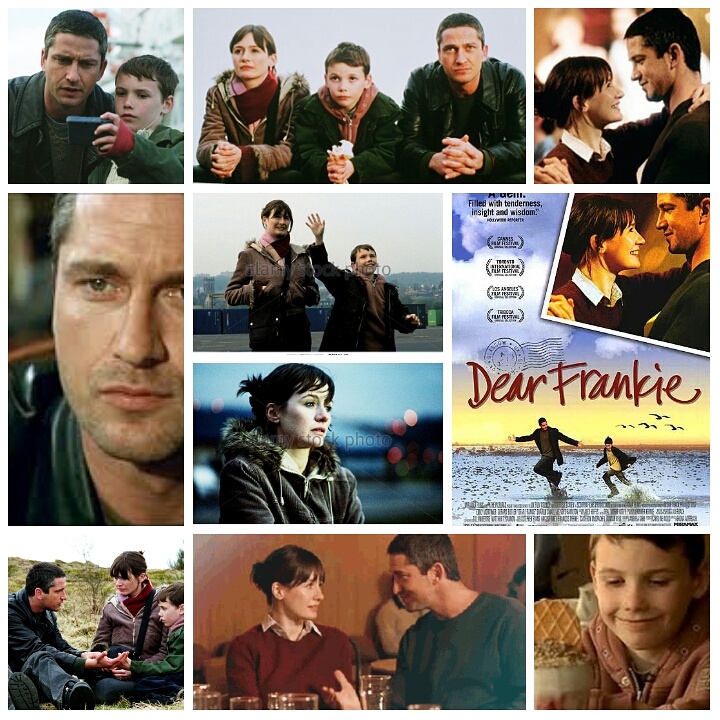
Dear Frankie is a sad yet life affirming little modern fairytale set on the evocative Scottish coastal region, in a small fishing village home to many trawlers and vessels which are always coming or going. This is the place that Lizzie (Emily Mortimer) has chosen to raise her young son Frankie (Jack Mcelhone). The one thing missing is a father, who has been missing ever since he was born. Filled with love and a need for Frankie to know at least who he was, she writes him letters as if she were his dad, telling him tales of life at sea and corresponding with him for some years. As he gets older she wishes he could have met him at some point, and comes up with a slightly strange plan. She meets a Stranger (Gerard Butler) in town, who is a sailor himself, and hires him to pose as Frankie’s father, and spend some time with him. Butler agrees, but it’s clear he hasn’t spent much time around kids in his life, and the meeting is awkward at first. Soon they get on well enough, which pleases Lizzie and is good for Frankie. Still, the issue remains that the Stranger is not Frankie’s real father and Lizzie knows this, torn between the cathartic interaction she sees for her son, and the facts that she knows to be true. Mortimer is sorrowful and harbours clear hurt and loneliness, the reaching out she does to Butler as much for herself as it is for Frankie. Butler starts off charming and be used by the proposition, until he realizes the gravity of the situation he is in and learns so,etching about himself that was dormant in his life until he met Lizzie and Frankie. The human relationships are explored tenderly and with patient reverence that ebbs and flows with the English Channel tides. Beautiful stuff.
Barry Sonnenfield’s Wild Wild West: A Review by Nate Hill
I don’t get the hate for Barry Sonnenfield’s Wild Wild West. I just don’t. It’s like I saw a completely different film than the entire rest of the continent. To my knowledge, there’s me and a couple other friends I know who love and cherish it, and the rest of the world has seemingly cast it out into the cold, inexplicably bashing it no end. Wtf. It’s a rollicking good time, full of a brilliant blend of situational and slapstick humour, lively characters from a great group of performers, incredible production design, and a dash of swash and buckle. It may not have much in common with the 1960’s era tv show its based on, but kudos to it for breaking new ground. Will Smith plays Marshall Jim West, a cocky (there’s literally a small window of freeze frame where you can see his ebony schlock in full glory. And don’t even ask me how I know that), ballsy (ok sorry I’ll stop) secret service cowboy badass who is working a case against some nasty villains who want to use president Ulysses S. Grant for diabolical ends. He’s led to old foe General ‘Bloodbath’ McGrath (Ted Levine in a show stopping, wickedly devious southern psycho role) a confederate lowlife who will hopefully lead him to whoever is kidnapping the nation’s best and brightest scientists for some Bond villain-ish scheme. West is joined by kooky inventor Artemis Gordon (a classy Kevin Kline) and the two embark on a shoot em up quest to thwart the evil plan of Dr. Arliss Loveless (Kenneth Branagh), a dastardly mega villain with plans for America that don’t involve presidents or laws or anything sane. The film is endlessly inventive, wildly funny and parades forth a reel of set pieces, each more amazing than the last until we realize we’re actually watching a fifty foot tall steam punk mechanical spider stomp all over the Utah desert (there’s a priceless story involving that and the film’s odd duck of a producer Jon Peters, which you can watch Kevin Smith regale an audience with over on YouTube). West and Gordon are joined by sultry Rita (Salma Hayek) a Femme Fatale with a hidden agenda who tags along under the guise of damsel in distress. It’s just plain fun and I still don’t get how anyone could dislike it. Witty barbs, raunchy double entendres and sarcastic banter permeate the wonderful script. Nifty gadgets, detailed costumes and clanking machinery speckle the epic production design. An atmosphere of playful fun oversees all of it from beginning to end. Smith and Kline make a dysfunctional buddy duo for the ages, squabbling right up until the last frame. Branagh hams it up so far over the top as the bad guy that he nearly implodes on himself. Levine is deliciously creepy and crusty. Watch for other gem performances from Bai Ling, M. Emmett Walsh, Debra Christofferson, Sofia Eng, Rodney A. Grant and Musetta Vander. If you’ve seen it and already love it, good for you let’s go have a beer. If you’ve seen it and hate it, you’re a silly bum (to put it mildly). If you haven’t seen it, do so, form your own opinion and fall into one of the above two categories. It’s a classic for me.
Guy Ritchie’s Rocknrolla: A Review by Nate Hill
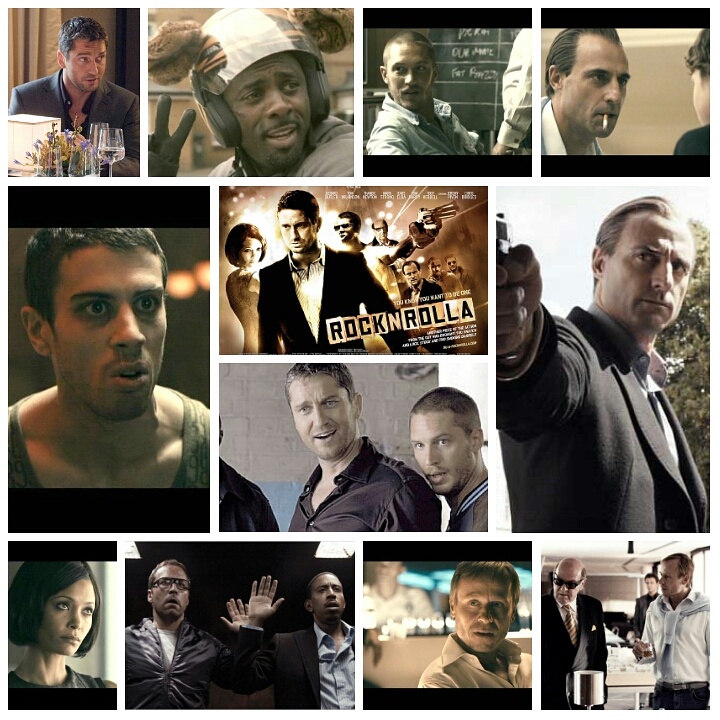
Guy Ritchie’s Rocknrolla was the third British crime comedy caper for the director, and it could have easily been the misstep that signaled him wearing out his welcome. Happily I can tell you that it’s a winner, and although not as cracking as Lock Stock or Snatch, it sinks into its own distinct groove that’s fairly removed from it’s two predecessors. Once again we are treated to the life and times of a bunch of hoods and gangsters in London, but not the grungy, back alley soup kitchen London that we’re used to from Ritchie. No, this is a glistening, prosperous London, filled with real estate money ripe for the taking and developers making underhanded deals with shady businessmen. The climate has definitely changed in Ritchie’s aesthetic, but the characters remain the same, just as witty, eccentric and chock full of piss and vinegar. The story centers around the wild bunch, a cozy little clan of East end petty thieves led by One Two (Gerard Butler) and Mumbles (Idris Elba). Their third musketeer is Handsome Bob, played by a hilarious Tom Hardy who has a secret up his sleeve that spills out in what is the most adorable scene Ritchie has ever written. The gang is hired by a mysterious chick (Thandie Newton) to rob some dudes, and that’s where the trouble starts. Elsewhere in town, arch gangster Lenny Cole (a frothing Tom Wilkinson) negotiates a land deal with dangerous russian billionaire Uri (Karel Roden switches up his trademark psychosis for smooth talking menace here) that hinges on a missing painting. Lenny dispatches his right hand bloke Archie (Mark Strong, subtly trolling us) to find it along with his rock star nephew Johnny Quid. Got that? Nevermind, half the fun is the how and not the why of Ritchie’s stories, and I find it best to just let the flow of it wash over you as opposed to thinking out each detail and missing the sideshow. Toby Kebbell is off the hook as Quid, a wiry stick of dynamite and a comic force to be reckoned with, truly the most exciting performance of the film. Ritchie has a knack for bringing out the funny side in actors, even ones that aren’t usually the type to make you laugh. Strong is terrific, with a few carefully timed moments of sheer hilarity that deftly make you forget how dangerous he is. Ludacris and Jeremy Piven are fun, if a bit out of place as two event promoters. Butler and Elba have an easy-peasy rapport that’s light, friendly and believable. Wilkinson dances between alpha assuredness and aging buffoonry nicely, always commanding the scene and oddly reminding me of Mr. Magoo. There’s a playful tone to this one, glitzy and celebratory in places where Snatch was grim and sketchy, and the whole affair feels like a new years party with a bunch of old friends. Watch for cameos from Matt King, Nonzo Anonzie, Jimi Mistry, Mundungus Fletcher and Gemma Arterton. Very fun stuff.
The Fifth Element: A Review by Nate Hill
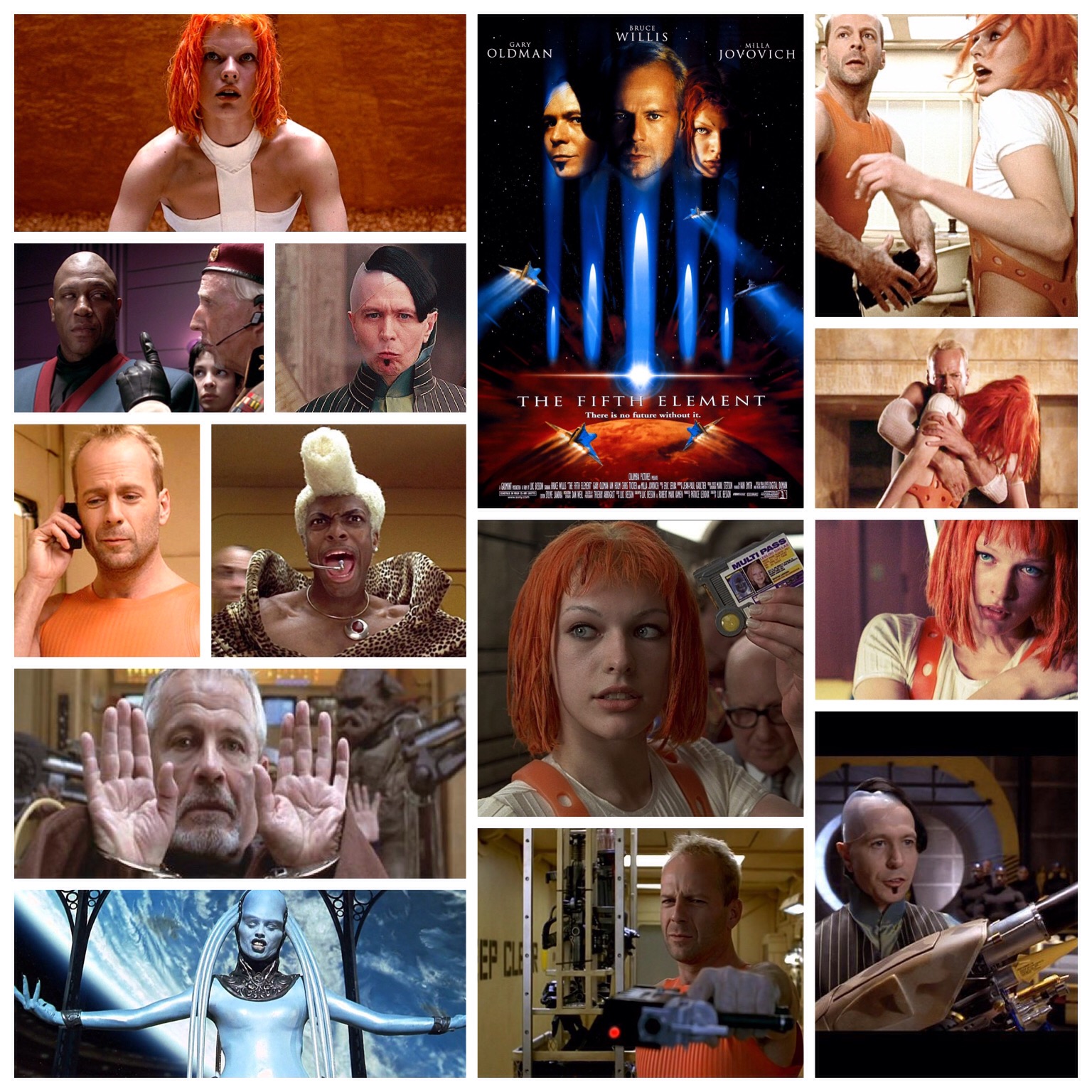
Luc Besson’s The Fifth Element is what you get when you give a massive budget to a director who has an otherworldly flair for imagination and a creative pulse that doesn’t subside for one single second. It’s one of the best sci fi films ever made, a pure intergalactic rush of absurdist qualities anchored by a solid blueprint that’s both akin to and far removed from countless space movies out there. The surprise, and what works so well, comes from Besson and his team crafting a warped and almost Dr. Seussical world that dabbles in cartoonish territory, boggles the eyes endlessly and continually assures you that anything goes in terms of style and tone. It’s an all timer for me, a blast of zany ideas, lovable characters (even the villains are teddy bears to me), a celebration of off the cuff production design and a goddamn certified barrel of fun. Most who read this will know the plot inside out and up and down, but we all know how much I love babbling on about actors and events, so bear with moi. There’s an adorable prologue (“Aziz, light!!!!”) In which an alien race called the Mondosheewans arrive on earth to remove a sacred and very powerful item from an Egyptian pyramid. They resemble shambling steam punk Volkswagen beetles, and are a force of good. This takes place in the 1800’s, and before you can say Luke Perry, we’ve flashed forward to a dazzling futuristic New York City where the events that came before come full circle. Self depracating cabbie Corben Dallas (Bruce Willis) has a day of unending bad luck, until a gorgeous humanoid being named Leeloo (Milla Jovovich was my first cinematic crush in this role ♡) literally falls into his lap, or rather, crashes through the roof of his cab and incites a high speed chase in hover cars, a fantastic sequence, I might add. It turns out this slender, orange deadlocked babe is the human manifestation of the coveted artifact that the Mondosheewans took into their possession. Willis and Jovovich have an immediate exasperated chemistry that practically leaps off the screen as giddily as your heart does whenever they’re seen together. They’re one of the cutest couples in history, and soon embark on a wild adventure to prevent mass destruction at the hands of a giant ball of pure evil that threatens earth (and no I didn’t make that up). Also threatening them is Jean Baptiste Emanuel Zorg (wish that was my name), played by Gary Oldman in a preening, gaudy display of theatrical evil that must be seen to be believed. Zorg is an arrogent megalomaniac who basically runs the city, out to find the ancient stones that are the key to stopping that malevolent force that hangs out just outside of earth’s atmosphere. This is the only film that can claim it has a scene where pure evil itself calls up Gary Oldman on the phone for a chat, which has to be some kind of achievment. There’s a gaggle of incredible actors running around as well, including Bilbo Ba-, I mean Ian Holm as Father Cornelius, a priest of an ancient order sworn to protect Leeloo, the president of the united states (Tiny Lister, once again I’m not making this up), a hapless general (John Neville), a tweaked out petty thief (Mathieu Kassovitz in a scene of pure WTF), Brion James, Lee Evans, and Chris Tucker. Oh good lord Chris Tucker. I don’t know how the guy has the energy, but he keeps it in mania mode as Ruby Rod, a flagrantly horny loudmouth prima donna radio DJ that tags along with Corben for a few gunfights and explosions and shrieks like a banshee all the while. Willis has never been as amiable as he is here, it’s as if John McClane wandered into an episode of Mystery Science Theater 3000 and decided to have some fun. Truly a great protagonist. You will fall deeply in love with Milla as Leeloo. Her lithe physicality, unearthly dialect that she actually learned in full for the film, striking naivete and burgeoning compassion all make her one of the most unique and mesmerizing heroines to ever exist in a film. Oldman mugs, chews scenery like a bulldog, prances about like he’s in a grade school play, and is a sheer diabolical delight. The scene where he demonstrates the ‘swiss army gun’ for his dimwitted extraterrestrial cohorts is time capsule worthy, as is the entire film. Besson directs and stages his world with a reckless abandon that plays like a watercolor painting of pure expression. If there’s an idea someone had, it ended up in this film no matter how outlandish and random it is. That’s the kind of carefree artistic qualities that all movies should have; a willingness to be silly, to be crazy, to step outside the box and then trample on it whilst hurling confetti all about the place. This film is a shining example of that, and stands out as not only one of my favourite films of all time, but one of the best ever made. Big BADABOOM.