The Golden Compass: A Review by Nate Hill 

There’s a reason they never adapted another novel in Philip Pullman’s His Dark Materials series past the initial stab at The Golden Compass, and it’s the same infuriating reason why many adaptations of children’s and young adult novels fail: lack of appropriate atmosphere and true menace found in the source material. Everytime Hollywood comes along and decides to try their luck at a beloved series for youngsters or young adults, they feel this feverish need to shine it up with a candy colored, over lit vibe that leaves much of the darker elements by the wayside and as a result their final product feels neutered and bereft of any weight, stakes or attention to detail. Spiderwick. Skellig. Eragon. Hell, even Narnia only made it by the skin of its teeth, blasting out of the gate with a flawless entry, only to peter off into sequels afflicted by the very symptoms I outlined above, and not even make it to the end of the saga at that. Now don’t get me wrong, this doesn’t happen to every series they try to adapt, but to enough of them that it’s a problem, especially when a darkly creative, eerie and unique tale like this gets turned into a glossy, pandering misfire. It’s sad because some of the elements of a good film are in place, starting with casting. Dakota Blue Richards is on-the-nose perfect as Lyra, the adventurous heroine who gets swept away on a menacing voyage to arctic lands and beyond. She lives in a curious parallel universe where every human is forever accompanied by a ‘Daemon’, essentially a piece of their soul that takes animal form, and never the two shall separate. Lyra’s uncle Lord Asriel (Daniel Craig) is an explorer who has returned from the north lands with tales of a mysterious phenomenon called ‘dust’, a powerful substance purported to be able to unlock other worlds and dimensions. Lyra is curious at first and then nervous when she meets icy Mrs. Coulter (Nicole Kidman) a prim socialite with a devious agenda involving children that have gone missing in the city. She has a facility on the tundra where scary research and very bad experiments are conducted. Now in the books the descriptions and eventual confrontation with this would make your hair turn white. Pullman imparts it with weight and true blood freezing horror. The filmmakers *deliberatly* tone it down and castrate it, leaving anyone who was a fan of the series in total disgust. It just doesn’t have the same dark, otherworldly atmosphere it did on the pages, it feels too bright, chipper and lacking any real wonder. It does have some wicked visuals going for it in places, such as the two rival talking bears, voiced with baritone boom by Ian McKellen and Ian McShane, the landscape of the north as seen from the hot air balloon of grizzled sky-cowboy Lee Scoresby (Sam Elliott), and others. Eva Green also scores well as elemental witch Serafina Pekkala, but then she’s incapable of giving a bad performance anyhow. Scattered supporting cast includes Kathy Bates, Kristin Scott Thomas, Tom Courtney, Simon Mcburney, Derek Jacobi, as well, an impressive lineup all in all, but one that deserves a far better film for their talent. It’s just misguided and tone deaf. It may have been a series for adolescents, but the themes, implications and scenarios found in those books are harrowing, complex, very mature and not to be taken lightly, let alone given the full on Harry Potter theme park treatment. Shame, really, and a giant missed opportunity. Perhaps someday soon a network will get the rights and turn this tale into a film or tv show worthy of His Dark Materials.
Indie Gems with Nate: The Snow Walker 

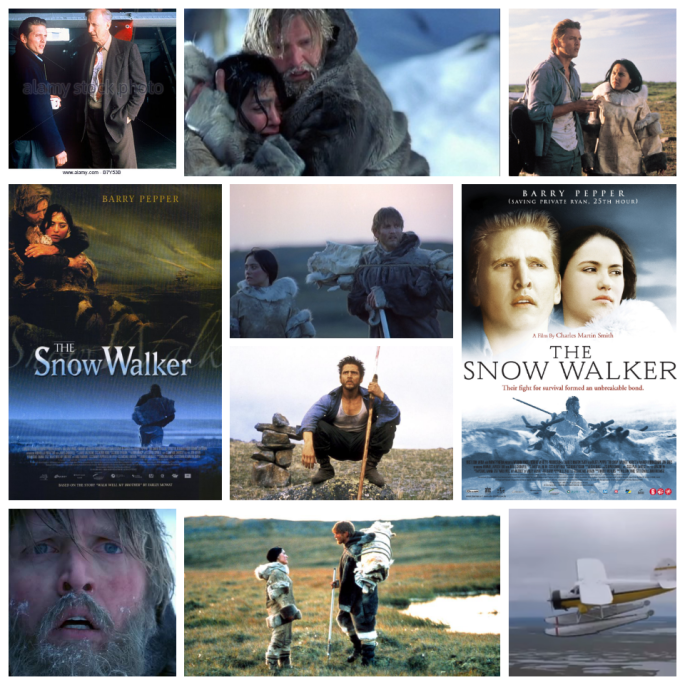
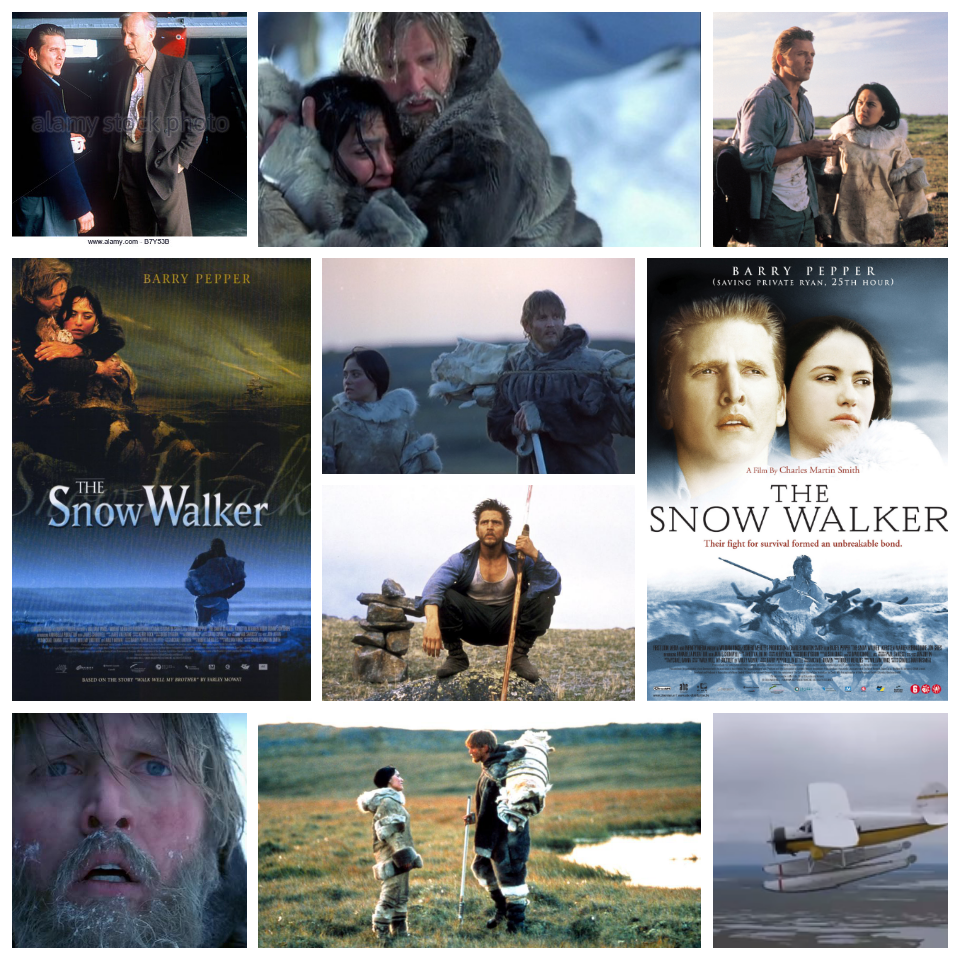
The Snow Walker is as bleak and tragic as they come, attempting to find scant traces of beauty, kinship and compassion  amidst a hopeless tale unfolding on the edge of the world. Charlie (Barry Pepper) is an ex WWII pilot who has flown a lot of missions, but none quite like the one he embarks on here. On a remote plane trip in the Arctic, he comes across a nomadic family of Inuits who are in desperate need of help. One among them, a girl named Kanaalaq (Annabella Piugattuk, fantastic), is sick with what appears to be tuberculosis, and will die if not treated soon. Charlie agrees to fly her back to civilization in exchange for a few wares, but during the voyage his plane develops mechanical problems and he is forced to make a crash landing in the middle of the wilderness. Stranded with little food, a sick girl and no hope of rescue, he and Anaalaq are brutalized by the incoming winter, tested beyond the limits of endurance by the harsh terrain around them and pushed to the point of despair. Charlie’s old friend (a sincere James Cromwell) sends a cocky bush pilot (Jon Gries) in hopes of locating him, but because Charlie took a detour end route, it’s worse than finding a needle in a haystack. There’s a mournfully poetic sense to the landscape around them, a dry and unforgiving vista that is shutting down as winter looms on te horizon, indifferent to the two of them, clinging to survival. Charlie is a loner, an outsider, and this situation tests his interpersonal skills as well as his stamina. Anaalaq speaks little to no English, and he not a word of Inuktituk, forcing deeper methods of communication and a trust in each other, warm compassion to ward off the cold anguish threatening their existence. This is not a Hollywood film (except for a random cameo from Michael Bublé, of all people), and as such is never predictable, easy or familiar. It walks it’s own road, a road into utter hopelessness. Watch something lighthearted after, your emotions will need the counterweight. 

Disney’s Frozen: A Review by Nate Hill 

I avoided watching Disney’s Frozen for a long time, no lie. I hate overblown hype despise maniacal product placement, and unfortunately kid’s movies suffer through the worsr of it (remember Tangled? Ugh). I did finally get around to seeing it though, and it’s an utter delight. A little thin in the plot department, mind you, but that’s where the Disney wizards compensate with stunning visuals, effervescent voice acting and of course that legendary, now iconic song, belted out by Idina Menzel’s  Elsa high atop a snowy peak. I heard that song played into oblivion before I ever saw the film, and didn’t ever think I’d be able to enjoy it again without getting the ol’ eyelid twitch, but seeing the real thing in the context of the film, with a little help from my home theater system, well…. let it go indeed. Menzel and Kristen Bell are touching as the two sisters, Anna the doe eyed princess with the world at her feet, Elsa the fierce and independent rebel who doesn’t fit in. Her magical abilities with snow and ice allow for some unbelievable computer effects, and the ice palace she creates is a gem of a set piece, intricately woven and detailed to the max. Their castle down below is designed with traditional Germanic decoration in mind, a nod to the inspiration they have no doubt received from Hans Christian Anderson’s original storybook, The Snow Queen. Like I said before, what’s there in plot is spread pretty thin, but it’s no matter, because this one is fuelled by visuals. Sweeping mountains packed it powdery snow drifts, ornate castles, beautifully designed costumes, sleds, dresses and animals, including Sven the rambunctious reindeer. It’s a jewel of ocular achievement. Oh and I might add, that Swedish sounding dude who runs the little shop way up the mountain is probably the funniest character Disney has created in years. 

Indie Gems with Nate: Far North 

Far North is like a half whispered tale told round a campfire way out in the tundra, a tale that keeps the fire going while freezing your blood. I’m not sure if it’s based on some Inuit parable or fable, but it certainly has the aura of such. There’s a  whole lot of land up there, and most likely centuries of stories just like this one, witnessed only by the wolves and the winter cold, as well as the few hard bitten inhabitants who call it home. Michelle Yeoh is Saiva, an outcast from her tribe after being deemed cursed by her shaman at birth, left to wander the expanse alone. Her only companion is a young girl (Michelle Krusiec) who she rescued from marauding soldiers as a baby, and has raised somewhat as a daughter. The two live an isolated existence, until Saiva finds half dead soldier Loki (Sean Bean) wandering the tundra, and reluctantly takes him in. That’s where trouble begins, as he takes a liking to the young girl, a bond is formed, and another is soured and broken. There’s a third act shocker that will have your skin crawling, a jarring act of violence, deception and betrayal that leaves us feeling as cold and cast out as Saiva, an existence which probably foretold such horrors years ago when the shaman gazed upon her face. It doesn’t quite fit with the lyrical beauty and ambient pace that came before, but it’s definitely an unforgettable way to end the story, and a reminder of humans and their capacity for darkness. Roaming caribou, miles of ice, wandering wolves, and the few humans who survive out there, perhaps affected by something deeper, something elemental that lives in the very air. Not a perfect film, but fascinating and quite unlike any other. Oh, and a warning: ther are some graphic and suspiciously realistic scenes of animal violence. 

Bong Joon Ho’s Snowpiercer: A Review by Nate Hill 

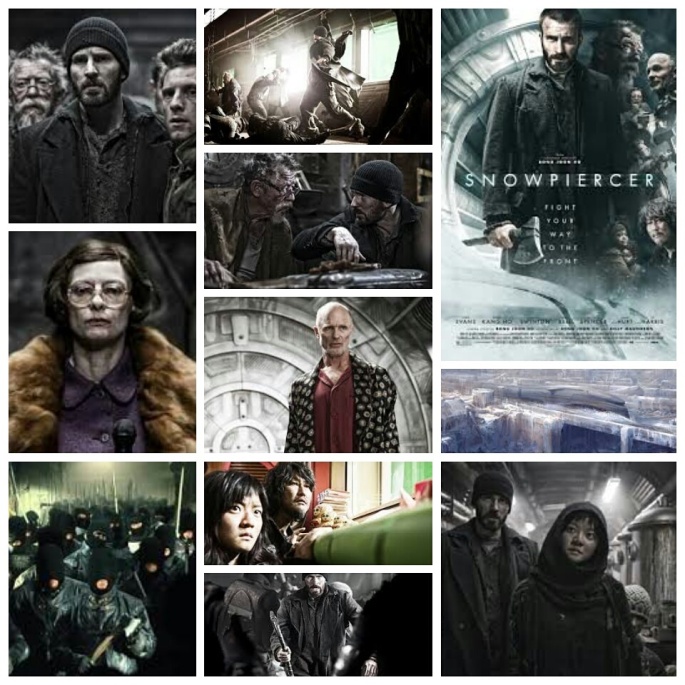
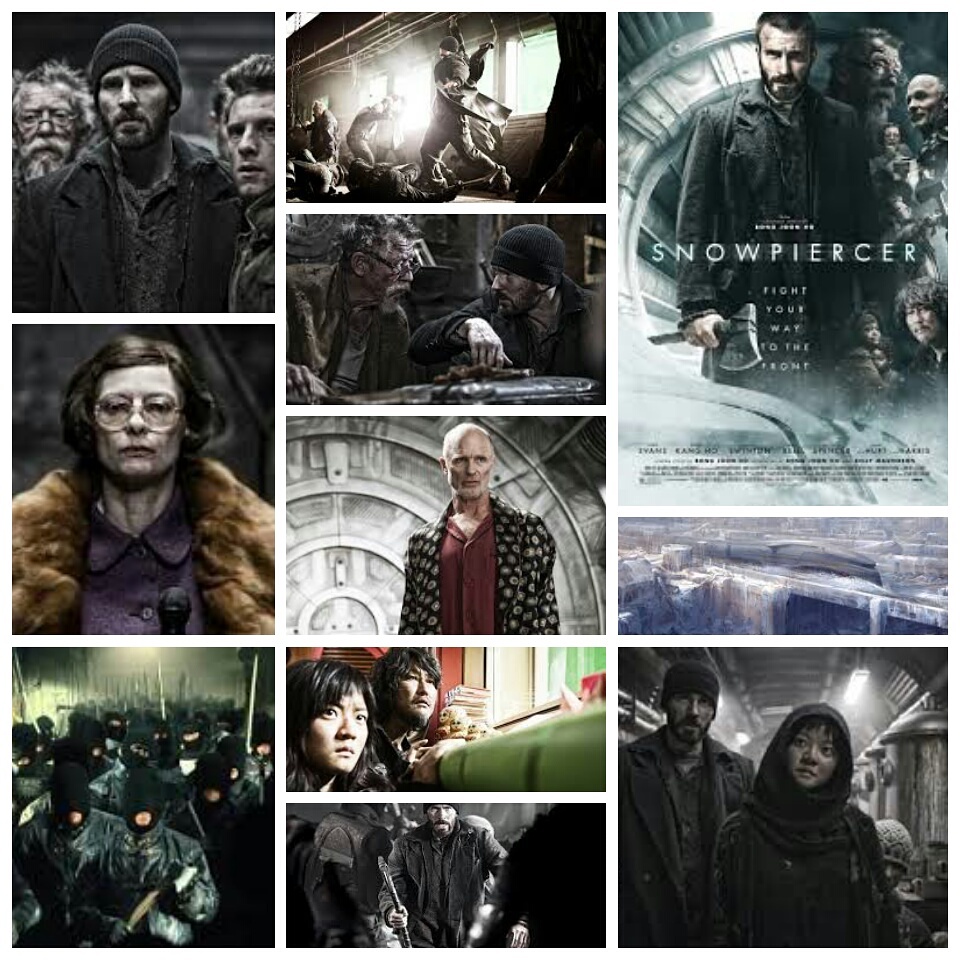
Bong Joon Ho’s Snowpiercer is a cold affair in more ways than one. It treats it’s characters with the same icy indifference as the storm which batters the few remaining people on the planet, confined to a locomotive that speeds around the globe in perpetual motion, humanity’s last ditch effort against a cataclysmic ice age of their own making. The train is designed to house the poor and disenfranchised folks in filthy barracks at the back end of the train, while the rich and privileged elite live in glamerous excess at the front. What better metaphor for brutal classism? A confined vehicle from which their is no escape, dwindling resources and rising tensions eerily serve to remind us of our own situation on this rock. Chris Evans grimes up his Captain America image as the ruthless leader of the poor, rebelling traincar by traincar and waging an ongoing war against the upper class and their minions, his sights set on reaching the engine. Unfortunately they’re up against some nasty security forces dispatched to end their rebellion at any cost, including axe wielding henchman, a J.T. Walsh lookalike who is tougher to kill than a terminator and an absolutely nutballs Tilda Swinton, unrecognizable under a dairy queen cake of makeup and a muddled northern England accent, dryly  playing the tyrannical head of propaganda. Aside from the obvious social satire that hits home, the film is also a rollicking action slam dunk with some jaw dropping, delightfully implausible set pieces and truly inspired visual design. Each train car has a different theme and purpouse, from a self sufficient aquarium (anybody want some sushi?) to a terrifyingly cheerful classroom where kiddies are brainwashed by a crackhead of a school teacher (Alison Pill in overdrive), and eventually the engine itself, a technological marvel presided over by a lonely, twisted and miscast Ed Harris as the architect of the whole deal, a role better suited for a Patrick Stewart or a Malcolm McDowell type. John Hurt plays the other half of the brains, stuck in squalor at the caboose, and there’s work from Ewan Bremmer, Octavia Spencer, Jamie Bell, Ah Sung Ko and Kang Ho Song as a resourceful explosives expert with his own agenda. The themes of this film will be difficult for some to swallow, which is what I imagine led to it’s piss poor marketing, at least in North America. The topical, callous and icy blunt truths about society, sacrifice and oppression won’t be willingly received  by many, least of all the powers that be, who don’t want such notions floating around freely. That’s what makes it important though, and sets it a step above most. It reaches near taboo levels of thought, displaying ugliness and outrage that seems scarily logical the more you think about it. Plus it’s a humdinger of an action adventure flick. Strong stuff, both in visual and narrative departments. 

The Crimson Rivers: A Review by Nate Hill 

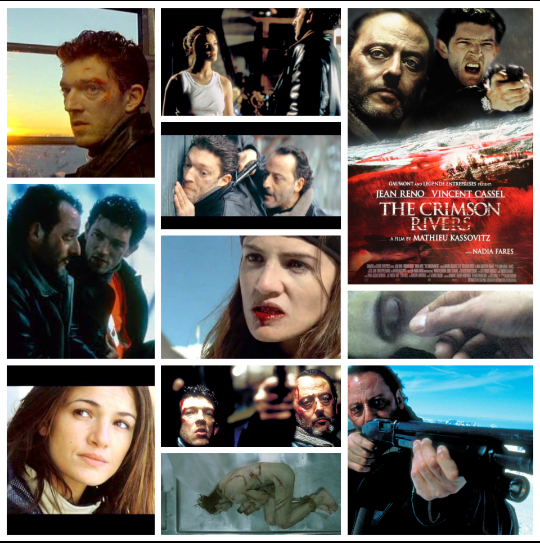
There’s a serial killer loose in a small mountain town located in rural France, and who better to track them down than the country’s two most prolific film actors (or the ones with better physiques than Gerard Depardieu anyway), Jean Reno and Vincent Cassel. Reno is the seasoned, slightly eccentric Parisian detective, called in to assist and step on the toes of local investigator Cassel, who is too hot headed to realize he could use the help. A body has washed up in a nearby river, mutilated to an unspeakable degree in gruesomely specific ways (think Sev7n on ice). The town just happens to be solely inhabited by the creepy residents of a nearby university that is notorious for incestuous classism and rumours of ties to the occult. You can imagine where this is heading, and it’s fun watching Reno and Cassel follow the bloodstained breadcrumb trail towards increasingly grisly secrets that would test even David Fincher’s gag reflex. Genetic research, mysterious twins (both played by Nadia Fares), and multiple corpses are a few of the hurdles our two heroes encounter. It’s delightfully convoluted, in the best way possible. Some people say that less is more, but I find that makes way for laziness and complacency, two attributes you don’t want to find in the horror/thriller genre. I’d rather a film throw every little brainstorm and margin doodle into the mix, even if it doesn’t all add up, than present a barely filled in canvas that begs for more. The real stunner with this one is a near Bond-esque climax set on a giant glacier overlooking the valley below, full of desperate violence and giddy exposition. You’ll need a strong stomach for the dark places this one ventures to, but it will reward you with crisp cinematography and lurid, blood soaked intrigue. Brutal stuff though. 

Indie Gems with Nate: Guy X

Guy X is one of those tonally disorientating black comedies whose madcap antics hide a deeper truth, visible only to those patient enough to sift through the meandering detritus. It also helps I your sense of humour is on the right frequency, one that is decidedly off key in this case. Think of a Terry Gilliam film, that mad rush of arbitration and deafening bureaucratic hubbub that serves as a smokescreen for something a little more grounded. Jason Biggs, keeping his dick out of pies this time around, plays Rudy, a low level army grunt who is accidentally sent to an outpost right in the the Arctic, and the middle of nowhere too, as we soon see by his fellow soldier’s boredom fuelled shenanigans. It’s fish out of water, but we get an uncanny sense that he’s also there for a reason, one that takes it’s painstaking time to emerge. Smitten by the beautiful commanding officer (the always lovely Natasha McElhone), hounded by her petty boyfriend  (Jeremy Northam) and constantly swept up in the feverish lack of discipline or coherence among the ranks. It’s all fun and games, to be sure, but there’s a melancholic aura that hangs around, especially when Rudy discovers the titular Guy X (Michael Ironside in a transfixing cameo), a lost and forgotten soul who hints at the futility of military operations, reminding us of how we all cloak our existential dread in frosty self depracation and ironic gallows humour. That’s the film, essentially, which I think many didn’t get. Most of the reviews I’ve seen on imdb are from folks who struggled deeply with the sharp, uncomfortable shift in tone, understandably jarred by a sobering rift between playful banter and troubling reflection. The important films are often more difficult for a idea audience to receive, they’re just constructed that way. This one is no exception, but there’s many a lighthearted moment and comedic situation to be enjoyed before the hammer of reality comes down. 

B Movie Glory with Nate: Arctic Blue 

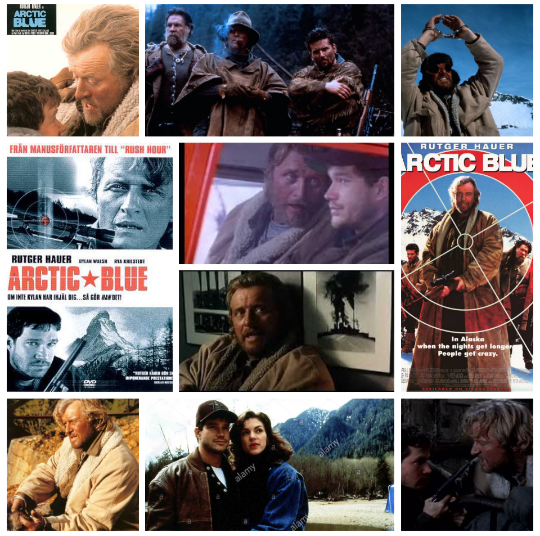
Arctic Blue is as eccentric and loopy as I’d imagine such unique climate conditions make people behave up there. Indeed, instead of a straight up action adventure, they’ve gone for something a little more meandering and amusing, sort of like Midnight Run under the midnight sun. In a sea of direct to video flicks that Rutger Hauer has done, it’s tough to weed the gems from the turds, but this one is gold, especially if you’re a fan of him, as well as gorgeously photographed scenery. As Ben, he’s not quite hero, not quite antagonist, a wildman of a trapper who functions on instinct and has no use for the rule of law. When an altercation with a park ranger leads to murder at his own hand, Ben is set to be escorted to judgment by a local sheriff (Dylan Walsh). Walsh is green around the ears though, and Ben is determined to escape, aided by his familiarity with the land and climate, as well as his bawdy fellow trappers, who are hot on their trail. what follows is almost genre defying; it’s just this side of adventure, with the slightest hint of buddy comedy and even a few mournful notes to Ben’s backstory that give it that dramatic weight. I love an ambiguous character, one who makes real choices and has capacity for both compassion and viciousness in their spirit, seemingly free from the constriction of conventional plot development. Ben is his own man, and approaches both his environment and his fellow man on his own terms, which granted can lead to trouble, but is an endlessly attractive character trait to have. I think having grown up in such a rugged, untethered corner of the globe, people like Ben run on their own clock, and hum with the delirious atmosphere of such a far removed existence. The entire film has that going for it too, like everyone involved is running off of no sleep and whatever is in the water way up there in the north. A true undiscovered gem of a film, if you can find it anywhere. 

On Deadly Ground: A Review by Nate Hill

  
I tend to actively avoid Steven Seagal films like the plague, and realize intermittently that I do in fact enjoy certain ones from back in the day. He’s made a ton of trash, no doubt, but the clouds part every now and again, for select occasions like Under Siege, The Glimmer Man, Above The Law, Fire Down Below and the snowbound On Deadly Ground. The main marvel in this one is an incredibly hammy Michael Caine as the mustache twirling villain, a Big Oil maniac who has his amoral sights set on sacred land belonging to Inuit tribesman. Seagal plays yet another martial arts trained badass who takes it upon himself to bring down Caine, his nefarious capitalist plans and the violent mercenaries he has hired to wipe the land of indigenous natives. It’s as silly as silly can be, right down to him falling in love with a beautiful Inuit girl (Joan Chen, actually Chinese), but enjoyable on its own terms when you look at the solid choreography, stunts and impressive location work. Also, the roster of villains is too good to pass up, starting with Caine’s outright, wanton psychopath. We’re also treated to the Sergeant himself, R. Lee Ermey as a merc with a particularly salty attitude, John C. McGinley over-playing one of his patented schoolyard bullies, and even Billy Bob Thornton shows up, adding to the sleaze factor. Watch for cameos from Mike Starr, Michael Jai White and an unbilled Louise Fletcher as well. Seagal directed this himself, so it’s essentially one big vanity piece where he gets to play Dances With Wolves for a couple hours, but the trick is to see the unintentional comedy in that and enjoy it. Seagal is one of those goofs who I am not a ashamed to say I am laughing at, not with. Caine is the real prize here, and his merry band of assholes. An action flick is only as good as it’s antagonist, and this guy is bad to the bone in hilariously over the top ways. A big dumb flick, nothing more, nothing le- well maybe a little less in places, but fun in other spots nonetheless.

Larry Fessenden’s The Last Winter: A Review by Nate Hill 

Nature fights back in Larry Fessenden’s The Last Winter, a vaguely supernatural cautionary tale of of environmentalists and oil workers besieged by some unseen forces in the great north. Fessenden also brought us Wendigo back in the day, another snowbound chiller, and a keen sense of the eerie corners of the natural world and it’s unexplored areas comes built in with his skill set. Ron Perlman doggedly plays Ed, the headstrong leader of a research party scouting arctic land for Big Oil to plant an ice road and pipeline. Connie Britton is his second in command and former flame, now shacking up with wildlife journalist James Legros. When the dead, naked body of a team member is found near their camp, natural gas emissions from the ground are suspected (so logical, guys). Yet, people continue to die, and some ominous presence gathers in the night just outside the perimeter of the station, inciting rising dread and distrust among the team and claiming victims with gathering speed. It’s fun to watch Perlman slowly come unraveled, his grim sense of control slipping away as quickly as his rational explanations for what is happening. We never get a good look at whatever is out there, which is the smart way to go about your horror. The snow boils, strange sounds are heard and the natural world itself almost seems to be taking on angry life of it’s own. It’s obviously meant as a metaphor, but works just as well as a literal creature feature thanks to the sleek direction and well placed moments of chilly terror. Shades of The Thing, infused with this theme of the earth lashing out at the arrogance of human industrialization is a delicious flavour indeed.