Harmony Korine’s The Beach Bum

“I mean fuck, we’re here to have a good time.. I just wanna have a good time until this shit’s over, man. This life gig is a fucking rodeo and I’m gonna suck the nectar and fucking rawdog it till the wheels come off.”

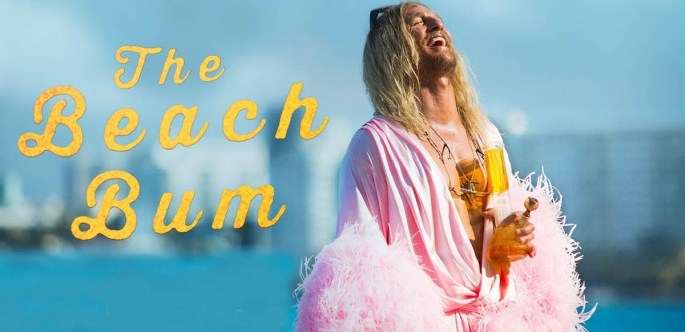
Watching Matthew McConaughey stumble around swilling tall cans of Pabst Blue Ribbon holding a kitten is probably one of the more relatable things I’ve seen in cinema recently. Harmony Korine’s The Beach Bum is a film I loved with all my heart and got tremendous, serotonin laced enjoyment out of, a raucous party of a film that celebrates drinking in excess, deliberately poor life choices, reckless and immature behaviour and just taking life as it comes wave by wave, committed to having a good time regardless of the consequences and turning a purposeful blind eye to any responsibilities one might have as an adult human being. I can’t say that Matthew McConaughey’s brilliant performance as perennial party animal Moondog and all he represents which I’ve just outlined above is any constructive way to approach life or a conducive fashion to behave in, but I also can’t promise you that it hasn’t been my go-to mantra many times over the course of my own life for many reasons, and I felt connected with this film on a level I can’t even put into words. This is interesting because as much as I love (and I mean LOVE) this film is about as much as I HATED Korine’s previous and much celebrated effort, Spring Breakers. Everything that was shrill, crass and fucking irritatingly hollow about the hedonistic lifestyle in that film rings eternally truer in Beach Bum, it’s like Korine hit the dirt jump hard and busted up his bike with Breakers and then went for one more go with Bum, and this time he soars up over the crest of the jump into a Miami sunset in glorious triumph. McConaughey is pure intoxicated eccentric gold as Moondog, a brilliant writer of poetry who seems to want nothing more in life than to drink beer, smoke a ton of weed, have sweaty sun soaked sex with anything that moves, cause endless mischief and fuck around, and who can blame him. He’s got a rich wife (Isla Fisher) who passes away and leaves him a fortune on the condition that he publishes his very long awaited novel, a simple task that becomes a cosmic obstacle for him, as does going to rehab or simply walking in a straight line. He smokes up with his wife’s boyfriend Lingerie (Snoop Dogg playing himself and loving it) and Jimmy Buffett (also pretty much playing himself), engages in vandalism with fellow rehab escapee Flicker (Zac Efron in Joker mode) and just keeps up this lifestyle that few could walk out the other side of alive but he seems to swagger through with all the wanton aplomb of Jack Sparrow mixed with The Dude Lebowski and Charles Bukowski. He comes across other characters in his travels played by the likes of Jonah Hill and commands an army of cackling homeless dudes but my favourite of these cartoonish individuals has to be Martin Lawrence as Captain Wack, a deranged dolphin obsessed weirdo who suits Lawrence’s maniacal brand of comedy beautifully. So what does it all mean and what is Korine trying to say with all this colourful hoo-hah? That’s what I struggled with in Spring Breakers and still believe that film to be an ugly, grotesque piece of non-entertainment, but I think he’s trying to say more or less the same thing in both films, it’s just that with Beach Bum he actually succeeds. Moondog puts it better than anyone could when he imparts a monologue, an excerpt from which I’ve opened this review with. He just wants to have fun, isn’t concerned about money, day to day hustle, success, what anyone thinks of him or making anything of himself, he just wants to have a fucking good time. And write the occasional passage of poetry when the mood strikes. The film is more about kicking back, relaxing with Jim and observing someone of his outlook balls deep in enjoying themselves like a creature who lives moment to moment with little regard for anything else. Don’t even get me started on the breathtaking cinematography, 10/10 soundtrack or any technical aspects because we’ll be here all day. This worked for me on a deep level, and is now one of my favourite films of all time.

-Nate Hill

Misunderstood Oddity: Lindsay Lohan in I Know Who Killed Me

Imagine if Paul Verhoeven and Dario Argento co-directed a deranged, kinky, surreal sequel to The Parent Trap by way of the Black Dahlia but called it the Blue Dahlia instead and you have something vaguely approximating the essence of I Know Who Killed Me, a truly bizarre Lindsay Lohan film that is one of the worst reviewed universal flops out there. Is it really that bad? I’m not sure to be honest, this isn’t really a film you watch, it just sort of… happens to you, and then leaves you in the dust to reconcile your feelings about it.

There’s a scene in Martin McDonough’s comedy classic Seven Psychopaths where Sam Rockwell asks Christopher Walken for feedback on his totally outlandish script pitch and Walken, without saying whether he liked it or not, dryly replies “I was paying attention, I’ll tell you that.” That’s kind of how I feel about this one, there was never a dull moment but I still can’t really decide whether it’s my thing. I’ll tell you one thing though, out of the ten dozen or so reviews on IMDb, they are ALL one star heckle jobs and NO film out there deserves that no matter the quality, there can always be found in any film some element that keeps it from complete and utter dead sound flatline. Even the worst film I’ve ever seen (which we won’t speak of here) at least has some cool costume design in one segment. Anyways that level of barbaric hatred just tells me that a lot of folks weren’t irked by the film itself but rather Lohan, who was going through some shit at the time and was cruelly splashed all over the tabloids in a flurry of exaggeratedly negative light. I’ve always loved her, found her to be a fantastic talent, full of charisma and organic personality and she does a fine job here playing two roles for the third time in her career.

As the film opens she’s straight A, good girl Aubrey Fleming, who is swiftly ensnared by an especially nasty serial killer (seriously this guy is one overkill piece of work) who also took another girl in the area some time before. When the Feds find and rescue her she’s different than before, both physically and psychologically. The killer left her horribly mutilated to amputee levels and she also claims to not even be Aubrey at all but a street smart, smoky voiced stripper called Dakota Moss. Her parents (Julia Ormond and Neal McDonough) play along while an FBI appointed psychiatrist (that duplicitous US President from 24) is stumped as to what’s going on. The only one who’s stoked is Aubrey’s horn-dog boyfriend (Brian Geraghty), as Dakota is far more promiscuous than he remembers Aubrey being. And naturally the killer is still out there, inevitable soon armed with the knowledge that Aubrey got away, or there’s another one of her, or whatever is going on, which is somehow really obvious yet also crazily convoluted.

This film wants to be a lot of things and I admire its relentless can-do spirit in trying them all, but as I get to the last paragraph of my review I must concede that it’s kind of a fucking hot mess. As anyone who has dated a hot mess knows, however, they can be a lot of fun provided you get to the exits in time before the projector catches fire and luckily this thing doesn’t overstay it’s welcome, and is never boring. It wants to do the sultry David Lynch luridly noir thing (there’s more blue roses on display than David ever used in Twin Peaks and watch for a cameo from the Mulholland Drive evil hobo who’s also The Nun), it strives for the shocking, stark gore and colour splashes of an Italian Giallo horror film and isn’t half bad at that, then it tries it’s luck at slinky Brian De Palma thriller territory, all the while struggling to retain a vastly uneven vibe of sexual madness, esoteric horror atmosphere, cryptic (then not so cryptic) mystery, stigmata subplots, saturated transitions that look like the cat walked across the colour timing keyboard and just… so much stuff crammed into one film that is supposedly ‘one of the worst films ever made.’ It’s certainly bad, both in quality and the kinky nature of its R rated content, but it’s in no way as terrible as you’ve been made to believe since it’s release in 2007, in the heyday of Lohan’s career meltdown. That just goes to show you how the public often look at any given film from the perspective of ‘celebrity star status’ and what’s going on in entertainment news rather than the work itself isolated from all that sensationalist bullshit, which is a shame really because there’s more than enough sensationalist shit in this film to go around without hounding Lohan about her personal life and addiction issues and deliberately damning a film that doesn’t deserve it, but that’s sadly the brainless, shallow nature of most of North America. Grisly B movie madness with a touch of something I can’t even explain and I bet the film itself couldn’t either, but that’s part of the loony charm.

-Nate Hill

Peter Segal’s Anger Management

Adam Sandler’s career is composed of a few key elements: unfunny trash, comedy gold and a small handful of serious dramas. Anger Management falls into the second category and is an absolute blast but it’s mostly thanks to a batshit crazy, scene stealing virtuoso Jack Nicholson rather than anything Sandler does. It doesn’t hurt that the film is packed to the brim with hilarious cameos and supporting talent as well. Sandler is Dave Buznik, a meek businessman who gets walked all over by his toad of a boss (Kurt Fuller) and constantly reminded by his girlfriend (Marisa Tomei, about a hundred acres out of his league) to stand up for himself. After finally losing his cool (sort of) on a plane he gets slapped with a court order to do twenty hours of anger management treatment under the deranged supervision of unconventional therapist Dr. Buddy Rydell (Nicholson). Rydell is a thoroughly weird dude who insinuates himself into Dave’s life, hits on his girl, frequently loses his cool and displays a near constant stream of bizarre, inexplicable behaviour. There’s a reason for all that, revealed in the film’s monumentally implausible twist that falls apart under any scrutinizing back down the chain of events in this narrative, but this isn’t the type of film to nitpick like that. Nicholson is a goddamn treat here and gets so many wacky moments I wish the film was more centred on him, he’s hilarious to watch whether having a volcanic tantrum and launching his plate of breakfast against a wall, forcing Sandler to sing ‘I Feel Pretty’ from West Side Story or obliterating some poor dude’s car with a baseball bat just because he boxed him into a parking spot. The ironic thing about Sandler is that he’s touted as a comedian but he’s just not funny, and the appeal from any film he stars in always comes from the other actors in it who steal it from him without fail. There’s quite a few here including Heather Graham, Allen Covert, a hotheaded John Turturro, Luis Guzman, Krista Allen and January Jones as a pair of rambunctious lesbian porn stars, Kevin Nealon, Rudy Giuliani, Derek Jeter, John C. Reilly, Harry Dean Stanton and Woody Harrelson in a hysterical encore cameo as a transvestite named Galaxia. The film works with its manic energy, hectic ensemble cast and Nicholson’s dysfunctional tirade of a performance, and is one of the funniest comedies I’ve seen recently.

-Nate Hill

Guy Ritchie’s The Gentlemen

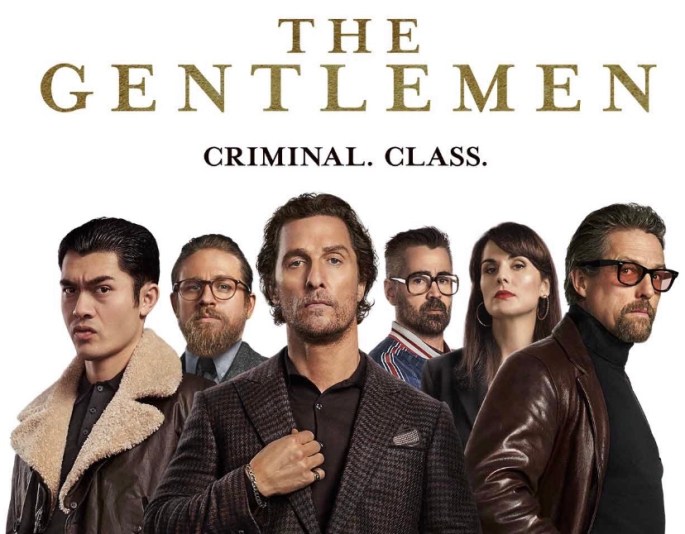
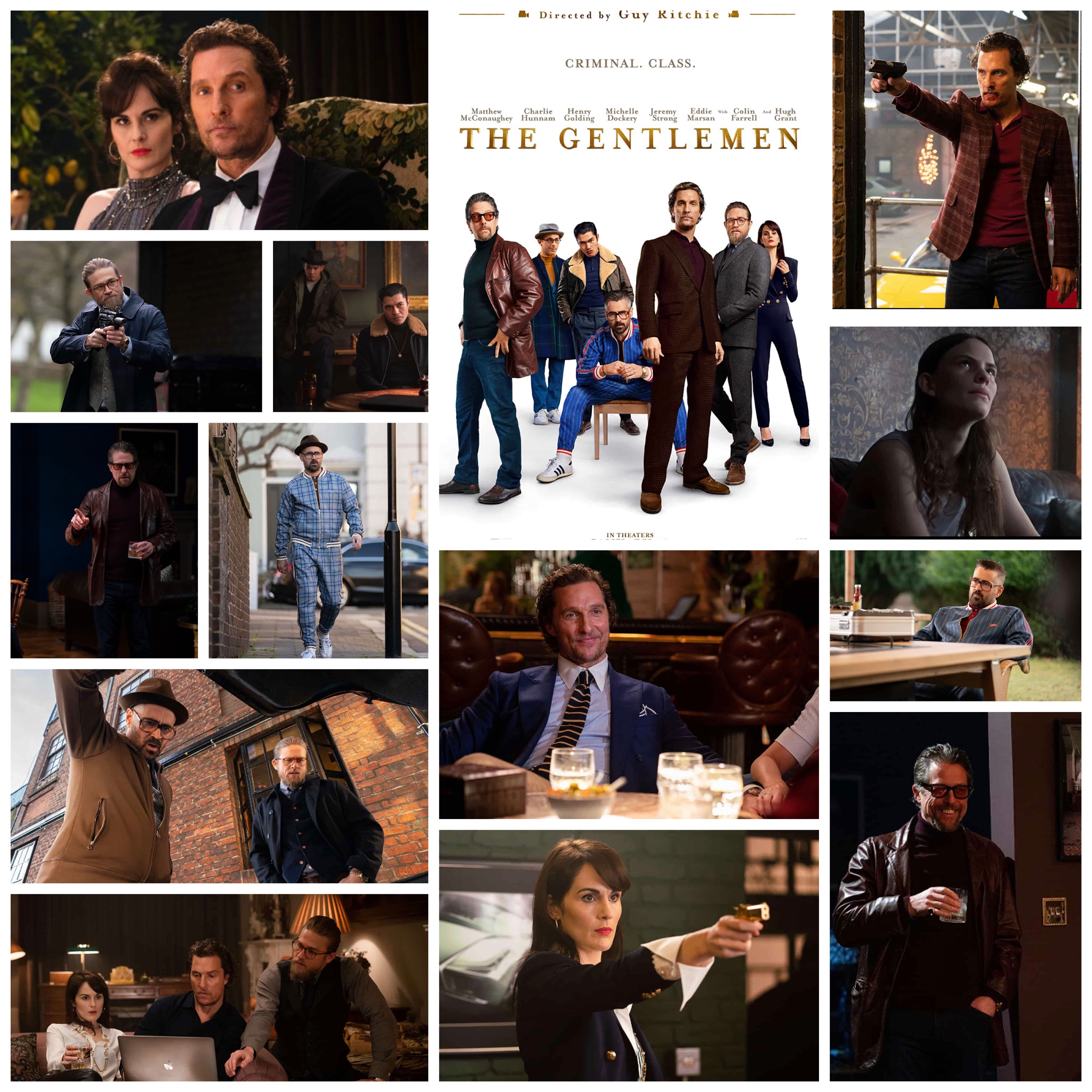
It’s nice to see that Guy Ritchie still has it in terms of his personally patented, now iconic British gangster arena. Experimented with in Lock Stock & Two Smoking Barrels, cultivated further in Snatch (my personal favourite of his) and tooled around with in other directions for his extremely underrated RocknRolla, here he returns to that drawing board for The Gentlemen and although this isn’t a film that breaks the mould or comes up with anything bright n’ shiny new, I had way more fun than I thought I was going to and it’s a winner for me. Carrying on the nice culture clash element we have a ferocious Matthew McConaughey as Mickey Pearson, a self made marijuana billionaire looking to sell his lucrative empire to a cunning Jewish businessman (Jeremy Strong) while the young hothead boss (the dude from Crazy Rich Asians, who is way richer and actually crazy here) of a London based Asian syndicate seeks to muscle in on both of them. Pearson’s cool cucumber left hand lieutenant Ray (Charlie Hunnam in the first performance I’ve believed and enjoyed his work) tries to keep all the pieces on the board where they should be instead of running amok and causing havoc, which they inevitably do and would it really be a Ritchie film without wanton chaos and a string of hysterical fuck-ups? Hugh Grant looks up the Oxford definition of ‘fucking scene stealer’ and proceeds to steal the fucking scene every minute he’s onscreen as Fletcher, a super fabulous, highly sleazy wild card tabloid reporter looking to line his own pockets via blackmail most foul. Add in perennial oddball Eddie Marsan, Sting’s visually striking daughter Coco Sumner, an informant named ‘Phuc’ (snigger), Michelle Dockery as Mickey’s leggy and disarmingly badass cockney wife/partner in crime and Colin Farrell in character actor mode as a rough n’ tumble Irish boxing coach with a heart of gold and you’ve got one solid roster. Ritchie has a way with dialogue that might not be lifelike but never fails to have me hanging on every syllable, it’s like musical protein for me ears and he didn’t disappoint here. I mean it’s probably bottom of the list in terms of the other gangster stuff but his career so far is kind of tough to top and this one struck me as a ‘hangout movie’ of sorts with some action and trademark visceral violence peppered in here and there. Terrific costume work too, I saw at least five suits I would love to get my hands on. Easy, breezy, vividly characterized, laidback, refreshingly and deliberately anti-politically correct humour (always a plus), banging soundtrack, this one rocks! Oh and it’s not the first Ritchie film to promise us a sequel that feels like it’ll never show up, but that may just be a cheeky running joke from the guy.

-Nate Hill

Rob Bowman’s Elektra

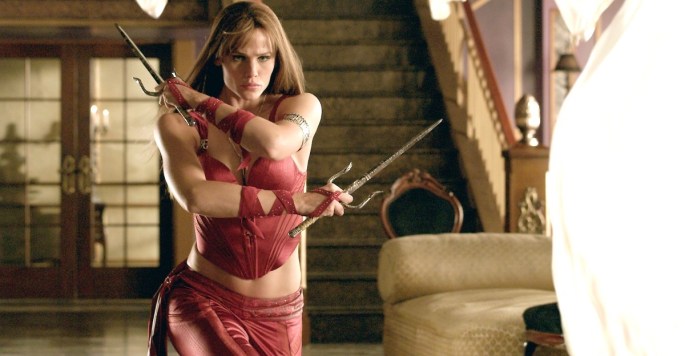
Okay I know I always say that guilty pleasures don’t exist for me and I wholeheartedly own my tastes in film without a shred of winking irony and for the most part that’s true… but there *are* a few that kinda fall into the ‘sheepish enjoyment’ realm despite me being well aware that they’re dumb as shit, the Jennifer Garner Elektra film being one of them. I know one is a mess but it just somehow keeps me glued every time and I don’t even know why, but it might start with Garner, who I loved in the Daredevil movie and is just as hot and engaging here reprising the role sometime after, or before Daredevil.. I’m not sure which because she totally died in that one but this also doesn’t really have a ‘prequel feel so who tf knows, really. She’s in exile or something in a remote location, a location that just happens to really be the Sea-to-Sky/Salish coast area of BC where I’m from and all that lush PNW cinematography is probably an atmospheric contributor to why I enjoy this. So what’s the story? She’s in exile sort of, but uses her badass pseudo supernatural warrior skills to protect a father and daughter (Goran Visnjic and Kirsten Zien) from a horde of X-Men type assassins dispatched to kill them by.. I don’t even remember. They’re a weird bunch, one can morph into animals, another dude has tattoos that kinda come to life and help him fight, that type of shit. And that’s basically the story but honestly you could watch this on mute and just appreciate the scenery and strange, colourful CGI visuals with your own choice of music and you’d probably get more out of it. Terence Stamp shows up as blind martial arts guru Stick, a character played far more satisfyingly by Scott Glenn in Netflix’s Daredevil effort but Stamp is cool just for showing up so why not. Honestly my favourite part is a moody prologue where Elektra storms the well guarded mansion stronghold of some Bond villain type dude named DeMarco played by Jason Isaacs, and takes him out, it has a cool video game cutscene feel. Isaacs inexplicably does a lot of random two second cameos in huge budget Hollywood stuff (Resident Evil, Grindhouse, Abduction, Fury etc), it’s become an aesthetic in itself just to see him show up briefly and either get shot or walk out of the scene again randomly, so that’s always fun. I can’t really explain my fondness for this one other than the loose jumble of attributes I’ve listed above, but I’ve seen it a bunch of times, I remember every set piece and Canadian wilderness shot, yet I couldn’t begin to tell you what it’s specifically about in comic book lore terms. Still a fun one though.

-Nate Hill

Terrence Malick’s A Hidden Life

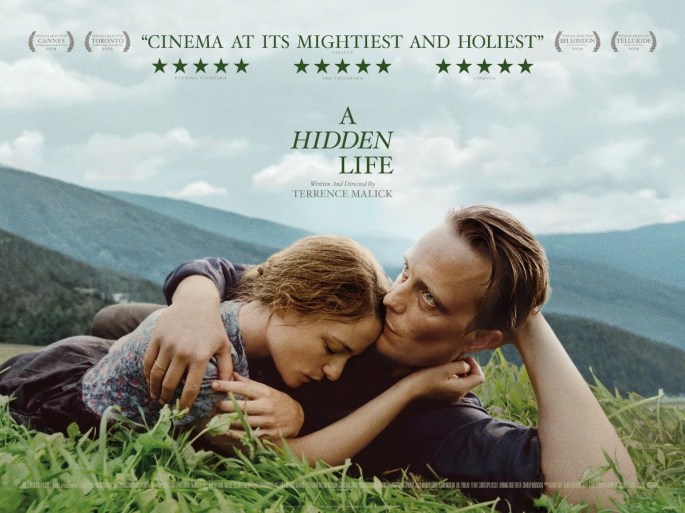
Terence Malick has gone through a fascinating evolutionary path, from the hazy, formative Days Of Heaven and Badlands spanning out to the free flowing, elemental and incredibly lyrical aesthetic he owns these days. Most of his films I’ve tried since Tree Of Life have kind of been lost on me; they’ve struck me as Malick playing in the artistic sandbox with literal handfuls of A list cameos but in experimenting loosely he lost a sense of narrative that was necessary as well. I was pleased to find that his newest film A Hidden Life progresses away from that and shows the most considerable growth in him as an artist I’ve seen since the leap from The New World to Tree Of Life. A Hidden Life contains a carefully distilled symbiotic dance between Malick’s newfound, esoteric style of filmmaking and telling of a linear, structured story with dialogue and beats, the result is something wholly fulfilling and transcendent. This is a simple story one one Austrian farmer named Franz Jägerstetter (August Diehl, so evil and malicious in Inglorious Basterds it’s hard to believe it’s the same actor playing this gentle, compassionate soul) who refuses against all coercion, peer pressure and principle to go along with Hitler’s reich or anything it stands for. This naturally causes him and his family no end of trouble until he reaches a nexus of his own making and his choices lead him down a path from which there is no return. Now we all know that gorgeous, pristine widescreen cinematography is a given in any Malick film but I can say most assuredly that this one has the absolute best and most drop dead gorgeous photography of anything he’s ever done. His images sweep over the Austrian hills, craggy mountains and misty glens with a movement and life force independent of simple camera work, and the sense of place, time and feeling instilled deep within the viewer is unparalleled. Later scenes in Berlin have a sort of regal, magisterial reverence to them, with ornate chapels midway through being painted and an over elaborate courthouse where Franz meets his ultimate fate. Austrian actress Valerie Pachner is unbelievably striking as Franz’s wife Fani, a fiercely protective, strong spirited woman who doesn’t always understand her husband’s defiance (same goes for me) but stands with him nonetheless. The strongest aspects of the film are carefully shot, almost holy sequences of day to day farm life in the Austrian countryside, filled with the same impossible beauty and studious observance we remember from Tree Of Life. We never even see the atrocities of war that Franz defies, and there’s scarcely a violent moment in the film save for his mistreatments in military prison. But through the simple act of watching this small village, it’s children, elders, tradesman, see these souls live through routine and love one another we get the sense of exactly what is at stake and what Franz is fighting for, despite never observing actual conflict. With Tree Of Life Malick searched the heavens for the same patterns of life and kinship he saw within one 1950’s American family, and drew forth wonders of filmmaking. And now with A Hidden Life he shows us one tiny Austrian village observed with all the detail and resonance one might see in the cosmos and asks us decide for ourselves as just how valuable such a place is, and what an act like Franz’s does in the long run to preserve it. Phenomenal film.

-Nate Hill

Dax Shepard’s Hit & Run

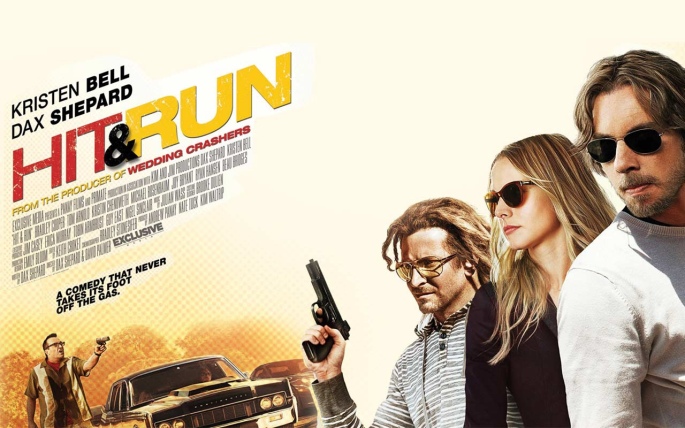
Hit & Run was a huge blast, and the key ingredient that makes it work so well is the real life couple dynamic of Dax Shepard and Kristen Bell, who keep the relationship banter fresh, realistic and adorable. This is a passion project for Shepherd, he writes, directs and stars in the kind of scrappy, bawdy highway car chase crime caper that feels cut from the same cloth as stuff like Vanishing Point, Smokey & The Bandit, Cannonball Run and old McQueen/Reynolds muscle car fluff. They also pulled it off on a budget of two million and most of that went to securing music rights, so what we have onscreen is a barebones, character driven, practical effects based screwball action comedy that just hits the spot. Shepherd is Charles Bronson, (picked for the famous British delinquent inmate, not the tough guy movie star) his chosen name in the witness protection program after testifying against his former bank robbing crew whom he was getaway driver for. When his wife gets a hotshot job in LA he’s forced to rear his head, her asshole ex boyfriend (Lex Luthor from Smallville) stalks them along the highway, they’re also pursued by his clumsy dipshit federal marshal case worker (Tom Arnold) and soon his old partner (Bradley Cooper) catches wind and it’s all one ridiculously cluttered, madcap extended chase sequence that’s is somehow totally nuts yet follows a cohesive plot in the same breath. Dax and Kristen anchor it, you can tell they are together in real life because sparks literally fly in any dialogue scene scripted or improvised, and there’s a ton of the latter speckled throughout the film. Tom Arnold does his wacky klutz routine, sometimes to effect and sometimes seeming just like a prop that trips over other props. Bradley Cooper steals the fucking show with greasy dreadlocks, a volatile bitch of a girlfriend (Joy Bryant) and enough homicidal attitude to spare, whether violently berating a guy twice his size for buying cheap dog food or lamenting the fact that he got ‘butt fucked’ in jail, after which Dax and Kristen have a guessing marathon as to the ethnicity of his rapist in the films funniest sequence. There’s colourful supporting work from Kristen Chenowith, David Koechner, Ryan Hansen, Beau Bridges and a couple juicy last minute cameos from big names I won’t spoil. This is easy breezy R rated comedy fun at its best with a fast, loose and organic feel, it barrels by briskly, brings tons of laughs and even gets a few quick sweet moments in too. Good stuff.

-Nate Hill

Francis Lawrence’s I Am Legend

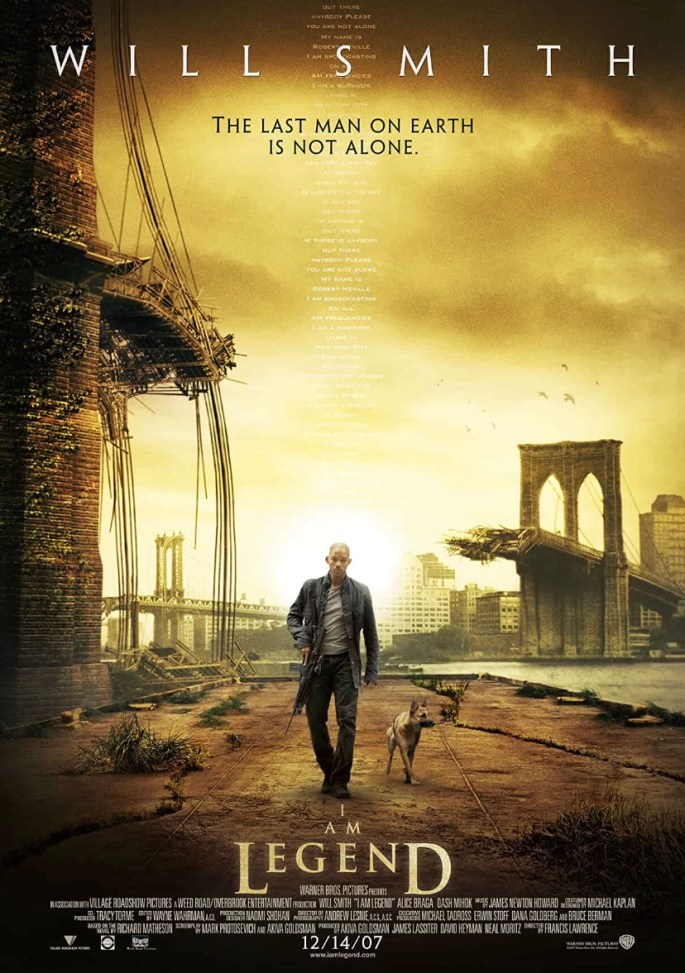
There’s nothing quite like the sight of Will Smith armed with a high powered rifle, dog at his side, left completely and utterly alone in a deserted metropolis to scavenge, wander and roar down an empty main drag in abandoned super cars. This is an applicable film right now because that’s kind of how I’ve felt being downtown at work these days, minus the dog and super cars. Smith is Robert Neville, the last man alive on Manhattan Island, or so he thinks. By day he wanders around, searches for food and keeps himself occupied, by night he barricades himself inside a modest fortress while the rest of NYC comes crawling out, now turned into savage marauding zombies by a mysterious virus. Robert tried his best to contact anyone who might be out there by radio and tirelessly works in his lab searching for a cure. This is a strange rhythm that continues for the first half of the film or so until the inevitable progression of a Hollywood narrative interrupts it. I kind of have a love hate relationship with this film, in the sense that I love it for some aspects but not so much others. The first portion of the film is one of the most effective uses of immersive atmosphere and drawing the viewer in I’ve ever seen. Seeing this in iMax back in the day I really felt like I was there with Robert, felt that isolation, despair, restlessness end even blessed solitude at certain moments. It’s a sensational way to open your story, but then as soon as other human characters are added later on, the vacuum like aura is yanked away and it becomes kind of… I dunno, routine. You’ve gotta be a pretty special post apocalyptic film to trick your audience into not only believing the premise but imagining themselves in it, and at the outset they more than succeed. It’s just later on the illusion foibles and loses us a bit. That and the dodgy CGI used on the zombies who are scary no doubt but still a bit rough in the FX department, but hey this was 2007 and Weta was busy working on King Kong so what can you do. I nitpick here and that shouldn’t suggest I don’t love this film, because I do. I just believe a piece that leaps out of the gate so effectively, so convincingly should keep up that lightning in a bottle magic for the whole duration, but that’s just me. It does have one of the single most heartbreaking scenes cinema has to offer, acted flawlessly enough by Smith to leave any badass viewer bawling. Anyone reading this who’s seen the film will know. Oh, and there’s also a weird Batman Vs. Superman poster in Times Square, I’m not sure what the deal is with that but it seems odd for 2007 considering that film wasn’t even made until 2015, no? Maybe there’s some cool time travel trivia to the making of this one.

-Nate Hill

Neil Jordan’s Mona Lisa

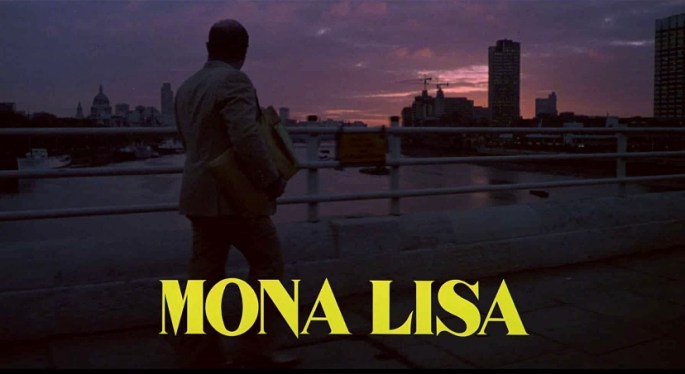
Neil Jordan’s Mona Lisa is a stunning film, an enigmatic jewel that doesn’t reveal any of its secrets or intent after the first five minutes, half hour or even mid point but rather let’s the passage of time, the sense of place, the richness of character and mesmeric atmosphere draw the viewer in. Bob Hoskins is George in another one of his ferocious bulldog performances, but this time around there’s a roughly sculpted emotional climate he’s cultivating too. George is an ex con who has drifted off his path in life, and after being released from prison has no idea where to turn. An old mob contact sets him up as driver and protector to high class call girl Simone (Cathy Tyson) and the two of them get on thunderously at first, until he gradually falls madly in love. She is a cipher, and Tyson plays her with a counterintuitive, flint-spark resilience. What’s she looking for as she scans the inky black London streets with an uncommonly focused gaze? I won’t spoil the surprise, but this narrative unfolds organically, at its own pace and with a deep feel for London as both a city and a primordial habitat. Michael Caine is deliciously vile as the horrid porn kingpin Mortwell, a selfish sociopath whose path George and Simone must cross on their own. You can’t quite pin this one down in any one genre and therein lies the magic that is a Jordan film. His work is always illusory yet somehow so specific but never tethered to any one thing you could describe in a few sentences. He makes films less from a genre perspective and more from a life perspective. There’s romance here to be sure, but not in the way one might think and the film’s violent conclusion set in seaside Brighton might leave you just as confused and heartbroken as some of its characters. There’s droll comedy too in episodic interactions between George and his chum Thomas, played by the great Robbie Coltrane in the kind of jovially cherubic turn that only he can pull off. There’s danger, loneliness, joy, monsters, corruption, redemption, love, hurt and more, all gilded by achingly beautiful cinematography drenched in West End neon, a Michael Kamen score that hits every note from jazz to a horror theme style jangle, of all things. I don’t know what else to say except experience this slice of life on celluloid for yourself, because it’s something truly special and not to really be put into words. Magnificent film.

-Nate Hill

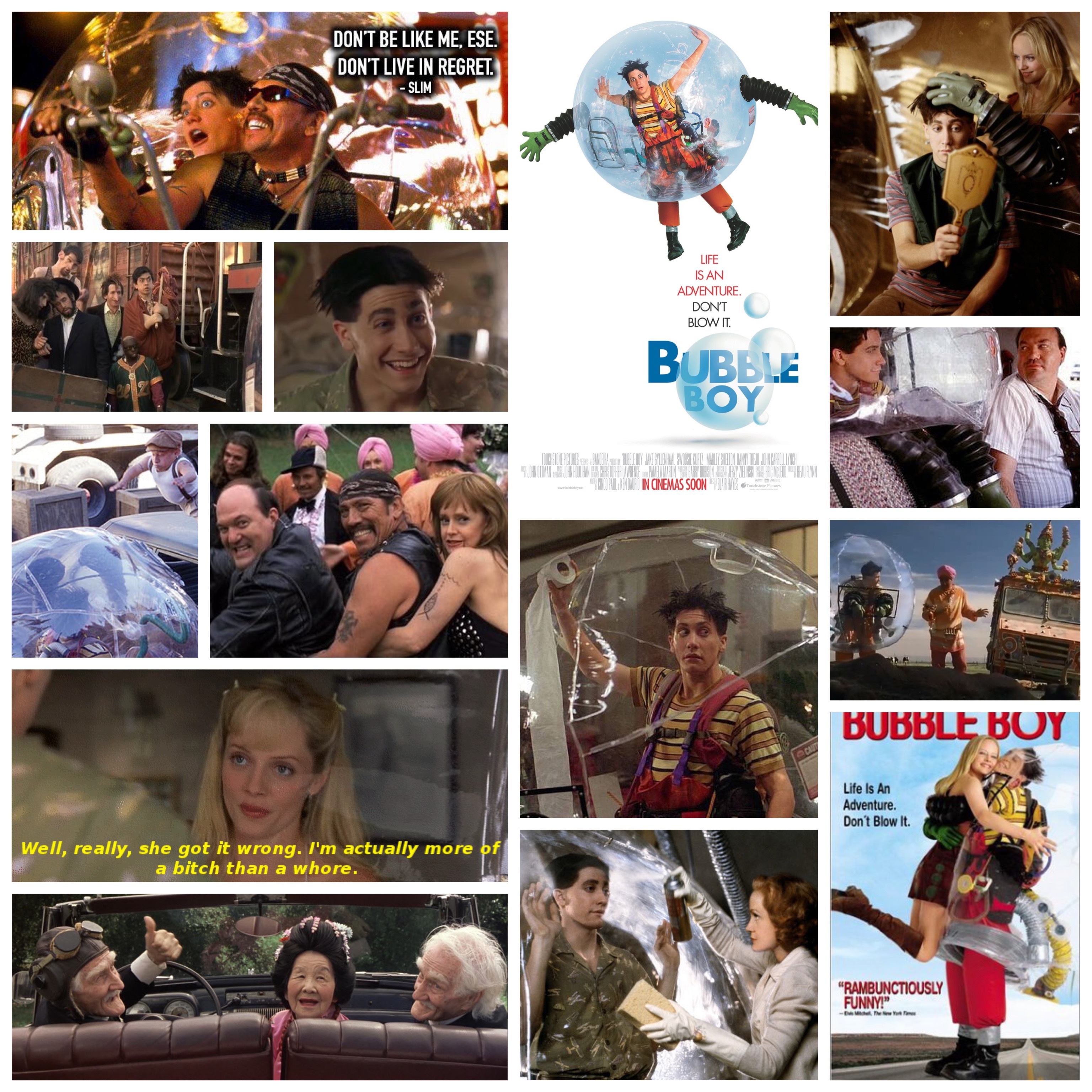
Blair Hayes’ Bubble Boy

I’d love to have been in the studio executives office to hear the pitch for Bubble Boy: “Okay so basically Jake Gyllenhaal is this kid who lives in a plastic bubble, he’s on a road trip and there’s also a travelling freak show owned by Mini Me from Austin Powers, a singing cult led by Fabio, Asian mud wrestling, twin incontinent geriatric pilots named Pippy and Pappy, a motorcycle gang headed up by Danny Trejo, an Indian who drives a food truck serving ‘Ice cream… and curry’” …if I were the exec in charge I’d have no choice but to green light the thing just for the balls they had to bring it to me. Like how do you say no to all that? Real talk though, this film was actually pretty special, and I mean that sincerely. Yes, it’s this kind of surreal, John Waters-esque parade of uproarious and seemingly arbitrary commotion anchored only by Gyllenhaal’s naive, oddball hero but there’s a message sewn into all that madness too that’s actually really sweet and astute. Born without a self generated immune system, Bubble Boy is kept at home in a pristine plastic environment by his overbearing, Jesus freak mom (Swoosie Kurtz), until he falls in love with the girl next door (Marley Shelton). When she runs off with plans to marry a preening douchebag (Dave Sheridan), he constructs that amazing bubble suit and and it’s off on a bizarre cross country race to find her and fix the misunderstandings of their relationship before she gets married. Things get a little… random along the way and his mom takes hot pursuit with his dad (John Carroll Lynch, excellent) in tow. It may all seem like noise and confusion but there’s a real theme of escaping one’s own personal prison going on beneath the surface. Gyllenhaal has left his eternal quarantine and headed out into the great unknown but in a sense each character he meets is in their own bubble of sorts, stunted by belief, circumstance, past trauma or just lunacy. Trejo is terrific as the rambunctious biker who pines for his lost love and will do anything for Bubble Boy, who he considers his ‘Vato.’ The circus show and all its members (which include the varied likes of Matthew McGrory and Lester ‘Beetlejuice’ Green) are a self ostracized bunch who don’t value their own worth until put to the test. Hell, even a cross country bus ticket vendor played by Zach Galifinakis sits resolute and awkward inside his booth, perplexed at sights he observes around him and unable to engage with the world. When mom catches up to Bubble Boy just when he’s about to reach Niagara Falls and wants to yank him home, Carroll Lynch as his dad gets the subtly subversive, beautiful line of dialogue: “What if Neil Armstrong travelled all that way just to *not* walk on the moon.” This is a balls out comedy peppered with delightfully weird shit but it’s also a film about questioning one’s reality, breaking boundaries imposed by whatever system governs you and finding a place in this world, which I promise you is far more strange than anything any screenwriter could ever dream up. Absolutely great film.

-Nate Hill