Tony Scott’s Days Of Thunder 


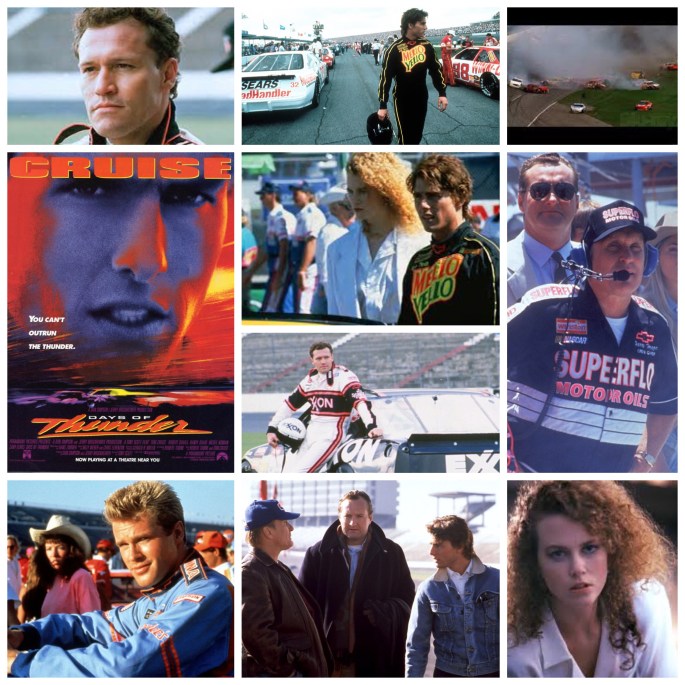
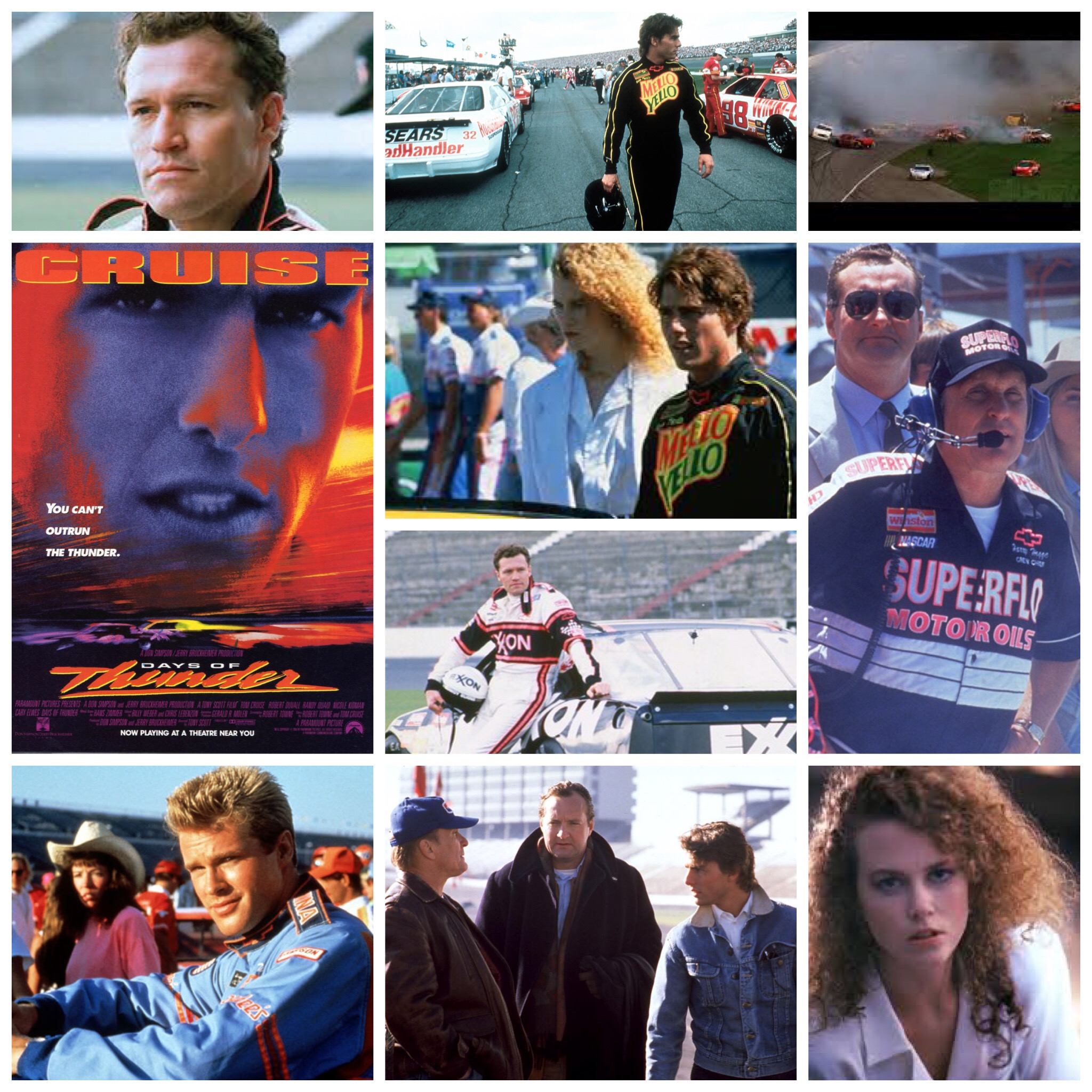
The first ten minutes or so of Tony Scott’s Days Of Thunder should be used to demonstrate the power of any new home theatre/speaker/sound system freshly harvested from Best Buy. As it opens on a piping hot stock car race-track in the midst of noonday sun festivities and preparations for the day’s events, Hans Zimmer’s explosive, patriotic thunderbolt of a score kicks in and you feel that mad rush of adrenaline reserved for only the most combustible, rabidly entertaining movie magic. It’s just too bad that the rest of the film can’t keep up with the level of energy on display in that whopper of a prologue, despite doing it’s very best. An obvious sister film and coattail hugger of Scott’s other ‘loud noises’ film Top Gun, there ain’t much to it other than screaming race cars and a daredevil Cole Trickle (Tom Cruise) trying to prove his sporting worth to various folks including the romantic interest, a doctor played by sexy Nicole Kidman and the sagely Yoda of stock car lore (Robert Duvall). He also has quite a few homoerotic run-ins with rival/partner Rowdy Burns (Michael Rooker is certainly someone I’d tag with the adjective rowdy), and of course races a whole bunch of race cars as well as crashes a few. You gotta hand it to cinematographer Ward Russell, as it can’t be an easy task to do crisply capture those vehicular torpedoes as they careen by at a zillion miles per hour, let alone immortalize the afternoon sun glancing off the Wonderbread sponsor logos so beautifully. Like I said, after that initial banger of an opening credits sequence, its run of the mill in terms of story, albeit dynamite in terms of stunts. Watch for work from Randy Quaid, Cary Elwes, Fred Dalton Thompson, John C. Reilly and mega-producer Don Simpson in a neat extended cameo. The real magic happens with Zimmer’s score though, go check it out on YouTube, as iTunes only has some weak retread by some philharmonic orchestra schmucks. Quite possibly one of the maestro’s best works. 

-Nate Hill

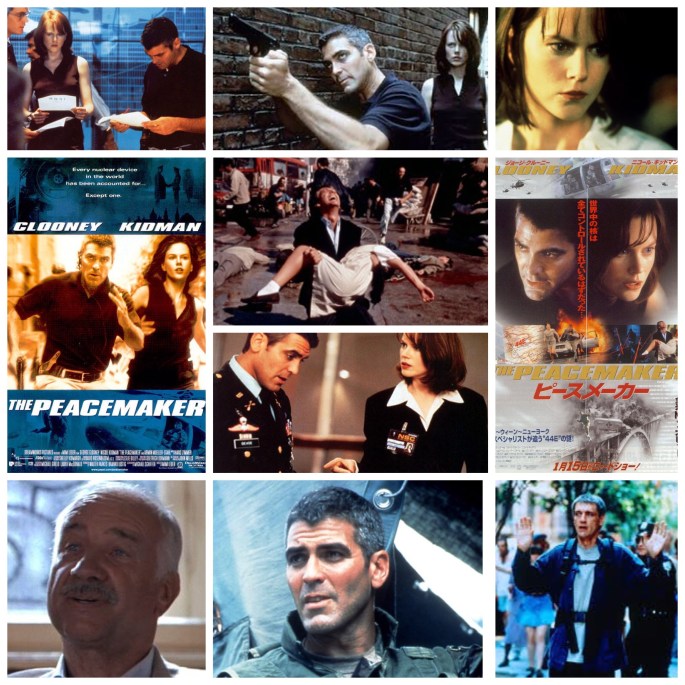
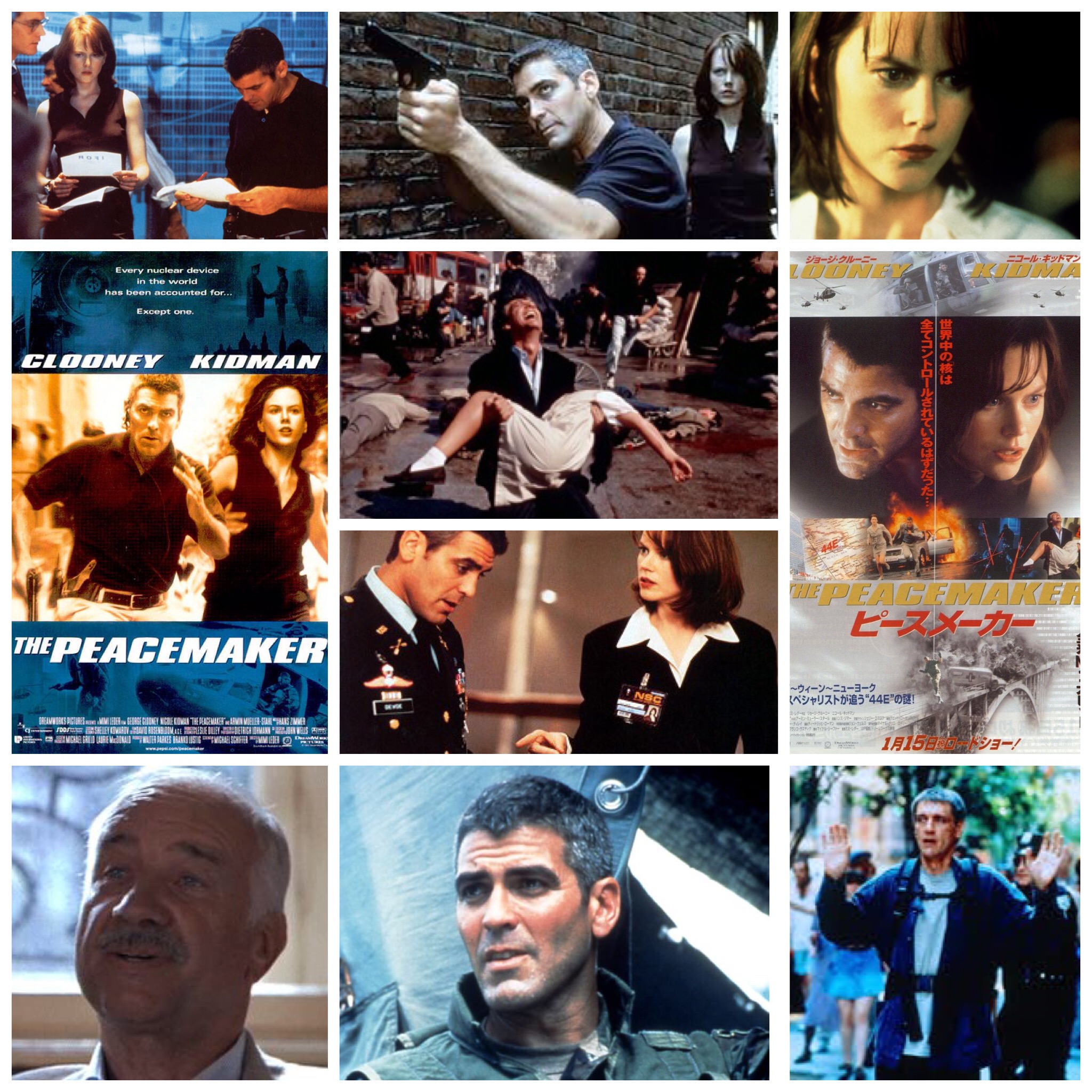
Mimi Leder’s The Peacemaker


Despite being a fairly dull film overall, Mimi Leder’s The Peacemaker has a few redeeming qualities that almost put it up there with other far better efforts in the wartime espionage subgenre, namely a terrific score from Hans Zimmer and one of the most flat out badass George Clooney actions scenes you’ll find anywhere in his career. It’s a shame the film you find these qualities in is a heavy handed, by the motions anti-terrorism headbanger that says and does nothing we haven’t seen a million times over. Clooney is the seasoned military man, on a globetrotting mission with Nicole Kidman’s intuitive agency analyst, tracking down several Russian nukes that were lifted off a train somewhere in Europe during a painfully static opener. There’s a radical out there played by French actor Marcel Iures, hiding as a piano teacher of all things, biding his time till he gets to go kaboom somewhere stateside and get revenge for some horrendous misdeed against his family. He’s actually the most interesting character, thanks to Iure’s obvious talent and the near sympathetic light they’ve painted his character in. The film is so by the numbers it’ll put you to sleep though, and the positively supersonic score from Zimmer feels like it deserves a better film. Still, you can’t go wrong with the sequence just after a droning car chase where Clooney has T-boned the baddie’s ride and trapped him inside. George promptly steps out, walks over and empties an entire fucking clip into this guys face, it’s pretty much the coolest thing the he’s ever done onscreen. Too bad the film as a whole couldn’t keep up with the organic, intimate level of energy infused into this one moment, we could have gotten something memorable. 

-Nate Hill

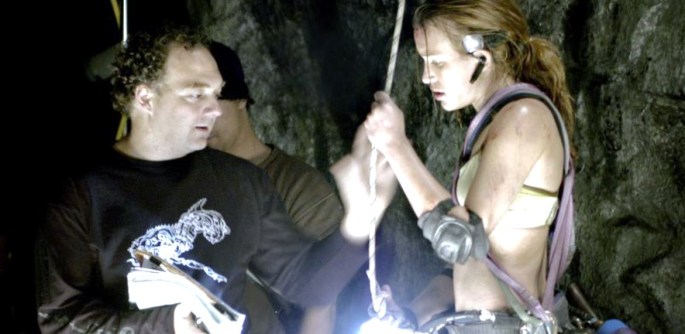
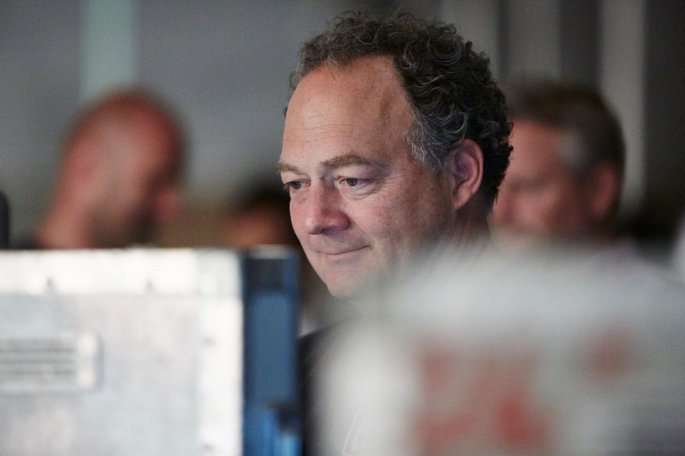
Dark Cities, Dark Futures, Dark Caves: An Interview with Bruce Hunt by Kent Hill

Young Bruce Hunt loved movies and blowing things up. This love, and learning the basics of the craft from film magazines of the period, would firmly cement in his mind the path on which he would travel. As it was said in a film that Bruce would later work on, “Fate it seems, is not without a sense of irony,” a teenage Bruce would encounter Academy Award winning special-effects artist Dennis Muren in a cafe in London.

1475781640944

It was Muren that would advise the dreamer to seek out an effects house in his native Australia for possible future employment and, after art school, that is what the talented Mr. Hunt would do. Working with small production houses on commercials his work would soon catch the eye of the founder of one of these companies, a man named Andrew Mason. It would be Mason, producing a film directed by Alex Proyas called Dark City, that would call on Hunt to bring his passion, and by then, professional eye for effects photography to his first big screen gig.

Work on another big flick would follow, as Mason would again tap Bruce and bring him to work on the Wachowski’s cinematic masterpiece The Matrix. There would be work on the film’s sequels before, at last, Bruce would sit in the director’s chair for The Cave, an adventure in deep terror. He would emerge from the darkness to work on Baz Luhrmann’s Australia only to descend again soon after for Guillermo del Toro’s Don’t be afraid of the Dark.

Through it all his love of the movies continues to drive him and, as you will hear, he has plans to get his visions back on that big screen, just as soon as he can. It was great to sit down with Bruce. Not only is he a filmmaker I admire, but it was great to just talk about movies with him.

If you don’t know his work then now is the time to check it out. But, if you already have and you’re a fan like me – then kick back and enjoy.

Ladies and gentlemen, I give you my good mate . . . Bruce Hunt

Jackman Unleashed Week: Baz Luhrmann’s Australia

2008_australia_hugh_jackman

By J.D. Lafrance

After his debut film Strictly Ballroom (1992), writer/director Baz Luhrmann never looked back, creating lavish, ultra-stylish musicals William Shakespeare’s Romeo + Juliet (1996) and Moulin Rouge! (2001), and let’s not forget that $5 million Chanel commercial starring his cinematic muse, Nicole Kidman. With, Australia (2008), he decided to take national pride to a whole new level by creating a sweeping romantic epic about his home country that takes place between the World Wars and was made by and starring Australians. With a budget in the neighborhood of $130 million, the pressure was on Luhrmann now more than ever before to deliver at the box office and, while underperforming in North America, it went on to gross $200 million worldwide despite a lukewarm critical response.

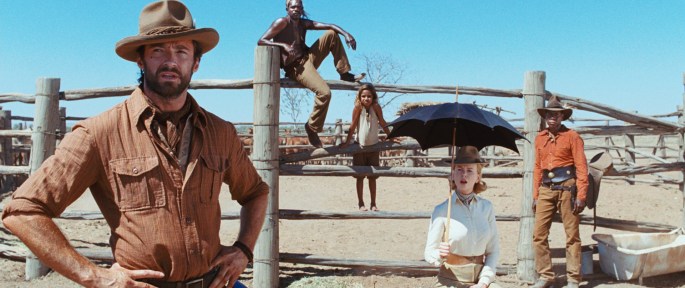
Lady Sarah Ashley (Kidman) is a headstrong English aristocrat who travels to Northern Australia in 1939 to meet her husband at their ranch Faraway Downs. Within a few minutes of arriving, she meets her guide to this strange new land, a man known as the Drover (Hugh Jackman), a hard-drinking, two-fisted Australian version of a cowboy. They take an instant dislike to each other: she thinks that he’s crude and uncultured and he thinks that she’s too prim and proper.

They arrive at Faraway Downs to find her husband dead (apparently at the hands of an Aboriginal) and the ranch in disarray and in danger of being foreclosed. Mr. Carney (Bryan Brown), the local tycoon with a monopoly on the local economy, has his right-hand man, Mr. Fletcher (David Wenham) try to sabotage Lady Ashley. In order to save Faraway Downs, she has to drive 1,500 head of cattle to Darwin and so she enlists the help of the Drover. Along the way, they befriend a young Aboriginal boy named Nullah (Brandon Walters) whom she protects from being taken away and forced to assimilate with white folks.

As with his previous films, Luhrmann populates Australia with broad, stereotypical characters and tells a classic story. The film revels in archetypes: Ashley is a pure, upstanding woman, the Drover is the rugged western hero, Fletcher is the dastardly villain, and Nullah is the adorable child who narrates the story. As he proved with is previous films, Luhrmann has an uncanny knack for casting. Who can forget the undeniable chemistry between Leonardo DiCaprio and Claire Danes in Romeo + Juliet and the sparks that flew between Ewan McGregor and Nicole Kidman in Moulin Rouge!? He’s at it again with this film with the casting of Hugh Jackman and Kidman as the romantic leads.

Jackman finally fulfills those early comparisons to Clint Eastwood, playing the Drover as a tough, dependable hero who’s not afraid to show his vulnerable side. He’s never been more charismatic as he proves to be equally adept at the physical demands and the emotional range that the role requires. No one knows how to photograph Kidman quite like Luhrmann. She looks stunning, even covered in a layer of dirt and dust from a cattle drive. At first, her stuffy English aristocrat comes off as a cartoonish stereotype but as her character becomes acclimatized to the country and she develops a bond with Nullah, she becomes warmer and more empathetic.

Beginning in 1939 and climaxing with the Japanese bombing of Darwin in 1942, Luhrmann’s Australia mixes the larger-than-life melodrama of Gone with the Wind (1939) with the exciting cattle drive in Red River (1948) and with a dash of The Wizard of Oz (1939). His film clearly harkens back to the kind of cinema that they just don’t make any more with very little CGI used and everything built from scratch and on location. Australia is the kind of ambitious Technicolor epic that might have been made by John Ford or George Stevens. It is a marvel of absolutely stunning cinematography – only Luhrmann could make the desolate outback look vibrant and alive. He alternates between sun-drenched day scenes and night scenes that appear to be impossibly illuminated by the stars.

One should not go into Australia expecting realism. Luhrmann presents a mythologized take on his country. Love him or hate him, you have to respect Luhrmann for not being afraid to wear his heart on his sleeve. He’s arguably the most romantic filmmaker working today with the possible exception of Wong Kar-Wai. And with Australia, he has made an unabashed love letter to his homeland on a grand scale.
The Golden Compass: A Review by Nate Hill 

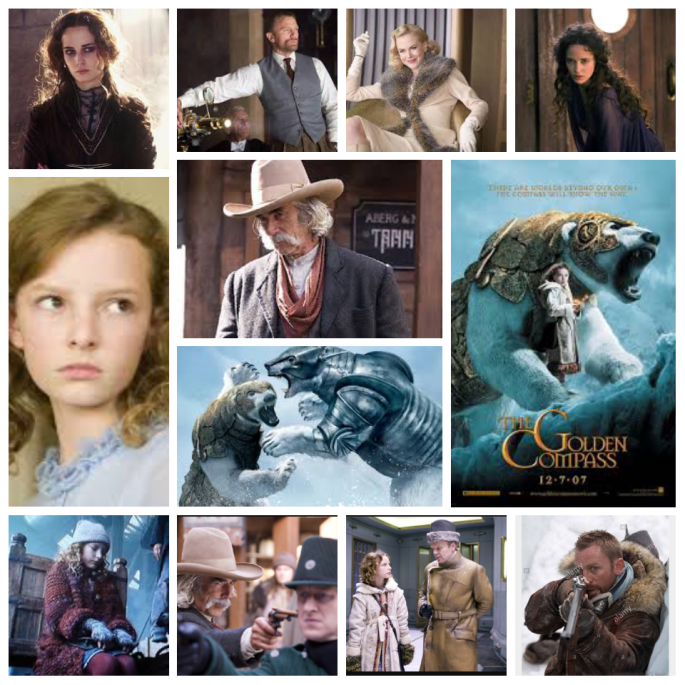
There’s a reason they never adapted another novel in Philip Pullman’s His Dark Materials series past the initial stab at The Golden Compass, and it’s the same infuriating reason why many adaptations of children’s and young adult novels fail: lack of appropriate atmosphere and true menace found in the source material. Everytime Hollywood comes along and decides to try their luck at a beloved series for youngsters or young adults, they feel this feverish need to shine it up with a candy colored, over lit vibe that leaves much of the darker elements by the wayside and as a result their final product feels neutered and bereft of any weight, stakes or attention to detail. Spiderwick. Skellig. Eragon. Hell, even Narnia only made it by the skin of its teeth, blasting out of the gate with a flawless entry, only to peter off into sequels afflicted by the very symptoms I outlined above, and not even make it to the end of the saga at that. Now don’t get me wrong, this doesn’t happen to every series they try to adapt, but to enough of them that it’s a problem, especially when a darkly creative, eerie and unique tale like this gets turned into a glossy, pandering misfire. It’s sad because some of the elements of a good film are in place, starting with casting. Dakota Blue Richards is on-the-nose perfect as Lyra, the adventurous heroine who gets swept away on a menacing voyage to arctic lands and beyond. She lives in a curious parallel universe where every human is forever accompanied by a ‘Daemon’, essentially a piece of their soul that takes animal form, and never the two shall separate. Lyra’s uncle Lord Asriel (Daniel Craig) is an explorer who has returned from the north lands with tales of a mysterious phenomenon called ‘dust’, a powerful substance purported to be able to unlock other worlds and dimensions. Lyra is curious at first and then nervous when she meets icy Mrs. Coulter (Nicole Kidman) a prim socialite with a devious agenda involving children that have gone missing in the city. She has a facility on the tundra where scary research and very bad experiments are conducted. Now in the books the descriptions and eventual confrontation with this would make your hair turn white. Pullman imparts it with weight and true blood freezing horror. The filmmakers *deliberatly* tone it down and castrate it, leaving anyone who was a fan of the series in total disgust. It just doesn’t have the same dark, otherworldly atmosphere it did on the pages, it feels too bright, chipper and lacking any real wonder. It does have some wicked visuals going for it in places, such as the two rival talking bears, voiced with baritone boom by Ian McKellen and Ian McShane, the landscape of the north as seen from the hot air balloon of grizzled sky-cowboy Lee Scoresby (Sam Elliott), and others. Eva Green also scores well as elemental witch Serafina Pekkala, but then she’s incapable of giving a bad performance anyhow. Scattered supporting cast includes Kathy Bates, Kristin Scott Thomas, Tom Courtney, Simon Mcburney, Derek Jacobi, as well, an impressive lineup all in all, but one that deserves a far better film for their talent. It’s just misguided and tone deaf. It may have been a series for adolescents, but the themes, implications and scenarios found in those books are harrowing, complex, very mature and not to be taken lightly, let alone given the full on Harry Potter theme park treatment. Shame, really, and a giant missed opportunity. Perhaps someday soon a network will get the rights and turn this tale into a film or tv show worthy of His Dark Materials.

Batman Forever: A Review by Nate Hill 

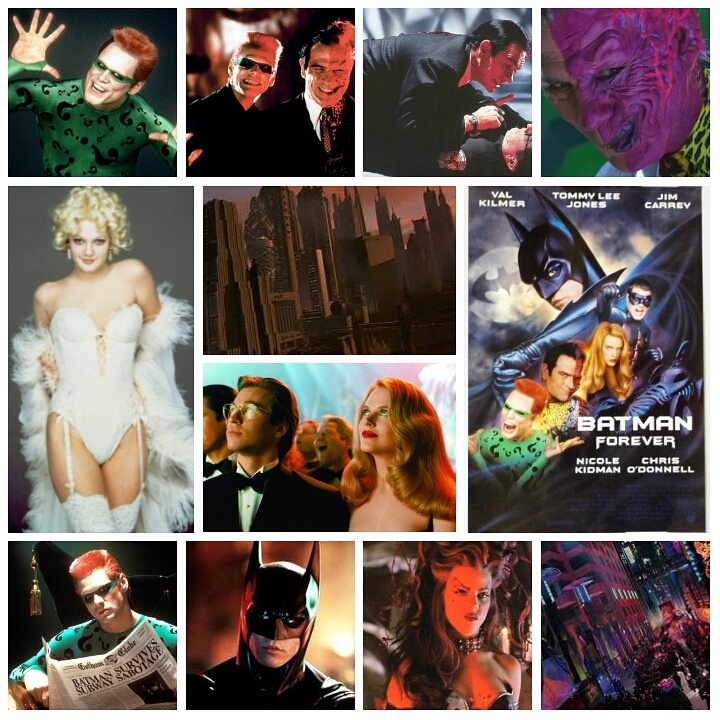
It’s true, Batman Forever is a silly, overblown, cartoonish riot of buffoonry.  But so what? It’s also awesome in it’s own way, and inhabits a certain corner of the Batman culture, the side of things that is rooted in camp and unhinged wonderment. Now, there’s an important and discernable difference between taking things far and taking things too far. That difference is delineated on one side by a willingness to be goofy, colorful and not take this superhero stuff too seriously. The other side of that of course is a disregard for limits, throwing every ridiculous line, costume and awkward scene into it you can imagine. I’m referring to Joel Schumacher’s followup to this, Batman & Robin. Everything that is weird, wonderful and extravagant about Forever just revved up to much in Robin, resulting in a piss poor typhoon of mania and over acting. Not to say that Forever doesn’t have over acting. Ohhhh boy is there over acting. Between Tommy Lee Jones and Jim Carrey, the thing is liable to give you epilipsy. But it somehow works despite its madness, a lucky stroke that Robin couldn’t have cared less about adhering to. Val Kilmer is the sedating antidote to Jones and Carrey, a remakably laid back Bats and a pretty solid casting choice, both as Brooding Bruce and Buttkicking Bats. Eternally broken up about the death of his patents, Bruce fights off Harvey Two Face Dent (Jones) in a garish, disarming Gotham City that resembles Mardi Gras in Dr. Seuss land. Jones’s Two Face is so far over the top, so rabid that it’s a wonder he didn’t give himself a bloody heart attack in the first take. Anyone who’s interested can read up on his performance, and how he pushed himself right to the heights of bombast in order to try and out-Carrey the Jim. Carrey, playing the Riddler, is a ball of twisted nerves himself, set loose on the wacky sets and basically given free reign to.. well.. go fucking nuts. It’s one of his most physical performances too, prancing around like a loon in green spandex that leaves nothing to the imagination. Aaron Eckhart’s Two Face may have had the edge for grit, but Jones has the rollicking clown version, and runs away to kookoo land with mannerisms that even call to mind The Joker in some scenes. The only thing I’ve seen him more hopped up in is Natural Born Killers, but shit man its hard to top his work in that. The story is all over the place, involving a nonsensical subplot with a mind control device, multiple elaborate set pieces, endless scenery chewing and the eventual arrival of Robin, played by Chris O’Donnell who is like the cinematic Buzz Killington. Michael Gough and Pat Hingle dutifully tag along as Alfred and Commissioner Gordon, both looking tired at this point. Debi Mazar and Drew Barrymore have amusing dual cameos as Two Face’s twin vixens, and Nicole Kidman does the slinky love interest shtick for Bruce as a sexy psychologist. Watch for an uncredited Ed Begley Jr. Too. There’s no denying the silliness, but one has to admit that the achievment in costume, production design and artistry are clear off the charts with this one, and visually it should be a legend in the franchise. Say what you will about it, I love the thing.