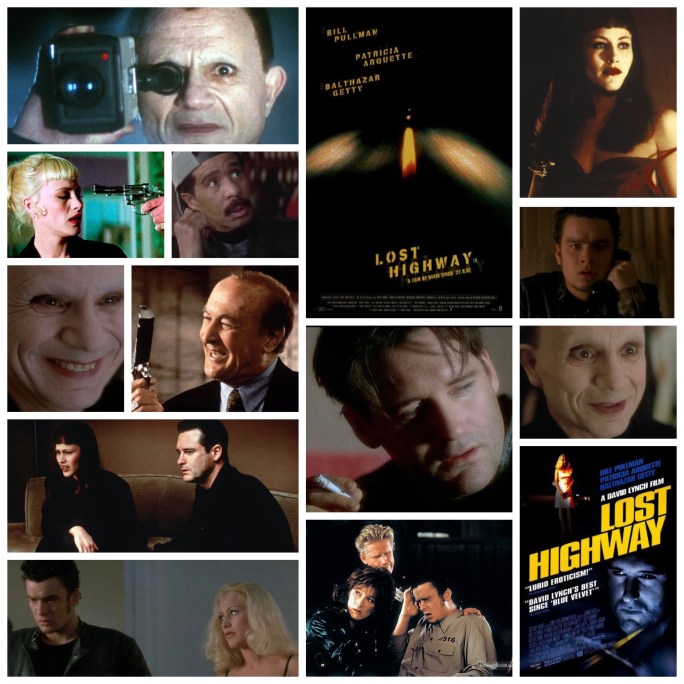
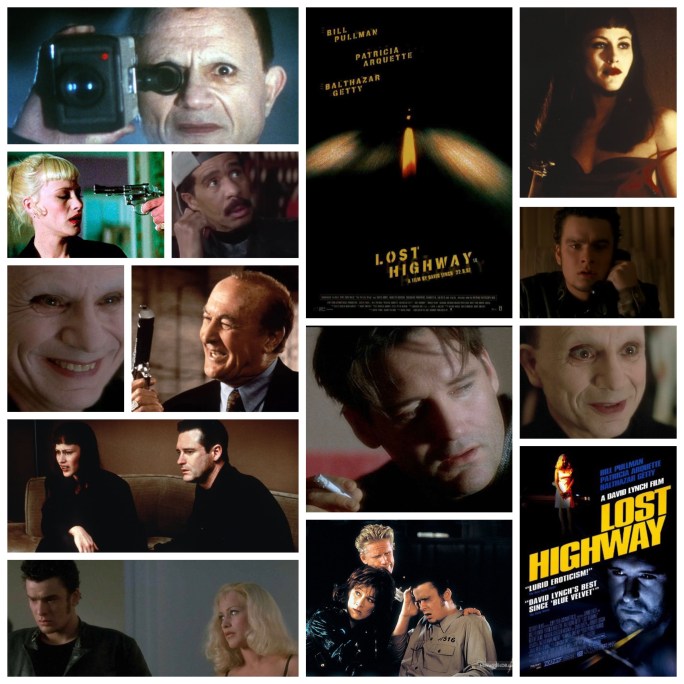
David Lynch’s Lost Highway

High beams pierce a nocturnal interstate as David Bowie’s ‘I’m Deranged’ eerily cuts through a still night and we realize that David Lynch’s Lost Highway isn’t going to be your average road trip, let alone overall viewing experience. This is a fuzzy, feverish portrait of a fractured mind attempting to make sense of extremely distressing circumstances that are both alienating and possibly self inflicted. Lynch is always keen on probing the murky cerebral waters which border on potentially paranormal occurrences, and the often frustrating line, or lack thereof, which is drawn in, around and between these two aspects. Psychological terror, ambiguous scenes that leave you scratching your head once you’ve caught your breath, identity crisis, elliptical narratives that leave us haunted and wanting more are all tools in his bag, ones he’s employed countless times throughout his monolithic career. Usually he implements that in an esoteric, earthy way, but there’s something cold, clinical and unsettlingly voyeuristic about this that somewhat separates it from a lot of other stuff he’s done. The term ‘Lynchian’ in itself has become its own genre, there’s no debating that anymore. It’s usually within this self made realm that he explores, but it’s almost like with this one he went in with a mindset to play around with a sordid, almost De Palma-esque style of genre, and then inject it with his trademark eerie weirdness, in this case to great effect.

Bill Pullman stars as jazz trumpet player Fred, spending his nights belting out unnerving solos in smoky clubs. Pullman is an all American prototype, seen in a lot of generic, regular Joe roles. Observing him venture into sketchy material is jarring and super effective (see his career best work in David’s daughter Jen Lynch’s Surveillance for an even better example of this). He and his gorgeous wife Alice (Patricia Arquette) wake up one ominous morning to discover a packaged video tape on their doorstep, the contents of which show someone breaking into their house and filming them while they sleep. They feel both horrified and violated, and call the police who prove to be just south of useful. From there things get terrifically weird. Fred attends a party where he meets the Mystery Man (Robert Blake) who plays a mean spirited magic trick on him that will have your skin crawling out the door. This was one of Blake’s last two roles before the unfortunate incident that cut his career painfully short, but he’s perfect for Lynch’s stable and eats up the frames he inhabits, a pasty faced ghoul with beady black jewel eyes and a piercing laugh that will stain your dreams. Before he knows it, Fred wakes up and is accused for his own wife’s murder, whisked away to a dank death row cell, plummeting the film into a new segment, Lynch’s way of letting us know this isn’t going to be an easy watch.

Fred wakes up sometime later… And isn’t Fred anymore. He’s a young dude with amnesia who’s been missing for a while, played by the edgy Balthazar Getty. It’s a stark narrative left turn, a stinging reminder that from there on in, we’re in for some nasty antics with no light at the end of the tunnel. Getty is released from prison, since he’s not Pullman who they arrested to begin with. From there he gets entangled in one hot mess involving a volatile gangster porno king (Robert Loggia), his seductive wife (also Patricia Arquette) and the ever present Mystery Man who lurks over both planes of the film’s narrative like a malicious puppeteer. I’m trying to be deliberately vague about the plot (lord knows Lynch did as well), both to not spoil any surprises for you, and partly because after many viewings, I’m still not sure exactly what it means for myself. It’s a great big clusterfuck of extremely disturbing sequences, surreal passages of auditory and visual madness and a frothing undercurrent of atmosphere that constantly pulls on your sleeve to remind you that something is terribly wrong, but never gives you the solace of telling you what that something is. Traumatic viewing to say the least.

Lynch assembles an extraterrestrial supporting cast including Michael Massee, Jack Nance, Natasha Gregson Warner, Marilyn Manson, Henry Rollins, Mink Stole, Jack Kehler, Giovanni Ribisi, Richard Pryor and the one and only Gary Busey (when Gary is one of the calmest, sanest people in your film you know you’ve driven off the cliff). Some highlights for me are anything to do with Blake’s paralyzing spectre of a character who is one of the best Lynch creations ever, Loggia intimidating an obnoxious driver is priceless and the closest the film gets to comedy, and the final twenty minutes where the lines of reality, fantasy and the jagged planes of perception within the characters minds collide, providing us with a creepy non-resolution, part of what makes the entire show so memorable and affecting. A classic that begs countless revisits before it can fully cast all aspects of its spell on you, and one of Lynch’s unsung best.

-Nate Hill
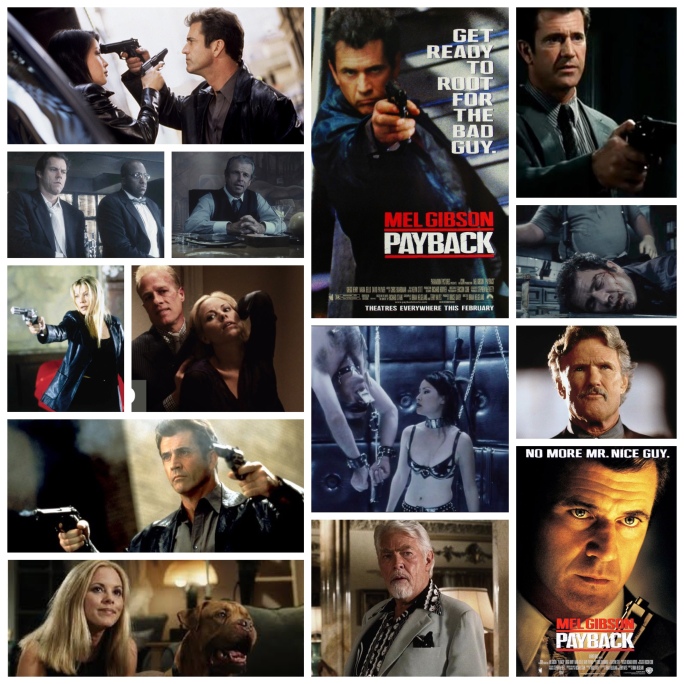
Brian Helgeland’s Payback

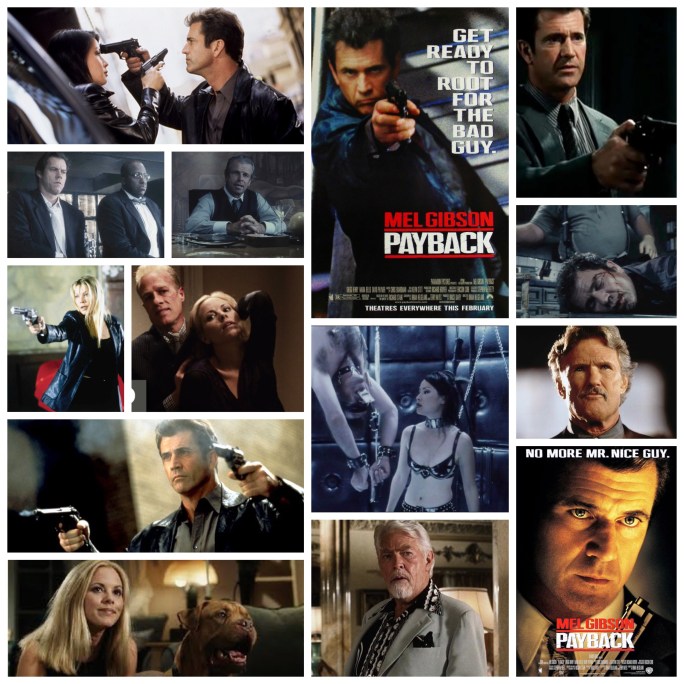
Isn’t it always kind of more fun when the protagonist of a film is an utter scumbag? I think so, and Brian Helgeland did too when writing Payback, my favourite Mel Gibson film (outside Mad Max of course, but that’s a high pedestal to breach). There’s something so engaging about Mel’s Porter, a street rat career criminal who’s betrayed by his treacherous partner (Gregg Henry) and junkie wife (Deborah Kara Unger), left for dead in an alley. After a rocky recovery he comes back with vengeance on the mind, hunting down those who fucked him over and anyone who profited from it. The first thing he does to set tone for his character is steal cash from a panhandling hobo, which is just about the starkest way to inform your audience of what’s to come. What does Porter want? He wants his 24k from the job he got shafted on, not a penny less and, hysterically, not a penny more either, which becomes the beloved running joke of the film as he prowls streets, poker rooms, titty bars and all kinds of lowlife establishments to get what’s his. Henry is off the rails as his former partner in crime, taking his usual brand of scenery chewing to new heights and picking fights with anyone who makes eye contact with him. He isn’t even the main villain either, that honour goes to a stone-faced Kris Kristofferson as the sadistic head of a shadowy mega crime syndicate who are soon alerted of Porter’s ongoing rampage. There’s uber corrupt cops (Bill Duke, Jack Conley), a weaselly bookie (David Paymer), a bureaucrat desk jockey villain (William Devane), a high class escort with a heart of gold (Maria Bello) who brings out the faintest of softer sides in Porter, a sneering assassin (the great John Glover) and others who all get caught up in the commotion this guy causes just to get his modest 24 grand. A young Lucy Liu also shows up as a sexy S&M hooker with ties to the Triads and enough scary attitude to either turn me on or freak me out, I’m still not sure. My favourite has to be James Coburn as another organized crime hotshot who seems more interested in his elaborate accessories than putting a step to Porter’s nonsense. “That’s just mean, man” he bawls after Mel puts a bullet in one of his designer alligator skin suitcases. So damn funny. This is the epitome of jet black humour, one of the meanest, gnarliest, bloodiest and most entertaining neo-noirs that Hollywood has ever produced. Mel has played so many heroes and upstanding family men that it’s refreshing to see him go for the contemptible asshole shtick, and I’ll be honest I’ve never rooted for one of his characters harder than I do for Porter and his deranged urban crusade every time I rewatch this, which is a lot. Fucking brilliant film.

-Nate Hill

HBO’s True Detective: Season 2

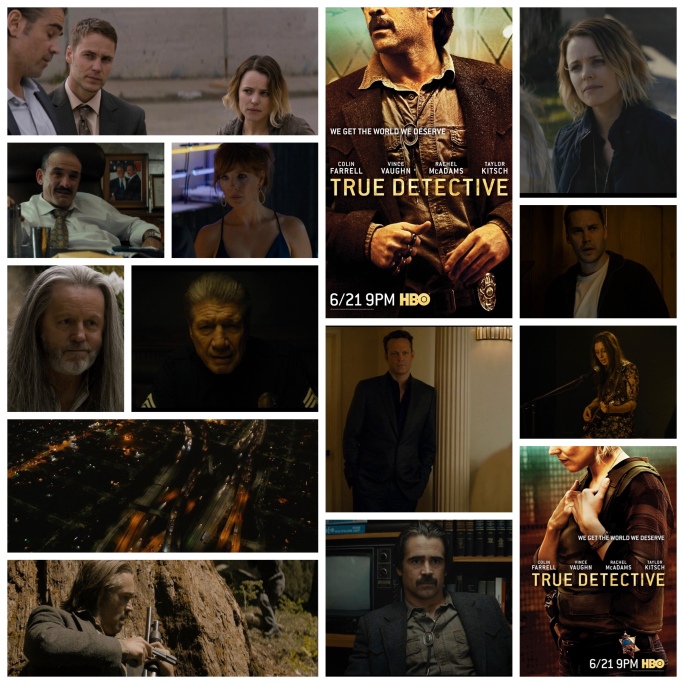
So just what was it about season two of HBO’s True Detective that caused such a monumental ruckus of ruthless criticism? Well, who can say. I imagine it had something to do with the dark, difficult and byzantine way that creator Nic Pizzolatto presents the material. Maybe it’s the fact that it had to follow the lightning in a bottle, southern gothic, out of left field mastery of season one. Simply just the shift in tone and setting? I’m reaching for straws here because the hate and rejection that this brilliant piece of television has amassed always flew over my head. This is deep, dark LA noir at its finest, most gorgeously dangerous and I love every challenging, impenetrable episode to bits.

The setting shifts from bayous of Louisiana, the amount of lead characters multiplies significantly and where there was once eerie folk horror and occult conspiracy we now find decadence, corruption most high and a focused, implosive inwardness in exploring each individual the narrative focuses on. Colin Farrell is unbearably intense as LA cop Ray Velcoro, a haunted addict who has fallen from the grace of both the department and his family, but isn’t down for the count quite yet. Vince Vaughn is emblematic of every career criminal trying to go straight as Frank Semyon, a stubborn small time kingpin with dreams of scoring big in California real estate. Rachel McAdams is haunted as Ani Bezzerides, a cop with a tragic past and the deep set trauma to prove it. Taylor Kitsch is Paul Woodrough, a pent up special ops veteran turned state trooper who rounds out this quartet as they’re faced with the kind of miserable, insurmountable odds one always finds in the best kind of film noirs. There’s an unsettling, decades old conspiracy afoot in the fictional yet uneasily realistic county of Vinci, CA, a brooding, festering menace that seems rooted in the now booming transportation system that has taken the economy by storm. Our heroes struggle to fight treachery, debauchery and excess run mad everywhere they turn, for their souls and California’s itself alike as the slogan for promotional material “We get the world we deserve” seems stingingly apparent throughout.

Farrell is my favourite as Velcoro, the anxiety ridden badass who displays the horrors of his past in the manic whites of his eyes and drowns them out with enough booze and blow to feed a city’s collective habit. He’s an antihero type, moonlighting as an enforcer for Vaughn but maintaining a fierce moral compass when all else is naught. Vaughn feasts on the stylized dialogue here and produces verbal poetry so good it hurts and you hit the rewind button just to hear his delivery again. His Frank is a hard, jaded piece of work with a soul hiding beneath the layers of anger and distrust for the world around him. McAdams’s Ani comes from a place of childhood trauma so unthinkable that they barely show it in hushed flashback, and it’s apparent in her caged animal body language, by far the actress’s most affecting work. Kitsch makes the slightest impression of the four and his arc didn’t seem as immediate as the others but he still did a bang up job in intense physicality. After the success of season one a host of excellent actors were drawn to this project, standouts here include David Morse as Ani’s commune leader dad, Kelly Reilly as Frank’s intuitive wife and second in command, Rick Springfield (!) as a shady plastic surgeon, Ritchie Coster as Vinci’s terminally alcoholic mayor, W. Earl Brown, James Frain, Ronny Cox, C.S. Lee, Lolita Davidovitch and the legendary Fred Ward as Ray’s bitterly prophetic ex-cop father.

Pizzolatto spins a very different kind of story here, one composed of long glances, deep shadows, arresting establishing shots of Vinci’s sprawling highway system, as dense and tough to navigate as the season’s central mystery, which isn’t one you get a sense of in just one, two or even three viewings. Impatience and frustration are easy to understand with this narrative, but one shouldn’t write off this piece so easily and I’m sure that’s what happened. A few people don’t have the time to invest in it, get hostile and throw some negative reviews out there and before you know it it becomes cool to hate and there’s folks throwing around words like ‘flawed’ before they’ve attempted a single episode, but that’s the way the internet works I suppose. Balls to them though, this is a deliciously dark, highly stylized, very emotional ride through a world whose themes, intentions and true colours aren’t readily visible until you descend several layers deep alongside these compelling characters. It’s thoughtful, pessimistic yet just hopeful enough to keep a candle lit in all that darkness and has some of the most beautiful acting, camera, dialogue and music work I’ve seen from anything. Masterpiece.

-Nate Hill

Paul McGuigan’s Lucky Number Slevin

Like Bruce Willis’s cranky hitman Goodkat assures us in the sleepy opening to Paul McGuigan’s Lucky Number Slevin, this is a story that pulls the rug out from under you big time, going left when you look right and anchoring the very glib, cavalier crime shenanigans in something solid and emotional in the eleventh hour. It’s a wild, wacky film that borrows from others and often gets sidetracked by itself, but it’s also one of the most stylish, ambitious and beautifully made crime dramas of the last few decades, and has become an all time favourite for me.

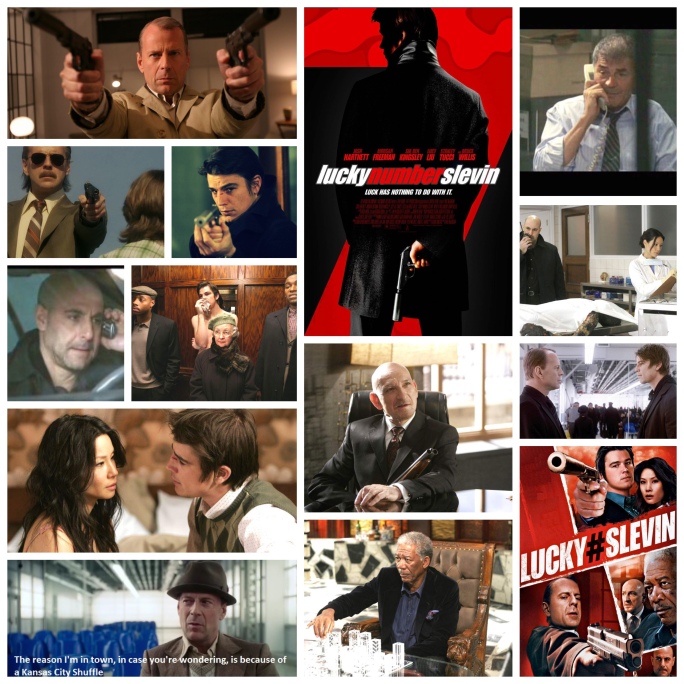
Josh Hartnett plays the mysterious Slevin, a hapless dude who is constantly mistaken for an even more hapless dude named Nick Fisher. Fisher is in a lot of trouble, owing large gambling debts to feuding NYC mobsters The Boss (Morgan Freeman) and The Rabbi (Ben Kingsley), debts which now forfeit to Slevin simply because he’s consistently in the wrong place at the wrong time. Then there’s the overzealous, shady NYPD cop (Stanley Tucci in mean mode) shadowing him, plus the bubbly girl next door (Lucy Liu) who tags along in his adventures in mistaken identity. It’s all very overelaborate, convoluted and long winded, but it’s part of what makes the thing so magical. Characters often use ten words where two will do, employ quirky anecdotes, monologue and show their pithy eccentricities, it’s an oddball script by Jason Smilovic that makes for one labyrinthine ride through New York City’s peculiar underworld dating back to the 70’s. The actors are having an absolute blast here and we get further work from Mykelti Williamson, Cory Stoll, Danny Aiello, Peter Outerbridge and more. A standout is the great Robert Forster in a cameo as a cop who delivers more exposition in one single scene than I’ve seen in some entire films, he’s a great enough actor that he fills a seemingly inconsequential role with wit and personality.

McGuigan is a stylist who throws colour and pattern into the mix even when the scene doesn’t call for it, to great effect. Why shoot in a drab warehouse or monochromatic apartment when you can douse your set in kaleidoscope design just for the sheer hell of it? It works, the offbeat production design serving to illustrate and accent a very strange, often hilarious yet ultimately human story. Much of the film is near cartoon level neo noir that doesn’t dig two deep, but there are three scenes, and I can’t be specific here without spoiling, that anchor it straight into the ground, provide an emotional core and make something heartfelt cut through the tomfoolery. Many people wrote this off as just silliness, but that’s lazy criticism 101. This is a fantastic film, full of many things to love. It’s probably Hartnett’s best work in a very eclectic career and his romantic chemistry with Liu (also superb) is patiently developed and adorable to see. Freeman and Kingsley eat up the dialogue like wisened old alligators and have a blast playing their arch villains. Willis is darkly charismatic and empathetic when he needs to be, stealing every scene. A classic for me.

-Nate Hill

David Robert Mitchell’s Under The Silver Lake

David Robert Mitchell’s Under The Silver Lake is for sure going to repel, frustrate and test people’s patience as I can already see by the hordes of nasty reviews, but I loved this thing. It’s one of those scintillating, fractal LA neo-noir flicks like The Big Lebowski that seems somehow well oiled and deliberately scattershot at the same time. Mitchell marched onto the scene five years ago with his acclaimed horror debut It Follows, but Silver Lake is a brand new bag and shows he can switch up tone, setting and genre pretty adeptly.

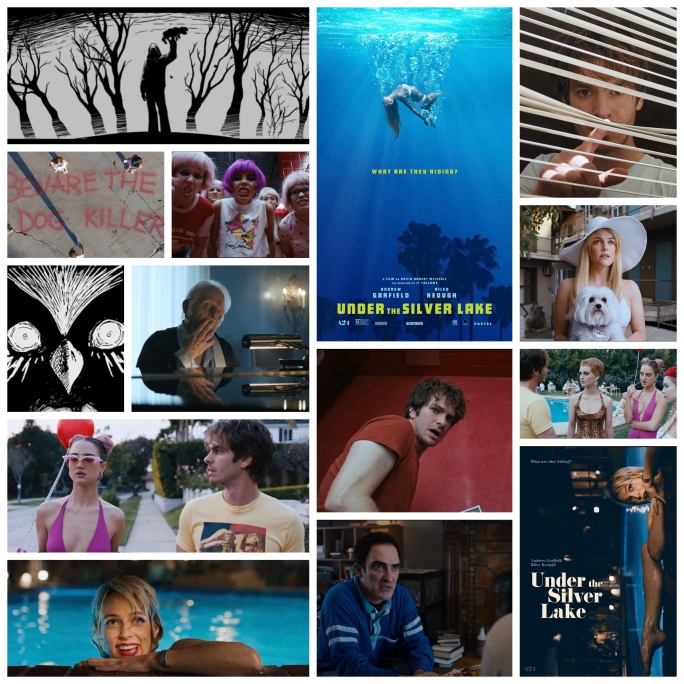
Andrew Garfield plays against type as Sam, a meandering loser who seems more interested in following a never ending path of hidden clues that only he seems to be able to make sense of than worrying about his heinously overdue rent. He plays the role like one of Neverland’s lost boys out on the skids, a sheepish, constantly perplexed flunkee who just can’t seem to get his shit together. After catching feels for a mysterious girl (Riley Keough) in his motel complex who promptly disappears the next morning, he believes he’s onto a secret society of people who leave cryptic messages in plain sight, on wall graffiti, stadium score screens and within popular music tracks. Is he actually onto something big, or is he just as crazy as the conspiracy theorizing comic book artist (Patrick Fischler, whose very presence cements the Mulholland Drive homage) and the paranoid drinking buddy (Topher Grace) whom he associates with? Well, he’s certainly unlocked something, and whether it’s Hollywood’s deepest set ring of secrets and conspiracies or simply emerging mental illness chipping away at his grasp on reality is something that Mitchell maddeningly and deliciously leaves up to us.

This is one unbelievably ambitious and stylized film, so much so that it’s two and a half hour runtime isn’t even enough to bring every story thread, subplot and circus sideshow to a conclusion, but there’s a nagging inkling that Mitchell meant to do exactly that and it wasn’t just because he didn’t know how to cap every idea off. By not telling us exactly what’s up with everything, we wonder more about the deeper layers behind Sam’s journey and the Byzantine forces that are somehow always just out of reach. What’s the point then, you may ask? Well, it’s a good question, and there may not even be one, which has obviously been a deal breaker for many who saw this. The journey, and the episodic silliness is what you come for I suppose, and your ability to deal with the nihilistic senselessness of it all is the barometer on whether you stay, and have positive words after.

Sure, it even irked me a bit that we never learned the identity of the mysterious serial killer of dogs (watch for a freaky Black Dahlia nod), or found out more about the Machiavellian Songwriter (I don’t even know who plays this guy as it’s clearly a younger dude under gobs of old man makeup a lá Jackass) who pulls unseen strings in the music industry, but did that stop me from enjoying and being stimulated by these sequences? No, and they’re some of the most memorable stuff I’ve seen onscreen in a while. The film may be all over the place and certainly trips over its shoelaces here and there, but it’s something bold, unheard of and even feels unique in the sub category of sunny, drunken and dazed out LA noir. There are moments of hysterical comedy and instances of blood freezing horror that both had me in stitches and genuinely spooked me out more than any film this year so far, and when a piece can lay claim to both in the same runtime, you know you’re onto something. This is probably headed for cult status, the marketing hasn’t really been kind and even seems to have tried to bury it (it’s on Amazon Prime) but I hope it finds its audience and endures, because it’s really something unique and special. Listen for another achingly beautiful score from Disasterpiece, who also did It Follows but switch the synths up for something even more retro and inspired by golden age Hollywood, like the film itself. My favourite of the year so far!

-Nate Hill

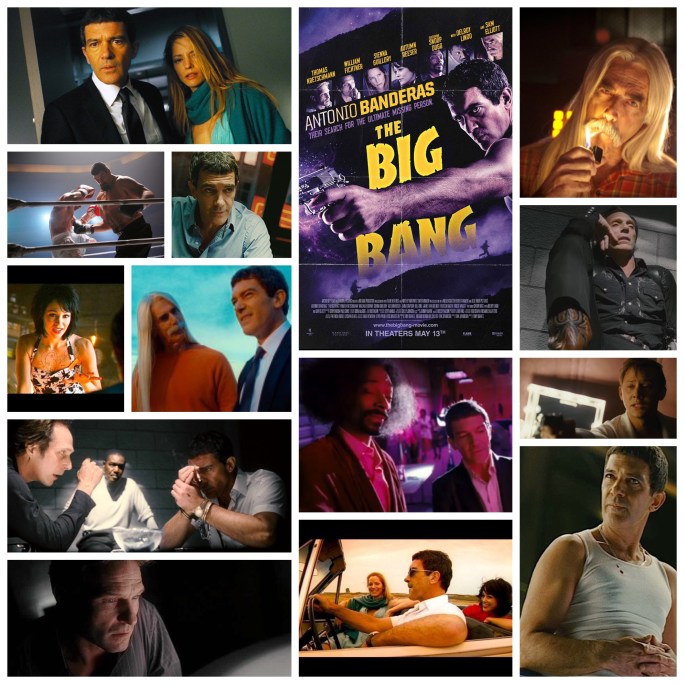
Tony Krantz’s The Big Bang

Tony Krantz’s The Big Bang is one of the most interesting indie flicks to have come along in recent years, and while I can’t quite call it a great film, it has to be one of the most ambitious I’ve ever seen. There are so many concepts, characters, creations, ideas and pontifications running about here that it almost becomes a swirling soup made up of parts of itself as opposed to a cohesive meal, but I’ll never turn down original ideas and unique creative expression, no matter how fucking bonkers it’s all presented.

This is one of those films with a cast that is the very definition of eclectic. A handful of actors are gathered up here who would normally not be seen in the same thing together, let alone casted as against type as they are, and I’m always an advocate for casting against type. It’s basically a noirish California detective story infused with themes of physics and pseudoscience, like Phillip Marlowe by way of Nikola Tesla. Antonio Banderas does an impressive encore here as Ned Cruz, a low rent private eye who is hired by one monster of a Russian prizefighter (Robert Maillet) to find a pen pal girlfriend named Lexie Parsimmons, who he has never even met. As with all detective stories like this, that one seemingly simple task leads Ned on a riotous goose chase all over LA and the outskirts, encountering every oddball, weirdo and pervert the sunny state has to offer. His search is also intercut with scenes in the future where’s he’s somehow been arrested by three spectacularly corrupt LAPD big shots and is being interrogated to the nines.

I greatly admire Krantz for giving his film life, vitality, filling in every corner with substance and conversation and providing every character, right down to those who only get one scene or so, with their own personality, quirk or viewpoint. The three cops are played by William Fichtner, Delroy Lindo and Thomas Kretschmann and if you’re a fan of either you’ll know what scene stealers they are, they constantly try to one up each other with pithy barbs and are all fantastic to watch in action. Most memorable has to be Sam Elliott as Simon Kestral, an eccentric billionaire who is funnelling big bucks into literally recreating the infamous Big Bang using scientific equipment, it’s a hilariously counterintuitive casting choice for such an earthy cowboy but it just somehow works. Look at the rest of the lineup too, which is populated by people like James Van Der Beek, Jimmi Simpson, Bill Duke, Sienna Guillory, Rebecca Mader, Autumn Reeser and Snoop Dogg as a porn director who greatly enjoys acting in his own films, because of course Snoop would.

The plot here is impossibly convoluted and packed to the gills with nonsense, runaway trains of thought, synergetic visual poetry, scenery chewing from almost every actor and all manner of sideshow trickery, but as they say, the fun is in the journey, and what a journey Krantz provides for his characters. I can’t call this a great film but I can say that I love it a lot, I think it’s one of the nuttiest things I’ve ever seen attempted, it looks so fucking sexy onscreen (just look at the poster) and you don’t find films this unique every day. With the upcoming release of David Robert Mitchell’s Under The Silver Lake, which I’ve still yet to see, I’ve been fixated on LA noir films (this one is that and then some) and I’ve been going back in time to revisit some of my favourites. What are yours?

-Nate Hill

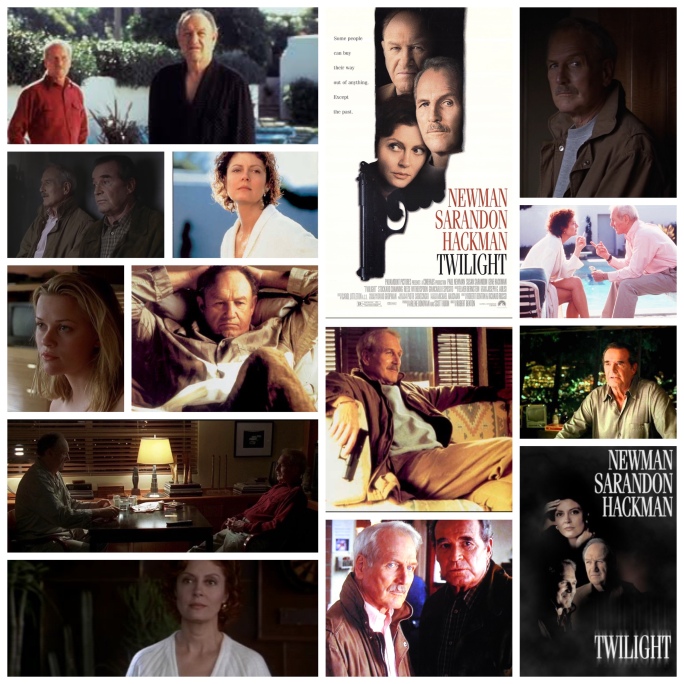
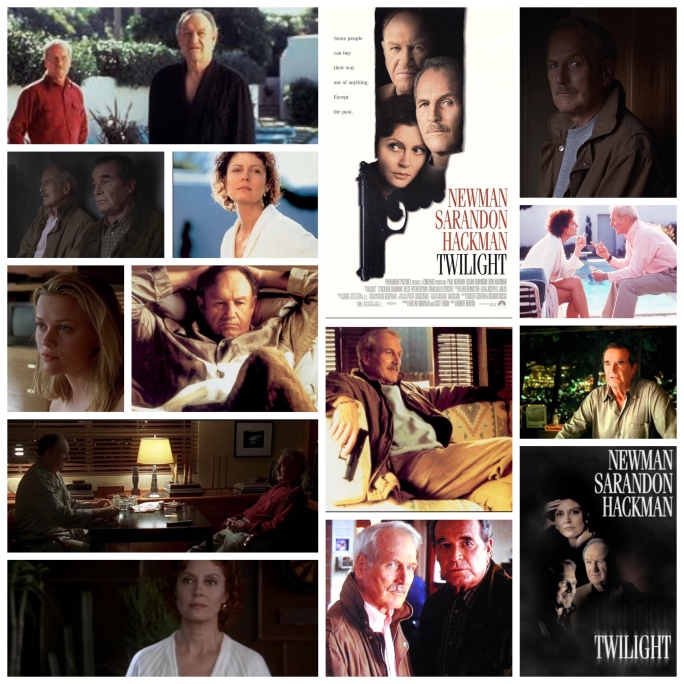
Robert Benton’s Twilight

The title Twilight obviously brings up bad memories of a franchise we’d all like to forget, but before that abomination ever entered the fold, the moniker belonged to a laconic, brightly lit yet darkly intoned LA film noir starring Paul Newman as an aging Hollywood private investigator. He’s a guy who was was never famous himself but seemingly behind the scenes of stardom and scandal and making a career out of it until his golden years find him living on the lavish estate of a fading starlet (Susan Sarandon) and her husband (Gene Hackman), also an actor of former stature. He’s always been in love with her but is also Hackman’s good buddy and it makes for a love triangle that is never too tense or melodramatic, but just as uncomfortable as it needs to be. He sort of serves as their homefront security officer and sorta just spies on Sarandon languishing by the pool and you can tell that the three of them are just mournful ghosts of what they probably were decades ago, haunting their surroundings like echoes rather than living in them.

Things get heavy for them once again when Newman takes on a shady job that involves delivering blackmail money, a situation that quickly snowballs into deceit, old wounds torn open and, of course, murder most foul. Something nasty is going on that dates years back into the collective past of these three individuals and has come back to bite them all squarely on the ass, and although it might not be the most innovative mystery narrative and certainly aspects are predictable, it’s just so much fun watching these master actors play it out in sunny Hollywood enclaves. Speaking of old pros, James Garner has a nice supporting role as an ex cop pal of Newman’s who helps him out with intel and backup. Watch for early career work from Liev Schreiber, who now stars on Showtime’s Ray Donovan, another LA noir story that I’m almost positive drew inspiration from this film. A very young and very naked Reese Witherspoon also shows up briefly, as well as Stockard Channing, Margo Martindale, Giancarlo Esposito, Jason Clarke, John Spencer, Clint Howard and M. Emmett Walsh. Newman is terrific here in one of his older dude roles, his blue eyes lend just a hint of optimism to the downbeat noir archetype. Hackman and Sarandon say a lot with little dialogue and plenty of body language, embodying damaged souls with grace and grizzle.

I recently heard a character in Amazon’s Goliath (yet another LA noir- can you tell I’ve cultivated a fixation on the sub genre?) say that murders in LA and Hollywood are especially tricky to solve because anybody could know anybody or be connected to anything. That gives ample freedom to intertwine characters and set up strange encounters or resolutions to plot, which is always fun and evident here too. It’s a slow, sunny burn of a crime flick that isn’t designed to be particularly flashy or lurid, but unfolds at its own pace alongside Newman & Co. Good stuff.

-Nate Hill

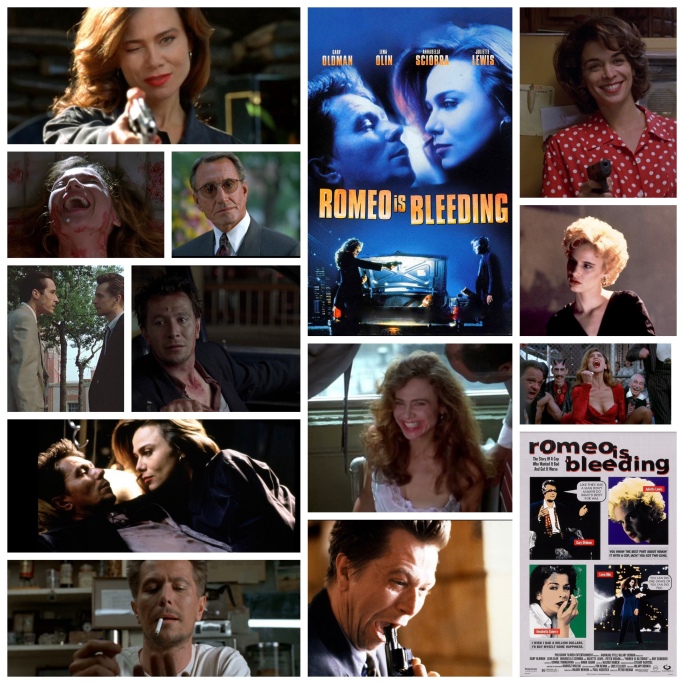
Peter Medak’s Romeo Is Bleeding

Somewhere out there in an anguished desert enclave along one of the many desolate stretches of American highway is Jim Dougherty (Gary Oldman), stranded in exile at a lonely rest stop cafe as Peter Medak’s brilliant, haunting neo-noir Romeo Is Bleeding opens.

Jim, as we learn through forlornly narration, was once a spectacularly corrupt NYC cop named Jack Grimaldi, a man who got too ambitious in the worst way and learnt every lesson the hardest possible fashion he could. Jack was a greedy, scheming piece of work who two timed his loyal wife (Annabella Sciorra, fantastic) with a ditzy cocktail waitress (Juliette Lewis) and did his best to upend everything the department works for by playing it against the mafia with increasingly disastrous results, stuck on a hollow treadmill chasing dollar signs. But his wife and mistress weren’t the only women in his life, as he soon meets Mona Demarkov, a seductive Russian contract killer played by Lena Olin in a performance that is to be applauded, feared and lusted after in equal measures. Mona is the wild card, the hurricane that upends an uneasy equilibrium Jack has toiled sweatily to set up like a house of cards, ready for her to blow down. Dumped in his lap by the Feds to babysit until mob operatives arrive to kill her, she manipulates, seduces and torments Jack within moments, but she’s only just begun. She escapes into New York and leads everyone on a terrifying goose chase of bloody mind games and gangland espionage, threatening to tear both organizations, not to mention Jack’s sanity, to pieces.

Oldman has never exuded the specific kind of sweaty desperation he showcases here, he’s got three women too many, nasty mafia Don Falcone (a quietly dangerous Roy Scheider) breathing over his shoulder and fellow cops inches away from sniffing out the rat in plain sight. Gary somehow comes across as likeable despite all this heinous behaviour, like a lost puppy who wandered into the wrong cave. Olin really lets loose with her work, she’s a villain not just for the noir hall of fame but for the ages, a murderous black velvet spider on a wanton spree of anarchic, sociopathic, psychosexual destruction and loving every minute of it. They’re supported by an epic roster of talent including Will Patton, David Proval, Larry Joshua, James Cromwell, Ron Perlman, Tony Sirico, Stephen Tobolowsky, Dennis Farina as a gregarious mafioso and the great Michael Wincott as Jack’s underworld pal Sal who turns on him like a jackal when things get out of control.

Many people seem to see this as an interesting yet ultimately flawed piece with uneven tone and what have you, but I couldn’t disagree more. For me this is pretty much as close to perfect as a film can get. Jim sits out there on the lonely byways of some forgotten region and recounts the tale of Jack, there’s such a beautifully mournful melancholy to his story, a true tragedy and cautionary tale laced with grit, jet black humour and an ever so subtle fairytale vibe. Writer Hilary Henkin spins a wild, surreal and slightly self aware screenplay here, while Mark Isham’s creepy, music box infused score gives off bushels of atmospheric portent. I feel like this is another one that was maybe ahead of its time, or perhaps just an acquired taste. I’m happy to see it has a budding cult following these days because it really deserves people’s time, it’s one of the very best crime films of the 1990’s and one of my all time favourite stories out there.

-Nate Hill

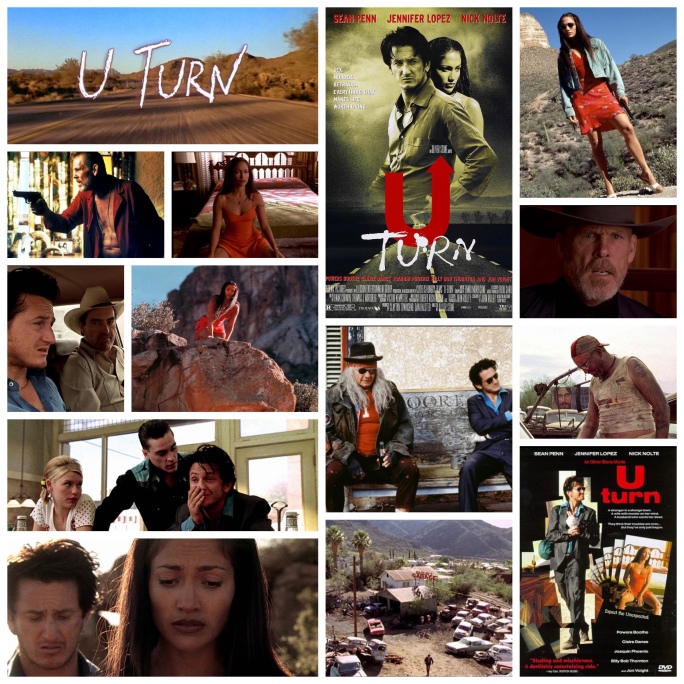
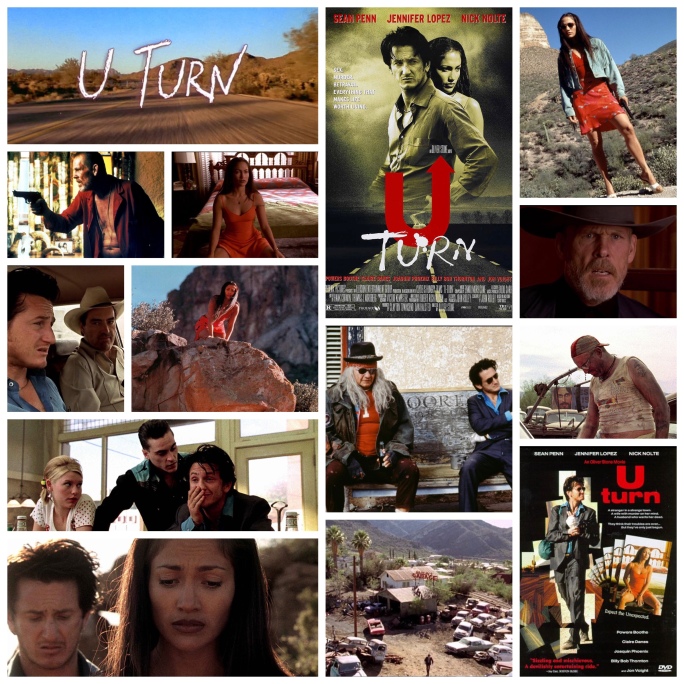
Oliver Stone’s U Turn

Ever had one of those days where literally everything seems to go wrong and there’s some kind of invisible cosmic force aligned against you? Sean Penn’s Bobby has one of those in Oliver Stone’s U Turn, a deranged, sun drunk parable by way of neo-noir and near Boschian displays of brutal human behaviour punctuated by pockets of the blackest comedy one can find. This is a deliberately, brutally unpleasant slice of nihilism that wouldn’t be easy to swallow were it not so fucking funny, so gorgeously visual, so perkily acted by the knockout ensemble cast and so beautifully scored by Ennio Morricone. Penn’s Bobby has the rotten luck of breaking down in the one horse town of Superior, Arizona, where bumpkin mechanic Billy Bob Thornton takes his sweet time patching up the rig, leaving him to drift about town and get in all sorts of trouble. There’s a rockabilly maniac named Toby ‘TNT’ Tucker (Joaquin Phoenix) who wants Bobby’s head for ‘making time’ with his girl (a loopy Claire Danes). The menacing local Sheriff (Powers Boothe) seems hellbent on doing anything other than protecting and serving. Jennifer Lopez is sultry babe Grace, who snares him up in a dangerously lurid love triangle with her husband Jake (Nick Nolte at his utmost Nick Nolte-iest), who also happens to be her stepfather (!). This all boils into a mucky miasma of murder, violence, sex games, insurance fraud, gas station robberies, betrayal, severed limbs, manipulation and any other noisy calamity you could think of to befall a small town in Arizona that the rest of the world has seemingly forgot. Bobby is on the run from a scary Vegas loan shark (Valery Nikoaelev), but nothing he can do compares to the level of hurt these warped townsfolk inflict upon him, so it’s kind of an out of the frying pan into the fire type scenario. The thing is, Bobby himself is something of a reprehensible scumbag anyways, so there’s a cheeky masochist edge in watching him traverse this dusty, 9th ring of Americana hell and circle an ending of inevitable doom. ‘Treat others how you wish to be treated’ is an adage that almost every single character in the film seems to have sadly forgotten or chose to ignore except one individual, a blind old native man played with disarming truth by Jon Voight. Bobby has several encounters with him, and he’s the only one who isn’t after something, doesn’t display hostility or unkindness, he speaks plainly and offers Bobby bitter pearls of wisdom that ultimately go unheeded. Stone employs the same type of jittery, whacked out visual surrealities he used in Natural Born Killers, a deeply saturated colour palette, tumble dry editing techniques and more breathe life into this vivid version of curdled small town life in the vast, lonely desert. Morricone’s score is a spring loaded jack-in-the-box in areas and a melodic, melancholic lullaby in others, an underrated composition that gives the film an eerie sadness and zany vibration all it’s own. There’s more going on than meets the eye here; at surface level it’s a dark crime comedy with a quirky edge, but both Voight’s character and a few mysterious hints at Lopez’s backstory with the tribes in the region hint at a deeper, darker sense of malice lurking out there with the coyotes, suggestive of an almost mythic aspect. Stone gets high praise for his political dramas, but I’ve always loved him best when he’s doing genre stuff, he’s such an expressive storyteller and the real fruit of his imagination comes out when he’s turned loose. For me this is his second finest work after Natural Born Killers and before Savages, the three films that seem most genuine and celebratory of the medium. In any case, U Turn is a southern fried, asphalt laden, angry, sexy, perverse road trip to sunny noir heaven or hell, and a masterpiece. Watch for neat cameos from Laurie Metcalf, Bo Hopkins, Brent Briscoe, Julie Hagerty and Liv Tyler.

-Nate Hill

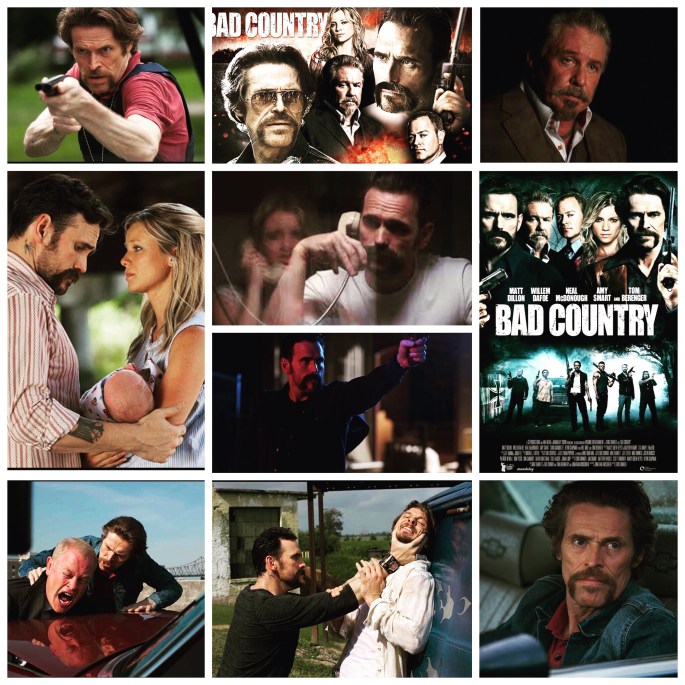
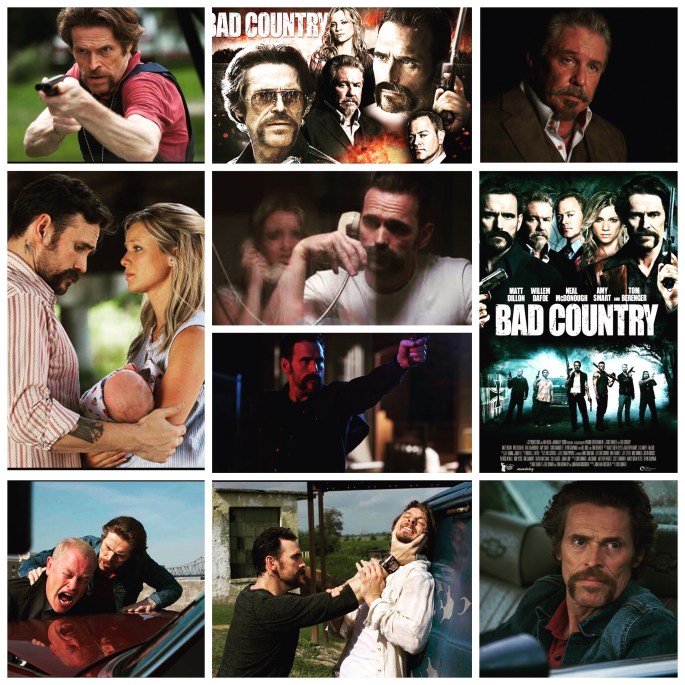
Bad Country

Bad Country is a fairly low budget, bayou set noir/crime flick, and while it doesn’t have the resources to pull of something intricate and mythic like The Departed or something, it succeeds with what it has in being a brutal, downbeat crime thriller with a heavy blanket of gloom over it and some brooding tough guys engaged in gang warfare in deepest Louisiana. It’s sort of like the type of extreme crime films you’d see in the 70’s, where every character has an anger and a violence to them and there’s no good guys or sweet resolution. Willem Dafoe is aces as gruff police detective Bud Carter, a rule breaking loose cannon who arrests mob contract killer Jesse Weiland (a scary Matt Dillon) in hopes of using him as leverage to take down Lutín (Tom Berenger, looking like an evil, Nazi Colonel Sanders), Louisiana’s fearsome underworld kingpin. This involves betrayals, shoot outs, lots and lots of swearing, sweaty bayou sex, tattoos, tragedy, depravity and many other hard boiled tropes, all done really well. I especially enjoyed Dillon’s character and his arc; he’s a man who has spent most of his life being a heinous villain, and is trying to turn it around in the eleventh hour by protecting his wife (Amy Smart, soulful and excellent) and infant child from Berenger and his hordes. But is it enough, after a lifetime of atrocities? The deep set sadness and hulking brutality is conveyed wonderfully by Dillon and it’s some of the best work he’s ever done. Berenger is monstrous and just a tad campy as the big boss, playing with his swamp drawl accent hilariously and having fun being cheerfully mean. The great Neal McDonough shows up as his crooked mob lawyer too. This one pulls no punches and gets about as dark and violent as you can, not to mention having one of those gutsy endings where nothing ends up fine and these characters are worse off than they started, a powerful choice especially in the haunting choice of resolution for Dillon’s character. Oh, and it’s fun seeing Dafoe and Berenger have a bloody, man to man smack-down brawl as well because it calls back fond memories of Platoon, and the two acting titans butting heads back then too.

-Nate Hill