KILL BILL VOLUME I – A Review by Frank Mengarelli

“How did you find me?”

“I’m the man.”

KB3

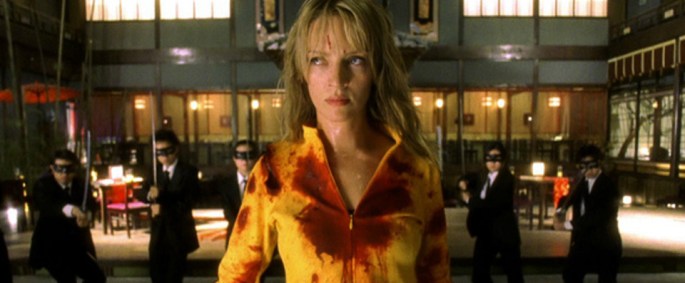
When you strip away all the genre and sub-genre elements from Quentin Taraninto’s KILL BILL VOLUME 1, what lies beneath is a heart wrenching story of a woman seeking vengeance against a former lover who tried to kill her, her unborn child, and her fiance and the new life she constructed after she fled from him.

What we end up with, is the genius of Quentin Tarantino. This film is a full on culmination (obsession, even) of everything that is Quentin Tarantino. His obsession with actors, westerns, kung-fu, women’s feet, popular music; absolutely everything he loves is smeared all over the screen. A faceless David Carradine, a sly Michael Parks, the resurrection of Sonny Chiba, an iconically cool Michael Madsen are all acute aspects that support the greatness of this film.

Tarantino uses the camera to make love to his muse, Uma Thurman, constructing one of the fiercest alpha females to ever be on screen. She’s a woman on a one way mission. She is going to lay waste to everything her path, as she slowly crosses names off her hit list, until she gets to her former master and lover Bill.

KILL BILL is a lot of fun to watch – Tarantino’s homages from Sergio Leone to Brian De Palma, his love for all aspects of cinema is blatant. It’s not just that love for cinema that makes his films such an explosion, but it’s also his love for pop culture, comic books, and music that creates such a fertile pallet for his films to create themselves upon.

KB2

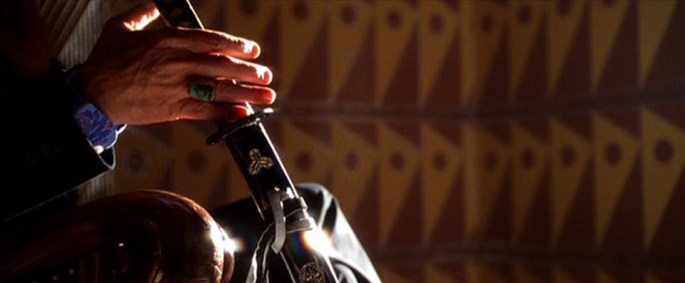
The short anime segment, explaining Lucy Liu’s background is supremely emotional! Perhaps even more emotional than most give it credit for. It’s heartbreaking! The beauty of Sonny Chiba crafting and passing his sword over to Uma Thurman so she can progress on her mission of vengeance; and one of the best action sequences in modern film that achieves it all without any explosions, monsters, or superheroes is an enormous cinematic feat.

This film really hits the mark on every level. Cinematography, stunts, editing, costume design, production design, sound design, original music by RZA; every single corner of every single frame of this film is fleshed out in full detail. It truly is a marvel to watch. At the core of this film, apart from all the sheen and the cinematic perfection, Tarantino delivers us his most heartfelt and emotional film to date.

Sin City: A Review by Nate Hill 

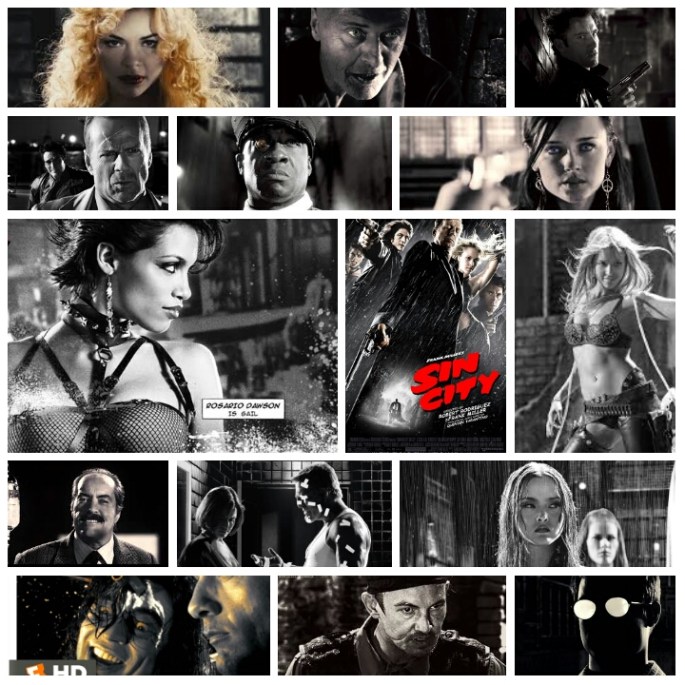
I remember seeing the edgy character posters for Robert Rodriguez’s Sin City hanging on the movie theatre wall when I was younger, having no idea what Sin City was or any knowledge of the books, but thinking they looked incredibly cool and enticing. Then the trailer came out, and it was all I could think, talk or breathe about for months leading up to its release. I was obsessed. When opening weekend arrived I got my dad to take me, and spent two unforgettable hours of cinematic nirvana in a dark auditorium that was packed to the gills with fans old and young alike, each basking in the delectable black, white and colour speckled glow of the piece unfolding in front of us. I had never seen anything like it, and it blew my system into sensory orbit like nothing had before. Around this time I was just discovering a lot of Rodriguez’s and Tarantino’s career, poring over pulp and crime thrillers from all across the decades as my love for cinema expanded, and this was something I just knew would be special as soon as I saw that first provocative teaser poster. The innovation and artistic ambition used by the ever resourceful Rodriguez and his team led to gleaming critical reception, a massive box office hit and one of the most gorgeous pieces of art in the motion picture realm. His decision to simply lift the still frames out of Frank Miller’s graphic novels was something that not every director would be able to go along with, let alone wrap their minds around (director’s are a finicky lot who always have thir own bright ideas, even when the source material is already gold). Rodriguez was so in love with the books that he envisioned them onscreen just the way they were drawn, and that’s pretty much what you get in the film. The pre-credit sequence sets the dark, vibrant, moody and impossibly lurid setting of Basin City, a rotting heap of corruption  where almost everyone is either corrupt, sleazy or just outright evil, and even the ones that aren’t deal out some pretty heinous bouts of violence themselves. The prologue involves girl in in a red dress (Marley Shelton) conversing with a mysterious, well dressed man (Josh Hartnett). The scene takes a turn for the dark and tragic, we zoom out as Rodriguez’s self composed gutter lullaby of a score grinds into motion, and the glowering opening credits trundle by, a moment of a pure joy for anyone watching. The film is separated into three central vignettes, each from a different volume of the comics. The first, and strongest, features a sensational Mickey Rourke as Marv, a hulking bruiser built like six linebackers and basically impervious to anything that could kill a human being. After a heavenly night with hooker Goldie (Jaime King), he wakes up to find her lying dead next to him, not a mark on her. This gives his set of talents a purpouse beyond bar fights and roughing up abusive frat boys, and he wages a war of ultraviolence in her name, to his grave if he must. There are some villains in these stories that seem to be dredged up from the very bottom of the last pit of hell, just the worst of humanity’s many deplorable qualities. Marv eventually runs into evil arch bishop Cardinal Roark (a devious Rutger Hauer) and insane cannibal ninja sicko Kevin (Elijah Wood will haunt your nightmares)., on his bloody quest. Rourke’s genius even shines out through 12 pounds of prosthetic makeup slapped all over his mug, and he captures the wayward warrior soul in Marv, a restless anger and old school, Charles Bronson esque charm by way of Frankenstein’s monster. His work is a great way to kick off the first third of the film, and the gravelly narration hits you right in the film noir nostalgia. The second segment is a lot more lively, with far more people running around, sans the melancholy of Rourke’s bit, and instead emblazoned with a war cry of a story starring Clive Owen as Dwight, a hotshot tough guy who gets on the wrong side of seriously scummy dirty cop Jackie Boy (a growling Benicio Del Toro having a ball) who likes to beat up on waitress Shelley (Brittany Murphy). Dwight pursues him to Old Town, a district run by lethal militant prostitutes lead by no nonsense Gail (Rosario Dawson can use that whip and chain on me anytime). Then everything goes haywire (I won’t say why), and Michael Clarke Duncan gets involved as a weirdly articulate, golden eye sporting otherworldly mercenary named Manute. This middle section is the one that feels most like a comic book, where as the other too have more of a noir flavor, like their old Hollywood roots. The third and most depraved chapter (which is no light statement in this town), sees aging Detective John Hartigan (Bruce Willis) lay his life down in order to protect young Nancy Callahan from a terrifying pedophile child killer (Nick Stahl) who is the spawn of despicable US Senator Roark (Powers Boothe sets up a cameo of the pure evil he would go on to exude with his much larger role in the sequel). Jessica Alba plays the adult version of Nancy, now an exotic dancer and once again in danger from Stahl, who now has some… interesting changes to bis appearance, courtesy of genital mutilation from Hartigan years before. It’s one demented set of stories that would be almost too much to take in the real world, but this is Sin City, a realm that exists in the darkest dreams of Raymond Chandler and his ilk, a seething netherworld of stunningly beautiful women, ghastly corruption and terror,  and good deeds that go unheralded in the night, bloody retribution perpetrated by antiheros and tragic scapegoats who know damn well what a pit of hell their town is, and that nobility is but a drop in the bucket of injustice they wade through on their way to violent exodus. The cast list goes on for miles longer than I’ve mentioned so far, but look out for Alexis Bledel, Carla Gugino, Michael Madsen, Jude Ciccollela, Nicky Katt, Nick Offerman, Tommy Flanagan and Devon Aoki as Miho, a deadly little hooker assassin who can turn you into a pez dispenser with her razor sharp katana. The level of violence on display throughout the film is so far over the top that after a while it seems almost Looney Toons in nature. Throats are slashed, heads are removed, testicles are ripped off, skulls are crushed and all manner of maiming and murder inflicted. What made it acceptable with the ever gay MPAA though is the fact that mic of it exists in the black and white mode of visual storytelling, and only a few instances of actual red blood seen.  That goes for more than just the violence though in terms of color. Amid the sea of stark black and white there are beautiful hidden gems of colour that you have to train your eye to find. A pair of green eyes, a crimson convertible cadillac, the sickly yellow pallor of Stahl’s mutated skin. That’s but a taste of the patchwork quilt of visual artistry you are treated to here, and has constantly been emulated in either work since, but never quite effectively as here. That’s the idea of it though, a heavily stylized piece of hard boiled neo noir that exists simply to plumb the very depths of darkest genre territory, do justice to Miller’s books with a laundry list of wicked actors, a bonus scene directed by Quentin Tarantino and a story that’s pure noir to its bloodstained bones.

Quentin Tarantino’s Death Proof: A Review by Nate Hill 

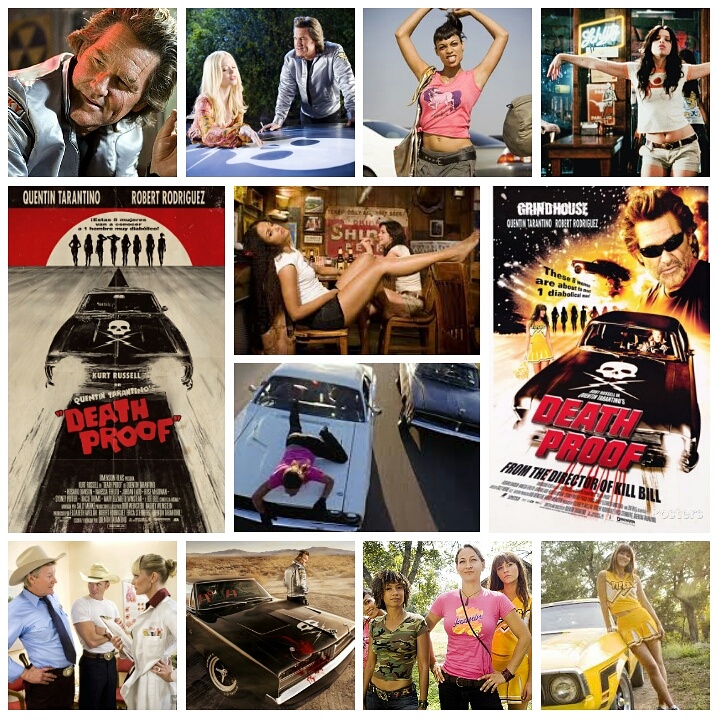
Death Proof is… not the best flick in Quentin Tarantino’s career so far, but an entertaining little ride through the B movie corn nonetheless. It’s Quentin playing in the sandbox, and although he tends to fling it about too energetically in spots, and dawdle around listlessly in others, one can forgive such pacing issues when you consider how much fun it is for the most part. It also helps that his Grindhouse effort is heaps better than his pal Robert Rodriguez’s painfully lame Planet Terror, but that’s a whole other chestnut. Death Proof works mostly thanks to the bubbly, endlessly sexy performances from an extensive roster of irrisistable cbicks, and one gleefully evil bit of work from genre legend Kurt Russell, having a devilish blast as Stuntman Mike, a psychopath who batters helpless chicks to death as he rattles them around in his specially rigged vintage muscle car, primed for murder and ready to burn rubber straight to the ER. A fair chunk of the film is spent simply observing these girls talking, bickering, socializing and indulging in idiosyncratic pop culture banter that’s a facet of the Q Man himself. He loves to project his own affinities onto the written page and use them as backbones for his characters, and although that may be one of the core elements of screenwriting in itself, it’s always a little more pronounced with QT. Writers are books, but he is a popup book, always a tad more garish than the rest of the kids on the playground. I don’t wanna say that such lenghthy swaths of running time spent on girls chilling out isn’t fun (it’s captivating, especially with this bunch), but it is essential to the Grindhouse vibe they set out to emulate? A minor quibble, but a quibble all the same. To their credit, the girls are simply terrific. The first bunch include Rose McGowan’s angelic and short lived Pam, Sydney Poitier’s spunky radio DJ Jungle Julia, and Vanessa Ferlito’s wiseass Latina. The first act sees them run into Stuntman Mike in a roadhouse bar owned by Tarantino himself, who just can’t resist casting himself in his own shit lol. Oh well, at least he didn’t try an Australian accent this time around. The second time act we meet Rosario Dawson, stuntwoman Zoe Bell and cutesy pie Mary Elizabeth Winstead, all in the crosshairs of Mike’s radar, but this time he may be in way over his greaser hairdoed head. The vehicular mayhem is traditionalist and non CGI, and quite honestly a spectucalr firework show of blood, glass, metal and scorched asphalt. I just wish there was more of it, man. Sure, the character building with the gals is awesome, but it eclipses the action in gross proportion. A little balance between talky talky and vroom vroom would have been appreciated. Russell is a hoot in a role that was originally going to be played by Mickey Rourke. He just has that knowing gleam in his eye and good ol’ boy charm that makes it work so well, especially in a naughty little fourth wall break that shows you just how much Mike enjoys his sick little game of bumper cars. There’s characters that bleed in from Rodriguez’s side of the fence, including Michael Parks as the seemingly immortal Texas Ranger Earl Mcgraw, and Marley Shelton as his daughter. It’s a valiant effort, with plenty of Mad Max style merit and a seriously smoking lineup of luscious ladies. I just feel like he over fed certain ingredients to the pot when cooking this one up, and neglected others in areas. Still though, even average Tarantino is brilliant, and this one glows, if for a few dull spots. 

Tony Scott’s Crimson Tide: A Review by Nate Hill 

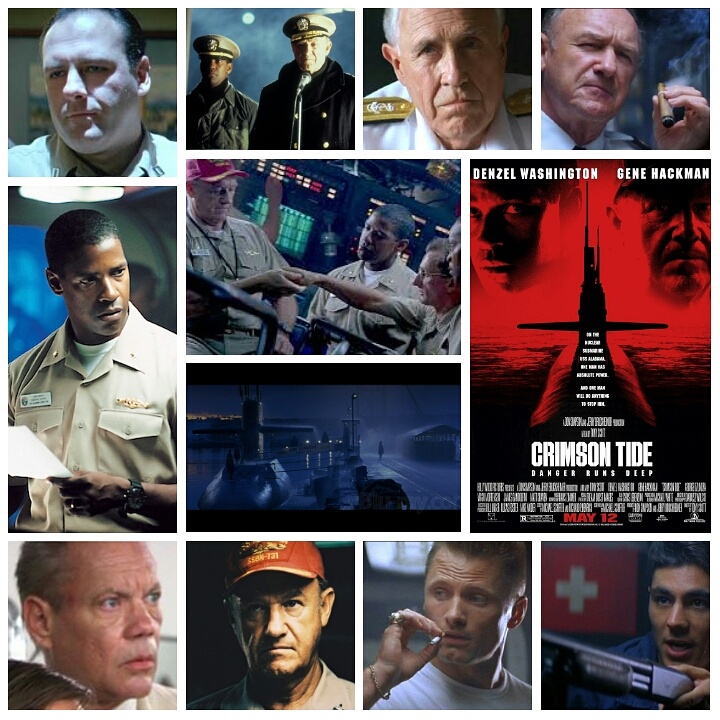
In terms of submarine movies, nothing will light your fire or get your pulse racing quite like Tony Scott’s Crimson Tide (well maybe Das Boot, but that’s another story). Scott just has this way with hyper kinetic tension and a knack for causing whirlwinds of propulsive energy in his work, and even when the material is more melancholy there is still a rousing climate to every frame. Pair his visual skill with Quentin Tarantino’s sterling (and uncredited) ear for dialogue and you’ve got one simmering package. Not too mention the actors and the blood stirring score from Hans Zimmer which is one of the composer’s best and richly orchestrated works. This is the second time Tarantino and Scott have done the writer director duo, albeit the lesser of the two films, it’s still a stunner. When lunatic Russian extremist Vladimir Radchenko (Daniel Von Bargen, RIP) goes off in a huff and threatens nuclear warfare, the Yanks get nervous and send in an ace in the hole submarine loaded with warheads of it’s own, cause, you know, ‘just in case.’ The vessel is captained by an intense and corrosive Gene Hackman, backed by a more reserved and introverted Denzel Washington. The two clash right off the bat and its obvious that fireworks of conflict will erupt between them once the shit hits the propeller. It soon does, in the form of a command order that is partly lost in translation. It could mean go ahead and fire the nukes on Radchenko. It also could not. Hackman, that spitfire, wants to engage and eradicate any chance of action on the extremist’s part. Washington insists on holding back, terrified by uncertainty. This troublesome personal disagreement eventually leads to flat out mutiny amongst the crew, in more ways than one. The crew has no concrete leader to direct their devotion to, and that’s a dangerous thing aboard a military vessel. Hackman and Washington are pure electricity as opposite sides of the same coin, facing off in a claustrophobic arena where one wrong move could end up in cataclysm. Along with internal disruption concerning the crew, there’s also the fact that they’re on a submarine miles below the surface to contend with, and it’s one whopper of a suspense cocktail. Viggo Mortensen is terrific in a conflicted supporting role, and watch for solid turns from Danny Nucci, George Dzunda, Matt Craven, Ryan Phillipe, Steve Zahn, Chris Ellis and a fiery James Gandolfini. Ooo and Jason Robards in an uncredited cameo, which he’s also done for Scott in Enemy Of The State. It’s pure movie bliss, but what can you expect from Scott other than the cream of the crop? The guy gave us pure gold for decades, bless his soul, and this is one of his best.

Quentin Tarantino’s THE HATEFUL EIGHT – A Review by Frank Mengarelli

Quentin Tarantino’s eighth film, THE HATEFUL EIGHT, came out at a hostile time in contemporary America. Tarantino joined marching protests against police violence; then the overly sensitive millennial online “journalists” chastised the film, and Tarantino, for painting shades of misogyny and racism. Tarantino was unfairly attacked by the extreme wings of each political party. Had no one paid attention to Tarantino films prior? Of course racism and misogyny plays a vital part in this film, because not only did those elements exist in the post-Civil War 1800’s, but also exist in reality.

Hateful Madsen

This film is a cataclysm of Tarantino’s self-indulgence. He constantly references his prior works (mainly RESERVOIR DOGS) while homaging Sergio Leone, Billy Wilder, and John Carpenter. His limited casting is formed of new Tarantino players: Kurt Russell, Walton Goggins, and Bruce Dern who Tarantino has worked with twice prior; as well as his seminal ensemble made up of Samuel L. Jackson, Zoe Bell, James Parks, Tim Roth, and Michael Madsen. Joining the Tarantino crew for the first time is Jennifer Jason Leigh, Demian Bichir, and Channing Tatum.

For as visionary as Robert Richardson’s cinematography is and Ennio Morricone’s Academy Award winning hypnotic score, the greatness of this film lies within one of Tarantino’s best screenplays and one of the best acting ensembles since GLENGARRY GLEN ROSS. Tarantino is one of the most talented actor’s directors who has ever sat behind the camera. He carefully crafts each character with an actor in mind, playing on their strengths and bringing out untapped potential from even the most veteran actor he’s working with. The cast is absolutely brilliant.

Hateful.jpg

Kurt Russell does the best John Wayne impression ever as the hard barked simpleton whose stupidity is even more outrageous than his facial hair. Russell is always a joy to watch, and Tarantino’s use of him are highlights in an already legendary career. Samuel L. Jackson is one of the best linguists to ever grace the screen. Tarantino’s dialogue has never sounded better than coming out of Jackson’s mouth (aside from Harvey Keitel). Tim Roth gives one of his best performances delivering an English shtick of Mr. Orange from RESERVOIR DOGS. Perhaps the most surprisingly great performance in this film is that of Michael Madsen playing a caricature of himself. I can’t say anything more about Jennifer Jason Leigh that hasn’t already been said. She should have won the Oscar.

Tarantino outdoes himself with THE HATEFUL EIGHT; the script is outrageously funny, giving these talented actors so much to play with. Only Quentin Tarantino would be able to craft an epic western built upon heightened paranoia that is three hours long, set inside a tiny cabin that is filled with eight larger than life characters, filmed with a wide angle lens that is constantly on the move. Tarantino has reached Terrence Malick status by making films for himself, not for an audience, or a demographic, and that’s what he has excelled since GRINDHOUSE. No one loves movies more than Quentin Tarantino. Oh, and about that overt racism in this film, did those people not stay until the end?

Hateful ending.jpg

Top Ten Quentin Tarantino Characters: A Write Up by Nate Hill

Quentin Tarantino’s career has been vividly defined by all the beloved qualities which we hold dear in film: visuality, music, dialogue, emotion, conflict and especially character. His films contain some of the most captivating, idiosyncratic and unique people to ever grace the screen, played by an incredible lineup of actors, some of which he would go on to use time and time again. Below you will find my personal top ten picks from the rogues gallery of individuals who have appeared in his stories. Please keep in mind these are characters from films he has both written and directed only, not just ones he has written. Enjoy, and if you do, please share!

10. Zed, played by Peter Greene in Pulp Fiction. 


      Greene refused this part multiple times, causing Tarantino to hunt him down like a dog and basically beg him to play the role. When the director has a face in mind for a role and won’t quit like that, you’d better believe he’s gonna make magic with it if he ever manages to sway the actor. He does, and so does Greene, an actor with a distinct, sinister look who plays the absolute hell out of the character, spinning a small supporting turn into one of the most terrifying movie villains ever, and certainly the scariest character in Tarantino’s career. Everyone’s favourite redneck rapist sheriff, Greene leaves quite the unsettling impression with his work. 

9. Texas Ranger Earl McGraw, played by. Michael Parks in Kill Bill, Grindhouse and From Dusk Till Dawn


Tarantino casted underrated acting chameleon Parks as this character several times, each appearance resulting in pure gold. My personal favourite has to his bit in Kill Bill Volume 1, where he’s called to the El Paso wedding chapel massacre. Parks can literally play any part thrown his way, be it melodramatic French Canadian drug runner, neo-nazi hit man or the laconic southwestern lawman archetype, which he nails down to the detailed mannerisms here. McGraw is a lynchpin of Tarantino lore and an absolute pleasure to see every time he pops up. 

8. Captain Koons, played by Christopher Walken in Pulp Fiction


Walken balances weirdness and gravity like no other, often blurring the lines between the two to amusing and touching effect. When given what is perhaps the juiciest monologue ever written by Tarantino, Walken gives us a mesmerizing account of his time in the war, and his efforts to protect a coveted family heirloom which he then presents, with much ceremony, to a young Butch Coolidge. The film halts the momentum dead in its tracks to allow Walken to do his thing, completely off the leash and inhabiting his own special corner of the beloved film. He’s unforgettable, and makes a two minute appearance speak the volumes of eons.   

7. Bill, played by David Carradine in Kill Bill


There’s a scene in Kill Bill Volume 2 where Uma Thurman discovers Bill waiting for her outside the wedding chapel, playing his pan flute. There’s an epic passage of Morricone music, and he looks her dead in the eye. Upon reviewing a rough cut, Tarantino turned to Carradine and said “I think this is your best moment of the film.” Carradine’s response was, “Hell, I think it’s the best moment of my whole career!.” Bill is a mythic, titular antagonist who is built up no end for the duration of the films, the ultimate badass villain, and when the climax arrives in the eleventh hour, Tarantino writes an exodus for the character that is far more personal, emotional and grounded than I imagine anyone saw coming. It’s a gift to Carradine and fans alike, a villain with depth and purpose who exists in a surreal comic book world where the people couldn’t be more human or real. Carradine purrs his way through the role of his career and on into legend. 

6. Budd, played by Michael Madsen in Kill Bill


Tarantino brings out the best in Madsen, a purely charismatic dude who unfortunately makes a lot on unwatchable junky poo movies these days, squandering his obvious talent. This is is shining hour, playing Budd as a bitter backwater kid and younger sibling, nearing the end of his road and fermenting in bitter loneliness way out in the California desert. Madsen channels tough guys of the golden age as Budd, a rotten son of a bitch with a glint of humanity showing through his booze-dimmed eyes. 

5. Hans Landa, played by Christoph Waltz in Inglorious Basterds


Quite possibly the most entertaining villain in Tarantino’s work, due the the exuberant and absolutely committed performance of Waltz, in a trailblazing turn that would put him on the map in a big way. Beaming from ear to ear in almost every scene with a charming grin that dissipates occasionally, showing traces of the spider beneath, he’s a wonder in the role, a nazi A-hole rotten straight to the core. He doesn’t even possess any constitution or debt of faith in the cause which his smartly emblazoned SS uniform advertises; he’s in it for himself only, which is one more despicable quality to add to the list of traits one might use to define him. Perhaps the biggest Basterd of them all, and a joy to watch. 

4. Vincent Vega, played by John Travolta in Pulp Fiction


Pulp Fiction kickstarted Travolta’s career back into gear in a huge way, and it’s easy to see why as we watch his Elvis-esque slickster prance about the screen with effortless, heroin addled coolness and one hell of a dance sequence. His hair deserves its own spinoff film, he steals scenes by simply laying low and playing the dude with flair that never makes itself overly known. 

3. Mr. Blonde, payed by Michael Madsen in Reservoir Dogs


A stone cold psycho to the bone, Madsen relishes in brining this cop killing sadist to life, and dancing his way through one of the most iconic Tarantino scenes to date. Madsen has a rumbling threat to his work, a paced, portentous vibe that suggests the onset of a dangerous storm, but always seems to veer on the edge. With Mr. Blonde he crosses that line and shows us what a true madman looks like, without even raising his voice above a willowy growl. A class act in violent behaviour that laced with the blackest humour that we feel bad for laughing at. Mr. Blonde all the way. 

2. Jules Winnfield, played by Samuel L. Jackson in Pulp Fiction


A rain of hellfire awaits any viewer who has the privilege of seeing Jackson bellow forth biblical fury in his first collaboration with Tarantino. He’s the life of the party in Pulp Fiction, an articulate, relentless loudmouth with a character arc that amusingly negates his belligerent nature and makes Jules all the more fascinating for it. Jack sonics at his most magnetic when he’s in Tarantino films, and this is mile zero, baby. Not for a second does the spark leave his eye, or the threat of violence evaporate from his wake. Criminals who ruminate on life, love and cunnilingus have become a goldmine for writers post Tarantino, and one which he only mined the first nuggets of. Jackson is ground zero for the character type, and fires it up in a way which none of us will ever forget. 

1. The Bride a.k.a. Beatrix Kiddo, played by Uma Thurman in Kill Bill


Tarantino’s muse has been Uma Thurman since the days of Pulp Fiction, and here he writes a titanic revenge epic in which the actress gets to bare her claws and sink her teeth into the single most affecting and arrest in female role that he has ever written, also forging the best, or at least my favourite performance from any actor or actress in his films. The Bride is the revenge archetype, an angry blonde angel forsaken by her lover and dead set on a bloody warpath. Tarantino isn’t above writing in moments of stirring emotion, including the final twenty minutes of Volume two which is Thurman’s showcase piece as an actress and an achingly appropriate send-off for The Bride, as well as the one which she deserves. 
Thanks for reading, more to come!
EPISODE 27 THE WORKS OF TONY SCOTT AND QUENTIN TARANTINO with SPECIAL GUEST SHELBY SIM

SHELBY POWERCAST

We were honored to be joined by Shelby Sim who is the Executive Director of Visit Santa Ynez Valley, and who sponsored the press/filmmaker lounge where Frank hung out when he was at the Santa Barbara International Film Festival.   The three of us riff on films that were filmed in the Valley, including Quentin Tarantino’s DEATH PROOF.  From there, we bounce all over Quentin Tarantino and Tony Scott’s filmography.  Visit www.visitsyv.com and contact Shelby if you’re interested on going on an amazing vacation!

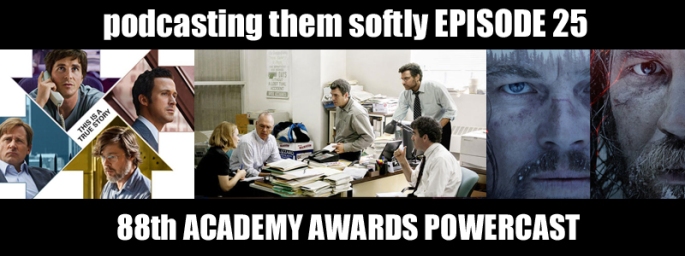
Episode 25: 88th ACADEMY AWARDS POWERCAST

OSCAR PODCAST

Join us for our Oscar podcast.  We give our predictions in all the major categories, and we discuss what we think will win and what should win.  Tune into the Oscar’s and see if we are geniuses or complete idiots!

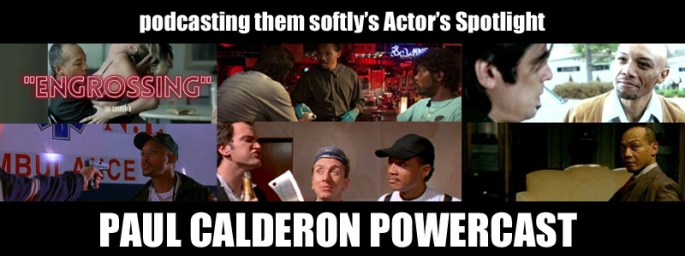
PTS Presents ACTOR’S SPOTLIGHT with PAUL CALDERON

Calderon POWERCAST

Paul Sh #2Podcasting Them Softly is honored to present a chat with veteran actor Paul Calderon, who has appeared in a wide range of some of our favorite films and TV shows for close to the last 40 years. Paul has worked with filmmakers such as Quentin Tarantino, Abel Ferrara, James Mangold, Alejandro Gonzalez Innaritu, Steven Soderbergh, Spike Lee, Sydney Pollack, Harold Becker, Sydney Lumet, and Arthur Penn, to name only a few, with credits including Pulp Fiction, King of NY, Bad Lieutenant (which he co-wrote with Ferrara), Welcome to New York, Q&A, Sea of Love, Copland, 21 Grams, Out of Sight, Clockers, and The Firm. His massive list of television credits include Boardwalk Empire, Hostages, Law and Order: Criminal Intent, How to Make It In America, Miami Vice, and an epic run on the daytime soap One Life to Live. He’s also no stranger to the theater, having appeared with Robert De Niro in Cuba and His Teddy Bear. He also runs his own acting school, which you can find out more about at his website www.paulcalderon.net. Paul is a founding member of the Touchstone Theater, The American Folk Theater, and The LAByrinth Theater Company, as well as being a member of the Actors Studio since 1984. A consummate NY character actor all throughout his career, Paul brings energy and edge to every performance in every project, and we’re extremely excited present this interview! We hope you enjoy!

PTS Presents NICK AND FRANK’S BEST OF 2015

bestof2015

We returned to form with our first new recording together since the newest addition to Nick’s family, and the STAR WARS overload that Frank has been overwhelmed by.  We go over our top ten films of the year, top five directors, actors, actresses, supporting actors, supporting actresses, screenplays, cinematographers, score, ensemble and television shows.  We were both very excited to do this, and we hope you enjoy!