“Do we really suck, or is this guy really that good?” : An Interview with Michael Davis by Kent Hill (PART 2)

image-original

I really love this gig. I really do. I’ve had the distinction of being able to converse with many a hero and much admired artist over my time at PTS. There have though, been a few surprises along the way – and this was one of them.

I have long wanted to chat with Michael Davis. Part of it, and I’m sure you’ll agree having seen his films, that here is a man who went from making 100 Women to writing and directing the most-excellent, ballet of bullets that is Shoot ‘em Up. And you just need a few minutes of talking with Michael to understand how this was possible.

500004147-03-01

They say Scorsese has a machine-gun-mouth. Well listening to Michael is like standing next to Jesse Ventura firing Ol’ Painless. And – WOW – what a delight, the frenetic and passionate electricity that this man generates in infectious. Michael’s initial overview of the birth of his career is one of the most entertaining I’ve ever heard. From his beginnings as a storyboard artist, to various writing assignments (don’t say Double Dragon out loud), to his eventual directorial debut; it’s a madcap movie marathon coming at you – at high speed!

e73501112002d80ee16c6730f1a665b6

Our conversation was so enthralling, so engaging, that I would be doing my guest a severe injustice to cut even a moment of it. So I shall be presenting it to you as a trilogy. Each section I promise is as entertaining as the last. So, don’t touch that dial, and prepare yourself to experience the film-making personification of the perfect storm that is . . . Michael Davis . . . . . . PART 2.

{FOR THOSE WHO CAME IN LATE . . . : https://podcastingthemsoftly.com/2018/03/25/do-we-really-suck-or-is-this-guy-really-that-good-an-interview-with-michael-davis-by-kent-hill-part-1/}

shoot-em-up-8

“Do we really suck, or is this guy really that good?” : An Interview with Michael Davis by Kent Hill (PART 1)

michael-davis-1465395106

I really love this gig. I really do. I’ve had the distinction of being able to converse with many a hero and much admired artist over my time at PTS. There have though, been a few surprises along the way – and this was one of them.


I have long wanted to chat with Michael Davis. Part of it, and I’m sure you’ll agree having seen his films, that here is a man who went from making 100 Women to writing and directing the most-excellent, ballet of bullets that is Shoot ‘em Up. And you just need a few minutes of talking with Michael to understand how this was possible.

They say Scorsese has a machine-gun-mouth. Well listening to Michael is like standing next to Jesse Ventura firing Ol’ Painless. And – WOW – what a delight, the frenetic and passionate electricity that this man generates in infectious.


Michael’s initial overview of the birth of his career is one of the most entertaining I’ve ever heard. From his beginnings as a storyboard artist, to various writing assignments (don’t say Double Dragon out loud), to his eventual directorial debut; it’s a madcap movie marathon coming at you – at high speed!


Our conversation was so enthralling, so engaging, that I would be doing my guest a severe injustice to cut even a moment of it. So I shall be presenting it to you as a trilogy. Each section I promise is as entertaining as the last. So, don’t touch that dial, and prepare yourself to experience the filmmaking personification of the perfect storm that is . . . Michael Davis . . . . . . PART 1.

shoot-em-up-8


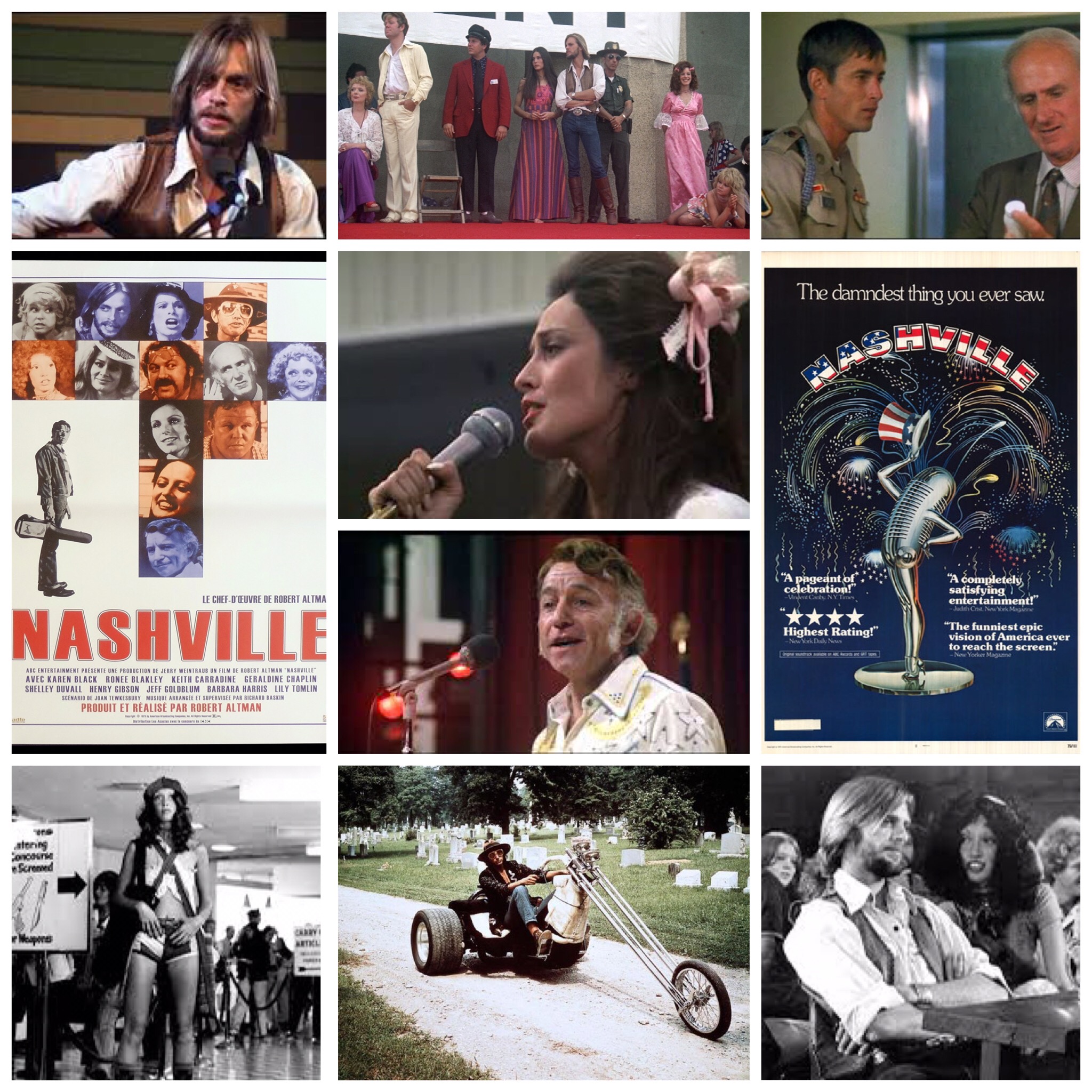
Robert Altman’s Nashville


You wouldn’t think that a disorganized little ensemble piece revolving around a country music festival could go on to become a silver star classic in cinema, but this is Robert Altman’s Nashville we’re talking about, and it’s a stroke of sheer brilliance. Structured with the same haphazard screenplay blueprint (or lack thereof) of Richard Linklater’s Dazed & Confused (which I’m almost positive was hugely influenced by this), it’s a raucous little celebration of music and mayhem without a single lead character or central storyline. Every person is important to the kaleidoscope of a story, from Ronee Blakely’s troubled angel starlet to Jeff Goldblum’s early zany career tricycle riding cameo. It’s less of a narrative with forward surging momentum than it is a big old sequinned wheel of fortune you spent n at your leisure, each stop containing some story or vignette revolving around country music, be it sad, joyous, ironic or just plain peculiar. Henry Gibson, that oddball, plays an Emcee of sorts, Scott Glenn is the mysterious military private, the late Robert Doqui coaches a hapless wanna be songstress (Barbara Harris), Keith Carradine charms all the ladies as a suave guitar playing crooner stud, and the impossibly eclectic cast includes brilliant work from Lily Tomlin, Ned Beatty, Michael Murphy, Elliott Gould, Julie Christie, Keenan Wynn, Allen Garfield, Geraldine Chaplin, Karen Black and an adorable Shelley Duvall. There’s something thoroughly lifelike about a sprawling story like this, as were treated to moments, episodes and unplanned exchanges between people as opposed to a contained, streamlined narrative. Things happen, and before we’ve had a chance to process it, were whisked away to the next page of the book like roulette, and every story in the film is a gem, not too mention the music and sly political facets too. A classic, get the criterion release if you can.  

-Nate Hill

MCCABE AND MRS. MILLER (1971) – A REVIEW BY RYAN MARSHALL

vlcsnap-2016-12-04-11h04m09s156.png

Surely a seasoned connoisseur of the silver screen can relate the experience of watching a film to emotional responses which seem to transcend the medium all-together. For instance, certain films may have a distinctive smell; others might even allow one to taste something either delectable or truly putrid on the tip of their tongue. Robert Altman’s MCCABE AND MRS. MILLER, a whiskey-soaked indictment of American idealism filtered through the abstracted gaze of a hazy opium den, truly has the best of both worlds – the film smells strongly of musk and is bitter to the taste but nonetheless warm once it’s in you. It has the benefit of seamlessly evoking homeliness and absolute desolation in equal measures; not once is one allowed to truly sit back and take in the spectacle on a base level, but if that’s not somehow oddly ingenious in its own right, then I’ll be damned.

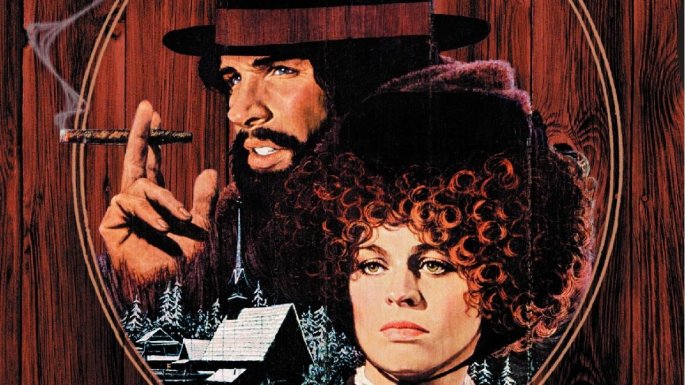
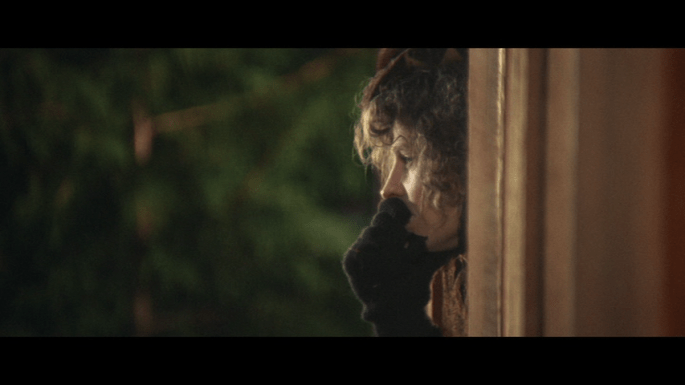
John McCabe (Warren Beaty) arrives in Presbyterian Church, Washington as a stranger, but soon establishes himself as a legend of his own distinct variety. A gambling man with a detrimental love affair with the bottle, McCabe is immediately met with suspicion on the part of the townspeople, who suspect he’s really a gunslinger that shot one of their own over a card game some time ago. Nevertheless, it’s his reputation – coupled with his intense personality – that allows McCabe to be seen as a leader among loners and losers in this quiet little Northwest town. It is here that he aspires to establish a brothel, the first step in doing so being the acquisition of three women from one of the neighboring towns.

vlcsnap-2016-12-04-11h00m37s494.png

This, of course, will hardly be substantial in the long run. Along comes another stranger, Constance Miller (Julie Christie), who proposes that the two become business partners. It’s an offer that McCabe simply can’t refuse, and they’re all the better for it; it’s not long before three girls turns into about a dozen and the establishment is doubling as a bathhouse. As rewarding as this venture appears to be, the attempted intervention on the part of a nearby mining company indicates there may be trouble ahead for both business and personal pleasure alike.

Only a select few films have a kind of palpable density that the viewer feels right in the gut, and as it turns out Altman has made quite a few of them. Throughout the course of just two hours, man himself is challenged (the tragedy of masculinity suppressing all which stands in its path), and everything – land and life alike – has a dollar value. For instance, when McCabe continually refuses the offers from the mining company’s shady representatives, they send over a trio of bounty hunters to seal the deal. Afraid for his life but unwilling to leave the town and business he helped start, McCabe turns to his lawyer for advice, but is instead treated to a spiel that basically amounts to the company’s safety being favored over McCabe’s. The poor bastard’s response is genuinely haunting: “Well I just, uh…didn’t want to get killed.”

vlcsnap-2016-12-04-11h01m11s299.png

This is a film that soars, perhaps even more-so than the average Western (MCCABE is revisionist). Altman’s uncanny genius can be traced back to his modesty, quite an appealing quality in any artist, though given the sense of scale and impeccable attention to detail present in his work it’s almost a bit amusing. And yet, even though there are moments of genuine humor, no doubt provided by McCabe himself, the character remains a tragic one; one whose deepest flaws would appear to be almost entirely of his own making. The man is an enigma and a half to the naked eye. And Mrs. Miller, who as it turns out has a bit of an opium habit, is essentially the product of an unnecessarily harsh world dominated by the opposite sex, a world in which her expertise doesn’t seem welcome. And thus, the romanticism of the genre is stripped from Altman’s warped worldview, and in its place a new kind of grandeur emerges.

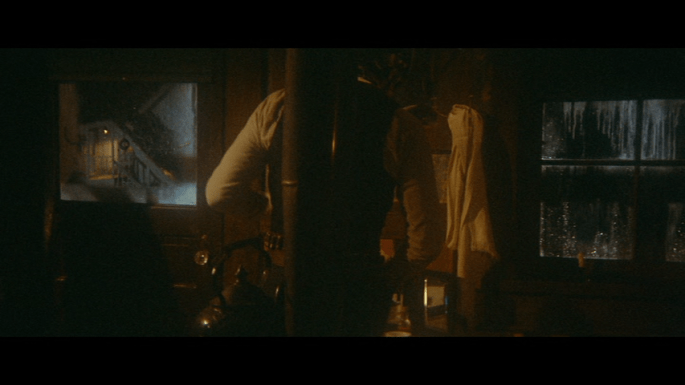
It goes without saying at this point, forty-something years after the fact, that Vilmos Zsigmond’s cinematography is absolutely note-perfect. The world in which the tortured, titular souls occupy is one largely confined to dark rooms and dusty bars; and the town’s exteriors couldn’t possibly be any rougher. There’s an inherent bleakness to it, and yet when there is any semblance of light shining bright at the end of the tunnel, it does not go unnoticed. Not only does this feel absolutely distinctive in terms of its genre, Altman and Zsigmond go the extra mile to find beauty in even the most deliberately obscured of images. Form is no longer so well-defined and the rules no longer apply in the same way that they used to.

vlcsnap-2016-12-04-11h02m07s361.png

Altman’s films tend to have rich, multi-dimensional soundscapes in which the abstraction of sonic perception gives way to a new language of its own. Here, no spoken word is free of the director’s unique grasp. Conversations are always overlapping to the point where the subject becomes more important to the viewer than the content, which is ultimately an effective method of conjuring up such an off-kilter atmosphere. Lou Lombardo’s editing is equally as inventive – time feels almost nonexistent in this town after we’ve spent a considerable amount of time there. The focus shifts between characters both integral to the central relationship and generally insignificant, adding to their collective mystique. Altman challenges us to embrace this very quality head-on, to return to a sort of exhilarating ambiguity that audiences of today have all but shunned.

The frontier unveils new angles from which to exquisitely immortalize it and the frontiersmen themselves remain largely the same. The cinema of transcendence is alive and well, drinking bourbon by the fireside, mumbling incoherently under its bearded breath. The lovely, brooding songs of Leonard Cohen allow it – and us – to drift off into a state of near unconsciousness; a state from which we’d hardly like to return. MCCABE AND MRS. MILLER is a subtly colossal achievement, especially in the positively brilliant final twenty minutes, a film of dreamy, universal resonance. It’s a world you could settle into for twice – perhaps even triple – the length we’re provided with. “I know that kind of man, it’s hard to hold the hand of anyone who is reaching for the sky just to surrender. And then sweeping up the jokers that he left behind, you find he did not leave you very much, not even laughter.”

vlcsnap-2016-12-04-11h02m46s213.png

O.C. AND STIGGS – A REVIEW BY J.D. LAFRANCE

ocandstiggs1

After Popeye (1980), Robert Altman had effectively alienated himself from most of the Hollywood studios and took to adapting stage plays for the big screen through independent financing. In the early 1980s, National Lampoon magazine published stories about two troublemaking teenagers named Oliver Cromwell ‘O.C.’ Ogilvie and Mark Stiggs written by Tod Carroll and Ted Mann. When Altman made O.C. and Stiggs in 1984 (it wasn’t released until 1987), teen comedies were all the rage but he hated them and so, instead, he made it into a biting satire of these kinds of films. Not surprisingly, nobody liked it and the movie quickly disappeared. Even among Altman fans it has few supporters and was eventually quietly released on DVD.

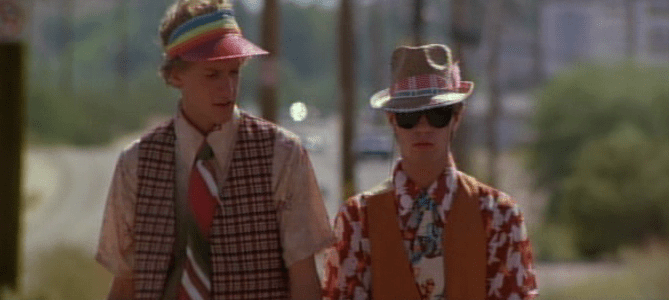
O.C. (Daniel Jenkins) and Stiggs (Neill Barry) are suburban teens and avid practical jokers who live in Phoenix, Arizona. The main target of their gags is the Schwab family, a decadent, materialistic clan headed by Randall Schwab (Paul Dooley) who sells insurance. The mother (Jane Curtin) is an alcoholic, their son (Jon Cryer) is a gullible idiot while their daughter is about to get married.

In some respects, O.C. and Stiggs are like teenage versions of Hawkeye and Trapper John from M*A*S*H (1970). Both feature clever hipsters but the latter were also brilliant surgeons whereas the former are only good at one thing – staging elaborate practical jokes. In M*A*S*H, the two surgeons were fighting against authority and the absurdity of war while O.C. and Stiggs are fighting against materialism and mediocrity as represented by the Schwabs with their bad fashion sense and gaudy décor – the epitome of the “ugly American.”

The problem with O.C. and Stiggs is the central characters. They aren’t particularly interesting. Their obsession with pulling endless practical jokes on the Schwabs seems mean-spirited at times. Another problem lies in what O.C. and Stiggs are rebelling against, which isn’t as clearly defined as the war in M*A*S*H. The teen pranksters are rebelling against the mind-numbing banality of suburbia and the “Greed is good” era of Reaganomics. There is an attempt to provide some kind of motivation for why these kids do what they do. Stiggs’ dad is cheating on his wife while O.C.’s dad (grandfather?) is unemployed and possibly senile. No wonder they spend all their time together devising elaborate schemes. It is a form of escape from their mundane surroundings.

This movie sees Altman in an extremely playful mood with the same kind of fast and loose structure as California Split (1974), which also features two freewheeling pals careening from one crazy encounter to another. A crazed, babbling Dennis Hopper even pops up as a burnt out Vietnam vet. It’s as if his photographer character from Apocalypse Now (1979) had somehow made it out of Kurtz’s compound and came back to the United States.

There are some nice moments, like when O.C. dances with a beautiful girl (Cynthia Nixon) at the Schwab wedding that is a nod to classic Hollywood cinema by way of Fred Astaire and Ginger Rogers. But it is not enough to keep this uneven film together.

Altman flips the ‘80s teen comedy on its head. He even refuses to populate the film’s soundtrack with trendy New Wave music, instead opting for the catchy African music of King Sunny Ade. No wonder people hated this movie when it came out. Clearly Altman did not grasp the original source material (or didn’t even bother to read it) and just did his own thing. The results are, at times, amusing and at some point you either surrender yourself to the goofiness of the whole enterprise or resist this maddeningly frustrating effort.

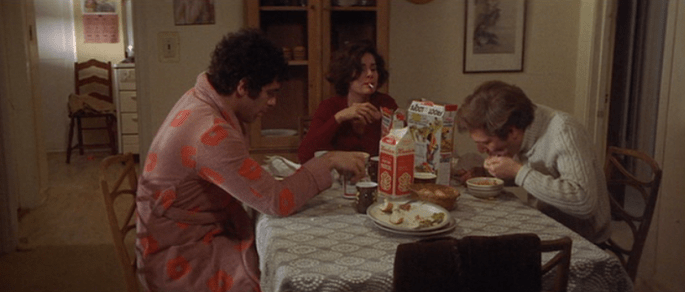
HealtH – A Review By Patrick Crain

zoom_1418768851_HealtH@2xWhen you begin to consider the high-level talent that went into the formula that produced Robert Altman’s HealtH, it’s difficult to recall another movie in film history that was, and continues to be, treated as poorly. Coming directly after Altman’s twin failures of 1979, Quintet and a Perfect Couple, its production was relatively quick and on-the-fly; an attempt to get one in the can while things at 20th Century Fox were still being run by Alan Ladd, Jr., a staunch Altman proponent who once gave the maverick filmmaker a million and a half dollars to make 3 Women, a movie that came to Altman in a dream and had no real cohesive story.

Sure enough, things did change and Ladd was ousted. HealtH, which had an initial scheduled release date in late 1979, began to get slowly pushed back on the schedule. Early 1980 came and went and a series of test runs arranged by the new management proved to be less than promising. The master plan of having it released before the 1980 presidential election never materialized. It’s safe to assume that when Altman began shooting the lavishly budgeted, dual-studio event picture Popeye in 1980, he couldn’t dream that he would get it shot, edited, and in theaters before HealtH.

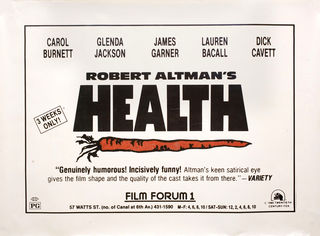
But Popeye was released in time for Christmas in 1980 and HealtH was eventually pushed off of the Fox release schedule entirely. It did manage to play a limited engagement at Film Forum in 1982 but, aside from its occasional, stealthy appearance on various television movie channels, HealtH has never seen a release on home video. It’s a depressing world in which we live that Robert Downey Sr.’s similarly-imprisoned the Gong Show Movie finally gets a Blu ray release and HealtH can’t even be bought on the sad, used VHS market. Every once in a while, a widescreen rip from one of those movie channel broadcasts makes its way onto YouTube, but its difficult to know if it’s been edited for time or whether the somewhat squeezed visual presentation is a representation of the film’s true aspect ratio.

Given its obscurity, the perceived notion is that HealtH must be some kind of otherworldly dog of a film; a real hubristic bonanza crafted amidst a barrage of likeminded projects by Altman. But the truth of the matter is that HealtH is a surprisingly strong look at the ridiculousness of the American political system as filtered through the world of the then-bourgeoning consumer health industry. A fine addition to the busier, wide-canvas ensemble pieces Altman could engineer with remarkable skill and dexterity, HealtH performs double duty as a sly comedy and a prescient warning of the toxic injection of empty personality and media-driven messaging into our electoral process.

In a way, the overtly political overtones of HealtH would go on to serve Altman well when it came time for him to produce his masterpiece of the 80’s, Tanner ’88; one specific element, the jaunty campaign theme “Exercise Your Right to Vote,” is heard in both films.  In its earlier incarnation, it’s delivered by The Steinettes, an a capella outfit who acts as a ridiculous but appropriate greek chorus to HealtH’s very odd portrait of 1979 America.

HealtH is, on the surface, about two days at a health convention in which two candidates are running for the title of “President of HealtH.” Present at this convention are product pitchmen, authors, political functionaries & fixers, glad-handing bureaucrats, dirty tricksters, aides, liaisons, and PR staff all centering around the two presidential hopefuls.

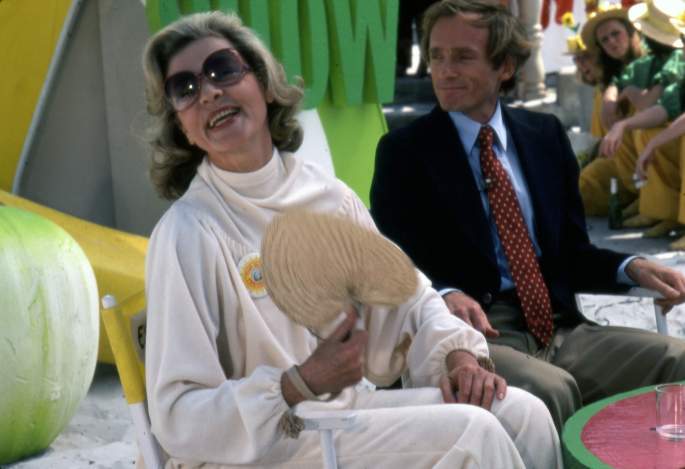
In one corner, Esther Brill (Lauren Bacall), 83 year-old virgin whose ubiquitous campaign slogan “Feel Yourself,” is delivered with an astounding cluelessness as Brill believes that each orgasm shaves 28 days off of your life. Her staff is made up of PR guru Harry Wolff (James Garner), oversexed campaign manager, Dr. Ruth Ann Jackie (Ann Ryerson) Brill’s undersexed personal physician who secretly lusts after Wolff, and a gaggle of nurses who are constantly drinking behind Brill’s back.

In the other corner is Isabella Garnell (Glenda Jackson) a pragmatic-yet-cold idealist whose speeches all seem swiped from Adlai Stevenson. Her entourage consists solely of Willow Wertz (Diane Stilwell), a sweet-natured aide whose ongoing sexual frustration is rooted in her inability to feel anything sexual for anything whatsoever.

Between the two candidates is Gloria Burbank (Carol Burnett), a representative from the White House and Wolff’s ex-wife; Dr. Gil Gainey (Paul Dooley), an independent candidate for president and shill for something called “Vita-Sea;” Colonel Cody (Donald Moffat), a bellowing political string-puller; Bobby Hammer (Henry Gibson), a slimy political operative sent to disrupt the Garnell campaign; Sally Benbow (Alfre Woodard), the convention hotel’s PR director; and, finally, Dick Cavett, as himself, who is there to cover the event for his talk show. Oh, yeah, and the Steinettes. 

In the film, we’re told that HealtH (which stands for “Happiness, Energy and Longevity through Health”) is an organization more than three times the size of the NRA and whose members can be similarly motivated to vote one way or the other. So the film certainly exists in an America that could also produce the cockeyed presidential campaign of Nashville’s Hal Phillip Walker. But Walker didn’t much have a real-life counterpart in 1975. The populist politics of Nashville reflected a hopelessness that washed through the post-Watergate, pre-Carter country like a rotten fever. The politics of HealtH were much more immediate. While sending up the then-current political climate, the film seems to anticipate the cultural shift that occurred in the presidential election in 1980. Even if the other candidates in the film could be composites of many other political figures, Esther Brill is a certain representation of the perceived image of Ronald Reagan, a man who counted on a network of advisors and aides to keep him informed and aware and who was about to enter the presidential race with a boatload of sunny optimism and slogans aplenty.

While HealtH is far from perfect due to its unfocused and rushed production and its occasional tendency to get lost in the weeds of its own mix of satire and reality (you never really feel like you should be investing in it as you really should), there is a great deal to admire. The script, by Altman regular Frank Barhydt, actor Dooley, and Altman does an admirable job keeping the film equally steeped in reality (through the characters of Woodard and Garner), television (Cavett and, eventually, Dinah Shore), and fantasy (basically everything else). The performances, too, are all top-notch. Burnett, Bacall, and Jackson are all terrific but the film is absolutely stolen at every turn by Woodard whose polite facade hilariously begins to give way to disdain as the convention rolls along. Among the men, Garner turns in a reliably easy-going performance, Paul Dooley is as energetic as I’ve ever seen him, and Dick Cavett, remarkably comfortable in a sizable role, has a great deal of fun.

As history marches on, HealtH’s chances of being anything other than a completely forgotten and mostly unseen film become slimmer and slimmer. Altman passed away ten years ago so it’s unlikely that any other event could be the catalyst for its release. Sometimes chuckling and sometimes wincing while watching it in the midst of our own current presidential election that certainly seems like it could play out in an Altman film, it’s a cinch that HealtH could still find an audience today.health-sm-web
CALIFORNIA SPLIT – A REVIEW BY J.D. LAFRANCE

californiasplitgould

“I’ve had a couple of good wins, but they don’t compare to the losses. People only remember the wins.” – Robert Altman

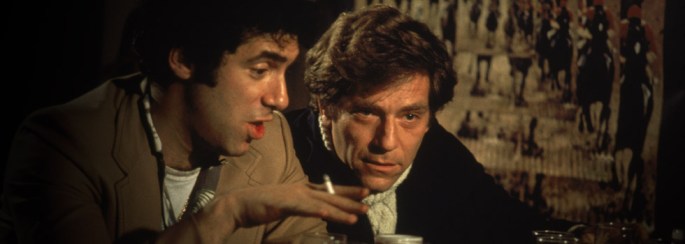
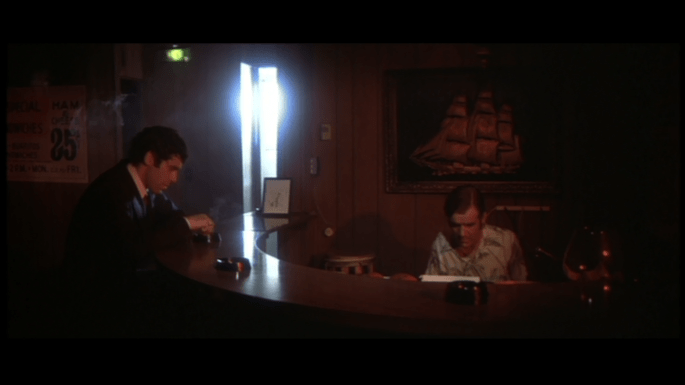
In the 1970s, Elliott Gould and Robert Altman were an unbeatable team. They first worked together on M*A*S*H (1970), a savage satire of the military, then again on a radical, contemporary reworking of Raymond Chandler’s novel The Long Goodbye (1973), and finally completed the hat trick with California Split (1974), an ode to obsessive gamblers. For years, this film has been relegated to obscurity, showing up occasionally on television and tied up in legal issues over the music, which delayed its release on DVD.

A nice, self-reflexive moment kicks things off: gambler and card shark, Charlie Waters (Elliott Gould) is killing time before a poker match by watching an instructional video on the game. The voiceover narration intones, “It has been said that everyone in America understands poker or wants to. It is one of America’s most popular games and since you’ve shown an obvious interest in coming here we have prepared a short film to teach you the fundamentals.” This voiceover could easily be talking to the audience watching this film as Altman introduces us to this world and the characters that inhabit it.

While this video is playing, Altman’s camera sweeps across the game room, setting the scene and introducing the film’s other main character, Bill Denny (George Segal). The video is also functional, providing a crash course on a couple of actual poker hands and the house rules. The opening poker game does a good job of showing the dynamics of professional poker playing and is also very funny as Charlie fleeces an irate player who then punches Bill, thinking that they are in league with each other. In a nice bit of business, a dazed Bill has enough sense to pick up his poker chips while all hell is breaking loose. For this scene, the poker club was built in a dance hall. Altman set up a few gambling situations and filmed them happening. None of the actual poker players’ dialogue was scripted.

Fed up with the unrealistic dialogue he and other actors were forced to say on a regular basis, struggling actor Joseph Walsh wrote a screenplay about his own gambling addiction in 1971. Steven Spielberg, fresh from directing the made-for-T.V. film Duel (1971), was originally supposed to direct. He and Walsh worked on the script every day for nine months. The director was fascinated by the characters and would react to Walsh’s script, offering suggestions. At the time, the screenplay was called Slide and the two men had a deal to make it at MGM with Walsh as producer and Steve McQueen in the starring role. The whole story was going to be set at Circus Circus in Las Vegas because the studio owned the casino.

A month before filming started, the studio experienced a shake-up at the executive level and with it came a new set of changes. MGM wanted the story to be a Mafia-related “sting” concept with Dean Martin as one of the two main characters. Walsh would no longer be the producer. He and Spielberg left MGM because he realized that they did not understand the point of the film: “I wanted the picture to be almost a celebration of the gambling, the joy of it, going along with it, and then, at the end, you could see where the trap comes in.” Spielberg and Walsh took the script to Universal Pictures where they had an agreement with executives Richard Zanuck and David Brown. However, Spielberg decided to work on another project called Lucky Lady (1975) leaving Walsh and his film stranded.

The writer’s agent, Guy McElwaine, contacted Altman’s agent, George Lito, and the director was given the script, read it and loved it. For years, he had wanted to do a gambling film with “the ambience of gambling, and then point out it had nothing to do with money.” He was drawn to Walsh’s script because he liked to gamble himself, his father was a gambler, and the director knew a lot of gamblers. David Begelman, the new studio chief of Columbia Pictures, was a former agent who knew Altman’s agent and greenlighted the screenplay to be made into a film. Walsh was a novice and unaware of Altman’s reputation for taking liberties with the scripts of for his films. However, Walsh was very protective of his script and argued with Altman numerous times over certain details. The only serious revisions to the script that the director made before filming were to background scenes. The writer had seen other Altman films and wasn’t always satisfied with how these scenes played out. He told the director that they could be changed but that he would rewrite them. Walsh wrote a full script for the background scenes, three to four page scenes for good actors to play.

George Segal was cast early on and Altman mentioned Gould but Walsh, even though he was childhood friends with the actor, held back. Altman and Walsh saw other actors, like Peter Falk and Robert De Niro, but kept coming back to Gould. Finally, the actor called Walsh and convinced him that he was right for the role. According to Walsh, on the set, Gould was full of confidence while Segal was insecure. The writer remembers that on the first day of shooting Gould “was there as that character…After seven days, George Segal came to me and said, ‘This guy’s [Gould] unbelievable. He’s an octopus. He is absolutely strangling me to death. I don’t even know what to do.’” Walsh told Segal that Gould had lived the life of his character and said, “Don’t try to act with him, don’t try to outdeal him…be off-base – just what you’re feeling – and it’s all working.”

Altman employed members of Synanon, the rehab organization of former convicts and addicts, as extras. The organization received a flat sum and delivered as many as needed each day. California Split marked the first time Altman experimented with the use of the eight-track sound system that allowed eight separate audio channels to be recorded and helped develop Altman’s trademark of overlapping dialogue. To this end, he gave the supporting actors and extras significant emphasis on the soundtrack. On the first day of shooting, the effort to keep eight separate channels clean and distinct made everyone very anxious. Haskell Wexler had originally been approached to shoot the film but Altman opted to go with relative newcomer Paul Lohmann who would go on to shoot Nashville (1975) and Buffalo Bill and the Indians (1976).

California Split
is one of Altman’s trademark character-driven films. It is less concerned with plot than behavior as we watch the friendship between Bill and Charlie develop over a mutual love of gambling. Charlie is a wisecracking joker and experienced gambler constantly looking for the next score. Initially, Bill isn’t as committed a gambler (he works at a magazine during the day) but he’s well on his way and hanging out with Charlie doesn’t help. As the film progresses and the two men hang out more, Bill starts to become more addicted to the gambling lifestyle. He blows off work early to meet Charlie at the track and sells his possessions for money. Bill and Charlie are gambling addicts who ride the high arcs and the low valleys, never passing up a bet. At a boxing match they put money on the outcome of the fight with a fellow spectator.

Those who know Elliott Gould and George Segal only from their contemporary sitcom appearances (Friends and Just Shoot Me, respectively), should see California Split if only to see these guys in their prime and working with a master filmmaker at the top of his game. Gould and Segal have never been better and play well of each other. There is good chemistry between them as Gould plays the more experienced gambler in contrast to Segal’s more naïve one.

justtalkingonthetelephoneCalifornia Split
is not afraid to show the ugly side of gambling. Bill sells his car and his possessions for a big poker game in Reno. Charlie exacts a rough, bloody revenge on the guy who mugged him at the beginning of the film. These are not always likeable guys and to Altman’s credit he doesn’t try to romanticize or judge them, leaving that up to the audience. Altman wanted to convey the empty feeling that winning from gambling gives these guys as he told Film Heritage magazine, “The mistaken feeling that winning…you can’t spend that money; you don’t go out and pay the milk bill with it unless you’re about to go to jail. It just means that you can play that much longer…In other words, it’s passes. It’s more tickets to the amusement park – that’s all it is.” California Split is arguably Altman’s loosest film in terms of plot and one of the richest in terms of character and observing their behavior.

Robert Atman’s The Gingerbread Man: A Review by Nate Hill


Robert Altman’s The Gingerbread Man isn’t the director’s best, but it’s worth a looky-loo just to see this solid cast cavort around in a sweltering Georgia atmosphere and play out a narrative that’s part sultry seduction thriller and part hard boiled whodunit. I remember watching it and going ‘meh, I’ve seen this type of thing a thousand times and this one didn’t raise the bar at all.’ I’m thinking now that perhaps my mindset was in the wrong space, and that Altman set out to simply bring us the romantic murder mystery in its purest form, without deviation or higher ambitions. In that case he’s made a neat little potboiler with a suitably ludicrous ending, some truly effective red herrings and a really great troupe of actors, so,e going nicely against type. The multitalented Kenneth Branagh plays suave Georgia lawyer Rick MacGruder, who finds himself in deep trouble when he has an affair with sexy, slinky and shady Mallory Doss (the very underrated Embeth Davidz). She’s a good enough girl, but she has a backwoods nutcase of a father named Dixon (Robert Duvall being uber strange and loving every second of it) who is stalking and threatening her. Dixon is a bedraggled, cult-leading swamp rat and Duvall plays him to the frenzied hilt of uncomfortable ticks and unkempt theatrics. MacGruder, being smitten with Mallory, is of course compelled to use his legal and personal power to help her, and concocts a convoluted scheme involving a subpoena to Mallory’s belligerent ex husband Pete Randle (a cranky Tom Berenger blusters about in the third act). This of course sets off all kinds of back door motivations and sweaty double crosses that are hard to keep track of until all is revealed in the final act, prompting a collective audience reaction of “huh??”. It’s all in good fun though and at times it seems like Altman is deliberately dipping into B movie territory just to shirk his high art mantle and spice up this gumbo with some trashy, lowbrow flavour. I say bring it, that’s exactly the way to my heart. Writing this review I’m now realizing I probably like this film way more than my ending statement might suggest, but sometimes we need to hash it all out on paper (or in this case a cramped iPad keyboard) to reevaluate our perception of a certain piece. The cast gets juicier, with Robert Downey Jr. doing a quick bit as Macgruder’s slick buddy who works as a private investigator for the law office, Daryl Hannah and Famke Janssen as Rick’s jilted wife as well. It’s based on a John Grisham novel, and Altman seems to be the first director to adapt his work with a ramped up style and personal flair that goes beyond the academic thrills on the page. This one feels heightened, sultry and oh so sweaty in the way that only a southern set thriller can be. Cool stuff. 

THE LONG GOODBYE – A REVIEW BY J.D. LAFRANCE

longgoodbye

“I felt that the film was almost an essay, an education, to the audience, to say, ‘Stop looking at everything exactly the same way.’” – Robert Altman

When The Long Goodbye was released in 1973, United Artists promptly bungled its ad campaign. Robert Altman’s film radically reworked Raymond Chandler’s novel of the same name and the studio had no idea how to market the offbeat movie. It polarized critics and promptly disappeared from theaters. People weren’t ready for its offbeat vibe and the way it satirized Los Angeles culture. However, it was Elliott Gould’s unusual take on private investigator Philip Marlowe that drew the lion’s share of people’s criticism. His loose, easy-going style flew in the face of the traditional interpretation made famous by Humphrey Bogart and was tantamount to heresy among cinephiles but in retrospect paved the way for a film like the Coen brothers’ The Big Lebowski (1998), which also confounded the mainstream with its own eccentric take on West Coast culture.

While trying in vain to feed his cat late one night, private investigator Philip Marlowe (Gould) receives a visit from his friend, Terry Lennox (Jim Bouton). Lennox asks Marlowe to drive him to Tijuana, Mexico. When he returns home, the police are waiting for him and claim that Lennox brutally murdered his wife. Marlowe does not believe that his good friend is a murderer and refuses to tell the police anything. After three days in jail, he’s released when the police inform him that Lennox committed suicide in Mexico. It’s an open and shut case but something doesn’t quite sit right with Marlowe. He is subsequently hired by the wealthy Eileen Wade (Nina van Pallandt) to find her alcoholic husband, Roger Wade (Sterling Hayden), a famous author with an Ernest Hemingway complex. Marlowe learns that the Wades knew the Lennoxes and that there is more to Terry’s suicide and his wife’s murder than initially reported.

The Long Goodbye
is bookended by the strains of “Hooray for Hollywood” and the song quickly fades out as if to signal that this film will not be a classic noir take on Chandler. Marlowe wakes up after an undetermined period of time. How long has he been asleep? He mutters to himself while trying to feed his cat, a very fickle pet that will only eat a specific brand of food, and when he tries to fool the feline with another brand hidden in an old can, the cat bolts. So what is the purpose of the first ten minutes of the film dedicated to Marlowe feeding his cat? First off, it establishes that this is going to be a very different take on Chandler’s book and that Marlowe’s friend, Terry Lennox, is as fickle as his cat – he only hangs around Marlowe when he needs him but when he’s no longer of use, he splits. This opening scene came from a story a friend of Altman’s told him about his cat only eating one type of cat food.

The Long Goodbye
is much more than a murder mystery. Taking Chandler’s novel set in the 1940s and updating it to the 1970s, Altman is also interested in satirizing the superficiality of L.A. culture. Marlowe is surrounded by an odd cast of denizens that populate the city: his neighbors are a group of women who spend their time getting high and doing yoga with very little clothes on, the security guard for the Wade’s gated community does impersonations of famous actors like Barbara Stanwyk and Jimmy Stewart, and Marty Augustine (Mark Rydell) is a nasty gangster who is proud of his Jewish heritage. Throughout it all, Marlowe repeats his own personal mantra of sorts, “It’s okay with me,” which personifies his easy-going nature.

The heart of the film is Elliot Gould. His Marlowe is a laid-back guy in a rumpled suit that wanders through the film muttering jokes to himself and chain smoking constantly. Gould’s character is man out of time, a throwback to another era, which provides a sharp contrast to the trendy, health-obsessed ’70s culture that surrounds him. Altman nicknamed Gould’s character Rip Van Marlowe, as if he had been wandering around L.A. in the early ‘70s but “trying to invoke the morals of a previous era.” The actor delivers a wonderful assortment of smart-ass comments to anyone who gives him trouble but also knows when to play it straight during key dramatic moments. He’s also not afraid to improvise in a given scene like when the police interrogate him and he smears the fingerprinting ink under his eyes like a football player and then applies it to the rest of his face a la Al Jolson, riffing off the police officer that is giving him a hard time. Gould delivers a multi-layered performance that ranks right up there with his other classic Altman films, M.A.S.H. (1970) and California Split (1974). There was clearly a creative synergy between the two men that resulted in both of their best work to date.

Producers Jerry Bick and Elliott Kastner commissioned a screenplay from Leigh Brackett, who had written the script for the Humphrey Bogart version of The Big Sleep (1946). The producers offered the script to both Howard Hawks and Peter Bogdanovich. Both directors passed on it but Bogdanovich recommended Altman, whom he admired. Bick and Kastner sent Brackett’s script to Altman while he was shooting Images (1972) in Ireland. Brian Hutton was supposed to direct but was offered another film and Altman took over. Initially, he didn’t want to do it until he was told that Gould would be cast as Marlowe.

In adapting the book, Brackett had problems with its plot which she felt was “riddled with clichés” and was faced with the choice of doing it as a period piece or updating it. Altman and Brackett spent a lot of time talking over the plot. He wanted Marlowe to be a loser. Her first draft was too long and she shortened it but the ending was inconclusive. She had Marlowe shooting Terry Lennox because it was the way Hutton wanted it. Altman liked the ending because it was so out of character for Marlowe. He agreed to direct but only if the ending was not changed.

Altman conceived of the film as a satire and it was his decision to cast Sterling Hayden and Nina Van Pallandt. The director only knew Van Pallandt from The Johnny Carson Show and from the Clifford Irving scandal. He felt that she resembled a character from Chandler’s novel and the studio allowed him to do a screen test. He also made all kinds of changes to the script, like Wade’s suicide and Marty Augustine smashing the Coke bottle into his girlfriend’s face. Altman did not read Chandler’s book and instead gave copies of Raymond Chandler Speaking to the cast and crew and advised them to study the author’s literary essays. Altman originally wanted Dan Blocker for the role of Roger Wade but he died just before shooting began and the director was persuaded to meet with Sterling Hayden.

When Bogdanovich was briefly attached to the project, he wanted Robert Mitchum or Lee Marvin to portray Marlowe. United Artists president David Picker may have picked Gould to play Marlowe as a ploy to get Altman to direct the film. Bogdanovich did not see Gould in the role because he was “too new” and left the project. Brian Hutton also wanted Gould to play the private detective. At the time, the actor was box office poison in Hollywood after his rumored troubles on the set of A Glimpse of Tiger where he argued with co-star Kim Darby, exchanged blows with director Anthony Harvey, and abused drugs as well as being unreliable and absent. Warner Bros. stopped the production early on and Gould claimed that he was blamed for its failure. The studio collected on an insurance policy that attested the actor was crazy. For The Long Goodbye, United Artists gave Gould the requisite physical before approving his contract and demanded a psychological exam to determine that the actor was mentally stable. Gould read the first draft of Brackett’s script described it as a “pastiche” and very convoluted. Altman called Gould to discuss the film and the actor told him that he always wanted to play Marlowe. Altman asked Gould to read the novel as well as Chandler on Chandler. Gould discovered that he was exactly the same age, height, and weight as Marlowe.

When it came to the scenes between Marlowe and Wade, Altman had Gould and Hayden ad-lib most of the dialogue. Hayden, with his long, scraggily beard and scattershot delivery of his dialogue, is great as the eccentric writer who constantly refers to Marlowe as “Marlboro” (“the Duke of Bullshit,” he adds at one point), in reference to his ever-present cigarette hanging from the corner of his mouth. Hayden delivers a wonderfully unpredictable performance full of bluster and eccentric line readings. According to Altman, Hayden improvised a lot of his dialogue and was drunk and stoned on marijuana most of the time. In the scene where Marlowe tries to save Wade from drowning himself in the Pacific Ocean, Gould almost drowned when he went out too far. He was only able to do three takes. The director decided that the camera should never stop moving and put the camera on a dolly. However, the camera movements would counter the actions of the characters so that the audience would feel like a voyeur. To compensate for the harsh light of southern California, Altman gave the film a soft, pastel look reminiscent of old postcards from the 1940s.

Mark Rydell is something else as Marty Augustine. In the first scene we see him in he threatens Marlowe, then talks sweetly to his girlfriend, and then goes back to menacing Marlowe. At times, Augustine is downright charming and then he suddenly and shockingly smashes a Coke bottle across his girlfriend’s face just to make a point. With the shocking violence of this scene, Altman said, “It was supposed to get the attention of the audience and remind them that, in spite of Marlowe, there is a real world out there, and it is a violent world.” Augustine is clearly a psychopath and Rydell nails the character’s shifting moods with unsettling intensity. The Coke bottle scene is like a cold splash of water to the face and it causes not only the audience to sit up and notice but Marlowe as well, who, up to this point, has mostly been in his own little world. Now, Marlowe has a real, vested interest in what happened to his friend Lennox because he owed Augustine a lot of money and is now threatening Marlowe’s life.

The Long Goodbye
was previewed at the Tarrytown Conference Center in New York. The gala was hosted by Judith Crist, then the film critic for New York magazine. Altman flew in for the Q&A session. The film was not well-received by the audience except for Nina Van Pallandt’s performance, which got good notices. The mood at the Q&A was “vaguely hostile” and afterwards Altman was reportedly “depressed.” The Long Goodbye did not fare well in its limited release in Los Angeles, Chicago, Philadelphia, and Miami. As a result, the New York City opening was canceled at the last minute after several advance screenings had already been held for the press. The Long Goodbye received mixed reaction from critics and performed poorly at the box office because of the unconventional story, plot, and character changes from the novel.

The film was abruptly withdrawn from release by United Artists with rumors that it would be re-edited. Altman went to Picker and told him, “No wonder the fucking picture is failing. It’s giving the wrong impression. You make it look like a thriller and it’s not, it’s a satire.” The studio analyzed the reviews for six months and concluded that the advertising campaign was too narrow. They created a new release strategy for The Long Goodbye with a novel ad campaign that featured a poster illustrated by legendary Mad magazine artist Jack Davis. Altman explained that he “had to prepare audiences for a movie that satirizes Hollywood and the entire Chandler genre.” United Artists spent $40,000, and the New York City première was profitably and critically successful. The Long Goodbye ended up on The New York Times’ year-end Ten Best list. Cinematographer Vilmos Zsigmond won the National Society of Film Critics’ award for best cinematography in 1973. Unfortunately, the damage had already been done and the film still failed to perform well elsewhere.

The Long Goodbye
has endured and become one of Altman’s signature films. It also has some famous fans, chief among them the Coen brothers who cite it as their favorite of Altman’s and an influence on The Big Lebowski. Aside from being a cheeky satire on Hollywood almost as much as The Player (1992) was, a later Altman film that brought him back into the mainstream, it is a film about loyalty. By the end of the film, Marlowe has learned a valuable lesson – there are some friends you don’t stick your neck out for. He is loyal to a fault and realizes that Lennox wasn’t the friend that he thought he was. As the Altman quote states at the beginning of this article, Marlowe is forced to stop looking at everything exactly the same way, just as we are, and see his friend for who he truly is.