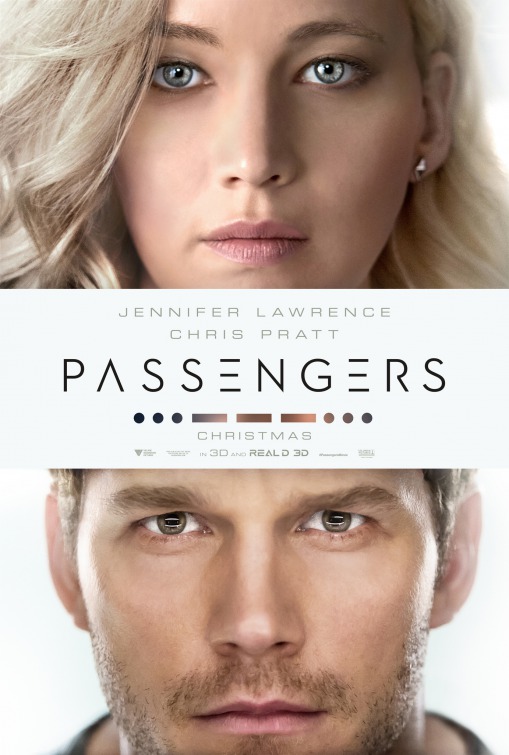
PASSENGERS by Ben Cahlamer

Homesteading.  Many years ago, when land was plenty, the government offered it to people who were willing to till the soil, grow some crops.  Perhaps raise a family.  It was not an easy life.  In fact, you could probably retire today and still be tilling soil.

What in the world does this have anything to do with Morten Tyldum’s (“The Imitation Game”) new sci-fi film, “Passengers”?

Very little or quite a bit; it really depends on your point of view.  The intent of the government was to get people to become productive because they had no other choice:  they were cornered into a unique way of life that not everyone is cut out for.

In Jon Spahits’ (“Doctor Strange”, “Prometheus”) script, the meaning of homesteading, “a lifestyle of agrarian self-sufficiency as practiced by a modern homesteader or urban homesteader,” equally applies to the 5000 corporately-sponsored passengers aboard the Starship Avalon, destined for the colony planet Homestead II.

The trick is that the journey is so long, everyone on board is in hibernation and the state-of-the-art starship is on auto-pilot.  An engineer, Jim Preston (Chris Pratt) is woken up alone with no explanation and no one to communicate with.  He is eventually joined by author Aurora Lane (Jennifer Lawrence). As the only two souls awake on board the ship, they fall in love but not before disaster strikes.  Michael Sheen, Laurence Fishburne and Andy Garcia co-star.

Spahits’ script should have checked all the right boxes:  characters are well-fleshed out; the set-up was strong; social issues are at the forefront. The focus strayed from sci-fi-adventure to kitschy sci-fi-adventure-romance, where the romance just didn’t cut it. Preston’s reason for being woken up is clear; the emotional side of isolation became a focus instead of allowing his skills to move the character and the narrative forward, leading to the intended romantic angle; a wasted effort considering Jennifer Lawrence’s Lane tried too hard to remain in control, though her reasons for that become clear after a meltdown.  Had Fishburne phoned his performance from Earth, it would have been more convincing then what unfolded on the screen.  In homage to a Kubrick classic, Michael Sheen stole the show; but his role in a pivotal moment just fell flat.  Tight editing by Oscar-nominated editor Maryann Brandon (“Star Wars:  The Force Awakens”) keeps the pacing on track.

The script notwithstanding, there is one redeeming reason why this should be viewed on as big a screen as possible: the special effects.  In the tradition of Kubrick’s “2001: A Space Odyssey” and Scott’s “Alien”, Tyldum executes a strong, detailed technical look.

From the symmetry of the Avalon to the look and feel of the interior corridors, the hibernation pods, the stars and space around the ship, everything has a very real or visceral feel about it and visual effects supervisor Erik Nordby rose to the challenge brilliantly.  The effects are supported by strong cinematography from the Oscar-nominated Rodrigo Prieto (“Brokeback Mountain”).  His attention to every detail, from lighting of cavernous interior spaces, to changing reflective lighting and exterior shots in space, Prieto’s work only enhances the visual impact.

Oscar-nominated film composer Thomas Newman (“Bridge of Spies”, “Skyfall”) resonates with the luxuriousness of the Aurora and the allure of space exploration.  Some of his dramatic riffs didn’t exactly jive with the onscreen action, but his music served the film well.

“Passengers” had all the right ingredients for a stellar show, its ambition steeped in “Titanic”.  Instead, its ‘Lost in Space’ meets ‘The Love Boat’ with all the drama that that entails.

For the intricately detailed technical effects work, “Passengers” is Recommended.  Aaron Spelling is probably rolling over in his grave.

Joss Whedon’s In Your Eyes: A Review by Nate Hill 

JOSS WHEDON ALERT
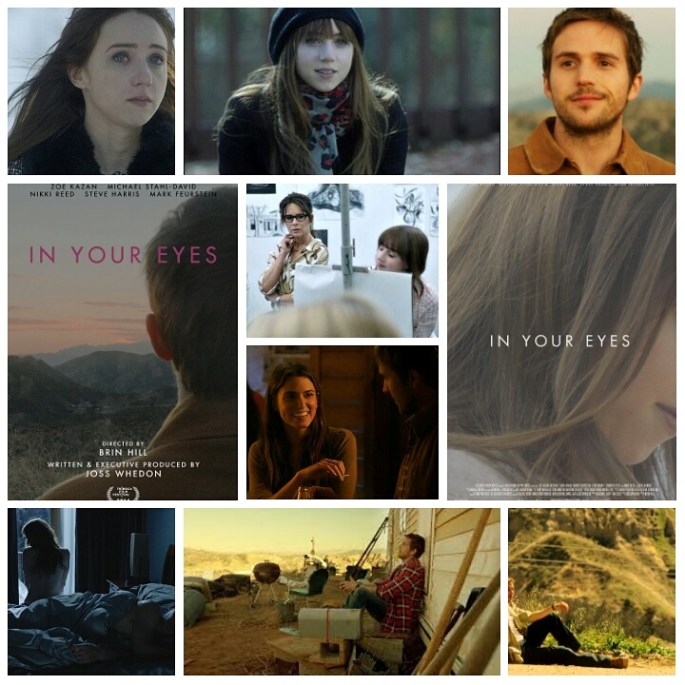
Now that I have your attention, let’s talk about In Your Eyes, a lovely little romantic/fantasy/drama written by the J Man, concerning a boy and girl who have shared a strange psychic bond over hundreds of miles since they were kids, despite never having met. 

  Its a slightly unconventional romance, a charming, breezy little piece that took me by surprise, having known nothing about it going in except Whedon’s involvment. It starts with his lovely script, laying down the bones for two adorable leads (Zoe Kazan and Michael Stahl David) to go to work. Dylan and Rebecca have never met. They live on opposite sides of the US, and lead considerably different lives. They would have nothing in common if it weren’t for an odd metaphysical connection. They can periodically (and often at inconvenient times) see into each others lives like a perceptive window, complete with senses like smell, taste and touch. When they are growing up its confusing and stunted, but I imagine it blossoms along with every other attribute, and suddenly they’ve discovered they’re not both crazy, and that there’s a real person on the other end of this bewitching mutual conduit. Soon they are communicating, much to the puzzlement of everyone else in their lives, who just observes them talking to themselves like loons. Romance isn’t far off, as we can well guess, and soon they are deeply in love in spite of their differences and the great gulf of distance between them. He’s a troubled fellow with a criminal past, a lenghthy RAP sheet and a nosy parole officer (Steve Harris). She’s a mild mannered, fragile girl married to a prissy control freak of a Doctor (Mark Fuerstein). Both of their lives are continuously disrupted by their relationship until they’re at the brink of crisis, and it seems the only way out is to find one a other in person. The almost supernatural aspect of their connection  is treated frankly, like more of a biological anomaly as opposed to ghostly gimmicks. It can be seen as Whedon exploring the nature of love in our world, finding “the one” who is always out there, somewhere, waiting. Or are they? The real hero is his incredibly down to earth script, an easy going, hilarious and poignant piece of writing. The cast is from all walks of Hollywood and includes Nikki Reed, Shameless’s Steve Howey, Richard Rhiele and a priceless cameo from Dirty Dancing’s Jennifer Grey, who is starting to look like a character from Desperate Housewives. Kazan and David are just the cutest, most earnest couple I’ve seen in a romantic film of late. She’s unsure, passionate and intuitive, he’s a scrappy patchwork teddy bear and together they’re perfect, capturing the essence of the relationship in a single very unique sex scene, nestled in with all of their “spiritual Skype” bonding, and eventual face to face meeting. Whedon loves his characters, right down to the bit parts and it shows. His writing is never short of sterling, and this one is another winner for him. 

Joss Whedon’s In Your Eyes: A Review by Nate Hill 

JOSS WHEDON ALERT
Now that I have your attention, let’s talk about In Your Eyes, a lovely little romantic/fantasy/drama written by the J Man, concerning a boy and girl who have shared a strange psychic bond over hundreds of miles since they were kids, despite never having met. 

  Its a slightly unconventional romance, a charming, breezy little piece that took me by surprise, having known nothing about it going in except Whedon’s involvment. It starts with his lovely script, laying down the bones for two adorable leads (Zoe Kazan and Michael Stahl David) to go to work. Dylan and Rebecca have never met. They live on opposite sides of the US, and lead considerably different lives. They would have nothing in common if it weren’t for an odd metaphysical connection. They can periodically (and often at inconvenient times) see into each others lives like a perceptive window, complete with senses like smell, taste and touch. When they are growing up its confusing and stunted, but I imagine it blossoms along with every other attribute, and suddenly they’ve discovered they’re not both crazy, and that there’s a real person on the other end of this bewitching mutual conduit. Soon they are communicating, much to the puzzlement of everyone else in their lives, who just observes them talking to themselves like loons. Romance isn’t far off, as we can well guess, and soon they are deeply in love in spite of their differences and the great gulf of distance between them. He’s a troubled fellow with a criminal past, a lenghthy RAP sheet and a nosy parole officer (Steve Harris). She’s a mild mannered, fragile girl married to a prissy control freak of a Doctor (Mark Fuerstein). Both of their lives are continuously disrupted by their relationship until they’re at the brink of crisis, and it seems the only way out is to find one a other in person. The almost supernatural aspect of their connection  is treated frankly, like more of a biological anomaly as opposed to ghostly gimmicks. It can be seen as Whedon exploring the nature of love in our world, finding “the one” who is always out there, somewhere, waiting. Or are they? The real hero is his incredibly down to earth script, an easy going, hilarious and poignant piece of writing. The cast is from all walks of Hollywood and includes Nikki Reed, Shameless’s Steve Howey, Richard Rhiele and a priceless cameo from Dirty Dancing’s Jennifer Grey, who is starting to look like a character from Desperate Housewives. Kazan and David are just the cutest, most earnest couple I’ve seen in a romantic film of late. She’s unsure, passionate and intuitive, he’s a scrappy patchwork teddy bear and together they’re perfect, capturing the essence of the relationship in a single very unique sex scene, nestled in with all of their “spiritual Skype” bonding, and eventual face to face meeting. Whedon loves his characters, right down to the bit parts and it shows. His writing is never short of sterling, and this one is another winner for him. 

Mr. Right: A Review by Nate Hill 

As I was watching Mr. Right, I started thinking to myself, this is stupid. It’s absurd and silly. So why does it work so well? The premise isn’t unique or original. Girl meets boy. Girl falls in love with boy. Boy turns out to be hitman/secret agent. Boy drags girl on mad escapade against some dastardly villains, the bond between them getting stronger in the process. It’s an ages old formula. It sorta kinda worked with Tom Cruise and Cameron Diaz, and elsewhere failed miserably with Katherine Heigl and Ashton Kutcher. So why then does it work so well with Sam Rockwell and Anna Kendrick? Well, exactly that: It’s Sam Rockwell and Anna Kendrick. The two are so suited for each other it’s adorable. The both of them are quirky, awkward, unconventionally attractive and very unpredictable in their work. Neither are what you’d call traditional romantic leads or action stars, and it’s in that sense that the film finds its groove. I’ve heard other critics bash on Max Landis’s script for being to busy or too stoked on itself, but in a studio system that tosses us garbage like the Kutcher/Heigl version, I’ll take anything I can get that puts in an admirable effort, flaws and all. Anna plays a jilted girl who is on a speeding rebound train that has a chance run in with Mr. Right (Sam Rockwell). He’s charming, super into her and the chemistry they have is obvious right off the bat. Soon they’re being appallingly cute and pretty much dating… that’s where the trouble begins. Rockwell is an infamous assassin on the run from several baddies including his former agency mentor (Tim Roth has even more fun with accents here than he did in The Hateful Eight) who has lost his marbles, and a trio of mafia brats played by a volatile Anson Mount, a hammy James Ransone and a wicked Michael Eklund as that nastiest of the bunch. The film tries hard to balance the two tones, and fpr the most part succeeds, blending them with the helpful notes of craziness from everyone. The violence is brutal, stylized and often darkly comical, the romance is sweet but never gushy with just a hint of mental instability from both parties (sounds weird, I know… it works). Rockwell adds shades of his off the rails work in Seven Psychopaths, albeit with less psychosis. Kendrick is endlessly cute, and endearingly klutzy. Throw in RZA as a hapless killer who can’t decide what side of the fence he’s on, and you’ve got a diverse little cast with enough collective and individual talent to make this a good time. It won’t be for everyone; I can picture many people I know big annoyed, or simply finding themselves unable to buy into it. But for fans of Rockwell and Kendrick (even if you’re not, there’s no scoffing at both their skills) it’s a charming blast of fun. 

Ghost: A Review by Nate Hill


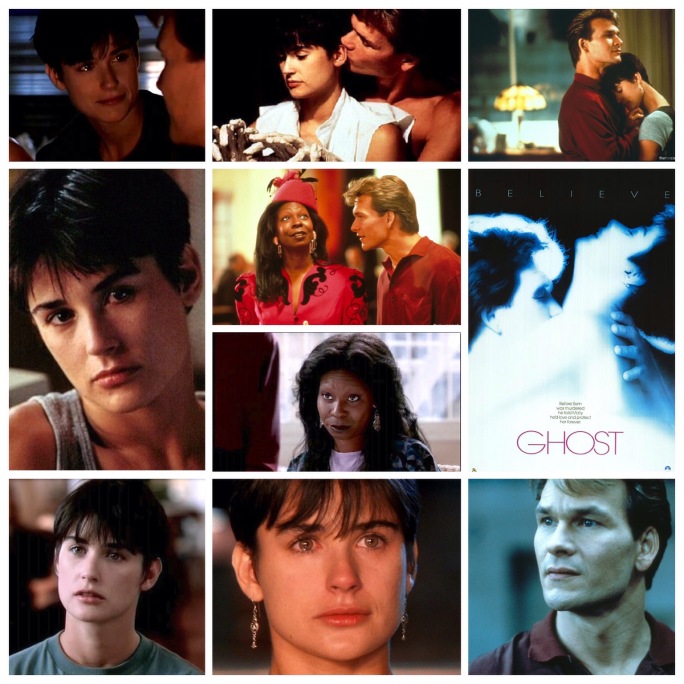
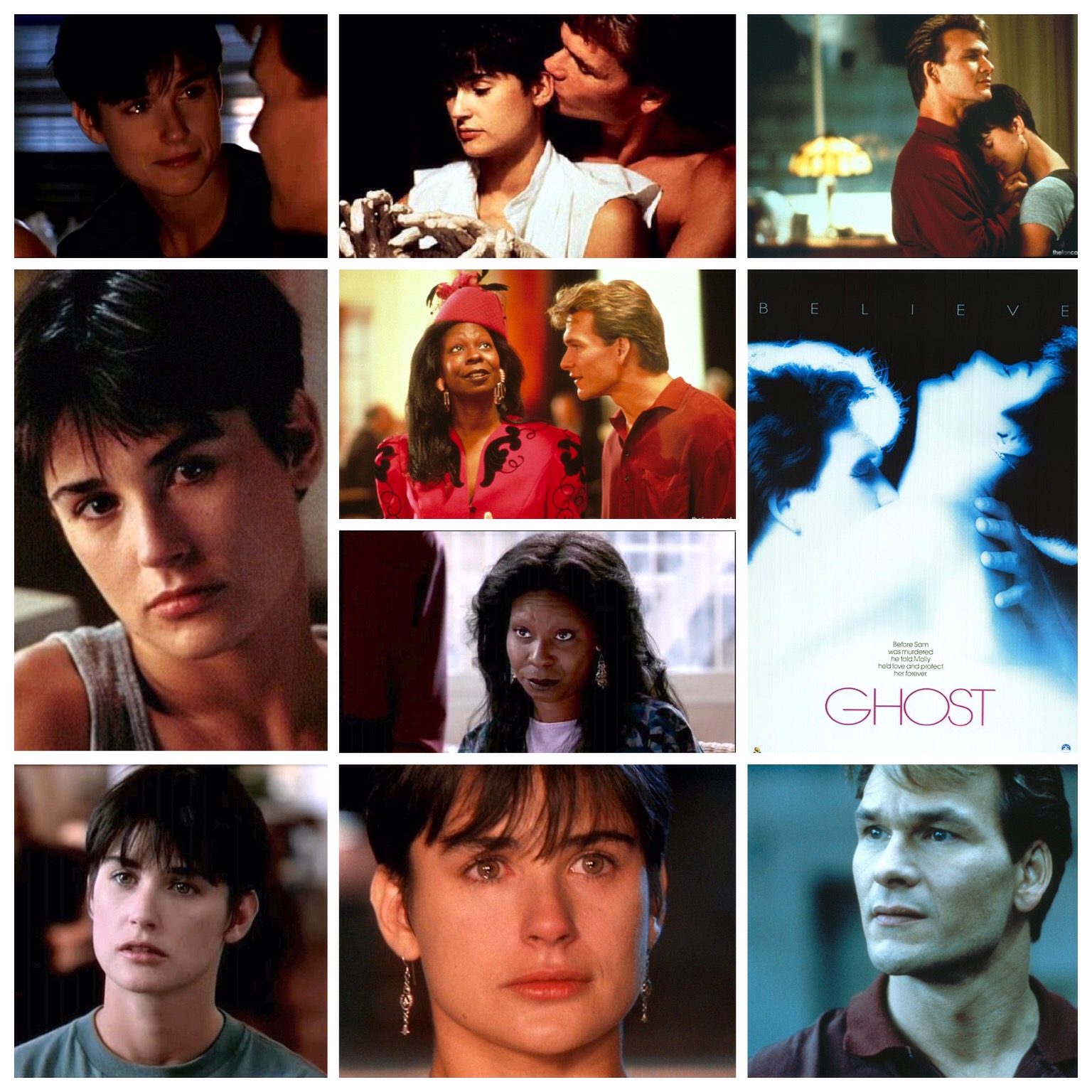
Ahh, Ghost. What an authentic romance classic, a film that puts a big old grin on your face whether you want it to or not, a sloppy, smile that’s just wide enough to catch the tears that fall as a result of the sadness which accompanies the sweet, too essential ingredients in any love story that hopes to affect us in either direction. Balance is key, and Ghost employs both the giddy, heart-skipping joy of romance and the looming possibility of threat and tragedy in equal measures, never getting too dark or to soppy, at least for me. Demi has never been more adorable, in one of her career highlights. Her and Patrick ‘Roadhouse’ Swayze play star-crossed young lovers, in the beginning stages of building their lives together, a time that should be unconditionally happy for both, and is, until one fateful event rips them apart and plunges the narrative into effect. They encounter a thief in an alley one night, and Swayze is killed. Only, his spirit remains behind, for more reasons than he at first realizes. He keeps a protective, loving eye on Moore, and is driven to the notion that his death was no accident, his lingering presence meant for the purpose of both truth, love and retribution. He is aided and assisted by a sassy psychic (Whoopi Goldberg) who acts as his conduit between both realms. There’s supernatural intrigue and conspiracy afoot, but as exciting as that stuff is, it’s the love story between Patrick and Demi that has kept generations rooted to the story. A romance film is nothing without two leads who share both chemistry and a great script, which this one supplies generously. They are a show stopping pair in their scenes together, and if their predicament doesn’t draw forth both smiles and cries from you as a viewer, well, you’re wading through the wrong genre, my friend. The two of them make this one an honest to goodness winner with their performances, supported by narrative elements that only raise the stakes of their relationship. A film which will never not be a classic, and everyone should have in their collection. Ditto.

Passion Of Mind: A Review by Nate Hill

image

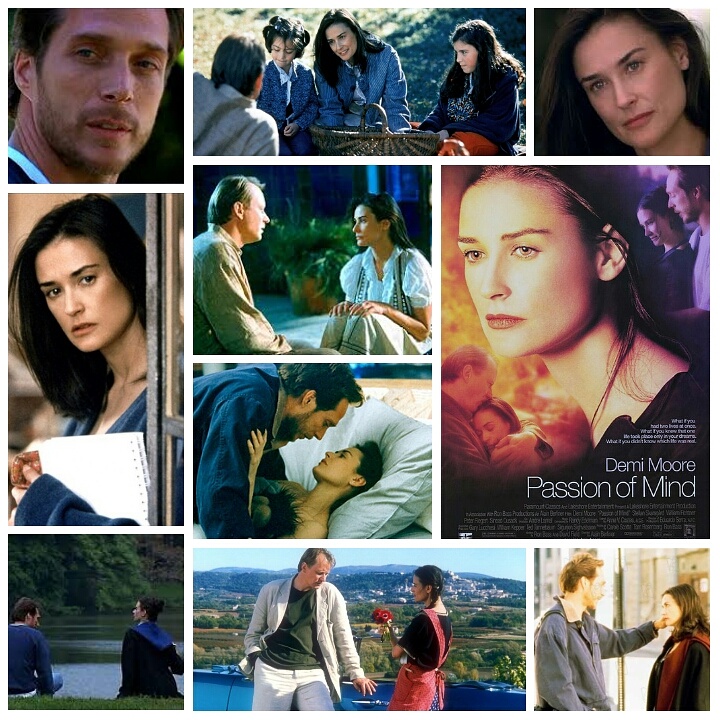
Passion Of Mind is a little seen fantasy romance tale that stars Demi Moore as a woman named Marie, essentially living double lives in a way. She lives and works in New York, and is as ordinary as any other woman in the world, but when she goes to sleep she wakes up to another life in the French countryside, with another job and children who aren’t in New York. She lives a day in the French life, goes to sleep, wakes up back in the New York life and lives for another day before going to sleep and back again. And so it goes. Is one life a dream? Or both? Is she imagining things, or stuck in some rift? To complicate things, as always happens in film, there are two men, one for each life. Aaron (William Fichtner) is a kind, caring businessman in the New York life who she begins a relationship with. In France she meets compassionate, romantic William (Stellen Skarsgard) who she also begins to fall for. Quite the predicament, no? If the premise sounds familiar to you, here’s why: there was a short lived NBC drama called Awake which ran for one season, starred Jason Isaacs and had the exact same setup. Now while the show obviously borrowed it’s central plotline from this film, it’s no big deal because it’s such a great idea it deserves more than just one shot. The film is quiet, pleasent and sweet, never really taking steps to explain it’s concept but simply letting it’s characters live within it in perplexed, whimsical harmony. Moore has an inherent sweetness to her and she’s wonderful here. One might think a protagonist who is put through a scenario would be confused, stressed out and damaged. Moore plays it her own way, as she always had. Her character is enchanted by her situation, if a little wary. Skarsgard and Fichtner are left field choices for romantic leads, as both are kind of considered character actors with stark, specific looks. Both play it straight here and their casting helps the film loads. Marie has two separate therapists, each from one of the lives (an element which the NBC show used as well), played by Joss Ackland and Peter Riegart. It’s not to serious, not too fluffy, just the right kind of low key romance with an imaginitive streak and a high concept that fits neatly into the story.

Edward Zwick’s Legends Of The Fall: A Review By Nate Hill

Edward Zwick’s Legends Of The Fall is sweeping Hollywood grandeur at its finest. It’s a raging typhoon, one part family high drama, one part war film, wrapped in a nostalgic, old world romance that hearkens back to the golden age of cinema. It’s an epic as only the pictures can show us, blowing a gust of storytelling wind at us and depositing us on the endless plains of the 1900’s, in the monumental Rocky Mountains of Montana. The story focuses on Colonel William Ludlow (Anthony Hopkins, gnarled nobility incarnate), living with his three sons in the desolation of an old world making way for a new, as the four of them deal with love, loss, war, nature and interpersonal conflict in a story that plumbs the chasms of human nature and spits out characters that bleed raw feeling, reach out to one another in the clamour of a nation only just being formed (like the land itself), and clash in tragic harmony, spanning years in their lives and showing us desperation, grief and brotherhood. Brad Pitt, in the fiercest performance I’ve ever seen him muster, plays Tristan, Ludlow’s half Native son with a wild streak a mile long and a kinship with the tangled wilderness he calls home. Aiden Quinn plays the middle brother Alfred, a reserved, analytical type. When their younger brother Samuel (Henry Thomas), arrives home with his beautiful fiancé Susannah (Julia Ormond) sparks fly between her and Tristan, and an immediate rift is formed in the family that Ormond sees all too well, but cannot deny her love for Pitt. Samuel is a fragile, easily traumatized man, and when the boys are driven from their lands to fight in the war, it dampens his soul with a ruining force of horror that leaves him scarred forever. Tristan, being almost animalistic at heart, sinks into the carnage of combat with the keen resilience of a wolf, and is transformed in a different fashion. This to me is the penultimate sequence of the film, as it strays from the picturesque grandeur of their life before, removed from the world of conflict, into the sheer reality that befalls a country in formation, representing a loss of innocence so to speak. Neither of them are the same after that, and the cracks in their brotherhood only etch further after tragedy befalls Susannah, blackening their idealistic home life as well and tainting the memory with aching sadness. Tristan tries to move on, either to wrap the hurt in a cloak of new events, or because his instinctual nature spurs him on, but he almost seems to be cursed, and more hardships step into his path as well. I don’t want to deter you from seeing this by laying all this doom and gloom into my review, because it’s actually a very beautiful film to see unfolding, it just deals with incredibly tragic subject matter that will leave you breathless with tears, like Titanic, or Romeo & Juliet. Pitt.. What can I say. He’s outstanding, giving Tristan the fearsome gaze of a wounded animal, and the love struck longing that’s shot down by fate, turning him into a prisoner of his own ephemeral love for those who are taken from him. It’s my second favourite of his roles (it’s hard to top Twelve Monkeys) and he shines in it like a silver star over the Montana horizon. Montana itself basically screams to be pored over by a camera, and the cinematography will make you feel every gust of mountain air and gasp at the looming crags and sun dappled glades that leap out from your screen at you. It’s one of the last of a dying breed: the romantic epic. Like Titanic, or Gone With The Wind and Doctor Zhievago before it, it posses that untouchably bold quality that showcases emotion, tragic happenstance and deep longing all set in a breathtaking setting that is meant to move and astonish you. A classic.

LEE TOLAND KRIEGER’S THE AGE OF ADALINE — A REVIEW BY NICK CLEMENT

2

Lee Toland Krieger’s The Age of Adaline is gorgeous looking nonsense, a sentimental and effective sci-fi romance that is entertaining in the moment, and gone the next. Shot in Fincher-vision with lots of piss-yellows and varying shades of brown and black, the film is eye-candy to the extreme, with beautiful and evocative production design by Claude Paré, and a terrific sense of how to fully utilize the 2.35:1 frame by cinematographer David Lanzenberg, who also photographed the exceedingly stylish thriller The Signal. The kooky story, which is narrated by Hugh Ross(!), involves a car accident and lightning strike that somehow prevents the well-dressed and extremely attractive Blake Lively from ever aging. So she spends the decades mostly alone, births a daughter, and never allows herself to fall in love (well, only a couple of times…). Throughout the years, she’s forced to repeatedly move in an effort to keep her strange secret hidden from anyone who she comes into contact with, only allowing the information to pass to her only child, played as a grown up by Ellen Burstyn. Harrison Ford has some strong scenes as one of her old romantic entanglements as he crosses paths with her 40 years later in a wonderful bit of contrived scripting. But to complain about the artificiality of this movie is pointless; it’s built on a massive suspension of disbelief that you have to accept right from the start. It’s a nice film, nothing spectacular by any means, but surprising in its level of artistic elegance and attention to visual detail.

1