32nd Annual Santa Barbara International Film Festival

sbiff-banner-corrected

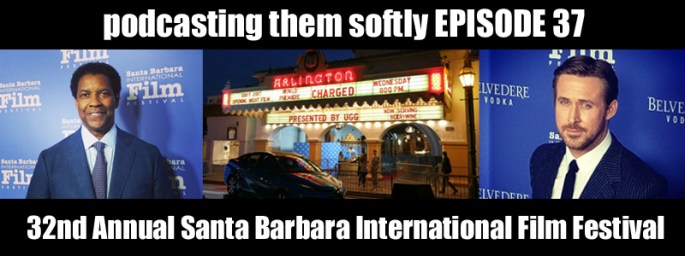
4161418625791602350-account_id1We’re very excited to publish our 32nd Annual Santa Barbara International Film Festival podcast.  This year, Frank was able to get red carpet interviews with Executive Director of the festival, Roger Durling, film historian Leonard Maltin, Naomie Harris of MOONLIGHT, Stephen McKinnley Henderson of FENCES, David Crosby who wrote and performed an original song for LITTLE PINK HOUSE, filmmaker Derek Wayne Johnson who premiered his film, JOHN G. ALVIDSEN: KING OF THE UNDERDOGS at SBIFF, Aaron Taylor-Johnson of NOCTURNAL ANIMALS, and filmmaker Damien Chazelle who wrote and directed LA LA LAND.  On the latter half of the podcast, Frank is joined with Devin Godzicki who took photographs and attended panels with Frank at this year’s SBIFF.  They discuss a film they saw, SEPTEMBER 12th, and end the conversation with a brief chat about LA LA LAND.


Damien Chazelle’s LA LA LAND

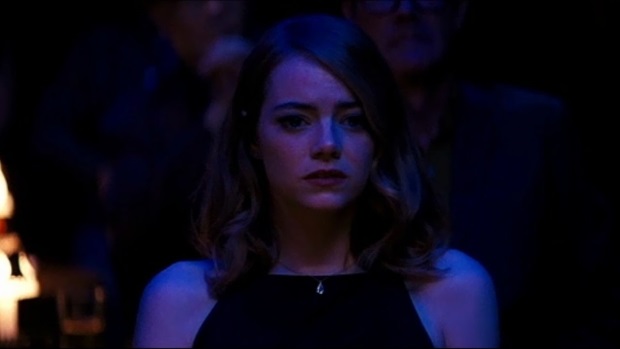
Damien Chazelle is the next Bob Fosse.  His latest film, LA LA LAND, is cinematic perfection, and he and his film are on pace to win the Oscar for director and picture, among many others.  Chazelle has already won the Golden Globe, and just won the Director’s Guild of America’s achievement for the best direction this year.
ending1

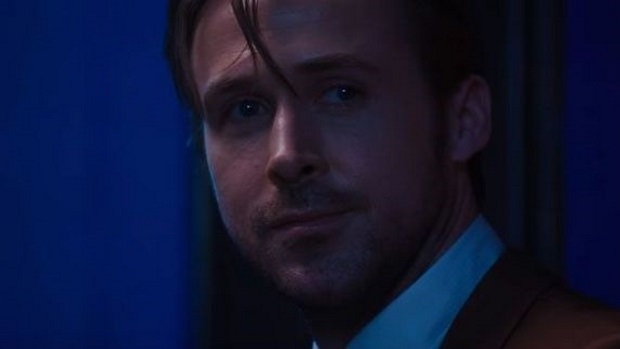
The film is not only a throwback to the musicals of the golden age of Hollywood, but also Alfred Hitchcock’s VERTIGO, and of course the French New Wave.  The film is warm, tender, funny, romantic, and bittersweet.  Both Ryan Gosling and Emma Stone give two beautiful showboats of a symbiotic performance.  They constantly make each other better, scene by scene, and their chemistry is so undeniable that they rank up among some of the greatest screen partners of all time: Nicholson/Dern, Belushi/Aykroyd, Tracy/Hepburn, and De Niro/Keitel.

Chazelle absolutely knows what he’s doing.  Every single frame had been mapped out prior to filming, neither Gosling nor Stone’s singing is pushed past what they can do, in turn making the musical numbers revolving around their singing absolutely natural and organic.  The aesthetic is vivid and astonishing, Chazelle makes brilliant use of color, accentuating the frame with costumes, sets, and hair and makeup.  He executes any and every aspect of the film in such a flawless way, showcasing his eye for absolute detail.
la-la-land-watching-04-videosixteenbyninejumbo1600

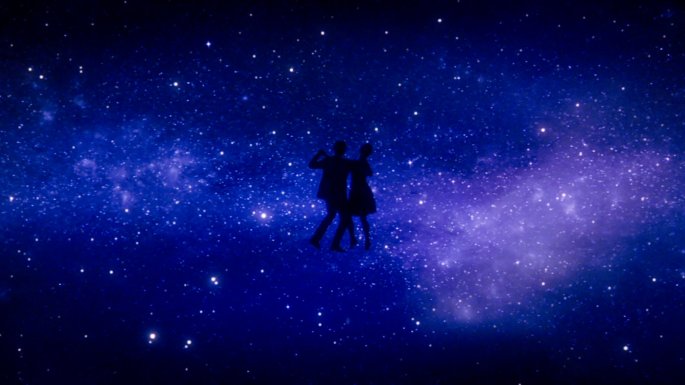
Inside of the film lays an incredible love story, not only between Gosling and Stone, but for music, passion, and the arts.  The film features the best special effect all year, (yes – better than the CGI recreation of Peter Cushing in ROGUE ONE) where Gosling and Stone dance amongst the stars.  For as much of a token of nostalgia the film can bring, it is also steeped richly within its own originality particularly with original music composed by Chazelle’s musical partner, Justin Hurwitz.

LA LA LAND is magical.  It represents the best that Hollywood has to offer.  There is nothing subversive, nothing is cloaked in the shadows of the film.  Mark Wahlberg isn’t unrealistically saving the day for the hundredth time in as many days, there’s no political statement to be made – this is a film made by a lover of cinema for lovers of cinema.
ending2

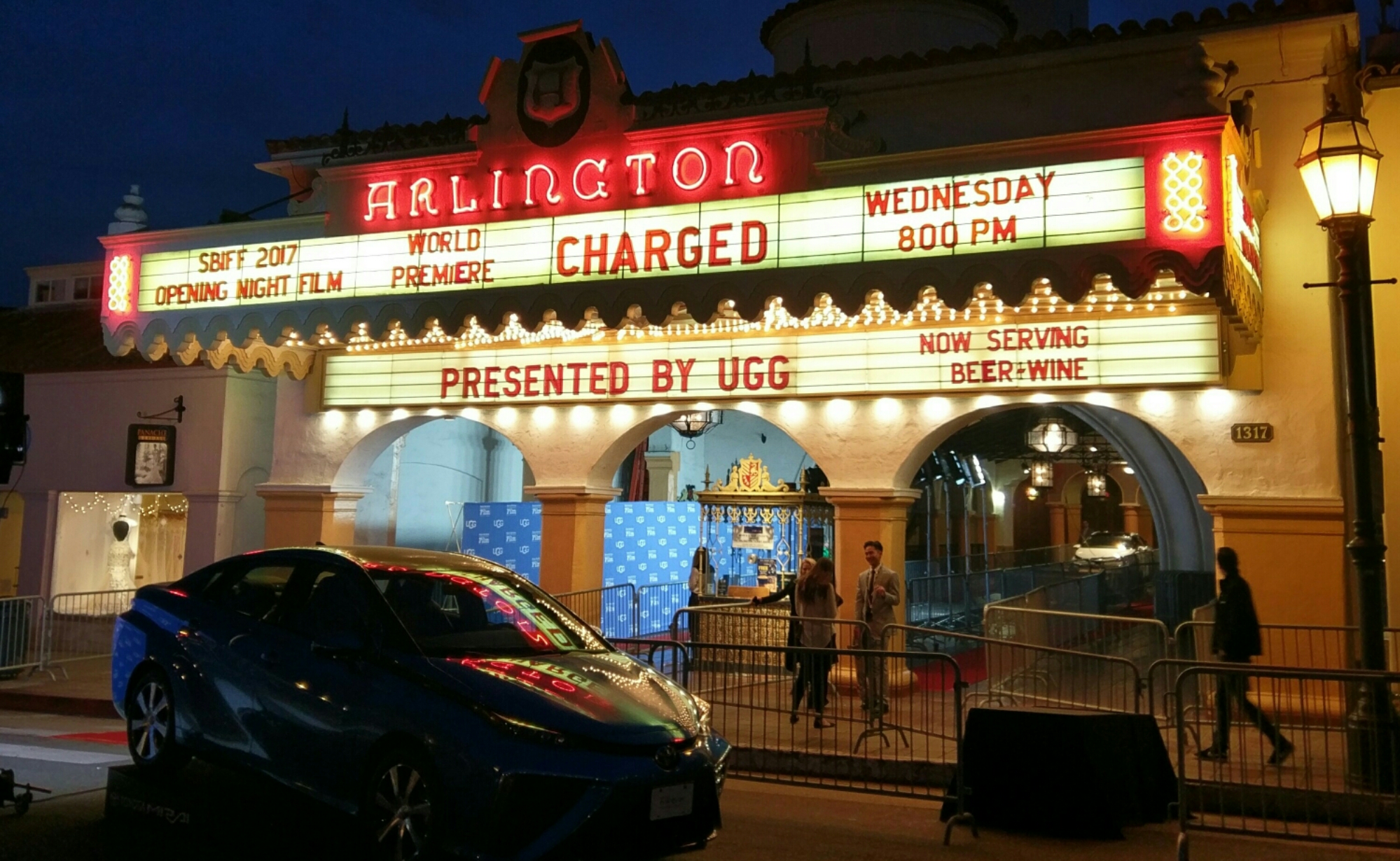
The Opening Night of the 32nd Santa Barbara International Film Festival

The 32nd Santa Barbara International Film Festival opened last night with the cathartic and uplifting documentary CHARGED: THE EDUARDO GARCIA STORY.  Eduardo was shocked with 2400 volts of electricity that cost him am arm, ribs, and nearly his life.  The film is an inspiring story of resilience, passion, and the eternal flame of the human spirit.

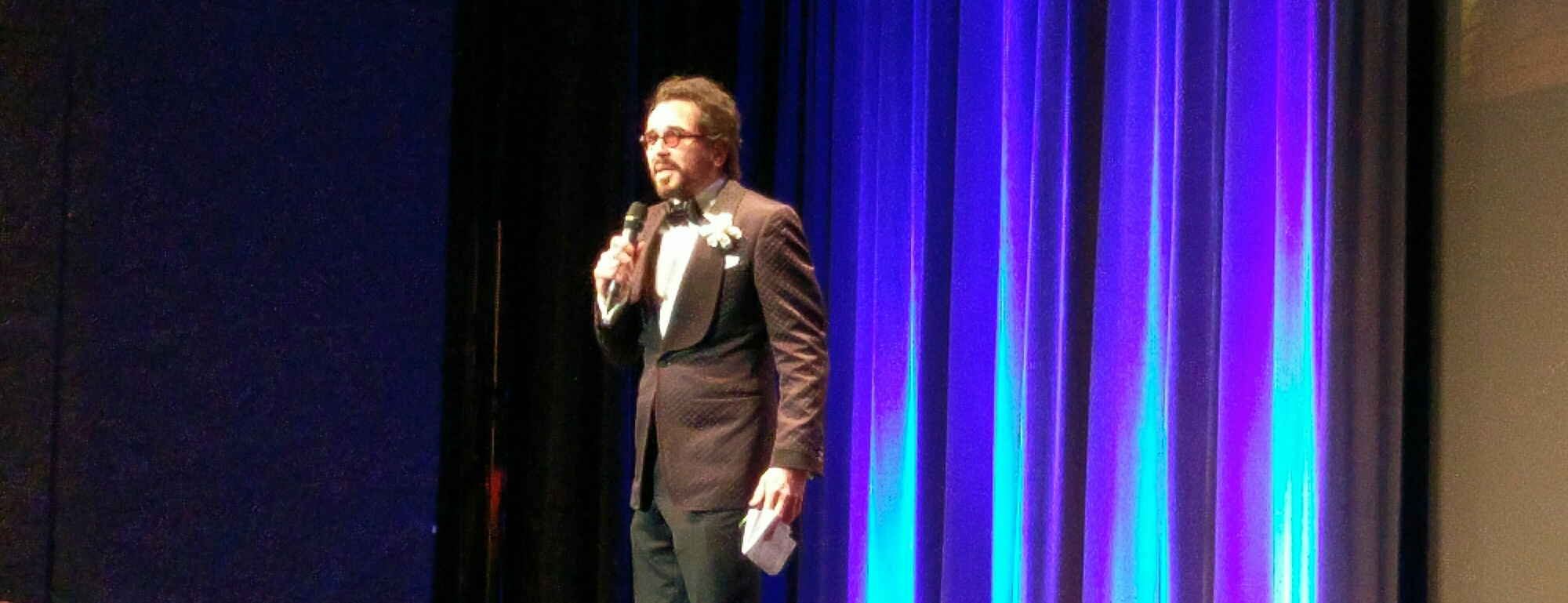
Executive Director of the festival, the ever so dashing Roger Durling, introduced the film in a candid and heartfelt speech.  He spoke about the power of film, how it can not only inspire us, but also save our lives.  Durling then went on to speak about how he is not only an immigrant, but also an American.

He spoke passionately and proudly of how the festival is showcasing films from fifty different countries and how cinema and the arts are so powerful, they can deconstruct walls.

CHARGED is a fascinating film, and marks the second time in the festivals thirty-two years that it has opened with a documentary.  Coming up, Denzel Washington will be receiving the Leonard Maltin Modern Masters Award, celebrating Washington’s career right as he comes off his Screen Actors Guild award for FENCES, poising himself as the front runner in the Best Actor race.

There is much, much more to be excited about at this years festival.  Ryan Gosling and Emma Stone will be awarded Friday.  In total, sixteen actors who have been nominated this year for an Academy Award will be hosted.  Stay tuned for our SBIFF podcast that will feature red carpet interviews!

PTS PRESENTS EDITOR’S SUITE with JIM HELTON

HELTON POWERCAST

HeltonPodcasting Them Softly is honored and extremely excited to present a discussion with feature film editor Jim Helton. Jim‘s big screen credits include Blue Valentine, The Place Beyond the Pines, and this September’s The Light Between Oceans — all of which were directed by Derek Cianfrance. It’s very clear that Jim has forged a unique and intense artistic relationship with Cianfrance, who ranks as one of our favorite filmmakers currently working, and throughout this extremely informative chat, we discuss how their unique partnership came to be born. Jim has also worked on a variety of short films and documentaries, and also edited the indie dramedy Lovely By Surprise and the street-racing action thriller Quattro Nozza. He also contributed to the dynamic soundtrack for The Place Beyond the Pines, as music is a big passion for him, which is something we also had a chance to discuss. He even crafted the extremely memorable title sequences for Blue Valentine. Jim‘s work is smart, stylish, and extremely disciplined and we’re thrilled to add him to our Editor’s Suite series. We hope you enjoy!
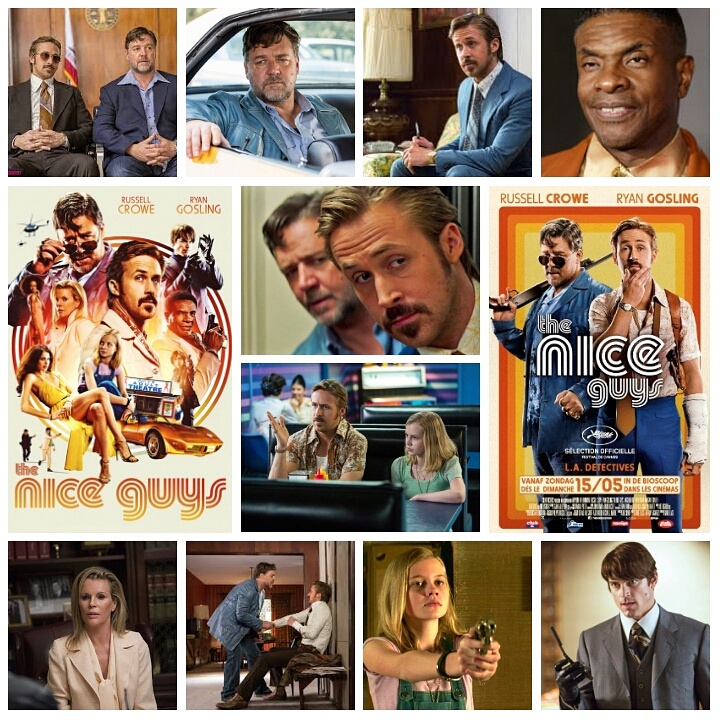
The Nice Guys: A Review by Nate Hill 

The Nice Guys is a torrential downpour of laughs, prat falls and lovable idiocracy, a formula which director Shane Black perfected with his super underrated Kiss Kiss Bang Bang. This one is no doubt it’s sister film, and while it has comedy in spades, top tier performances all round and luscious 1970’s production design, it’s just a we bit under-plotted. Having said that, that’s my one and only complaint about it. It’s the funniest film of the year by far, thanks to the rough and tumble pairing of Russell Crowe and Ryan Gosling. Crowe is Jackson Healy, a mopey hired thug who will put the hurt on anyone if the dollar is right. This occupation has him cross the path of Holland March (Gosling) an ex cop PI who, according to his daughter (Angourie Rice), is the world’s worst detective. He’s certainly a buffoon, a trait which forms one half of their comedic shtick, the other being Healy’s laid back exasperation everytime March gets them into trouble, which is pretty much throughout the entire film. The two of them unwittingly stumble into a dangerous turn events involving the justice department, murder, the apparant suicide of a porn star (Margaret Qualley), a very scary assassi  (Matt Bomer) and one angry goon played by an afro’d out Keith David. It’s tough to make heads or tails of what’s really going on, but like Kiss Kiss Bang Bang it’s not about the plot or the outcome, it’s more about watching the characters trip over each other in style as they get there. Crowe is terrific, a bear of a dude who’s in way over both his head, IQ and pay grade, aghast at Gosling’s antics at every turn. Gosling’s character belongs to that special class of stupid that is so clumsy that he circumnavigates his own ineptitude and ends up falling right into clues, without a clue how he got there. After a string of recent stoic introvert roles, he’s the most animated character of the film and is clearly having a ball. None of what the duo do would be possible without March’s precocious 13 year old daughter, played with uncanny ability by Rice, whose star is going to be solidly on the rise, I’d wager. A reunion of sorts occurs with the arrival of Kim Basinger as the head of the justice department, joining Crowe again after their work in L.A. Confidential. Basinger isn’t given much to do ultimately, but her presence is a welcome addition to the vibe. Black deserves kudos for his gorgeous recreation of L.A. in the 70’s, right down to the sickening lampshades pastel suits and souped up cars it’s a treat to see. The energy from Crowe and Gosling is where it’s at with this one, and they both eagerly tuck in to the dialogue, making this one groovy, delirious riot of a flick.  

Derek Cianfrance’s BLUE VALENTINE – A Review by Frank Mengarelli

“You made a promise to me, okay?”

Steeped in fiery passion and offset by raging resentment and animosity is the quagmire that is Derek Cianfrance’s spellbinding portrait, BLUE VALENTINE. 

The film is one of the most realistic portrayals of a new and growing love that eventually unravels in an emotionally catastrophic way.  There isn’t a good guy or a bad guy, there are just two people who have drifted apart over time.

Ryan Gosling and Michelle Williams duel throughout the entire film.  Each respective actor is continuously making the other one better, breaking new waves as they reach deeper within themselves to catapult their performance in a real and heaetbreakingly honest way.

Derek Cianfrance has quietly become a master filmmaker.  His vision is taut, compelling, and grounded within the secret horrors of reality.  His aesthetic and technical choices are paramount to his finished product.

The film was shot in one part 16mm for flashbacks and then one part digitally for present day.  The editing duties were split between Cianfrance’s two collaborators Jim Helton and Ron Patane whom edited the two timeframes in the film separately.

The film ends with a pulverizing gut punch.  For one of the characters, there is no more forward momentum; all is lost.  And then the film’s closing credits happen.  The credits are the most powerful closing credits since THE CHINA SYNDROME.  Editor Jim Helton constructs a closing sequence of still frames of Gosling and Williams young and in love, freeze frames encapsulating moments in time of over romanticized memories and faded dreams.

Derek Cianfrance’s The Place Beyond The Pines: A Review by Nate Hill

image

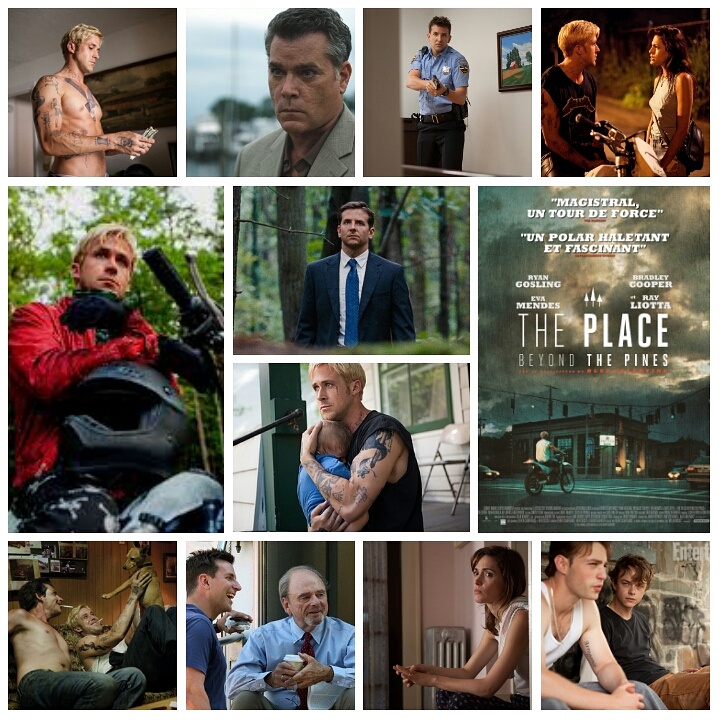
Derek Cianfrance’s The Place Beyond The Pines is so ambitious in reaching for its themes, it almost seems godlike in its depictions of paternal archetypes. Even gods fall though, and this is a film that grandly shows us the flaws in two very different fathers, how those qualities and the actions they generate can cause damaging rifts for their offspring and those around them years later. Cianfrance seems intent on tackling difficult subject matters with each new film he makes, spiraling systematically into the heart of human behaviour, and mine for the answers to questions which mean so much to him. Mental illness and love were areas he explored prior to this, and now he takes on fatherhood, fateful missteps included. The film is separated into two distinct and very different episodes. We begin somewhere in the 1980’s with Luke Crash (Ryan Gosling) an adrenaline junkie motocross daredevil who is all about little talk, lots of impulse and low rationality. He’s drawn along by a petty criminal (Ben Mendelsohn, superb) on a series of increasingly risky bank robberies, with notions of providing for his wife (Eva Mendes) and infant child. He takes it too far though, and tragedy strikes with the arrival of Avery (Bradley Cooper), a gung ho young police officer who suddenly finds himself in the hot seat after being branded a hero cop. The film then makes a jarring leap in both time and tone to present day. Avery is now a political candidate with powerful friends and some nasty secrets that gave him his position. He has a son (Emory Cohen) who’s on a rocky road of difficult behaviour, estranged and distant from him. Fate steps in and places Luke’s own son (Dane DeHaan) in the mix for a very volatile and prophetic outcome that brings the big picture into full circle. My favourite part of the film is the first segment, particularly the interaction between Mendelsohn and Gosling, and their dynamic. It’s so organic and unforced, everything happening with the cadence and pace that I recognize in my own life. That’s realism. It’s moody, ponderous and has an atmosphere thicker than most films dream of. It’s somewhat strangled by the abrupt change halfway through, but it’s simply one door in the narrative leading into a new room, and is neccesary once I thought about it more. What the film has to day about fathers and sons isn’t your garden variety family drama message. There’s a near Shakespearian darkness to it, the cloak of inevitability laid down by a few lightning quick moments in one’s life that arch out through the years and affect ones children in ways that were never contemplated in that one split second it took to act. Rough stuff, but endlessly fascinating. Ray Liotta does his patented corrupt dick head cop thing nicely, Rose Byrne quietly plays Cooper’s wife, and look out for Bruce Greenwood and Harris Yulin as well. After the titanic undertaking he has striven for here, I can’t wait to see what Cianfrance has in store for us next. Powerful stuff.

Nicolas Winding Refn’s DRIVE – A Review by Frank Mengarelli

13230936_10101542850572367_538049122_o

DRIVE is a film that could have easily been made by Michael Mann in the height of his 80’s neo noir phase. It would have starred William Petersen, Robert Prosky, Tom Noonan, Dennis Farina – the seminal Mann players. Tangerine Dream would have composed a remarkable score. But it wasn’t, and that’s what makes this film an undeniable masterpiece. It was made by Nicolas Winding Refn, with Ryan Gosling transforming himself into a top tier actor, and Cliff Martinez providing a hypnotic score in the year 2011.

There are many aspects of the film to marvel over. The vibrant neon color scheme, the stoicism and deep introspective turn from Gosling, Refn’s tranquil direction. Career pivoting performances from Albert Brooks and Bryan Cranston. There is such a fertile quality to this film that sets the tone for this decade’s cinematic landscape.

DRIVE kiss

Gosling, who has been remarkable since DRIVE, is perfect in this film. His dialogue is minimal, as are his physical actions. His performance is commanded through his eyes. He’s always watching, always internal, he is slowly calculating everything.

The forbidden love between Gosling and Carey Mulligan is handled with such sensibility and grace by Refn. It is never overplayed, and at no point in the film does it become generic. The purity of their relationship splashes off the screen and leaves impending doom on the viewer.

Drive 3

Bryan Cranston and Albert Brooks are phenomenal in the film. Cranston completely shakes his comedic shtick as well as the trajectory of Walter White. He’s likable, due to his casting, but overall he’s smarmy and pathetic. Neck tattoos, chain smoking, hobbling around the frame looking for his next get rich quick deal.

Brooks, who was completely robbed of an Academy Award nomination, is a fascinating antagonist. Yes, he’s the monster, but he’s also genuine. He doesn’t want to do what he does, but his back is against the wall due to the unraveling of the plot. As the viewer, we like him, even when he’s pulling an eyeball from a guy’s head with a fork. Because the guy he’s doing it to had it coming.

Drive 2

Refn struck gold with this film, and by making a mainstream-ish film, he was able to gather the clout to make whatever he wanted in the future, no questions asked. ONLY GOD FORGIVES and the much anticipated NEON DEMON are complete validations. Refn has a progression that is akin to post TREE OF LIFE Malick; with each new film, he’s not only challenging the audience, but himself as an artist. DRIVE is one of the finest films of this decade, and it only grows more poignant and incredible as time passes.