Stephen King’s Misery

It took me a while to finally catch up with Stephen King’s Misery (as adapted by Rob Reiner) but what spectacularly unsettling horror film, mostly thanks to an almost unbearably intense Kathy Bates. I can picture King during the writing process of this book waking up in a cold clammy sweat from a trauma induced nightmare about some psycho stalker fan (I’m sure he’s had a few), feverishly grabbing pen and paper from his nightstand and scribbling off another chapter. Reiner & Co. capture the cold dread, deafening isolation and mounting hopelessness of the story wonderfully, as unlucky hotshot novelist Paul Sheldon (James Caan) finds himself injured, stranded and finally ‘rescued’ by super-fan Annie Wilkes (Bates), rushed off to her remote snowy cabin and nursed back to health.. and then some. The great thing about Bates’ performance is she doesn’t make Annie a complete outright monster, there are momentary flashes of something resembling humanity, albeit of a lonely, bitter, misshapen kind. She takes the maniacal behaviour to extreme heights by starting on a slow burn that has us *slightly* on edge and gradually turning the dial up to a deafening roar of obsessive behaviour, delusional fantasies and homicidal volatility. It’s a wicked sharp, playful, very somehow simultaneously in control and unhinged piece of acting, while Caan, in a difficult role, is bed ridden as he bears witness to and takes the full brunt of her tempestuous meltdown. The chilly winter setting is a huge plus, my cup of tea atmosphere indeed and the beautiful snowed in locations make for a splendid visual feast. We spend most of our time with Caan and Bates yet there is a curated supporting cast of memorable folks including Lauren Bacall, Frances Sternhagen, Reiner himself, the late great Richard Farnsworth as a charismatic local Sheriff and the also late great J.T. Walsh as the county’s most inept state trooper. I feel like King took the masochistic route here and heavily projected himself into the role of Paul, the trapped artist forced to plonk out new work on an aggressive timeline not of his own delineation. What trials and hardships is he trying to wrestle out of his mind by telling this story? The crushing doom of a publishing deadline? The vacuous, soul-eating doldrums of writer’s block? The no doubt nerve-wracking, paranoia laced burden of dealing with a fanbase of oddball horror nuts? Who can say. But this feels like a personal story for him, and it’s certainly a very well told, acted and produced film full of deeply shocking moments, icy tension and an antagonist for the ages served up by Bates who, to quote herself, is one ‘cockadoodie’ chick. Great film.

-Nate Hill
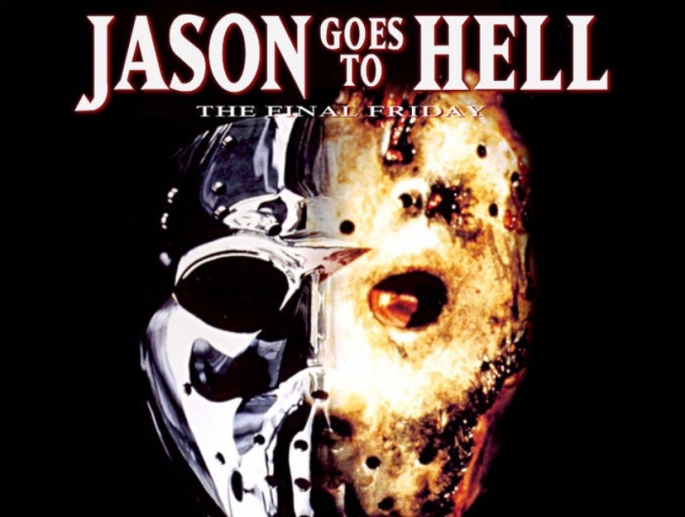
Adam Marcus’s Jason Goes To Hell: The Final Friday

Jason Goes To Hell: The Final Friday might be my favourite film in the Crystal Lake franchise on deliriously excessive shock value and purely deranged artistic inspiration alone; this thing is fucking lovably unhinged. There just comes a time in every franchise where the filmmakers feel the need to shake things up, throw a bit of seasoning into the stew that wasn’t there in previous incarnations (see the wonderful Producer’s Cut of Halloween 6) and the result is often a tributary effort like this where a simple, effective slasher motif has the doors of mythology blasted wide open and we get something really unique and striking. Jason Voorhees is blown to bloody smithereens in the first ten minutes of this film, and rendered all but deceased… or is he? Of course he isn’t, you ninnyhammer, that’s the golden rule of these things. It’s revealed that Jason’s essence, his very spirit itself transcends the physical flesh and can jump between hosts like a murderous parasite, which he does quite frequently on his journey from a big city morgue back to Crystal Lake to kill the sister and granddaughter he never knew he had, and quite frankly neither did we until this uncommonly elaborate script came into being. On his tail is gregarious bounty hunter Creighton Duke (Steven Williams, also awesome in True Detective & The X Files), who believes he can end Jason’s recently esoteric reign of terror and stop the legacy of blood. Much of the Friday The 13th franchise exists as primitive narrative framework for sex, suspense, substance consumption and modest murder special effects with nary a whiff of any real storytelling, supernatural or swanky FX. Not this baby. There are countless super slimy gore effects here, starting with a weird turd/slug thing that Jason passes between hosts to control them and onto some *very* intense kills including a mid coitus, ‘split right down the middle’ machete Hail Mary execution that earns a sly slow clap from the viewer. Crystal Lake now has this bizarre little diner run by a a rampaging matriarchal bull hen called Joey B., played by the great and always under appreciated Rusty Schwimmer. At one point Jason lays siege on her establishment and she arms her inbred bumpkin clan with heavy artillery for a demented firefight that.. well, let’s just say I didn’t think I’d ever see anything like it from this franchise. While there is story, it’s naturally all over the place, kinda like Jason himself and when he does finally show up in his traditional form once again (played by the great Kane Hodder, of course) it’s a cheer out loud moment. The legendary homages to other franchises like Evil Dead and Nightmare On Elm Street are wonderful as ever, and overall this is just so much goddamn fun for any loving fan of the Friday films, provided you employ a healthy level of imagination and capacity for abstract thought so you can play on its level.

-Nate Hill

Remi Weekes’ His House

It’s always neat to see a haunted house film that isn’t just about your average middle class American partridge family moving into a spacious New England manor. Additionally it’s refreshing when said haunted house film doesn’t rely on the usual book of tricks, jump scares, possessions, furniture flying around in invisible tornadoes or the usual garble that clutters up story. Remi Weekes’ His House is a disarmingly masterful horror film that isn’t just horror for the sake of chills, it’s actually about something important on more than one level and it’s about as assured, well crafted and terrifying as a director’s debut in the genre could be. The film focuses on a Sudanese couple (Sope Dirisu and Wunmi Mosaku) escaping their war torn country and arriving in the UK as refugees, ready to start a new life. They are appointed a slightly scatterbrained social worker (Matt Smith, better than he’s ever been) who sets them up in a spacious yet decrepit council housing unit in a hectic, labyrinthine outer district of London and its here they must adjust to their new circumstances, fit in and heal from the past. The past is key here, because this film is billed as a haunted house flick but there’s this slow realization that whatever is tormenting them isn’t something the home itself has to offer, but something that has followed them across the seas from Africa, a place where the age of reason hasn’t really dawned yet and those nameless fears the West has all but forgotten still abide in the collective unconscious of the people. Soon they hear voices from the perforated walls, whispers in the night, see feverish apparitions and are thoroughly haunted by many spirits, one in particular who knows a dark and dreadful secret from their past that has etched grooves into their already traumatized psyches until they both must face their demons accordingly. This is a terrifying film from a horror standpoint: the scares come fast, fresh and relentless until any minute spent in the house offers a new adrenal stab or potential heart attack inducing scene at any given moment. What really made this film special for me as a viewer was not just the scares, it was *how* this story is told from a narrative, editing, emotional, dream logic and shifting perspective aspect, and if that sounds a bit vague then it is because I don’t quite know how to describe some of the scenes I saw. Much of the film is set in this house but there are nightmarish flashbacks to Sudan and the stormy Mediterranean Sea that are handled in such a uniquely fluid, beautifully creative fashion they really took my breath away. There’s a moment where Dirisu sits alone at the kitchen table against a wall and quietly eats a meal. Then, almost imperceptibly at first, we pan out and as the colour grade slowly burgeons from dull grey to painful ochre red we notice that the kitchen is floating on the ocean… he is in fact dreaming. It’s one of the most wonderful, languid transitions I’ve seen in cinema recently and is alone enough to tell me that Weekes isn’t just a filmmaker to be watched at this point, but already one to be reckoned with. The performances from our two leads are also something special, and overall this film does a very clever, very personal and internal spin on the haunted house flick using dream logic, scintillating perspectives and cerebral fabric to tell a story that gives a voice to humans that often aren’t heard, felt or seen all the time in cinema. A masterwork, and one of the finest films you’ll see this year.

-Nate Hill

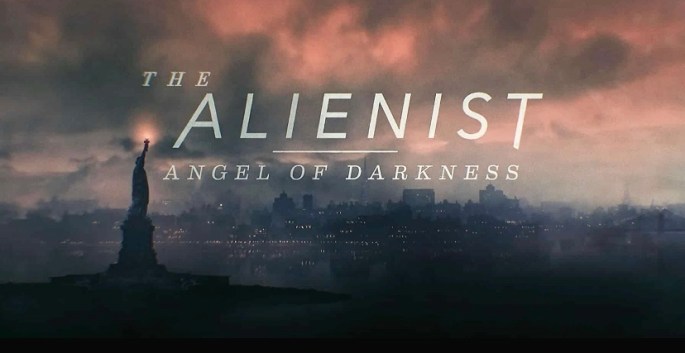
TNT’s The Alienist: Angel Of Darkness

TNT has blessed us with another season of spectacular television based on The Alienist books by Caleb Carr, and this one rocks *almost* as much as the first story. Angel Of Darkness it’s called, and it’s blanketed in the same gothic, austere, turn of the century New York City atmosphere where attitudes are shifting, scientific revelations burgeon through the thicket of superstition lingering from the past and terrifying criminals, gangs, corrupt law enforcement, decadent government peons and disturbed serial killers make life difficult for everyone. We once again join psychiatric guru Dr. Laszlo Kreizler (Daniel Brühl), intrepid gentleman reporter John Moore (Luke Evans) and intuitive private investigator Sara Howard (Dakota Fanning) as they try to track down, smoke out and put a stop to a shadowy individual who is kidnapping the infant children of affluent couples and killing them ruthlessly and methodically. I can’t believe I’m saying this but despite this season being about a fucking baby killer it’s still somehow less dark than the first, there were just aspects to that that were unnerving in a way I can’t explain, whereas here for all it’s macabre portent and ghastly subject matter, it’s just somehow more within the bounds of what is palatable. One change I liked between this and the first is that before we never ever saw the antagonist until the very last second of the finale, and only for a quick flash whereas here we know who the villain is halfway through the season and from there are treated to one of the most complex, heinous, theatrical yet grounded performances from someone whose cover I won’t blow in the review for the sake of spoilers but my god what a work of art in the medium of acting. One thing I noticed is that the first season mined the collective Hollywood past and casted some truly eclectic faces, people you hadn’t seen in years and wondered if were still around, it felt like a 80’s/90’s genre college reunion of sorts. This season does that to a lesser extent and the cast isn’t as prolific but there are some old guard personas that show up including Alice Krige, Michael McElhatton, Matt Letscher as a smarmy William Randolph Hearst and returning baddie Ted Levine as the scheming department fixer Byrnes, who has more of a discernible arc this season. The heart, soul, comic relief and pathos of this whole show rests on the shoulders of our three leads though, who are once again superb, each in their own right. Brühl’s Kreizler is a thorough pragmatist who uses that nature as an effective tool in his research into the human brain but discovers that certain aspects more geared towards the emotional are just as important. Fanning as Howard is fiercely guarded, wicked smart and relentless in her pursuit of truth and vindication for the less fortunate souls she strives so hard to understand and help on their journey. Evans as Moore is my favourite, he’s just a tad naive, deeply soulful and finds a real and genuine way to express himself verbally here that is a wonderful progression of his character from season one. These three characters work as a unit and as wildly different individuals, they are the essence of what makes this show so special and rarely have I seen a trio of series leads so well painted, acted, written and intuited as I have from these three artists. If you like dark, intense, morbid yet persistently life affirming storytelling that breaks molds, challenges convention, strives for uniqueness in character and narrative and rewards the viewer endlessly while terrifying them in equal doses, this is for you. Bring on season three please and thank you.

-Nate Hill

David Prior’s The Empty Man

It’s rare for a horror film to exceed an hour and a half runtime these days, and if it does it better be something unexpected, captivating and unique. David Prior’s The Empty Man is two and a half hours and not only stands as the best film I’ve seen so far this year but also the scariest horror to come my way since Hereditary and It Follows before that. It’s also one of the most ambitious, ‘out there’ films in terms of high concept in the same way that, for example, Gore Verbinski’s A Cure For Wellness was, another bonkers, reach for the sky horror gem that went well over the two hour mark. First off, ignore the title, trailer and any of the surprisingly scant marketing that might make this out to be another ‘Slender Man’, ‘Bye Bye Man’ or any other cheapie gimmick piece that caters to teens. This is not your garden variety, jump scare laden, watered down young adult fright flick, it’s dark, complex, philosophical, disquieting and altogether soul disturbing. Before the opening title even appears we are treated to an atmospheric, twenty minute opening act set somewhere in the Tibetan mountains sometime in the 90’s, where four ill fated hikers have an encounter with something… well, something so old there’s no name for it in any language we speak. Flash forward to Illinois 2018 where we follow ex cop turned private investigator James Lasombra (James Badge Dale) as he tries to find the missing daughter of a family friend who got mixed up in a spooky urban legend. That’s all I’m going to get into in terms of plot specifics because every viewer deserves to be led down this terrifying breadcrumb trail of a narrative with unspoiled eyes. Badge Dale is a great actor, one who somehow manages to simultaneously subvert and uphold the Hollywood tough guy image with his own charisma, his reactions and methods of finding information are really fascinating to watch from an acting standpoint. What he does find is some of the weirdest shit you’ll ever see in a movie, and some of it so unsettling I almost got up and stood in the hallway of the theatre for a few minutes to decompress. I also saw The Empty Man in an Empty Theatre, I was literally the only person to buy a ticket and that decidedly added to the spook factor. Aside from being fucking scary as all hell, this is a truly intriguing story with imagination, innovation and so many unpredictable surprises it can sometimes feel like a patchwork quilt of ideas, motifs and thematic material stitched together, albeit in a very fluid and naturally flowing way. There’s shades of Lovecraft, references to Nietzsche and other philosophical ideals and even sly references to everything from The Wicker Man to Blair Witch to the Donner Pass Incident to many forms of demonic lore. It’s too bad they barely marketed it and just sort of lobbed it into theatres with nary a whisper of trailers, posters or internet ads beforehand because no one has heard of it d I wouldn’t even have either unless it was recommended to me in a frenzy of enthusiasm, but it deserves to be sought out and, if it’s playing near you and you feel safe, demands to be seen on the big screen. If you like your horror wild, wooly, whacked out, fucked up and worthy of eccentric cult status, this is your bet. I couldn’t recommend it enough.

-Nate Hill

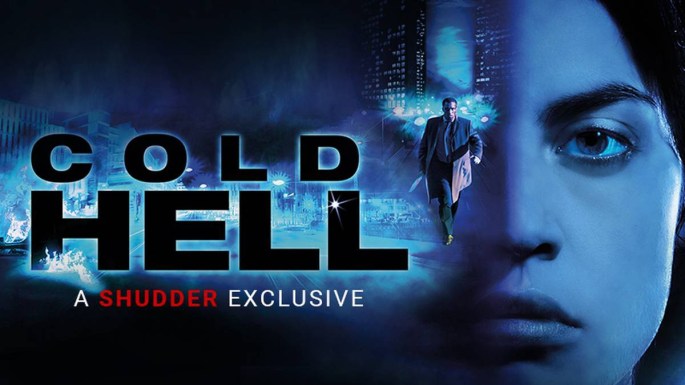
Stefan Ruzowitzky’s Cold Hell

German cinema is off the hook if this one is any indication. Like some bizarre infusion of Giallo, Transporter style action and quirky family dramedy, this is billed as ‘Cold Hell’ on Shudder where I found it but it looks like the original German title translates to simply ‘The Hell.’ That has a specific meaning relating to the modus operandi of a very, very nasty serial killer who is targeting prostitutes in Vienna. Our protagonist is sullen, haunted Ozgë (Violetta Schurawlow), a Turkish cab driver who moonlights as a kick-boxer and frequent babysitter for her wayward cousin who is stuck in a cataclysmic marriage. One night she witnesses a mysterious Muslim assailant (Sammy Sheik) ruthlessly slaughter a girl in the flat across the street, he pegs her as a witness and they embark on a frenzied pursuit all over the city. I’m not sure if this was the filmmaker’s choice of if Europe is just a little crassly behind the times but there’s a harsh attitude towards women, every other person Ozgë runs into is a profane asshole, and the killer himself is a freaky religious fanatic who thinks he’s sending sinful whores to hell on his own watch, but I suppose he’s allowed to be written that way because he is of course the villain. Ozgë develops a relationship with an extremely stressed out police detective (Tobias Moretti) who seems at first to have the same shitty attitude towards her as everyone else but later we get a diamond in the rough reveal and he turns out to be quite different, quite kind beneath his gruffness and I enjoyed their arc together quite well. This is an amalgamation of sorts, blending different elements but like not blending them seamlessly, it’s very clearly a genre patchwork quilt, in a fun sort of way. There are horror vibes early on that feel distinctly like an Argento or something, then it veers hard left into action movie territory garnished with some oddball eccentricities. Ozgë is such a terrific character, a woman of few words but tons of action. She uses her kickboxing skills to get her out of tight situations, lays some bloody beatdowns on the killer and all the while she’s carrying around the toddler daughter of her murdered cousin. The cop and her form a sort of strange bond, he’s looking after his dad who has Alzheimer’s so they’re both caring for someone vulnerable while trying to catch this gnarly killer and I found myself swept up in both their relationship and collective situation. It’s a scrappy flick and certainly not the greatest thing out there but I was entertained, loved the characters and had a good time with this story.

-Nate Hill

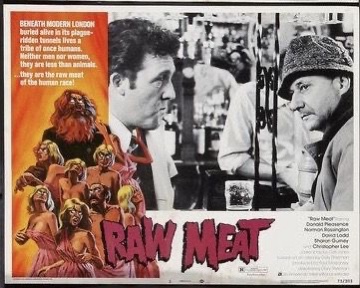
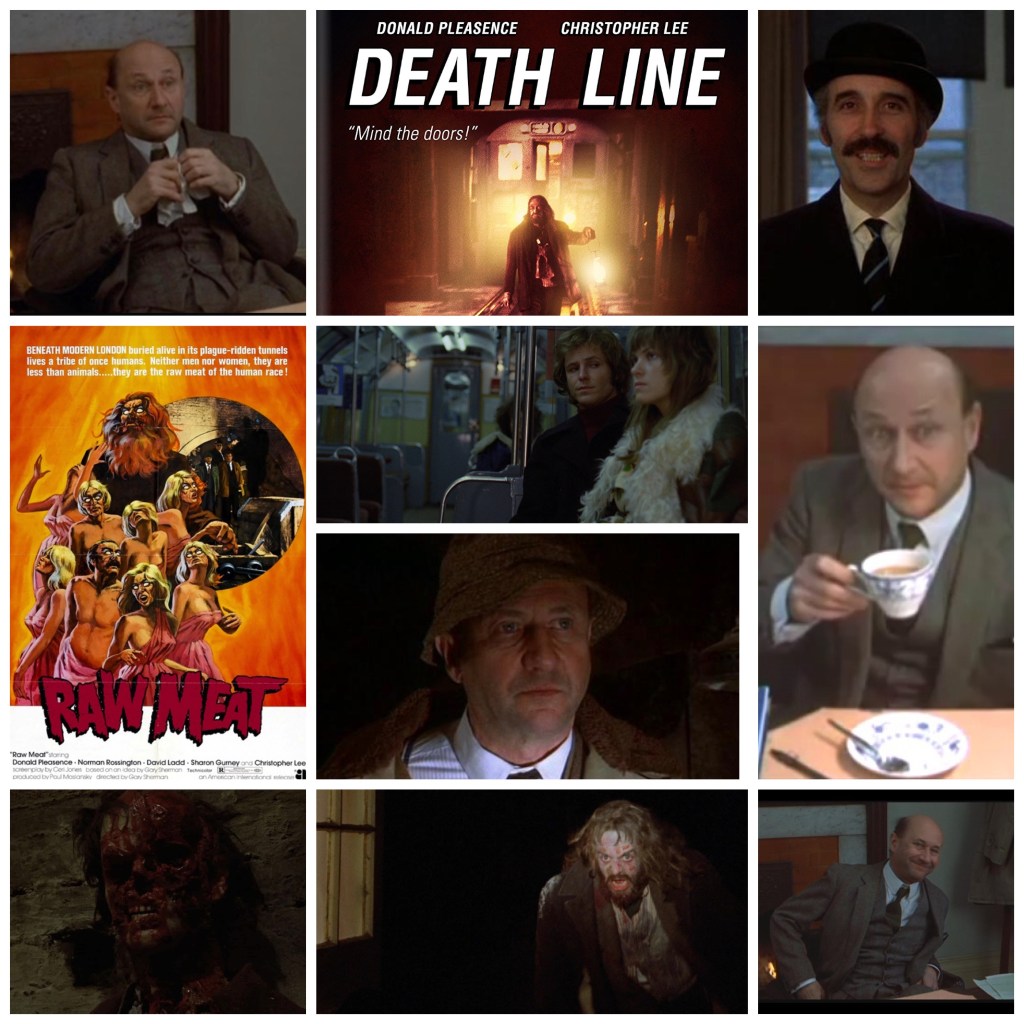
Gary Sherman’s Death Line aka Raw Meat

Gary Sherman’s Death Line (aka Raw Meat) is billed as a horror film but they must have meant comedy because I haven’t laughed that hard during a movie for a long time. That’s not to say it isn’t a horror, I’d definitely classify it as one if it twisted my arm over the matter, but holy fuck this is one of the weirdest, most berserk things out there. So get this: sometime in the 70’s, the London authorities discover that far beneath a tube station, there’s a tribe of mentally handicapped, cannibalistic subterranean yahoos living down there, descendants of a group of track workers trapped during a tunnel collapse during the 1800’s. For hundreds of years they have been snatching unsuspecting commuters off the platforms, eating them and also keeping some to reproduce with I guess. Meanwhile Donald Pleasance gives one of the most outright bizarre, unpredictability intense performances of his career as London’s most sarcastic Scotland Yard detective who gets wind of this bonkers situation and, well, investigates is a strong word for the level of effort he puts in, but he’s dimly aware of it anyhow. He plays a guy who is so British that he sleeps with a literal pot of tea next to his bed, has an emotional breakdown if his secretary forgets his cup of Earl Grey and wears a hat that can *only* be described as a tea cozy. This film just kinda meanders until you’re aware of what it’s technically about, yet can’t help but notice it’s slack pace and complete lack of desire tell a story with any sort of cohesion beyond an illusory ‘concept’ of subway dwelling maniacs. Arbitrary diversions abound, such as Christopher Lee randomly showing up as a very rude MI5 spook just so Pleasance can tell him “fuck you” straight to his face in the film’s one cheeky F bomb. At one point the whole thing just stops dead in it’s tracks so Pleasance and his partner (Norman Rossington) can hit up a local bar, get absolutely fucking torqued on beer and scotch, have a drunken pinball tournament and threaten the barkeep by telling him they’ll report him to the police for serving patrons after hours when, ya know, they *are* the police, the only ones still in the establishment and the very ones who made him stay open late to serve them anyways. The scenes underground are super cheesy with enthusiastic yet hilariously messy special effects and one terminally off pitched performance from Armstrong as the last surviving… whatever they are. Seriously this guy is covered in buckets of slime and has this weird way of acting that calls to mind a certain word I won’t use here, but he jumps around, hollers like a loon and makes quite the… campy impression. The pacing is all over the place and could barely be considered thriller structure, aside from a quick third act chase. Add to all of this perhaps the strangest proto-electronic musical score ever ever devised for a ‘horror’ film and you’ve got something that defies description. It’s like one of those movies you see on TV at 3am in a hazy fugue state and later try to explain to your friends, who all think you’re making it up. Weird ass flick.

-Nate Hill

Jaume Balagueró’s Sleep Tight

There’s slashers, serial killers and then there’s villains of an altogether more disturbing nature like that of Sleep Tight, a deeply disquieting Spanish psychological oddity that sets in slowly and builds to a devastating payoff. In a sunny Barcelona apartment building, life seems breezy and pleasant. Friendly concierge César (Luis Tosar) greets the tenants kindly every day and does his job dutifully. Little do any of them know, César is a misanthropic, mentally disfigured lunatic whose very mission in life is to covertly make the lives of everyone around him thoroughly miserably because, as he tells us in forlorn inner monologues, he is physiologically incapable of feeling happiness. What does this involve? Well for starters, sneaking rotten fruit into the back of fridges, feeding an old woman’s dog the wrong kind of food to give it the shits, watering rooftop plants at the hottest time of day to kill them and piss off the building’s owner, small petty stuff like that. However, a beautiful young woman (Marta Etruria) living in one of the suites has a sunny disposition that isn’t so easy to breach and he goes to some skin crawling, abominably sociopathic measures to do so. The film chooses to focus on César as a protagonist rather than have him skulking about in the shadows like the villain usually does, so what we get is something that feels like a twisted character study as opposed to outright horror, but that structural augment doesn’t stop this from being one of the most upsetting experiences you could have. César is a sick, sick man and despite how intimate the script allows us to get with him, he’s never likeable, relatable or in any way justified, no inspires sympathy at all in these horrible actions like some black sheep characters in film. Tosar (who I remember as the intense Cuban drug lord in Michael Mann’s Miami Vice) is a stark looking dude, whose severely receding hairline has apparently migrated downward into eyebrow territory for a very, shall we say, otherworldly appearance. He’s great in the role, opaquely amicable on the surface but we can see the malformed creature inside just through his coal burner eyes. Director Jaume Balagueró also made on of my favourite underrated horror films, 2004’s Darkness with Anna Paquin. He knows how to use light, shadow, oppressive architecture and eccentric character traits to create a believably creepy atmosphere with shades of Hitchcock and classic thrillers of the like. This is an expertly told, beautifully produced original story and well worth watching but word of warning, it’s not roses and sunshine. This is a grim tale of a terminally unpleasant, incurably mentally ill monster who commits sustained acts of shocking menace and perverted exploitation that culminate in a sickening final reveal that will have the bile rising in your throat. But it’s not without its charms either, including terrific character work, picturesque production design and splashes of pithy black humour. Great film.

-Nate Hill
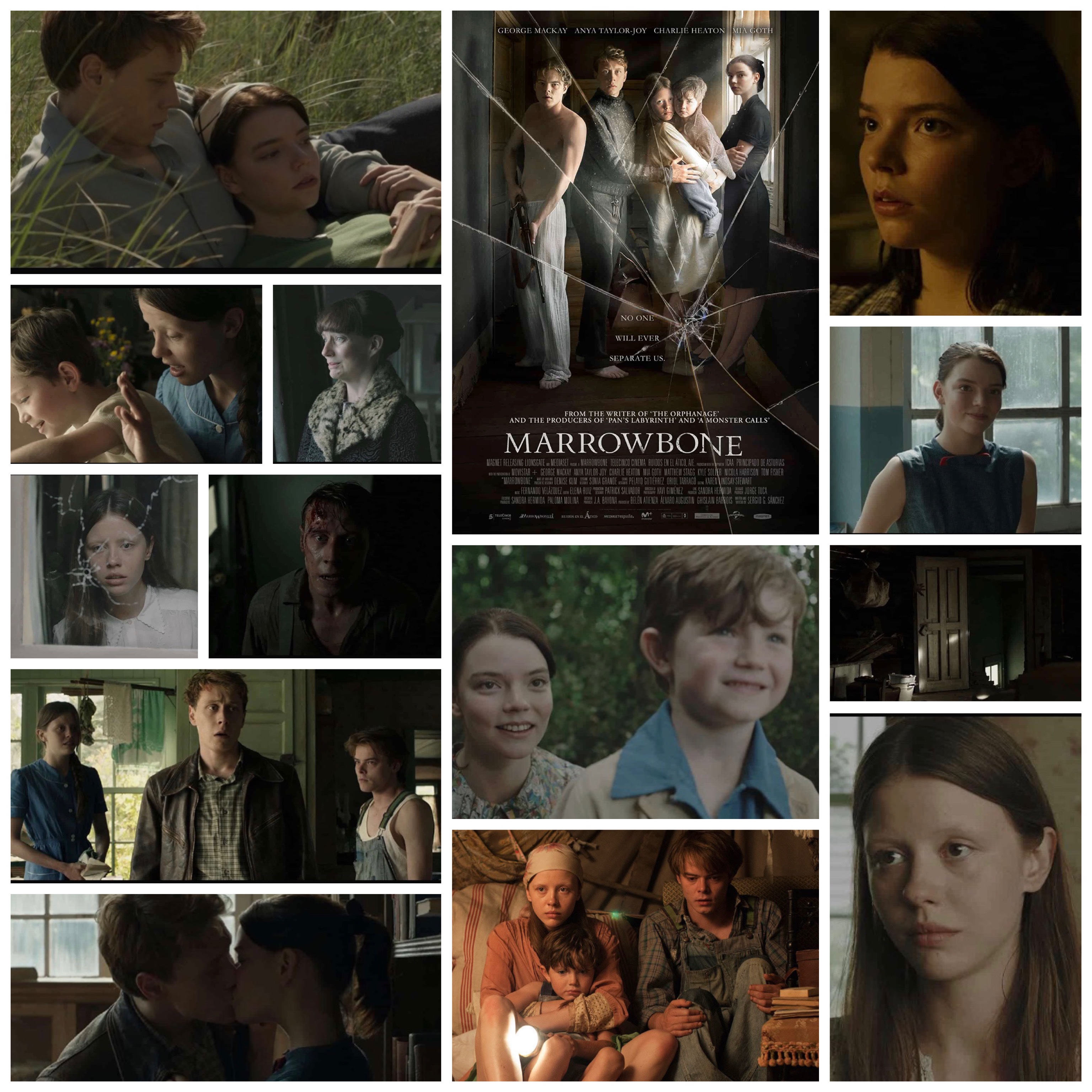
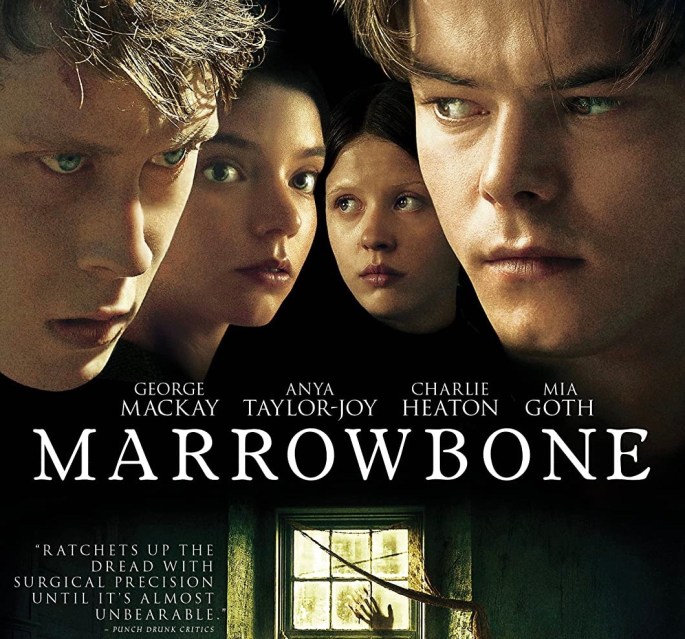
Sergio G. Sánchez’s Marrowbone

Horror movies always work best for me when the scares are in service of story, when character and emotion come first and the supernatural or horrific elements work their way into the human side organically, which is what we see in Sergio C. Sánchez’s Marrowbone, a wonderful, terrifying, heartbreaking masterwork that I just happened upon while browsing Shudder. You’d think it would have made a bigger splash with how prolific it’s four principle young cast members are, but it’s just as well that it retains hidden gem status. An English family of four children migrate over to America with their mother, running from a dark past and taking up residence in Marrowbone House, a place once owned by vague family. After the mother passes away the four are left on their own to financially keep the house, look after each other and survive demonic trauma that hovers over all of them them. Oldest brother Jack (George MacKay from Captain Fantastic, How I Live Now and 1917) is the natural leader and caretaker, trying his best to look out for younger siblings Billy (Charlie Heaton of Stranger Things), Sam (Matthew Stagg) and Jane (Mia Goth from Suspiria and A Cure For Wellness). They basically have no one in the world now except their friend local librarian Allie (Anya Taylor Joy, The VVitch, Split), who soon falls deeply in love with Jack and has a desire to help him and his family through dark times. Soon they hear eerie noises from the attic and a suspiciously sentient full length mirror draws attention in inexplicable ways as the ghosts of their past rise up to haunt them and memories once long buried begin to surface. I don’t want to say too much because this is such a fun puzzle box of a story to unravel and includes some twists that are tough to see coming (pay attention to the poster, where a big clue hides in plain sight). It’s a sad, forlorn tale about children growing up far quicker than they should have to, familial trauma and violence leaking over into the next generation and the ripple effect that evil and malcontent in a family can have. There’s wonderful romance that is sold effectively by MacKay and Joy, who are both superb, as are Heaton and Goth in roles that are secondary but no less deeply felt and acted. The scares are genuinely, bone chillingly fucking terrifying stuff, and the fact that restraint and subtlety is used make them all the more effective. Seriously, there are a few squirm out of your skin, shudder down your spine moments that push the creep factor past eleven on the dial, which isn’t easy to do. What makes the film work so well for me is that it cares deeply for these kids, their situation and makes each character stand out in their uniqueness, thanks to strong acting work, writing and music. It has a slight gothic feel, and I almost got like a ‘horror version of Narnia’ fantasy feel from these characters and their plight, but that could have just been me. Brilliantly written and directed by Sánchez (his freaking feature debut I might add), vividly and emotionally acted, it’s just a beautiful and frightening story worth immersing yourself in and one of the best horror films I’ve seen in a long time. 10/10.

-Nate Hill

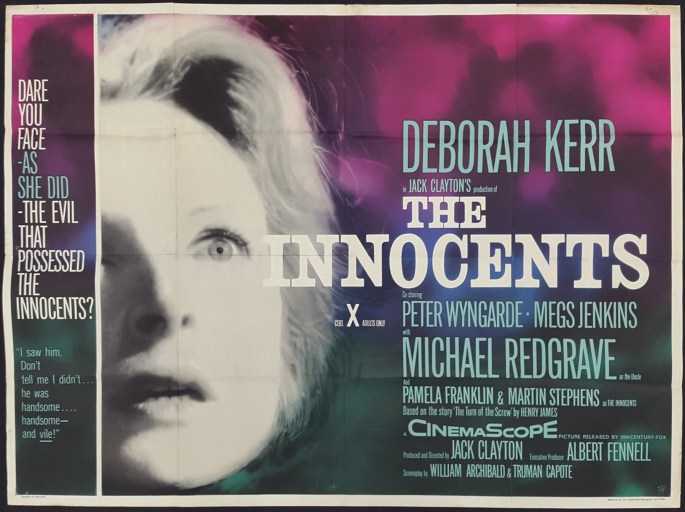
Jack Clayton’s The Innocents

What is it about black and white films that is somehow just inherently creepier than the rest? Daylight seems eerie, anything could be a shadow and spectral presences are easier to hide in any given frame. Jack Clayton’s The Innocents is a frightening, beautiful piece of Victorian Gothic horror that’s subtle in all the right places, baroque when it needs to be and very unsettling, especially from an auditory standpoint. Deborah Kerr plays a young governess who travels from London to the countryside to look after two children in a large Manor, which of course is haunted and causing the youngsters to behave very.. strangely. Now this is of course the source material for Netflix’s brilliant Haunting Of Bly Manor and I don’t want to go too deep into comparison except to say that I greatly enjoyed both, Bly is a nine hour television series and naturally has way more depth in supporting characters and subplots, but it’s more of a love story while Innocents is the scarier of the two and works splendidly as a horror. It’s indeed very scary but not in terms of jump scares, leering ghouls or your usual brand of madness. Practiced in the art of subtlety, this film uses stark black and white photography to unsettle as the acrid marshlands and ornate, breezy corridors of the house yawn open for whatever spectral denizens lurk unseen. Sound design is key here too and should be applauded: in my favourite sequence, Kerr wanders the halls at night and hears some incredibly spooky whispers, moans, clanks and wheezes all around her. There’s something so evocative and iconic about a beautiful blonde Victorian girl, hair down, nightgown flowing, holding a candelabra and wandering the darkened halls of a vast haunted estate, its its own aesthetic. There’s another scene I loved in which she stands at the edge of a boggy pond and gazes over to the other side where the ghost of a former governess stands hauntingly still among the reeds, gazing back. It’s done in broad daylight and adorned in a hectic symphony of jagged sounds and is just so damn unnerving I had to rewind it and watch again just for double spook factor. I wasn’t quite sure what was implied by the ending of this but I enjoyed the note of ambiguity present in its conclusion, like the air being sucked out of the room abruptly or the night wind robbing a candle of its glow with one hoarse gust. This is a gorgeous, macabre, aesthetically pleasing horror gem.

-Nate Hill