B Movie Glory: Progeny


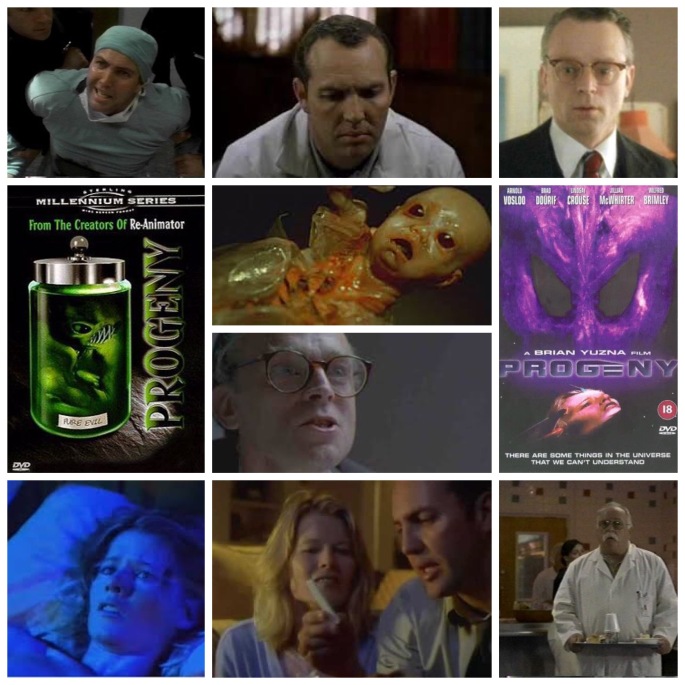
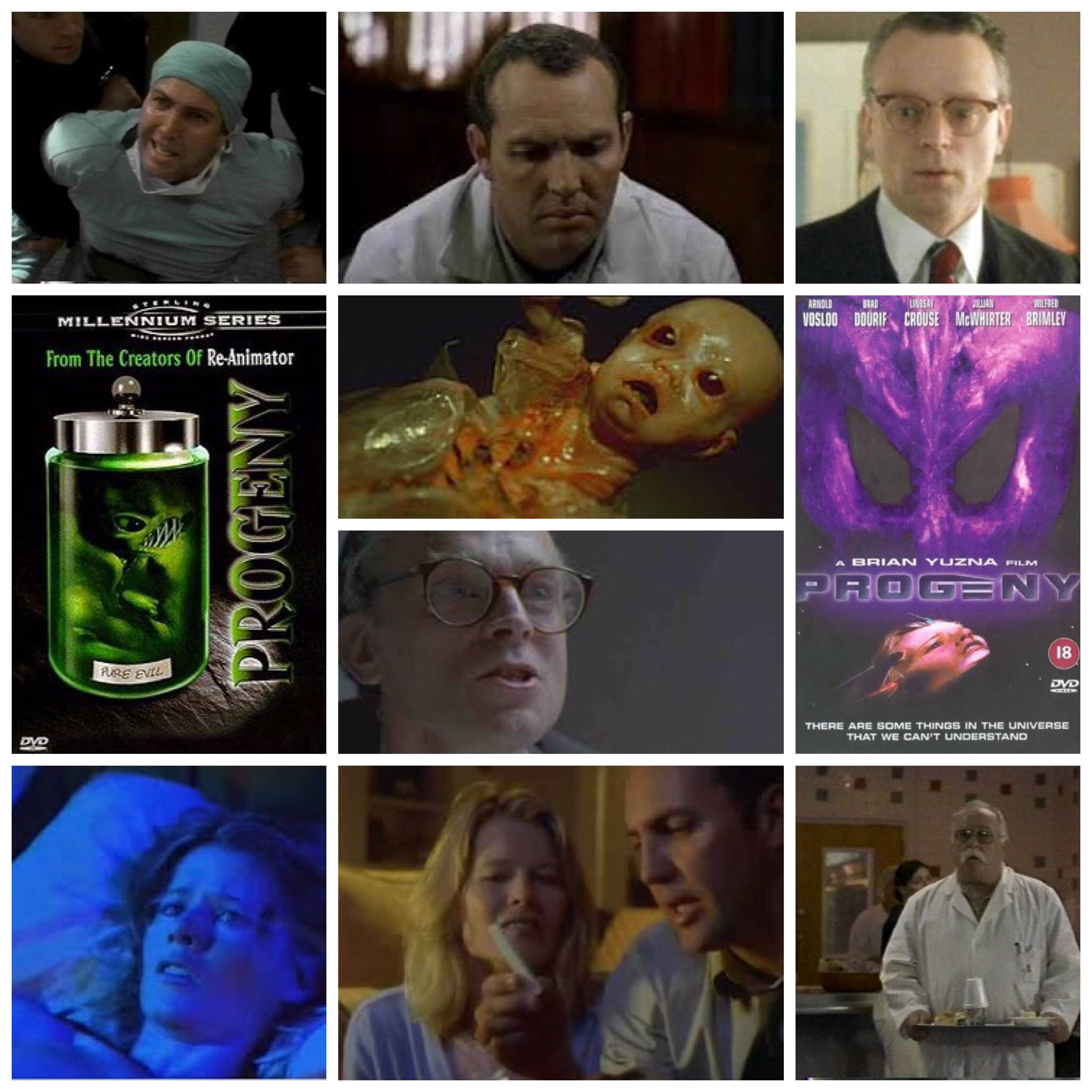
What do you get if you cross Rosemary’s Baby with The X Files? 1998’s Progeny, or something like it anyway. Surprisingly thoughtful, restrained and adept for a B movie, it’s got a tightly wound little story about a human woman (Jillian McWhirter) who is impregnated by extraterrestrials that are tinkering around with our biology for who knows why. Her husband (Arnold ‘Imhotep’ Vosloo) is at a loss and doesn’t know where to turn as her condition gets progressively more… icky. Help comes in the form of two kindly doctors (Lindsay Crouse and Wilford ‘Diabeetus’ Brimley) and a UFO-ologist played by an unusually laid back Brad Dourif, but will their collective effort be enough to save her life, remove whatever being is in her womb and escape the attention of the aliens for good? Browsing the shelves this looks like a full on schlock-fest based on the cast and general vibe, but it’s something a bit more tasteful that takes itself just seriously enough to separate it from the mass of junk in this arena. Don’t get me wrong, there’s some slick scares and a few gooey wtf moments, but they’re used with a modicum of discretion and as such feel earned, always taking a backseat to the actors who give the human drama weight. Great little forgotten sci-if/horror. 

-Nate Hill

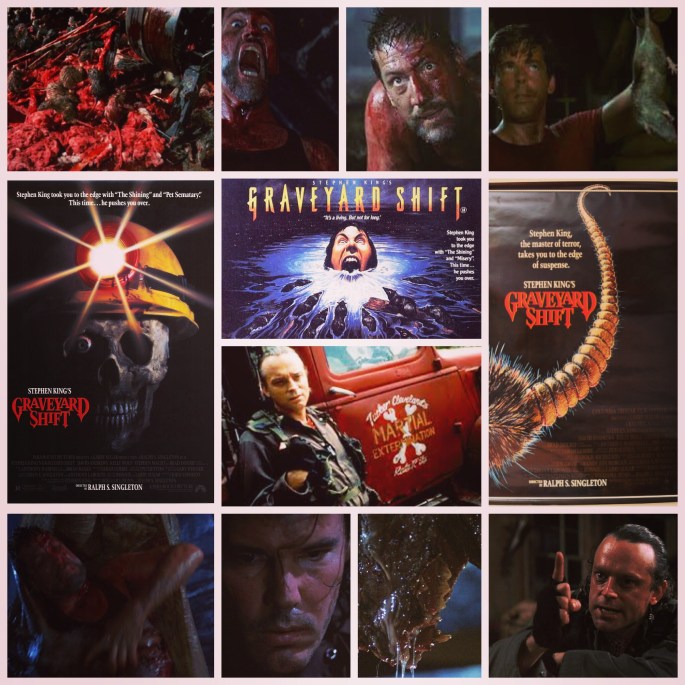
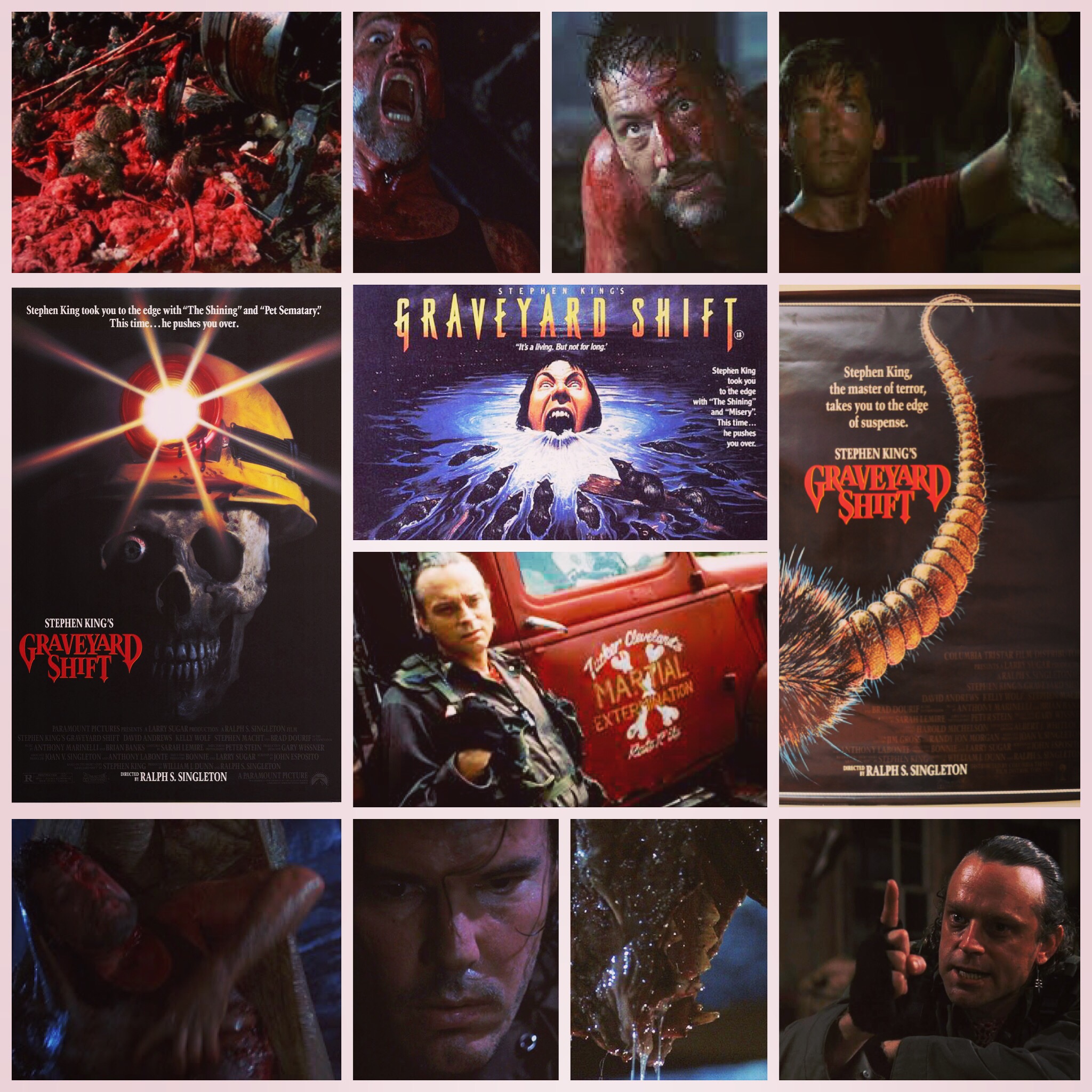
Stephen King’s Graveyard Shift


Stephen King’s Graveyard Shift is curiously one of my favourite adaptations of his work. I say curiously because it’s not a very tasteful film, let alone even a good one. It’s simple schlock and awe, goo and slime for 90 minutes straight, every human character either an unsettling nutcase or cardboard stock archetype. There’s just something so Midnite Movie-esque about it though, a sense of fun to its gigantic, hollowed out mess of a textile mill in which some kind of vile denizen stalks a night crew that pretty much deserves everything they get. People wander about, squabble and are picked off in ways that get steadily more gruesome until the final reveal of the monster in some overblown puss-palooza of a finale. What more do you need in your bottom feeder helping of horror? Steven Macht is the sleazebag who runs the mill at his tyrannical whim, while David Andrews is the closest thing you’ll find to a stoic protagonist. Andrew ‘Wishmaster’ Divoff shows up as a stock character, but it’s Brad Dourif who chews scenery and ends up the only memorable person as the world’s most simultaneously intense and incompetent exterminator, a bug eyed little weirdo who freaks people out with extended monologues about Viet Nam when he should be perusing corridors to find whatever’s lurking there. The monster itself, if I remember correctly, is one big pile of grossly misshappen, poopy prosthetic puppetry, as is often the case in early 90’s King fare. Would you want it any other way? Simple, efficient and impressively gory is what you’ll find on this shift. 

-Nate Hill

John McTiernan’s Nomads


John McTiernan’s Nomads is one of the best, and most unconventional horror flicks that you’ve never seen. Nestled so far back into the 80’s that it stands as the mile marker for Pierce Brosnan’s first onscreen leading role, it’s a beautifully tense, atmospherically crafted fright flick that’s been lost to the hazy aeons of time. Unique in it’s ambiguity, this is a film bereft of bells, whistles, gore effects or even obviously spooky apparitions, relying solely on mood to impart illusory menace that’s never shoved in your face of spoon fed. Brosnan plays a French (hon hon) archeologist who begins to suspect he’s being followed by a group of unruly urban punks which, upon further introspection, could possibly be the malevolent spirits of a now extinct tribe he discovered years ago. It’s a vague, very weird concept, but it just somehow works, the presence of these grimy streetwalkers inciting palpable fear at the thought that they’re not what they seem at all. Opposites are at work here; by showing nothing, the filmmakers tell us and make us feel everything that is unseen, daring us to imagine what these mysterious beings might actually be, unsettling us further by having them appear in such benign (relatively speaking) form. It’ll frustrate many, but those tuned into the film’s eerie frequency will get the same chill down their spine that Brosnan perpetually walks around with, harassed no end by these meanies. The actors for these things are all especially chosen as well, each coached beautifully by McTiernan to act just normal enough to blend into the derelict fringes of an urban environment, while giving their demeanour an unnerving esoteric aspect, until they seem like a cross between mute versions of the Near Dark gypsy vampire clan and spectral coyotes. Brilliant concoction of subtle horror, clammy tension and gorgeously layered atmosphere.

-Nate Hill

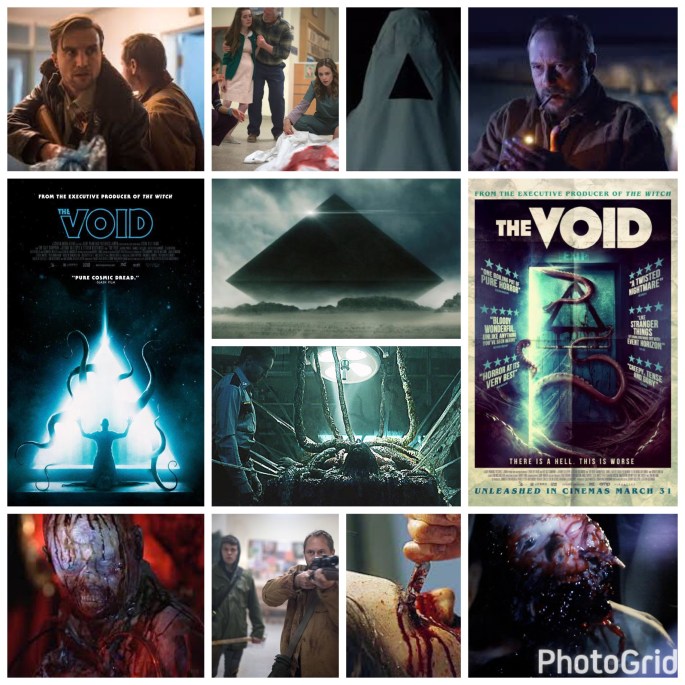
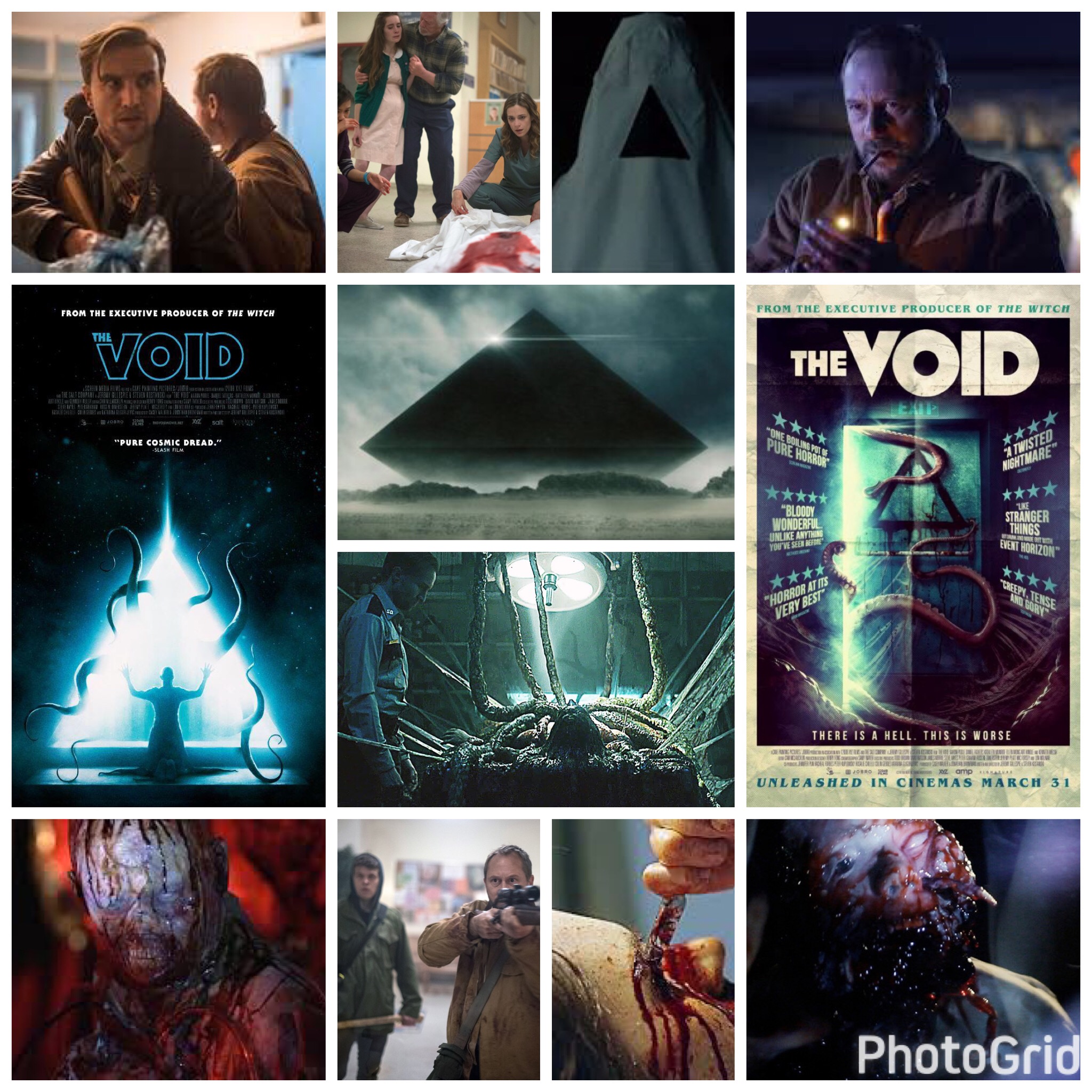
The Void 


The best horror film of the year so far has arrived in the form of The Void, a genuinely spooky, deliriously gruesome 80’s throwback that gets tone, pacing and atmosphere right on the money, hitting that sweet spot that not all homages can fully grasp. It’s this year’s It Follows, I’ll put it that way. Balls out ballistic, atmospherically eerie and gorier than a chainsaw mud wrestling competition for spastics, it starts somewhat reigned in and then amps up to feverish nightmare fuel once it gets going, and boy does it ever get going. When emulating classics from distant eras, it’s important that these films find their own specific flavour and unique groove, as well as cleverly wearing influences on their sleeve. There’s an obvious adoration for John Carpenter’s The Thing running through it like an undercurrent, but the filmmakers find their own otherworldly pulse, and the fabulously icky body horror is subservient to an overarching plot involving forces from another dimension beyond ours, which a few lunatics are foolishly trying to contact. That happens later on though, once that special ripcord within the horror genre is pulled, the one that separates an uneasy opening act, a calm before the storm and the craziness to follow as soon as that first inciting attack occurs. The premise? Solid and simple: a small town cop (Aaron Poole) brings a blood soaked drifter to a nearly shut down county hospital run by a weary skeleton crew. No sooner has he arrived, bad shit starts happening. Some of the night staff go madly insane and start lobbing their own body parts off, while white cloaked cult weirdos gather outside to prevent anyone from leaving the building. A gruff, shotgun toting badass (Daniel Feathers) breaks in and pretty much violently threatens anything that moves. Corpses come alive and transform into glistening, pulsating piles of aborted pizza pocket waste, and to use the time honoured slogan, ‘all hell’ quite literally breaks loose. The head doctor (veteran character actor Kenneth Welsh, aka Windom Earle, is devilishly scary) clearly knows more than he lets on, and the new bodies pile up on the rotting older ones as dark forces gather for some kind of… birth. The actual how’s and whys of the story are left appropriately vague, as is tradition in hectic 80’s creature features with a supernatural twist. The term ‘void’ is never mentioned by anyone, rather hinted at by glimpses of a dreamy, austere parallel dimension that calls to mind everything from Altered States to Beyond The Black Rainbow to The Cell. A buddy of mine referred to the film as “Carpenter Fanboy Porn”, and while that’s definitely one angle you can look at it from, there’s more than just that, if you widen your gaze. It’s clearly a love letter to the man and his work, but it has its own thing going on as well, and feels at once as fresh as the titles it looks up to must have when they came out, and as lovingly nostalgic as a throwback piece should. The filmmakers have deliberately left it open for a sequel as well. Bring on the franchise, I say, the genre can really use stuff like this to fill the Void. 

-Nate Hill

Ernest Dickinson’s Bones


Who would have thought that a horror flick starring Snoop Dogg would actually be a winner? Bones isn’t a milestone in the genre or anything, but it sure is better than the self promoting vanity piece that I expected going in. Usually when rappers or musicians headline their own films they turn out to be spectacular failures (50 Cent’s Get Rich or Die Trying and Dee Snider’s Strangeland come to mind), but this one comes off as a legitimate, entertaining horror effort. Snoop plays Jimmy Bones, a lucrative 70’s street hustler who is betrayed and slaughtered by his partners in crime, his own sweetheart Pearl (Pam Grier is never not cool) and one sleazebag of a cop (Michael T. Weiss, excellent). Decades later he returns, undead, in the form of a smooth talking supernatural street demon, out to exact bloody ghetto revenge on his old acquaintances and clean up his former inner city neighbourhood, which is actually just Vancouver in disguise, I mean what city in any movie ever isn’t just Vancouver? Loosely threaded with the story of a few kids who plan to turn his old gothic mansion into a silly hip hop nightclub, things rev into full gore gear when he shows up back in town to stir shit around and collect heads, and I mean that literally. Snoop is wicked fun, wisely dropping any rap gags or meta smirk, showing up in full jive talking boogeyman mode, meaning business and bringing along the dark, angry charisma to back it up. Director Ernest Dickinson helmed a few Tales From The Crypt outings and therefore knows his way around this very specific and distilled niche of horror. Shades of the 80’s are prescient with incredibly gooey, gag inducing effects that would make Freddy Krueger jealous, and one gets an almost Crow vibe from the story structure, via the paranormal revenge motif and baroque, Poe-esque fire and brimstone aesthetic. It’s silly for sure, but far far more grounded and committed than you’d expect this type of thing to be on paper. More of a head on its shoulders than Tales From The Hood anyway, and yes that’s a real thing. I must make additional mention of the prosthetic effects though; not since certain Elm Street outings, early Cronenberg or stuff like The Sentinel have I seen the level of deformed, hellish grossology onscreen than is present in some scenes here, they should be really proud of what they’ve done. 

 -Nate Hill

Larry Fessenden’s The Last Winter: A Review by Nate Hill 

Nature fights back in Larry Fessenden’s The Last Winter, a vaguely supernatural cautionary tale of of environmentalists and oil workers besieged by some unseen forces in the great north. Fessenden also brought us Wendigo back in the day, another snowbound chiller, and a keen sense of the eerie corners of the natural world and it’s unexplored areas comes built in with his skill set. Ron Perlman doggedly plays Ed, the headstrong leader of a research party scouting arctic land for Big Oil to plant an ice road and pipeline. Connie Britton is his second in command and former flame, now shacking up with wildlife journalist James Legros. When the dead, naked body of a team member is found near their camp, natural gas emissions from the ground are suspected (so logical, guys). Yet, people continue to die, and some ominous presence gathers in the night just outside the perimeter of the station, inciting rising dread and distrust among the team and claiming victims with gathering speed. It’s fun to watch Perlman slowly come unraveled, his grim sense of control slipping away as quickly as his rational explanations for what is happening. We never get a good look at whatever is out there, which is the smart way to go about your horror. The snow boils, strange sounds are heard and the natural world itself almost seems to be taking on angry life of it’s own. It’s obviously meant as a metaphor, but works just as well as a literal creature feature thanks to the sleek direction and well placed moments of chilly terror. Shades of The Thing, infused with this theme of the earth lashing out at the arrogance of human industrialization is a delicious flavour indeed. 

From Dusk Till Dawn 3: The Hangman’s Daughter- A Review by Nate Hill 

Some franchises feel stale and wrung out by the time the third effort comes along, but not From Dusk Till Dawn. In fact I’d even be so bold as to say that despite not having quite such a budget and resources as the original Tarantino/Rodriguez splatter party, this prequel almost has more in the way of imagination. The first came out of the gate roaring and paved the way, the second was a more mellow heist orientated flick that incorporated the horror elements in as it went, but the third does something altogether different. It’s a period piece, set a hundred years in the past, sometime around the Mexican/American war. When notorious outlaw Johnny Madrid (Marco Leonardi) dodges the hangman’s noose and escapes, he brings abused daughter Esmerelda (Ara Celi) along and scrambles for the state line. The ferocious hangman is none too pleased, given the menacig scowl of Maori bad boy Temuerra Morrison, who played Jango Fett in another prequel we all love. Rounding up a posse, he hunts Madrid and his scurvy gang through the terrain. Madrid is unknowingly headed for a far worse danger though, when he and Esmerelda run straight into the iconic Titty Twister bar, dressed up like a frontier whorehouse this time around. Also along for the ride are a group of wagon travellers including a young newlywed couple (Rebecca Gayheart and Lennie Loftin), oddball Ezra (Orlando Jones) and the real life writer Ambrose Bierce, played with alcoholic grit and gallows humour by Michael Parks. Bierce is famous for actually disappearing somewhere in that area back then, and I like how the film cleverly weaves fact and fiction, putting in a commendable effort to make the turn of events fascinating beyond just a servicable horror level. Danny Trejo also returns, as he must, playing pretty much the same character he did in the first and second, never mind the fact that he keeps dying (you can’t really kill Danny, everyone knows this). I love the formula for these films; they always start out with a slower paced, pulp/crime style narrative that suddenly explodes into creature FX, blood orgies and vampire mayhem without much warning. The first was the bank robbers on the run with hostages, the second was the heist crew and the third is a rousing Desperado style actioner that morphs into the horror we all know is coming. Well produced with a lot of love and some real thought put into the story, exciting and provides more than enough for any horror fan. Definitely the better of the two sequels. 

Dario Argento’s Suspiria: A Review by Nate Hill 

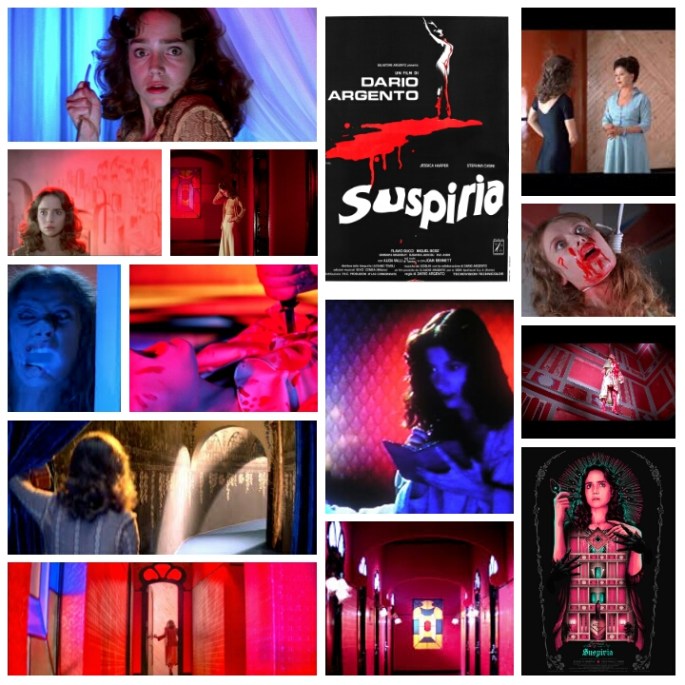
How to describe Dario Argento’s Suspiria. A psychedelic, multicolored mood piece. Free from the bonds of rationality. Surreal and incoherent, using dream logic to disorient the viewer and lull us into a subconscious fugue state, swept away by the color and light, all shot through a prism of dazzling underworld enchantment, a fairy tale designed to shock and shake, and all the while presided over by Goblin’s rhythmic, haunting score, bewitching the proceedings even further and pushing the atmosphere of the film to elemental heights. No other horror film I’ve ever seen has had quite the same unique, spellbinding effect on me as this masterpiece. The opener still stuns, a kaleidoscope of stained glass splattered in blood, a jarring murder scene that is as beautiful as it is grotesque, setting the stage for the madness yet in store. You know those dreams where you’re making your way through some corridor, drenched in fear and awaiting some doom that’s just up around the bend, but suddenly you get there and nothing seems to make sense, circumstances are now different and all attempts to extricate yourself seem hopeless? That’s the kind of nightmare that young American ballet student Suzy Banyon (Jessica Harper) finds herself in. Arriving in Germany to a prestigious dance academy, she gets a fleeting look at some poor girl running from… something, far off in the woods. That being her introduction to the school isn’t a good sign, and it doesn’t get any better. The stern headmistress (Allida Valli would give Miss Trunchbull the creeps) is overbearing and nasty, the rest of the occupants strange and withdrawn, and something seems to live inside the walls, watching Suzy from unseen perches, with evil intent in store. Maggots, a possessed dog, witches, a serial murderer and homicidal German cooks don’t even begin to describe the gauntlet of terror she fights through. Well, they do, but the film really isn’t about those things, they’re just the walls of the gingerbread house, plain, right angled and sensibly threatening. The real horror and unease comes from atmosphere, the icing, sprinkles and decorative splendour on said house. Argento has always given more effort towards atmosphere and ambience, in favor of things like acting, story or editing. It can be silly sometimes, but in Suspiria’s case it really doesn’t matter much, because the hellish haunted house he fashions is worth every second of your attention. There seems to be a starkly colored hue pouring in through every window and behind every door, the academy itself is an ornate and impossibly detailed dark gem of architecture and artistry, the sets put together like a dizzying labyrinth funhouse of brightly lit orifices and shadowed alcoves where nothing seems to be in it’s rightful place, disorder and abstraction reigning supreme. And then there’s the score. Now one of the most iconic janglers in the horror genre, the trancelike nocturnal lullaby by Goblin is a riff that instantly stands your hairs up and sucks you right into each frame, accenting the colours, shapes and hallways with organic precision, as if the dark forces inside the academy were somehow generating this music of their own accord. I also note another track by the group that makes an appearance, a wheezy death cry called ‘Sighs’, signalling that witches are nearby and consequently upping the unease factor a few more notches. This is a film that seems to come straight from the unconscious mind, a technicolor patchwork quilt stitched together with bizarre ideas, supernatural mysteries and otherworldly hysteria, with only the briefest threads of logic woven in, almost as if to further throw us off balance, to tease us with a scenario that seems like it will play out ‘normally’, only to toss us right back into the deep end, back into bizarro world with Suzy and all the forces of the night, clamoring to get her. This is unquestionably Argento’s best, and most complete film, a maniacal masterpiece of gorgeous sights and sounds, a trip to atnother realm via our world, and a horror piece unlike any other.
An American Werewolf In London: A Review by Nate Hill 

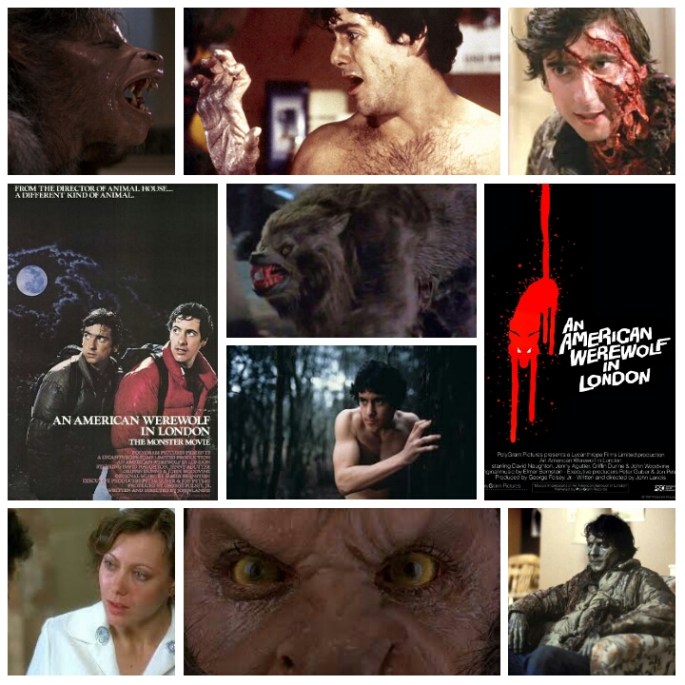
John Landis’s An American Werewolf In London has what is the most impressive human to wolf transformation sequence I’ve ever seen. You can dump your wallets out and buy all the CGI effects at hand, and none of them will ever match the tactile weight that practical effects have, the combination of hair, putty and latex that assures you there is *something real* on screen, and not the hollow timbre of computer driven wizardry. Everything in the film builds up to this shock and awe moment, and up until then it’s a fairly low key, atmospheric affair in which you never quite see the beast that kicks off the inciting incident. Griffin Dunne and David Naughton play the two American backpackers who find themselves wandering the moors of northern England, positive there is some kind of creature hunting them. The crusty locals avidly deny any such presence, but aren’t convincing and furtively shift their gaze, clearly not being honest. Sure enough, Naughton is attacked and bit one night, and he begins to exhibit those good old symptoms. The change happens all at once and is quite startling; this isn’t a sleek, aesthetic werewolf either, it’s a lumbering behemoth, all fur fangs and fury, storming about the cobbled streets of London like a coked out grizzly bear out running zookeepers. We only get to see him in London for a brief and chaotic end scene, but it’s worth it, taking the slow, misty nocturnal buildup and switching to broad daylight, revealing what was unseen before and bringing it jarringly down to earth. I can’t speak for the sequel, as I’ve never seen it, but this one remains one of the most well crafted, fun werewolf films you can find, and my personal favorite. 

The Changeling: A Review by Nate Hill 

I love a good old fashioned creaky haunted house story, and HBO’s The Changeling is one of the best, and most under appreciated spooky tales out there. Like I say time and time again (no doubt sounding like a broken record at this point), real effective horror lies in atmosphere and the buildup of tension, chilling our spines instead of bombarding us with tasteless dismemberment. The Changeling takes its time in establishing cozy atmosphere and engulfs us in a gigantic New England mansion (actually Shaughnessy for anyone who can tell), inhabited by the lonely, desperate ghost of a young boy who met a tragic fate there many decades earlier. George C. Scott is the musical composer who moves in all by himself, seeking solitude as he nurses the grief of losing both his wife and daughter in a car accident. He’s barely there one night when strange things begin to happen; rhythmic banging from some far off room, eerie crying noises, doors opening and closing of their own accord and a mysterious toy bouncing ball that ominously follows him around. Saddled with an already troubled mind, he sets out to learn the origins of the ghost and resolve the situation, putting it to rest. The story is smart and succinct, involving ancestral deception and an elderly US Congressman (Melvyn Douglas, stealing every scene) with ties to the past. It’s never too complicated or busy, always keeping it’s cool and reigning in the frightening moments in a minimal fashion that pays off greatly. The lush, overgrown Vancouver locale makes a great setting, almost Stephen King like, and the house itself is a towering cluster of dusty hallways and wide open ceilings that shield ancient secrets and watch over anyone who sets foot inside with an unseen eye. I never thought a bouncy ball and a small children’s wheelchair could raise such goosebumps, but when used as well as they are here, in scenes which set up the creep factor wonderfully, they’ll get to you big time. Scott is weary and wary, but has a strong sense of compassion for the restless spirit that shows in his baleful, ice blue eyes and gives him the charisma a horror protagonist needs. HBO original films are almost always hidden gems of humble craftsmanship and breezy, effortless skill, whatever the genre. Here they’ve tried their hand at the ghostly fright flick, and wrought one of the best I’ve ever seen.