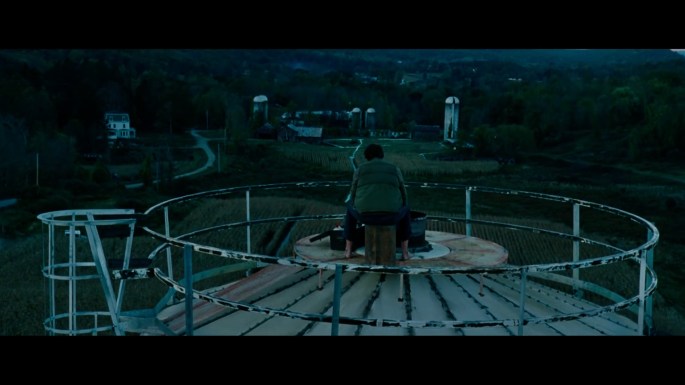
“I will protect you. I promise.” A spoiler free review of A Quiet Place by Josh Hains

A Quiet Place will be starting, the first frames slowly unfolding, and your audience will probably still be talking, their voices filling the air. Not too loudly, but loudly enough for the noise to annoy you, to grate on your nerves and make you wish you could shout at them to ‘shut up’, or worse. The ruffling of popcorn and candy bags, and the munching of said delicious delights will only further cloud the air. They need to stop making noise, you can’t hear the movie. But within the first half a minute of the movie your audience will have grown so incredibly quiet, the dropping of a pin against the floor would echo like thunder throughout the room, because they’ve realized that while you can’t actually hear much of anything, save for the scrapes of bare feet across a floor, or the slight thump of a pill bottle against a counter top, you still have to listen, and these small sounds are being drowned out by bigger sounds. The dead silence of your audience will become a requirement. John Krasinski has forced you into silence and a world devoid of big sounds, leaving you with the blowing winds, the rustling of grass and leaves, the crunching of white sand beneath bare feet. You and your audience won’t be able to anticipate when the louder sounds, like the effects of a toy rocket, or the screeching of the alien monsters rushing to snatch their potential victim (and in doing so setting the stakes of the movie), will come, and so each and every one of you will be on the edge of your seat in stone silence, fearful of the louder sounds yet to come, bracing for their impacts in the hopes you won’t jump out of your skin. All this, and the movie hasn’t even cut to black and shown you the title card yet. Imagine 90 consecutive minutes of this, and how suspenseful, tense, and quiet the experience will become long before the final frames snap to black.

Now imagine living in a world where you can’t make a sound, or the fast moving blind aliens that attack those same sounds will rip you to shreds. Imagine having to walk across long trails of sand everywhere you venture outside because sand is quieter to tread than twigs and grass. Imagine playing the board game Monopoly with balls of cotton, because the if you’re too loud using the metal car, one of those monsters will come a knocking. Imagine being pregnant like the mother, due in two or three weeks, and the fear that the sounds of a newborn baby’s cries will bring death to your doorstep. Imagine being hearing impaired like the daughter, unable to tell if you’re making noise, let alone how loud it could be. Picture being afraid of every sound like the son, scared of what lurks in the shadows and the idea that the loud noises you could make will get you killed. Try to think of the pressure you must feel being the father, the primary protector of your family, the resourceful one that’s kept most of you alive for over a year. How much longer can you keep it up? What if you can’t protect the ones you love? Put yourself in the shoes of the Abbott family (John Krasinski, Emily Blunt, Millicent Simmonds, Noah Jupe). You’ll grow to care for them so much that the thought of harm coming to any one of them will only further enhance the creeping sensation of suspense you’ll undoubtedly feel. The performances, so subtle and nuanced in their presentation, reliant on facial expressions and physicality, including American sign language, will quietly blow you away. And the scares, when they come, will remind you that the best of jump scares work not because they’re loud, but rather because they strike when you are least expecting them to, much like this film’s monsters. A Quiet Place will make whatever you’ve conjured up in your mind look like Sesame Street by comparison, as nothing I have said up until this point can prepare you for this movie, because I’ve hardly revealed a thing about this brilliant lean thriller.

Don’t wait to see it on Netflix, go see A Quiet Place on the biggest screen you can find with a top notch sound system and a packed house. See it writ large and booming in your ears. To not see this likely classic of the sci-fi horror/thriller genre in such a fashion will do yourself, the movie, and the white-knuckling experience of it all an irreplaceable disservice. You’ll thank me later.

Jonathan Glazer’s Under The Skin

People often say that Jonathan Glazer‘s Under The Skin is one of those films you’ll either love or hate, and while I understand the stark precautionary sentiment, I think there’s more shades of grey than a knee-jerk reaction towards either side of the fence. I loved what the film did with sound, atmosphere, imagery and expectations. I hated how it made me feel overall. Detached. Alienated. Confused. Uneasy. Cornered by otherworldly stimuli. For what it’s worth, that’s most likely the intention behind the whole thing, and I applaud the genius in achieving a goal of exquisite discomfort, but I doubt anyone could blame me when I say that it’s a film I’ll watch once, and only once. Glazer goes for less of a conventional narrative and more of a dread inducing screensaver aesthetic, moving glacially through a series of events that seem to be both cohesive and just out of reach, toying with audience perception for a mood piece that is the cinematic equivalent to a particularly intense bout of disassociation. Scarlett Johannesson is as scary and sexy as one could get, playing some type of alien creature on a quiet, merciless rampage in various areas of Scotland. Seducing, destroying and stockpiling the pilfered essences of several unfortunate dudes who wander into her proverbial spiderweb, she, or rather ‘it’, eventually experiences some kind of inner awakening and undergoes a paradigm shift clearly brought on by her ongoing affiliation with those strange and sneaky creatures called human beings. If I’m being vague, it’s on purpose; there’s no gift wrapped cliff-notes for this baby, it’s something that makes its imprint on you in a language too illusory to impart in words. I’m reminded of other science fiction films like Darren Aronofsky’s Pi or E. Elias Merhige’s Begotten in the sense that most of what we see, hear and feel is not pleasing to the senses at all. Many heady sci-fi films are engineered to elicit positive emotional response from an audience, via a cathartic score, engaging production design and very human stories. Films like this, and the aforementioned, go out of their way to come across as cold, uncomfortable and stranded in a mist of off-putting hysteria. It’s a bold move whenever it happens. In the case of this film, it’s to give us a sense of what it must be like for an alien being to be thrown in with our lot here on earth. From the shrill, rhythmically jagged score by Mica Levi, to Scarlett’s alluring menace, to the murky nocturnal photography to the half mumbled daze of near incoherent dialogue, it’s all there to move us several planes away from ‘normal’, and get under our skin (hey that’s the title). Does it work? One hundred percent, and kudos, as it’s as scarily disorienting as they come. Is it pleasant moviegoing? Miles from it, it’s a beast built to provoke a reaction, and if you don’t like what it bristles up in you, you won’t hastily rewatch it anytime soon. I know I won’t.

-Nate Hill

Alex Garland’s Annihilation

Alex Garland’s Annihilation is a stunning, incredible, awe inspiring and strikingly unique piece of work. It’s the kind of film that has you leaving the theatre and wanting to run up to strangers on the street passing by, shout how great it is in their faces and promptly buy them a ticket of their own. It’s reassuring that smart, dazzling big budget science fiction still thrives in Hollywood, and projects like this build upon and terraform the preexisting genre to produce things previously unseen, stories that wear their influences upon their sleeve whilst simultaneously hitting you as something you’ve never conceived in your wildest fever dreams. It’s also not the film you might be expecting from trailers and descriptions so far, in the best possible way. Is it about a team that heads off into a strange, quarantined area to investigate a possible extraterrestrial presence? Yes, but not really. Is it a clever blend of Alien-esque horror and trippy, delirious cosmic futurism? Sort of, but that’s just the tip of a very large, very deep iceberg surrounded by a wall of scintillating effervescence dubbed ‘The Shimmer’ by wary scientists and the military. It’s into this enshrouded no man’s land that biologist Natalie Portman and a team of professionals with nothing to lose venture, and where the film really kicks off. Every character has some kind of inner trauma which has caused them to self destruct in their own ways, an unnerving theme that Garland holds up to his audience like a prism and explores with equal scrutiny. Portman has never been better, changed by the disappearance of her soldier husband (Oscar Isaac) and eerily drawn to The Shimmer. Jennifer Jason Leigh is Ventress, coldly stoic and freakily collected as team leader. Tessa Thompson caught my eyes with her fiery work in both Westworld and Thor: Ragnorak, she’s purely haunting here as the detached, withdrawn and highly intuitive Josie, nailing her final scene with earth shattering poise. Gina Rodriguez burst onto the scene with her excellent work in Deepwater Horizon and is pure dynamite here as Josie, the emotional firebrand of their troupe, giving the character’s eventual meltdown scene a remarkably authentic edge. These four actresses pull the tapestry of the film’s narrative together with their collective and individual work ; they’re nothing short of superb. Garland has found a way to express otherworldly phenomena in an artistic and scientific way that no other filmmaker has yet achieved. The images are breathtaking, the visual effects beyond top tier, the ideas are ambitious and reach full on for the stars, and the whole deal should be the gold standard of genre films at the multiplex. I’ll say no more, and let you discover it for yourself. Oh but I have to mention Geoff Barrow and Ben Salisbury’s score, an indescribable auditory experience that reaches dreamy levels of expressive percussion in the third act. Ok, I’m done, just go see it right now.

-Nate Hill

B Movie Glory: Necessary Evil

There’s always those B Movies that seemed to be sewn together out of bits of other scripts and produced solely so SyFy or Space has something, anything to fill up their 3am Saturday time slot. It’s like production team grabbed discarded narratives from all kinds of genre flicks, shoved them in a magic bullet, but purée and served up whatever the result is to the distributor. Now, this can often be a terrible idea resulting in boring mish-mash horror flicks that make little sense, or they can oddly kind of work in their own absurd way. Necessary Evil… kind of works, kind of doesn’t, there’s definitely something splattered on the canvas with it’s narrative, what it is though, I’m not even sure the filmmakers had an idea. It’s part Lovecraftian horror, part psychological something, part social satire and all schlock, but these themes bleed into each other until even the most attentive viewer will have not much of a clue what they’re watching. Best I can describe it: a super sinister doctor named Fibrian (Lance Henriksen) runs a shadowy psychiatric ward. There’s all kinds of rumours about illegal testing, dodgy pharmaceuticals, mass mind control and occult ties, none of which is ever made clear or disproved. However, when you have Lance playing your asylum director, you can almost be sure the place is up to something it shouldn’t be, he just has that cavalier maliciousness that he always switches on for these types of parts. A police detective and a reporter are onto him, and do theor best to infiltrate the facility, but his powers have already spread to the city outside, causing people to act strange and… well, a bunch of other weird shit. Danny Trejo has an amusingly hostile extended cameo as some vague operative working for Fibrian, and yada yada. It earns points for sheer WTF-ness though, it’s like every day on set they picked one crew member to add the craziest thing they could think of to the script and just ran with that (which would be a cool free association method of improvisational filmmaking, now that I think about it. They outdo themselves in a hilarious, out of left field cliffhanger ending that gets pretty cosmic and out there, adding a straight up supernatural element that cements the demented vibe they’ve strived for with the whole thing. A true oddball.

-Nate Hill

The Spierig Brother’s Predestination

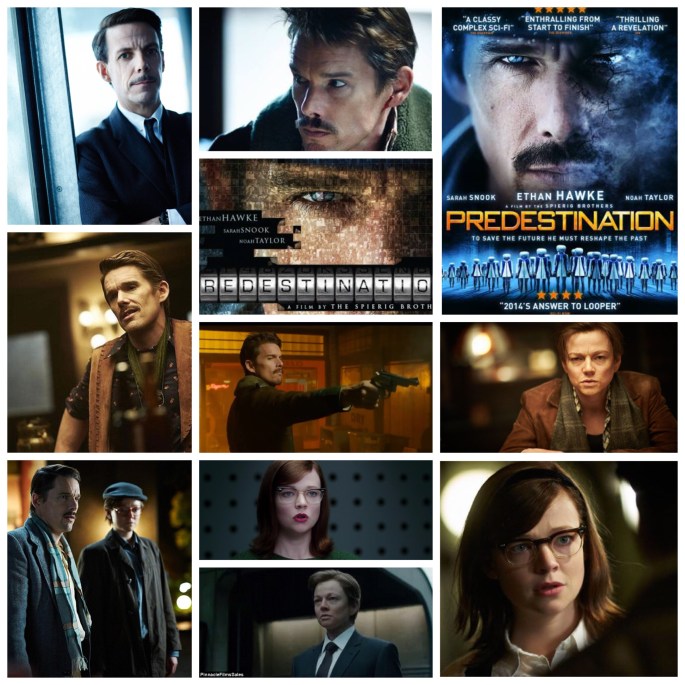
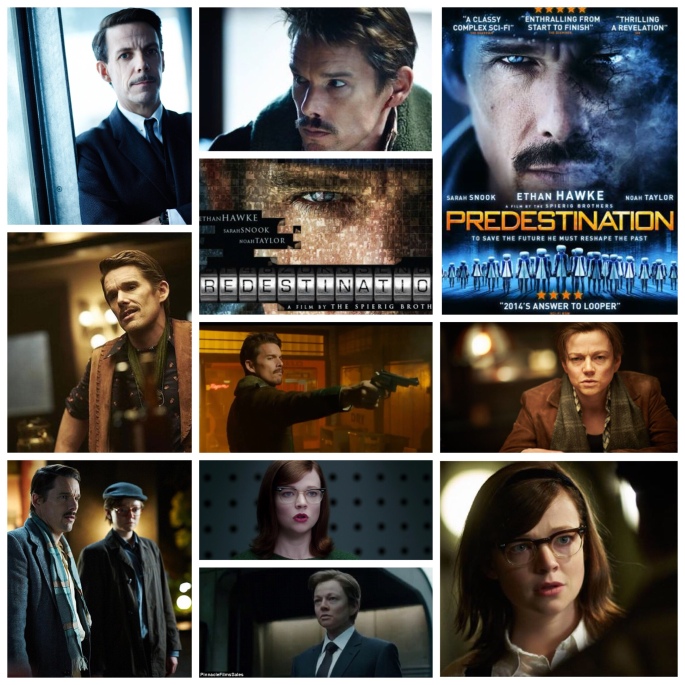
It’s tough to say much about Predestination without giving away the tantalizing, thinking man’s dream of a story, but I will say that I’m sorry it flew under my radar until now, because it’s one of the most thought provoking, intelligent and wicked sharp films to come along in decades. There’s a special place in my collection for each and every movie in the time travel sub-genre, I love those thematics to death and imagine my surprise when I finally caught up to this one two years after it’s release and discovered it’s my favourite in the genre by a mile. Innovative. Beautifully made. A guessing game for the ages. Plot revelations that glue your jaw to the floor. Two staggering central performances from Ethan Hawke and mesmerizing newcomer Sarah Snook. Hawke plays a temporal agent working for a mysterious handler (Noah Taylor doing an even slier rift on his Vanilla Sky character), his job being to jaunt through time and stop murders before they happen. If that sounds generic, familiar or a path well trodden, therein lies the irony because it is anything but. Any preconceived notions of a flashy, slick thriller will be decidedly dismantled once you chow down on this beauty of a story, unwrapping each twist and turn of the narrative like a present. Hawke is an actor I never used to take seriously, I always just thought of him as the kid cop from Training Day. He’s surprised me in recent years though, deliberately picking fascinating scripts and knocking it well out of the park with his performances. Sarah Snook is an Aussie up and comer who does an absolute encore here in a heartbreaking, multifaceted performance that should have gotten her awards recognition. This is the first film on record to tackle some previously taboo subjects regarding the concept of time travel, ideas that everyone has no doubt thought about but Hollywood has been too chicken to explore thus far, so props to these storytellers. Also, if you thought time travel flicks were elliptical and paradoxical until this point, you ain’t seen nothin’ til you’ve seen this one. It’s also just a brilliant, emotional, daring story told in a soaring cinematic fashion that stirs thoughts and pulses throughout.

B Movie Glory: Sci Fighters

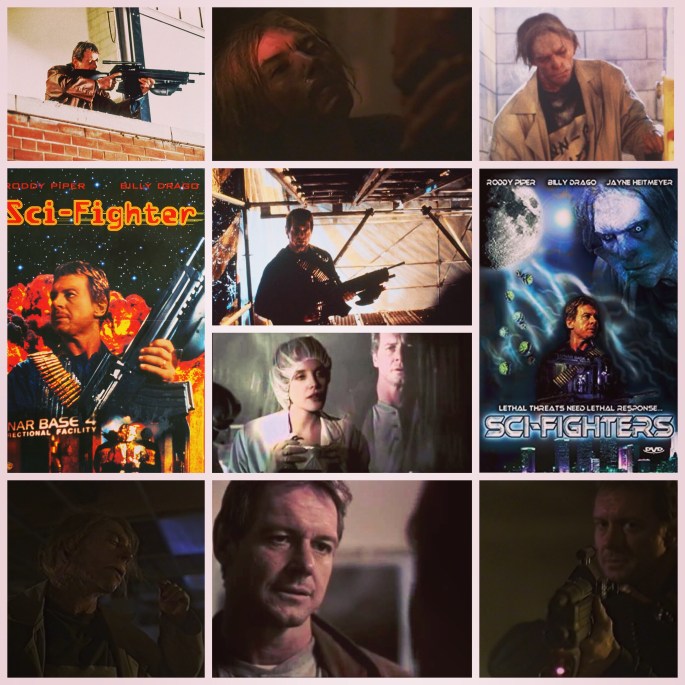
Picture a bleached out, acid washed dime-store version of Blade Runner on a shoestring, bargain budget and you’ll have some notion of Sci Fighters, a silly futuristic flick starring lovable wrestler ‘Rowdy’ Roddy Piper and B Movie stock villain Billy Drago. By most standards it’s a miserable little exercise in schlock, but if that’s your thing to begin with, it’s a pearl. So it’s set in 2009, and the film was made in 96’, which going by a combination of the math and the severely bleak atmosphere, the filmmakers didn’t even stretch their timeline barely past twenty years from their date, showing either amusing carelessness in writing or even more amusing cynicism for where we’re headed, and how fast. The setting is Boston, and it’s a goddamn slum, with perpetually overcast skies, garbage heaps everywhere and a general sense that people have given up. Piper is Grayson, a hard boiled detective on the trail of a somewhat unusual killer. Far above earth in a filthy off-world prison on the moon, criminal Dunn (Drago) has encountered some weird alien parasite which hijacks his gaunt frame and torpedos back stateside to start a murder spree. Drago vs Piper in a sad-sack, disease ridden Boston is pretty much the suitable logline, and it’s not half bad. Piper makes a more grounded leading man than the film deserves, while Drago is straight up certifiable (nothing new) especially when the extraterrestrial, who has a garbled and endearing speech impediment, is controlling him. Effort is put into the atmosphere to some degree, but I feel like the success in achieving mood was probably also by accident of just leaving shit lying around set. A true peculiarity, worth it only for fans of the two actors and schlock-hounds alike.

-Nate Hill

Luc Besson’s Valerian And The City Of A Thousand Planets

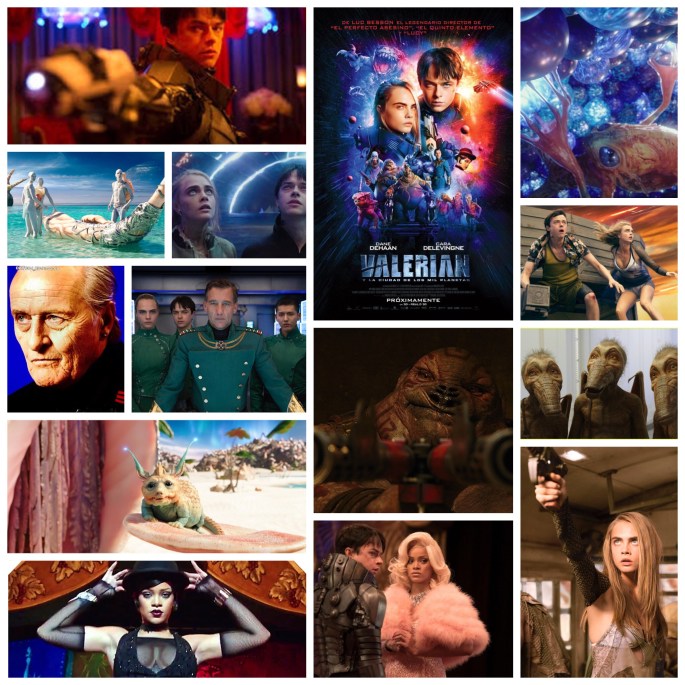
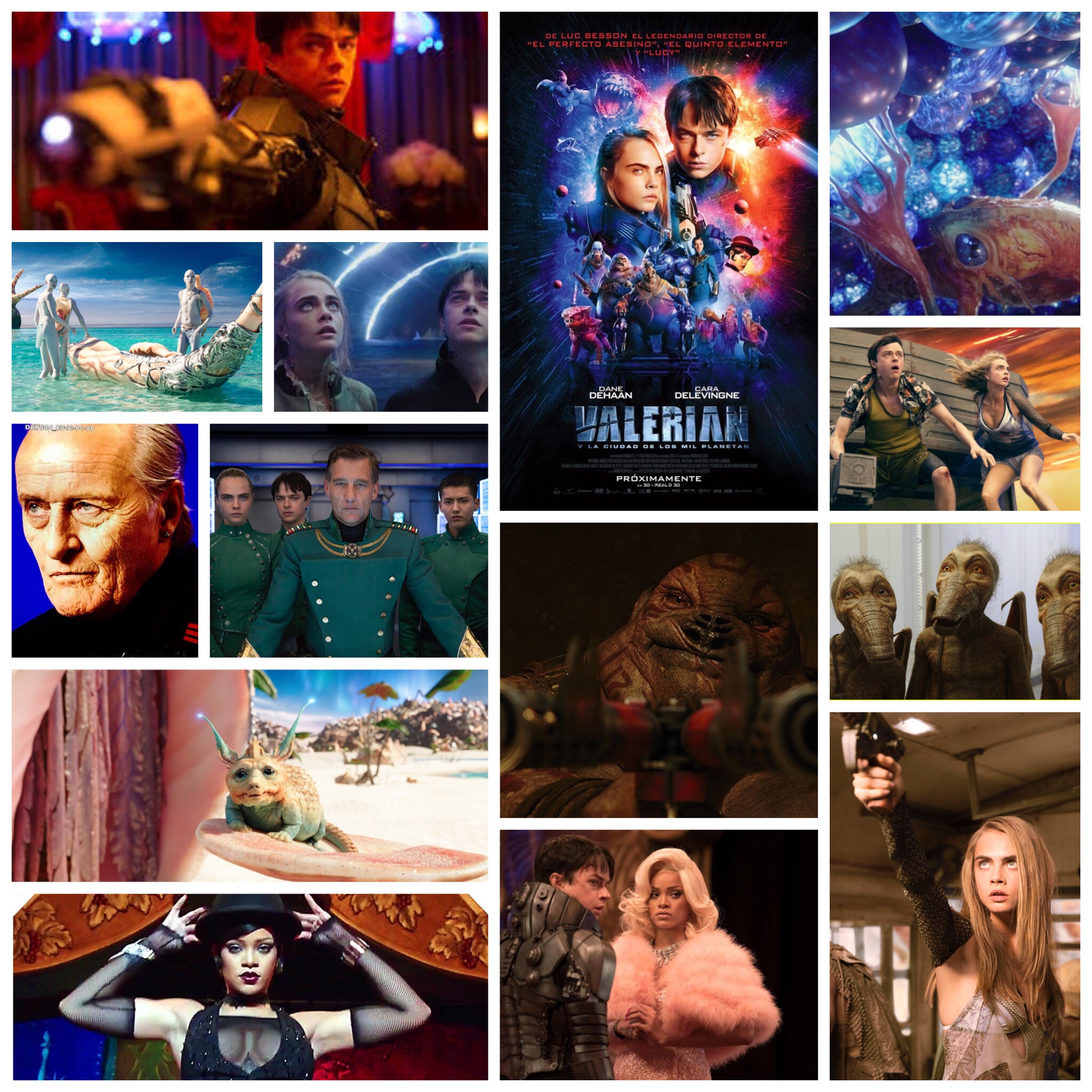
Luc Besson’s Valerian And The City Of A Thousand Planets is a lot of fun here and there, but I couldn’t help being a smidge underwhelmed by the whole deal, having waited years for news of a new Besson space opera following his insta-classic The Fifth Element. There’s just… something missing in the magic here, an undercurrent that should be cohesively flowing through it that’s sort of absent, leaving it feeling very episodic and loose. It’s not the heavy CGI that bothered me either, as the effects here are some of the most flat out amazing and well done graphics I’ve ever seen, particularly in a prologue set on a shell beach style planet with avatar natives running about, a stunning way to open the picture. No, it’s something illusory that didn’t ring true, something that was there in Fifth Element and just didn’t make it to the meeting this time around. The story centres on space feds Valerian (Dane DeHaan, who I just can’t help but be annoyed by in anything I see him in) and Lauraline (Cara Delevigne), hunting through the universe for a treasured artifact from aforementioned shell beach planet, mainly focusing on a manufactured megastructure housing over eight hundred million different species, all clambering over each other in the craziest, most colourful celebration of special effects to come along in a while. Seriously, the wildly varied aliens, gorgeous vistas and chase sequences set in the City are really something to be proud of, and when the film is in action mode, it’s a delight. Story suffers a lot though, with Clive Owen awkwardly hamming his way through a military captain role, John Goodman playing Jabba The Hut, a vague genocide subplot involving the avatar dudes, it all happens dimly and is hard to get a grasp on from scene to scene. Also, the writing for Lauraline and Valerian’s suuuuccckkkks. It’s meant to be adorable, glib romantic back and forth, yet just feels clipped, unnatural and stale. DeHaan drones on with it, and doesn’t ever feel at home in the role unless he’s doing stunts that don’t involve dialogue. Delevigne fares better and seems to really be having fun with her role, stealing the show from under Valerian’s nose. The best acting work of the film, shockingly, comes briefly from Rihanna as a shapeshifter thing called Bubble with an affinity for dancing and a hopeless romantic’s heart. Ethan Hawke is also there as some kind of zany cowboy pimp, an energy that’s a far cry away from his usual stone-faced intensity. Watch for the quickest ever cameo from an under-utilized Rutger Hauer, so fleeting that if you’re even a minute late to the theatre you won’t have a clue he’s in it. I did enjoy lots with this one, including a romp through the dining hall of a gluttonous alien race that resemble Harry Potter trolls, a fantastic extended action set piece in a sprawling bazaar market that overlaps into multiple dimensions, providing clever shortcuts, escapes and pratfalls for all involved, and the rich detail in costume design as Valerian travels through Rihanna’s section of the City, not to mention top drawer special effects all about the film. It just didn’t have the heart or connective tissue to make all these elements stick or resonate though, like a shattered mirror whose pieces are off lost somewhere. I found myself wanting to pop in my Fifth Element DVD multiple times, for there the story provoked emotion and made you deeply care for it’s two intrepid protagonists and their romance, whereas here it just feels a bit lifeless and forced, with an overarching narrative that needed way, way more fleshing out to really work or go somewhere. Next time, Luc.

-Nate Hill

Jaco Van Dormael’s Mr. Nobody 


Ever see a film that you actually can’t really, properly describe to someone? You often hear “it’s hard to describe”, but you know those ones where you really do find yourself short of a five second cocktail party summary, left with nothing to compare it to and no way to impart the contents in quick, succinct jargon? Jaco Van Dormael’s Mr. Nobody is exactly that type of film, an experience so dense, disorienting and thought provoking that one needs at least a few months after the initial viewing alone to ruminate, mull it over and meditate on what was seen before even a word of analysis is offered. On surface level it’s about a man named Nemo Nobody, played by Jared Leto in a jaw dropping, multifaceted encore of a performance. Nemo is over a hundred years old, the last mortal on an earth of now immortal humans, and he recounts his life, or many lives, rather, to a journalist. That’s the diving board that vaults into an intricate narrative full of love, grief, joy, tragedy and the peculiarities of being human. We see Nemo at hundreds of junctures of his life, penultimate crossroads where he could make either choice, but if he makes neither of them, can then see both outcomes, how they carry forward his trajectory into the future towards more crossroads, more lives, more decisions, like the infinitely branching tributaries of an ever flowing river. How would one make a film like this work onscreen, you ask? Well, not easily. The thing runs almost three hours and often gets a little caught up in itself, especially in the midsection, but it’s sheer ambition and uniquely structured storytelling carry it on wings of light, spanning through a hundred years and countless events that Nemo sees passing. He has three loves, or at least three the film focuses on: luminous Ana, played by an excellent Juno Temple and then Diane Kruger as she gets older, mentally unstable Elise (Sarah Polley) and Jean (Linh Dan Pham), all of whom help shape him or have key parts to play along the branches of his tree of life. There’s a lynchpin event from his youth upon which it all hinges though; faced with the decision to move away with his mother (Natasha Little) as her train leaves, or stay behind with his father (Rhys Ifans), the boy begins to run, but also looks back. This nano-moment is the key to eternity here, the introspective Big Bang that gives way to our story. At times the film lags, and the slack could have been pulled tighter during the development of the three relationships, but the first and third acts that bookend the whole thing move along like the forces unseen around us, using cinematic tools to compose a symphony of motion, music, scientific pondering and emotional resonance. No other film is like this one, and my attempts to describe it above still just don’t even scratch the surface of the dreams found within its runtime. There’s only a few other ones out there that have aspirations as cosmic as this one, and most, including this, have made it into my personal canon of favourites. Darren Aronofsky’s The Fountain, The Wachowski’s Cloud Atlas and Terence Malick’s Tree Of Life are such films, and Mr. Nobody now sits at their table. 

-Nate Hill

Tobe Hooper’s Lifeforce

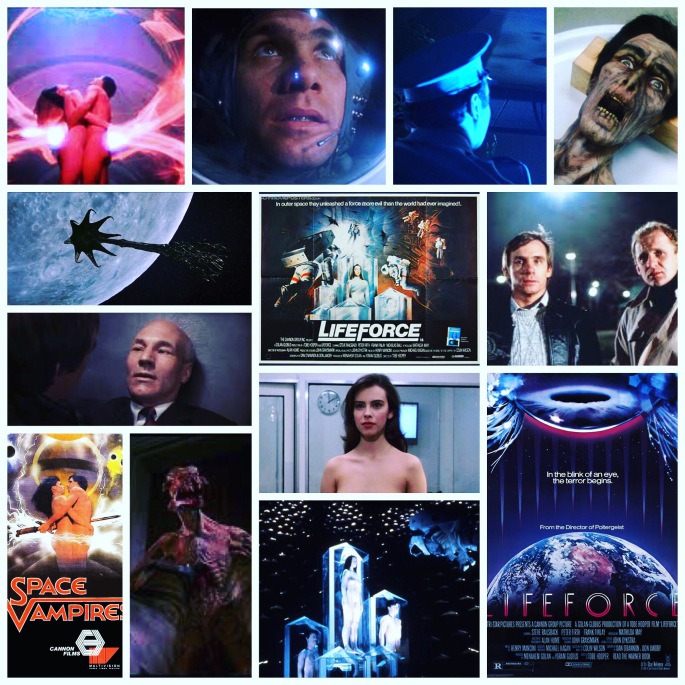
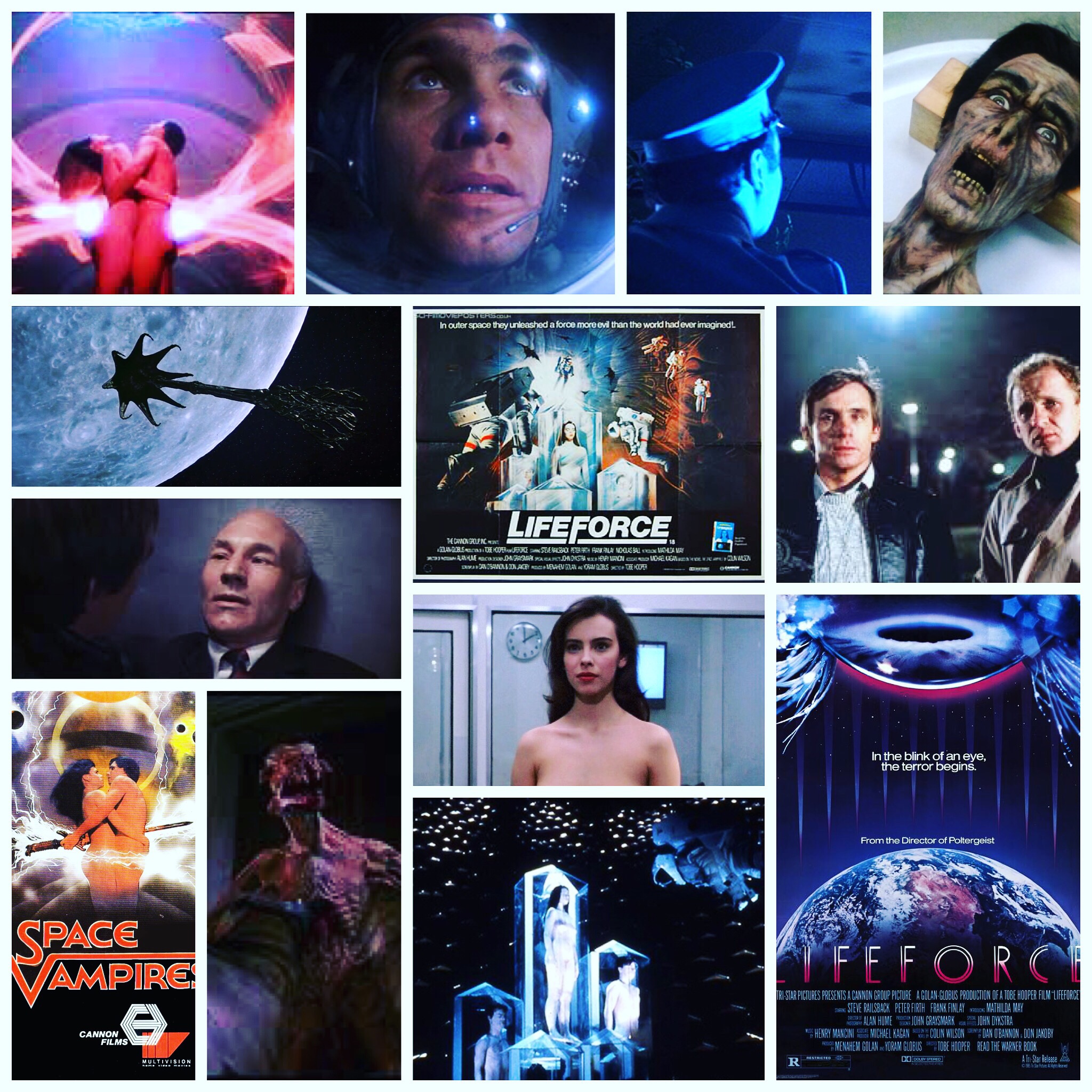
Tobe Hooper’s Lifeforce is the most dementedly unique horror SciFi mashup you’ll get. Based on a novel that’s literally titled ‘The Space Vampires’, the film is exactly that and more. It’s so out of it’s mind that at a certain point you have to surrender and bask in it, and grab the sides of the cart as it veers between all kinds of increasingly bonkers plot points. When a strange, rice kernel shaped object shows up in earth’s atmosphere, a team of exploratory astronauts led by intrepid Steve Railsback goes on up to investigate. What they find up there eclipses any weirdness aboard the Nostromo, Millennium Falcon or Event Horizon. Intergalactic vampires lie in creepy cryo suspension, just waiting for unlucky hosts to come along. Soon they’re exposed to earth and it’s a gory mad dash all over London to stope them from turning every earthling into zombies. Yes, that’s actually the plot, and despite how it sounds on paper, they really make it work. That’s mostly thanks to the screen shattering, ridiculously good special effects, especially in the opening aboard the alien’s strange, baroque vessel which is one of the most otherworldly and atmospheric sequences in any horror film ever. Once the action shifts back to earth it’s a pure shit show and near comedy of errors, with Railsback’s frenzied cosmonaut teaming up with a peppy British intelligence agent (Peter Firth), and even Patrick Stewart comes out to play as some vague scientific bro. There’s boundless imagination at work here, carried by sheer movie magic to contribute lasting, impressive images and create an entirely unique horror experience. Plus, how could a flick about space vampires not be amazing (we will not speak of Dracula 3000). A sci-Fi horror classic, an under-sung jewel of visual flights of fancy and practical effects laden nightmares.  

-Nate Hill

Denis Villeneuve’s Blade Runner 2049: Thoughts from Nate Hill


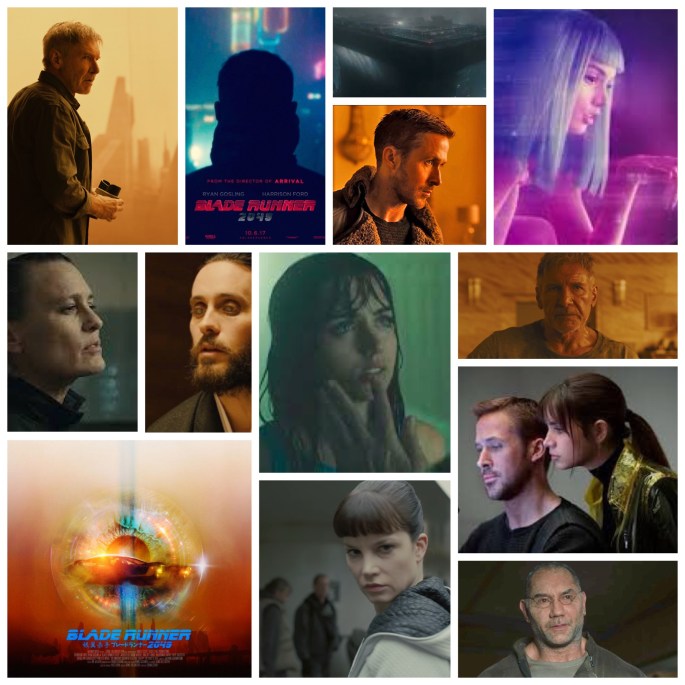
As I settled in to watch Denis Villeneuve’s Blade Runner: 2049 in a thundering imax theatre, I truly did not know what to expect. I’d successfully avoided spoilers up until that point, done a scant bit of reading hither and thither on a surface level, and obviously been privy to the mind boggling, overwhelmingly positive buzz that’s been flowing forth since the first critics were screened. ‘Masterpiece’, ‘Movie even of the century’ and ‘instant classic’ were some of the lofty adulations that were being hurled around right out of the gate, and it’s not often a sequel to such a long worshipped, culturally influential bombshell of a science fiction film has been welcomed so eagerly and almost unanimously praised. There’s been a gulf of time between Ridley Scott’s 1982 neon fever dream, which is indeed a masterpiece and one of my favourite films of all time, and the shoes to fill have never, ever been bigger. So, does it live up to the original? Is it better? Worse? Pandering fan service or bold pioneer trek into new galaxies of thematic and tonal exploration? The answers to those questions are somewhat more complicated than yes, no or similar succinct absolutes. I can say, however, that Villeneuve’s near three hour machine-dream is one of the most beautiful, ambitious, thoughtful, well wrought films I’ve ever seen, a staggering achievement in all arenas and indeed a piece of cinema they’ll be talking about for years to come. It’s a masterpiece on its own terms, blending elements of the original which we all loved, but bravely surging forward into it’s own brand new chapter of this world, a little bleaker and more austere than the poetic lullabies of Scott’s L.A., yet no less wondrous or sumptuous a creation. This is a world where quite a bit of time has passed since the initial story, and the environment these characters dwell in has shifted along with it. Los Angeles is wearier, emptier and less of a gong show than we remember, yet the buzzing life that we recall catching fleeting glimpses of between monolithic, impossibly gigantic skyscrapers is still there, that endless nocturnal hum has thrived through into a new age. So too have replicants, now far more advanced, under the label and stewardship of Niander Wallace (Jared Leto) and his mega corporation. Ryan Gosling plays a young blade Runner, a profession, it seems, that has not run out of supply in demand. Under the very stern watch of LAPD Captain Joshi (Robin Wright, terrific) he navigates a meticulously paced detective story that, yes, eventually leads him to missing former Blade Runner Rick Deckerd, played by Harrison Ford in one staggeringly well pitched performance. That’s all I’ll really be specific about in terms of plot, because it’s a gorgeously wrapped present that should be opened corner by corner, inch by inch until the viewer has actively and emotionally seen the big picture, a thoughtful process that challenges the audience and should be the standard not just for science fiction, but for big budget films in general. While Blade Runner 1982 was a visual and musical feast for the senses and still maintains that edge over it’s sequel, 2049 has a cerebral and multifaceted patchwork quilt of themes, questions and notions that play across the screen like a ballet of auroral, magnificent wonders, layered, ponderous cinema with an emotional weight and resonance that took me right off guard, a quality that although present in 1982, wasn’t quite as developed as what we get here. Hans Zimmer’s score is every bit the thundering piece you’d expect and is brilliant, a slightly industrialized departure from the lyrical, ethereal tones of Vangelis, but equally as captivating. I could go on, but I’ll let you see the thing for yourself and paint your own picture. I’ll say this: Blade Runner 1982 is the rainbow coloured light shone through a prism, abstract, illusory and trancelike. 2049 is the prism itself, the source of the light and the place where it’s understood from a more conscious, waking-life perspective, and that’s the closest I can get to explaining just how different these films are from each other. One is a dream poem, the other is a deep methodical meditation, but both are vital halves of the mythology. However you look at it, Villeneuve’s 2049 is astounding, achingly beautiful work on every level, not to mention the work of everyone’s favourite unsung maestro, cinematographer Roger Deakins. This is an important film, as it may just hasten the exodus of brainless big budget fluff and help Hollywood enter a golden age of well crafted, intelligent blockbuster films once again. One can dream.

-Nate Hill