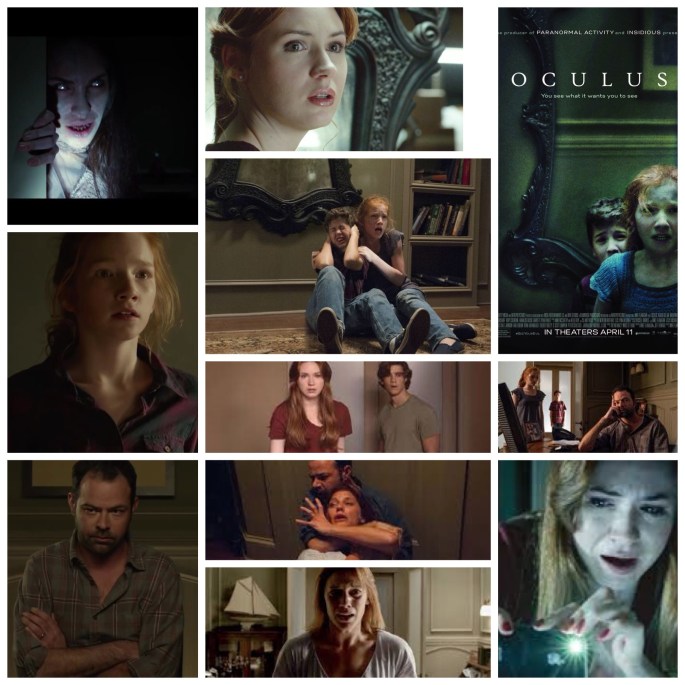
What scares you most in the horror genre? Masked killers in isolated settings? Booby trapped razor wire rooms? Demon possession? Werewolves? Ghosts? Those are all well and good, but nothing messes my shit up more than psychological uncertainty, the feeling that anything you see might not be real, and the layers of your perception are gradually being fucked with in a subtle way. Such are the terrors that Mike Flanagan’s Oculus traffics in, a film that takes postmodern horror expectations and strangles the life out of them in favour of something far more effective. You’ll read surface level summaries claiming this to be about a haunted mirror. It…is. Sort of. And it isn’t. Then it is again, and before you know it you have no idea what’s real and feel like leaving the television and hiding in a back room for fear of an incoming dissociative episode (true story). See, the haunted mirror is just the suggestive tip of a very dense psychological iceberg, a starting point to a narrative that’s disturbing in ways that few big budget horror films understand. When an idyllic American family moves into a perfect new house, life seems peachy. Following the arrival of an ornate antique mirror, things take a darker turn. The loving patriarch (Rory Cochrane, exuding natural charisma) turns fiercely psychotic, preying on his doting wife (Katee Sackoff) and terrorizing his son (Garrett Ryan) and daughter (Annalise Basso, terrific in a performance of true hurt and horror). The mirror seems to indeed be the source, but no clear correlation is ever established by the film, only heavy suggestion gnawed at by the notion that the parents may just be irreparably sick in the head, an idea just as, if not more scary than a sentient looking glass. After brutal tragedy, we flash forward a decade or so, the parents are gone and once again the daughter, now played by a dynamite Karen Gillan, tries to get to the source of what happened by locking herself, her brother (Brenton Thwaites, the only weak leak in an otherwise excellent acting ensemble) and that dang pesky mirror in their old house to destroy it. Bring on a panic inducing haunted house of the unconventional variety, one where something, either the mirror or inherited mental illness, plays endless nasty tricks of the mind on both of them until the viewer feels uncomfortable in their own thoughts, the fabric of internal reality ready to disintegrate into shards. Their plight is carefully interspersed (big kudos to Flanagan, serving as his own editor) with flashbacks to the harrowing ordeal they went through as children, as the loving parental unit collapses into madness before their eyes. Listen for a hair raising, subversive score by The Newton Brothers that just adds to the queasy cauldron of unease that this film is. It’s more brilliant than any widely released horror film has any right to be these days, a huge step in the right direction for the genre and a waking nightmare for anyone whose worst fear is losing their mind.
-Nate Hill
Tag: spooky
B Movie Glory: The Insatiable
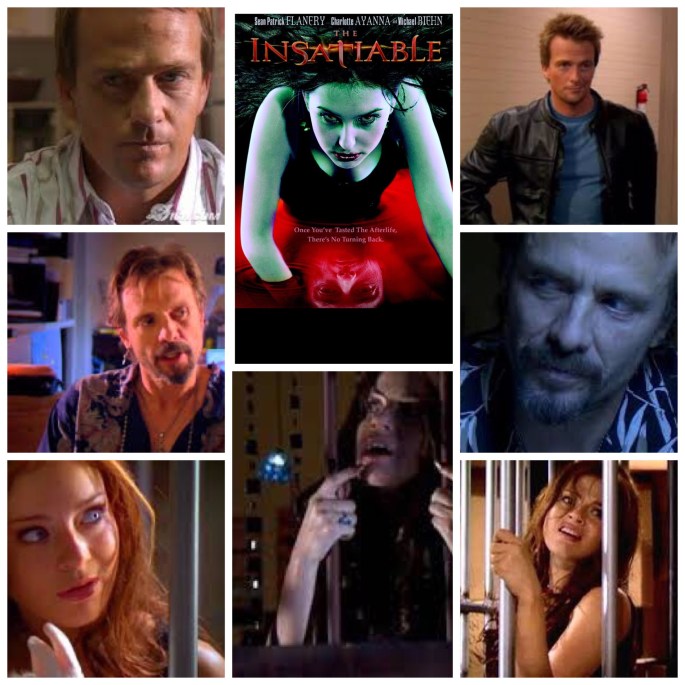
The Insatiable, like droves of other vampire flicks, attempts to cover new ground and build on established formulas to create something memorable, and despite having the direct to video stigma working against it’s notoriety, works pretty well for the most part. Sean Patrick Flanery plays a timid fellow who, after being targeted by a sexy, devilish bloodsucker (Charlotte Ayana), seeks help anywhere he can, broadcasting his predicament via HAM radio (maybe not the most effective outlet) to anyone who will listen. It just so happens that there is a grizzled old vamp hunter out there played by Michael Biehn, a jaded hardass who’s just waiting for signs of these creatures. Ayana likes to play with her prey, and taunts both of them throughout the film in some amusing cat and mouse games, forcing Flanery to great lengths of survival including building one hell of a cage in his basement to trap the bitch. The material is treated mostly head on with just a smidge of smirking deadpan, especially in the sly ending. Biehn is awesome as the cranky, high strung vamp slayer, really having fun in the role. A fun, if slight little flick.
-Nate Hill
Dario Argento’s Inferno

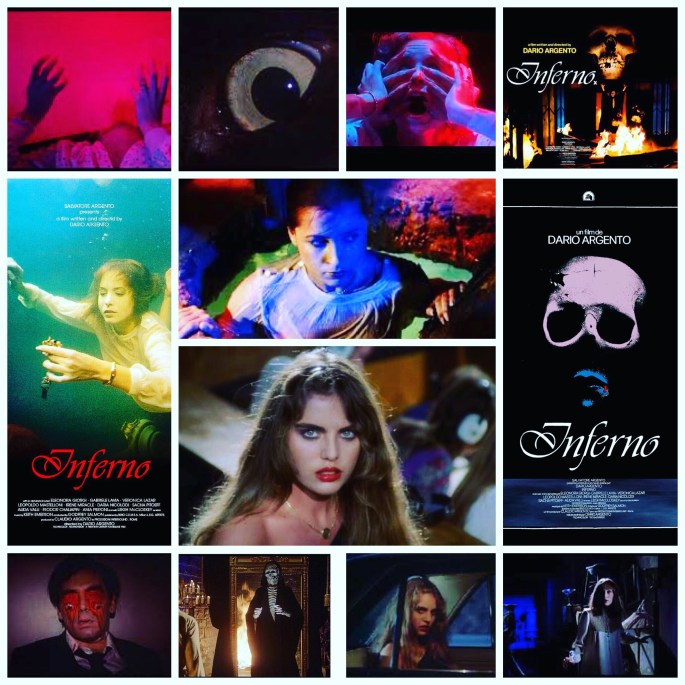
Dario Argento’s Inferno is the most abstract, expressionistic and nearly incomprehensible entry in his Witch trilogy, like oil and blood smeared on canvas haphazardly to create something just this side of the conscious realm. The other two films, Suspiria and Mother Of Tears, each have their place in the story, with this one doing middle chapter duties, but really they all work better as standalone films more than anything cohesive. While the film clings loosely to the idea of two college students investigating separate Witch covens in both Rome and New York, that’s just the baseline for a petrifying, beautifully surreal mood piece full of thumping psychedelic music by Claudio Simonetti and Goblin, and episodic set pieces of bizarre dreamlike horror. Argento is the undeniable king of lighting and atmosphere, and although other areas of the work like story, dialogue and acting suffer, it’s easy to look past that and get swept up in his magnificent visions. Unearthly light and wind ripples over the hair of a gorgeously enchanting witch who holds a cat and and stares down one of the protagonists in a lecture hall. An eerie full moon possesses one man trying to drown a bag of cats, and a butcher knife wielding whacko. A woman descends underwater into a flooded derelict building and discovers a bloated corpse floating there in the film’s most harrowing scene. Argento’s films are less about the rhyme and reason, more about the feeling of it all than anything else, very much like dreams. Inferno is one of his very best, a feverish madhouse of light, colour, operatic violence and hypnotic music.
-Nate Hill
Peter Hyam’s The Relic

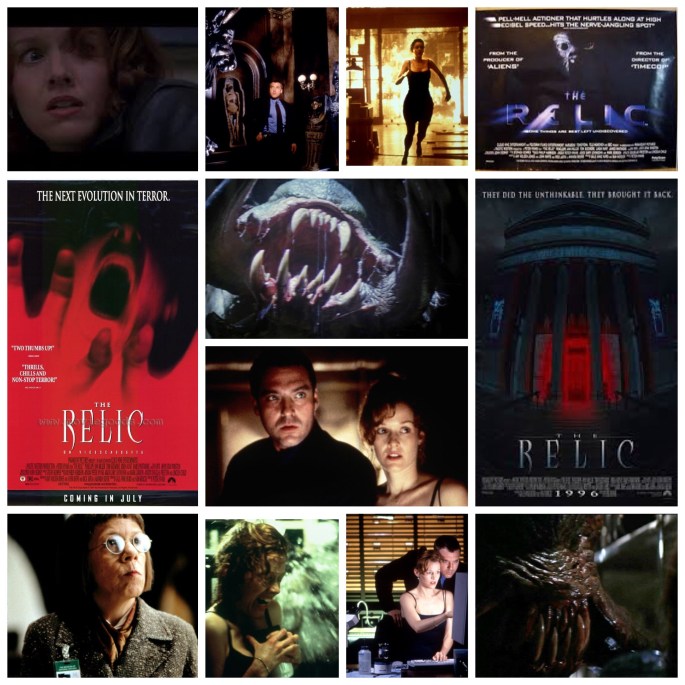
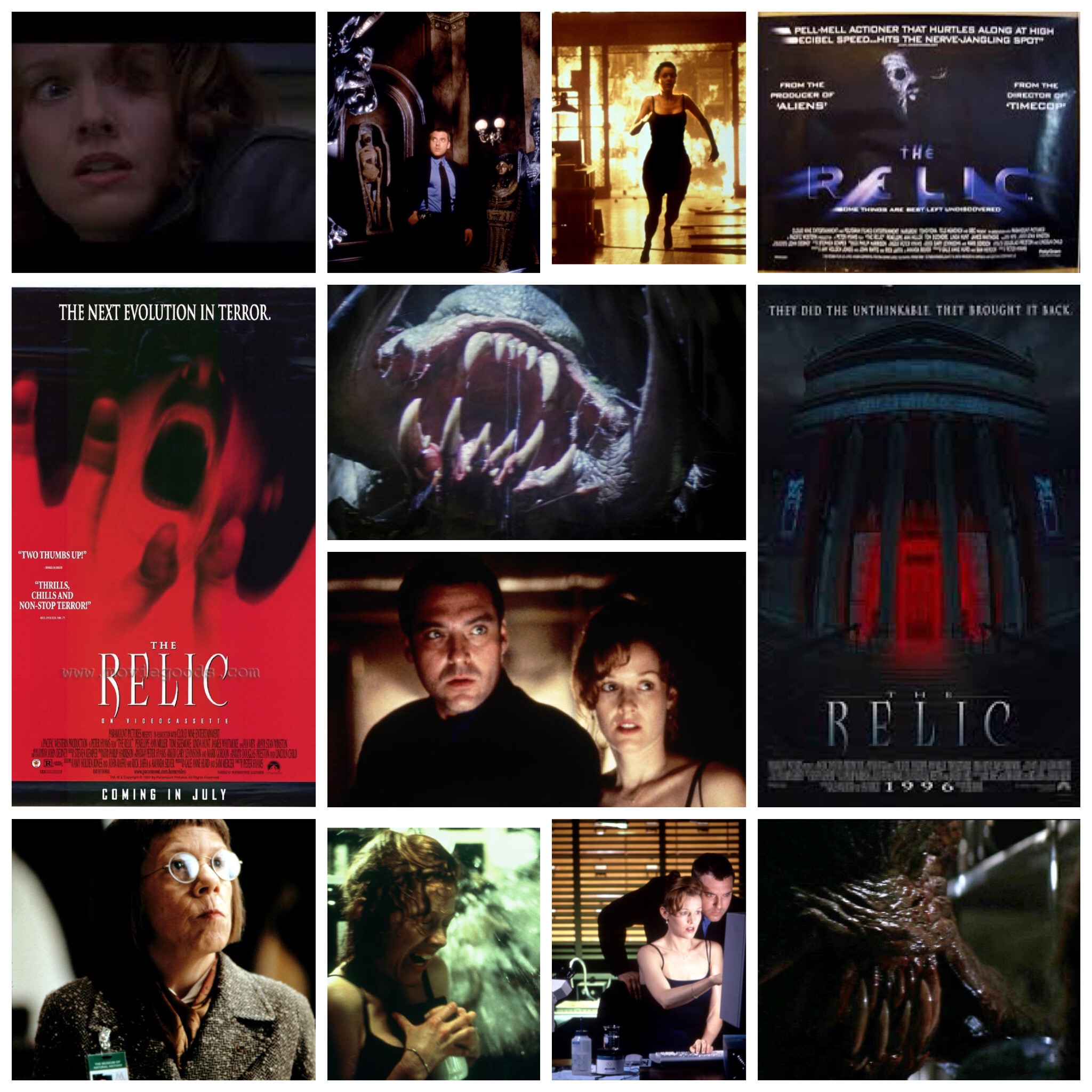
Peter Hyam’s The Relic takes a smaller horror idea that usually services a low budget production and gives it the expensive, near blockbuster treatment. The result is a pretty damn fine creature feature flick that holds up better than it has any right too. When you’ve got a director like Hyams at the wheel though (see End Of Days), who is a meticulous perfectionist and often serves as DoP in addition to directing, you’re going to get class and durability all the way. Relic takes an ages old concept and injects wild screaming life into it; When an ancient artifact is brought from the South American jungle and stored at the Chicago museum of anthropology, trouble is not far off, for as we know in movie land, any ancient relic most definitely has a supernatural curse on it. Before too long a gigantic angry lizard thing from olden times awakens, tears through the building like the stampede from Jumanji and starts eating everyone it sees. It’s up to heroic police detective Vincent D’Agosta (Tom Sizemore in a rare lead role) and professor Margo Green (Penelope Ann Miller, what ever happened to her?) to use their wits and survive long enough to defeat it. Linda Hunt, that sweet little munchkin, also has a nice role as the museum director. The film is just pure fun to watch, a solid popcorn banger that has the look and feel of an old school adventure film, or something by Stephen Sommers, albeit with a healthy helping of slimy gore. The creature is truly immense, and one feels the scope of it’s rampage as Hyam’s camera arcs through the vast hallways and mezzanines of the building, following the action in crisp, tactile strokes. Sort of a forgotten gem, but one that’s always fun to check out.
-Nate Hill
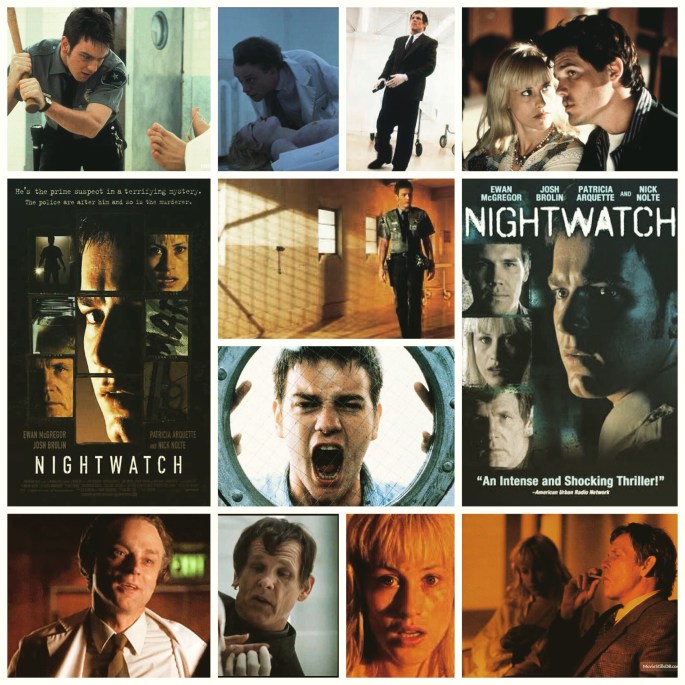
Ole Bornedal’s Nightwatch

It’s always curious to me when directors remake their own projects. Sometimes it seems redundant and risky, and one wonders what compels them to revisit already trodden territory. In Ole Bornedal’s case it’s a creepy murder mystery called Nightwatch, made once in his native language of Danish, and again as a slicked up Hollywood version featuring some heavy acting talent and a reworked script by none other than Steven Soderbergh. I’ve only seen the newer one, and despite some awkward, clunky moments in the narrative, it can get pretty squirmy and frightening when it wants to, especially any scene involving a young Ewan McGregor stuck alone on a morgue graveyard shift. Creepy concept, and in some scenes it’s really milked to full effect, but there’s also few really silly and unnecessary subplots, particularly one with McGregor’s daredevil buddy Josh Brolin, and his girlfriend (an underused Patrica Arquette. When the film focuses on its main horror storyline it works quite well though. There’s a killer loose in the city, one with a penchant for necrophilia, and no one wants to have the night shift at a mortuary with someone like that running about. Nick Nolte adds class and charisma to his role as a weary, grizzled police detective who’s searching for the killer. Nolte rarely sets foot in the horror/thriller side of things, but his looming presence and concrete scraper sounding voice fit into the atmosphere terrifically. There’s a couple cameos as well, one from John C. Reilly as an ill fated police officer and an amusing Brad Dourif as the morgue’s cranky duty doctor. If Borendal had trimmed the fat in places as far as subplots go, given a bit more edge to the script and overall just tweaked it more it could have been a cracking good thriller, but as is it’s only above average with a few spots that really shine.
-Nate Hill
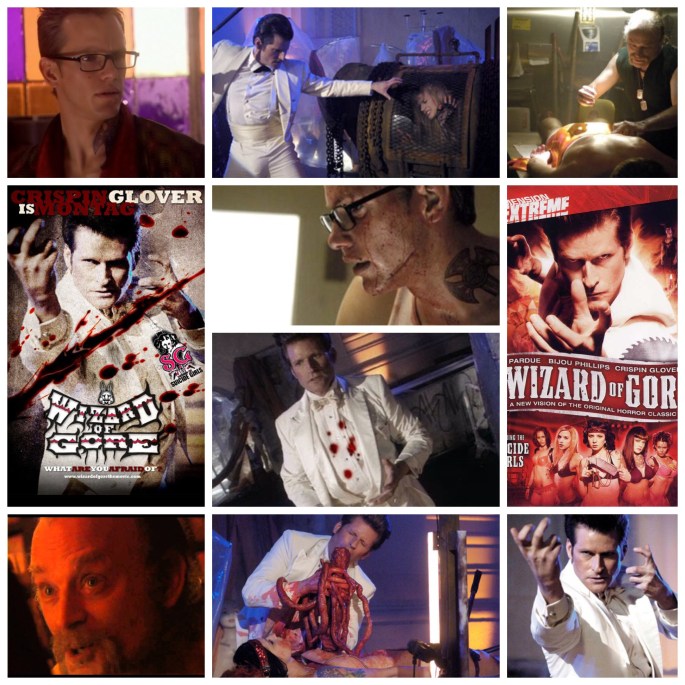
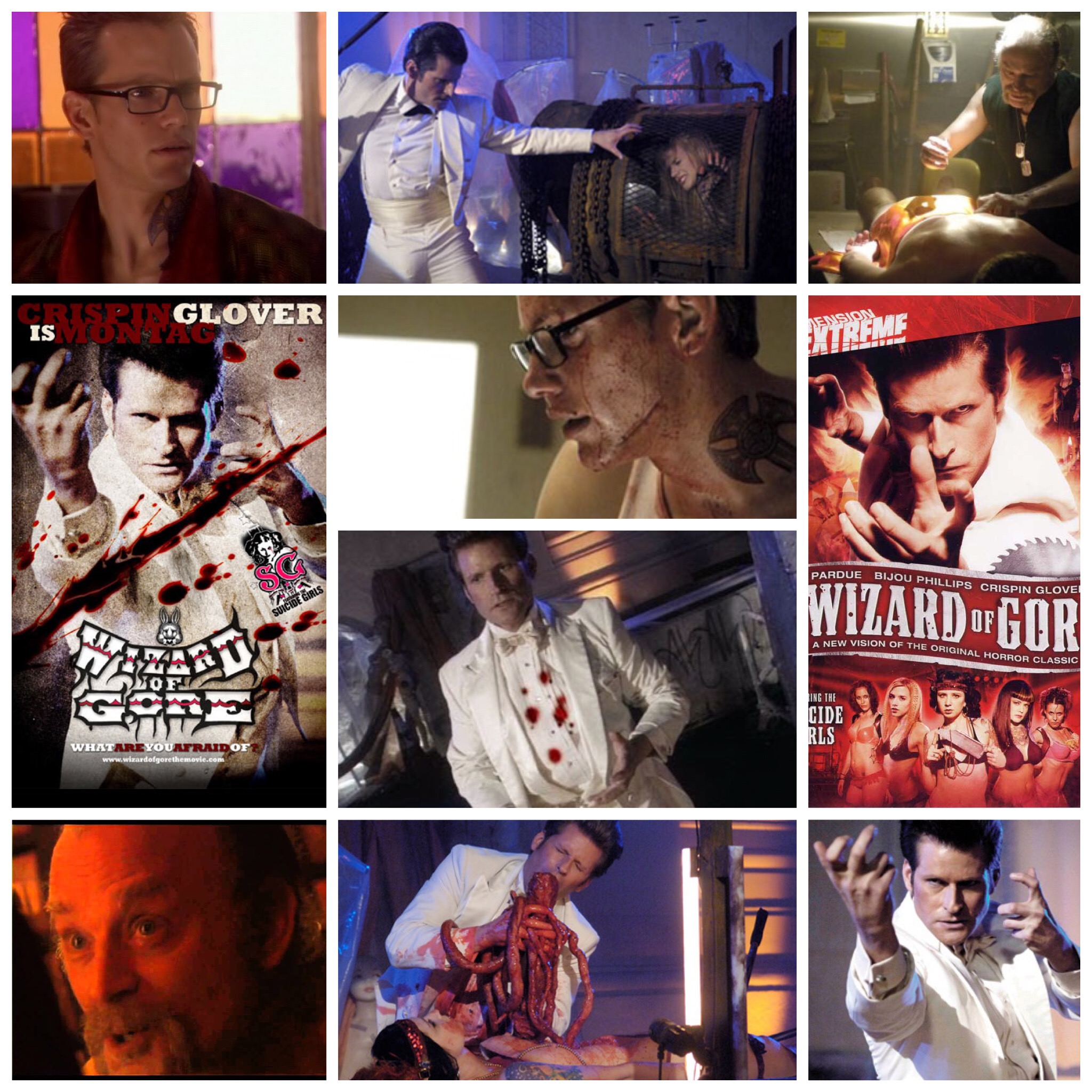
The Wizard Of Gore

The Wizard Of Gore is an inspired little oddball of a flick, based on an obscure oldie that I’ve never seen, but the absurdity of Crispin Glover as a psychotically evil pseudo Vegas showman is worth the price of admission alone. I’ve not a clue what the original film’s plot is, but here we find Kip Pardue as some private detective, trying to make heads or tails out of Montag The Magnificent (Glover), who uses a combination of dark magic and dodgy airborne pharmaceuticals to trick his audiences into thinking he’s dismembered assistants body’s onstage, for real. Tricks of the trade, right? Sure, only problem is there’s girls turning up dead for real, and the trail leads right back to this spindly, well dressed agent of evil in magician’s clothing. I thought it was pretty cool, especially the slick production design and actual effort put into a plot with more tricks up it’s sleeve than Criss Angel. Not too mention some jarring gore, which of course the title more than suggests. Brad Dourif, who you may have guessed by now is a favourite of mine, appears as an Asian man named Dr. Chong, with creepy ties to whatever magic is being used in the murders. That’s right. Brad Dourif. As an oriental man. I laughed hard, especially since nothing about his appearance or costume is remotely of the orient. Throw in appearances from various cutie pie pinup girls from the Suicide Girls troupe, and you’ve got something memorable indeed. Check er’ out.
-Nate Hill
B Movie Glory: Mark Young’s Southern Gothic
A disgraced nightclub bouncer faces off against a psychotic zealot vampire preacher. Quite a crazed concept ripe for hyperactive exploitation thrills, and yet Southern Gothic plays it pretty low key and laconic, for the most part anyway. Moody where other films would have been brash, it’s a nice atmosphere piece with gore galore and a gonzo central performance from William Forsythe as Enoch Pitt, a man of the lord who has strayed from the path. Bitten by a vampire, the already sleazy Pitt turns into a full on monster, tearing up the small Deep South town of Redemption and building an army of the undead. Hazel Fortune (Yul Vasquez) is traumatized and broken by the death of his young daughter, until he meets young Hope (Emily Catherine Young), who crosses Pitt’s vision and finds herself in mortal danger. This puts the two men on a vengeful collision course of blood, retribution and carnage. Ok, so I’ve made it sound a little more epic than it actually is, but that’s more or less how it goes down. Energetic it ain’t, more of a slow burn than anything else. Firmly rooted in B-movie territory in terms of both budget and script, but entertaining and distinctly flavoured nonetheless. Vasquez is moody and four, but dangerous when he needs to be. Forsythe, as usual, is the acting equivalent to a junkyard bulldog let off the chain, chewing scenery faster than he can munch carotid arteries, and loving every campy, frightening minute of it. Not the cream of the horror crop per sé, but reasonable enough Saturday night horror background noise fodder.
-Nate Hill
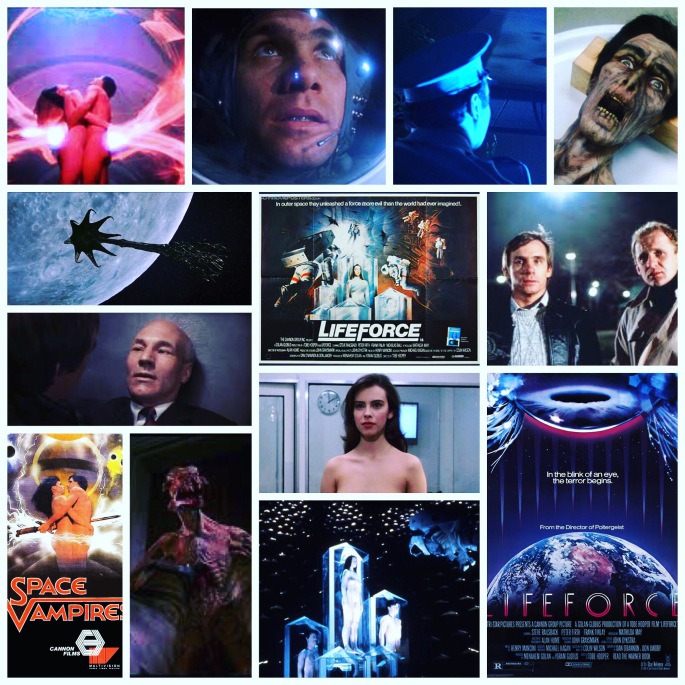
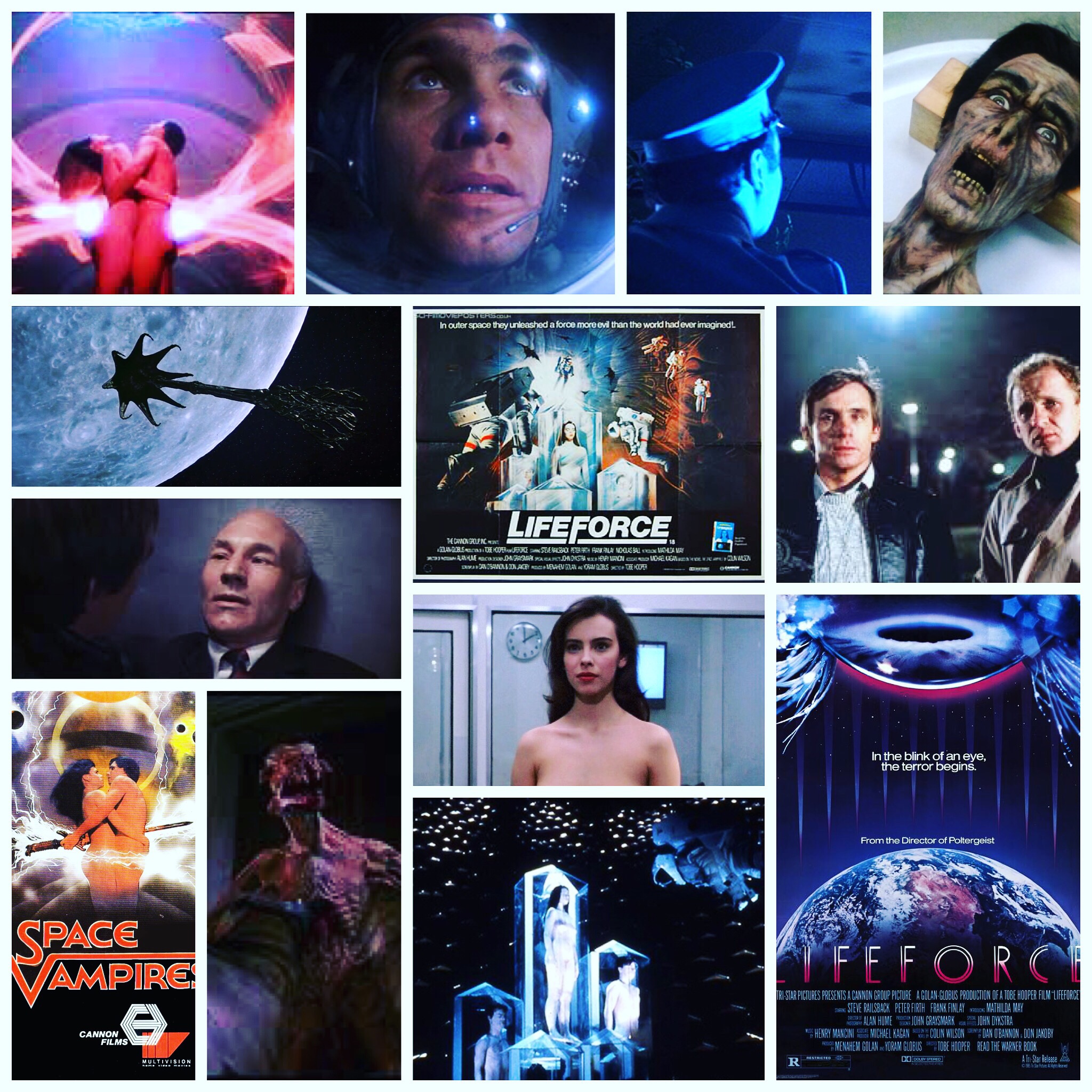
Tobe Hooper’s Lifeforce
Tobe Hooper’s Lifeforce is the most dementedly unique horror SciFi mashup you’ll get. Based on a novel that’s literally titled ‘The Space Vampires’, the film is exactly that and more. It’s so out of it’s mind that at a certain point you have to surrender and bask in it, and grab the sides of the cart as it veers between all kinds of increasingly bonkers plot points. When a strange, rice kernel shaped object shows up in earth’s atmosphere, a team of exploratory astronauts led by intrepid Steve Railsback goes on up to investigate. What they find up there eclipses any weirdness aboard the Nostromo, Millennium Falcon or Event Horizon. Intergalactic vampires lie in creepy cryo suspension, just waiting for unlucky hosts to come along. Soon they’re exposed to earth and it’s a gory mad dash all over London to stope them from turning every earthling into zombies. Yes, that’s actually the plot, and despite how it sounds on paper, they really make it work. That’s mostly thanks to the screen shattering, ridiculously good special effects, especially in the opening aboard the alien’s strange, baroque vessel which is one of the most otherworldly and atmospheric sequences in any horror film ever. Once the action shifts back to earth it’s a pure shit show and near comedy of errors, with Railsback’s frenzied cosmonaut teaming up with a peppy British intelligence agent (Peter Firth), and even Patrick Stewart comes out to play as some vague scientific bro. There’s boundless imagination at work here, carried by sheer movie magic to contribute lasting, impressive images and create an entirely unique horror experience. Plus, how could a flick about space vampires not be amazing (we will not speak of Dracula 3000). A sci-Fi horror classic, an under-sung jewel of visual flights of fancy and practical effects laden nightmares.
-Nate Hill
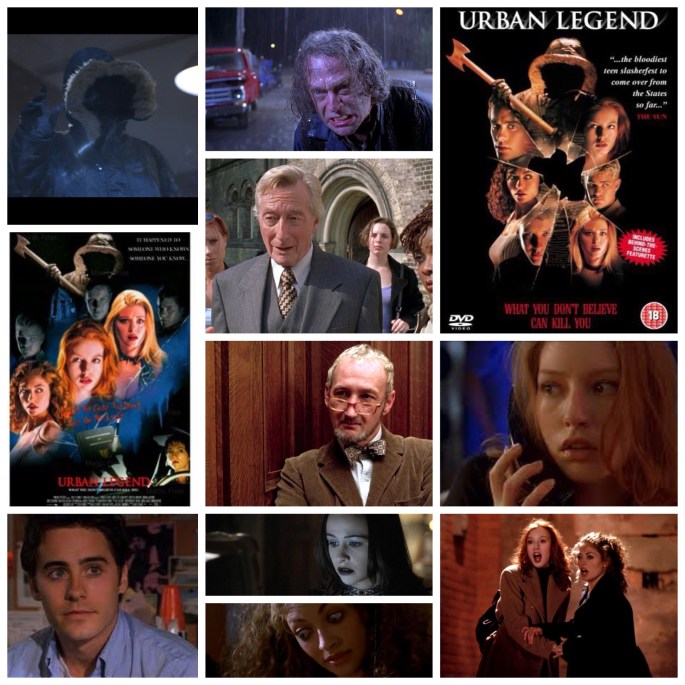
Urban Legend
Urban Legend is pretty much like Scream, but a lot less meta and a bit more atmosphere, unfolding as you’d expect it to, with a group of college kids getting killed in bizarre circumstances that all relate to half whispered local myths. One of their professors is Freddy Krueger himself, Robert Englund, and who better to lay down the tongue in cheek groundwork than such a familiar face and expressive, dynamic presence like him. Looking back on this it’s fairly shocking how terrific of a cast it has and how it’s been mostly forgotten in the annals of slasher archives. Jared Leto, Alicia Witt, Rebecca Gayheart, Joshua Jackson, Tara Reid, Natasha Gregson Warner and Danielle Harris headline as the varied campus rats, with Harris a standout as the obnoxious bitchy goth stereotype, far from her timid Jamie Lloyd in the Halloween films. There’s a prologue cameo from horror vet Brad Dourif as well as appearances from Loretta Devine, Julian Richings, Michael Rosenbaum and a priceless John Neville, getting all the best lines as the college’s salty Dean. The kills are all done in high 90’s style, the story takes a Scream-esque twisty turn in the third act and as far as atmosphere goes, it pretty much outdoes the ol’ ghostface franchise. Spooky good time.
-Nate Hill
Stephen King’s Gerald’s Game

Stephen King’s Gerald’s Game is exactly what horror/thrillers should aspire to be: devilishly well written, engagingly acted, crisply directed and scary enough to wake the dead. Presented on the Netflix platform with their trademark lack of marketing (they tend to hurl out content willy nilly, sans fanfare), it’s just shown up and is already one of the best horror films I’ve seen all year. Carla Gugino and Bruce Greenwood give encore performances and the best work of their careers as a couple who make their way to a cottage in the country, trying to spice up the ol’ marriage. When Brucie has a nice heart attack mid-foreplay (he popped a few of those magic blue pills), Carla is stuck handcuffed to the bed in the middle of nowhere, with no one for company except a mangy stray dog that begins to take chunks out of dead Bruce. So begins a fiercely internal, visceral psychological survival story, a brutal chamber piece that delves into her twisted childhood, troubled marriage and churns forth a tale to curl the pain on the cabin walls. There’s hallucinations, inner monologues, squirm-inducing gore, elliptical mind games and a pseudo-twist ending that had me shuddering into the couch. Gugino has never been more intense, believable or varied in her work, turning this character into something potent and tangible, bringing her past trauma and fight for survival to screaming life. Greenwood is smart, witty and so darkly funny it’s tough now to picture him as the stoic, emotionally shut off archetype he usually has embodied before this film. Additional work from ET’s now eerily grown up Henry Thomas and Twin Peak’s ginormous Carel Stryucken (terrifying here) adds class and distinction. The show belongs to Carla and Bruce, and what a show they put on, feasting on the rich, textured dialogue and playing sandbox in the story that uses depth, character and genuine menace to lasso us right in. In a year that’s seen at least one King novel unforgivably bastardized, and one other given the solid yet flawed and incomplete treatment, it’s reassuring to find one that comes up pretty much perfect in every way. Kudos to Netflix, the two leads and everyone else involved.
-Nate Hill