“I hate to admit this but I don’t understand this situation at all.” An appreciation of David Lynch’s impenetrable entertainment, Twin Peaks and all- by Josh Hains 

These days, when I watch anything David Lynch has filmed, be it Blue Velvet, Wild At Heart, Inland Empire, or even his flawed yet hypnotic and deliciously crazy adaptation of Frank Herbert’s Dune, I check my brain in at the door. I let my mind become invaded by the alluring sights and sounds that populate his stunning body of work, letting them burn themselves into the deepest parts of my soul. I don’t over think what I’m watching, and I don’t allow myself to obsess over such cerebral, intentionally puzzling works. Above all else, the images tend to stay with me like dirt under my fingernails, or a ghost lurking in an old house.

The point of Lynch’s life’s work is breaking convention, trying truly new things with the form, narratively or visually, that most people in the movie or television businesses will never think of in their lifetime. Ever. Taking cinematic standards we’ve become comfortable with and breaking them like a sledgehammer against concrete, dismantling what’s considered safe, easy, and profitable, his works always risky, provocative, difficult, and confounding. I find just about everything he’s made confounding to varying degrees, and just like any great puzzle, the necessary pieces to solving any given mystery in any of his works are always right there in plain sight, staring me right in the face, taunting me. I’m reminded of a quote from Christopher Nolan’s brilliant puzzler The Prestige: “Now you’re looking for the secret… but you won’t find it, because of course you’re not really looking. You don’t really want to know. You want to be fooled.” Except that I don’t want to be fooled, at least not entirely.

I have a tendency to want to know what pieces go where and watch them all slowly fit together, though an equal part of me doesn’t want to completely kill the mystery, doesn’t mind the ambiguity and relishes in being challenged on such deeply psychological levels. The first time I saw his Mulholland Drive, I disliked it because I couldn’t make heads or tails of what I’d just witnessed. Nothing I’d seen made any amount of sense, or could easily be summed up in a quick sentence. It was impenetrable, and I hated it. A couple years ago I learned that the impenetrable, confusing, ambiguous nature of everything that is Lynch, is the point. Whether or not I can solve the puzzle of Mulholland Drive, Lost Highway, or Twin Peaks, isn’t the point of those and most of David Lynch’s filmography. That’s never been the point. You’ll only drive yourself mad trying to solve something you aren’t meant to solve, or find yourself underwhelmed and ungrateful if you do somehow manage to decipher the code that solves the mystery and don’t like the results. The point is the journey, and just like any grand adventure, everything he’s made has a beginning, a middle, and an end. It’s not the destination that matters, but how we get there, and though the journeys Lynch takes us on between those points on the map is different from what we’re used to, in the end it’s actually a really good thing.

All great art should be more than just disturbing to the comfortable and comfortable to the disturbed. It should be challenging. It should make us think deeper than we’ve ever thought before and inite us to continue to think deeper. It should make us look at the art and ask why, make us take a deeper look inside ourselves and ponder why we didn’t think if it ourselves, and what we can do to be more creative and open minded. It should open a wide assortment of doors to all kinds of endless creative potentials and ideas, and challenge us to tackle subjects we’ve been too afraid and comfortable to explore. Twin Peaks: The Return, is this year’s prime example of taking the standards we’ve become so accustomed to, and breaking them for 18 episodes straight. 

I haven’t been able to wrap my mind around most of what happened this season on Twin Peaks, and though repeated viewings of Twin Peaks when the Blu-Ray arrives some months from now will surely unlock a few secrets and tie up some loose ends I didn’t immediately comprehend, I doubt I will ever be able to fully understand everything that happened over the course of The Return. I also don’t fully understand what the hell happens in Mulholland Drive, Lost Highway, or Inland Empire, but that’s quite alright with me. I’m not supposed to understand the plots, I’m supposed to be swept up in everything else that’s going on. The acting, the symbolism, the trippy nightmarish images, the sudden graphic violence, the sensuous love stories, thunderous pulsating scores, the sublime aura of it all. Like I said before, it’s not the destintion that matters, but how you got there, and how I got there was a magnificent achievement. 

My biggest takeaways from Twin Peaks: The Return, as of right now because I’m still processing what I watched, are that David Lynch is perhaps the foremost essential artist of our times, and a truly brilliant one at that, willing to break rules and conventions for the sake of experimentation and trying to provide more sophisticated entertainment to us all. My other takeaway is that though the battle between good and evil in fiction or our reality never truly ends, as long as the world is occupied by Dale Cooper’s, the light stands a chance of winning.
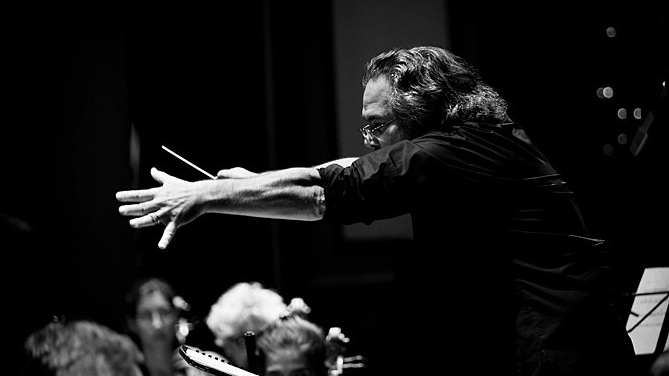
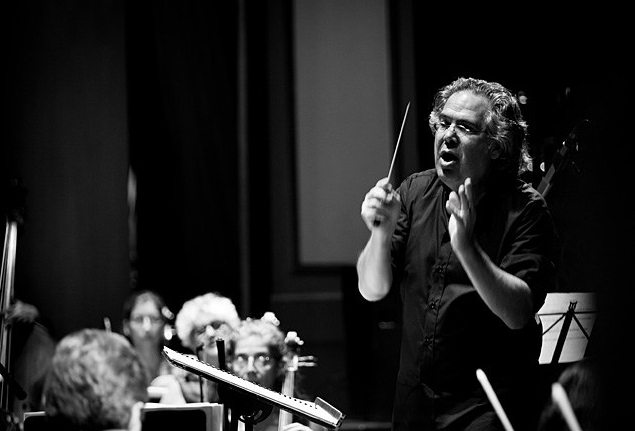
One Composer against the Armada: An Interview with Craig Safan by Kent Hill

The film scores that permeated my youth seemed for the longest time to be written mostly by two guys – John Williams and James Horner. Though, while this pair were both loud and prolific – they weren’t the only composers in town.

I come from a time of cinema obsession where the score and the images were indeed one. I cannot imagine the films of that period without their score nor can I hear the scores and not see the images.

Other dominant composers of the period were Bill Conti, Basil Poledouris, Trevor Jones and a man named Craig Safan. To talk about Craig is to talk about The Last Starfighter, for The Last Starfighter was one of the most important films of my formative years, and its score continues to echo through the speakers of my car stereo as I drive off to face the grind daily (or to battle evil in another dimension).

As much as I could have gushed about all the nuances in the Starfighter score for the duration of our chat, it is proper to acknowledge to he (Craig) has written many a great score for both film and television alike. With scores for Remo Williams, The Legend of Billie Jean, Stand and Deliver as well as the small screen’s Amazing Stories and his long run on Cheers. Craig has even scored a video game, and it was cool to hear how the gig for Leisure Suit Larry came is way.

At the end of our chat I told Craig I constantly listen to his Starfighter score in the car. He asked if at anytime did the car convert to a spacecraft and fly me off to join the Star League? There have been days where I wish that had been the case. Though whenever that music is playing there always seems to be a chance that I may yet get my recruitment papers at last, take flight, and go get me a Gun-Star. But till then, have a listen to the extraordinary gentlemen whose music continues to live on in the glorious films of our last golden age.

Ladies and Gentlemen . . . I give you . . . Craig Safan.

15262307405_85a5098e5f_o

ABC’s FlashForward: here in a flash of brilliance and gone after one season 


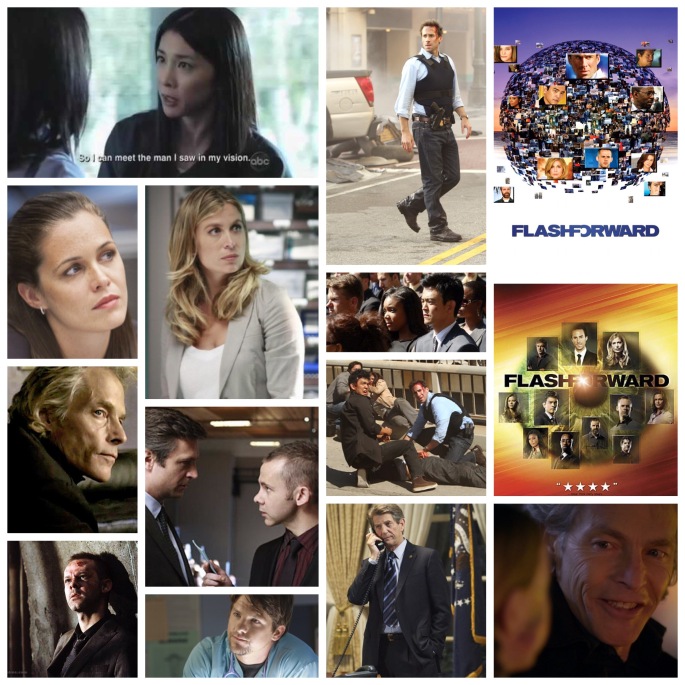
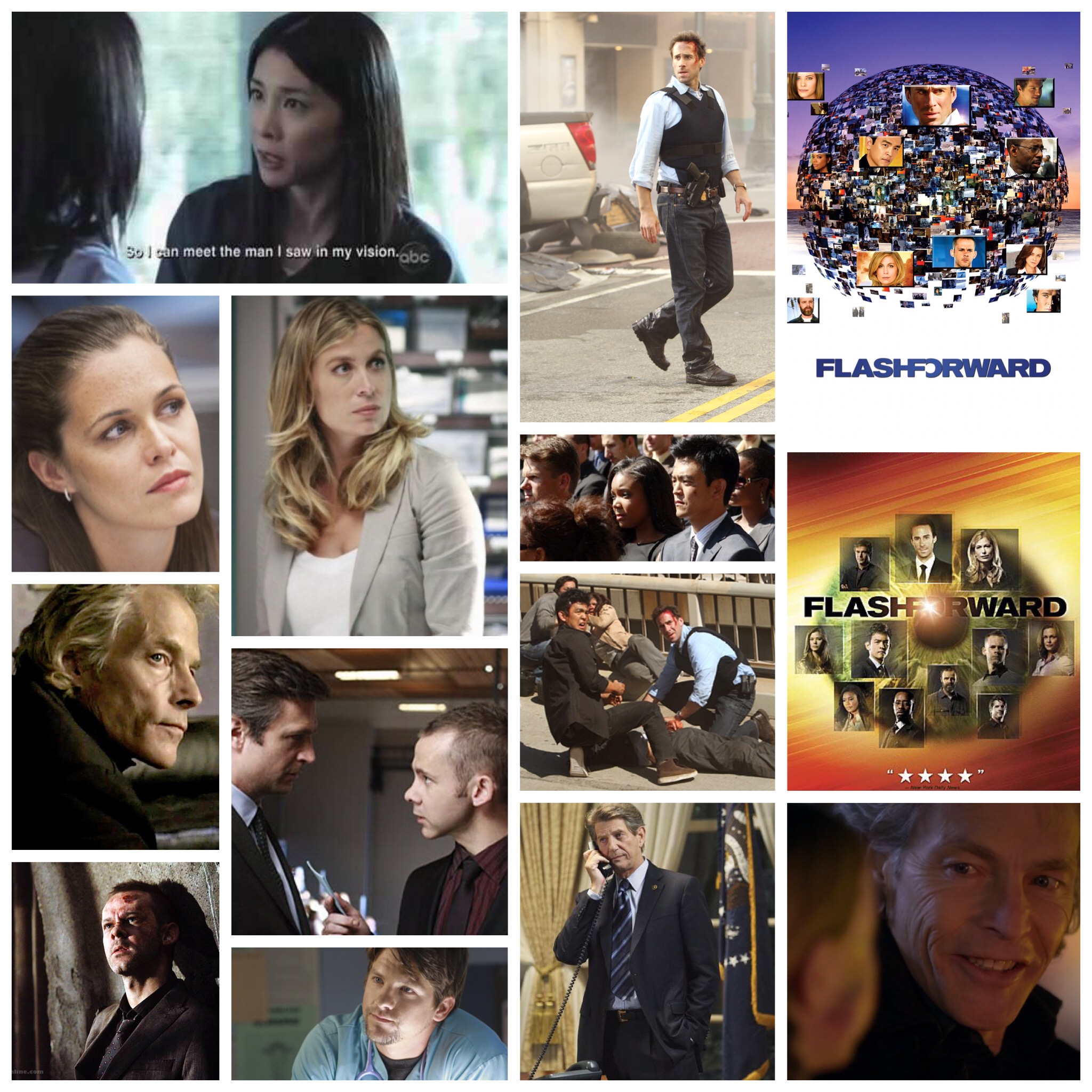
ABC’s Flashforwad was a gripping psychological/supernatural epic with potential to run many seasons and provide us with solid entertainment for a long time a lá Lost (which it bears some similarities with), but the network mysteriously axed it after a single season, leaving a vacuum in the air as far as it’s story, and many viewers left stranded, wanting more. The show was built around a wicked concept: one day, every human being on planet earth simultaneously blacks out for a few minutes, and in that time has a precognitive vision of the future some months away from their present time, then promptly wakes up. This of course causes sheer chaos all over the globe, initially with millions of car crashes, disasters and planes falling out of the sky, and eventually the uncertainty, paranoia and confusion as to just what these flash-forwards are all about, and if it will happen again. An FBI task force spearheaded by the likes of Joseph Fiennes and Courtney B. Vance is commissioned to investigate the matter, and their mission takes them to some truly weird places, both geographically and thematically. There’s strange forces at work with this one, secrets that are kept close to the chest and gradually doled out over the expansive twenty three episode arc, a great length of run that should really be the standard for television. It’s similar to Lost in the sense that every week the mystery deepened as opposed to circling a resolution, clues and questions piled on top of the previous ones without a hint of finality or exposition to light the way, an audience tested, surefire way to keep people from flipping the channels mid episode and a great of garnering new viewers via word of mouth. The trick is to also add rhyme and reason to your bag of mysteries, provide a modicum of answers to keep the frustration just at bay, a formula which this one actually succeeds better at than Lost ever did. The scope and budget here are both enormous, giving new meaning to both the terms ‘globetrotting’ and ‘ensemble piece’, a truly vast attempt at long form storytelling. The cast is eclectic, other leads including John Cho as another hard-nosed Fed, Zachary Knighton as a doctor whose life is perhaps affected most by the incident, and brilliant turns from Jack Davenport, Sonya Walger, Peyton List, Dominic Monaghan, Brian F. O’Byrne and the late Michael Massee as nefarious, shadowy ultra-villain Dyson Frost, who serves as a sort of mcguffin during the first act of the show. Guest arcs included James Remar, Thomas Kretschmann, Rachel Roberts, Gabrielle Union, Shohreh Ahgdashloo, Annabeth Gish, Callum Keith Rennie, James Frain, Peter Coyote as the US President and so many more. The show looks amazing too, a brightly lit, well oiled mystery machine with all sorts of storytelling wizardry including nifty slow motion musical montages, trippy time jumps, non linear what-have-you and all manner of neat stuff. Gone way, way before it’s time, this one is well worth a watch and shouldn’t have been written off so soon. And remember: D. Gibbons is a bad man. 

-Nate Hill

Michael Mann’s Luck: A short lived masterpiece 


Michael Mann’s Luck was a painfully short lived HBO original series with reach-for-the-stars potential, a mind blowing cast and a terse, eccentric script from David Milch, all fuelling a brilliant ensemble storyline set in a pristine Los Angeles horse racing track. I’ll get the elephant out of the room right away: the series was cancelled due to a few of the horses dying on set, for whatever reasons. Had it been allowed to continue though, I imagine it would have gone on to become one of the network’s, and Mann’s, most hallowed and heralded works. Dustin Hoffman is the centrepiece of the cast as Chester ‘Ace’ Bernstein, a sharp witted Jewish mobster who’s recent stretch in the joint has somewhat dulled his edge. Nevertheless, he slyly takes a stab at playing his hand with horse ownership, joined by his charismatic driver Gus (Dennis Farina, reliably wonderful). There’s all kinds of other hoopla going on, and it’s cool to see the story focus on both the upper crust elite doing their shady deals as well as everyday joes tossing their money into these worshipped games. Kevin Dunn is terrific as a disabled firebrand of a gambler, joined by his two scrappy pals (Ritchie Koster and Jason Gedrick) as they try out their own brand of luck. Jill Hennessy is a determined horse trainer who clashes with a belligerent owner (Yul Vasquez), and there’s two ominous crime kingpins played by Michael Gambon and Ted Levine who hover in the shadows as well. Further still is a heartbreaking turn from Richard ‘Bing Bong’ Kind as a stressed out jockey manager, Nick Nolte as a crusty, broken-down horse trainer, Joan Allen, Alan Rosenberg, Spencer Garrett, Don Harvey, Ian Hart, W. Earl Brown, Shaun Toub, Bruce Davison, Frank Collison, Mercedes Rhuel, Tony Curran and a cameo from Jurgen Pröchnow as the stern owner of the whole track. How’s that for a cast. I must say that the dense, peculiar dialogue from Milch takes some time getting used to, but once you tune in to it’s jive, it’s pure poetry being rattled off by every character, and a gorgeously structured, meticulously layered script at that. The actors are all on a plane of pure excellence as well, many of them turning in career best efforts and bringing their roles vividly to life. The cinematography from various artists is pure spun gold too, every sparkling irrigation sprinkler, glistening horse coat, careful closeup and crop of dirt kicked up by hooves captured succinctly and smoothly. This seriously is as near to a perfect season of television as one can get, and it kills me that it got cut down before it had a chance to really get going, because just think of the places it could have gone. At least we still have this first glorious season to admire, and I recommend every minute of it. 

-Nate Hill

Netflix’s The OA: A Review by Nate Hill 

I always try to find unique and original projects when choosing films and shows to watch, for we live in a time where many titles you see out there are sequels, nostalgia reboots or spinoffs. These aren’t bad things per se, but it’s also important to break new ground and produce organic material, something which Netflix has a fairly glowing track record for. Tapping the creative well that is the mind of young female director/actress/producer Brit Marling, the platform has given her the chance to tell one of the most striking, beautiful and altogether astonishing pieces of work I’ve ever seen from the long form storytelling format. Earlier this year, Stranger Things knocked me flat, and recently Westworld has captivated my attention and imagination. But The OA has done something different for me; stirred my soul in a way that few creative pieces can, with a story so unpredictable that it starts to feel like the forces of nature at work, forking off into tributary sections of narrative that you would never, ever have been able to to surmise ahead of the reveals. 

  Now, something I’ll say right off the bat: This won’t be for everyone, and I predict many confused, bitter reviews. Such is the case with work that requires effort and clarity of attention from the viewer, as well as the key ingredient: objective thinking. This is both a scientific and spiritual story, bereft of any religious implicatioms, incredibly vague, esoteric and at times left open to interpretation, or clarification we will get from a second season, fingers crossed. 

  It starts off simply enough, with the return of a girl named Prairie (Marling) to the home she disappeared from seven ears prior. Mysteriously cured of childhood blindness and very secretive of the events which have befallen her, her loving parents (Scott Wilson and Alice Krige in knockout performances) are just happy to see her again. It’s here the story turns off it’s headlights and hurtles blind into the night, going to places you’d never have thought it would, let alone be explored in a mainstream network series. Marling and Co creator Zal Batmanglij (yes that’s his real name) have outdone themselves in the originality department, presenting ideas and questions so far from the norm of what we’re used to that their story really and truly feels unique from anything else we’ve ever seen. Marling is incandescent in the role, which requires her to go to some fairly tricky places in terms of acting, handling it with the shimmering grace of an angel. It’s difficult for me to say anymore because I want you to open up this gift of a story on your own, without anything to go on, but I must mention her co star Jason Isaacs, who plays a scientific man involved in her disappearance. He’s obsessed in a feverish, sick way, and in any other actor’s hands the character may have come across as too villainous or intense. Isaacs is an unheralded genius of the craft though, and despite the callous nature of the role, he seems more human, more grounded than most. 

  I really can’t tell you much more at this point, and what I’ve said so far is much less than I usually do in reviews, as far as plot goes. This is one to binge watch, one to let wash over you like a blanket of stars, and one to think long and deep about as soon as the credits of the last episode make themselves known. For the thinkers, the wonderers, the ones who ponder what’s out there and what may be in store for us way down the road of the cosmos, The OA is a blast of nutrition for the soul.

MY SO-CALLED LIFE – A REVIEW BY J.D. LAFRANCE

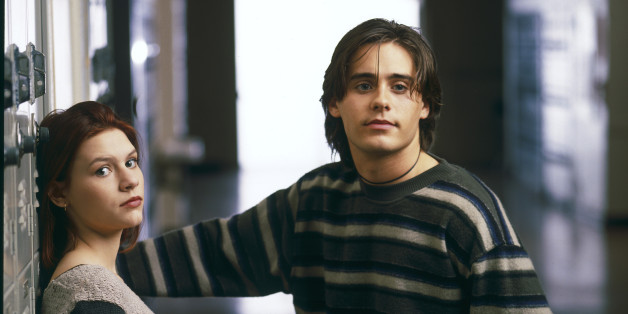
CLAIRE DANES, JASON LETO

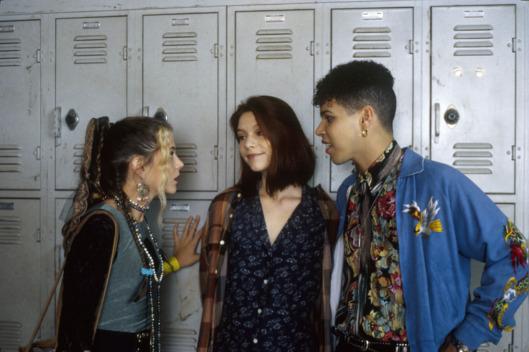
When My So-Called Life debuted on television in 1994, it was seen as a smart alternative to mindless teen pap like Beverly Hills 90210. I don’t know about you, but I didn’t know anyone like the “teens” (just how old were the actors anyway?) on that show. In comparison, the kids on My So-Called Life were awkward, vulnerable and, most importantly, real. All of the characters on this show acted like actual people. Sure, the writing, at times, was a little too touchy-feely and bleeding heart liberal for its own good – the influence of Thirtysomething’s Mitchell Herskovitz and Ed Zwick – but its observations about teenage life (and life in general) and the many melodramas that make it so difficult were right on the money.

Angela Chase (Claire Danes) is a nice girl still figuring out who she is as she pines after the dreamy Jordan Catalano (Jared Leto) who, initially, barely knows that she exists. Angela is friends with party girl Rayanne Graff (A.J. Langer), the openly gay Rickie Vasquez (Wilson Cruz), Sharon Cherski (Devon Odessa), who used to be Angela’s best friend but has since been replaced by Rayanne, and the awkward Brian Krakow (Devon Gummersall) who secretly has a crush on Angela. In the first episode, Angela dyes her hair crimson as an act of rebellion against her mother (Bess Armstrong) who tries so hard to understand her daughter but doesn’t have a clue what she’s going through. Her father (Tom Irwin) is a nice enough guy but also equally clueless about his daughter’s day-to-day trials and tribulations. Angela’s parents are both liberal-minded people who were probably Hippies in the 1960s, grew up and bought into the system while still retaining their liberal sensibilities.

One of the great things about the show is how the writers flesh out the characters and the relationships between them. The conflicts that Angela has with her mother are spot-on and have a real ring of honesty to them. Rayanne’s self-destructive, partying ways are addressed in one episode. In another, Rickie comes out to his relatives and is kicked out of the house by his abusive uncle. The seemingly perfect Jordan turns out to be flawed as we find out in one episode that he can’t read or write.

There are so many stand-out episodes (let’s face it, they are all good), like the one with Angela’s substitute teacher (played to perfection by Roger Rees) who inspires her to think outside the box. However, she becomes blind to his flaws by his dynamic charisma. Arguably, the best episode is the Christmas one where singer/songwriter Juliana Hatfield plays a homeless person that Angela tries to help. It’s a truly moving episode as materialism and the commercial aspects of Christmas are rejected in favor of family, friendship, and selfless acts of kindness.

socalled2

Looking back at it now, My So-Called Life is a wonderful snapshot of the mid-1990s with the hairstyles and the clothes (you can even spot an REM poster in Angela’s bedroom) distinctive of that decade prominently on display. One can now look back at this decade through nostalgic glasses via this show. Despite its brief run, My So-Called Life not only helped launch the careers of Claire Danes and Jared Leto, but without it there would be no Freaks and Geeks or Joan of Arcadia or Gilmore Girls, which also presented smart and sensitive teens in a realistic way. Both of these shows also had brief runs which seem to suggest that American viewers favor escapist fare like The OC and not heartfelt shows like My So-Called Life.