Alien Vs Predator: Requiem

There’s a lot of trash been talked about the Alien Vs Predator films and.. yeah, I’m not going to argue, they’re not the greatest thing in the universe, let alone the canon. But at least the second film, given the appropriate subheading Requiem, had the decency to actually be R rated and go for broke with gore, violence and ooze as we are accustomed to from each respective franchise and, as dutiful fans, no doubt deserve. While the first film was a lore-heavy, multidimensional Antarctic set SciFi horror with a ton of exposition, this one ditches all of that for a lush Canadian Pacific Northwest setting and a very thinly plotted slasher aesthetic wherein the residents of a quiet Vancouver suburb encounter both species when a predator research spacecraft carrying a bunch of alien face-huggers crash lands nearby. I won’t go too much into detail regarding the characters because they are just beyond cliched. Hot dumb blonde dating the asshole jock, underdog pizza delivery boy hopelessly in love with her, cue violent altercations blah blah who honestly cares, the writers literally put less than no effort into that arena. Tough guy town sheriff (John Ortiz) rallying the troops to fight these beasties and a mysterious army colonel (Robert Joy, adding the film’s only recognizable horror pedigree as far as cast goes) who has some egregious agenda connected to the Yutani corporation. Much of the film is shot in dim or dark settings like the first, so the action isn’t always discernible or legible, but there are a whole parade of Xenomorphs just crawling all over the place which is fun. One way this one succeeds is in its gruesome viciousness; the gore, kills, splatter and deaths here are an absolutely spectacular array of surprisingly nasty (we see kids and a pregnant mother in a hospital butchered by the marauding Aliens) set pieces and carnage, and when it comes time for the two species to have their WWE Smackdown the series of fights between them are brutal and not disappointing. The film has zero mythology and strips down all of that world building for a simple tale of one Canadian town being decimated by these two warring species as they beat each other senseless, and that’s pretty much it. I didn’t hate this film, and I didn’t love it but I sure as hell admired its willingness to go full on hard R like these franchises were always meant to be, unlike its pansy ass predecessor. And one more thing: this is the only film on record in either canon to feature an Alien/Predator crossbreed creature that seems to show up out of nowhere, and while that probably just means it was created in a lab by the Predator species who appear to be busy bees as far as experimentation goes here, I’d fondly like to think that at some point two of them fucked and had gnarly acid-lubed intergalactic alien sexy time, and I’ll leave you with whatever lovely mental image that may conjure up. Good bloody fun.

-Nate Hill
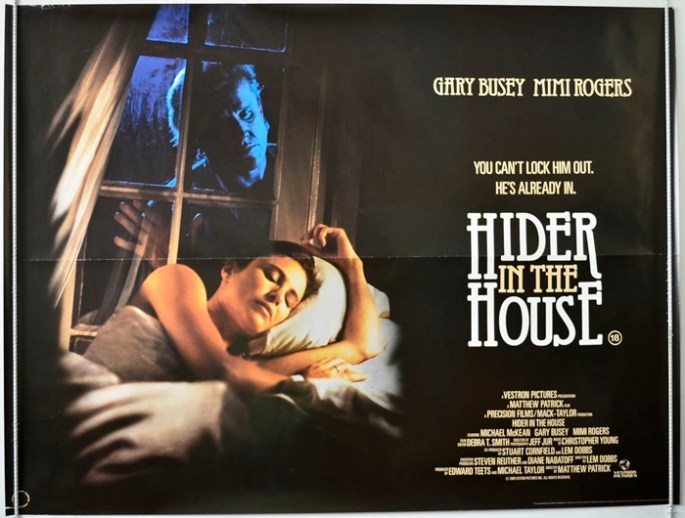
Hider In The House

Hider In The House is pretty much your average ‘unhinged loner stalking a suburban American family’ thriller, and the psycho in question is played by Gary Busey, which seems like your perfect setup for a maniacal ride. However, this film presents its antagonist as a surprisingly sympathetic individual who was abused viciously for year by his own parents until he finally had it and burned the house down around them. Fair enough. Upon being released from psychiatric care and a halfway house as an adult he decides to take up residence in the attic of an empty house, just to see what normal life feels like. Well the house doesn’t stay empty for long as a yuppie couple (Mimi Rogers and Michael McKean) prepare to move in. Busey just keeps on living up there and eventually insinuates him self into their lives under the guise of a ‘neighbour,’ eventually becoming downright disturbed, menacing and dangerous. The film is pretty relaxed as far as thrillers like this go, it takes a while to amp up to anything resembling tension and Busey, given the perfect runway to cut loose and turn in one of his patented loony performances, chooses instead to almost entirely rein it in except when the situation legit calls for a touch of hysteria. It’s decent enough and I’ll pretty much watch the guy in anything, he’s just got such a presence, but this is low budget, melodramatic silliness no matter how you slice it.

-Nate Hill

Brad Furman’s City Of Lies

Question for you: did the LAPD use propagandist maneuvers and media manipulation in the 90’s to fictitiously outline an ongoing east coast/west coast gang war that never even existed and then, using covert tactics and unstable deep cover operatives, deliberately and unlawfully orchestrate behind the scenes murders of influential rappers Christopher ‘Notorious BIG’ Wallace and Tupac Shakur? This film certainly seems to think so, and the fact that it was suspiciously buried in distribution hell for three plus years following its production and snuck unceremoniously into release just this year has me thinking so as well. City Of Lies, based on the documentarian book LAbyrinth, is a fascinating, paranoia laced, very well written procedural thriller starring Johnny Depp as real life LAPD detective Russell Poole who never stopped trying to find out who really shot Biggie and Forest Whitaker as a reporter interested in the case who spends some time with him trying to get to the truth. The film is centralized around 2015 when the final chapter of Russell’s almost career-long investigation arrives at a conclusion but it leaps all over the 90’s for stylish, eerie, memory laden flashbacks that evoke everything from Tony Scott to Bourne movies and the filmmaking aesthetics, score, soundtrack and performances are all exemplary. Depp has had the misfortune of being dealt a few shitty hands lately which I won’t go into too much, but a mystifying scandal was whipped around this film itself to scapegoat him when it appears the real reason this film was buried was… well, just look at the subject matter. He gives a pained, haunted, understated, against type and altogether gripping performance here that hopefully is the start of a surge of roles that sees his phoenix ascent upwards from the quagmire of bullshit he’s been put through. Whitaker is fantastic as well and quite soulful in the third act and director Brad Furman (The Lincoln Lawyer) assembles an unbelievable supporting cast just packed with character actor talent including Michael Paré, Toby Huss, Xander Berkeley, Rockmund Dunbar, Laurence Mason, Louis Herthum, Shea Wigham, Dayton Callie, Biggie’s real life mother Voletta Wallace playing herself, Obba Babatundé, Kevin Chapman, Glenn Plummer and the great Peter Greene as a particularly acid tongued LAPD commander. The film has a way of swerving just south of every question asked and a knack for making you feel like this story is open ended and unsolved. Unsolved is different than unproved though, and if everything that Depp’s Russell Poole cataloged and uncovered is for real then it’s no wonder this film never saw a major release and was held up for so long. Whatever really happened back then, this is one finely crafted thriller with a galaxy of terrific performances, a taut, engaging narrative and an incentive to shed light on those who abuse power, should know better, and need someone to call them out on it. Who better than a good cop like Poole, and who better to bring his story to life than an actor like Depp, who can pretty much do anything but tries something we’re not used to seeing from him everyday: play a regular guy just trying to do the right thing in the face of absolute corruption.

-Nate Hill

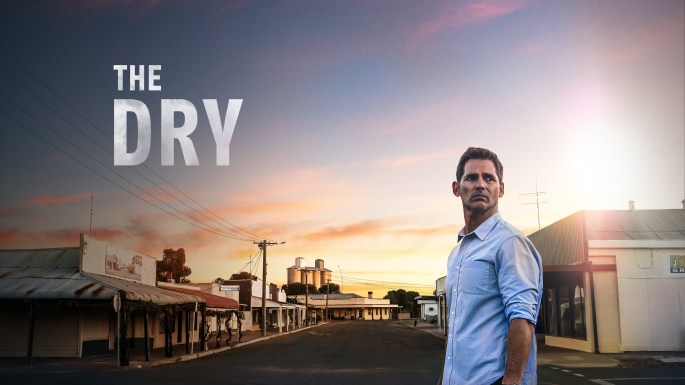
John Connolly’s The Dry

Australia is the perfect place to set a good mystery, there’s just this inherently unexplored magnitude of desolation, otherworldly geological splendour and ghostly vastness to the landscape, an advantage that director John Connolly seizes with The Dry, an absolutely sensational noir singed thriller starring Eric Bana in a galvanizing comeback of sorts, or at least in my eyes I feel like I haven’t seen the dude in a while and he comes roaring back into play here. Based on the novel by Jane Harper, Bana plays Melbourne detective Aaron Falk, who returns home to Kiewarra, the outback bush-town he grew up in after the family of a childhood friend is found brutally murdered, including a young child. He initially only plans to stay for the funeral but the moment he arrives, the entire suppressed collective memory of the townsfolk dredges back up to the surface and before you know it old grudges are stirred and painful memories of the unsolved murder of a teenage girl from their past come back to haunt them, especially Aaron who was unofficially implicated as a teen. As if all this isn’t stressful enough already, the region is also going through an apocalyptic drought that makes the threat of wildfire an ever present source of anxiety and causes threatening, Mordor-esque flares of fiery colour on the horizon. The film expertly meanders through a narrative that feels languid and as slow paced as the sun etching across the desert horizon and as brittle, succinct and unforgiving as the landscape. We weave back and forth between hazily recollected flashbacks to the teenage years of this group, jigsawed together with laser precision and tethered to the present day investigation that bit by bit, conversation by conversation, memory by memory, yields truth to both mysteries. The eventual resolutions to both threads are shocking, cathartic, operatic and intensely emotional experiences impeccably acted by the entire cast, beautifully and eerily scored by Peter Raeburn (check out his amazing musical work in this year’s Amazon Prime show Tell Me Your Secrets as well) and given the evocative atmospheric boost of the ever present Australian wilderness enveloping everything. Great film.

-Nate Hill

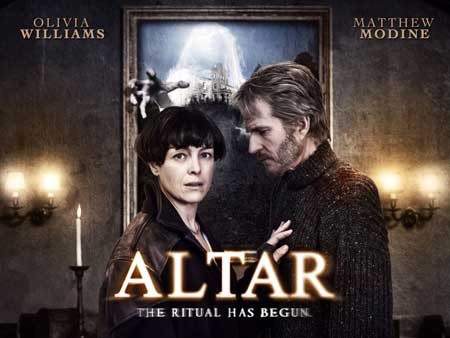
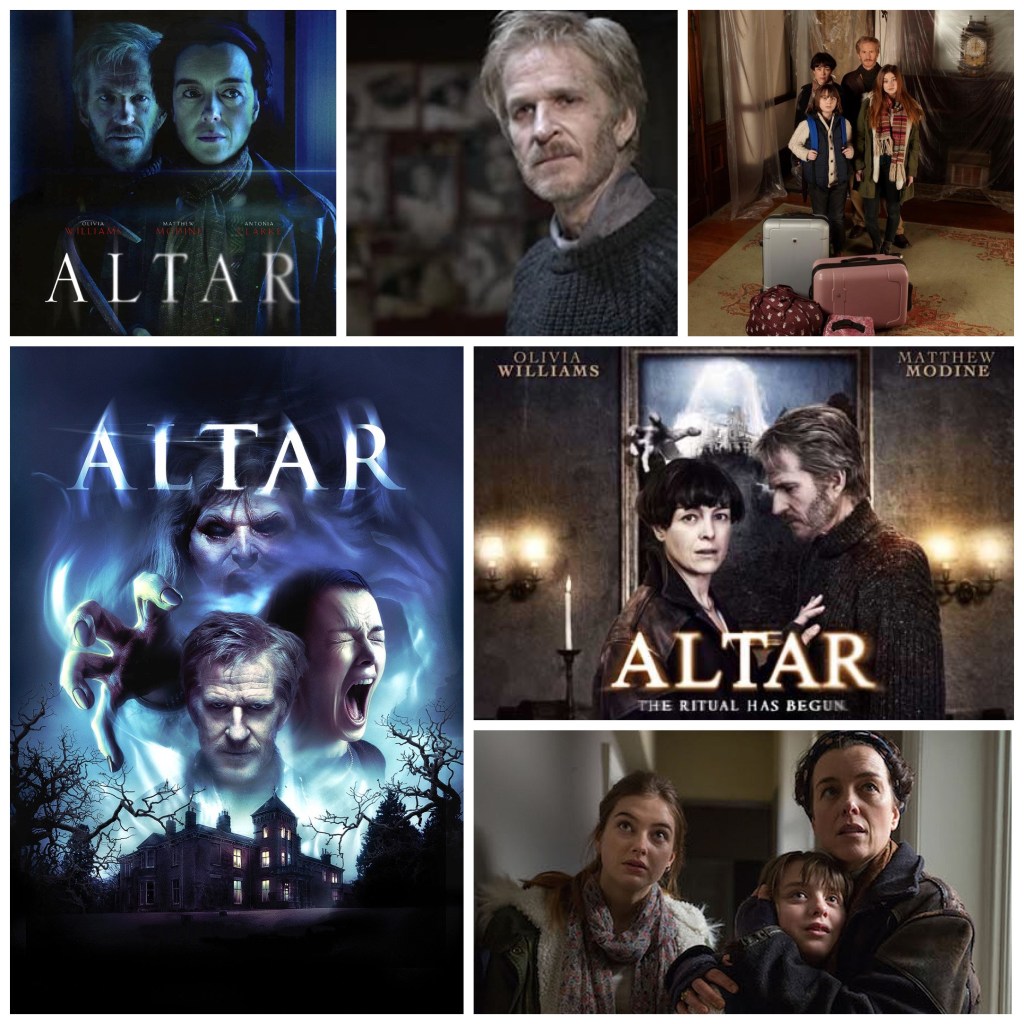
Nick Willing’s Altar

◦ There’s a few spooky touches in Altar and a handful of well orchestrated scenes that are fun but for the most part this is a murky, depressing slog through the well travelled “American family moves into a creaky old British manor that is clearly haunted’ sub-genre that I’m sure by now any seasoned horror fan can tick off the narrative beats of in their sleep. Matthew Modine and Olivia Williams are an artist couple who take up residence in a country house with a sordid past that comes back to claim their souls and their sanity, starting with Modine’s husband who gradually begins to act very very strange. Now, there’s two scenes that are genuinely great: their daughter (Antonia Clarke), who seems to be the only one in the family with any sense in her head, is spectacularly haunted by a female ghost that crawls into her bed one night, sits beside her and looks her *right* in the eyes. Most horror films would use gruesome prosthetics, moonlit contact lenses and fake blood for this but the film chooses to view this spirit through a sort of ‘fragmented mirror kaleidoscope prism’ veil that is like shifting broken glass come to life and I thought it was just so cool. There’s another terrific scene where Modine and Williams mesmerically unearth a sort of ritualistic mural depicting sacrifice beneath their home that is just wonderfully edited and set to a piece of the score that stuck with me and is a sequence of true power and dynamism. That’s all the film musters that grabbed me though, and I was frustrated by the fact that Williams’s as the wife and mother consistently and flagrantly made shitty decisions to the point where I was yelling at her through the screen. At least Modine had an excuse because he was already under the influences of dark spirits. Only the daughter acted with rationality, logic and seemed to want to get out of there and, ironically, no one listens to her. This is a good time waster and it does shine in those two instances I described unfortunately it doesn’t do too much of anything else we haven’t seen before.

-Nate Hill

Boys From County Hell

I’m not sure what I expected from Boys From County Hell, probably more than what I got, which was a meagre, serviceable but ultimately forgettable ‘Irish gothic’ monster flick that seems so wrapped in its own Bram Stoker inspired mythology that it forgot to have some good old splatter filled fun. The story sees a dysfunctional road workers crew somewhere in Ireland who accidentally unearth an ancient Irish vampire who has been slumbering for thousands of years, prompting wanton bloodshed. The crew is run by a father and son duo who are constantly at each other’s throats, which adds a well rounded character dynamic and in that sense the film is kinda fun but it fails to present to us a monster that is anything close to memorable or remarkable and worse, the same thing doesn’t even seem to show up much at all throughout the whole runtime. The narrative tries to build this lore around the vampire mythos and do something unexpected with the via some obscure Stoker offshoot story but it ends up just being sort of muddled, forgettable and seriously lacking a vampire that shows up for more than a few minutes at a time.

-Nate Hill

Jordan Graham’s Sator

I love when a horror film hits all the right notes in the aesthetics department of what resonates with me, so listen up if you are into: elemental, esoteric folk horror, lyrical, almost Malick level dialogue and character interaction, eerily hazy home video footage, misty, rugged wilderness cinematography, atmosphere so think you could cut it with an antler knife, demonic pagan deities that live unseen in the natural world and can be summoned by unwitting, weak minded human beings and more. Jordan Graham’s Sator is a stunning, immersive, spectacularly terrifying and absolutely visually gorgeous folk horror that cuts right to the heart of what genuinely freaks me out in the genre: atmosphere, the unknown, being alone, dark forces outside our narrow scope of belief and knowledge and how these forces corrupt, reshape and pervert the human condition to disturbing new heights. The film sees one man (Michael Daniel) alone far out in the remote California wilderness, living in a ramshackle cabin and setting out each day into the territory looking for… something. He has introspective flashbacks to a mother (Wendy Taylor) who went missing years before, a sister (Aurora Lowe) who was on the verge of mental illness, a brother (Gabriel Nicholson) who tried to keep the family together and an ailing grandmother (June Peterson) who spent the last few dementia ridden years of her life chronicling her unsettling internal relationship with a being she calls ‘Sator’, who reportedly talks in her head, dictates books filled with disquieting scripture and seems to have some stranglehold over this family as a group. When he’s not lost in dreamy memory recollection he wanders the perimeter of his property checking on motion sensor cameras he has set up all over the place and trust me you do *not* want to know what he finds they saw. This is a slow burn, arthouse, borderline surreal film through and through, and anyone without the patience for atmosphere, gradually cultivated tension and lyrical storytelling will be lost. There are payoffs and they are huge but first the film asks you to settle, to surrender and be swept away by the sights, sounds and dreamy world it offers before it reveals any secrets. It’s like if A24 did something akin to Blair Witch but with really earthen, nature based lore and a very atmosphere based approach. And as if the film weren’t scary enough, the concept of Sator and all the handwritten lore we see is authentic, very real stuff that actress June Peterson (who is the director’s real grandmother by the way) experienced in real life after a Ouija experience left her in psychiatric care going on about this ‘Sator’ thing for the rest of her life. If that doesn’t stand your hairs directly on end I don’t know what will, because when a film this scary can legitimately claim to be based on a true story in the *truest* sense of the concept, it’s enough to send anyone running for the hills and back again once they find whatever’s really out there. An absolute stunner of a horror film in every sense and one of those rare finds like It Follows, Hereditary, or The Blair Witch Project that successfully do what so many films in the genre promise to yet seldom deliver: scares the absolute fuck out of you. Streaming on Shudder now.

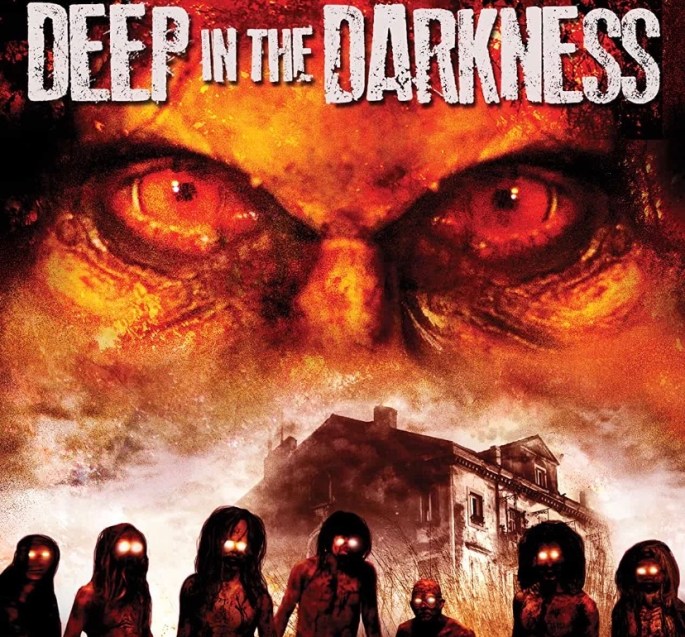
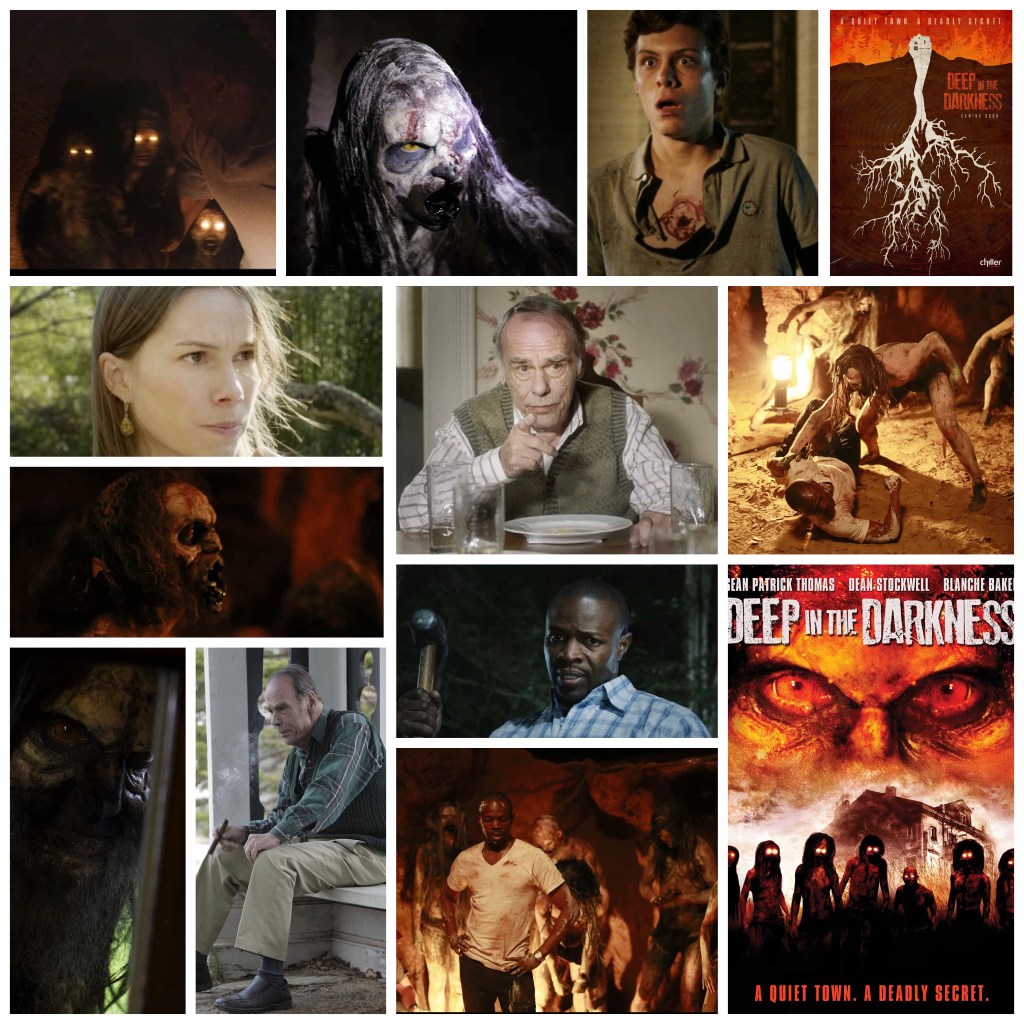
B Movie Glory: Deep In The Darkness

I love being pleasantly surprised by a DTV horror flick because there’s honestly so much garbage out there it can be like navigating a minefield, but Deep In The Darkness is a fun, vicious, well made little folklore shocker that kept me entertained throughout and was legitimately scary here and there. Sean Patrick Thomas plays a big city doctor who moves with his wife and kid to set up his practice in a town so small they “don’t even have cable,” as the stressed out, cigar chomping mayor played by the wonderful Dean Stockwell informs him. He’s met mostly with acceptance and hospitality as a newcomer but it soon becomes clear this town has a very, very disturbing secret underneath it. In subterranean caverns dwell an ancient race of spectacularly ugly, murderous humanoid beings called ‘Isolates’, who pretty much call the shots throughout the county. As the only doctor in the region he now finds himself and his family drawn into a dangerous hereditary power struggle between the isolates, those who have cross-bred (fucken EW) with them over centuries and the humans caught in the middle. These things are a fascinating bunch, all played by real actors with no CGI, absolutely drenched in nauseating, terrifically creative prosthetic makeup and they come across as a less ruthless, more esoteric version of the Troglodytes we saw in Bone Tomahawk. The film is lower budget and naturally has that feel but all of the actors are very good in their roles, particularly Stockwell who gives his tired patriarch genuine guilt and a hint of long dimmed warmth. When the Isolates do show up they are an incredibly fearsome presence full of snarls, blood and fluid, lithe physicality that makes them a memorable antagonistic pack indeed. The story has some twists I didn’t see coming and one kick in the nuts of an ending, a narrative that’s not just full of cheap scares, chases and gore but one that actually feels like a proper story, of the folk horror variety infused with a creature feature aesthetic. Recommended for fans of easygoing, accessible monster horror fare, this can be found streaming on Canadian Amazon Prime!

-Nate Hill

Joe Wright’s The Woman In The Window

Joe Wright’s The Woman In The Window is one of those big, expensive, star studded thrillers you used to see in the 90’s a lot, ones that would have folks like Harrison Ford or Julia Roberts headlining, always backed up by a galaxy of impressive supportive talent. Here it’s Amy Adams, an actress I’m almost convinced can do pretty much anything she’s so good, playing an agoraphobic ex-psychologist who has been hiding away in her Manhattan brownstone for several months following some vague traumatic incident. She has regular sessions with an unhelpful shrink (an uncredited Tracey Letts, also adapting a screenplay from AJ Finn’s novel) and speaks forlornly with her estranged husband (Anthony Mackie, heard and not seen) over the phone, until her new neighbours across the way give her a real fright when she believes she witnesses a violent murder one night while spying from her window. The frantic husband (an explosively intense Gary Oldman with an accent I’ve never heard him do that I’m pretty sure doesn’t exist in the real world) insists nothing happened, his odd wife (Jennifer Jason Leigh) looks on, a shady mystery woman (Julianne Moore) lurks about the place, and the cop (Brian Tyree Henry) in charge of helping out doesn’t seem to want to do much of anything. This film is an obvious homage to Alfred Hitchcock’s Rear Window and this is apparent in not only the central premise but many of the shots, colour schemes, musical cues and even old school movies that Amy has crooning in the background as she gets absolutely torqued on booze/medication cocktails to drive out the memory of some horrific past. I was more engaged with the narrative when it was about her and this past that has caused her to become such a ragged recluse. There’s a genuine mystery there and it’s shot and presented in a surprisingly artistic, unconventional and kaleidoscopic fashion that shirks the standards of dry Hollywood glossy cinematography these films usually employ and had me thoroughly immersed. The mystery as to what’s going on next door regarding this troubled family is also engaging in a lurid, potboiler kind of way, a bit overblown and melodramatic for its own sake but every plot turn and explanation does eventually check out, even if the road getting there is a bit of a loopy one. The acting is all solid, with Adams going all out for a truly impressive performance, Oldman being the most fired up and scary I’ve seen him since maybe Book Of Eli, which is a nice change of pace from his usual restraint of late. It’s far from the most original thriller out there and feels a bit scattered at times, but there’s a lot to enjoy with standout work from Adams and the trippy, borderline surreal internal world of her mind, with intense visual cues probing at a haunting mystery the film deftly withholds from us for some time juxtaposed against the stark, steep geography of her apartment full of curling staircases, gaunt angles and one hell of a rooftop patio, all brought to life by a creepy score from Danny Elfman, of all people. Fun times, if a bit… overstuffed for a 100 minute film.

-Nate Hill

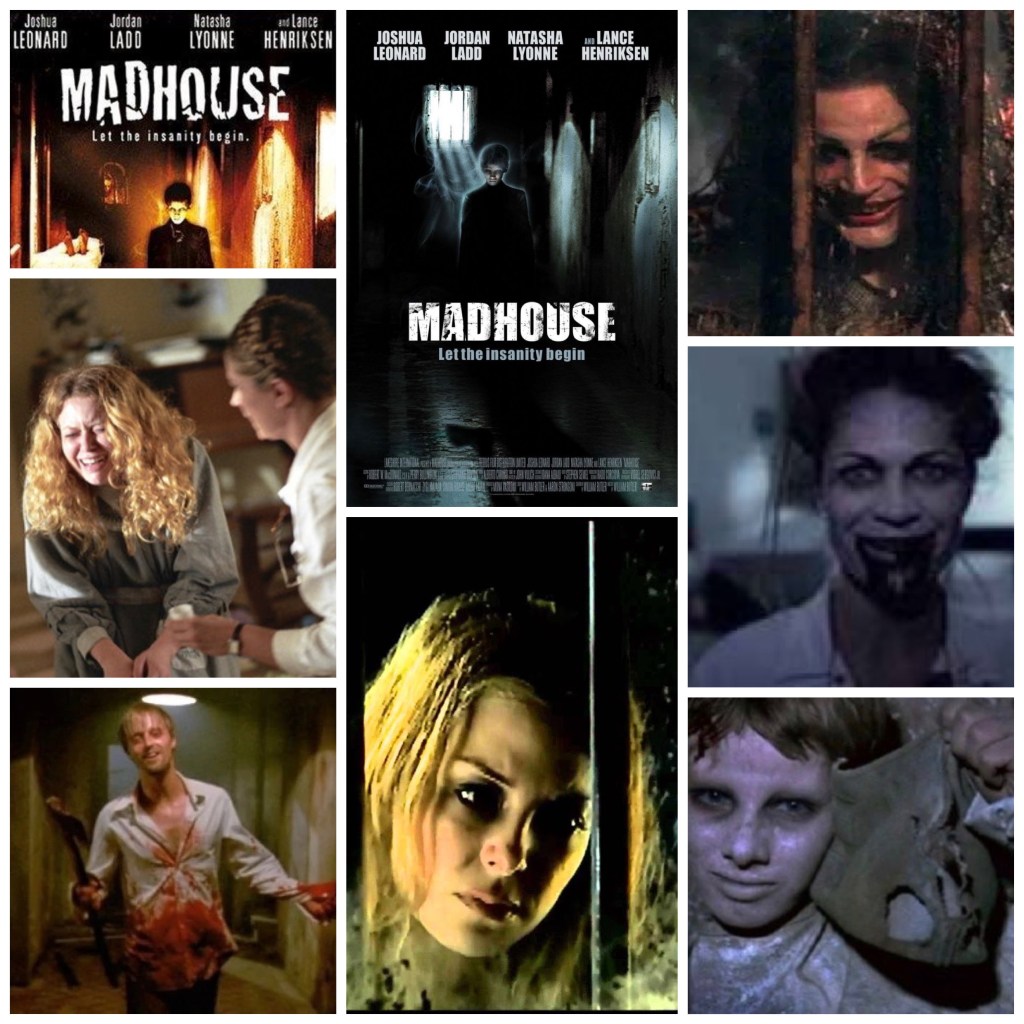
William Butler’s Madhouse

There are so many horror movies set in mental institutions that it’s pretty much a sub genre at this point, and while these days we realize that the aesthetic of presenting that world in such a.. heightened and lurid manner isn’t all that enlightened, we can still appreciate a good entry on its own trashy terms I guess. William Butler’s Madhouse is a gory little diversion with a kind of messy story that it makes up for with some truly unsettling, deeply disturbing visuals that are very clearly influenced by Adrian Lyne’s Jacob’s Ladder, but such influences on other works are welcome, even if worn shamelessly on their straightjacket sleeves. Joshua Leonard, who comes across as a kind of subdued, less succinct Sam Rockwell, plays an intern taking up residency at an underfunded, spooky asylum run by a head doctor (Lance Henriksen, naturally) who has little interest or compassion for the patients and whose safety protocols and ethical groundwork are, shall we say, questionable. Most of the patients run about willy nilly and the terrifying subterranean maximum security wing is a furnace heated nightmare corridor of leering monstrosities and deliberately grotesque personalities, like the hallway of prison cells from Silence Of The Lambs went to sleep and had a bad dream. There he finds a sort of ‘patient X’, a mysterious mummified individual who tells him a long forgotten tale of a young boy decades before who was mistreated by the asylum staff (you know, more than usual anyway) and whose ghost still runs around at night, and I found it funny how the script acts as if the ghost of a little kid is the *scariest* thing left to run about the place at night when the film has this level of freaky production design and prosthetic soaked extras on hand, which are really quite impressive, even if the story can’t quite get it up. Henriksen does little more than bluster, but his presence is always welcome, the lovely Natasha Lyonne has an extended cameo as a severely distressed patient and that adorable little southern dandy hobbit Leslie Jordan (a frequent staple of American Horror Story) has a nice bit as one of the facility’s doctors who reaffirms our primal fear of being murked while we sneak out to the refrigerator for that 2am snack. Director William Butler has a solid body of DTV horror work including the Danny Trejo/Tom Sizemore vehicle Furnace and while he can’t quite land the narrative here with overall coherence and the twist is felt a mile away, Madhouse has atmosphere in spades, truly horrific gory imagery that borders on the surreal and a very effectively creepy vibe.

-Nate Hill