Underworld: Rise Of The Lycans

I feel like the Underworld films don’t get proper credit for just how visually magnificent and stylistically sumptuous they are. I mean sure the stories are often a muddle of faux Shakespearean shifting alliances and paranormal melodrama that are impossible to decipher but if you just approach them overall as the story of an ongoing war between vampires and werewolves with lots of preening politics, an abundance of beautifully gory, darkly balletic action sequences and the occasional splash of forbidden romance then you’re good, and don’t need to engage the brain much further. Take Underworld: Rise Of The Lycans, for example, which best I could figure is some kind of prequel to the first film where we see what went down between the two species hundreds of years before. Bill Nighy gives the word overacting new meaning here but is a lot of fun as Viktor, king of the vampire nation who has effectively enslaved all the werewolves for his own work/war effort and forces them to hunt down their own kind who rebel. His daughter Sonja (Rhona Mitra) does some rebelling of her own by constantly defying daddy’s orders and carrying out a secret romance with Lycan leader Lucian (Michael Sheen). This overall unrest leads to the werewolf uprising and eventual incursion that will start a centuries long war. That’s all you need for story, trust me. What works best about this film is the resplendently beautiful production design and what makes it stand out in the initial trilogy is that it’s set far in the past so the uproarious gunfights become ruthless swordplay, the nocturnal urban atmosphere becomes a moonlit medieval castle aesthetic and never before has the franchise felt this gothic. Mitra is a beauty and then some, and while she’s not quite as lithe or physically distinctive as Beckinsale and her leather trench coat, she suits the ancient warrior aesthetic and does the Underworld name proud. Nighy is so far over the top I wanted him to calm down a bit before he had a stroke or something, he’s about as arch and theatrical as it gets but it suits the role and tone of the film nicely. Much of the film is sound, fury, blood and metal under inky black moonlight and some may have trouble deciphering the specifics of choreography under such a dim cloak of a visual palette but trust me it’s all there and it’s all *very* well done. This franchise has some of the most gorgeous, anatomically and aesthetically satisfying werewolves I’ve personally seen in horror, just great big bastards that look like they could rip a cow in half and are deadly in their speed, physicality and agility despite their hefty size. The Vamps have this eerie aristocracy to them and always seem calmly observant and deviously in charge, with help from the iridescent, creepy contact lenses the actors get to wear. The fight scenes are brutal and relentless, packed with gore and stylish weaponry and staged against spatially striking castle, river, forest and mountain vistas. There’s a shamelessly lurid sex scene between Sonja and Lucian where they’re literally writhing in slow motion on the edge of an impossibly baroque cliffside that is quite possibly one of the most arousing, breathtaking sex scenes I’ve ever seen on film. Say what you want about these movies man, and maybe I’m just a whore for visually stimulating horror films and am too generous on the ones that rely on the style over substance play, which is quite possibly the case, and I own that. However, I’m sitting there watching all of this play out and I’m in raptures about it, totally and completely entertained and pleased in my experience, and if that be the case, well I’m more than okay with all style and little substance, provided the style is as bounteous and well crafted as is the case here. *Great* looking film, if not a great one overall.

-Nate Hill
Daryl Duke’s The Silent Partner

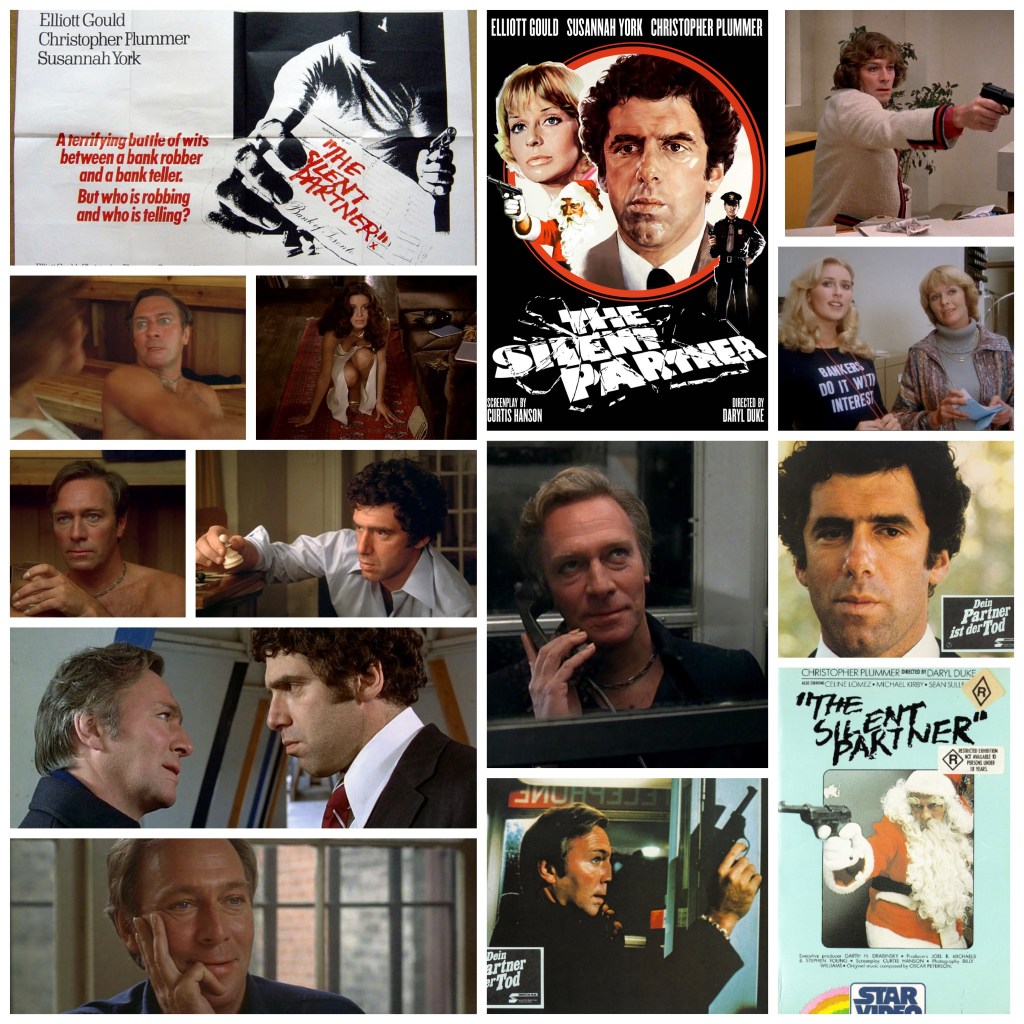
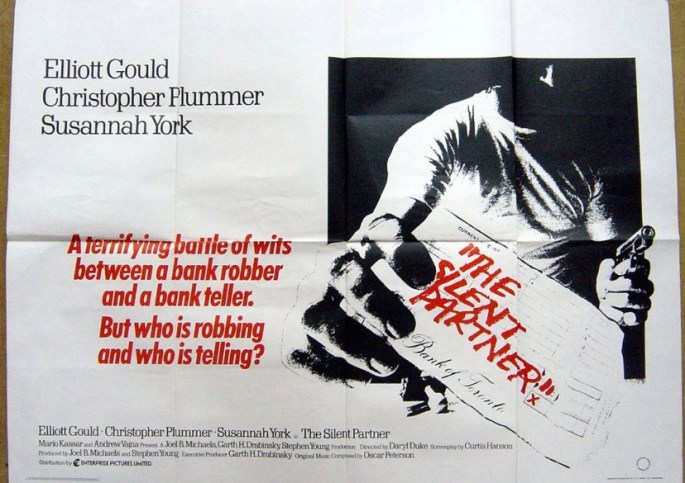
If you think Billy Bob Thornton was a Bad Santa wait until you see Christopher Plummer in The Silent Partner, he gives him a run for his money and then some as a psychopathic, profoundly evil criminal who hits a Toronto bank for all its worth disguised as the local mall Santa. Only problem is, shrewd bank teller Elliot Gould realizes he’s going to do it while he’s still casing the joint, steals all the cash for himself minutes before the hit, and thinks he’s got away with it. Plummer is also a smart dude here and not the kind of fellow you want to pull a stunt like that on, soon he comes around looking for the money he believes to rightfully be his and so ensues a vicious game of cat, mouse and morally bankrupt working professional as these two individuals, one not particularly likeable and the other downright abhorrent, battle each other for the prize. Two girls are involved with both of them, confused fellow bank teller Susannah York and French Canadian femme fatale Céline Lolez but they end up being more collateral damage in the narrative than anything else. So… this film has a huge cult following, glowing reputation and overall hype surrounding it and I wish I could fully get onboard with that, but I just wasn’t as taken by it as many seem to have been. I liked it, I didn’t love it. Let’s start with the film’s strongest asset: Christopher goddamn Plummer. The man goes fully into bizarro world here to play this character, and the guy is a villain for the ages. Heinously violent, gruesomely misogynistic, volcanically volatile, decked out in super femme eyeshadow and heaps of mascara and decorated with bangles of silver bling on every limb, he’s a flamboyantly nasty piece of work and steals the film, whether he’s being an evil Santa or showing up in drag which he gets to do later on. Gould plays his bank teller as very intelligent but also very awkward and somehow stilted in expression and line delivery, I couldn’t really get a sense of his character beyond stoic idiosyncrasy and I feel like he’s an actor who perhaps didn’t find his groove until later in his career when he appeared in stuff like Ocean’s 11, where he’s far more engaging and charismatic than this younger incarnation. Roger Ebert raved about this one being a taut, clockwork tight narrative and I kind of feel different.. the first and third acts are terrifically suspenseful, exciting and ruthless but the film’s midsection wastes a lot of runtime on languid romantic subplots featuring the two girls that don’t add much overall, don’t feel believable with a guy as odd as Gould’s character having that much game with the ladies and bog the narrative momentum down quite a bit. Still, when the film is in its highest gear it’s quite a mean machine, especially when Plummer has anything to say or do about it, which he does. Careful with this one if you’re sensitive about violence towards women, there’s a couple sequences that push the envelope on that just about are far as you can go (even by 1978 standards) and are tough to watch. I found this to be a good if not great suspense thriller with some very well done set pieces and plot turns, and one truly despicable turn from Plummer, who is also playing very against type and loving it. Not as much of a gem for me as it was for a lot of others, but definitely worth a watch.

-Nate Hill

Uwe Boll’s Assault On Wall Street

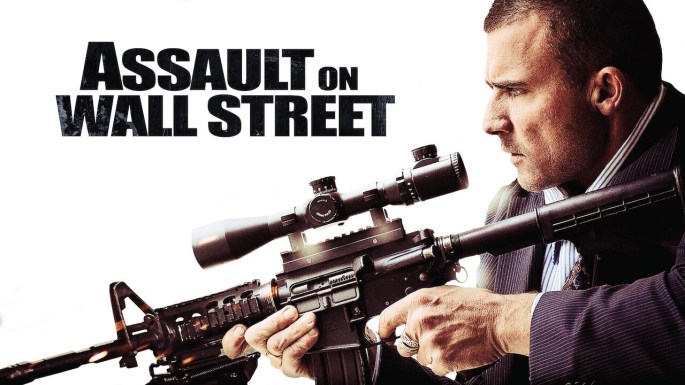
I know that Uwe Boll has this terrible reputation both behind the camera as a director and in real life and to be fair he has made some ten-ton duds while adapting various video games, but he has also made some films that I have to say are really damn good genre exercises with impassioned sociopolitical undercurrents that he very clearly cares about. He did one about the Sudanese genocide in Darfur which was excellent but so fucking raw and intense in its depictions of those atrocities it gave me a panic attack and I couldn’t finish it, but I’ll review that one day. His more recent film Assault On Wall Street, however, couldn’t be a more timely, relevant or infuriatingly emblazoned piece when you consider how the tides of economic inequality have reached the breaching point on the shores of civility and infrastructural disproportion. Dominic Purcell plays a working class guy in NYC (very recognizably shot in VanCity tho) who has a titanic run of bad luck: his wife (Erin Karpluk) is diagnosed with a terminal illness, he’s laid off from his armoured truck job and the looming financial collapse causes him to lose everything (and I mean *everything*) in the space of a few weeks. He fights desperately, using first the system as best he can and when every avenue of established order fails him, he goes rogue and quite literally takes up arms and holds a bunch of wealthy Wall Street pricks hostage in their building with a gun after killing the corrupt hedge fund advisor (Barclay Hope) who betrayed him. It’s a very startling turn of events and it comes across in several ways simultaneously: a tragic, genuinely heartbreaking downward spiral that feels immediate, a lurid, stylistically heightened tale of pulpy vigilantism and a straightforward siege thriller. Boll doesn’t always juggle all these elements together in a way that feels cohesive or believable, but just enough to have them coexist in the same narrative and work for me as a viewer. Purcell is terrific, he often gets thrown these stoic tough guys after his star making turn on Prison Break but they trust him with an albeit equally tough but strikingly vulnerable and sad individual here who you can relate to and root for later on, if you can reconcile his extreme actions (I definitely could) in the face of utter negligence from his fellow human beings in greater positions of power. The cast is exceptional and includes the late John Heard as an abrasive, morally deficient Wall Street kingpin, Keith David, Edward Furlong and Michael Paré as Purcell’s compassionate coworkers and Eric Roberts himself as a slimy lawyer he hires who doesn’t help anyone much at all. This isn’t a perfect film and at times feels over the top and ‘arch’, but I’d be lying if I said it wasn’t a believable, cathartic and rousing experience; all of us middle class peeps at one time have most likely felt as betrayed, slighted or mistreated by the system as Purcell’s character does here, and his violent call to arms might not necessarily be something to aspire to or even condone, but it’s as scathing an indictment and act of defiance against the strong arm of corrupt, anarchic capitalism as can be expected. Very effective film.

-Nate Hill

André Øvredal’s Scary Stories To Tell In The Dark

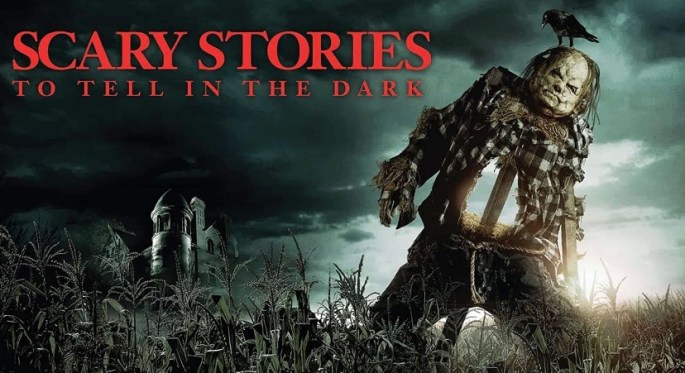
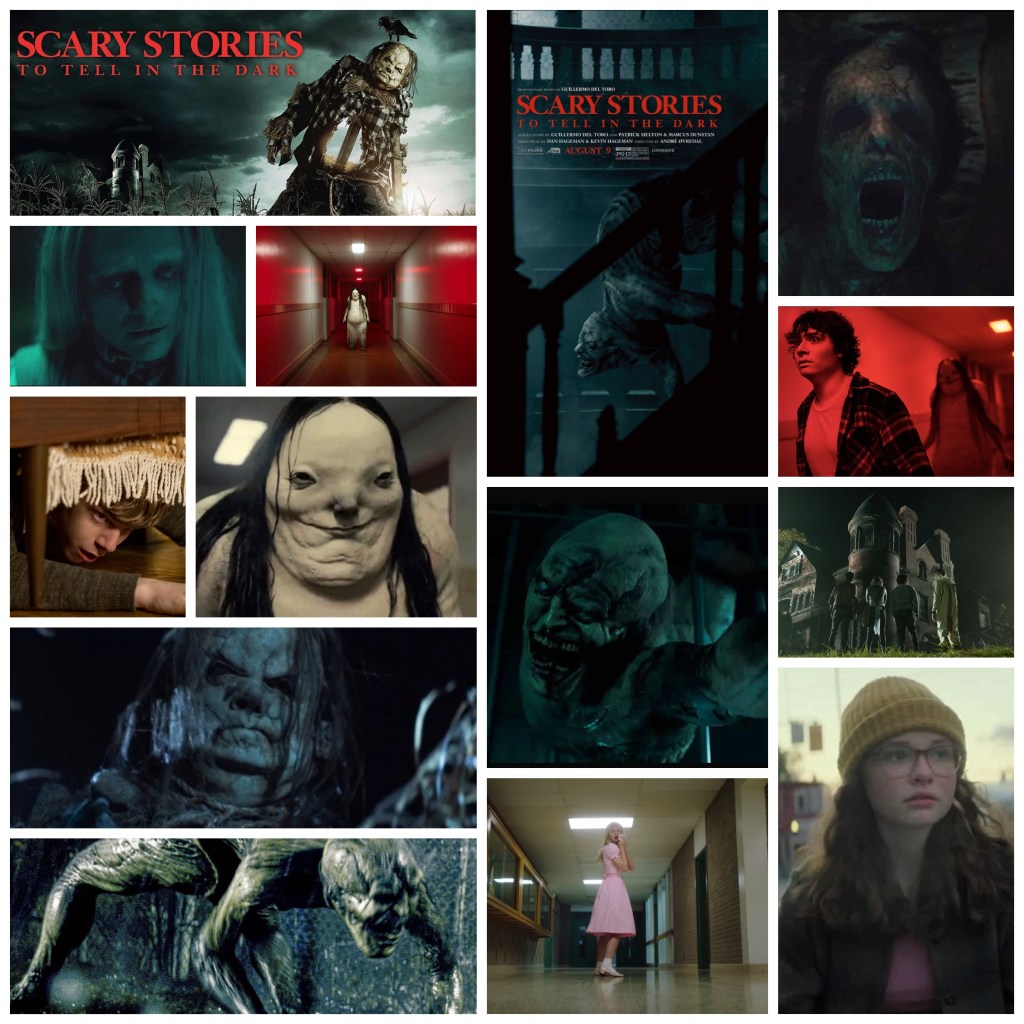
Scary Stories To Tell In The Dark would have been more effective if they’d kept the film adaptation as scary, and as dark as the famed book series and I understand that some cohesion in plot and script continuity was needed to give us a feature film, but I kind of wish they’d gone the artsy, surreal route and just adapted each story in an independent black & white ether from one another instead of trying to make them ‘make sense’ logically and have this… YA, Stranger Things teen angst template laid overtop, which really just sucks the spooky air out of the room. That’s not to say this is a bad film, there are some nicely terrifying set pieces, unnervingly tactile practical effects and thrillingly suspenseful sequences.. it’s just the framework that didn’t quite do it for me. The original book series was blissfully simple: just a bunch of random horror fables, independent of one another. The film makes up this cockamamie jargon about some Necronomicon-Lite book that has power over each monster from each respective tale, a book which a cliche ridden group of local kids must destroy as its contents come after them after the reading of each chapter. It’s complete with the small town vibe, bully, love triangle thing and all the rest, which I’m not sure was the right way to go, but like I said, I understand the decision to do so. Having said that, the special effects team has done wonderful work with the monsters and made them about as visually true to the books as possible without quite retaining the stark, ghostly potency of the illustrations we know so well. The contorting Jangly Man is an unholy terror and quite effective, especially as he storms a nearly deserted police station and scares the piss out of its disbelieving Sheriff (Gil Bellows). Harold the Scarecrow is eerie enough but doesn’t get a whole lot to do, while the shambling corpse looking for its Big Toe is pretty darn fucked up and uncomfortable. Most effective is the unnerving Pale Girl, who terrorizes a teen in the abandoned hallways of an asylum from all sides in a sequence that’s the closest the film comes to downright terrifying and, for a time, successfully lives up to the legacy of the books. Producer Guillermo Del Toro’s aura is felt here in the wonderful monster design and director André Øvredal (who helmed the brilliant and far scarier Autopsy Of Jane Doe) keeps the stylistics and suspense going nicely, if not always consistently. Sometimes the switch from the Black & White of the books to a colour palette here can feel a bit demystifying and less otherworldly, I wish they had just gone the Sin City route and done a complete monochrome wash with the odd splash of colour here and there, would have been much more evocative. It’s a decent enough horror film with some truly great monsters, creepy moments and immersive atmosphere… I just could have done without the teen drama subplots, expository connective tissue and this ever present need to *explain* everything and give every horror concept a ‘backstory’ instead of just trusting the source material to be enough on its own and just filming *that* without a bunch of silly narrative bells and whistles that feel familiar and stale.

-Nate Hill

Ric Roman Waugh’s Greenland

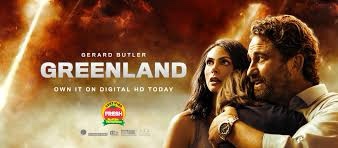
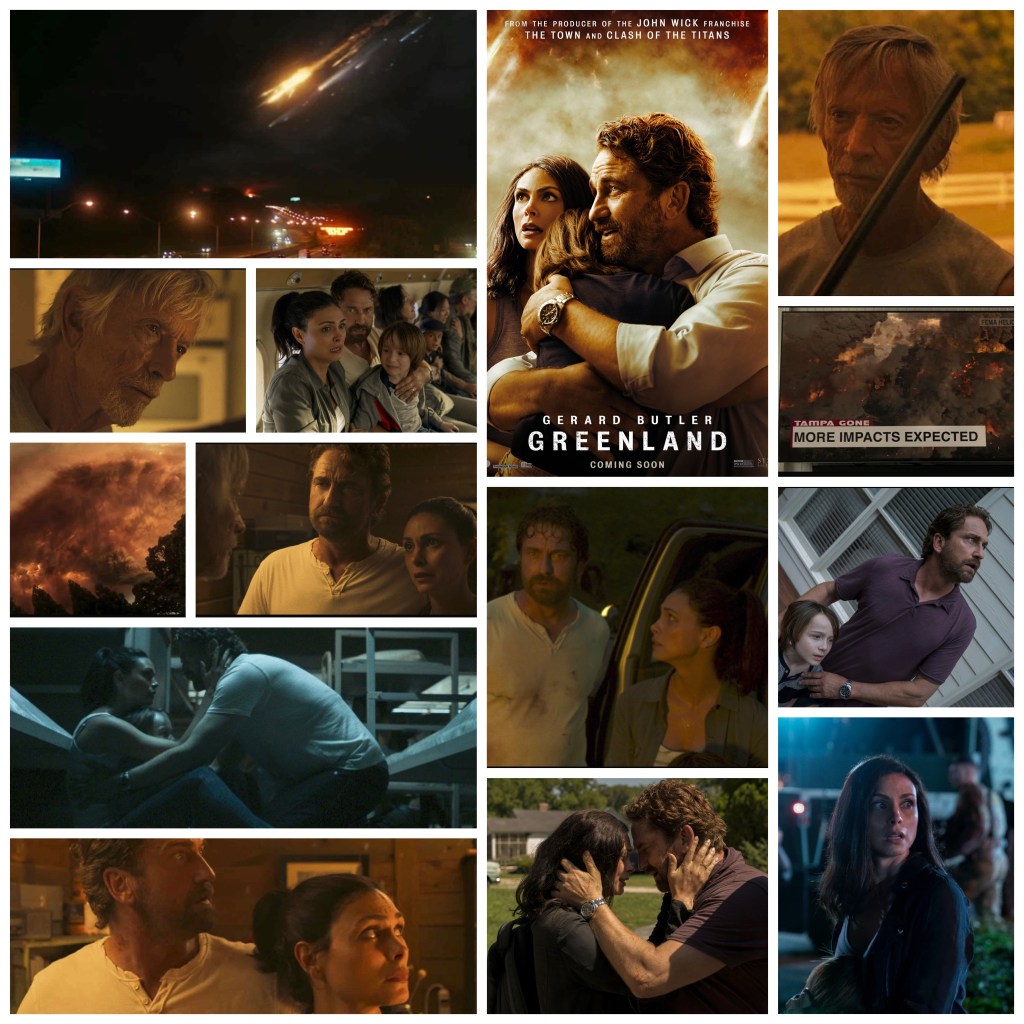
Ric Roman Waugh’s Greenland is an uncommonly superb, heartbreakingly intense, strikingly subversive disaster film, the best of its kind in probably decades, to be honest. Usually when I see a Gerard Butler disaster film coming down the pipeline I promptly step to one side and let it pass by without taking notice, like the lame-brained Olympus Has Fallen series or GeoStorm. Let’s face it, the guy’s agent hasn’t been the best at landing decent projects for him, and for a long time too. Let’s hope this is the start of something new in his career because it’s a staggering work that uses its big budget not for flashy, glossy CGI or needlessly elaborate but ultimately hollow blockbuster set pieces. This is a much more intimate disaster flick that uses character, emotion, spacing, nighttime, growing mass hysteria and poignancy to get its point across. Butler plays a Florida structural engineer trying to get his wife (Morena Baccarin) and kid (Roger Dale Floyd) out of Tampa as a disintegrating comet pummels earth with fragments and the countdown to the end of the world begins. The powers that be have a plan to shelter those with good genetics and useable skillsets in fortified bunkers located in Greenland through a selective process using iPhone emergency alerts and Butler’s family has been chosen but there are many elements that make their journey difficult, mainly the widespread chaos and panic as well as the continued decimation of their planet by falling debris. Butler is fantastic here and sells the frenzied desperation well, while Baccarin has never been better and I never would have thought that Deadpool’s girlfriend was capable of such an affecting, raw performance as she gives here. Others give vivid impressions including Hope Davis, Holt McCallany, Madison Johnson, Gary Weeks, Merrin Dungey and many more. Special mention must be made of Scott Glenn as Morena’s father with whom they briefly take shelter with. He brings his usual gritty gravitas and shares a scene with her that brings out the best in both actors and is the film’s emotional lynchpin. The scenes of disaster aren’t obnoxious, grating or show-boaty like many films of this kind; there’s a haunted, celestial quality to the visuals of the descending comet that is both beautiful and terrifying, like ethereal dying stars entering our atmosphere and lighting up our skies in one final display of sustained, painterly cosmic reverence before the inevitable destruction. If Big Hollywood took notes from Waugh and his team on what they’ve achieved here and employed such creative wisdom into all of their disaster films then maybe the genre overall would be taken more seriously because this is one gorgeously produced piece of work that, for me, now sits as the disaster movie gold standard. Great film.

-Nate Hill

Brandon Christensen’s Z

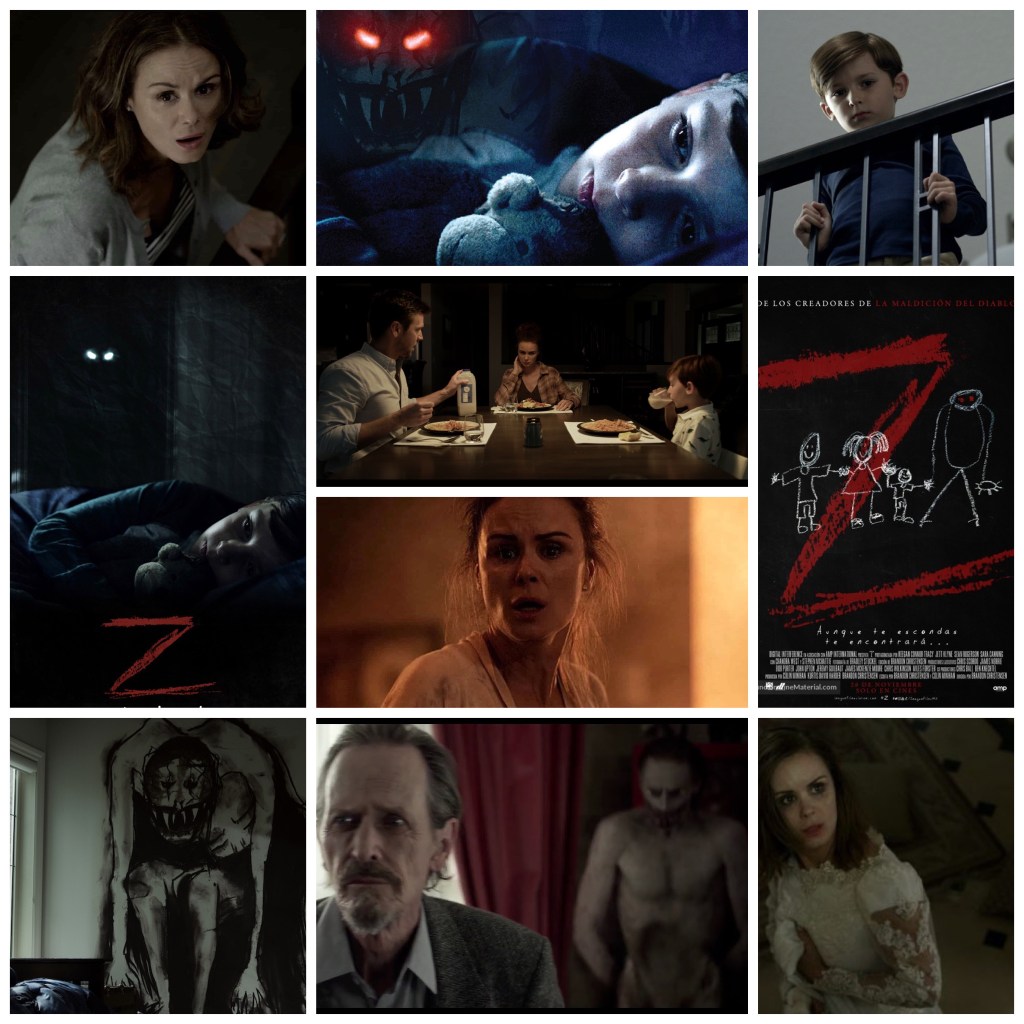
The whole ‘creepy little kid has creepy imaginary friend’ thing has been done so many times in the horror genre we can almost sleepwalk our way through the beats, but that doesn’t mean a vicious, streamlined little effort like Brandon Christensen’s Z can’t come along and scare the shit out of me, which it did. This film doesn’t really do anything new or revolutionary for the formula but rather tells a simple, effective, no frills tale of one kid (Jett Klyne) and his imaginary friend Z, who no one but him can see, and us as we frequently catch unnerving split second sightings of and know he is in fact, very real. His dad (Sean Rogerson) is cavalier and doesn’t think much of it while his mom (Keegan Connor Tracy, excellent performance) is more intuitive and senses that Z is a real presence, not to mention catches fleeting and very disturbing glimpses of him. The boy’s keen psychiatrist (the ever charismatic Stephen McHattie) recognizes a pattern in this chain of events that harkens to a dark hereditary history within the family tree and tries to stop the cycle, but Z is a cunning, devious and very dangerous force. I’m not gonna lie, this film scared the absolute piss out of me; there are several extremely well orchestrated jump scares that are punishingly effective, including one that is so shocking I sat upright in bed and gasped hard enough to induce a coma. The filmmakers also realize that less is more when showing what Z is up to, and although we only ever get very quick peeks at what he, she or it looks like, the anatomical specifics are chilling and otherworldly enough to have the viewer squirming in discomfort. My only complaint is the plot could have been a bit more fleshed out, the mythology clearly delineated and there could have just been… more, overall? It’s a rare complaint as most films seem to divulge too much and go too far over the top while this one employs hefty restraint. This one is a hell of a horror film though, and does enough with dark corners, shadows and negative space to have you turning on all the lights and checking every closet before bed. Excellent film, streaming on Shudder.

-Nate Hill

Gary Fleder’s Don’t Say A Word

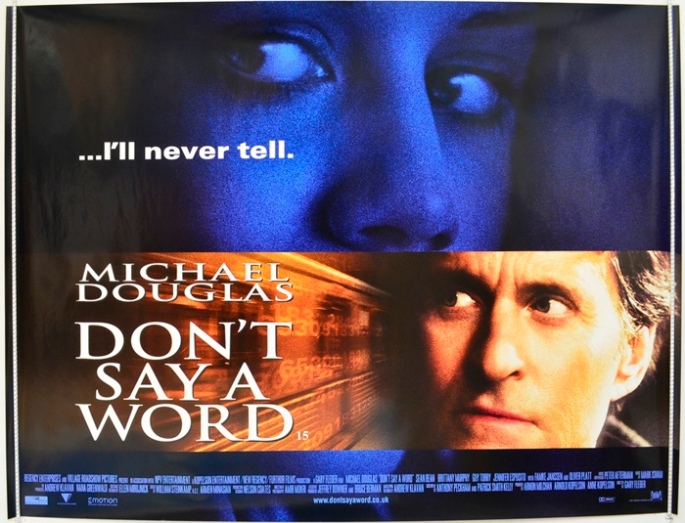
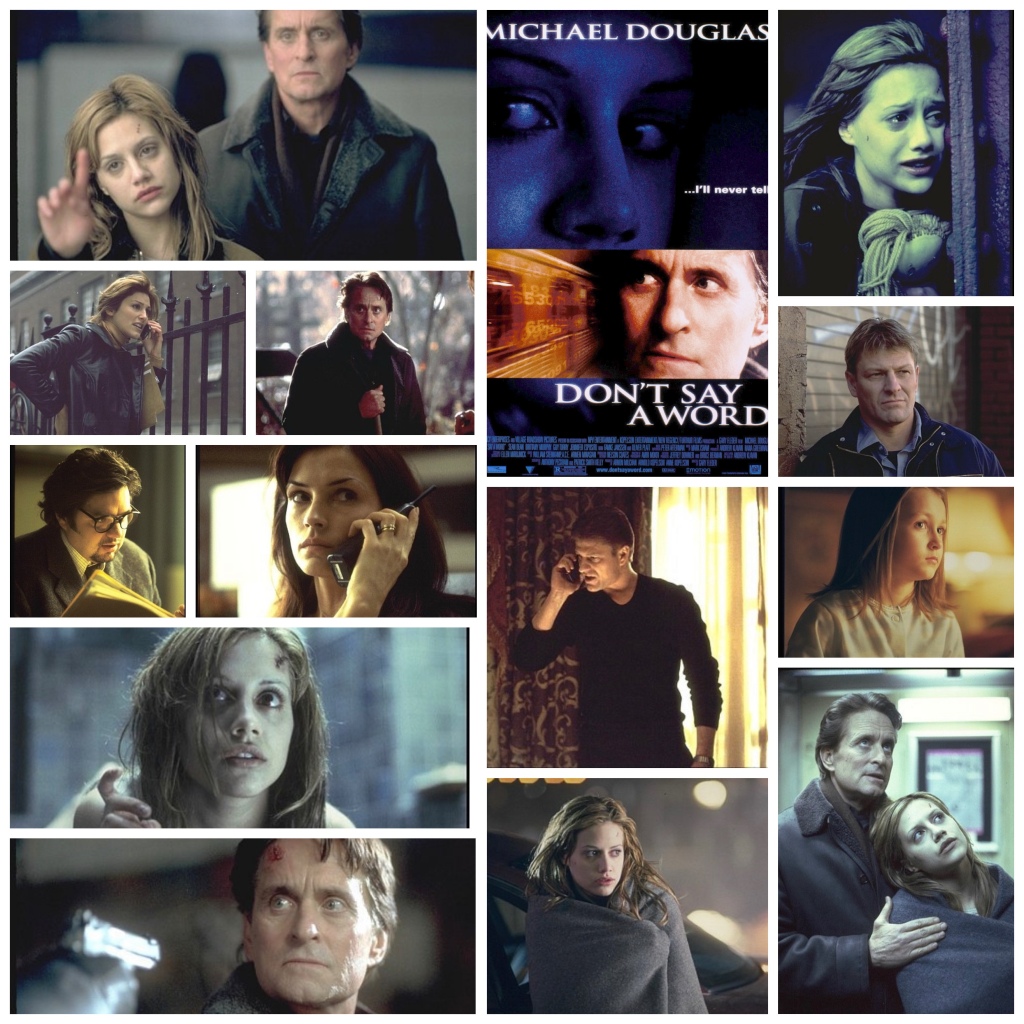
Gary Fleder’s Don’t Say A Word is one of those slick Michael Douglas thrillers with a juicy cast, luxurious runtime and that classic ‘Hollywood thriller’ feel. It’s one of those scripts written with people like him or Harrison Ford in mind, the middle aged high profile professional whose family is menaced or kidnapped, forcing this straight laced Everyman to take action. This one is particularly strong and terrifically entertaining thanks mainly to the late Brittany Murphy in my favourite of her onscreen roles as a disturbed teenage girl whose broken, traumatized mind hold the secret to the film’s central mystery. When she was a young girl she witnessed the brutal murder of her father at the hands of a dangerous career criminal (Sean Bean) and his marauding gang of thieves. It’s now a decade or so later and he’s back to terrorize her again in hopes of unlocking a clue lodged deep in her head, information she’ll do anything to hide. Douglas is the hotshot psychologist who finds himself and his family targeted by Bean & Co., extorted into treating her and gaining the information so badly desired by all. Douglas and Murphy have terrific onscreen chemistry and she even upstages him in many scenes with her trademark raw, potent and very candid style of acting that seems almost out of place in such a glossy high profile thriller but really gives the thing its most valuable spark of life. Bean’s villain is admittedly kinda one dimensional in terms of script but he can take any character and give it something memorable with his talents, he’s utterly ruthless and despicable here, making the peril feel real and relentlessly threatening. The supporting cast is stacked to the nines with work from Famke Janssen as Douglas’s terrorized wife, the late Sky McCole Bartusiak as his cunning daughter, Oliver Platt as a shady colleague clearly hiding something, Jennifer Esposito as a shrewd homicide detective on everyone’s case, with additional support from Shawn Doyle, Guy Torry, Lance Reddick, David Warshofsky, Paul Schulze, Aiden Devine and a cameo from Victor Argo as a wily coroner. Fleder is an accomplished director (Runaway Jury, Things To Do In Denver When You’re Dead, Kiss The Girls) and knows his way around a flashy big budget thriller without losing a palpable sense of character and setting. This is one of my favourite Michael Douglas thrillers, mainly because of Brittany Murphy’s super affecting, down to earth work, Bean’s cold, psychopathic baddie, the blue and grey hued NYC cinematography full of hustle, bustle and urgent incident and the overall orchestration which has a classic ensemble thriller mentality that you just don’t get from Hollywood anymore. Great film.

-Nate Hill

Mike Flanagan’s Ouija: Origin Of Evil

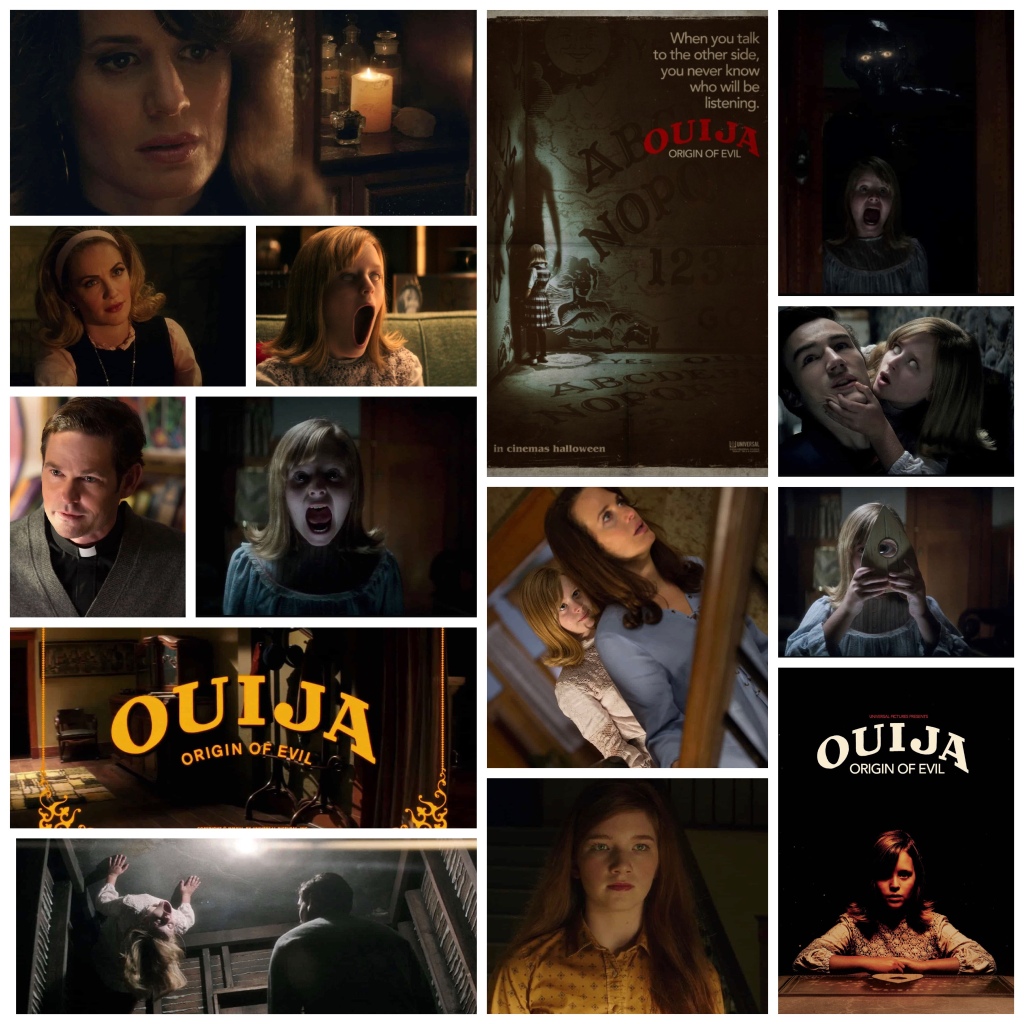
There’s a million and one movies out there about Ouija boards and it’s potentially a great concept but most of them are pretty shit. Ouija: Origin Of Evil, however, is directed by Mike Flanagan who in my experience has never made a film that was anything less than terrific, and this is no exception. Ostensibly a prequel to a more modern set Ouija movie that I’ve only seen a trailer for, Origin backtracks to the late 60’s where a widow (Elizabeth Reaser) and her two daughters (Annaliese Basso and Lulu Wilson) run a seance scam out of their living room to pay bills and make ends meet. One day the older daughter decides a Ouija board would be a fun idea to throw into the mix (right?) and before they know her little sister has become a full on medium for communicating with the dead and whatever else is out there, but she has no filter for letting things in and pretty soon something dark and pissed off is hanging around the house with them. The daughter’s catholic school teacher (Henry Thomas) does what he can to help them out but the decades old secret that haunts their home threatens to annihilate them all. This is a solid horror film that relies on mounting tension, the use of space, sound design and ghostly possession to scare the viewer effectively, and never cheaply like a lot of horror films do. Flanagan in my eyes is a master of the genre akin to and on the same level as Carpenter, Craven and Argento, he’s that good. His stories are terrifying but there is *always* a discernible undercurrent of humanity and character development interwoven so that we actually care when people are being terrorized onscreen. Reaser, Basso and Wilson are terrific as the mother and daughters, as I love how Flanagan has his extensive ‘troupe’ of actors he keeps recasting in new projects, they become like recognizable totems of his work and I love seeing people this talented show up time and time again in different roles. This might be a bit slighter of a film when I look at my preferences regarding his career overall, but it’s no less well crafted, unearthly and thrillingly alive as the rest in his stable. Great stuff.

-Nate Hill

Tom McLoughlin’s One Dark Night

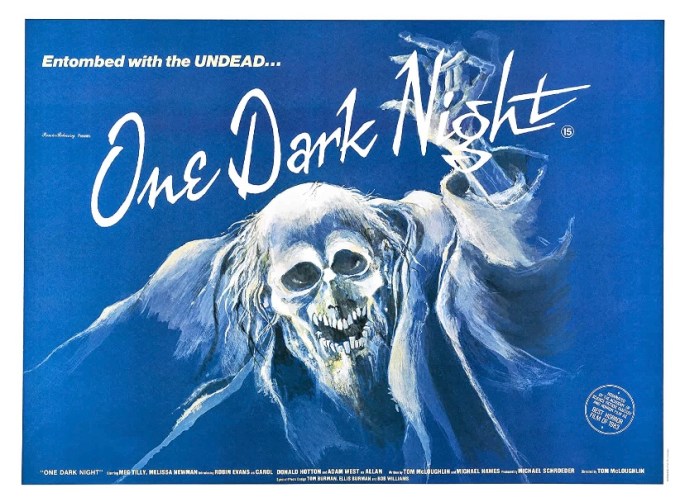
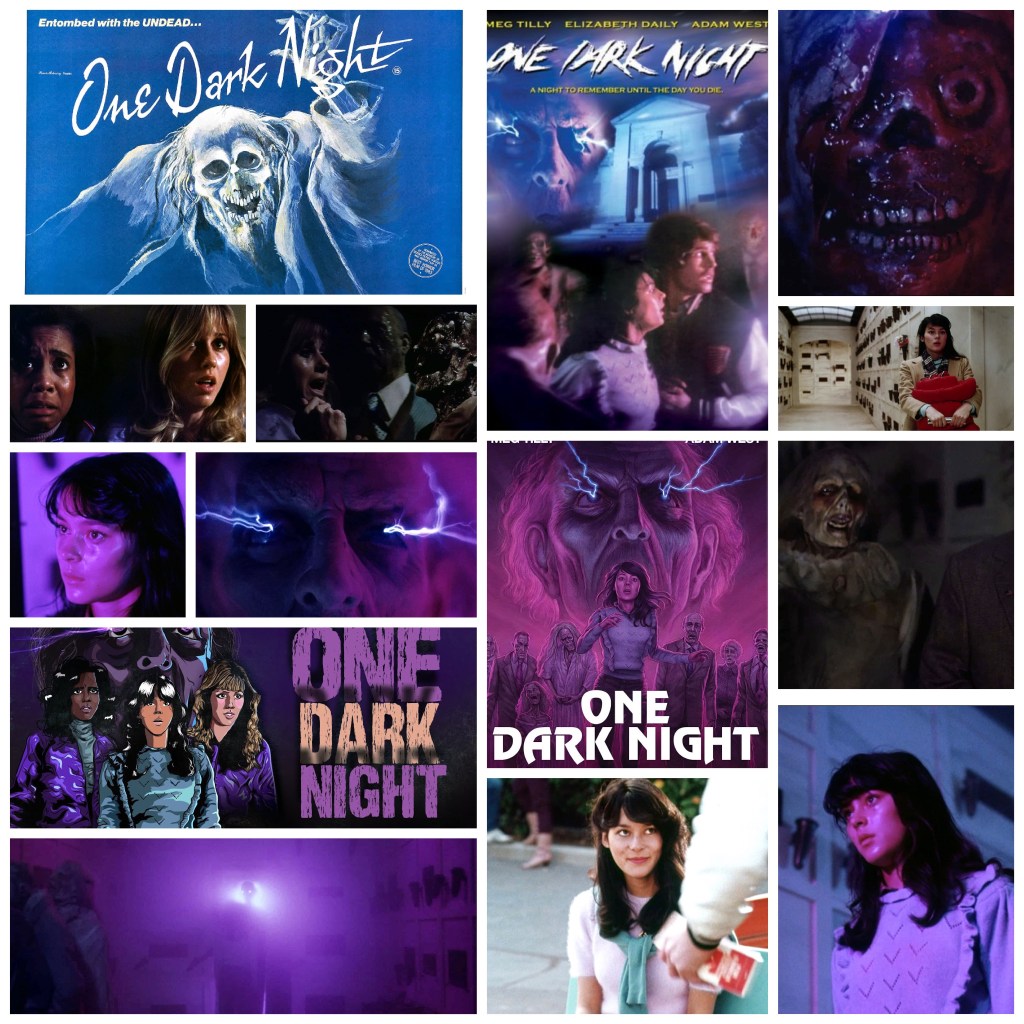
Are you a horror fan? Do you have Shudder? If the answers are yes to the former and no to the latter you should get on it, because the curators of this streaming service have delved deep into the genre mines to come up with some long buried gems that have probably escaped the sonar of even seasoned fans. Example: Tom McLoughlin’s One Dark Night, a film I would never have dreamed existed if I didn’t see it in the cue, is a brilliantly grotesque little slice of peak 80’s schlock that almost feels like a long lost John Carpenter film. Meg Tilly stars as a college girl who will do anything to join a stuck up sorority ran by a titanic bitch of a head sister (Robin Evans). In this case the initiation ritual happens to include spending one night alone in a spooky mausoleum, but this place just happens to be the final resting place of a notorious serial killer with the clairvoyant ability to reanimate the dead into unsettling shambling corpses. On top of that the bitch head sister sneaks in through a busted window and plays mean pranks on her too, while the killer’s harried widow (Melissa Newman) and her boyfriend (Adam West) arrive to try and put a stop to these supernatural shenanigans. This film is just so much fun for a number of reasons: Tilly is a gorgeous, exotic looking scream queen who is convincing, charismatic and very talented, the special effects for the corpses are horrifically slimy and disgusting and these hovering cadavers get, shall we say, uncomfortably close to our heroine. As soon as the dead killer wakes up and his otherworldly energy permeates the crypt, the film is bathed in a beautiful, Lovecraftian purple glow that enhances the visual aesthetic, supported by an atmospheric, creepy score by Bob Summers. One scene in particular is incredibly effective and legitimacy horrifying, where we observe the first few coffins open and the partially decomposed people come eerily floating out, slowly, with an anxiety inducing inevitability using the confined space, glacial but steady pacing and the terror of the actors. The corpses are interesting here because they aren’t zombies, they aren’t possessed like in Evil Dead, they aren’t sentient or leering or even capable of eye contact… they’re simply rotting dead bodies being moved by telekinesis, and somehow that was eternally more scary to me than zombies or anything else of the like. Anyways, if you like old school gooey horror in the tradition of Carpenter, Craven and Hooper with a neon purple infused, Colour Out Of Space sensibility then you’ll totally dig this. Get Shudder too while you’re at it, it’ll be the best streaming service splurge you’ll make.

-Nate Hill

The Grudge (2020)

American movie studios are wild, man. They’ll remake Asian horror films, pump out a few sequels, and then once they get bored of that they (pauses, takes off glasses and rubs bridge of nose) remake their *own American remake* of the Asian horror like they forgot they even did the initial one in the first place. That’s not to say this bizarre behaviour can’t produce decent horror flicks as a rule but in the case of The Grudge (2020) I’d say they’ve done a pretty terrible job. The 2004 American Grudge film with Sarah Michelle Gellar scared the piss right down my leg at age 14 and despite being desensitized now that I’m older I’d still consider it a well made, effective chiller. But this new version is so all over the place and contains so little of what made the 2004 one so special it doesn’t even make sense to call it a Grudge film. So basically there’s two moody, hard boiled detectives played by the arbitrarily unlikely combo of Andrea Riseborough and Demien Bichir, who are investigating the classic case of a Grudge spirit hovering around a house and the unfortunate folks who are unlucky, stupid or morbidly curious enough to hang around it. There’s Lin Shaye in the Grace Zabriskie proxy role as the dementia ridden old woman who doesn’t know what planet she’s on, Frankie Faison as her desperate husband who enlists a lady (Jacki Weaver) who facilitates assisted suicides, John Cho and Betty Gilpin as a young couple trying for a baby that fall victim (in the film’s single, solitary effective scare, I might add), William Sadler as a disfigured, mentally disturbed former cop who ran afoul of the ghost and others. It has a huge big cast of talented, recognizable and engaging actors who run around in unnecessary subplots doing not much of anything. There’s barely any ‘classic Grudge moments’ and even when there are they feel somehow ‘off’ and not deserving of the franchise name. The single effective scare involving John Cho is a nicely shocking moment with a great choice of where to place the camera, but if your remake of your own remake only has one scary scene and not much else, I think it’s time to pitch the drawing board out the window and completely rethink your approach. It’s beyond me why they felt the need to do this, and make it so overloaded, needlessly elaborate and bereft of what made the initial Grudge film so good.

-Nate Hill