Tim Burton’s Planet Of The Apes


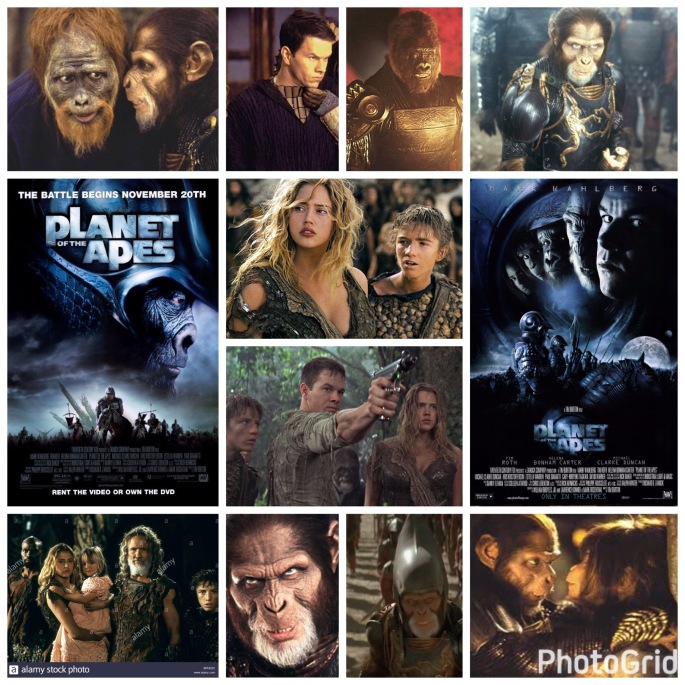
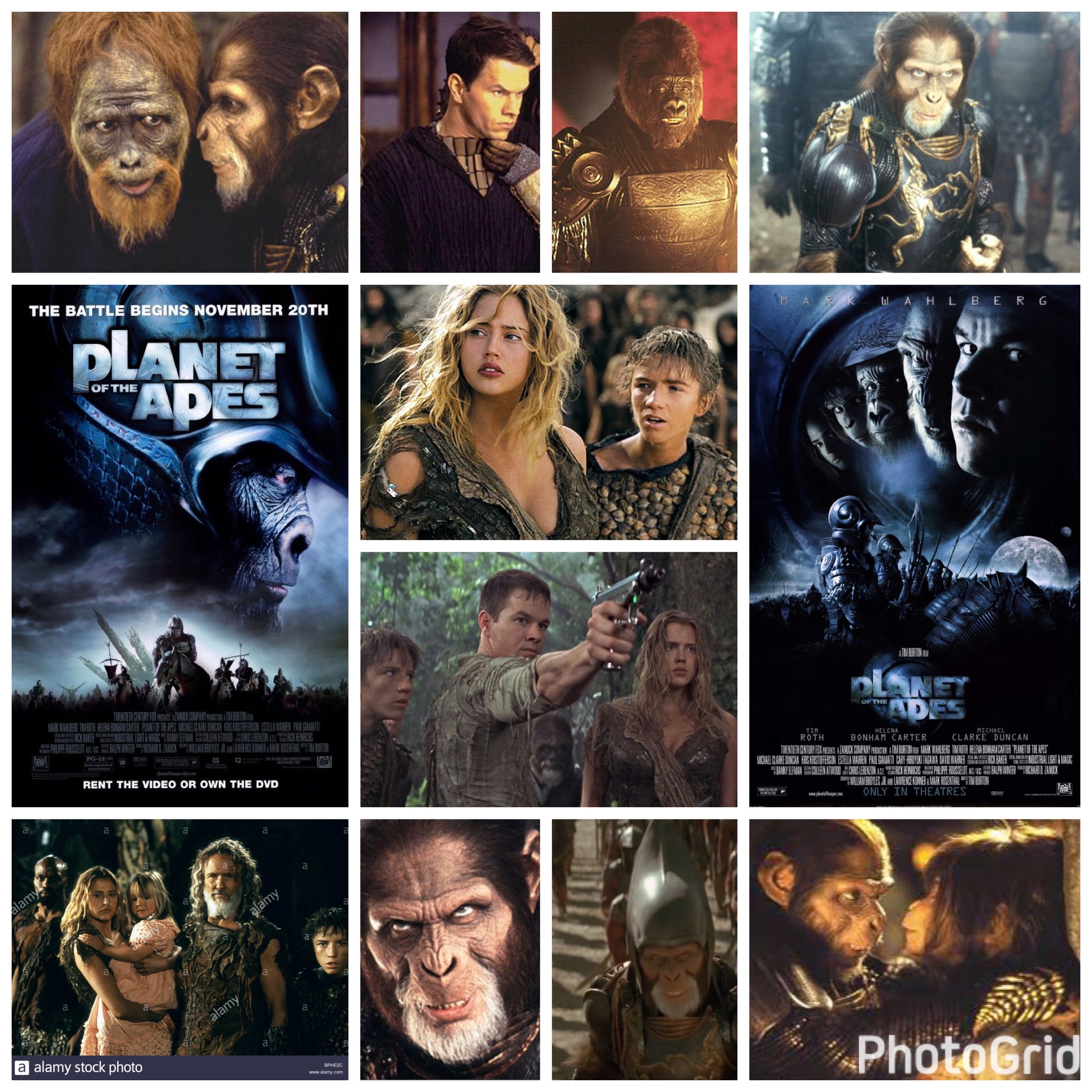
I’m going to catch some heat for this, but I’ve found Tim Burton’s Planet Of The Apes to be a far better film than any of the three recent versions. I can’t explain it, but there’s something so otherworldly and exotic about the production design, makeup and effects, a true storyteller’s touch used, resulting in a piece with elements of fantasy and world building brought lushly to the forefront, whereas the newer films just felt somewhat clinical and sterile, going through minimalist motions without any real sense of wonder applied. Oh and another thing: real, tactile makeup on actual human actors, which will win against motion capture/cgi any day. There’s also an old world, medieval feel to this planet, as the ‘humans being subservient to apes’ dynamic has already been in full swing for generations, as opposed to a lengthy origin story that takes up most of the newer trilogy. No build up here, just Marky Mark getting marooned on a distant world dominated by simians, fighting his way through their ranks, sort of falling in love with one (Helena Bonham Carter as a monkey=kinky) and attempting to find a way back to earth. There’s various apes of all shapes and sizes at war, the most memorable of which is a sleek, snarling Tim Roth as Thade, a volatile warlord who despises humans. Michael Clarke Duncan towers over everyone as Attar, his cohort and fellow soldier, and seeing already be-jowelled Paul Giamatti as a cumbersome orangutan is priceless. The human faction is led by weathered Kris Kristofferson and his daughter (Estella Warren, quite possibly the most beautiful girl on the planet), leading the dregs of humanity as they exist in hiding and fight for their lives. No expense was spared in filling every frame of this planet with lived-in splendour and atmospheric decoration, from suits of armour and architecture to the overgrown thickets of mountainous vegetation that grow on this world. As for the apes themselves, it’s terrific how real they feel. It’s the same thing that happened with Lord Of The Rings vs. The Hobbit, and the switch from practical Orc effects to the overblown cgi madness of the goblins in the later films. The human eye is inherently adept at deciphering what is real and what is not, and the effects of the later Ape films with Andy Serkis just felt lifeless and orchestrated, whereas here the makeup prosthetics are organic, authentic and wonderful to look at. Don’t even get me started on the ending either, it’s completely brilliant and will leaving you in cold isolation as the credits roll, a perfect gut punch to a film that could have easily turned sappy in the eleventh hour. So that’s my two cents. Bring on the backlash. 

-Nate Hill

Mr. Right: A Review by Nate Hill 

As I was watching Mr. Right, I started thinking to myself, this is stupid. It’s absurd and silly. So why does it work so well? The premise isn’t unique or original. Girl meets boy. Girl falls in love with boy. Boy turns out to be hitman/secret agent. Boy drags girl on mad escapade against some dastardly villains, the bond between them getting stronger in the process. It’s an ages old formula. It sorta kinda worked with Tom Cruise and Cameron Diaz, and elsewhere failed miserably with Katherine Heigl and Ashton Kutcher. So why then does it work so well with Sam Rockwell and Anna Kendrick? Well, exactly that: It’s Sam Rockwell and Anna Kendrick. The two are so suited for each other it’s adorable. The both of them are quirky, awkward, unconventionally attractive and very unpredictable in their work. Neither are what you’d call traditional romantic leads or action stars, and it’s in that sense that the film finds its groove. I’ve heard other critics bash on Max Landis’s script for being to busy or too stoked on itself, but in a studio system that tosses us garbage like the Kutcher/Heigl version, I’ll take anything I can get that puts in an admirable effort, flaws and all. Anna plays a jilted girl who is on a speeding rebound train that has a chance run in with Mr. Right (Sam Rockwell). He’s charming, super into her and the chemistry they have is obvious right off the bat. Soon they’re being appallingly cute and pretty much dating… that’s where the trouble begins. Rockwell is an infamous assassin on the run from several baddies including his former agency mentor (Tim Roth has even more fun with accents here than he did in The Hateful Eight) who has lost his marbles, and a trio of mafia brats played by a volatile Anson Mount, a hammy James Ransone and a wicked Michael Eklund as that nastiest of the bunch. The film tries hard to balance the two tones, and fpr the most part succeeds, blending them with the helpful notes of craziness from everyone. The violence is brutal, stylized and often darkly comical, the romance is sweet but never gushy with just a hint of mental instability from both parties (sounds weird, I know… it works). Rockwell adds shades of his off the rails work in Seven Psychopaths, albeit with less psychosis. Kendrick is endlessly cute, and endearingly klutzy. Throw in RZA as a hapless killer who can’t decide what side of the fence he’s on, and you’ve got a diverse little cast with enough collective and individual talent to make this a good time. It won’t be for everyone; I can picture many people I know big annoyed, or simply finding themselves unable to buy into it. But for fans of Rockwell and Kendrick (even if you’re not, there’s no scoffing at both their skills) it’s a charming blast of fun. 

GRIDLOCK’D – A REVIEW BY J.D. LAFRANCE

coolmoviecaps-gridlockd-143048

“This is gonna be a fucking nightmare day, I can just feel it.” These rather prophetic words are spoken by Stretch (Tim Roth) as he and his best friend, Spoon (Tupac Shakur) start the day trying to kick their drug habit in the film, Gridlock’d (1997). But it’s not going to be that easy as the duo run into bureaucratic red tape at every turn.

The film begins on New Year’s Eve as Spoon’s girlfriend, Cookie (Thandie Newton) overdoses on heroin. This intimate brush with death forces Spoon to face his own mortality. “Do you ever feel like your luck’s run out, man? Lately, I’ve been feeling like my luck’s been running out.” These lines take on a rather eerie significance when you realize that Shakur was killed shortly after this film finished shooting.

And so, the two struggling musicians make a New Year’s resolution: to go into rehab and get off drugs for good. The only problem is that not only are they constantly given the runaround, hassled, and turned away by government workers, but an evil and very persistent drug dealer (Vondie Curtis-Hall) and his henchman (Tom Towles) are also pursuing them.

Now, this may sound like the makings of a moralistic film but Gridlock’d refuses to fall into this trap. Instead, it comes across as a very stylish social satire — a strong indictment against the United States health care system and their welfare programs. The ultimate irony is that Stretch and Spoon want to do the right thing but their attempts are constantly thwarted at every turn by overburdened social workers that are too burnt out to care.

Gridlock’d
marked the directorial debut of Vondie Curtis-Hall, an actor by trade who has appeared in such films as Die Hard 2 (1990), Broken Arrow (1996), and a regular spot on television’s Chicago Hope. Hall wrote the screenplay for Gridlock’d in 1993 and it was originally conceived of as his final film school project, based on his actual experiences with drug addiction in the 1970s in Detroit. “Heroin is the drug of the ’90s. But it was also the drug of the ’70s, when I was doing it,” he said in an interview. Much like the two main characters in his film, Hall and a friend sought treatment for their addiction only to be told that it would take weeks for them to get admitted into a program.

But Hall kicked the habit, paid his dues an actor, and cashed in some favors to get this personal project off the ground. Polygram agreed to finance the film with a modest $5 million budget. Hall sent the script for Gridlock’d to actor Tim Roth while he was working on Rob Roy (1995). Initially, Roth wasn’t interested in doing the film but Hall met and convinced him to do it. For Roth, it was the script that attracted him to the film. “Normally you’d work through a screenplay and say, ‘We’ll have to change that and that and somehow try to make it work’, but here the dialogue was always dead-on.”

Hall wrote the character of Spoon with Laurence Fishburne in mind but couldn’t afford the veteran actor. He had considered Tupac Shakur for the role but thought that the rapper was too young and was also just out of jail. However, someone gave Shakur the script and Hall ended up auditioning the rapper who really wanted to do the film. Shakur made the cut and Hall said that with this film, the rapper “wanted to prove that he was a good actor,” and felt that he was “actually a lot like I was at the time the film was set. He wanted to sort himself out and was looking for some help.”

Gridlock’d
’s strength lies in its two leads. The interaction between Roth and Shakur is excellent. For example, there is a scene where the two men sit at the bedside of their unconscious friend and Shakur delivers a heartfelt speech where he decides to stop doing drugs. It is an emotional moment as Shakur looks over at Roth who says nothing — he gives Shakur a little smile. It is an action that says a lot more about their friendship than any words could. They also display crackerjack comic timing with Roth’s Stretch a manic goofball to the laidback cool of Shakur’s Spoon. They play well off each other which is crucial in a buddy film like this one.

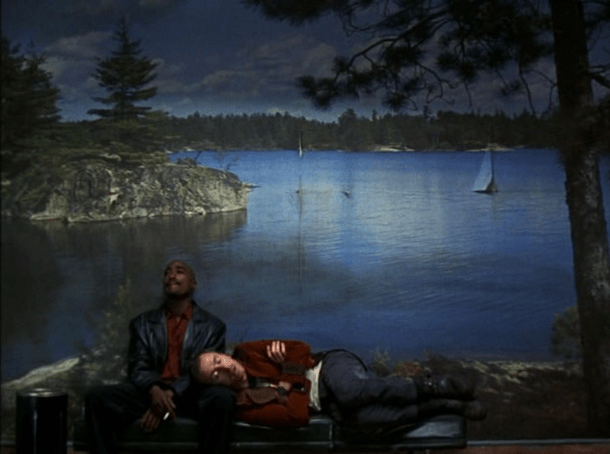
The visuals in Gridlock’d are also worth mentioning. The film’s camerawork is very stylish but never overwhelms or obscures the story or its characters. Instead, the film’s imagery only enhances the mood of any given scene. There is a great shot early in on the film when Spoon and Stretch wait in the hospital to hear any word on Cookie’s condition. The two men are sitting on a bench with a huge mural of an idyllic setting: a peaceful cottage scene complete with lake and a sailboat. It is an ironic image when you consider where they are, what has happened, and how they feel. And yet, coupled with very soulful music on the soundtrack, it is an oddly peaceful image juxtaposed in a fast-paced film.

Gridlock’d
is filled with many clever moments that elevate it above the usual drug movie. Without resorting to preachy sermons, it does an outstanding job of showing how bad the drug problem is the United States and how badly equipped they are in dealing with it. Gridlock’d is a smart film with plenty of humor and action to alleviate the rather serious subject matter. Best of all, it refuses to sentimentalize or romanticize its characters. And in an age of political correctness, this is a refreshing concept.

Quentin Tarantino’s THE HATEFUL EIGHT – A Review by Frank Mengarelli

Quentin Tarantino’s eighth film, THE HATEFUL EIGHT, came out at a hostile time in contemporary America. Tarantino joined marching protests against police violence; then the overly sensitive millennial online “journalists” chastised the film, and Tarantino, for painting shades of misogyny and racism. Tarantino was unfairly attacked by the extreme wings of each political party. Had no one paid attention to Tarantino films prior? Of course racism and misogyny plays a vital part in this film, because not only did those elements exist in the post-Civil War 1800’s, but also exist in reality.

Hateful Madsen

This film is a cataclysm of Tarantino’s self-indulgence. He constantly references his prior works (mainly RESERVOIR DOGS) while homaging Sergio Leone, Billy Wilder, and John Carpenter. His limited casting is formed of new Tarantino players: Kurt Russell, Walton Goggins, and Bruce Dern who Tarantino has worked with twice prior; as well as his seminal ensemble made up of Samuel L. Jackson, Zoe Bell, James Parks, Tim Roth, and Michael Madsen. Joining the Tarantino crew for the first time is Jennifer Jason Leigh, Demian Bichir, and Channing Tatum.

For as visionary as Robert Richardson’s cinematography is and Ennio Morricone’s Academy Award winning hypnotic score, the greatness of this film lies within one of Tarantino’s best screenplays and one of the best acting ensembles since GLENGARRY GLEN ROSS. Tarantino is one of the most talented actor’s directors who has ever sat behind the camera. He carefully crafts each character with an actor in mind, playing on their strengths and bringing out untapped potential from even the most veteran actor he’s working with. The cast is absolutely brilliant.

Hateful.jpg

Kurt Russell does the best John Wayne impression ever as the hard barked simpleton whose stupidity is even more outrageous than his facial hair. Russell is always a joy to watch, and Tarantino’s use of him are highlights in an already legendary career. Samuel L. Jackson is one of the best linguists to ever grace the screen. Tarantino’s dialogue has never sounded better than coming out of Jackson’s mouth (aside from Harvey Keitel). Tim Roth gives one of his best performances delivering an English shtick of Mr. Orange from RESERVOIR DOGS. Perhaps the most surprisingly great performance in this film is that of Michael Madsen playing a caricature of himself. I can’t say anything more about Jennifer Jason Leigh that hasn’t already been said. She should have won the Oscar.

Tarantino outdoes himself with THE HATEFUL EIGHT; the script is outrageously funny, giving these talented actors so much to play with. Only Quentin Tarantino would be able to craft an epic western built upon heightened paranoia that is three hours long, set inside a tiny cabin that is filled with eight larger than life characters, filmed with a wide angle lens that is constantly on the move. Tarantino has reached Terrence Malick status by making films for himself, not for an audience, or a demographic, and that’s what he has excelled since GRINDHOUSE. No one loves movies more than Quentin Tarantino. Oh, and about that overt racism in this film, did those people not stay until the end?

Hateful ending.jpg

Deceiver: A Review by Nate Hill

image

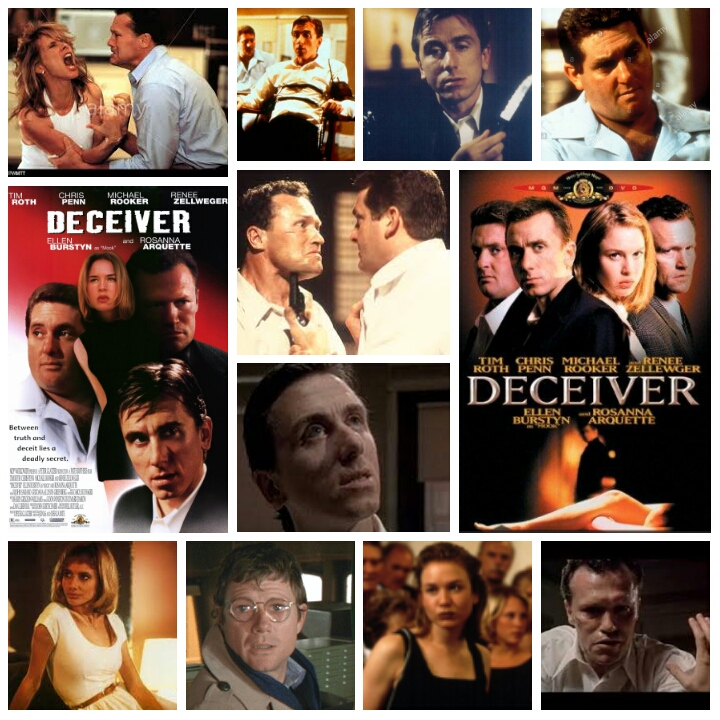
Deceiver is classic 90’s noir, with a dash of trashiness and a unique cast all suited to the bottom feeding material. It trips along in the same gutter as stuff like Basic Instinct, another film that is simultaneously aware and smugly indifferent to the fact that it’s scummy stuff. Almost every character is a reprehensible, unlikable twat, save for one surprise cameo. I may have just put you off the film, and to many who don’t see this type of thing as your cup of tea, please avoid it. But to those like me who appreciate a nice bit of grimy fun, well this is your ticket. Tim Roth plays Wailand , a wealthy and arrogent young heir to a textile mill. He is under suspicion for the brutal murder of a prostitute (Renee Zellweger) who was found in a park, cut in half. The two detectives who are tasked with hassling him seem almost as dodgy as he is, and when you look at the edgy character actors who play them it’s easy to see why. Detective Braxton (Chris Penn) is buried in gambling debt, owing a tidy sum to nasty loan shark Mook (Ellen Burstyn). Detective Kennesaw (Ann explosive Michael Rooker) is a rage fuelled whacko who is furious at his wife (Rosanna Arquette) for having affairs on him. Wailand has both the cunning nature to see this weaknesses in both of them, and the money to do something about it. This makes the detective’s job very hard, being stymied by their quarry every step of the way. Wailand also has mental issues including blackouts and strange episodes of personality alteration that Roth takes full advantage of in the scenery chewing department. It’s pseudo psychological mumbo jumbo that the actors play straight faced for a thriller that’s quite the endearing little flick. Rooker stands out with his trademark volatility that will put anyone’s nerves up to defcon 4. Roth has a ratty, evil looking face. Nothing against the dude, he just looks like he’d slit your throat in your sleep for a dollar. He’s great as suspicious characters, and has fun here being the wild card. Penn is his usual huff and puff self. Character actor Michael Parks has an awesome cameo as a psychiatrist with a monologue that almost lets the film wade out of cheese territory. Great cast, great flick.

Quentin Tarantino’s The Hateful Eight: A Review By Nate Hill

If Quentin Tarantino has achieved anything in his love letters to the spaghetti western genre, it’s his notable subtraction of the noodles from aforementioned dish, leaving decadent swaths of scarlet marinara sauce to be flung about the screen as blazing bullets rock various characters to their bones, sending blood all over the place in quantities that defy physics or biology. He did it with Django, and he does it again with The Hateful Eight, a somber, simmering snow opera that fell just south of winning me over entirely. Don’t get me wrong: there’s much merit to be found here, and as usual QT has a solid gold ear for dialogue that is as pleasing to the ear as Ennio Morricone’s unusually restrained, palm sweating score. He also shows his uncanny knack for chasing awesome actors out of the woodwork and casting them in his films. In his attempts to resurrect 70mm panavision he has achieved undisputed success. I’m also a sucker for both Agatha Christie style mysteries and snowbound locations (and what locations!!), both of which are in abundance here. And yet.. something just didn’t quite click for me, story wise. Perhaps it’s the fact that trailers had worked my imagination up to imposible heights of intrigue that couldn’t be brought to the table with this tale. In that regard, I suppose it’s my own fault. In any case, the eventual revelations just didn’t feel as profound and fitting after having sat through the endless, tantalizing set up. But oh, what a set up. QT deliberately marinates his characters in a stew of unease and malcontent, each player a grizzled picture of vague evil intent, firing missiles of distrust and loathing at one another until the ill will is as thick as the snow drifts they fight through. In the throes of a gathering blizzard, bounty hunter John ‘The Hangman’ Ruth (Kurt Russell in a sly nod of the head to beloved R.J. Macready, only saltier and far meaner) leads shackled prisoner Daisy Domergue (Jennifer Jason Leigh in the best performance of the film) to the town of Red Rock, to be hung. Along the way, and with much chatter, he picks up two stragglers: pissy fellow hunter Major Marquis Warren (Samuel L.Jackson) and one Chris Mannix (Walton Goggins). They arrive at Minnie’s Haberdashery, an oasis in the sea of winter, where four other undesirables have already shacked up in refuge: Owaldo Mobrey (Tim Roth earns his keep and then some) a self proclaimed hangman with some serious pep in his step, crusty confederate Sanford Smithers (Bruce Dern), Bob the Mexican (Demian Bichir is restrained comic perfection) and dangerous looking cowboy Joe Gage (Michael Madsen, that gravel voiced wildcat, is always awesome). They all hunker down to ride out the storm and quickly begin to realize that one or more amongst them isn’t who they say they are, and there’s devilry afoot. Sound intriguing? It did to me too, and I can’t say much about what exactly let me down without giving stuff away, but it just felt like such a pedestrian knockoff of a second act after the absolute slow burning joy of a guessing game which preceded it. Maybe it’s a bit like a Christmas present: you spend months in a giddy daze wondering what you’ll get, you get there christmas morning and there your present is: shiny, gleaming and filled with endless possibility, but unmistakably shaped by your specific anticipation of what lays within. You open your present… and there it is, mystery evaporated, no longer a present but an actual object, or in this case a story that you must wrestle with to appease the lingering wonder of what you expected, as opposed to what you got. I know it’s too much to expect every film to be that perfect christmas present that is as satisfying wrapped as unwrapped, but with QT’s stuff I feel I always act that way a bit, having pictured my definitive version of the films before having seen them, and feelng somewhat underwhelmed. That’s not to say I didn’t enjoy it: It’s chock full of macabre surprises, earnest performances and expectedly nasty violence. Jennifer Jason Leigh owns as Daisy, a frothing feral beast. Leigh has no shortage of courage in taking on courageous, unflattering roles, and she dives right into this one with fists and teeth clenched, eyes narrowed and a steely will to survive. It’s truly a blessing to see her on the big screen again and I hope to see more in the future. There’s one casting decision which almost ruined the last act for me. I won’t spoil it here but the ‘actor’ in question is so unbelievably untalented and sticks out like ten sore thumbs in his ineptitude, really making me wonder about QT’s sanity. The rest of the cast makes up for it in spades though, particularly Madsen, Roth and Russell. Goggins also gets loads to do and does it with grinning flair that would make Boyd Crowder proud. The cinematography by legendary Robert Richardson is staggeringly beautiful. The wintry Vistas sweep by in splendor, eventually moving inward to the firelit cabin where everything has a burnished, lived-in texture that’s transfixing to look at. If only the story had the weight and impact I was expecting, I could have given this glowing accolades, but there’s always next time. Gorgeous Tarantino outing with a cast that chomps at the bit relentlessly, and although it ultimately falls short, it’s quite the piece of cinema all the same.