
Terry Gillian’s The Imaginarium Of Dr. Parnassus


Terry Gilliam films almost always feel a bit slapdash and chaotic, it’s just the guy’s calling card to have a modicum of organized mayhem filling the fringes of whatever project he delivers. With The Imaginarum Of Dr. Parnassus, that is probably the case more so than any other film he’s made, and despite letting the clutter run away with itself a bit too much, it’s still a dazzling piece. Of course, your movie will always have a disjointed undercurrent when your lead actor passes away halfway through production, but that’s just the way it goes, and Gilliam finds a fascinating solution to that issue here. Imaginarium is in many ways a companion piece, in spirit, to The Adventures Of Baron Munchausen, a film he made decades earlier, both containing a sort of baroque, Da Vinci-esque splendour and sense of fantastical wonder. Christopher Plummer hides behind a gigantic Dumbledore beard as Parnassus, a magician extraordinaire who travels the land with his daughter (Lily Cole, that bodacious Botticelli bimbo) and circus troupe, including Verne ‘Mini Me’ Troyer. Years earlier he made a pact with the devil (Tom Waits, an inspired choice) using his daughter as collateral, and now Old Nick has come to reap the debt, causing quite the situation. The story is a hot mess of phantasmagoria and kaleidoscope surrealism thanks to the Imaginarium itself, a multi layered dimension-in-a-box that accompanies them on their travels. Things get complicated when they rescue dying lad Tony (Heath Ledger) who somehow ties into the tale as well. Now, this was Ledger’s very last film, its future left uncertain after his passing, but help arrived in the form of Johnny Depp, Jude Law and Colin Farrell, swooping in to play doppelgänger versions of Tony as he bounced from one plane of the imaginarium to another with Cole in tow, always one step ahead of Waits, who is a rockin’ choice to play the devil, smarming and charming in equal doses. It’s kind of a huge melting pot of images and ideas hurled into creation, but it’s a lovable one, the fun you’ll have watching it reasonably eclipses lapses in logic, plotting and pacing. 

-Nate Hill

Terry Gilliam’s The Fisher King: A Review by Nate Hill 

Tragic. Uplifting. Comical. Bittersweet. One of a kind. Terry Gilliam’s The Fisher King takes on mental illness by way of a fantastical approach, an odd mix on the surface, but totally fitting and really the only way to put the audience inside a psyche belonging to one of these beautiful, broken creatures. Sometimes an unlikely friendship springs from a tragedy, in this case between a scrappy ex radio DJ (Jeff Bridges) and a now homeless, mentally unstable ex professor of medieval history (Robin Williams). Bridges was partly responsible for an unfortunate incident that contributed to William’s condition, and feels kind of responsible, accompanying him on many a nocturnal odyssey and surreal journey through New York City, an unlikely duo brought together by the whimsical cogs of fate that seem to turn in every Gilliam film. Williams is a severely damaged man who sees a symbolic ‘Red Knight’ at every turn, and seeks a holy grail that seems to elude him at every turn. Bridges is down to earth, if a little aimless and untethered, brought back down from the clouds by his stern, peppy wife (Mercedes Ruehl in an Oscar nominated performance). They both strive to help one another in different ways, Williams to help Bridges find some redemption for the single careless act that led to violence, and Bridges assisting him on a dazed quest through the streets to find an object he believes to be the holy grail, and win over the eccentric woman of his dreams (Amanda Plummer). In any other director’s hands but Gilliam’s, this story just wouldn’t have the same fable-esque quality. Straight up drama. Sentimental buddy comedy. Interpersonal character study. There’s elements of all, but the one magic ingredient is Gilliam, who is just amazing at finding the way to truth and essential notes by way of the absurd and the abstract. Watch for fantastic work from Michael Jeter, David Hyde Pierce, Kathy Najimy, Harry Shearer, Dan Futterman and a quick, uncredited Tom Waits as well. The hectic back alleys and silhouetted trellises of NYC provide a sooty canvas for Gilliam and his troupe to paint a theatrical, psychological and very touching tale of minds lost, friendship found and the past reconciled. 

Mystery Men: A Review by Nate Hill

  
I’ve always been both fascinated and puzzled by Mystery Men. It’s essentially a titanic budget spent on a bunch of inane tomfoolery that makes sense neither as satire, straight up comedy, serious superhero fare or anything in between. And yet, it’s so much fun, coming out a complete winner despite any odds it dodges on the way. I bring it up because Suicide Squad is coming soon, and for whatever reason every trailer and bit of marketing for it so far reminds me of this one. Couldn’t even really say why, just something about the vibe and aesthetic of both films that seems distantly related. Could just be me being strange, which is the word in question for this one. It’s bizarre beyond belief, stylized to a point where Dr. Seuss would get dizzy and full of abstract, off the wall humour that requires you to coast along in the same delirium as the characters before you really get it. It takes place in Champion City, a cluttered metropolis that makes Gotham look like dullest suburbia. It’s a place populated by heinous, eccentric super villains, one legitimate superhero and a bunch of misfits who fancy themselves costumed crimefighters. When theatrical arch menace Casanova Frankenstein (Geoffrey Wright proved to me that he could top Barbosa, no easy feat in my books) is booted from prison, he launches into his old ways, ransacking the city and bringing hero Captain Fantastic (Greg Kinnear), to his knees. It’s now up to a hilarious group of lovable buffoons to bring him and his minions down. You better sit down before I describe these guys, cuz they’re too good to be true. Ben Stiller is Mr. Furious, a dude who believes he can get so angry he has super strength… except..not. William H. Macy plays The Shoveler, who pretty much shovels. Janeane Garofalo is The Bowler, who carries a ball with the essence of her superhero dad trapped inside. Kel Mitchell is the Invisible Boy, who is only invisible when nobody is looking. My favourite by far is The Blue Raja (a scene stealing Hank Azaria), a turban wearing, plummy British accent spouting dude whose weapons of choice are forks, which he flings about the place like ninja stars. I could go on and on about every little quirk and stroke of genius, but I’d rather let you discover it all yourself, and immerse yourself in the giddy treasure chest that is this film. I must make mention of Tom Waits as a scientist who designs elaborate and “non lethal” weapons. Man, this movie rocks. Additional flair is provided by Lena Olin, Ned Bellamy, Claire Forlani, Paul Reubens, Wes Studi (whose character cuts guns in half with his mind and blurts out endless paradoxical platitudes) and Eddie Izzard. There’s a few hidden moments of emotion that take you off guard like easter eggs amongst the lunacy, for all you folks who want a side of seriousness with your buffoon burger. This isn’t everyone’s thing, but check ‘er out anyways, just to make sure. It’s one of my favourites.

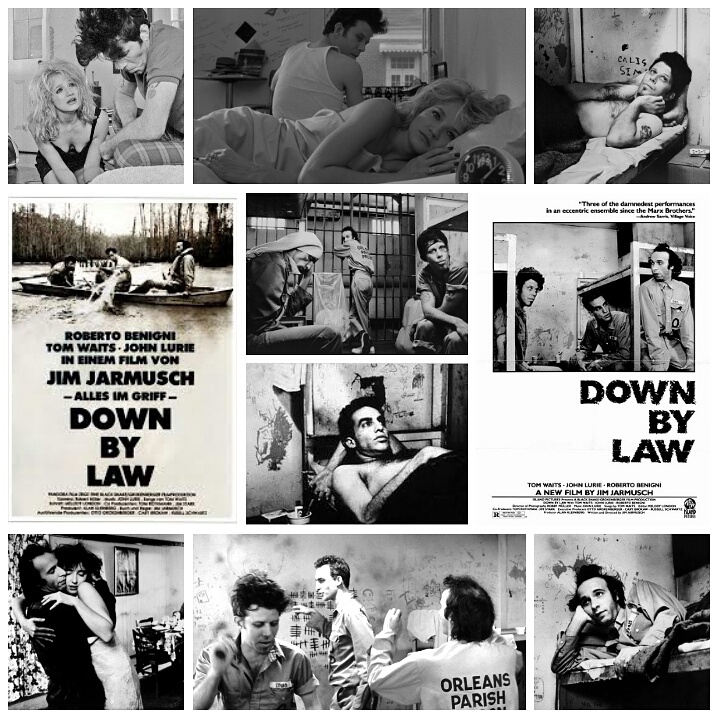
Jim Jarmusch’s Down By Law: A Review by Nate Hill

image

You have to be in a very particular type of mood to properly tune into a Jim Jarmusch film. He populates his often black and white and always slightly mournful films with awkward, dazed individuals who more comfortable in the uncertain pauses between dialogue than the actual words themselves. When I feel like a Jarmusch film (other than Dead Man which is an all timer for me) it’s always during times when I feel the daydreamy grey matter coming on, an otherworldly, downbeat relaxation that his  work is rife with. Down By Law is a signature example of this, and most likely the film I connect with most of his, after Dead Man. This one concerns three wayward and very different souls who by fate and unfortunate circumstance end up in jail together. Zach (Tom Waits) is a radio DJ who is hounded by his girlfriend (Ellen Barkin) to be more proactive and less relaxed. Jack (John Lurie) is a laid back pimp, and they both find themselves incarcerated in a Louisiana prison where they meet the eccentric Italian tourist Roberto (Roberto Benigni, hilarious). The trio are a puzzling gaggle of misfits, moments of startling pathos and stinging humour sprouting as their time together goes on. Soon they discover that Roberto may know of a way to escape, and see it as their chance. The characters in any given Jarmusch film never seem the same as usual film archetypes; they’re always quirky and completely their own person, which is no doubt a product of a very intuitive directorial process, and an excellent relationship with the actors. It can be disarming to spend time with such distinct people in film, but when you stop to realize just how weird everyone around you in real life is vs. what is common for movie scripts, it feels geniune. This one is lived in, authentic and funny in that intangible way where you can’t even say why it’s so hilarious. We all a-scream for ice  a-scream!

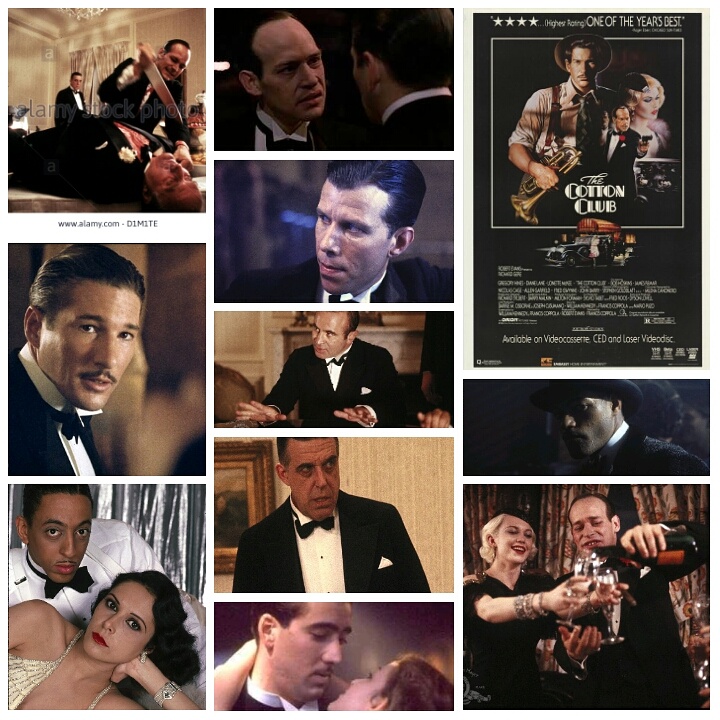
The Cotton Club: A Review by Nate Hill

image

Francis Ford Coppola’s The Cotton Club is every bit as dazzling, chaotic and decadent as one might imagine the roaring twenties would have been. it’s set in and revolves around the titular jazz club, conducting a boisterous, kaleidoscope study of the various dames, dapper gents, hoodlums, harlots and musicians who called it home. Among them are would be gangster Dixie Dwyer (a slick Richard Gere), Sandman Williams (Gregory Hines), a young Bumpy Johnson (Laurence Fishburne) and renowned psychopathic mobster Dutch Schultz (a ferocious James Remar). Coppola wisely ducks a routine plot line in favor of a helter skelter, raucous cascade of delirious partying, violence and steamy romance, a stylistic choice almost reminiscent of Robert Altman. Characters come and go, fight and feud, drink and dance and generally keep up the kind of manic  energy and pizazz that only the 20’s could sustain. The cast is positively stacked, so watch for appearances from Nicolas Case, Bob Hoskins, Diane Lane, John P. Ryan, James Russo, Fred Gwynne, Allen Garfield, Ed O Ross, Diane Venora, Woody Strode, Giancarlo Esposito, Bill Cobbs, Sofia Coppola and singer Tom Waits as Irving Stark, the club’s owner. It’s a messily woven tapestry of crime and excess held together by brief encounters, hot blooded conflict and that ever present jazz music which fuels the characters along with the perpetual haze of booze and cigarette smoke. Good times.