Robert Rodriguez’s Desperado 

Robert Rodriguez’s Desperado is the original south of the border shoot em up bloodbath, bar none. I’m aware it’s a sequel/remake of Robert’s breakout debut El Mariachi, but the now legendary style and brutality he cultivated started to blossom here in the Mexican desert with scowling Antonio Banderas and his guitar case packed with heavy artillery. The aesthetic coalesced into something measurable here, whilst in Mariachi we only saw fits and starts. Here the tone is solidified and paves the way for the magnum opus that is Once Upon A Time In Mexico, my favourite Rodriguez flick. It all starts with the image of Banderas sauntering into a scumbucket cantina, full of sweaty machismo and smouldering angst, laying waste to the place with more phallic firepower than the entire wild Bunch. It’s a time capsule worthy sequence that demonstrates the pure viscerally intoxicating effect that the action film has on a viewer, when done as well as it is here. Narrated by wisecracking sidekick Buscemi (Steve Buscemi, naturally), Banderas positively perforates the place, fuelled by the internal furnace of revenge, shrouded in the acrid scent of gunpowder and awash in tequila delirium. As soon as this sequence blows past, the credits roll up and we’re treated to a Mariachi ballad sung by Antonio himself, belted out with his band to ring in this hell-beast of a movie. Together, those two scenes are some of the very, very best opening sequences you can find out there, timelessly re-watchable. The rest of the film pulls no punches either, as we see El leave a wanton gash of carnage in his wake across Mexico, on a vision quest of violence as he works his way up the ranks of organized crime, starting with slimy dive bar owner Cheech Marin. Quentin Tarantino has a spitfire cameo, rattling off a ridiculous joke before El steps into yet another bar and the shit (as well as the blood) hits the fan. His endgame target is crime boss Bucho, played with terrifying ferocity by Joaquim De Almeida. It’s hard to picture an angrier performance than Banderas’s before Almeida shows up, but this guy is a violent livewire who’s not above capping off his own henchman like ducks in a row, puffing on a giant cigar and casually blowing the smoke in his concubine’s face mid coitus. El has a love interest of his own too, in the form of ravishing, full bodied Carolina (Salma Hayek). Hayek is a babe of the highest order, and their steamy candle lit sex scene is one of the most full on ‘jizz your pants’ rolls in the hay that 90’s cinema has to offer. This is an action film to the bone though, and they’ve scarcely mopped up and caught their breath before he’s forced to dispatch another horde of Bucho’s degenerates in high style. One has to laugh a bit when a guitar case becomes a full on rocket launcher during the earth shattering finale, but such are the stylistic dreams of Rodriguez, a filmmaker who is never anything short of extreme in his work. As if the guns weren’t enough, Danny Trejo shows up as a mute assassin who like to hurl throwing knives at anything that moves, and it’s this Baby Groot version of his Machete character years later that comes the closest to punching El’s ticket. The stunt work is jaw dropping as well, a tactile ballet of broad movements, squib armies that light up the screen, accompanied by gallons of blood that follows the thunder clap of each gunshot wound like crimson lightning. It’s a perfect package for any lover of action, romance, action, darkest of humour, action, oh and action too. When discussing films that have held up in years or decades since release, this one is not only a notable mention, it’s a glowing example and a classic that has just aged gorgeously.

-Nate Hill
DAVID FINCHER’S THE SOCIAL NETWORK — A REVIEW BY NICK CLEMENT

1

When I first heard that David Fincher would be directing a film about the formation of Facebook, my initial response, as was likely the same response from many others, was one of befuddlement. Why would this exquisitely talented filmmaker spend his time telling a story about a relatively young social media empire? What’s so cinematic about that? In conjunction with Aaron Sorkin’s razor-sharp and dialogue-heavy screenplay, Fincher ended up crafting one of the strongest films of his career, and while not as deep or as emotionally shattering as Seven, or as detail-obsessed as Zodiac or as trendsetting as Fight Club, there’s a timeless aspect to The Social Network that encourages repeat viewings. The film also continued Fincher’s obsession with finding the absolute perfect shade of the color brown, as his visual palette became even more desaturated and icy in this film, thanks to the pin-point precision of Jeff Cronenweth’s foreboding cinematography that stressed shadows and low-lit interiors. All of the ego-driven and brilliant characters on display operate with a sense of emotional iciness which must’ve appealed to Fincher’s dark cinematic heart, while Sorkin’s rapid-fire dialogue contains sardonic wit as well as hyper-intelligence to match its subjects.

2

This is the role that Jessie Eisenberg will always be remembered for, Andrew Garfield projected empathy and stupidity at the same time, and Armie Hammer did a superb job in a double performance which consistently steals the show. The ominous and suspenseful musical score by Trent Reznor and Atticus Ross is a sonic delight, punctuating nearly every single scene with sinister energy, and was in perfect tandem with the slippery-smooth editing patterns set by Angus Wall and Kirk Baxter. A box-office hit and critical darling, The Social Network was nominated for eight Oscars, winning three, but not Picture or Director. Which is ludicrous. Because I don’t know about you, but I’ve seen this film a helluva lot more times than The King’s Speech. This was the film, along with Zodiac, where I really started to notice how Fincher was becoming his generation’s Alan J. Pakula: Seven was his Klute; The Game was his Parallax View; Zodiac/Social Network are his All the President’s Men; Gone Girl was his Presumed Innocent; Benjamin Button was his Sophie’s Choice; Dragon Tattoo was his Dream Lover. I’m probably stretching a bit, but I think the similarities between the two filmmakers are apparent in both aesthetics and themes, despite them working in very different eras of storytelling.

3

The Island Of Dr. Moreau


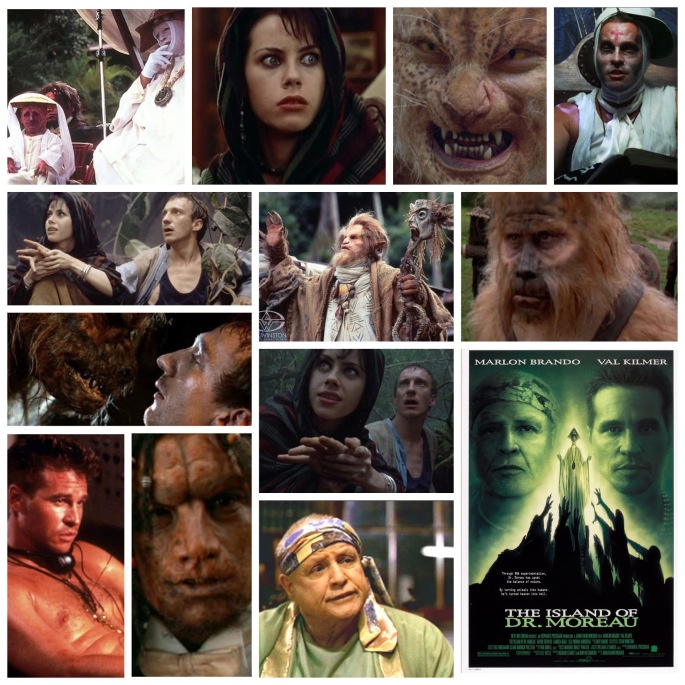
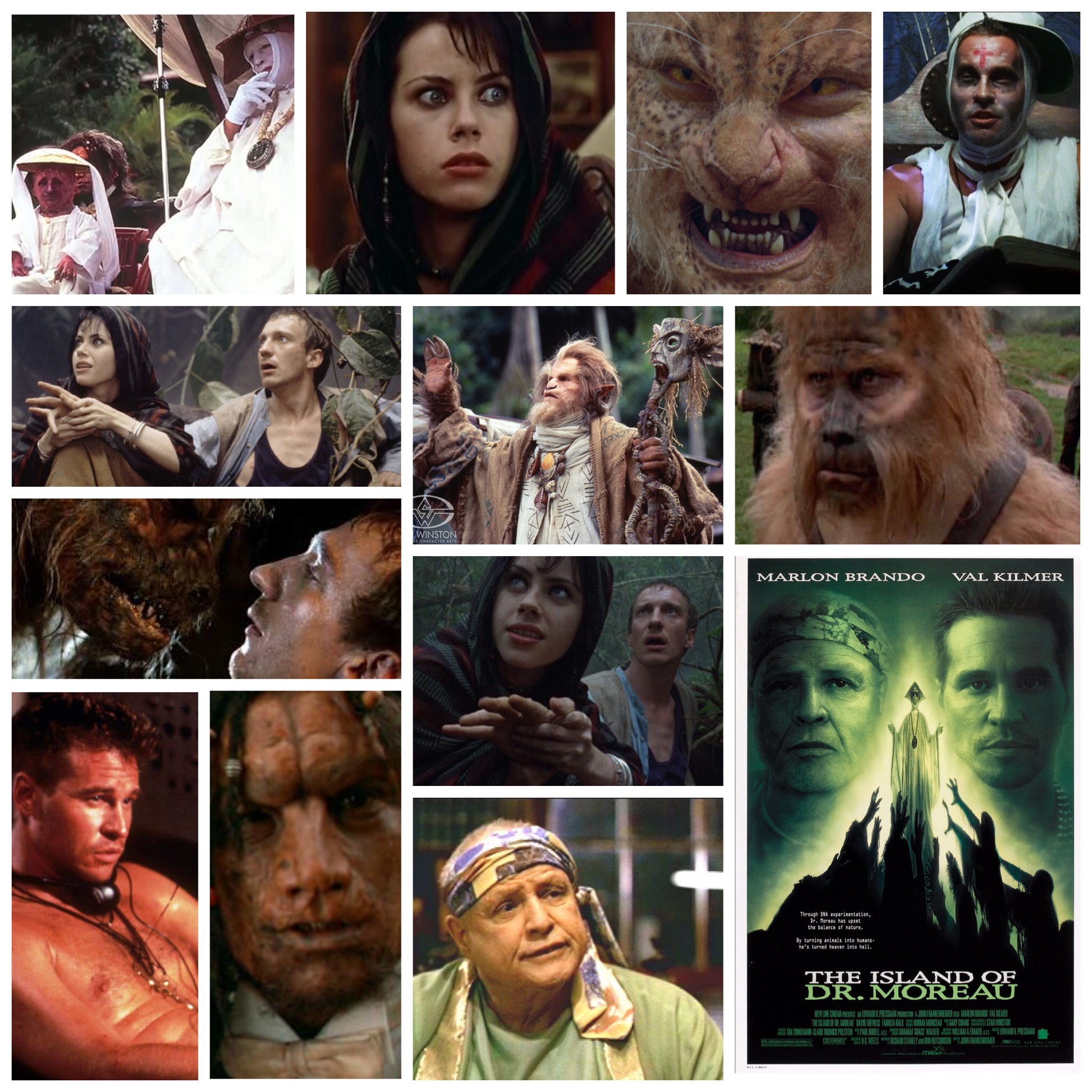
I don’t think there’s a film out there with a more volcanically troubled production history than John Frankenheimer’s The Island Of Dr. Moreau. It wasn’t even supposed to be helmed by him, rather an upstart named Richard Stanley, who’s control on the creative reigns was violently yanked away by the studio and given to notoriously fiery Frankenheimer, who, lets face it, could never really get his genetically altered ducks in a line when he took over. Between Val Kilmer acting like a lunatic and very nearly being replaced, Marlon Brando being an even bigger lunatic because he knew no one would ever replace him (the big guy had an ego to match his girth) and raging budget problems as a result of the antics, the making of this film was, in short, a fucking disaster. So now I’ve said my piece on the most talked about aspect of this film, I want to shift gears into an area that just doesn’t get covered a lot in discussion: the final film itself. Because of the maelstrom of bad PR circling the film like the storm that maroons our heroes on Moreau’s isle, many people just assume it’s a shit movie, which is not the case. I happen to love it, and if anything the level of obvious behind the scene chaos seeping through just gives it an organic unpredictability free from shackles of a script that I imagine was fairly generic in the conception phase. This is a bonkers film, no denial from me there, but I’ll be damned if I didn’t love every certifiable, furry prosthetic adorned, opulent, disorganized minute of it. David Thewlis took over from Kilmer as the lead, when Val had behavioural issues, but they’re both present and accounted for as the wreckage of a ship meets Moreau’s isle, a twisted Eden where human animal hybrids live under the delirious monarchy of the good Doctor, played with reliably laconic mania by Brando. He’s been playing god, the old codger, and his island is now home to a host of varied zoological wonders, and no narrative would be complete without it all going tits up in a giant mutiny later on. The practical effects are delightfully excessive and elaborate, packed onto specifically chosen actors who already have an ethereal, animalistic aura on their own. Ron Perlman is the sagely Sayer Of The Law, Marc Dacoscas the leopardly Lo Mai, Temuerra Morrison the lion like Azazello and wild eyed Fairuza Balk is feline goddess Aissa, who happens to be Moreau’s daughter. ‘She’s a pussy’ Kilmer quips in one of many candid slips of the tongue on his part. The inmates eventually run the asylum, or whichever clever parable you want to apply, and it hurtles towards a third act full of flying fur and fangs that releases the floodgates on Frankenheimer’s lack of cohesion, the mad scientist workshop of Stan Winston’s special effects, Brando’s bug eyed dementia and Kilmer’s ADHD riddled performance, in one scene going so off far off the rails that Thewlis has to literally break character and tell him to ‘quit fuckin around’, an unintentional laugh riot. Brando has a midget Mini Me, too, which is never fully explained but always good for a nervous laugh, as the thing looks like a fetus that vaulted out of the womb a few month too early, although I suppose that’s the point. Look, it’s a mess, but it’s a beautiful one, a kaleidoscopic parade of grotesque costumes and cartoonish performances wrapped up in a story so overblown and off the map it almost takes on a pulse of it’s own. For insight on what went down behind the scenes you can read Ron Perlman’s autobiography, watch the recent documentary on the film or simply check out IMDb trivia, but whatever went down for real, it ended up branding one of the most bizarre and wonderful creature features of the 90’s, and I love every feral, freaky minute of it. 

-Nate Hill
DAVID FINCHER’S GONE GIRL — A REVIEW BY NICK CLEMENT

1

Disturbingly cool yet thoroughly ridiculous is how I’d describe David Fincher’s sleek thriller Gone Girl.  Disturbing because of what it says about marriage and how little some spouses probably know about each other. Ridiculous because, when boiled down, it’s all rather ludicrous in retrospect, with so much depending on contrivance and all-knowing manipulation and calculation. And cool because it seems that Fincher is incapable of making movies that don’t exude this feeling – cool.  He’s an emotionally icy string-puller, always has been, always will be. In Gone Girl, his trademark ominous music, gliding camerawork, and ultra-swift editing patterns amp up the tension and pace, resulting in a lightning-quick viewing experience that transcend the procedural elements and construction to the dense narrative.  He’s a master craftsman who always seems to be working at the top of his game, and for those who appreciate this sort of technical precision, Gone Girl offers unending pleasures.  You get the sense that, as a filmmaker, he gets a kick out of fucking with people – he’s our resident sadist entertainer. I just wish he’d get back to something a bit meatier with his subject matter.

2

Along with author/screenwriter Gillian Flynn, Fincher clearly saw lots of potential in this perverse, kinky, totally screwed up landscape of domestic “bliss” living, while they also set their cynical sights on the fiendish news media and society’s propensity for believing that someone’s guilty before a trial has even been conducted.  All of Fincher’s movies, The Game and Fight Club especially, have reveled in sick and twisted humor, and Gone Girl amps up the dark-hearted laughs in any number of scenes, underscoring a deeply nasty point of view.  Ben Affleck has rarely been better as Prime Suspect Husband and he got a chance to play with our expectations of how his character would and should act given the circumstances.  Rosamund Pike got an Oscar nomination and delivered a knock-out of a performance – she needs to get more work as she’s been criminally undervalued for years.  And it goes without saying that the film affords big-time Kim Dickens POWER. But for me, a far more scathing and brilliant dissection of modern marriage is Ruben Ostlund’s devastating satire Force Majeure, which thematically resembles Gone Girl in more than one instance.

3

Wonder Woman

Wonder Woman

2017.  Directed by Patty Jenkins.

Wonder-Woman-2017-Movie-Wallpaper-10-1600x798

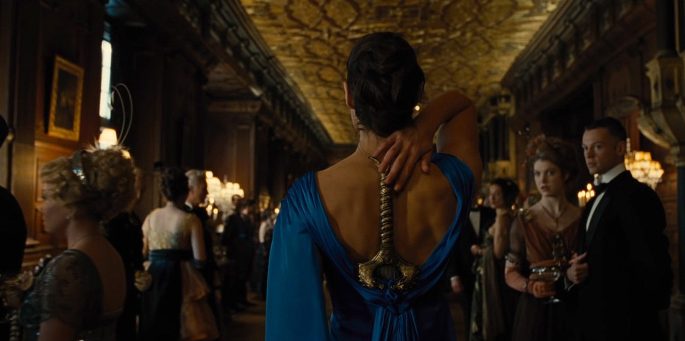
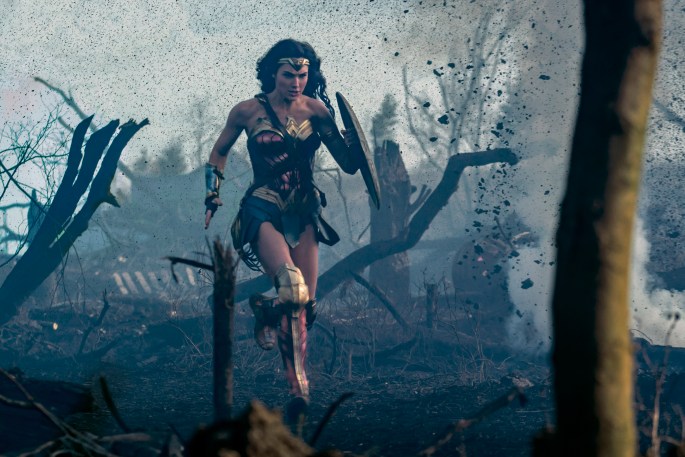
Patty Jenkins’ Wonder Woman is two films.  On the surface, it is the most Marvel-esque of DC’s cinematic universe, using all of the tried and true blockbuster clichés to present a feel good origin story in which love triumphs over evil.  However, beyond the expected trappings of the genre, Jenkins’ unique directorial style and Gal Gadot’s larger than life performance take the narrative beyond costumed mayhem into a thrilling exploration of sexual politics and morality that almost escapes the constraints of its three colored origins.

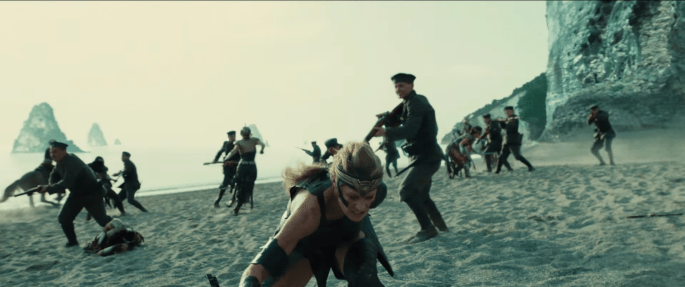
Wonder Woman is thrust into the Great War when a British spy crash lands on her island sanctum.  Believing that Ares, the god of war, is responsible for the carnage, she sets out with a group of unconventional soldiers to bring an end to his reign of terror and restore peace to the world.  Jenkins balances the fantastical elements of Wonder Woman’s origins with the plight of the trenches in a remarkable dance.  There are stunning scenes of otherworldly bravura mixed with gritty war sequences that conjure a feeling of epic adventure that never loses steam.  Gal Gadot’s emotional turn as the titular hero is one for the ages, bringing gravity and vulnerability to a role that could have easily misfired.  Although she is not mortal, her basic, possibly naïve, understanding of the heart of the human experience is what carries the film.

Vamers-FYI-Movies-Full-Length-Wonder-Woman-Trailer-is-Stunning-Screen-Shot-07

Chris Pine does an admirable job as the love interest, codifying the human experience through genuine exchanges with Gadot and outstanding scenes with the supporting cast of misfit soldiers.  One of the film’s best surprises is in its candid approach to the cost of conflict, both in the heart and soul.  Gadot approaches moral dilemmas with the benefit of not only being an outsider, but with a level of innocence that springs from never experiencing inequality.  The ramifications of this play throughout the narrative, both playfully and with serious intent.  While Wonder Woman plays to the Marvel formula with perfection, it transcends the entire MCU catalogue with conviction through its acknowledgement of these truths and its doubling down on the hero’s story.   While there’s nothing immediately new, what Wonder Woman does, it does exceptional well.

Matthew Jensen’s cinematography approaches the combat with an intriguing mix of gentile splendor and brutal omnipotence.  The bird’s eye capture of the No Man’s Land sequence is flawless, delivering an action extravaganza that builds upon the notion of hope in desperation that propels Gadot’s heroine into an iconic status.  While the slow-motion captures become tedious as the film winds on, there’s so much to digest that the painfully long running time isn’t a factor until the clunky, CGI bonanza of the finale.  Die-hard fans will not be able to unsee the glaring similarities with The First Avenger, however, the recipe is one that continues to prove, time and time again that it works and Wonder Woman simply does it better.

3099273-screen+shot+2016-07-23+at+2.27.18+pm

The importance of a female focused superhero film cannot be understated.   This is a unique film because of its treatment of the complex issues of gender, violence, and heroism.  However, as a sum of its parts, Wonder Woman stays regrettably in bounds, offering nothing fresh to the summer blockbuster and while this may disappoint viewers looking for the next best thing, it’s important to remember that films are meant to entertain, and Wonder Woman not only eclipses this humble goal, it also inspires.

Highly recommend.

wonder-woman_wp

B Movie Glory: Johnny 2.0


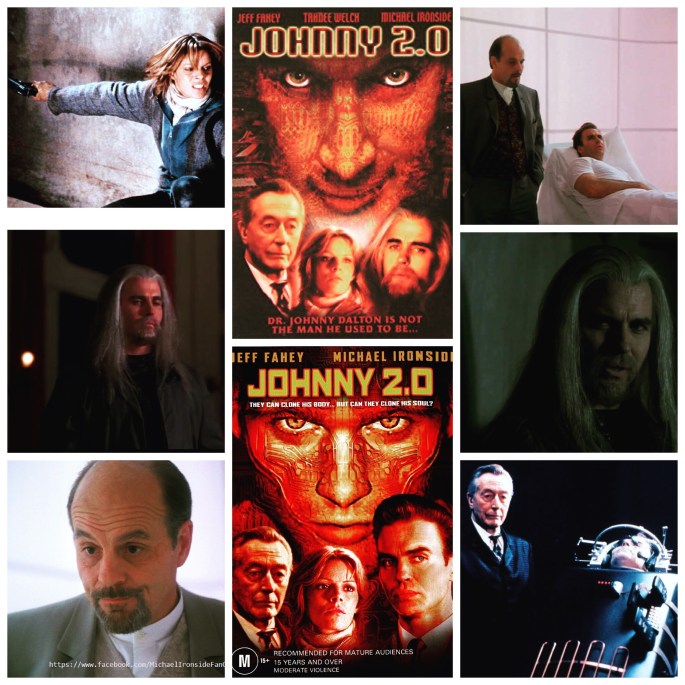
It’s always fun to come across genuinely intelligent science fiction films, especially when you go into them expecting a half assed, clunky yawn, which happens frequently. Johnny 2.0 is an overlooked little cyber-punk gem in an unassuming release package, a thinking man’s sci-fi story that could have easily gone the other way, but contains enough inspired creativity to rise above the muck. Jeff Fahey plays Johnny Dalton, a genetic researcher whose facility is attacked by activists. Waking up from the disaster he is stunned to find that he’s not Johnny at all anymore, but a clone who has been in cryo for 25 years, awakened now for one purpose: set out across a post apocalyptic wasteland to retrieve the original Dalton and smoke out a web of conspiracies that have hatched over the years. There’s all sorts of really intriguing ideas at play here including MRI memory mapping, organic tracking suits, genetic reconfiguration and personalized holograms, a wealth of scientific world building that earns this film its stripes in the artistic departments. Fahey is excellent, as is a noble Michael Ironside, Tahnee Welch and John Neville. Super solid storytelling, ideas worth exploring, an impressive level of design and atmosphere achieved despite the limited funds, there’s not too much you can say about this one that is not the highest of praises. 

-Nate Hill

Gabe Ibáñez’s Automata 


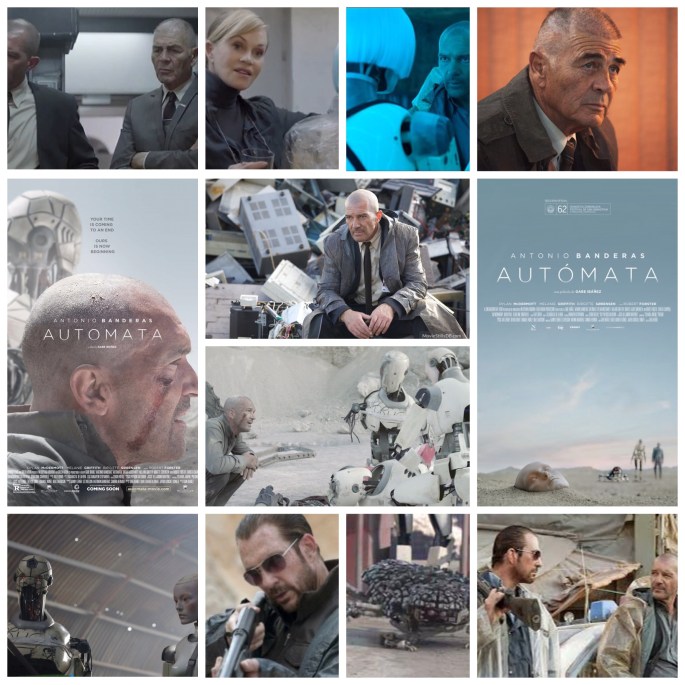
Gabe Ibáñez’s Automata had the misfortune of being released in the shadow of another film concerning robotics and artificial intelligence, Ex Machina. It’s hard to compete with the kind of hype that film generated back in 2015, and as such it kind of slipped through the cracks. It’s a shame because there’s much about that’s striking, stylized and fascinating, despite being a bit too elaborate for it’s own good. Drenched in a rainy neon Blade Runner atmosphere, it follows a bleak story involving insurance investigator Jacq Vaucan (a bald, somber Antonio Banderas) as he navigates a broken world ravaged by solar storms that have whittled down the human populace to around twenty million. Robots have been employed to rebuild the dying infrastructure, and Jacq keeps tabs in case any of them violate their primary directive, under the stewardship of his boss (Robert Forster). When rogue police officer Wallace (Dylan McDermott is dynamite) shoots a robot he claims was trying to alter itself, Jacq surmises that there’s a ‘clocksmith’ out there trying to give them minds of their own. It’s all very vague and we never really have anything more than illusory whispers or half explained concepts to go on, but these matters find him and the company’s nasty head of security (Tim McInnerney) venturing far out into the desert where a faction of robots, led by Javier Bardem no less, have grossly deviated their protocol and are evolving into… something else. Banders’s once wife Melanie Griffith does double duties as a creepy liaison in their case and the voice of a sympathetic sex slave-bot who plays a key role. I’m not entirely sure what the story arc is supposed to be, as it’s often muddled and dense, but it seems confident that it has one, and isn’t just flying blind into Euro experimental abstract mode as some scenes suggest. It has a point to make, it’s just wrapped that up in enigmatic fashion and cloaked any sense of linear exposition in blankets of atmospheric ambient sound, deliberately indistinct story beats and strangeness. I’m okay with that to an extant, as there’s plenty to enjoy visually, especially with the robots and their design, but many won’t be and will want more than just machine dreams without a manual to guide them. I for one enjoyed the memorable image of bald, parka clad Banderas hunting primordial androids in a washed out, used up wasteland. All that’s missing is a score by Vangelis or Tangerine Dream.  

-Nate Hill

Four Rooms


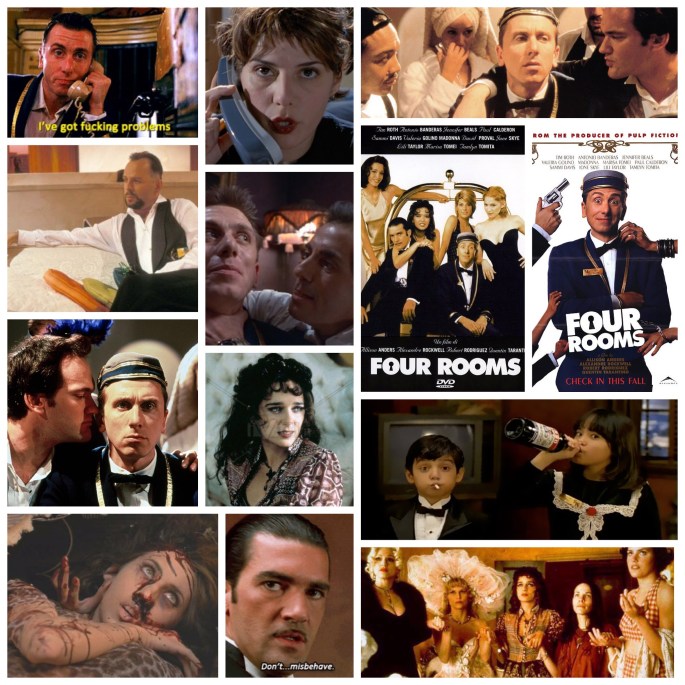
Four Rooms is an anthology film of sorts, segmented into four episodes, two of which are pretty inspired as they just happened to be helmed by Robert Rodriguez and Quentin Tarantino. The other two outings… well, let’s just say they kind of bring the whole film down. As solid as Robert and Quentin’s efforts are, they’re two quarters of a whole that needs to be engaging all the time to work as a cohesive package, and sadly that’s not the case. These four tales all take place in one hectic and seedy L.A. hotel, in various rooms that showcase a host of troubled weirdos just trying to get through the night. This quartet of nocturnal misadventures is tied together by one central character, Ted The Bellhop (a peppy Tim Roth). In the first, which is also the weakest, a goofy coven of witches carry out some asinine ritual. This is a well casted bit as we see the likes of Madonna, Ioan Skye, Valeria Golino, Lilli Taylor and Alicia Witt, but the tone comes off as grade school level shenanigans and there’s many a cringe to be had. The second is an oddly placed noirish bit that finds Ted caught between an unhinged gun wielding whacko (If I’ve said it once, I’ve said it a hundred times, David Proval is criminally underrated) and his femme fatale wife (Jennifer Beals). This one isn’t as awful as the first, yet feels a little off putting and claustrophobic. The third sees Robert Rodriguez step up to bat with ‘The Misbehavers’ a riotous black comedy concerning an upper class couple (Antonio Banderas and Tamlyn Tomita) who leave Ted in charge of their troublemaker kids for the night as they go out dancing. Anything can and does go wrong here, as the youngsters get into all kinds of shit including finding a half decomposed hooker (Patricia Vonne) stuffed in a mattress. Rodriguez shows comedic flair in fits and starts in the pulpy action side of his oeuvre, but here he’s purely having fun and the result is a sleazy hoot of a good time. The fourth and best is by Tarantino, and as such is mostly talking. But what talking it is; Ted stumbles into the penthouse suite which is home to a string out Hollywood film crew, and they’ve decided to place a dangerous bet that involves bodily dismemberment. Quentin is usually a fairly awful actor, but he’s not bad here as the motor mouthed ringleader of this insane posse, while Paul Calderon, Marisa Tomei and a very stressed out Bruce Willis chime in as well. This segment is pure gold, with an abrupt, trademark Tarantino payoff that leaves you chuckling darkly. All kinds of folks have cameos, so watch for the recently disgraced, supremely ugly Kathy Griffin, Lawrence Bender, Salma Hayek and others. There’s always stronger and weaker entries in an anthology film, competition is par for the course. This one has quite the ups and downs though, and would have been far better off being just a Tarantino/Rodriguez double feature, but oh well. 

-Nate Hill

Wonder Woman

WW2

The road’s been rocky for the fledgling DC comic books extended cinematic universe (tagged with the clunky acronym DCEU), with a dark, violent Superman reboot, a controversial introduction of everyone’s favorite Gotham City orphan all grown up, and a deplorable studio hack job forced on David Ayer’s antihero romp.  One of the shining moments agreed on by almost all fans was the inclusion of Wonder Woman in Batman v Superman: Dawn Of Justice, raising expectations for a solo adventure that’s finally being released to the world this week.  There’s some very good news for Time Warner, DC and anyone else who’s paying attention, which is that actress Gal Gadot continues to make a riveting heroine.  Every minute she’s onscreen, you can’t take your eyes off her; heroic, beautiful, strong, and warm, she’s a marvel and the long wait to see the character front and center on film is rewarded by the casting and performance alone.  As for the rest of it, your enjoyment will vary depending on how interested you are in slipping on the fraying comfort jeans of the now typical superhero origin story.

Set in a nostalgic milieu that occasionally borders on Captain America:  The First Avenger copyright infringement, Wonder Woman starts with our heroine’s journey from the magic island where her Amazonian tribe, created by Zeus himself, lives in a literal bubble to the raging battles of World War I going on everywhere else.  The door to the real world is opened by a man, but at no point are we ever led to believe anyone has the presence and agency that Gadot’s Diana Prince has.  The screenplay does a wobbly but noble job of ruminating on the role of male aggression and violence in the world, offering Wonder Woman up as a have-your-cake-and-eat-it-too alternative to their historically destructive tendencies by engaging in the destruction at a higher level than any of the boys have ever been capable of.  Director Patty Jenkins does a fairly good job of trying to embrace and squeeze the most of the quiet moments, sometimes nailing the burgeoning romance between Diana and Chris Pine’s Steve Trevor but other times allows explication scenes to drag for no particularly apparent reason.  She does manage to simultaneously ground and celebrate this historic character, who arrives at a lovely ‘why we fight’ philosophical end point by the final reel that feels honestly earned.

The film does suffer from a variety of familiar beats, with standard bad guys (spoiler alert for the historically challenged, there are Germans and they’re up to no good), a predictable twist that ends in one of the more disconcerting bad guy casting jobs the genre’s ever seen, and of course a series of fight sequences that roll out with a scheduled regularity that one can set their watch to.  But those action scenes, clearly influenced by the hand of co-writer and producer Zack Snyder, crackle and pop with every bit of proud slow motion swagger and high speed collision you’ve come to expect from big budget comic book fare in the digital age, and it’s fairly apparent that most if not all of these going forward are going to end with the inky darkness of night, punctuated by fire.  But again, Gal Gadot commands the frame from start to finish, so it’s tough not to be caught up in her confident jaunt through her first full film.

WONDER WOMAN