Ridley Scott’s ALIEN: COVENANT

Regardless as to how one felt about PROMETHEUS, they would be lying if they told you the film didn’t have anything to say. The idea behind that film is so grand, it removes the viewer from the world of the xenomorphs because that picture is much larger in scope. Fast forward all these years later to ALIEN COVENANT to where not much is at stake, we’re given one-dimensional characters, and there isn’t much, if any, there there.

Image may contain: sky, mountain, nature and outdoor

This time around our crew is built around a mopey Kathrine Waterston (a poor woman’s Ripley) who is in constant grief over the death of her husband played by James Franco in perhaps one of the most unnecessary cameos ever. An always solid Billy Crudup, Danny McBride in an admirable dramatic turn, and the saving grace of the picture is Michael Fassbender in dual roles as androids Walter and David.

Image may contain: one or more people

Regrettably, the film doesn’t have much to say. Sure, there is some closure to the epic ending of PROMETHEUS, but even that arc of the film feels forced. It seems rather obvious that Scott abandoned any focus he had for a straight sequel to PROMETHEUS and did a swift pivot back to a clear cut Alien story. The problem is that the story is neither good or interesting. You know that most of the cast is going to die the same way they always do in these films and that the xenomorph will live on to continue to kill people.

No automatic alt text available.

What’s more, there’s no terror or suspense or horror built into the film. The overly CGI’d alien rips through people, viciously biting them and ripping them apart. Nothing is left off screen, the film is overly bloody and graphic in the most desensitized way. You can’t continuously beat the drum that movies use too much CGI and then embrace a film like ALIEN COVENANT. The film isn’t terrible, but it’s not good either. Upon the release of PROMETHEUS, Scott was asked about the future of the Alien franchise and his response was, “the beast is dead.” That may not be the case, but what’s for certain is that the franchise surely is on life support.

JIM JARMUSCH’S PATERSON — A REVIEW BY NICK CLEMENT

3

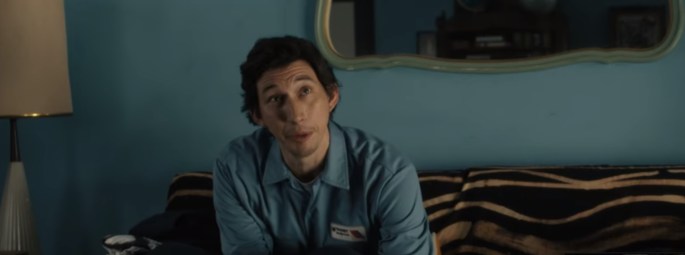
Jim Jarmusch’s low-key and elegant film Paterson is another feather in the cap for this idiosyncratic auteur, starring an intensely committed Adam Driver as a New Jersey bus driver named Paterson, who happens to live in the city of Paterson. The film is part fantasy, part meditation, and all wonderful, with an observant eye for visual detail (the great Frederick Elmes is the cinematographer) and containing honest verbal wit that mixes with personal introspection into something that feels unique and quietly moving. The gliding editing patterns established by cutter Affonso Gonçalves are incredibly smooth, and result in a film that feels as if it’s drifting across the screen, much like the many characters, both big and small, that inhabit the frame. Jarmusch’s style has certainly evolved over the years but he’s always had a firm grasp on the peculiarities of people and how they approach their life.

paterson_ver2_xlg

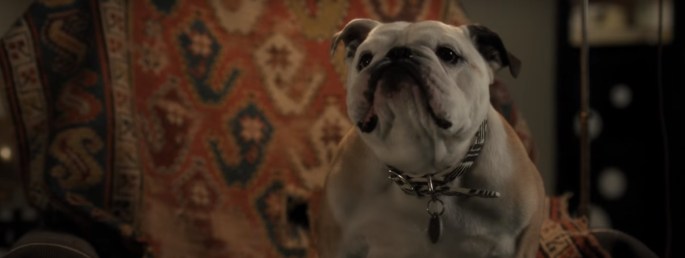
Paterson has a very predictable routine. He wakes up every morning, has his cereal, kisses his spirited wife (the superb Golshifteh Farahani) goodbye, and heads out for a day on the deteriorating streets of the city. On his breaks, he jots down poetry in his notepad, which appears on the screen as text, and can be heard via Driver’s dry voice-over (the real-life poet Ron Padgett crafted the various poems heard during the film). After work, he has dinner with his wife, who is always focusing on something new to fill her day, and then he takes their dog for a walk, grabs a beer, chats with the bartender (Barry Shabaka-Henley) and goes to sleep. He’s a man content with rigidity. Or is he? He doesn’t seem to get mad, and when the story turns tragic in the form of a personal disaster, Paterson’s response to the events is humorous, sad, and strangely enviable.

2

The film isn’t interested in a traditional plot, as Jarmusch is too concerned with his characters and their flights of fancy and their dreams and aspirations to care about the artificial rigors of contrived plotting. Instead, the audience is treated to a character and mood piece, where Driver appears in nearly every scene, his unique physical characteristics somehow tamped down from what we’ve seen previous, with flat-lined energy that results in a heavily modulated yet still emotionally affecting performance. If all of this sounds like as much fun as watching paint dry, well, I won’t lie, this movie won’t be everyone’s favorite cup of cinematic tea. It’s quiet, the film is comprised of numerous long-takes, and by design, the circular nature of the narrative keeps things on a very even keel. But if you’re looking for something artistic and thought provoking, definitely check it out.

1

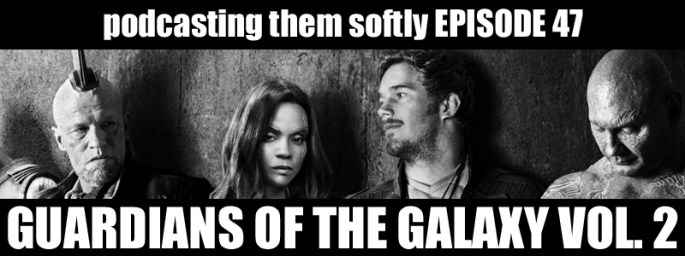
Episode 47: GUARDIANS OF THE GALAXY VOL. 2

ep 47

Join Frank, Tim, Nate, and Jason as they dissect James Gunn’s GUARDIANS OF THE GALAXY VOL. 2 and speak about the amazing cast, James Gunn, and the future of the Guardians and the MCU.

JAMES CAMERON’S TERMINATOR 2: JUDGMENT DAY — A REVIEW BY NICK CLEMENT

3

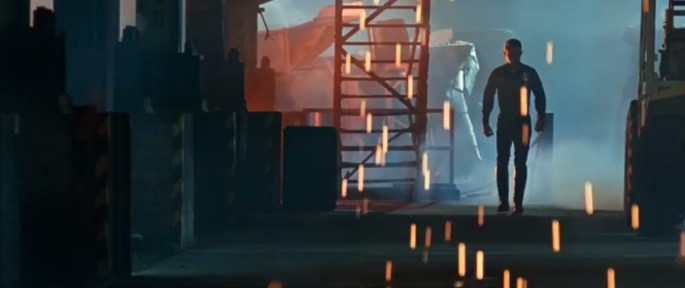
I was 11 years old when my father took me to see James Cameron’s masterpiece Terminator 2: Judgment Day on the big screen over the Fourth of July weekend. This was not just “seeing a movie,” but rather, this particular cinematic experience was a true mind-blower, and over the years, I’ve returned to this seminal piece of filmmaking more times than I can count, as I feel that it delivers the perfect combination of character, plot, emotion, and action. Co-written by Cameron and William Wisher, this film works as well as it does because you care about everyone you need to care about, and because of the way that all members of the cast and crew knew exactly the type of movie that they were making — sci-fi pulp with a big heart and a maximum budget. As per usual, Cameron reinvented the special effects game with the liquid-metal visual motif and overall state of the art use of CGI which was beautifully fused together with location shooting and plenty of practical effects. These were the days when filmmakers weren’t crafting the entire film on a green-screen stage, and “filling it in later.” There’s a level of visual and narrative artistry on display in T2 that is striking to observe, especially when compared to recent, ultra-synthetic blockbuster laziness which pollutes movie screens on a weekly basis.

2

I’ve no need to describe the plot or mythology to the Terminator series, and it goes without saying just how extraordinary Arnold Schwarzenegger was in the lead role, how menacing Robert Patrick was as the T-1000, and how gripping Linda Hamilton’s performance comes to be by the conclusion. Edward Furlong was able to project just the right amount of innocence mixed with his inherent edginess as a teen actor, and everyone in the supporting cast did stellar work. Adam Greenberg’s gleaming widescreen cinematography is a constant treat for the eyes, the dynamic editing by Mark Goldblatt, Conrad Buff, and Richard A. Harris keeps a ruthless pace to the story without ever sacrificing coherence, the epic production design by Joseph C. Nemec is wondrous, and Brad Fidel’s massive musical score must be considered one of the best of all-time. Shot over the course of a 186 day schedule for a reported $102 million (the most expensive movie ever made at the time), T2 would smash the global box-office upon its theatrical release, receive four Oscars and glowing critical notices, and would end up having a staggeringly successful afterlife on home media formats. This is easily one of the greatest movies that I’ve ever seen, and my personal favorite from Cameron by a long shot.

1

Alien: Covenant

Alien: Covenant

2017.  Directed by Ridley Scott.
alien-covenant-prologue-700x300

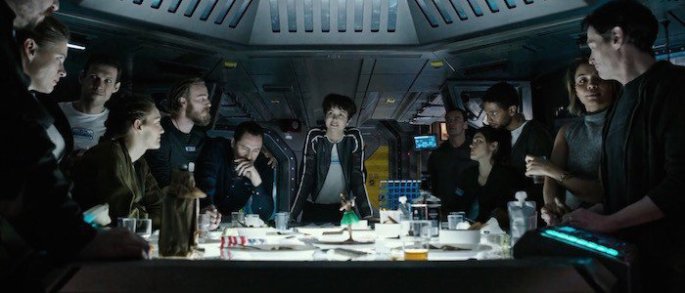
Alien: Covenant is a tricky film.  Alien was the film that opened a realm of possibilities, both for the franchise and for the career of its creator, directorial legend, Ridley Scott.  Following from the extremely divisive Prometheus, Scott weaves an intricate story about the cycle of life and death masked in the guise of a prequel.  This is a deeply personal film made by a 79 year old artist.  What it loses with a shallow script and endless horror clichés is almost enough to derail what is quite possibly one of Scott’s most profound works.  While diehard fans will undoubtedly find many things to pick apart, it is entirely probable that Scott decided to plumb the existential limits of humanity via a return to his beginnings, and it is with that idea in mind that I left the theater with the understanding that this film is one for the ages, glaring flaws and all.

A colony ship intercepts a human transmission from a mysterious planet.  Desperate to find a new planet to call home, the crew decides to investigate and happens upon the most terrifying experiment in the history of creation.  Fusing elements of the Island of Dr. Moreau, the spiritualism of Prometheus, and Blade Runner’s creation vs. man bravura, John Logan and Dante Harper’s script stumbles, falls, and then revels in the gutter of rogue philosophy in which it lands.  The first act features the standard character building staple of the franchise, however there is not enough to go around and it’s immediately apparent whom will die and whom will persevere.  Danny McBride is a surprising standout, emulating the blue collar roots that made the initial film so endearing.  The banter between the crew is cringe worthy at best and when death does come, surviving characters are instantly resilient, eschewing Veronica Cartwright’s unforgettable paranoia in favor of soldiering on.  While this may appear as a weakness, it is a slick alignment with Scott’s overall message.  The reaper always wins and life always goes on, leaving the memories of the fallen behind.

alien-covenant-movie-trailer-screencaps-4-1075x442

Michael Fassbender’s dual turn as the loyal android Walter and the devious rebel David has to be seen to be believed.  The first scene of the film does not work without his subtle ferocity, setting the stage for what follows with a poise that likens his electronic birth to a toddler with a high caliber pistol, questioning his existence and his maker’s intent with ominous innocence.  His scenes with both versions of himself are the meat of the story and when taken separately from the paltry characterization of the humans, they are truly something to behold.  Katherine Waterston’s archetypal turn is adequate, but ultimately pales under the weight of the story.   Yes, characters make bad decisions, possibly even worse than forgetting to run horizontally, however, unlike its predecessor, Covenant has so much going on, there’s barely enough time to complain.

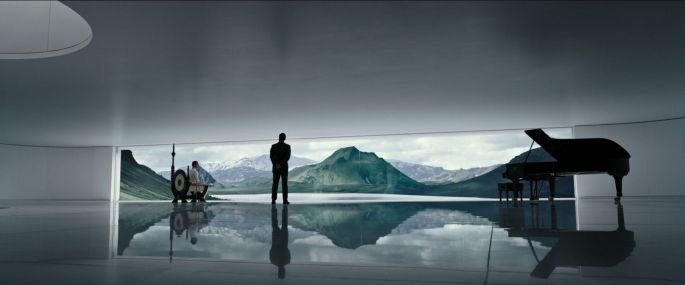
Dariusz Wolski’s cinematography, from the stunning first frame is a visual bacchanal of gory aftermaths and alien architecture.  David’s insidious lair conjures thoughts of Kurtz’s sanctum in Apocalypse Now while the CGI scenes in space command the gorgeous touch one would expect from Sir Scott.  There are dozens of Easter eggs strewn throughout Chris Seagers’s titanic production design, featuring impossible compositions of alien civilization, blending incomprehensible science with low tech accoutrements to bring the high gloss feel of the new films together with the low-fi grit of the classics.
Alien-Covenant-Teaser-Trailer-029

In the end, Alien: Covenant is a remarkable film for what it is saying underneath the carnage and ill-advised choices of its stable of victims.  The evolutions of the creature are symbolic of the series, beginning with small terrors in claustrophobic environs that soon spin out of control as technology, budget, and popularity demand more and more, ultimately consuming the creative fires of design.  The search for meaning in the creation of life and dissenting against the inevitability of death are everywhere in Covenant’s beautiful set pieces and their presence will either intrigue or repulse.

In theaters now, Ridley Scott’s bridge building film creates more questions than answers for one of the most popular science fiction franchises of all time.  Derailing the audience’s concept of timeline and progression, Alien: Covenant breaks all of the established rules to present a blood soaked Genesis in the stars.  Scott made the film he wanted to make, and while there are elements which will placate general expectations for an addition to the Alien pantheon, it’s my belief, that Scott almost forgot there would be an audience watching.  This is his story and while it may not entirely work, it is something terrifyingly genuine and sincere.

Highly Recommend.
maxresdefault

Paparazzi 


Paparazzi is one of those ones that probably sounded pretty silly on paper, but one of the studio execs had a good sense of humour on a morning after getting laid and said “aw hell, green light this just for kicks.” It doesn’t hurt to have Mel Gibson as a producer either, who also makes the teensiest cameo. The concept is simple: action film star Bo Laramie (Cole Hauser) is harassed by a sleazy hyena pack of determined celebrity photographers, until they take it one step too far, resulting in tragedy. Bo then plays the art imitating life card, goes all vigilante on them and quite literally hunts each one down and kills them. A synopsis like that has to illicit a dark chuckle from anyone who reads it, and you’d think the resulting film would be oodles of fun, but they’ve somewhat played it safe. A concept this ridiculous should be over the top, reach for the stars insane, a hard R black comedy Death Wish set in Hollywood, if you will. What we get is something more on the glossy side, the filmmakers dipping their toe into the pond of potential, yet never saying ‘fuck it’ and diving right in. The paparazzos are played to the heights of hilarity by a solid scumbag troupe: Tom Sizemore is so perfect as their a-hole ringleader, just a dime piece of a casting choice. Daniel Baldwin looks seriously haggard, while Tom Hollander and Kevin ‘Wainegro’ Gage round out this quartet. Dennis Farina is fun as a sharp, shrewd Detective who gets wise to Bo’s act as well. It’s all serviceable, and yet I wish it went that extra mile to give us something downright shocking and memorable. Perhaps they should have reworked the script, brought in a wild card director and gone the indie route. Oh well. 

-Nate Hill

JOHN FRANKENHEIMER’S 99 & 44/100% DEAD — A REVIEW BY NICK CLEMENT

1

Obviously not the greatest movie ever made by legendary filmmaker John Frankenheimer (The Manchurian Candidate, Ronin), I still can’t help but be fascinated by the comic-book-inspired insanity of his odd-ball curiosity 99 and 44/100% Dead. Released in 1974 and starring Richard Harris as a love-struck hit-man caught in the middle of an escalating gang war, the film was written by Robert Dillon (the phenomenal Prime Cut from director Michael Ritchie, and the massively undervalued The French Connection II, also directed by Frankenheimer), and has a tone that veers all over the place, and features bad-guys with guns and knives attached to prosthetic limbs, some crazy car chase/stunt work, and a general vibe of “anything can happen” that allows the film to be exceedingly entertaining if a bit sloppy around the edges.

2

Henry Mancini’s wild musical score meshed with the sometimes frantic camerawork by Ralph Woolsey; Harold Kress’s choppy editing may have been by design. I can think of very few other films that match this effort’s overall sense of manic energy, and while coherent, there’s something simply bizarre about the entire production that should speak to cult film enthusiasts everywhere. And yes, apparently the film’s title is a play on the old Ivory soap commercial slogan. This is a completely wild piece of work that has a distinct personality, which can’t be said for most genre fare. Available on DVD from Shout! Factory as a double-dip with The Nickel Ride (rager coming soon for that one…!)

3

Body Heat

Body Heat

1981.  Directed by Lawrence Kasdan.

bodyheat

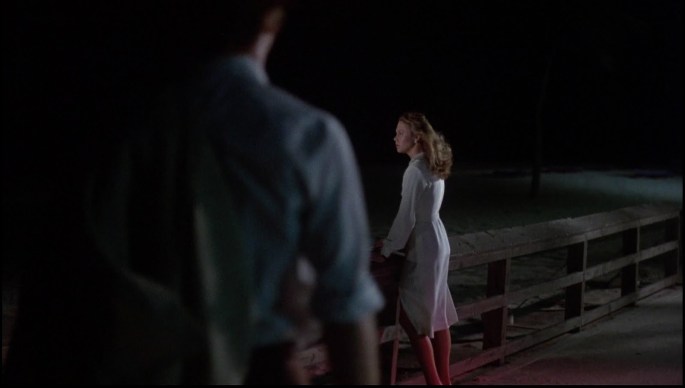
Film noir is wonderfully eclectic genre.  While there are certain aspects each of these films share, directors have been bringing their unique perspectives to each offering over the decades since its creation.  Neo-Noir films evolved the concept by placing murky detective stories into futuristic locales and sleepy Midwestern towns, showcasing the idea that the darkness of man can exist anywhere.  Lawrence Kasdan’s scorching directorial debut, Body Heat initially appears as a well-crafted homage, intimately aware of its predecessors’ influence.  However as its complex web of deceit begins to unravel, any sense of safety slowly erodes under a flood of sexual power and unrepentant violence to reveal an intelligent and diligently constructed narrative.

Inept lawyer Ned Racine falls for the wrong woman, leading him into a series of perilous decisions. Unseen consequences and chilling revelations then threaten to destroy not only his freedom, but his relationship with the woman for whom he has risked everything.  Kasdan’s script borrows heavily from Noir staples.  The dialogue brims with potboiler pastiche, but never crosses the line into parody.  Some of the best exchanges are between William Hurt’s Ned and his compatriot’s: A surprisingly loyal Ted Danson and J.A. Preston’s dedicated detective.  Hurt’s brilliant performance highlight’s his uncanny ability to strip away a character’s armor to reveal vulnerability and is instantly spellbinding.  Ned is the perfect mark, competent enough to perform, but ultimately outdone by his libido.  Mickey Rourke’s turn as an arsonist client contains some of the film’s best lines, a stark reminder of the Noir trope that there is not only honor, but brutal truth among thieves in the shadows.

body-heat11

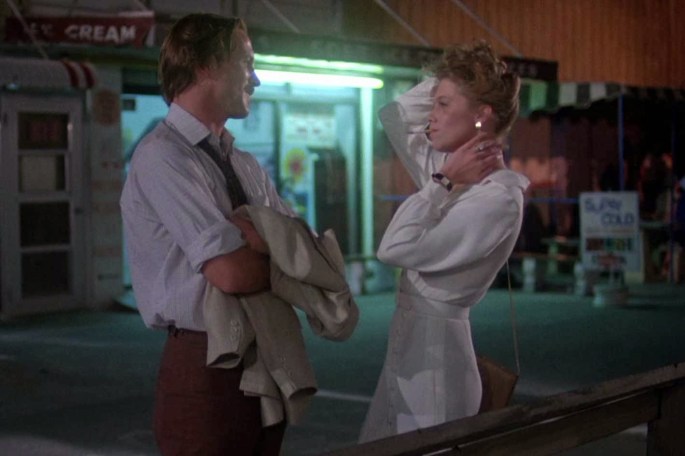
Kathleen Turner’s steamy debut as the predatory seductress Matty Walker balances raw sexual mastery with wicked intent.  Body Heat is a film that rests entirely on its villainess’s ability to captivate the audience, and Turner delivers.  Ned is the surrogate, blindly following his heart (and other anatomy) into moral oblivion due to Turner’s sultry delivery and her uncompromising command of the material.  Her chemistry with Hurt is intoxicating, to the point that the viewer is carefully reminded of a time when they made bad decisions for a bad thing that never felt so good and this is the film’s essence.

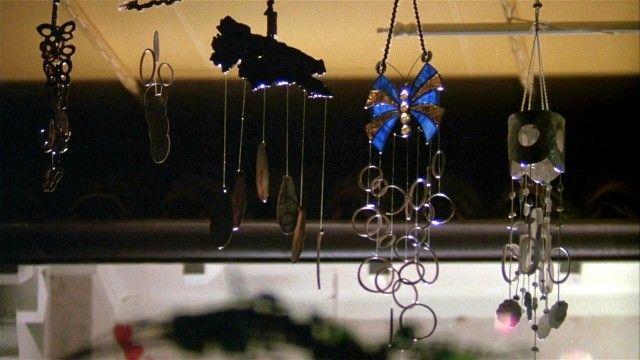
Set during a relentless heat wave in Florida, the color red is intrinsic to the happenings, blissfully captured by Richard Kline’s devious cinematography.  This is a soiled, pessimistic world and an air of deception haunts every perfectly constructed frame.  Maury Harris’s sound design, particularly during the infamous wind chimes scene perfectly captures the Noir vibe with ominous tones that preclude Ned and Matty’s first illicit coupling.  What begins as an explosive convergence of corruption and passion tumbles head first across a moral Rubicon in which murder and love are strange bedfellows, tying Hurt and Turner together in a wicked dance of fractured dreams and shadowy manipulation.

wp-1485438607781

Available now for digital streaming, Body Heat is a unique debut from a legendary writer.  While it features the expected dialogue of a true master, it excels due to top notch production design and a brave performance by a woman in a time where women were not expected to be center of attention.  Kasdan’s bold casting choice and respectful take on the Noir genre ensured that his debut effort would be remembered for decades to come.  If you’ve never experienced this classic tale of sordid conspiracies and fevered entanglements, Body Heat is a sensational late night affair.  Come for Turner’s heart racing performance, leave with the knowledge that Kasdan’s first time in the director’s chair was something exceptional.

Highly Recommend.
body-heat-hd-movie-title

Remembering Jonathan Demme: SOMETHING WILD

The world of cinema was shocked by the tragic passing of Mr. Demme at the end of April.  In honor of his memory, this week Kyle and Ben discuss Something Wild, his underrated romantic thriller that has been given a stunning blu-ray release by the Criterion Collection.

hero_EB19861107REVIEWS611070304AR

BEN: As I delve into the world of cinema, I come across films that are so mind-bending they stop me dead in my tracks.  As the film opens, we meet Charlie Driggs played by a very roguish Jeff Daniels in a café.  We don’t know why at this point, but there is something fundamentally wrong with this relatively successful finance wizard and he makes a decision that attracts the attention of a very dynamic Lulu, played by Melanie Griffith.  From this opening frame, we can tell that Demme, whose shooting style would be considered “open,” is going to have fun with the audience.  After a rather humorous confrontation, Lulu encourages Charlie to get into her car, where she takes him on a ride of debauchery and mayhem.  Along the way, they steal, they abandon; Charlie comes to terms with his rebellious side and falls in love with Lulu, who has a dark secret in the form of Ray Sinclair played by a very young and vibrant Ray Liotta in his second theatrical role.

KYLE: One of the things that instantly grabbed me upon revisiting this was how colorful it was.  Demme uses a bohemian aesthetic that’s both distinct, and somehow….normal?  I read in an article that Demme and the crew handpicked the bulk of set decorations and props.  It’s an intimate story and you can feel Demme’s deep affection for it in every frame.

sw-dangrif2

BEN: This is going to sound cliché, but E. Max Frye’s Edgar Award-winning screenplay is typically 1980s:  the young successful banker is looking for an escape from his successful life, falls in love with his sinful, polar opposite with a secret past which eventually results in a murderous ending coupled with the ultimate 1980s bad boy who spells trouble for the young lovers.  With Demme’s deft direction, solid acting, and the fun atmosphere created by Frye’s screenplay, it works.

KYLE: I love how it’s this neo-Odyssey by way of the cliché road trip.  You can see Ray being the cyclops and Lulu in her three different personas reminded me of the Sirens, luring Daniels away from safety and into harm’s way that would ultimately lead to a greater understanding of self.

BEN: Daniels was the perfect young actor to play the yuppie seeking freedom while Melanie Griffith plays to her sinful strong suits.  Ray Liotta comes into himself as the violent, aggressive type.  The three leads lent such credibility to their roles that they were all nominated for Best Actor, Actress and Supporting Actor at the 1987 Golden Globes, respectively.

Something-Wild-1

KYLE: I could not believe that this was Liotta’s second role.  He’s completely magnetic from the instant his character enters the story.  I really enjoyed his chemistry with Daniels and Griffith.  It has this sophisticated, but primal quality that I think is essential for the tonal changes in the second half.  I really enjoyed how Demme was sort of playing on the expectations of the audience with respect to 80’s rom coms and essentially pulls a bait and switch and ends up with something resonant.  It’s about confronting the dangers of the world in the name of love and Demme uses his trio of talent along with some outstanding technical work to bring his bloody, but beautiful valentine home.

BEN: As I mentioned at the beginning, very few movies stop me in my tracks.  Driggs’ comment at the end of the movie hit home the most:  “It’s better to be a live dog then a dead lion;” a common theme to movies of the era, but it serves also as a warning to future generations:  live a little.  Perhaps we could all heed Driggs’ sage advice.

KYLE:  Highly Recommended for me.

BEN: We are in agreement!

Title Card Something Wild

Alan Parker’s Come See The Paradise


Alan Parker’s Come See The Paradise tackles a little spoken of, tragic period of American history: the internment of thousands of Japanese families in prison camps following the attack on Pearl Harbour, which sparked World War II. After the incident, a wave of frenzy and paranoia roiled across the states, and many of these people were separated from their loved ones for years, an event that altered thousands of lives, but not one you hear too much about in film. Parker is a born storyteller, whether it’s historical lore or gothic genre brilliance (insert obligatory Angel Heart reference), and here he approaches the subject matter with little to nothing in the way of melodrama, classic orchestral swells or tissue box bait, letting the story happen naturally and neutrally, the drama organically rising scene to scene as they happen. Dennis Quaid plays an Irish American man who falls in love with a Japanese girl (Tamlyn Tomita), and over a few years begins a life with her. He is a fiercely independent union man, passionately fighting for the working class, while she comes from a very tight knit family who rely on each other to make ends meet. Somehow the two of them make it work amidst the early stages of the American working machine, the love they have for each other keeping them afloat. Then the attacks occur. Quaid is separated from her and their daughter for over a decade, and the film’s pacing makes you feel every lost, broken moment of it. When their reunion does happen, it’s nothing like the romantic, tear jerking catharsis you’d expect, but a testament to Parker’s commitment to realism. The sadness comes from the hollow, unceremonious way in which these people are affected by such things, and how they simply go on, adapt and adjust, the pain an intrinsic part of everyday life. The movies show a different picture of that usually, an idealistic bubble where things always somehow end up alright, and every last thread is tied off somehow. Not with this one, which is why it may have been forgotten. In any case, it’s a beautifully tragic, eye opening piece that stays true to its narrative and follows it’s characters throughout bittersweet, minimalistic and believable arcs. 

-Nate Hill