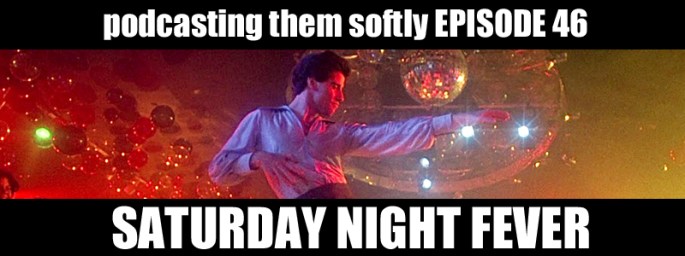
Episode 46: SATURDAY NIGHT FEVER and Top Five John Travolta

ep 46

GIVEAWAY ALERT! Answer the trivia question that’s asked at the end of the podcast and a winner will be randomly selected and they will receive the newly released 4K transfer of SATURDAY NIGHT FEVER on blu ray! The winner will be announced when Frank and Ben return to for a STAYING ALIVE podcast!

Join Frank and Ben as they discuss John Badham’s SATURDAY NIGHT FEVER which they both just saw for the first time on the big screen due to a recent Fathom Events release. They also discuss John Travolta’s top performances.

BILLY WILDER’S THE APARTMENT — A REVIEW BY NICK CLEMENT

1

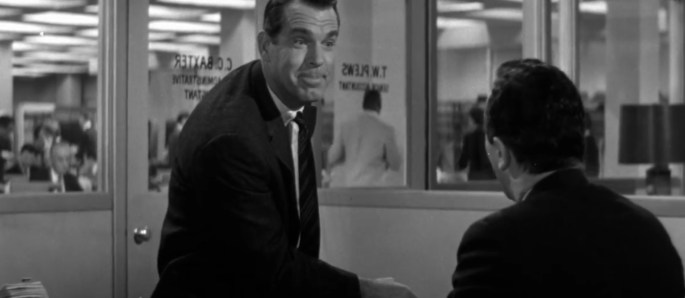
Released in 1960, Billy Wilder’s The Apartment stands as one of the filmmaker’s greatest works, a motion picture written with intelligence, directed with style, and preformed with vitality by its splendid cast, which included Jack Lemmon, Shirley MacLaine, Fred MacMurray, Ray Walston, David Lewis, Willard Waterman, David White, Edie Adams, Hope Holiday, and Jack Kruschen. Few modern romantic comedies have ever reached the heights of this film, which despite being over 50 years old, doesn’t feel dated; there’s a truthful sense of humor and life running all throughout this film’s narrative bones with the sexually thematic underpinnings never losing their bite.

apartment_ver3

Wilder and co-screenwriter I.A.L. Diamond struck a superb combination of drama and laughs, while never forgetting to ground the story in something emotionally substantial. The idea that Wilder followed up Some Like It Hot with The Apartment is sort of mind-boggling; a director would be lucky to make a film that’s half as good as either of those, let alone release them back to back. The excellent musical score by Adolph Deutsch perfectly matched the on-screen action which was captured in a studious manner by cinematographer Joseph LaShelle; the patient but never slack editing was handled by Daniel Mandell.

2

And then there’s the titular location itself, beautifully designed by Alexandre Trauner and Edward Boyle, which certainly becomes its own character as a result of the various people occupying the space. This film really has it all; the aesthetics were in line with the themes, Lemmon was in full swing, and the end result is intoxicating. Grossing $25 million back when money was real, The Apartment garnered 10 Academy Award nominations, and won five, including Best Picture, Best Director, Best Screenplay, Best Editing, and Best Art/Set Decoration. In 1968, the film received a Broadway spin-off called Promises, with Neil Simon, Burt Bacharach, and Hal David collaborating on the stage project.

3

HBO’s Witness Protection 


The sad thing about HBO original films is that they air pretty quick and without notice, then are scarcely heard from again, despite having really good stories and production design to boast, with no theatrical crowd to ever share them with. Witness Protection is one among many of these, a brilliant, surprisingly thoughtful mobster melodrama starring Tom Sizemore in a rare and commanding lead role. He plays Boston area gangster Bobby ‘Bats’ Batton here, a wiseguy who gets a rude awakening one night when a violent attempt is made on his life by rival crime factions, striking at home while his family are there. His lifestyle has inadvertently put those he loves in danger and now there are consequences, as grimly outlined by Forest Whitaker’s sympathetic FBI agent. Bobby, his wife (Mary Elizabeth Mastrantonio is so great, why isn’t she in stuff anymore?), son (Shawn Hatosy) and young daughter (Sky McCole Bartusiak, who famously died young a few years ago) are relocated into the witness protection program run by the Feds, given new identities, their lives uprooted and their future uncertain. Now, I searched for this film for years (it’s near impossible to find) thinking there’d be some kind of actuon intrigue angle, a few gunfights as his enemies tracked him down, but such is not the case. This is a mature film, a meditation on what it takes to change who we are when our choices endanger the lives of those we are supposed to protect. Bobby is a man of violence who grew up in a certain way, and he has transformed that into his livelihood. But it’s also a risky creed to cling to, and eventually a line is crossed, the line between balancing a chaotic life, or letting it run away from you. He’s forced to change, to show honesty and the will power to go straight, and this causes intense strain on the relationships with each of his family members, both individually and as a group. It’s equal parts fascinating, heartbreaking and hopeful to see a family go from one extreme to the other, and every facet of the situation is explored in a script that feels authentic and unforced. Sizemore and Mastrantonio deliver powerhouse work that stuns and stings, inhabiting uncomfortable moments of personal anguish with gravity to spare. This one isn’t your typical crime drama, and is all the better for it. 

-Nate Hill

Lunch with the Equalizer: A Conversation with Richard Norton by Kent Hill

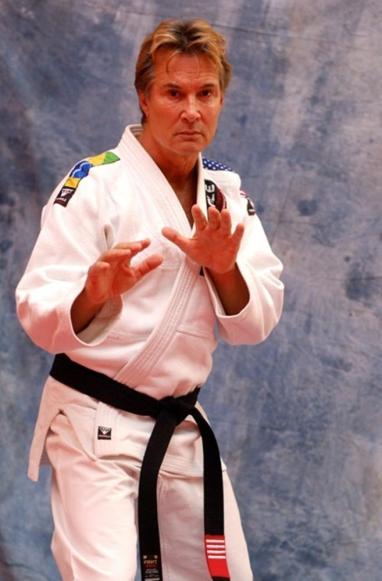
Richard was a young lad from Melbourne, Australia plagued by asthma who loved martial arts.

richard_norton

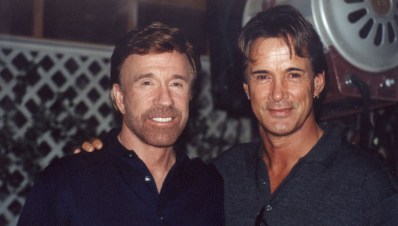
As he grew in skill, he would eventually catch the eye of the legendary Chuck Norris, who extended an invitation to the young Norton to come and train with him. It was while working as a celebrity bodyguard that he finally found his way round to the home of Norris, and from there he was offered a part in The Octagon as the masked ninja, Kyo.

Richard-and-Chuck-Norris-1024x584 norton-3

This would be the first of more than sixty screen appearances for the action film star, stuntman, stunt/fight coordinator/choreographer and martial arts trainer. He has worked on fights for “Stone Cold” Steve Austin, joined Suicide Squads, trained Scarlett Johansson  for the Manga turned motion picture Ghost in the Shell. He even braved the heat, dust and high-octane insanity on George Miller’s Fury Road.

rn2 13407327_10209910321620622_4980755475872849681_n tumblr_nl5h2gLpW11qe5f96o1_500

As a respected member of the martial arts community, Norton has remained close friends and has shared the screen with fellow industry luminaries such as Jackie Chan, Don “The Dragon”  Wilson and Cynthia Rothrock.

When I spoke with him, Richard was on his way to train the X-Men for another big screen outing, so there is no sign that the humble 67 year old from Melbourne is slowing down.

Richard Norton is a man who remembers well his origins and what it took to climb the mountain of success, upon which he stands, victorious. It was really cool to chat with him. I hope you’ll enjoy it.

So, here he is folks, the ‘real’ action man . . .  Richard Norton.

richardnorton06


The Man in the Director’s Chair: An Interview with Michael Schroeder by Kent Hill

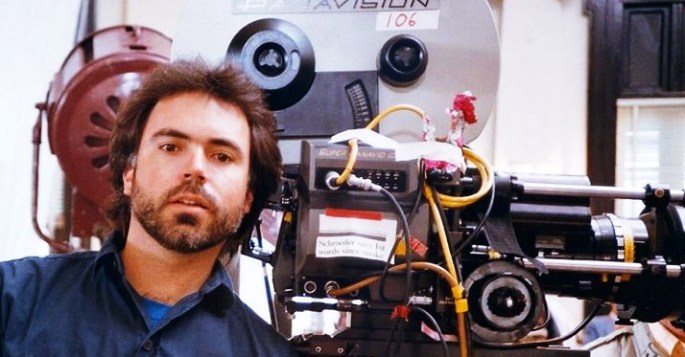
It was owning a fast car that booked a young Michael Schroeder his first trip onto a film set. With Chief Dan George (The Outlaw Josey Wales) in the seat next to him, Michael was instructed to drive as fast as he could toward camera. He took this request literally.

While no one was injured, and though this early encounter did not go exactly according to plan, the crew assembled in cowboy hats and shorts seemed to be having a lot more fun than the group of aging lawyers with whom Schroeder had spent this previous evening. So he quit trying to be become a lawyer and ran of to join the movie business.

205338_10151708248292481_58462632_n

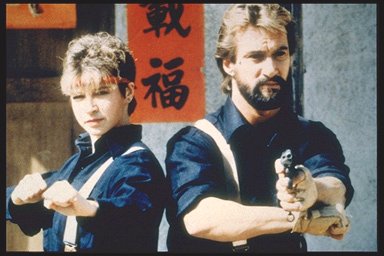
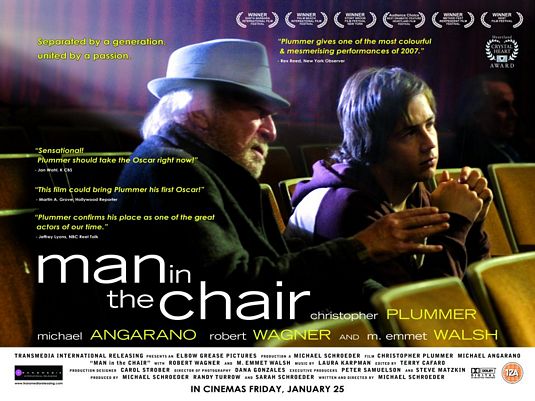
He began his professional career as an assistant director working on such films as Revenge of the Ninja, Lambada, Highlander 2 and Guests of the Emperor. In 1988 he would take the director’s chair on Mortuary Academy. Fourteen features would follow, among them Dead On: Relentless 2, Angelina Jolie’s debut Cyborg 2: Glass Shadow, Cyborg 3 (apparently Schroeder’s most lamentable experience) and his career high and passion project, the wonderful Man in the Chair.

man_in_the_chair_ver2

He is a talented director who came to movies late – but he has since established himself as a consummate artiste of the motion picture. He was a font of great stories, optimism, on top of being an eloquent gentleman.

It is my privilege to present to you this interview.

Ladies and Gentlemen . . . Michael Schroeder.

8+Cyborg+2


STEPHEN GAGHAN’S GOLD — A REVIEW BY NICK CLEMENT

1

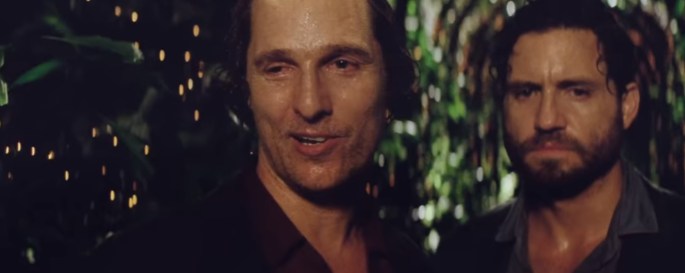
Stephen Gaghan’s Gold is a wild if familiar, sort-of-true-story saga about modern gold prospectors who risk it all in the Indonesian jungle for the pursuit of extreme fortune. Matthew McConaguhey’s over-sized and maybe-too-method performance is the big reason to see this film; if you’re a fan of him as an actor then his oily, greasy, bloodshot, and nearly constantly cocked performance will be a big hoot. Edgar Ramirez gives his usual fine support, and there’s a bunch of familiar faces in the background. But this is the McConaguhey show all the way, with the actor gesticulating like a mad-man while rocking a tragic receding hairline, his puffy face covered in flop sweat in almost every scene, and looking thoroughly toxic and grotesque in nearly every instance; he’s a personal pigsty and I thought it was priceless to observe. Robert Elswit’s fantastic widescreen cinematography is the other big standout in Gold; he’s one of the best, most varied shooters in the business and Elswit gives every sequence of this film a really cool visual atmosphere with some really thoughtful camera angles.

2

Patrick Massett and John Zinman’s zig-zagging and incident-packed script feels at times borrowed from other “process” narratives and there’s certainly a whiff of cliché running throughout the film’s narrative bones, but I thought this was a raggedly stylish movie that had a certain boozy bravado that kept in interesting if never truly special. It reminds of The Wolf of Wall Street and Blow but lacking some of the pizzazz and amoral laughs those films provided. And when you go and read about the real scandal involving the Canadian mining company Bre-X, you can see how some of the more outlandish moments that happen in the film actually occurred in real life, and how other bits of insanity were jettisoned maybe out of fear of being perceived as too over the top. Daniel Pemberton’s blustery score certainly added some oomph; ditto the tunes on the 80’s-centric soundtrack. Various director and star combos were attached at various stages, while the finished film elicited mixed critical reviews and tepid theatrical box office returns. Gold is now available on Blu-ray/DVD and streamable through various providers.

3

The Lure

The Lure

2017.  Directed by Agnieszka Smoczynska.
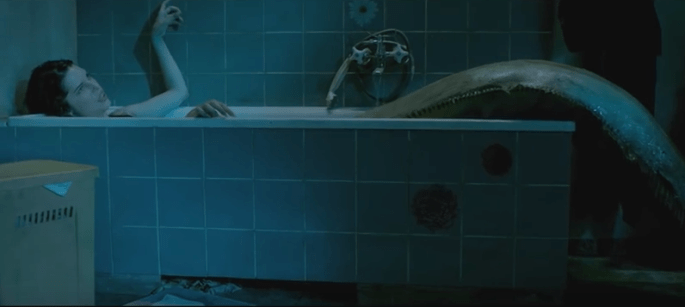
Screen-Shot-2017-01-12-at-13.22.26

A sublimely bizarre horror musical, The Lure blends kaleidoscopic visuals with an ’80s pop sheen to present a delirious, female focused coming of age tale.  Flittering between genres, Smoczynska’s euro glitz bonanza unleashes a plethora of themes into its carnival of flesh; however, this is a film that is having far too much fun to be world altering.  Featuring uncomfortable sexual truths beneath blood tinged fish scales; this is currently one of the most unique offerings of 2017.

Carnivorous Mermaids Silver and Golden become enamored with a rock band they encounter on a beach.  They return with the group to a strip club where they become exploited performers, causing the sirens to drift apart, one towards embracing her predatory nature while the other longs for humanity.  Robert Bolesto’s script is purposefully shallow; however, the direction elevates the material into an euphoric trip through the development of female sexuality as an allegory for the mistreatment of immigrants.  Young women as objects of lust for salacious old men is nothing new, but the presentation defies any sense of surrender to the tropes that often trap a film like this in rehashed mediocrity.  The weakness of the lyrics, in which the girls communicate their fledgling desires, would easily rebuke, yet the viewer is helplessly enraptured by the pastel world to which they’ve been submerged.

the-lure-banner-1

Marta Mazurek and Michalina Olszanska deliver a pair of entrancing performances.  While their respective arcs are telegraphed, they do solid work with each side of their aquatic yin and yang.  Their committal to the lyrical abandon is both uncomfortable in a John Waters way (hat tip to a colleague) and intermittently hilarious.  The choice of the ’80s time period initially seems awkward, but once the musical numbers begin, the framework of parasitic indulgence and material obsession becomes perfectly clear.  While there are no doubt some cultural touches foreign audiences may miss, viewers can no doubt commiserate on a decade of cocaine fueled abandon.

Jakub Kijowski’s cinematography is elegant through its instability, perfectly emulating the raw kinetics of puberty through dazzling shots of the night club and its denizens.  Warm blues and reds flood the interior while the outside world is framed in an alien, institutionalized manner to extrapolate on the girl’s curiosity with their new surroundings.  The Lure is a story about extremes, where the blood is bright crimson and the villains are especially sleazy and it mostly works.  Marcin Charlicki’s visual effects bolster over the top antics with intriguing displays of body horror and abrupt violence, entwining the soft terror with Smocynska’s refutation on committal.  The end result is something unique, but undoubtedly divisive.

the-lure-slice-600x200

Available now for digital streaming with a looming Criterion Collection release to come, The Lure is an inverted Alice in Wonderland head spinner.   Its immediately apparent lack of depth is overcome through outlandish visuals and bristling compositions of musical ardor.  If you’re looking for a truly unique film that eschews subtlety in favor of jackhammer presentation, The Lure Will not disappoint.

Highly Recommend.

The-Lure-Header

MATT REEVES’ DAWN OF THE PLANET OF THE APES — A REVIEW BY NICK CLEMENT

1

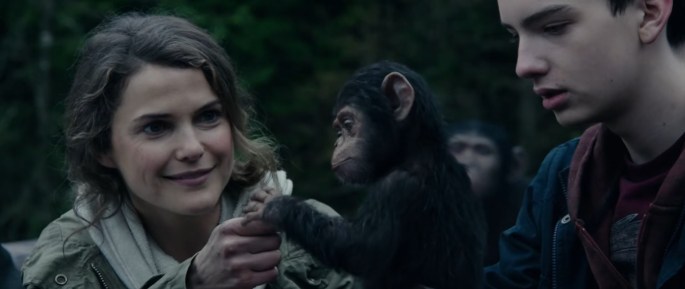
One of the only CGI-dominated franchises that I personal care about at the moment, the recent rebooting of Planet of the Apes has been spectacular, with both films delivering supreme, photo-real visual effects and narratives that feel topical and human and never anything more than they have to be. This summer’s upcoming War for the Planet of the Apes looks truly epic and is one of the few movies that I’ll actually spend $6 to see in a theater. And while not as emotionally affecting as Rise of the Planet of the Apes, Matt Reeves’s 2014 sequel Dawn of the Planet of the Apes, is an aesthetically robust, smarter-than-normal summer blockbuster that considerably upped the ante in the visual effects department. Completely and flawlessly realized in each and every shot (minus the opening with the antelopes and the phony-looking bear), the apes are startling in their movement and fur patterns, wholly consuming in the face (especially in the eyes), while conveying true weight and scale when compared to the humans.

2

Andy Serkis as Caesar and Tobby Kebbell as Koba were the clear standouts of this film, with their motion-capture work taking on magnificent shape and scope, with intimate details to match the bigger moments. And because of their prowess as actors underneath their digital monkey suits, I’m able to stay completely invested and engrossed in the story and the action, as the screenwriters wisely decided to spend far more time with the apes than with the humans. Jason Clarke and Keri Russell were solid but sadly Gary Oldman was mostly wasted after a few effective scenes in the beginning; why cast him if you aren’t going to take full advantage? Small quibbles aside, Dawn of the Apes is an excitingly dark and grim popcorn flick with some great rain-drenched cinematography from Michael Seresin, and features more than one “how’d-they-do-that” stedicam shot, and some positively surreal action when the shit hits the fan in the final act. And besides, this film has apes riding horses while firing machine guns, which is always something one should see.

3

B Movie Glory: Night Trap


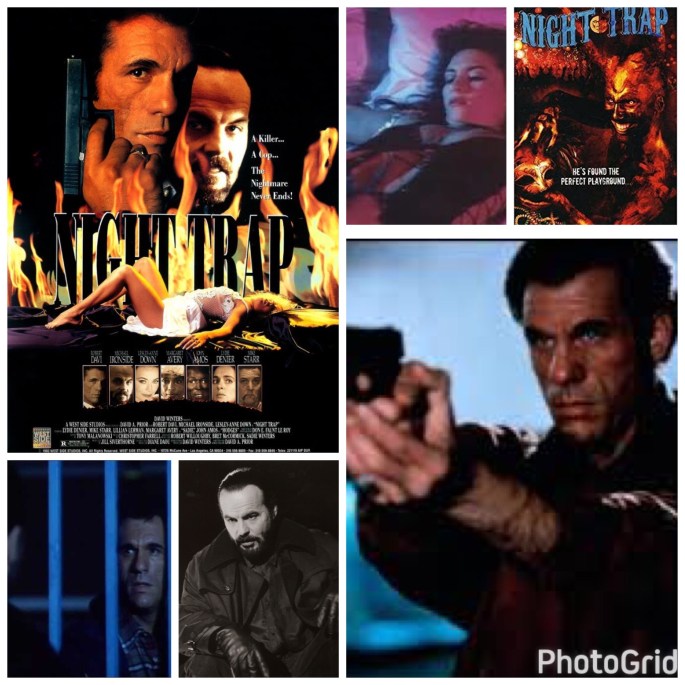
Night Trap is so old, obscure and out of print that I had to order an Amazon copy just to make sure it was even real, and not some dream I had as a kid. It’s real enough, and a glorious helping of low budget supernatural tomfoolery at that, with two charismatic character actors headlining. Robert Davi, in a rare lead role, plays a headstrong New Orleans cop who is hunting down a serial killer (Michael Ironside) that appears to have sold his soul to the devil in exchange for invincibility and a host of freaky deaky evil superpowers. Davi’s father was also a cop who pursued Ironside, and the monster likes to taunt both of them, leaving a trail of bodies in the hectic celebration of Mardi Gras. There’s a million of these type of movies, and they’re all across the board in terms of quality. It comes down to script and actors, really, as there’s never enough money to make any real visual magic. This one has a mile wide mean streak though, Ironside’s villain is a full on moustache twirling, nightmarish fiend and the veteran tough guy plays him as such. Matched against Davi, another notorious badass, it’s a B movie royal rumble that hits high notes of intensity, schlock and pulpy, violent delirium in all the right cues. Fun stuff if you’re a fan of these actors, and can actually locate a copy. 

-Nate Hill

YUVAL ADLER’S BETHLEHEM — A REVIEW BY NICK CLEMENT

2

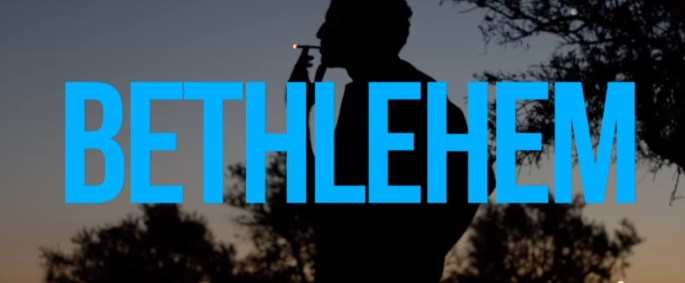
Tough, gritty, stark, sad, and all-too-believable, the hard-hitting 2013 Israeli political thriller Bethlehem takes zero prisoners. Yuval Adler’s film explores the volatile relationship between an Israeli secret service officer (the fantastic Tsahi Halevi) and his potentially dubious teenage Palestinian informant (Shadi Mar’i). The film possesses some absolutely devastating final moments which are similar to the pessimistic but inevitable finale of the Palestinian film Omar.  Adler, along with co-writer Ali Wakad, crafted an extremely engaging story rooted in genre thrills, but also managed to explore everyone’s quest of navigating both sides of the socio-political divide within the dense and propulsive narrative. Yaron Scharf’s point blank cinematography was in perfect tandem with Ron Omer’s razor-sharp editing, while Ishai Adar’s minimalist yet suspenseful score sweetens the pot. Bethlehem was the recipient of six Ophir Awards, and screened at the Venice Film Festival, where it won the top prize. It was the official Israeli entry for Best Foreign Language Film, but it was shockingly not nominated. This is a riveting piece of cinema with terrific performances and a downbeat but truthful denouement.

1