SAM PECKINPAH’S THE KILLER ELITE — A REVIEW BY NICK CLEMENT

1

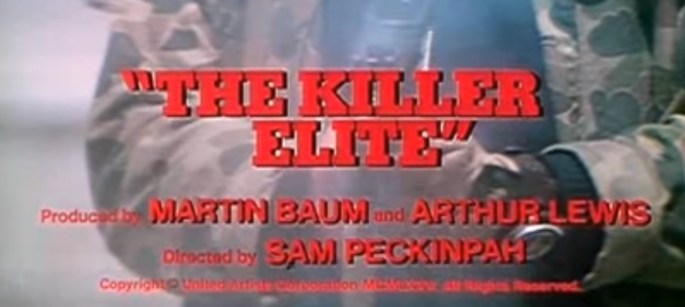
The Killer Elite is a wild and crazy, late-career actioner from Sam Peckinpah that combined spy plotting, sort-of-insane-kung-fu, bloody shoot-outs, wild car-chases, and seemingly every other genre ingredient under the sun. Fronted by James Caan and Robert Duvall and surrounded by a terrific ensemble cast including Burt Young, Bo Hopkins, Mako, Arthur Hill, Gig Young, and many others, the plot involves CIA skulduggery, double-crosses, violent showdowns, political assassinations, and the kitchen sink. Jerry Fielding’s peppy and lively musical score perfectly accentuated all of the various action set-pieces, while the great cinematographer Philip Lathrop (Point Blank, The Driver, The Cincinnati Kid, Hard Times) called the shots behind the camera, making great use of San Francisco and other physical locations. Legendary filmmaker Monte Hellman served as editor. Distributed by United Artists in 1975, The Killer Elite has taken on cult-classic status among action movie lovers and Peckinpah enthusiasts, despite mixed reviews and not making a big dent in the box-office. A decent-enough remake was released in 2011 with Robert De Niro, Clive Owen, and Jason Statham, but the original contains that special brand of Peckinpah craziness that he brought to his action scenes; few have done slow-motion shoot-outs and macho confrontations the way he did. The Killer Elite is available from Twilight Time, and contains Peckinpah’s 1966 TV film Noon Wine, which had been previously unreleased on home video platforms.

elite

Get Out

Get Out

2017. Directed by Jordan Peele.

Get Out (2017)

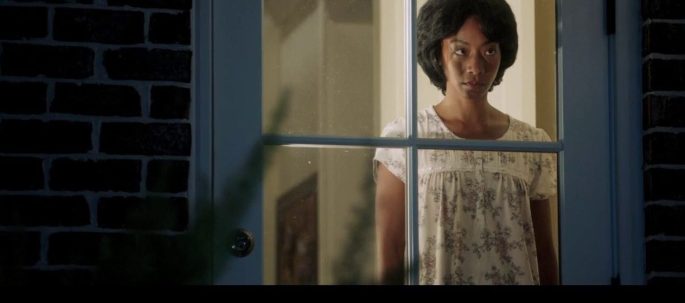
Horror is a genre that can be used to devastating, socially and culturally relevant effect when wielded by the right provocateur.  Comic mastermind, Jordan Peele’s Get Out is 2017’s first genuine surprise, a hypnotic thriller that masquerades as a commentary on race that is built upon a labyrinth of stereotypes and best intentions.  What begins as an extremely well designed horror comedy transforms into a surreal manifesto on violent domination.

Peele’s malicious script is packed with uncomfortable polite discourse that highlights the essence of privileged sensitivity while laying an intricate trail of dominoes throughout the film’s single upscale location.  Clues abound, from robotic household staff, a cringe worthy therapy session, and the insidious placement of trophies throughout the familial home at the center of the mystery.  The humor is tied to the protagonist’s friend back home, using Peele’s well known comedic genius to bring levity to the bizarre.  Thankfully, these moments are sprinkled throughout a genuinely terrifying fever dream.  Dinner party participants simultaneously stop speaking, a groundskeeper runs circles around the house in the moonlight, and the family’s harmless maid is a smiling harbinger of madness, all of which combine to create a poisoned key that unlocks the film’s corrupted core in the thrilling final act.

get-out-1263x560

Toby Oliver’s cinematography is the film’s best surprise.  Innocuous interiors are delicately framed, using extreme closeups to ensure that the facade remains in focus.  Moonlight is used to counteract the false serenity of the environs, bathing the ensemble in pale neon blue to heighten the psychic underpinnings.  Michael Abels’s score capitalizes on the up front premise, using terse notes to supplement the uncanny behaviors of the “staff”.  Seeing the trailer is enough to fool you into thinking you know, but the outstanding cast latches onto Peele’s words and makes them something more, with Daniel Kaluuya and Allison Williams doing remarkable work as the skin tone crossed lovers at the center of a horrifying cautionary tale.

This is a layered metaphor that pulls no punches.  Violence is the inevitable result of forced captivity and red and blue lights are not always a sign of sanctuary.  These truths are subverted to remarkable ends to produce a delirious Guess Who’s Coming to Dinner by way of Beyond the Black Rainbow mind bender.  Racial discord swan dives into a cesspool of nightmarish implications to carve a bloodstained benchmark for socially aware cinema and the result is a horror film that is respectful with its homages and rebellious with its implications.

In theaters tomorrow, Get Out is a clever youknowwhodunnit.  The rules are set early, but it is the players, and Keele’s elastic mastery of the material that takes a simple premise into places best left unexplored, and yet the viewer can’t help but to watch.  The final act regrettably ups the violence, undoing the psychological dread, but this is the purposefully natural consequence of the preceding acts, symbolizing both the inherent fears of a black man in a white world and the smartphone dissertations on what those fears symbolize.

Highly Recommend.

getoutppal-670x295

Mel Gibson’s HACKSAW RIDGE

hacksaw-ridge

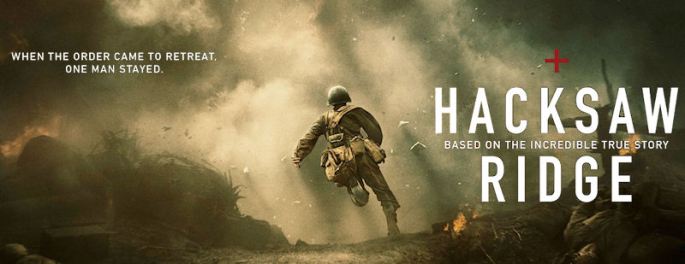
Most of HACKSAW RIDGE is so conventional, it is admirable. It is a sweeping period piece epic that really doesn’t get made anymore, and if it does, it lacks the heart and soul that Gibson brings to this film. The battle sequence that is prominently featured in the trailer is truly awesome; it showcases Gibson’s supreme talent as a visual storyteller, blending CGI effects with practical explosions.

Gibson cast this film well. While at times it is strange seeing so many Australians and Europeans playing American GI’s, but never once does their native accent bleed through. Each actor selected for their respective role looks and feels the part, particularly the GI’s battling on Hacksaw Ridge. Vince Vaughn’s rebirth into dramatic roles is not getting enough attention. He really does America this film up monumentally, and he steals every single frame he is in.

The sweeping score by Rupert Gregson-Williams is fantastic, and the music wonderfully supports the epic visuals that Gibson carefully crafts. Simon Duggan’s cinematography is near perfect, making every shot in the film seamless and organic. The props, set design, costumes, and battlefield aesthetics are so on point, it makes the viewer wonder how much time was spent making sure they got everything just right.

The film certainly runs the risk of its religious conviction subject matter becoming overbearing, the point is clearly made, and made again, yet regardless of your personal beliefs, you cannot help but admire and applaud Desmond Doss as a hero. Andrew Garfield’s turn as Doss is very good, but in a year of overwhelmingly solid performances from male leads, it is a bit surprising he got nominated, but considering the Academy’s abundant love for the picture, it makes sense.

A lot has, and continues to be said about Gibson and his previous transgressions. But for those of us who can separate a person’s personal life from their art – this is a flat-out welcomed return from a cinematic titan who has been sorely missed. HACKSAW RIDGE may not be more worthy than other films that missed being nominated for Best Picture, but after viewing the film, you can’t be upset that the film and Gibson were nominated.


Back to Graceland: An Interview with Demian Lichtenstein by Kent Hill

If you have seen the restored Lawrence of Arabia then there’s a chance you’ve seen the extras on the second disc? One such extra is an interview with Spielberg, in which he recounts sitting down with David Lean for a screening of the film. As they watched, Lean provided what Spielberg describes as a ‘live’ director’s commentary, pontificating about all aspects of the production while the pair sat through the movie.

Now Spielberg himself doesn’t do commentaries, but a lot of directors do. Of course I have a list of films that to date, do not boast a commentary track which I wish, so badly, that they did. Near the top of that list are a pair of movies that stick out. One is John Milius’s Farewell to the King and the other is Demian Lichtenstein’s 3000 Miles to Graceland.

But now for something really cool.

At the close of 2016 I had the chance to chat with Demian, and what eventuated was quite extraordinary. I was working my way through my questions when, all of a sudden, Demian started to unload his fantastic tales from the production, and it just kept getting better. As I listened, I imagined Spielberg listening to Lean, receiving first-hand all of those astonishing insights, and here I was in a similar situation getting the good oil on the production of Graceland.

It has become a cult film with the passage of time, but there remains no chance of Demian ever being gifted the ability to go back in and retool his movie. Perhaps in some small way set certain things to right.

I was tired when we spoke, it was 3am here Down Under, but, by the time we were through, I was energized and so sat back and re-watched 3000 Miles to Graceland with fresh eyes. Demian’s stories swirled in my head. When we were talking, just when I thought it was over, he went on. I received scene-specific commentary and even insights into scenes that were written but never shot.

It was a genuine thrill, along with being a great and one of the most surprising interviews I’ve ever done.

3000 Miles to Graceland is out there waiting for you to watch it again or to discover it for the first time. It makes me proud as a fan to think that this interview may serve as the bonus material we never received. A director’s commentary of a splendidly intricate and playfully unique movie with great anecdotes, favorite scenes and even deleted scenes in the form of unrealized story elements.

So, for all you fans and even the first-timers, the journey of 3000 Miles back to Graceland begins here, for your listening pleasure.

51589485

Don’t Argue: A Conversation with an Australian Screen Icon by Kent Hill

David Argue is a brilliant, unpredictable talent. At his greatest when left to his own devices and instincts, he has graced Australian screens for the better part of five decades.

Gaining is equity card as an infant, he soon found his way to the National Institute of Dramatic Arts whose graduates include the likes of Mel Gibson (Lethal Weapon, Braveheart), Judy Davis (Celebrity, Absolute Power) and Colin Friels (Dark City, Darkman) just to name a few. He has worked with our finest behind the camera as well, under the direction of Peter Weir (The Truman Show, Dead Poets Society), Brian Trenchard-Smith (The Man from Hong Kong, Turkey Shoot) and Russell Mulcahy (Highlander, The Shadow).

He has enjoyed a career of richly diverse roles. Playing everything from outback lunatics to bumbling criminals to budding cinema proprietors. Sharing the screen with the cream of both Australian and international talent from a then unknown Nicole Kidman to being the cellmate of Ray Liotta.

David has watched the industry thrive, shrink and change as well as having the distinction of seeing himself decapitated. (If anyone out there reads this and knows the whereabouts of David’s fake head from the film Blood Oath – he would like it back)

David sat down with me recently, in one of the most fun and certainly funniest conversations I’ve yet had, talking about his life of many parts, about his hours of strutting and fretting upon the stage, as well as his hopes for a BMX Bandits 2.

Ladies and Gentlemen I give you the irrepressible, the incomparable, the irresistible David Argue.

mvm_david_argue-245x300

THE SPIERIG BROTHERS’ PREDESTINATION — A REVIEW BY NICK CLEMENT

1

Predestination is a gloriously trippy and constantly surprising time travel movie that plays by its own set of mind-bending rules (as all the best time travel narratives do), constantly busting out twists and tricks, and is refreshingly story-focused and character-centric as opposed to being obsessed with empty flash and CGI-spectacle. Despite what appears to have been a modest budget, the film has been made with extreme smarts and lots of style. Directed by The Spierig Brothers, an Australian duo who previously helmed the solid B-movie Daybreakers, this one is a huge step forward for them as filmmakers, as they confidently crafted a tight and exciting and constantly shifting sci-fi piece based on the Robert Heinlein short story.

2

Ethan Hawke is customarily intense as a Temporal Agent, essentially a time-travelling cop, who is trying to track down a serial bomber throughout the decades. Australian actress Sarah Snook is flat-out fantastic as an, ummm, interesting woman caught up in the mystery, giving dual performances (don’t want to spoil anything!), and generally registering as someone who needs to be closely paid attention to as an actress. She has a confidence that immediately draws you in, and when you see her performance, I think you’ll agree that she should get serious traction in Hollywood. This is a very entertaining, low-profile indie genre item that deserves the big fan following that I feel is waiting around the corner.

3

Unbreakable

Unbreakable

2000.  Directed by M. Night Shyamalan.

unbreakable-m-night-shyamalan-david-dunn-bruce-willis

Eight years before Marvel would begin its cinematic universe, M. Night Shyamalan directed an intimate take on the superhero origin story, focusing on the complexities of a hero’s family life and the karmic symbiosis of good and evil.  Featuring a stellar supporting performance by Samuel L. Jackson, a resplendent score by James Newton Howard, and a minimalist presentation, Unbreakable is Shyamalan’s gentle masterpiece.

The sheer vision in this production, from it’s dangerously self aware script to the uncharacteristically moving visuals, is a testament to the depth of Shyamalan’s love for the ethos of comic books.  Everything is as should it be, but the presentation is so intelligent, the viewer is often lost in the mysteries of the story and the plight of its two fragile leads, comfortably flexing the boundaries of established spandex canon, but never violating them.  Unbreakable presents the superhero origin as an organic eventuality, rather than a metropolis crushing reality.

unbreakable

Bruce Willis stars as the reluctant hero, an uncertain paragon in a mediocre age.  He is supported by Samuel L. Jackson in the performance of his career.  His Elijah is both a comic book mentor and supplicant. How the fabled texts play into his personal story is the film’s greatest, if slightly predictable surprise.  The chemistry between both men is a hors d’oeuvre that the audience eagerly devours as the narrative slowly progresses into unknown territory.  Jackson’s unquestioning, possibly sinister faith contrasts Willis’s doubting Thomas in a duel of beliefs on a battlefield of shared reality in which three colored possibilities walk the lonely streets of Philadelphia.  Eduardo Serra’s cinematography magically emulates comic book frames with precise angles and countless reflections.  The major players are always framed in vibrant emeralds and lush violets that set them apart from their mundane surroundings, hinting at the destinies that ultimately await them.

James Newton Howard’s score brims with emotional depth and intensity, clinging to Willis’s every movement with a sense of dark wonder and responsibility and it is these two themes that pull Unbreakable into masterwork territory.  Many films flirt with the familial duties of heroes as comic relief or as a source of easy bereavement to endear the audience.  Shyamalan refuses to indulge and keeps everything in the gray of reality, where a struggling couple decides that their family is worth fighting for, where in the eyes of a child it is their parents who are larger than life heroes, and most importantly where the rubber meets the road between wielding cosmically endowed powers to protect the innocent and the everyday obligations that tie us to those whom we defend.

vlcsnap-75277

Unbreakable is a multilayered epic that hinges on a carefully constructed secret history.  Everything is methodically downplayed, with Joanna Johnston’s costume designs taking the ethereal costumes and immoral villains and repackaging them in rain slicked hoodies and ruby red t-shirts, driving home Shyamalan’s color coded dissertation on the nature of heroism and how it is reflected in comic book fantasy.    Respect is even paid to the avid fans, insinuating that their weekly loyalty to their ink lined icons is part of the mystique’s power.

Available now for digital streaming, Unbreakable is not only Shyamalan’s greatest film, it’s one of the best superhero films ever made.  A quiet poem about heroics and acceptance, this is a film that reminds us why imagination is so important  Through its beautifully restrained story, Unbreakable explores the concepts of family and faith without gunfire and explosions, leaving the fireworks within the viewer’s heart, the place where real heroes are born.

Highly.  Highly Recommend.

-Kyle Jonathan


images

John Wick Chapter 2

johnwick2_0

The journey of the gun bobs and weaves through Hollywood history with expected gusto; from Westerns to Hitchcock thrillers to Eastwood and Bronson, time and again they’ve helped define heroes, create villains, and put bloody ends to countless fictional conflicts.  Growing up watching Mel Gibson, Sylvester Stallone and a horde of wannabe toughs shoot their way through a two hour narrative I figured they’d define heroics onscreen forever, but a funny thing happened—as Sly himself pointed out not long ago, Michael Keaton showed up with that damn cape in 1989, and the comic book revolution was on.  It took another decade for the effects to catch up to the ideas, but by the time X-Men came out in 2000 it was clear that the multiplexes were undergoing a sea change.  Not that the guns have disappeared, but they tend to get incinerated by laser beams from Iron Man’s hand before they can do much damage.  Two years ago, a scrappy Keanu Reeves vehicle steeped in 70s and 80s tough guy cinema and decidedly against the superhero grain called John Wick became a surprise hit, and this past week saw the inevitable sequel roll out.  No capes to be found in either of these movies.  To quote RoboCop baddie favorite Clarence J Boddicker, we get plenty of guns, guns, guns.

First, a spoiler alert:  No animals are harmed onscreen in John Wick Chapter 2, unlike with the PETA revenge porn story of the original.  John has a new dog who briefly provides companionship, not drama, this time around.  Unlike the slow and occasionally mystifying  burn of the opening of the first movie, JW2 kicks off with several bangs and crashes as a loose end you may have forgotten gets tied up, then we get down to the business of once again dragging the noble hitman out of retirement to vanquish small armies of men in black suits sporting walkie talkie earpieces and large rifles.  The contrivances by which this takes place are more or less effectively laid out, delivered by a deft confluence of new baddies and old friends from the original.  To go into details wouldn’t necessarily spoil the fun, but it would also be beside the point.  We’re here to see Reeves run around kicking, punching, stabbing and oh yes, shooting his way through Europe and New York City, everyone knows it, and the filmmakers provide it in spades.  The cheeky alternative universe of crime and very special hotel rules is on full display, with several fun new layers and, by the end, an easy to adopt idea that in the Wickverse, Uber and Lyft side gigs have been replaced by the occasional assassin job.

Perhaps the unintentional strength of a film charged with delivering over the top murderous mayhem is that, this time around, we don’t get the puppy excuse.  In fact, in a key scene involving John’s return to work as well as the film’s denoument (which yes, fans, doesn’t just leave the door wide open for a third chapter, it demands it) both pause to remind you that Wick isn’t a hero, he’s a devil.  From the very beginning of John Wick Chapter 2, we see the lead try to once again exit his life of crime by employing the one thing he’s good at, murderous ultra violence.  The clear contradiction is an honest one and the filmmakers don’t flinch from it; John’s a bad man, and he doesn’t get the happily ever after that the first movie briefly tricked us into thinking he’s due.  I don’t want to make it sound as if Chapter 2 is a leaden antihero slog, because the primary goal remains action packed entertainment, and we get plenty of it (some of it quite funny, in keeping with the original’s often glib meta tone).  But living in an age where gun violence has gone from a gleeful gallop across the movie screen to horrid true crime stories on the nightly news, it wouldn’t quite sit right to have John get to have his cake and it eat too, and one gets the sense from this latest installment, not to mention the direction it’s heading, that director Chad Stahelski and writer Derek Kolstad understand this as well.

john-wick-chapter-2-sequel-trailer-images-screencaps-30

A Cure for Wellness

A Cure for Wellness

2017.  Directed by Gore Verbinski.

a-cure-for-wellness-slice-600x200

A neo-Gothic fable about the self constructed purgatories of obsession, Gore Verbinski’s A Cure for Wellness is a brutal existential horror film.  Filled with skin crawling compositions, macabre set designs, and absolutely stunning visuals, this is one of the most artistic studio films ever made.  Hearkening back to Frankenheimer’s Seconds, what begins as a cautionary tale about the dangers of soul consuming employment glacially devolves into a surreal homage to the boundary pushing renegade films of the 70’s.

Passive protagonists are a tricky enterprise.  Dane DaHaan’s Lockhart spends the bulk of the film as a victim, both of circumstance and physical injury.  The danger of him being a simple lens through which the story happens is gleefully subverted as the end of the film dovetails with the beginning.  DeHaan loses himself inside his role, the corporate lackey on a fool’s errand.  Justin Haythe’s screenplay is frequently disjointed, but this is part of Lockhart’s crucible.  There are no jump scares and the mystery becomes frustratingly elusive at times, however this is essential for putting the viewer into the main character’s head space.   Layer upon layer of discomfort and supposition are brick and mortared around you as you tiptoe through lonely corridors filled with affluent phantasms, upper class vanguard whose distinct lack of concern for anything outside their control is a physical apparition that clings to the walls of the sinister hospital at the heart of the narrative.

a-cure-for-wellness

Renaissance cinematographer Bojan Bazelli uses a constantly evolving repertoire to frame every shot with undeniable proficiency and palpable dread, using green whispers and blotted reds to consistently undermine the facade of safety.  Eve Stewart’s production design is essential, harnessing Grant Armstrong’s art direction and Jenny Beavan’s costume design to create an insular mythology that may or may not be real.  Everything hinges on films that came before, such as One Flew Over the Cuckoo’s Nest and The Devils, using each reference to construct a methodical morality play that almost achieves perfection.  Regrettably, everything collapses in the final act, and the mystique of the preceding two hours is undone for a cliche’, crowd pleasing resolution.  The insidious attributes of German expressionism haunt the bulk of the narrative, from inhuman camera angles to sequences of extreme physical and mental duress, but all of this is undone with haphazard CGI and underwhelming confrontations.

In theaters now, A Cure for Wellness is a genuine horror offering that pilfers heavily from the buffet of classics that came before it. It uses a wealth of genre staples to propel a trove of ideas down a razor sharp path of inconsistencies that render an incomplete masterpiece.  If you’re a horror fan, or someone who enjoys psychological turbulence, this will not disappoint.  Despite the various flaws that almost threaten its legitimacy,  A Cure for Wellness is a unique experience with merits, and sometimes, even a flawed film is worth the price of admission.

Highly recommend.

-Kyle Jonathan

a-cure-for-wellness-title

BRIAN DE PALMA’S THE UNTOUCHABLES — A REVIEW BY NICK CLEMENT

6

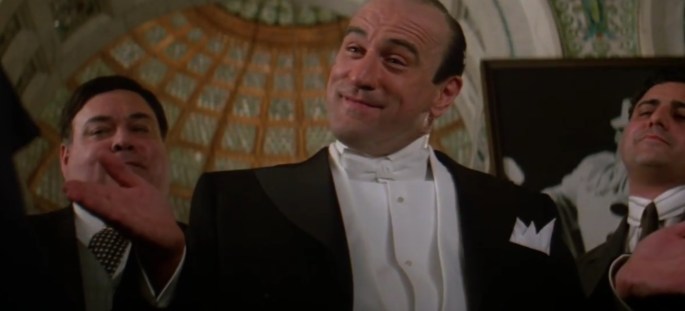
The Untouchables is a stone-cold classic. Brian De Palma’s bravura direction amounts to a clinic on how to make a supreme piece of studio funded entertainment, with showboating performances from a massive cast, all filtered through the elegant and stylized dialogue courtesy of David Mamet; his vulgar poetry really sets this one on fire. It’s been documented that both De Palma and Mamet had a contentious relationship during production, and that both have issues with certain aspects of the film. And that’s fine. I get it. I wasn’t there, and those guys are world-class artists. But as a finished product, this movie kicks ass in ways that most movies could only dream of doing. It seems like all the great directors need to try their hand at a gangster movie, and De Palma really aced it in terms of bringing all of the ingredients together with his sprawling imagining of Elliot Ness vs. Al Capone in 1930’s Chicago. Cinematographer Stephen H. Burum’s flamboyant camera moves have a sinewy quality, with De Palma clearly relishing his chance to stage some violent shootouts and confrontations, with a very memorable death scene from one particularly famous actor.

2

Everyone in the ridiculous cast had fun with the material, and because each character was distinct and memorable and given something important to do within the jam-packed narrative, everyone felt equally important. Ennio Morricone’s big and blustery Oscar nominated score was a perfect accompaniment to the fully-loaded visuals, while the fabulous production design, which also received an Academy Award nomination, was handled by the prolific Patrizia von Brandenstein, William Elliot, and Hal Gausman, and went a long way in evoking a very specific time and place. Well reviewed by critics and a solid box office hit (it opened to $10 million before legging its way to $75 million domestic), The Untouchables has become a staple cable item throughout the years, with various sequences, most notably the Battleship Potemkin-inspired staircase shootout, becoming iconic cinematic touchstones. I could watch this film any day of the week with zero qualms.

8