STEFANO SOLLIMA’S SUBURRA — A REVIEW BY NICK CLEMENT

2

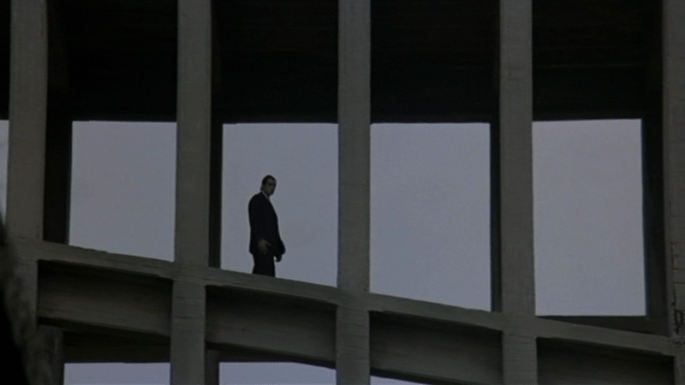
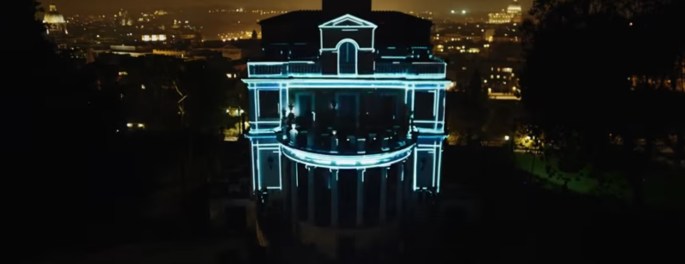
Suburra is lethal cinema. Directed with vice-grip intensity by Stefano Sollima, this sprawling and propulsive crime film centers on modern organized crime in Italy and how it intersects with politics and the Vatican in present day Rome. Feeling like an unofficial sequel to Matteo Garrone’s Gomorrah, Suburra presents the audience with a slew of characters, almost all of whom are morally questionable and operating outside the lines of accepted society. The violence and sex are graphic and in your face, the cynical narrative is dense yet coherent, leaving no stone unturned or any of the various plot lines dangling, and the vivid and incredibly atmospheric cinematography by Paolo Carnera is frequently eye-scorching, with an extra-smart use of neon and nocturnal rain resulting in some elegant widescreen visuals. The tough as nails screenplay was adapted by Stefano Rulli, Sandro Petraglia, Carlo Bonini, and Giancarlo De Cataldo from the novel by Bonini and De Cataldo. There are unexpected twists and turns that this film takes, and all of it has an unpredictable charge that leaves you pumped for the next scene. Sollima has been hired to direct the sequel to Sicario; I never felt one was needed but now I’m very excited to see it. An Italian-French co-production, Suburra is currently streaming on Netflix (who also partially funded the project), and ranks as one of the best surprises in recent memory.

3

Morgan: A Review by Nate Hill


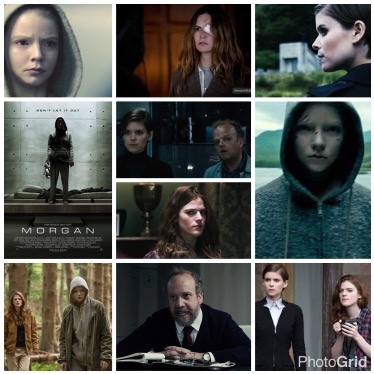
Morgan is one of the slickest genre flicks I’ve seen in recent years, finely tuned like a barbed wire tightrope, full of nasty surprises, throat ripping action and that ever present ethical turmoil that hangs about in any films that deal with artificial humanoid beings. It’s only weakness is exactly that stylistic strength: it’s so tight and streamlined that one occasionally feels like the scales tip in the favour of style over substance, but it’s a minor quibble when you take a step back and look at just how entertaining and fired up this piece is. The filmmakers are minimally concerned with the moral grey areas that cloning wades into, and subsequent philosophical pondering, but more than anything they just want to pull the ripcord and blast full throttle into an adrenaline soaked, R-rated sci-if tale with vague aspects of a character study. The title refers to Morgan (The Witch’s Anya Taylor-Joy in a performance both terrifying and heartbreaking), a genetically engineered humanoid girl held at a secluded facility alongside researchers, one of which she has just had a violent incident with. The corporate honcho (Brian Cox in a sly, all too brief honcho) dispatches a cold, clinical asset in the form of Kate Mara, sent to assess the situation and implement any measures necessary. She is an outsider, a callous bicep who flexes at the whims of the company. The researchers and handlers, however, are not. They have grown up around Morgan, invested time and, somewhat unwisely, emotion into her and will stop at nothing to ensure her survival. Paternal Toby Jones, opinionated Jennifer Jason Leigh and compassionate Rose Leslie prove to be a formidable armada against Mara’s evaluation, and tensions arise. Morgan has her own cloudy agenda though, and whether by flawed design, ghost in the shell syndrome or pure survival instinct, proves to be the greatest danger of all. She experiences people at their best, worst and most enigmatic, and her startling behaviour is a reflection of all of it, and a sobering example of humanity’s pitiful inability to perfect the creation of artificial life, at least in this film’s universe anyway. From Mara’s threatening presence, to an intense evaluation from a particularly nasty psychiatrist (Paul Giamatti overacting so hard he almost sucks the set dec up into his orbit), it’s no wonder Morgan snaps. Now when she snaps, the film more or less whips all its chips on the table, flips said table and hulk slams it two floors down. All subtlety and thought provocation kind of get left in the dust as everything careens towards an especially visceral climax, and that’s okay, as long as it doesn’t leave you feeling underwhelmed. I kind of had the intuition it was going to take the rambunctious root overall, and took comfort in the fact that it at least somewhat focused on the delicate aspects earlier on. It’s a well oiled machine, impeccably casted, given just enough pathos to keep our sentimental sides invested, and more than enough visceral hullabaloo to get our pulses dancing, all set to a score both thundering and graceful. Great stuff. 

James Foley’s GLENGARY GLEN ROSS

ggr-1_758_426_81_s_c1

The deconstruction of the alpha male has never been so fierce as it is in GLENGARRY GLEN ROSS. The entire film is one pitfall after pitfall of brazen machoism being shed, and the true colors of all the characters are blatantly glowing by the end of the film. They are men who strive to be the best, without having any idea what that really means.

David Mamet is one of America’s most seminal playwrights, and James Foley has always been a filmmaking champion in regards to slow burning character studies. Mix both these auteurs with the greatest cinematic ensemble ever, and what we have is a masterclass of filmmaking in any and every aspect possible.

The blistering dialogue and fiery performances are so powerful that after each dialogue exchange we’re left completely gobsmacked by what we’ve just witnessed. Regardless of how many times you’ve seen the film, how many times you’ve quoted Alec Baldwin’s punchy lines; the film is still as fresh and potent as your first viewing.

The film strikes a very fine balance bewteen tearing down the archetypal 20th century man, yet shadows as a cautionary tale of how hollow and empty all these characters are. Beneath the ego and big talk, these are all men who have put up the ultimate eminence front (it’s a put on). They are all incredibly sad and broken people, who have lived lives of emptiness, regardless of the charade of their salesmen banter.

This film remains the benchmark for an acting ensemble. Jack Lemmon, Al Pacino, Alec Baldwin, Ed Harris, Alan Arkin, Kevin Spacey, and Jonathan Pryce all feed off each other so well, it is an awesome experience to absorb. There have been fantastic ensembles before this film and after this film, but there will never be an equivalent calibre of actors together on screen ever again.

“What happened to you?”A review of The Autopsy of Jane Doe by Josh Hains

The R rating description for the Autopsy of Jane Doe reads “bloody horror violence, unsettling grisly images, graphic nudity, and language”, a misleading description that may give future viewers the impression they’re in for a hearty gore fest. I thought I might be in for a suspenseful slasher, something akin to a cross between Don’t Breathe (another great horror entry from 2016) and The Ring, but with a greater focus on gory splatter. I wasn’t disappointed per se, but the graphic qualities of this movie don’t unfold the way you might expect them to, which admittedly caught me off guard yet pleasantly surprised me.

Without giving anything away (as this is a spoiler free review), I can tell you that this particular horror movie actually shows barely any on-screen violence. In fact, the bulk of the “bloody horror violence” actually comes in the form of the autopsy itself, which doesn’t shy away from giving viewers prolonged sequences of dissection, which plays directly into the “unsettling grisly images” of the rating description. Think of any CSI: Crime Scene Investigation autopsy scene, but make it run for an hour and twenty six minutes. The graphic nudity doesn’t come from an impromptu sex sequence, but from Jane Doe’s seemingly lifeless corpse laying nude on the cold steel table. It’s nothing exploitive or fetishized, just protocol when examining a dead person for cause of death. And as far as the language portion of the description is concerned, you might find more profanity in one scene in Planes, Trains, and Automobiles than in the entirety of this film, not that it’s a bad thing.

The movie introduces us to a gruesome multiple murder scene where a nameless nude young woman is found buried in the sands of the house’s basement floor and whisked off to the mortuary run by Tommy (Brian Cox) and Austin Tilden (Emile Hirsch), a father-son coroner duo, given until the early morning hours to find Jane Doe’s cause of death for the sheriff. Austin has plans with his girlfriend for the night, but once Jane Doe shows up, he feels compelled to stick around and assist Tommy, despite his girlfriend’s immediate unhappiness with being ditched yet again. Jane Doe’s is an extremely odd case for the duo, her entire outer body in perfect condition but her insides boasting a series of horrifying injuries including broken ankles and wrists. With how she died becoming a more frightening answer with every new internal injury discovered, the autopsy draws on, and as an unseen storm outside increases in its catastrophic potential (as heard via a radio that provides comfort music) several unexplainable supernatural occurrences begin to manifest, eventually trapping the duo in the mortuary and threatening to terrorize them all through the cliche dark and stormy night.

Early exchanges of dialogue between father and son, both personal and professional, as well as the blatant chemistry between the two actors, illustrate a believable history and relationship between the characters. You could change Hirsch’s last name to Cox and never doubt for a second that he is indeed Cox’s son, and it’s that believability that elevates the material from standard issue to fare to something special and unique. Both actors bring their A-game, and are not just convincing as family but also as coroners, the technical jargon adding another layer of authenticity and believability to the film. Your eyes and ears might be drawn to Cox more than Hirsch, as Cox has so often been a magnetic scene stealer everything from Manhunter to Braveheart to Red, but don’t underestimate Hirsch’s nuanced work here; this is his finest hour since Into The Wild.

For his first foray into American cinema, director André Øvredal (Trollhunters) does a splendid job of crafting a movie that contains characters we believe in and come to care for, all the while gradually among up the suspense as the movie unfolds. It’s always a delight when a movie sets up an intriguing premise while simultaneously providing characters worth watching, and not just the usual dumb victims.

The first hour of The Autopsy of Jane Doe is both interesting and totally suspenseful, but sadly the movie becomes a less interesting (yet still suspenseful) endeavour as more information about the titular Jane Doe is revealed. You’ll stick around to find out the fates of the characters, but after a third act exposition dumping of information about Jane Doe that lacks the subtlety of the scenes that precede it, the plot stops dead in its tracks: there is no plot left to tell. Once that information comes to light, the focus of the movie shifts to the survival of the characters against the overwhelmingly horrifying odds and lacks the surprise and intrigue of earlier scenes. I still found myself deeply involved, but not necessarily surprised or shocked by the revelations. This misstep by no means makes Jane Doe a bad movie, just underwhelming. 

Regardless of how I might feel about the third act reveals, I have to admit I still really enjoyed watching the movie right up until the final frames snapped to black. I especially enjoyed the relationship between Tommy and Austin, and even appreciated the brief but effective appearances of the girlfriend Emma (Ophelia Lovibond) who thankfully didn’t feel like a cliche and more like a real breathing human. I also appreciated the technical jargon and the extensive look at the practice of being a coroner and conducting an autopsy. It’s grisly stuff, sure to make even some of the most hardcore gore hounds’ stomachs churn, but in the context of the movie and its unique premise, makes complete sense and doesn’t feel like shoehorned gratuitous gore. The Autopsy of Jane Doe isn’t a perfect horror movie, a tall order these days, but it’s still a great and unique entry into a genre in need of a little spicing up. Somehow, despite the underwhelming feeling I got from the third act, I found the ending oddly satisfactory albeit predictable and not at all surprising. It works, like a knife through butter. If you’re in the mood for a good horror movie, open up your heart to The Autopsy of Jane Doe. You just might thank me after the sun shines in.
MIKE MILLS’ BEGINNERS — A REVIEW BY NICK CLEMENT

3

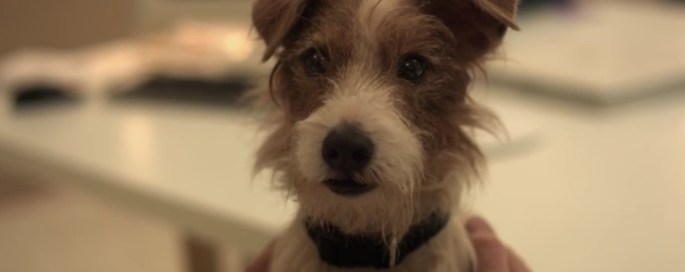
Released in 2010, Beginners is a sweet and sad little film in equal measure, with a generous and warmhearted script from director Mike Mills. Christopher Plummer was absolutely fantastic as an older man who suddenly announces that he’s gay, which brings him and his son, played by the always great Ewan McGregor, even closer together as a unit. There’s some great chemistry between McGregor and the gorgeous Melanie Laurent, who plays McGregor’s love interest, and who delights with some casual peek-a-boo nudity. Mills’ quirky directorial style, which smartly utilizes a flashback structure, punches up the film with some stylish pizzazz, while the ending contains some bittersweet notes of personal reflection that felt honest and rooted in the here and now. Kasper Tuxen’s shimmery cinematography creates a luxurious but never ostentatious visual mood, while the peppy but melancholic score from Roger Neill, Dave Palmer, and Brian Reitzell fit the story like a glove. There’s also some of the best dog acting I’ve ever seen; the reaction shots from the pooch are beyond adorable and smartly integrated into the playful narrative. Mills based the story off of his personal experiences when his father came out of the closet late in life.

1

THE HEROES OF ARVINE PLACE (2014) – A REVIEW BY RYAN MARSHALL

There’s solace to be found in an engaging, down-to-earth drama rich with the sort of essential humanism that seems all but lost in the current cinematic climate, and that’s precisely how one might describe Damian Lahey’s frequently endearing THE HEROES OF ARVINE PLACE. At just 74 minutes, it’s akin to a warm hug from a close friend or relative following a considerable absence and is equally as delightful.

Cullen Moss is marvelous as Kevin, a single father of two young girls who’s just trying to make it through the holidays after losing both his job and his car on the same day. He adopts an attitude of impressive tenacity, and over the course of the next few days, the immensely likable widower does everything in his power to make something – anything – work. Between a Christmas party at his place, a sister in the psych ward, a meeting with one of his literary idols which could determine the future of his hopeful future as a successful children’s book author, and the promise of presents for his daughters; Kevin’s got a lot on his plate, and there’s more to come.

cullen1

Sure, there’s little here that will challenged a seasoned viewer but this doesn’t appear to be Lahey’s priority, instead honing his energies towards painting an effective portrait of a down-on-his-luck guy during one of the most stressful seasons. There are hints of a deeper underlying sadness here, but it’s kind of admirable how Lahey avoids discussing these things in thorough detail at any point; much like the charming character at its core, the film is just trying not to dwell.

Considering its restricted budget, THE HEROES OF ARVINE PLACE could be seen as a testament to the individual and collective talents on both sides of the camera, and how sometimes a decent feel-good yarn is just fine when crafted with such obvious care. Lahey’s direction and script are assured, and he’s able to get some excellent performances from his cast; Tarina Reed’s photography is simple but not lacking formal depth; and Craig Moorhead’s editing is consistently efficient.

489089306_640[1].jpg

The score, from Brian Jenkins and Naarah Strokosch, is decidedly of a whimsical variety and sometimes threatens to sour the experience ever so slightly; it can feel, at times, almost as if the film is unsure of just how much it wants to indulge in fantasy and/or reality. It’s a middle ground that can feel too close for comfort, but given the material, it feels appropriate. There’s an intuitive empathy and sense of humor here that drowns out these little blemishes, and though the film may wear its heart on its sleeve to a fault, the pull of warmth reigns supreme in the end. It’s fairly easy to surrender to the film’s undeniably uplifting energies when one is in such positively personable company as this.

GREGG ARAKI’S WHITE BIRD IN A BLIZZARD — A REVIEW BY NICK CLEMENT

3
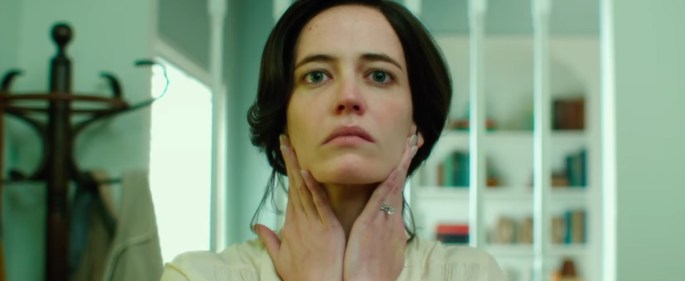
White Bird in a Blizzard is something unique – a touching coming of age story, a tense and unpredictable whodunit with a dynamite final twist, a study of marital discord, and a time capsule back to the late 80’s, all of it filtered through some surrealistic touches and flights of fancy for good artistic measure. Directed with customary style by Gregg Araki (The Doom Generation, Smiley Face, Mysterious Skin) who also wrote the genre-defying screenplay based off of Laura Kasischke’s novel, White Bird in a Blizzard feels like one of those movies that’s just waiting to be discovered by a passionate cult audience. Shailene Woodley, so wonderful in The Spectacular Now and The Descendants, was fantastic in the lead role of Kat Connor, a sexually blossoming high-school student with a phenomenally messed up mother (a whacked-out Eva Green) and a put-upon father (a quiet Christopher Meloni) who is trying to figure out what kind of woman she’s growing up to be.
2
The narrative is framed around Kat meeting with her therapist (a kindly Angela Bassett), flashbacks to Kat’s colorful childhood, and the various romances that Kat embarks upon (the boy next door, an older police officer, a college romance). Woodley is naked here – physically and emotionally – and I absolutely love watching her as an actress. She’s able to express vulnerability very well, and she has an unforced and extremely natural presence about herself as an actress. Green steals all of her scenes as the Mom From Hell, and I loved how Arakki upended expectations in more than a few instances, and then threw a killer twist at the viewer during the final moments. The bold and color cinematography by Sandra Valde-Hansen is frequently mesmerizing. This dark and lyrical film was a big surprise, and hopefully it finds a large audience at home. It’s currently streaming on Netflix.
1

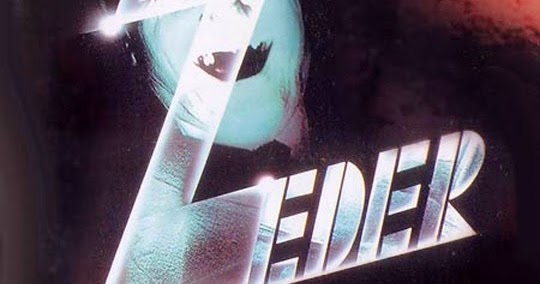
ZEDER (1983) – A REVIEW BY RYAN MARSHALL

Circa 1956, young Gabriella is brought to the estate of Dr. Meyer, who believes that the girl harnesses supernatural powers and intends to put them to good use during one fateful night. After accompanying her to the basement, where she begins writhing about on the dirt-covered ground and is then attacked by something unseen when left alone, Meyer deduces that the area they’ve stumbled upon is what is known as a “K Zone” upon realizing that the man who infamously studied them, Paolo Zeder, was buried underneath the house some years ago.

vlcsnap-2017-01-06-12h48m02s515.png

Favoring petrifying ambiance over surface-level schlock, though impartial to entertaining the latter when apt, Pupi Avati’s horror films are characteristically infused with a kind of sinister, otherworldly energy; as if the man responsible for them always has one foot in reality and the other in the spirit world. In this sense, ZEDER (aka REVENGE OF THE DEAD) is straight from the heart of its maker, being (among other things) a film that deals directly with those disconcerting voices from beyond and why they are necessary to a superior understanding of our surroundings.

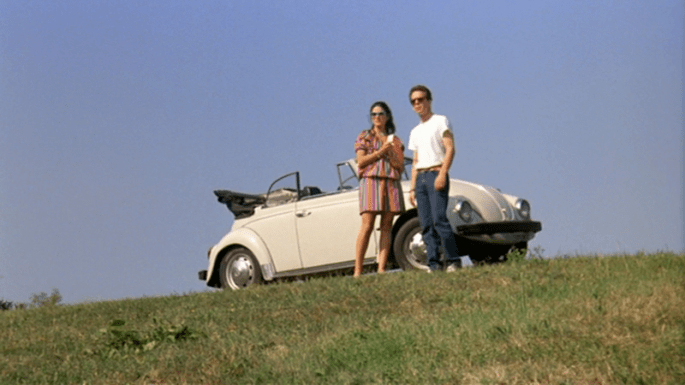
Following such a uniquely enigmatic opening, we are introduced to Stefano (Gabriele Lavia), a young novelist living in present day (1983) Bologna. He comes home one day to a surprise anniversary gift from his wife Alessandra (Anne Canovas) in the form of an old typewriter which he can’t help but test drive that same evening. Upon closer inspection of the ribbon housed inside the apparatus, he discovers an essay written by the aforementioned Zeder and becomes increasingly obsessed with the man’s studies.

vlcsnap-2017-01-06-12h49m50s260.png

Similarly to Avati’s masterful giallo THE HOUSE WITH THE LAUGHING WINDOWS, the unlikely hero often feels alone in the world. Whenever Stefano attempts to inquire about Zeder and his finds, even the most reputable members of society turn him away; and when he decides to take matters into his own hands, they tend to get a bit dirty. He must be careful who he talks to, for their lives may be endangered if he does so.

vlcsnap-2017-01-06-12h48m38s711.png

Without showing too much, Avati manages to get deep under your skin; take the K-Zones, for instance, which have something to do with reanimation, and yet that specific “something” is never explored in explicit detail. However, it’s undoubtedly better off this way. The horrors of ZEDER, beautifully rendered as they are, seem rooted in paranoia and guilt on a profoundly national scale; the film is like an exorcism for all of Italy, albeit one where the cleansing of body and soul is secondary to the painful possession of Avati’s fellow countrymen and how they attempt to evade it. While Stefano pursues the mystery at hand, Gabriella (now an adult) and Meyer scheme – it would be unwise to trust that anyone, even those closest to you, are not in on it in some way. It’s an angry, poignant, and indeed genuinely frightening state of affairs – assuming one is enticed by implication.

European horror films tend to wear their imperfections on their sleeve, and ZEDER is no exception. Franco Delli Colli’s (RATS: NIGHT OF TERROR, MACABRE, STRIP NUDE FOR YOUR KILLER) cinematography is luscious, Riz Ortolani’s score is typically fierce, the make-up effects – particularly for the undead – are refreshingly subtle, and yet there are flaws to be found in Amedeo Salfa’s editing. On a whole, the film flows exquisitely – but once in a while there’s an abrupt transition which threatens to soil an otherwise divine experience; and although this is easily redeemed, it can’t help but pale, if only slightly, in comparison to its aforementioned cinematic brethren as a result.

vlcsnap-2017-01-06-12h49m37s733

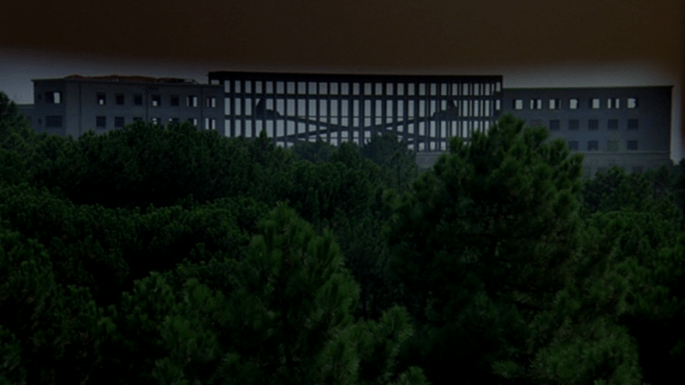
But oh, what sights Avati has to show you. From the abandoned soon-to-be-hotel which marks the high point of Stefano’s journey and the dusty tunnels running underneath to the young couple’s sleek, secure apartment, it’s remarkable how distinctive each location feels and how well the director utilizes them throughout. One feels alienated regardless of where they find themselves; the world is wired by phantoms. As is the case with some of the best, this is a film about man’s relationship with time and place in unison with his personal affairs; while the romance at the center of the story gives it a much-needed emotional backbone, it’s ultimately a vision of our ever-changing landscape and how we choose to confront those sudden transitions.

Admittedly, this could potentially disappoint viewers expecting a gorier, more straight-forward zombie yarn, but what a thing to behold. Avati has contributed something that goes far deeper than exceptional genre cinema, knowing all too well that mystery and tragedy alike account for many of the things in life which are most difficult to swallow. Some questions cannot be answered, or so the director seems to conclude at the end of this macabre tale. We can only seek so much truth before we bump up against our own limits.

vlcsnap-2017-01-06-12h52m16s121.png

RICHARD LESTER’S ROBIN AND MARIAN — A REVIEW BY NICK CLEMENT

2

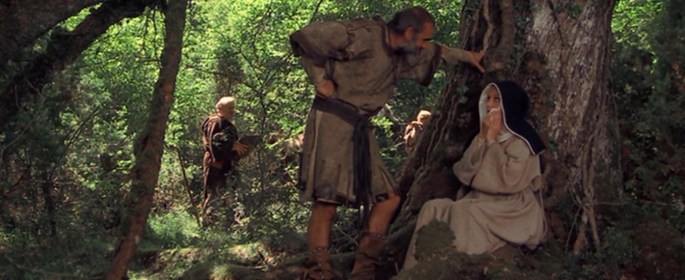
Robin and Marian is a ton of fun, directed with zest by Richard Lester (a favorite filmmaker of mine), and preformed with twinkle-in-the-eyes star-power by Sean Connery and Audrey Hepburn. Robert Shaw and Richard Harris were both fantastic (as always), and the rest of the deep supporting cast was ace down the line. How and why this film isn’t available on Blu-ray is beyond my level of comprehension; the cinematography by David Watkin is absolutely gorgeous and worthy of proper restoration. John Barry’s jaunty and romantic score perfectly sets the mood, while the final act hits some very emotional notes for the characters, with a pleasing sense of gentle melancholy hovering over the final moments. The chemistry between Connery and Hepburn was wonderful in this movie; they sell the idea of cinematic romance with serious conviction.  This was the first movie that I saw Connery in, as it’s one of my father’s favorite films, and I probably saw this with the family when I was eight or nine years old. Throughout the years, it’s been an easy choice to make in terms of a title worth revisiting, because it just puts a smile on my face.

1