Andrew Niccol’s S1mone 


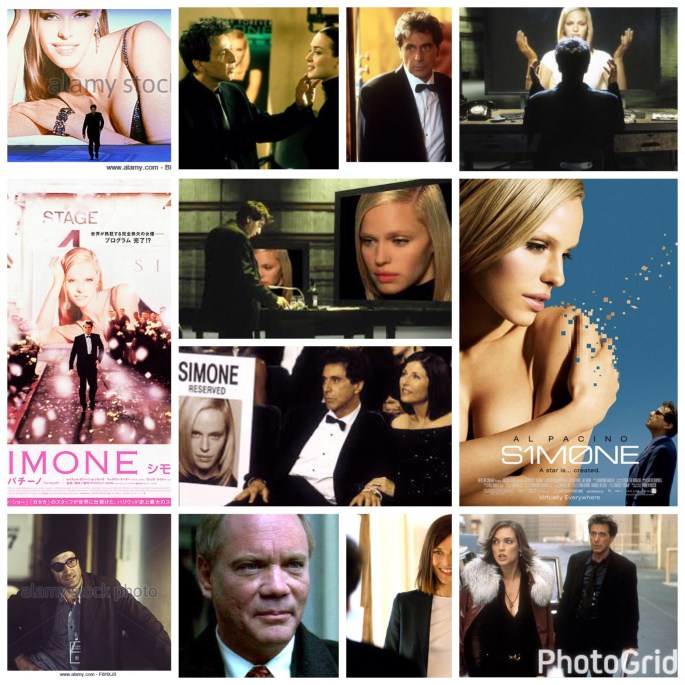
Andrew Niccol’s S1mone is social satire at its cheeriest, a pleasant, endearing dissection of Hollywood mania and celebrity obsession that only hints at the level of menace one might achieve with the concept. It’s less of a cautionary tale and more of a comedic fable, and better for it too. In a glamorous yet used up Hollywood, mega producer Viktor Taransky (Al Pacino with some serious pep in his step) needs to give his enterprise a makeover. His go-to star (Winona Ryder) is a preening diva who drives him up the wall, and there seems to be a glaring absence of creative juice in his side of the court. Something cutting edge, something brand new and organic, something no one else has. But what? Simone, that’s what. After finding clandestine software left behind by a deceased Geppeto-esque computer genius (Elias Koteas, excellent), he downloads what lies within, and all manner of mayhem breaks loose. The program was designed to create the perfect virtual reality woman, flawless and capable in every way, including that of the cinematic thespian. Viktor sees this as gold and treats it as such, carefully introducing Simone (played by silky voiced model Rachel Roberts) to an unsuspecting film industry who are taken by storm and smitten. Simone can tirelessly churn out five oscar worthy performances in a month, never creates on set drama, whips up scandals or demands pay raises. She’s the answer to everyone’s problem, except for the one issue surrounding her very presence on the screen: she isn’t actually real. This creates a wildly hysterical dilemma for Pacino, a fiery Catherine Keener as a fellow executive, and everyone out there who’s had the wool pulled over their starry eyes. It’s the kind of tale we’d expect from Barry Levinson or the like, a raucously funny, warmhearted, pithily clever send up of the madness that thrives in the movie industry every day. There’s all manner of cameos and supporting turns including Evan Rachel Wood, Jay Mohr, Pruitt Taylor Vince, Jason Schwartzman, Rebecca Romjin and the late Daniel Von Bargen as a detective who cheekily grills Pacino when things get real and the masses want answers. This is fairy tale land in terms of plausibility, but it’s so darn pleasant and entertaining that it just comes off in a relatable, believable manner. Pacino is having fun too, a frenzied goofball who tries his damnedest to safeguard his secret while harried on all sides by colleagues and fans alike. Roberts is sensual and symmetrical as the computer vixen, carefully walking a tightrope between robotic vocation and emoting, essentially playing an actress pretending to be an actress who isn’t even human, no easy task. It’s a breezy package that’s never too dark or sobering, yet still manages to show the twisted side of a famously strange industry. Great stuff. 

 -Nate Hill

Twin Peaks: on the eve of revival – a rambling write-up by Nate Hill


When I first discovered David Lynch’s Twin Peaks some ten years ago, I was hooked from that first lilting chord of the opening theme, a Pacific Northwest lullaby that dreamily pulled back a red curtain to reveal the mesmerizing realm of sawmills, Douglas firs, cherry pie, secrets, metaphysics, owls, murder mysteries, eccentricities, FBI Agents, roadside diners and so much more. There was nothing quite like it under the sun. Lynch had tapped into the intangible flavour in the ice cream parlour, an undefinable conduit to the subconscious, an emotional fever dream of haunting music, beautiful storytelling and vivid, compelling character arcs, and I knew from that moment on I’d be living in this world, in whatever capacity, for the rest of my life. Since then I’ve seen the entire run of seasons one and two at least thirty to forty times, and watched Fire Walk With Me, Lynch’s big screen masterpiece and companion song to the show, even more. Twin Peaks is the one thing I can revisit at any crux of the story, during any phase of my life, and it will always draw me right back in like the beckoning grove of sycamore trees who stand as sentinels to the great beyond lying just around the bend in the woods. There was just one problem with it all: the show was tragically cancelled on the penultimate beat, a cosmic cliffhanger that left fans reeling and plunged the legacy into exile for decades, a vacuum left in air that once housed a worldwide phenomenon, which is the only way to describe what season one did not just for television, but for the arts themselves, a thunderous ripple effect that has inspired generations of fan culture and adoration. To quote another film that finds its home in the trees, “If you ride like lightening, you’re going to crash like thunder”, which in a way is what happened to Twin Peaks. That lightening was captured in a bottle, which unfortunately shattered to shards via a combination of network interference and creative differences. Needless to say, the thought of a possible return to the show was beyond low on my list of things that could happen, right down there next to dinosaur cloning. Life finds a way though, and so apparently does Lynch. When it was announced that he had struck a deal with Showtime for an epic eighteen episode return to those Douglas firs, the internet nearly imploded upon itself. The golden age of television had just gone platinum, for Twin Peaks is the cornerstone of a generation of storytelling, a mile marker of stylistic structure and expression that gave life to countless other legacies in its wake. If any fragmented, incomplete tale deserves another day in court, it’s Peaks. For a while we sat on our hands and held our breath, the words ‘too good to be true’ ringing around in our heads. After a few hitches in the giddyup, however, and some three years of development later, we have arrived on the day that the new season premieres, and it still hasn’t set in for me. Eighteen brand new episodes. All written and directed by the man himself. A titanic sized cast of Twin Peaks residents both old and new, from every walk of Hollywood, genre town, music world and indie-ville. It definitely does seem to good to be true, and yet here we are, on the eve of a television paradigm shift. Any new fans who have hurriedly made their way through the original series run for the first time should pause for a moment and realize just how infinitely lucky we are to get this, how special this truly is, and will be for the entire summer. I feel as though this will be the second wave of Lynch’s magnum opus, a stroke of creative brilliance that has come full circle, and in just a few hours time those beloved chords will once again flow out from our television screens, as the journey continues onward to a destination whose coordinates Lynch guards like Pandora’s Box. Come what may, I will be tuned in to whatever the man and his team of actors, artists and musicians have in store for us. See you in the trees.

-Nate Hill

Paparazzi 


Paparazzi is one of those ones that probably sounded pretty silly on paper, but one of the studio execs had a good sense of humour on a morning after getting laid and said “aw hell, green light this just for kicks.” It doesn’t hurt to have Mel Gibson as a producer either, who also makes the teensiest cameo. The concept is simple: action film star Bo Laramie (Cole Hauser) is harassed by a sleazy hyena pack of determined celebrity photographers, until they take it one step too far, resulting in tragedy. Bo then plays the art imitating life card, goes all vigilante on them and quite literally hunts each one down and kills them. A synopsis like that has to illicit a dark chuckle from anyone who reads it, and you’d think the resulting film would be oodles of fun, but they’ve somewhat played it safe. A concept this ridiculous should be over the top, reach for the stars insane, a hard R black comedy Death Wish set in Hollywood, if you will. What we get is something more on the glossy side, the filmmakers dipping their toe into the pond of potential, yet never saying ‘fuck it’ and diving right in. The paparazzos are played to the heights of hilarity by a solid scumbag troupe: Tom Sizemore is so perfect as their a-hole ringleader, just a dime piece of a casting choice. Daniel Baldwin looks seriously haggard, while Tom Hollander and Kevin ‘Wainegro’ Gage round out this quartet. Dennis Farina is fun as a sharp, shrewd Detective who gets wise to Bo’s act as well. It’s all serviceable, and yet I wish it went that extra mile to give us something downright shocking and memorable. Perhaps they should have reworked the script, brought in a wild card director and gone the indie route. Oh well. 

-Nate Hill

Alan Parker’s Come See The Paradise


Alan Parker’s Come See The Paradise tackles a little spoken of, tragic period of American history: the internment of thousands of Japanese families in prison camps following the attack on Pearl Harbour, which sparked World War II. After the incident, a wave of frenzy and paranoia roiled across the states, and many of these people were separated from their loved ones for years, an event that altered thousands of lives, but not one you hear too much about in film. Parker is a born storyteller, whether it’s historical lore or gothic genre brilliance (insert obligatory Angel Heart reference), and here he approaches the subject matter with little to nothing in the way of melodrama, classic orchestral swells or tissue box bait, letting the story happen naturally and neutrally, the drama organically rising scene to scene as they happen. Dennis Quaid plays an Irish American man who falls in love with a Japanese girl (Tamlyn Tomita), and over a few years begins a life with her. He is a fiercely independent union man, passionately fighting for the working class, while she comes from a very tight knit family who rely on each other to make ends meet. Somehow the two of them make it work amidst the early stages of the American working machine, the love they have for each other keeping them afloat. Then the attacks occur. Quaid is separated from her and their daughter for over a decade, and the film’s pacing makes you feel every lost, broken moment of it. When their reunion does happen, it’s nothing like the romantic, tear jerking catharsis you’d expect, but a testament to Parker’s commitment to realism. The sadness comes from the hollow, unceremonious way in which these people are affected by such things, and how they simply go on, adapt and adjust, the pain an intrinsic part of everyday life. The movies show a different picture of that usually, an idealistic bubble where things always somehow end up alright, and every last thread is tied off somehow. Not with this one, which is why it may have been forgotten. In any case, it’s a beautifully tragic, eye opening piece that stays true to its narrative and follows it’s characters throughout bittersweet, minimalistic and believable arcs. 

-Nate Hill

B Movie Glory: Fist Of The North Star


If you ever want to see an entire film production embarrass themselves royally, check out Fist Of The North Star, a misguided, thoroughly awkward live action version of some obscure Japanese manga series. It’s one of those ones that painfully doesn’t translate into the realm of live action though, like that bizarre Super Mario movie they made. Full of notable character actors, packed with steampunk-esque special effects, it could have worked with a different story, but the theatrical intensity and specific vibe of oriental pop culture just doesn’t come to life well on the North American big screen. It’s also at war with itself tonally: there’s a light, PG Power Rangers feel in some places, but many scenes have graphic violence that pushes a hard R rating into the deep end, which makes for a jarring experience. Gary Daniels stars as Kenshiro, a lone warrior out to get Lord Shin (Costas Mandylor under one mess of a mullet), a brutal warlord who murdered his father, briefly played by Malcolm McDowell. McDowell pulls a classic McDowell move, showing up in the flesh for about thirty seconds before disappearing and lazily lending his iconic voice to a talking skeleton version of his character later in the movie. Don’t ask me to remember more of the plot than that because it would involve a rewatch, and ain’t nobody got time for that. Chris Penn is fun as Jackal, an angry vagabond with a giant potato head and the psychotic temper to match. Watch for Dante ‘Rufio’ Basco, Downtown Julie Brown, Clint Howard, Mario Van Peebles and more in equally ridiculous getups. The sole thing I can recommend here is the production design, lifted straight from some striking post apocalyptic video game, it makes somewhat of an impression. The rest lands with a colossal thud and just sits there, doing not much of anything. 

-Nate Hill

Mindscape: Anna 


Mindscape, given the less tantalizing title ‘Anna’ upon release, is a thinking person’s thriller, and perhaps a little bit too much so. In the near future, or perhaps some alternate reality, some humans have evolved into pseudo clairvoyants who can enter the memories of other people and interact with their subjects within them. This talent has been trademarked by law enforcement, who employ ‘memory detectives’ to psychologically resolve conflict or retrieve otherwise out of reach information. Mark Strong is one such man, but his talents have dimmed a bit following the deaths of his family and a crippling stroke. Hauled out of retirement by his former boss (Brian Cox, sly as ever), he finds himself tasked with navigating the labyrinthine mind of Anna (Taissa Farmiga) a girl accused of murder and deemed a potential sociopath pending diagnosis. The film is deliberately dense and elliptical, not standard Hollywood fare at all, which is nice to see, but it also trips just a little bit on its own cognitive aspirations, especially in the third act. It’s one of those pieces that’s less like The Cell, and more like Vanilla Sky or Danny Boyle’s Trance (two absolute favourites of mine) where so much of the story wades through muddy mindgames that at a certain point we think to ourselves ‘well who’s to say if any of this is actually real if it’s gotten so complex’, and indeed it’s very difficult to piece together what has transpired here, especially with a conclusion that would require multiple viewings to even get an inkling. It’s stylish as all hell though, given a clinical, steely grey palette punctuated by flourishes of startling red to show the capacity for violence lurking just out of sight within the opaque and enigmatic human psyche. The acting is top tier as well; Strong is reliably committed and intense, Farmiga is deeply disconcerting as the most fascinating and ambiguous character, showing blossoming talent that I look forward to seeing more of, while Cox steals his scenes as per usual. The film trips over itself a few times and like I said, overly convoluted, but it’s one mesmerizing effort for the most part, albeit after a second or third viewing. 

-Nate Hill

Ariel Vroman’s Criminal 


Ariel Vroman’s Criminal does its best to pay homage to beloved pseudo science fiction genre films of the nineties like Face/Off or Eraser, and for the most part it succeeds. All the elements are in place: padded, eclectic cast, implausibly sketchy high concept brain tampering, slick anti-terrorist war games, a brash arch-villain and adorably clunky emotional interludes. When a deep cover agent (Ryan Reynolds, weirdly uncredited) is killed in London, his FBI handler (Gary Oldman), has a shit fit at the lost secrets he knew and commissions Dr. Tommy Lee Jones to use sketchy cutting edge science and transfer Reynold’s memories into another man’s cerebrum. Of course they choose some violent, irreparably damaged convict, namely Jericho Stuart, played with growling, feral panache by Kevin Costner. “You hurt me, I hurt you back worse”, is this deeply sociopathic dude’s mantra, and it’s expectedly hilarious that the bureau shoots themselves in the foot by picking such a wild card for the program, but there you have it. With new memories, Jericho’s basic primal instinct is diluted with emotional scar tissue from Reynolds, haunted by his former wife (Gal Gadot, terrific), as well as a host of clandestine secrets from Ryan’s noggin that propel him on a globetrotting (well, London trotting, really) excursion to bring down a radical cyber criminal (Jordi Molla, the Spanish Gary Oldman, coincidentally sharing the screen with his counterpart). This is the Kevin Costner show all the way, it’s really the best work I’ve seen from him in years. He would have been way better taking the antagonist route with his career, as showcased here. Jericho is a bitter, psychotic outsider and Kevin plays it up royally, dishing out bone smashing beatdowns on random pedestrians and calling anyone he sees a ‘fucker’. Oldman yells at everything, and I mean everything. It’s like there were cue notes next to his lines that said ‘just scream your lines the whole way through’, but he’s fun too, that early career intensity showing through his weathered gaze. Michael Pitt also shows up with a hysterical Dutch accent, doing the boy with the dragon tattoo hacker shtick, looking pale and sullen. The cloak and dagger stuff is uproariously silly, as it should be, the emotional core appropriately sappy too. Smart move in keeping the hard R action movie alive, unlike some movies we know (I’m casting a disgusted look over at Expendable 3), and indeed Kevin gets some overly bloody kills in that fulfill the carnage quota and then some. He kicks ass, Oldman hollers, Reynolds cameos, Gadot cries, Jones looks weary, and so it goes. Not a total slam dunk, but it will make you feel nostalgic for those good old Sly/Armie/Van Damme blitzkriegs of yore. 

-Nate Hill

B Movie Glory: Slow Burn


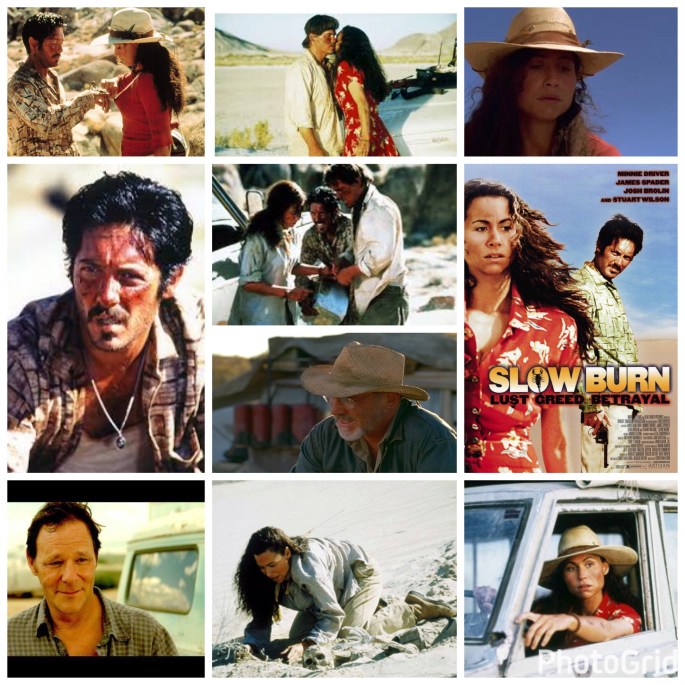
Slow Burn is.. odd, to say the least. Living up to its title, it pretty much goes nowhere, tagging along with James Spader and Josh Brolin as they stumble around in the desert, both hitting on treasure hunter Minnie Driver, who constantly outwits them. This kind of lower budget, steamy stuff just seems to have a licence to languish, in the sense that story is of little concern, it’s more about mood and episodic character interaction than anything else. Spader and Brolin are doing the ‘Of Mice & Men’ shtick here, playing two hapless escaped convicts, one a sharp tongued weasel (Spader) and the other a dimwitted lug (Brolin). They’re kind of lost, in both perpetual arguments and the vast Mojave around them, when they run into Driver, whose presence, and the idea that there’s a whole whack of diamonds buried out there somewhere, inevitably stirs things up. The diamonds belonged to her parents, and there’s hazy scenes relating back to a tragedy involving her gypsy father (Chris Mulkey, briefly) and a mysterious character played by Stuart Wilson who serves as pseudo-narrator as he wanders around out there too. Got that? It’s ok, they barely explain it better than I just did, I’ve seen the thing twice and I’m still not sure how it all adds up either. Sweat, sand, sensual looks snuck between Brolin and Driver, dreamy atmosphere, threats of violence from Spader’s overacted, crazy eyed moron, a treasure hunt and general lack of cohesion is all you’ll find out here in this desert. Good for an absent minded watch or for background noise, not much else though. 

-Nate Hill

HBO’s Witness Protection 


The sad thing about HBO original films is that they air pretty quick and without notice, then are scarcely heard from again, despite having really good stories and production design to boast, with no theatrical crowd to ever share them with. Witness Protection is one among many of these, a brilliant, surprisingly thoughtful mobster melodrama starring Tom Sizemore in a rare and commanding lead role. He plays Boston area gangster Bobby ‘Bats’ Batton here, a wiseguy who gets a rude awakening one night when a violent attempt is made on his life by rival crime factions, striking at home while his family are there. His lifestyle has inadvertently put those he loves in danger and now there are consequences, as grimly outlined by Forest Whitaker’s sympathetic FBI agent. Bobby, his wife (Mary Elizabeth Mastrantonio is so great, why isn’t she in stuff anymore?), son (Shawn Hatosy) and young daughter (Sky McCole Bartusiak, who famously died young a few years ago) are relocated into the witness protection program run by the Feds, given new identities, their lives uprooted and their future uncertain. Now, I searched for this film for years (it’s near impossible to find) thinking there’d be some kind of actuon intrigue angle, a few gunfights as his enemies tracked him down, but such is not the case. This is a mature film, a meditation on what it takes to change who we are when our choices endanger the lives of those we are supposed to protect. Bobby is a man of violence who grew up in a certain way, and he has transformed that into his livelihood. But it’s also a risky creed to cling to, and eventually a line is crossed, the line between balancing a chaotic life, or letting it run away from you. He’s forced to change, to show honesty and the will power to go straight, and this causes intense strain on the relationships with each of his family members, both individually and as a group. It’s equal parts fascinating, heartbreaking and hopeful to see a family go from one extreme to the other, and every facet of the situation is explored in a script that feels authentic and unforced. Sizemore and Mastrantonio deliver powerhouse work that stuns and stings, inhabiting uncomfortable moments of personal anguish with gravity to spare. This one isn’t your typical crime drama, and is all the better for it. 

-Nate Hill

B Movie Glory: Night Trap


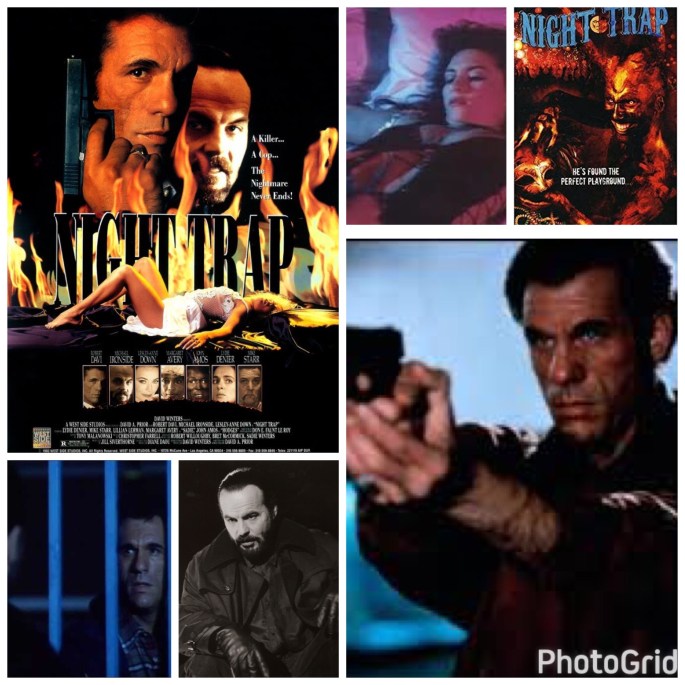
Night Trap is so old, obscure and out of print that I had to order an Amazon copy just to make sure it was even real, and not some dream I had as a kid. It’s real enough, and a glorious helping of low budget supernatural tomfoolery at that, with two charismatic character actors headlining. Robert Davi, in a rare lead role, plays a headstrong New Orleans cop who is hunting down a serial killer (Michael Ironside) that appears to have sold his soul to the devil in exchange for invincibility and a host of freaky deaky evil superpowers. Davi’s father was also a cop who pursued Ironside, and the monster likes to taunt both of them, leaving a trail of bodies in the hectic celebration of Mardi Gras. There’s a million of these type of movies, and they’re all across the board in terms of quality. It comes down to script and actors, really, as there’s never enough money to make any real visual magic. This one has a mile wide mean streak though, Ironside’s villain is a full on moustache twirling, nightmarish fiend and the veteran tough guy plays him as such. Matched against Davi, another notorious badass, it’s a B movie royal rumble that hits high notes of intensity, schlock and pulpy, violent delirium in all the right cues. Fun stuff if you’re a fan of these actors, and can actually locate a copy. 

-Nate Hill